
Calathea Pinstripe
Goeppertia ornata
Pinstripe Plant, Calathea ornata, Pin-Stripe Calathea, Pinstripe Prayer Plant


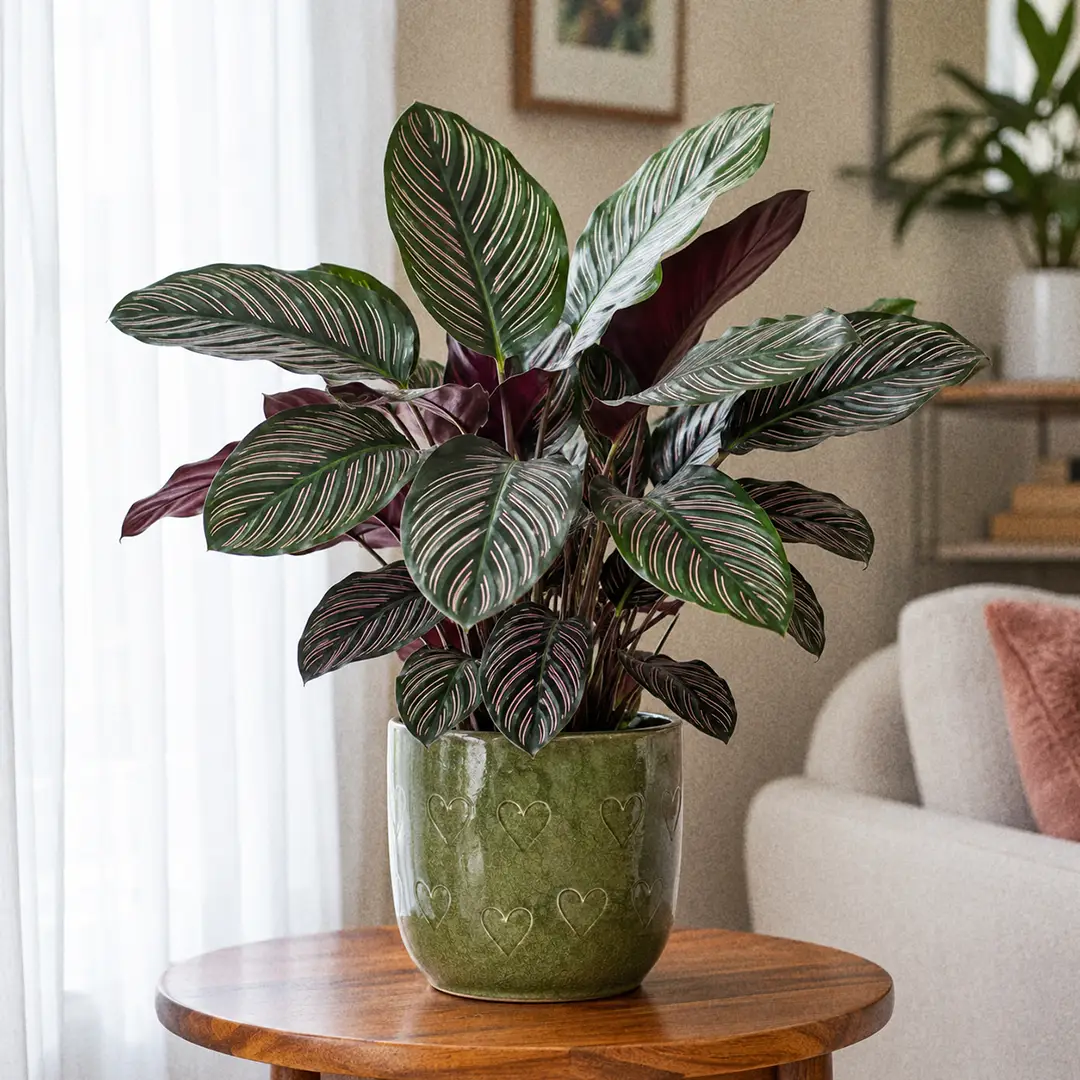
The Calathea Pinstripe is the plant that looks hand-painted, with fine pink lines drawn across deep green leaves and rich purple undersides that show when the foliage folds up at night. It is pet safe, it moves, and it will tell you straight away if your tap water is wrong for it.
📝 Calathea Pinstripe Care Notes
🌿 Care Instructions
⚠️ Common Pests
📊 Growth Information
🪴 In This Guide 🪴

☀️ Calathea Pinstripe Light Requirements (Indoor Lighting Guide)
The Sweet Spot
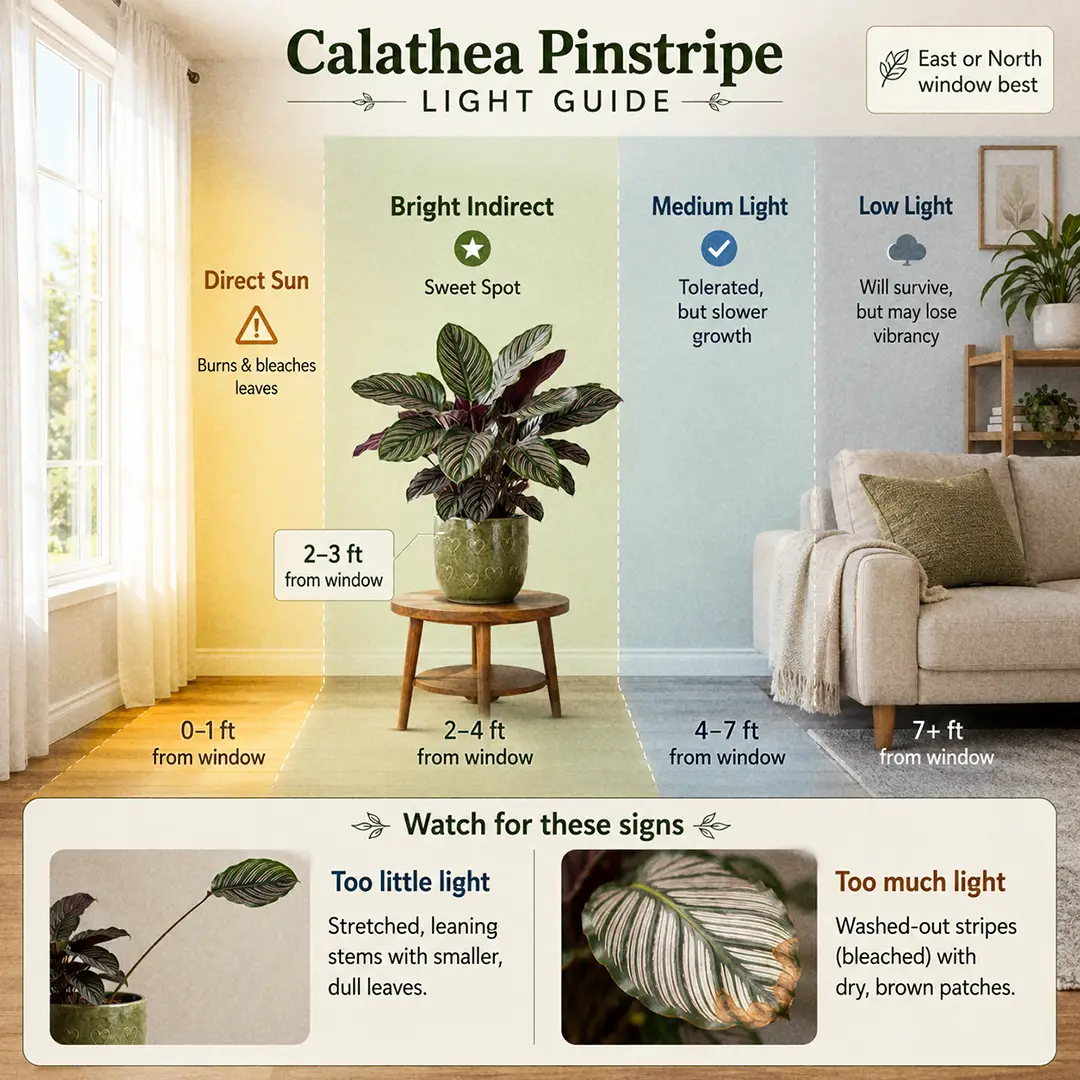
Bright indirect light, and nothing sharper. On the forest floor of Colombia and Venezuela this plant lives under a canopy, so it evolved to work with light that has already been filtered through something. In a home, that means two to four feet back from an east-facing window, or a north window with an unobstructed view of the sky.
South and west windows are fine as long as a sheer curtain sits between the glass and the plant. What you are aiming for is a spot bright enough to read a book comfortably at midday without turning a lamp on. If you are still learning to judge a room by eye, our Indoor Lighting Guide walks through it.
Too Little Light
Pinstripes are often sold as low-light plants, which is only half true. They survive dim corners, but survival looks like this: new leaves come in smaller than the old ones, the stems stretch and lean toward the window, and the patterning turns muddy instead of crisp. That is leggy growth and small leaves working together.
The other quiet symptom is stalling. A Pinstripe in poor light simply stops pushing new growth for months. If your only free spot is dark, a small grow light on an eight-hour timer fixes it completely.
Too Much Light
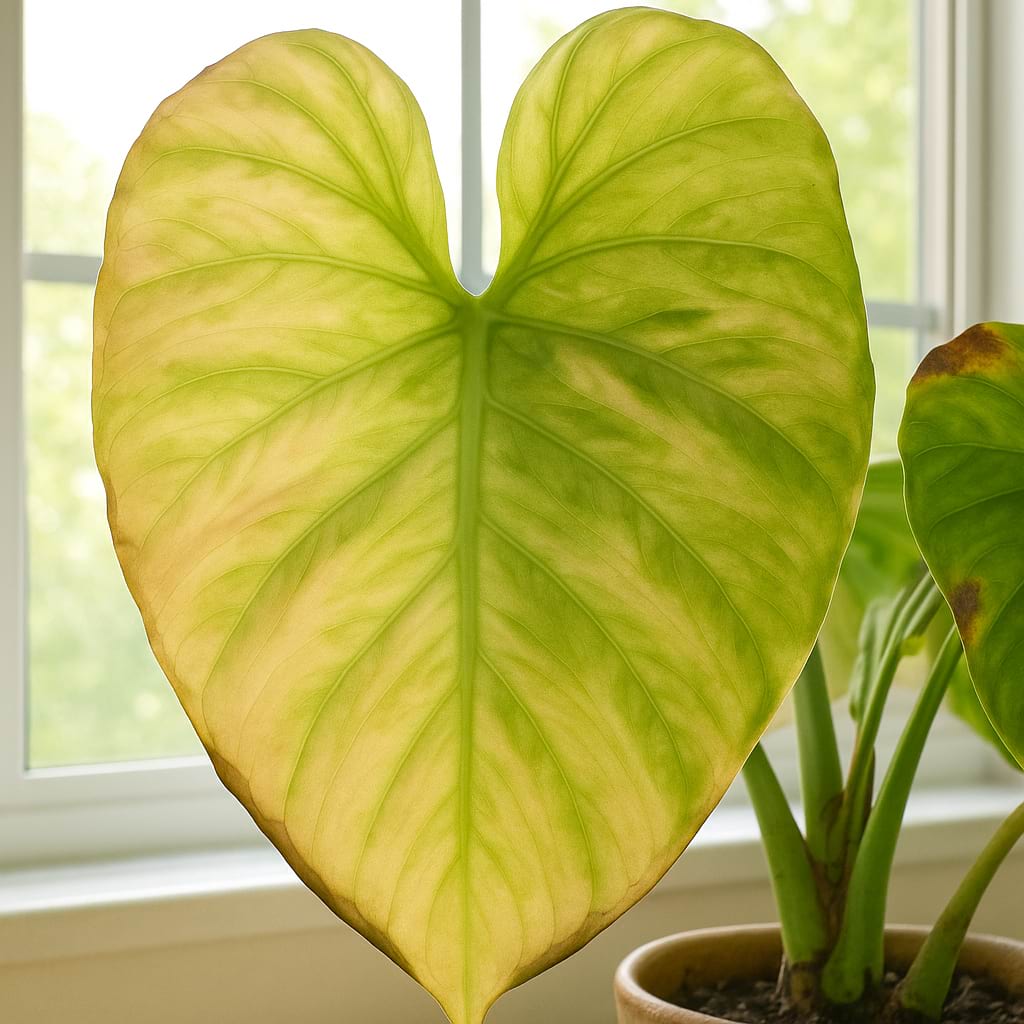
Direct sun does two things, and both are permanent. It bleaches the pink stripes to a flat white and washes the green out to a yellowish tone, which is pale, faded leaves. Push it further and you get dry brown patches in the middle of the leaf blade, which is true sunburn.
Worth knowing: pink stripes also fade to white naturally as an individual leaf ages, and that is not a problem. The way to tell the difference is where it happens. Natural fading shows on the oldest leaves while new ones emerge bright pink. Sun bleaching hits the newest leaves first, because they are the ones facing the window.
💧 Calathea Pinstripe Watering Guide (How to Water Properly)
Watering Frequency
The target is evenly moist, never soggy and never bone dry. In practice that means checking the top inch of soil with your finger every few days and watering as soon as it feels dry to the touch. In a warm bright room in summer, that can land twice a week. In winter it might stretch to once every ten days.
Do not water on a fixed schedule. A Pinstripe in a small terracotta pot in July and the same plant in a plastic pot in January have almost nothing in common. If finger-testing feels vague, a cheap moisture meter removes the guesswork.
Water Quality Matters More Than Frequency
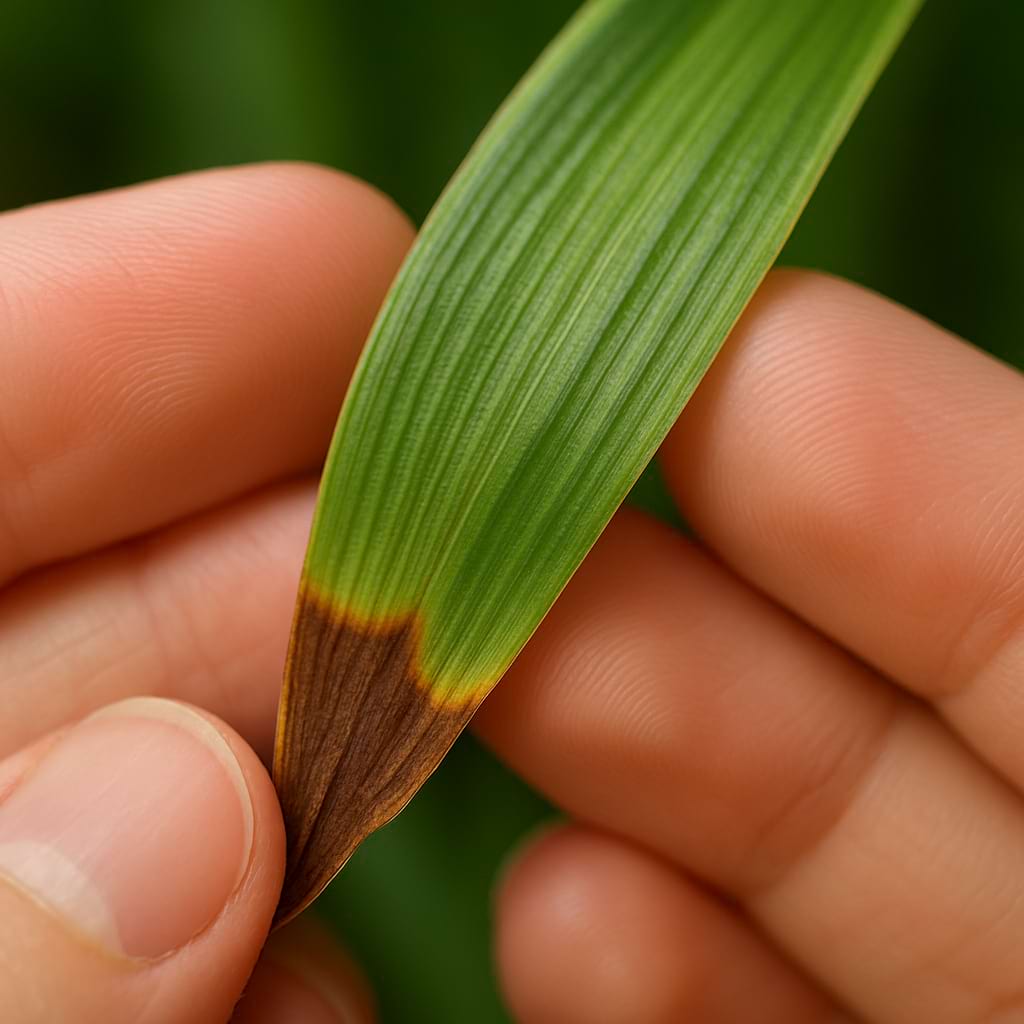
This is the part most guides bury and it is genuinely the biggest lever you have. Calatheas are sensitive to the fluoride, chlorine and dissolved salts in hard tap water, and the damage shows up as brown crispy leaf edges within a few weeks. Use filtered water, distilled water, or collected rainwater.
If you only have tap water, let it stand uncovered overnight to release chlorine, though this does nothing for fluoride or mineral salts. Our comparison of tap water versus filtered water covers what actually helps. Either way, flush the pot with a large slow pour of clean water every couple of months to wash accumulated salts out of the mix.
How to Water
Water slowly around the base of the clump until it runs freely from the drainage holes, then tip out anything left in the saucer after ten minutes. Sitting water rots the rhizome fast. Bottom watering also suits this plant well, since it keeps water off the crown and gives an even soak, just top-water occasionally to flush the salts.
Lukewarm water only. Cold water straight from the tap shocks tropical roots and can cause a sulk that lasts weeks.
🪴 Best Soil for Calathea Pinstripe (Potting Mix Guide)
What the Soil Needs
Two things that sound contradictory: it has to hold moisture, and it has to drain fast. A dense peaty mix straight from the bag holds water in the middle of the pot long after the surface dries, and that is how root rot starts. What you want is a mix that stays damp like a wrung-out sponge while still letting air reach the roots.
Slightly acidic to neutral pH suits it, roughly 6.0 to 7.0, which is what nearly every houseplant mix already sits at.
DIY Soil Mix
The recipe I use is simple and cheap:
- 2 parts coco coir or peat-free potting mix
- 1 part perlite or pumice
- 1 part fine orchid bark
- a handful of worm castings for slow nutrition
The bark is the ingredient people skip and it is the one doing the most work, opening up air pockets that keep the mix from packing down over a year.
Pre-Made Options
An African violet mix works straight from the bag and is what most nurseries use. A standard potting soil also works if you cut it with perlite at roughly three parts soil to one part perlite. Skip anything labelled moisture-control, since those hold water far longer than this plant wants. Our soil guide explains the components in more detail.
🍼 Fertilizing Calathea Pinstripe (Feeding Schedule)
When and How Often
Feed every four to six weeks from spring through late summer, and stop completely from October to February. This is a light feeder with fine roots, and it responds far better to small regular meals than to a big seasonal dose.
What to Use
A balanced liquid houseplant fertilizer at quarter to half the strength printed on the bottle. Always water first with plain water, then feed. Feeding into dry soil concentrates the salts against dry roots and burns them.
Over-Fertilizing Signs
Brown crispy edges again, plus a white crust forming on the soil surface or around the rim of the pot. Since salt burn and hard-water burn look identical, treat both the same way: flush the pot thoroughly with clean water and skip the next two feeds. Our fertilizing guide has more on reading these signals.
🌡️ Calathea Pinstripe Temperature Range
Ideal Range
Between 65 and 80°F (18 to 27°C), which is most heated homes for most of the year. Below 60°F (15°C) growth stops and the leaves start looking sad. Below 50°F (10°C) you get cold damage that does not reverse.
Drafts and Heat Sources
The bigger risk indoors is not average temperature, it is the swings. A Pinstripe sitting next to a radiator, a heating vent, an air conditioner or a door that opens onto a cold hallway will brown at the edges no matter how carefully you water it. Sudden changes hurt more than a steady temperature that is slightly off.
Winter windowsills are the classic trap. The room reads a comfortable 70°F while the air against the glass at night drops fifteen degrees lower. Move the plant back a foot from October onwards.
💦 Calathea Pinstripe Humidity Requirements
Ideal Humidity
Aim for 60% or higher. Below 50% you will fight crispy edges permanently, and most centrally heated homes in winter sit around 30%. This one requirement does more for the plant's appearance than everything else on this page combined.
Easy Humidity Boosters
A small humidifier running near the plant is the only method that reliably shifts the number. Everything else helps at the margins: group plants together so they share transpired moisture, set the pot on a pebble tray with water below the pot base, or move it into a bathroom with a window. Misting looks productive but the effect lasts minutes, and wet leaves overnight invite fungal leaf spot. Our humidity guide and this piece on boosting humidity in winter go deeper.
🌸 Calathea Pinstripe Flowers (Bloom Guide)
What the Flowers Look Like
Small and honestly a little underwhelming. In its native range, Goeppertia ornata pushes short cone-shaped spikes of white to cream flowers in spring and summer, tucked low among the leaf stems rather than held above the foliage. They are pretty up close and easy to miss from across a room.
Why It Rarely Blooms Indoors
Indoor plants almost never flower, and that is normal rather than a failure on your part. Blooming needs the light intensity and steady high humidity of a tropical understory, and a living room falls well short of both. Nurseries do not force blooms on this species either, so you will not find one flowering in a shop.
Grow It for the Leaves
This is a foliage plant and you should buy it as one. Every bit of energy the plant would spend on flowers goes into pushing new striped leaves instead, which is the better deal. If you want a Marantaceae relative with a genuine show of flowers indoors, that role belongs to plants outside this family entirely, like a Peace Lily. And if a stem does produce a spike, leave it or snip it off, neither choice will harm the plant.
🏷️ Calathea Pinstripe Types and Varieties
Calathea ornata 'Sanderiana'
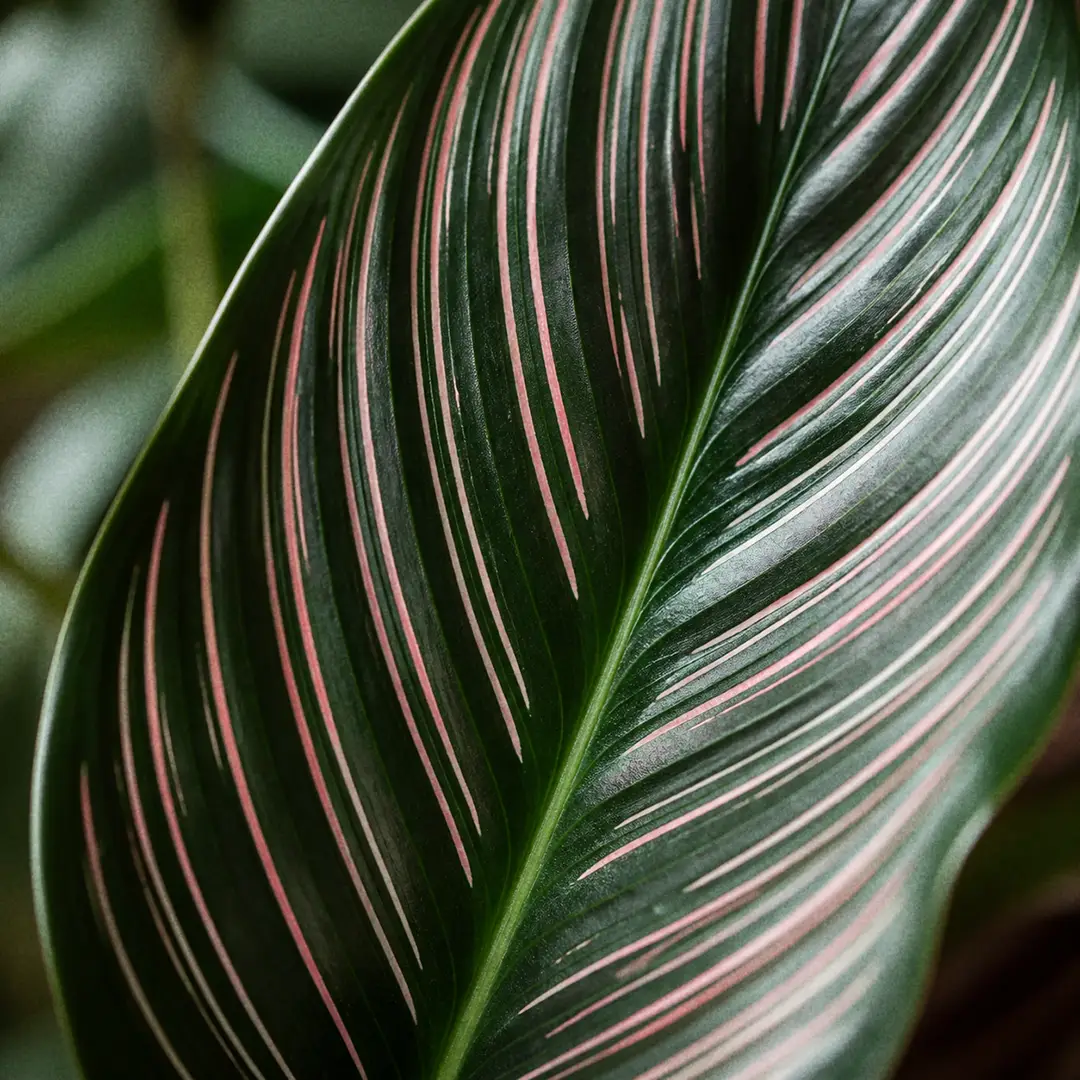
The one most shops simply label Pinstripe. Very dark, almost blackish-green leaves with clean pink stripes running out from the midrib in pairs, and a deep purple underside. Some botanists argue it is a separate species, Goeppertia sanderiana, rather than a cultivar, which is why you will see the name written both ways on labels.
Calathea ornata 'Beauty Star'
Wider, more elongated leaves with broad pale green brush strokes alongside the fine stripes, which gives it a softer, more feathered look than Sanderiana's crisp lines. It stays a bit more compact, topping out around two feet. Sold everywhere and often mislabelled as plain ornata.
Calathea ornata 'Albolineata' and 'Roseolineata'
Two older named forms you meet less often. Albolineata carries white to pale green stripes with no pink at all, and Roseolineata keeps a soft rose-pink line that holds its color longer than the standard form. Both want identical care, so pick on looks alone.
How It Compares to Other Calatheas
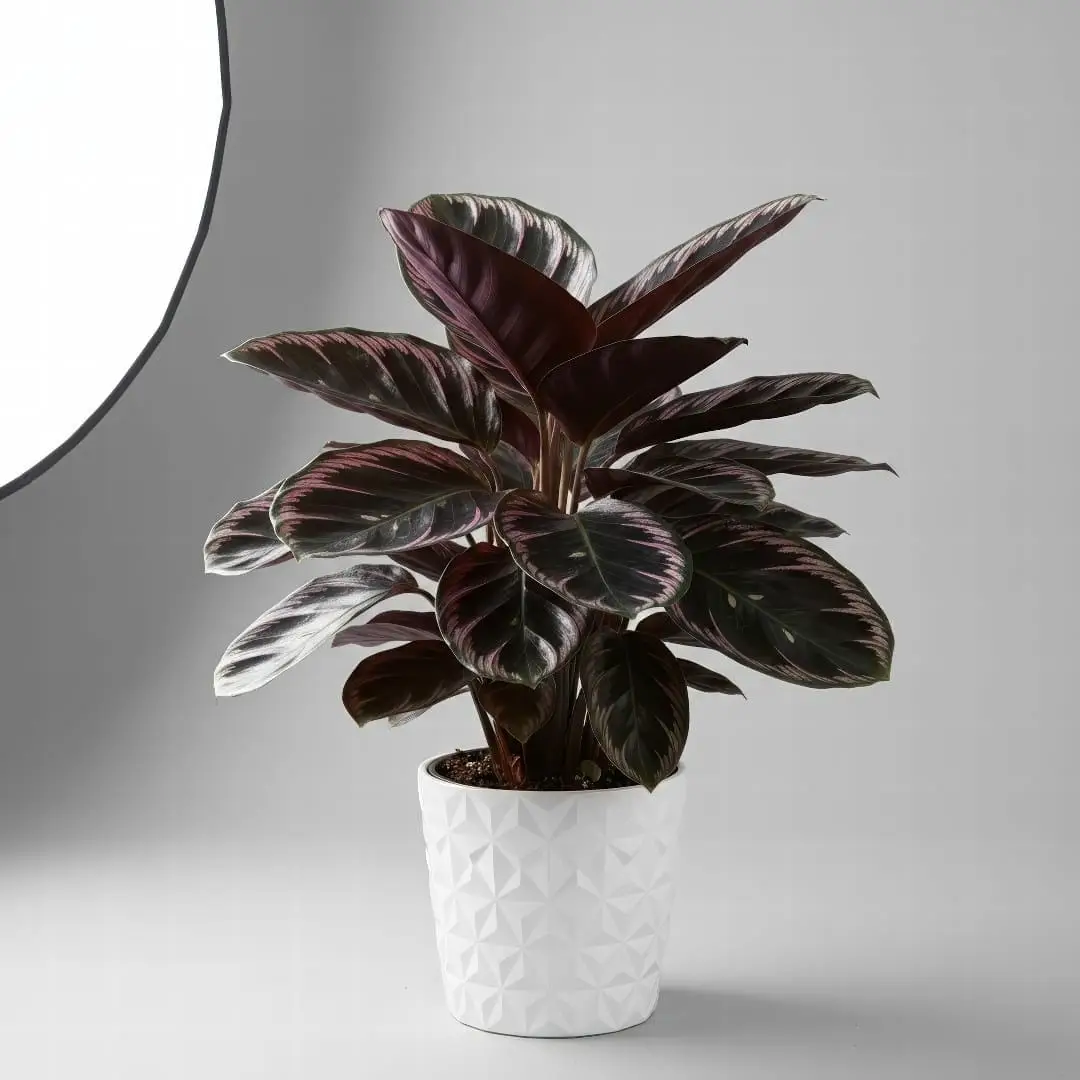
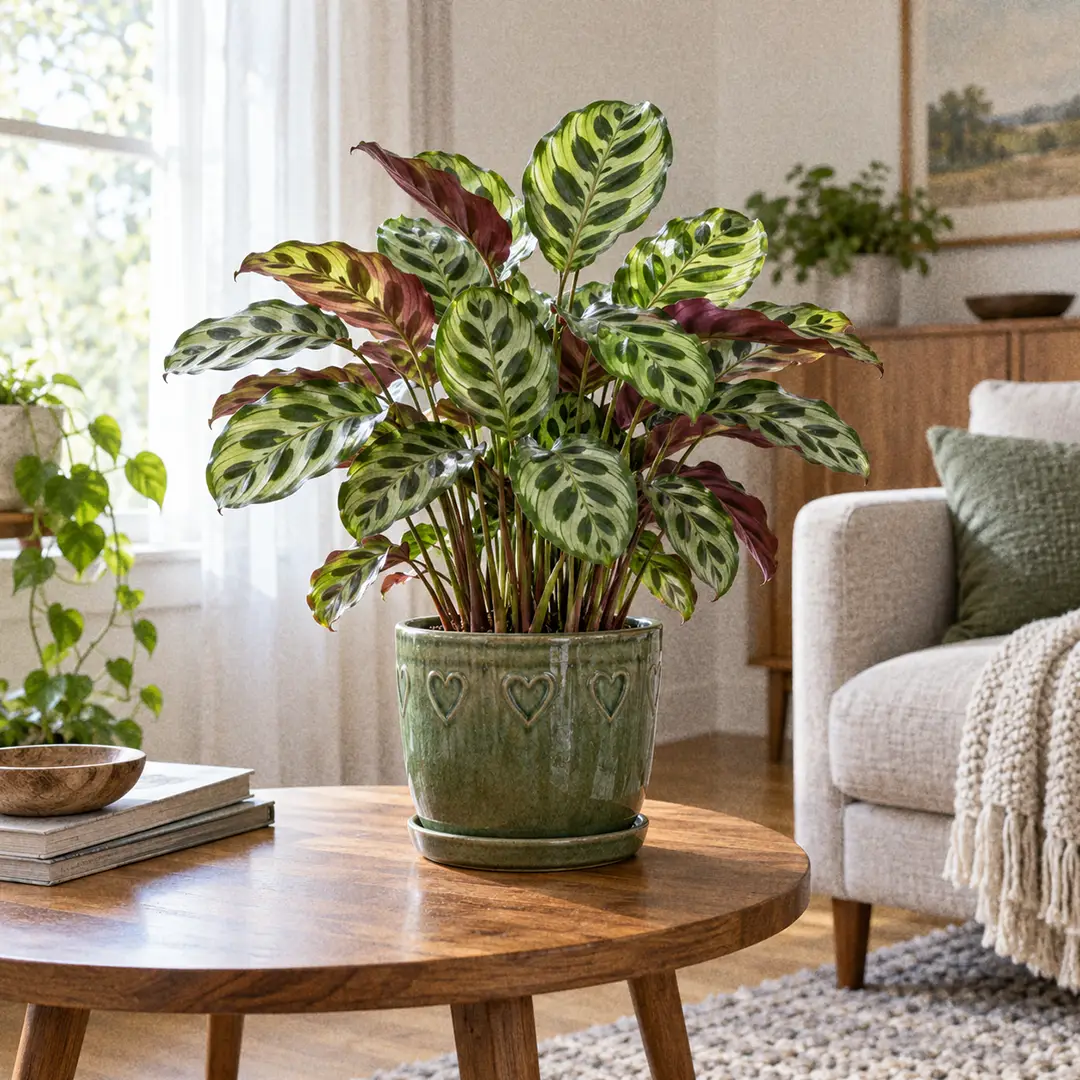
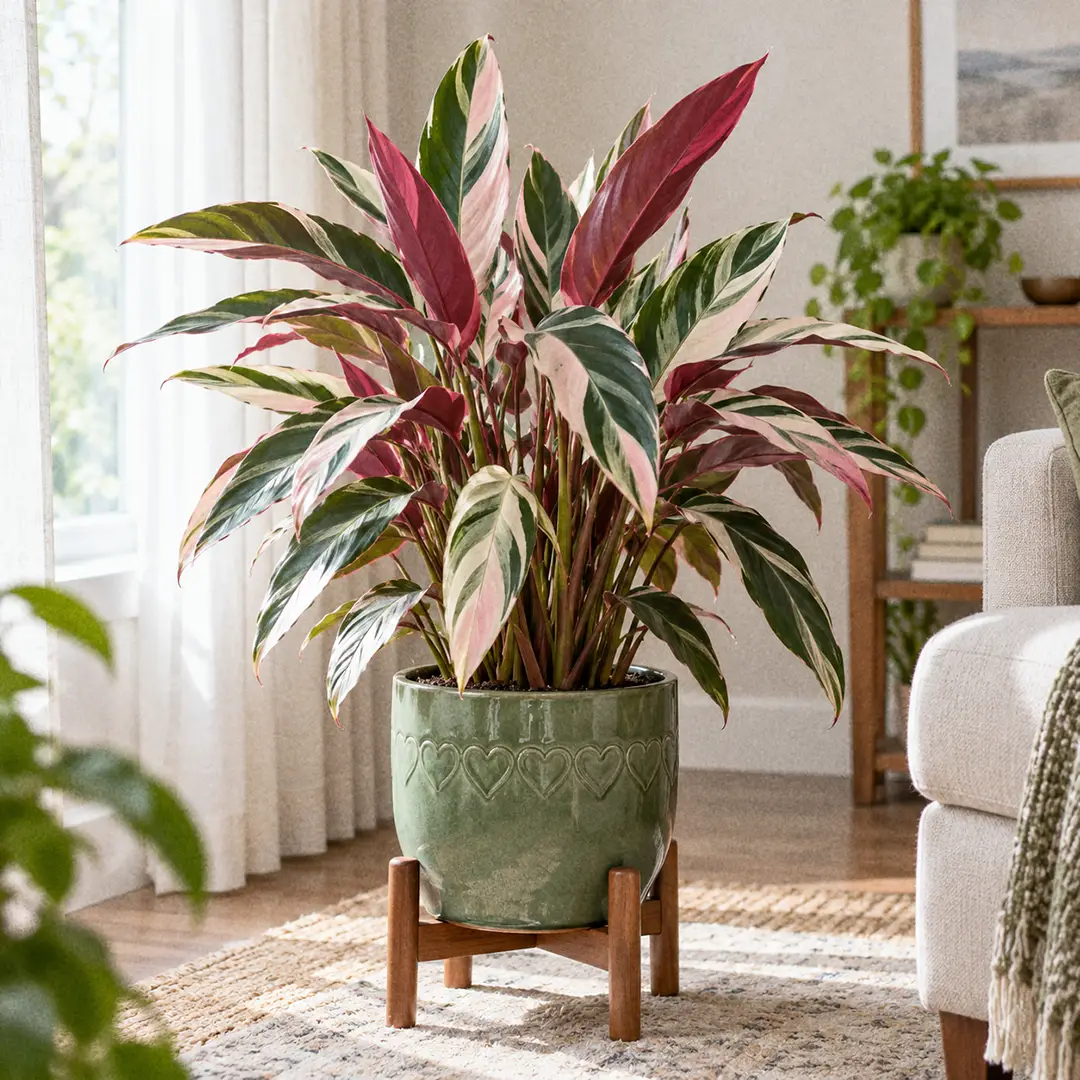
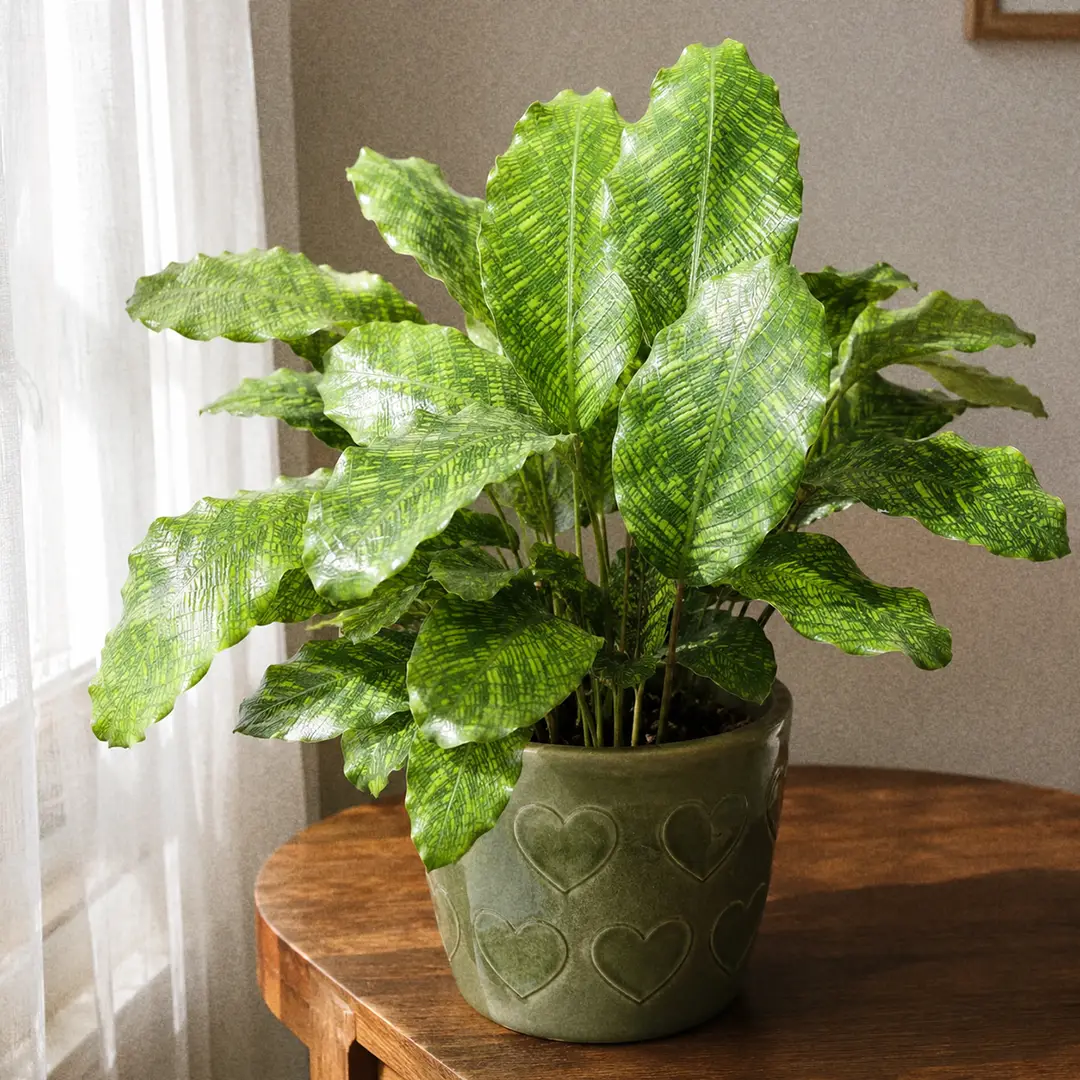
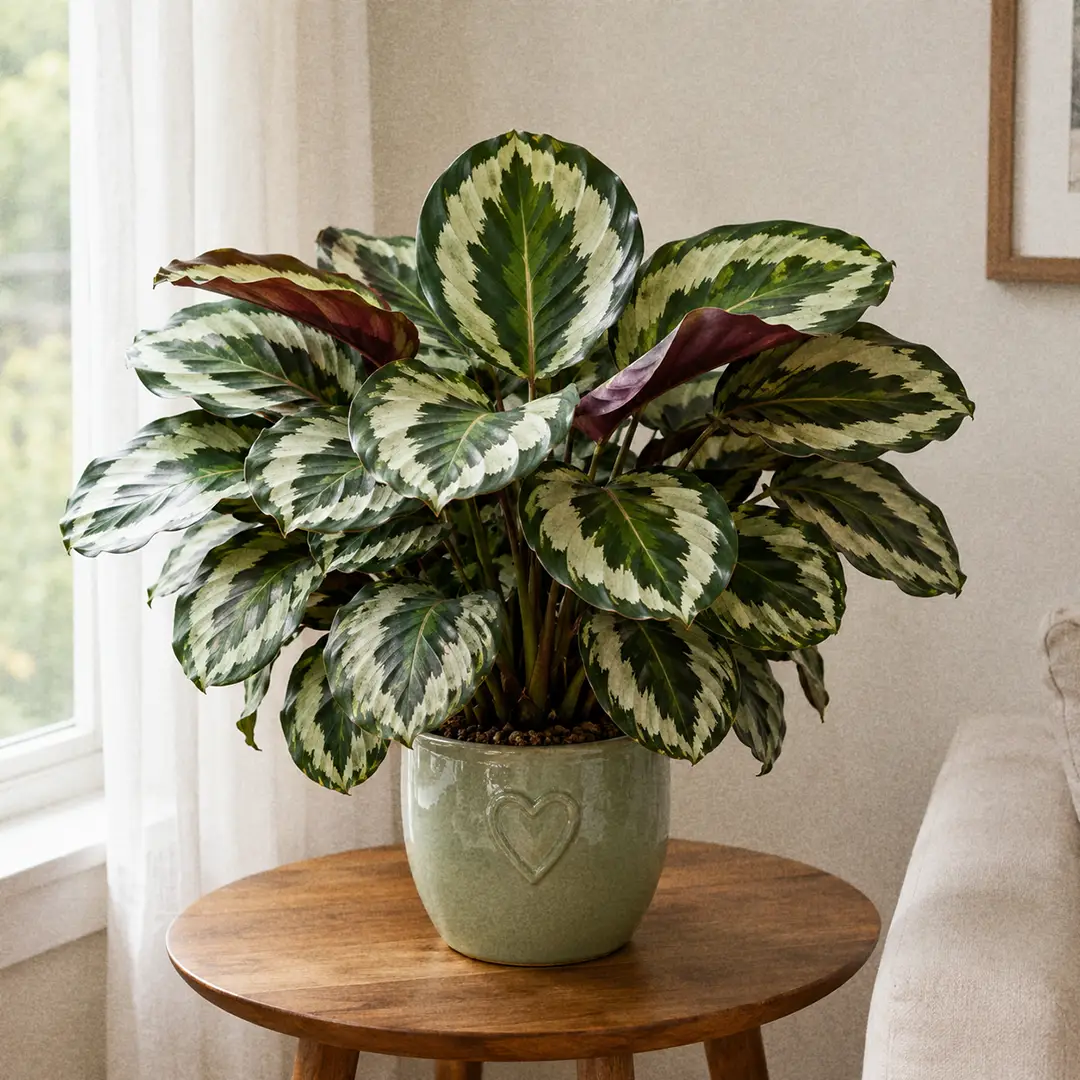
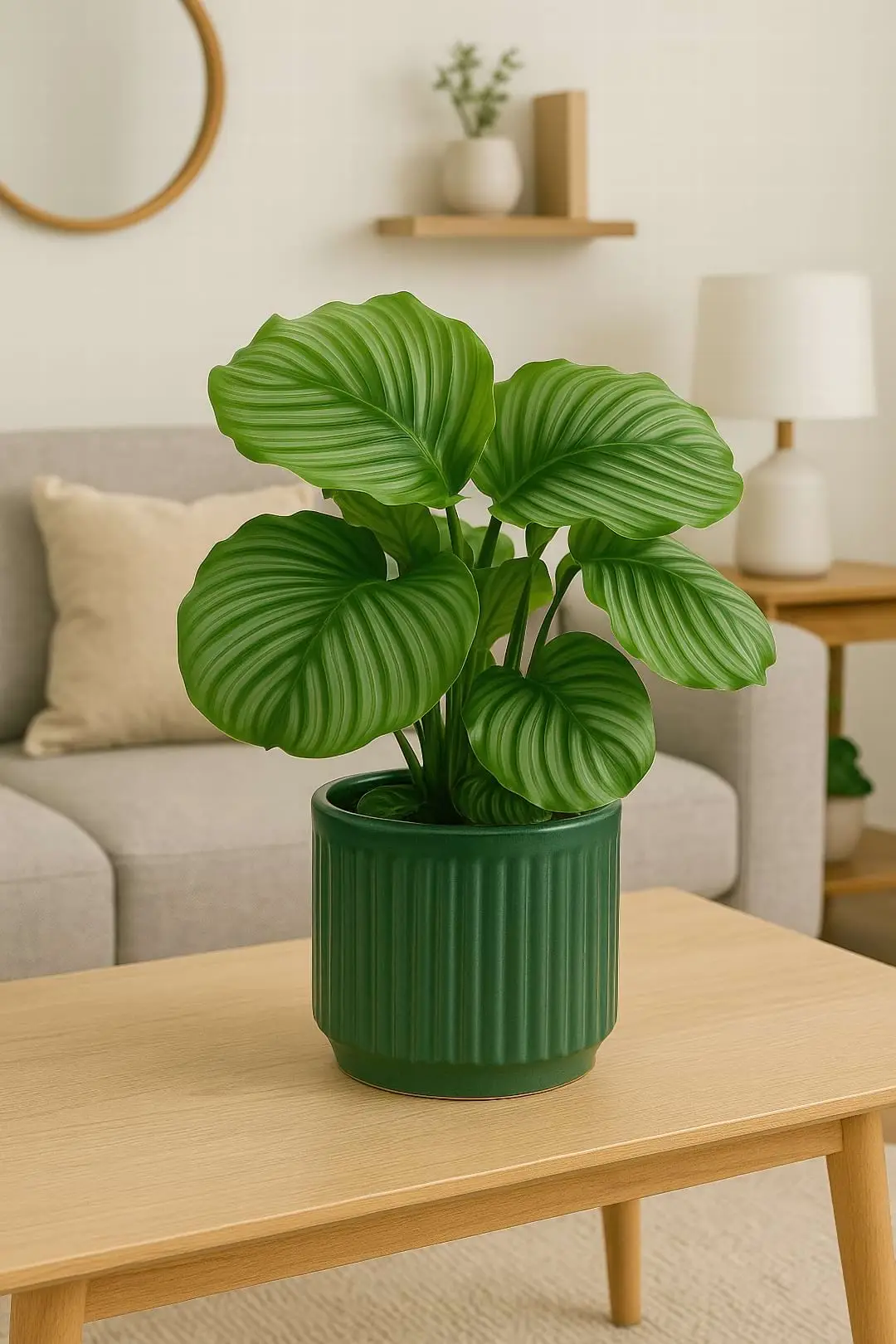
Next to a Calathea Orbifolia with its huge round silver-banded leaves, the Pinstripe is finer and more linear. Calathea Dottie is the darker, moodier option, near-black leaves with a single pink outline instead of many stripes. The Calathea Medallion sits at the other end again, with big rounded leaves ringed in cream and silver rather than lined. All four ask for the same water and humidity. The one to approach with caution is Calathea White Fusion, which swaps stripes for marbled white patches and needs a good deal more humidity than any of these to keep those pale areas from browning. At the opposite end sits Calathea Network, whose thicker leaves carry a fine green grid rather than stripes and cope with dry air better than anything else in the family. Outside the Calathea genus but in the same family, Stromanthe Triostar is the one to look at if you want pink: taller, more upright, and painted in cream and blush rather than lined. For a paler, feathered pattern on thinner leaves, the Calathea Peacock is a gentler starter calathea that tolerates less light than the Pinstripe.
🪴 Potting and Repotting Calathea Pinstripe
When to Repot
Every two years in spring, or sooner if roots are circling the drainage holes and the pot dries out within a day or two of watering. Pinstripes are not desperate to be repotted and they do sulk for a couple of weeks afterwards, so do not do it more often than needed.
Choosing a Pot
Go up one size only, roughly two inches wider. An oversized pot holds a reservoir of wet soil the roots cannot reach, which is a direct route to rot. Drainage holes are non-negotiable.
Plastic or glazed ceramic suits this plant better than raw terracotta, because terracotta wicks moisture out through its walls and works against the even dampness you are trying to maintain. If you love the look of terracotta, use it as an outer cachepot with the plastic nursery pot slipped inside. Our pots guide covers the trade-offs.
Step-by-Step Repotting
- Water lightly the day before so the rootball holds together.
- Slide the plant out and loosen the outer roots gently with your fingers.
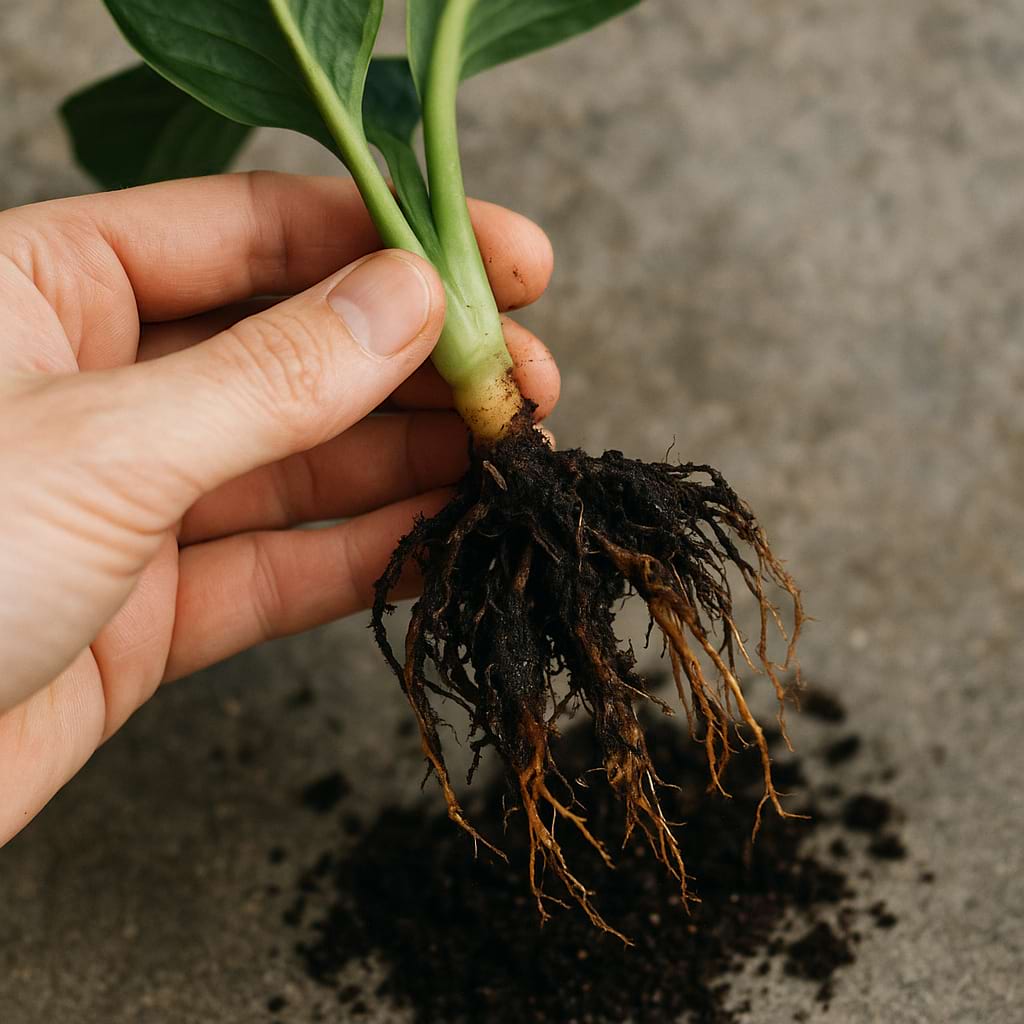
- Trim any black, mushy roots with clean scissors.
- Set it in the new pot at the same depth it was growing before, never deeper.
- Backfill with fresh mix, firm lightly, water in, and keep it out of bright light for a week while it settles.
Our repotting guide has the full walkthrough if this is your first time.
✂️ Pruning Calathea Pinstripe
When to Prune
There is no seasonal pruning to do here. This plant grows as a clump of individual leaves rising from a rhizome, so it never gets leggy or shaggy the way a vining plant does. You are only ever tidying.
How to Prune
Cut damaged or yellowed leaves right down at the base of their stem with clean scissors, not partway up the stalk. A stub left behind will brown, die back on its own, and can invite rot at the crown.
Trimming Crispy Edges
You can trim brown edges cosmetically, and it does make the plant look better. Follow the natural curve of the leaf and leave a hair of brown behind rather than cutting into green tissue, which just creates a fresh brown line. Do fix the underlying cause though, because trimming treats the symptom and not the water or humidity problem behind it.
🌱 How to Propagate Calathea Pinstripe
Division Is the Only Method That Works
Do not waste a leaf on this. Calathea leaves and stem cuttings will not root in water or soil, because there is no node on a leaf stem capable of producing new growth. The plant spreads underground by rhizome, so the only propagation route is splitting an established clump.
When to Divide
Spring, at repotting time, and only once the plant is genuinely full with several distinct clusters of stems. A young plant with five or six leaves does not have enough to give. Dividing a struggling plant usually kills both halves, so wait until it is thriving.
Step-by-Step Division
- Water thoroughly the day before, then slide the whole plant out of its pot.
- Rinse or brush enough soil off the base to see where the rhizomes separate.
- Find the natural gaps between clusters. Ease them apart with your fingers where you can, and use a clean sharp knife where the rhizome resists.
- Make sure each division has both its own roots and at least three or four leaves. Anything less will not sustain itself.
- Pot each piece into a small container of fresh mix and water it in.
Aftercare
This is where divisions are won or lost. Keep the new pots warm, out of direct light, and in high humidity for three to four weeks, since the cut roots cannot yet supply the leaves. A clear plastic bag loosely tented over each pot, opened daily for air, works perfectly. Some drooping in the first week is normal. Our plant division guide covers the technique across other species.
🐛 Calathea Pinstripe Pests and Treatment
Thin, soft, permanently humid leaves make this plant an easy target, and the pests that find it tend to arrive in numbers. Check the undersides weekly, because every one of these hides there.
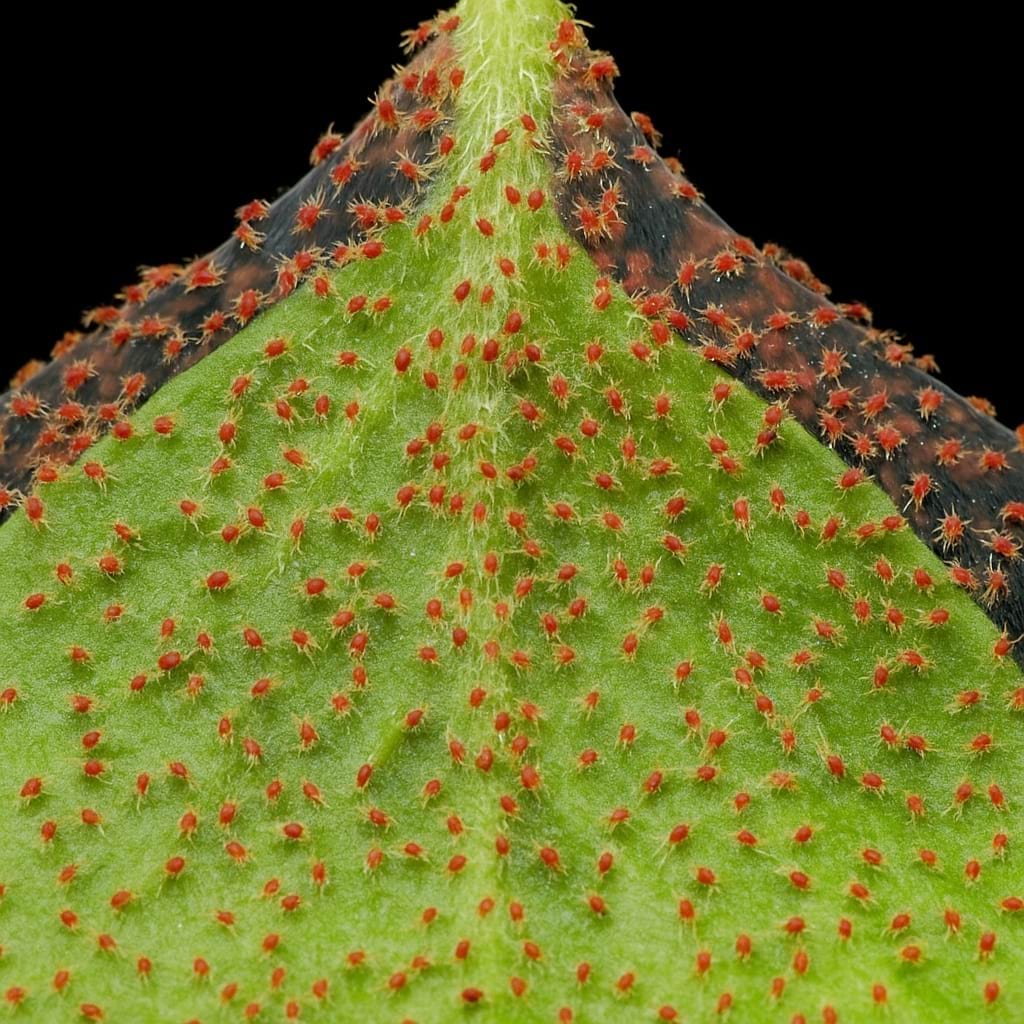
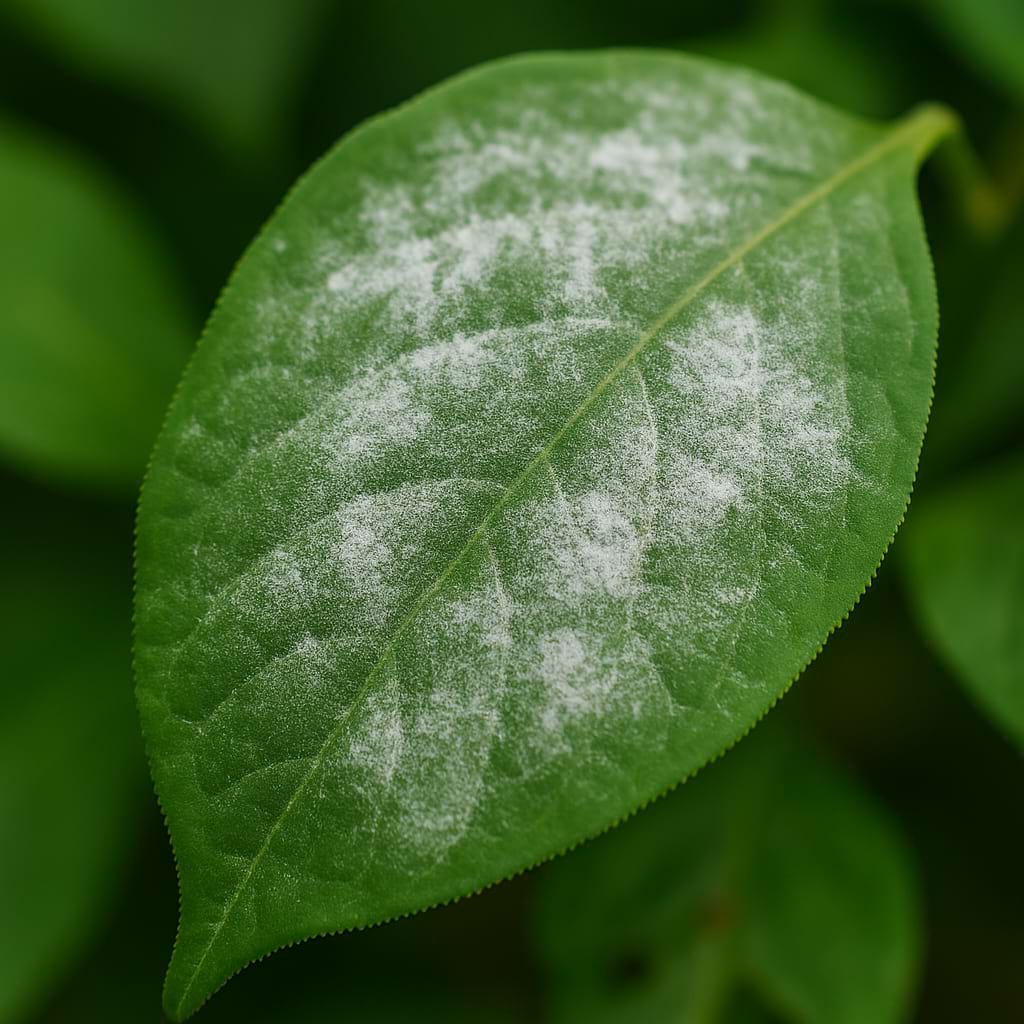
Spider mites are the number one enemy. They thrive in the dry heated air that also causes crispy edges, so a Pinstripe that is struggling with humidity is usually fighting mites too. Look for fine speckled stippling on the leaf surface and faint webbing where the stem meets the blade.
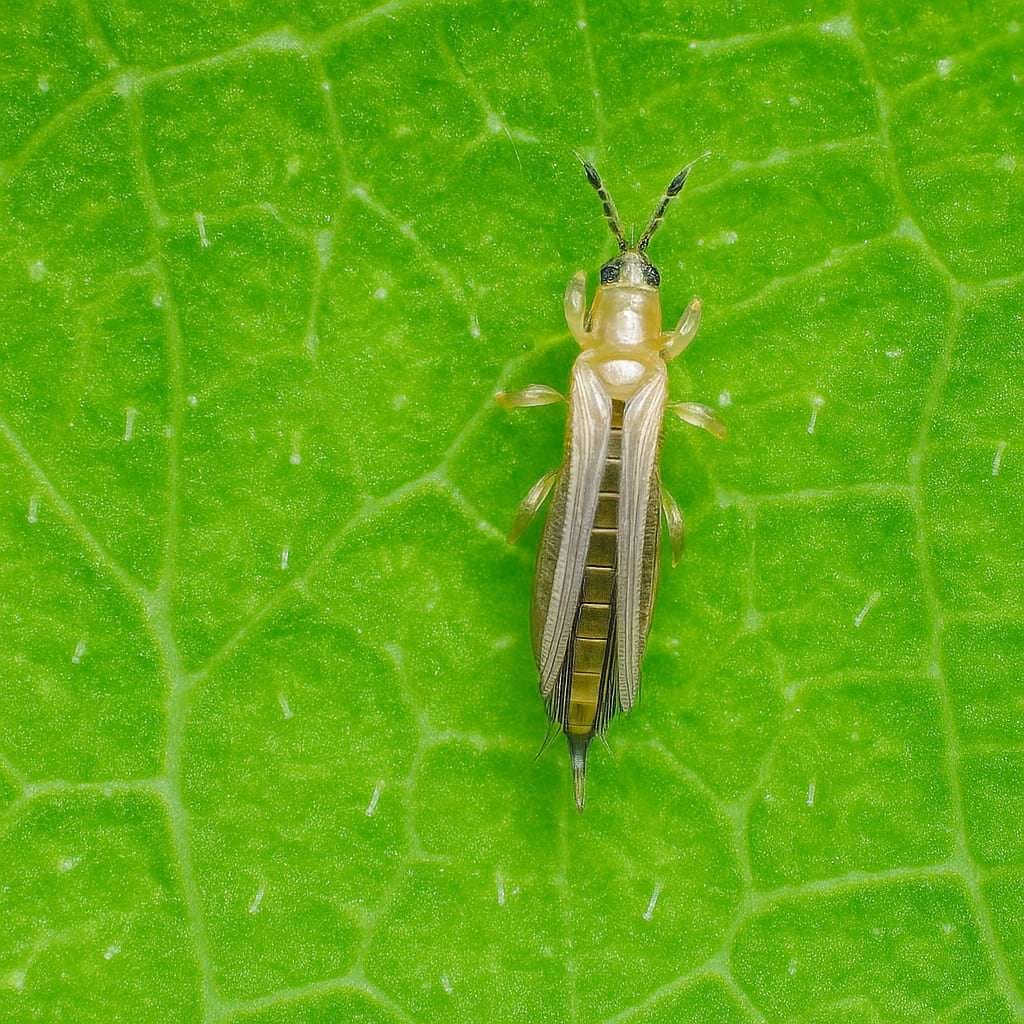
Thrips leave silvery streaks and tiny black dots of frass, and they distort new leaves as they unfurl. They are stubborn and need repeat treatment every five to seven days for a month.
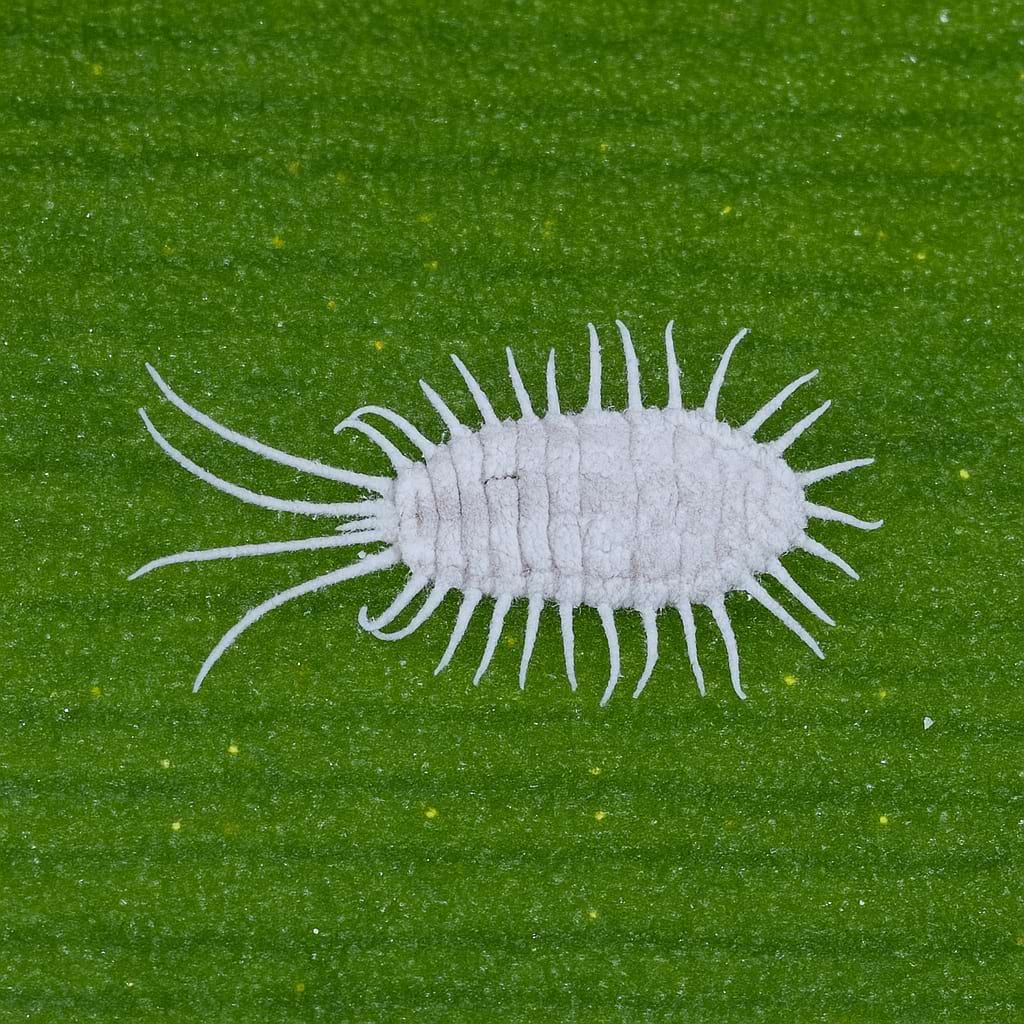
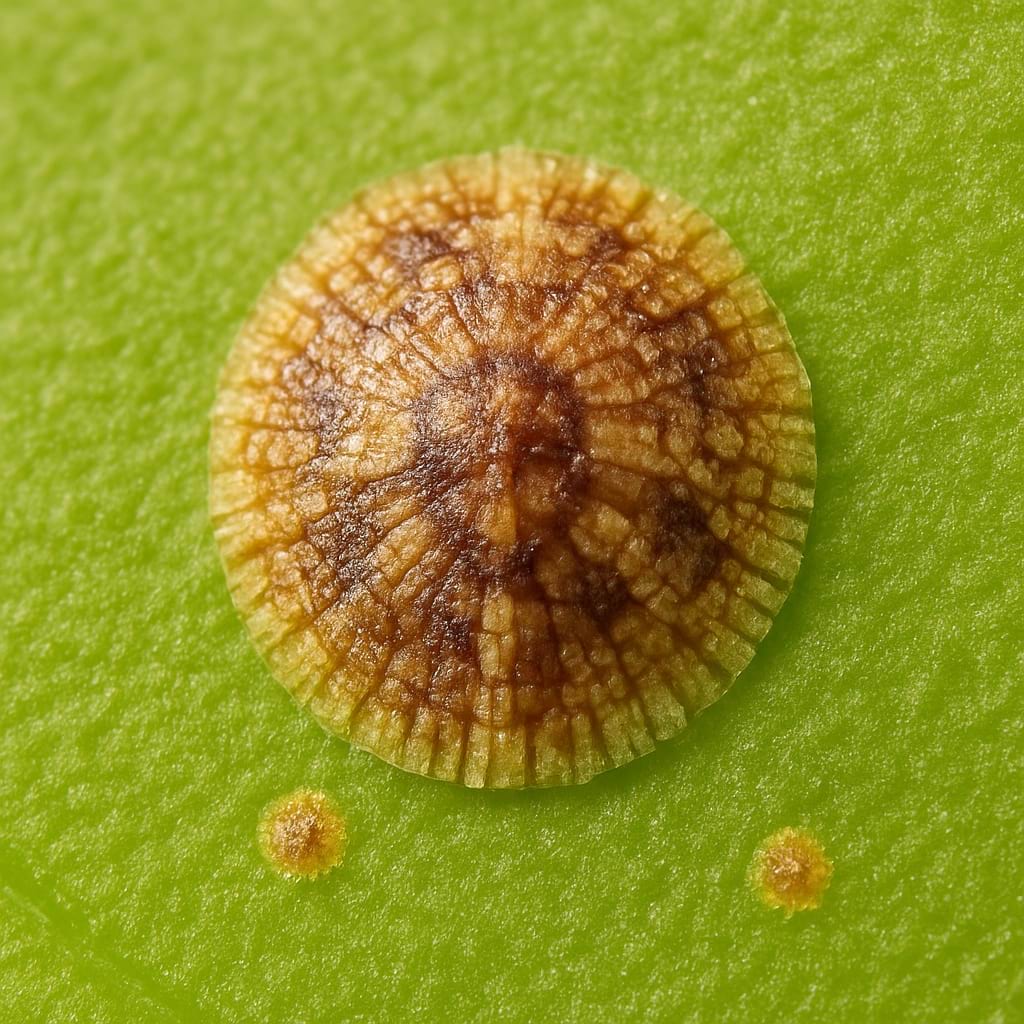
Mealybugs show up as white cottony blobs tucked into the crown and leaf joints, and scale insects look like small brown limpets stuck to the stems. Both wipe off with a cotton bud dipped in rubbing alcohol.
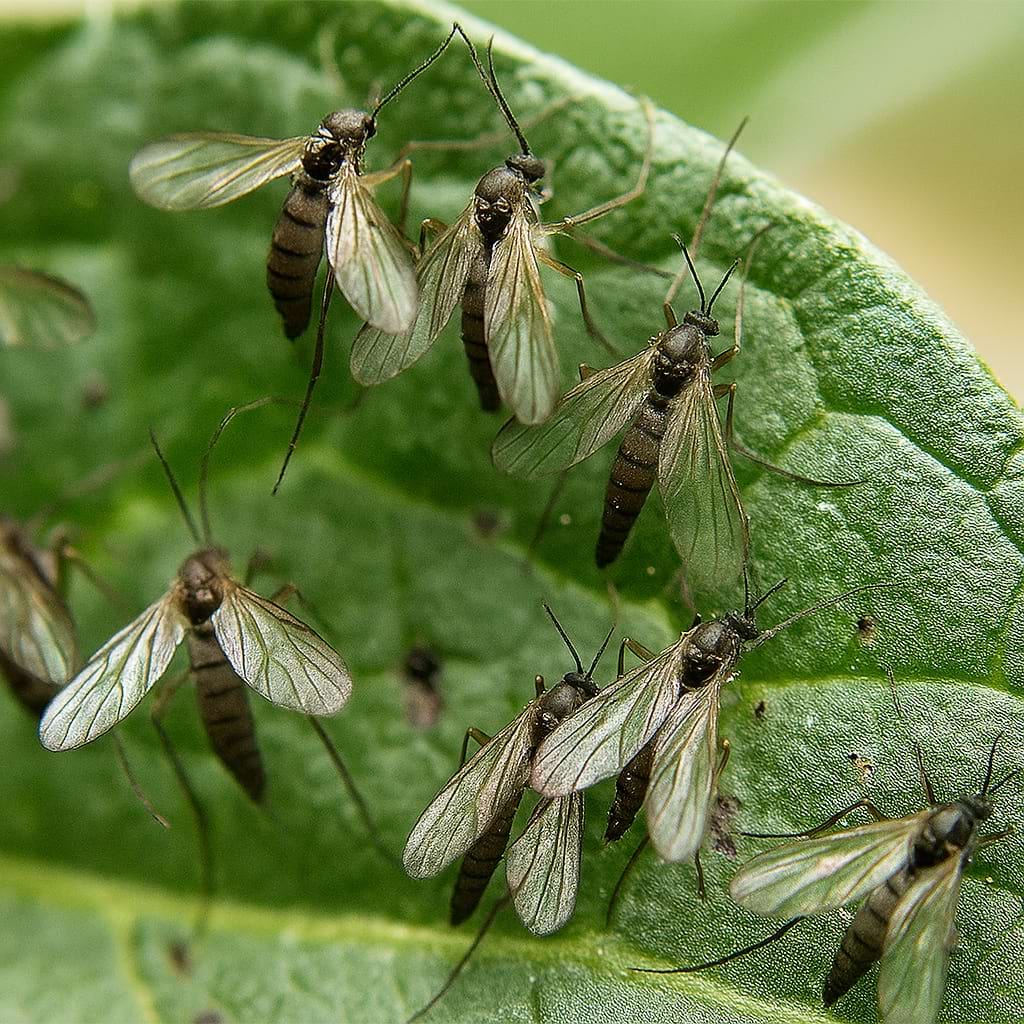
Fungus gnats are almost guaranteed on a plant kept this damp. The adults are harmless but the larvae chew fine roots. Yellow sticky traps plus letting the very top layer of soil dry between waterings breaks the cycle.
For all of them, insecticidal soap or a neem spray applied to both leaf surfaces, repeated weekly for three weeks, handles the job. Isolate the plant from your other tropicals while you treat it.
🩺 Common Calathea Pinstripe Problems
Brown crispy edges are the signature complaint and there are only three causes worth checking: hard tap water, low humidity, and fertilizer salt buildup. Work through them in that order, since water quality is the culprit far more often than people expect.
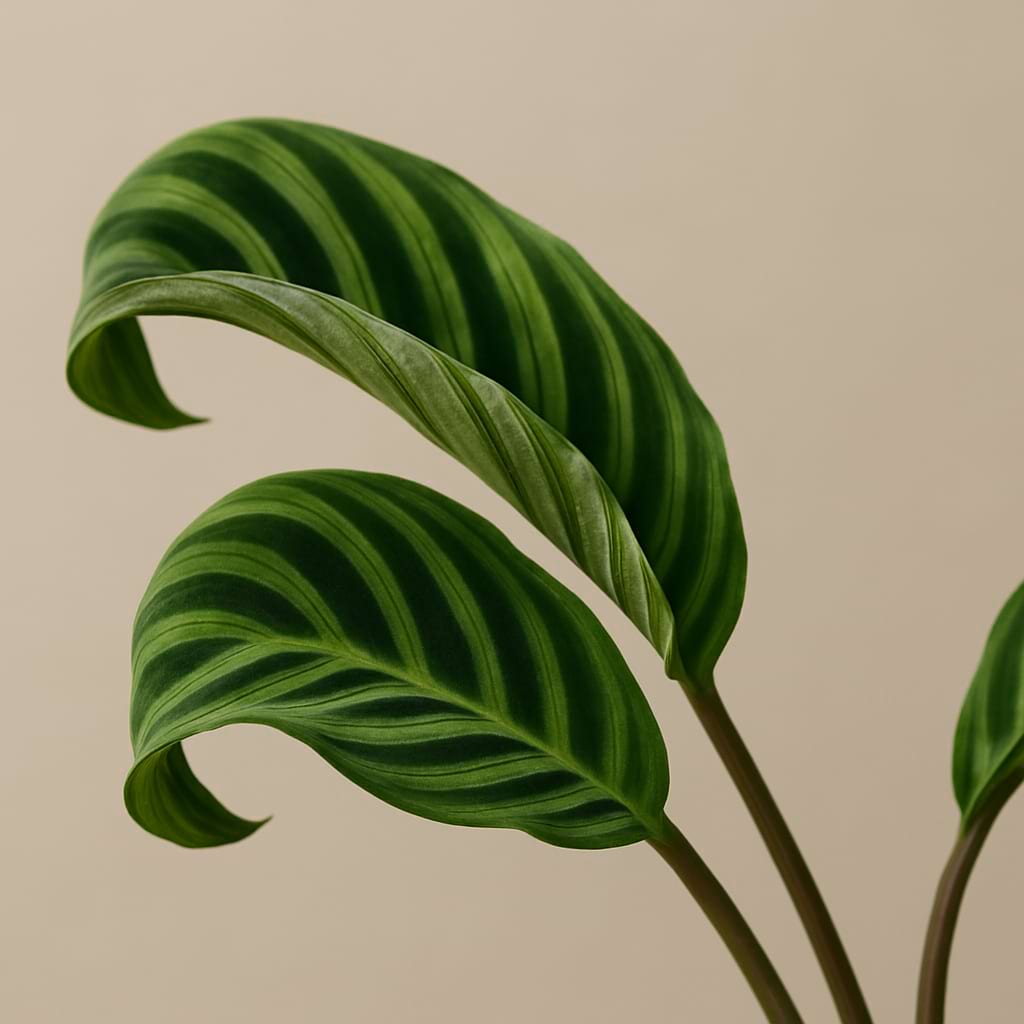
Curling leaves mean thirst almost every time. Leaves that roll inward like cigars are telling you the soil went dry, and they usually flatten out within a day of a proper soak. Persistent curling with damp soil points to damaged roots instead.
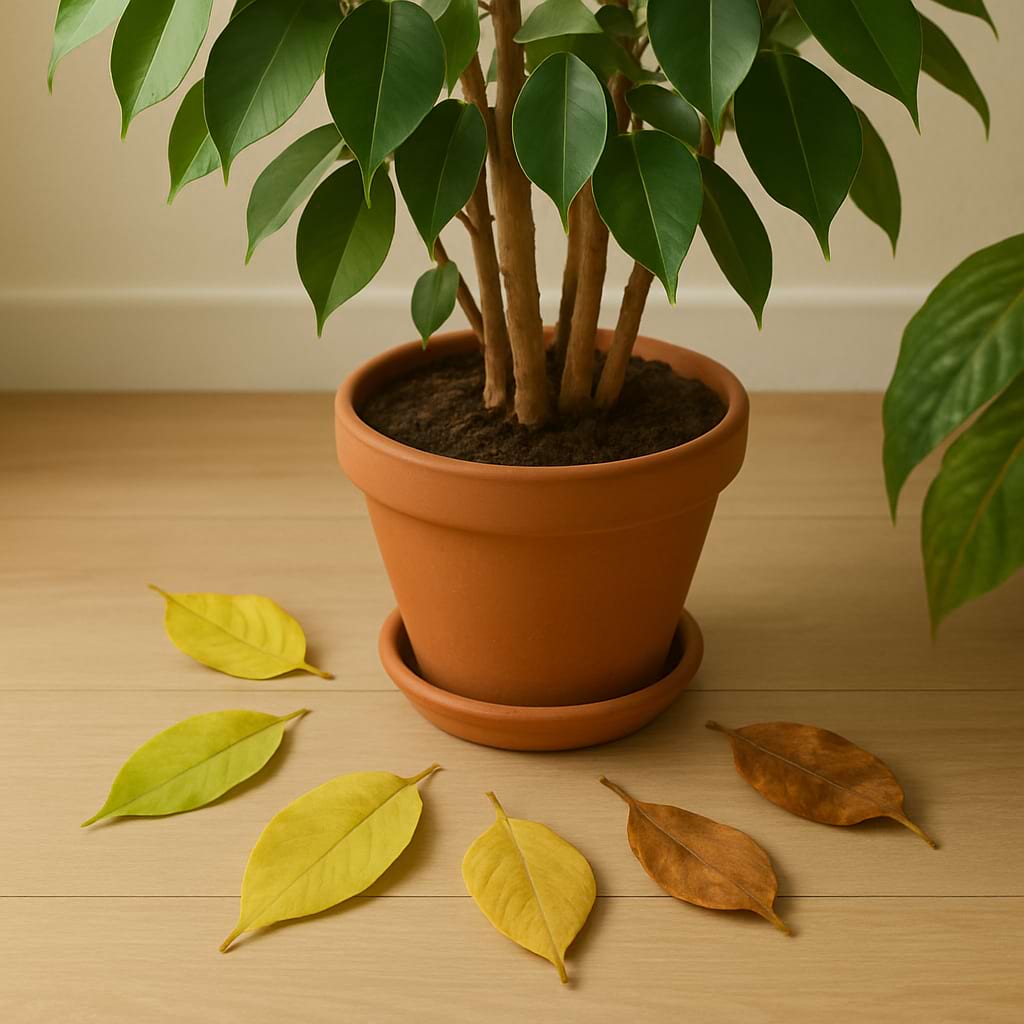
Yellowing leaves at the base of the clump are normal aging, one or two at a time. Widespread yellowing with soft stems means overwatering and probably root rot, which is the one problem here that actually kills. Tip the plant out and check for black mushy roots.
Faded, washed-out patterning usually means too much direct sun. Move it back from the window and new growth will come in properly marked.
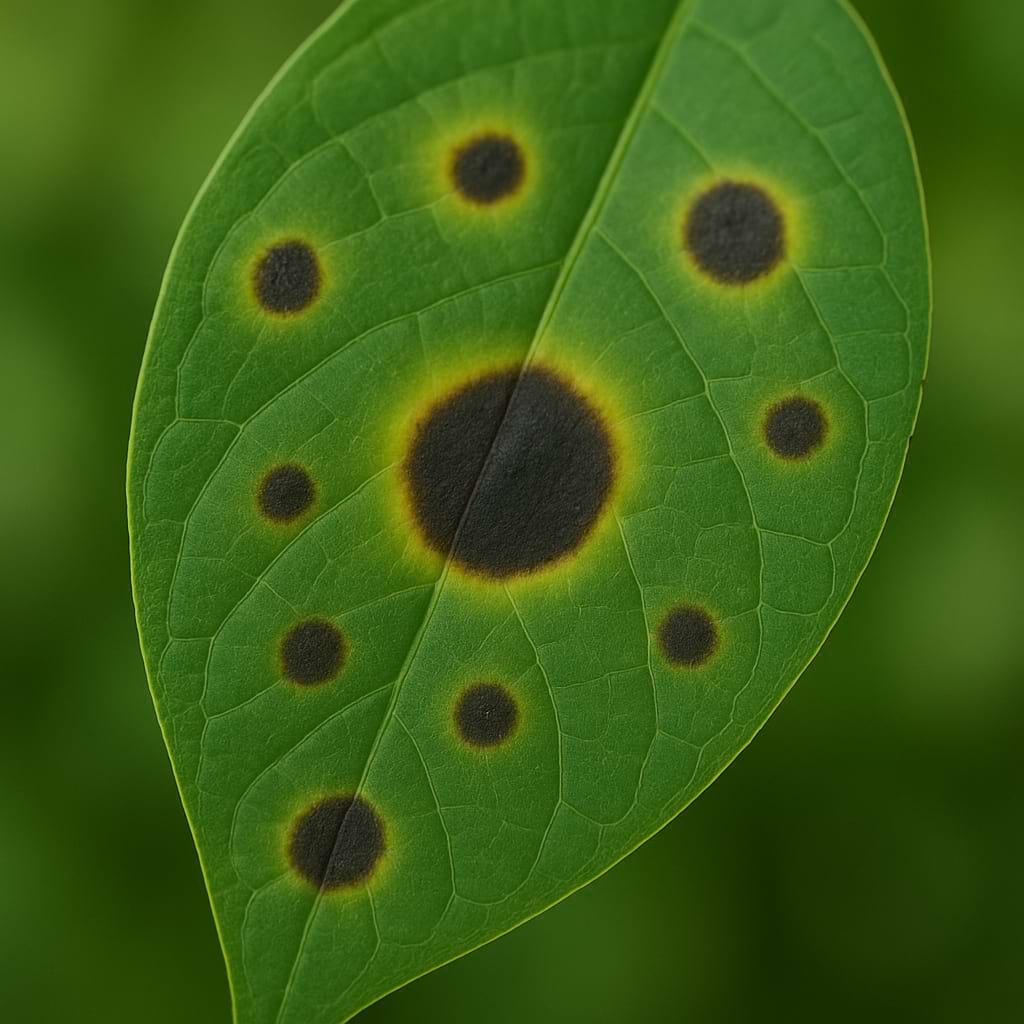
Brown or black spots with a yellow halo suggest fungal leaf spot, which arrives when leaves stay wet overnight in still air. Remove affected leaves, stop misting, and improve airflow.
Leaf drop after you bring the plant home is transport shock and settles down. If it happens later, look for a cold draft or a heating vent nearby.

🖼️ Calathea Pinstripe Display and Styling Ideas
Where It Looks Best
Bathrooms and kitchens are the obvious wins, because the humidity is already there and you get the plant looking its best with no extra effort. A window-lit bathroom shelf is close to a perfect Pinstripe home.
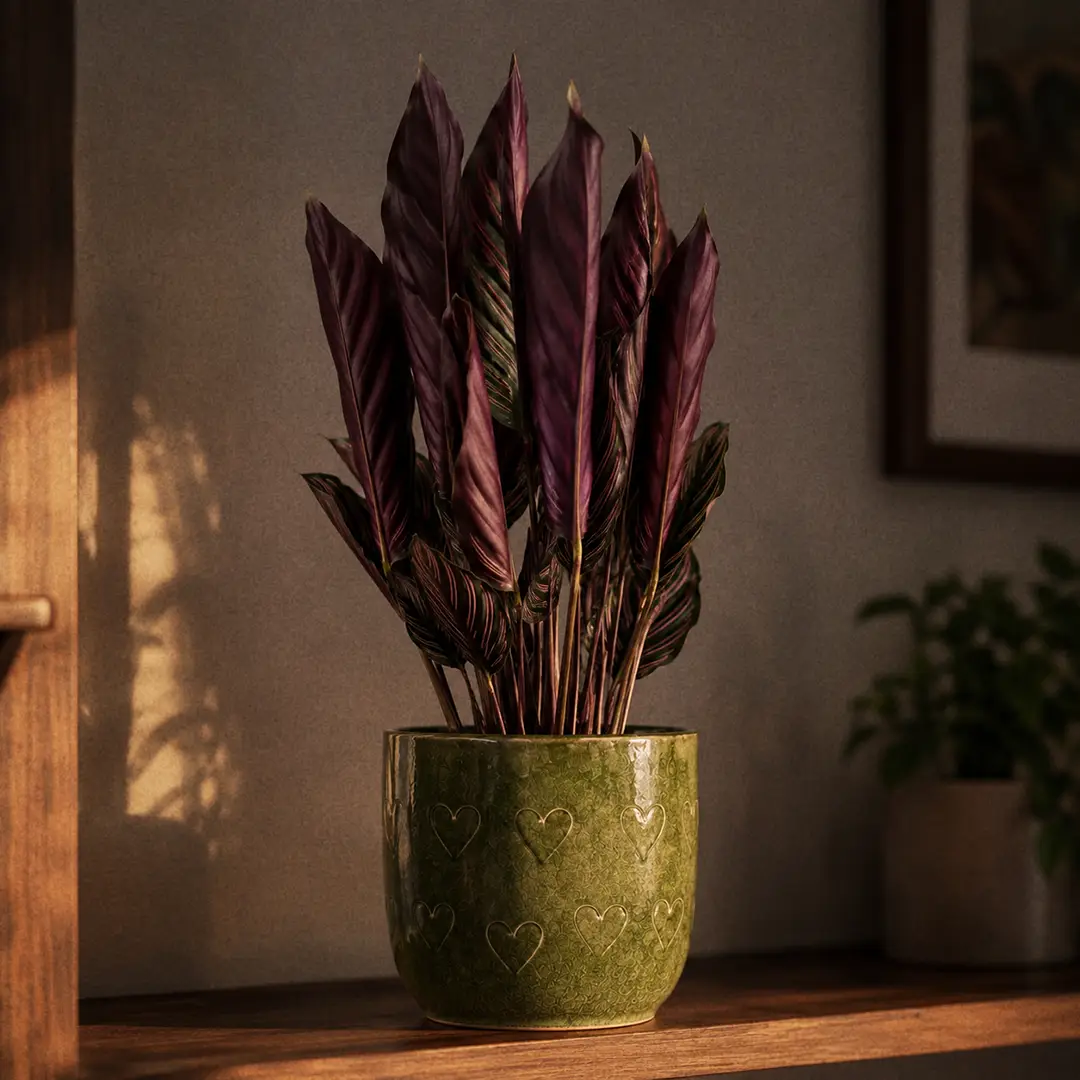
Keep the pot plain. Those fine stripes disappear against patterned ceramic or a busy wallpaper, so a solid-colored pot and a calm background do the plant a real favor.
Grouping and Pairings
Group it with other humidity lovers so they raise the local moisture between them. A Nerve Plant at its feet and a Bird's Nest Fern beside it makes a good trio, all three wanting identical conditions. For contrast, the broad round leaves of a Calathea Orbifolia set off the Pinstripe's fine lines nicely.
Where Not to Put It
Not on a sunny windowsill, not above a radiator, not beside an exterior door in winter, and not in a hallway that gets a blast of cold air every time somebody comes home. Also keep it at eye level or below, since the purple undersides and the nightly folding are half the pleasure of owning one and you will miss both from a high shelf.
🌟 Calathea Pinstripe Pro Care Tips
- Fix the water before anything else. If you change one thing on this page, make it filtered or rainwater. It solves more Pinstripe problems than any other single adjustment.
- Buy a humidity meter, not a misting bottle. Knowing your room sits at 34% tells you what to do. Misting just makes you feel like you did something.
- Rotate the pot a quarter turn each week. The leaves track light, and without rotation the clump leans permanently toward the window.
- Flush the pot every couple of months. A slow heavy pour of clean water through the soil carries out the mineral salts that cause crispy edges.
- Let the leaves tell you the time. If the leaves are not rising in the evening and lowering in the morning, something is off, usually light or root health. It is the earliest warning signal this plant gives you.
- Never use leaf shine. It clogs the pores on these thin leaves. A soft damp cloth is all they need.
❓ Frequently Asked Questions
Why does my Calathea Pinstripe have brown crispy edges?
Almost always hard tap water, low humidity, or salt buildup from fertilizer, and often all three at once. Switch to filtered, distilled or rainwater, get the room above 60% humidity with a humidifier, and flush the pot thoroughly every couple of months. Trim the brown edges for looks, but fix the cause or they will come back on every new leaf.
Is Calathea Pinstripe toxic to cats and dogs?
No. Goeppertia ornata is listed by the ASPCA as non-toxic to both cats and dogs, and the same goes for every Calathea. A pet that eats a large amount of any plant material may get a mildly upset stomach, but there is nothing poisonous here.
Why are the pink stripes turning white?
Two different reasons. On older leaves, pink naturally fades toward white as the leaf matures, and that is just the plant aging normally. If your newest leaves are coming in pale, the plant is getting too much direct sun, so move it back from the window.
Why is my Calathea Pinstripe curling its leaves?
It is thirsty. Leaves rolling inward is this plant's fastest response to dry soil, and they usually unfurl within a day of a good soak. If the soil is damp and the leaves are still curled, check the roots for rot instead.
Can I propagate a Calathea Pinstripe from a leaf cutting?
No, and it is worth knowing before you try. Calathea leaves and stems have no growth node capable of producing roots, so a cutting in water will simply rot. Division of the rhizome clump at repotting time is the only method that works.
How often should I water it?
Whenever the top inch of soil feels dry, which can be twice a week in warm summer months and once every week or ten days in winter. Skip fixed schedules and check with your finger, since pot size, light and season change the answer constantly.
Do the leaves really move?
They do. The leaves rise up in the evening and lower again in the morning, driven by a hinge of cells at the base of each leaf stem. It is called nyctinasty, it is where the prayer plant nickname comes from, and it is a good daily health check.
Does it need a humidifier, or will misting do?
A humidifier, honestly. Misting raises humidity for a few minutes and leaves water sitting on the leaves overnight, which can bring on fungal spotting. If a humidifier is out of the question, a pebble tray plus grouping with other plants in a bathroom is the next best option.
Why did my Calathea Pinstripe droop suddenly?
Check the soil first. Bone dry means it needs water and it should recover within hours. Wet soil with drooping leaves means the roots are failing, so tip it out and look. Sudden drooping can also be cold shock from a draft or a chilly windowsill.
How big does a Calathea Pinstripe get indoors?
One to three feet tall with roughly the same spread, reaching full size in about three to five years. It grows as a widening clump rather than climbing or trailing, so it stays a tidy tabletop or floor-level plant for its whole life.
ℹ️ Calathea Pinstripe Info
Care and Maintenance
🪴 Soil Type and pH: Rich, airy, moisture-retentive and free-draining
💧 Humidity and Misting: High humidity, 60% or more, is the difference between good and sad.
✂️ Pruning: Snip spent or badly damaged leaves at the base of the stem.
🧼 Cleaning: Wipe leaves with a soft damp cloth, no leaf shine products.
🌱 Repotting: Every 2 years in spring, one pot size up only.
🔄 Repotting Frequency: Every 2 years
❄️ Seasonal Changes in Care: Ease off water and stop feeding in winter, but keep humidity and warmth steady all year.
Growing Characteristics
💥 Growth Speed: Moderate
🔄 Life Cycle: Perennial
💥 Bloom Time: Spring and summer in the wild; rarely flowers indoors.
🌡️ Hardiness Zones: 10-12
🗺️ Native Area: Southeast Colombia to southwest Venezuela
🚘 Hibernation: No
Propagation and Health
📍 Suitable Locations: Bathrooms, kitchens, bright rooms away from vents and drafts.
🪴 Propagation Methods: Division of the rhizome clump at repotting time.
🐛 Common Pests: Spider Mites, Thrips, Mealybugs, Fungus Gnats, Scale Insects
🦠 Possible Diseases: Root rot, fungal leaf spot
Plant Details
🌿 Plant Type: Rhizomatous Perennial
🍃 Foliage Type: Evergreen
🎨 Color of Leaves: Deep green with pink to silvery-white pinstripes and purple undersides
🌸 Flower Color: White to cream
🌼 Blooming: Rarely indoors
🍽️ Edibility: Not edible
📏 Mature Size: 1-3 feet
Additional Info
🌻 General Benefits: Pet safe, no thorns or sap, tolerates lower light than most patterned foliage.
💊 Medical Properties: None known
🧿 Feng Shui: Softens sharp corners and brings calm, restful energy to a room.
⭐ Zodiac Sign Compatibility: Pisces
🌈 Symbolism or Folklore: Rest, renewal, and quiet attention.
📝 Interesting Facts: The leaves rise at night and lower in the morning, a daily movement called nyctinasty, powered by a small hinge of cells at the base of each leaf.
Buying and Usage
🛒 What to Look for When Buying: Check leaf undersides for spider mite webbing and look for a full clump of stems rather than a few tall ones. Crispy edges on a shop plant mean it has already been dried out.
🪴 Other Uses: Terrariums when young, bathroom greenery, pet-safe living decor.
Decoration and Styling
🖼️ Display Ideas: Bathroom shelf, grouped on a pebble tray, low table in a bright room.
🧵 Styling Tips: The fine linear stripes read best against plain pots and solid backgrounds, so keep patterned ceramics away from it.
🪴 See also 🪴
Complete Guide to Calathea Rattlesnake Care and Growth
Complete Guide to Calathea 'Dottie' Care and Growth
Complete Guide to Calathea Peacock Care and Growth
Complete Guide to Stromanthe Triostar Care and Growth
Complete Guide to Calathea Network Care and Growth
Complete Guide to Calathea Medallion Care and Growth
Complete Guide to Prayer Plant Care and Growth

Houseplant101 Forum
Questions & Comments
Ask a question, share your plant experience, or help other plant owners.
Comments are temporarily unavailable.
Open the Houseplant101 ForumNo comments yet
Be the first to ask a question or share your experience about this page.
Log in or create an account
Comments use your Houseplant101 Forum account, but you can stay on this page.
Create a new account