
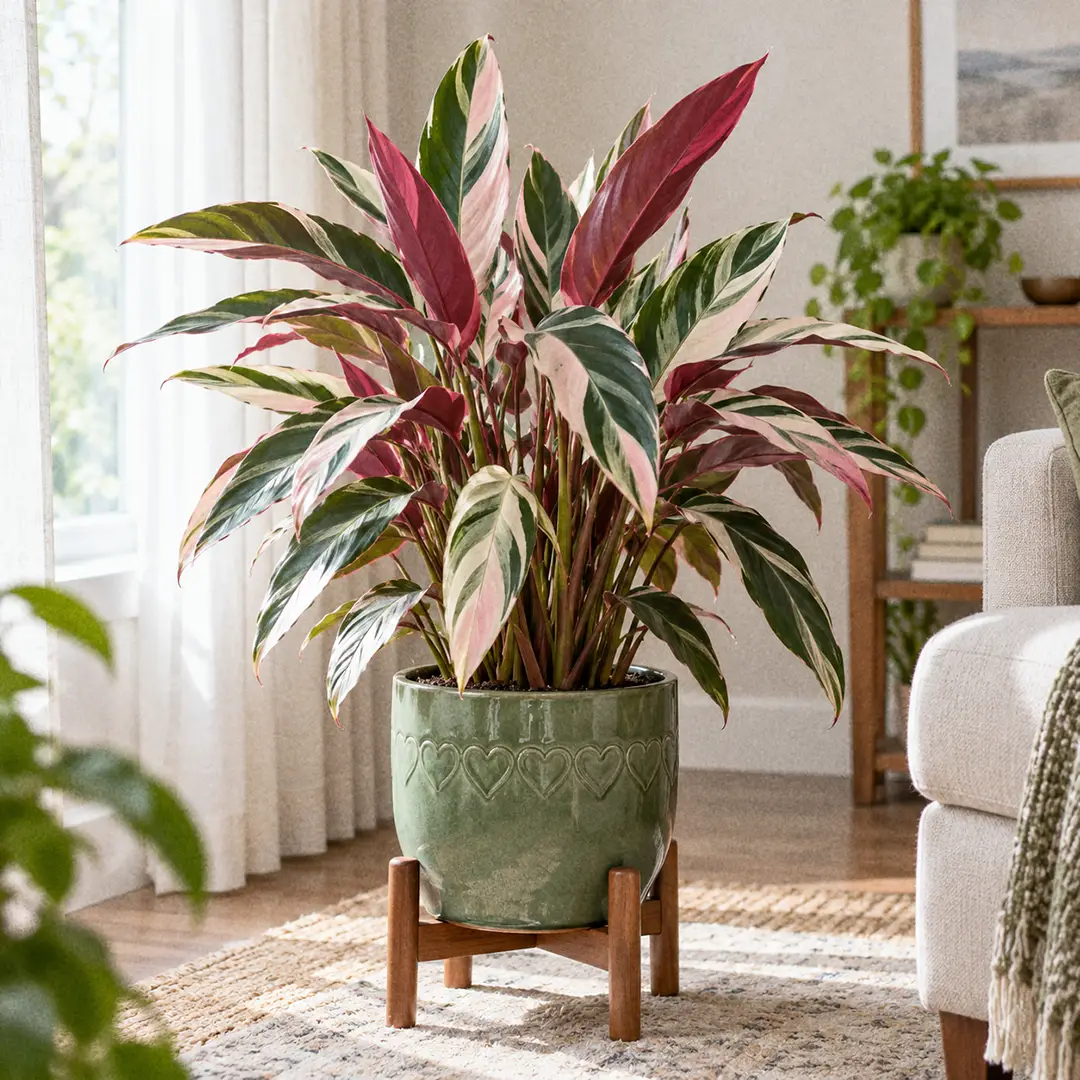
Stromanthe Triostar
Stromanthe thalia 'Triostar'
Stromanthe sanguinea 'Triostar', Tricolor Stromanthe, Tristar Stromanthe, Variegated Bloody Stromanthe, Calathea Triostar


Stromanthe Triostar is the pink, cream and green prayer plant that flips its magenta leaf undersides skyward every evening. Learn how to keep the variegation bright and the leaf edges soft instead of crispy.
📝 Stromanthe Triostar Care Notes
🌿 Care Instructions
⚠️ Common Pests
📊 Growth Information
🪴 In This Guide 🪴

☀️ Stromanthe Triostar Light Requirements (Indoor Lighting Guide)
The Sweet Spot
Triostar grows on the floor of Brazilian coastal rainforest, under a canopy, so it is built for medium indirect light rather than the blazing windowsill most variegated plants want. An east-facing room is the easy answer: put the pot two to four feet back from the glass and let it catch soft morning light without any hot afternoon sun.
North windows work well too, and this is one of the few strongly variegated houseplants that genuinely does fine in one. South and west rooms are also fine as long as you sit the plant well back from the window or filter the light through a sheer curtain. If you are still learning to read a room by eye, our Indoor Lighting Guide walks through it.
Too Little Light
Very dim corners cost you the color first. New leaves come in with muted, washed-out pink and less cream, and the plant leans hard toward whatever light there is. Leaf gaps stretch out along the stems, the clump looks sparse instead of full, and eventually you get small leaves on long thin petioles.
The other giveaway is timing. A well-lit Triostar folds up smartly at dusk and opens back down by mid-morning. A plant in too little light gets sluggish about it and can sit half-folded all day. A grow light on a timer through winter fixes both problems.
Too Much Light
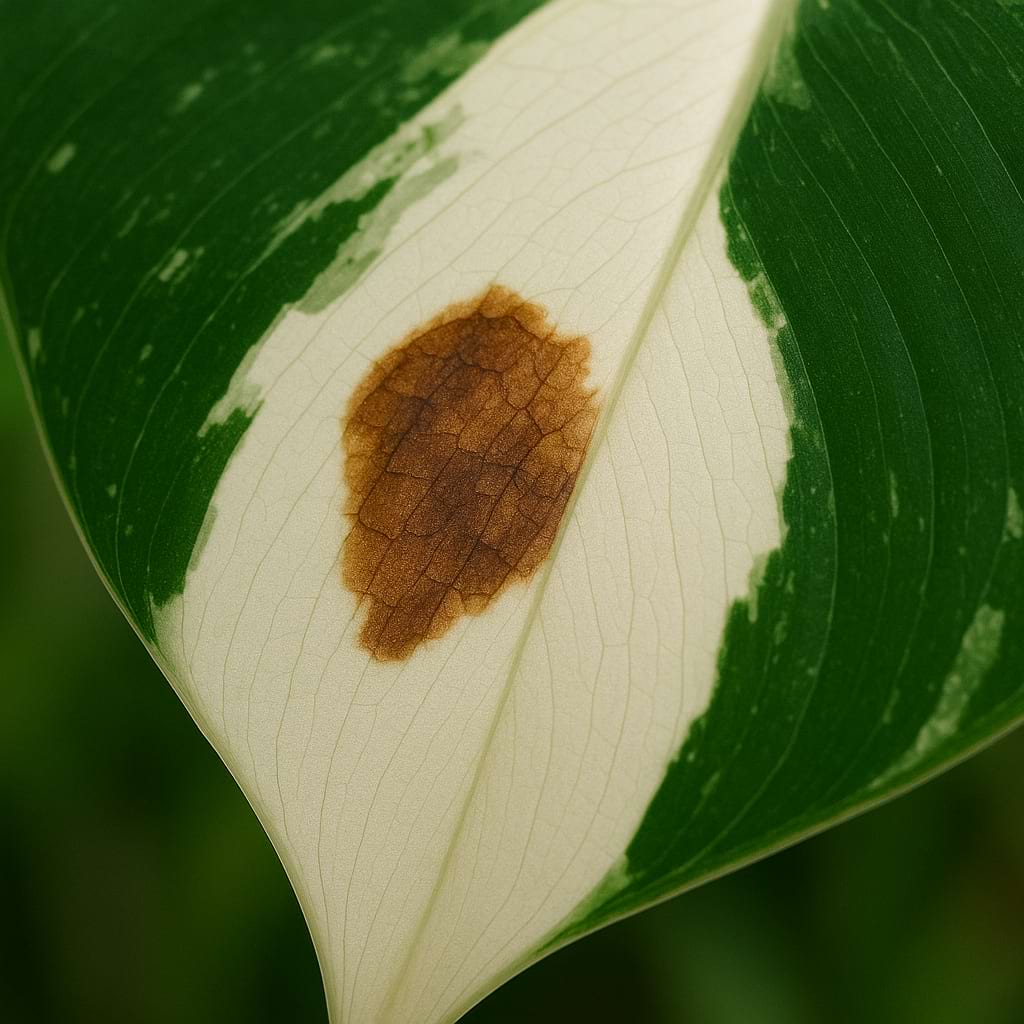
Direct sun is the fastest way to ruin this plant. The cream and pink sections carry little chlorophyll, so they cook before the green parts do, and you get bleached patches and dry papery blotches that are pure sunburn. Once a leaf scorches, it stays scorched.
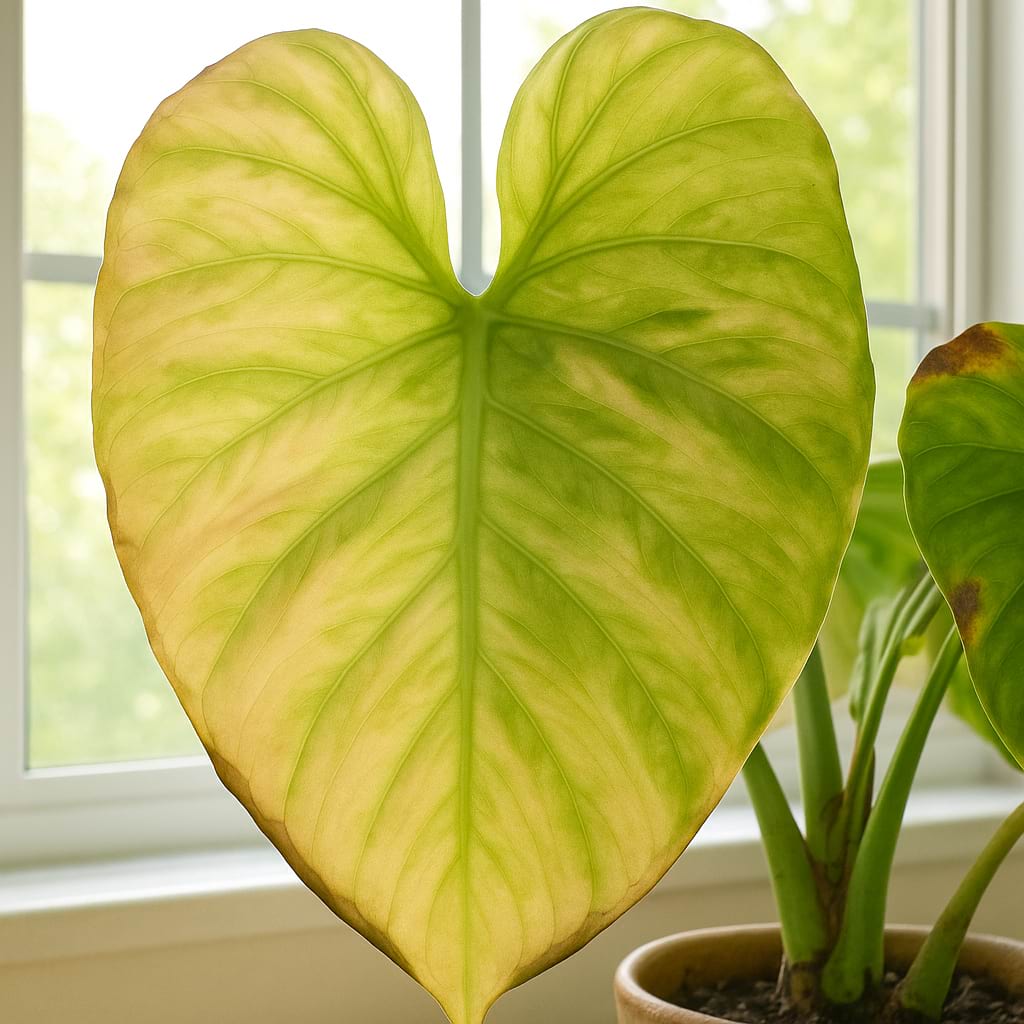
Milder overexposure is subtler. The leaves fold up defensively in the middle of the day rather than at dusk, the whole plant looks pale and faded, and the pink flushes toward a washed-out beige. Move it back a couple of feet and the next leaves come in properly colored.

💧 Stromanthe Triostar Watering Guide (How to Water Properly)
Watering Frequency
The target is evenly moist, never soggy and never bone dry. Water when the top inch of the mix feels barely dry to your finger, which in an average warm room usually lands somewhere around every five to seven days in spring and summer. In winter that stretches out, often to every ten days or more.
Do not water on a schedule. Pot size, light and heating change everything, and Triostar punishes both extremes: let it go fully dry and the leaf edges crisp within a day, keep it swampy and the rhizomes rot. If you are guessing, a moisture meter takes the argument out of it. Our general watering guide covers the underlying logic.
Water Quality Matters More Than Frequency
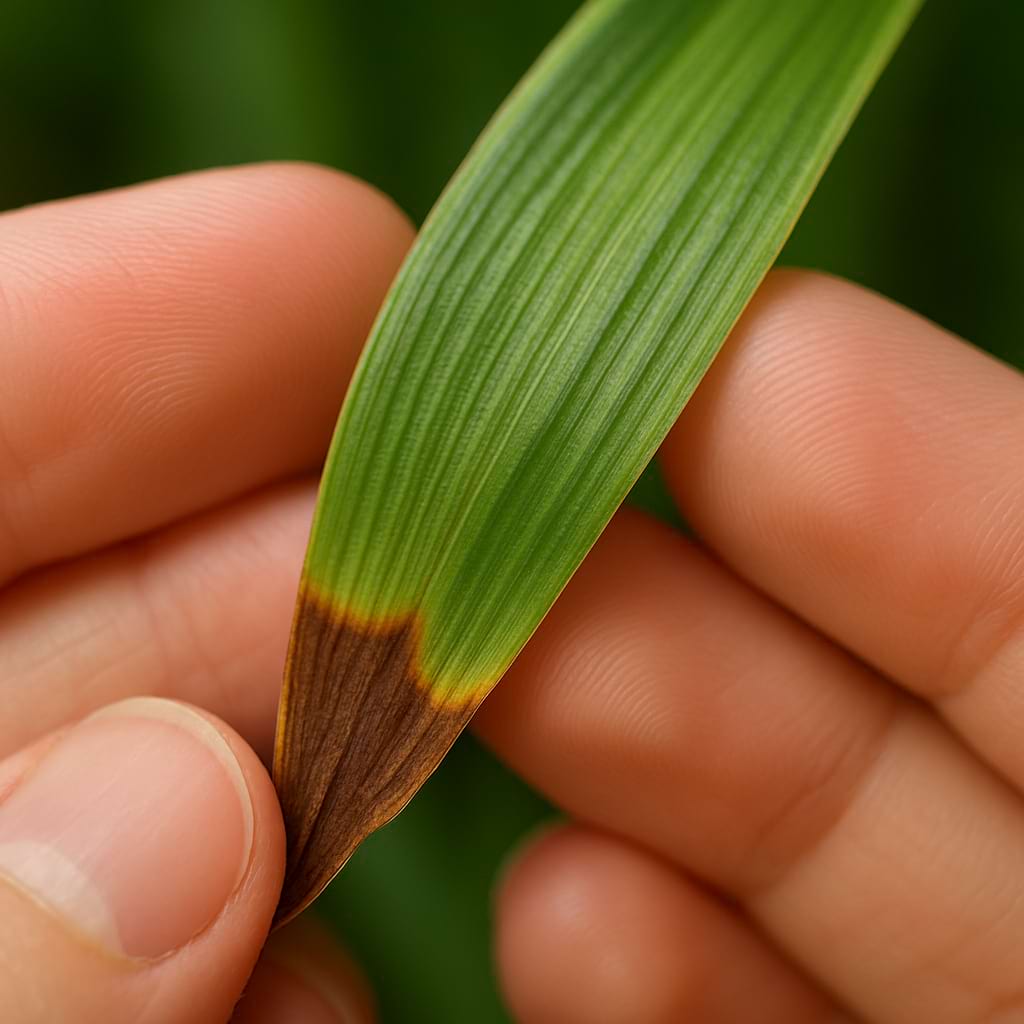
This is the part most people miss. Prayer plants are sensitive to the fluoride, chlorine and dissolved salts in ordinary tap water, and Triostar shows it as brown crispy leaf margins. Use filtered water, distilled water, or collected rainwater. If none of those are practical, leaving tap water in an open jug overnight helps with chlorine, though it does nothing for fluoride.
Room temperature only. Cold water straight from the tap shocks the roots of a tropical plant and can cause a round of sudden leaf drop a few days later.
How to Water
Water thoroughly until it drains from the bottom, then empty the saucer within ten minutes. Half-watering a rhizomatous plant leaves the deeper roots permanently dry while the surface stays wet, which is the worst of both worlds. Bottom watering suits Triostar well and keeps water off the crown, but flush from the top once a month to wash accumulated mineral salts out of the mix.
Signs of Trouble
Crispy brown edges with a thin yellow halo point at dry air, tap water, or a pot that dried out completely. Leaves that curl inward like a rolled cigar mean the plant is thirsty right now, and curling leaves usually flatten out within hours of a proper soak.
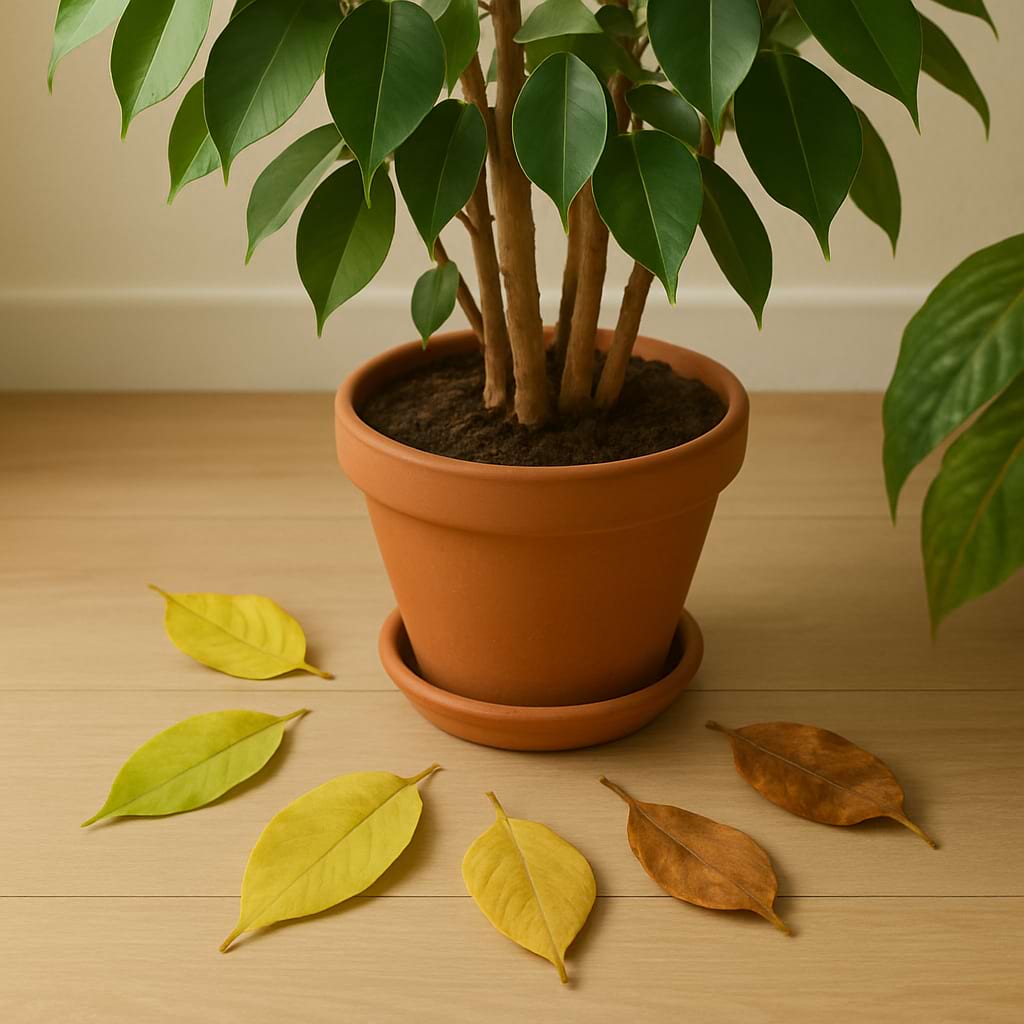
Soft, yellowing leaves low on the plant with soil that stays wet for over a week is the opposite problem, and it is heading toward root rot.
🪴 Best Soil for Stromanthe Triostar (Mix and pH)
What the Soil Needs
Triostar wants a mix that holds moisture without holding water, which sounds contradictory until you feel the right blend. It should stay damp for days but never feel heavy or claggy, and water should move through it freely rather than pooling on top. Slightly acidic is ideal, roughly pH 6.0 to 7.0.
Plain bagged potting soil is usually too dense on its own and compacts into a brick within a season. Straight cactus mix is the opposite mistake and dries out far too fast for a plant that hates drying out.
DIY Soil Mix
A blend that works reliably:
- 2 parts peat-free coco coir or peat-based potting mix (moisture retention)
- 1 part perlite or pumice (drainage and air)
- 1 part fine orchid bark or composted bark fines (structure)
- A small handful of worm castings (slow gentle nutrition)
Coir is worth seeking out here. It rewets easily if the pot ever does dry out, while peat can go hydrophobic and refuse to absorb water at all. Our potting soil guide compares the common bagged options.
Pre-Made Options
Any bagged mix labeled for aroids, Calathea, or general tropical foliage is a fine starting point. Most still benefit from an extra handful of perlite. Avoid anything with added moisture-retention crystals, and avoid heavy garden soil entirely. More background on soil structure lives in our soil guide.
🍼 Fertilizing Stromanthe Triostar (Feeding Schedule)
When and How Often
Feed only during active growth, roughly March through August in most homes. Every two to four weeks at half the label strength is plenty. This is not a heavy feeder, and its roots are thin and easily burned.
Stop feeding entirely once growth slows in autumn. Fertilizer applied to a plant that is not growing simply builds up as salt in the mix, and salt buildup is one of the three main causes of brown leaf edges on this plant.
What to Use
A balanced liquid houseplant fertilizer, something near 10-10-10 or 20-20-20, diluted to half strength. Always water lightly first, then feed, so the fertilizer never lands on dry roots. Our fertilizer guide covers the differences between liquid, slow-release and organic options.
Over-Fertilizing Signs
A white crust on the soil surface or around the pot rim means salt accumulation. Brown edges that appear on new leaves while the plant is otherwise healthy point the same way. Flush the pot with several pot-volumes of filtered water in the sink, let it drain fully, and hold off feeding for a couple of months. Our fertilizing guide explains the timing in more detail.
🌡️ Stromanthe Triostar Temperature Range
Ideal Range
Comfortable household warmth is exactly right: 65-80°F (18-27°C) year-round. It has no dormancy requirement and no cold rest, so there is no need to change anything seasonally except watering less.
Below about 60°F growth stalls and the leaves start looking dull and limp. Sustained cold below 55°F causes leaf damage and eventual collapse, so this plant only goes outside in summer, and only into deep shade.
Drafts and Heat Sources
Triostar hates sudden temperature swings more than it hates any particular temperature. The classic mistake is a spot beside a front door in winter, or directly above a radiator. Both produce the same result: a round of leaf drop and crisped margins a week later.
Keep it away from air conditioning vents, forced-air heating registers, and drafty single-glazed windows in winter. A stable warm corner two feet from the glass beats a bright cold windowsill every time.
💦 Stromanthe Triostar Humidity Requirements
Ideal Humidity
This is the make-or-break factor. Triostar wants 50-60% relative humidity or higher, and average heated homes in winter sit closer to 25-35%. That gap is why so many of these plants look perfect in summer and ragged by February.
Easy Humidity Boosters
A small humidifier running near the plant is the only method that reliably moves the number, and it is worth the outlay for this species. Failing that, group Triostar with other leafy plants so they share transpired moisture, or sit the pot on a wide pebble tray kept topped up with water.
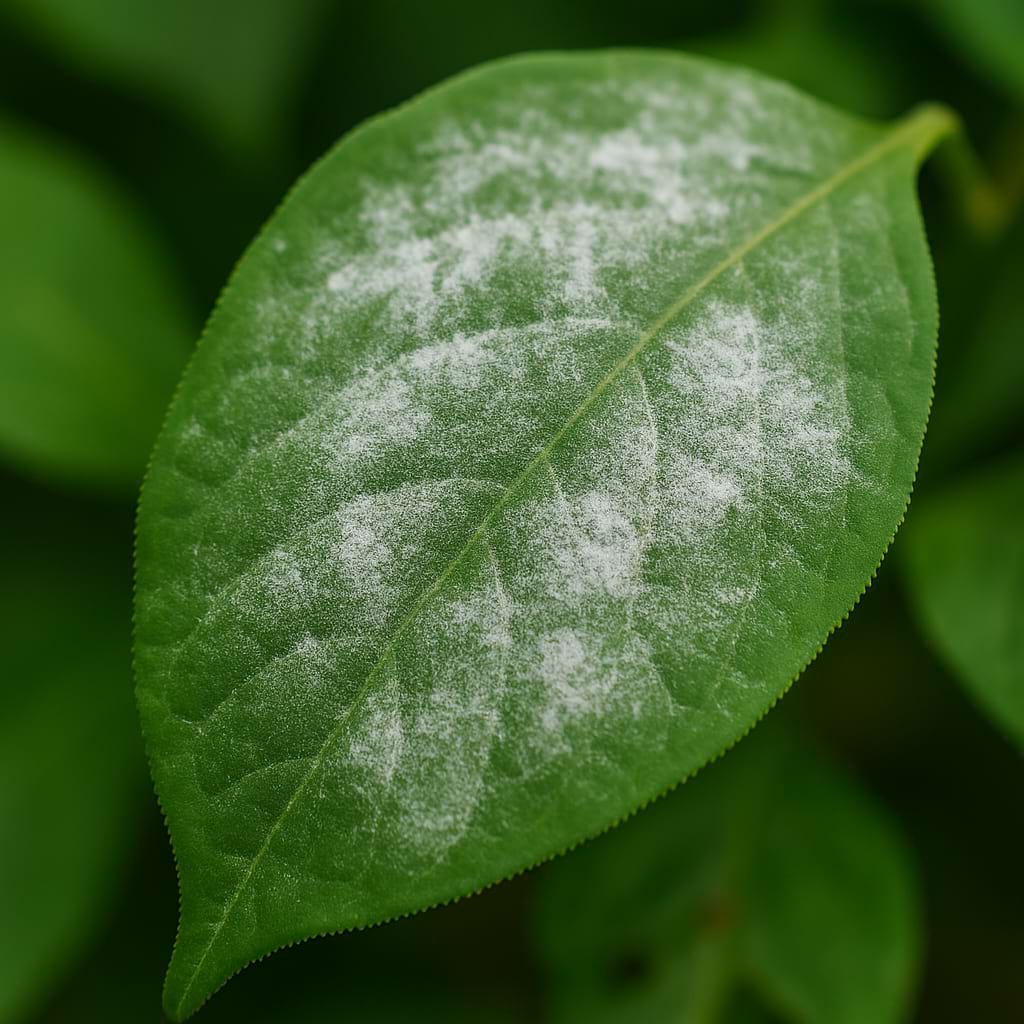
Bathrooms and kitchens with a window are natural homes for it. Misting is popular but does very little for more than a few minutes, and wet leaves sitting in still air invite fungal spotting. Our humidity guide covers what actually works.
🌸 Stromanthe Triostar Flowers (Blooming Indoors)
What the Flowers Look Like
In the wild, Stromanthe throws up a branched inflorescence of small white flowers cupped in bright reddish-pink bracts, usually in spring or early summer. The bracts are the showy part and they last far longer than the flowers themselves. The old species name, sanguinea, comes from that red coloring.
Why It Rarely Blooms Indoors
Flowering is uncommon on indoor Triostar and you should not treat it as a goal. It needs the light levels, humidity and sustained warmth of its native understory to build up the reserves for a flower spike, and a living room rarely delivers all three at once. Plants grown in bright conservatories and greenhouses do occasionally oblige.
If yours never flowers, nothing is wrong. This plant earns its place on foliage alone, and a bloom would be a distant second to the leaves anyway. Chasing failure to bloom here usually means pushing the plant into light that scorches it.
What to Do If It Does Bloom
Enjoy it, then cut the spent spike off at the base once the bracts brown. Flowering takes energy away from foliage production, so a heavily blooming plant may pause on new leaves for a few weeks. Keep watering and feeding normally through it.
🏷️ Stromanthe Triostar Types and Varieties
Stromanthe thalia 'Triostar'
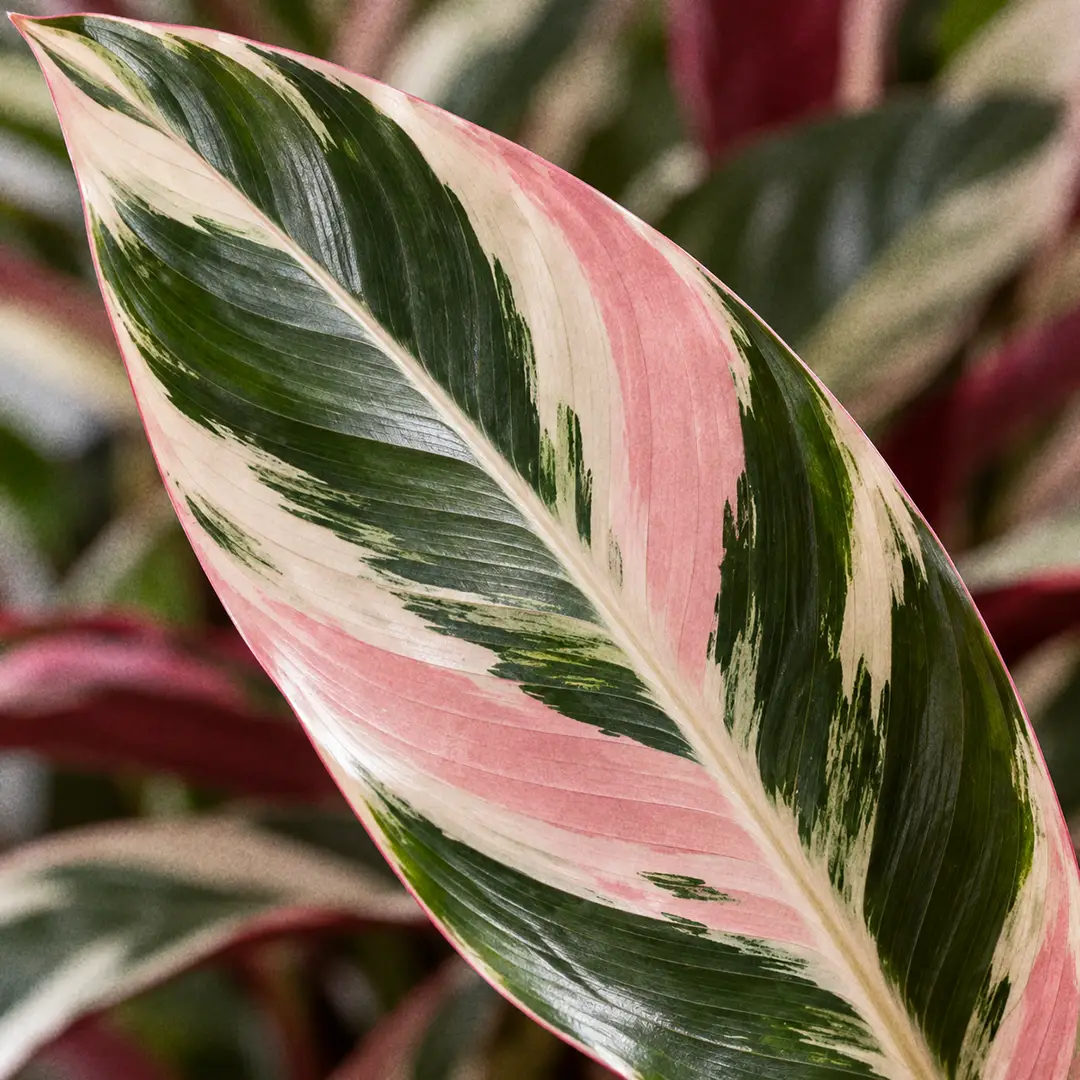
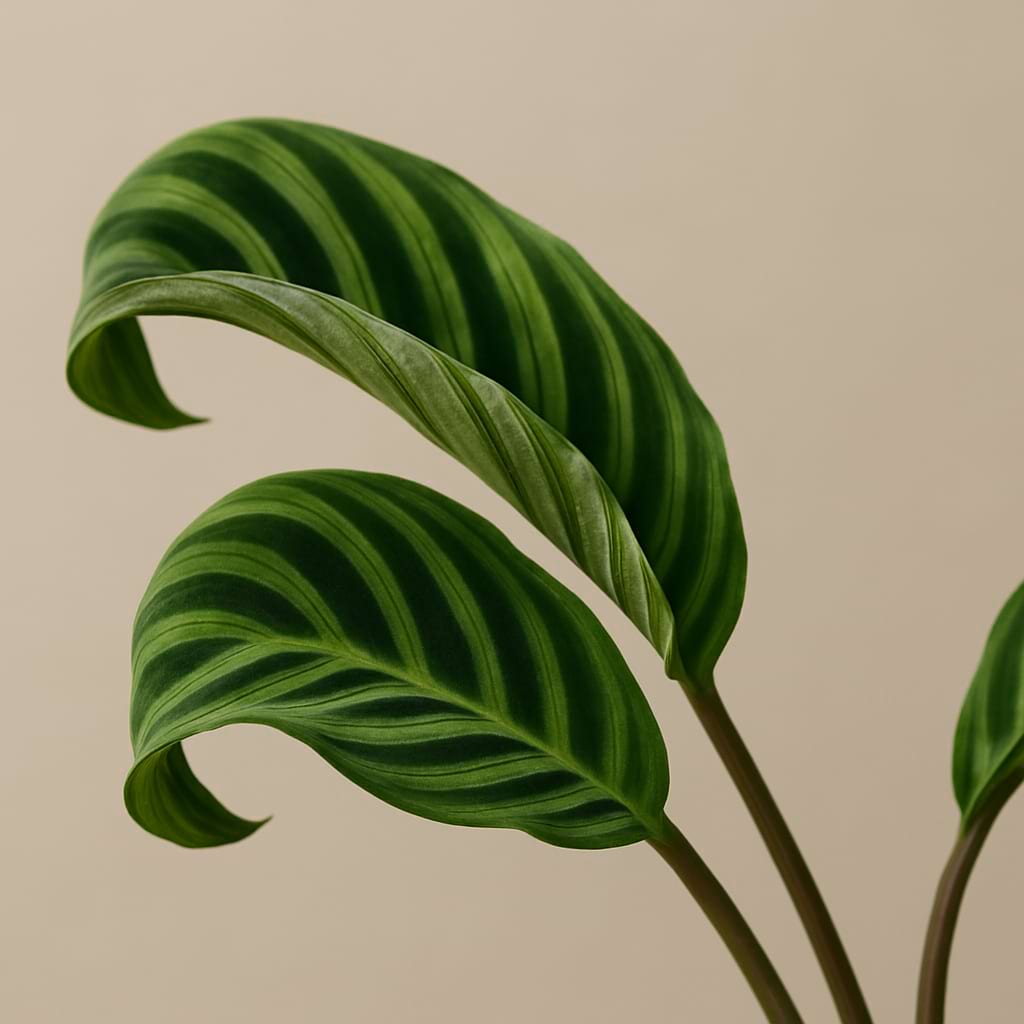
The plant almost everyone means. Lance-shaped leaves up to a foot or more long, brushed irregularly in green, cream and pink, with a solid magenta underside. No two leaves carry the same pattern, and young leaves usually emerge with more pink than they keep at maturity. You will also see it sold as 'Tricolor' or 'Tristar', and those are the same plant.
Stromanthe thalia 'Magicstar'
A more compact cultivar with a different look entirely: scattered creamy-white speckles and flecks across a deep green leaf, rather than broad brushstrokes, and less pink overall. The magenta underside is still there. It stays smaller than Triostar and suits a shelf or a cabinet better. Care is identical.
The Plain Species
Straight Stromanthe thalia without variegation is grown mostly in landscapes in warm climates and shows up rarely in the houseplant trade. All-green leaves, red undersides, and noticeably tougher than the variegated forms because it has full chlorophyll to work with.
Triostar vs Calathea and Maranta
Triostar is sold as "Calathea Triostar" constantly, and it is not a Calathea. All three belong to the prayer plant family and fold their leaves at night, but Stromanthe grows taller and more upright on longer petioles, spreading into a fountain-shaped clump from rhizomes. Calathea tends to stay lower and rounder, and Maranta sprawls and trails. Care is broadly the same across all three: filtered water, steady moisture, high humidity, no direct sun.
🪴 Potting and Repotting Stromanthe Triostar
When to Repot
Every two years in spring is a good default. Repot sooner if roots and rhizomes are circling the pot edge, water runs straight through without soaking in, or the clump has physically pushed itself above the soil line.
Triostar does not mind being a little snug, and a plant that fills its pot tends to look fuller and more colorful. Do not jump ahead just because it looks big.
Choosing a Pot
Go up one size only, about two inches wider in diameter. A rhizomatous plant in an oversized pot sits in cold wet soil it cannot use, and that is a fast route to rot. Wide and shallow beats deep and narrow, because the rhizomes spread sideways.
Drainage holes are non-negotiable. Terracotta wicks moisture away faster than this plant wants, so glazed ceramic or plastic is usually the better choice unless you are a chronic over-waterer. See our plant pots guide for the tradeoffs.
Step-by-Step Repotting
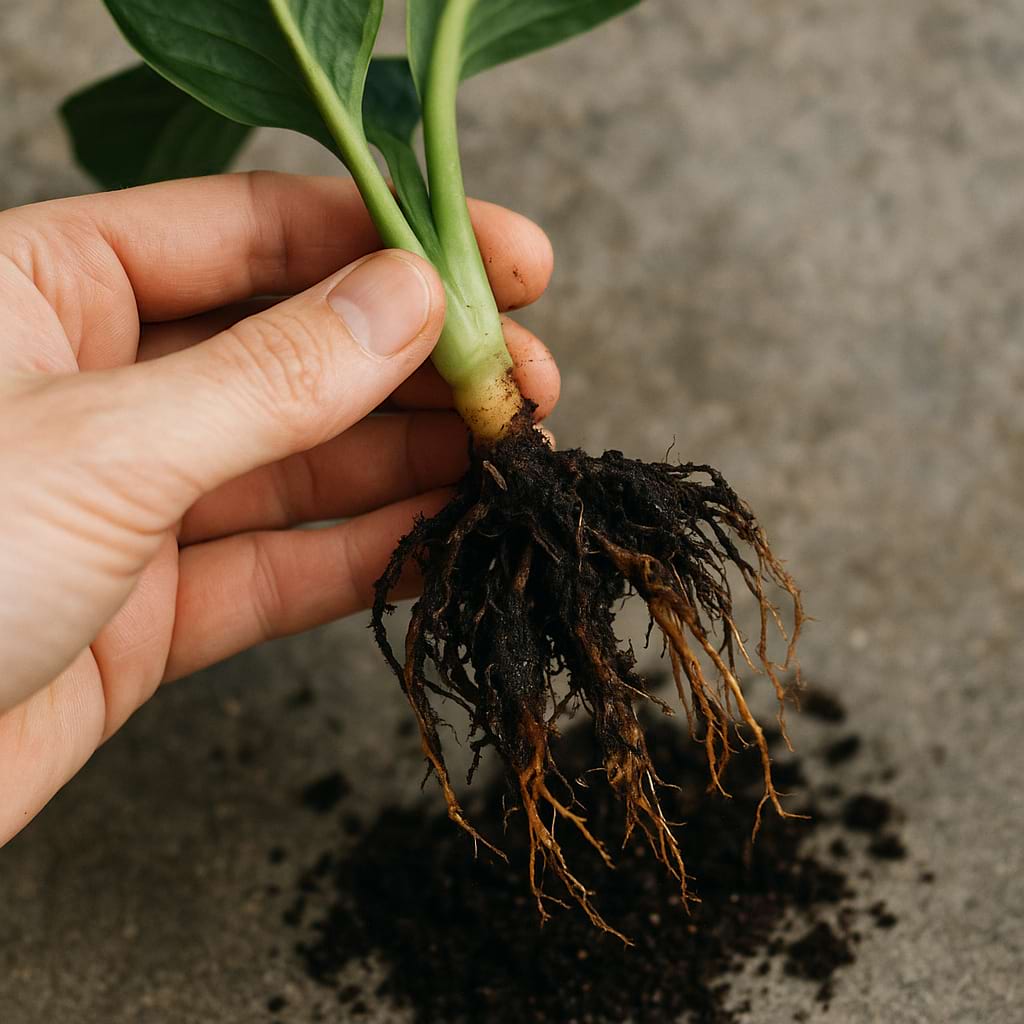
Water the plant a day beforehand so it repots hydrated and less stressed. Ease it out by supporting the base, and tease apart the outer roots gently without tearing into the rhizome mass. Set it at the same depth it was growing before, since burying the rhizomes deeper encourages rot.
Backfill with fresh mix, firm lightly, water thoroughly with filtered water, and put it somewhere slightly shadier than usual for a week. Expect some drooping and possibly a lost leaf or two. Our repotting guide has the general process.
✂️ Pruning Stromanthe Triostar
When to Prune
There is no shaping to do. Pruning here is purely tidying: removing leaves that have browned, yellowed, or been damaged. Do it whenever you notice them, in any season.
How to Prune
Follow the damaged leaf down its petiole to where it meets the base of the clump and cut there with clean, sharp scissors. Do not leave a stub sticking up, since it will brown and can rot back into the crown.
Trimming Crispy Edges
If a leaf is otherwise healthy with only a browned margin, you can trim the dead tissue away with scissors rather than sacrificing the whole leaf. Cut just inside the brown, following the natural leaf outline so it does not look chopped. Understand that this is cosmetic. The real fix is humidity and water quality, and trimming without addressing the cause just means trimming again next month.
🌱 How to Propagate Stromanthe Triostar
Division Is the Only Method
Triostar grows from rhizomes, spreading underground and sending up new clusters of stems. That structure makes division the only propagation method that works. Stem cuttings do not root, because there is no node on a leaf petiole to grow from, and leaf cuttings do nothing at all. Do not waste a leaf finding out.
Seed is possible in theory but the plant rarely flowers indoors, and seedlings from a variegated cultivar do not come true anyway.
Step-by-Step Division
Do it in spring, ideally at the same time as a scheduled repot, when the plant has the whole growing season ahead to recover.
- Water thoroughly the day before. A hydrated plant handles root disturbance far better than a dry one.
- Slide the plant out and gently wash or shake enough soil off the root ball that you can see the rhizomes and where the natural clumps separate.
- Find the natural divisions. The clump usually wants to come apart in obvious sections. Follow those lines rather than cutting arbitrarily.
- Separate by hand where possible, easing roots apart with your fingers. Use a clean sharp knife only where the rhizome genuinely needs cutting.
- Keep each division substantial. At least three or four leaves with a healthy section of rhizome and its own roots. Small divisions sulk for months or fail outright.
- Pot each piece into fresh mix in a pot only slightly larger than its roots, water in with filtered water, and set them somewhere warm, humid and out of direct light.
Tips for Success
Expect the divisions to droop dramatically for the first week or two. This is normal and not a sign of failure. Keep humidity high while they establish, a clear bag or propagation box over the pot for the first fortnight helps enormously, and resist the urge to fertilize for at least a month.
Two divisions from one plant is a comfortable target. Splitting a medium plant into four pieces usually gets you four weak plants instead of two strong ones. Our plant division guide covers the technique across other species.
🐛 Stromanthe Triostar Pests and Treatment
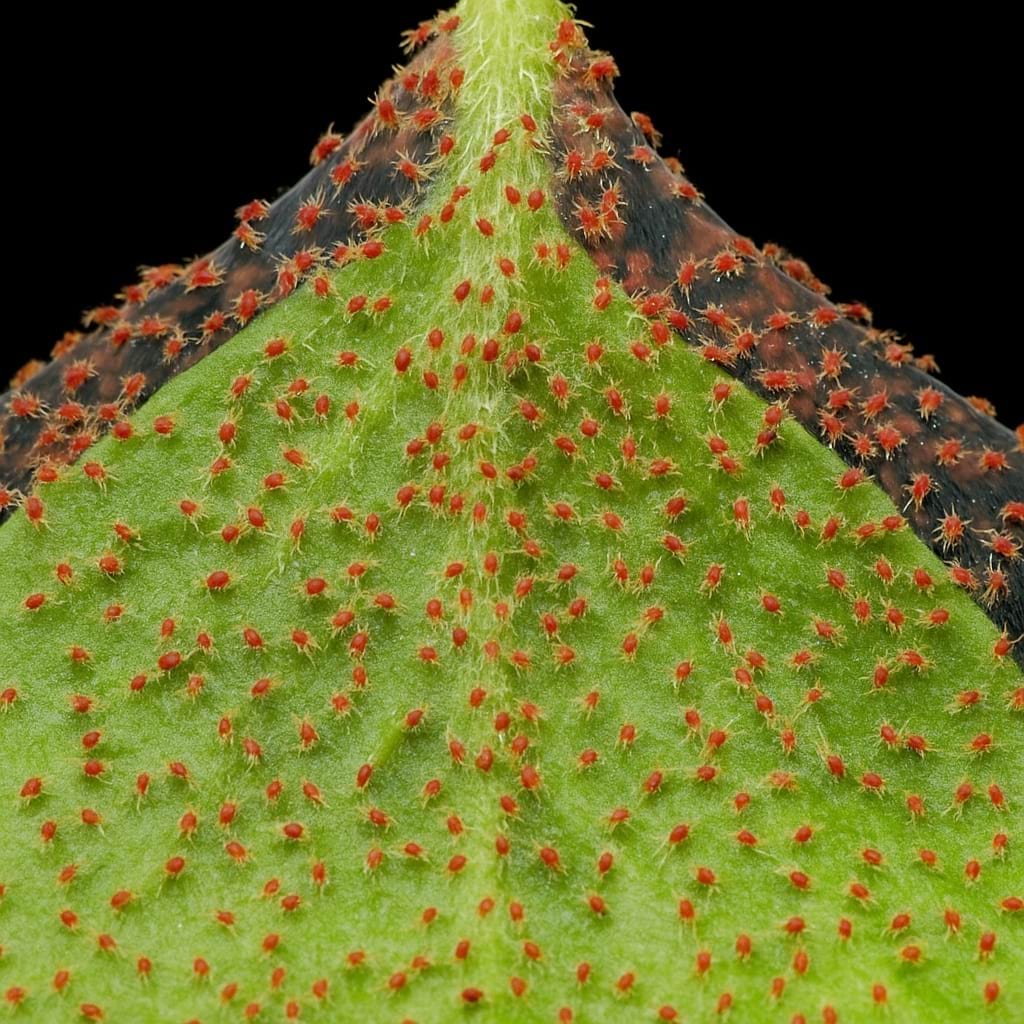
Spider mites are the pest to watch for, and dry indoor air is exactly what invites them. Look for fine webbing where the petiole meets the leaf and a stippled, dusty-looking sheen on the upper surface. Check the magenta undersides, because that dark background hides them well.
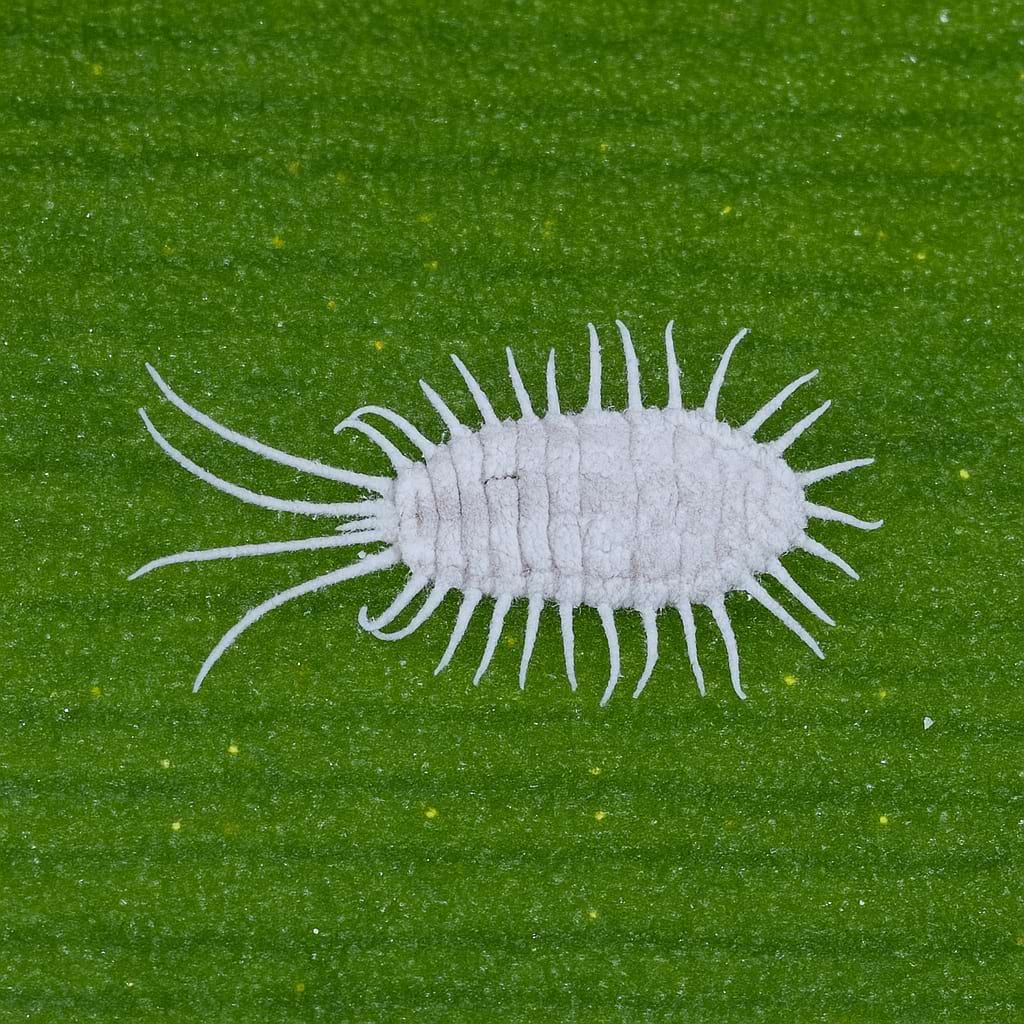
Mealybugs turn up as white cottony clumps tucked into the crown and leaf joints. Dab them with a cotton swab dipped in rubbing alcohol, then follow with insecticidal soap or neem across the whole plant.
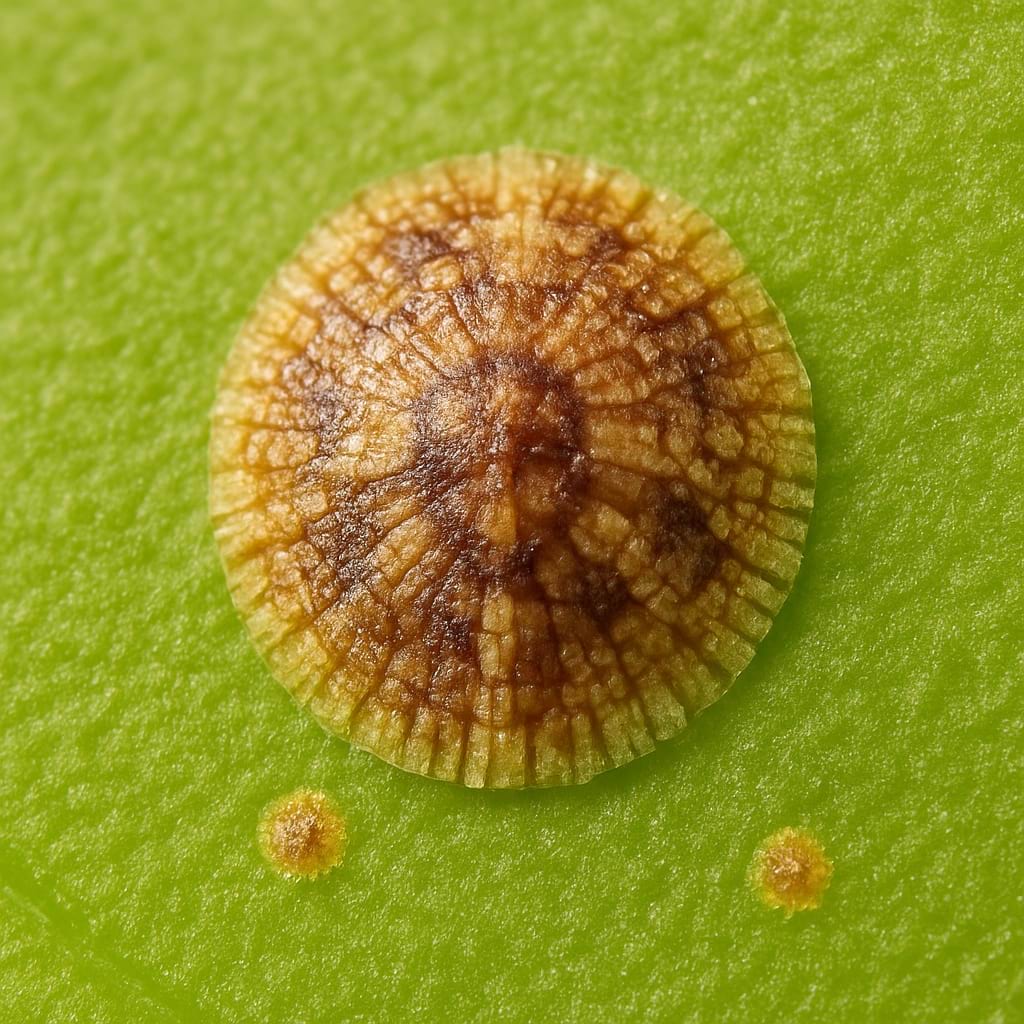
Scale insects look like small brown bumps stuck along petioles and midribs, and they do not move, so they are easy to mistake for part of the plant. Scrape them off and treat the same way.
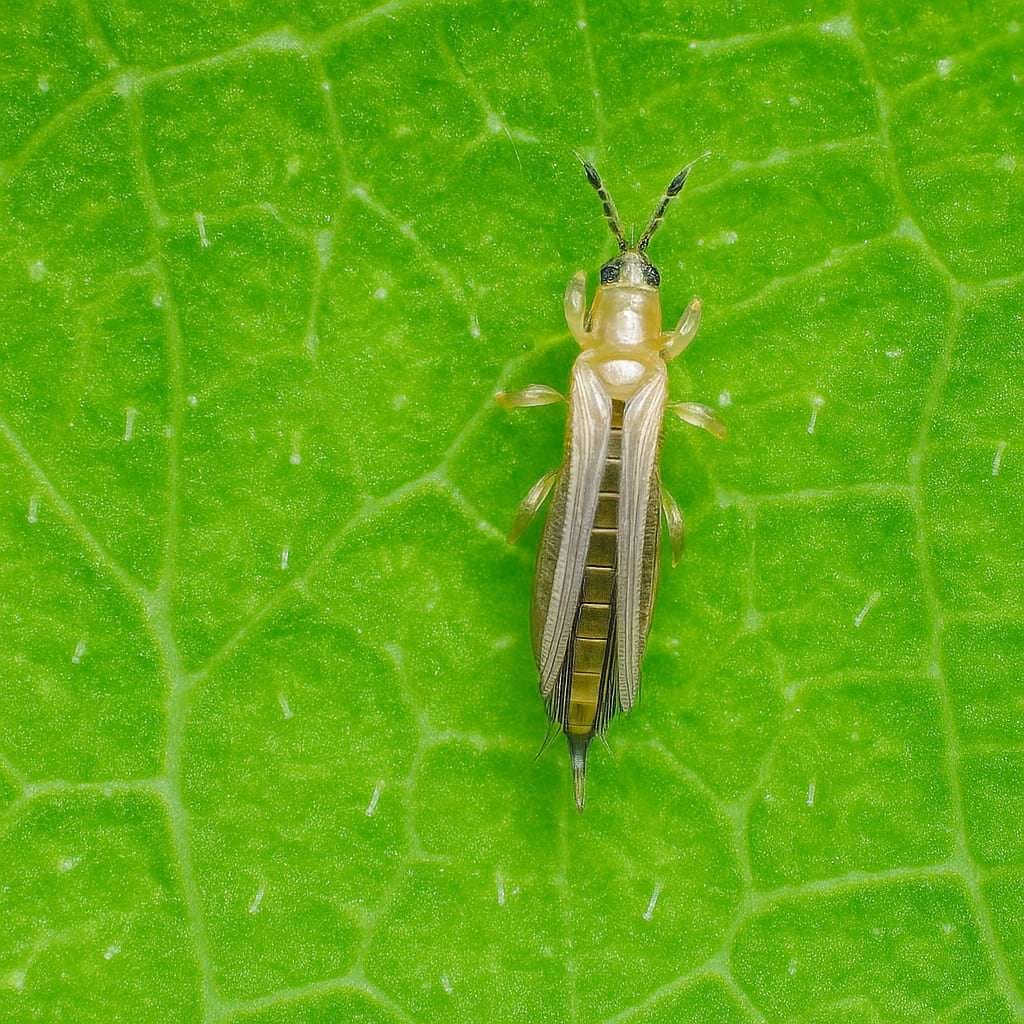
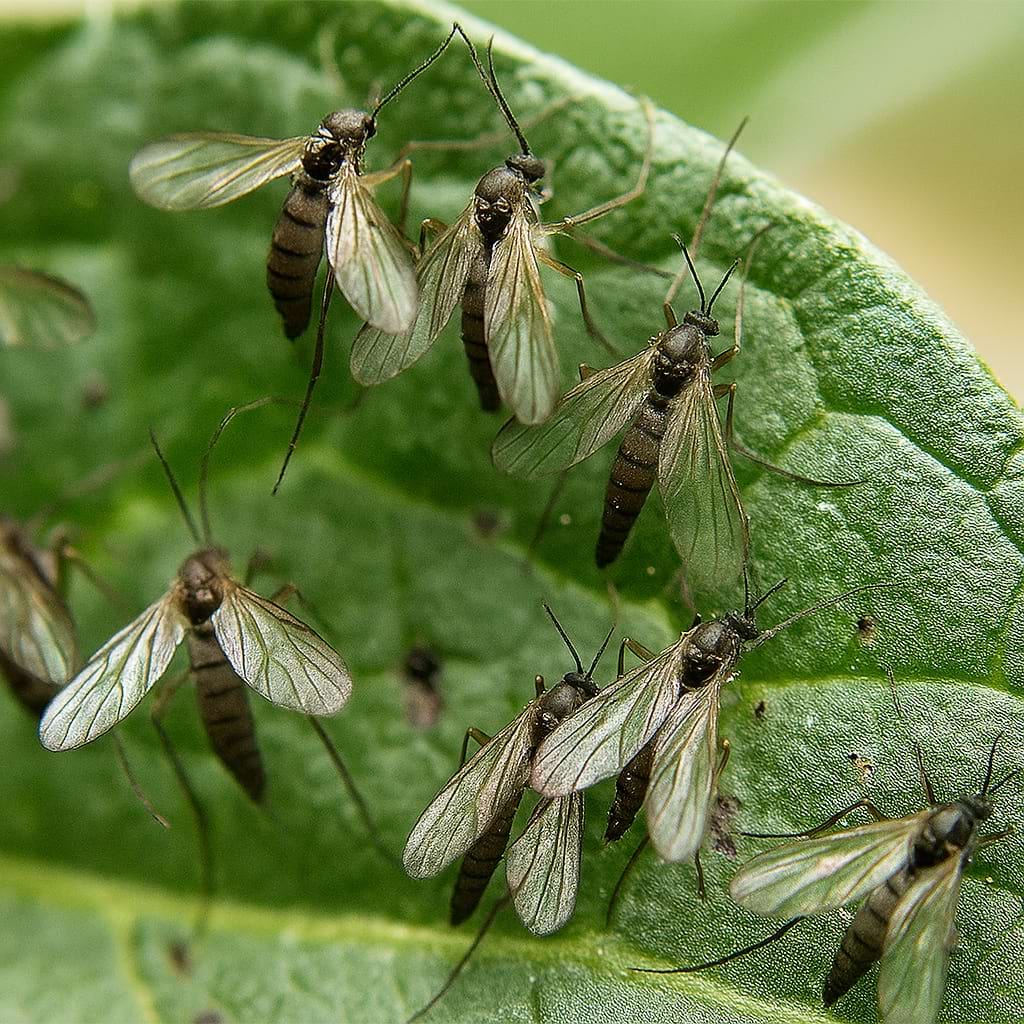
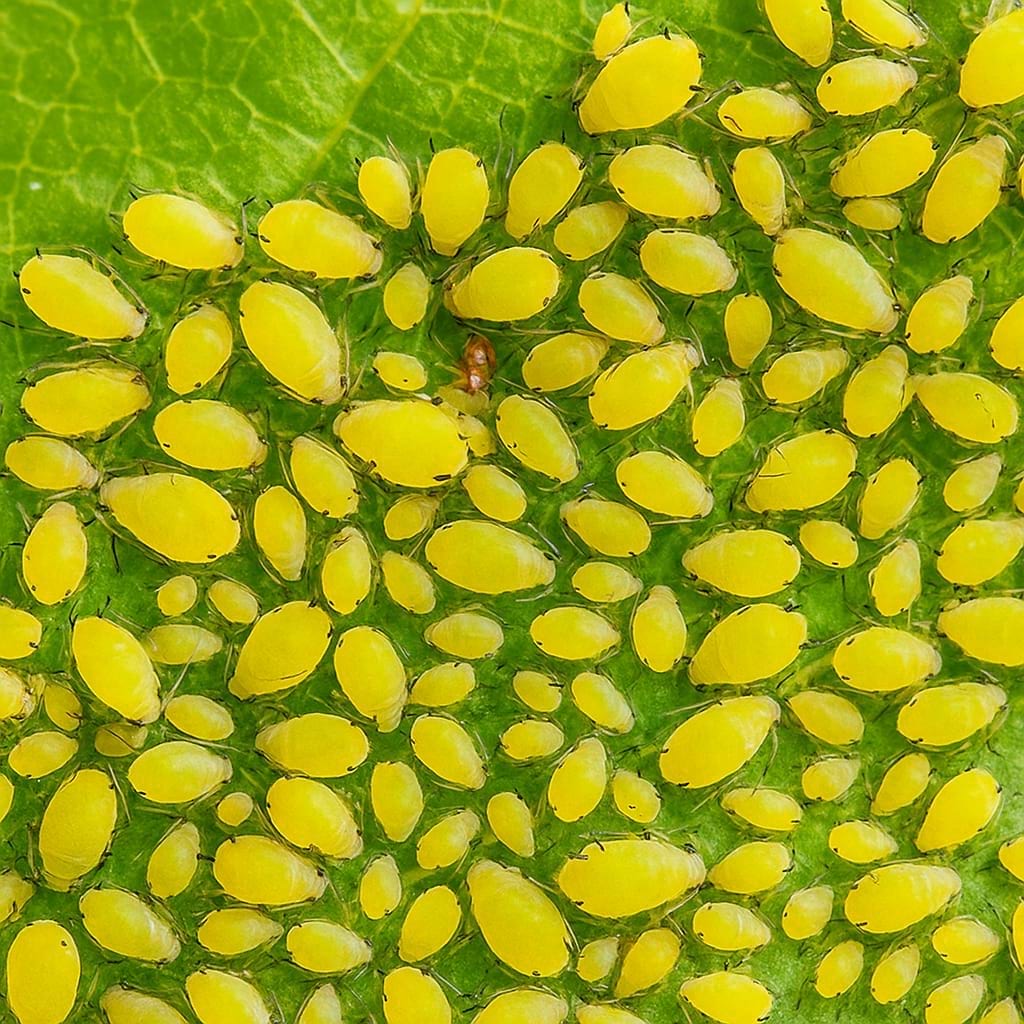
Thrips cause silvery scarring and distorted new growth, and they spread fast between plants. Fungus gnats are almost inevitable on a plant kept this moist, and while the adults are harmless, swarms of them mean you are watering slightly too often. Aphids cluster on soft new growth occasionally.
Quarantine anything new for two weeks. On a plant with humidity this high, an infestation spreads through a grouped display quickly.
🩺 Common Stromanthe Triostar Problems
Brown crispy edges are the signature complaint and almost always trace back to one of three things: low humidity, tap water minerals, or fertilizer salt buildup. Work through them in that order.
Curling leaves that roll inward mean the plant is thirsty. A thorough soak usually unrolls them within a few hours. If they stay curled after watering, check for spider mites or root damage.
Root rot shows up as soft yellowing lower leaves and soil that never dries. Unpot it, cut away black mushy roots, and repot into fresh airy mix in a smaller pot.
Yellowing leaves low on the plant at a rate of one every few weeks is normal aging. Several at once means overwatering or a sudden cold snap.
Pale faded leaves and browning variegation point at light problems: too much bleaches and scorches the cream sections, too little mutes the pink. Leaf drop follows drafts, cold water, or a big move.
Brown spots with yellow halos that spread are fungal or bacterial leaf spotting, often Helminthosporium. Remove affected leaves, improve airflow, stop misting, and treat with neem oil.

🖼️ Stromanthe Triostar Display and Styling Ideas
Solo Setups
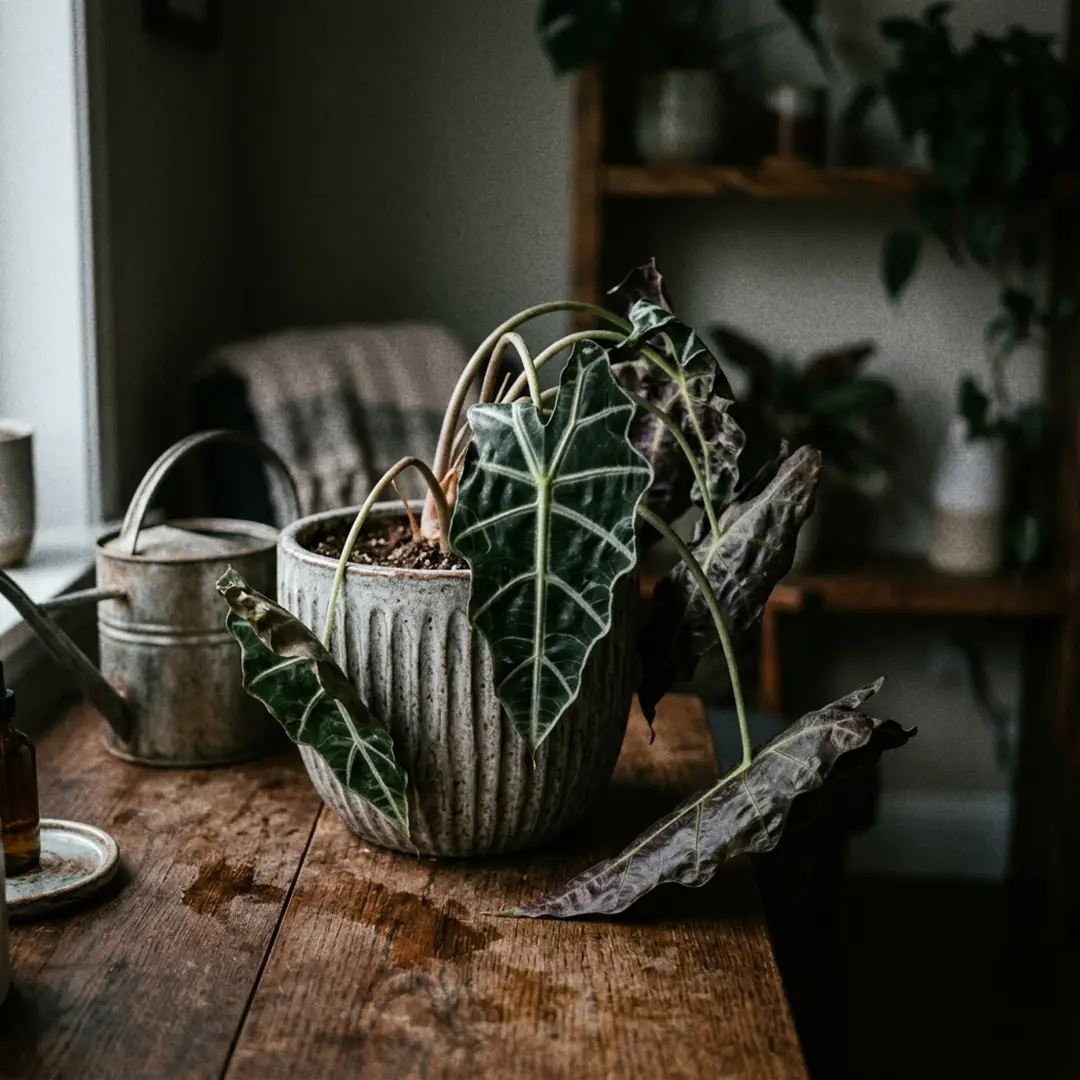
Triostar builds into a fountain-shaped clump two to three feet tall, so it works beautifully as a floor plant on a low stand where you can see the leaves at eye level. A plain, matte pot in a neutral tone lets the pink do the talking. Anything patterned fights the foliage and loses.
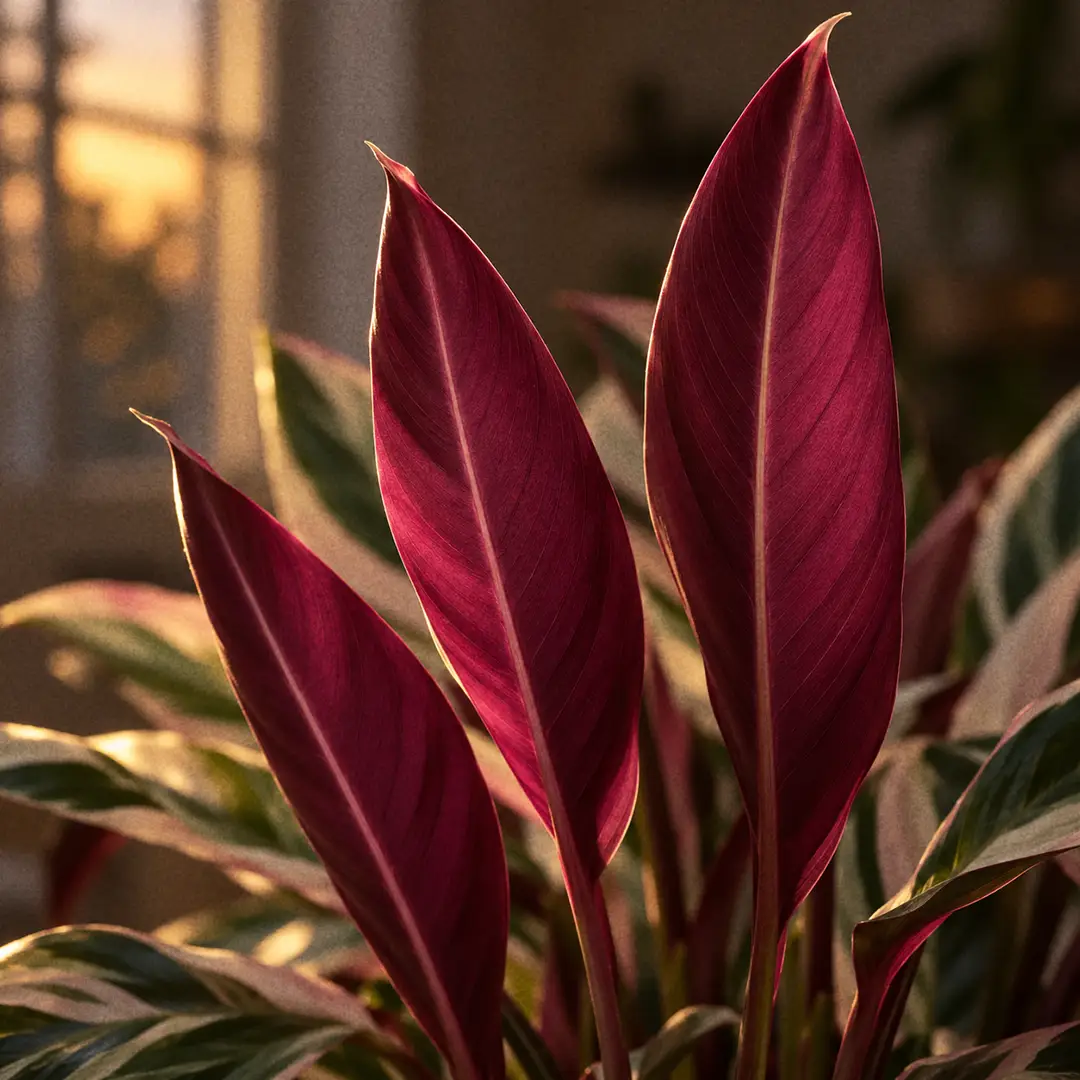
Position it so you walk past it in the evening. When the leaves fold up for the night, the whole plant flips from cream-and-green to solid magenta, and that transformation is the best thing about owning one.
Grouped Arrangements
Grouping is functional as well as pretty here, since clustered plants raise local humidity. Triostar looks strongest against dark, solid foliage that gives the variegation something to sit against: a Calathea Dottie or an Alocasia Black Velvet both work. Avoid pairing it with other loud variegated plants, which just reads as visual noise.
Where Not to Put It
Not a sunny south windowsill, not above a radiator, and not beside an exterior door in winter. Bathrooms with a window are ideal, and steamy kitchens are a close second.
🌟 Stromanthe Triostar Pro Care Tips
- Switch to filtered water before you do anything else. It is the single highest-impact change for edge browning, and the difference shows within two or three new leaves.
- Judge the plant by new growth, not old leaves. Damaged tissue never recovers, so if the newest leaf came in clean and full-sized, your care is working.
- Rotate the pot a quarter turn every week. Triostar leans toward light noticeably, and a clump that grows lopsided never straightens back out.
- Flush the pot monthly. Run several pot-volumes of filtered water through in the sink to carry mineral and fertilizer salts out of the mix.
- Watch the evening fold as a health check. A plant that stops folding crisply at dusk is telling you something is off, usually light or water, before any leaf shows damage.
- Do not repot a struggling plant. Fix light, water and humidity first. Repotting adds stress to a plant that has none to spare.
❓ Frequently Asked Questions
Why does my Stromanthe Triostar have brown crispy edges?
Almost always dry air, tap water minerals, or fertilizer salt buildup, in that order of likelihood. Move it to 50-60% humidity, switch to filtered or rainwater, and flush the pot monthly. The damaged edges will not heal, so judge whether it worked by looking at the next new leaf.
Is Stromanthe Triostar toxic to cats and dogs?
No. Like other members of the prayer plant family, it is listed as non-toxic to cats and dogs. A pet that eats a lot of it may still get a mild upset stomach, simply because leaves are not food, but there is no toxic compound to worry about.
Why are my Triostar's leaves standing straight up?
That is nyctinasty, the nightly leaf-folding the whole prayer plant family does, and it is a sign of a healthy plant. Hinged joints at the leaf base pump water to raise the leaves at dusk and lower them at dawn. Leaves folding tight in the middle of the day is different, and usually means too much light or not enough water.
Is Stromanthe Triostar the same as Calathea Triostar?
No, though it is sold under that name constantly. It is Stromanthe thalia 'Triostar', in the same family as Calathea but a different genus. It grows taller and more upright than a Calathea, on longer petioles, and spreads by rhizome into a fountain-shaped clump.
How fast does Stromanthe Triostar grow?
Moderately. Expect a handful of new leaves through spring and summer and very little through winter, reaching a mature 2-3 feet indoors over two to five years. Growth is noticeably faster with humidity above 50%.
Can I propagate Triostar from a leaf or stem cutting?
No. It grows from rhizomes, so division at repotting time is the only method that works. A leaf placed in water will sit there looking hopeful for weeks and then rot.
Why is my Triostar losing its pink color?
Usually not enough light. In a dim spot, new leaves come in with muted pink and less cream. Move it to a brighter position out of direct sun and check the color on the next leaf, since existing leaves will not change. Very strong light causes the opposite, bleaching the pink toward beige.
Should I mist my Stromanthe Triostar?
Misting feels productive but the humidity lift lasts minutes, and wet leaves in still air encourage fungal spotting. A humidifier, a pebble tray, or grouping plants together all work better.
Why is my Triostar drooping?
Check the soil first. Dry soil means thirst, and it should perk up within hours of watering. Wet soil with drooping means root rot. Drooping right after repotting or division is normal and passes in a week or two.
Can Stromanthe Triostar live in a bathroom?
Yes, and it is one of the best plants for one, as long as the bathroom has a window. The steady humidity is exactly what it wants. A windowless bathroom is too dark unless you add a grow light on a timer.
ℹ️ Stromanthe Triostar Info
Care and Maintenance
🪴 Soil Type and pH: Peaty, organically rich, well-draining and slightly acidic
💧 Humidity and Misting: Wants 50-60% or higher; dry winter air is the main reason edges go brown.
✂️ Pruning: Snip spent or crisped leaves at the base of their stem; the plant does not need shaping.
🧼 Cleaning: Wipe the broad leaves with a soft damp cloth, supporting each leaf from below. The thin petioles snap easily.
🌱 Repotting: Repot in spring every 2 years, or when the rhizomes crowd the pot edge and water runs straight through.
🔄 Repotting Frequency: Every 2 years
❄️ Seasonal Changes in Care: Steady moisture and feeding from spring to late summer, then less water, no fertilizer, and extra humidity through the heating season.
Growing Characteristics
💥 Growth Speed: Moderate
🔄 Life Cycle: Evergreen rhizomatous perennial
💥 Bloom Time: Spring to summer in the wild; rarely flowers indoors, and the foliage is the whole point anyway
🌡️ Hardiness Zones: 9b-11b
🗺️ Native Area: Coastal rainforests of southeastern Brazil
🚘 Hibernation: No true dormancy, but growth slows noticeably in winter and watering should slow with it.
Propagation and Health
📍 Suitable Locations: East-facing rooms, bathrooms with a window, kitchen counters, north-window plant shelves, humid grouped displays
🪴 Propagation Methods: Divide the rhizome clump in spring, keeping at least three leaves and roots on each piece.
🐛 Common Pests: Spider Mites, Mealybugs, Scale Insects, Thrips, Fungus Gnats, Aphids
🦠 Possible Diseases: Root rot, Helminthosporium leaf spot, general fungal leaf spotting
Plant Details
🌿 Plant Type: Clumping rhizomatous tropical foliage plant
🍃 Foliage Type: Evergreen, lance-shaped, nyctinastic (folds up at night)
🎨 Color of Leaves: Green with cream and pink brushstroke variegation on top, deep magenta on the underside
🌸 Flower Color: Small white flowers held in reddish-pink bracts
🌼 Blooming: Rarely indoors; grown entirely for foliage
🍽️ Edibility: Not edible.
📏 Mature Size: 2-3 feet indoors
Additional Info
🌻 General Benefits: Pet-safe, one of the most colorful foliage plants available, moves visibly through the day, and divides easily into free plants
💊 Medical Properties: No documented medicinal uses.
🧿 Feng Shui: The nightly folding motion reads as a living, breathing presence, and the warm pink tones bring soft yang energy to a quiet corner without overpowering it.
⭐ Zodiac Sign Compatibility: Cancer
🌈 Symbolism or Folklore: Gratitude, prayer, rest, and the quiet rhythm of day and night
📝 Interesting Facts: Triostar belongs to the prayer plant family and performs nyctinasty: tiny hinged joints called pulvini at the base of each leaf pump water in and out to raise the leaves at dusk and lower them at dawn. Because the undersides are magenta, an evening Triostar looks like a completely different plant from the one you saw at breakfast.
Buying and Usage
🛒 What to Look for When Buying: Choose a full clump with several growth points rather than one tall stem, and check that new central leaves are unfurling. Skip plants with browned edges on most leaves, since damaged tissue never repairs, and check leaf undersides for spider mite webbing.
🪴 Other Uses: Statement foliage plant, bathroom plant, terrarium or cabinet specimen when young, and a shade planter outdoors in summer.
Decoration and Styling
🖼️ Display Ideas: Grouped humidity clusters, bathroom shelves, low plant stands, wide shallow pots, mixed foliage arrangements with dark-leaved plants
🧵 Styling Tips: Place it where you pass it in the evening so you catch the leaves standing up and showing their magenta backs. Backlighting turns the undersides into stained glass.
🪴 See also 🪴
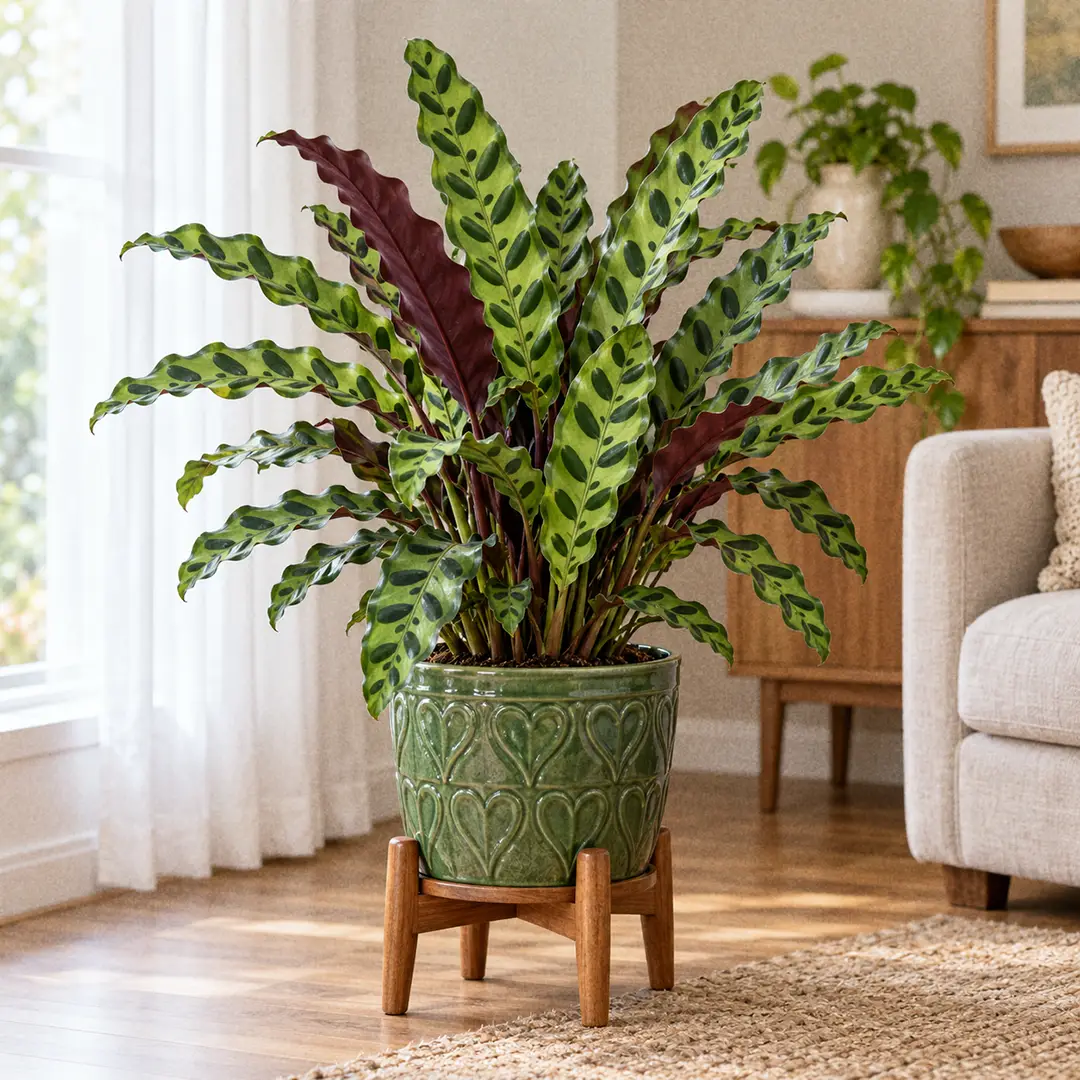
Complete Guide to Calathea Rattlesnake Care and Growth
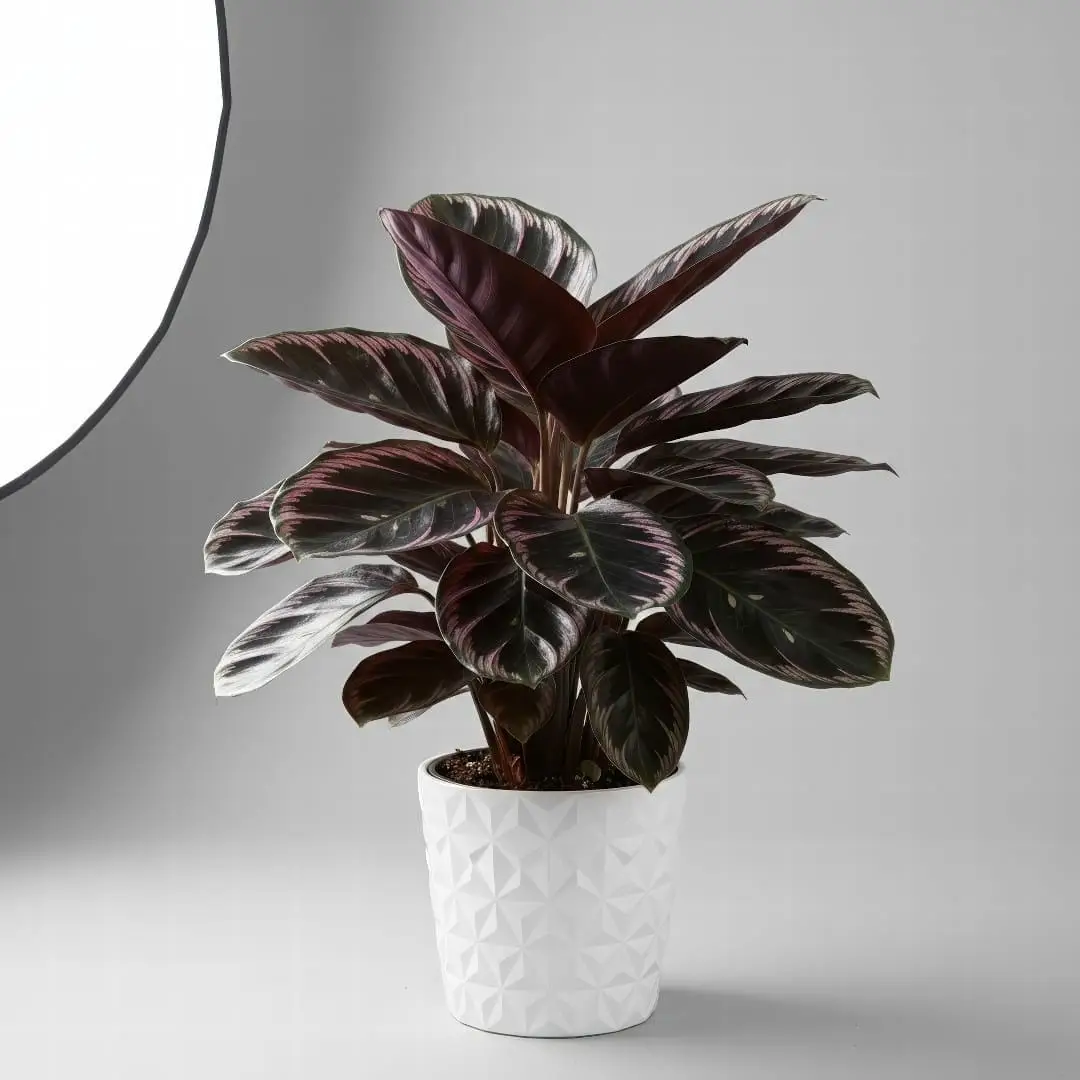
Complete Guide to Calathea 'Dottie' Care and Growth
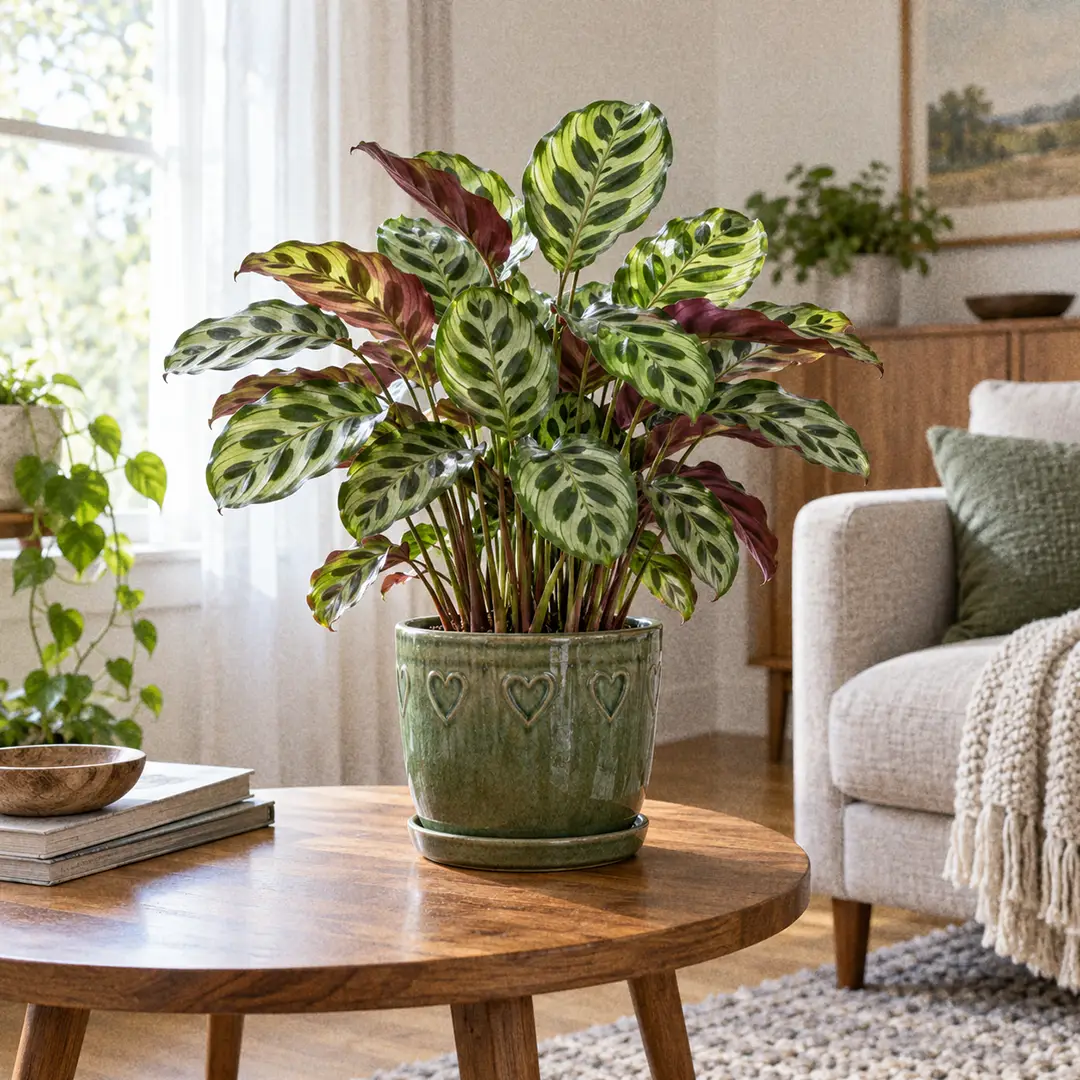
Complete Guide to Calathea Peacock Care and Growth
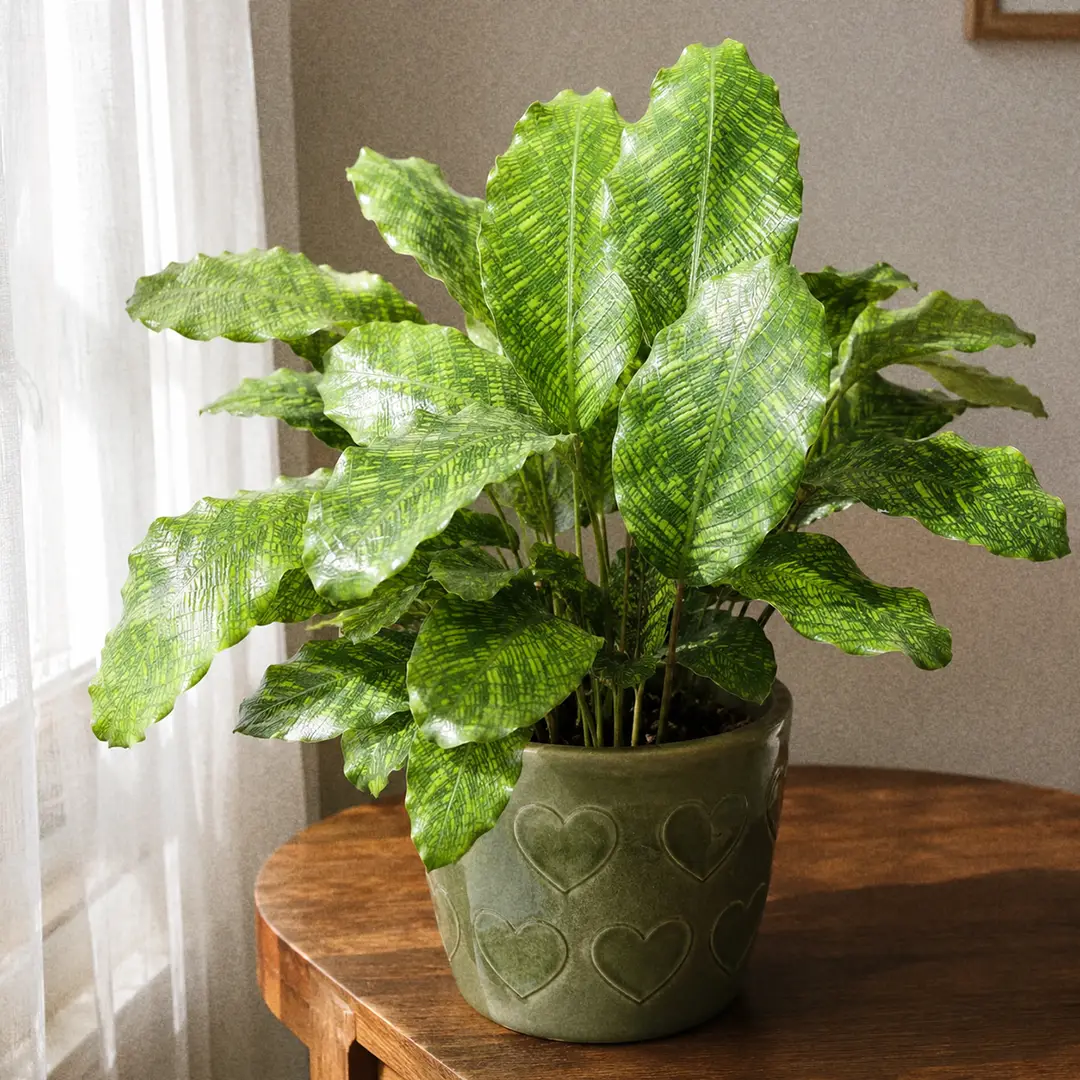
Complete Guide to Calathea Network Care and Growth
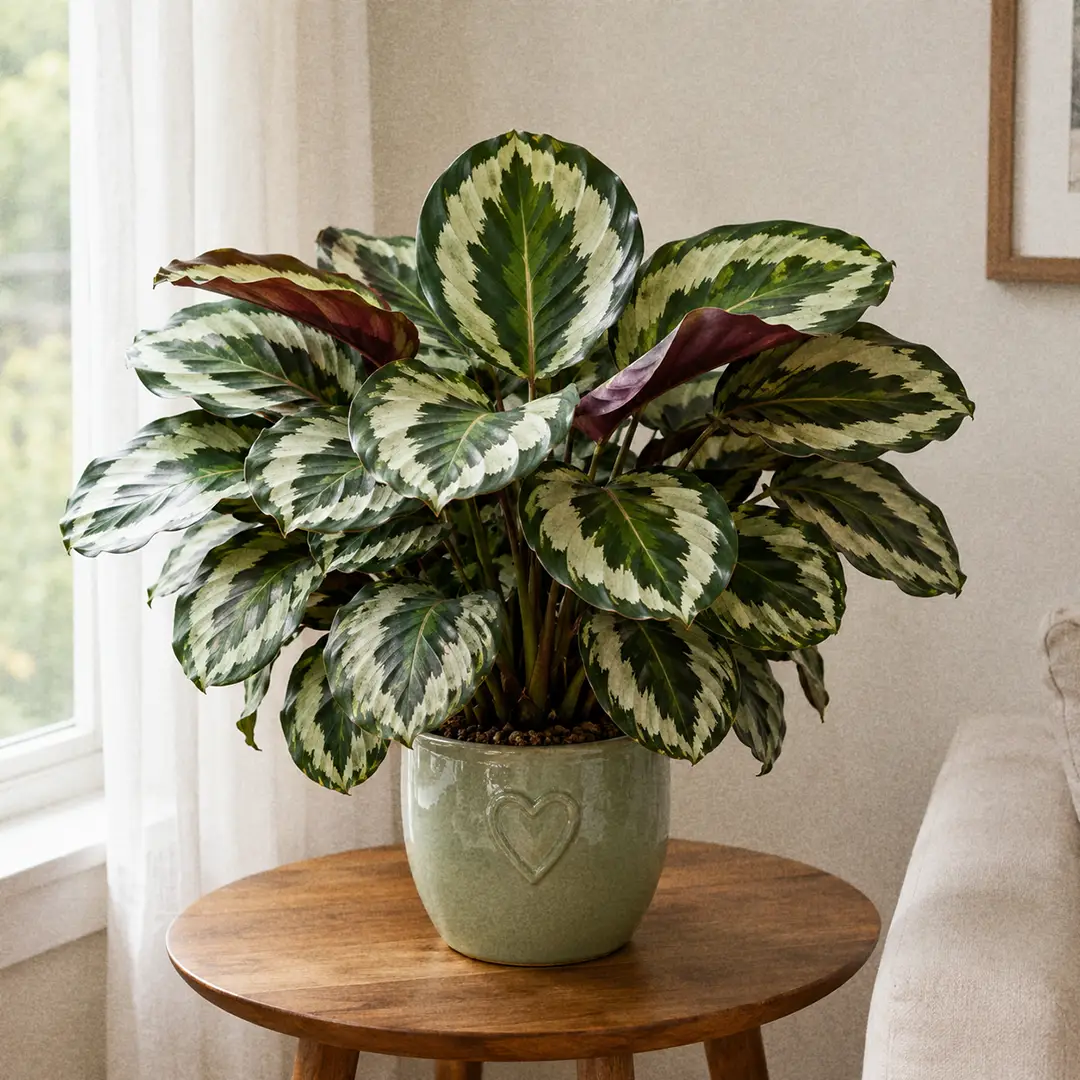
Complete Guide to Calathea Medallion Care and Growth
Complete Guide to Calathea Pinstripe Care and Growth
Complete Guide to Prayer Plant Care and Growth

Houseplant101 Forum
Questions & Comments
Ask a question, share your plant experience, or help other plant owners.
Comments are temporarily unavailable.
Open the Houseplant101 ForumNo comments yet
Be the first to ask a question or share your experience about this page.
Log in or create an account
Comments use your Houseplant101 Forum account, but you can stay on this page.
Create a new account