
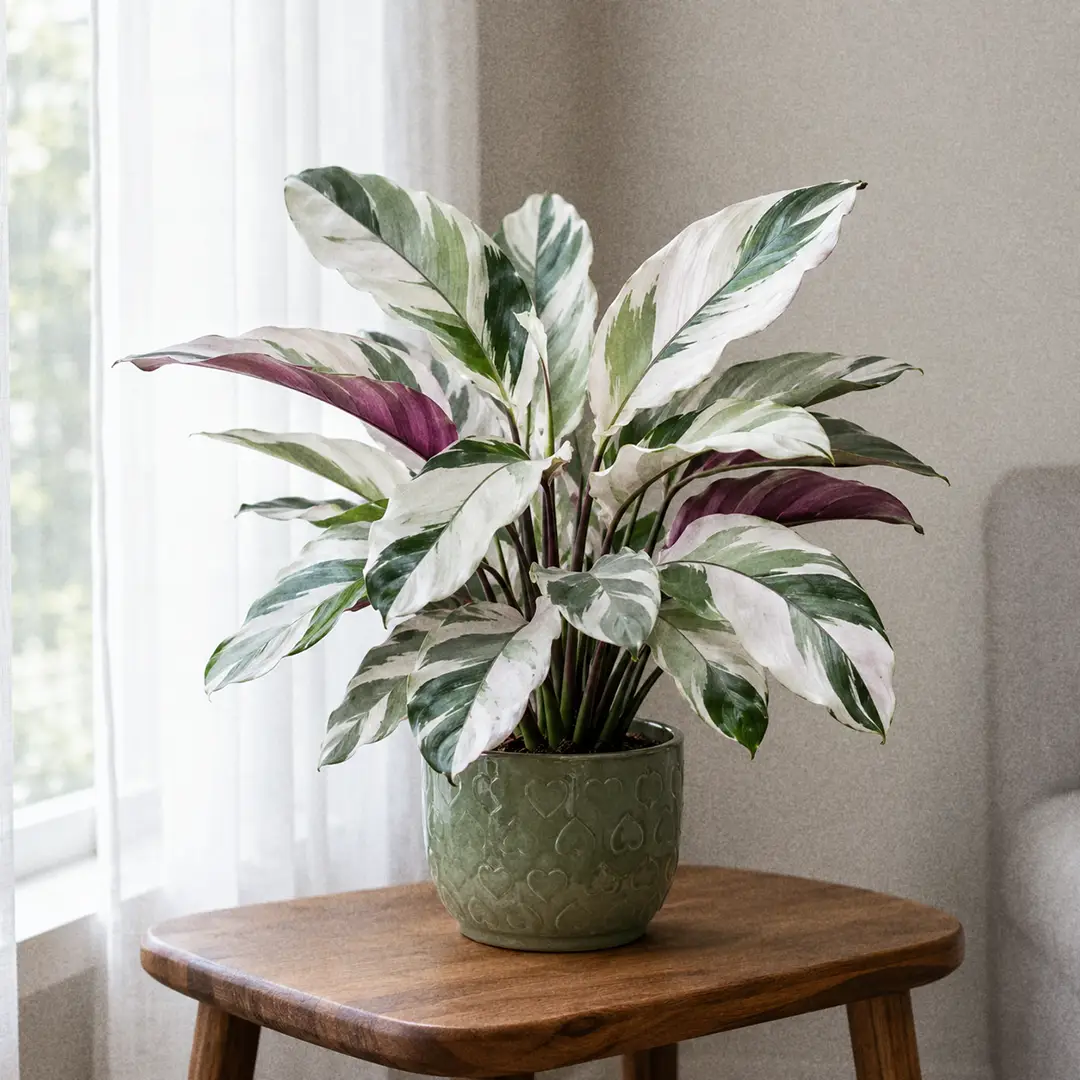
Calathea White Fusion
Goeppertia lietzei 'White Fusion'
Calathea lietzei 'White Fusion', Fusion White, White Fusion Prayer Plant


Calathea White Fusion is the marbled white, mint and green prayer plant that every collector wants and half of them lose. Learn how to water it, humidify it and light it so the white stays white instead of crisping brown.
📝 Calathea White Fusion Care Notes
🌿 Care Instructions
⚠️ Common Pests
📊 Growth Information
🪴 In This Guide 🪴

☀️ Calathea White Fusion Light Requirements (Indoor Lighting Guide)
The Sweet Spot
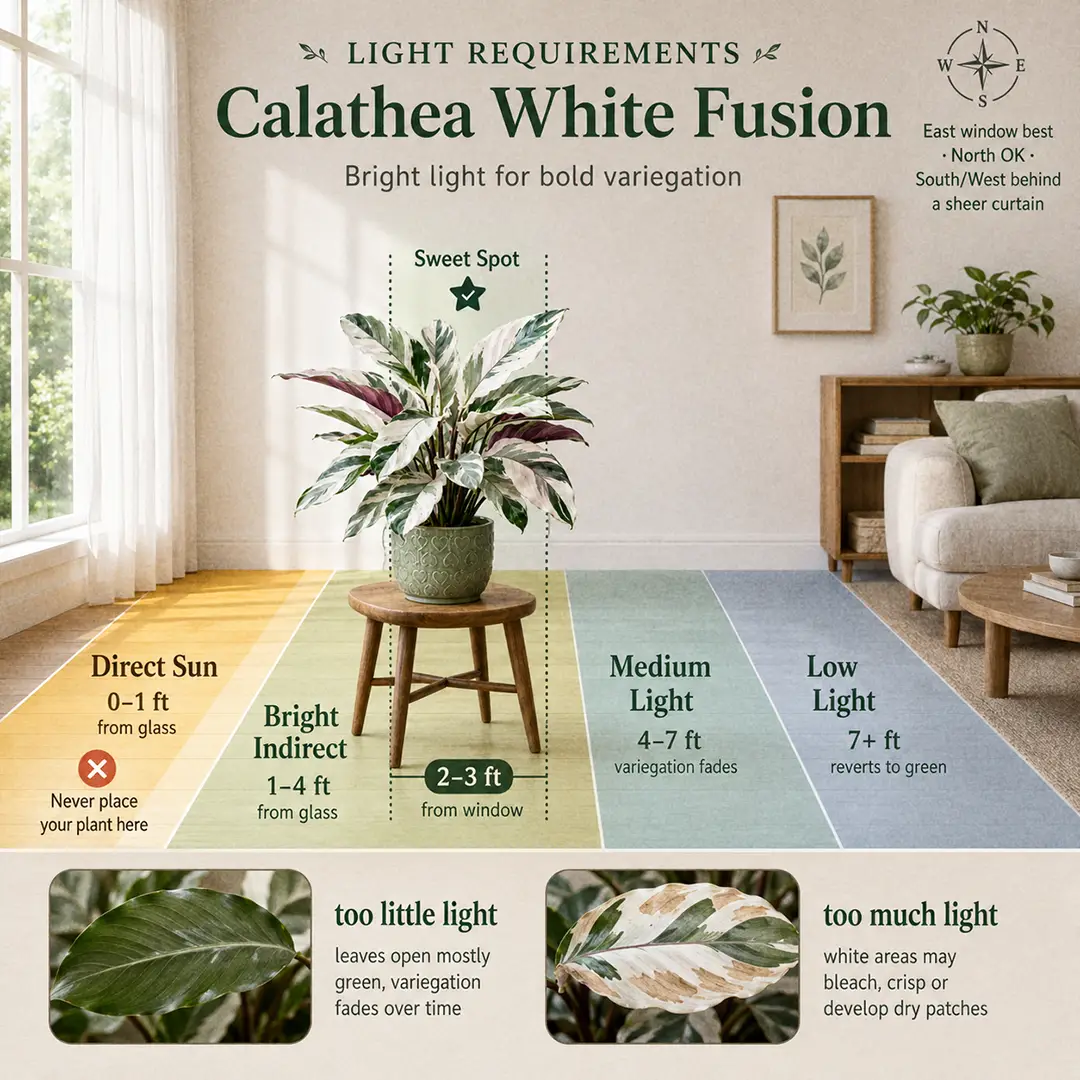
White Fusion wants bright indirect light, and more of it than a plain green Calathea. That sounds backwards for a plant famous for hating sun, but the logic is simple. Roughly half of every leaf is white, and white tissue makes no food. The green half has to feed the whole plant, so it needs a genuinely bright room to keep up.
An east window with the plant sitting two to three feet back is close to ideal: soft morning light, then bright ambient light all day. A north window works in a bright room. South and west windows are fine only behind a sheer curtain, set back three to five feet. Our Indoor Lighting Guide is worth a read if you are still judging spots by eye.
Too Little Light
In a dim corner this plant does something specific and disappointing. New leaves emerge with far less white and far more green, because the plant is compensating for the shortfall. That is reversion, and once a leaf opens green it never turns white again.
You will also see longer, floppier leaf stems reaching toward the window, wider gaps between leaves, and new growth that stalls for months. Winter is when most reversion happens, so a grow light on a timer from November through February keeps the pattern strong.
Too Much Light
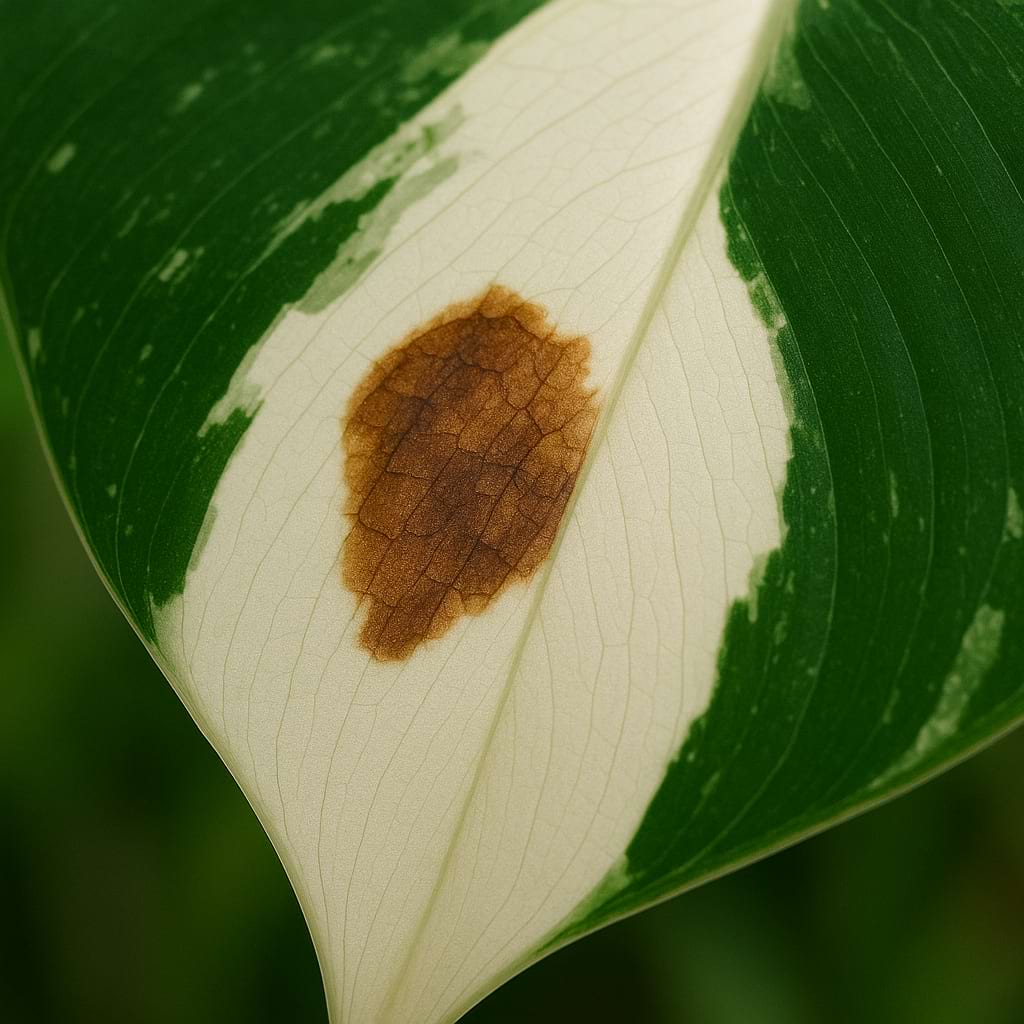
Direct sun is the fastest way to ruin this plant. The white sections have no pigment to protect them, so an hour of afternoon sun through glass leaves dry tan or bleached patches that never recover. That is sunburn, and on White Fusion it shows on the pale areas long before the green ones look stressed.
If leaves fold up tightly and stay folded through the middle of the day, the light is too intense. Healthy leaves fold at night and open again by mid-morning.
💧 Calathea White Fusion Watering Guide (How to Water Properly)
Watering Frequency
The target is evenly moist, never soggy, never bone dry. Water when the top inch of mix feels dry to your finger. In a warm bright room that usually lands every five to seven days in summer and every eight to twelve days in winter, but the finger test beats any schedule.
This plant is unusually unforgiving of both extremes. Let it dry out fully once and you get crispy edges within days. Leave it standing in water and the rhizome rots quietly while the leaves look fine, then collapse all at once. A moisture meter genuinely helps here, more than on most houseplants.
Water Quality Matters
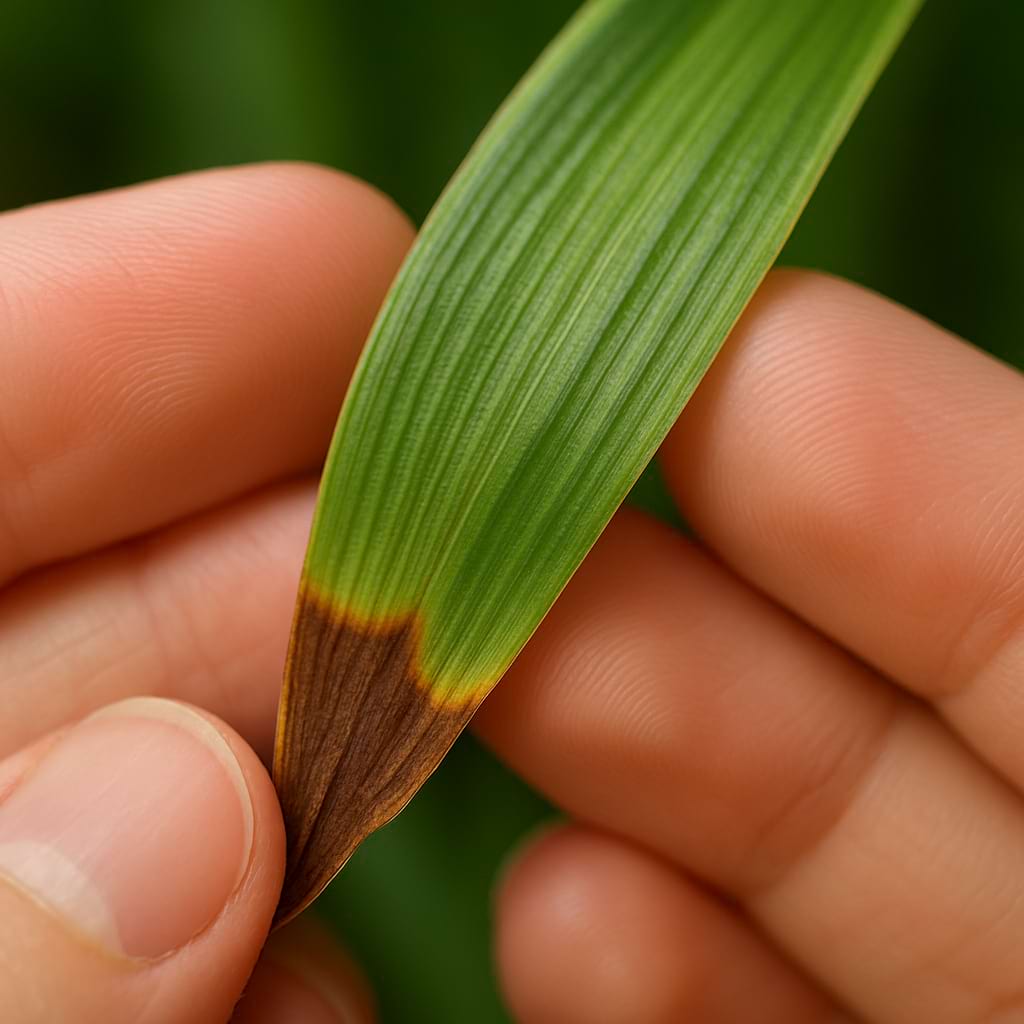
Use filtered water, rainwater or distilled water. Calatheas are notoriously sensitive to the minerals, chlorine and fluoride in hard tap water, and on White Fusion the damage lands on the white tissue first, as brown edges and spots. If filtered water is a hassle, letting tap water sit uncovered overnight helps with chlorine, though it does nothing about fluoride or dissolved minerals. Room temperature only. Cold water straight from the tap shocks the roots.
How to Water
Water thoroughly until it runs from the drainage holes, then empty the saucer within ten minutes. Bottom watering suits this plant well because it wets the whole root ball evenly and keeps water off the crown, where trapped moisture invites fungal spotting. Stand the pot in an inch of water for fifteen minutes, then let it drain.
Signs of Trouble
Curled, taco-shaped leaves and crispy brown edges mean it went too dry, or the air is too dry, or both. Yellowing lower leaves with mix that stays wet for days points at root rot. Small brown spots ringed with yellow, spreading over a week, usually mean water quality rather than watering frequency. Our Watering Guide covers the basics in more depth.
🪴 Best Soil for Calathea White Fusion (Potting Mix & Drainage)
What the Soil Needs
The mix has to do two contradictory things: hold steady moisture and drain fast. Dense supermarket potting compost holds water but compacts into airless mud, which is the single most common cause of root rot in this plant. Pure bark drains beautifully and dries out far too quickly.
Aim for something light and springy that stays damp for a few days after watering and never feels waterlogged when you squeeze a handful. Slightly acidic is ideal.
DIY Soil Recipe
A reliable mix, by volume:
- 2 parts coco coir or peat moss for moisture retention
- 1 part perlite or pumice for drainage and air
- 1 part fine orchid bark to keep the structure open
- A handful of worm castings for gentle background nutrition
Coco coir is the better base of the two, since peat turns hydrophobic once it dries fully and this plant punishes you for that.
Pre-Made Options
A quality aroid or peace lily mix works with an extra scoop of perlite stirred in. Avoid anything sold as moisture-control compost, since the water-retaining crystals keep the mix wetter than a Calathea rhizome tolerates. Our Potting Soil Guide and Soil Guide go into the reasoning.
🍼 Fertilizing Calathea White Fusion (Feeding Schedule)
When and How Often
Feed once a month while new leaves are appearing, roughly March through September. If the plant stops producing new growth, stop feeding. There is no benefit to feeding a plant that is not building anything, and the leftover salts do real harm.
What to Use
A balanced liquid houseplant fertilizer at quarter to half the label strength is plenty. White Fusion is a light feeder. Fish emulsion and worm casting tea both work well and are gentler on the roots than concentrated synthetics. Always water first, then feed, so nutrients never hit dry roots.
Over-Fertilizing Signs
Salt buildup shows as brown crispy leaf tips and edges that keep appearing even though your watering and humidity are fine. A white crust on the soil surface or around the pot rim confirms it. Flush the pot every two to three months by running water through it for a full minute, and see our Fertilizing Guide for more.
🌡️ Calathea White Fusion Temperature Range
Ideal Range
Keep it between 65 and 80°F (18 to 26°C), which is comfortable indoor temperature for most homes. Below 60°F (15°C) growth stops and leaves start yellowing. This plant is not frost tolerant in any sense, and a single cold night on a windowsill can mark every leaf.
Drafts and Heat Sources
Sudden swings do more damage than any steady temperature in range. Keep it away from front doors, drafty single-glazed windows, air conditioning vents and radiators. A spot next to a heating vent is doubly bad, because the hot dry blast strips humidity at the same time.
Winter windowsills are the usual trap. The glass can be twenty degrees colder than the room at night, and new leaves emerging in those conditions often unfurl with damaged edges already baked in.
💦 Calathea White Fusion Humidity Requirements
Ideal Humidity
60 to 80 percent, and this is the one thing you cannot negotiate on. Below about 50 percent the white sections brown at the edges within days. Average heated homes sit around 30 to 40 percent in winter, which is why so many of these plants arrive healthy and decline through their first cold season.
Easy Humidity Boosters
A humidifier running near the plant is the only method that reliably works. Everything else is a supplement: a pebble tray, grouping plants together, a humid bathroom with a window, or a glass cabinet. Misting raises humidity for about ten minutes and leaves water sitting on leaves overnight, which invites spotting. Our Humidity Guide has the full comparison.
🌸 Calathea White Fusion Flowers (Does It Bloom Indoors?)
What the Flowers Look Like
Realistically, this plant does not bloom indoors. The original patent for 'Fusion White' records that flowers were not observed at all during the trials, and most home growers never see one in the plant's lifetime.
The parent species, Goeppertia lietzei, does flower in the wild and occasionally under greenhouse conditions. The blooms are small, white to cream, and gathered into a short cone-shaped spike low among the leaf stems. They are modest little things. Nobody grows a Calathea for its flowers.
Why the Leaves Are the Point
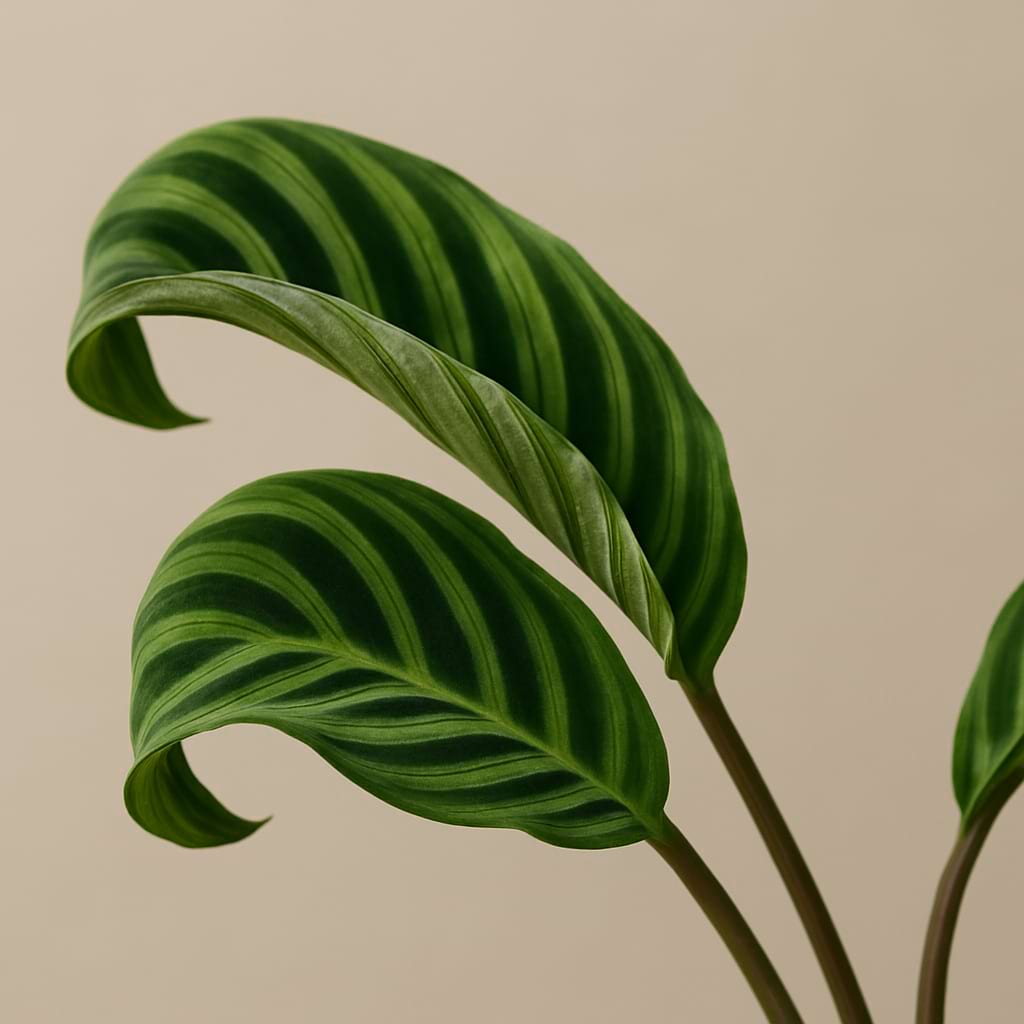
Where this plant does perform is at dusk. Every evening the leaves fold upward from the base, showing their purple undersides, then open flat again by morning. The movement is called nyctinasty, and it is driven by a swollen hinge of tissue at the top of each leaf stem called a pulvinus. It is the reason the whole Marantaceae family is known as prayer plants.
A White Fusion that stops praying is telling you something. Leaves that stay folded all day usually mean too much light or a plant that is too dry. Leaves that never fold at night often mean the room is too dark for the plant to register a proper day and night cycle.
If You Want Flowers Instead
If you want a flowering plant with a similar soft look and far less drama, a Peace Lily covers that ground and is much more forgiving about humidity. Keep the White Fusion for the foliage.
🏷️ Calathea White Fusion Types and Varieties
White Fusion Itself
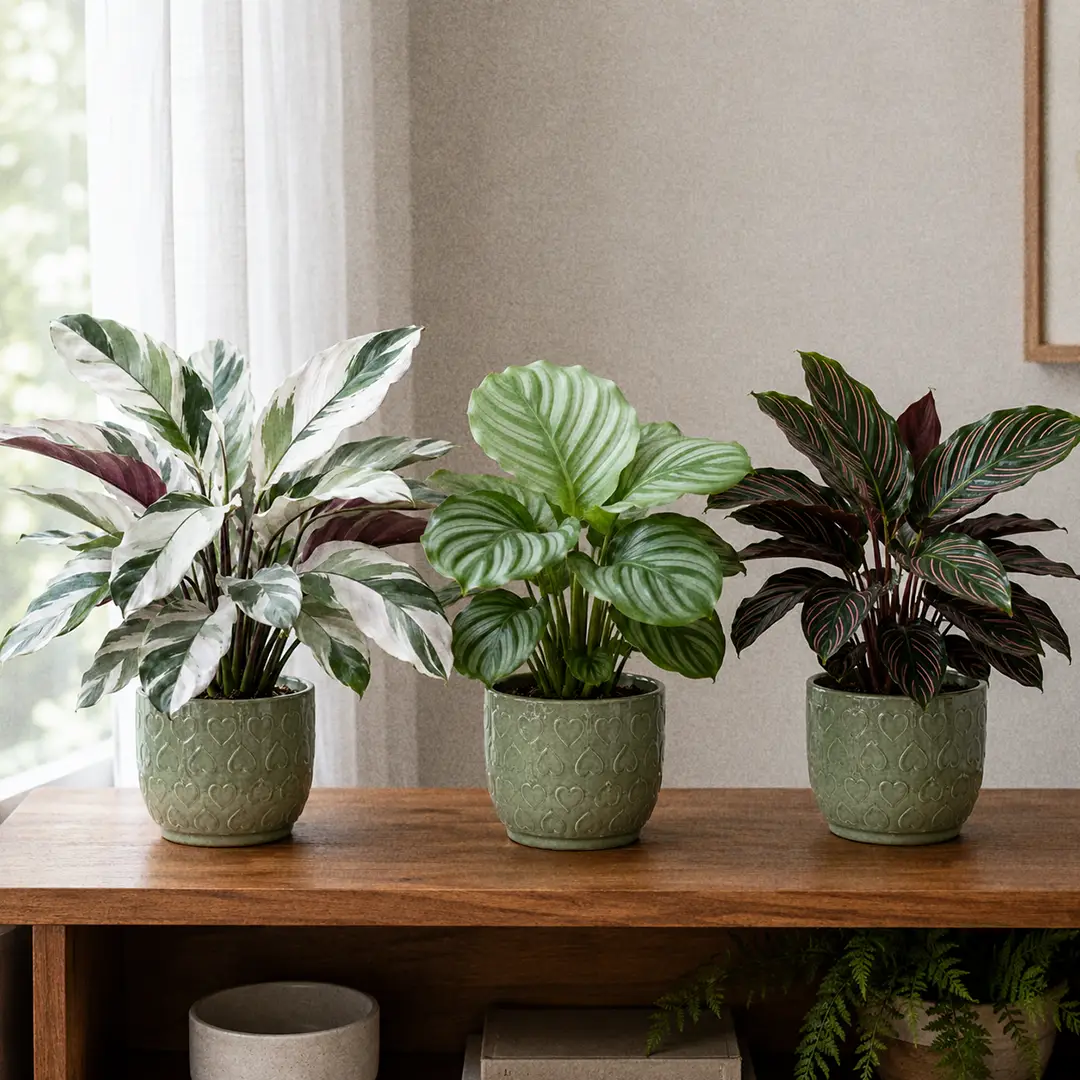
'White Fusion' is a single named cultivar rather than a group, so there are no sub-varieties to collect. It came from one plant: a whole-plant mutation spotted among ordinary Calathea lietzei at a nursery in Malaysia in 2007, propagated vegetatively ever since. Every plant sold today traces back to that one mutation, which is why the pattern is consistent in character even though no two leaves are ever marked the same way.
Goeppertia lietzei, the Green Parent
The plain species is still sold and is a completely different proposition: dark green leaves with pale feathered stripes, deep purple undersides, and none of the fragility. If you have killed a White Fusion and want the same shape without the anxiety, this is the plant to look for.
Other White-Marked Prayer Plants
Goeppertia majestica 'White Star' is the one most often confused with White Fusion in shops. It has long upright leaves with clean white stripes running out from the midrib, sometimes flushed pink, and a much more orderly pattern than the Fusion's marbling. It is also noticeably easier to grow.
If it is the pink you are after rather than the white, Stromanthe Triostar gives you cream and blush variegation on a taller upright clump, plus solid magenta leaf undersides, and it is a good deal less temperamental than a Fusion.
For patterned foliage with a gentler care routine, Calathea Pinstripe and Calathea Medallion are both better first prayer plants, and Calathea Dottie gives you the dramatic dark-and-pink look instead. If it is the fragility rather than the pattern that put you off, Calathea Network is the most forgiving plant in the family: thick leaves, a fine green mosaic instead of white marbling, and no pale areas to brown.
🪴 Potting and Repotting Calathea White Fusion
When to Repot
Repot in spring, every one to two years, and only when the plant genuinely needs it. Roots circling the drainage holes, water running straight through, or a plant that dries out within two days are the signals. White Fusion likes to be a little snug, and an oversized pot of wet mix is a fast route to rot.
Choosing a Pot
Go up one size only, from a 4 inch to a 5 inch, or a 6 to a 7. Drainage holes are non-negotiable. Plastic and glazed ceramic both suit this plant better than raw terracotta, which wicks moisture out of the mix faster than a Calathea wants. If you love the terracotta look, use a plastic nursery pot inside a decorative outer pot. Our Plant Pots Guide covers the trade-offs.
Step-by-Step Repotting
- Water lightly a day ahead so the root ball holds together.
- Slide the plant out, supporting the base rather than pulling on leaf stems.
- Tease the outer roots apart gently and shake off maybe a third of the old mix.
- Cut away any roots that are brown, soft or smelly with clean scissors.
- Set it at the same depth as before in fresh mix, firming lightly rather than packing it down.
- Water thoroughly with room temperature filtered water.
Expect a sulk. Drooping and a couple of yellow leaves for a week or two after repotting is normal for this plant. Keep humidity high while it settles, and hold off feeding for a month. There is more detail in our Repotting Guide.
✂️ Pruning Calathea White Fusion
When to Prune
There is no pruning season here, since you are only ever removing damaged growth. Do it whenever a leaf is more than about a third browned, or when a leaf has yellowed fully and is not coming back.
How to Prune
Cut the whole leaf stem at the base with clean, sharp scissors rather than snipping the leaf off halfway. A stub left behind rots and gives fungal problems somewhere to start. Sterilise the blades with alcohol first, especially if you are moving between plants.
For small brown edges on an otherwise healthy leaf, you can trim along the shape of the leaf and leave a thin margin of dead tissue. It looks tidier than a straight cut. The leaf will not regrow that edge, so treat this as cosmetic.
Dealing With Reverted Growth
If a new leaf opens fully green, cut it out at the base as soon as you spot it. Green leaves feed themselves better than variegated ones, so left alone they gradually take over the plant. Removing them pushes the rhizome to keep producing marbled leaves instead.
🌱 How to Propagate Calathea White Fusion
Division Is the Only Method
Forget cuttings entirely. Calathea stems have no nodes that will root, so a leaf or stem cutting in water simply rots. Rhizome division is the only method that works, and it only works when each piece keeps its own roots.
That also makes this a slow plant to share. You divide once every year or two, at repotting, and only when the clump is big enough to split without wrecking it.
Step-by-Step Division
- Divide in spring or early summer, when the plant is actively growing.
- Water the day before, then slide the plant out of its pot.
- Wash enough soil off the base to see where the rhizomes and root clusters separate.
- Pull the clump apart by hand along natural divisions. Use a clean knife only where you have to.
- Keep at least three healthy leaves and a solid section of root on each division. Smaller pieces rarely survive.
- Pot each division into fresh mix in a small pot, snug rather than roomy.
- Water in and keep them warm, shaded and very humid for the first three to four weeks.
Tips for Success
A clear bag or propagation box over the fresh divisions makes an enormous difference, since a divided plant has lost root capacity but still loses water through every leaf. Keep them out of direct light entirely while they recover, and do not feed until you see a new leaf.
Division is also the fix for a plant that has reverted in part. Split off the section still carrying marbled leaves and grow it on separately. If the entire plant has gone green, no amount of dividing brings the white back. See our Plant Division Guide for the general technique.
🐛 Calathea White Fusion Pests and Treatment
Thin leaves and high humidity make this a plant pests find easy work. Check the undersides weekly, because that is where every one of these starts.
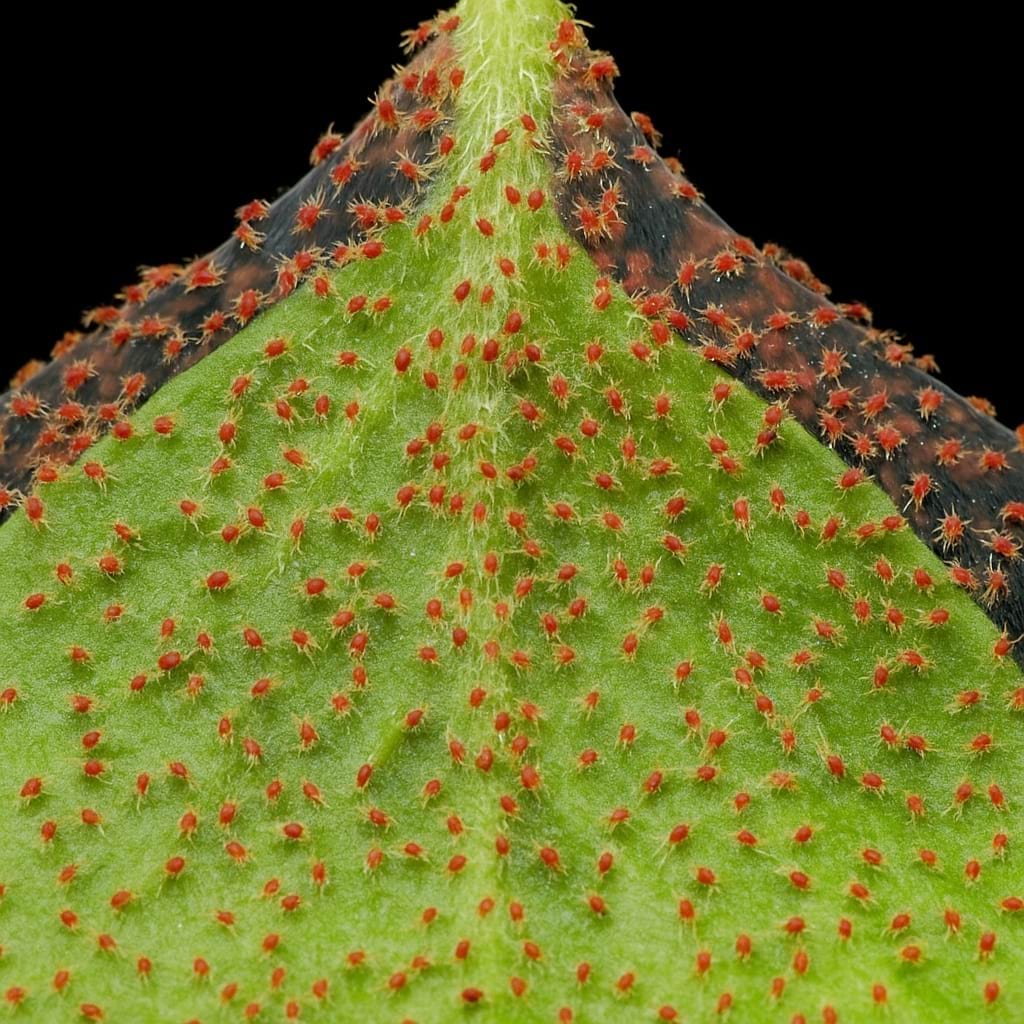
Spider mites are the main threat and the most common killer of White Fusions. They arrive when the air is dry, which is exactly the condition this plant is already suffering in, so an infestation usually means two problems at once. Look for fine pale stippling and faint webbing where the leaf meets the stem. Rinse the whole plant in the shower, then treat with insecticidal soap or neem every five days for three weeks.
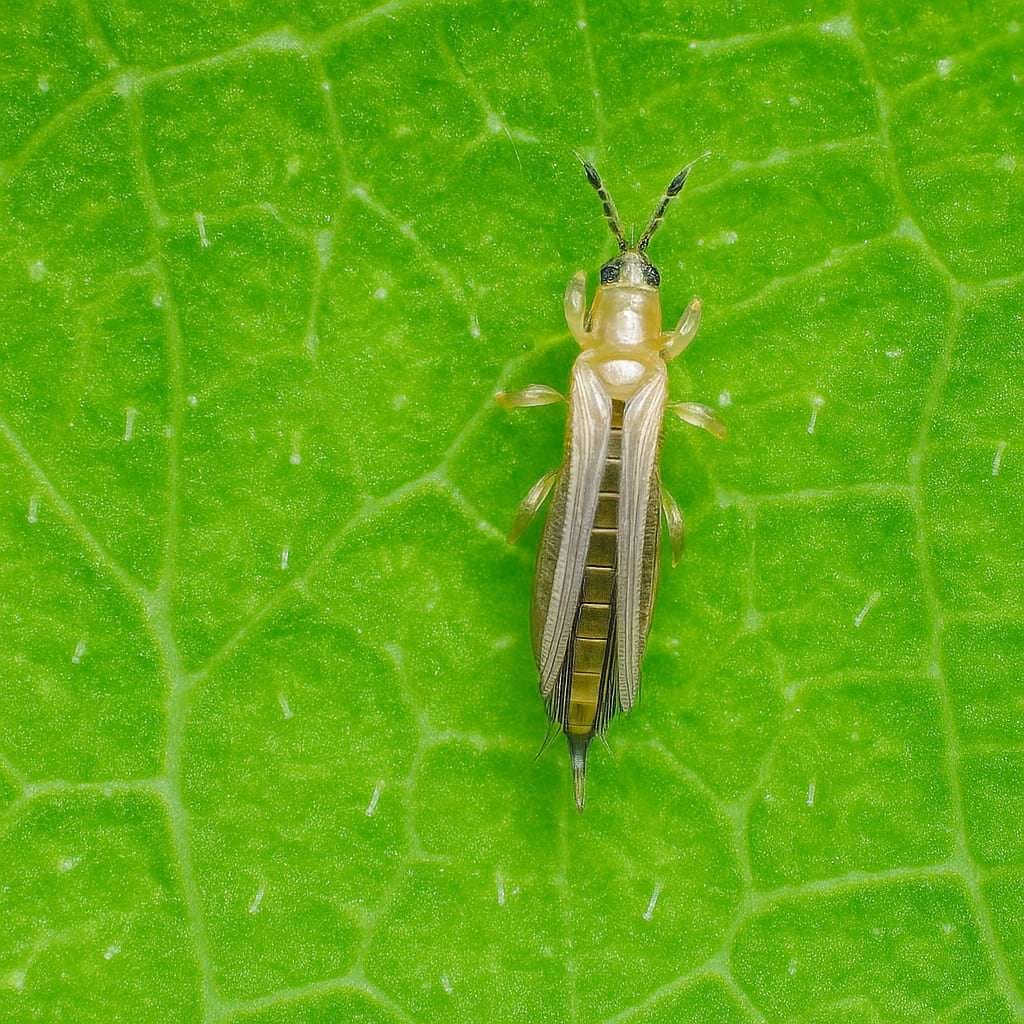
Thrips leave silvery scarred streaks and distorted new leaves, and they hide inside the tightly furled new growth where sprays struggle to reach. They are slow to shift, so expect several rounds of treatment.
Mealybugs show up as white cottony blobs tucked into leaf joints and the crown. Dab each one with a cotton bud dipped in rubbing alcohol, then follow with a neem spray.
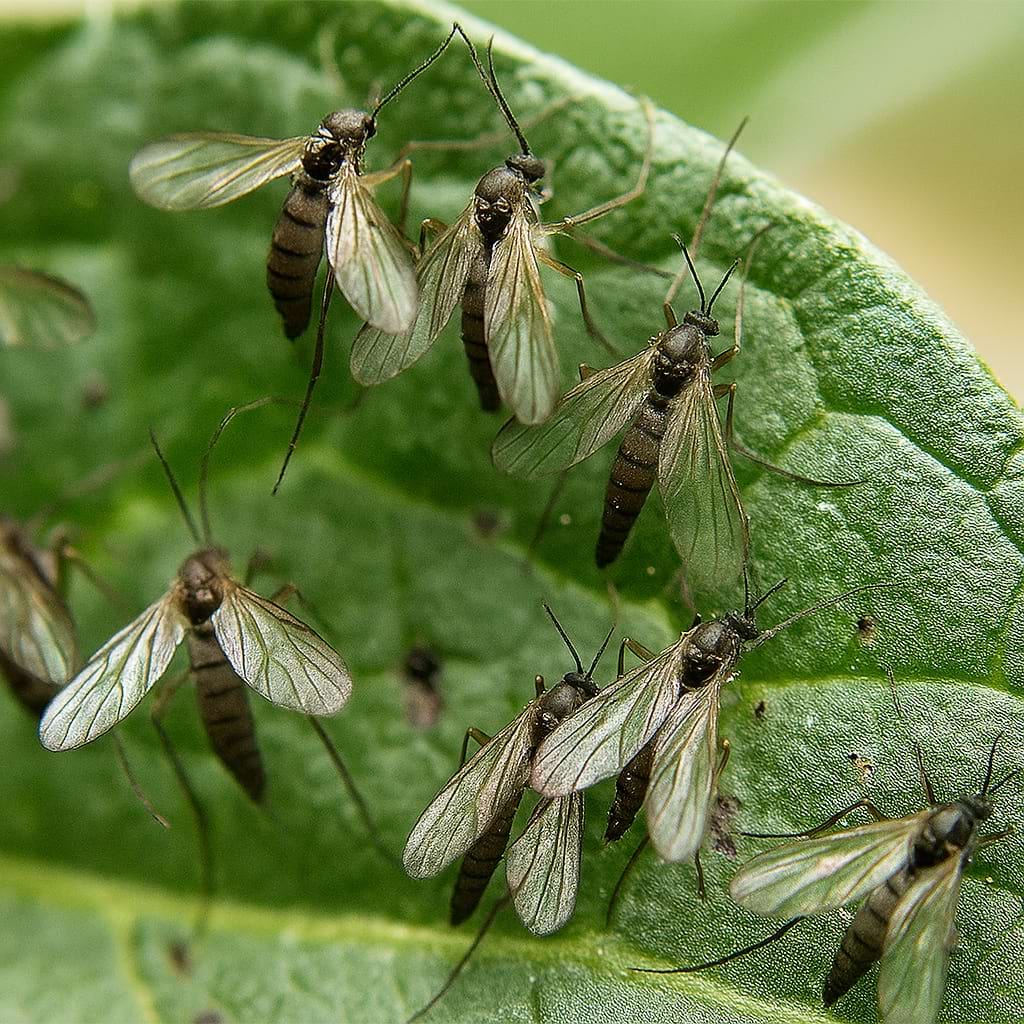
Fungus gnats love the constantly damp mix this plant demands. They rarely harm an established plant, but the larvae chew fine roots on young divisions. Yellow sticky traps plus letting the very top of the mix dry between waterings usually clears them.
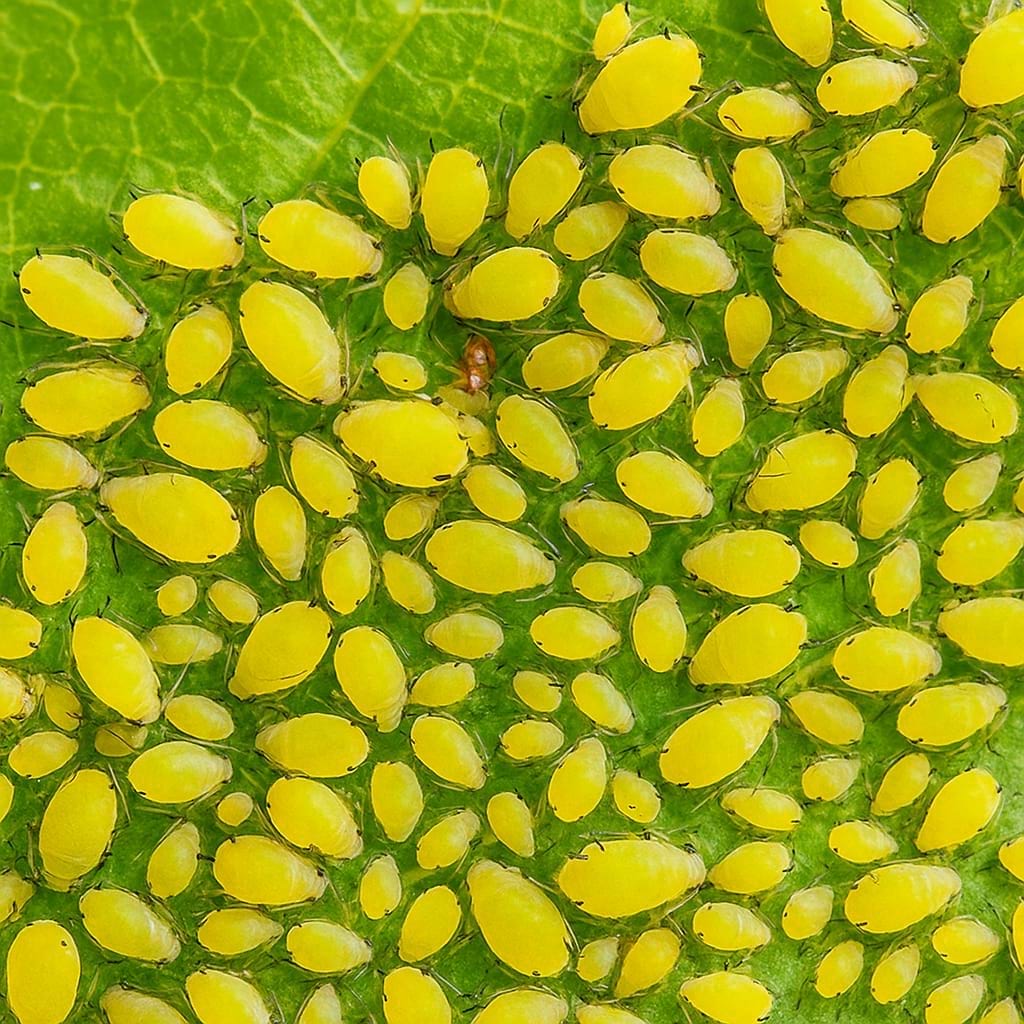
Aphids cluster on soft new growth and are the easiest of the lot to remove with a firm rinse.

🩺 Common Calathea White Fusion Problems
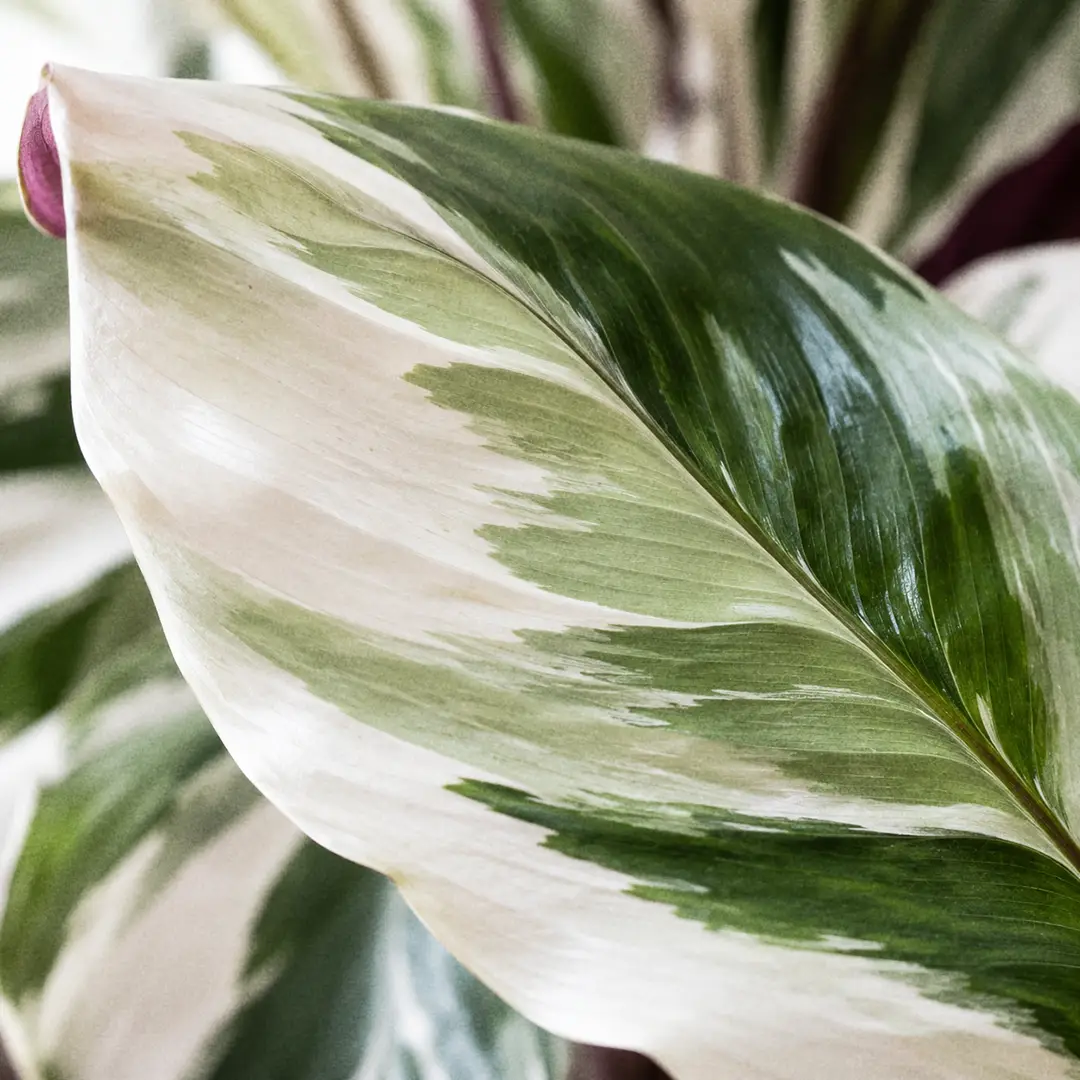
Brown crispy edges are the signature complaint, and on White Fusion they land on the white sections first. The cause is almost always low humidity, hard tap water, or fertilizer salts, in that order of likelihood. Fix the air first, then the water.
Browning variegation specifically, where the pale areas go tan while the green stays fine, points at either direct sun or mineral-heavy water. White tissue has no defences on either front.
Curling leaves that roll inward like a taco mean the plant is losing water faster than the roots supply it. Check whether the mix went dry, then check humidity. Leaves usually flatten within a day of the cause being fixed.
Reversion to plain green leaves is a light problem. More bright indirect light, and cutting out green leaves as they appear, keeps the marbling coming. Full reversion of the whole plant is permanent.
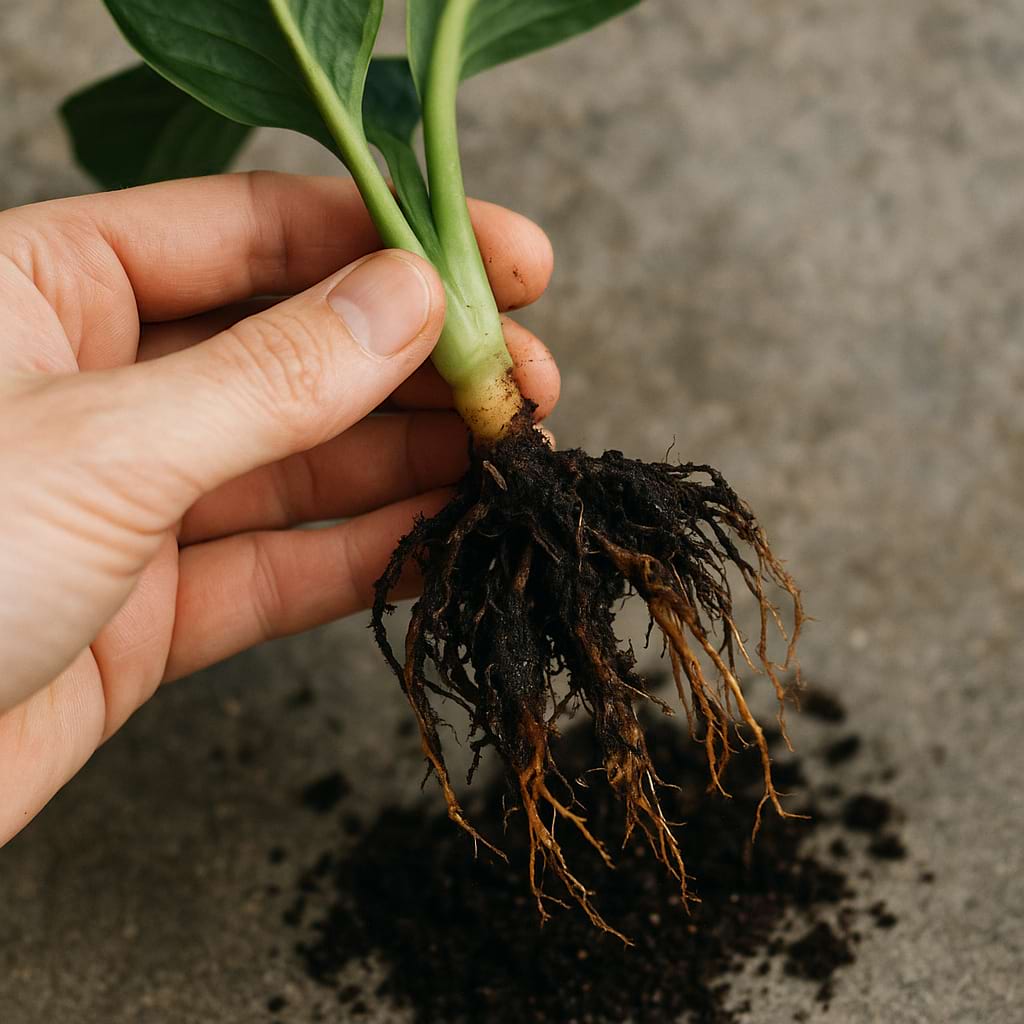
Root rot creeps in from soggy mix or a pot with no drainage. Yellowing lower leaves plus mix that never dries means unpot it, cut the mush away and repot into fresh airy mix.
Fungal and bacterial leaf spotting appears as dark spots with yellow halos, usually where high humidity meets still air. Improve airflow with a small fan on low, and stop misting.
Stunted growth with no new leaves for months usually means the plant is too cold, too dark, or worn out after a rough winter.


🖼️ Calathea White Fusion Display and Styling Ideas
Glass Cabinets and Terrariums
An enclosed cabinet is where this plant genuinely thrives, because it solves humidity permanently instead of daily. A converted glass display cabinet with a small fan and a grow light strip turns White Fusion from a difficult plant into a straightforward one. It is a real answer, not a luxury.
Humid Rooms
A bathroom with a window is the next best option, and a kitchen shelf away from the hob works too. Steam from showers and cooking lifts humidity several times a day, which suits this plant much better than a dry living room does.
Where Not to Put It
Not on a sunny windowsill. Not above a radiator. Not by a front door that opens onto cold air all winter. Not on an open bookshelf in a dry heated room, however good it looks there.
Pairing and Contrast
Set it against something dark. The marbling reads as a pattern when there is deep green or charcoal behind it, and washes out to a pale blur against a white wall. A dark-leaved Calathea Dottie or a Rubber Plant next to it does the job, and both like similar light.
🌟 Calathea White Fusion Pro Care Tips
- Buy the balanced plant, not the whitest one. A plant that is 80 percent white has almost no engine. It looks incredible for two months and then declines with nothing you can do about it. Aim for roughly half and half.
- Filtered water from day one. Do not wait for brown edges to start filtering. By the time damage shows, the salts have been building for weeks.
- Humidifier over misting, always. Steady 60 percent beats a daily spray every time, and misting encourages leaf spotting on this species.
- Watch the evening fold. A plant that folds up at dusk and opens by morning is a happy plant. It is the fastest health check you have.
- Quarantine new plants for two weeks. Spider mites arrive on shop plants far more often than people expect, and a White Fusion is the plant they will find first.
- Give it a full growing season before you judge it. These plants often sulk for two months after coming home, then settle and start pushing leaves.
❓ Frequently Asked Questions
Why is my Calathea White Fusion turning brown on the white parts?
Low humidity is the most likely cause, followed by minerals in tap water and then fertilizer salt buildup. The white tissue is thinner and has no pigment protection, so it always shows stress before the green does. Run a humidifier to hold 60 percent, switch to filtered or rainwater, and flush the pot to clear salts.
Is Calathea White Fusion toxic to cats and dogs?
No. Calatheas are listed by the ASPCA as non-toxic to cats, dogs and horses, so this is a safe plant for a home with pets. A pet that chews a lot of any plant material can still get an upset stomach, so it is worth discouraging, but there is no poisoning risk.
Why is my White Fusion losing its variegation?
Not enough light. In dim conditions the plant produces greener leaves because green tissue feeds the plant better. Move it somewhere brighter with no direct sun, add a grow light through winter, and cut out any fully green leaves as they open.
Can I propagate Calathea White Fusion from a leaf or stem cutting?
No. Calathea stems have no rooting nodes, so cuttings just rot in water or soil. The only method that works is dividing the rhizome at repotting time, keeping roots attached to every division.
How often should I water a Calathea White Fusion?
Water when the top inch of mix is dry, which usually works out at every five to seven days in summer and every eight to twelve in winter. Skip the calendar and check with a finger or a moisture meter, because pot size, light and season all shift the timing.
Why are the leaves curling inward?
Curling is the plant reducing its surface area to save water. Either the mix dried out too far or the air is too dry. Water thoroughly, raise humidity, and the leaves normally flatten out within a day or two.
Is Calathea White Fusion hard to grow?
Yes, genuinely. It is one of the more demanding common houseplants, mostly because it needs high humidity that ordinary heated rooms do not provide. In a glass cabinet or a humid bathroom it is much easier than its reputation suggests.
Why does my plant droop in the evening?
That is normal and healthy. Prayer plants fold their leaves upward at night and open them again in the morning, showing the purple undersides as they go. Drooping that does not recover by mid-morning is a different matter, and usually means the plant is thirsty.
Should I cut off brown leaf tips?
You can, and it is purely cosmetic. Trim along the natural leaf shape leaving a hair of brown at the edge, since cutting into living tissue creates a fresh wound that browns again. If a leaf is more than a third damaged, remove the whole stem at the base instead.
ℹ️ Calathea White Fusion Info
Care and Maintenance
🪴 Soil Type and pH: Light, moisture-retentive aroid or prayer plant mix
💧 Humidity and Misting: High humidity of 60 to 80 percent, ideally steady rather than misted in bursts.
✂️ Pruning: Cut spent or badly browned leaves at the base, and remove fully green reverted growth if you want the variegation back.
🧼 Cleaning: Wipe leaves with a soft damp cloth, supporting each leaf from below. The white tissue bruises more easily than the green.
🌱 Repotting: Repot in spring every 1-2 years, only when roots fill the pot. This plant prefers to be slightly snug.
🔄 Repotting Frequency: Every 1-2 years
❄️ Seasonal Changes in Care: Water and feed through spring and summer, then ease off feeding in winter while keeping humidity and warmth steady.
Growing Characteristics
💥 Growth Speed: Moderate in warmth and humidity, slow otherwise
🔄 Life Cycle: Evergreen rhizomatous perennial
💥 Bloom Time: Rarely to never indoors
🌡️ Hardiness Zones: 11-12
🗺️ Native Area: The parent species Goeppertia lietzei grows in wet tropical forest in eastern Brazil. The 'White Fusion' mutation was found in a Malaysian nursery in 2007.
🚘 Hibernation: No
Propagation and Health
📍 Suitable Locations: Bright bathrooms, kitchen counters away from the hob, glass cabinets, terrariums, humidified plant shelves
🪴 Propagation Methods: Rhizome division at repotting time is the only method that works, and each piece must keep roots attached.
🐛 Common Pests: Spider Mites, Thrips, Mealybugs, Fungus Gnats, Aphids
🦠 Possible Diseases: Root rot, fungal leaf spot, bacterial spotting in stagnant humid air
Plant Details
🌿 Plant Type: Rhizomatous perennial prayer plant
🍃 Foliage Type: Evergreen
🎨 Color of Leaves: Marbled white, mint green and deep green with purple undersides
🌸 Flower Color: Small white to cream, almost never seen indoors
🌼 Blooming: No, not reliably indoors
🍽️ Edibility: Not edible.
📏 Mature Size: 12-24 inches
Additional Info
🌻 General Benefits: Pet-safe, one of the most heavily variegated houseplants available, and it folds its leaves up at night
💊 Medical Properties: No documented medicinal uses.
🧿 Feng Shui: Soft, rounded, pale foliage that lifts a dim corner of a room without the spiky energy of a cactus or a snake plant.
⭐ Zodiac Sign Compatibility: Cancer
🌈 Symbolism or Folklore: Fragility, careful attention, new beginnings
📝 Interesting Facts: 'White Fusion' is a patented plant, US patent PP26187, discovered by Taiyan Yam as a whole-plant mutation among ordinary Calathea lietzei at a Malaysian nursery in May 2007. The purple leaf undersides show clearly every evening when the leaves fold upward, a movement called nyctinasty.
Buying and Usage
🛒 What to Look for When Buying: Pick a plant with several leaves showing a balanced mix of white and green, not one that is almost entirely white. Nearly all-white plants look spectacular in the shop and starve slowly at home. Check leaf undersides for spider mite speckling before you buy.
🪴 Other Uses: Terrarium and glass cabinet specimen, humid bathroom plant.
Decoration and Styling
🖼️ Display Ideas: Glass cabinets, humid bathrooms, grouped with darker foliage for contrast, low wide bowls, pebble tray shelves
🧵 Styling Tips: Place it against a dark background. The marbled white reads as pattern rather than as a washed-out leaf when there is something deep green or charcoal behind it.
🪴 See also 🪴
Calathea Orbifolia Brown Edges (Crispy Leaves, Curling and How to Fix Them)

Houseplant101 Forum
Questions & Comments
Ask a question, share your plant experience, or help other plant owners.
Comments are temporarily unavailable.
Open the Houseplant101 ForumNo comments yet
Be the first to ask a question or share your experience about this page.
Log in or create an account
Comments use your Houseplant101 Forum account, but you can stay on this page.
Create a new account