
Calathea Medallion
Goeppertia roseopicta 'Medallion'
Calathea roseopicta Medallion, Rose Painted Calathea, Medallion Prayer Plant, Goeppertia Medallion


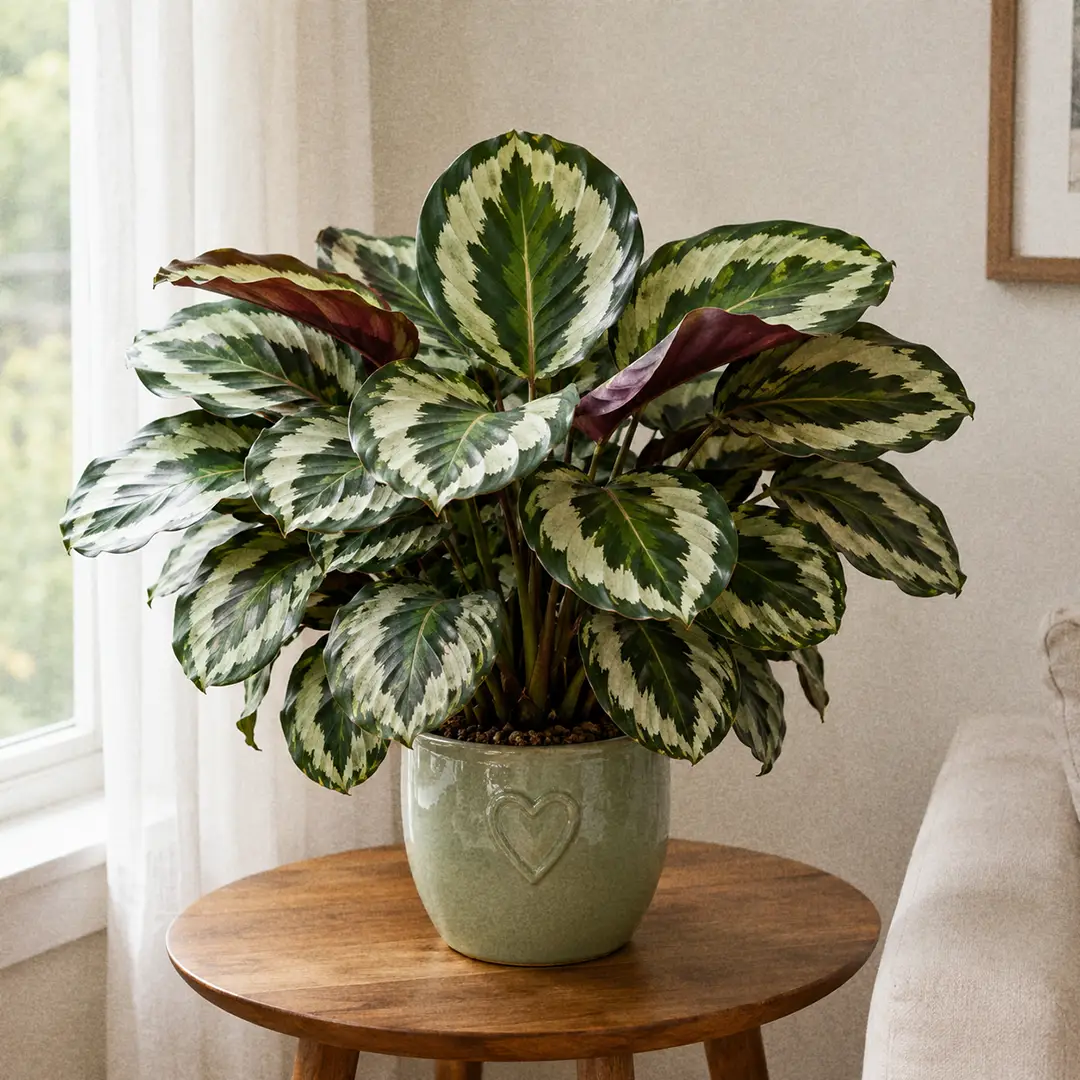
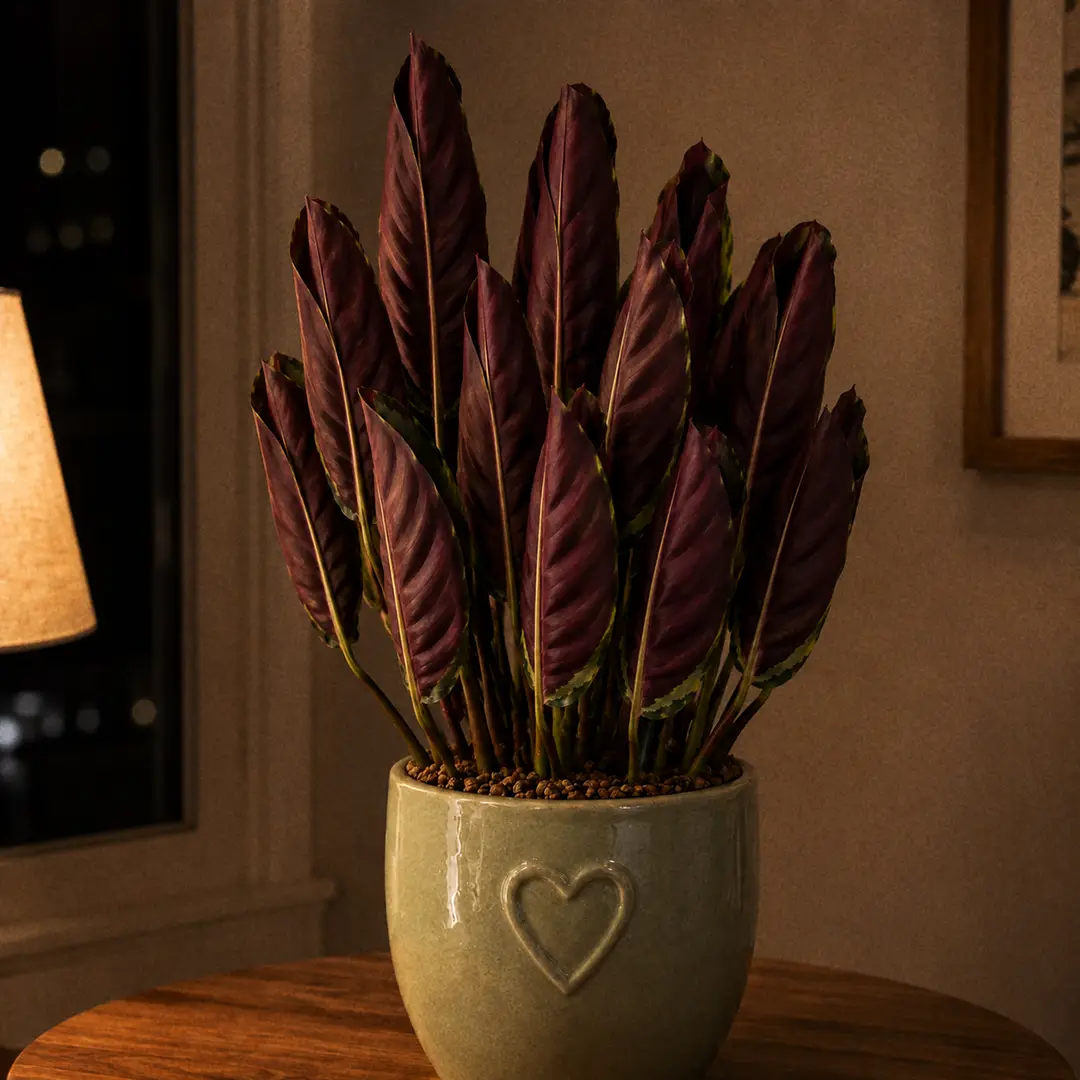
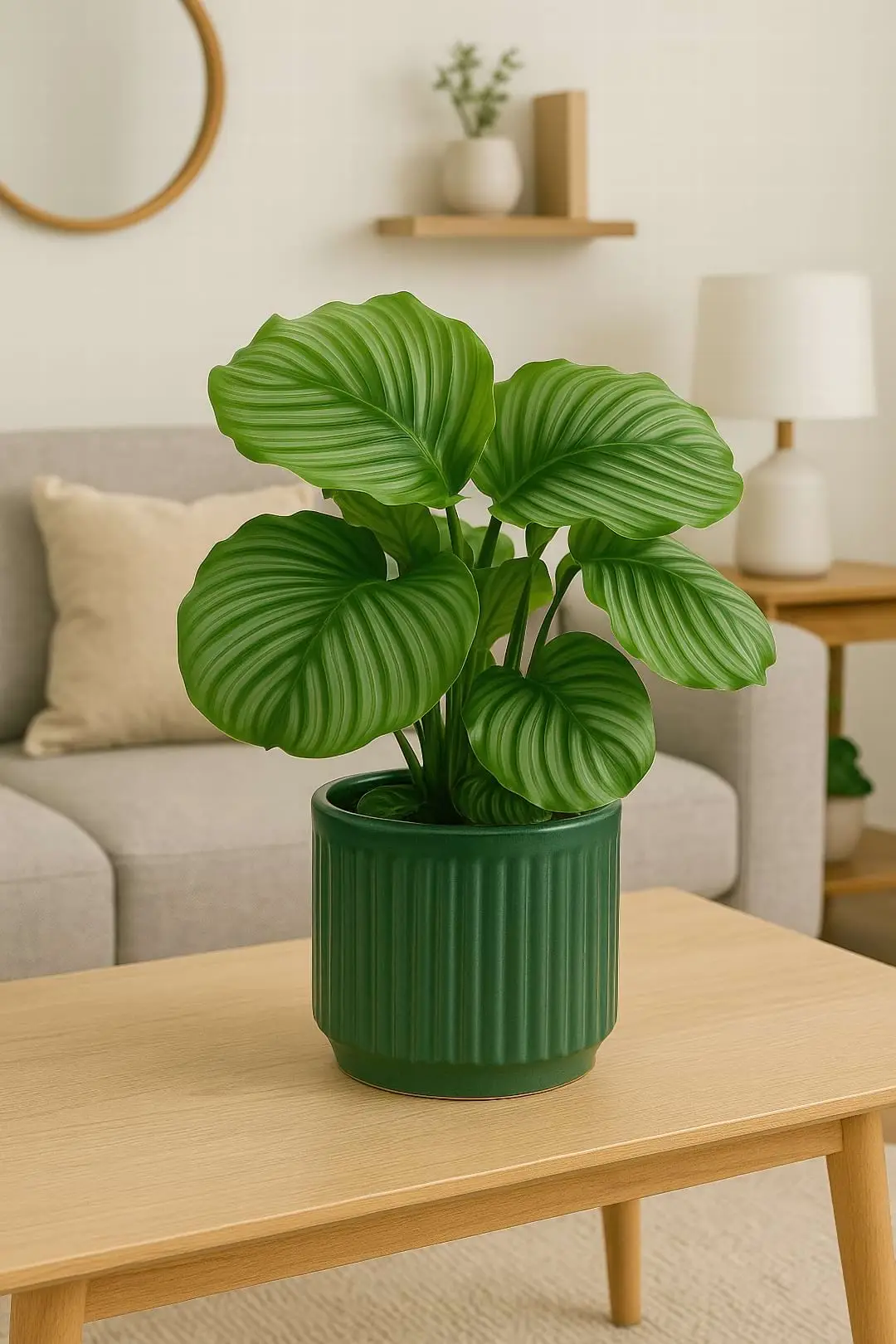
Calathea Medallion carries the biggest, roundest leaves in the roseopicta family, each one painted with rings of cream, silver and deep green over a wine-purple underside. It is pet safe, it folds its leaves up every night, and it has strong opinions about your tap water.
📝 Calathea Medallion Care Notes
🌿 Care Instructions
⚠️ Common Pests
📊 Growth Information
🪴 In This Guide 🪴

☀️ Calathea Medallion Light Requirements (Bright Indirect)
The Sweet Spot
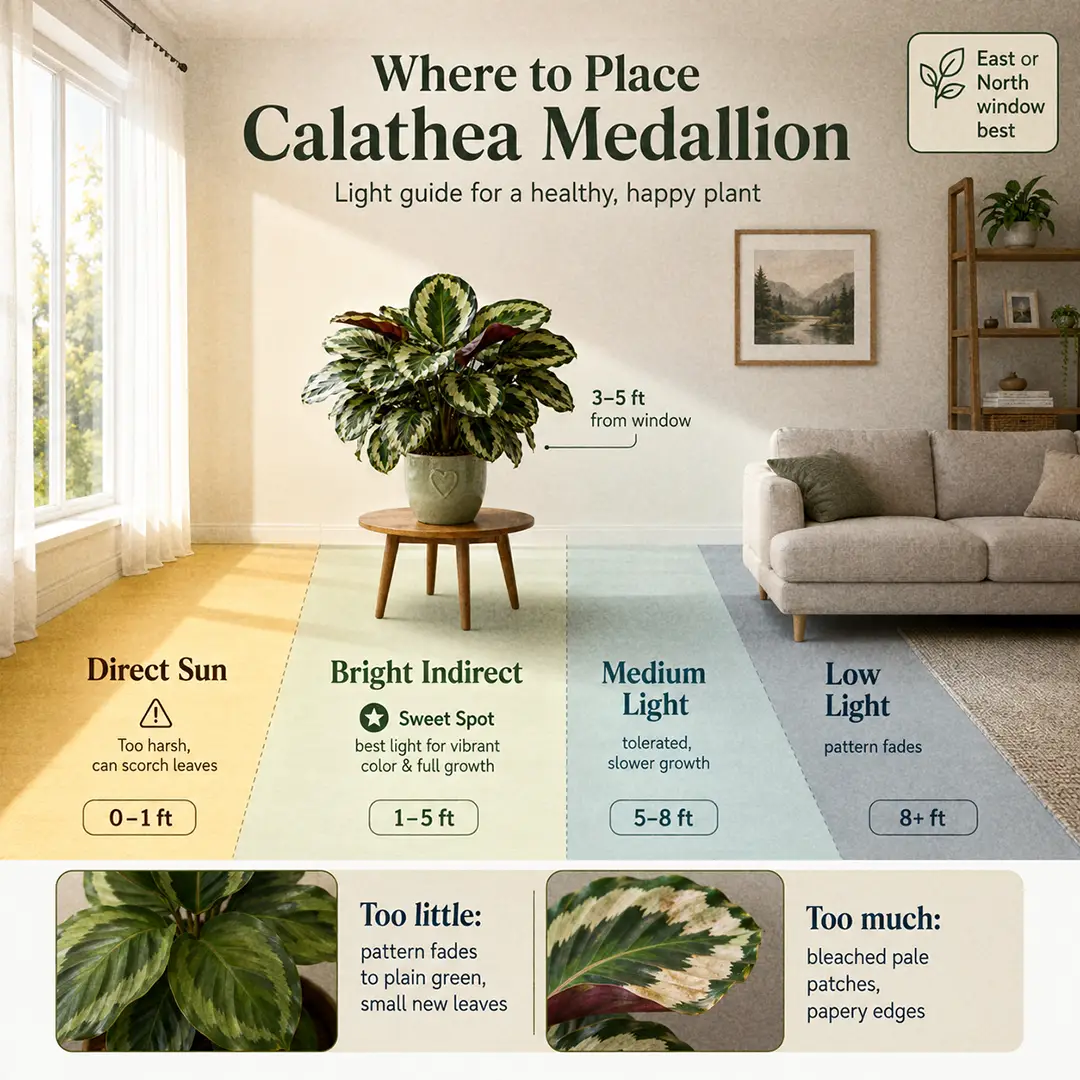
Picture the floor of a rainforest. Light reaches it, but it has been through several layers of canopy first, so it arrives soft and scattered. That is what your Medallion wants at home. An east window is close to perfect, with an hour of gentle morning sun and bright light for the rest of the day. A north window works well too, and a south or west window works fine as long as the plant sits three to five feet back or behind a sheer curtain.
Rooms with white walls help more than people expect, since the bounced light adds to what comes through the glass without any of the intensity.
Too Little Light
Calatheas are often sold as low light plants, which is only half true. They survive dim corners, but they stop making new leaves and the pattern washes out. Watch for stems that stretch and lean, new leaves that come in smaller than the old ones, and a general fading of the cream rings toward plain green. If you cannot improve the position, a basic grow light on a timer for ten hours a day fixes it. Our guide to light covers how to judge a spot properly.
Too Much Light
Direct sun is the fast way to ruin these leaves. A couple of hours of afternoon sun through unfiltered glass leaves bleached pale patches that never recolor, and the edges go papery soon after. The plant also curls its leaves inward during hot bright afternoons as a defensive move. If your Medallion looks like it is closing up at two in the afternoon and relaxing by evening, it is asking to move back from the window.
💧 Calathea Medallion Watering Guide (Water Quality Matters)
Watering Frequency
Aim for evenly moist soil, never soggy and never bone dry. In practice that means checking with your finger every few days and watering once the top inch feels dry. In a bright warm room in summer that lands around once a week. In winter it stretches to every ten days or two weeks. Do not water on a fixed schedule, because a Medallion in a cool dim January room drinks far less than the same plant in July.
Water Quality
This is the part that catches people out. Calatheas are sensitive to fluoride, chlorine and dissolved salts, and hard tap water shows up as brown crispy edges within weeks. Use filtered water, distilled water, or rainwater. Letting tap water sit out overnight releases chlorine but does nothing about fluoride or mineral salts, so it is only a partial fix. If your area has soft water you may get away with the tap, though a filter jug is cheap insurance.
How to Water
Water slowly around the base until it runs freely from the drainage holes, then tip out anything caught in the saucer within ten minutes. Roots left sitting in water rot quickly. Bottom watering suits this plant well because it wets the whole root ball evenly, but flush from the top every third or fourth watering to wash accumulated salts out of the mix. For the general principles, see our watering guide.
Signs of Trouble
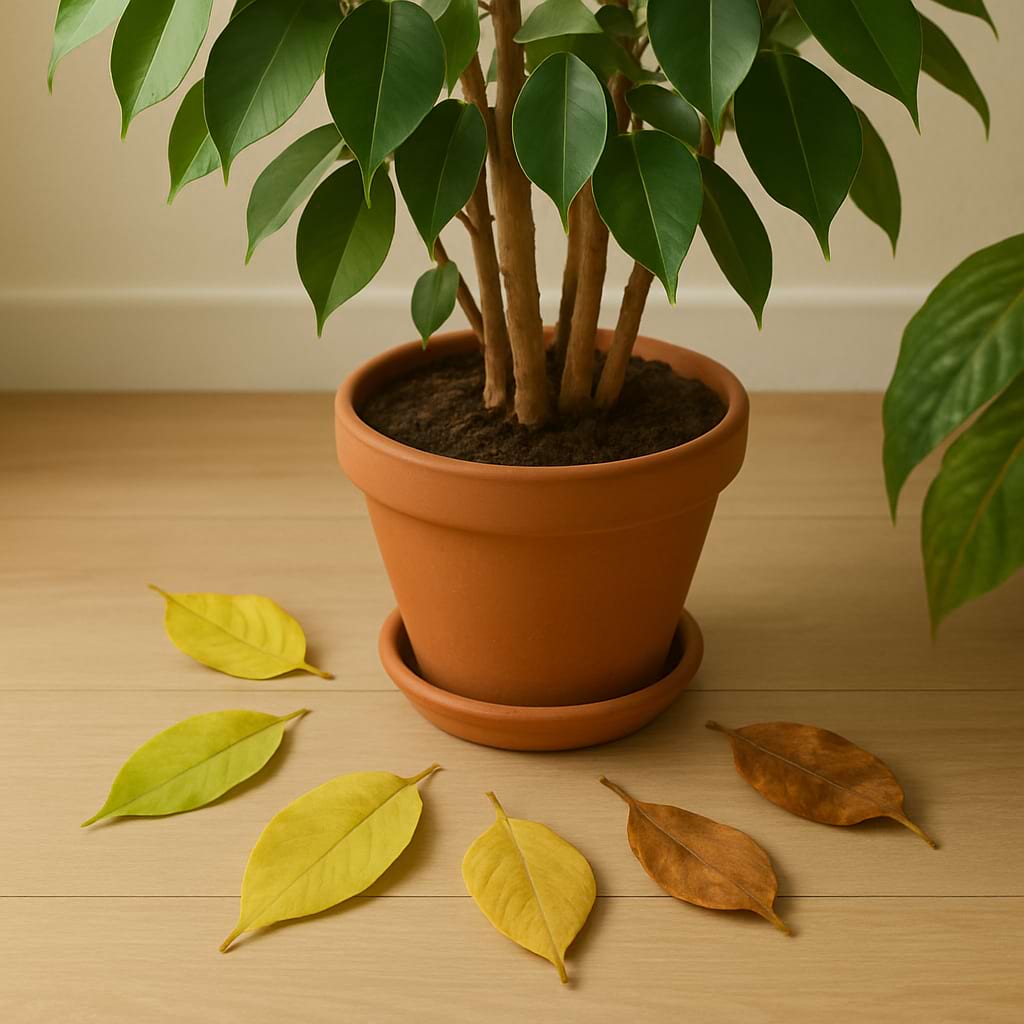
Drooping stems with dry soil means it went too long between drinks and it usually perks up within hours. Drooping with wet soil is the opposite problem and needs the pot checked for root rot. Yellowing lower leaves with heavy soil almost always means overwatering.
🪴 Best Soil for Calathea Medallion (Airy and Moisture-Retentive)
What the Soil Needs
The soil has to do two jobs that sound contradictory: hold moisture so the plant never dries out completely, and drain fast enough that the roots are never sitting in water. Straight bagged potting soil compacts, stays wet at the bottom, and suffocates the fine roots. What you want is something light and springy that you could squeeze water out of without it turning to mud.
DIY Soil Mix
An easy recipe that works: two parts coco coir or peat-based potting mix, one part perlite, and one part fine orchid bark. Add a handful of horticultural charcoal if you have it. The coir holds water, the perlite keeps air pockets open, and the bark stops everything settling into a dense block over time.
Pre-Made Options
An African violet mix with an extra third of perlite stirred in is a decent shortcut. Bagged aroid mixes also work, though most are chunkier than a Medallion prefers, so soften them with extra coir. Whatever you use, skip mixes with heavy water-retaining crystals and skip anything that feels dense and muddy in the bag. Our soil guide breaks down the ingredients in more detail.
🍼 Fertilizing Calathea Medallion (Little and Often)
When and How Often
Feed every four to six weeks from spring through late summer, when the plant is actively pushing new leaves. Stop entirely from late autumn until growth restarts. A Medallion fed through a dark winter cannot use the nutrients, so they build up in the soil as salts and burn the leaf tips.
What to Use
A balanced liquid houseplant fertilizer diluted to a quarter or half of the label strength is right. These are light feeders, and the label dose is written for hungrier plants. Always water first, then feed, so the fertilizer never hits dry roots.
Over-Fertilizing Signs
A white crust on the soil surface, sudden browning that starts at the tips rather than the edges, and leaves that look scorched despite good humidity all point to too much feed. The fix is to flush the pot: run water through it for a minute or two, let it drain completely, and skip the next two feeds. Our fertilizing guide has more on reading these signals.
🌡️ Calathea Medallion Temperature Range
Ideal Range
Anything between 65 and 80°F suits it, which is ordinary room temperature in most homes. Below 60°F growth stalls, and sustained cold below 55°F causes limp, blackened leaf sections that do not recover. This is a rainforest understory plant with no cold tolerance at all, so it stays indoors year round in almost every climate.
Drafts and Heat Sources
Cold drafts do more damage than cold rooms. A Medallion next to a door that opens in winter, or on a windowsill where it touches cold glass overnight, will show damage before a plant in a steadily cool room does. Radiators, heat vents and fireplaces are worse still, because the dry moving air pulls moisture out of the leaves faster than the roots can replace it. Keep at least a few feet between the plant and any heat source.
💦 Calathea Medallion Humidity Requirements
Ideal Humidity
Target 60% or higher. Most homes sit between 30% and 40%, which is why so many Medallions end up with brown rims. This plant reads dry air as a threat and responds by sacrificing leaf edges.
Easy Humidity Boosters
A small humidifier running near the plant is the only method that reliably shifts the number, and it is worth the modest cost. Failing that, group plants together so they share transpired moisture, sit the pot on a pebble tray, or move the plant to a bathroom with a window. Misting looks helpful but the effect lasts minutes, and standing water on the leaves in still air invites fungal spotting. Our humidity guide compares the options honestly.
🌸 Calathea Medallion Flowers (Foliage Is the Point)
What the Flowers Look Like
Goeppertia roseopicta does flower, producing small white to pale purple blooms on short stalks tucked low among the leaves. They are modest, easy to miss, and last a week or two. Nobody grows this plant for them.
Why It Rarely Blooms Indoors
Flowering needs greenhouse-level warmth, humidity and light consistency that living rooms do not provide. Nurseries occasionally sell plants in bud, but repeat blooming at home is uncommon and not a sign of anything you did wrong. If yours never flowers, that is normal and expected. See our note on failure to bloom if you want to understand the general mechanics.
What to Do If It Blooms
Enjoy it, then snip the flower stalk at the base once it fades. Flowering takes energy the plant would otherwise put into leaves, and leaves are what you bought it for.
🏷️ Calathea Medallion Types and Varieties
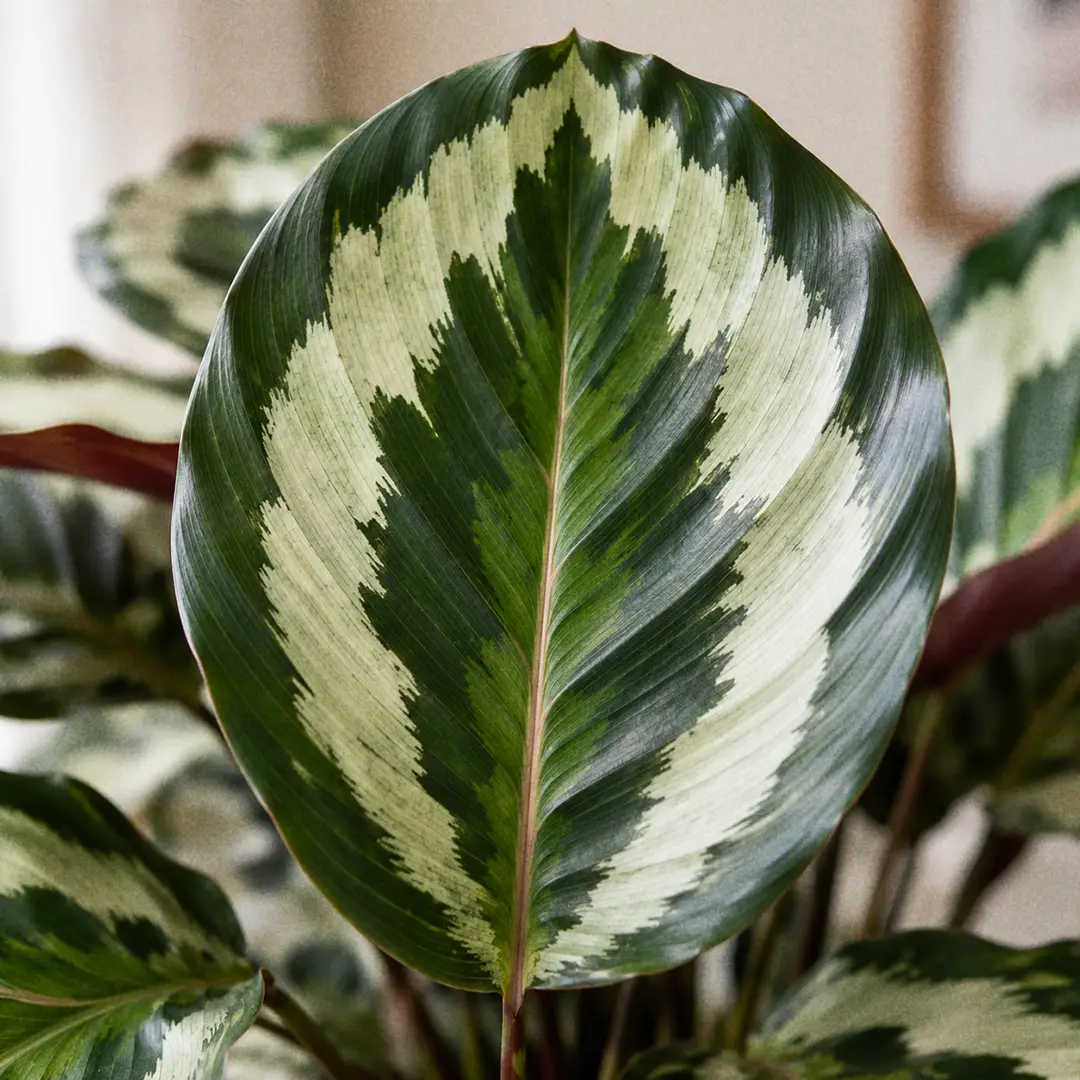
Goeppertia roseopicta 'Medallion'
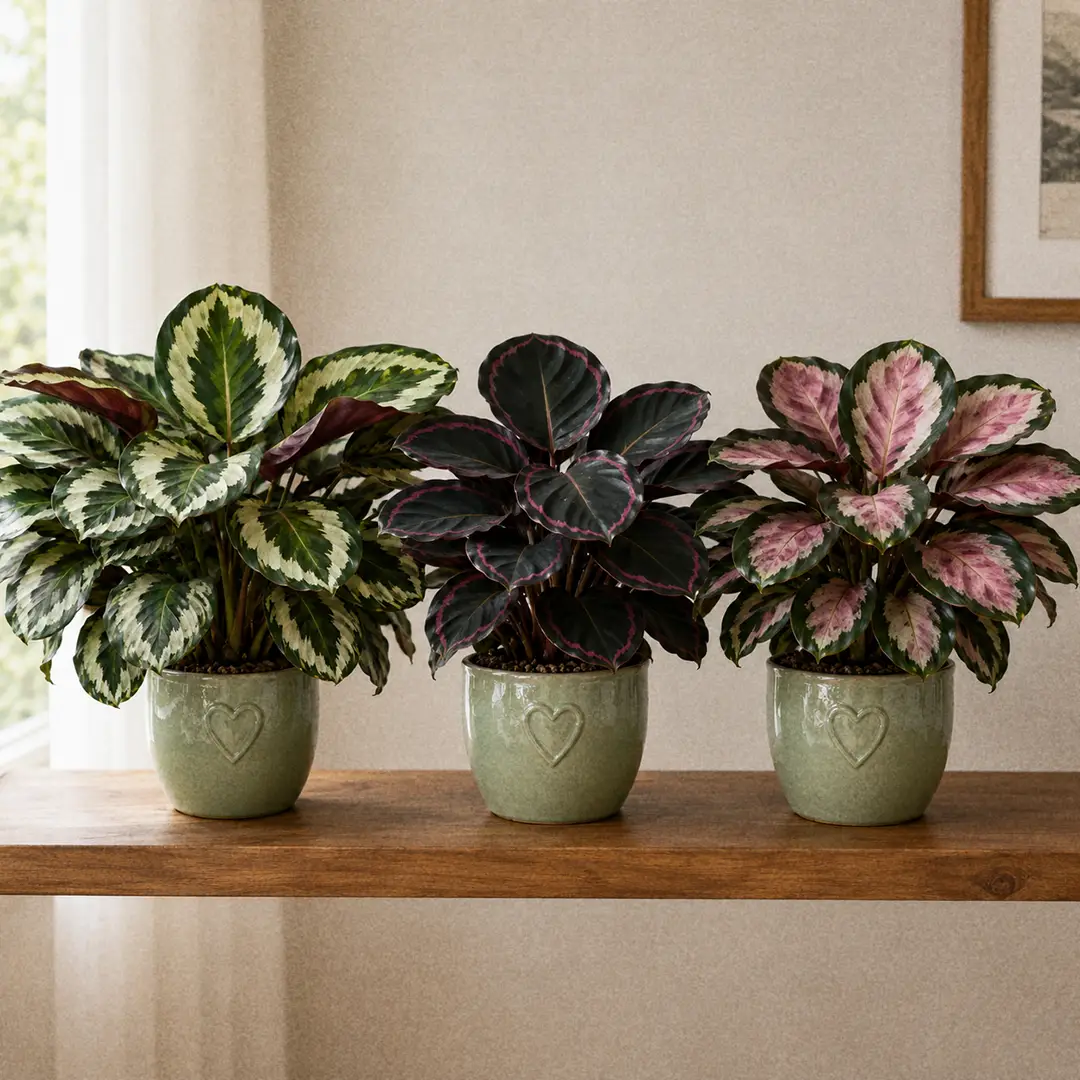
The plant most shops label simply Medallion. Large rounded leaves, up to eight inches across on a mature plant, marked with a dark green rim, a broad pale cream-silver band inside it, and a deeper green feathered center. The underside is a solid wine purple that shows every evening when the leaves fold up.
Goeppertia roseopicta 'Dottie'
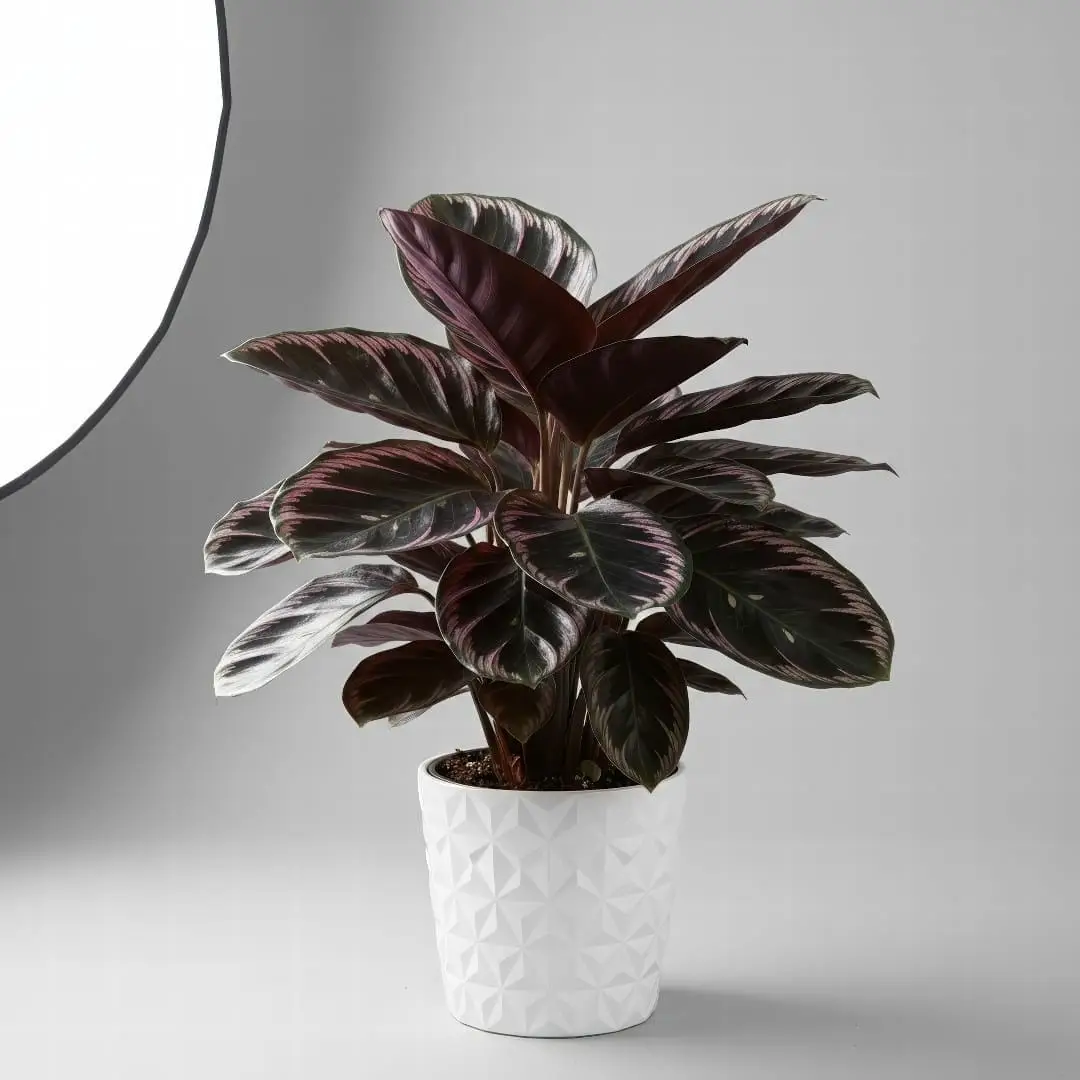
The dark sibling. Near-black leaves with a single bright pink outline tracing the shape of the blade, and no cream banding at all. Same size range, same care, completely different mood. The full Calathea Dottie guide covers it in detail.
Goeppertia roseopicta 'Rosy' and 'Corona'
Rosy carries a large pink and silver center panel edged in very dark green, and the pink is strongest on young plants before it settles toward silver with age. Corona is the pale one, with a wide creamy white center and a clean green margin. Both are the same species and want identical conditions.
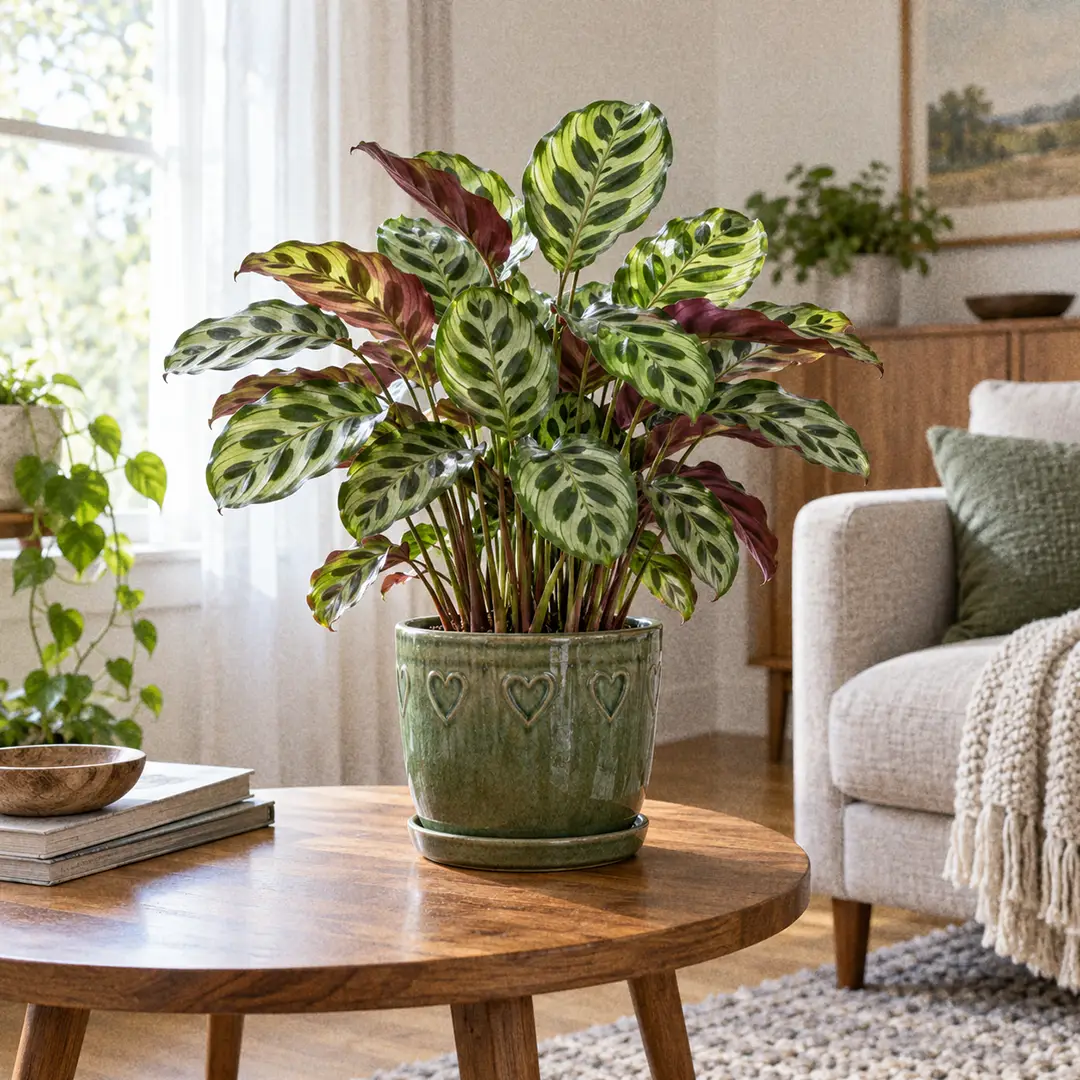
Next to a Calathea Orbifolia, the Medallion has smaller but more strongly patterned leaves, since the Orbifolia trades color for scale and silver pinstriping. The Calathea Pinstripe is the fine-lined option with a dozen pink stripes per leaf. At the difficult end of the family sits Calathea White Fusion, whose leaves are marbled half white, so it needs brighter light and far higher humidity than a Medallion does. If you want the same nightly leaf movement in a trailing plant instead, look at the Prayer Plant, and for a taller upright one painted in cream and pink, the Stromanthe Triostar. And if you would rather have the easiest plant in the genus than the boldest, Calathea Network swaps colour for a fine green mosaic and forgives a missed watering. The most common mix-up is the Calathea Peacock, whose thinner, paler leaves carry separate dark green ovals instead of one big central medallion.
🪴 Potting and Repotting Calathea Medallion
When to Repot
Every one to two years in spring is plenty. Signs it is due: roots circling out of the drainage holes, water running straight through without soaking in, or a plant that wilts within two days of watering. A Medallion that is slightly snug in its pot is happier than one drowning in fresh soil, so do not size up early.
Choosing a Pot
Go one size up, no more. Two inches wider in diameter is the rule. Drainage holes are non-negotiable. Plastic and glazed ceramic hold moisture more evenly than raw terracotta, which wicks water away faster than this plant would like. If you love the look of terracotta, expect to water more often.
Step-by-Step Repotting
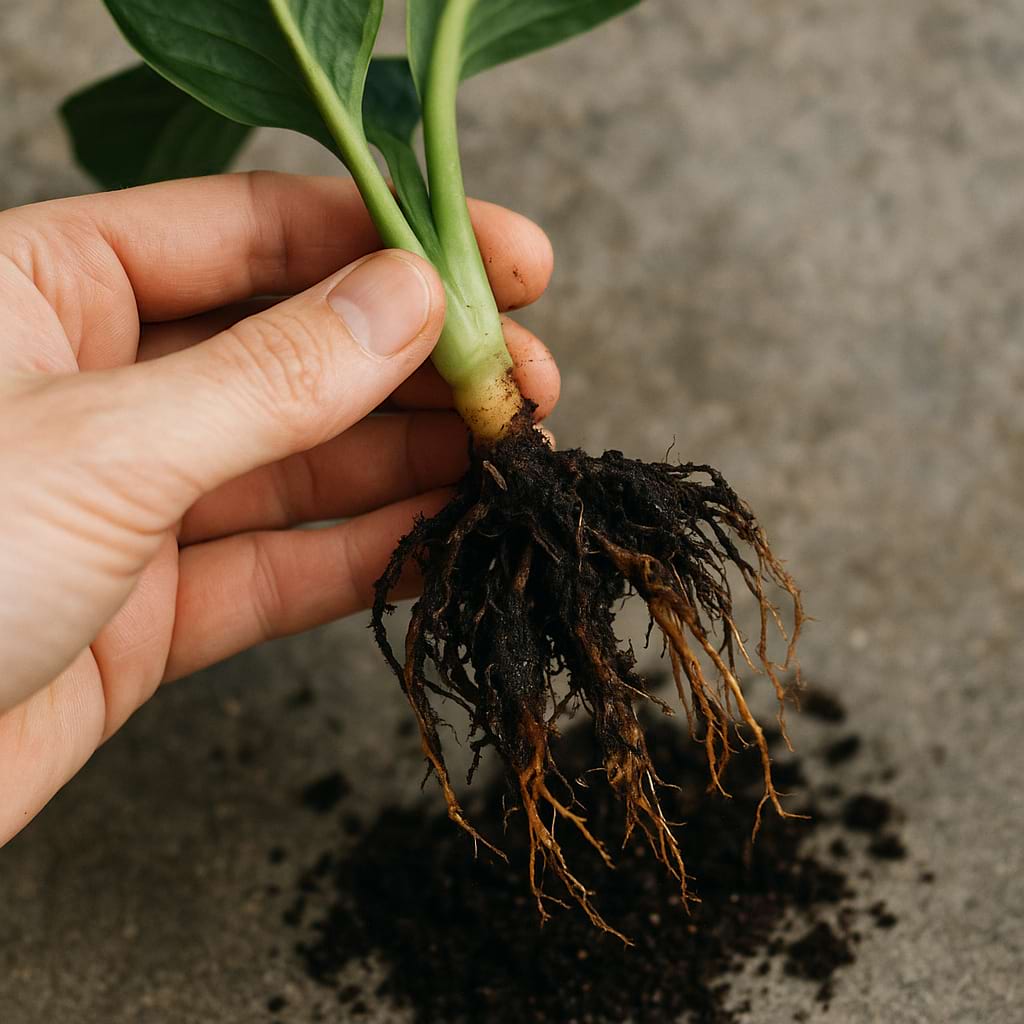
Water the plant a day beforehand so the root ball holds together. Ease it out, tease loose the outer roots without tearing the fine ones, and cut away anything black or mushy with clean scissors. Set it in the new pot at the same depth it was growing before, backfill with fresh mix, and firm gently rather than pressing hard. Water thoroughly and keep it out of bright light for a week while it settles. Our repotting guide walks through the general process.
✂️ Pruning Calathea Medallion
When to Prune
There is no pruning season here, just maintenance whenever a leaf goes. Calatheas grow from a central rhizome and do not branch, so pruning is about removal, not shaping. Expect to lose an old outer leaf every couple of months even on a healthy plant.
How to Prune
Follow the failing leaf down its stalk to where it emerges from the soil, and cut there with clean scissors. Do not leave a stub, which rots and invites fungal trouble. Never remove more than a third of the foliage at once.
Trimming Brown Edges
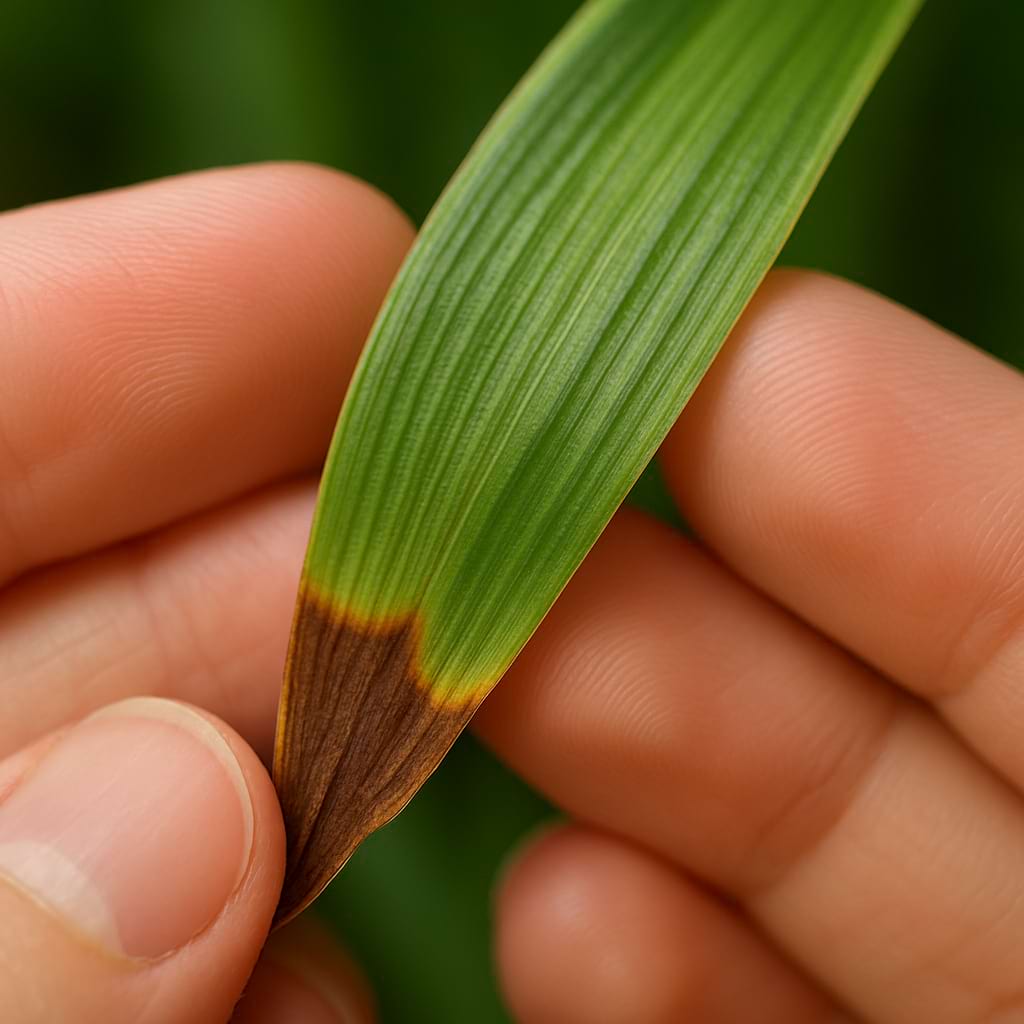
If a leaf is only edge-damaged and otherwise good, trim along the brown line with sharp scissors, following the natural leaf shape, and leave a thin sliver of brown rather than cutting into green tissue. Cutting into living tissue just creates a new brown edge. Fix the underlying cause, which is usually water quality or humidity, or the trimming becomes a monthly ritual.
🌱 How to Propagate Calathea Medallion
Division Is the Only Method
Cuttings do not work on this plant. There are no nodes on the leaf stalks to root from, so a Medallion leaf in a jar of water will simply rot. The plant spreads by rhizome, an underground stem that sends up new clusters of leaves, and propagating means separating those clusters. Our plant division guide covers the technique across species.
When to Divide
Spring or early summer, and only when the plant is genuinely full: several distinct clumps of stems, each with its own leaves, all crowding one pot. A young plant with one crown cannot be divided, and trying it usually kills the parent. Combine division with a scheduled repot so the plant only goes through one disturbance.
Step-by-Step Division
Slide the whole plant out and shake or rinse enough soil off the roots to see where the natural clumps separate. Work your fingers into the gap and ease the sections apart, using a clean knife only if the rhizome will not part on its own. Every division needs its own roots and at least two or three leaves. Pot each piece into fresh mix in a pot only slightly larger than its root mass, water it in, and put it somewhere warm and bright with no direct sun.
Tips for Success
The first month is the sensitive part. Keep the humidity high, a clear bag propped over the pot for two weeks helps a lot, and keep the soil evenly moist without soaking. Do not fertilize for six weeks, and expect some drooping and even a lost leaf while the roots re-establish. New growth is your signal it took.
🐛 Calathea Medallion Pests and Treatment
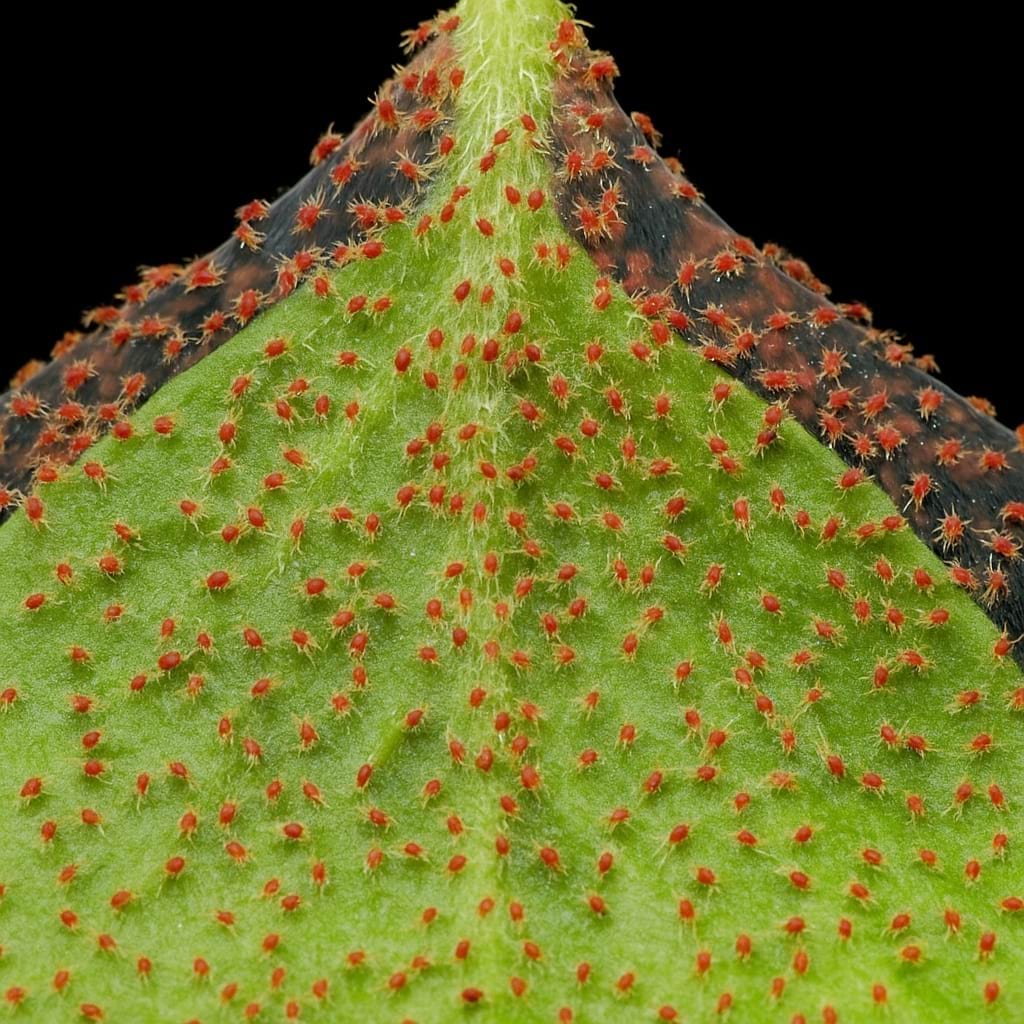
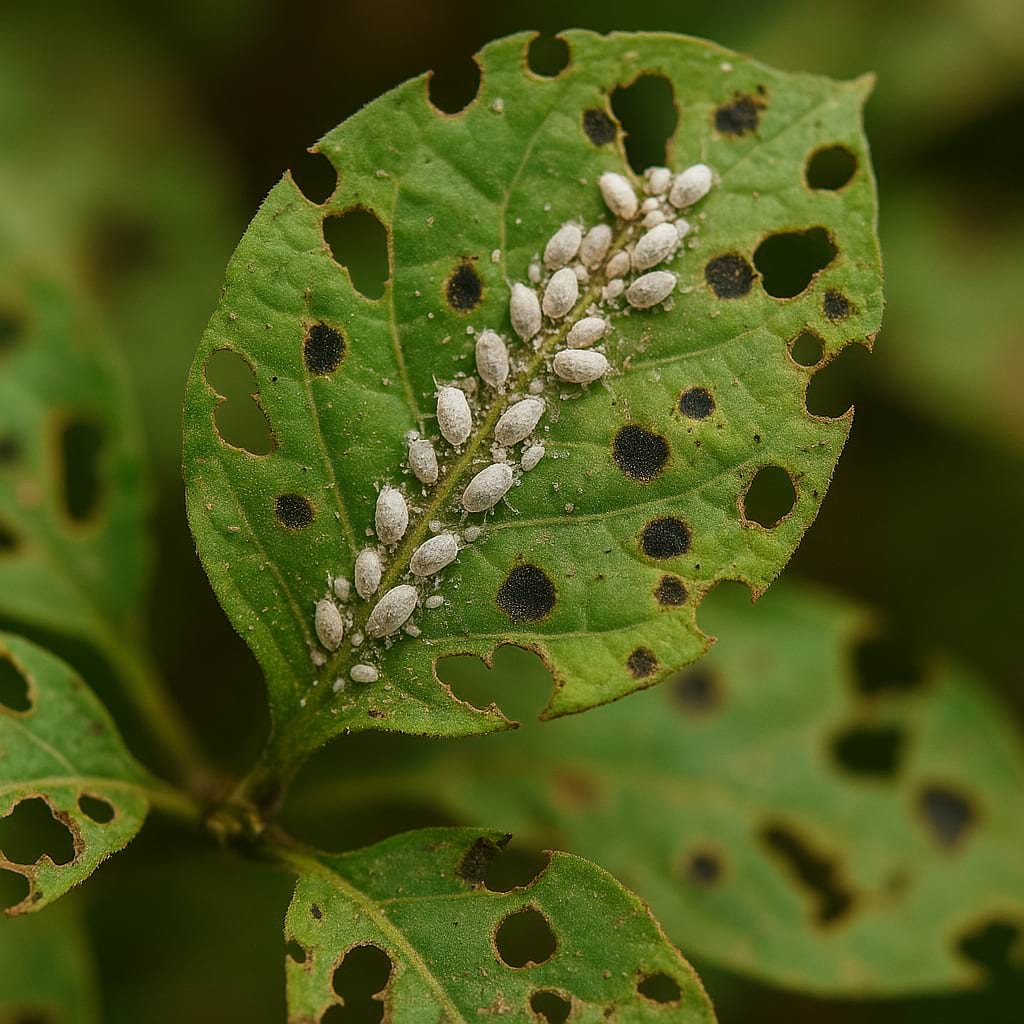
Dry indoor air makes this plant a magnet for spider mites, and they are by far the most common problem. They colonize the undersides of the leaves, along the midrib, and the first sign is usually fine stippled dots on the upper surface rather than visible webbing. Check the undersides weekly with a torch, especially in winter when the heating runs.
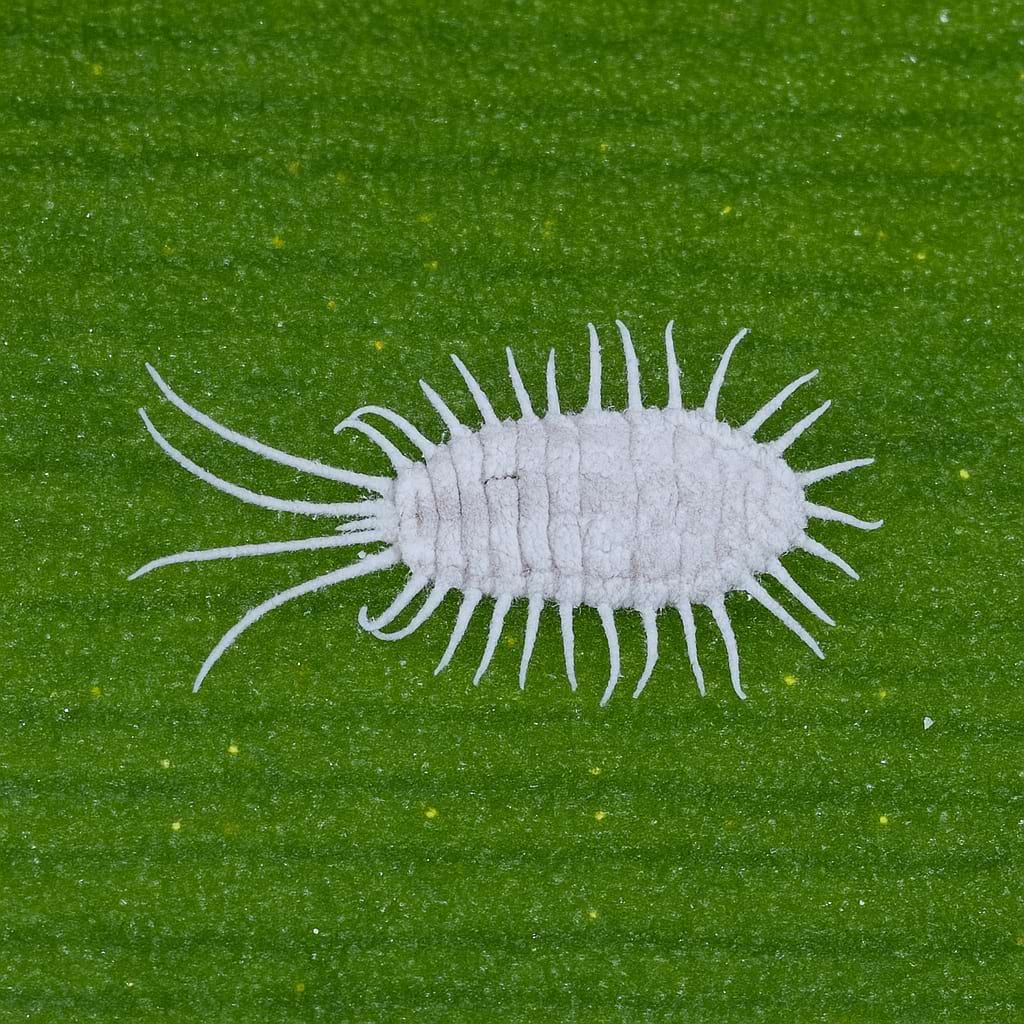
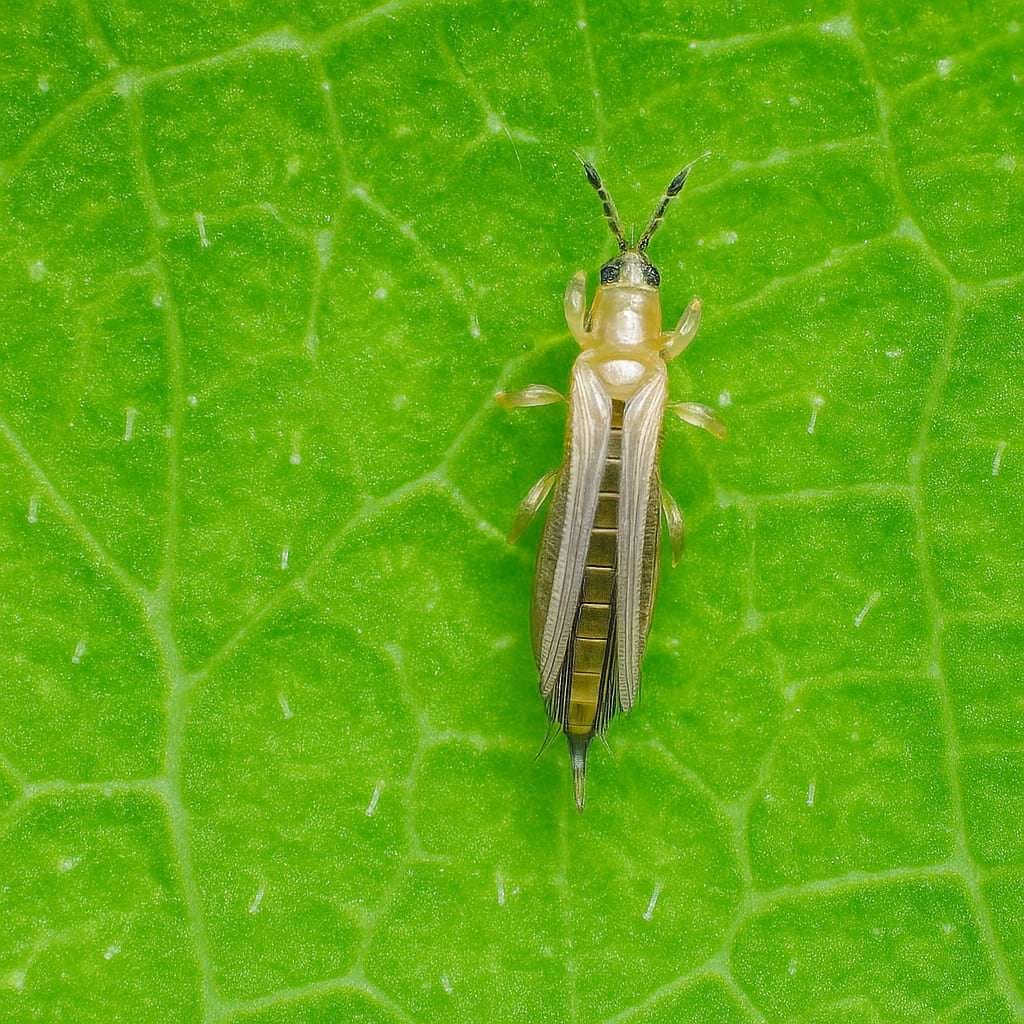
Mealybugs show up as small white cottony clumps where the leaf stalks meet the base of the plant, and thrips leave silvery scarring with tiny black specks of frass. Both are dealt with the same way: isolate the plant, wipe every leaf on both sides with a cloth dipped in soapy water or diluted isopropyl alcohol, then treat with insecticidal soap or neem weekly for three weeks to catch newly hatched eggs.
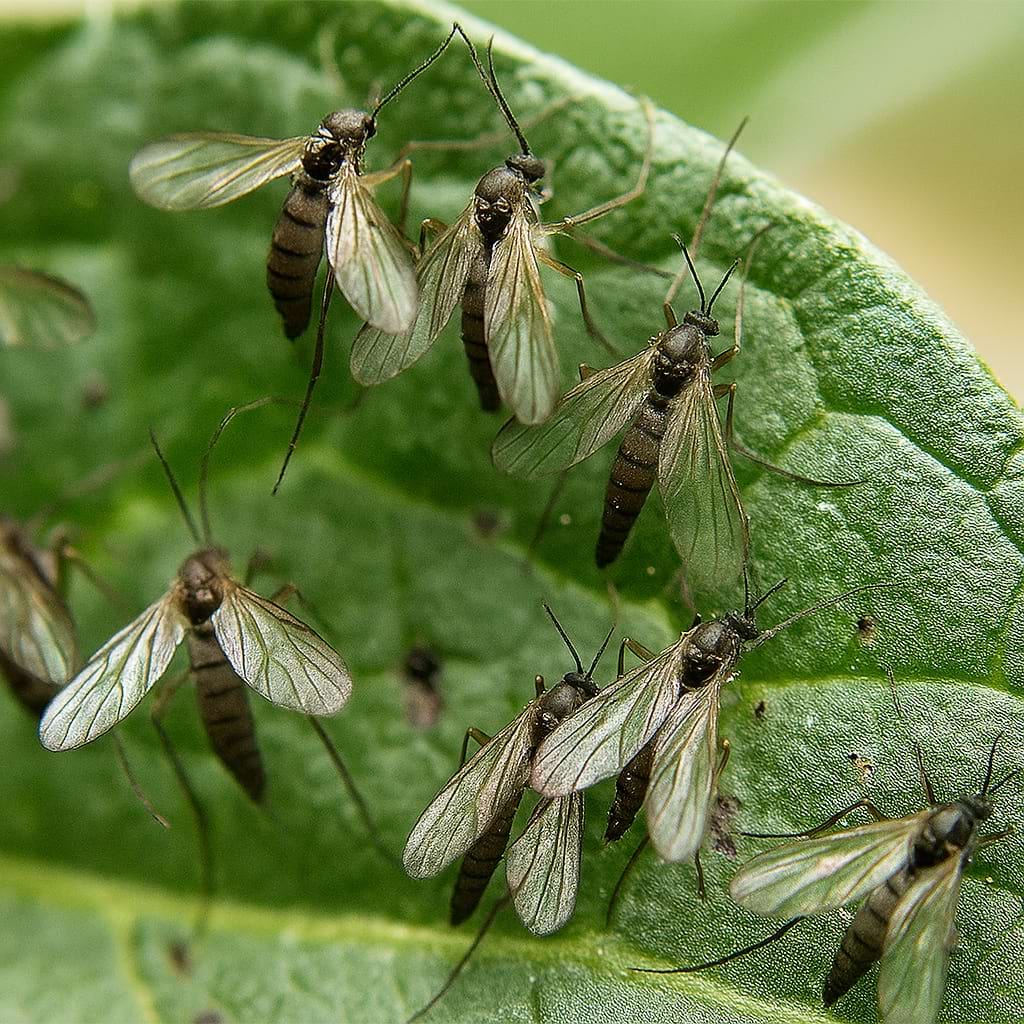
Fungus gnats are the nuisance pest here, and they thrive because the soil stays moist. They rarely harm an established plant. Let the top inch dry properly between waterings, add a layer of horticultural sand on the surface, and hang yellow sticky traps.
🩺 Common Calathea Medallion Problems
Brown crispy edges are the signature complaint, and there are only three real causes: hard tap water, low humidity, or fertilizer salt build-up. Work through them in that order. Switching to filtered water fixes the majority of cases. See brown crispy edges for the full diagnostic.
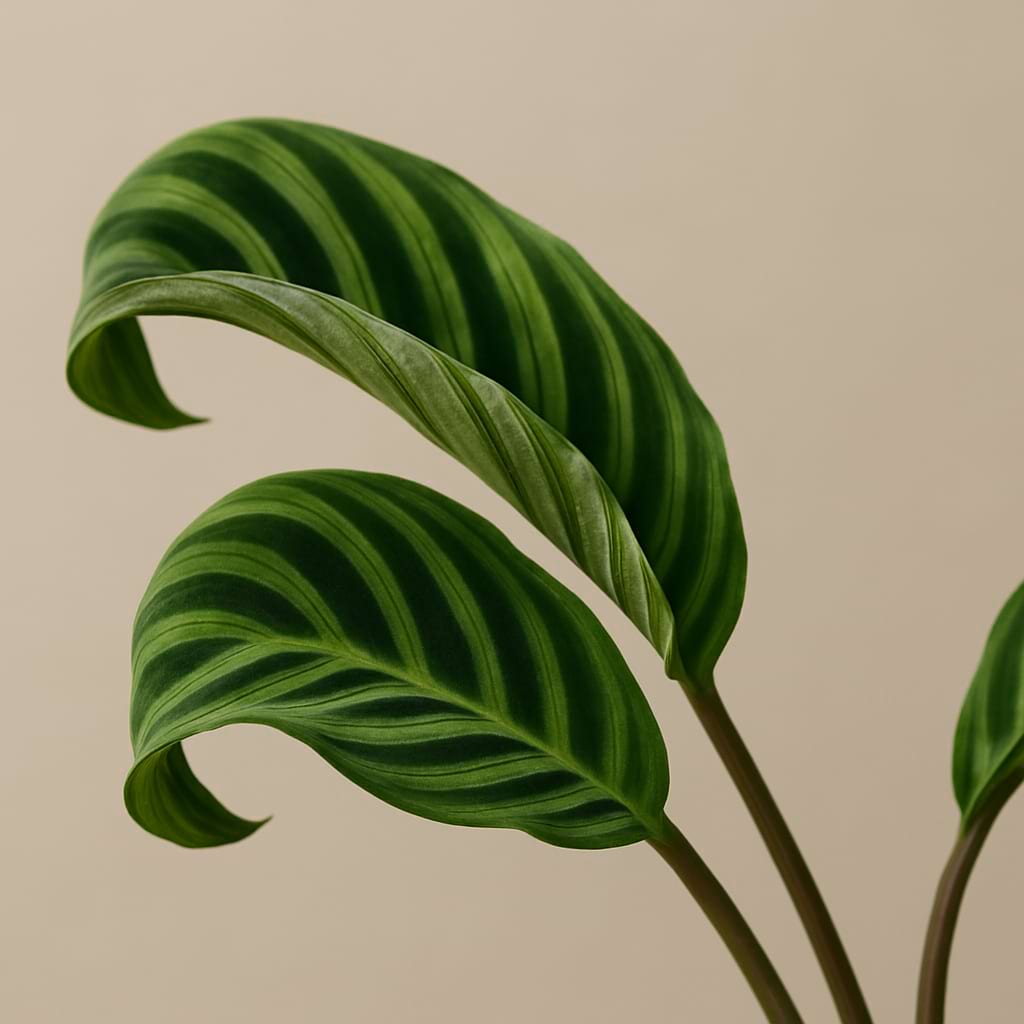
Curling leaves that stay curled through the day mean the plant is thirsty or the air is too dry. Slight curling in the afternoon that relaxes by evening is normal behavior in strong light. Persistent tight curls with dry soil call for water and a humidity boost. More on curling leaves.
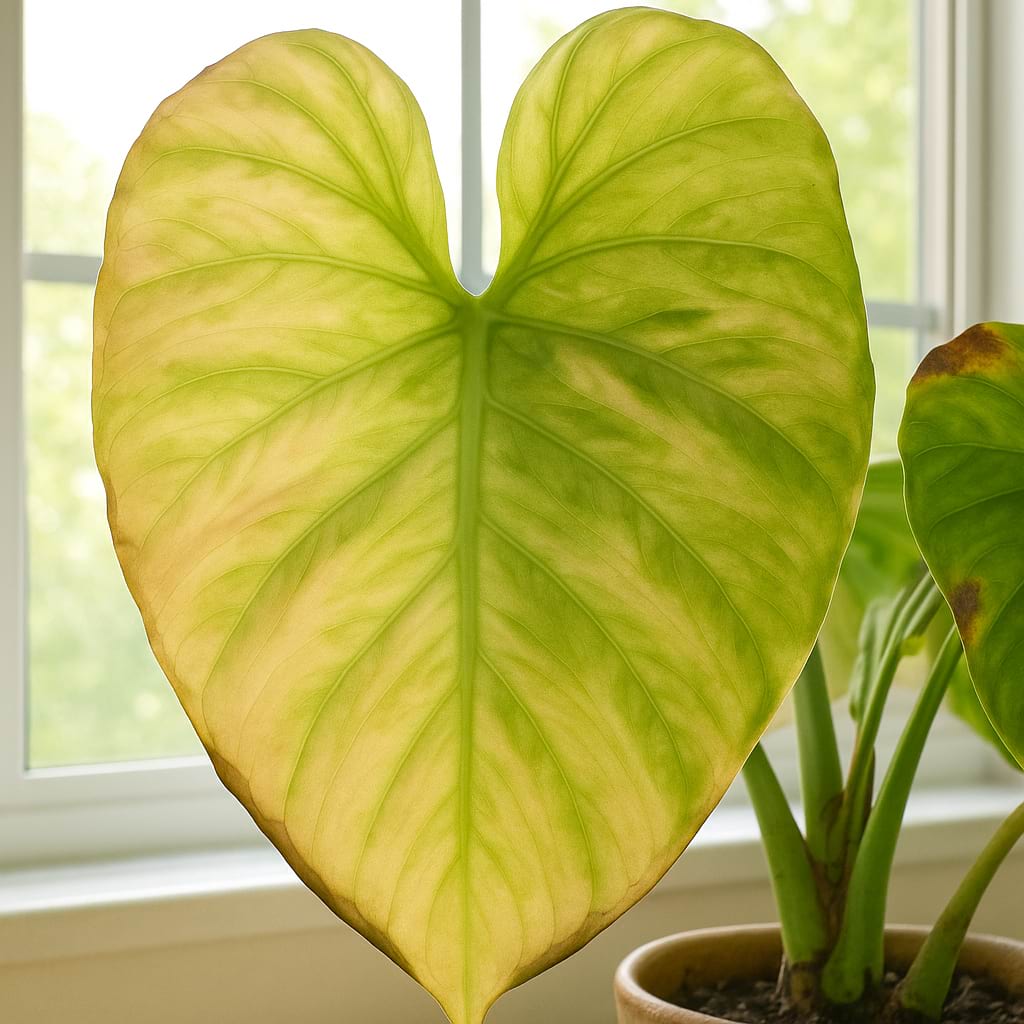
Yellowing leaves on the lower, older part of the plant are usually overwatering, especially if the soil is heavy and slow to dry. One old leaf yellowing every few weeks is just the plant retiring it. Several at once is a warning. Check for root rot by sliding the plant out and looking for black, soft, sour-smelling roots.
Faded pattern means the light is either too dim for the plant to maintain the contrast or too strong and bleaching it. Compare a new leaf to an old one to work out which direction it drifted. See pale faded leaves.
Brown or black spots with a yellow halo point to fungal or bacterial leaf spot, usually from water sitting on the foliage in still air. Remove affected leaves, stop misting, and improve airflow around the plant.

🖼️ Calathea Medallion Display and Styling Ideas
Where It Looks Best
The ring pattern reads properly when you look down onto the leaves at a slight angle, so a low plant stand, a side table or a wide windowsill beats a high shelf every time. A plain dark pot makes the cream banding jump. Busy patterned planters fight the leaves and both lose.
Grouped Arrangements
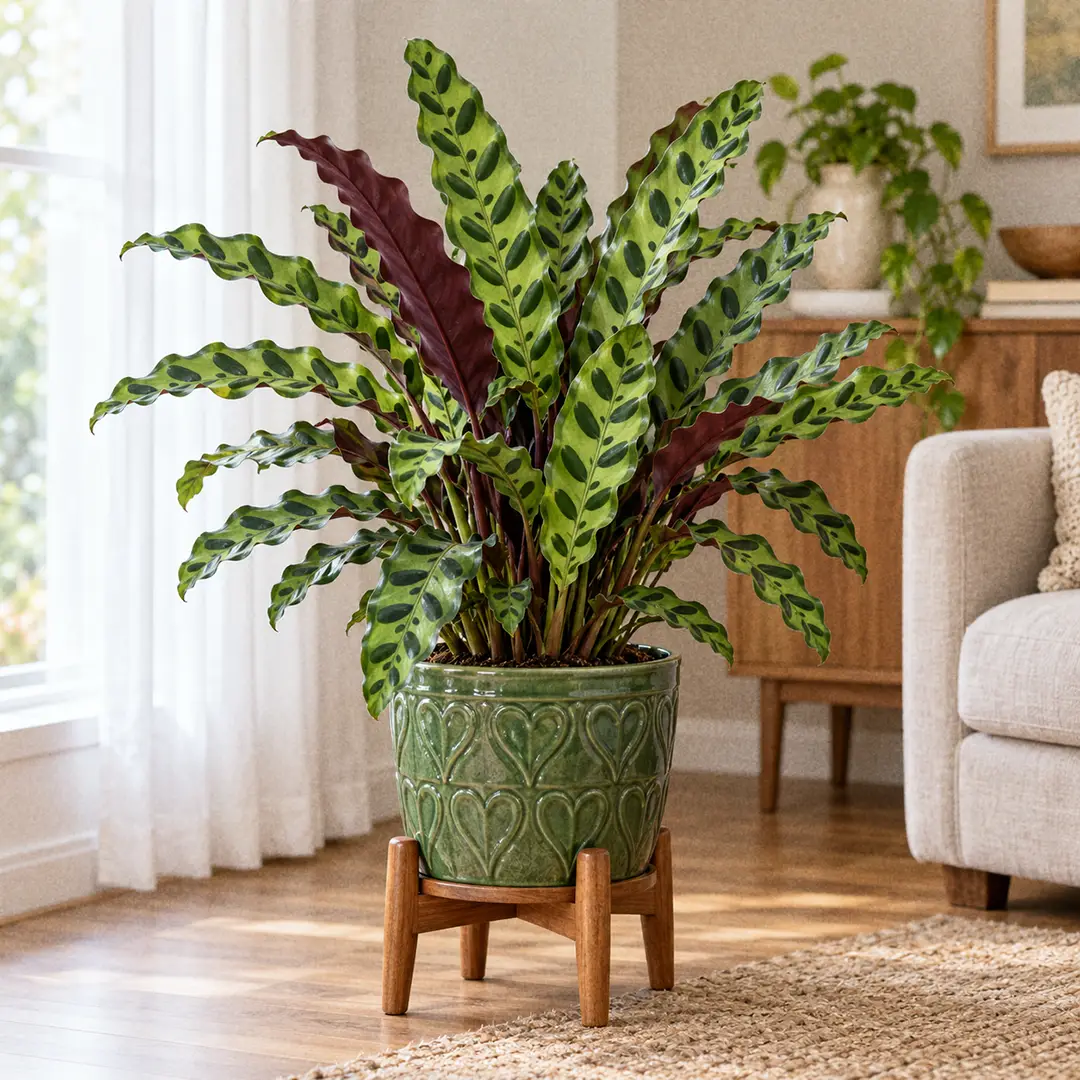
Grouping raises local humidity and looks better than a lone plant. Pair the Medallion's round leaves with something upright and linear for contrast, and keep the companions in the same care bracket so watering stays simple. A Calathea Pinstripe or a wavy-leaved Calathea Rattlesnake and a Maranta alongside it make a tidy prayer plant cluster that all folds up together in the evening.
Where Not to Put It
Skip sunny south-facing sills, the top of a radiator cabinet, and the hallway spot next to a front door that opens in winter. Also skip the deep interior corner with no window in sight. Bathrooms with a window are the exception to almost every rule here, since the humidity does most of the work for you.
🌟 Calathea Medallion Pro Care Tips
- Keep a jug of filtered water beside the plant so watering day never tempts you back to the tap.
- Rotate the pot a quarter turn each week. The leaves orient toward the light and a plant that is never turned grows lopsided.
- Run your fingers along the leaf undersides when you water. You will find spider mites weeks earlier than you would spot them from above.
- Flush the pot with plain water every second month to clear accumulated salts, even if you have been feeding lightly.
- Do not panic at afternoon curling. Check again in the evening, and only act if the leaves are still tight.
- Buy in spring if you can. Autumn-bought plants face the shock of a new home and the start of heating season at once.
- Wipe the big leaves monthly. Dust cuts the light reaching the leaf surface and this plant has no light to spare.
❓ Frequently Asked Questions
Is Calathea Medallion safe for cats and dogs?
Yes. The ASPCA lists prayer plants, including all Calathea and Goeppertia species, as non-toxic to cats, dogs and horses. A pet that chews a few leaves may get a mild upset stomach from the fibrous material, but there is no poisoning risk.
Why does my Calathea Medallion have brown crispy edges?
Almost always water quality. Fluoride and dissolved salts in tap water accumulate in the leaf margins and kill the tissue there. Switch to filtered, distilled or rainwater, then look at humidity and fertilizer build-up as the next suspects.
Should I mist my Calathea Medallion?
Not really. Misting raises humidity for a few minutes and then it is gone, and droplets sitting on leaves in still air encourage fungal spotting. A humidifier, a pebble tray, or a grouped arrangement all work better.
Why do the leaves move up and down?
That is nyctinasty. A small joint of water-filled cells called the pulvinus sits at the base of each leaf stalk, and changes in water pressure there raise the leaves at night and lower them by morning. A plant that stops moving is usually thirsty or too cold.
Can I propagate a Calathea Medallion from a leaf cutting?
No. There are no nodes on the stalks for roots to form from, so a cutting rots. Division of the rhizome clump at repotting time is the only method that works.
Why is my Calathea Medallion losing its pattern?
Light is the usual answer. Too little and the contrast fades toward plain green as the plant maximizes chlorophyll. Too much and the pale bands bleach out. Compare a freshly unfurled leaf against an older one to see which way it went.
How often should I water a Calathea Medallion?
Roughly weekly in summer and every ten to fourteen days in winter, but check the soil rather than the calendar. Water once the top inch is dry and never let the pot sit in a full saucer.
Is Calathea Medallion hard to care for?
Moderate. Nothing about it is complicated, but it is unforgiving about three specific things: hard water, dry air, and soggy soil. Solve those and it is a straightforward plant. Ignore any one of them and you will fight brown edges for months.
Why are my Medallion's new leaves smaller than the old ones?
Usually not enough light, sometimes not enough food or root space. A plant in a dim corner puts out progressively smaller leaves. Move it brighter, resume feeding in spring, and check whether it has outgrown its pot.
Do the leaves grow back after I cut off a damaged one?
Not from the cut stalk, no. New leaves emerge from the center of the plant as tightly rolled tubes and unfurl over several days. Removing a spent leaf frees energy for those, so it is worth doing.
ℹ️ Calathea Medallion Info
Care and Maintenance
🪴 Soil Type and pH: Light, airy, moisture-retentive and free-draining
💧 Humidity and Misting: High humidity, 60% or above, is what separates a full plant from a crispy one.
✂️ Pruning: Cut spent or badly damaged leaves off at the base of the stem with clean scissors.
🧼 Cleaning: Wipe the broad leaves with a soft damp cloth, supporting each blade from underneath so the stem does not snap.
🌱 Repotting: Repot in spring every 1-2 years, one pot size up, and keep it slightly snug rather than swimming in soil.
🔄 Repotting Frequency: Every 1-2 years
❄️ Seasonal Changes in Care: Steady water and feeding from spring through summer, then less water, no fertilizer, and extra attention to humidity once the heating comes on.
Growing Characteristics
💥 Growth Speed: Moderate
🔄 Life Cycle: Evergreen rhizomatous perennial
💥 Bloom Time: Summer in greenhouse conditions; almost never in an ordinary living room
🌡️ Hardiness Zones: 10-12
🗺️ Native Area: Tropical rainforest understory of Brazil
🚘 Hibernation: No true dormancy, but growth slows noticeably in winter
Propagation and Health
📍 Suitable Locations: Bright bathrooms, north and east rooms, kitchen counters, plant shelves near a humidifier
🪴 Propagation Methods: Division of the rhizome clump at repotting time, in spring or early summer.
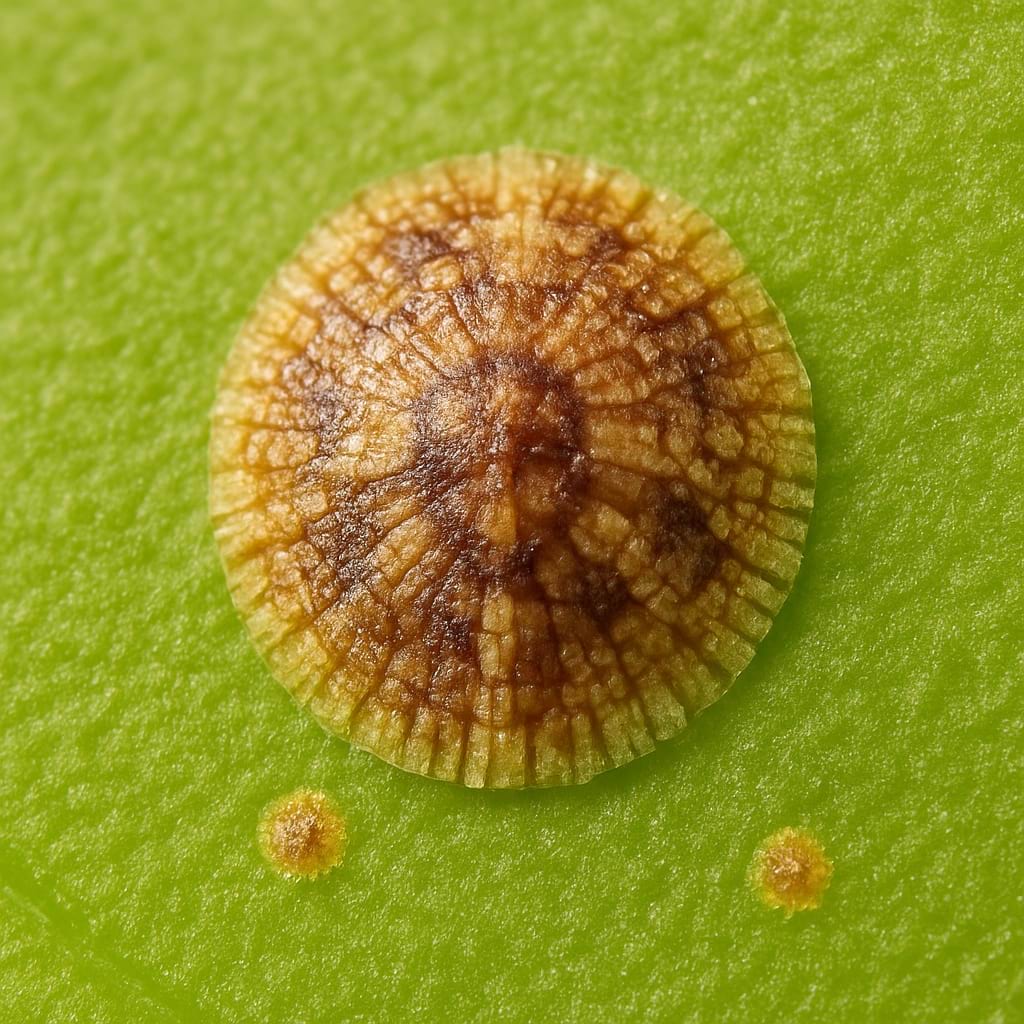
🐛 Common Pests: Spider Mites, Fungus Gnats, Mealybugs, Thrips, Scale Insects
🦠 Possible Diseases: Root rot, fungal leaf spot, bacterial leaf spot in still damp air
Plant Details
🌿 Plant Type: Rhizomatous perennial
🍃 Foliage Type: Evergreen
🎨 Color of Leaves: Rings of dark green, pale silver-green and cream over a deep purple underside
🌸 Flower Color: Small white to pale purple
🌼 Blooming: Rarely indoors, and the flowers are minor next to the foliage
🍽️ Edibility: Not an edible plant.
📏 Mature Size: 1.5-2 feet
Additional Info
🌻 General Benefits: Pet safe, non-toxic to cats and dogs, adds a large decorative leaf without a large footprint, and moves visibly through the day
💊 Medical Properties: No documented medicinal uses.
🧿 Feng Shui: Rounded leaves and soft edges make it a calming choice for bedrooms and quiet corners, where sharp-leaved plants feel too busy.
⭐ Zodiac Sign Compatibility: Cancer
🌈 Symbolism or Folklore: Rest, quiet ritual, new beginnings
📝 Interesting Facts: Calatheas fold their leaves upward at night through a process called nyctinasty, driven by water pressure in a small hinge of tissue called the pulvinus at the base of each leaf stalk. The genus was reclassified from Calathea to Goeppertia in 2012, which is why plant shops and botanical databases now spell the same plant two different ways.
Buying and Usage
🛒 What to Look for When Buying: Pick a plant with several strong stems coming from the soil rather than one tall crown, check the leaf edges for existing browning, and look under the leaves for spider mite webbing along the midrib.
🪴 Other Uses: Decorative foliage plant, bathroom plant, office plant for low-glare desks, and a pet-safe alternative to aroids.
Decoration and Styling
🖼️ Display Ideas: Bathroom shelves, grouped humidity clusters, dark ceramic planters, low plant stands where the leaf pattern is seen from above
🧵 Styling Tips: The pattern reads best from slightly above, so a low stand or a table beats a high shelf. A plain dark pot makes the cream rings pop.
🪴 See also 🪴
Complete Guide to Calathea Rattlesnake Care and Growth
Complete Guide to Calathea 'Dottie' Care and Growth
Complete Guide to Calathea Peacock Care and Growth
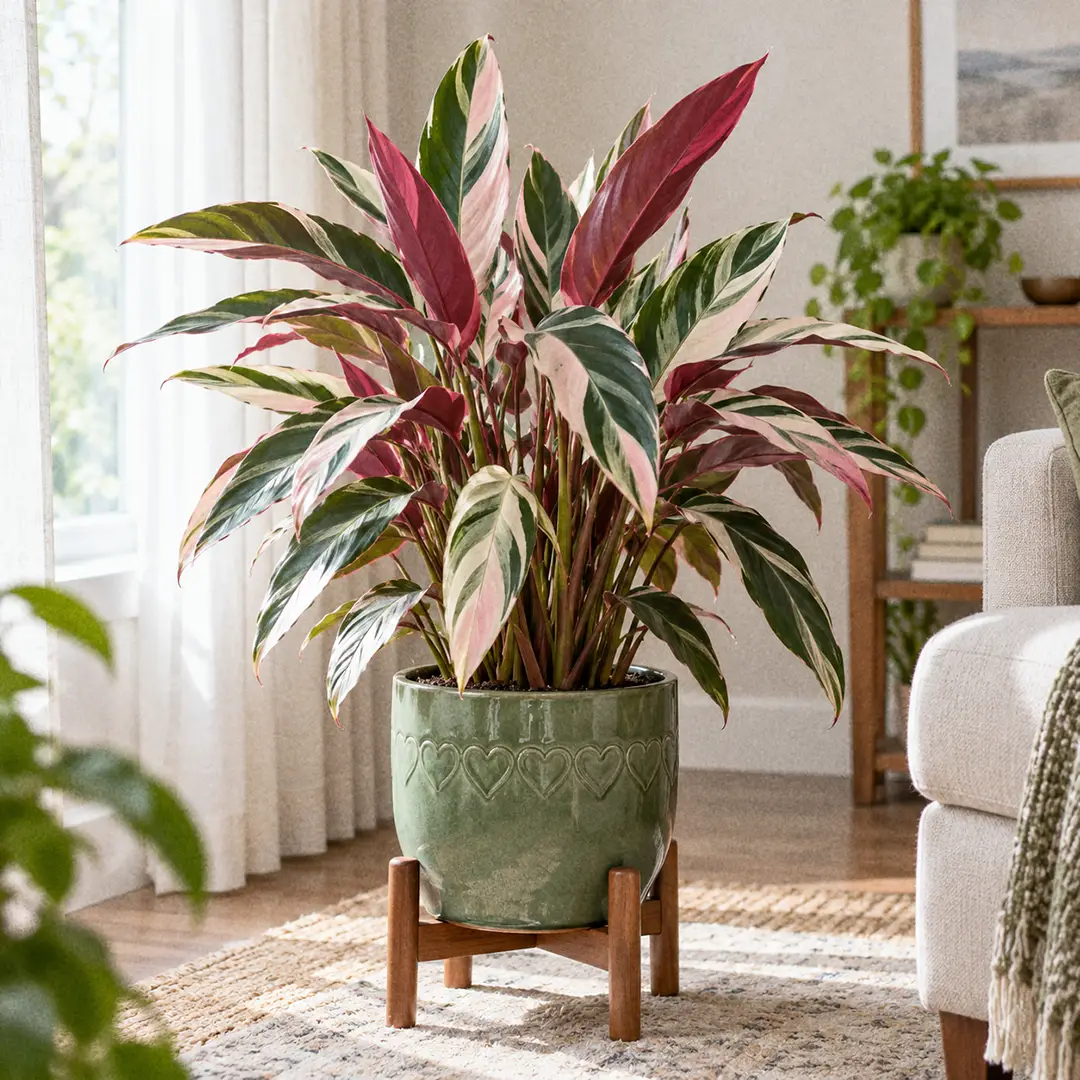
Complete Guide to Stromanthe Triostar Care and Growth
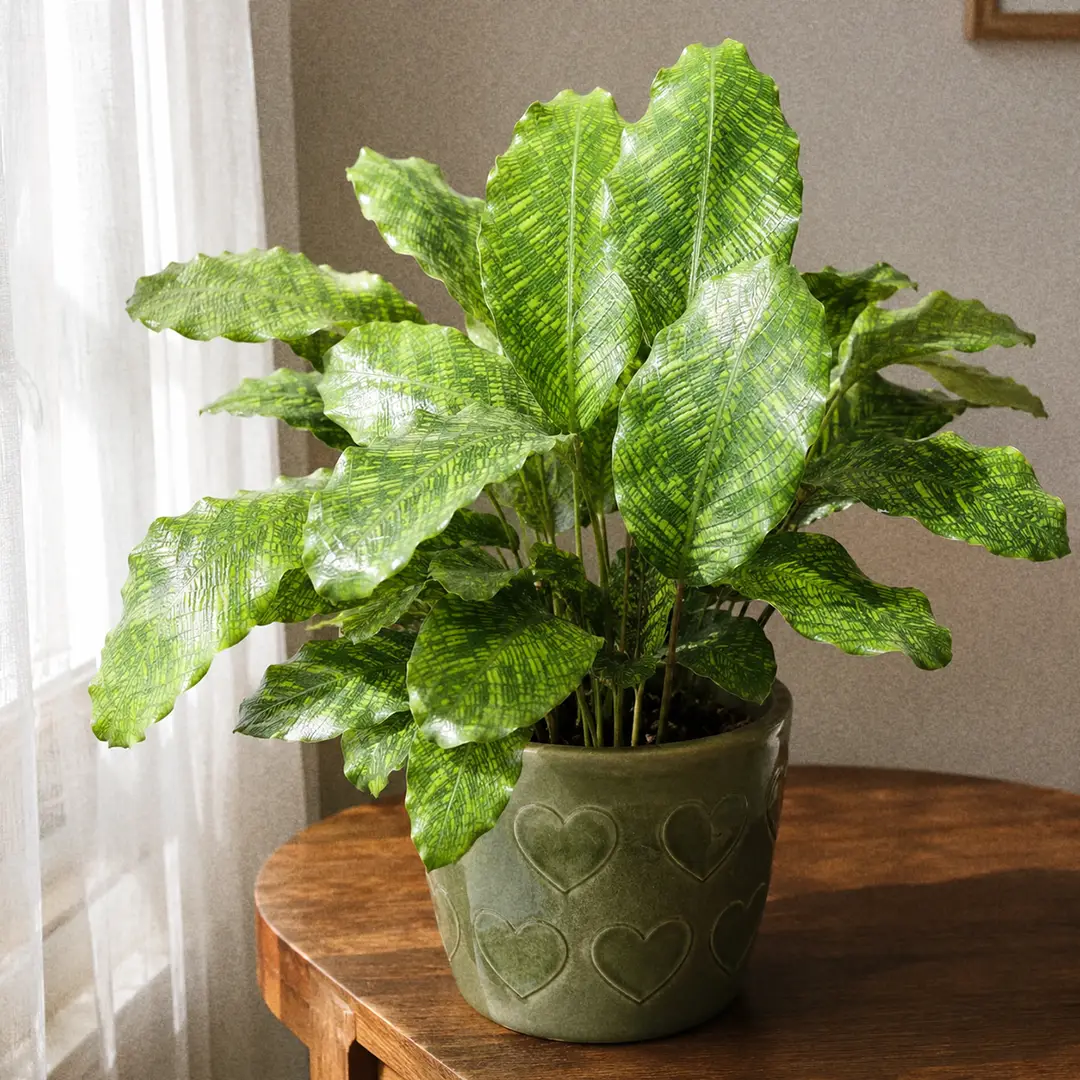
Complete Guide to Calathea Network Care and Growth
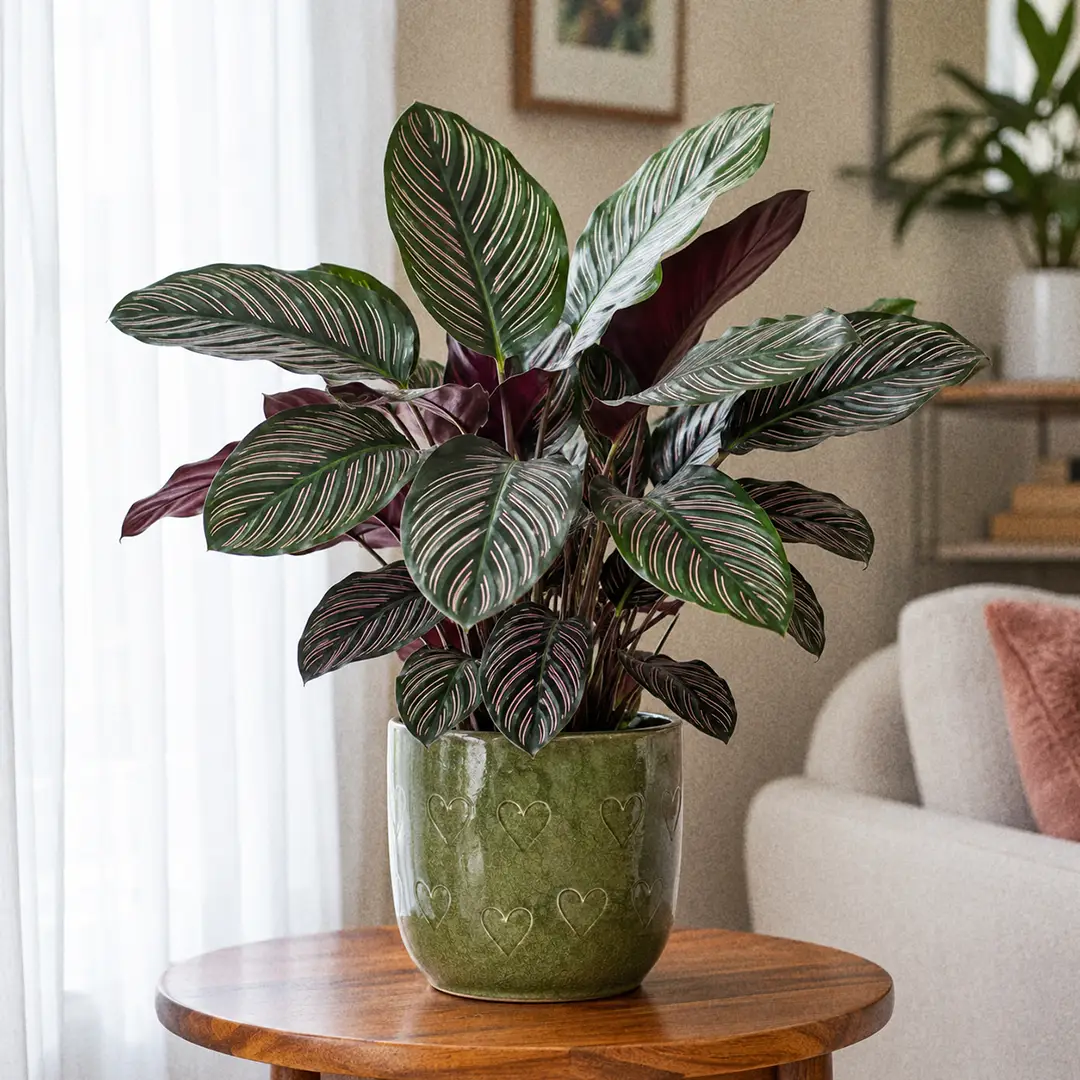
Complete Guide to Calathea Pinstripe Care and Growth
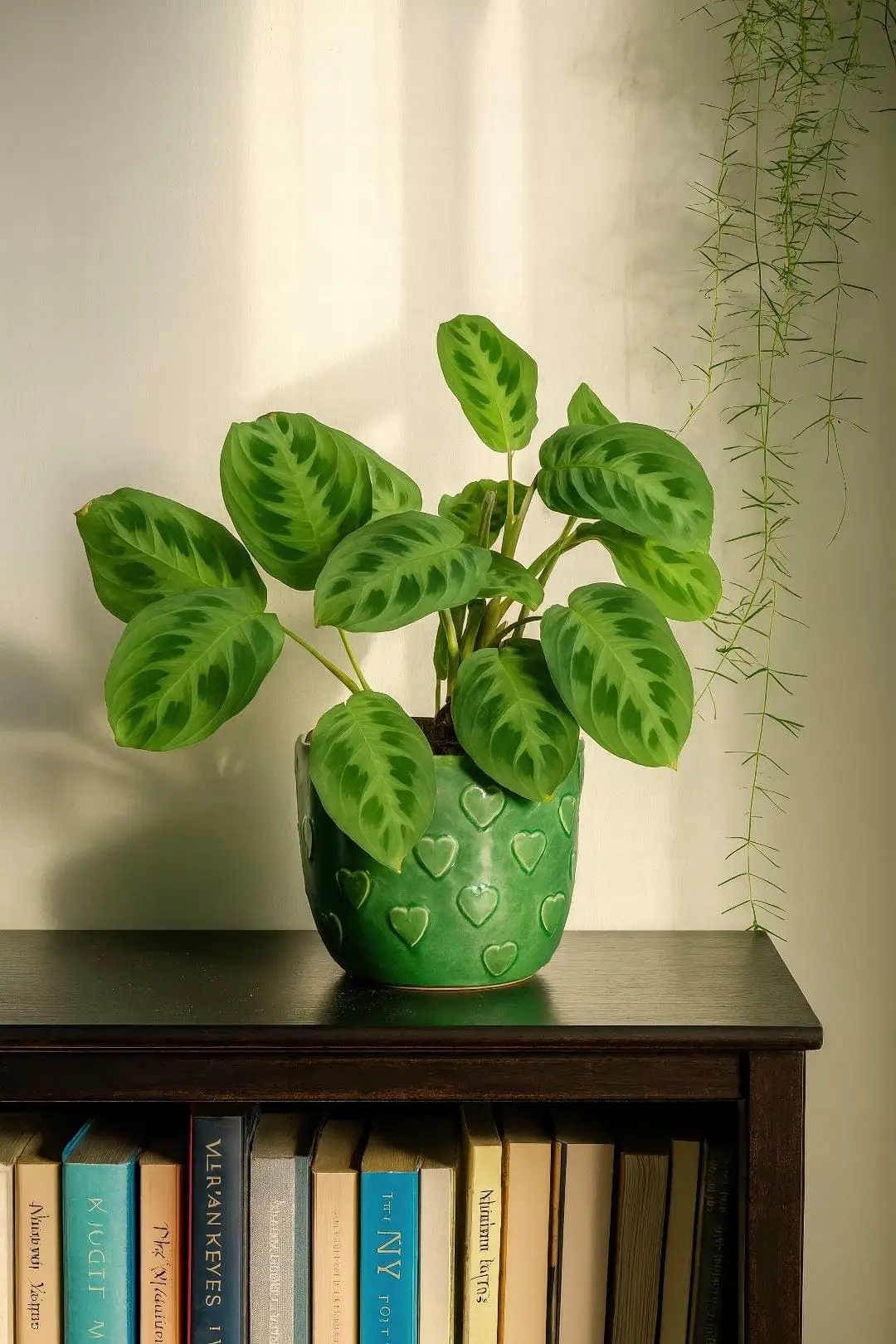
Complete Guide to Prayer Plant Care and Growth

Houseplant101 Forum
Questions & Comments
Ask a question, share your plant experience, or help other plant owners.
Comments are temporarily unavailable.
Open the Houseplant101 ForumNo comments yet
Be the first to ask a question or share your experience about this page.
Log in or create an account
Comments use your Houseplant101 Forum account, but you can stay on this page.
Create a new account