
 AI Overview
 🪴 In This Guide 🪴
We may earn a commission when you buy through these links. How we choose products →

A Note From Our Plant Expert
Anastasia here. I will not sell you a calathea as an easy plant, because it is not one, and the internet has done enough of that already. These are the fussiest common houseplants sold, and nearly every complaint about them traces back to two things: the water coming out of your tap and the dry air in your living room. Fix those two and the patterned leaves below are genuinely achievable. Ignore them and you will spend a year trimming brown edges.
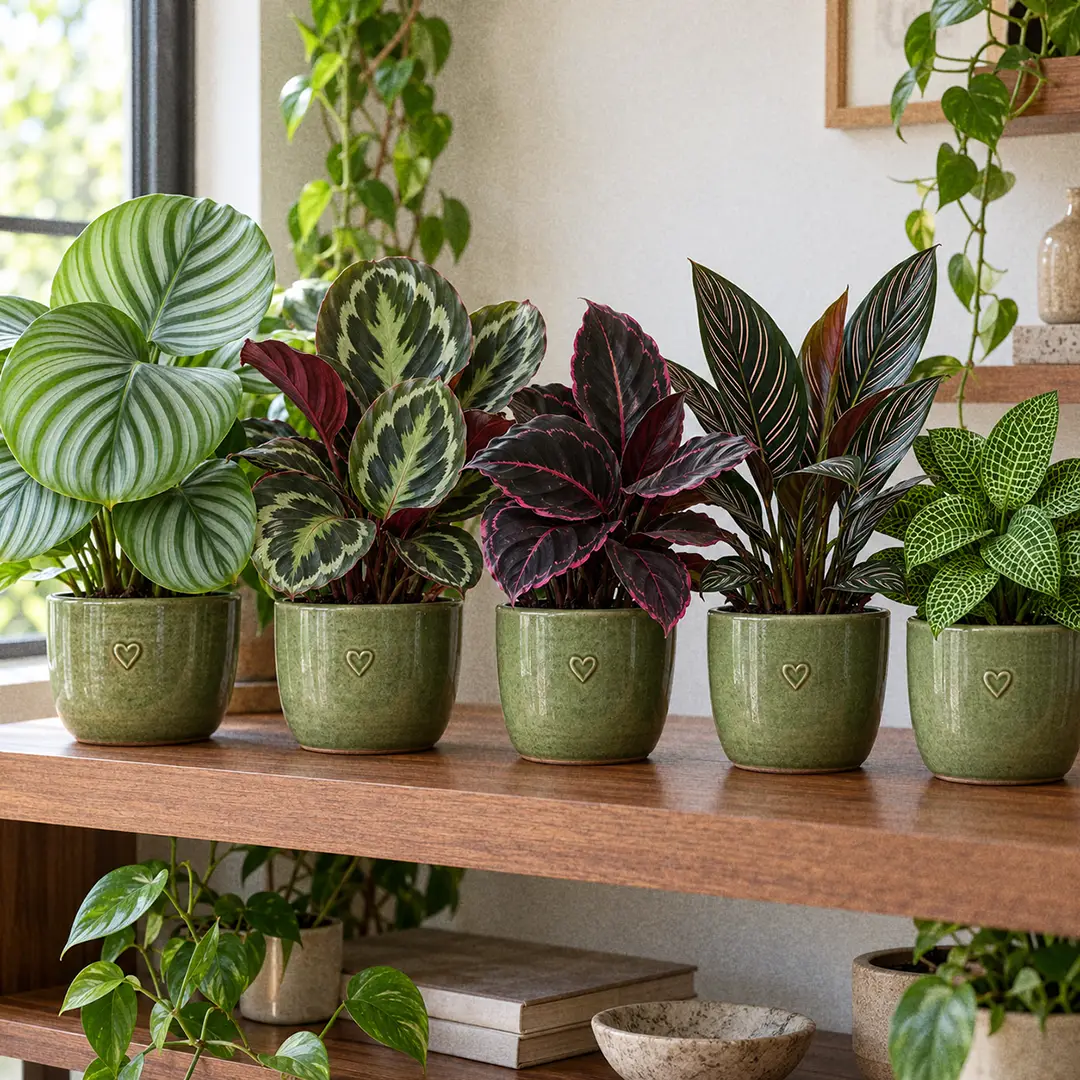
🧬 Why the Label Says Goeppertia
If you bought a plant tagged Calathea and came home to find the care guides calling it Goeppertia, nothing is wrong with either label. The genus got split.
What Changed in 2012
Botanists sequenced DNA across the Marantaceae family and found that the old genus Calathea held two groups of plants that were not close relatives at all. The bulk of the species people grow as houseplants moved into a resurrected genus called Goeppertia, named after a nineteenth-century German botanist. Calathea survived as a genus but kept only a small number of species, most of which are not in the houseplant trade at all.
What It Means for Your Plant
Nothing, practically speaking. Calathea orbifolia is now Goeppertia orbifolia, the pinstripe is Goeppertia ornata, the peacock is Goeppertia makoyana, and the plant on your shelf is the same plant it was before someone read the DNA. Nurseries, garden centres and almost every grower still say calathea, because that is the name people search for and ask for.
Which Name to Use
Say calathea when you are buying or talking to another plant person. Expect Goeppertia on a botanical label, in a plant database, and in the scientific name field on every one of our species guides below. The two words point at the same plant, and the care does not change by a single degree either way.
🧭 The Two Things That Actually Kill Calatheas
Every calathea guide on the internet lists ten care factors as though they carried equal weight. They do not. Two of them account for nearly every dead or disfigured calathea, and the rest are ordinary houseplant care you already know how to do.
Killer One: What Is In Your Tap Water
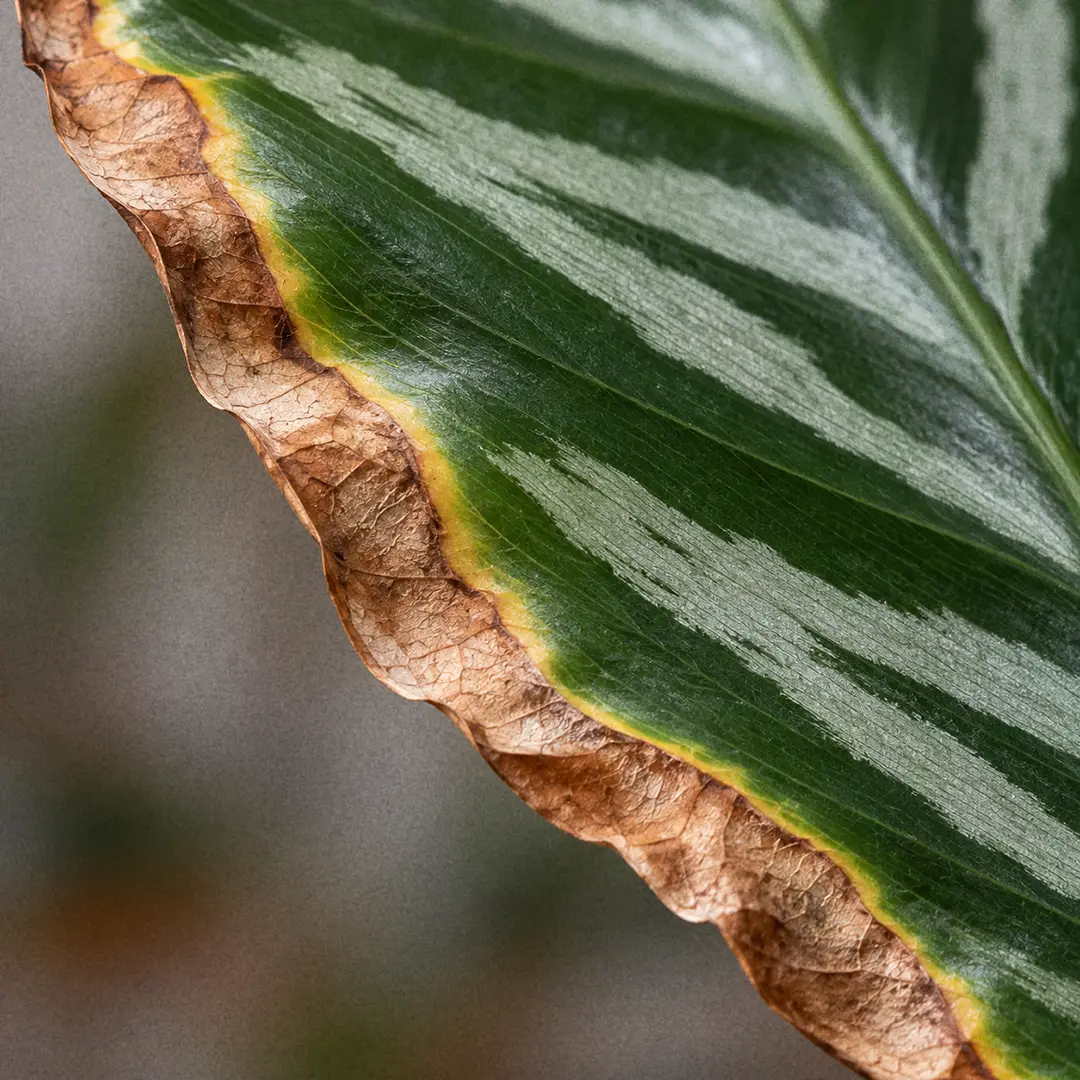
Calatheas do not tolerate the chemistry of municipal tap water. Fluoride, chlorine, chloramine and dissolved mineral salts all accumulate in the plant, and the plant moves them out to the leaf margins, where the tissue dies and turns papery brown. This is not a disease and it is not a pest. It is a chemical burn from the inside, and a healthy-looking plant can develop it within weeks of moving into a house with hard water.
Fluoride is the worst offender because many water authorities add it deliberately and it stays in the water no matter how long you leave the jug standing. Letting tap water sit overnight releases some chlorine and does nothing at all about fluoride or salts, which is why that old piece of advice keeps failing people.
Killer Two: Dry Indoor Air
These plants come from the humid shaded floor of Central and South American rainforests, where humidity sits well above 60 percent year round. A centrally heated room in winter often drops to 30 percent, sometimes lower. Thin calathea leaves lose water through the margins faster than the roots can replace it, and the edge tissue dies for the same reason the water-damaged tissue does: it runs dry first.
The two problems stack. A calathea on tap water in a dry room browns from both directions at once, which is why a plant can look fine in the shop and ragged six weeks later at home.
Be Honest With Yourself Before You Buy
If you will not commit to distilled, filtered or collected rainwater and a humidifier through the winter, this is not your genus. There is no shame in that. Buy a Prayer Plant instead, which gives you a similar patterned leaf and forgives ordinary tap water. If you are willing to do both things, read on, because the rest of calathea care is straightforward.
💧 Watering a Calathea
Use the Right Water
Distilled water is the gold standard and costs very little. Collected rainwater is free and works just as well, provided you are not collecting it off a treated roof. Reverse osmosis filtered water is fine. A basic activated-carbon jug filter removes chlorine and taste but leaves most of the fluoride behind, so it is an improvement rather than a solution.
If you have been on tap water for a while, flush the pot before you switch. Run three or four pot volumes of clean water through the soil at the sink to carry out the accumulated salts, then keep going with good water from there. Existing brown edges will not heal, but the new leaves come in clean.
Watering Frequency
Calatheas want the soil lightly and evenly moist, which puts them in an awkward middle ground between a fern and a pothos. Water when the top inch of the mix has dried and no deeper. In a warm bright room that usually lands around every five to seven days in summer and every ten to fourteen in winter. Check with a finger or a moisture meter rather than a fixed schedule, because pot size and room warmth shift the answer more than the season does.
How to Water
Take the pot to the sink, use room-temperature water, and pour slowly until it streams from the drainage holes. Cold water straight from the tap shocks the roots and can leave pale blotches on the leaves. Let the pot drain completely before it goes back on its saucer, because a calathea standing in water rots quickly despite its love of moisture. Our watering guide covers the technique in more detail.
Signs You Got It Wrong
Drooping leaves that firm up hours after a drink mean the pot went too dry. Yellowing lower leaves on a heavy, sour-smelling pot mean root rot, and that needs the plant out of its pot the same day. Curled leaves that stay curled through the evening usually mean thirst or dry air, and the fix is the same either way.
💦 Calathea Humidity and Temperature
The Target Number
55 to 65 percent. Below about 45 percent the leaf edges start dying, and below 35 percent they die fast. This is not a plant where humidity is a nice extra, it is the second half of the care equation. Buy a cheap hygrometer and find out what your room actually does before you decide whether you have a problem, because most people guess high.
What Works and What Does Not
A small humidifier running near the plant is the only method that reliably moves the number and holds it there. Grouping several plants together helps a little through shared transpiration. A pebble tray helps a very little. Misting does nothing measurable beyond a quarter of an hour and leaves droplets sitting on the leaf surface overnight, which is how fungal spotting starts on a patterned calathea. Skip it. Our humidity guide and the humidifier roundup go further, and the humidity-loving plants collection has good companions.
A bathroom with a window is the easy answer if you have one. The room already runs humid, the light is usually soft, and a calathea in a bathroom often outperforms the same plant in a living room without any equipment at all.
Temperature and Drafts
Keep the room between 65 and 80°F (18 to 27°C). Below 60°F (15°C) growth stops and the leaves take on a dull, limp look they do not recover from quickly. Radiators, heating vents and drafty winter doorways all cause edge burn on their own, separate from the water and humidity problem, so look behind the plant before you blame anything else.
☀️ Calathea Light Requirements Indoors
The Sweet Spot
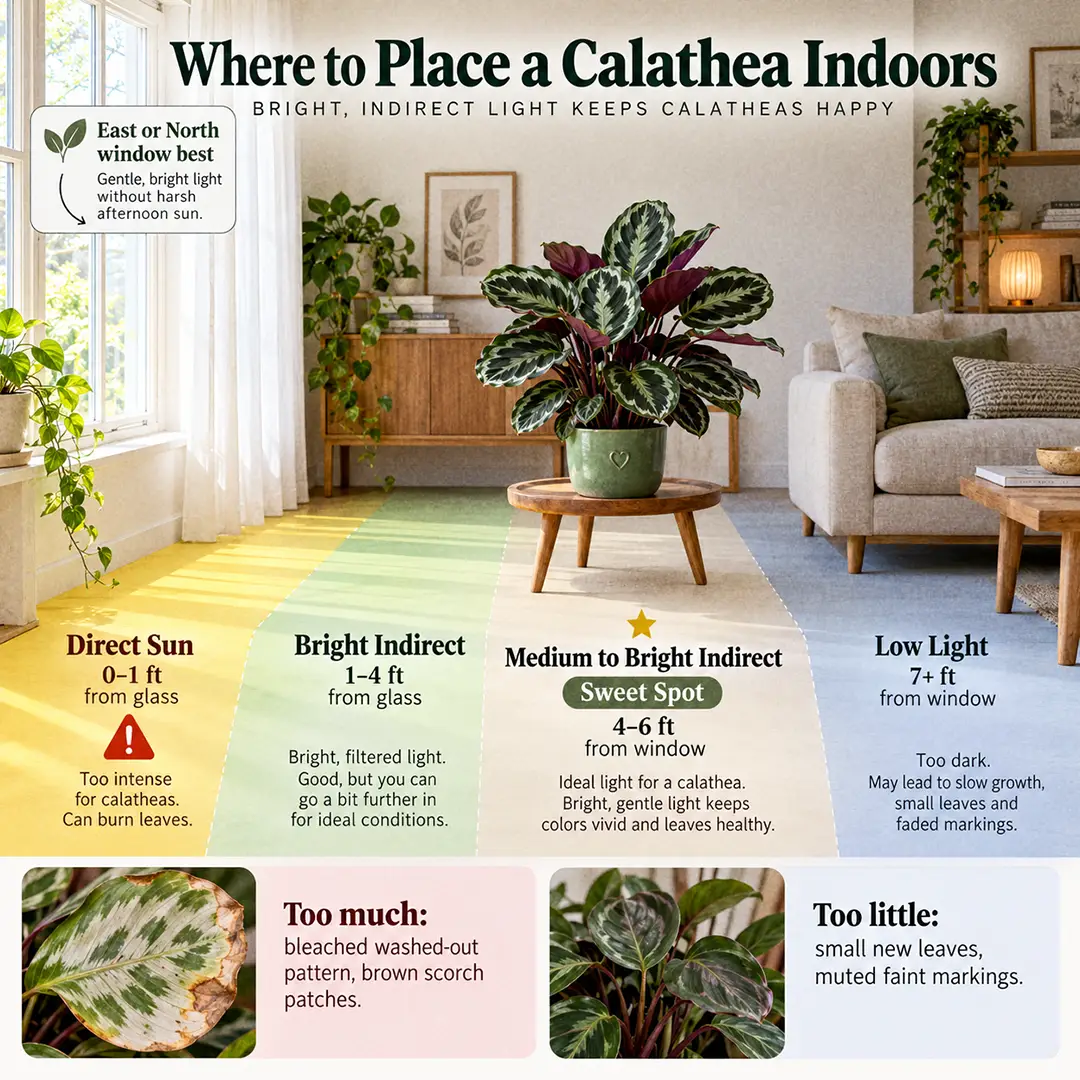
Medium to bright indirect light, four to six feet back from an east or north window. Calatheas grow on the rainforest floor under a closed canopy, so they are among the few popular houseplants genuinely happy in a spot most plants would sulk in. A south or west room works as long as the plant sits well back or behind a sheer curtain.
Too Much Light
Direct sun is the fastest way to ruin a calathea. The patterns bleach out within days, the dark greens fade to a washed yellow-green, and the thin leaf tissue scorches to brown patches that never recover. This is worth spelling out because the plants look like they should want light: the markings are so bright that people put them on a sunny sill to show them off, and the markings are the first thing the sun destroys. Pale, washed-out leaves are usually sun damage, not a nutrient problem.
Too Little Light
Genuine low light slows a calathea to a halt, new leaves come in small, and the patterns emerge muted rather than crisp. It is a slower failure than sunburn and easier to reverse. Move the plant nearer the window or add a grow light on a timer, and the next flush of leaves comes in properly marked.
🪴 Best Soil and Pots for Calathea
What the Mix Needs to Do
Two jobs at once, which is why bagged compost on its own fails. The mix has to hold enough moisture that the roots never dry out completely, and drain fast enough that they never sit wet. Straight potting soil manages the first and fails the second, then rots the plant over a winter.
A Mix That Works
Two parts coco coir or peat, one part perlite, one part fine orchid bark, plus a handful of worm castings. That combination stays damp for days and still lets water run through in seconds. A ready-made chunky houseplant mix does the same job if you only have one or two plants. Coco coir is worth choosing over peat here for a second reason: it holds fewer salts than some bagged composts, and salts are the thing you are already fighting. Our soil guide has more mixes.
Choosing a Pot and When to Repot
Drainage holes are non-negotiable. Plastic or glazed ceramic suits calatheas better than terracotta, because terracotta wicks moisture out through its walls and works against the even dampness these plants want. Go up one size only, since a large pot holds a reservoir of wet soil the small root system cannot use.
Repot every two years in spring, or when roots circle the drainage holes. Calatheas grow from spreading underground rhizomes, so repotting is also the moment to divide a crowded clump into two plants. Our division guide covers the method, and repotting covers the rest.
🍼 Feeding Calathea
When and How Often
Once a month from early spring through late summer, then nothing at all from autumn until growth restarts. These are moderate feeders with fine roots, and a plant that is not pushing new leaves cannot use what you pour on it.
What to Use and How Much
A balanced liquid houseplant fertiliser at quarter strength. Quarter, not half. Fertiliser is dissolved salt, and salt is precisely what you have spent the whole of this guide keeping away from the leaf edges. Feeding a calathea at full label strength undoes a switch to distilled water in a single season. Worm castings worked into the top of the mix each spring are a gentler route if you would rather not measure.
Signs of Overfeeding
A white crust on the soil surface, brown tips appearing on new growth, and leaves coming in small or distorted. Flush the pot with three or four volumes of clean water, skip the next two feeds, and the plant rights itself. The fertilizing guide has the full schedule.
🌿 1. Calathea Orbifolia (Goeppertia orbifolia)
Why It's Popular
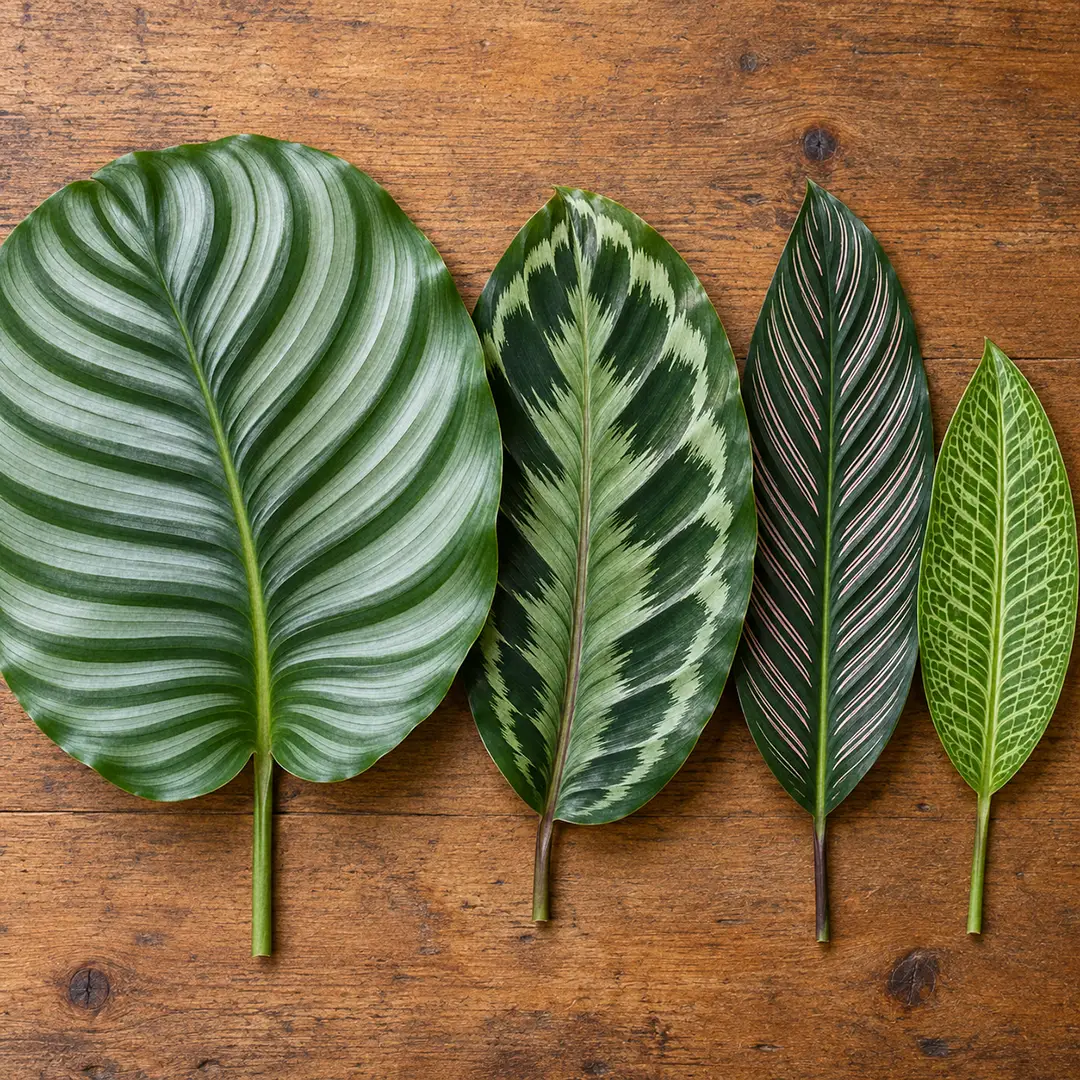
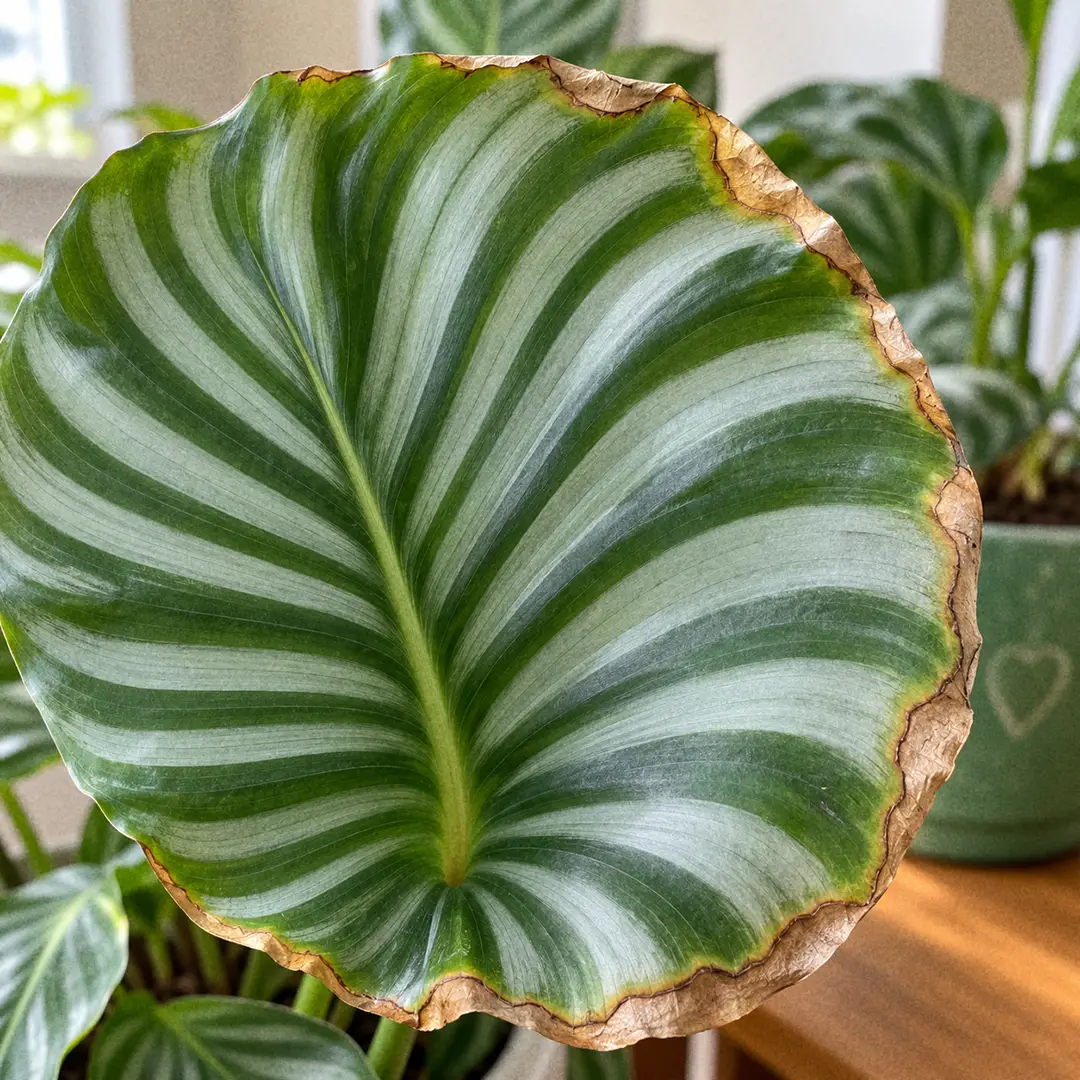
The one people photograph. Huge round leaves, often eight to twelve inches across, painted with broad alternating bands of silver-green and deep green that radiate out from the central vein. It has no red or pink anywhere, which gives it a calmer, more architectural look than the rest of the genus.
Care Notes
- Reaches two to three feet tall and wide, the largest plant on this page.
- Those big thin leaves lose water fastest, so it is the least forgiving about humidity.
- Bolivian in origin and slow to establish, so leave a new plant in its pot for a season.
Full details in our 👉 Calathea Orbifolia care guide.
🌿 2. Calathea Medallion (Goeppertia roseopicta 'Medallion')
Why It's Popular
Broad oval leaves with a feathered pale green pattern spreading from the midrib like a brushstroke, and a deep burgundy purple underside that shows every evening when the leaves fold up. It is the calathea that most obviously performs the prayer-plant movement, and the colour change at dusk is half the reason people buy it.
Care Notes
- Grows to about two feet and keeps a tidy rounded shape without pruning.
- The purple underside makes it the best choice for a spot where you see the plant backlit.
- Widely available and reasonably priced, which makes it a sensible first calathea.
Full details in our 👉 Calathea Medallion care guide.
🌿 3. Calathea Dottie (Goeppertia roseopicta 'Dottie')
Why It's Popular
Leaves so dark they read as near-black in most rooms, ruled with a thin bright pink line that traces the leaf outline and a second pink feather down the midrib. The undersides are deep magenta. Shops sometimes sell it as Black Rose, which for once is not marketing exaggeration.
Care Notes
- Stays compact at 12 to 20 inches, which suits a desk or a low shelf.
- The dark leaves show water spots and mineral deposits more obviously than pale ones do.
- Pink fades toward white in a dim spot and toward bleached in a bright one, so the middle ground matters here.
Full details in our 👉 Calathea Dottie care guide.
🌿 4. Calathea Peacock (Goeppertia makoyana)
Why It's Popular
The original peacock plant, and the one behind the old nickname Cathedral Windows. Thin, almost translucent pale green leaves carry dark green feathered blocks arranged along the midrib, and when light comes through from behind the pattern glows like stained glass. The reverse of each leaf repeats the same pattern in purple-red.
Care Notes
- Reaches 18 to 24 inches with leaves held on long thin stalks.
- The thinnest leaves of any calathea here, so it shows humidity failure first.
- Worth siting where evening or morning light passes through the leaves rather than onto them.
Full details in our 👉 Calathea Peacock care guide.
🎋 5. Calathea Pinstripe (Goeppertia ornata)
Why It's Popular
Dark glossy green leaves ruled with fine pink or white lines running out from the midrib in perfectly even pairs, as though someone drew them with a ruler. New leaves emerge with bright pink stripes that mature to cream on most plants, so a growing pinstripe carries two colours at once.
Care Notes
- Grows to about two feet with more upright, lance-shaped leaves than the round types.
- Pink stripes hold their colour longer in brighter indirect light, though never in direct sun.
- The glossy surface wipes clean easily, which keeps the stripes sharp.
Full details in our 👉 Calathea Pinstripe care guide.
🎋 6. Calathea Network (Goeppertia kegeljanii)
Why It's Popular
The oddity of the genus and the most forgiving plant on this page. Small apple-green leaves carry a dense grid of fine veins in a repeating rectangular mosaic that looks printed rather than grown. Hold one up to a window. The pattern keeps getting finer the closer you look, which is a genuinely strange thing to watch. It is still sold widely under its old name, Calathea musaica.
Care Notes
- Compact at 12 to 24 inches and bushier than the large-leaved types.
- Thicker, smaller leaves mean it copes with ordinary room humidity better than any other calathea.
- The best genuine starting point in this genus if you want to test the waters.
Full details in our 👉 Calathea Network care guide.
💎 7. Calathea White Fusion (Goeppertia lietzei 'White Fusion')
Why It's Popular
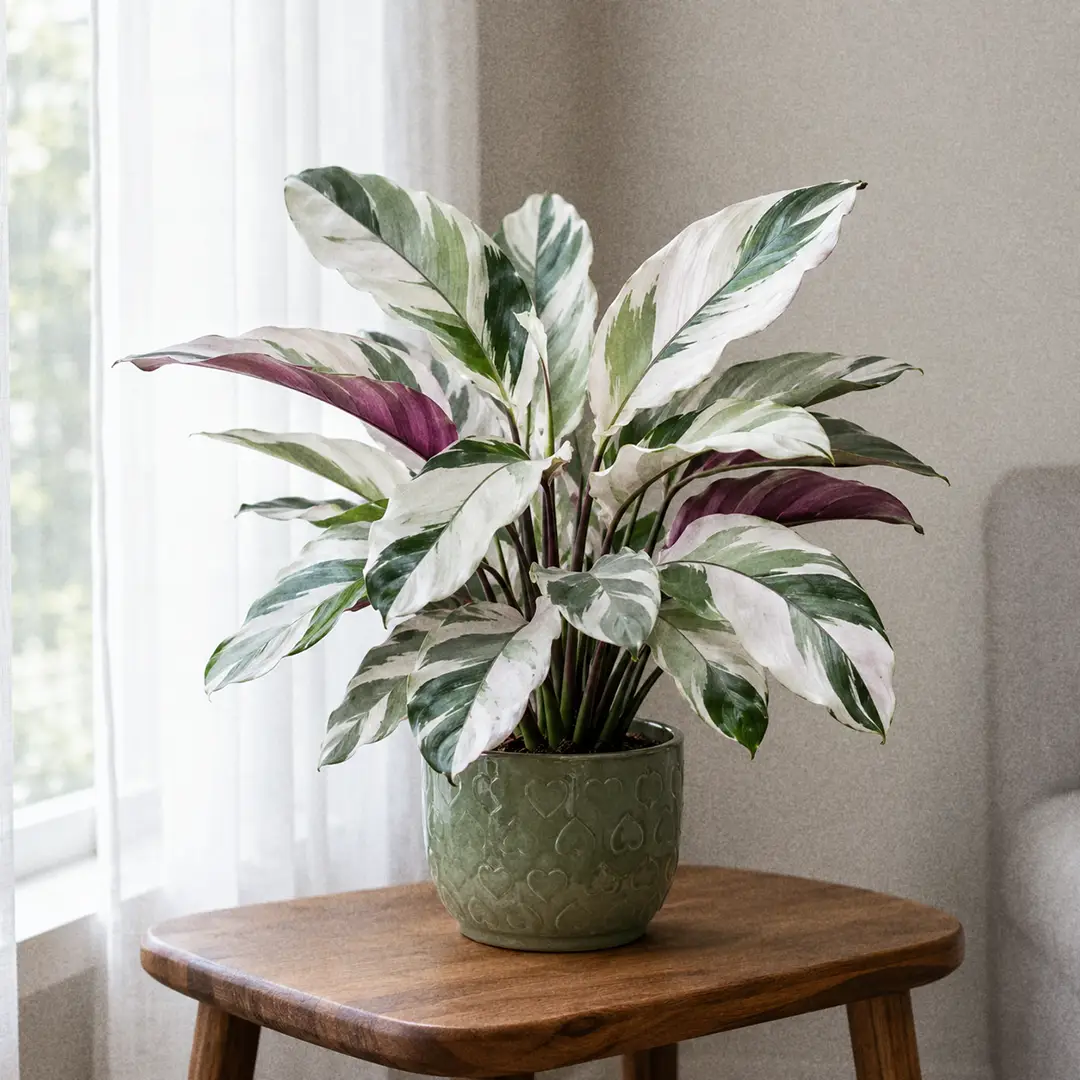
Variegated leaves swirled in white, mint and dark green with no two alike, on lilac-purple undersides and stems. Every other plant on this page we rate moderate. This one we rate hard, and it is still the calathea people want most.
Care Notes
- Around 12 to 18 inches, smaller than its reputation suggests.
- The white sections carry no chlorophyll, so they scorch and brown well before the green tissue does.
- Wants 60 percent humidity as a floor, not a target, and distilled water without exceptions.
- Heavily variegated leaves can also revert to plain green in poor light.
Full details in our 👉 Calathea White Fusion care guide.
🏷️ Calathea, Maranta, Stromanthe: The Prayer Plant Mix-Up
Shops label all three as prayer plants, because all three belong to the Marantaceae family and all three raise their leaves at night in a motion called nyctinasty. They are cousins rather than the same plant, and the differences matter when you are buying.
True Prayer Plant (Maranta leuconeura)
The plant that owns the name. Maranta grows low and trails sideways along a shelf rather than standing upright, with oval leaves marked in dark blotches and either red or pale green veining. It is the most forgiving member of the family by a wide margin, handles tap water without going crispy, and roots easily from stem cuttings, which no calathea does. If a calathea has defeated you, this is the plant to try next. See our Prayer Plant care guide.
Stromanthe and Ctenanthe
Stromanthe Triostar carries lance-shaped leaves splashed cream and green on top with hot pink undersides, growing upright in a clump much like a calathea and wanting much the same humidity. Ctenanthe, sold as Never Never Plant or Fishbone Prayer Plant, has longer narrow leaves in a herringbone pattern on taller woody stems, and sits between maranta and calathea in fussiness. We do not have a Ctenanthe guide on the site yet.
How to Tell Them Apart in a Shop
Look at the habit before the leaf. Maranta sprawls and trails. Calathea and stromanthe stand upright in a tight clump from a shared base. Then look underneath: a calathea's reverse is usually purple, burgundy or plain green, while a Stromanthe Triostar's is a saturated pink you cannot mistake. If the leaf is small, thick and covered in a fine rectangular grid, you are holding a Calathea Network and you have found the easy one.
🩺 Common Calathea Problems
Brown Crispy Edges
The signature calathea complaint, and the reason most of this guide is about water. Run the causes in order: tap water minerals first, humidity below 45 percent second, a hot radiator or a cold draft third, and over-fertilising fourth. Switch to distilled or rainwater, flush the pot thoroughly, get a humidifier running, and check what sits behind the plant.
Trim the dead margins with clean scissors, following the leaf outline a millimetre inside the brown so the cut looks deliberate. The damaged tissue never regrows, so you are judging progress by whether the next leaf comes in clean, not by whether the old ones improve. Our brown crispy edges guide works through every cause.
Curling Leaves
A calathea curls its leaves inward to cut the surface area it loses water through, so curling is the plant telling you it is short of water somewhere. Check the pot first, since dry soil is the quickest cause to confirm. If the soil is damp and the leaves still curl, the air is too dry or the light is too strong. Some evening curling is normal prayer-plant movement and unfurls again by morning, so judge by what the plant looks like at midday. More at curling leaves.
Fading and Washed-Out Patterns
Too much light, nearly always. The markings are pigment, and direct sun bleaches pigment. Move the plant several feet back from the window and the next leaves come in properly coloured, though the faded ones stay faded. The opposite case, patterns emerging muted on small new leaves in a dim corner, is a light shortage rather than a burn. See pale and faded leaves for the distinction.
Yellowing Leaves and Drooping
One yellow lower leaf every few weeks on an otherwise healthy plant is normal ageing. Several at once on a heavy wet pot means root rot, and the plant needs tipping out and the roots checking that day. Dramatic drooping that corrects within hours of watering is simple thirst, and a calathea will do this repeatedly without lasting harm, though it costs you leaf edges each time.
Pests
Spider mites are the calathea pest, and the dry air that browns the leaves is exactly the air they breed fastest in. Look for fine stippling on the upper leaf surface and webbing in the leaf joints. Mealybugs and thrips turn up less often. Treat with a thorough wipe-down and neem oil every seven days for a month, and inspect every new plant before it joins the shelf.
❓ Frequently Asked Questions
How do you care for a calathea indoors?
Medium to bright indirect light several feet back from an east or north window, soil kept lightly moist but never soggy, and distilled, filtered or rainwater rather than tap. Hold humidity at 55 to 65 percent with a humidifier, keep the room between 65 and 80°F, and feed at quarter strength monthly through spring and summer. The water and the humidity carry most of the weight.
Why does my calathea have brown crispy edges?
The water, the air, or both. Fluoride, chlorine and dissolved salts in tap water travel to the leaf margins and burn the tissue from inside, and air below 45 percent humidity dries the same margins from outside. Switch water source, flush the pot to clear accumulated salts, and get a humidifier running. New leaves come in clean; the damaged ones never heal.
Is a calathea the same as a prayer plant?
Not exactly. Both sit in the Marantaceae family and both fold their leaves up at night, so shops apply the name loosely to the whole group. The true prayer plant is Maranta leuconeura, which trails sideways with oval leaves and red or pale veins, and it is considerably easier to grow than any calathea.
Why are calatheas called Goeppertia now?
A 2012 genetic study showed the old genus Calathea held two unrelated groups, so most houseplant species moved into the genus Goeppertia. Calathea still exists but contains far fewer species. The plants did not change, the trade still calls them calatheas, and the care is identical either way.
Are calatheas toxic to cats and dogs?
No. The ASPCA lists calathea species as non-toxic to cats, dogs and horses, which is why they appear on every pet-safe plant list including ours. A chewed leaf may still upset a stomach, simply because leaves are not food.
Which calathea is easiest for a beginner?
Calathea Network, comfortably. Its smaller, thicker leaves tolerate ordinary household air far better than the big thin-leaved types, so it holds clean edges in rooms where an Orbifolia would shred. Save White Fusion for after you have kept another calathea looking good for a full year.
Do calatheas really need a humidifier?
In most homes, yes. These plants want 55 to 65 percent and a centrally heated room in winter often sits near 30 percent. Misting lifts the number for about fifteen minutes and leaves droplets on the leaves overnight, which starts fungal spotting. A humidifier near the plant is the method that actually holds the number where it needs to be.
🪴 See also 🪴
Calathea Orbifolia Brown Edges (Crispy Leaves, Curling and How to Fix Them)

Houseplant101 Forum
Questions & Comments
Ask a question, share your plant experience, or help other plant owners.
Comments are temporarily unavailable.
Open the Houseplant101 ForumNo comments yet
Be the first to ask a question or share your experience about this page.
Log in or create an account
Comments use your Houseplant101 Forum account, but you can stay on this page.
Create a new account