
 AI Overview
 🪴 In This Guide 🪴

🧪 What Is Actually In Tap Water
Four things in tap water can affect plants, and they behave very differently.
Chlorine and chloramine
Both are disinfectants, and only one of them goes away on its own. Chlorine evaporates from an open container in roughly 24 hours, which is where the old advice about letting water sit overnight comes from. Chloramine, which many utilities switched to precisely because it is more stable, does not evaporate at all. Leaving a jug on the counter does nothing to it. At the concentrations used in drinking water, neither one harms most houseplants anyway.
Fluoride
This is the one that actually causes visible damage, and it affects a specific group of plants. Fluoride accumulates in leaf tissue and burns the tips and margins. It does not evaporate and standard carbon filters remove very little of it.
Dissolved minerals
Hard water carries calcium and magnesium. Neither is toxic, and both are plant nutrients, but they build up in soil over time, raise the pH, and leave white crust on pots and soil. The problem is accumulation, not the water itself.
Sodium from softeners
Different from everything above and much more serious. More on that below.
🔍 How Water Problems Look
Water quality rarely kills a plant. It marks it.
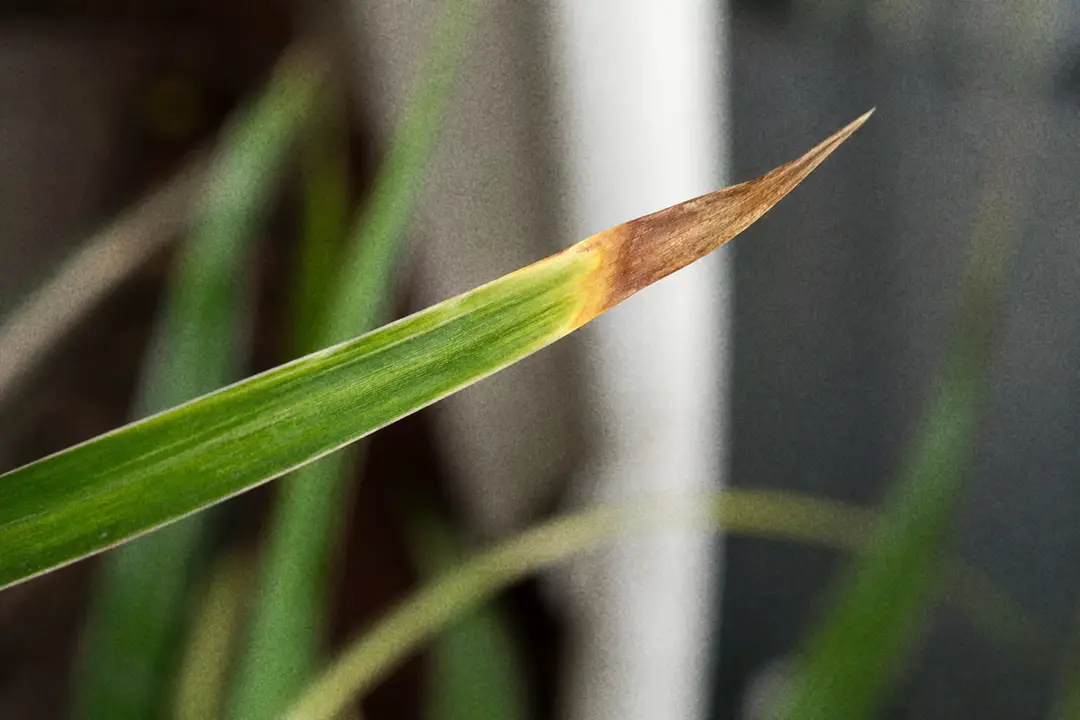
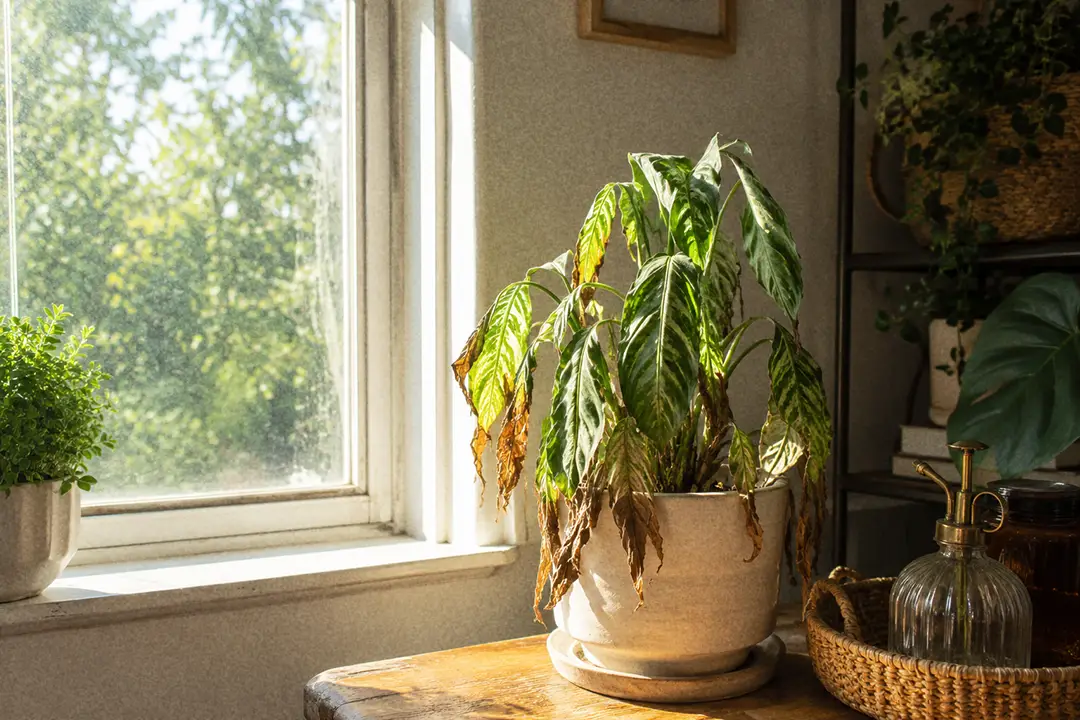
Brown, crispy tips on otherwise healthy leaves
This is the classic fluoride signature. The plant looks well fed and well watered, but every leaf tip is dry and brown, often with a thin yellow band just behind the brown. If your watering is genuinely consistent and humidity is reasonable, water quality moves up the suspect list. Our guide to brown crispy edges covers the other causes worth ruling out first.
White crust on the soil and pot rim
Mineral and fertilizer salts left behind as water evaporates. Cosmetic at first, but a heavy layer signals that salts are concentrating in the root zone, which makes it harder for roots to take up water.
Slow decline with no obvious cause
Salt buildup over months looks like a plant that has stopped growing, wilts easily despite moist soil, and slowly yellows. This is where softened water usually shows up.
🌴 The Plants That Care
Most houseplants are indifferent. These are not.
The fluoride-sensitive group
Dracaenas in all their forms, Spider Plants, Calatheas, Marantas, Ti Plants, Corn Plants, and most true palms including the Parlor Palm and Kentia Palm. If you own several of these and they all have brown tips, that is a pattern rather than a coincidence.
The strict ones
Carnivorous plants like the Nepenthes pitcher plant evolved in nutrient-poor bog water and are harmed by dissolved minerals of any kind. These need distilled water or rainwater, with no exceptions. Air plants also do noticeably better on rainwater since they absorb everything through their leaves.
Everything else
Pothos, Philodendrons, Monsteras, Snake Plants, ZZ Plants, succulents, cacti, Peperomias, Hoyas, Ficus. Tap water, every time, without a thought.
🚰 Your Water Options
Ranked by how much effort they cost you.
Straight from the tap
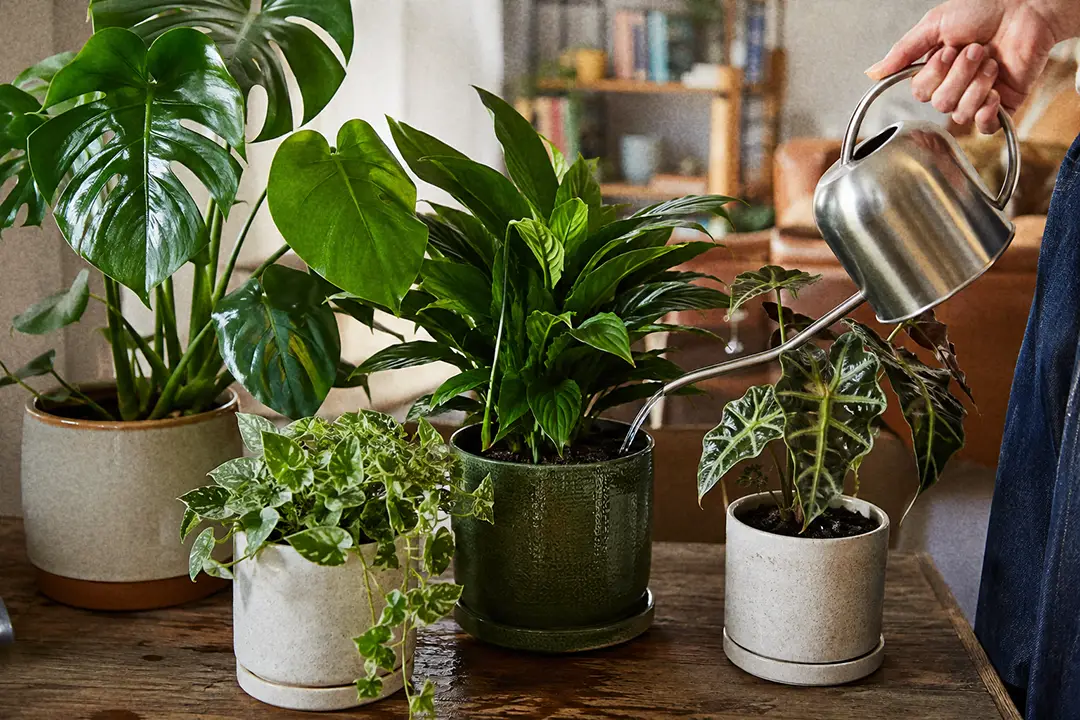
Free, instant, and correct for most plants. Use room-temperature water rather than cold, since cold water on tropical roots is a real stress. Run the tap for a few seconds first if you have old pipes.
Left to sit for 24 hours
Worth doing only if your utility uses chlorine rather than chloramine, and you can find that out from your water supplier's annual quality report. If they use chloramine, sitting water is just water that got warm, which is a small benefit on its own.
Filtered
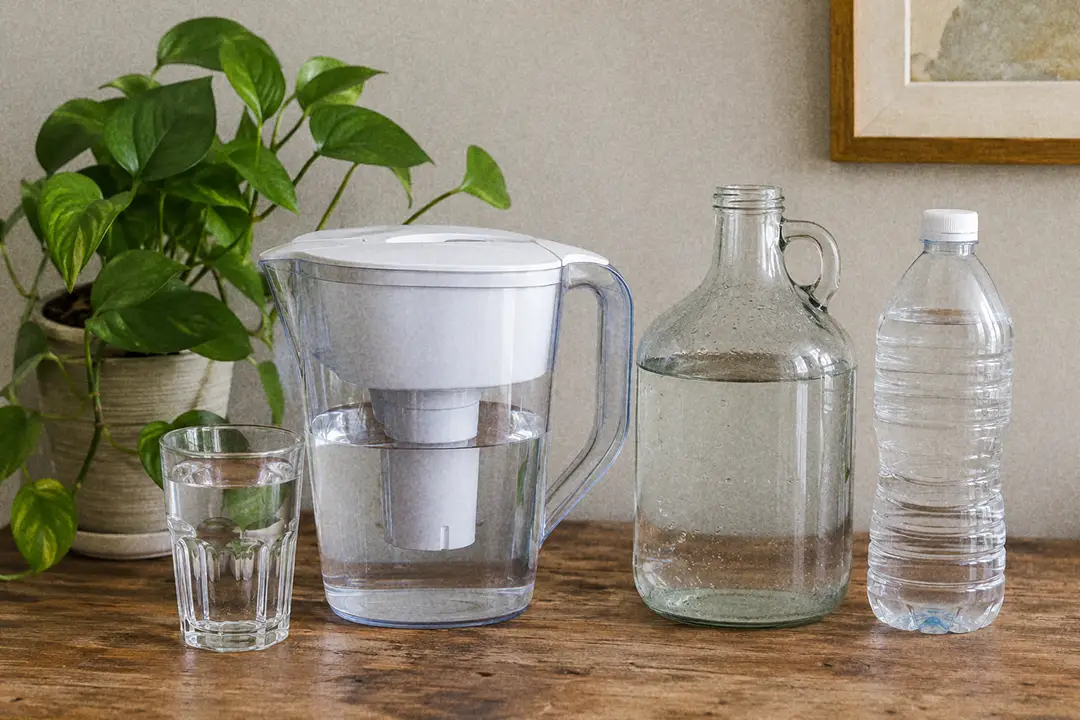
A standard carbon pitcher filter removes chlorine and improves taste but does very little for fluoride or hardness. Reverse osmosis removes almost everything, which makes it genuinely useful for sensitive plants, though it is a bigger investment.
Distilled
Pure and completely reliable, with no minerals at all. Best kept for carnivorous plants and a handful of fussy specimens, since buying jugs of it for a whole collection gets expensive and heavy. It also contains no nutrients, so plants on distilled water depend entirely on your fertilizer.
Rainwater
My favourite, and the one plants respond to most visibly. It is naturally soft, slightly acidic, and free. Collect it in a covered container away from roof runoff if you can, use it within a few weeks, and avoid the first flush after a long dry spell since that carries the most dust from the roof.
⚠️ The Water Softener Warning
If your house has a salt-based water softener, this is the one section that matters.
Why softened water damages plants
Softeners work by swapping calcium and magnesium ions for sodium ions. The water feels lovely and leaves no limescale, but you are handing your plants a steady dose of salt. Sodium accumulates in soil, damages root tissue, and interferes with water uptake. A plant on softened water declines slowly and confusingly, since the soil is moist while the plant behaves as though it is thirsty.
What to use instead
Most softened systems have an untreated outdoor tap or a bypass line at the kitchen sink. Find out which of your taps is unsoftened and use that one. Failing that, filtered water or collected rainwater both work.
If you have already been using it
Repot into fresh potting mix rather than trying to flush the old soil, since sodium binds tightly and flushing is slow and incomplete. Then switch water sources.
🚿 Flushing Out Salt Buildup
Whatever water you use, salts accumulate from fertilizer as well.
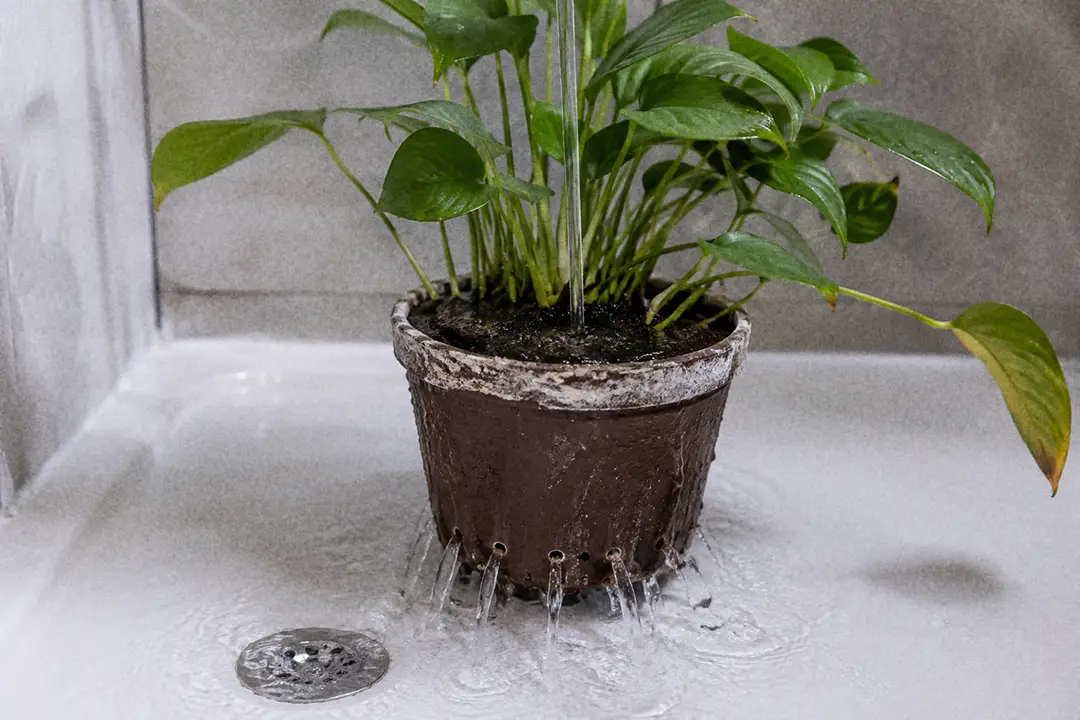
How to flush a pot
Take the plant to the sink or shower and pour water slowly through the soil until several pot volumes have run out of the drainage holes. Let it drain fully. Do this every three to four months, or more often if you fertilize heavily or have hard water.
Deal with the crust first
Scrape off any white surface crust and replace the top inch of soil before flushing, otherwise you are washing concentrated salts straight back down into the root zone.
Bottom watering needs flushing more
Bottom watering is excellent for even moisture, but it never carries salts out of the pot, so they concentrate at the surface. If bottom watering is your normal routine, top water and flush thoroughly every few months to reset it.
✅ So What Should You Use
A short decision path:
- ☐ Softened water at home? Never use it. Find an unsoftened tap.
- ☐ Growing carnivorous plants? Distilled or rainwater only.
- ☐ Dracaena, Spider Plant, Calathea, Maranta, or palms with brown tips? Try filtered or rainwater for two months and watch the new growth.
- ☐ Very hard water and white crust everywhere? Flush pots quarterly, or switch to rainwater.
- ☐ None of the above? Tap water, at room temperature. Stop worrying.
The truth is that how often you water matters far more than what you water with. If you want to improve one thing today, make it your timing rather than your water source. Our watering guide and how often to water houseplants cover that properly.
❓ Frequently Asked Questions
Is tap water bad for houseplants?
For most houseplants, no. Ordinary tap water is fine. Problems appear only with fluoride-sensitive species, very hard water, or water from a salt based softener, which should never be used on plants.
Does letting tap water sit overnight help?
It helps only if your utility uses chlorine, which evaporates in about 24 hours. It does nothing for chloramine, fluoride, or dissolved minerals, since none of those off-gas. Check your water utility's annual report to see which disinfectant they use.
Which plants are sensitive to tap water?
Dracaenas, Spider Plants, Calatheas, Marantas, Ti Plants, and most true palms react to fluoride with brown, crispy leaf tips. Carnivorous plants are the strictest of all and need distilled or rainwater only.
Can I water plants with softened water?
No. Salt based water softeners replace calcium and magnesium with sodium, which builds up in soil and damages roots. Use an unsoftened outdoor tap, filtered water, or collected rainwater instead.
What are the white crusts on my pot and soil?
Those are mineral and fertilizer salts left behind as water evaporates, most common with hard water. Scrape off the crust, replace the top inch of soil, and flush the pot with several pot volumes of water every few months.
🪴 See also 🪴

How Often Should You Water Houseplants?
How to Protect Indoor Plants from Summer Heat
How to Water Houseplants in Summer & While on Vacation
Summer Houseplant Care Checklist

Why Is My Plant Dying? A Beginner's Diagnostic Guide
Bringing Outdoor Plants Back Inside (Without Bringing the Bugs)

How to Acclimate a New Plant to Your Home

Houseplant101 Forum
Questions & Comments
Ask a question, share your plant experience, or help other plant owners.
Comments are temporarily unavailable.
Open the Houseplant101 ForumNo comments yet
Be the first to ask a question or share your experience about this page.
Log in or create an account
Comments use your Houseplant101 Forum account, but you can stay on this page.
Create a new account