
Watermelon Dischidia
Dischidia ovata
Dischidia Ovata, String of Watermelons, Dischidia Watermelon


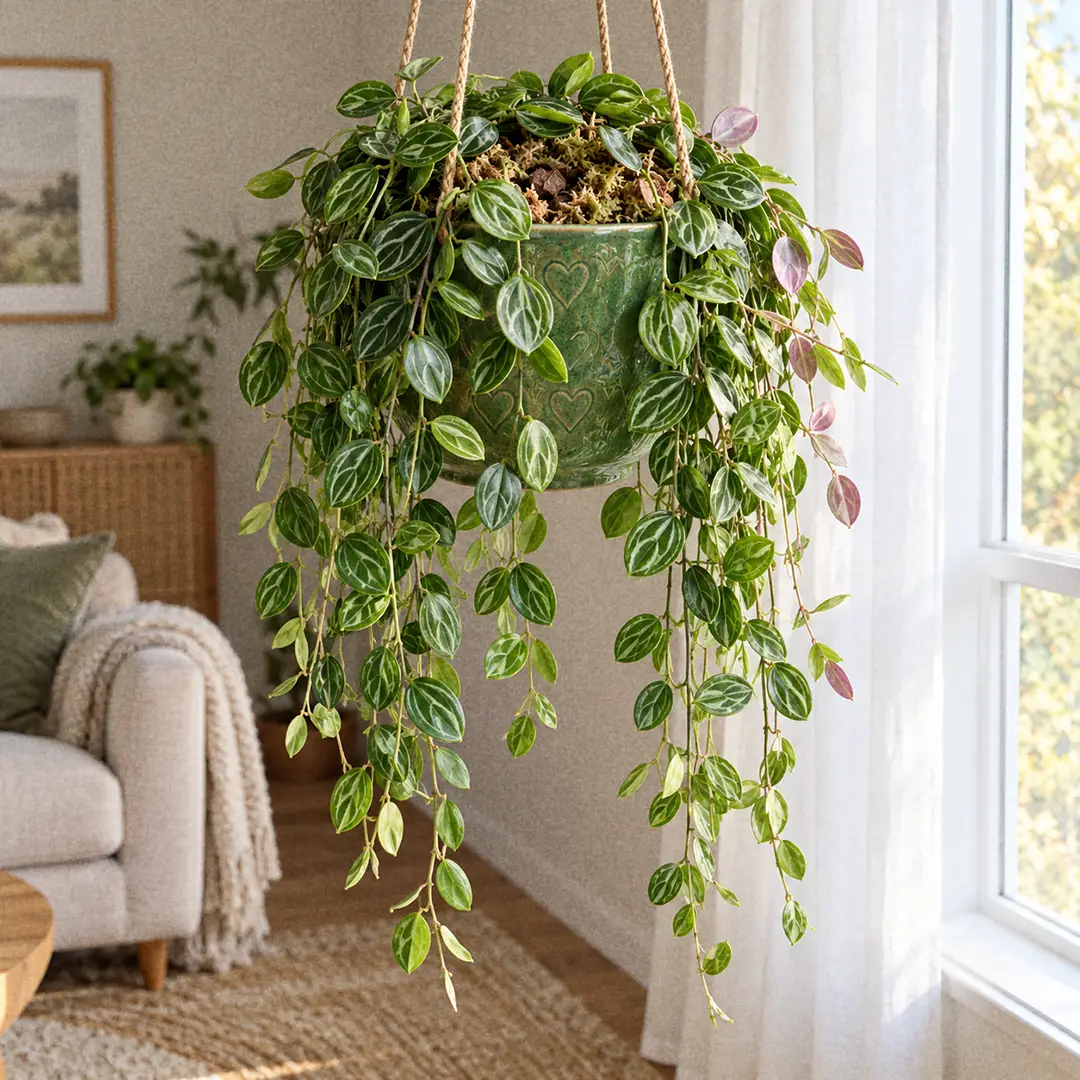
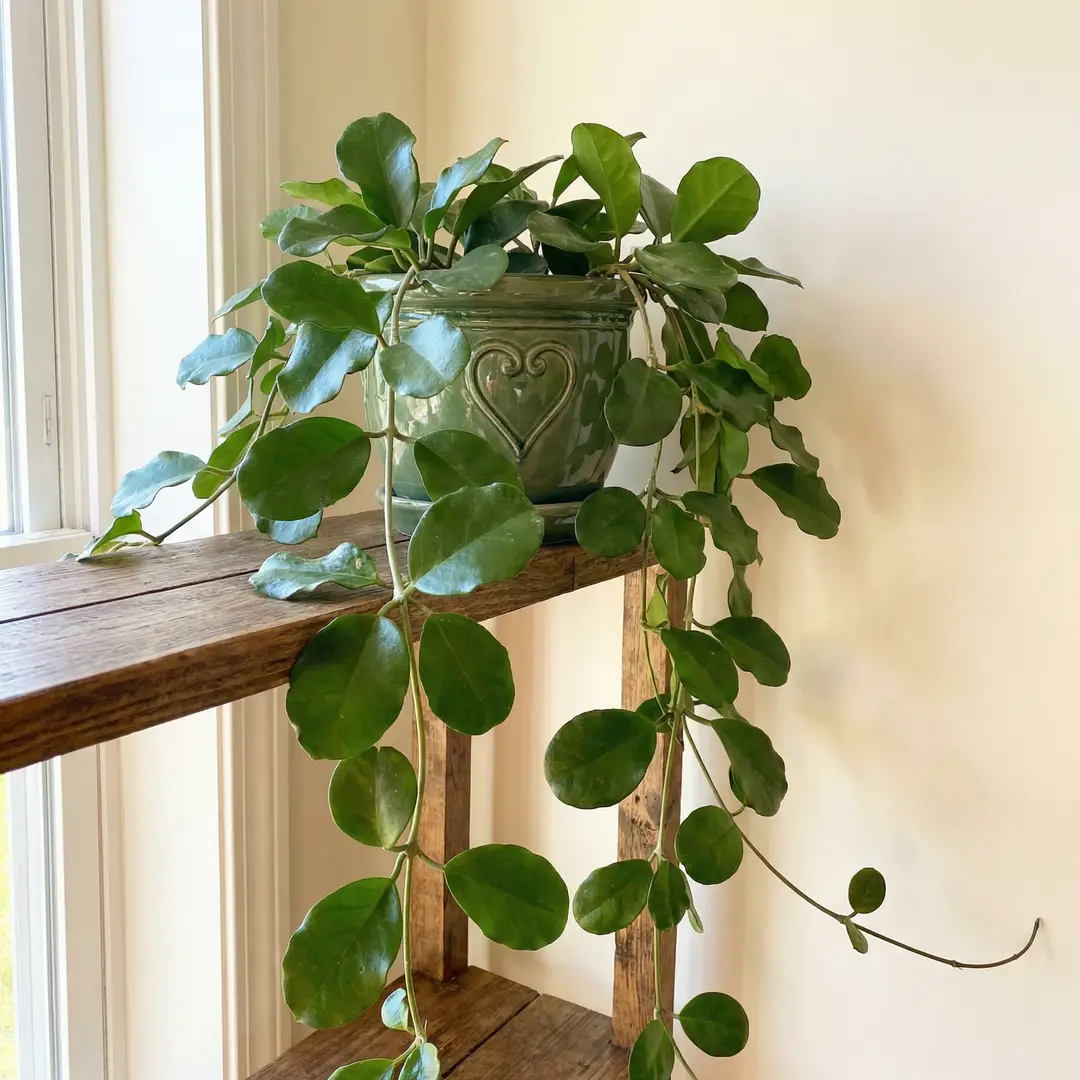
Watermelon Dischidia is a small epiphytic trailer with oval, slightly succulent leaves striped with pale veins like a watermelon rind. Learn how to grow Dischidia ovata in an airy bark mix or mounted on cork, how to water it without rotting the fine roots, and how to tell it apart from the Watermelon Peperomia.
📝 Watermelon Dischidia Care Notes
🌿 Care Instructions
⚠️ Common Pests
📊 Growth Information
🪴 In This Guide 🪴

☀️ Watermelon Dischidia Light Requirements (Indoor Lighting Guide)
The Sweet Spot
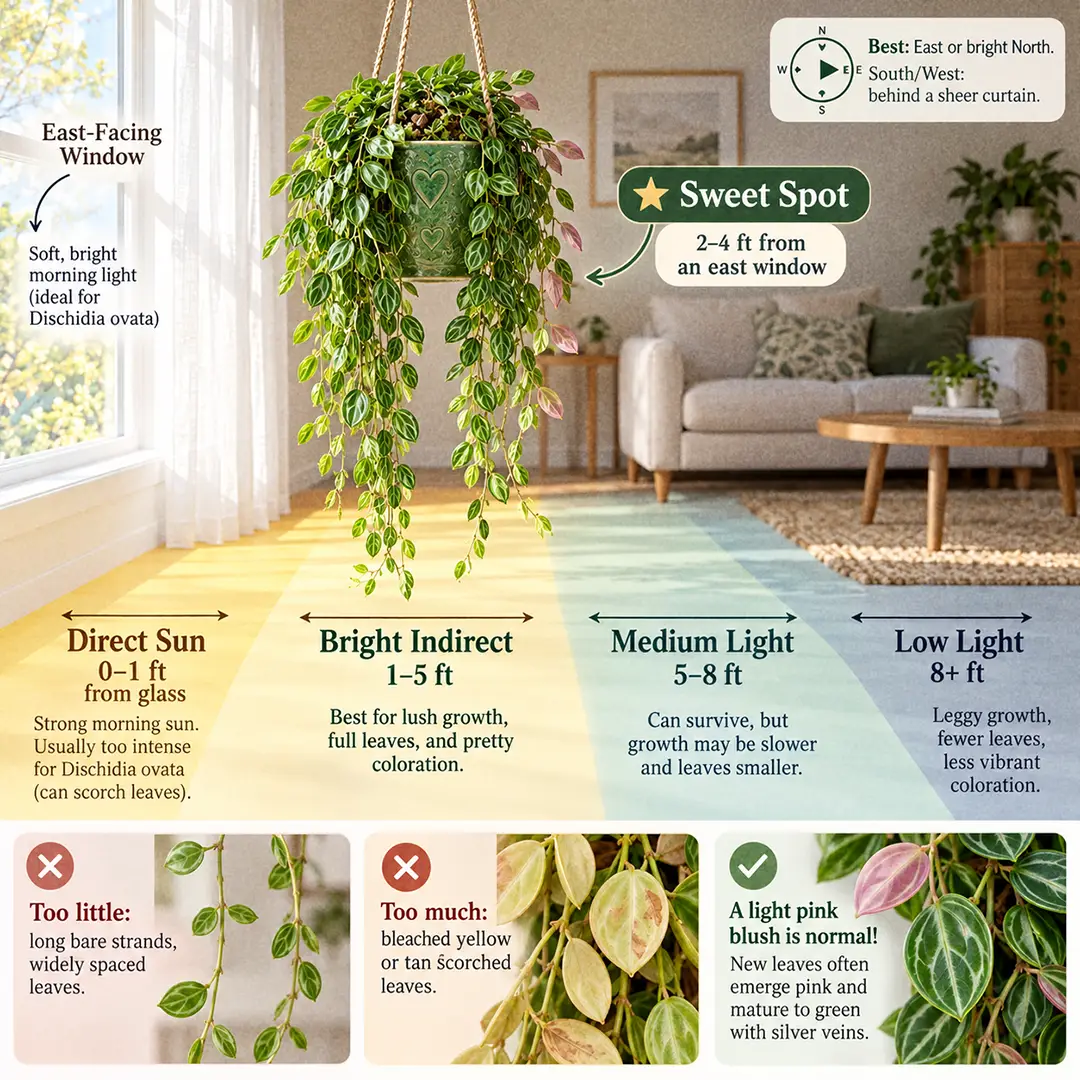
Watermelon Dischidia wants bright, indirect light, the kind it gets climbing a tree trunk under a forest canopy. A spot a few feet back from an east window is close to perfect, with soft morning sun and steady brightness after that. A bright north window works too, and a south or west window is fine with a sheer curtain or a few extra feet of distance.
If you are unsure what "bright indirect" looks like in your home, our Indoor Lighting Guide shows how to judge it by eye. A rough test: the plant should cast a soft, fuzzy shadow at midday, not a sharp one.
Too Little Light
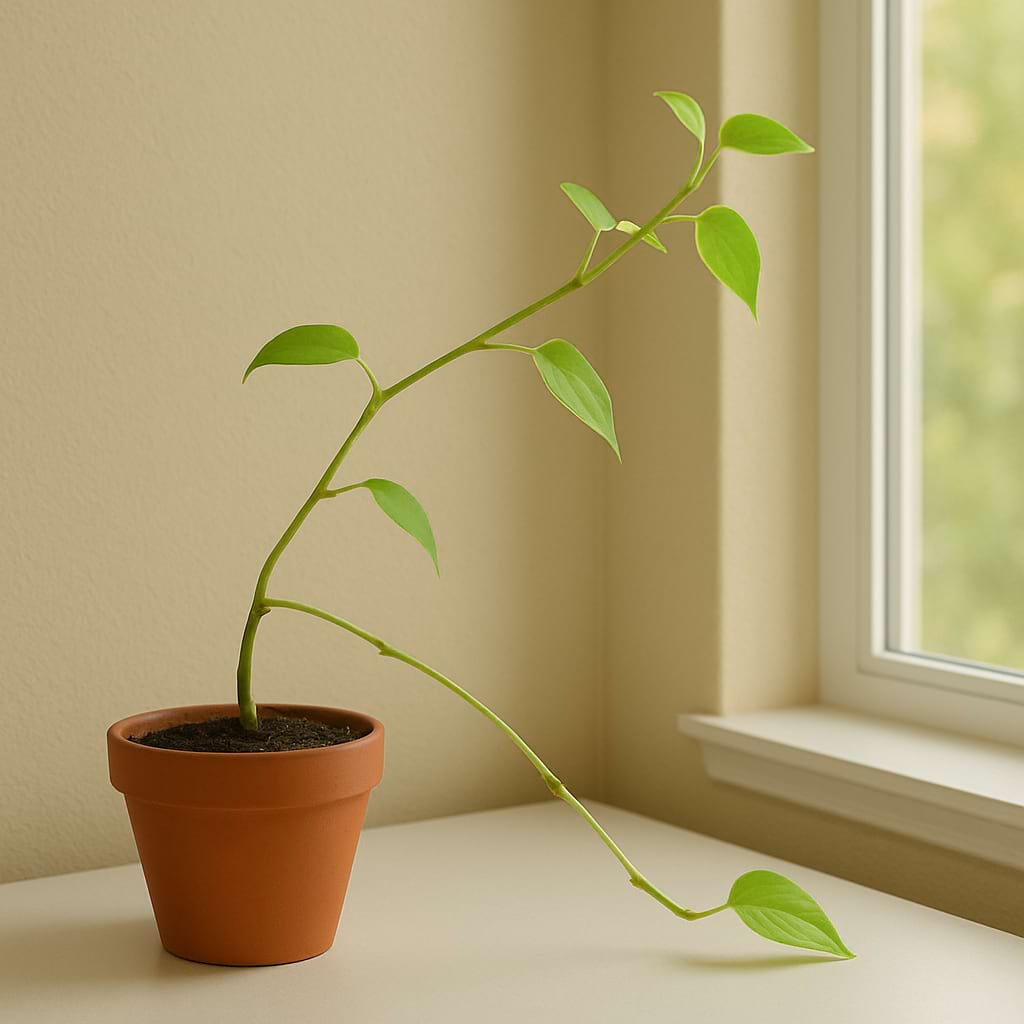
In a dim spot the strands grow long and thin, with wide gaps between leaves and a sparse, stringy look. That is leggy growth, and the stretched sections stay bare even after you move the plant. The vein pattern also tends to look flatter in low light, and the plant grows very slowly.
A dark corner also makes watering harder, because the mix stays damp much longer. If your windows are poor in winter, a small grow light a foot or so above the plant keeps it compact.
Too Much Light
A gentle pink or purple flush on the leaves in brighter light is normal and harmless. Growers report it on plants near a sunny window, and it usually fades again in softer light.
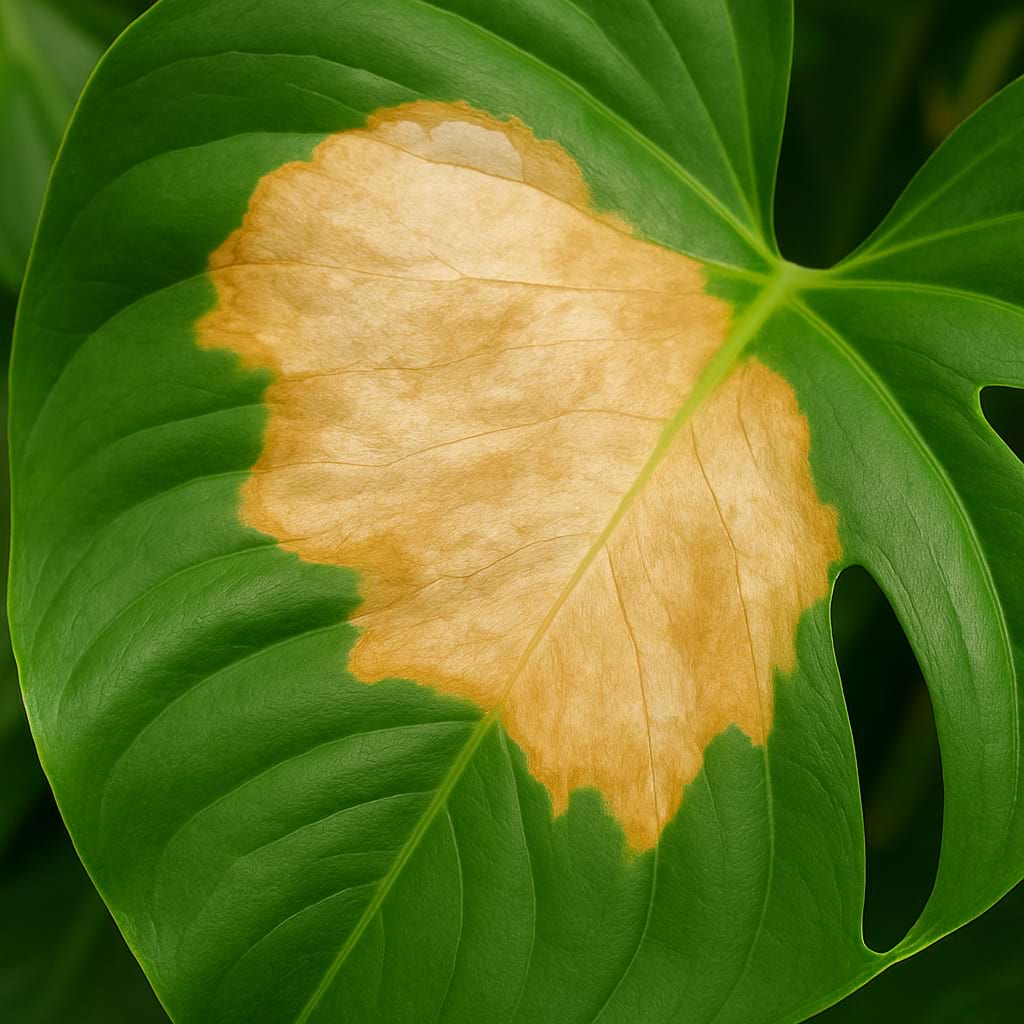
Harsh afternoon sun through glass is a different matter. It bleaches leaves yellow or leaves dry tan patches, which is sunburn, and those marks do not heal. Move a plant into stronger light over a couple of weeks rather than all at once.
💧 Watermelon Dischidia Watering Guide (Soak and Dry)
Watering Frequency
The rhythm is a full soak, then a wait until the mix is dry most of the way through. In a small pot of bark in summer that often means every 5-10 days. In winter, when growth slows, it might be every two weeks or longer. A cork mount dries much faster than a pot, sometimes in two or three days in warm weather, so check mounts more often.
The leaves are slightly succulent and hold a little water, which gives you a short buffer. They are thin compared with a thick-leaved Hoya Carnosa, though, so the plant cannot sit bone dry for weeks. Aim for "dry, then water", not "dry for a long time".
How to Water
Bark and sphagnum can repel water when they are very dry, so a quick splash runs straight through. The easiest way is to dunk the whole pot or mount in a bowl of room-temperature water for 10-15 minutes, until the bubbles stop, then let it drain completely before you hang it back up. Watering under a lukewarm shower also works.
Never leave the pot sitting in a saucer of water. Our watering guide covers the basics, and a moisture meter helps if you find bark hard to read by touch.
Signs of Trouble
Thirst shows as soft, slightly wrinkled or thin-feeling leaves, and the strands lose their springy look. A good soak usually plumps them within a day or two.
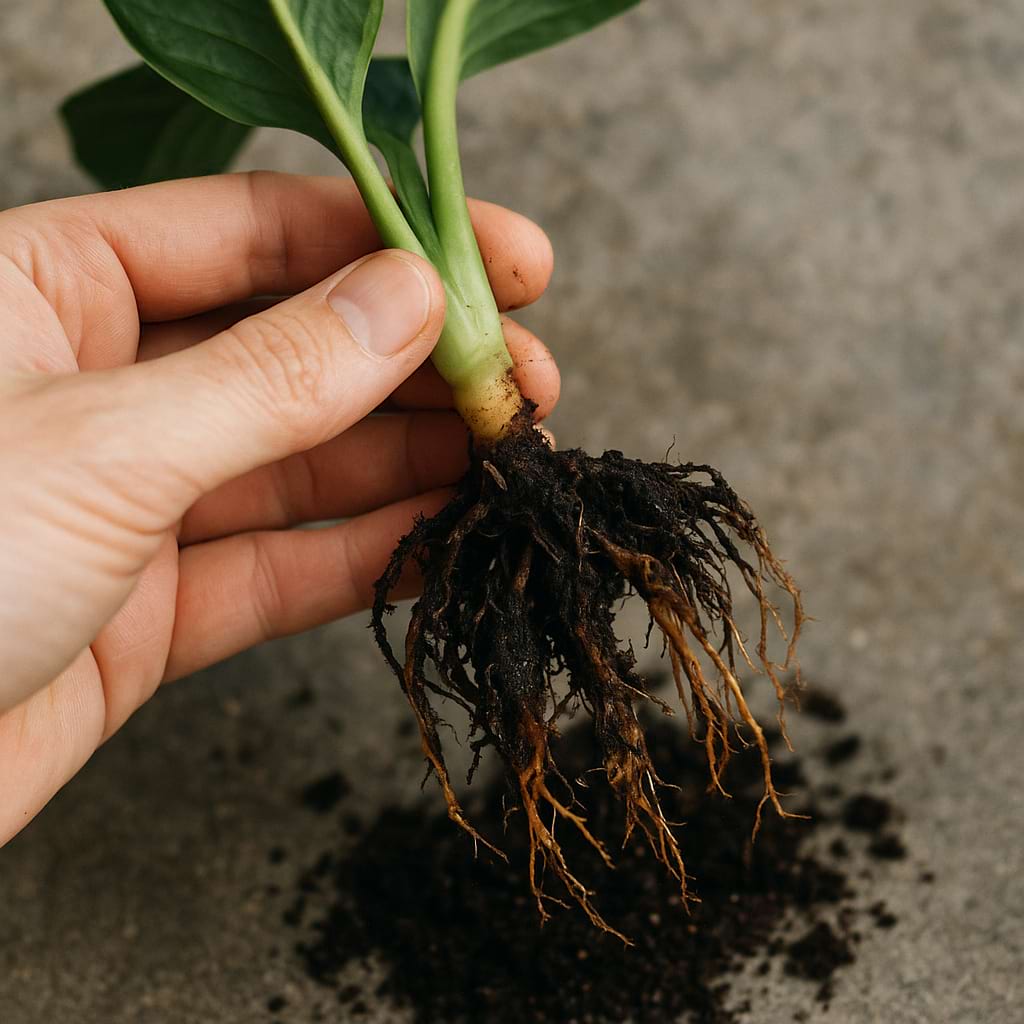
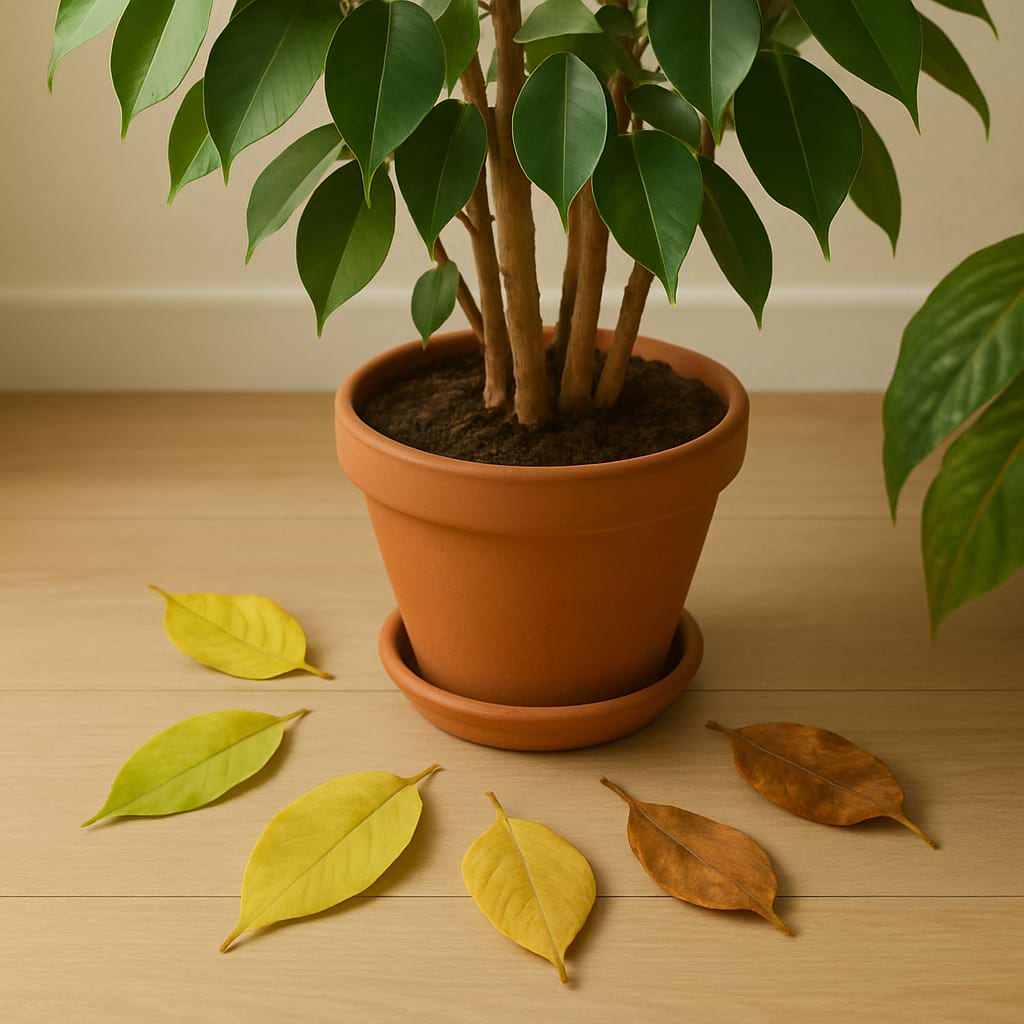
Overwatering is the bigger danger. Yellow leaves near the base, black or mushy stems at the soil line, and a sour smell from the pot all point to root rot. If the mix is still wet and the leaves look sad, do not water again. Check the roots first.
🪴 Best Soil for Watermelon Dischidia (Epiphyte Mix)
What the Soil Needs
In the wild this plant grows on tree bark, not in the ground, and its roots are fine and need air as much as water. Regular potting soil packs down, stays wet and smothers them. The mix should feel chunky and light, drain in seconds and dry out within a week or so in warm weather. Our soil guide explains why air pockets matter so much for roots like these.
DIY Soil Mix
A reliable blend is 2 parts fine orchid bark, 1 part chopped sphagnum moss and 1 part perlite. The bark gives structure and air, the sphagnum holds a little moisture near the roots, and the perlite keeps everything loose. Some growers add a handful of coco chips or horticultural charcoal, which is fine. If your home is very dry, lean slightly more on sphagnum. If you tend to overwater, add more bark.
Mounting Instead of Potting
Watermelon Dischidia also grows well mounted. Wrap the roots in a small pad of damp sphagnum, press it against a piece of cork bark, and tie it on with fishing line or plant wire. New roots grip the cork within a few months. A mount dries fast and suits people who tend to overwater, but it needs more frequent soaking and does best with higher humidity.
🍼 Fertilizing Watermelon Dischidia
When and How Often
This is a light feeder. Feed about once a month in spring and summer while new leaves are forming, and stop in autumn and winter when growth slows. Always water first and feed second, because fertilizer on dry bark and moss can scorch the fine roots.
What to Use
A balanced liquid fertilizer at half or quarter strength works well, as does an orchid fertilizer at the dilution on the label. Bark mixes hold few nutrients, so a gentle, regular feed in summer helps more than an occasional strong one. Our Fertilizing Guide and fertilizers guide cover the options.
Over-Fertilizing Signs
Brown, crispy leaf edges, a white crust on the bark or moss and roots that look dark and dry are signs of too much feed. Flush the pot with plain water for a minute and skip the next couple of feeds. Sphagnum holds salts, so on a mount, replace the moss if the crust keeps coming back.
🌡️ Watermelon Dischidia Temperature Range
Ideal Range
This is a lowland tropical plant from New Guinea and the far north of Queensland, so it likes the same warmth you do. Somewhere around 65-85°F (18-29°C) is ideal. It handles a few cooler nights, but try to keep it above 55°F (13°C). Cold and wet together is how most of these plants rot, so water less in a cool room.
Drafts and Heat Sources
Keep it away from cold windows in winter, outside doors and air conditioning vents. Sudden swings in temperature can make it shed leaves. A hanging pot right above a radiator or heater dries out in a day and stresses the plant, so hang it to one side instead. It can spend summer outdoors in deep shade once nights stay above 55°F.
💦 Watermelon Dischidia Humidity Requirements
Ideal Humidity
Watermelon Dischidia grows best at around 50 percent humidity or more, which is why it does so well in a bright bathroom or a glass cabinet. A potted plant usually copes with average room air, but it grows faster and looks plumper with more moisture in the air. Mounted plants need humidity more, since cork and moss dry out quickly.
Easy Humidity Boosters
Group it with other plants, hang it in a bright bathroom or kitchen, or run a small humidifier nearby in winter when heating dries the air. A tray of damp pebbles under a shelf plant helps a little in a small space. Keep some air moving too, as a gently ventilated room stops water from sitting on the leaves. Light misting does little on its own, and damp leaves in still air can lead to leaf spots. Our humidity guide covers what works.
🌸 Watermelon Dischidia Flowers (Small and Easy to Miss)
What the Flowers Look Like
Yes, it flowers, but you have to look closely. The blooms are tiny urns, only about a quarter of an inch (around 7 mm) long, held in small clusters where the leaves meet the stem. Sources describe the colour differently, from cream or white to pinkish to yellow-green with purple stripes, so expect something small and pale rather than one fixed shade. They have none of the showy star-shaped umbels you get on a hoya.
How to Encourage Blooms
Flowers come on mature, well-established plants that get plenty of bright, indirect light, warmth and steady care through the growing season. A plant that keeps putting out new leaves is in good shape to bloom. There is no special trigger to chase, and since the flowers are not the reason people grow it, there is no need to worry if you never notice them.
Seed Pods
If a flower is pollinated, it can form a long, very thin pod. Inside are many small brown seeds, each with a long white silky plume that carries it on the wind. You are unlikely to see this indoors without pollinating insects, and stem cuttings are a far easier way to make more plants.
🏷️ Watermelon Dischidia Types and Varieties
Dischidia ovata is sold simply as the species, sometimes labelled "String of Watermelons" or "Dischidia Watermelon". I have not found any named cultivars of it in the trade. What confuses buyers is a handful of lookalikes with similar names or patterns.
Watermelon Dischidia vs Watermelon Peperomia
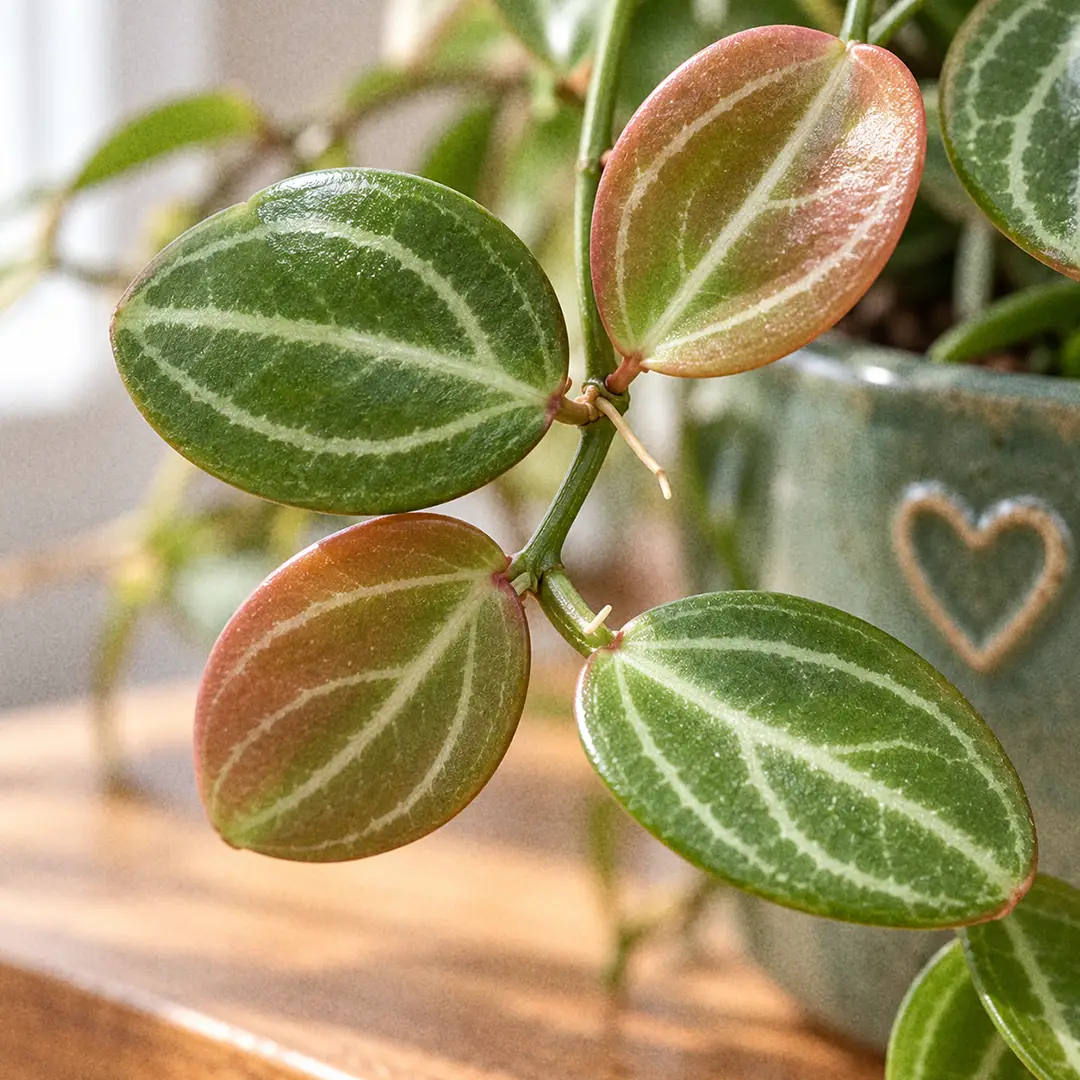
These two share a nickname and nothing else. Watermelon Peperomia (Peperomia argyreia) is in the pepper family. It grows as an upright clump from a central crown, with larger, rounder leaves on red stalks and bold silver bands between dark green stripes. Watermelon Dischidia is a hoya relative that trails or climbs, with smaller oval leaves on thin stems and pale lines following the veins. The peperomia wants regular potting mix with extra drainage, while the dischidia wants bark and air. Watermelon Peperomia is also listed as non-toxic to pets, while this plant has milky sap.
Watermelon Dischidia vs String of Nickels
String of Nickels (Dischidia nummularia) is the closest relative you are likely to find. Its leaves are small, flat, round coins in pale grey-green with no vein pattern. Watermelon Dischidia has larger, oval, darker leaves with the pale stripes. Their care is nearly identical: bark or mounted, soak and dry, bright indirect light.
Watermelon Dischidia vs String of Turtles
String of Turtles is a trailing peperomia with tiny round leaves patterned like a turtle shell. It is much smaller and more delicate, and it grows in a gritty soil mix rather than bark.
🪴 Potting and Repotting Watermelon Dischidia
When to Repot
Repot every 2-3 years in spring, or sooner if the bark has broken down into a dark, crumbly mush that stays wet. The plant likes a snug pot, so do not move it up just because it looks full. Our repotting guide walks through the general process.
Choosing a Pot
Pick a small pot with plenty of drainage holes, only slightly larger than the root mass. Plastic or glazed pots work with bark because the mix drains fast anyway. Hanging pots and orchid pots with slotted sides are both good. Skip any pot without a drainage hole. Our plant pots guide compares materials.
Step-by-Step Repotting
- Water the day before so the roots are flexible.
- Ease the plant out and gently shake off the old mix.
- Trim any brown, hollow or mushy roots with clean scissors.
- Set it at the same depth in fresh, slightly damp epiphyte mix and firm the bark gently around the roots.
- Wait about a week before a full soak, then return to normal care.
✂️ Pruning Watermelon Dischidia
When to Prune
Light pruning any time during spring and summer is fine. Trim strands that have gone bare, tidy up any that trail too long, and remove dead or yellow leaves as you see them.
How to Prune
Cut just below a leaf node with clean scissors. The cut ends will bleed a little milky sap, which is normal for the hoya family. It can irritate skin, so wear gloves if you are sensitive and wash your hands afterward. Keep the healthy cuttings for propagation.
Pinning for a Fuller Pot
Watermelon Dischidia roots along its stems wherever they touch something damp. Instead of cutting a long strand, coil it back over the top of the pot and pin it to the mix with a hairpin or bent wire. New roots form at the pinned nodes and the pot fills in from the top.
🌱 How to Propagate Watermelon Dischidia
Best Method: Stem Cuttings on Sphagnum
Stem cuttings are the easiest way to make more plants. Each cutting should be 3-5 inches long with at least three or four nodes, and ideally a few small aerial roots already showing along the stem. Damp sphagnum moss is the most reliable medium because it holds moisture and air around the nodes at the same time.
Step-by-Step
- Cut a healthy strand just below a node and let the sap stop dripping.
- Remove the leaves from the bottom one or two nodes.
- Lay the cutting on damp (not dripping) sphagnum moss in a clear container, pressing the bare nodes into the moss.
- Close the lid loosely or cover with a clear bag to keep humidity high.
- Keep it warm and in bright, indirect light, airing it every few days.
- When roots are an inch or so long, usually after a few weeks, move the cuttings into a small pot of bark mix.
Water and Soil Rooting
Cuttings also root in a small jar of water. See our water propagation guide for the method. Swap them into bark mix once roots appear, because water roots struggle if left too long. Laying cuttings straight on top of damp bark mix also works, as covered in our soil propagation guide.
Tips for Success
Plant several cuttings in one pot for a full look sooner. Warmth makes a big difference, so a spot around 70-80°F roots much faster than a cool windowsill. If a cutting turns black at the base, cut above the rot and start again in fresh moss.
🐛 Watermelon Dischidia Pests and Treatment
Common Pests
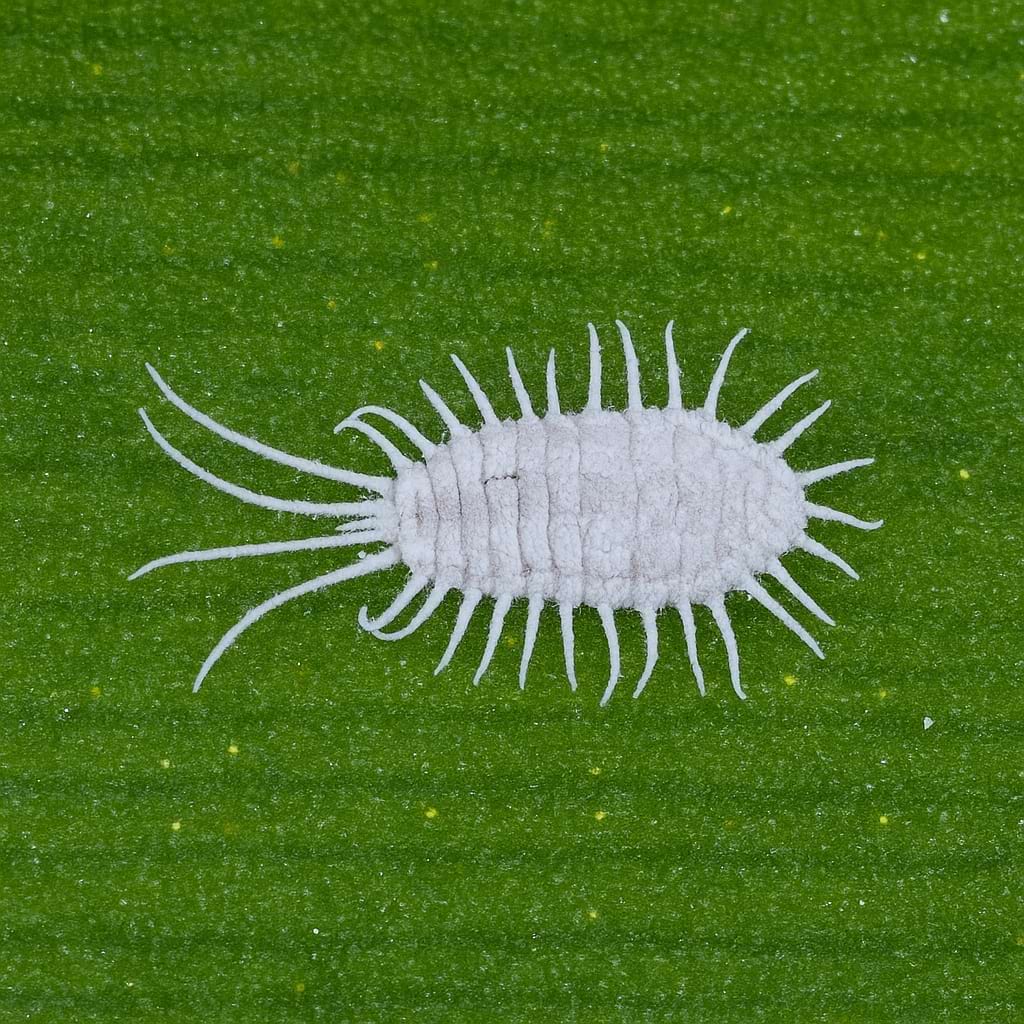
- Mealybugs are the most common problem. They hide where leaves meet the stem and along the strands as small white cottony bits.
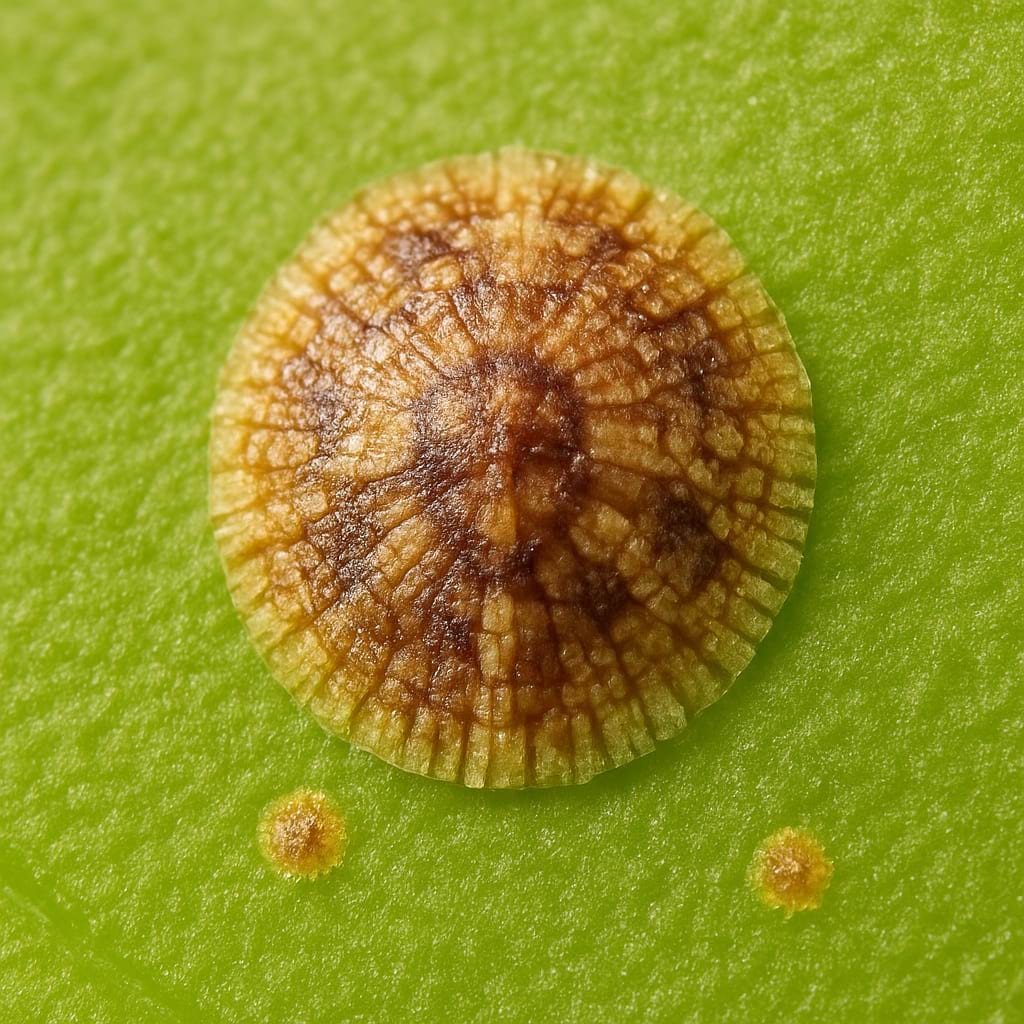
- Scale insects look like small brown bumps stuck to stems and leaf undersides, and they leave sticky residue.
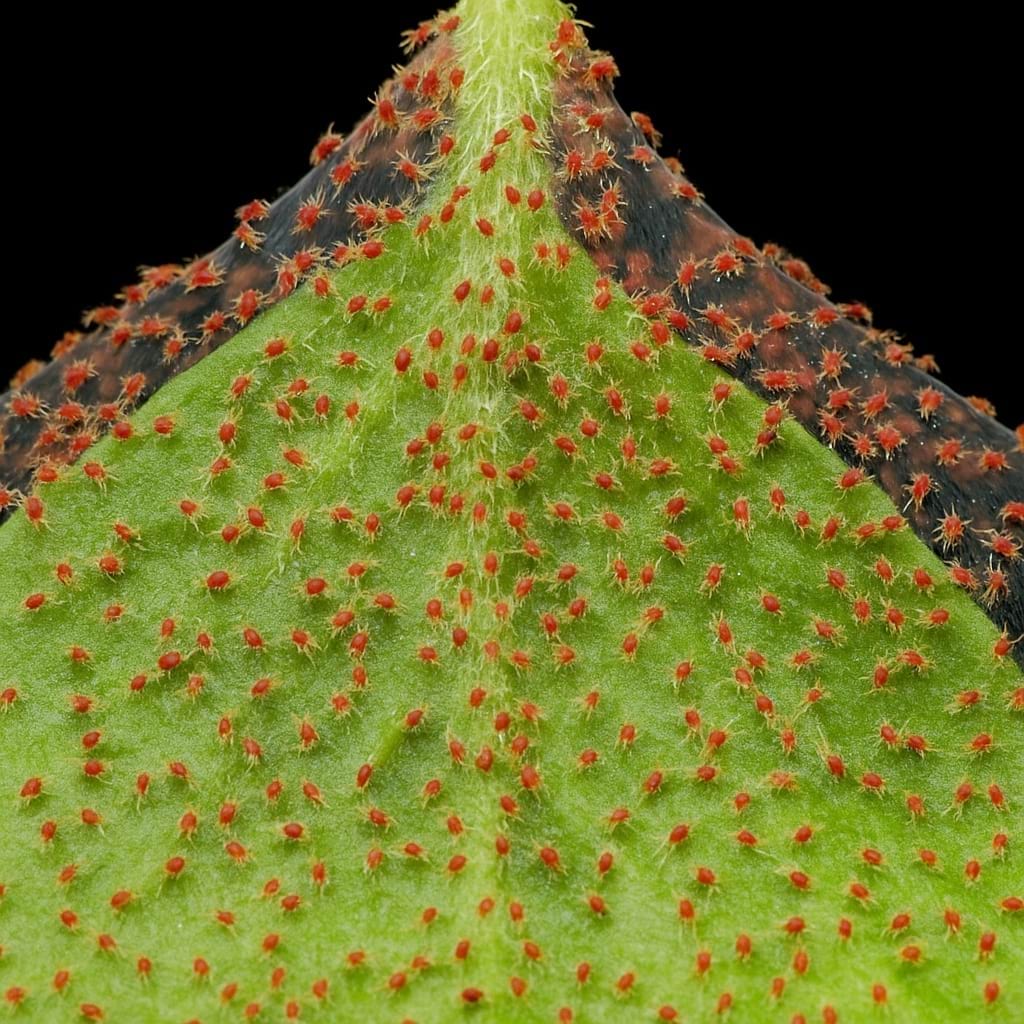
- Spider mites show up in warm, dry air as fine webbing and faint pale speckles on the leaves.
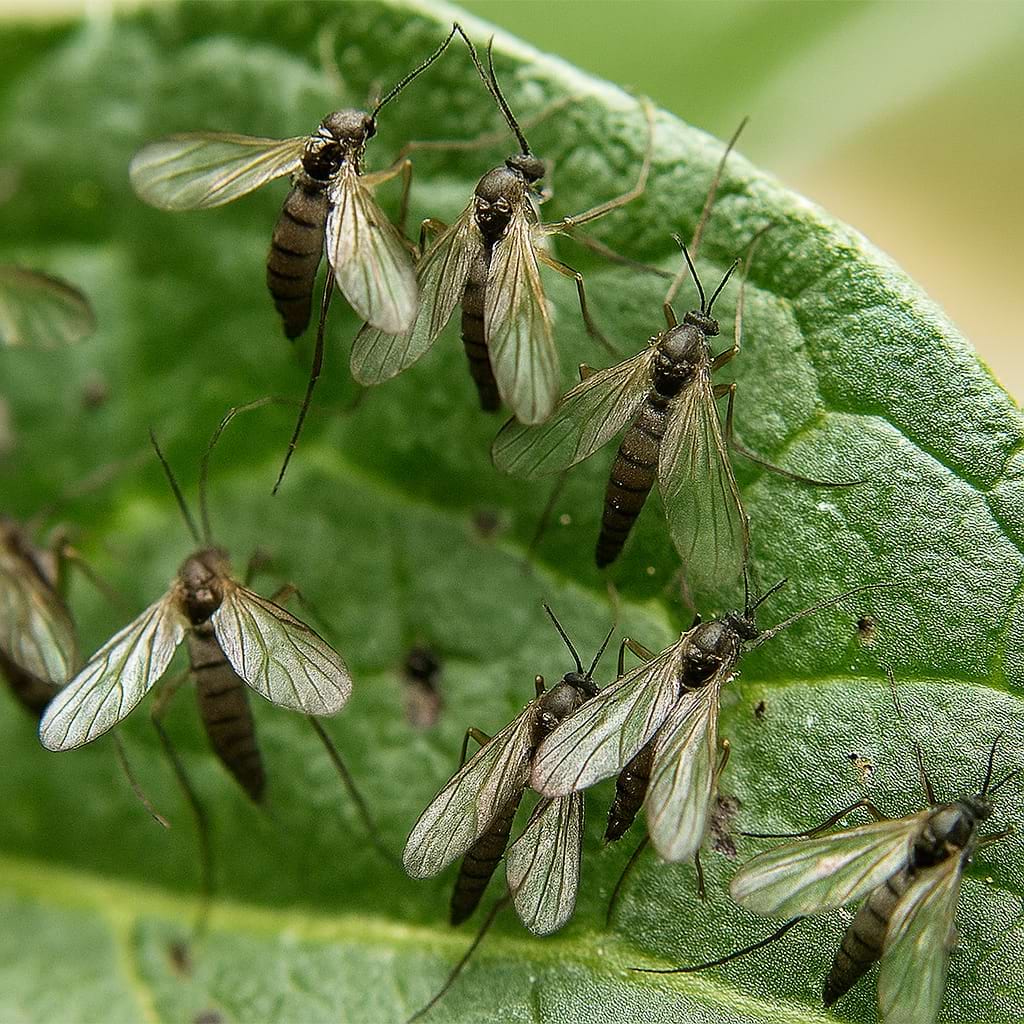
- Fungus gnats appear when the mix stays wet for too long. Sphagnum that never dries out is their favourite place.
Treatment
Dab mealybugs and scale with a cotton swab dipped in rubbing alcohol, then follow with insecticidal soap a few times over the next few weeks. Spider mites are easiest to knock back by rinsing the strands under the shower and raising humidity. For fungus gnats, let the mix dry more between waterings and use yellow sticky traps.
Prevention
The dense strands make pests easy to miss, so lift them and look underneath when you water. Quarantine new plants for a couple of weeks, and our winter pest prevention guide has a checklist for the cold months when spider mites tend to flare up.
🩺 Common Watermelon Dischidia Problems
Root Rot and Yellow Leaves
Most Watermelon Dischidia deaths start with wet, heavy mix. Root rot shows as yellowing leaves near the base, soft black stems at the soil line and a sour smell. Unpot it, cut away soft brown roots, and repot in fresh bark mix. If the base is gone, take cuttings from the healthy strands and start again.
Shriveling and Leaf Drop
Thin, wrinkled leaves with dry mix mean thirst, and a long soak usually fixes it. Shriveling while the mix is still wet means the roots are already damaged, so check them before adding water. Sudden leaf drop often follows a cold draft, a big move or a swing between soaking wet and bone dry. Drooping, limp strands are covered in our wilting guide.
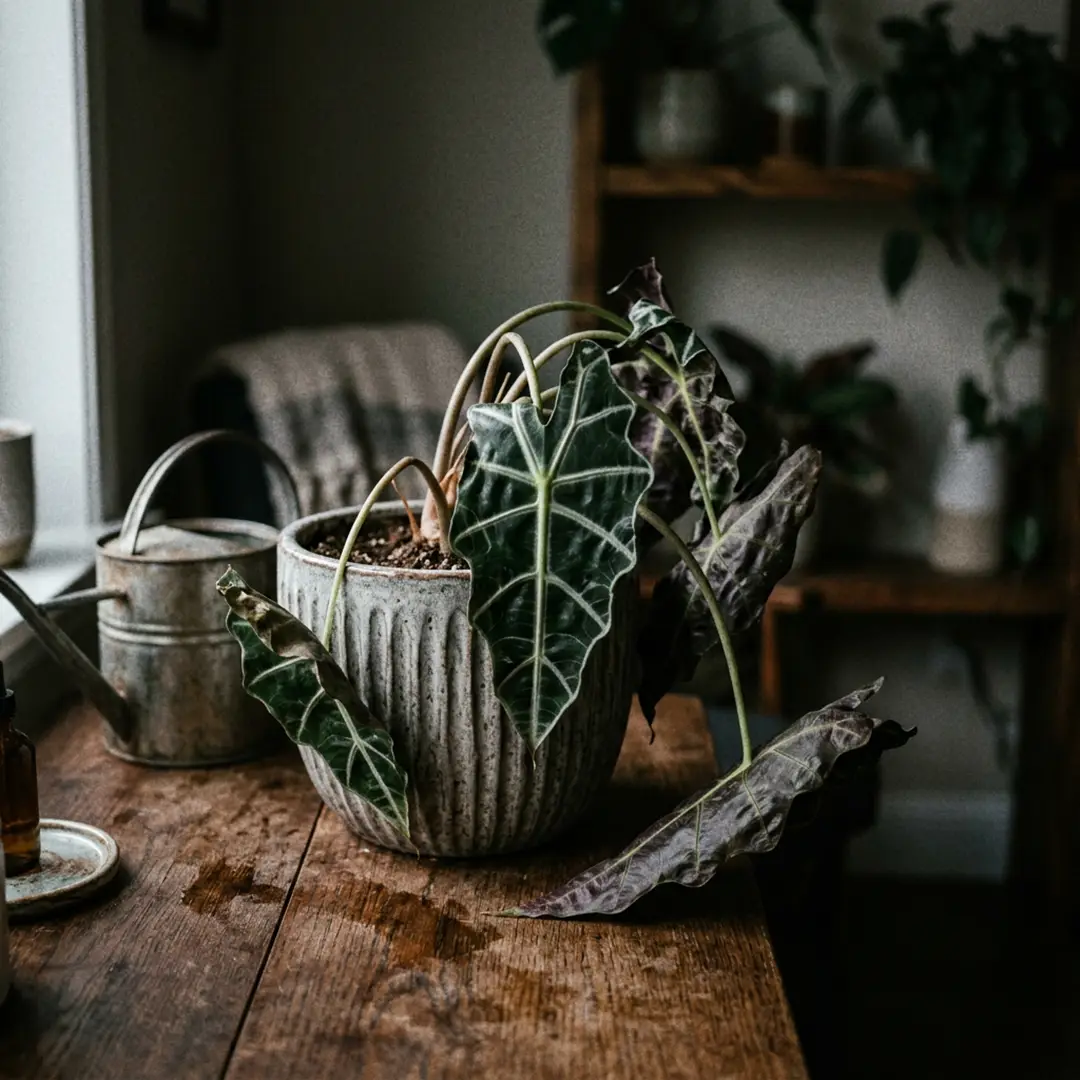
Spots, Scorch and Stretching
Small dark spots on leaves that stay wet in still air are brown and black spots from fungal or bacterial infection. Water the mix rather than the leaves, and improve airflow. Bleached or tan patches mean sunburn. Long bare strands mean the plant needs more light.


🖼️ Watermelon Dischidia Display and Styling Ideas
Hanging Pots
A small hanging pot is the classic setup. Hang it at or just above eye level, where you can see the vein pattern, rather than high in a corner where you only see the underside of the pot. A bright bathroom window suits it well, since it gets light and humidity in one spot.
Mounted on Cork
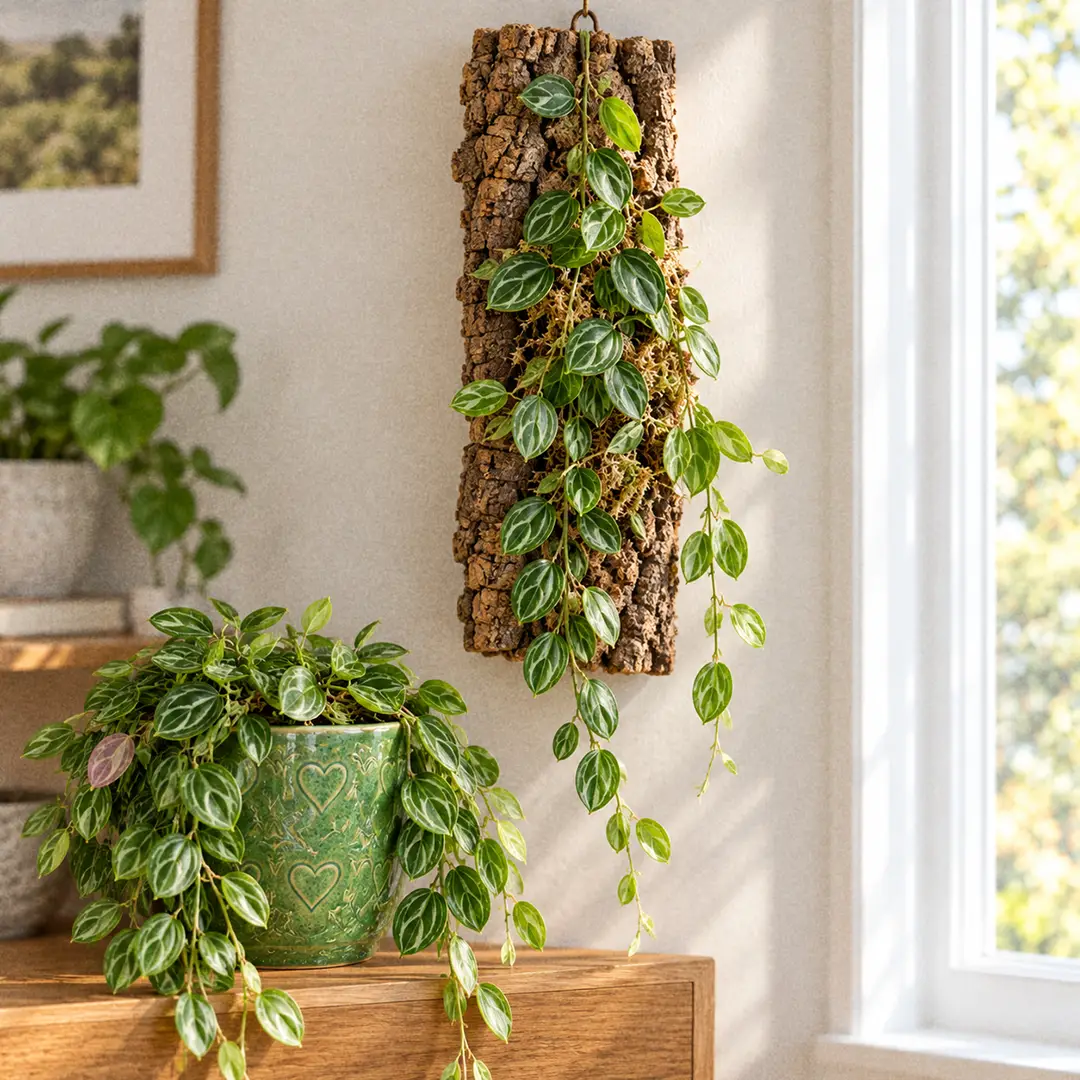
A cork bark mount on a wall is where this plant looks most at home. The strands climb and trail over the bark the way they would on a tree, and the whole thing hangs flat like a living picture. Mounted plants dry fast, so plan on soaking them more often. It pairs nicely on a wall with a mounted Staghorn Fern or a few air plants.
Shelves and Glass Cabinets
On a high shelf, let the strands trail down the side. In a glass cabinet with a grow light, it can climb a small cork panel at the back. For a trailing group, try it beside a String of Nickels and a Hoya Krohniana. All three like the same light and water, and the leaf shapes look different enough to work together.
🌟 Watermelon Dischidia Pro Care Tips
Watering Habits
- 🪣 Dunk, do not splash. Dry bark sheds water, so a soak until bubbles stop is the only way to wet it fully.
- 🔍 Check mounts twice as often as pots. Cork and moss can dry out in a few warm days.
- 🚫 Never use regular potting soil. It stays wet and suffocates the fine roots.
Growth Habits
- 📌 Pin long strands back into the pot. Each pinned node roots and fills in the top.
- 🩷 Do not panic over pink leaves. A blush in bright light is normal and fades in softer light.
- 🧤 Handle cuttings with care. The milky sap can irritate skin and eyes.
Buying and Settling In
- 🌿 Buy a full pot if you can. Several strands in one pot look full far sooner than a single cutting.
- 📦 Let a new plant settle first. Wait for new leaves before repotting or feeding.
❓ Frequently Asked Questions
Is Watermelon Dischidia toxic to cats and dogs?
I could not find it on the ASPCA list, so its toxicity is unconfirmed. NC State Extension lists it as low-severity, noting that the milky sap can irritate skin and may cause mouth irritation, vomiting or diarrhea if eaten, especially in pets. Hanging it out of reach is the safe choice.
Is Watermelon Dischidia the same as Watermelon Peperomia?
No. They share a nickname because of the striped leaves, but they belong to different plant families. The peperomia grows as an upright clump in soil, while the dischidia trails or climbs and grows in bark or on a mount.
How often should I water Watermelon Dischidia?
Soak it when the mix is dry most of the way through. That is often every 5-10 days in summer and less often in winter. Mounted plants dry faster and may need a soak every few days in warm weather.
Why are my Watermelon Dischidia leaves turning pink or purple?
That colour usually comes from bright light and is harmless. If the leaves are also bleached or have dry tan patches, the light is too harsh and the plant needs moving back from the window.
Why are the leaves shriveling?
If the mix is dry, the plant is thirsty, so give it a long soak. If the mix is wet, the roots are probably rotting and cannot take up water. Unpot and check before watering again.
Can I grow Watermelon Dischidia in regular potting soil?
Not well. Regular soil packs down and stays wet, which rots the fine roots. Use a mix of fine orchid bark, sphagnum moss and perlite, or grow it mounted on cork.
Does Watermelon Dischidia flower?
Yes, it produces tiny pale urn-shaped flowers in small clusters along the stems on mature plants. They are easy to miss and are not the reason to grow this plant.
Is Dischidia ovata an ant plant?
Some Dischidia species form hollow pouch leaves that ants live in, which is where the "ant plant" label comes from. D. ovata has ordinary flat oval leaves and does not make those pouches, so it grows perfectly well without ants indoors.
Can Watermelon Dischidia grow in a terrarium?
Yes, it does well in a large terrarium or glass cabinet, especially climbing a piece of cork at the back. Give it a vent or open the door now and then, because constantly wet leaves in stagnant air lead to leaf spots. The mix should still dry slightly between waterings, even under glass.
Should I mist Watermelon Dischidia?
Misting is not needed and does little for humidity, since the water evaporates within minutes. A quick spray on a mounted plant on a hot day does no harm if the leaves dry quickly. For a real humidity boost, a humidifier or a bright bathroom works far better.
Why does my Watermelon Dischidia have long bare stems?
Bare strands with few leaves usually mean the plant needs more light. Older leaves at the base also drop naturally over time. Move it brighter, trim the bare sections and pin or replant the healthy tips into the pot to fill it back in.
How fast does Watermelon Dischidia grow?
At a moderate pace in a warm, bright spot, with strands reaching 2-3 feet after a few years. In low light or cool rooms it grows much more slowly.
ℹ️ Watermelon Dischidia Info
Care and Maintenance
🪴 Soil Type and pH: Fine orchid bark, sphagnum moss and perlite epiphyte mix
💧 Humidity and Misting: Copes with average room air but grows best above 50 percent humidity.
✂️ Pruning: Trim long bare strands and pin or wind cuttings back into the pot to keep it full.
🧼 Cleaning: Rinse the strands under a lukewarm shower now and then and let them drain fully. Wiping individual small leaves is fiddly and not needed.
🌱 Repotting: Repot every 2-3 years in spring, when the bark breaks down or the strands have filled the rim.
🔄 Repotting Frequency: Every 2-3 years
❄️ Seasonal Changes in Care: Water and feed through the warm months, then water less often and stop feeding when growth slows in autumn and winter.
Growing Characteristics
💥 Growth Speed: Moderate, faster when warm and bright
🔄 Life Cycle: Evergreen epiphytic perennial vine
💥 Bloom Time: Mostly the warmer months on mature, well-lit plants
🌡️ Hardiness Zones: 10-12
🗺️ Native Area: New Guinea and northern Cape York Peninsula, Queensland, Australia
🚘 Hibernation: No true dormancy. Growth slows in winter, so water less and do not feed.
Propagation and Health
📍 Suitable Locations: Hanging pots near east or bright north windows, cork mounts on a wall, bright bathrooms, glass cabinets, plant shelves
🪴 Propagation Methods: Root stem cuttings with a few nodes on damp sphagnum moss or in water.
🐛 Common Pests: Mealybugs, Scale Insects, Spider Mites, Fungus Gnats
🦠 Possible Diseases: Root rot, leaf spot when leaves stay wet, stem rot in soggy mix
Plant Details
🌿 Plant Type: Trailing and climbing epiphytic vine
🍃 Foliage Type: Evergreen, thick, slightly succulent oval leaves
🎨 Color of Leaves: Dark to mid green with pale silvery or yellowish veins; may flush pink or purple in brighter light
🌸 Flower Color: Tiny and pale; described as cream, greenish or pinkish
🌼 Blooming: Yes, but the flowers are tiny and easy to miss
🍽️ Edibility: Not edible. The milky sap can irritate skin and mouths.
📏 Mature Size: 2-3 inches tall in the pot
Additional Info
🌻 General Benefits: Patterned foliage on a small, light plant that suits hanging pots and cork mounts where a heavier trailer would not fit
💊 Medical Properties: No documented medicinal uses.
🧿 Feng Shui: A soft trailing plant with round, coin-like leaves, often placed in a hanging pot to bring a light, cascading line into a corner.
⭐ Zodiac Sign Compatibility: Cancer
🌈 Symbolism or Folklore: Quiet growth, things that cling and keep going
📝 Interesting Facts: Dischidia is a close relative of Hoya in the dogbane family, and like hoya it bleeds milky sap when cut. In the wild D. ovata climbs trees in rainforest, swamp forest and monsoon forest, gripping bark with small roots along its stems. Its seeds carry a long white silky plume and drift off on the wind.
Buying and Usage
🛒 What to Look for When Buying: Choose a pot with several strands, firm plump leaves and clear pale veins. Skip plants with soft black stems at the base, many yellow leaves, or mix that smells sour, which all point to rot.
🪴 Other Uses: Cork or driftwood mounts, vivarium and glass-cabinet planting, small hanging baskets, trellis hoops
Decoration and Styling
🖼️ Display Ideas: Small hanging pots at eye level, cork bark mounts on a wall, wire hoops, the edge of a high shelf
🧵 Styling Tips: The vein pattern is the whole show, so hang it where you can see the leaves up close rather than high above head height.
🪴 See also 🪴
Complete Guide to Hoya Retusa Care and Growth
Complete Guide to Hoya Curtisii Care and Growth
Complete Guide to Hoya Lacunosa Care and Growth
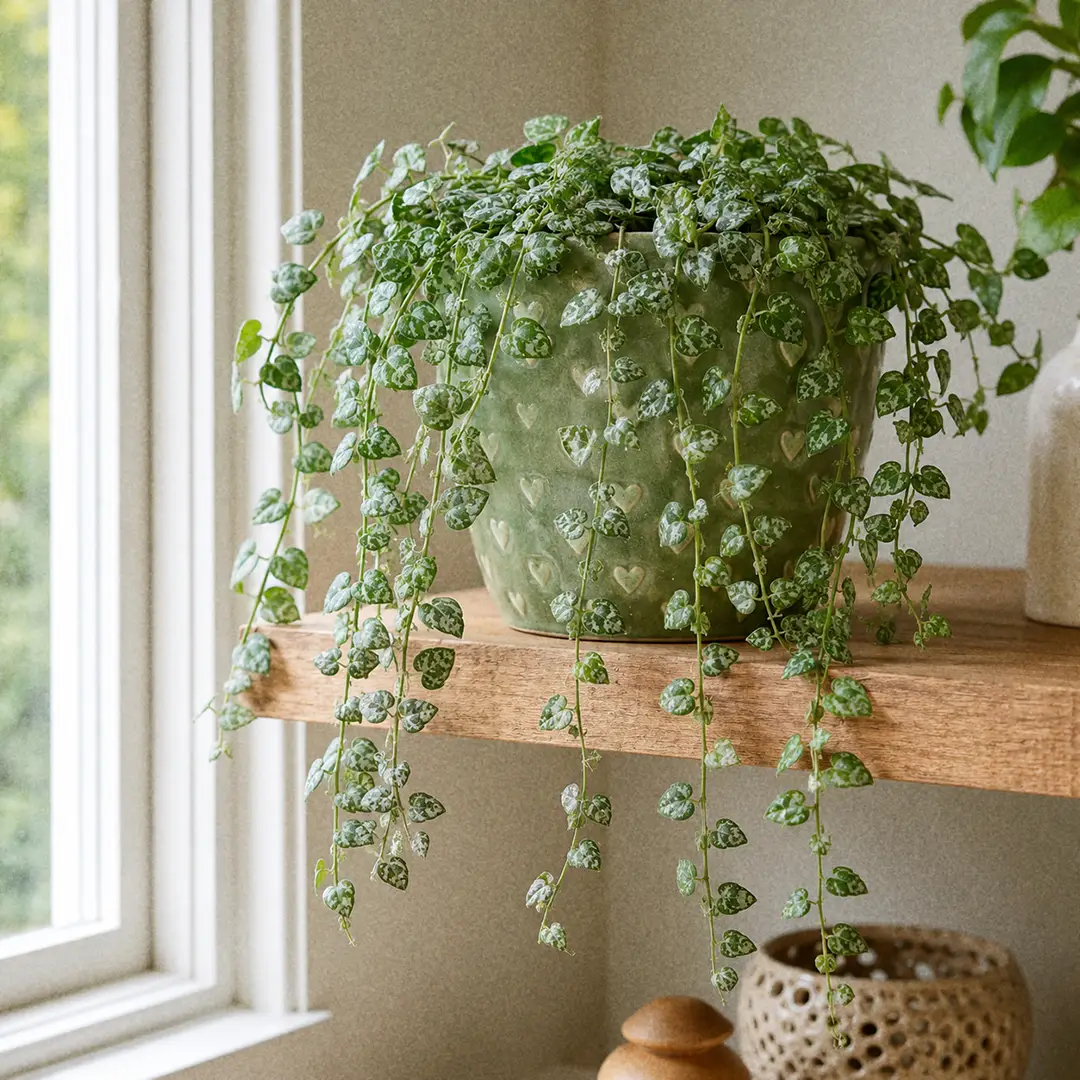
Complete Guide to Hoya Krohniana Care and Growth
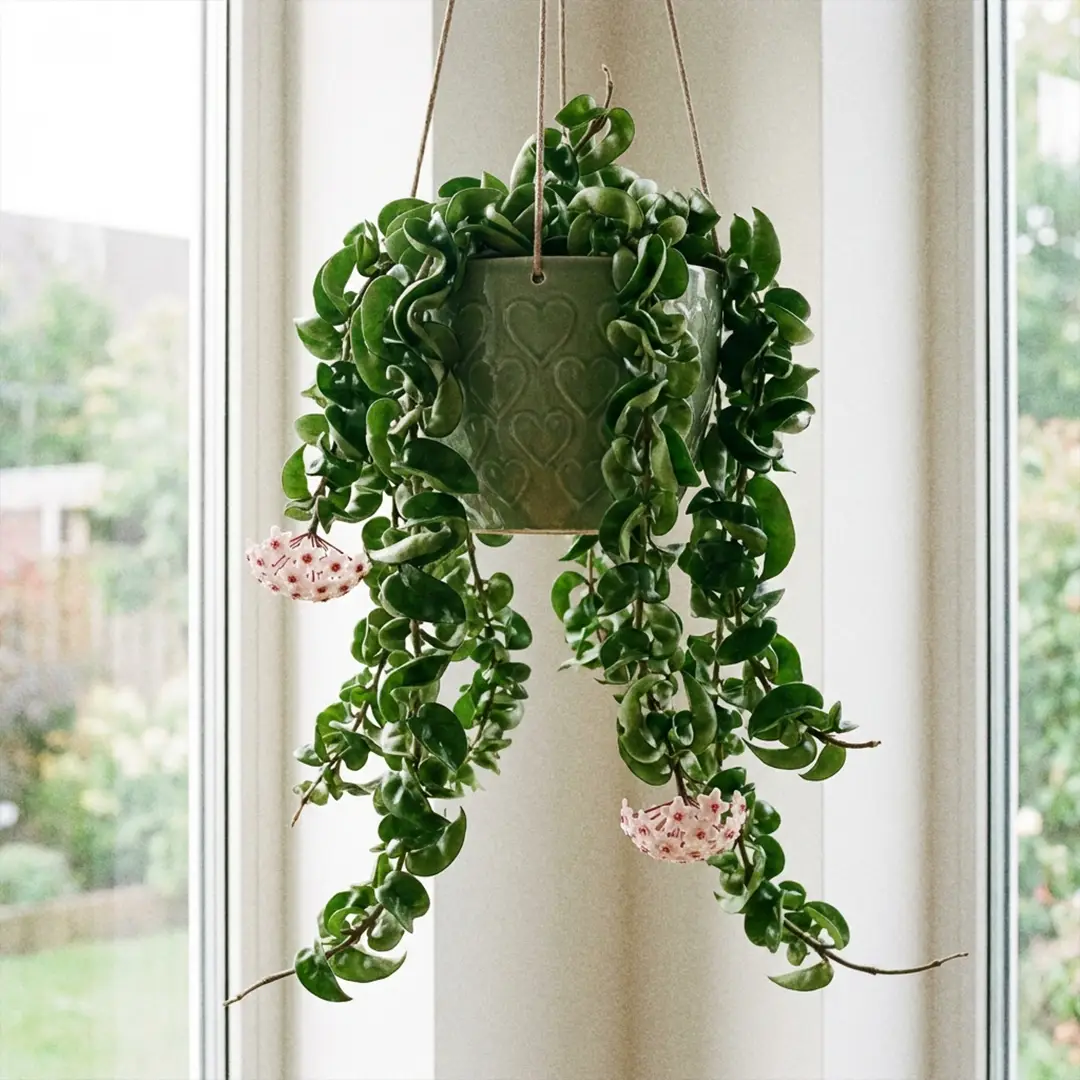
Complete Guide to Hindu Rope Care and Growth
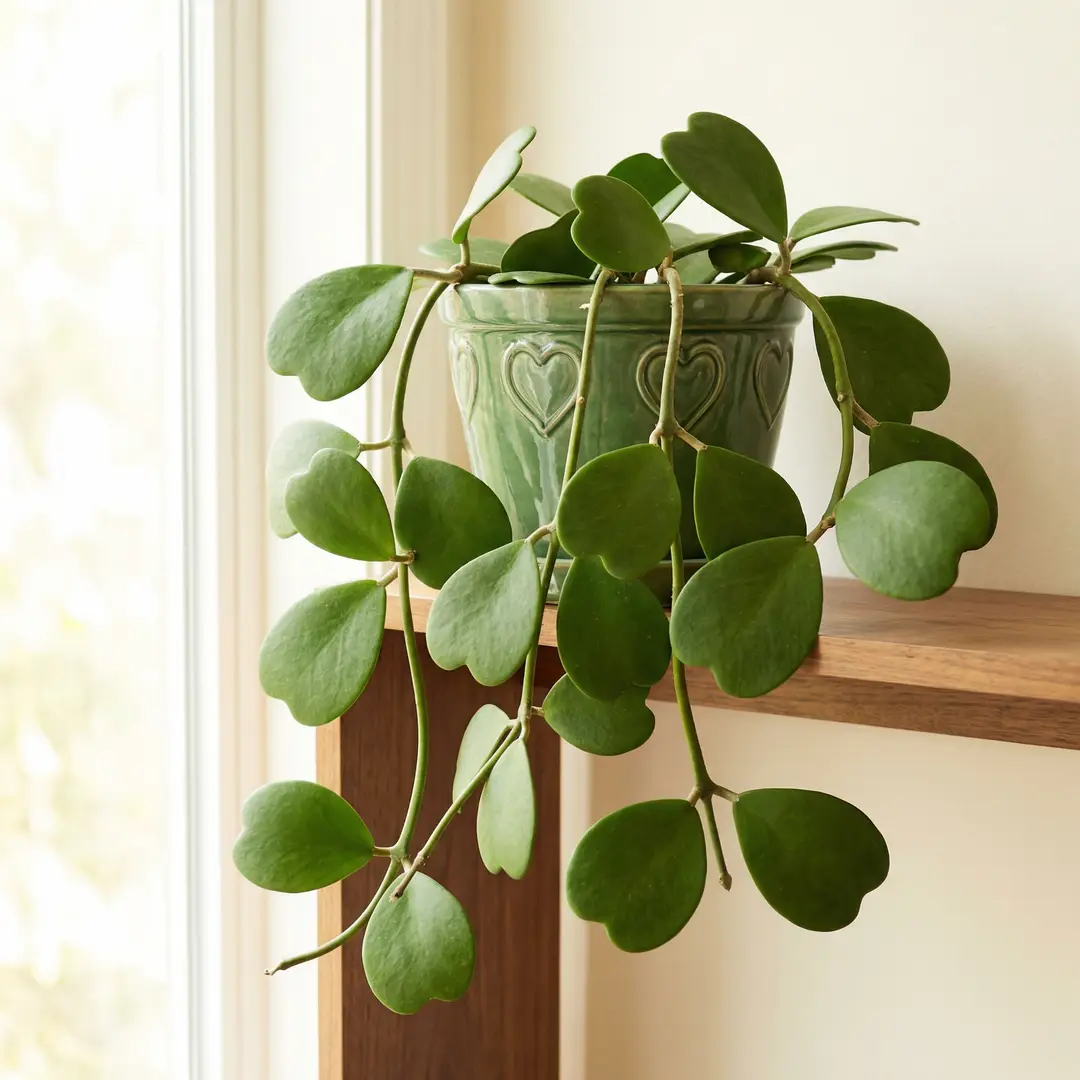
Complete Guide to Sweetheart Hoya Care and Growth
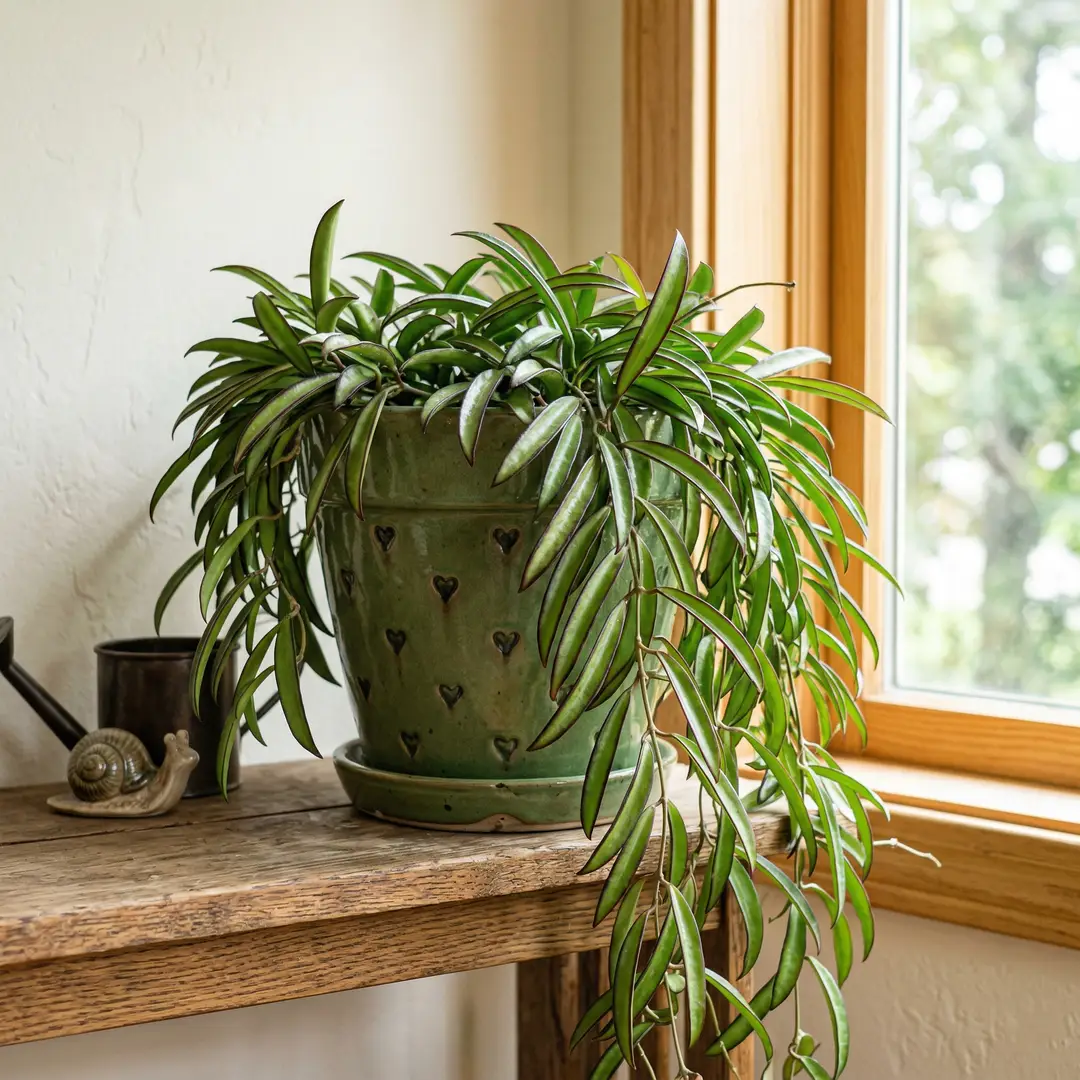
Complete Guide to Hoya Wayetii Care and Growth
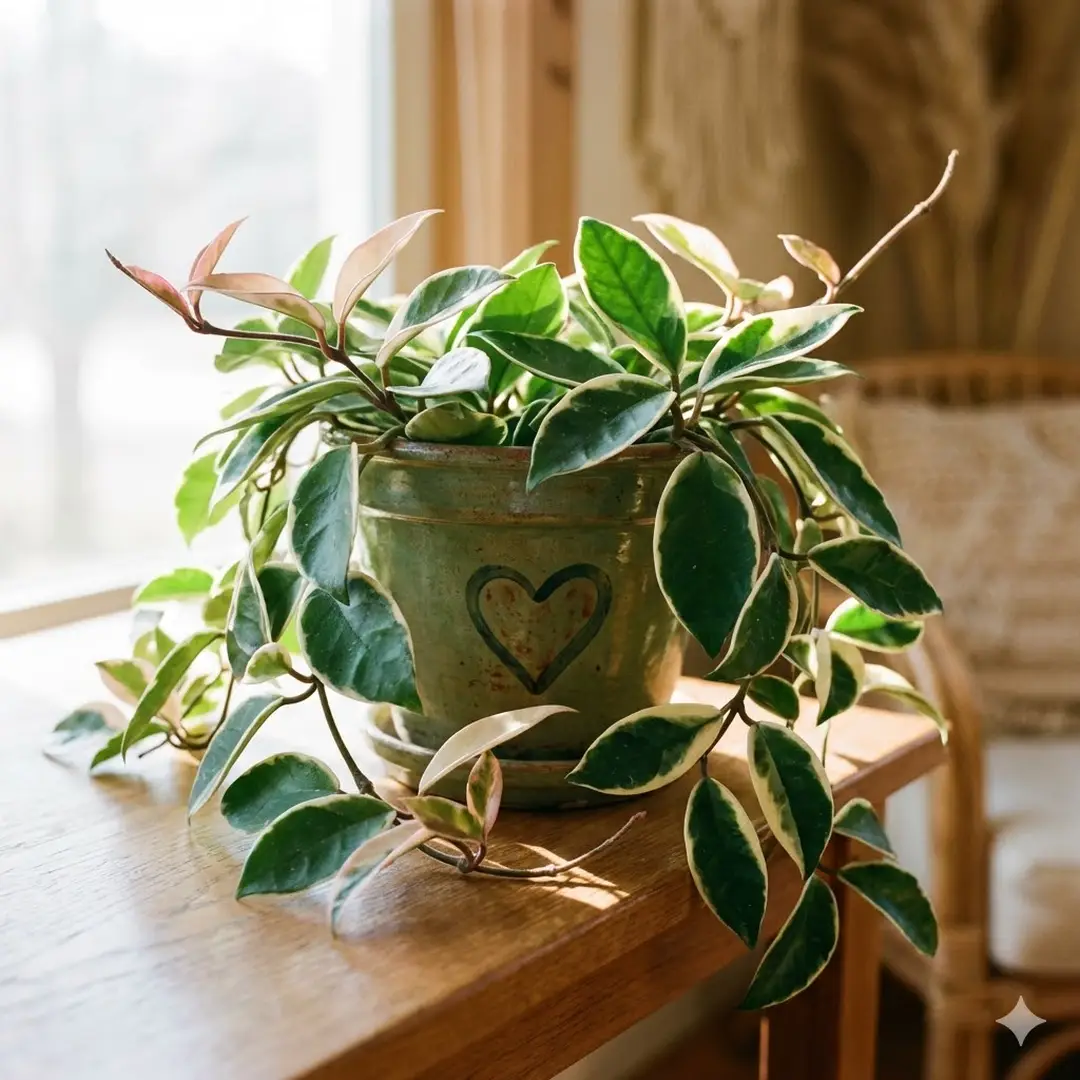
Complete Guide to Hoya Crimson Queen Care and Growth
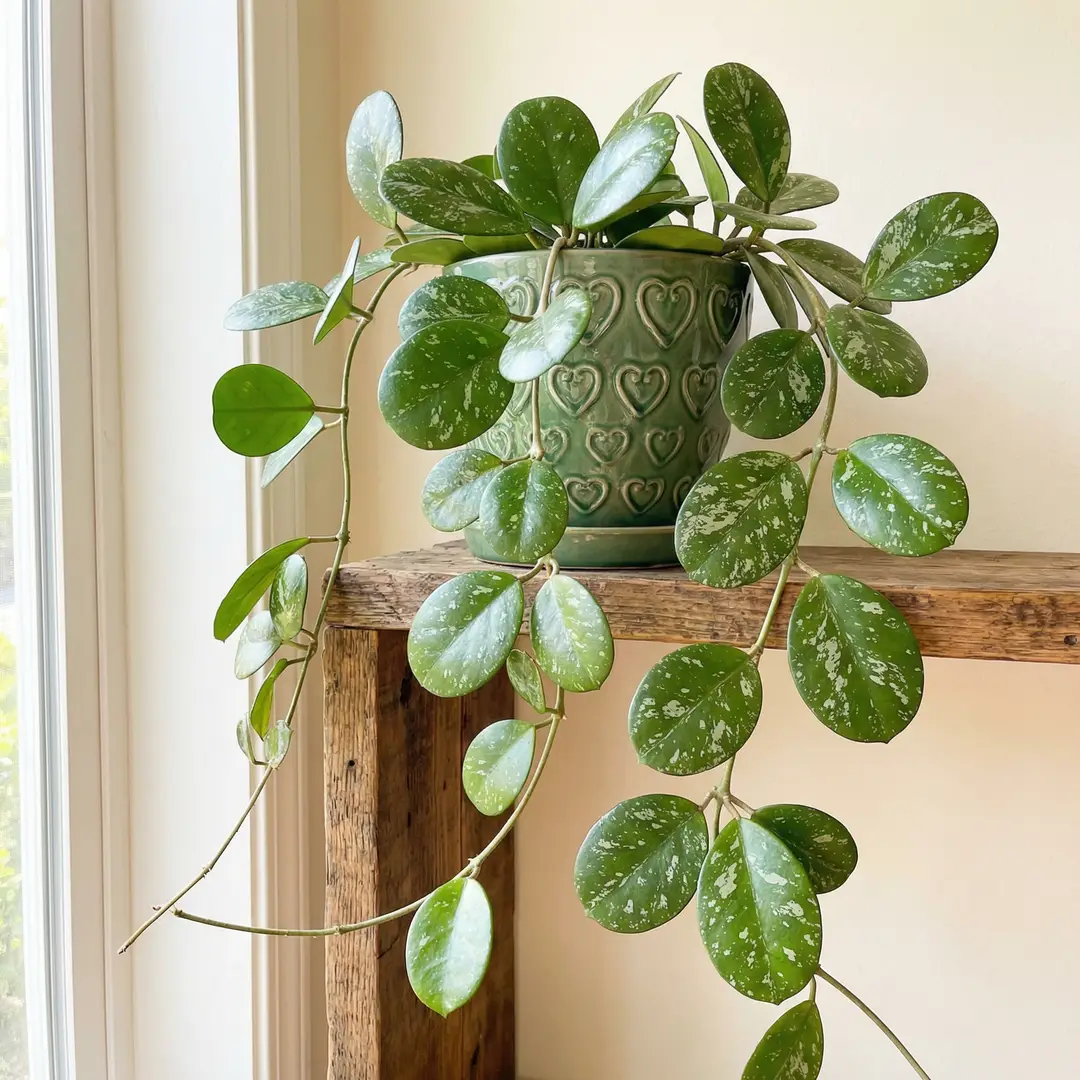
Complete Guide to Hoya Obovata Care and Growth
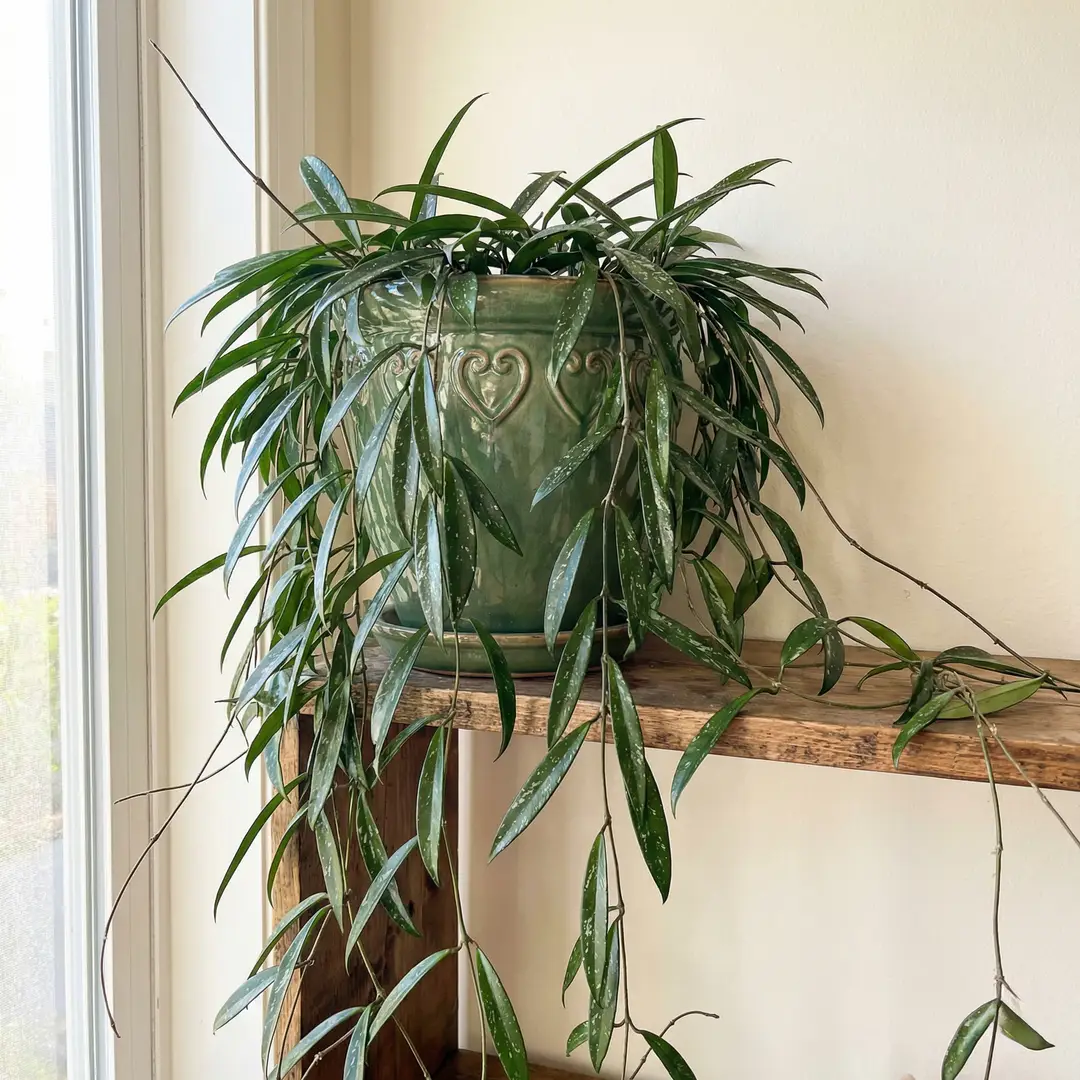
Complete Guide to Hoya Pubicalyx Care and Growth

Complete Guide to Hoya Linearis Care and Growth
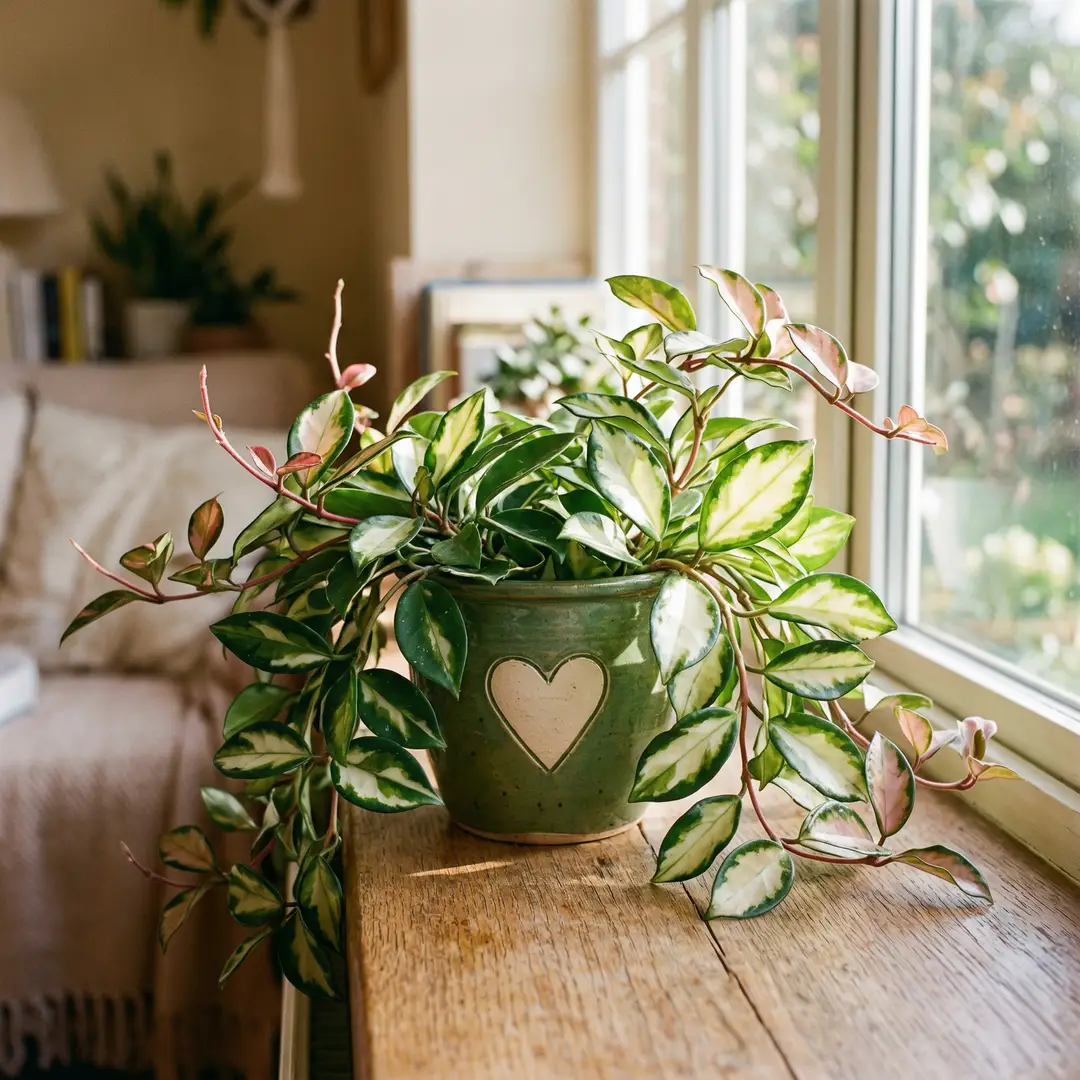
Complete Guide to Hoya Crimson Princess Care and Growth

Houseplant101 Forum
Questions & Comments
Ask a question, share your plant experience, or help other plant owners.
Comments are temporarily unavailable.
Open the Houseplant101 ForumNo comments yet
Be the first to ask a question or share your experience about this page.
Log in or create an account
Comments use your Houseplant101 Forum account, but you can stay on this page.
Create a new account