
 AI Overview
 🪴 In This Guide 🪴

⏳ Why This Window Matters
Timing is the whole point here. The same job helps in August and hurts in October.
Recovery needs light
Repotting, pruning, and propagating all cost a plant energy. Energy comes from light. In late August there is still enough of it for a plant to build new roots or push a replacement leaf within a few weeks. By mid October, that same plant is sitting in half the light and cannot pay the bill.
Roots are still growing
Soil is warm and root activity is at its peak, which is why a repot done now establishes quickly. Wait until the soil cools and the plant sits in fresh mix doing nothing for months, which is exactly the situation where wet soil turns into root rot.
It is easier to spot problems now
Plants are at their fullest, so pests, deficiencies, and pot-bound roots are all more obvious than they will be in a dormant, sparse plant in January.
🪴 The Last Repotting Window
If a plant needs a bigger pot, this is your final comfortable chance.
How to tell it actually needs one
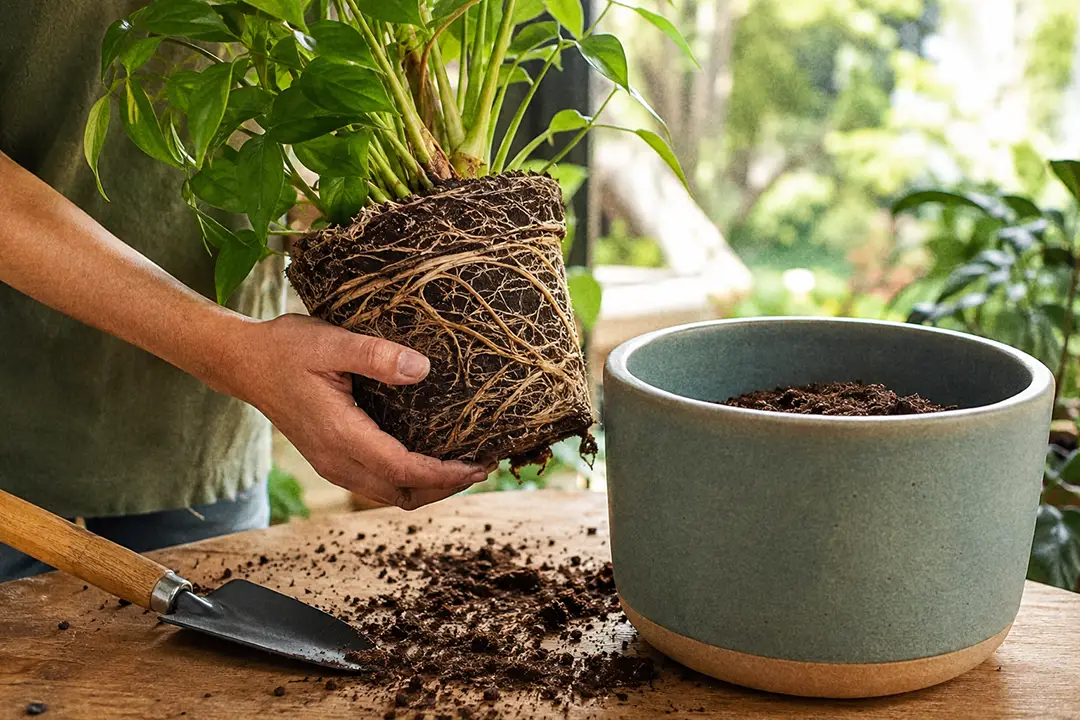
Roots circling the surface or growing out of the drainage holes, water running straight through without wetting the soil, a plant that dries out within a day or two, or a plant that has stopped growing despite good care. If none of these apply, leave it. Repotting a plant that does not need it is a common way to cause problems.
Size up modestly
Go one pot size up, roughly two inches wider. A pot that is too large holds more wet soil than the roots can use, which is a slow route to rot. Our repotting guide has the full method and our pot guide covers material choices.
Refresh instead of repotting
Plenty of plants do not need a bigger pot but do need better soil. Scrape off the top two inches of tired, compacted mix and replace it with fresh potting soil. This is much gentler than a full repot and gives most of the benefit.
🍴 The Final Feed
Feeding is a habit worth ending on purpose rather than forgetting about.
One last dose, then stop
Give a final balanced feed at the end of August or in the first week of September, at half the usual strength. After that, stop until spring. Plants growing under weaker light simply cannot use the nutrients, and leftover fertilizer accumulates as salts that burn roots.
Flush before you stop
Water thoroughly enough that plenty runs out of the drainage holes, ideally two or three times over, to carry accumulated salts out of the pot. This is the single most useful thing you can do for a plant that has been fed all summer. Our fertilizing guide explains the timing in more detail.
The exception
If you grow under grow lights on a long daily cycle, your plants are not experiencing autumn and can keep feeding at a reduced rate. Light dictates this, not the date. Our winter fertilizing rules cover that case.
✂️ Tidying and Light Pruning
Clean plants overwinter better. Cluttered ones invite trouble.
Remove what is already finished
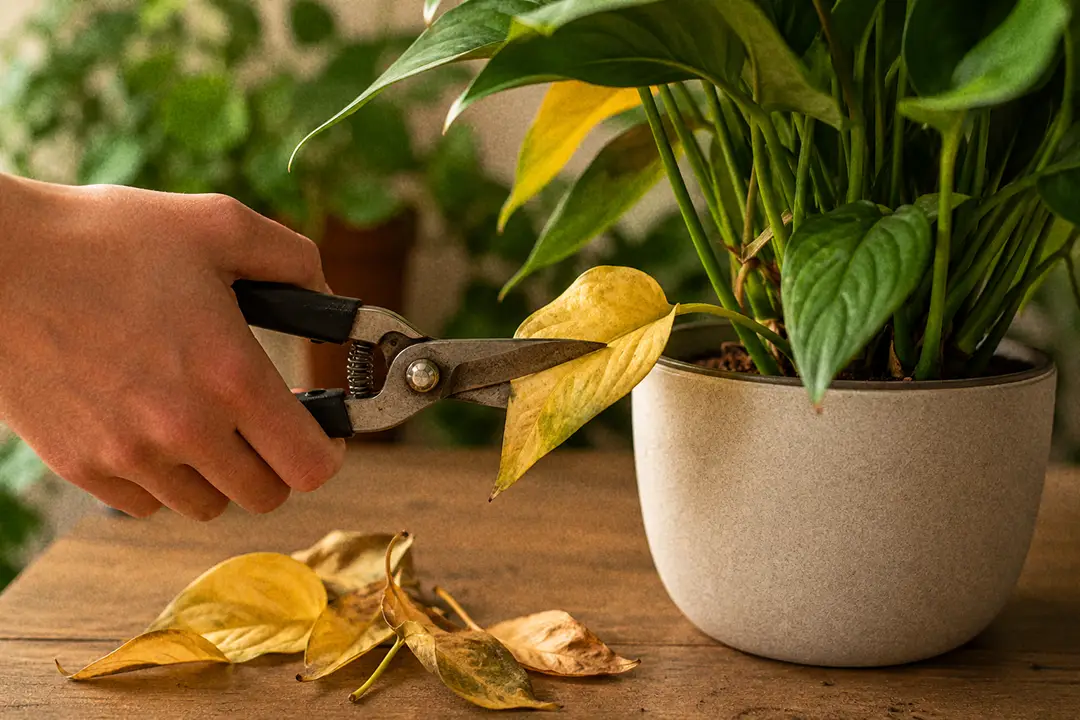
Cut off yellowing, brown, chewed, and sun damaged leaves. They contribute nothing and dead material sitting on damp soil encourages mould and fungus gnats. Clear fallen debris off the soil surface while you are there.
Trim leggy growth
Summer stretch is common, particularly in Pothos and trailing plants that reached for a window. Trimming back long bare stems now encourages a fuller shape and gives you cuttings. Our guide to leggy growth explains why it happens.
Dust the leaves
Dust cuts light absorption, which matters far more as light gets scarce. Wipe broad leaves with a damp cloth and rinse smaller plants in the shower. This also removes early-stage pests before they establish.
🌱 The Last Good Cuttings
If you want free plants, take them now rather than in a month.
Why late summer works
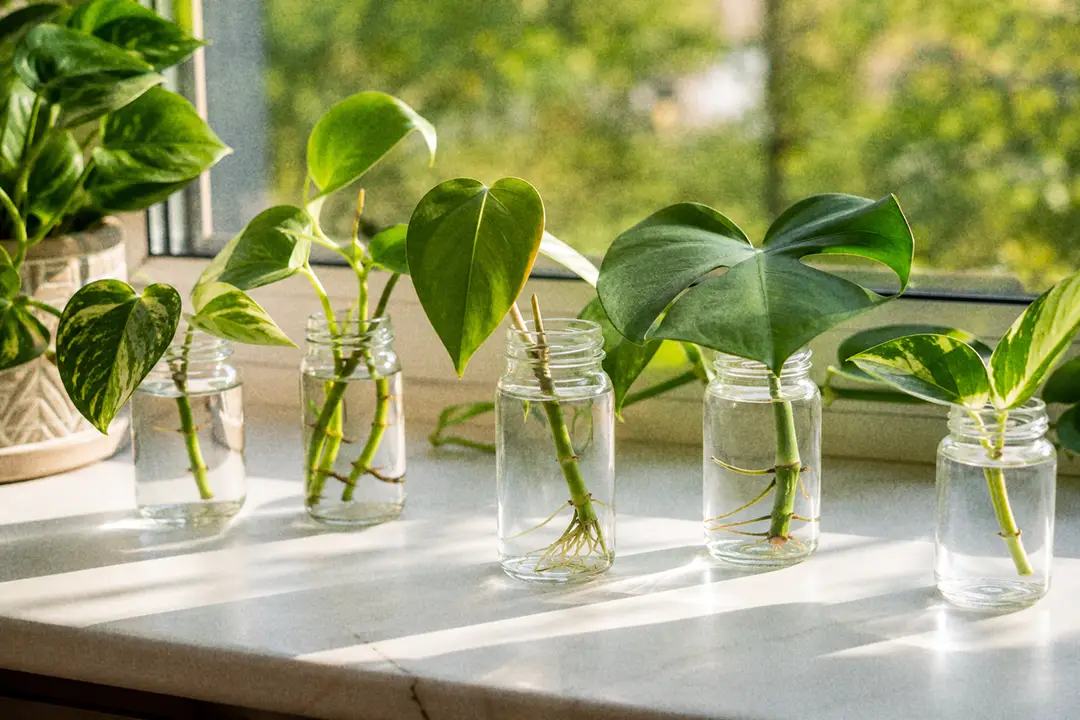
Stems are mature, growth hormones are still active, and there is enough remaining light for roots to form within a few weeks. Cuttings taken in October often sit in water for two months doing nothing and eventually rot.
What roots most reliably
Pothos, Philodendrons, Tradescantia, Peperomias, Hoyas, and Spider Plant plantlets. Our guides to water propagation and soil propagation cover both approaches, and succulent propagation handles the fleshy ones.
Keep them warm and bright
A rooting cutting needs more light and warmth than an established plant, not less. Put them in your best window, keep the water fresh, and be ready to add a grow light as autumn sets in.
🔍 The Pest and Light Audit
Two quick passes that prevent most winter problems.
Check every plant once, properly
Turn each plant around and look at leaf undersides, stem joints, and new growth. Spider mites and thrips build up over summer and explode once heating dries the air. Catching a small population now is far easier than treating a whole shelf in December. Our pest damage guide helps identify what you find.
Work out where the light will be in December
The sun angle drops sharply over the next few months, and a spot that is bright now may be dim by midwinter. Note which windows will still work and plan where the light-hungry plants will move. Our guide to autumn light and short winter days go deeper.
Move plants before they suffer, not after
If you know a plant will end up in poor light, move it in September while it can still adapt, rather than in November when the change compounds an already stressed situation.
🛑 What to Leave Until Spring
Restraint is half of this job.
Hard structural pruning
Cutting a plant back significantly asks it to regrow, which it cannot do well in low light. Shape it in March instead.
Dividing plants
Division creates two plants with damaged root systems. Both need active growth to recover. Wait.
Upgrading to a much larger pot
Big jumps in pot size mean lots of unused wet soil through the slowest months of the year. If a plant truly needs it, go up one size now and do the bigger move next spring.
Buying delicate new plants
Not a rule, just something to consider. A Calathea or Fiddle Leaf Fig that arrives in September has to acclimate to your home during its hardest season. Sturdy plants are fine. Fussy ones do better arriving in spring.
✅ The Reset Checklist
An afternoon's work, ideally in the last week of August:
- ☐ Repot anything genuinely root bound, one size up
- ☐ Top-dress the rest with fresh soil
- ☐ Give a final half-strength feed, then stop
- ☐ Flush every pot thoroughly to clear salts
- ☐ Remove dead, yellowing, and damaged leaves
- ☐ Trim leggy stems and keep the cuttings
- ☐ Dust and wipe the foliage
- ☐ Inspect every plant for pests
- ☐ Plan where each plant will sit for winter light
- ☐ Take your last cuttings of the year
From here, our autumn houseplant care checklist picks up the routine, and if your plants summered outdoors, start with bringing outdoor plants back inside.
❓ Frequently Asked Questions
Is it too late to repot in August?
No, late August is the last comfortable window. A plant repotted now has four to six weeks of decent light to settle its roots before growth slows. By October you should wait for spring unless the plant has root rot or is severely root bound.
When should I stop fertilizing houseplants?
Give a final feed at the end of August or in early September, then stop. As light drops, plants use fewer nutrients, and unused fertilizer salts accumulate in the soil where they damage roots.
Can I still take cuttings in late summer?
Yes. Cuttings taken in late August still root reliably because stems are mature and there is enough light left in the season. Take them earlier rather than later, and keep them warm and bright while they root.
Should I prune houseplants at the end of summer?
Light tidying is good: remove dead, yellowing, and damaged leaves, and trim leggy stems. Save hard structural pruning for spring, since a plant heading into low light cannot fund a lot of new growth.
What is the difference between the summer reset and autumn prep?
The reset is about finishing growing-season jobs while the plant can still recover from them. Autumn prep is about reducing care as growth slows. Do the reset in late August, then move to the autumn routine in September.
🪴 See also 🪴
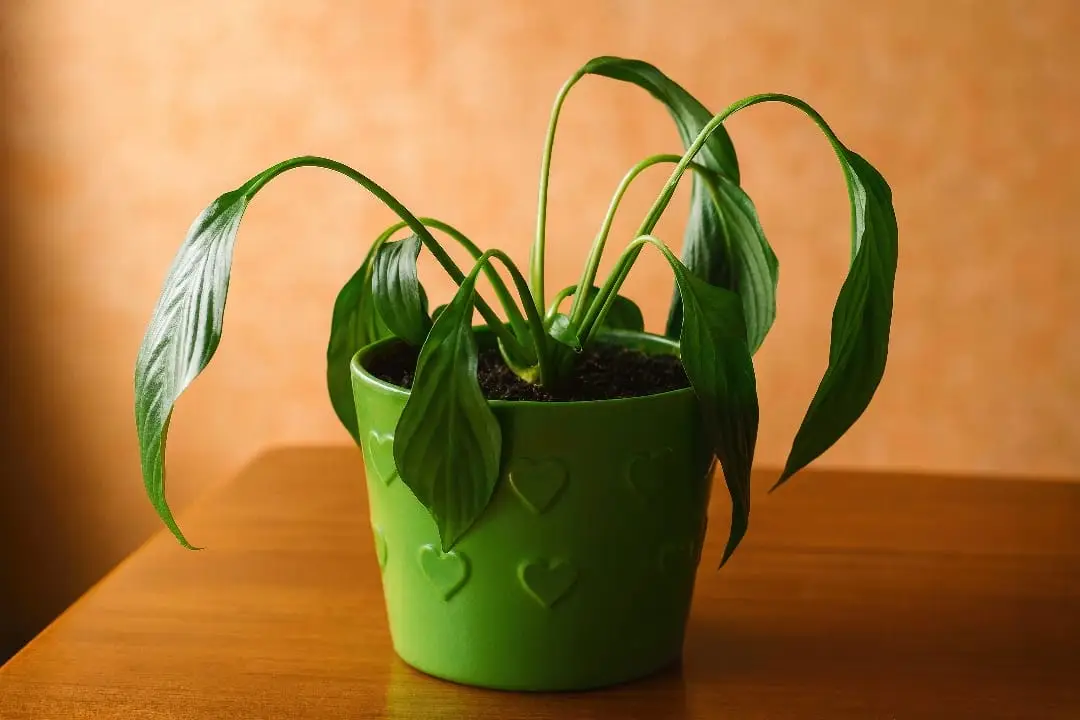
How to Protect Indoor Plants from Summer Heat
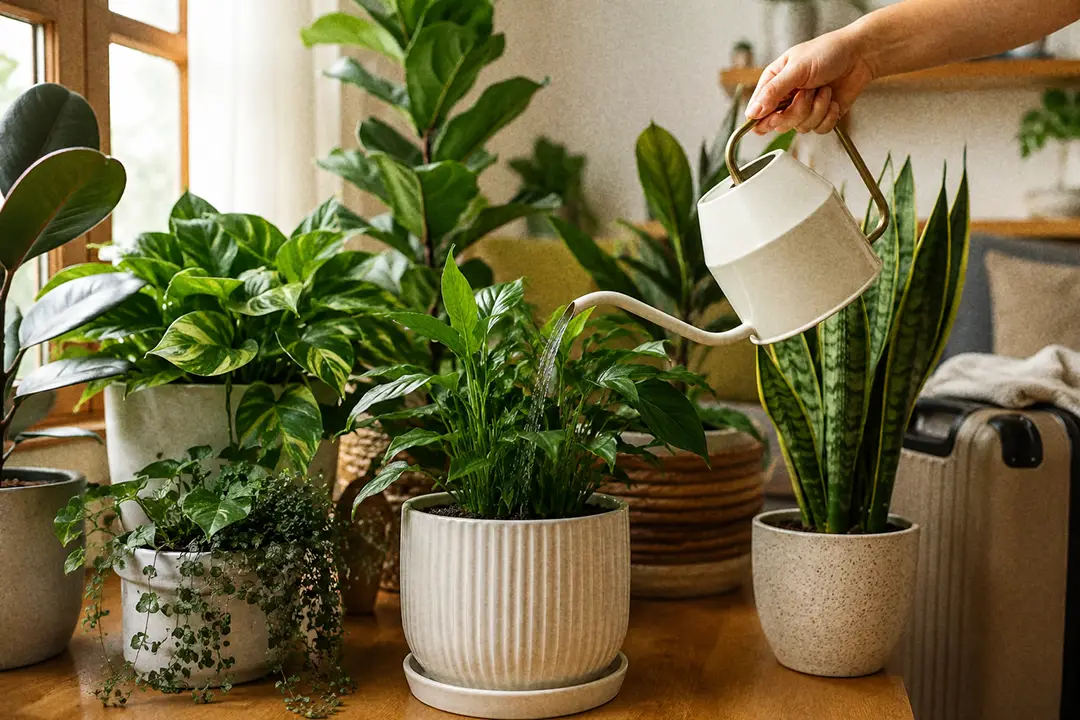
How to Water Houseplants in Summer & While on Vacation
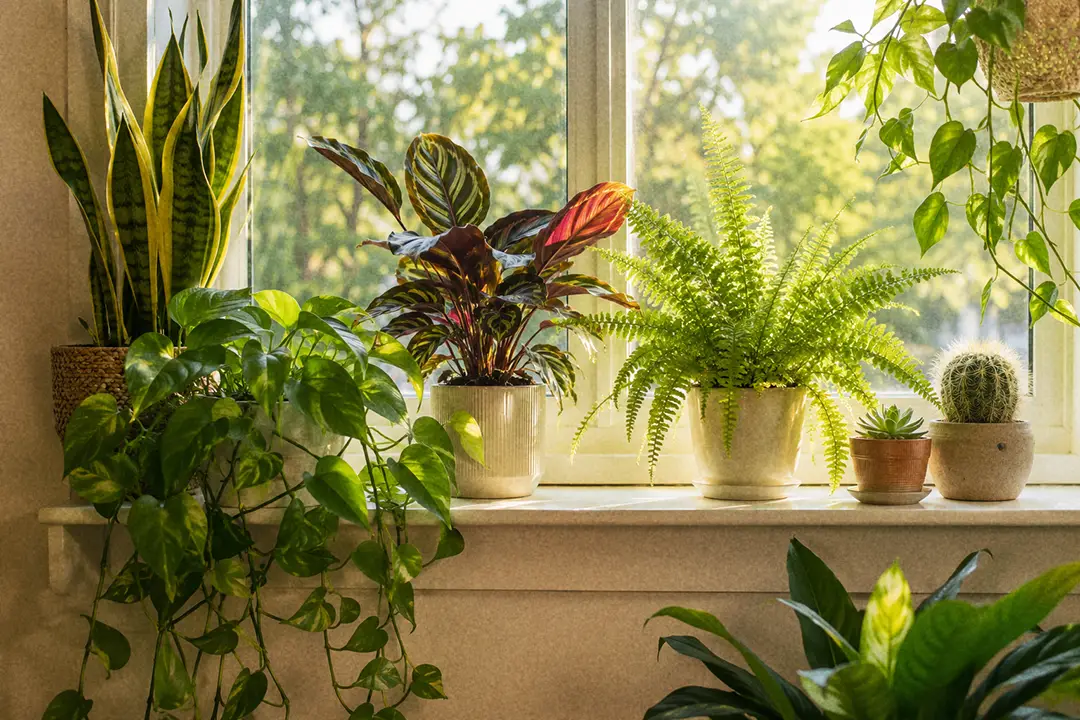
Summer Houseplant Care Checklist
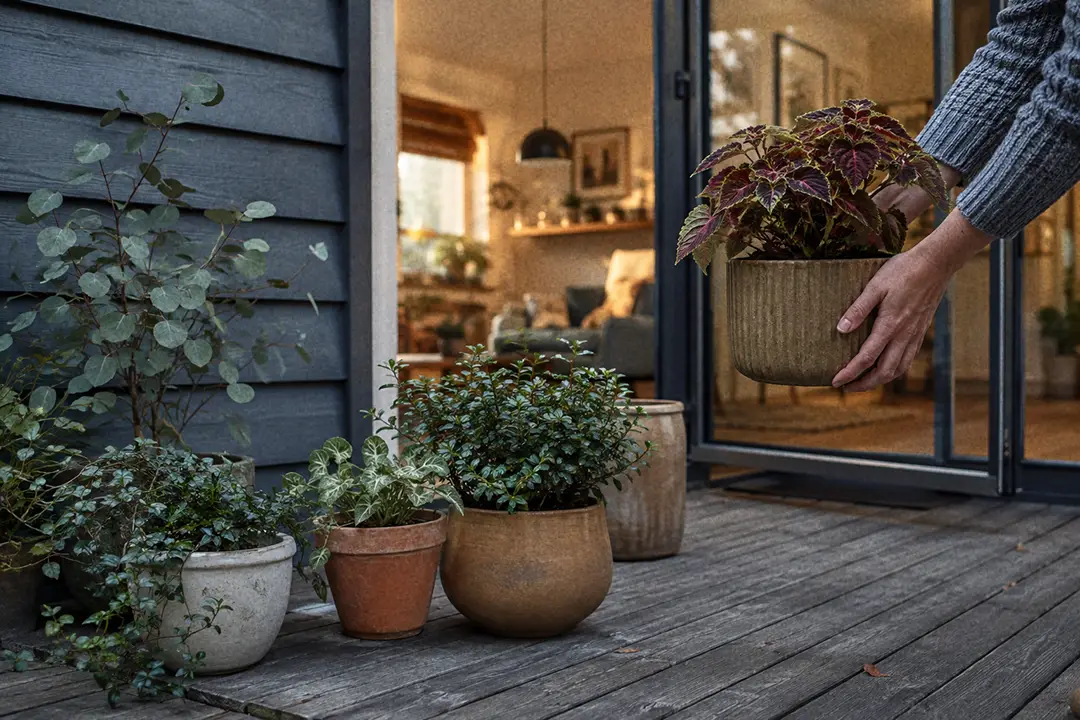
Bringing Outdoor Plants Back Inside (Without Bringing the Bugs)
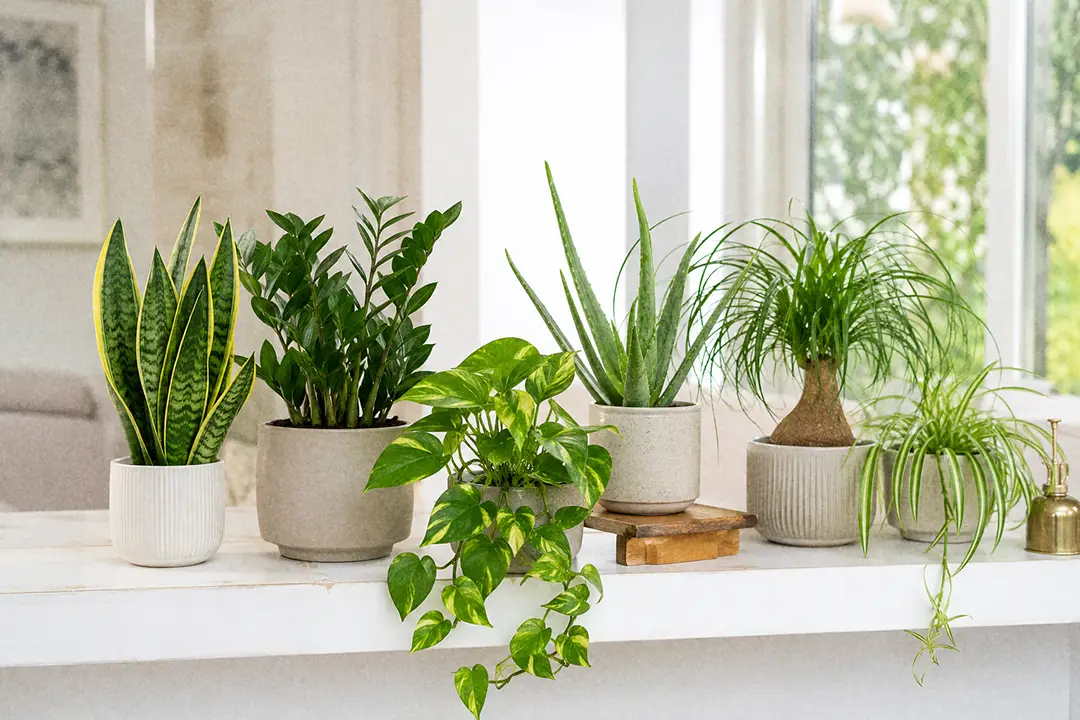
7 Low-Maintenance Plants That Survive Summer Travel

Houseplant101 Forum
Questions & Comments
Ask a question, share your plant experience, or help other plant owners.
Comments are temporarily unavailable.
Open the Houseplant101 ForumNo comments yet
Be the first to ask a question or share your experience about this page.
Log in or create an account
Comments use your Houseplant101 Forum account, but you can stay on this page.
Create a new account