
N'Joy Pothos
Epipremnum aureum 'N'Joy'
N Joy Pothos, N-Joy Pothos, Variegated Devil's Ivy


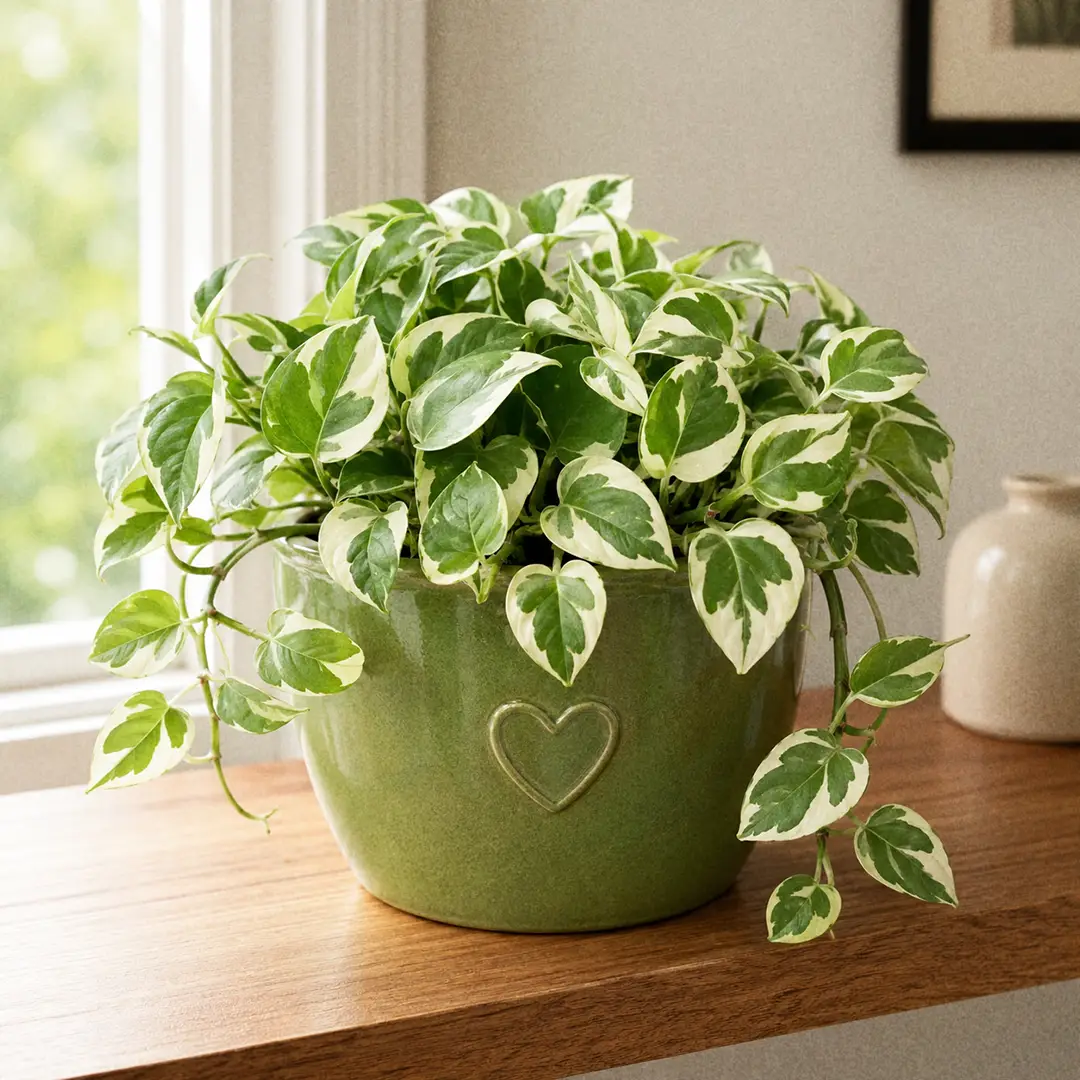
The N'Joy Pothos is a compact variegated cultivar with small leaves painted in clean blocks of green and creamy white. It is one of the tidiest, most beginner-friendly Pothos you can grow, and the easiest variegated type to tell apart from its speckled lookalikes.
📝 N'Joy Pothos Care Notes
🌿 Care Instructions
⚠️ Common Pests
📊 Growth Information
🪴 In This Guide 🪴

A Note From Our Plant Expert
Anastasia here. N'Joy Pothos is the compact, well-behaved sport of Marble Queen that I reach for when someone wants a variegated Pothos that won't take over the shelf. Its leaves are small and painted in clean blocks of green and creamy white, with none of the speckled mess that makes its lookalikes so hard to name. If you have ever stood in a shop unsure whether you were holding an N'Joy or a Pearls and Jade, the patches are your answer: N'Joy keeps them crisp. Give it bright indirect light and let the top inch dry, and it stays full and tidy for years.
☀️ N'Joy Pothos Light Requirements (Indoor Lighting Guide)
The Sweet Spot
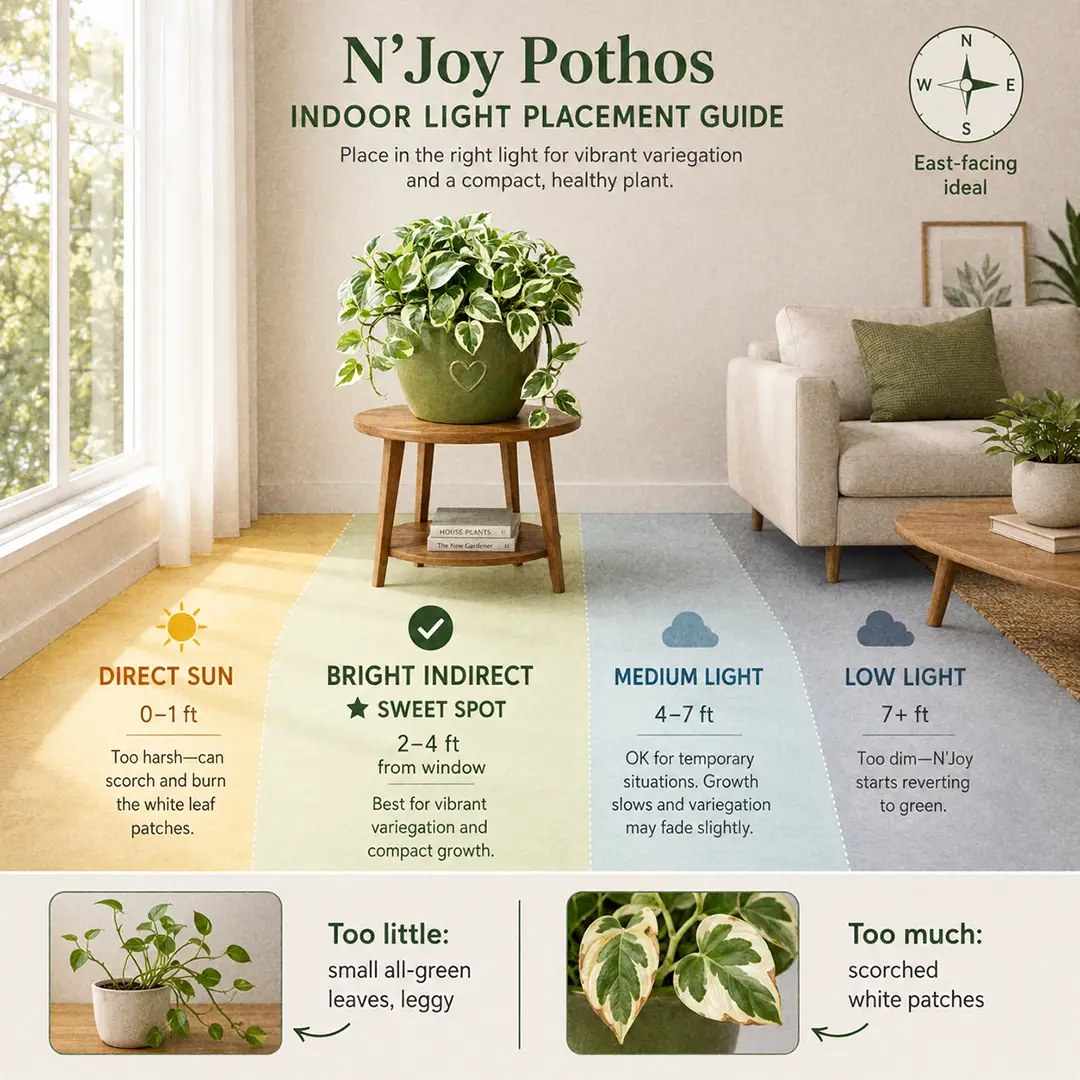
N'Joy wants bright, indirect light. The ideal spot is two to four feet back from an east-facing window, or a few feet from a south or west window with a sheer curtain softening the direct sun. Gentle morning light is welcome. Hot afternoon sun straight through the glass is not.
Light matters more for N'Joy than it does for plain green Pothos. Those creamy-white patches hold no chlorophyll, so the green parts of each leaf do all the work of feeding the plant. In good light the white stays crisp and the patches stay sharp. In a dim corner, the plant pushes out leaves with far more green to compensate, and you slowly lose the look you bought it for. Our Light Guide breaks down indoor light levels in more detail.
Too Little Light
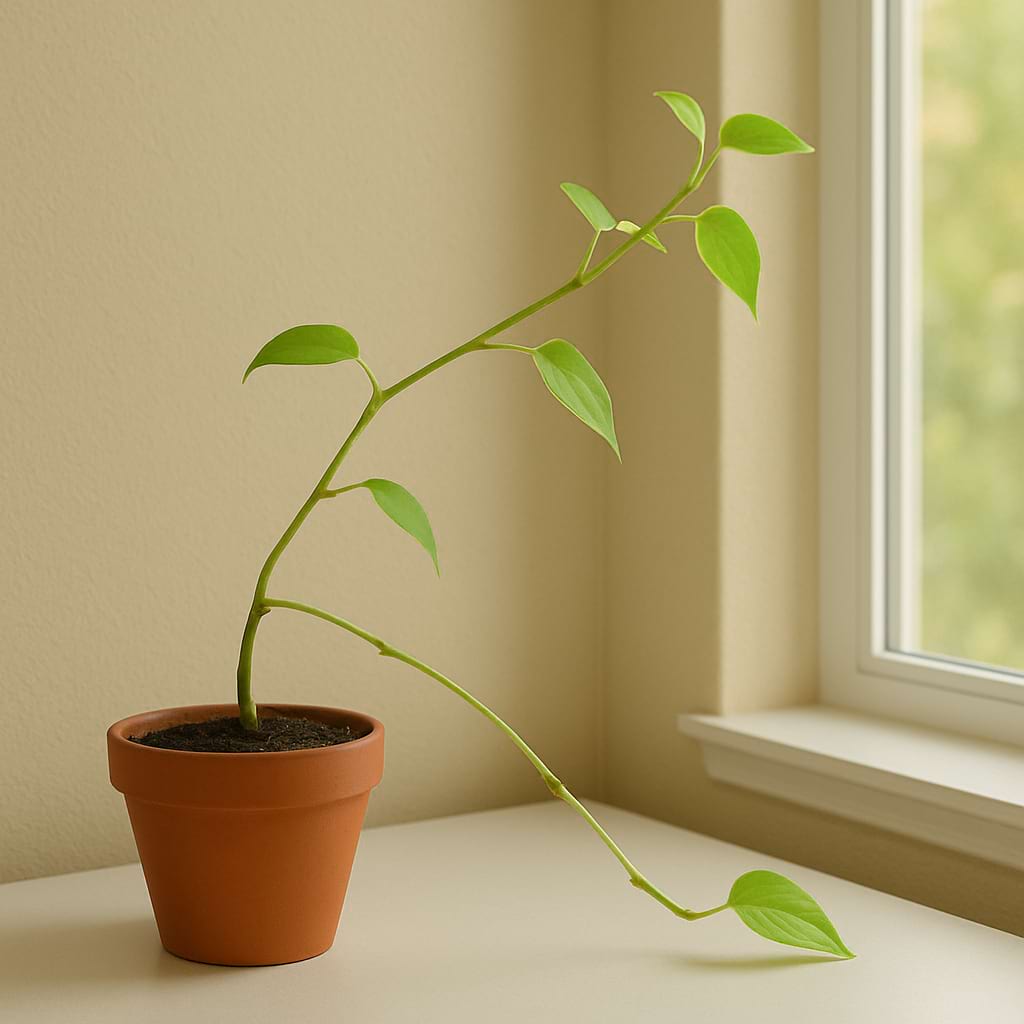
A too-dark spot shows up fast on N'Joy. New leaves come out smaller and greener, the gaps between leaves on a vine stretch out (leggy growth), and the white sections look dull instead of crisp. A north window deep in a room, or any corner more than five or six feet from a window, is usually too dim.
The fix is simple: move it closer to the glass, or add a grow light on a timer for ten to twelve hours a day. Because N'Joy is naturally compact, leggy stretching is one of the clearest signals that it needs more light.
Too Much Light
Direct midday sun is the other extreme. The white patches scorch first, turning papery and brown, while the green parts can look bleached. Pale, dried-out spots on the leaves facing the window point to sunburn.
Pull the plant back a foot or two, or hang a sheer curtain between it and the glass. N'Joy adapts well, but make any light change over a week or so rather than moving it from a dim corner straight into a sunny window.
💧 N'Joy Pothos Watering Guide (How to Water)
Watering Frequency
N'Joy follows the golden Pothos rule: let it dry out between drinks. These plants store water in their stems and leaves, so they shrug off a missed watering far more easily than soggy roots. Overwatering is what kills most of them.
Check with your finger before you reach for the watering can. Push it about one to two inches into the soil. Dry at that depth means it is time to water. Still damp means wait a few more days. In spring and summer that usually lands around every 7 to 10 days; in winter, when growth slows and the soil stays wet longer, it can stretch to every two or three weeks. Pot size, light, and warmth all shift the timing, so trust the soil over the calendar. Our Watering Guide covers the basics if you want a refresher.
How to Water
When the soil is dry, water thoroughly. Pour slowly and evenly until water runs freely from the drainage holes, which wets the entire root ball rather than just the surface. Let it drain completely, then tip out anything that collects in the saucer or cachepot. A pot sitting in standing water is the fastest road to root rot.
Tap water is fine for N'Joy. If your water is heavily chlorinated and you notice brown leaf tips over time, letting it sit out overnight or using filtered water can help, but most homes never need to bother.
Signs of Trouble
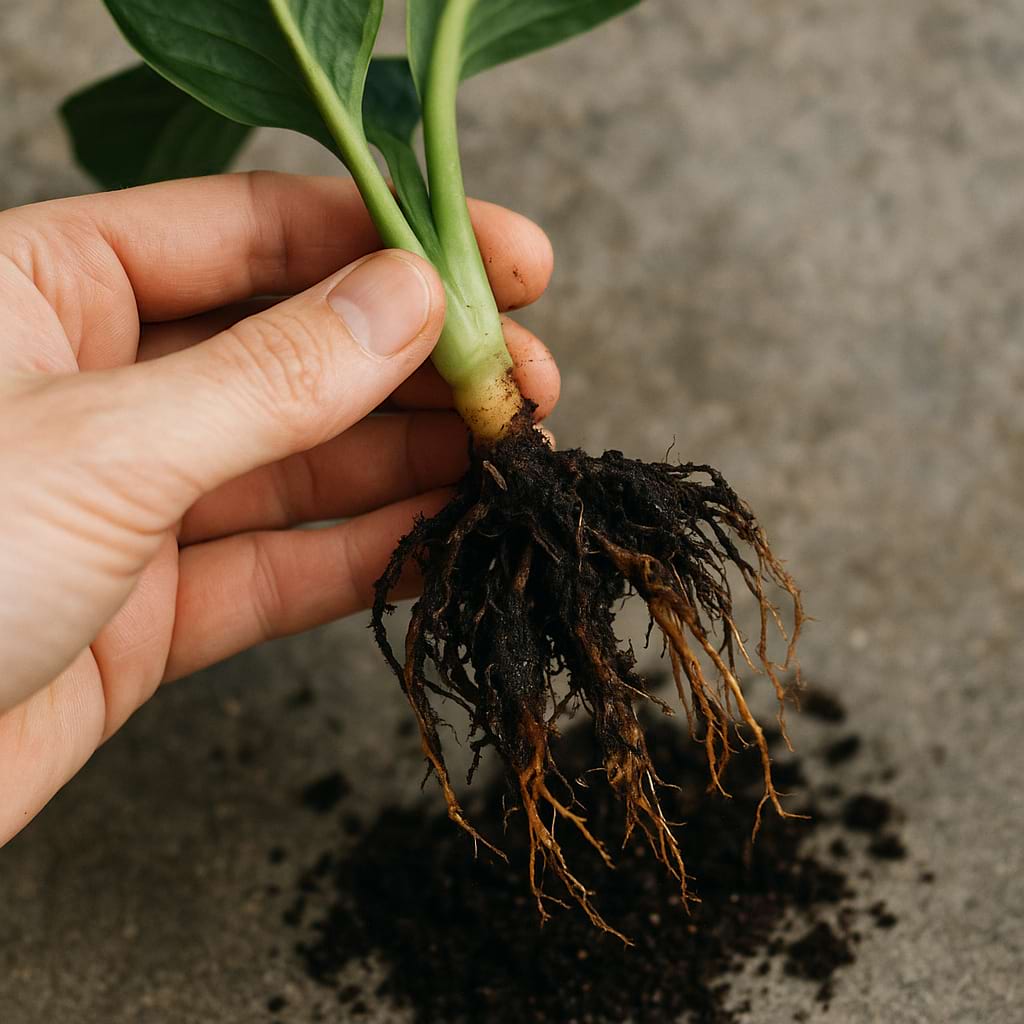
Overwatering shows as yellowing leaves (often the lower ones first), soft mushy stems near the soil line, and sometimes a sour smell from the pot, which points to root rot. If you catch it early, let the soil dry out fully and water less often. In bad cases, unpot the plant, trim any black mushy roots, and repot in fresh dry mix.
Underwatering is gentler and easier to reverse. The leaves go limp and slightly curled, and the soil pulls away from the sides of the pot. A good thorough soak usually perks the plant back up within a day.
🪴 Best Soil for N'Joy Pothos (Potting Mix & Drainage)
What the Soil Needs
N'Joy is an aroid, and aroids want soil that is chunky, airy, and quick to drain. The roots need oxygen as much as water, so a mix full of small air pockets keeps them healthy. Heavy soil that stays wet for days is exactly what they hate.
Plain potting soil from the bag is usually too dense on its own. It packs down over time, holds water too long, and sets up perfect conditions for rot. Fixing it takes only a couple of cheap amendments.
DIY Aroid Mix
Here is a simple recipe that keeps N'Joy roots happy:
- 2 parts potting soil for a nutrient base
- 1 part perlite for drainage and aeration
- 1 part orchid bark for chunky structure that resists compaction
- Optional handful of horticultural charcoal to keep the mix fresh
Mix it together and you get a light, fast-draining home that drains in seconds rather than staying swampy. Our Soil Guide goes deeper if you want to understand why each ingredient earns its place.
Pre-Made Options
If you would rather not mix your own, look for a bagged "aroid mix" or "chunky houseplant mix" at a plant shop or online. These are blended for Pothos, Philodendrons, and Monsteras, so they are already light and well-draining. Squeeze a handful before you buy: it should feel loose and crumbly, not dense and muddy.
🍼 Fertilizing N'Joy Pothos
When and How Often
N'Joy is a light feeder, and because it grows slowly it needs even less than faster Pothos. During the growing season, spring through early fall, feed it about once a month. In late fall and winter, stop completely. The plant is barely growing then and cannot use the extra nutrients, which just build up in the soil.
Always water lightly before you fertilize, or feed right after a normal watering. Pouring fertilizer onto bone-dry soil can burn the roots.
What to Use
A balanced liquid houseplant fertilizer (something like 10-10-10 or 20-20-20) works perfectly. Dilute it to half the strength listed on the label. With a slow grower like N'Joy, a weaker, more frequent feed beats a strong dose. Our Fertilizing Guide explains how to read those numbers if the label looks like a math problem.
Over-Fertilizing Signs
Too much fertilizer shows up as brown, crispy leaf tips, a white crusty crust on the soil surface, and yellowing leaves even though your watering has been spot on. If you see those signs, flush the pot: run water through the soil for a few minutes to wash out the built-up salts, then let it drain fully and ease off the feeding.
🌡️ N'Joy Pothos Temperature Range
Ideal Range
If your home feels comfortable to you, it suits N'Joy. These tropical plants are happiest between 65 and 85°F (18 to 29°C), which covers normal room temperature in most houses year-round. There is no special heating or cooling to worry about.
Growth slows below about 60°F (16°C) and the plant can suffer real damage below 50°F (10°C), so it is strictly an indoor plant in any climate with a true winter.
Drafts and Heat Sources
The bigger risk indoors is sudden temperature swings. Keep N'Joy away from cold drafts off a winter window or a frequently opened exterior door, and away from the blast of an air-conditioning vent. On the other side, do not park it right above a radiator or next to a heating vent, where the hot dry air will crisp the leaf edges.
A steady spot a little away from any vent or door is all it asks.
Growing N'Joy Outdoors
In USDA zones 10 to 12, N'Joy can live outside year-round in a shaded, protected spot. Everywhere colder, it can take a summer vacation outdoors once nights stay reliably above 60°F (16°C). Keep it in dappled or full shade, since direct sun will scorch those white patches in an afternoon, and bring it back inside well before the first cold nights of fall.
💦 N'Joy Pothos Humidity Requirements
Ideal Humidity
N'Joy is easygoing about humidity. It does best around 50 to 60% relative humidity, but it tolerates ordinary household air (often closer to 40%) without much fuss. This is one of the reasons it makes such a forgiving houseplant.
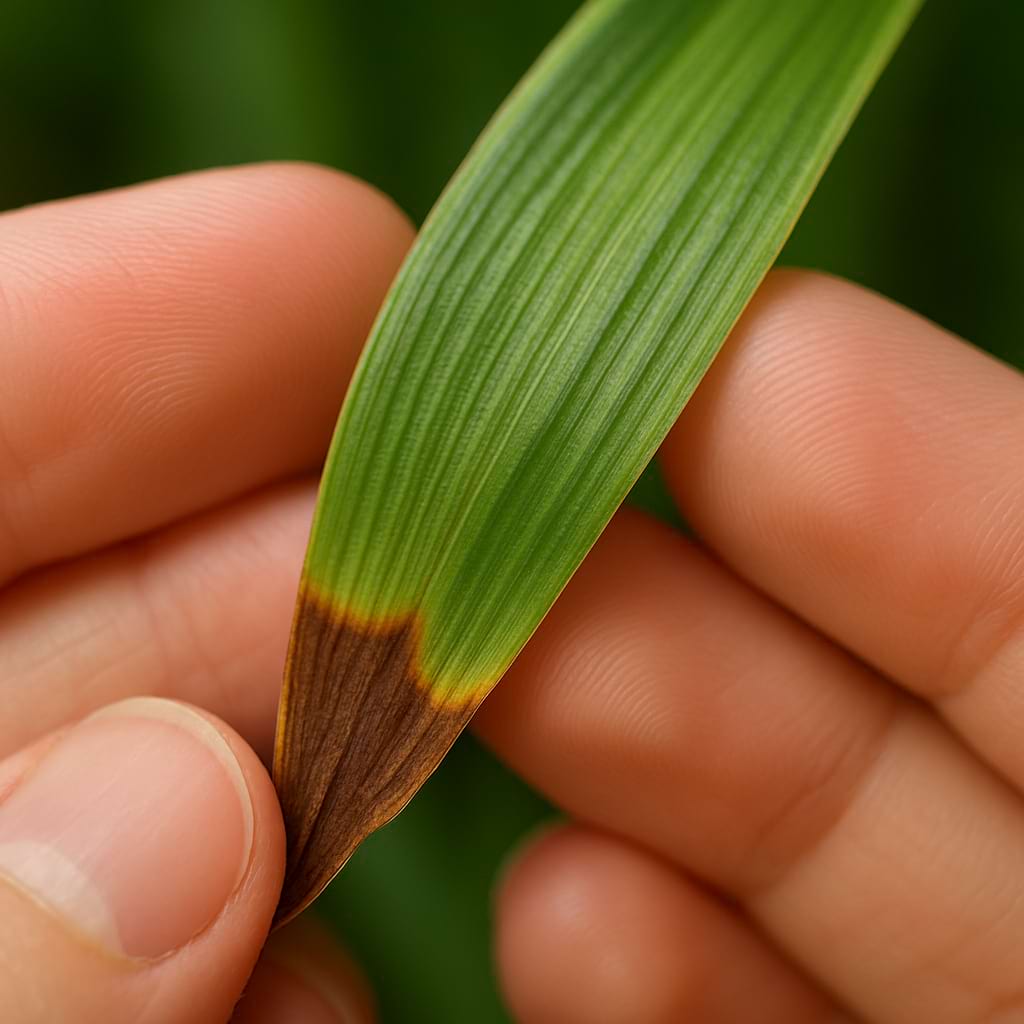
You will mostly notice low humidity in winter, when heating dries the air out. The first sign is usually crispy brown leaf edges, and the small white margins tend to show it before the green does.
Easy Humidity Boosters
If your air runs dry, a few low-effort fixes help:
- Pebble tray: set the pot on a tray of pebbles with a little water below the pot's base, so evaporation lifts the humidity around the plant.
- Group your plants: clustering tropicals together creates a shared humid pocket as they transpire.
- Bright bathroom or kitchen: the steam from showers and cooking is a natural humidity boost, as long as there is enough light.
- Humidifier: the most reliable option if you keep several humidity-loving plants in one room.
Skip the misting. It feels productive, but the humidity bump lasts only minutes and the lingering moisture on leaves can invite fungal spots. A humidifier or pebble tray does the job far better, and our Humidity Guide has more ideas.
🌸 N'Joy Pothos Flowers (Do They Bloom?)
Does N'Joy Pothos Flower?
Practically speaking, no. Like all Pothos grown as houseplants, N'Joy almost never blooms indoors. In the wild a very mature climbing Epipremnum can produce a spadix, the spike-shaped flower you see on a Peace Lily, but reaching that size and age in a living room is nearly impossible. You can grow N'Joy for decades and never see a flower, and that is normal.
Why the Foliage Is the Real Show
Nobody grows N'Joy for blooms anyway. The whole appeal is the patchwork foliage: small leaves split into clean fields of green and creamy white. Put your energy into bright light and steady watering, and you get one tidy, colorful leaf after another.
🏷️ N'Joy Pothos Types and Related Varieties
N'Joy in the Pothos Family
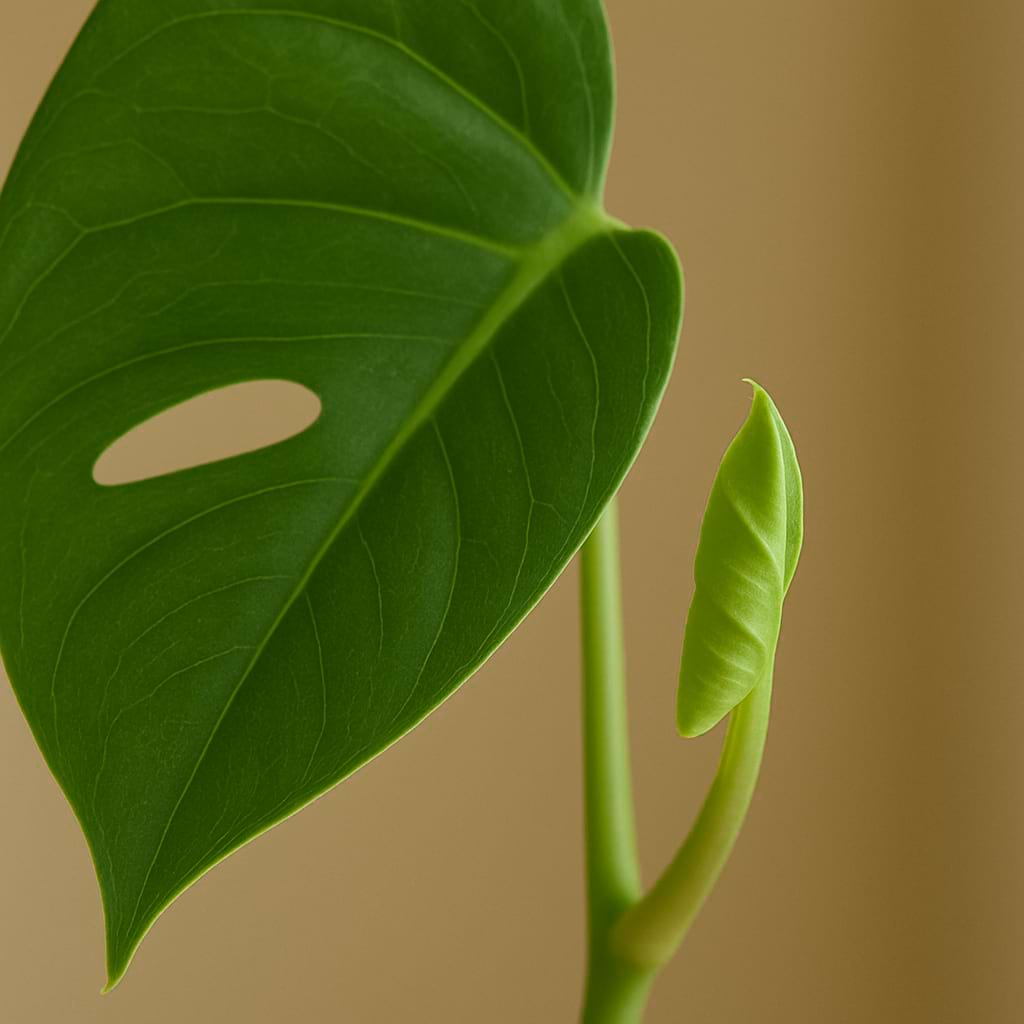
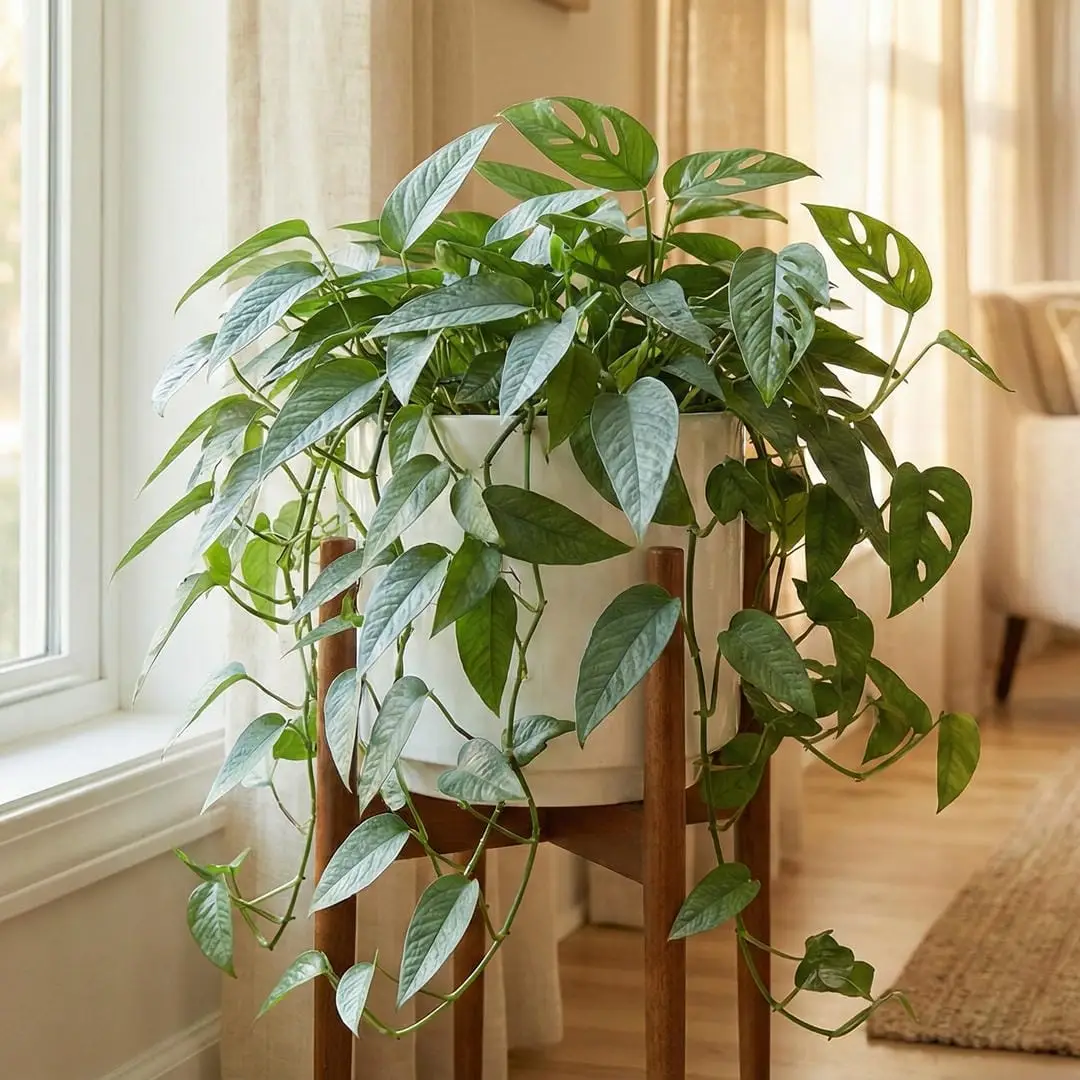
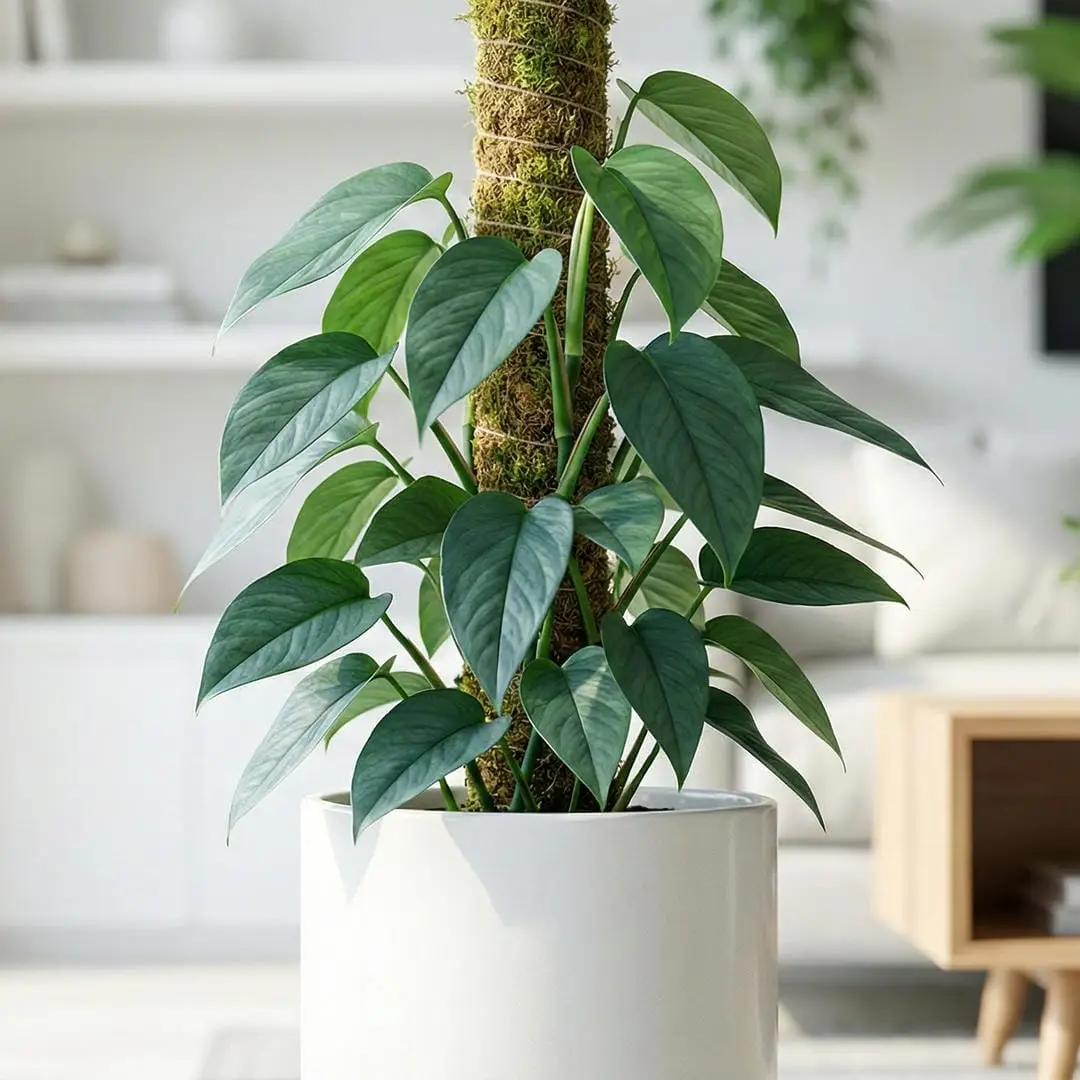
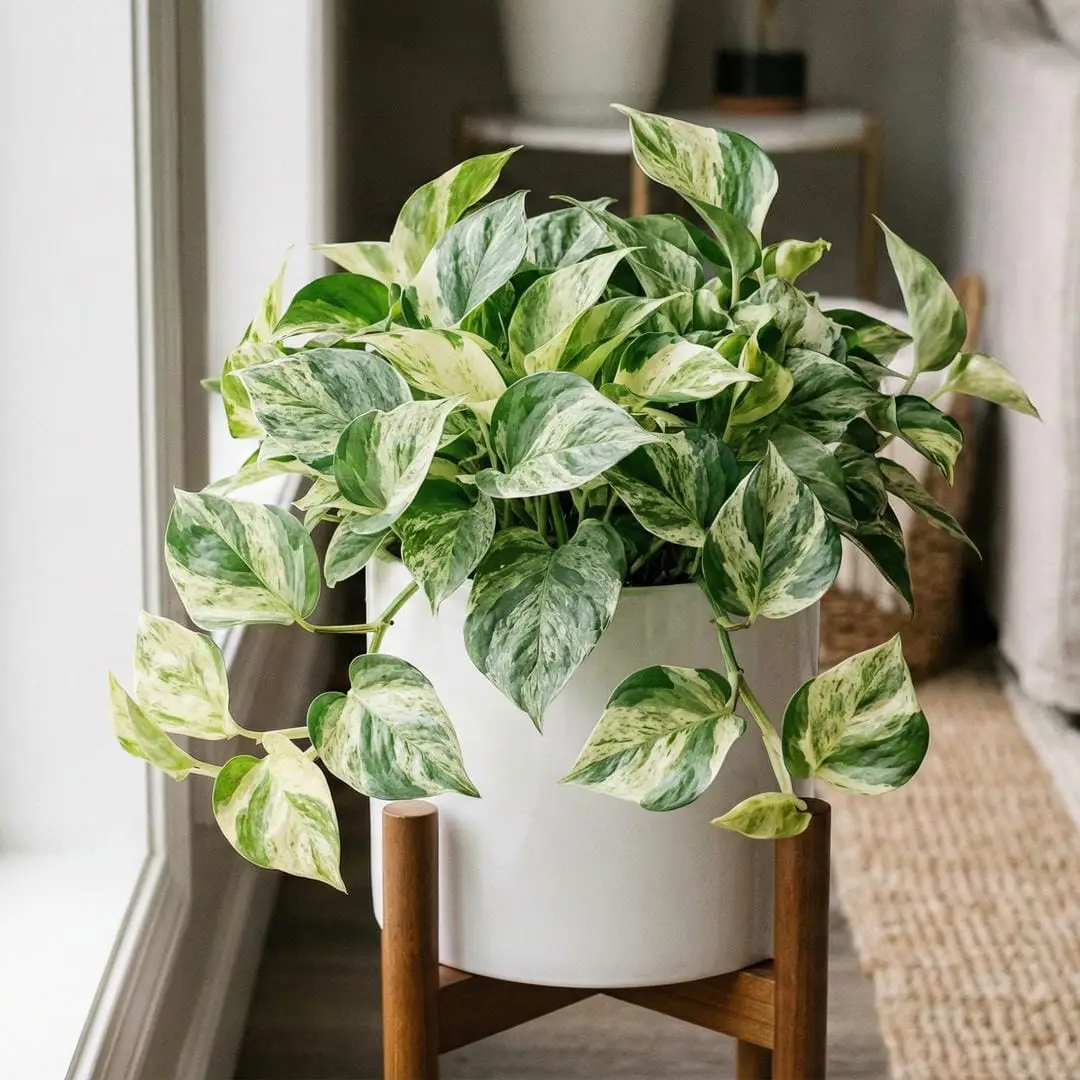
N'Joy is a cultivar of Epipremnum aureum, the same species as Golden Pothos, Marble Queen, Snow Queen, Neon Pothos, and Manjula Pothos. All of them keep heart-shaped leaves and a trailing habit, and none of them develop the holes and splits (fenestrations) that Baltic Blue and Cebu Blue Pothos get, because those two belong to a different species, Epipremnum pinnatum.
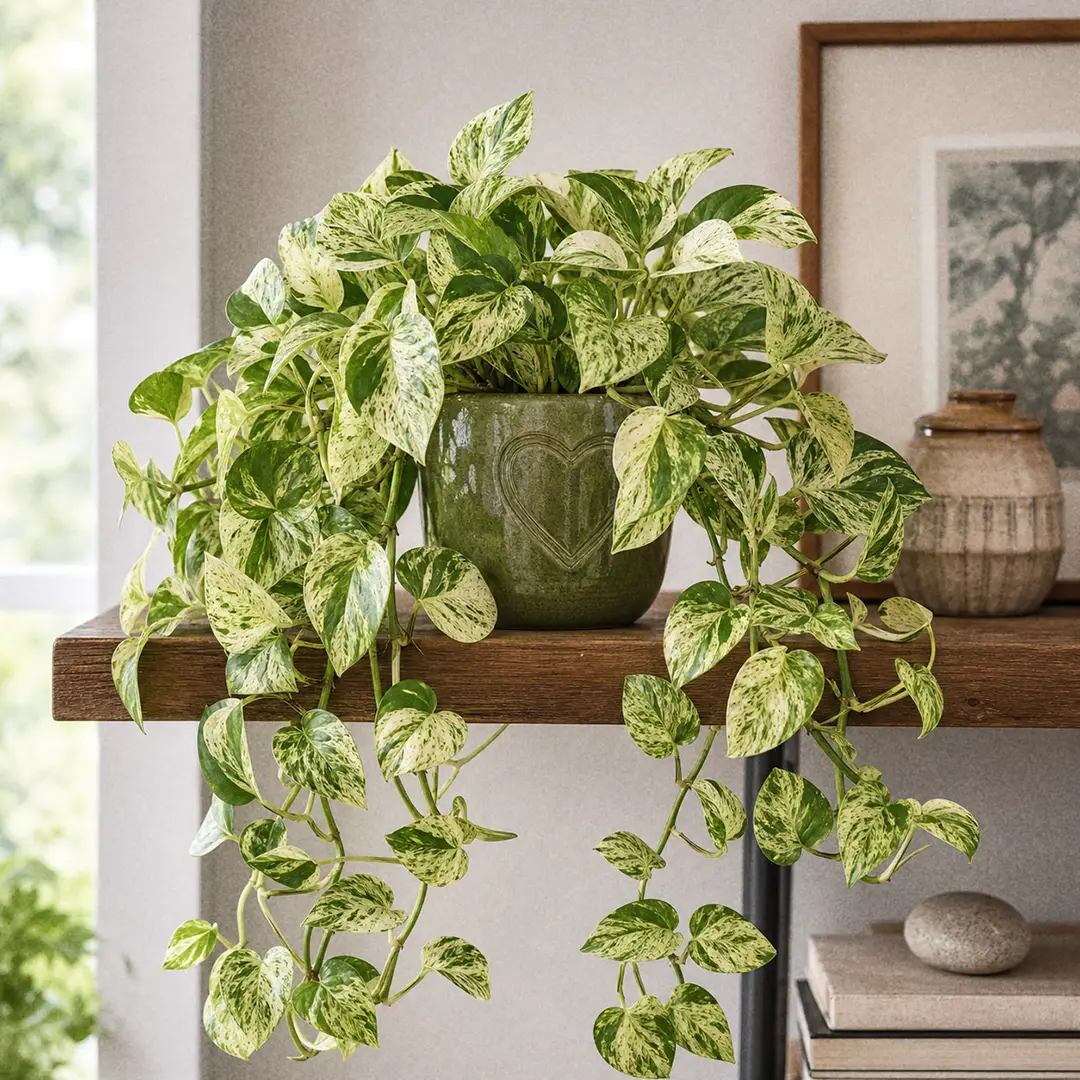
N'Joy itself is a sport, a natural mutation, of Marble Queen. It was discovered in India by Ashish Hansoti and granted US Plant Patent PP19,034 in 2009. What sets it apart is the variegation style: instead of the fine speckling and marbling you see on its relatives, N'Joy holds its green and white in clean, defined blocks, and it stays smaller and more compact.
N'Joy vs Pearls and Jade
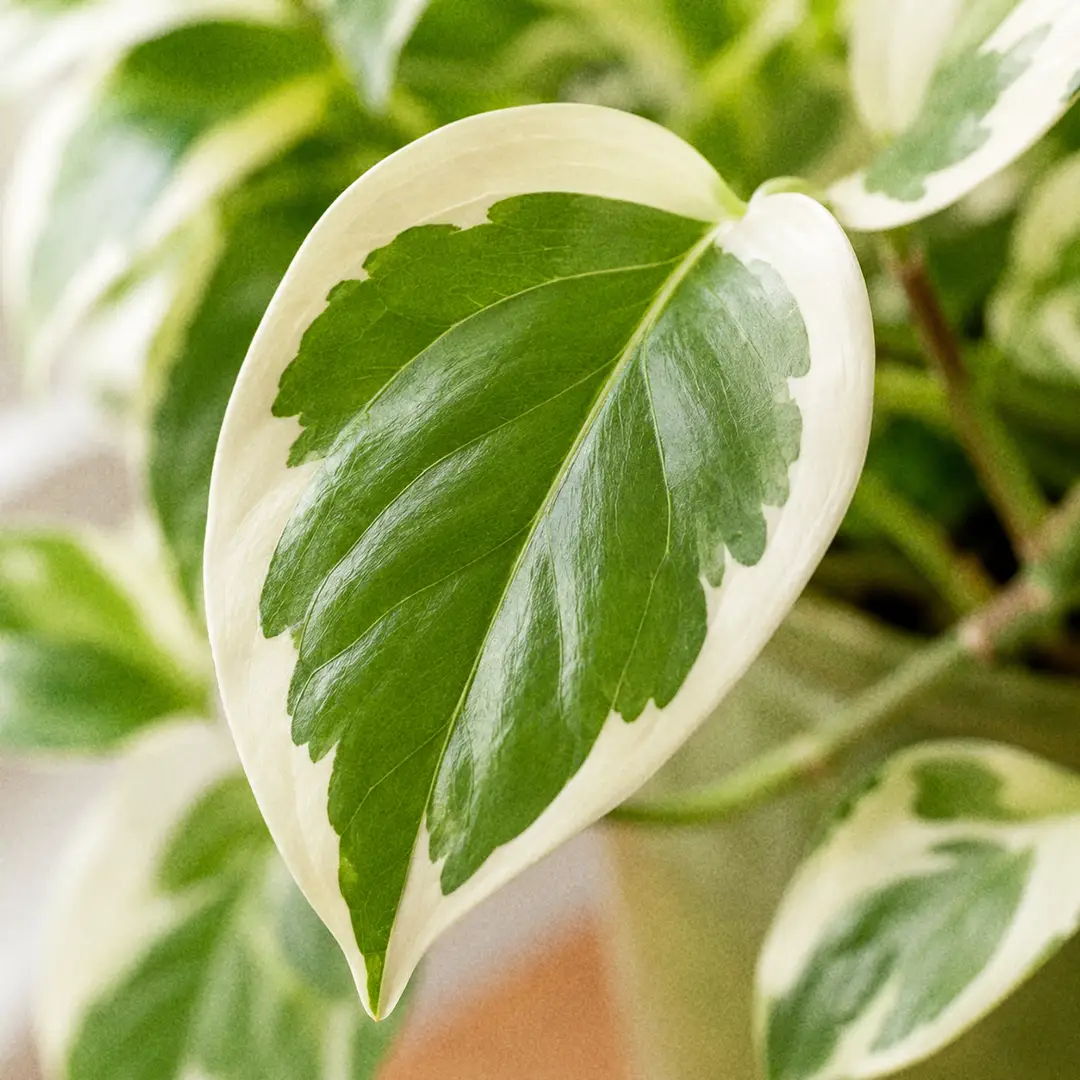
This is the mix-up that sends most people searching. Pearls and Jade is also a small, white-and-green Pothos, but it is a University of Florida cultivar with a different look. The trick is to study the white parts. On N'Joy, the white is clean and solid, meeting the green in a crisp edge. On Pearls and Jade, the white is freckled through with tiny gray-green and green flecks, and the variegation tends to sit more toward the leaf margins with mottled, speckly borders. Clean blocks point to N'Joy; speckles point to Pearls and Jade.
N'Joy vs Marble Queen and Glacier
Compared to its parent, the difference is mostly size and pattern. Marble Queen has larger leaves with cream and white marbling streaked all through the green, while N'Joy is smaller and keeps its colors in separate patches. Glacier Pothos is another close lookalike, smaller still, with a cooler silvery cast and light speckling in the white, where N'Joy reads warmer and cleaner. When in doubt, the rule holds: N'Joy is the one with crisp, unfreckled white blocks on a compact little leaf.
🪴 Potting and Repotting N'Joy Pothos
When to Repot
N'Joy grows slowly and does not mind being a little snug in its pot, so there is no rush to repot. Plan on every two to three years, or sooner if you see roots circling the bottom, poking out of the drainage holes, or water running straight through without soaking in. Early spring, as the plant wakes up for the season, is the best time.
Choosing a Pot
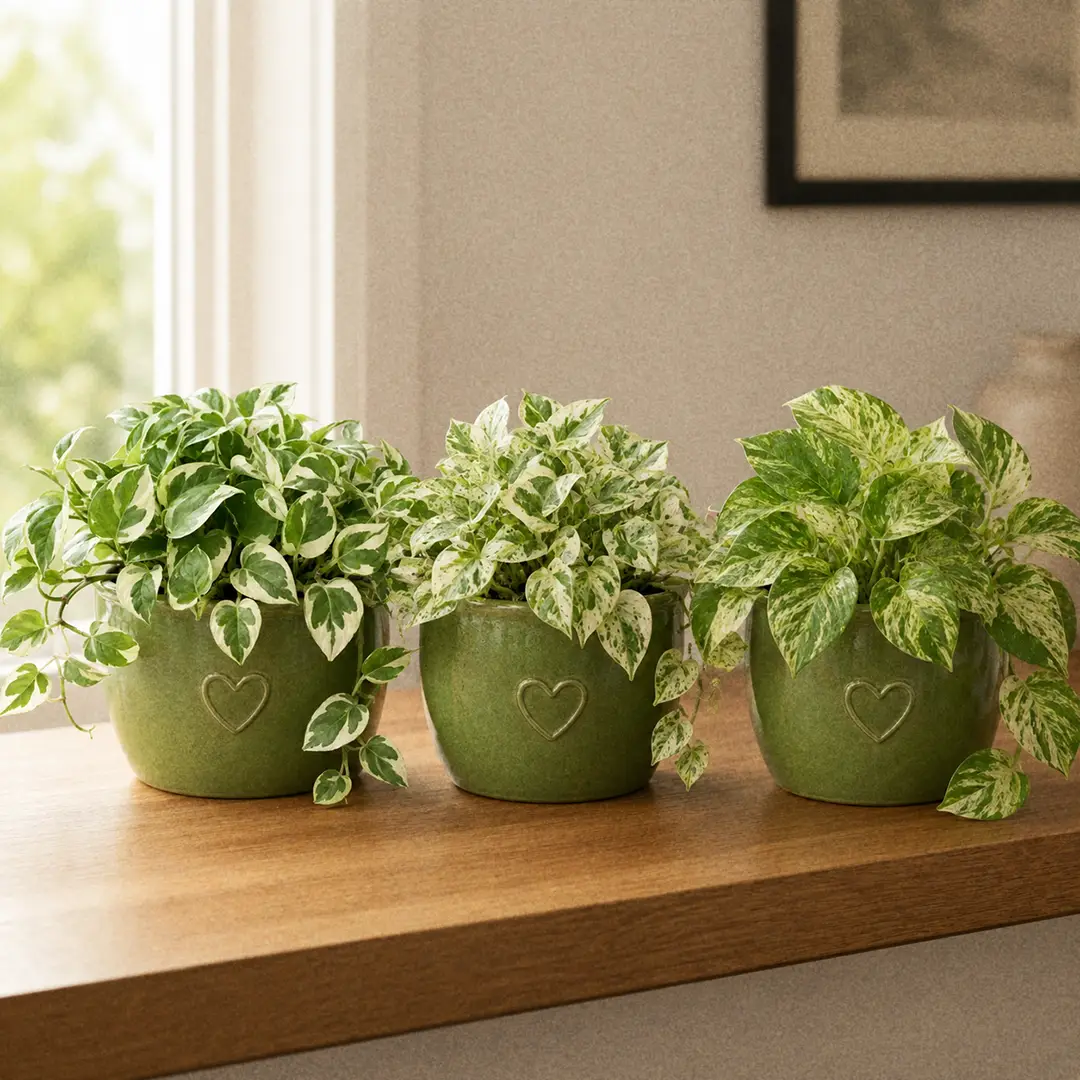
Go up by just one pot size (a 4-inch plant moves into a 5- or 6-inch pot). A pot that is too big holds a reservoir of damp soil the small root system cannot use, which invites rot. Drainage holes are essential. Terracotta is a great choice because its porous walls let extra moisture escape, but glazed ceramic and plastic both work fine as long as they drain.
Step-by-Step Repotting
Water the plant the day before so the roots are hydrated and the root ball slides out cleanly. Tip the pot, ease the plant out, and gently loosen the bottom and sides of the root ball with your fingers, trimming any black or mushy roots. Add a couple of inches of fresh aroid mix to the new pot, set the plant at the same depth it sat before, and fill in around the sides. Water it through, let it drain, and hold off on fertilizer for the first month. Our Repotting Guide walks through the whole process.
✂️ Pruning N'Joy Pothos
When to Prune
Prune any time of year, though spring and summer are when N'Joy bounces back fastest. The usual reasons to reach for the scissors: leggy vines with long bare stretches, an all-green vine that has reverted, and tired or damaged leaves. Light, regular trimming keeps it looking its best.
How to Prune
Use clean, sharp scissors, wiped with rubbing alcohol first. Cut about a quarter inch above a node, the little bump where a leaf meets the stem, because new growth emerges from those nodes. If a vine has gone fully green, trace it back and cut to where the variegation begins so the plant invests in patterned growth. Save the healthy cuttings; they propagate easily.
Pinching for Bushiness
N'Joy is naturally compact, and a little pinching keeps it that way. Pinch or snip the very tip of a vine and the plant responds by branching from the nodes below, which fills the pot out instead of letting a few long strands dangle. Do this through the growing season and you end up with a dense, rounded little plant rather than a sparse trailer.
🌱 How to Propagate N'Joy Pothos
Best Method
Stem cuttings are the way to go, rooted either in water or straight in soil. Water rooting is the most popular because you get to watch the roots appear, which is reassuring on a slower-growing plant like this one. N'Joy roots a touch slower than plain Golden Pothos thanks to all that white, but the method is just as reliable.
Step-by-Step Water Propagation
- Choose a healthy vine and cut a 4- to 6-inch piece with at least two or three nodes. Aim for a section with good green-and-white balance, since a cutting that is mostly white will struggle to root.
- Strip the leaves off the lowest one or two nodes so bare nodes sit underwater.
- Place the cutting in a jar of clean water with at least one or two nodes submerged, and set it in bright, indirect light.
- Change the water every few days to keep it fresh and oxygenated.
- Roots usually appear in two to four weeks. Once they reach two or three inches, pot the cutting up in moist aroid mix.
Our Water Propagation Guide has more detail, and if you would rather skip the jar, you can press cuttings straight into damp soil following our Soil Propagation Guide.
Tips for Success
Keep cuttings warm (around 70 to 80°F) and well lit while they root, since variegated cuttings need extra light to photosynthesize with less chlorophyll. Pop several cuttings into one pot when you finally transplant; N'Joy looks fullest and tidiest when a few vines grow together rather than one lonely strand.
🐛 N'Joy Pothos Pests and Treatment
Common Pests on N'Joy Pothos
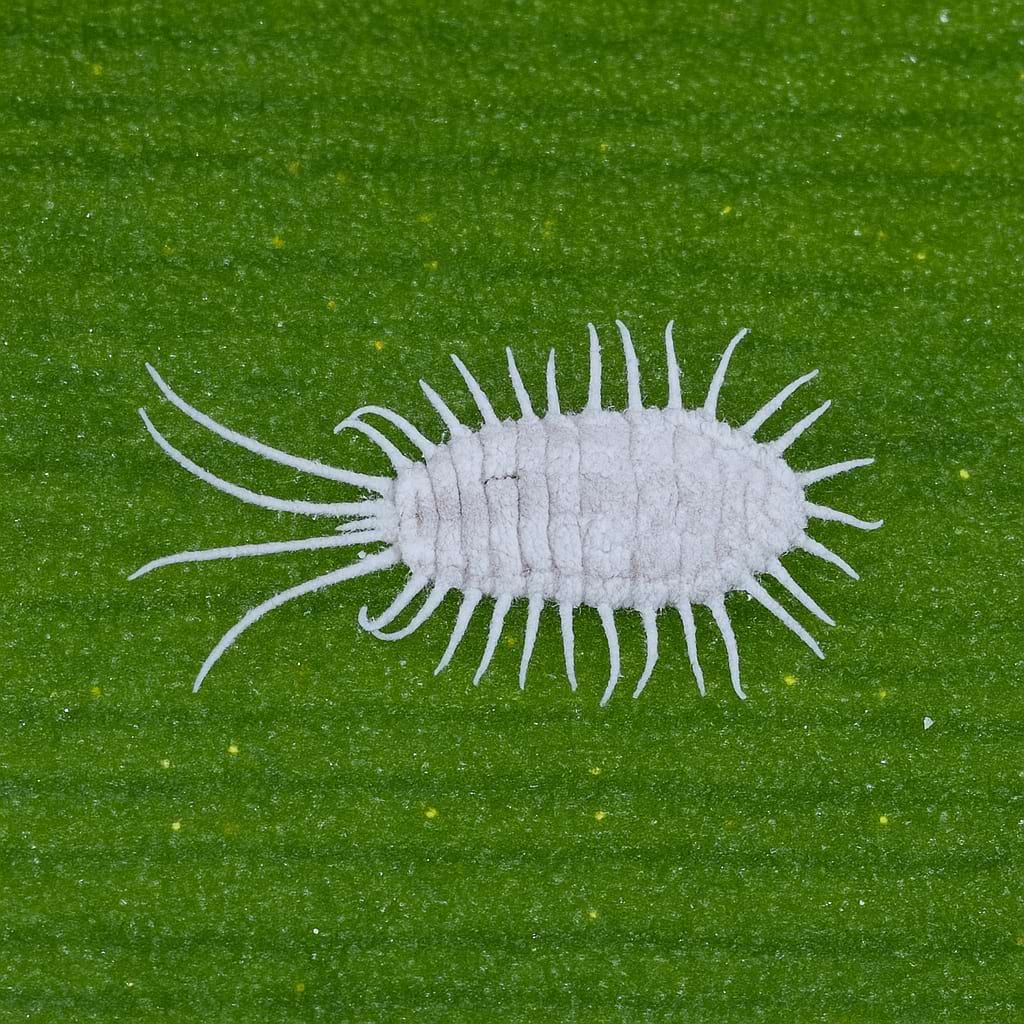
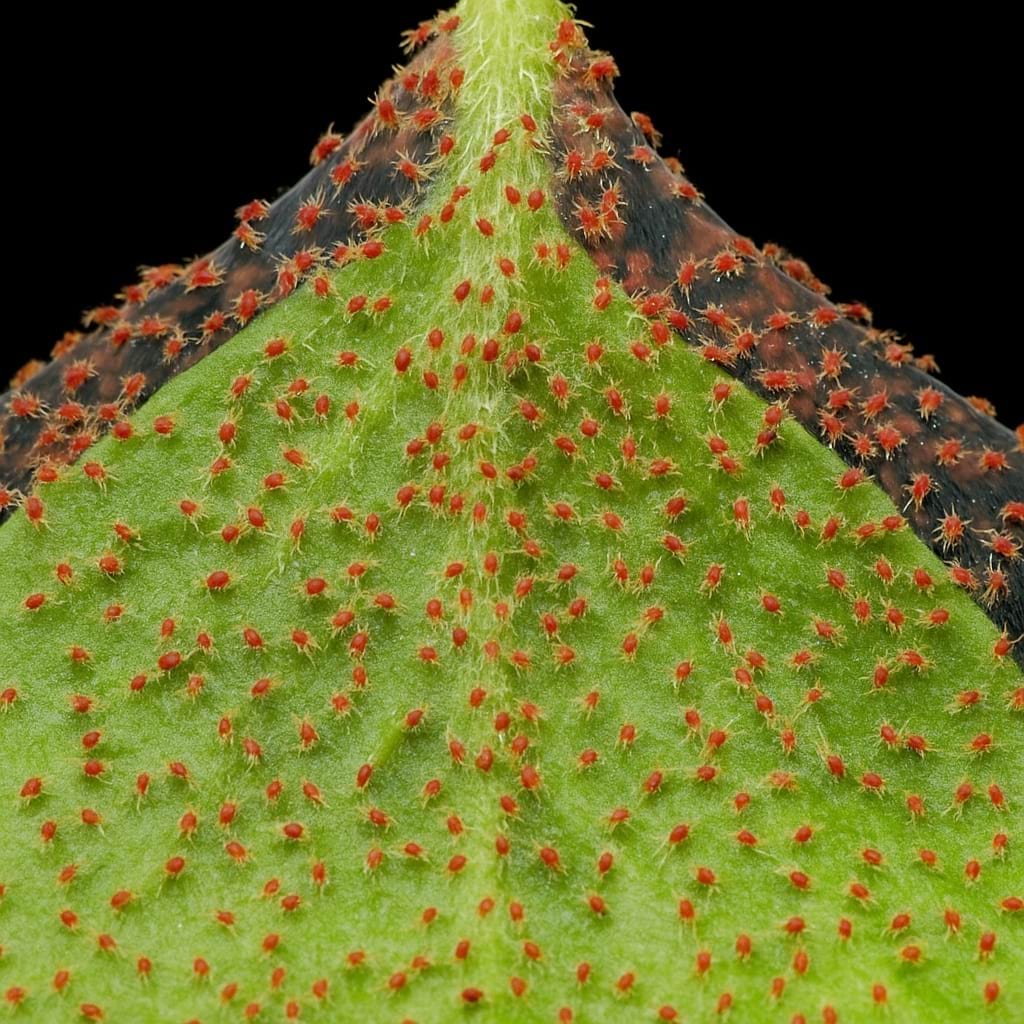
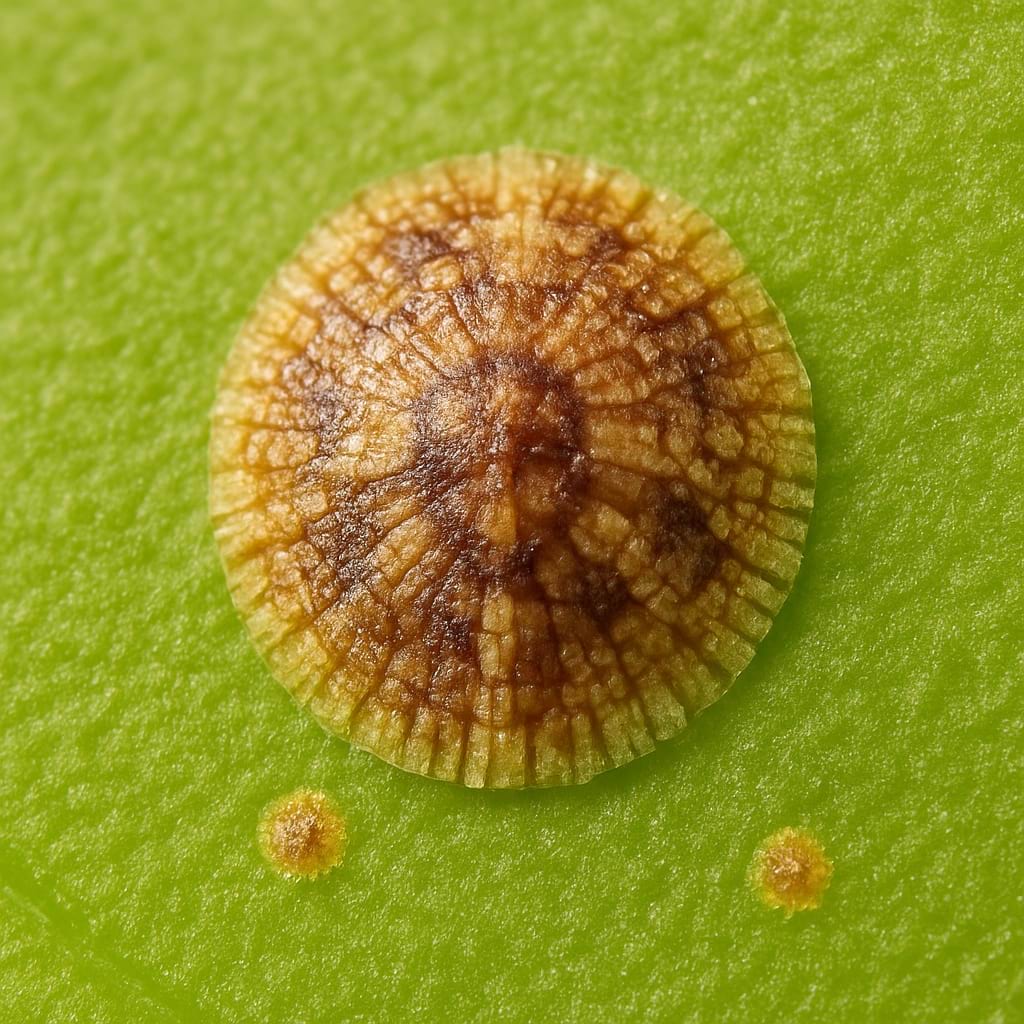
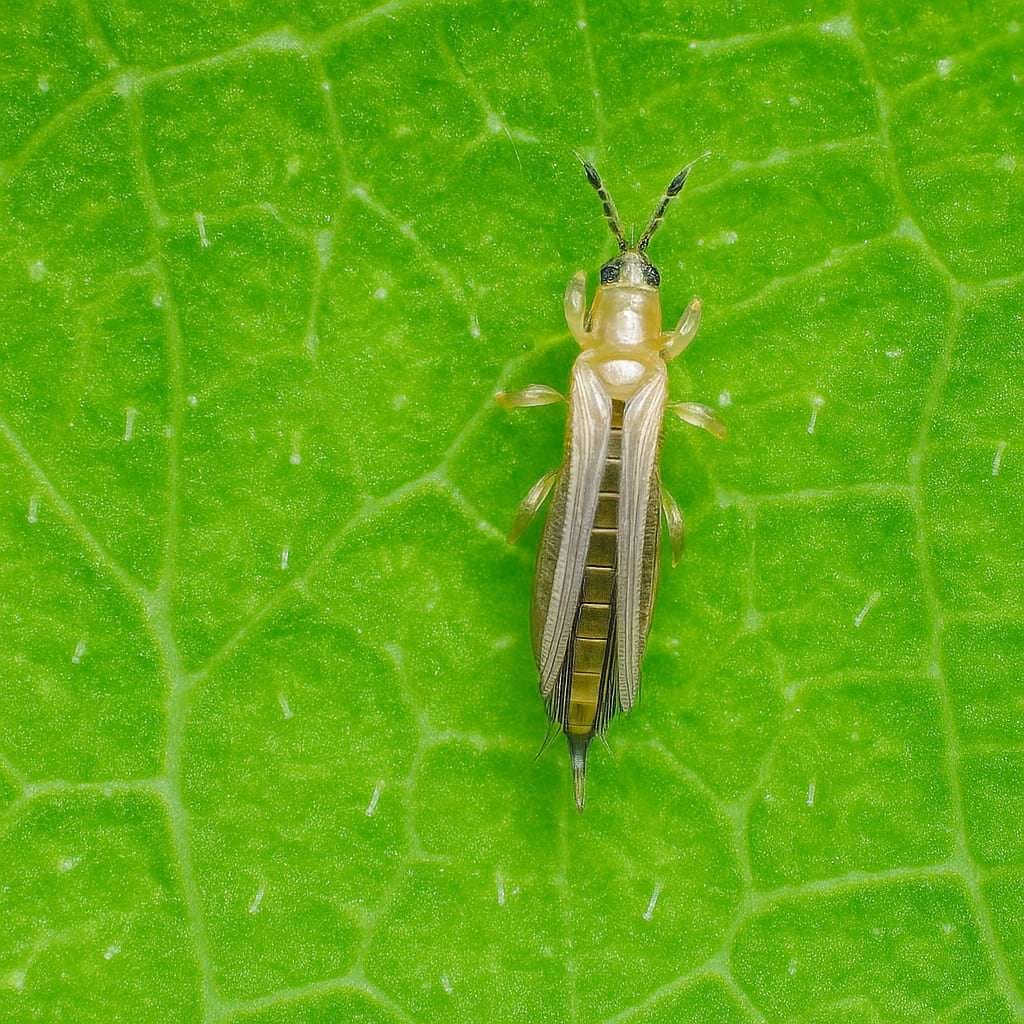
N'Joy is fairly pest-resistant, but no houseplant is immune. The ones to watch for are mealybugs, which look like little cottony white tufts tucked where leaves meet stems; spider mites, tiny dots on the undersides of leaves often with fine webbing in dry air; scale insects, small brown bumps stuck to stems; and thrips, slender insects that leave silvery streaks on the foliage. Because N'Joy already carries pale patches, check carefully, since early damage can blend into the white.
Treating an Infestation
Catch it early and treatment is easy. Wipe small outbreaks off with a cotton swab dipped in rubbing alcohol, then spray the whole plant with diluted neem oil or insecticidal soap, repeating weekly until the pests are gone. For a heavy infestation, isolate the plant right away so it does not spread to your others, and prune out the worst sections. Inspecting any new plant before it joins your collection prevents most problems before they start.
🩺 Common N'Joy Pothos Problems
Leaf and Growth Problems
Most N'Joy troubles trace back to water or light. Yellowing leaves usually mean overwatering, so check the soil, let it dry, and ease off; the odd yellow lower leaf is just normal aging. Leggy growth with long gaps between leaves means too little light, so move it brighter and pinch the stretched vines. Brown crispy edges point to dry air or underwatering, and they tend to hit the white margins first. New leaves that come in small and mostly green are also a light problem, since the plant is dropping variegation to survive a dim spot.
Diseases to Watch
Root rot is the one that actually kills Pothos, and it comes from soggy soil and poor drainage. The signs are yellowing leaves, mushy stems at the base, and a bad smell from the pot. Unpot the plant, cut away every black or mushy root, repot in fresh dry mix, and water less from then on. Bacterial leaf spot is rarer; it shows as dark water-soaked spots with yellow halos, and you handle it by removing affected leaves, improving air flow, and keeping water off the foliage.

🖼️ N'Joy Pothos Display and Styling Ideas
Compact Tabletop and Shelf Setups
N'Joy's small size is its styling superpower. It is one of the few Pothos that genuinely suits a desk, a nightstand, or a crowded plant shelf without sprawling everywhere. A young plant in a small pot makes a tidy tabletop accent, and the crisp green-and-white leaves read as clean and modern rather than wild and jungly.
Trailing and Climbing
Give it time and the vines will trail, but gently; expect a neat 1- to 3-foot cascade rather than the long curtains a Golden Pothos throws. It looks lovely spilling off a low shelf or out of a small hanging basket. You can also train it up a short moss pole for an upright look, though as an E. aureum it will not fenestrate the way a climbing Cebu Blue does; the payoff is simply slightly larger leaves.
Where Not to Put It
Keep N'Joy out of direct sun, which bleaches and burns the white, and away from cold drafts and heating vents. And because every Pothos contains calcium oxalate crystals that are toxic to cats and dogs, set it somewhere a curious pet cannot reach, a high shelf or a hanging spot rather than the floor.
🌟 N'Joy Pothos Pro Care Tips
☀️ Light keeps the white crisp. Bright indirect light holds the clean patches; a dim corner pushes out greener, duller leaves.
💧 When in doubt, wait. N'Joy handles a dry spell far better than soggy roots. Check that the top inch is dry before watering.
✂️ Pinch for fullness. Snipping vine tips makes the plant branch and stay dense instead of stringy.
🪴 Use chunky soil. Add perlite and bark so the mix drains fast and the roots get air.
🌱 Group your cuttings. Several rooted cuttings in one pot give the lush, compact look N'Joy is loved for.
🧹 Wipe the little leaves. Dust blocks light on these small leaves quickly, so a gentle wipe every few weeks helps.
🐌 Expect slow, steady growth. N'Joy is a slow grower by nature; don't try to force it with extra fertilizer.
🔍 Inspect the white patches. Pests hide easily against the pale variegation, so check leaf undersides often.
❓ Frequently Asked Questions
What is the difference between N'Joy and Pearls and Jade Pothos?
Look at the white parts of the leaf. N'Joy has clean, solid white patches with a crisp edge against the green. Pearls and Jade has white areas that are freckled with tiny green and gray-green speckles, usually concentrated toward the leaf margins. Clean blocks mean N'Joy; speckled, mottled white means Pearls and Jade.
Is N'Joy Pothos a slow grower?
Yes. Because so much of each leaf is white and holds no chlorophyll, N'Joy has less energy and grows noticeably slower than a Golden or Neon Pothos. That is normal, not a problem. Bright light and a monthly feed in the growing season give you its best growth.
Why is my N'Joy Pothos turning all green?
It is reverting because of low light. With less light, the plant grows leaves with more green to photosynthesize more efficiently, sacrificing the white. Move it to a brighter, indirect spot and prune off any fully green vines so the plant channels its energy back into the variegated growth.
Is N'Joy Pothos toxic to cats and dogs?
Yes. Like every Pothos, N'Joy contains calcium oxalate crystals that are toxic to cats and dogs. Chewing it can cause mouth irritation, drooling, vomiting, and trouble swallowing. It is rarely fatal, but it is genuinely unpleasant, so keep the plant up high or hanging where pets cannot reach it.
Can N'Joy Pothos grow in water?
Yes, it can live in water long term. Many people root cuttings in a jar and simply leave them there. Change the water weekly to keep it fresh and oxygenated, and add a drop of diluted liquid fertilizer once a month. Growth is slower than in soil, but it works well and looks pretty.
Does N'Joy Pothos develop fenestrations?
No. N'Joy belongs to Epipremnum aureum, which keeps its heart-shaped leaves and never develops the holes or splits seen on mature climbing plants. If you want fenestrations, you are thinking of Epipremnum pinnatum cultivars like Cebu Blue or Baltic Blue Pothos.
Why are the white parts of my N'Joy turning brown?
The white sections have no chlorophyll, which makes them the most fragile part of the leaf. They brown first from too much direct sun (scorch), from dry air, or from underwatering. Check that the plant is in indirect light, not baking in a window, and that you are watering before the soil goes bone dry.
How big does N'Joy Pothos get?
Indoors, N'Joy stays compact. Vines can trail or climb 6 to 8 feet over many years, but the plant reads as small and tidy because the leaves are little and growth is slow. That habit is why it works so well on desks and small shelves where a Golden Pothos would quickly take over.
ℹ️ N'Joy Pothos Info
Care and Maintenance
🪴 Soil Type and pH: Well-draining aroid mix
💧 Humidity and Misting: Average household humidity is fine; appreciates 50-60%.
✂️ Pruning: Trim leggy vines and pinch tips to keep the plant full and compact.
🧼 Cleaning: Wipe the small leaves with a soft damp cloth every few weeks to remove dust.
🌱 Repotting: When roots circle the pot or poke out of the drainage holes.
🔄 Repotting Frequency: Every 2-3 years
❄️ Seasonal Changes in Care: Reduce watering and stop fertilizing through fall and winter.
Growing Characteristics
💥 Growth Speed: Slow to Moderate
🔄 Life Cycle: Perennial
💥 Bloom Time: Almost never flowers indoors.
🌡️ Hardiness Zones: 10-12
🗺️ Native Area: Cultivar of Epipremnum aureum; the species is native to Mo'orea, French Polynesia
🚘 Hibernation: No
Propagation and Health
📍 Suitable Locations: Desks, shelves, small hanging baskets, bright bathrooms, a short moss pole.
🪴 Propagation Methods: Stem cuttings with at least one node, in water or directly in soil.
🐛 Common Pests: Mealybugs, Spider Mites, Scale Insects, Thrips
🦠 Possible Diseases: Root rot, bacterial leaf spot
Plant Details
🌿 Plant Type: Compact trailing vine
🍃 Foliage Type: Evergreen
🎨 Color of Leaves: Green centers with crisp creamy-white margins
🌸 Flower Color: N/A indoors
🌼 Blooming: No (rarely indoors)
🍽️ Edibility: Not edible
📏 Mature Size: Vines trail or climb 6-8 feet indoors
Additional Info
🌻 General Benefits: Air purifying; removes common indoor toxins.
💊 Medical Properties: None known
🧿 Feng Shui: Said to attract positive energy and steady prosperity.
⭐ Zodiac Sign Compatibility: Virgo
🌈 Symbolism or Folklore: Tidiness, calm, quiet growth
📝 Interesting Facts: N'Joy is a patented sport of Marble Queen, discovered in India and granted US Plant Patent PP19,034 in 2009. Its variegation forms clean blocks rather than the speckles seen on its lookalike, Pearls and Jade.
Buying and Usage
🛒 What to Look for When Buying: Pick a plant with crisp, well-defined green and white patches and no speckling in the white. Avoid plants that are almost entirely white, since leaves with too little green grow poorly.
🪴 Other Uses: Small hanging baskets, desk plants, trailing from a shelf, water culture.
Decoration and Styling
🖼️ Display Ideas: Desk pot, small hanging basket, trailing from a low shelf, bright bathroom.
🧵 Styling Tips: The crisp green-and-white blocks look sharp against terracotta, matte black, or pale wood.
🪴 See also 🪴
Complete Guide To Cebu Blue Pothos Care and Growth
Complete Guide to Marble Queen Pothos Care and Growth
Complete Guide To Baltic Blue Pothos Care and Growth
Complete Guide To Manjula Pothos Care and Growth
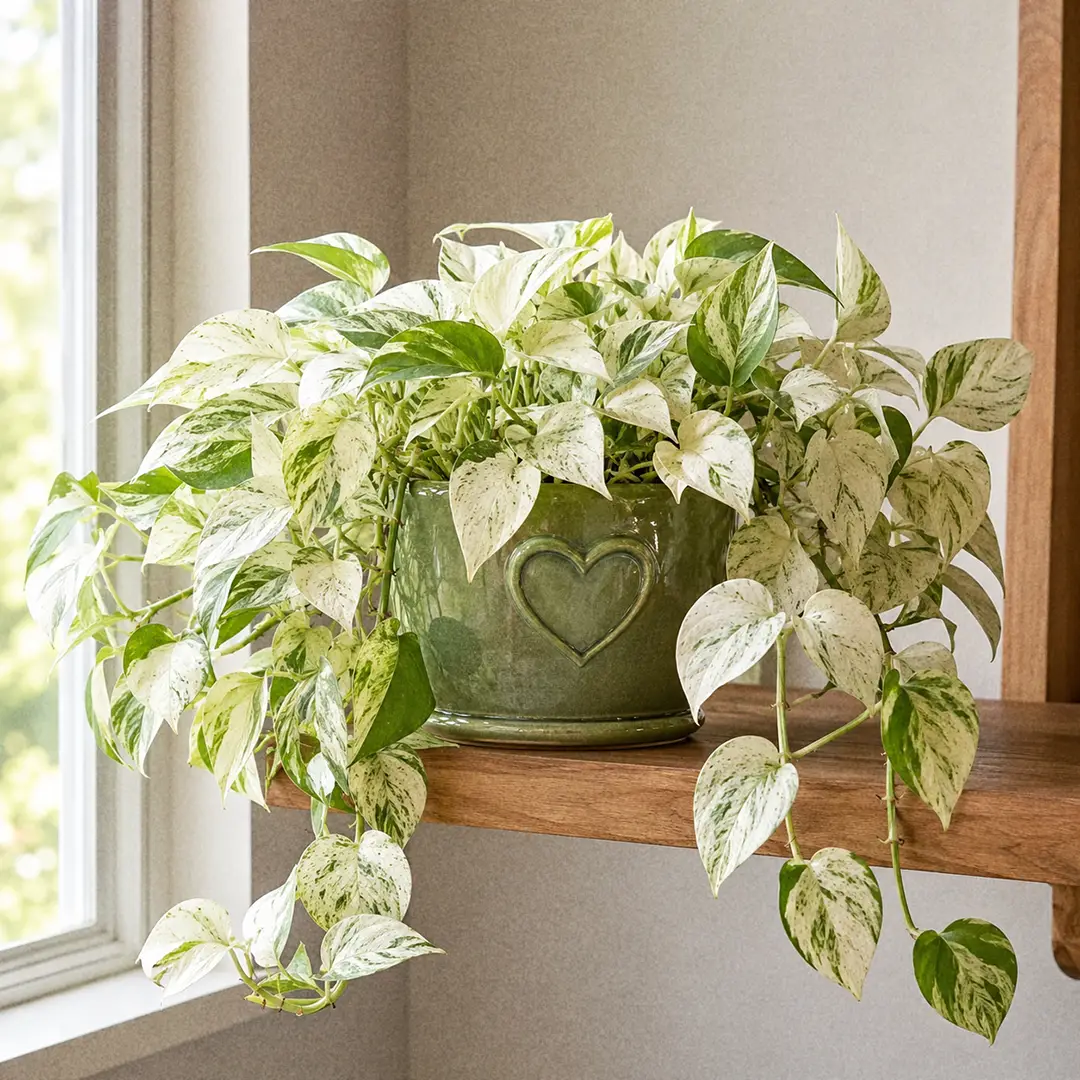
Complete Guide to Snow Queen Pothos Care and Growth
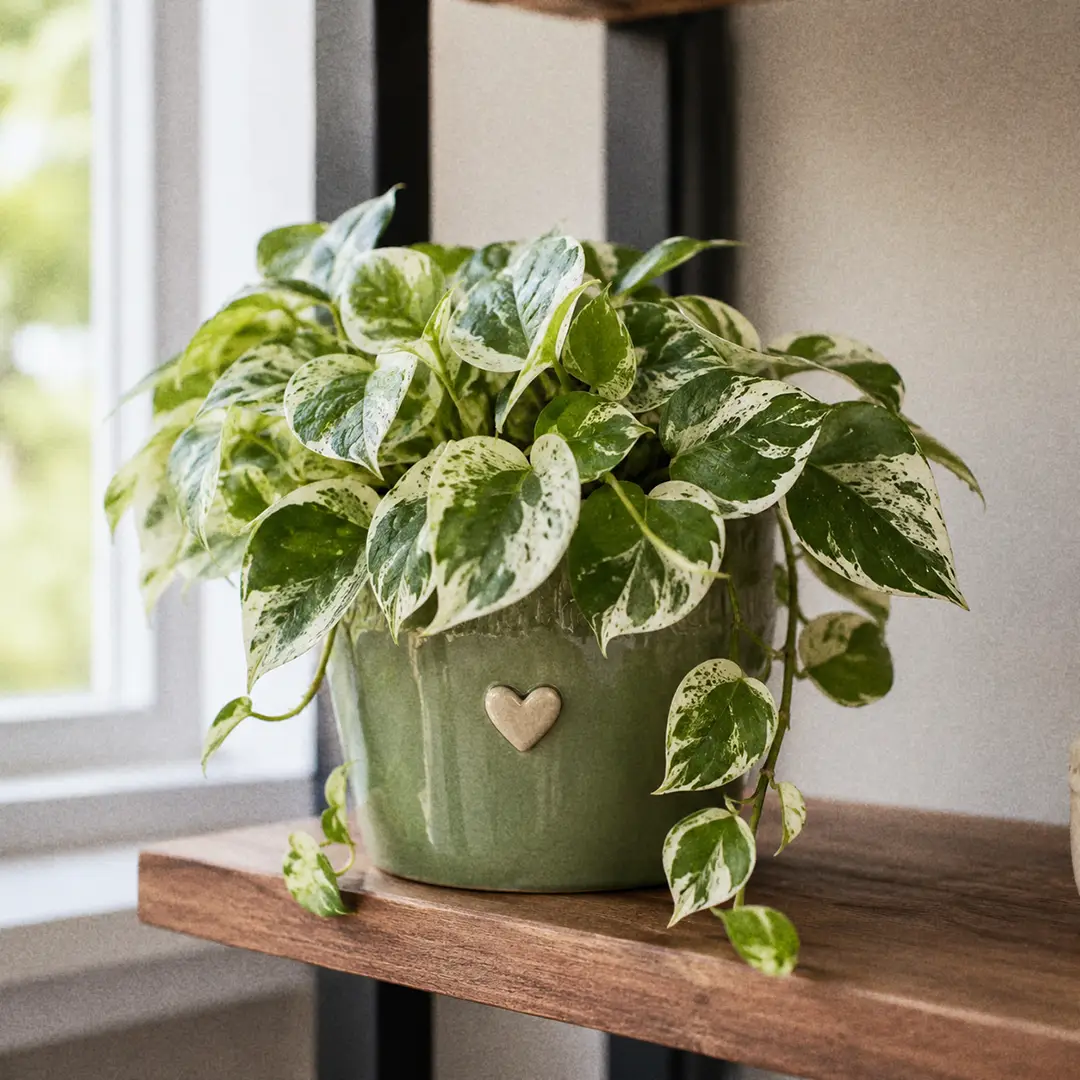
Complete Guide to Pearls and Jade Pothos Care and Growth
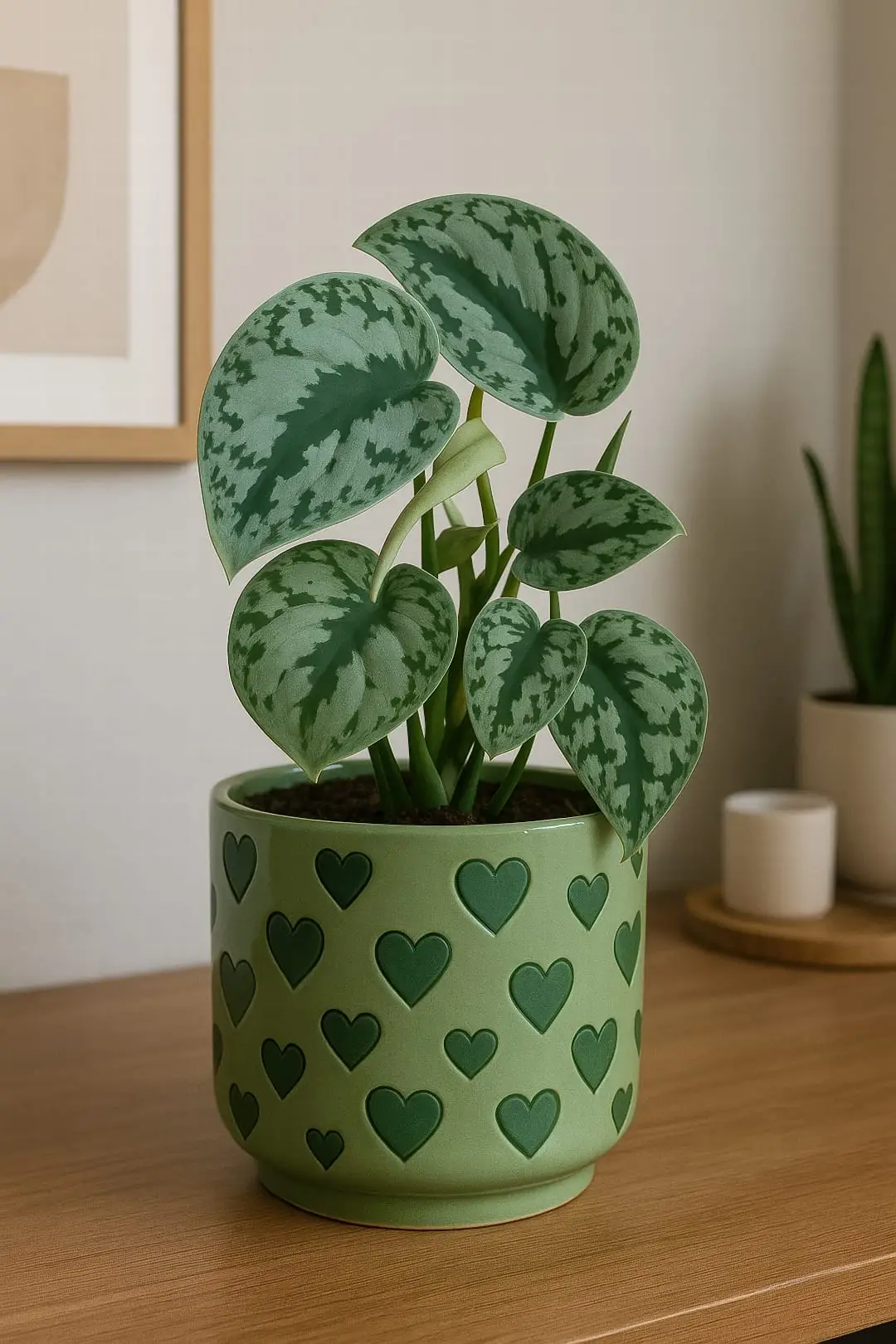
Complete Guide To Satin Pothos Exotica Care and Growth
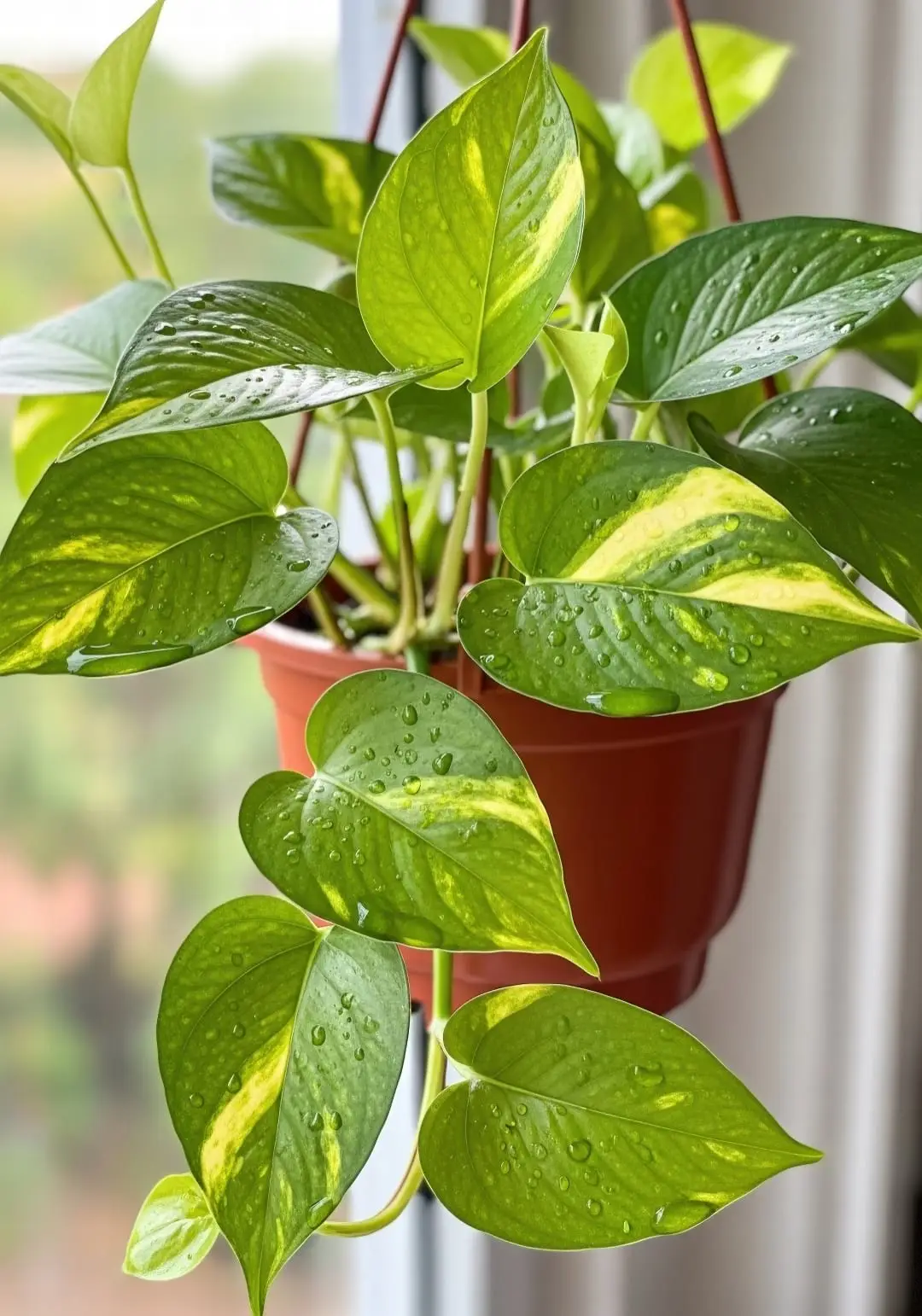

Houseplant101 Forum
Questions & Comments
Ask a question, share your plant experience, or help other plant owners.
Comments are temporarily unavailable.
Open the Houseplant101 ForumNo comments yet
Be the first to ask a question or share your experience about this page.
Log in or create an account
Comments use your Houseplant101 Forum account, but you can stay on this page.
Create a new account