
Green Lady Boston Fern
Nephrolepis exaltata 'Green Lady'
Green Lady Fern, Nephrolepis Green Lady, Boston Fern Green Lady


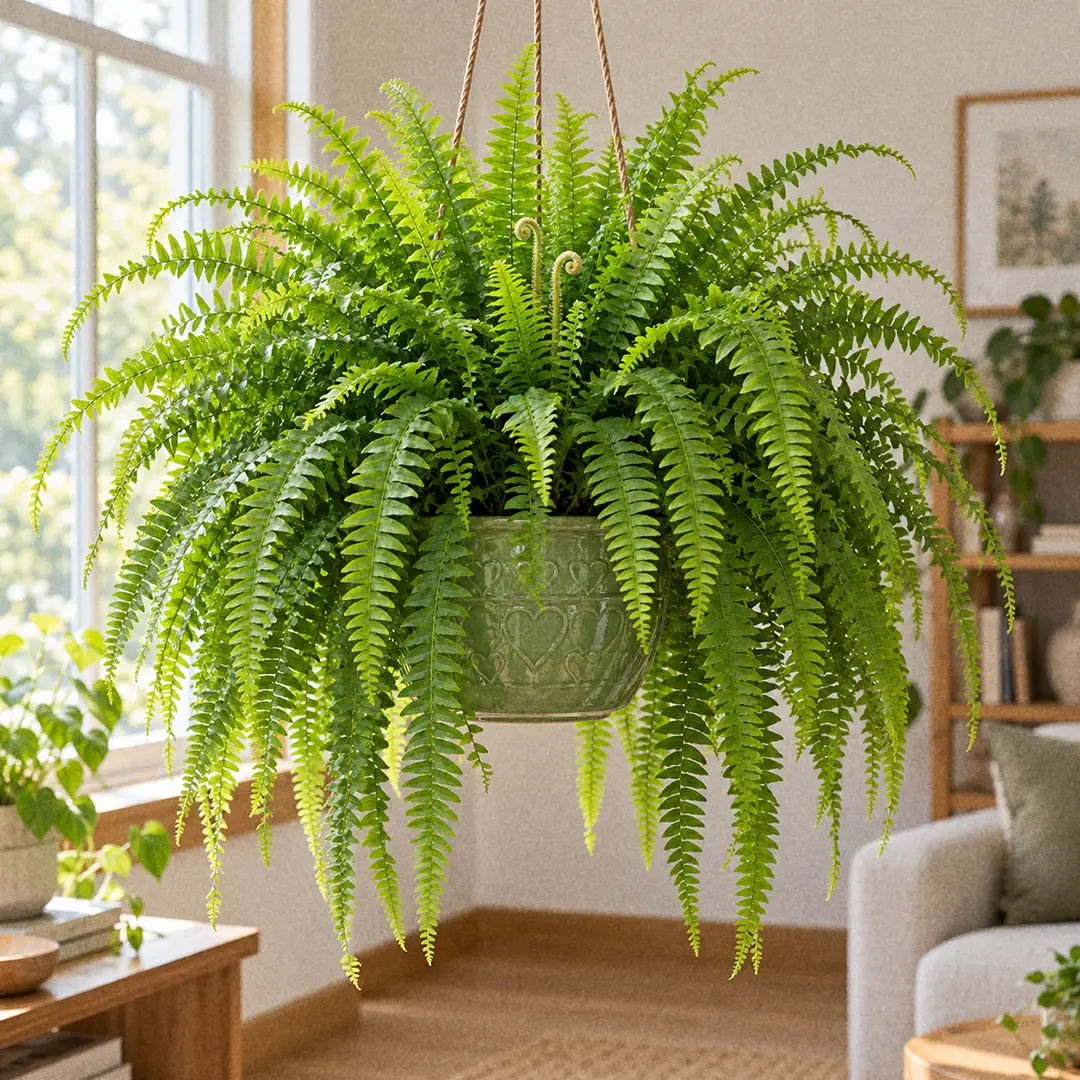
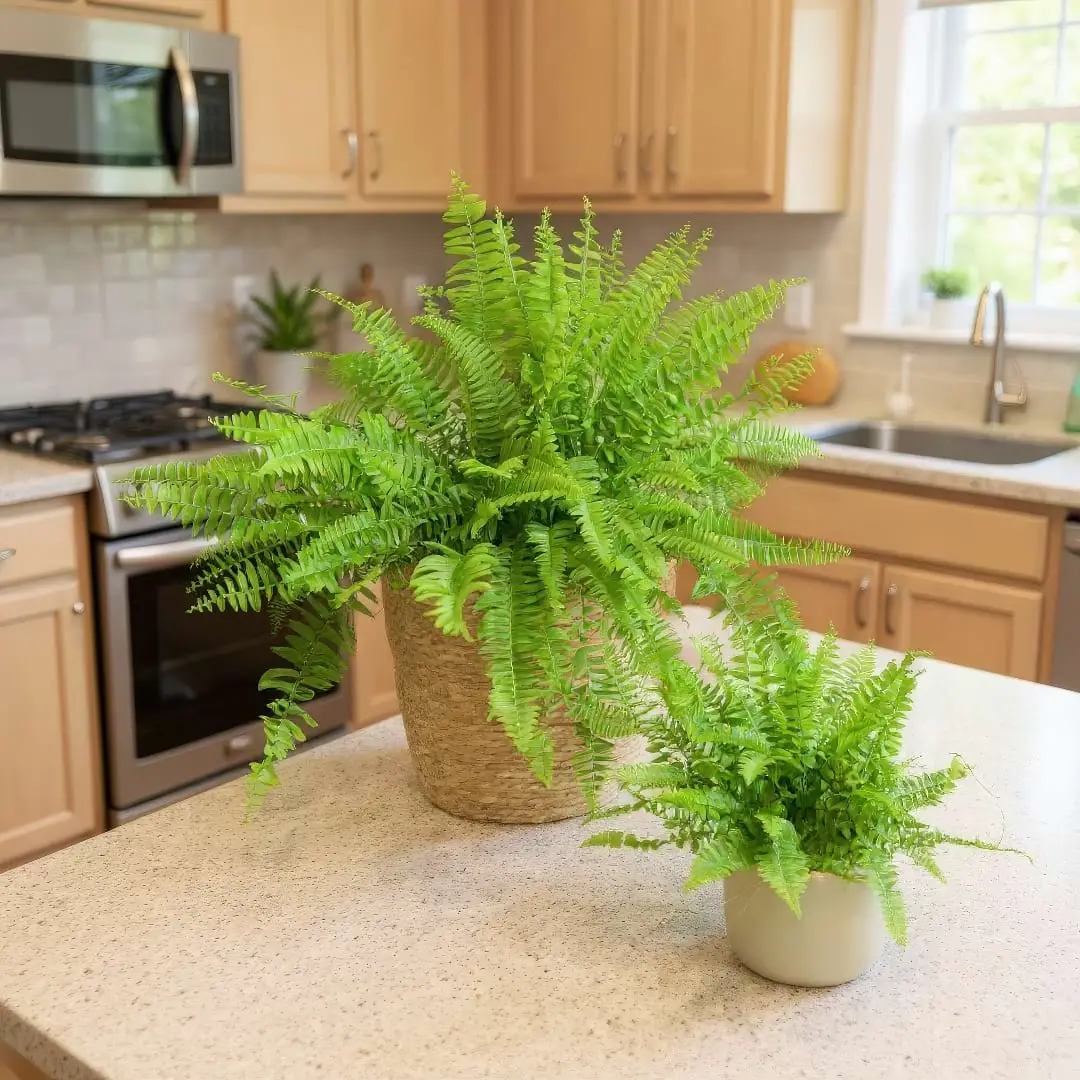
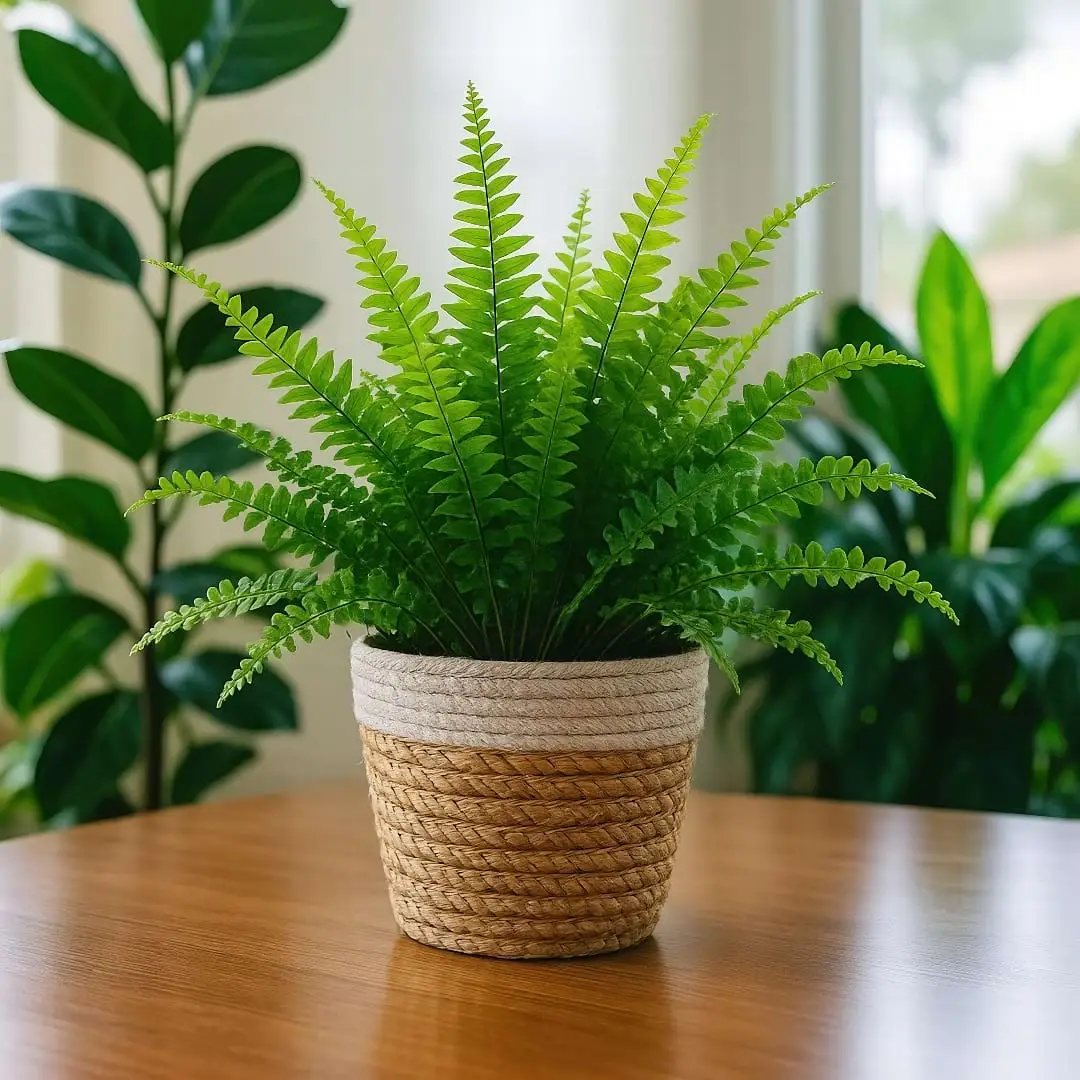
The Green Lady Boston fern is a dense, bright green Nephrolepis exaltata cultivar with upright centre fronds that arch out into a full fountain, which is why it is sold so often in hanging pots. Learn how it differs from a standard Boston fern and how to keep it full indoors.
📝 Green Lady Boston Fern Care Notes
🌿 Care Instructions
⚠️ Common Pests
📊 Growth Information
🪴 In This Guide 🪴

☀️ Green Lady Boston Fern Light Requirements (Bright Indirect)
The Sweet Spot
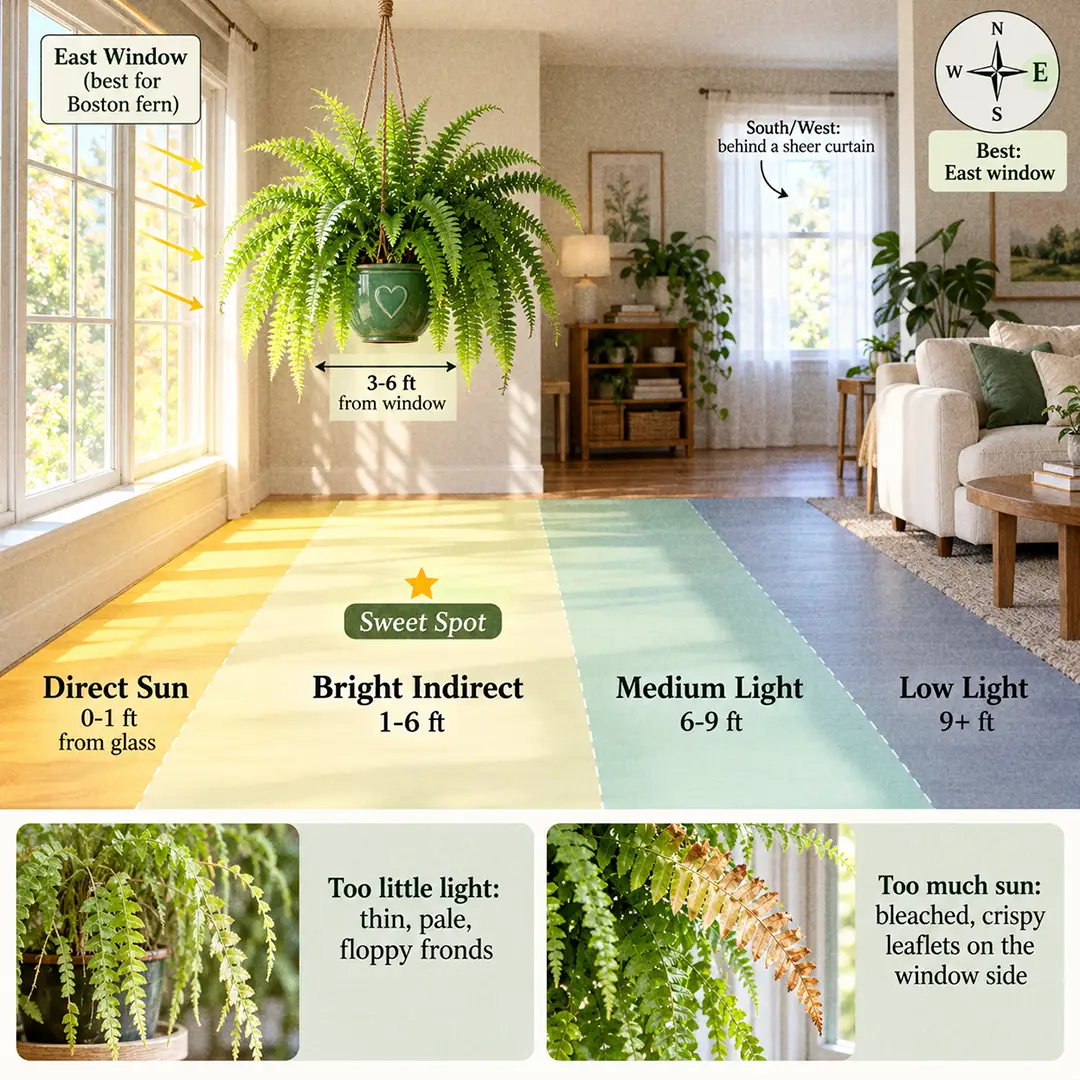
Green Lady wants bright, indirect light: a room that feels bright all day, with the sun itself kept off the fronds. An east-facing window is the easiest win, since an hour or two of soft morning sun does no harm. Near a south or west window, hang it 3 to 6 feet back or behind a sheer curtain. A north window works in summer but is usually too dim in winter.
Hanging plants get a different light than shelf plants. A pot hung high near the top of the window frame sits above most of the light, so the underside of the clump stays shaded. Hang it so the crown sits level with the middle of the glass. Our Indoor Lighting Guide explains how to judge a spot by eye.
Too Little Light
In a dim corner, new fronds come up thinner, longer and paler, and the fountain shape slumps into a loose, floppy mop. The centre also stays damp longer after watering, which is how a dense cultivar like this ends up with a rotting middle. If your only spot is dark, a grow light on for 10 to 12 hours a day keeps it compact.
Too Much Light
Direct midday or afternoon sun bleaches the bright green to a washed-out yellow-green and then crisps the leaflets on the sunny side. That is sunburn, and burnt fronds never green up again. Turn the pot a quarter turn every week or two so the side facing the room gets its share too.
💧 Green Lady Boston Fern Watering Guide (Keep It Evenly Moist)
Watering Frequency
The goal is soil that stays evenly moist, like a wrung-out sponge, but never wet and never dry right through. Water when the top half inch of mix feels dry to your fingertip. In a warm, bright room in summer that can mean every 2 to 4 days for a hanging pot; in winter, once a week is more typical.
Hanging pots dry out faster than you expect. Warm air collects near the ceiling, and a basket open to the air on all sides loses water through its sides as well as its top. A full Green Lady also has a lot of frond surface for its pot size. Lift the pot from underneath: a light pot needs water, a heavy one does not. A moisture meter helps until you learn the weight.
How to Water
Water slowly over the whole surface until it runs out of the drainage holes, then let it finish dripping before you hang it back up. Because the fronds grow so densely, water poured onto the centre tends to sheet off the foliage and miss the soil, so lift the outer fronds aside and aim for the mix itself.
If the root ball has dried out and water runs straight through, stand the pot in a bowl of water for 20 to 30 minutes. That kind of bottom watering re-wets peat or coir that has shrunk away from the sides of the pot.
Signs of Trouble
A thirsty Green Lady goes dull and greyish, then drops leaflets from the older fronds when you brush past. Soil that smells sour, fronds that yellow from the base while the mix is wet, and a centre that turns brown and soft all point to too much water and possible root rot. Our watering guide covers the basics in more depth.
🪴 Best Soil for Green Lady Boston Fern (Moist but Airy)
What the Soil Needs
Boston fern roots are fine and shallow. They want a mix that holds moisture evenly but still has air in it, because a dense, airless compost turns sour in a pot that is watered this often. Slightly acidic is ideal, and most peat or coir-based potting mixes already sit there.
DIY Soil Mix
A simple blend that works:
- 2 parts good indoor potting mix
- 1 part coco coir or peat
- 1 part perlite or fine orchid bark
The coir keeps the moisture steady between waterings, and the perlite or bark keeps the mix from packing down around the roots. For a hanging pot, lean slightly toward the coir, since baskets dry faster than pots on a shelf.
Pre-Made Options
A bagged houseplant or peat-based potting mix with some extra perlite stirred in is fine. Skip cactus mix, which drains too fast, and heavy garden soil, which stays soggy and compacts. Our potting soil guide compares the common bags, and the Soil Guide explains what each ingredient does.
🍼 Fertilizing Green Lady Boston Fern
When and How Often
Feed only while the plant is actively pushing out new fiddleheads, usually spring to late summer. Every 4 weeks is plenty. Stop in autumn and winter, when growth slows and the salts would just build up in the pot. Water first and feed second, since fertilizer on a dry root ball burns the fine roots.
What to Use and Warning Signs
Use a balanced liquid houseplant fertilizer at half the label strength. Ferns are light feeders, and a full dose shows up as brown, burnt leaflet tips and a white crust on the soil. If you see that, flush the pot with plenty of plain water and skip a feed or two. Pale, small new fronds in midsummer, with light and water both right, are the opposite signal that the plant is hungry. Our Fertilizing Guide and fertilizers guide go into products and ratios.
🌡️ Green Lady Boston Fern Temperature Range
Ideal Range
Ordinary room temperature suits it: about 60-75°F (15-24°C). It handles a few degrees either side for short spells, but below about 50°F (10°C) growth stops and fronds start to brown. It has no frost tolerance at all.
Drafts, Heaters and Summers Outside
Keep it out of the path of heating vents, radiators and air conditioning, which dry the air around the fronds in hours. A cold drafty window in January causes the same leaflet drop that drought does. In summer it can hang on a shaded porch once nights stay above about 55°F (13°C), sheltered from wind and afternoon sun. Check it for hitchhiking pests before it comes back inside.
💦 Green Lady Boston Fern Humidity Requirements
Ideal Humidity
Aim for 50-60% relative humidity or more. Below about 40%, which is normal in a heated home in winter, the leaflet tips brown and the older fronds start shedding. Humidity is the single biggest reason Boston ferns of every cultivar look tired by February.
Humidity Boosters That Work
A small humidifier near the plant is the only method that reliably moves the number. Grouping it with other leafy plants helps a little, and a bright bathroom or kitchen is often the most humid room in the house. Misting wets the fronds for a few minutes and then it is gone, so do not rely on it. Our humidity guide and the plants that love humidity roundup have more ideas.
🌸 Green Lady Boston Fern Flowers (Does It Bloom?)
No Flowers, Only Fronds
Green Lady never flowers. Ferns are an older plant group than flowering plants and reproduce by spores, not seeds. Everything you are growing it for is the foliage.
Brown Dots Under the Fronds
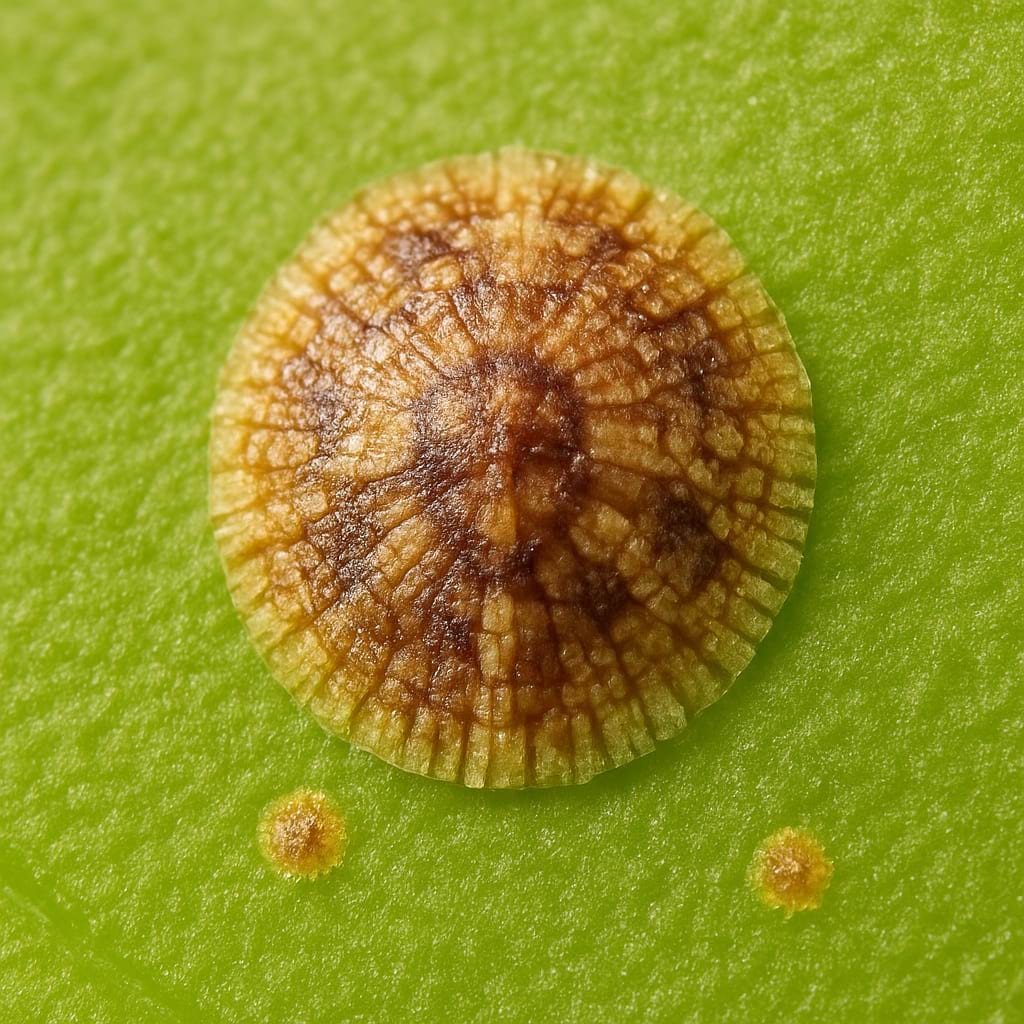
You may find rows of small brown dots on the underside of mature leaflets. These are sori, clusters of spore cases, and they sit in neat lines along the leaflet edges. Scale insects look similar but are scattered randomly and scrape off with a fingernail. Commercial growers multiply Boston fern cultivars from runners and lab tissue culture rather than spores, so there is no reason to try sowing them at home.
🏷️ Green Lady Boston Fern Types and Varieties
What Makes Green Lady Different
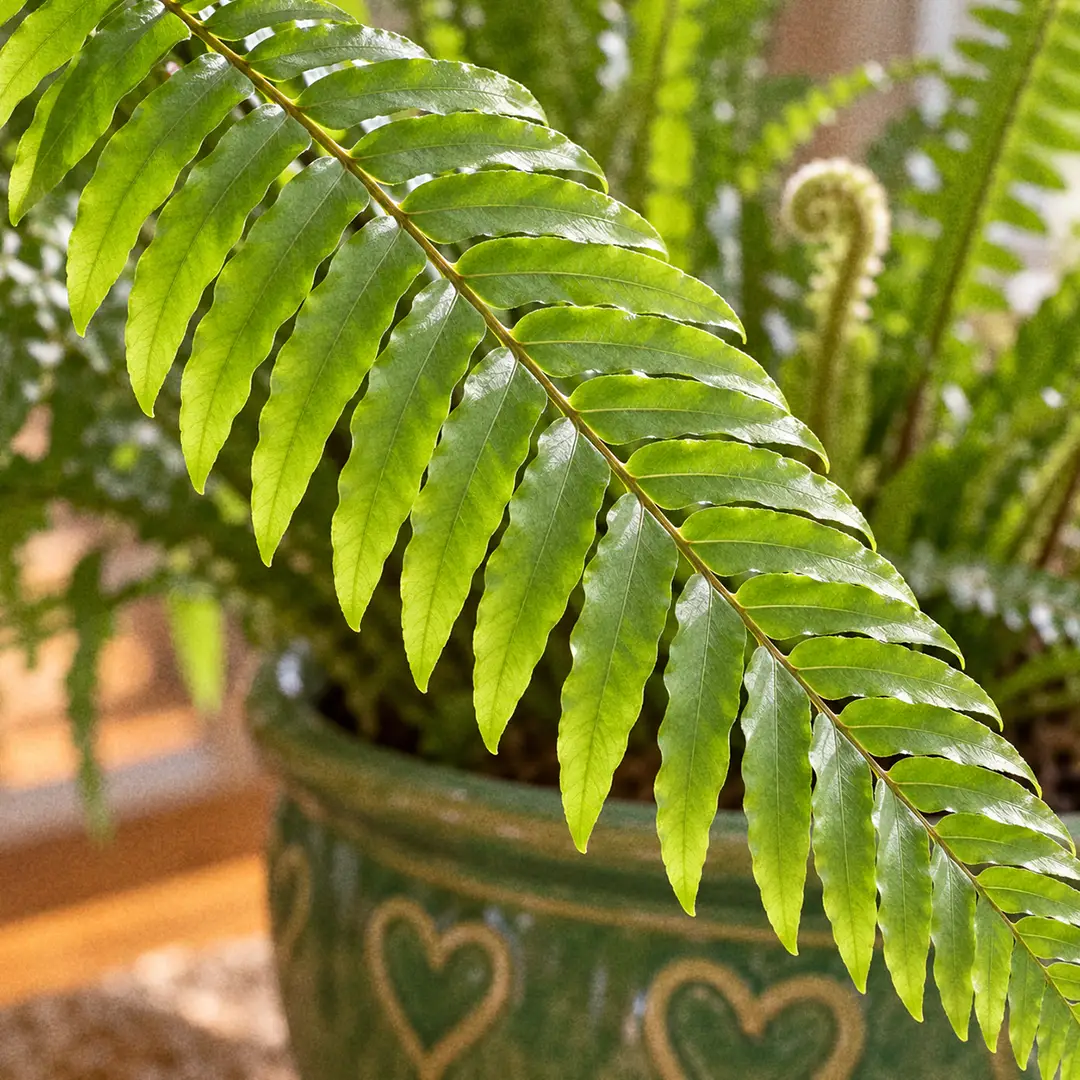
Green Lady is a named cultivar of Nephrolepis exaltata, the same species as the classic Boston Fern. Its breeder is not publicly documented, but it was already an established greenhouse variety in the Netherlands by 2012, when a sport of it was patented as a new cultivar. That patent describes Green Lady as more upright, slower growing and slightly darker green than its offspring, which matches what you see in the pot: an upright centre, outer fronds that arch out, and long, narrow, bright green fronds whose leaflets carry only a slight wave.
Green Lady vs Standard Boston Fern
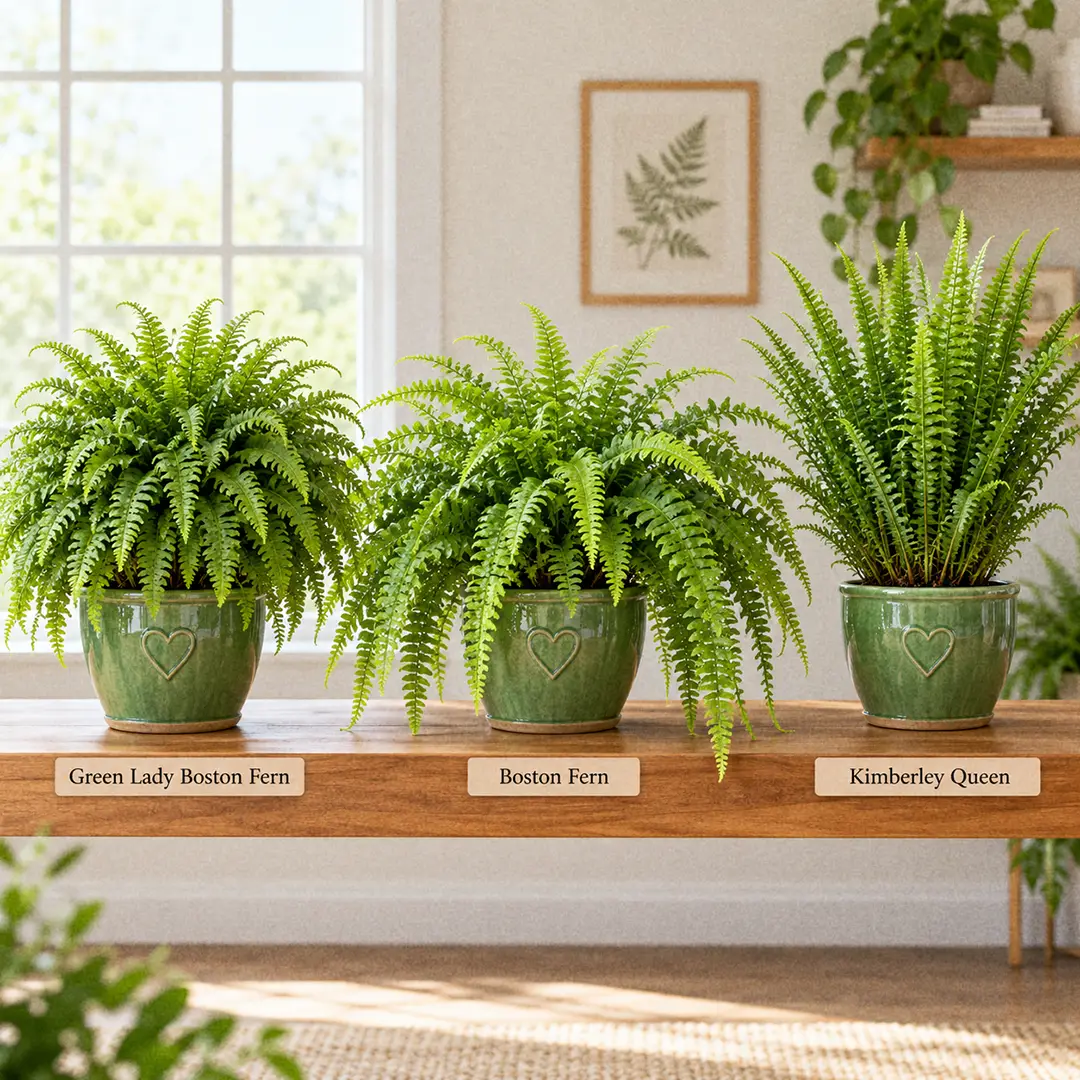
Sellers consistently describe Green Lady as denser, fuller and tidier than the traditional Boston fern, and that is the honest difference: it fills out as a rounded ball rather than a flat-topped spray. Where sources disagree is size. Some listings call it compact, but European growers give a mature size of around 75 cm (2.5 feet) tall and 75-100 cm wide, which is close to a full-size Boston. Treat "compact" as a description of the shape, not a promise that it stays small.
You may also read that it sheds less. I could not find a grower who actually documents that. In dry air it drops leaflets like any Boston fern.
Green Lady vs Dallas and Kimberley Queen
The Dallas Fern is the genuinely small one, usually topping out around a foot to a foot and a half, and it puts up with drier air. Choose it for a desk or a small shelf. The Kimberley Queen Fern is a different species, Nephrolepis obliterata, with stiffer, narrower, more upright fronds that hold their leaflets far better in ordinary room humidity. Green Lady sits between them: softer and fuller than Kimberley Queen, bigger than Dallas, and with the same humidity needs as a classic Boston.
Other Boston Fern Cousins
For heavy frills, look at Fluffy Ruffles. For a slightly more compact feathery look, the Ariane Boston Fern is similar in spirit. The much larger Macho Fern is another species again. Our Boston fern varieties page lines them up with photos.
🪴 Potting and Repotting Green Lady Boston Fern
When to Repot
Green Lady grows quickly in a warm, bright spot and fills a nursery pot within a year or two. Repot in spring when roots poke out of the drainage holes, the pot dries out within a day of watering, or the clump is so tight that water runs off the surface. Many hanging-pot plants arrive already crowded, so check the roots in the first spring.
Choosing a Pot
Go up just one size, an inch or two wider. Plastic or glazed ceramic holds moisture longer than terracotta, which suits a fern that hates drying out. A hanging pot with a built-in saucer saves your floor, but tip out any water that collects there. Our plant pots guide compares materials.
Step-by-Step Repotting
Water the day before so the root ball holds together. Ease the plant out, loosen any circling roots with your fingers, and cut away dark, mushy ones. Set it in fresh mix at the same depth it grew before, with the crown right at the surface, never buried. Firm the mix lightly, water well, and keep it out of direct sun for a week. The repotting guide has more detail.
✂️ Pruning Green Lady Boston Fern
When and What to Prune
Trim any time of year. Cut fronds that are brown, yellow or bare of leaflets right at the base, as close to the soil as you can. Do not trim brown tips halfway along a frond; the cut edge just browns again.
Clearing the Centre
This matters more on Green Lady than on looser cultivars. The dense middle traps old, dying fronds that hold moisture and block light and air from the crown. Every month or two, part the fronds and pull out the dead ones from the centre. It keeps the ball shape healthy and cuts the risk of crown rot.
Runners and Hard Cutbacks
Fuzzy runners will snake out over the pot rim. Snip them off for a tidy look or use them for new plants. If the whole plant has gone thin and brown, you can cut everything back to about 2 inches in spring and let it regrow, but never do it in winter.
🌱 How to Propagate Green Lady Boston Fern
Best Method: Division
Division is the quickest route to two full plants. In spring, lift the plant out of its pot and look for natural crown sections. Pull them apart by hand, or cut through the root ball with a clean knife, so each piece has its own roots and several healthy fronds. Pot each division at its original depth in fresh mix, water well, and keep it warm, humid and out of direct sun for a few weeks. Our plant division guide shows the process step by step.
Rooting Runners
Green Lady sends out thin, fuzzy runners that form small plantlets where they touch soil. Set a small pot of moist mix beside the parent, pin a runner onto its surface with a bent paperclip, and keep that mix damp. When the plantlet has its own roots and a couple of new fronds, usually after several weeks, snip the runner. On a hanging pot, runners that dangle in the air will not root, so bring a small pot up to them or wait until repotting.
Tips for Success
- Spring and early summer root fastest, while the plant is in active growth.
- Small divisions with few fronds sulk; aim for chunks at least a third of the plant.
- A clear plastic bag tented over a new division for a week or two keeps humidity high while roots settle.
- Skip fertilizer until you see new fiddleheads. Our propagation hub covers the general principles.
🐛 Green Lady Boston Fern Pests and Treatment
Common Pests
The dense clump gives pests plenty of places to hide, so look into the centre, not just at the outer fronds.
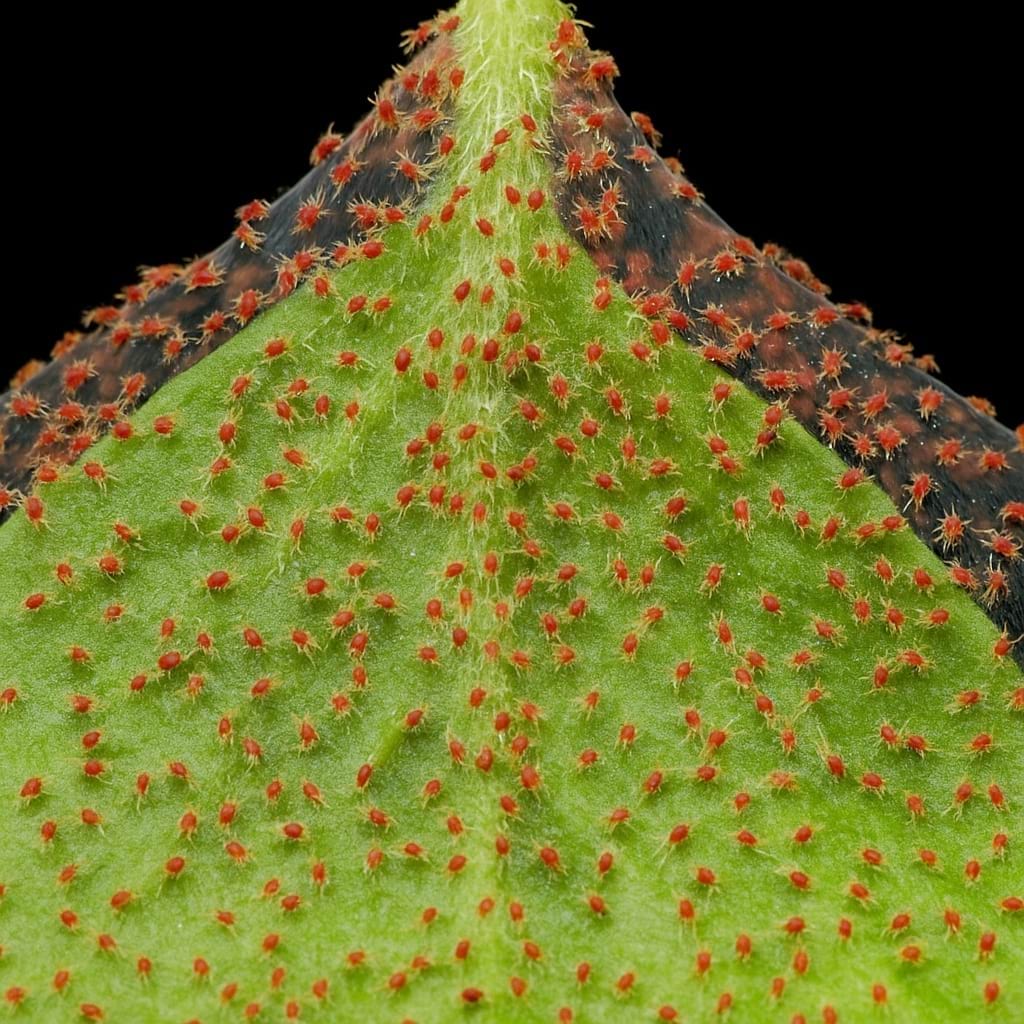
- Spider mites are the big one in dry winter air: fine webbing between leaflets and a dusty, speckled look.
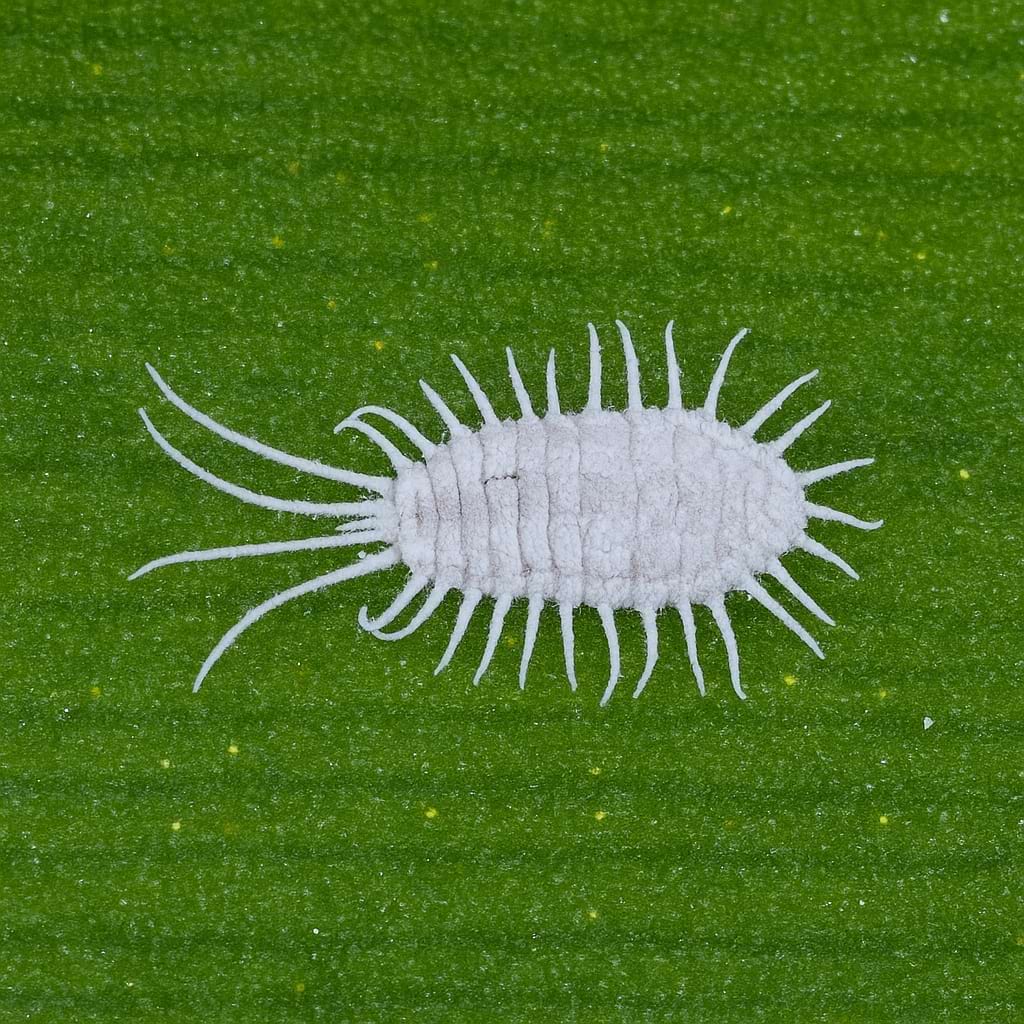
- Mealybugs tuck into the crown as white cottony blobs at the base of the fronds.
- Scale insects are brown bumps on the frond stems; unlike spore dots, they sit randomly and scrape off.
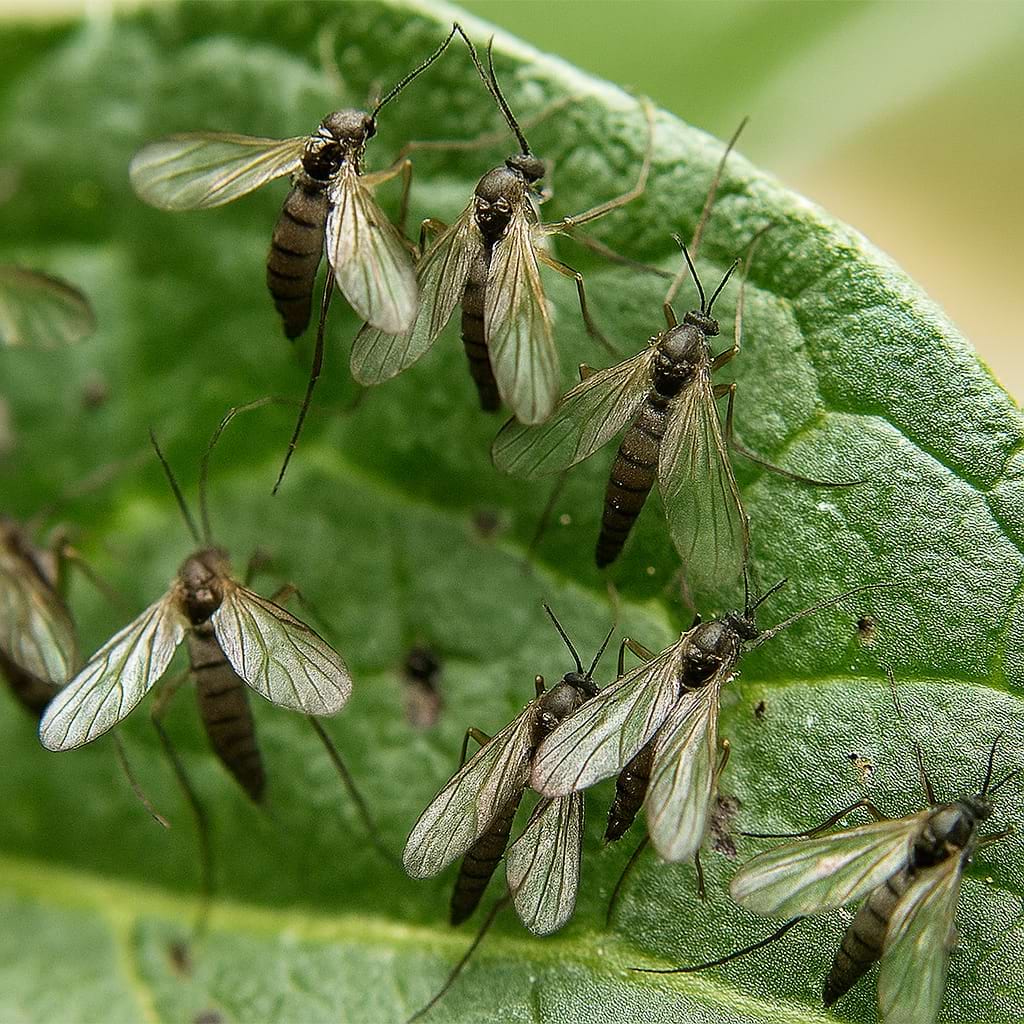
- Fungus gnats breed in the constantly moist mix this fern needs.
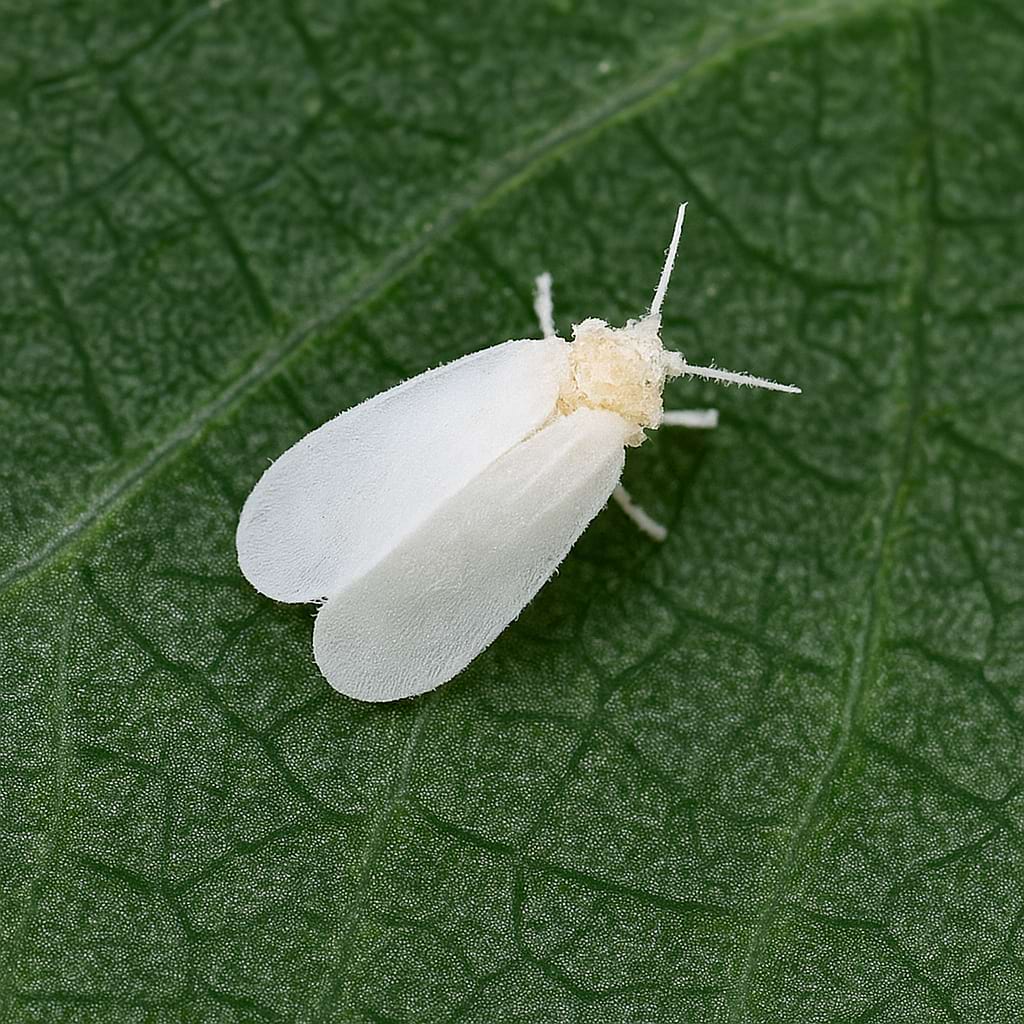
- Whiteflies flutter up in a small cloud when you brush the fronds.
Treatment and Prevention
Isolate the plant first. A lukewarm shower knocks off mites and whiteflies, and dabbing mealybugs and scale with rubbing alcohol on a cotton swab removes them. Ferns are sensitive to many sprays, so test insecticidal soap or neem on one frond and wait two days before treating the rest. Yellow sticky traps catch gnats, and higher humidity is the best long-term defence against mites.
🩺 Common Green Lady Boston Fern Problems
Dry Air and Shedding
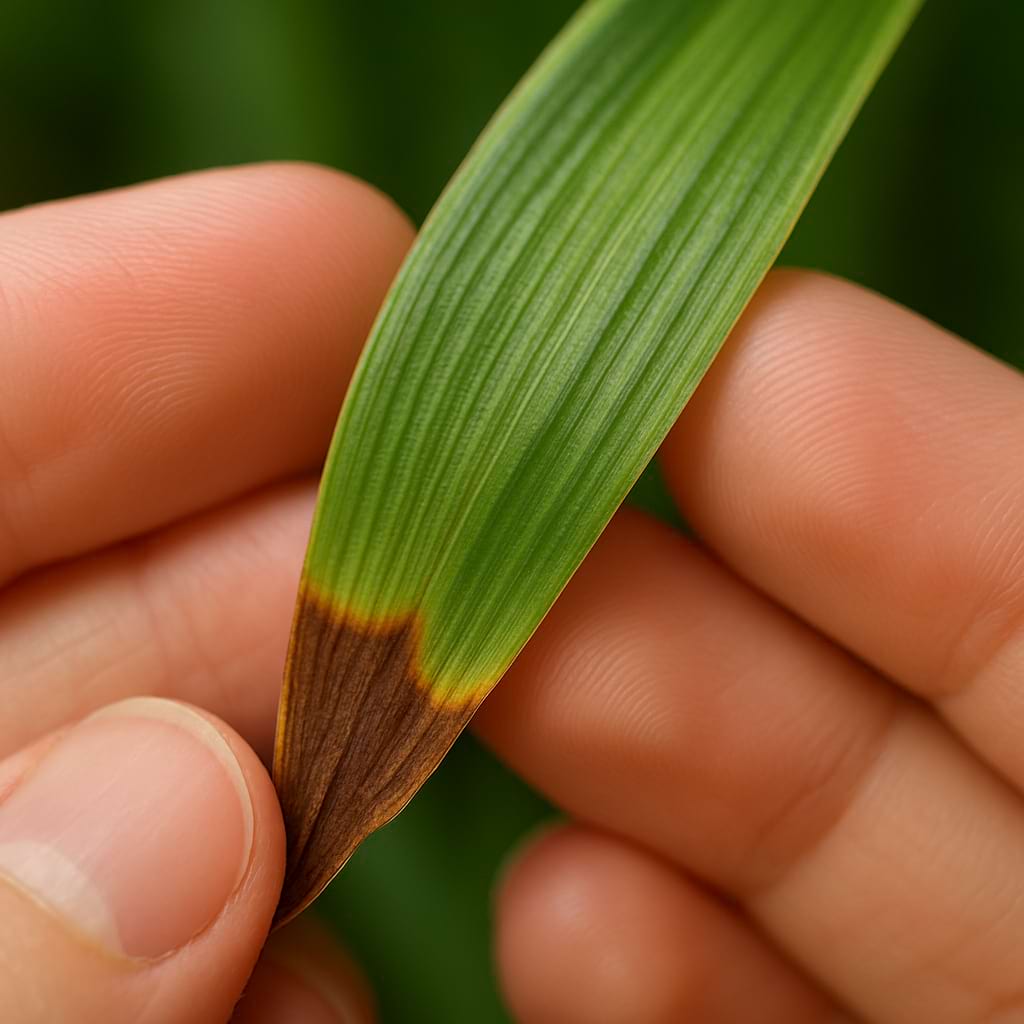
- Brown, crispy edges on the leaflets nearly always mean low humidity or a pot that dried out. Trim the worst fronds and add a humidifier.
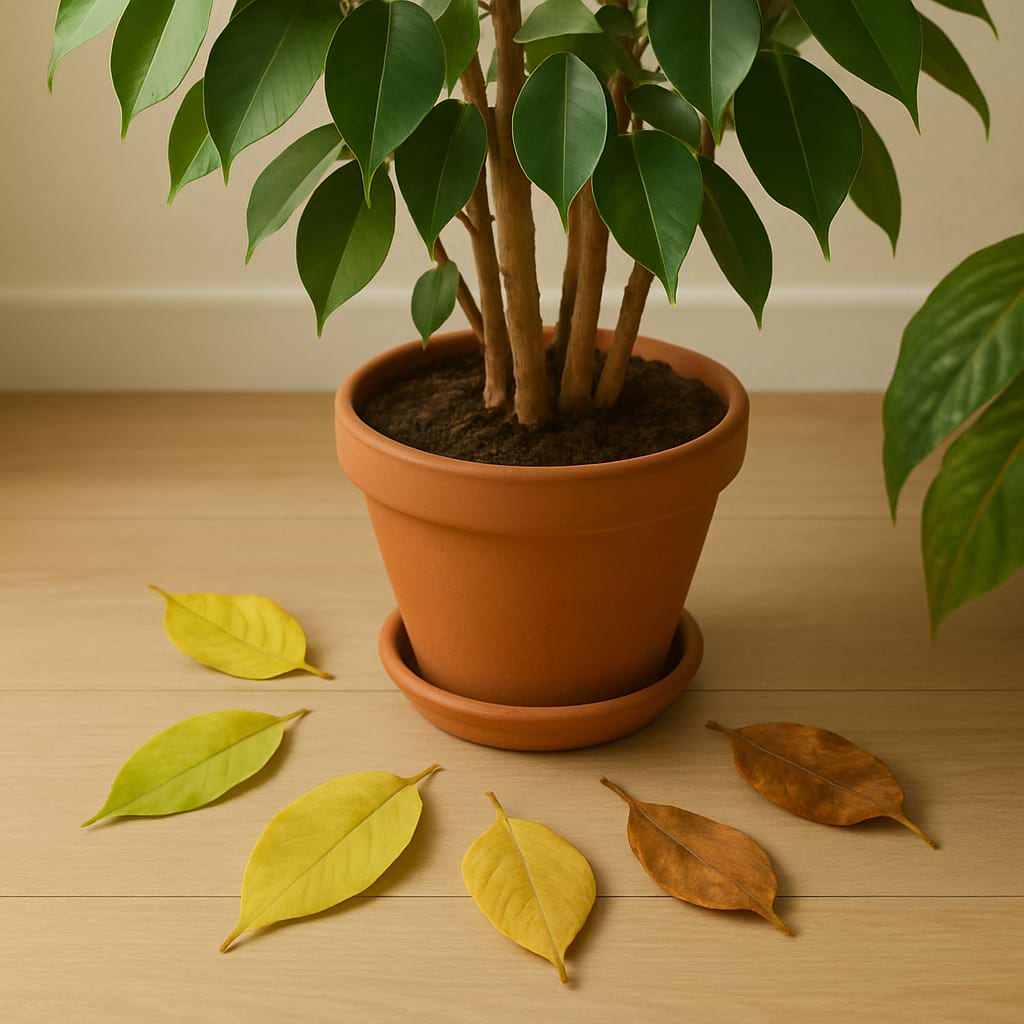
- Leaf drop shows up as a carpet of tiny leaflets under the pot. Dry soil, dry air and sudden moves or cold drafts are the triggers.
Watering and Root Problems
- Yellowing leaves from the base up, with wet soil, means too much water. A few yellow fronds on the oldest outer ring is normal ageing.
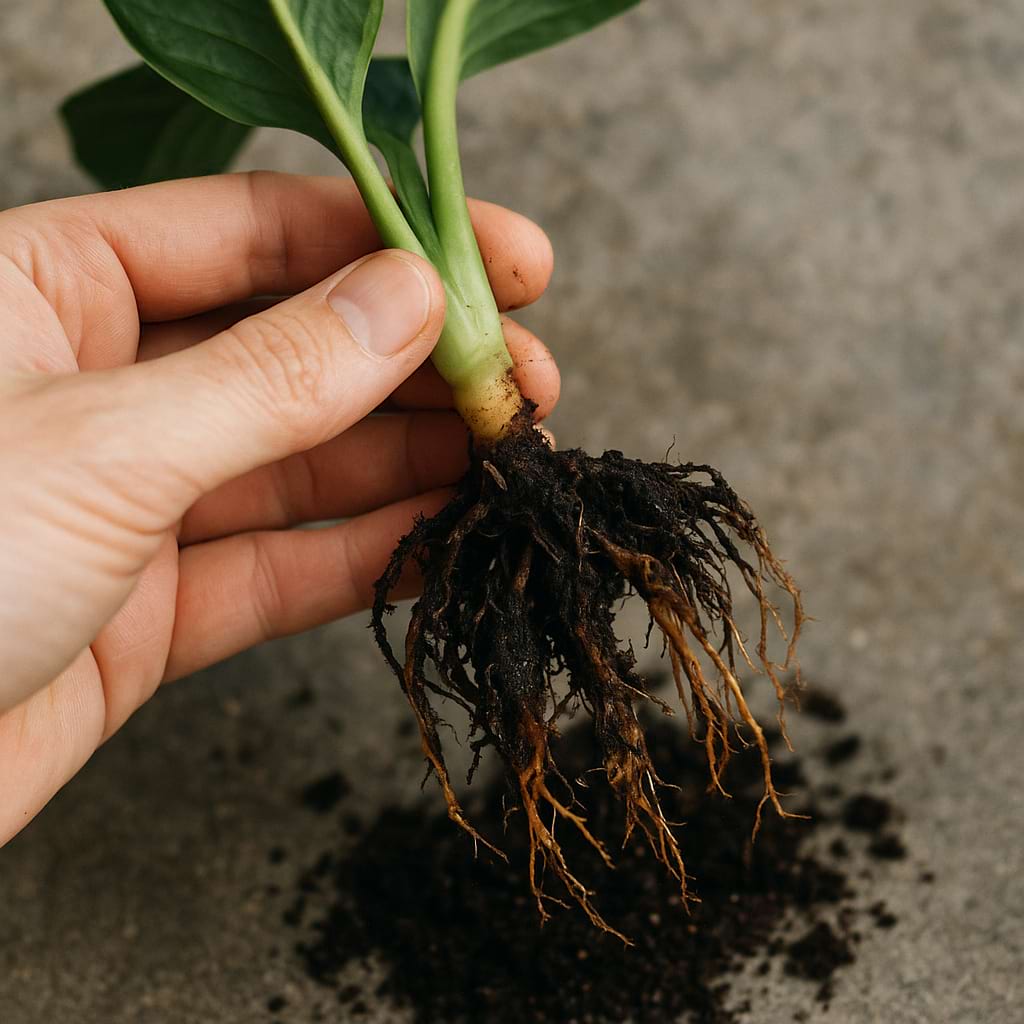
- Wilting and drooping in dry soil is thirst. In wet soil it points to root rot, so check the roots for dark, mushy sections.
- A brown, bare patch in the middle of the clump is usually old fronds dying off in a crowded, damp centre. Clear them out and let the top dry slightly between waterings.
Light and Growth Problems
- Pale, faded leaves mean too much direct sun, or a plant that needs feeding in summer.
- Sunburn leaves bleached or crispy patches on the window side.
- Stunted growth in spring and summer usually comes down to low light, a rootbound pot or no fertilizer for a long time.

🖼️ Green Lady Boston Fern Display and Styling Ideas
Hanging Pots
This is how Green Lady is most often sold, and it suits the job. Hung near an east window, the upright centre and arching outer fronds make a full green ball you can see from below and from the side. Hang it low enough to reach easily, because a pot you cannot lift is a pot you forget to water. Keep it away from heating vents and the top of tall doorways, where warm dry air gathers.
Stands, Shelves and Bathrooms
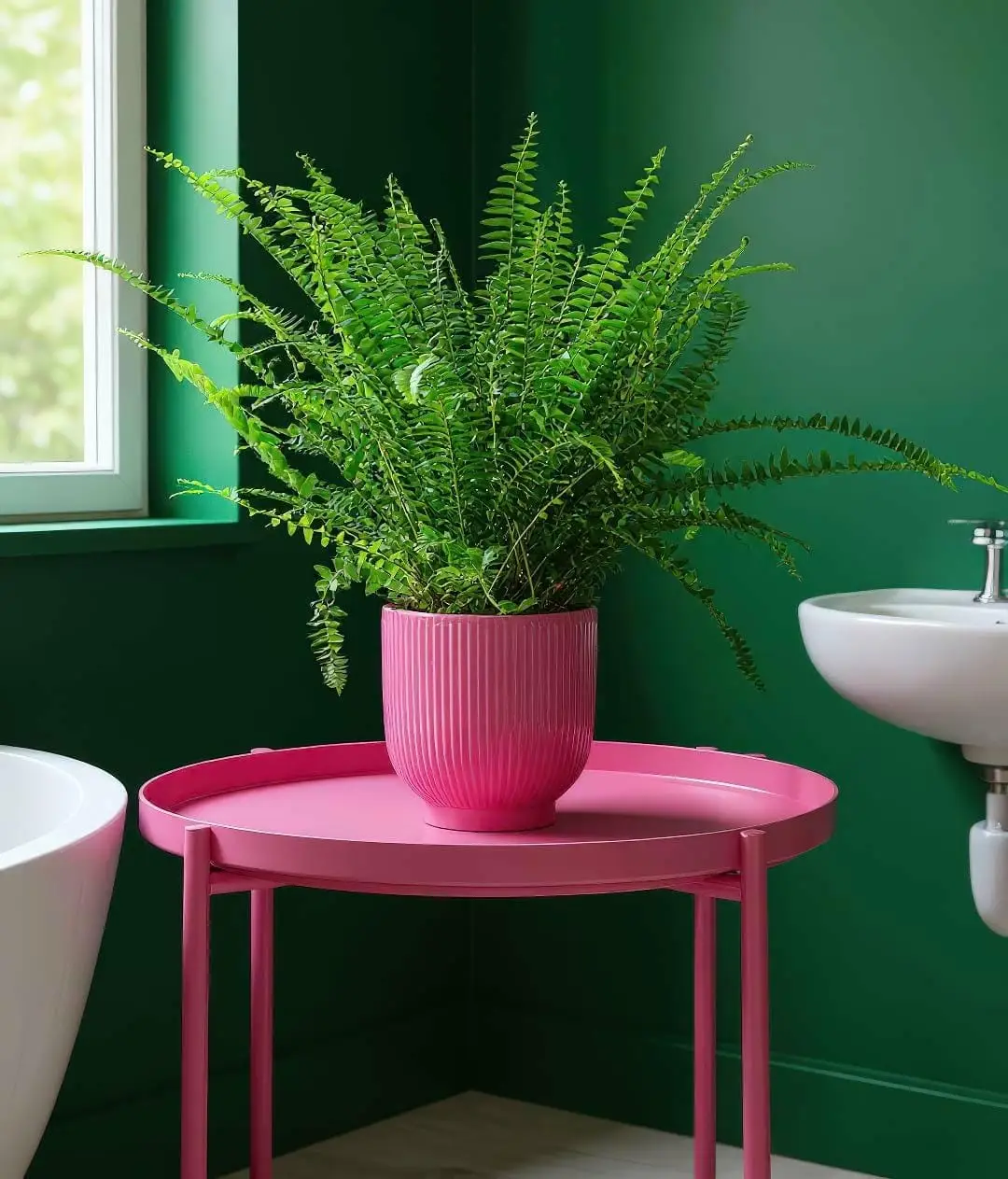
On a pedestal stand or a wide shelf, the outer fronds drape over the edge and the centre gives it height, so it reads as a fuller plant than a flat Boston fern does. A bright bathroom with a window is the ideal room, since showers raise the humidity every day. It pairs well with bold, solid leaves such as a Bird's Nest Fern, whose smooth wide fronds contrast with the fine Green Lady texture.
Where Not to Put It
Skip dark hallways, sunny south windowsills with no curtain, and any spot right above a radiator. A busy walkway is also a poor choice: the foliage bruises when it is brushed often, and the spreading fronds take up more room than the pot suggests.
🌟 Green Lady Boston Fern Pro Care Tips
Everyday Habits
- Lift the pot before you water. Weight tells you more than the surface of the soil does.
- Water the mix, not the fronds. Part the dense foliage and aim at the soil.
- Run a humidifier from the day the heating comes on until spring.
- Turn the pot a quarter turn every week or two for an even ball.
Seasonal Habits
- Clear dead fronds from the centre every month or two, not just from the outside.
- Feed at half strength only while fiddleheads are unrolling, roughly spring to late summer.
- Check the roots each spring; plants bought in hanging pots are often already crowded.
- Grouping it with other ferns for pets? Green Lady is safe, but asparagus and foxtail "ferns" are not true ferns and are toxic. Our pet-safe houseplants roundup lists more options.
❓ Frequently Asked Questions
Is a Green Lady fern the same as a Boston fern?
Yes and no. Green Lady is a cultivar of Nephrolepis exaltata, the Boston fern species, so it needs the same care. The difference is the habit: it grows denser and fuller, with an upright centre and outer fronds that arch out into a rounded fountain.
Is Green Lady more compact than a regular Boston fern?
In shape, yes; in size, not by much. It looks tidier and rounder, but growers list a mature size of roughly 2.5 feet tall and 2.5 to 3 feet wide. If you want a fern that truly stays small, the Dallas fern tops out around a foot to a foot and a half.
Does Green Lady shed less than other Boston ferns?
You will see that claim online, but I could not find a grower who documents it. Any Boston fern drops leaflets when the soil or air gets too dry. If shedding is your main worry, the Kimberley Queen fern holds its leaflets far better.
Is the Green Lady Boston fern safe for cats and dogs?
Yes. The ASPCA lists the Boston fern, Nephrolepis exaltata, as non-toxic to cats and dogs, and Green Lady is a cultivar of that species. Cats may still chew the soft fronds, so hang it out of reach if you want it to stay full.
Why are the fronds on my Green Lady turning brown?
Crispy brown leaflet tips almost always mean dry air or a pot that dried out between waterings. A brown, soft centre is different and points to too much water and old fronds rotting in the crowded middle. Fix the humidity for the first, and clear the centre and water less for the second.
How often should I water a Green Lady in a hanging basket?
Check every couple of days in summer and water when the top half inch is dry, which can mean every 2 to 4 days. In winter, once a week is usually enough. Lifting the pot to feel its weight is the most reliable test.
Should I cut off the runners?
You can. The fuzzy runners are how the plant spreads, and trimming them does no harm. If you want more plants, pin one onto a small pot of moist mix and let it root before you cut it free.
Can I put my Green Lady fern outside in summer?
Yes, in a shaded, sheltered spot once nights stay above about 55°F (13°C). Keep it out of afternoon sun and wind, water more often than indoors, and check it for pests before bringing it back in autumn.
Why is my Green Lady fern bare in the middle?
The dense centre traps old fronds, holds moisture and gets less light, so it can die back while the outside looks fine. Pull out the dead fronds, let the top of the mix dry slightly between waterings, and give it brighter indirect light. A severely bare plant can be divided in spring and replanted as fresh, full pieces.
ℹ️ Green Lady Boston Fern Info
Care and Maintenance
🪴 Soil Type and pH: Moist, airy, peat or coir-based mix with perlite or fine bark
💧 Humidity and Misting: Aim for 50-60% or higher with a humidifier or grouped plants; misting alone is not enough.
✂️ Pruning: Cut dead and yellowing fronds at the base, especially from the crowded centre of the clump.
🧼 Cleaning: Rinse under a lukewarm shower now and then; avoid rubbing the fronds, which bruise easily.
🌱 Repotting: Repot or divide in spring when roots fill the pot and the mix dries out in a day or two.
🔄 Repotting Frequency: Every 1-2 years
❄️ Seasonal Changes in Care: Steady moisture and feeding from spring to late summer; less water, no fertilizer and extra humidity once the heating comes on.
Growing Characteristics
💥 Growth Speed: Moderate to fast in warm months
🔄 Life Cycle: Evergreen perennial fern
💥 Bloom Time: Does not flower (ferns reproduce by spores)
🌡️ Hardiness Zones: 10-12
🗺️ Native Area: Garden cultivar; the species Nephrolepis exaltata is native to the American tropics, including Central and South America and the West Indies
🚘 Hibernation: No
Propagation and Health
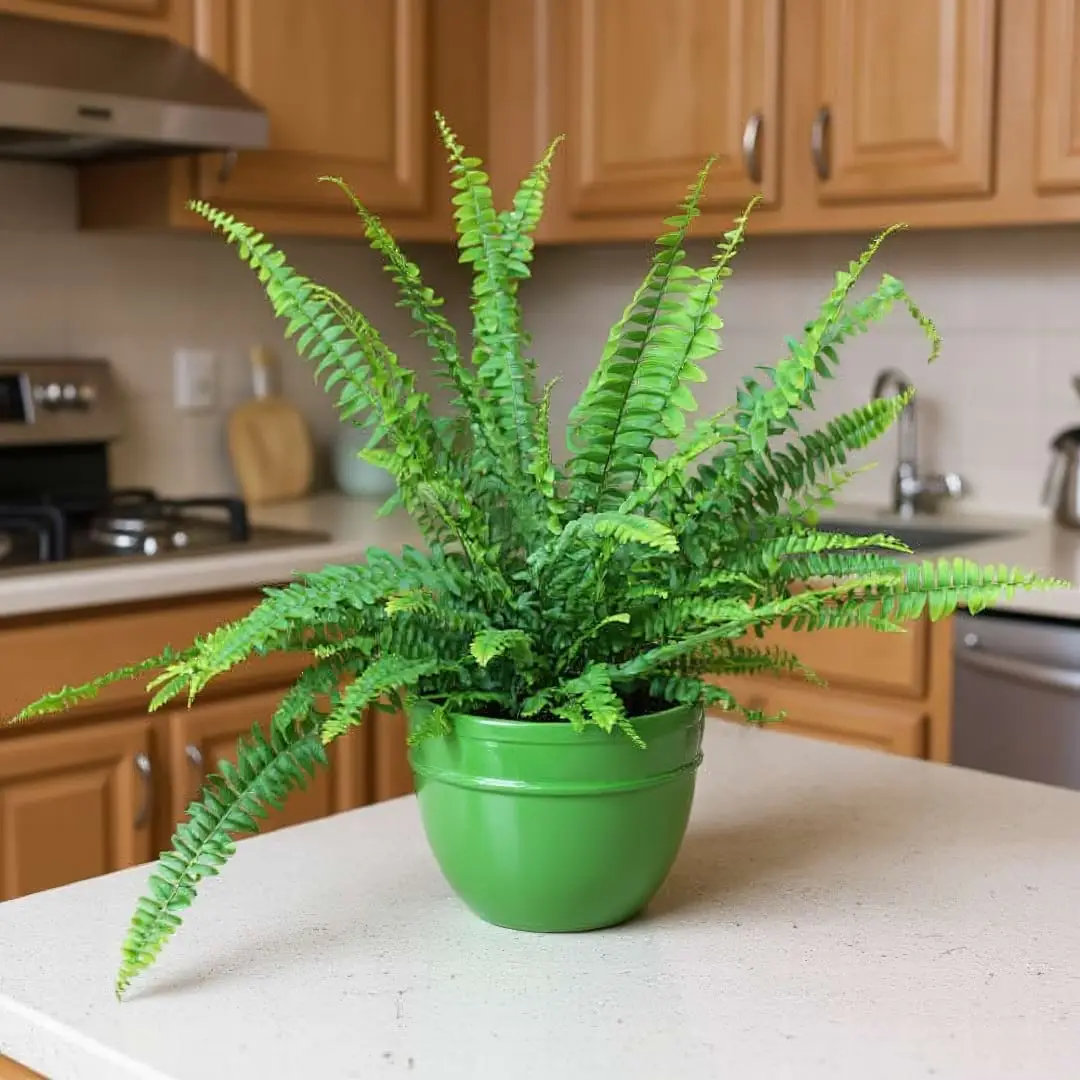
📍 Suitable Locations: Hanging pots near an east window, bright bathrooms, kitchen shelves, plant stands, sheltered patios in summer
🪴 Propagation Methods: Divide a mature clump in spring or pot up the small plantlets that form on the runners.
🐛 Common Pests: Spider Mites, Mealybugs, Scale Insects, Fungus Gnats, Whiteflies
🦠 Possible Diseases: Root rot, crown rot in a soggy centre, fungal leaf spot
Plant Details
🌿 Plant Type: Terrestrial clumping fern
🍃 Foliage Type: Evergreen, pinnate sword-shaped fronds
🎨 Color of Leaves: Bright to medium green
🌸 Flower Color: N/A
🌼 Blooming: No
🍽️ Edibility: Not edible
📏 Mature Size: 1-2.5 feet indoors
Additional Info
🌻 General Benefits: Pet-safe, fills a hanging pot evenly on all sides, adds soft green texture to a bright humid room
💊 Medical Properties: None known
🧿 Feng Shui: A full, rounded fern that softens hard corners and suits calm, restful rooms such as bathrooms and bedrooms.
⭐ Zodiac Sign Compatibility: Cancer
🌈 Symbolism or Folklore: Sincerity, shelter, new beginnings
📝 Interesting Facts: Green Lady is one of the Boston fern cultivars grown in volume by Dutch fern nurseries for the European houseplant trade, and it is far more common in UK and European shops than in North America.
Buying and Usage
🛒 What to Look for When Buying: Pick a plant with fresh, pale fiddleheads in the centre and no brown patch in the middle of the clump. Check the undersides of the fronds for webbing or white fluff before you buy.
🪴 Other Uses: Hanging baskets, bathroom shelves, summer patio containers
Decoration and Styling
🖼️ Display Ideas: Hanging pot, pedestal stand, wide windowsill, bathroom shelf
🧵 Styling Tips: Hang it at or just above eye level so you see the upright centre and the arching skirt at the same time.
🪴 See also 🪴
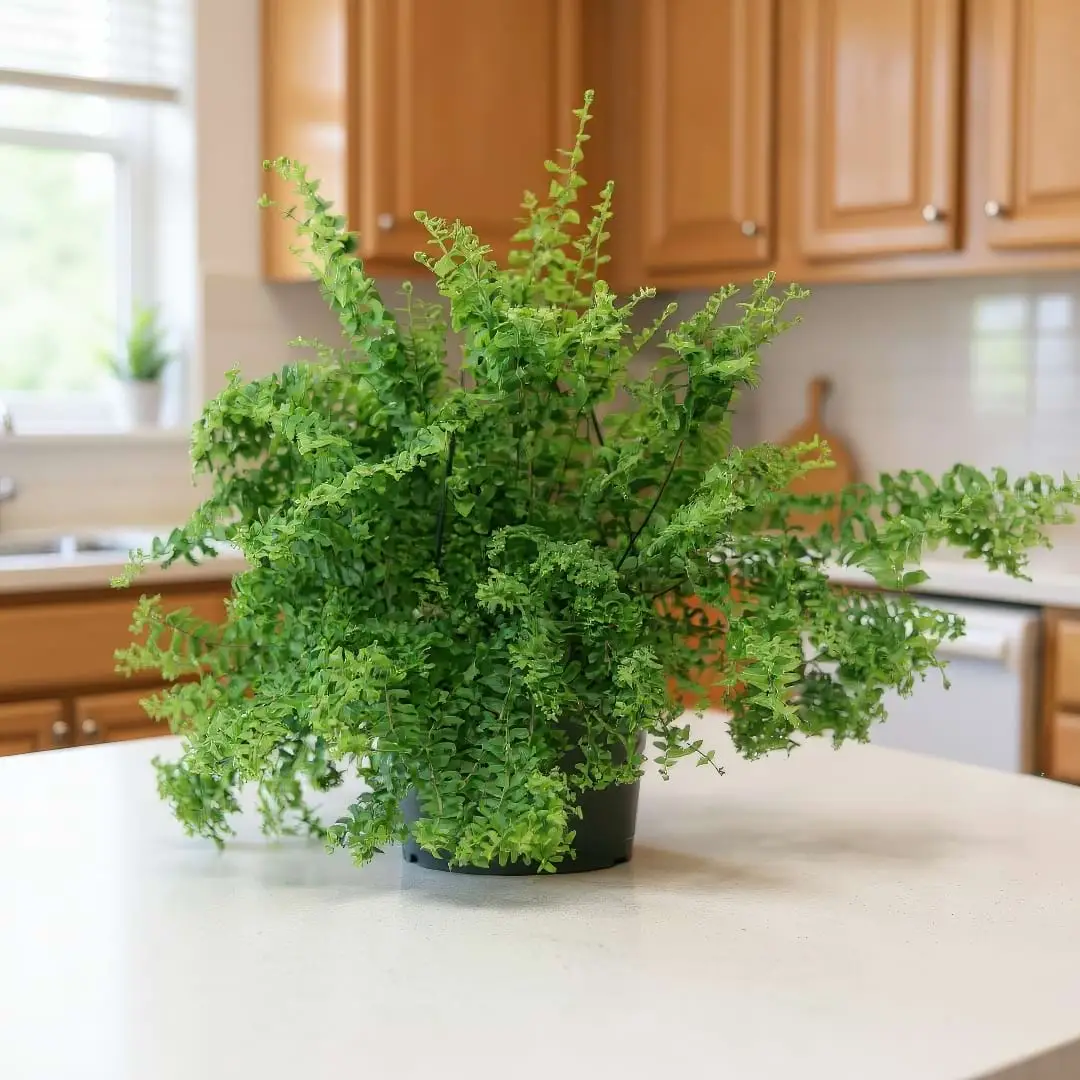
Complete Guide To Green Moment Fern Care and Growth
Complete Guide To Nephrolepis Exaltata Roosevelt Fern Care and Growth
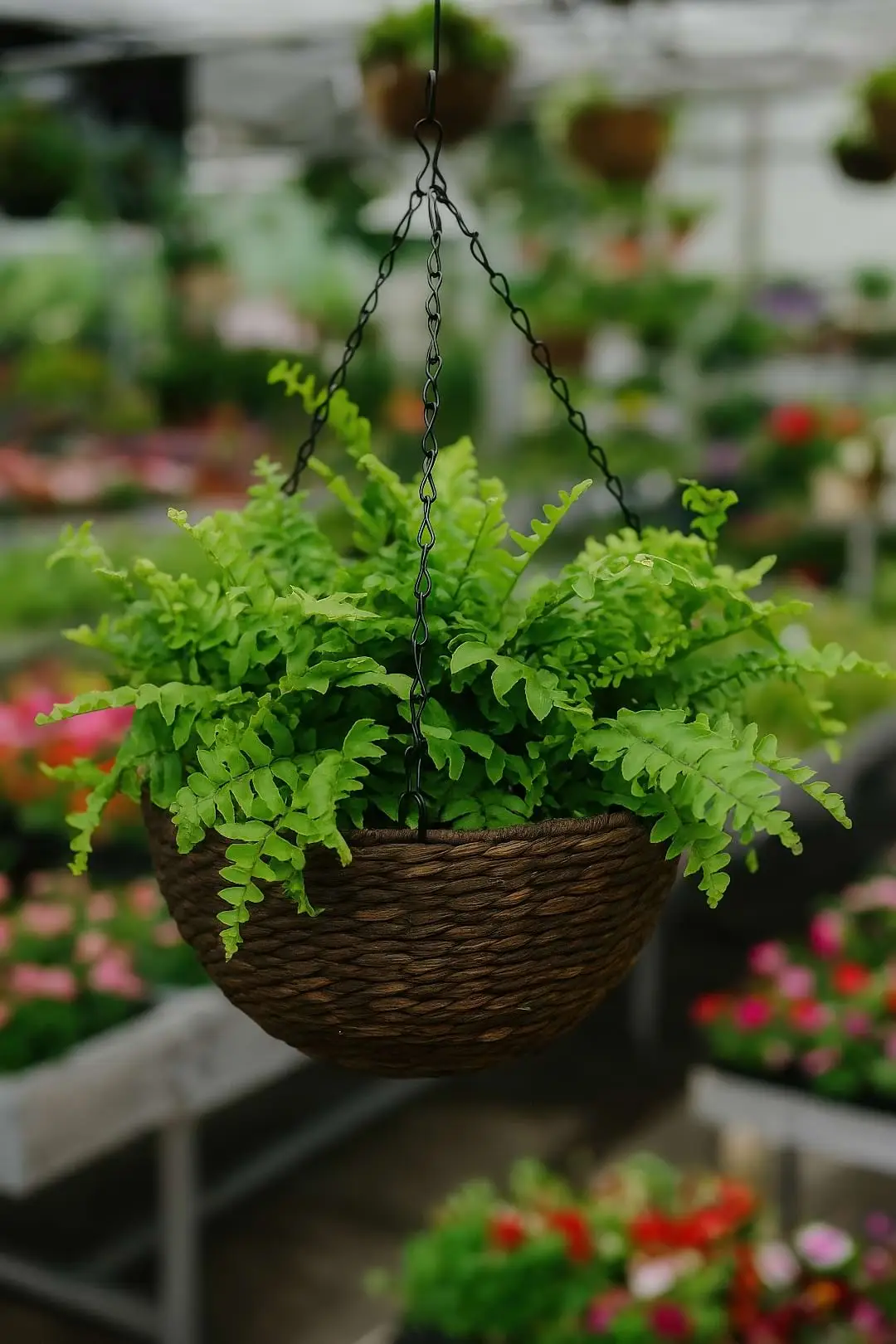
Complete Guide To Nephrolepis exaltata Whitmanii Fern Care and Growth
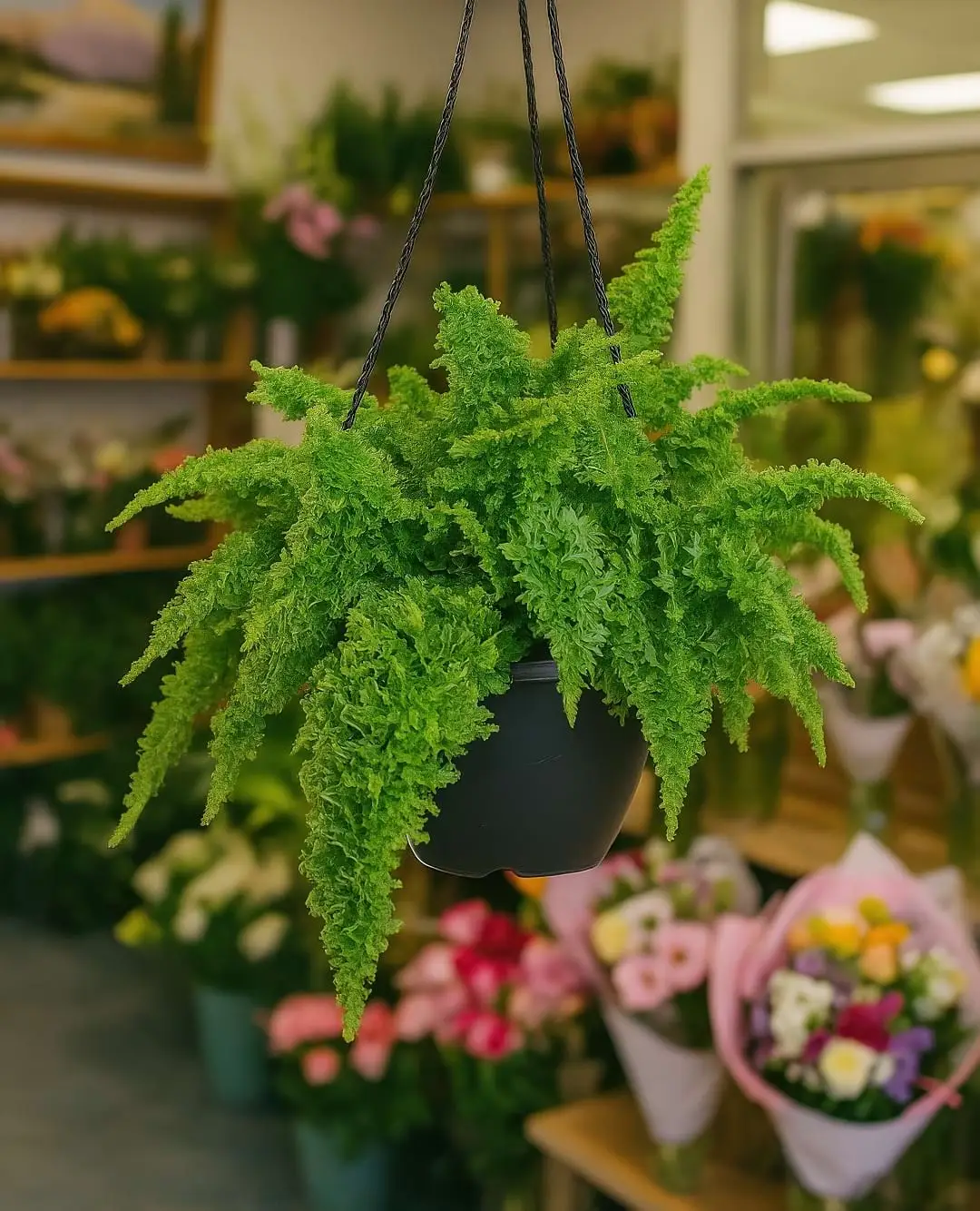
Complete Guide To Petticoat Fern Care and Growth
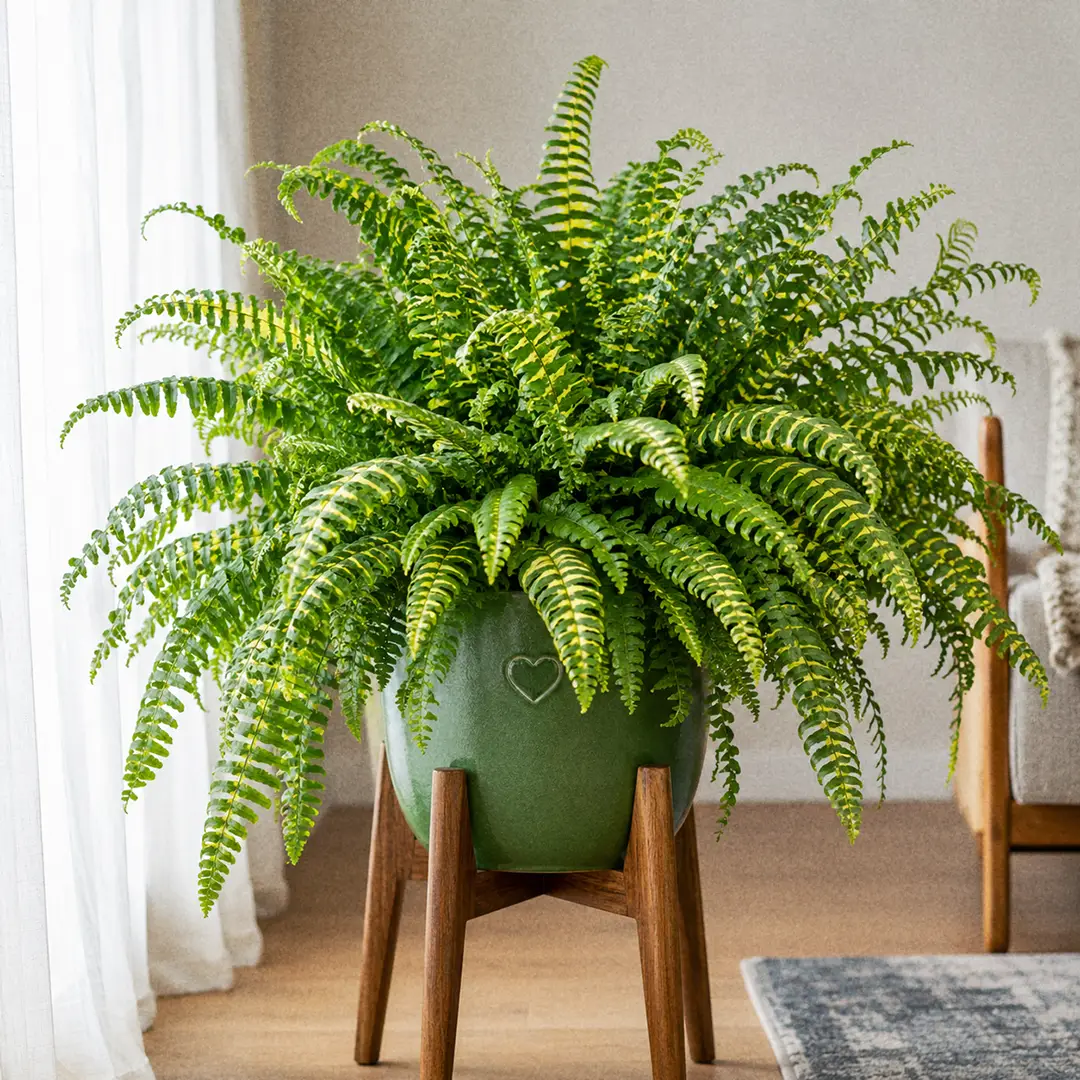
Complete Guide to Tiger Fern Care and Growth
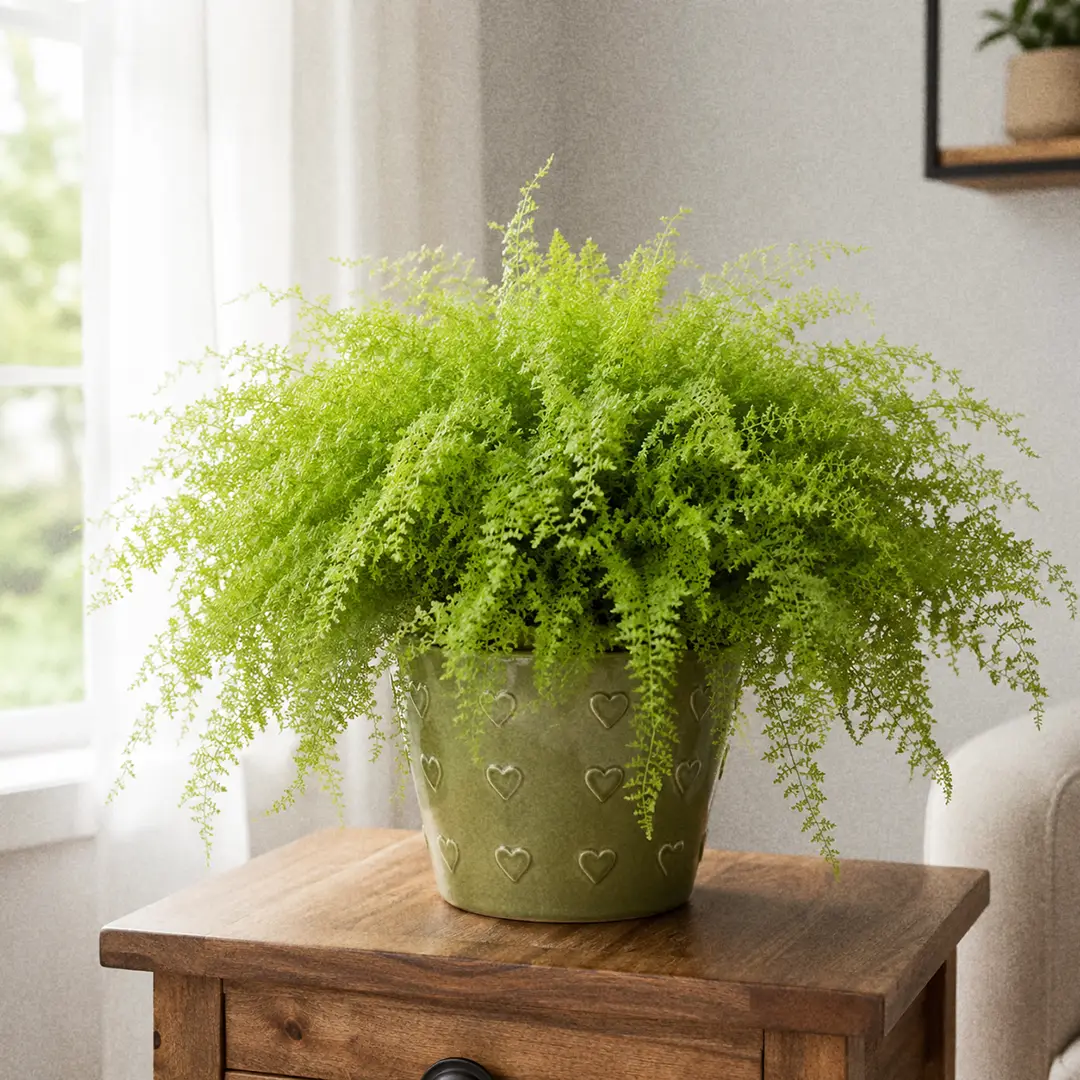
Complete Guide to Cotton Candy Fern Care and Growth
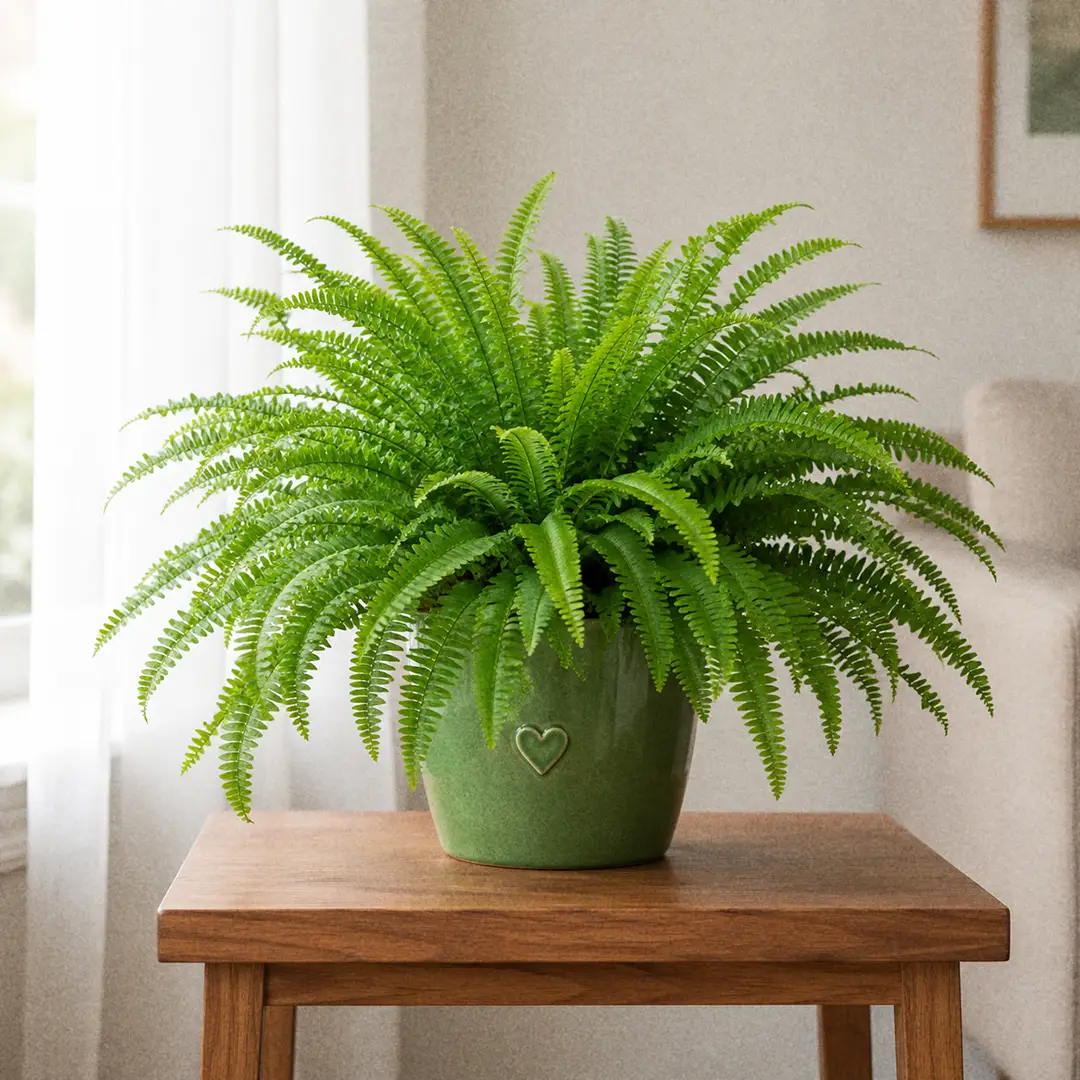
Complete Guide to Dallas Fern Care and Growth
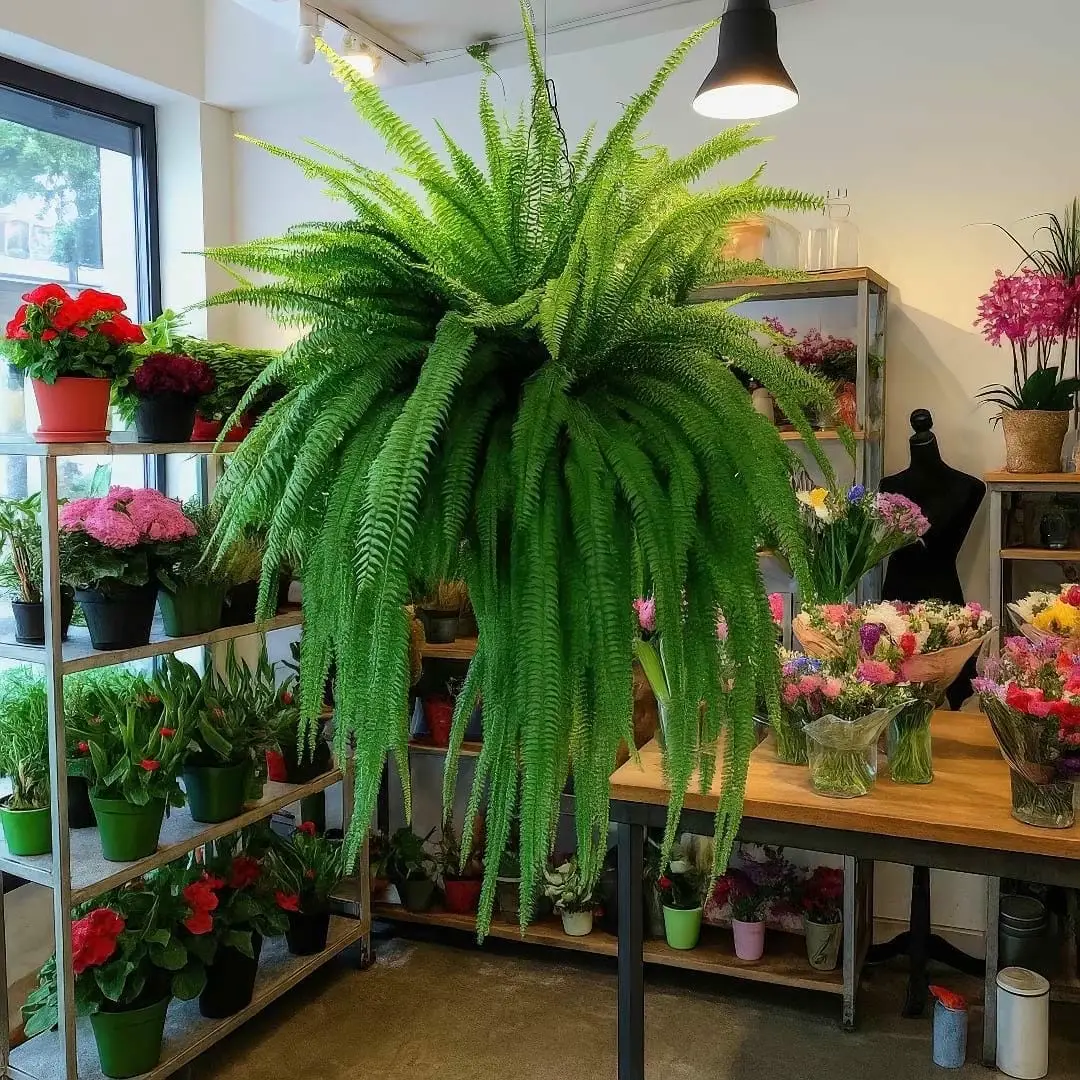
Complete Guide to Fish Tail Fern Care and Growth
Complete Guide To Fishtail Sword‑fern Care and Growth
Complete Guide to Fluffy Duffy Fern Care and Growth
Complete Guide To Fluffy Ruffles Fern Care and Growth
Complete Guide To Lemon Button Fern Care and Growth
Complete Guide To Marisa Fern Care and Growth
Complete Guide to Ariane Boston Fern Care and Growth
Complete Guide to Asian Sword Fern Care and Growth
Complete Guide to Pitcher Plant Care (Nepenthes)

Complete Guide To Macho Fern Care and Growth
42 Boston Fern Varieties, Species, and Types (With Pictures)
Complete Guide To Kimberley Queen Fern Care and Growth

Houseplant101 Forum
Questions & Comments
Ask a question, share your plant experience, or help other plant owners.
Comments are temporarily unavailable.
Open the Houseplant101 ForumNo comments yet
Be the first to ask a question or share your experience about this page.
Log in or create an account
Comments use your Houseplant101 Forum account, but you can stay on this page.
Create a new account