
Tiger Fern
Nephrolepis exaltata 'Tiger'
Tiger Fern, Variegated Boston Fern, Nephrolepis 'Tiger', Gold Tiger Fern


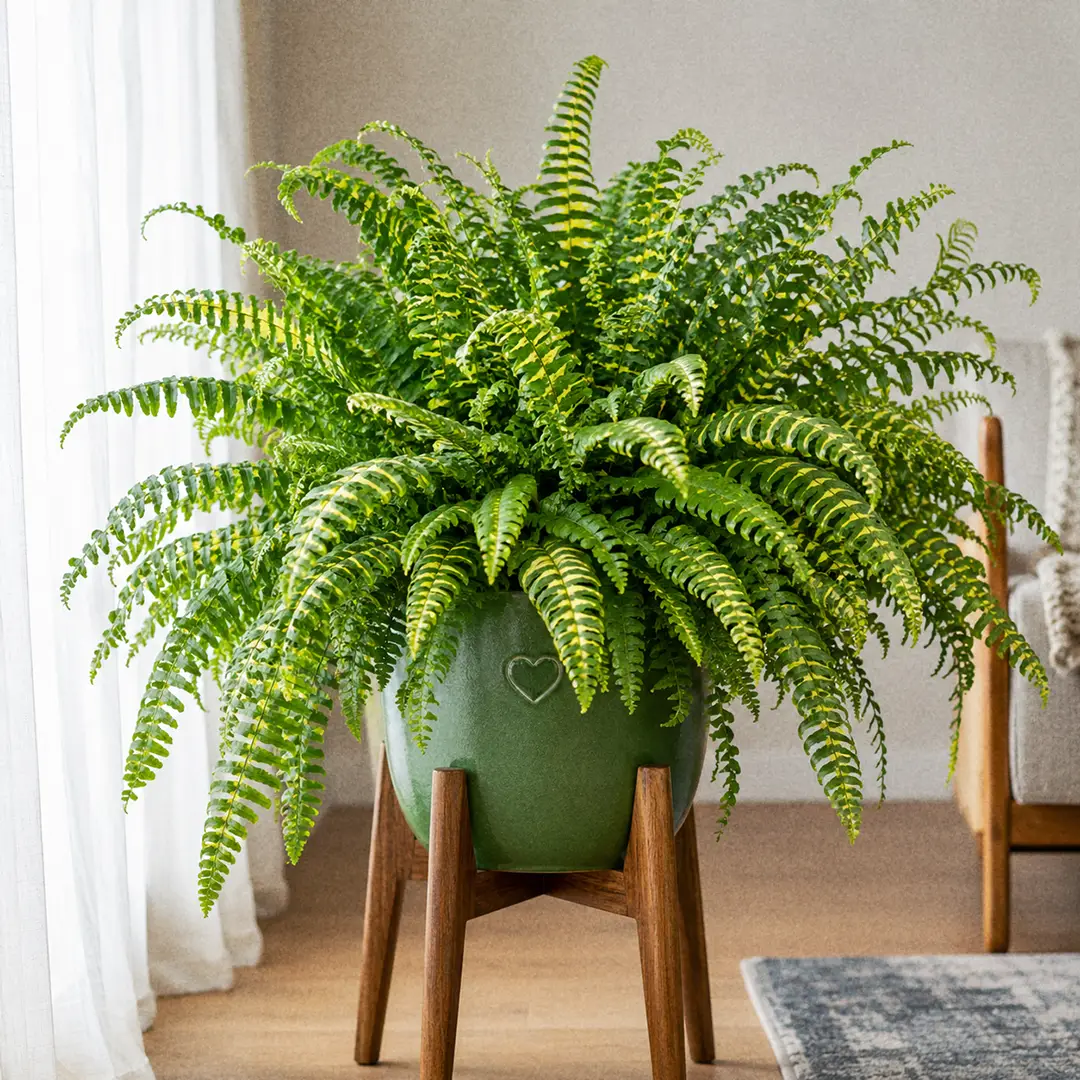
The Tiger Fern is a variegated Boston Fern cultivar with green fronds streaked in bands of gold and yellow, like brushstrokes of light. This guide shows you how to keep that tiger striping bold and the fronds lush indoors.
📝 Tiger Fern Care Notes
🌿 Care Instructions
⚠️ Common Pests
📊 Growth Information
🪴 In This Guide 🪴

A Note From Our Plant Expert
Anastasia here. Tiger Fern is the one I reach for when someone wants a fern with actual color, because its arching green fronds come painted with random bands of gold and yellow like brushstrokes of sun. It is a Boston Fern cultivar at heart, so the care is the familiar fern routine of steady moisture and humidity. The twist is the variegation: keep the light bright and the stripes stay bold, let it get dim and the plant quietly drifts back to plain green.
📺 Tiger Fern Video Guide

☀️ Tiger Fern Light Requirements (Indoor Lighting Guide)
The Sweet Spot
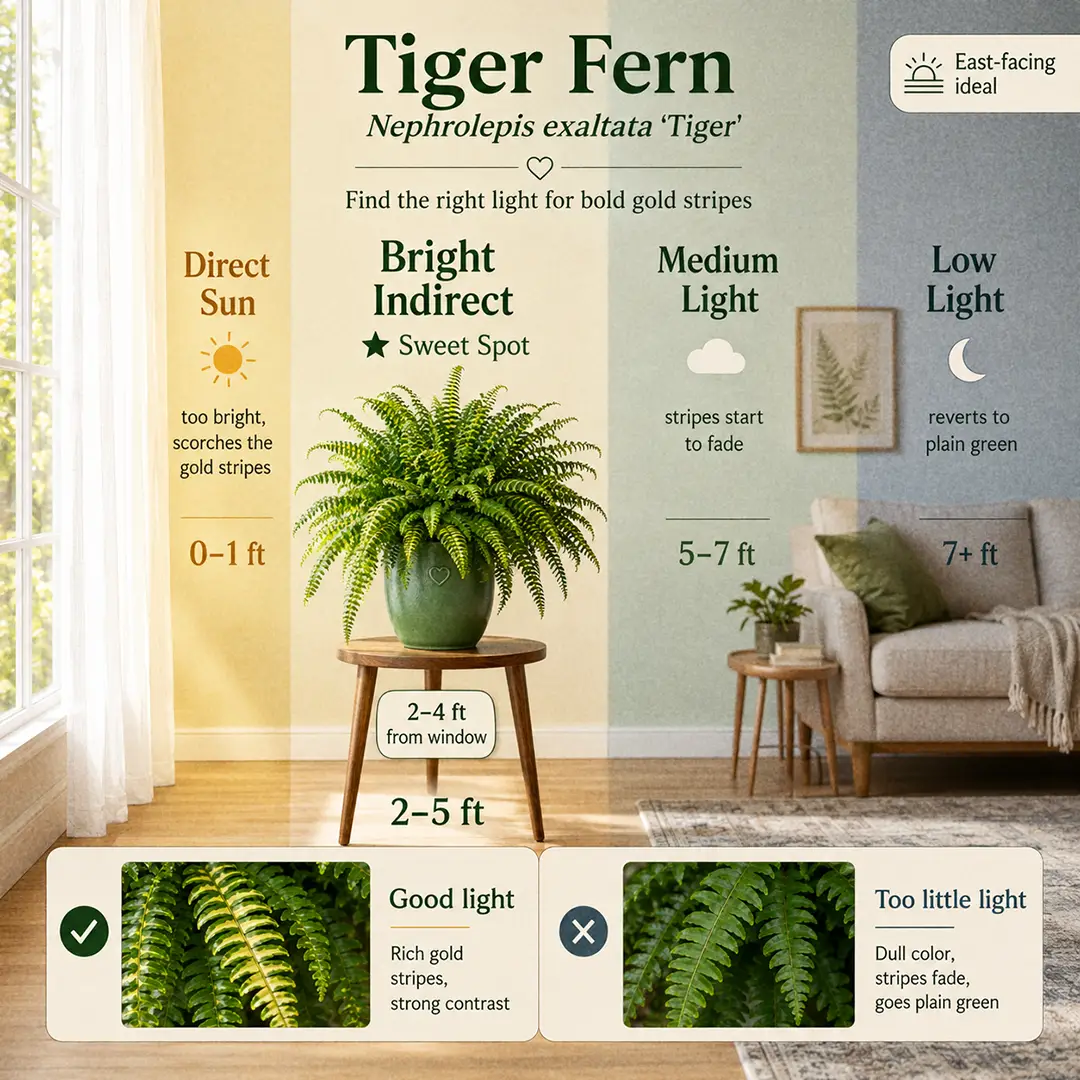
Tiger Fern wants bright, indirect light, and with this cultivar light does double duty. It keeps the plant full like any fern, and it keeps the gold variegation switched on. The ideal spot sits a few feet back from an east-facing window, where soft morning light reaches the fronds and the rest of the day stays brightly lit. North windows work but can run dim through winter. West and south windows are fine if a sheer curtain softens the harsh afternoon rays before they hit the foliage.
A quick test: if the spot is bright enough to read comfortably without a lamp during the day, it is bright enough to hold the stripes. Our Light Guide covers indoor light levels in more depth if you want to dial it in.
Too Little Light
This is where Tiger Fern differs from a plain Boston Fern. In a dim corner the plant does what every fern does, stretching and thinning out, but it also starts producing duller, greener fronds with weaker striping. The gold you paid for slowly fades from new growth. Picture it as the plant going low-power: with less light to spare, it favors plain green tissue that photosynthesizes better. Move it brighter and the next flush of fronds usually comes back striped.
Too Much Light
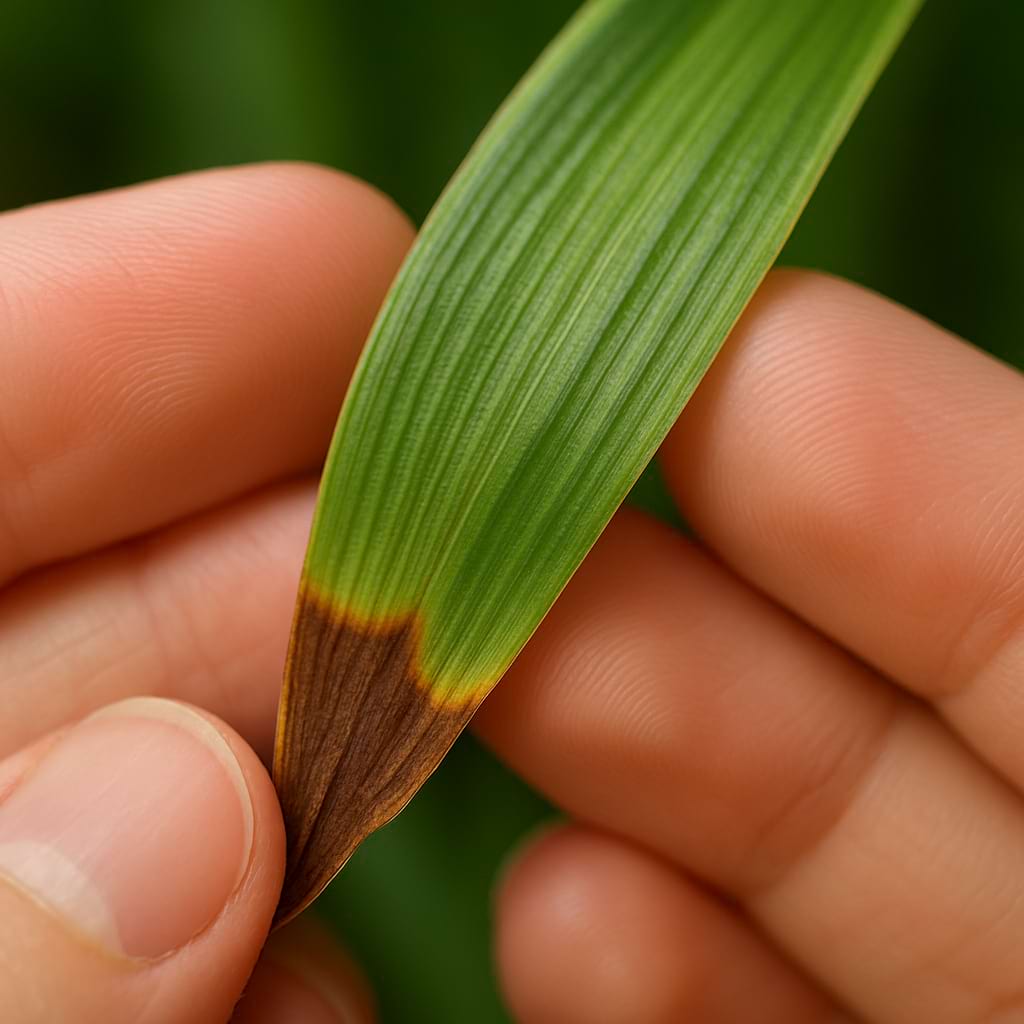
Direct sun is the fast way to ruin those fronds, and the pale gold bands burn first because they hold less protective pigment. A hot windowsill bleaches the variegated sections, leaves crispy brown scorch marks, and dries the soil out faster than the roots can keep up. South and west glass in summer are the usual offenders. Pull the plant back from the window or filter the light through a curtain, then trim the scorched fronds, since burned tissue never heals.
💧 Tiger Fern Watering Guide (How Often and How Much)
Watering Frequency
Tiger Fern likes its soil evenly moist at all times, never bone dry and never waterlogged. Water when the top inch of soil feels dry, which in most homes lands around every 5 to 7 days in spring and summer and every 8 to 12 days in winter. Pot size, warmth, and humidity all shift that pace, so check with a finger rather than trusting a calendar. A hard drought crisps the fronds fast, and a variegated fern is a touch less forgiving than the plain green version, so catching it before the soil goes fully dry is far easier than nursing a browned plant back. A moisture meter takes the guesswork out while you learn its rhythm.
How to Water
Water at the soil line, around the edge of the pot rather than straight into the dense crown, until it runs from the drainage holes, then let it drain fully. Pouring over the top traps water in the crown and invites rot. If a pot has dried unevenly or the water runs straight through, a 15-minute bottom watering soak rehydrates the whole root ball. Tip out any water left in the saucer within the hour, because a pot standing in water is the quickest path to root rot.
Signs of Trouble
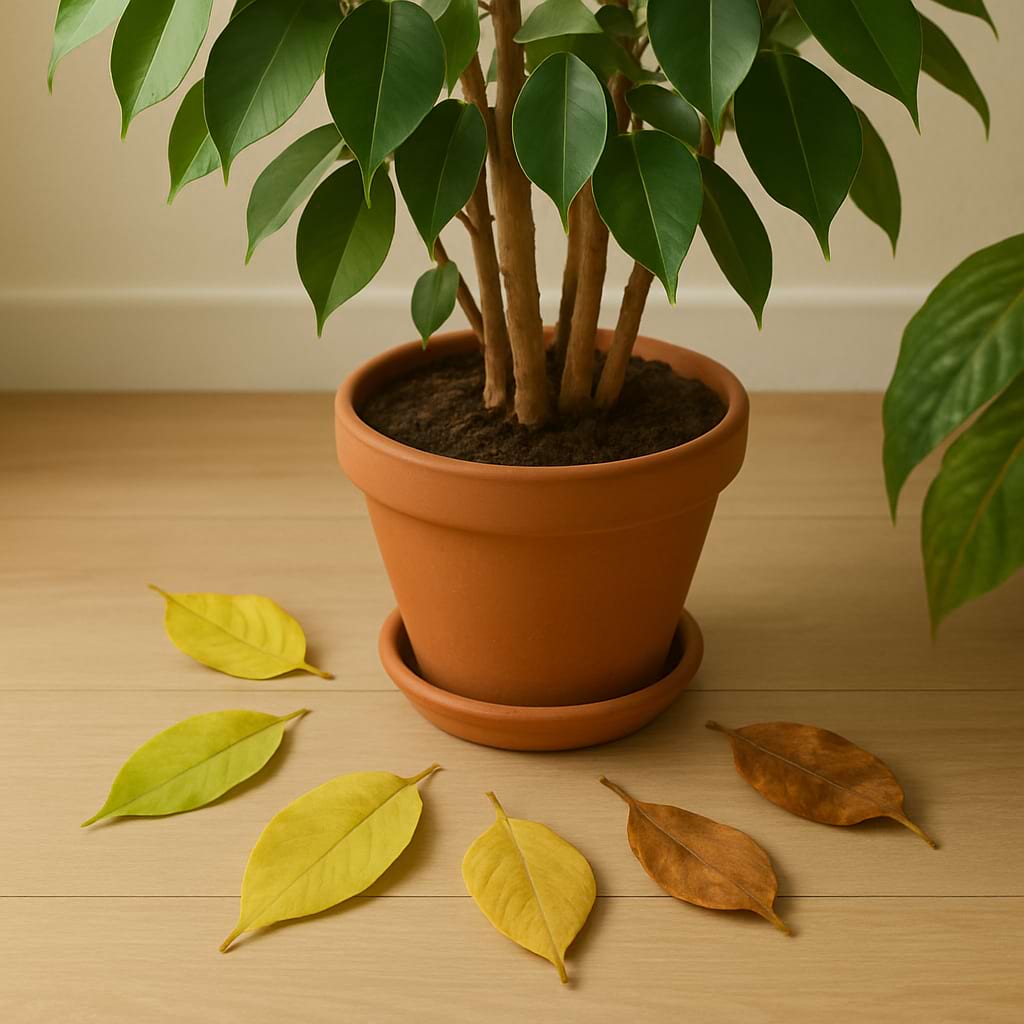
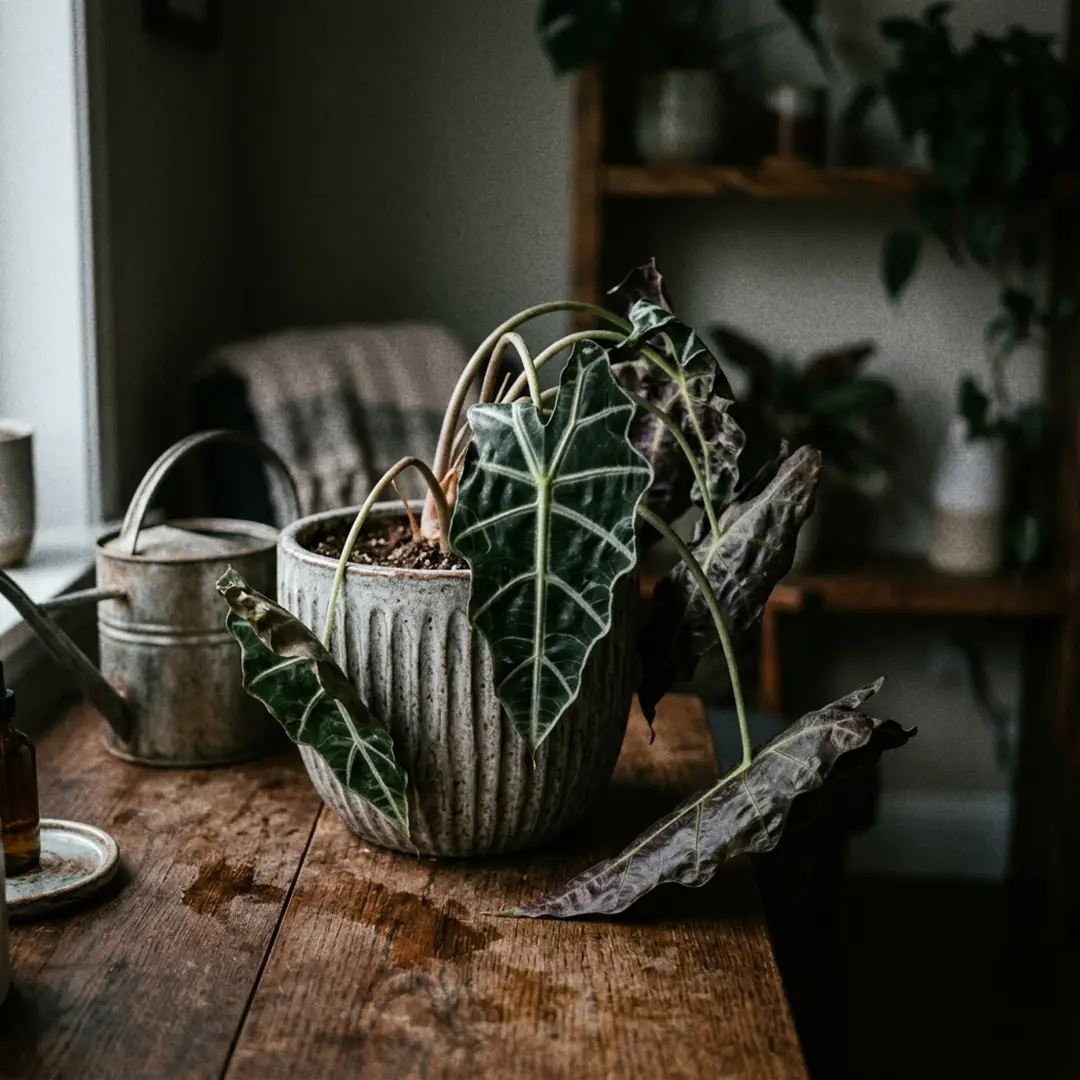
A thirsty Tiger Fern wilts, its fronds go limp and papery, and the soil is dry well below the surface. An overwatered one looks different: yellowing mushy fronds, a soft darkened crown, a sour smell from the soil, and drooping that does not bounce back after watering. When drooping leaves you guessing, feel the soil. Dry means water now. Wet and drooping means stop, check drainage, and inspect the roots.
🪴 Best Soil for Tiger Fern (Potting Mix and Drainage)
What the Soil Needs
Tiger Fern needs a light, airy soil that holds moisture but still lets air reach the roots and drains the excess quickly. Aim for a slightly acidic mix, around pH 5.5 to 6.5, that stays damp without packing into mud. It should feel springy and open, not heavy or sticky. Plain bagged potting soil used on its own tends to compact and hold water too long around the crown, which is exactly what rots a moisture-loving fern.
DIY Soil Mix
A reliable recipe is two parts peat moss or coco coir for moisture and acidity, one part perlite or pumice for drainage and air, and an optional handful of fine orchid bark to keep the structure open. Coco coir is the more sustainable choice and resists the hard compaction peat develops over time. Do not skimp on the perlite, since it is your insurance against the soggy soil this fern hates. The Soil Guide covers how to tune a mix to your watering habits.
Pre-Made Options
If mixing your own is more than you want to do, cut a standard bagged potting mix generously with perlite, roughly one part perlite to two parts soil, before potting. Any bag labelled for ferns or general houseplants works as a base. Avoid the heavy, peat-only mixes sold for moisture retention, which stay wet far too long around a fern's crown.
🍼 Fertilizing Tiger Fern (Feeding Schedule and Tips)
When and How Often
Ferns are light feeders, and Tiger Fern is no exception. Feed every 3 to 4 weeks from spring through early fall with a balanced liquid fertilizer, something like 20-20-20, diluted to half the label strength. Always apply it to already-moist soil, never to a dry, thirsty plant, since fertilizing dry roots concentrates the salts and burns them. Stop feeding from late fall through winter, when growth naturally slows and unused fertilizer just builds up in the soil as salt.
What to Use
A simple balanced liquid houseplant fertilizer is all this fern needs, and the liquid form lets you skip a feed easily if the plant looks stressed. If you prefer organic, diluted fish emulsion or a worm-casting tea works well and is hard to overdo. Slow-release granules are fine too, but use about half the recommended amount given how sensitive fern roots are. The Fertilizing Guide has a fuller rundown.
Over-Fertilizing Signs
Crispy brown frond tips, a white crust on the soil surface, and weak, stretched new growth all point to too much fertilizer or salt buildup. If you spot them, flush the pot by running water through the soil several times, hold off feeding for a month, then resume at a weaker dilution. With a fern, under-feeding is always the safer mistake.
🌡️ Tiger Fern Temperature Range (Ideal Conditions)
Ideal Range
Tiger Fern is a tropical plant at heart and likes the same comfortable temperatures most people keep at home. It grows best between 60°F and 75°F (16°C to 24°C), with no real dormancy, just a slowdown when winter light drops. It can summer outdoors in a shaded, sheltered spot once nights stay reliably above 55°F (13°C), where the natural humidity and airflow often bring out its fullest growth. Bring it back inside well before the first cold nights of fall.
Drafts and Heat Sources
Sudden swings and dry blasts of air are what stress this fern. Keep it away from cold drafts off windows and exterior doors in winter, and away from heating vents, radiators, and air-conditioning streams all year. Temperatures below about 50°F (10°C) cause cold damage, showing as darkened, limp fronds. A heating vent does the opposite kind of harm: the warm, bone-dry air strips moisture from the fronds faster than the roots can replace it, and the plant crisps from the tips inward.
💦 Tiger Fern Humidity Requirements
Ideal Humidity
Like all Boston Fern relatives, Tiger Fern is happiest in humid air. It looks and grows best at 50 to 60 percent humidity or higher, and it positively thrives in the steamier air of a bright bathroom. Typical winter indoor air, often 20 to 40 percent with the heating running, is its hardest test, and dry air is the most common reason a Tiger Fern develops brown, crispy edges. The good news is that this cultivar is no fussier about humidity than a standard Boston Fern, so if you can keep one happy you can keep the other happy.
Easy Humidity Boosters
A small humidifier nearby is the most reliable fix, especially in winter when heating dries the air. Grouping the fern with other moisture-loving plants helps too, since each plant transpires and the cluster builds its own humid pocket. A bright bathroom is an underrated home thanks to the regular post-shower steam. Misting gives only a brief, fleeting bump and will not carry a plant through dry winter air on its own, so lean on a humidifier or a naturally humid room. The Humidity Guide compares the methods.
Signs of Low Humidity
The first warning is browning, crispy frond tips, soon followed by whole fronds drying out and a thinner, sparser look as leaflets drop. If this shows up in winter right as the heating kicks in, dry air is almost certainly the culprit. Raise the humidity and trim the worst-affected fronds while the plant recovers.
🌸 Tiger Fern Flowers (What to Expect Indoors)
Why It Doesn't Bloom
Tiger Fern is grown entirely for its colorful foliage, and it will never flower. Like all true ferns, it has no flowers, seeds, or fruit, and it reproduces instead by spores. Blooming simply is not part of fern biology, so do not wait for it and do not worry that you are doing something wrong.
Those Brown Dots Aren't Pests
Instead of seeds, mature fronds produce spores in tiny structures called sori on the undersides of the leaflets. On Boston Fern cultivars these appear as small brown dots in neat, even rows, and new fern owners sometimes panic and mistake them for scale insects. The tell is the pattern: spores sit in orderly rows and stay firmly attached, while pests cluster randomly and can be scraped off. If the dots are neat and regular, leave them be, they are a healthy sign of a mature plant.
🏷️ Tiger Fern Types and Related Fern Varieties
What Makes Tiger Fern Different
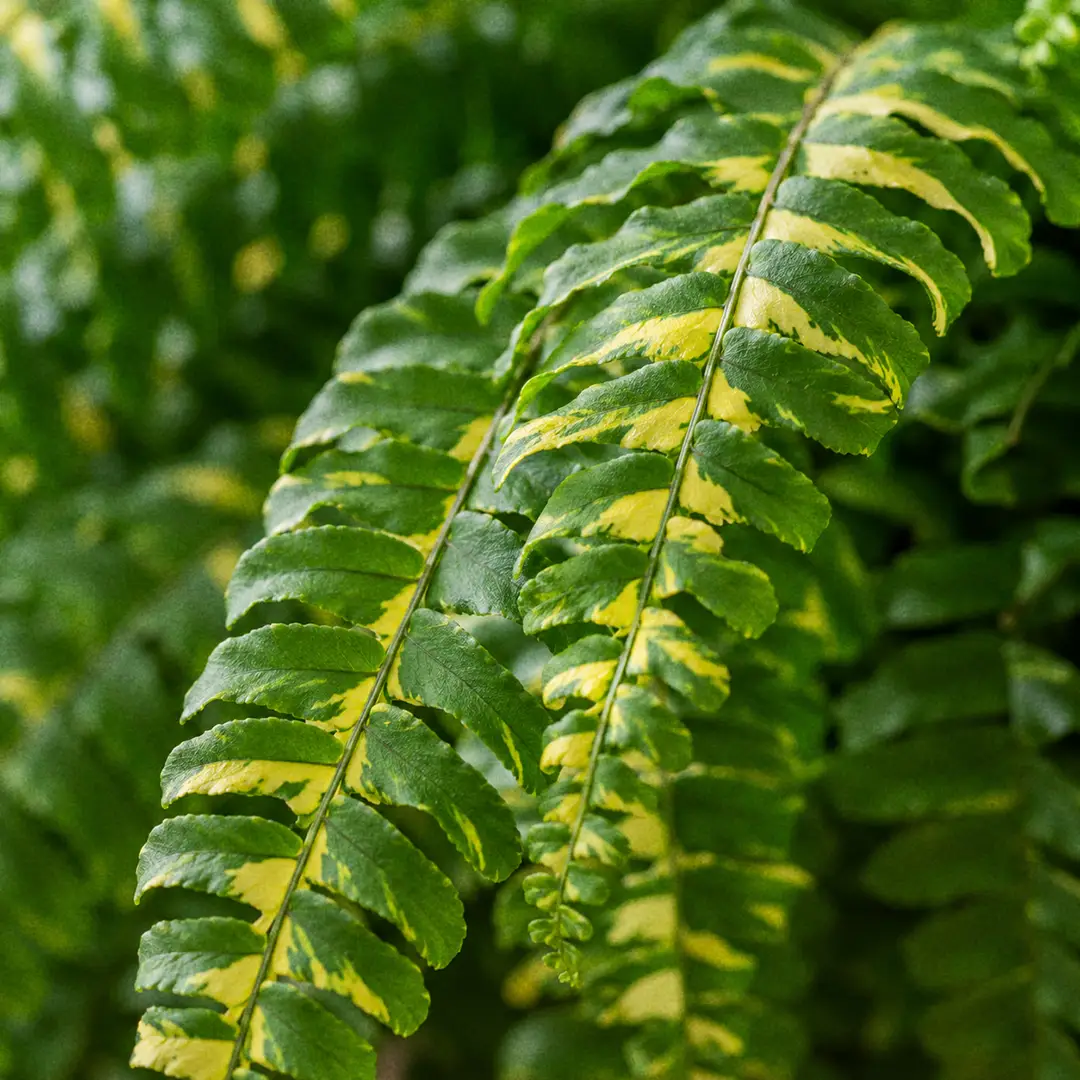
Tiger Fern is a variegated cultivar of Nephrolepis exaltata, the same species as the classic Boston Fern. It keeps the familiar arching, sword-shaped fronds, but each frond is streaked and banded with gold and yellow against the green, giving the "tiger stripe" look the name points to. The variegation is random and varies from frond to frond, so no two plants look quite alike, and the pattern can shift over time. Because the gold sections hold less chlorophyll, a Tiger Fern grows a little slower and a little less vigorously than a plain Boston Fern, which is normal and nothing to fix.
A Note on Stable vs Unstable Variegation
Tiger Fern's gold striping is a spontaneous variegation that is not fully stable. Two things can happen. The plant may revert, producing plain all-green fronds, which is most common in low light because green tissue photosynthesizes better. Less often it swings the other way and throws near-yellow fronds with almost no green, which look striking but cannot feed themselves and eventually weaken. The fix for both is the same: keep the light bright, and prune off any fully reverted green fronds so the plant keeps investing in the balanced, striped growth you want.
How It Compares to Other Boston Ferns
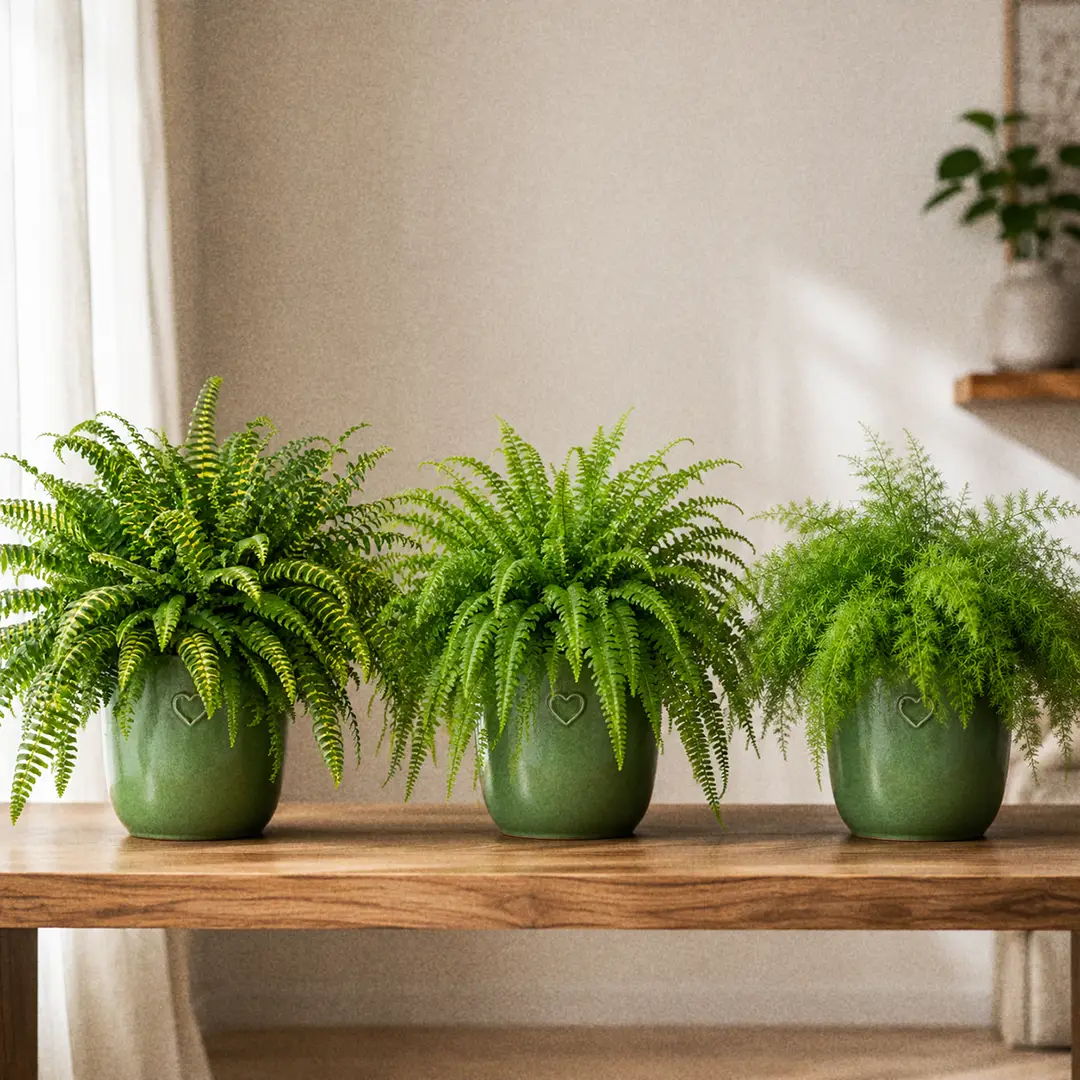
Tiger Fern is one of dozens of Nephrolepis exaltata cultivars, all sharing the same care but differing in size, frond texture, and, in this case, color. A few worth knowing:
- Classic Boston Fern: The original, all green, with long arching fronds. Larger, faster, and the baseline every other cultivar is measured against.
- Fluffy Ruffles Fern: Stiff, upright, densely ruffled green fronds. Grown for texture rather than color, with a more rigid, fountain-like habit.
- Cotton Candy Fern: Soft, finely divided fronds that mound like spun sugar. The fluffy cousin, and a touch fussier about humidity.
- Dallas Fern: A compact, all-green cultivar bred to be the toughest of the bunch, shrugging off the low light and dry air that the Tiger and other Boston Ferns dislike. The easy pick if you want fuss-free over colorful.
- Lemon Button Fern: A different species (Nephrolepis cordifolia) with small round leaflets and a faint lemon scent. Far easier and more drought-tolerant if you want a low-effort relative.
🪴 Potting and Repotting Tiger Fern
When to Repot
Tiger Fern has a fibrous, clumping root system and does best slightly snug, which keeps the soil from staying wet around roots the plant is not using. Plan on repotting every 2 to 3 years, or sooner if you see roots creeping out of the drainage holes, the soil drying out faster than you can keep up, or growth stalling despite good light and humidity. Those are the classic signs of a rootbound fern. Spring, just as growth picks up, is the best time, since the plant recovers quickly then.
Choosing a Pot
Go up only one size, an inch or two wider, and make sure it has a drainage hole. Jumping to a much larger pot surrounds the roots with damp soil they cannot drink, which invites rot. A standard pot depth is fine here. Match the material to your watering habits, with plastic and glazed ceramic holding moisture longer for a plant that hates drying out, and terra cotta breathing and drying faster if you tend to overwater.
Step-by-Step Repotting
Water the fern a day ahead so the root ball holds together and slides out cleanly. Ease it from the old pot and gently tease away the loosest outer soil without tearing the roots. Set the plant in fresh, airy mix at the same depth it grew before, keeping the crown right at the surface and never buried, then fill in around the roots and firm lightly. Water it in well and keep it out of direct sun in a humid spot for a week while it settles. The Repotting Guide walks through the process in more detail.
✂️ Pruning Tiger Fern (Keeping It Full and Colorful)
When to Prune
Pruning a fern is mostly housekeeping, but Tiger Fern adds one extra job: managing reversion. Trim away dead, browned, or yellowed fronds whenever you spot them, at any time of year. Save larger cleanups for spring and summer, when the plant is actively growing and bounces back quickly. Avoid heavy pruning in the depths of winter, when recovery is slow.
How to Prune
Use clean, sharp scissors and cut spent fronds right down at the base, near the soil line, rather than snipping off just the brown tips and leaving a stub. Cutting at the base keeps the plant looking natural and prompts fresh fronds from the crown. Work gently in the dense foliage so you do not snap healthy fronds while reaching the dead ones, and as a rule do not remove more than about a third of the foliage at once.
Pruning to Keep the Stripes
Here is the move specific to this cultivar. When you spot a frond that has reverted fully to plain green, cut it back to the base. Left alone, those green fronds grow more vigorously than the variegated ones and slowly take over the plant, and within a season or two a neglected Tiger Fern can turn into a plain Boston Fern. Removing the green growth, paired with bright light, keeps the plant pushing the gold-striped fronds you actually want.
🌱 How to Propagate Tiger Fern
Best Method
Tiger Fern is propagated by division or by rooting the runners it sends out, not from cuttings. Ferns do not root from a snipped frond the way many houseplants root from a stem, so division is the simple, reliable route. It pairs naturally with repotting, which makes spring the ideal time to do both at once. The plant grows as a clump of crowns that splits readily into smaller, complete plants. Worth knowing: variegation is not passed on by seed or spore in any predictable way, so division is also the only way to be sure a new plant inherits the tiger striping.
Step-by-Step Division
Slide the fern from its pot and brush away enough soil to see the root mass and the separate crowns. Using your hands or a clean, sharp knife, split the clump into two or more sections, each with a healthy share of roots and several fronds. When you can, give each division a good mix of variegated growth rather than one all-green and one all-gold split, so each new plant keeps the balance. Pot each section into fresh, airy mix at its original depth, water well, and keep the new plants warm, humid, and out of direct sun while they establish. A loose clear bag over each for the first week or two holds in humidity and speeds recovery.
Propagating from Runners
Healthy plants send out thin, fuzzy runners (stolons) across the soil surface, which offer a second, low-effort option. Pin a runner down onto the surface of a small pot of moist mix, using a bent paperclip or a U-shaped pin, and keep that soil damp. Once a plantlet at the runner's tip has rooted and put out a few fronds, usually after several weeks, snip it free from the parent. The plant division guide covers both routes in more detail.
🐛 Tiger Fern Pests and Treatment
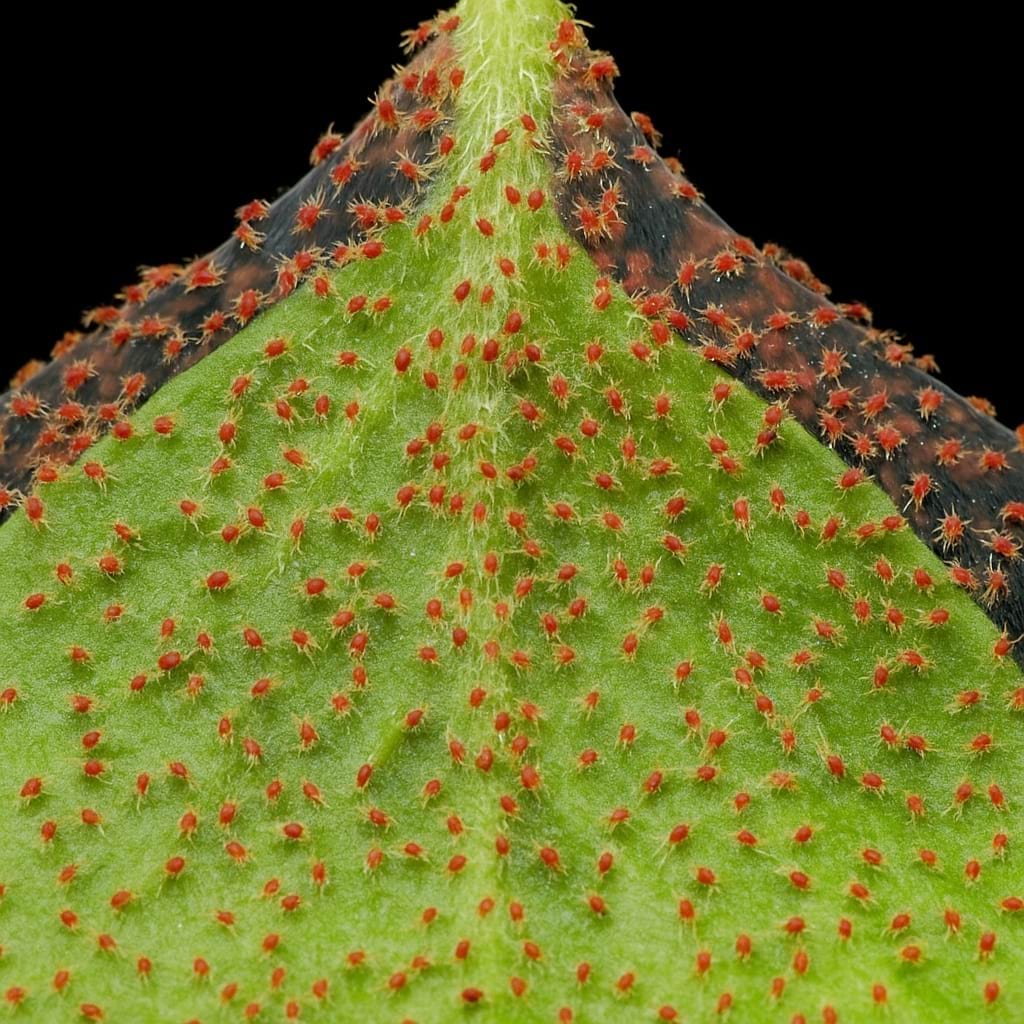
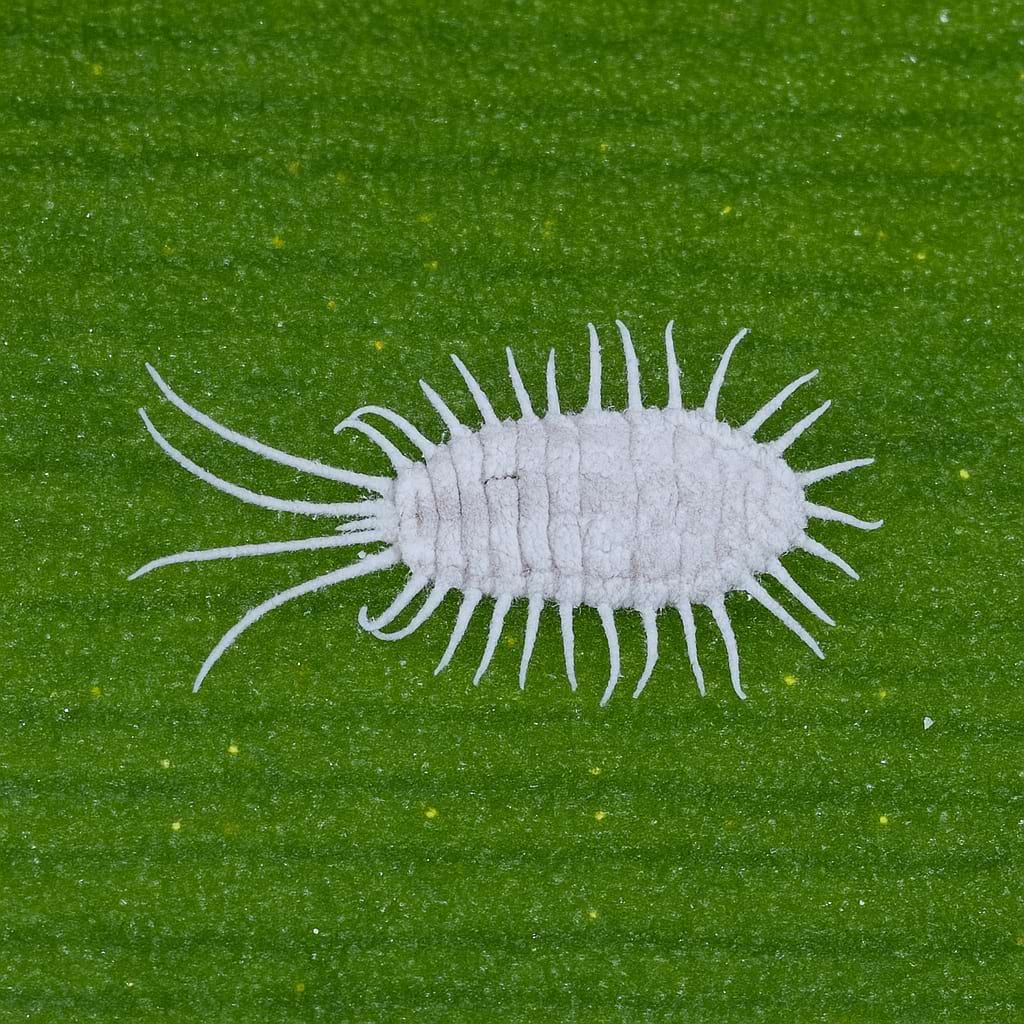
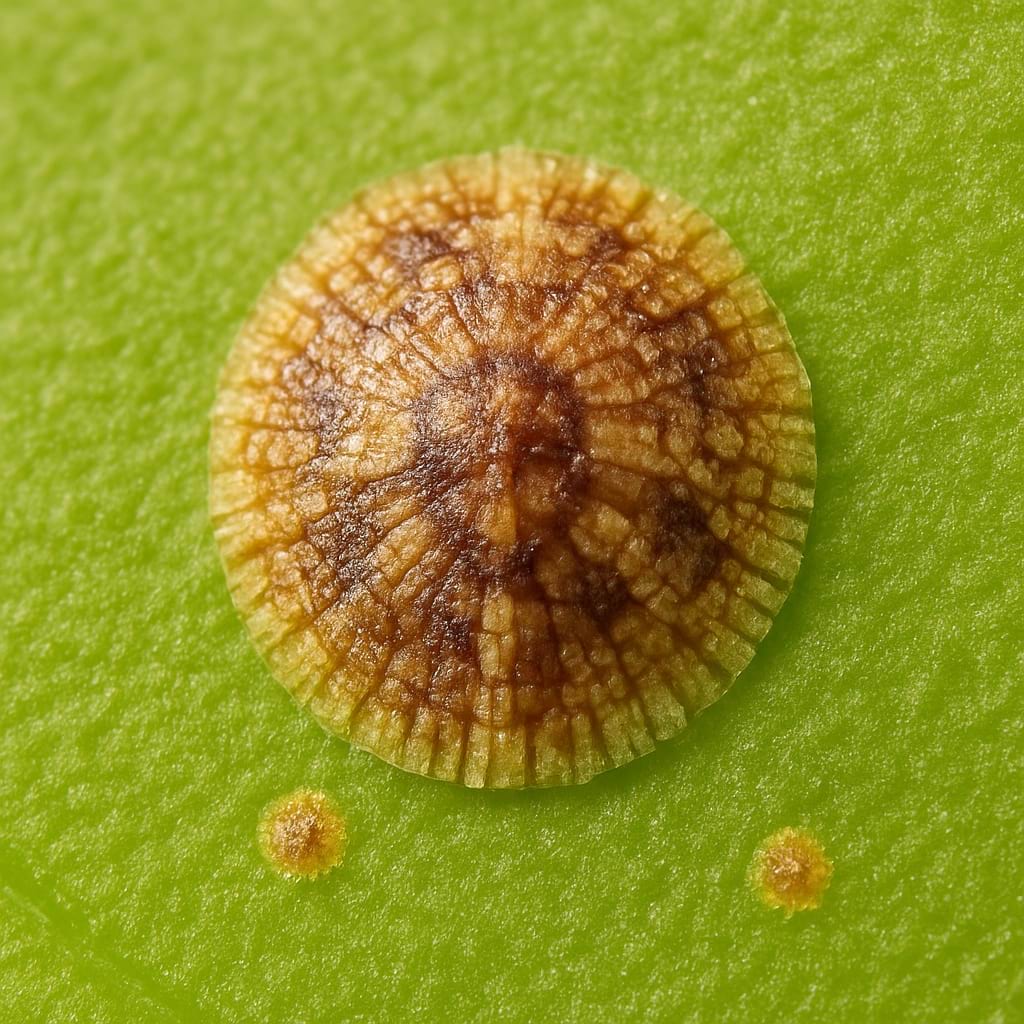
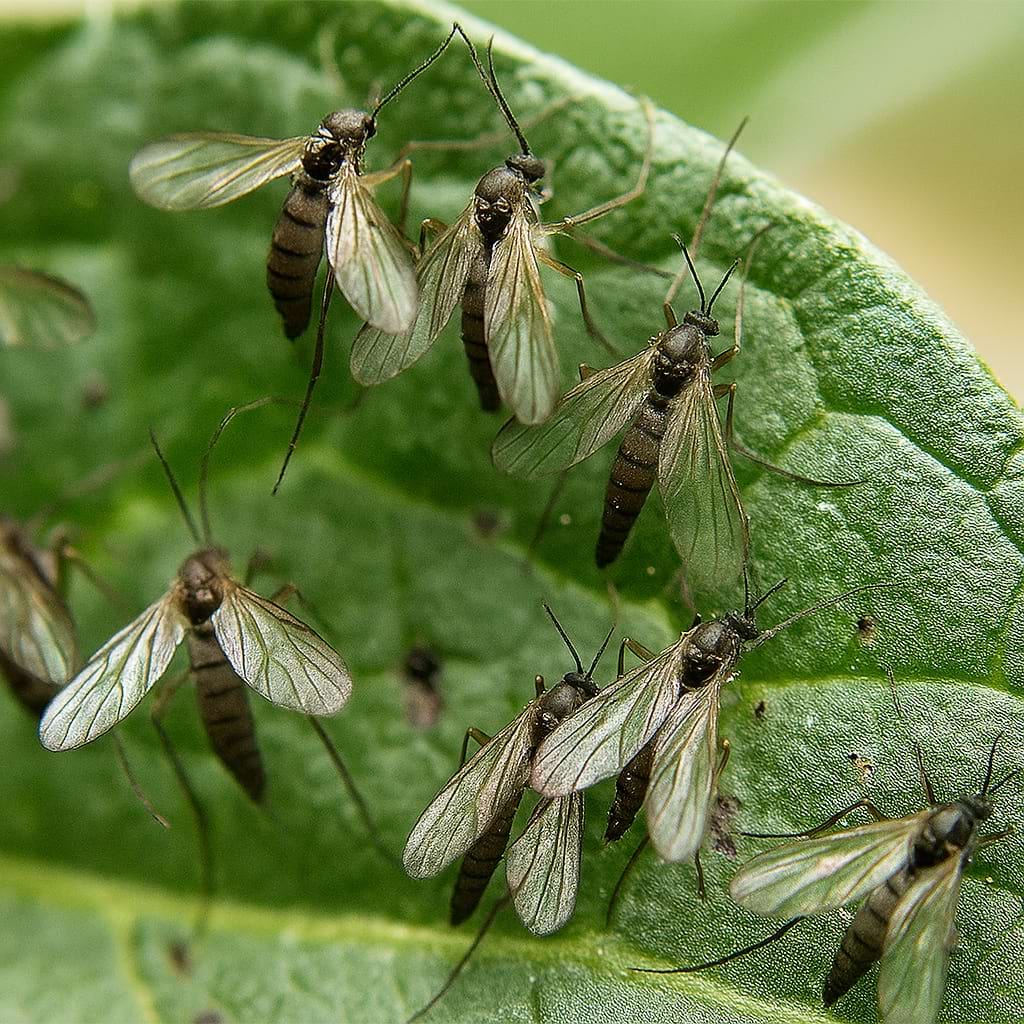
Tiger Fern's dense, arching fronds are its charm and also its pest weakness, since they give insects deep cover and make trouble hard to spot early. Inspect deep into the crown and the undersides of the fronds every week or two, especially in dry winter air when pests multiply fastest. One caution: ferns are sensitive to many chemical insecticides, so test any spray on a small section first and reach for gentle options.
The most likely visitor is spider mites, which thrive in dry, heated air and are easy to miss against the fine foliage. Watch for a dull, faded look and fine webbing strung between the fronds. Rinse the plant thoroughly to knock them off, raise the humidity, and treat with insecticidal soap or a fern-safe neem solution. Mealybugs appear as small white cottony tufts in the crown and frond joints; dab them with a rubbing-alcohol swab and repeat. Scale insects show up as small brown bumps on the stems near the soil and can be scraped off. Fungus gnats breed in the constantly moist soil this fern needs, so let the very top layer dry slightly between waterings and set out yellow sticky traps.
🩺 Common Tiger Fern Problems
Nearly every problem with this fern traces back to humidity, watering, or light, and the dense fronds tend to make the symptoms dramatic.
Brown, crispy edges are the signature complaint and almost always mean the air is too dry. Raise the humidity with a humidifier or a move to a humid room, and trim the damaged fronds. Leaf drop and yellowing usually follow underwatering or a sudden shock like a cold draft, with the plant shedding leaflets from the inside out and going hollow in the center. Keep the soil evenly moist and the conditions stable.
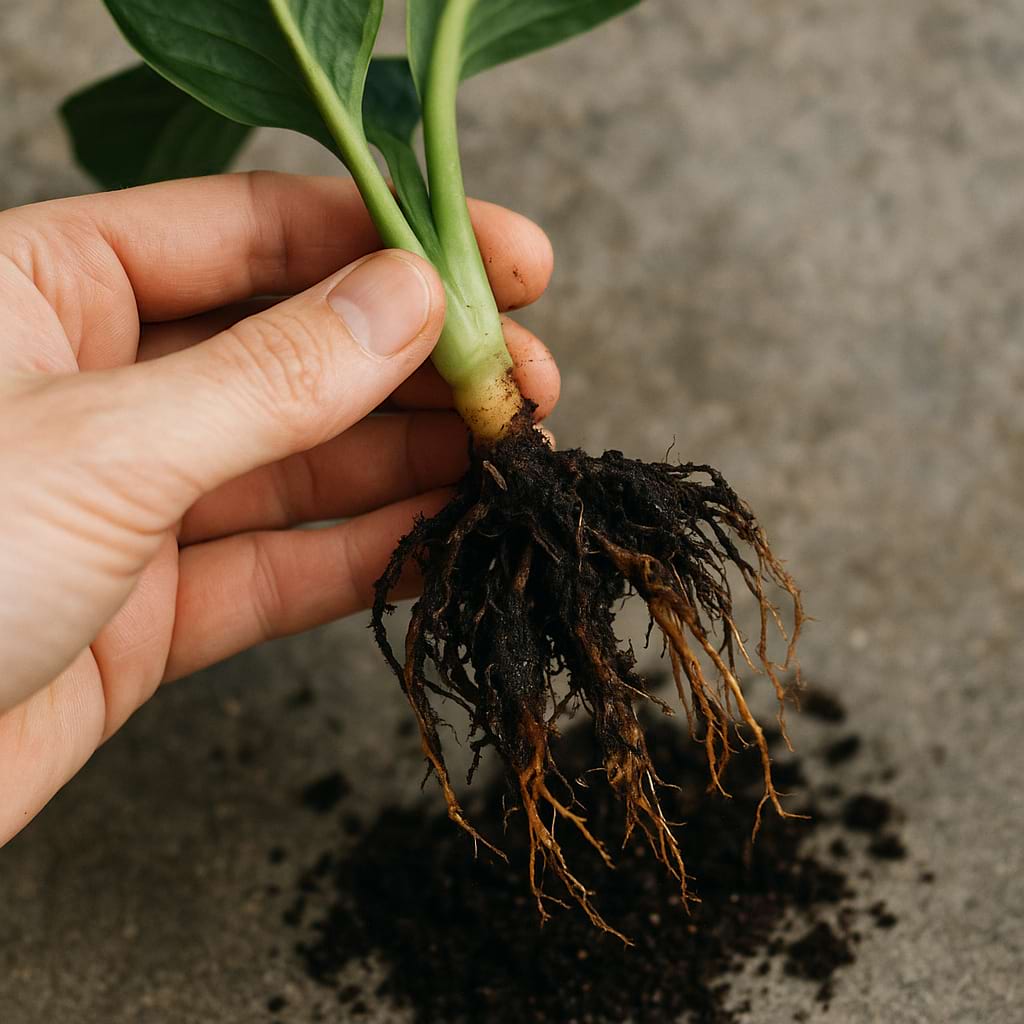
Wilting and drooping most often means the plant is thirsty, but check the soil first: if it is already wet, the cause is root rot from soggy soil, not thirst. Unpot the fern, cut away any black, mushy roots, and repot into fresh, airy mix. Stunted growth with no new fronds points to too little light or chronically low humidity. The one problem unique to this cultivar is fading variegation, where new fronds come in greener and greener; that is a light problem, not a disease, and brighter indirect light plus pruning the reverted growth brings the gold back.


🖼️ Tiger Fern Display and Styling Ideas
Solo Setups
The gold striping is the whole reason to grow this fern, so display it where that color can be seen and where the air stays humid. A hanging basket or a pedestal stand shows off the arching, streaked fronds beautifully, letting them spill over the rim. The warm variegation reads best against a dark or matte pot and a plain background, so a charcoal, deep green, or simple white container lets the gold carry the look. A bright bathroom shelf is a natural home, pairing the humidity the fern craves with a spot where the color lifts the hard lines of tile and mirror.
Grouped Arrangements
Tiger Fern earns its keep in a grouping because it adds color to an arrangement that would otherwise be all green. The gold pops hardest next to solid, deep-green foliage, so set it beside a classic Boston Fern, a Cotton Candy Fern, or a Nerve Plant and let the contrast do the work. Clustering plants together also raises the local humidity, which this fern repays with fuller growth. Keep the brightest-lit position in the group for the Tiger Fern, since it needs the light most to hold its stripes.
Where Not to Put It
Skip dry, sunny windowsills, spots above a radiator or heating vent, and anywhere in a strong draft. A baking south windowsill will scorch the pale gold bands within a day, and dry, dim living rooms with the heating running are the toughest setting for those fronds. Give it bright, indirect light and steady humidity and it glows; strand it in a dim corner and it slowly fades to plain green.
🌟 Tiger Fern Pro Care Tips
Light is what keeps the gold. Bright, indirect light is the single biggest lever for strong variegation. A Tiger Fern in a dim spot stays alive but slowly reverts to plain green.
Cut the reverted green fronds. All-green fronds grow faster than striped ones and will take over if you let them. Snip them at the base to keep the plant pushing variegated growth.
Never let it dry out. The fronds hold little water reserve, so a single hard drought can crisp the plant. Check the soil every few days and water when the top inch is dry.
Keep it off the heat vent. Warm, dry forced air is this fern's worst enemy in winter. A few feet of distance from any vent or radiator saves the fronds from crisping.
Use gentler water. If your tap water is hard or heavily chlorinated, let it sit out overnight or use filtered or rainwater to prevent the mineral buildup that browns frond tips.
Clear out dead fronds. Removing browned fronds at the base keeps the crown healthy, improves airflow, and denies pests their favorite hiding spot deep in the foliage.
❓ Frequently Asked Questions
Is Tiger Fern toxic to cats and dogs?
No. Tiger Fern is a cultivar of Nephrolepis exaltata, which is non-toxic to cats, dogs, and humans, so it is a safe pick for pet-friendly homes. A curious pet that chews a frond will not be poisoned, though a large nibble could cause mild stomach upset like any non-food plant.
Why is my Tiger Fern turning all green?
It is reverting, and the usual cause is too little light. The gold sections hold less chlorophyll, so in a dim spot the plant favors plain green fronds that photosynthesize better, and the striping fades from new growth. Move it to brighter indirect light and cut the fully reverted green fronds at the base so the plant refocuses on variegated growth.
Why is my Tiger Fern turning brown and crispy?
Low humidity is the usual culprit. The fronds lose moisture quickly, so dry indoor air, especially with winter heating, crisps the tips and edges fast. Raise the humidity with a humidifier or a move to a bathroom, keep the soil evenly moist, and trim the damaged fronds.
Is Tiger Fern hard to care for?
It is a moderate-care fern, on par with a standard Boston Fern. Nothing about it is genuinely difficult except keeping the humidity up and the light bright. The one extra task over a plain Boston Fern is pruning off reverted green fronds to keep the variegation strong.
How often should I water a Tiger Fern?
Water when the top inch of soil feels dry, often every 5 to 7 days in summer and every 8 to 12 days in winter. The goal is soil that stays evenly moist but never soggy, so check with your finger rather than watering on a fixed schedule.
What is the difference between a Tiger Fern and a Boston Fern?
A Tiger Fern is a variegated cultivar of the Boston Fern, and both are Nephrolepis exaltata with the same care needs. The difference is purely color: the Tiger Fern's fronds are streaked and banded with gold and yellow, while the classic Boston Fern is solid green. Because the gold tissue holds less chlorophyll, the Tiger Fern grows a little slower.
Will my Tiger Fern keep its stripes forever?
Not automatically. The variegation is unstable, so a Tiger Fern can drift back to plain green in low light or, more rarely, throw weak near-yellow fronds. Keeping the light bright and pruning off any fully reverted green fronds is how you hold onto the tiger striping over the years.
Can I grow Tiger Fern in a hanging basket?
Yes, and it is one of the best ways to show it off. The arching, gold-streaked fronds spill gracefully over the rim of a basket, and a hanging spot near a bright window keeps the light strong enough to hold the variegation. Just remember that pots in hanging baskets dry out faster, so check the soil more often.
ℹ️ Tiger Fern Info
Care and Maintenance
🪴 Soil Type and pH: Light, slightly acidic peat or coco coir mix with perlite
💧 Humidity and Misting: Loves 50-60% or higher. The fronds crisp in dry air, so a humidifier or a humid room helps.
✂️ Pruning: Trim browned fronds at the base, and cut any fully reverted all-green fronds to encourage variegated growth.
🧼 Cleaning: Mist or rinse gently under lukewarm water to clear dust. Skip leaf-shine products on the fine fronds.
🌱 Repotting: Every 2-3 years, or when roots fill the pot and growth slows.
🔄 Repotting Frequency: Every 2-3 years
❄️ Seasonal Changes in Care: Ease off watering in winter as growth slows, but never let it dry out fully. Keep it away from heating vents and cold glass.
Growing Characteristics
💥 Growth Speed: Moderate
🔄 Life Cycle: Perennial
💥 Bloom Time: Does not bloom; reproduces by spores
🌡️ Hardiness Zones: 9-11 (indoors elsewhere)
🗺️ Native Area: Cultivar of a species native to tropical regions worldwide
🚘 Hibernation: No true dormancy; growth slows in winter
Propagation and Health
📍 Suitable Locations: Bright bathrooms, hanging baskets, high shelves, plant stands, shaded patios
🪴 Propagation Methods: Divide the root clump in spring, or pin down the runners it sends across the soil surface.
🐛 Common Pests: Spider Mites, Mealybugs, Scale Insects, Fungus Gnats
🦠 Possible Diseases: Root rot from soggy soil; leaf spot and crown rot in stagnant wet conditions
Plant Details
🌿 Plant Type: Tropical Evergreen Fern
🍃 Foliage Type: Evergreen
🎨 Color of Leaves: Green variegated with bands of gold and yellow
🌸 Flower Color: N/A
🌼 Blooming: Does not flower
🍽️ Edibility: Not edible
📏 Mature Size: 1-2 feet
Additional Info
🌻 General Benefits: Non-toxic to pets and children, helps freshen indoor air, and adds a rare splash of warm color to a fern collection that is usually all green.
💊 Medical Properties: None known
🧿 Feng Shui: Soft, arching fern foliage is linked to gentle wood energy and is used to calm a room and soften hard corners.
⭐ Zodiac Sign Compatibility: Cancer
🌈 Symbolism or Folklore: Sincerity, new beginnings, quiet vitality
📝 Interesting Facts: The gold striping is a spontaneous variegation that is not fully stable. A Tiger Fern can throw plain all-green fronds or, more rarely, near-yellow fronds with little green, and light levels nudge it one way or the other.
Buying and Usage
🛒 What to Look for When Buying: Choose a plant with a strong, even mix of gold and green and a full center, not one that has drifted mostly back to plain green or gone so yellow it looks pale and weak. Check deep in the crown for webbing or cottony spots.
🪴 Other Uses: Hanging basket, accent plant, soft color filler in mixed groupings.
Decoration and Styling
🖼️ Display Ideas: Hanging baskets, pedestal stands, bright bathroom shelves, grouped with solid green plants that make the gold pop.
🧵 Styling Tips: The warm gold variegation reads best against deep green companions and dark or matte pots, where the stripes glow instead of getting lost.
🪴 See also 🪴
Complete Guide To Green Moment Fern Care and Growth
Complete Guide To Nephrolepis Exaltata Roosevelt Fern Care and Growth
Complete Guide To Nephrolepis exaltata Whitmanii Fern Care and Growth
Complete Guide To Petticoat Fern Care and Growth
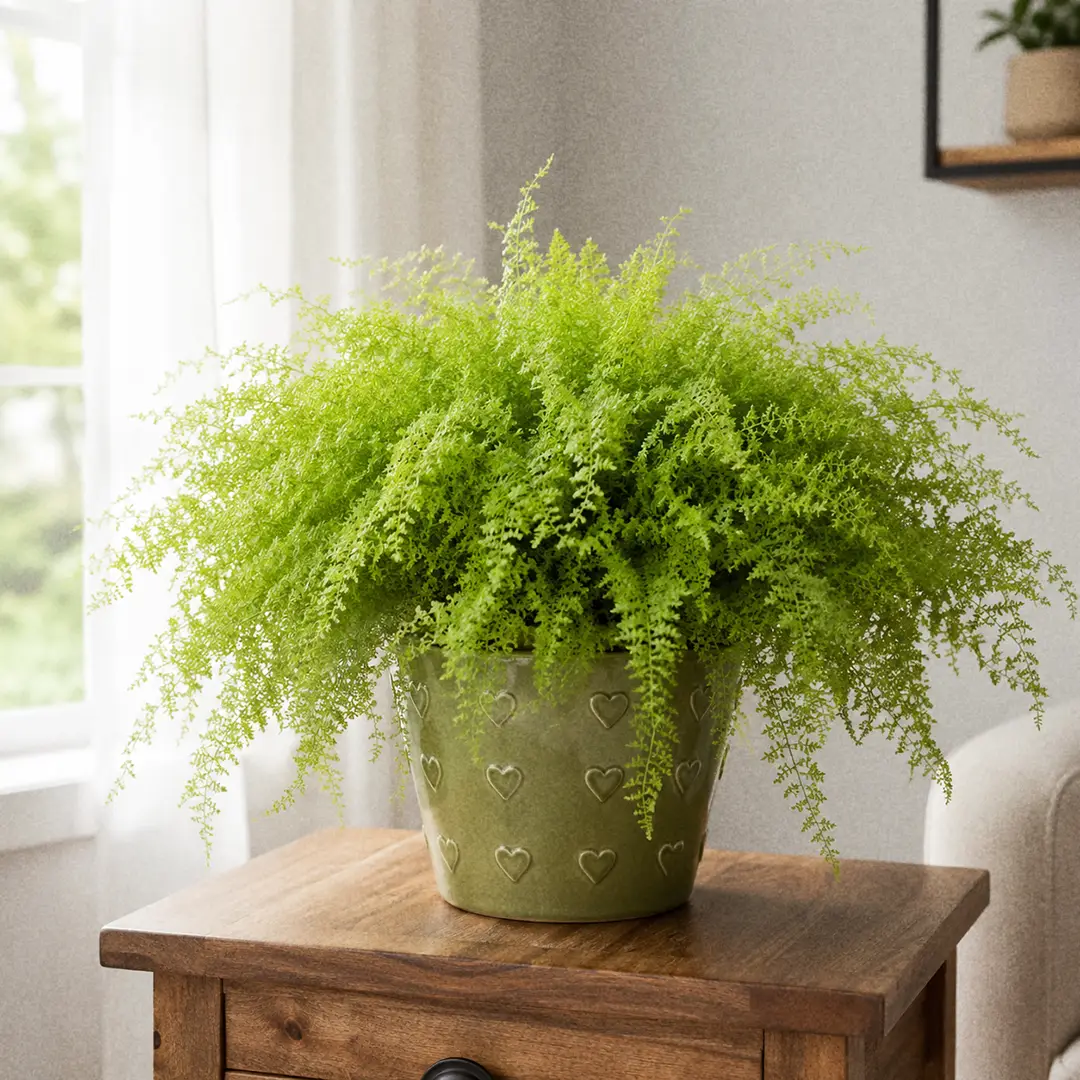
Complete Guide to Cotton Candy Fern Care and Growth
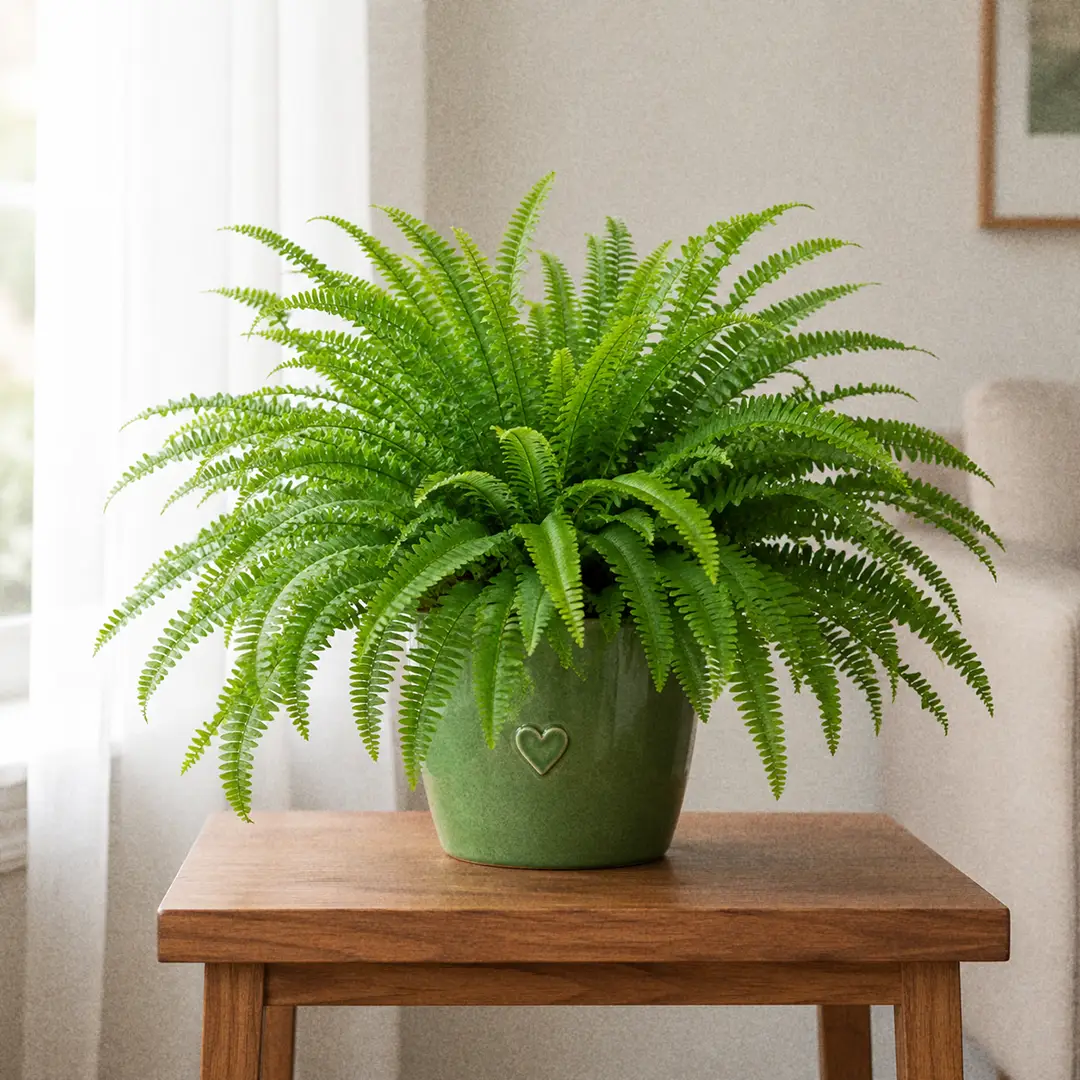
Complete Guide to Dallas Fern Care and Growth
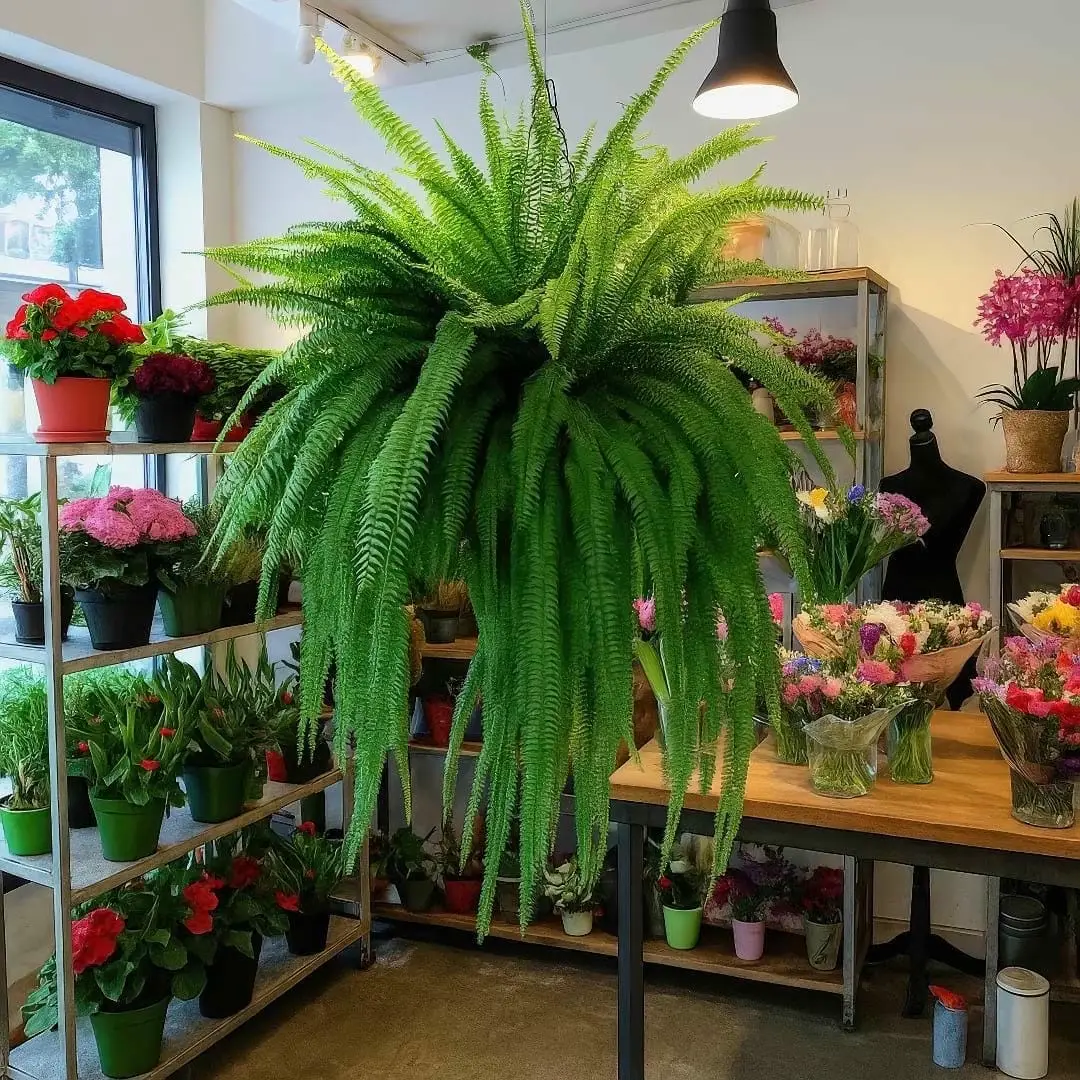
Complete Guide to Fish Tail Fern Care and Growth
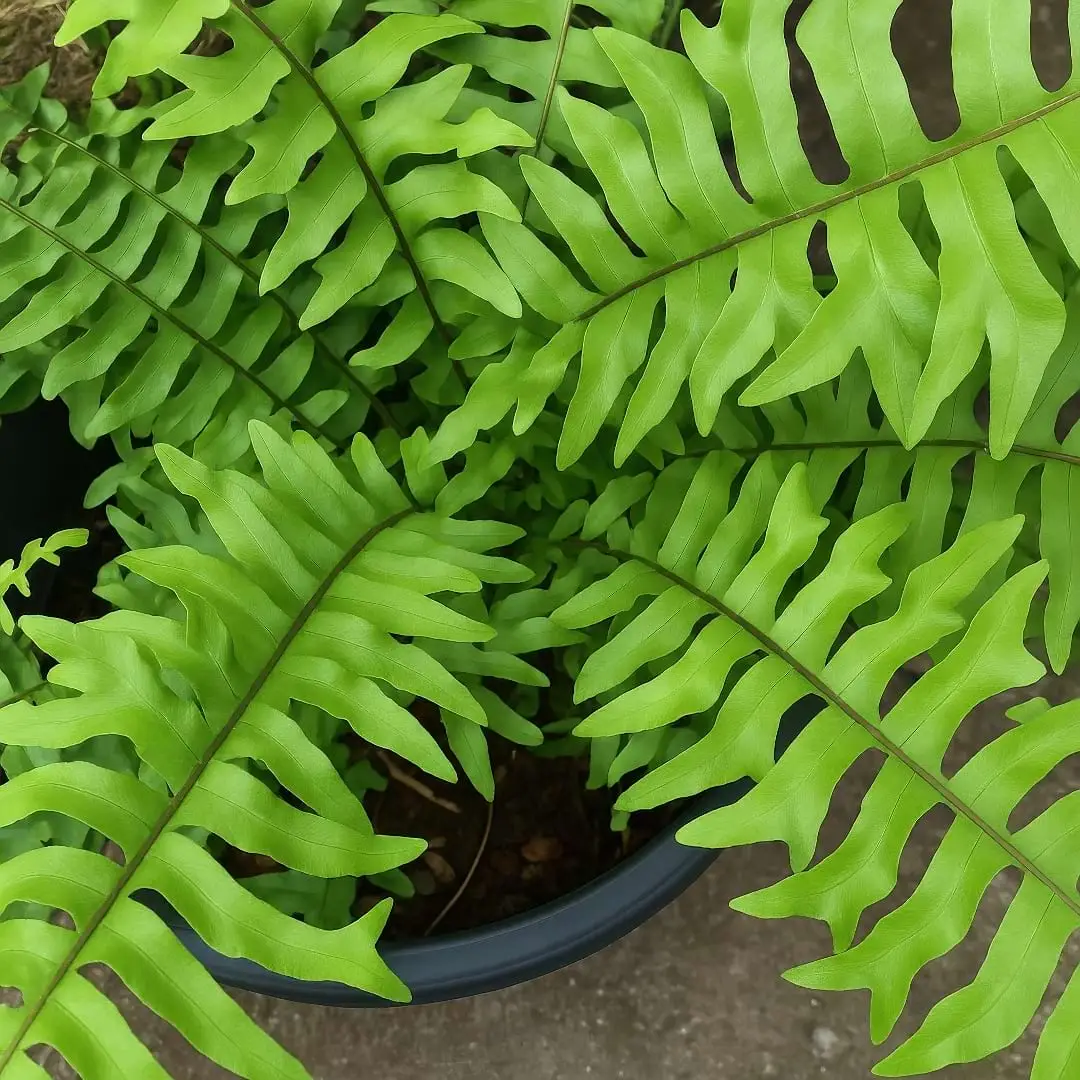
Complete Guide To Fishtail Sword‑fern Care and Growth
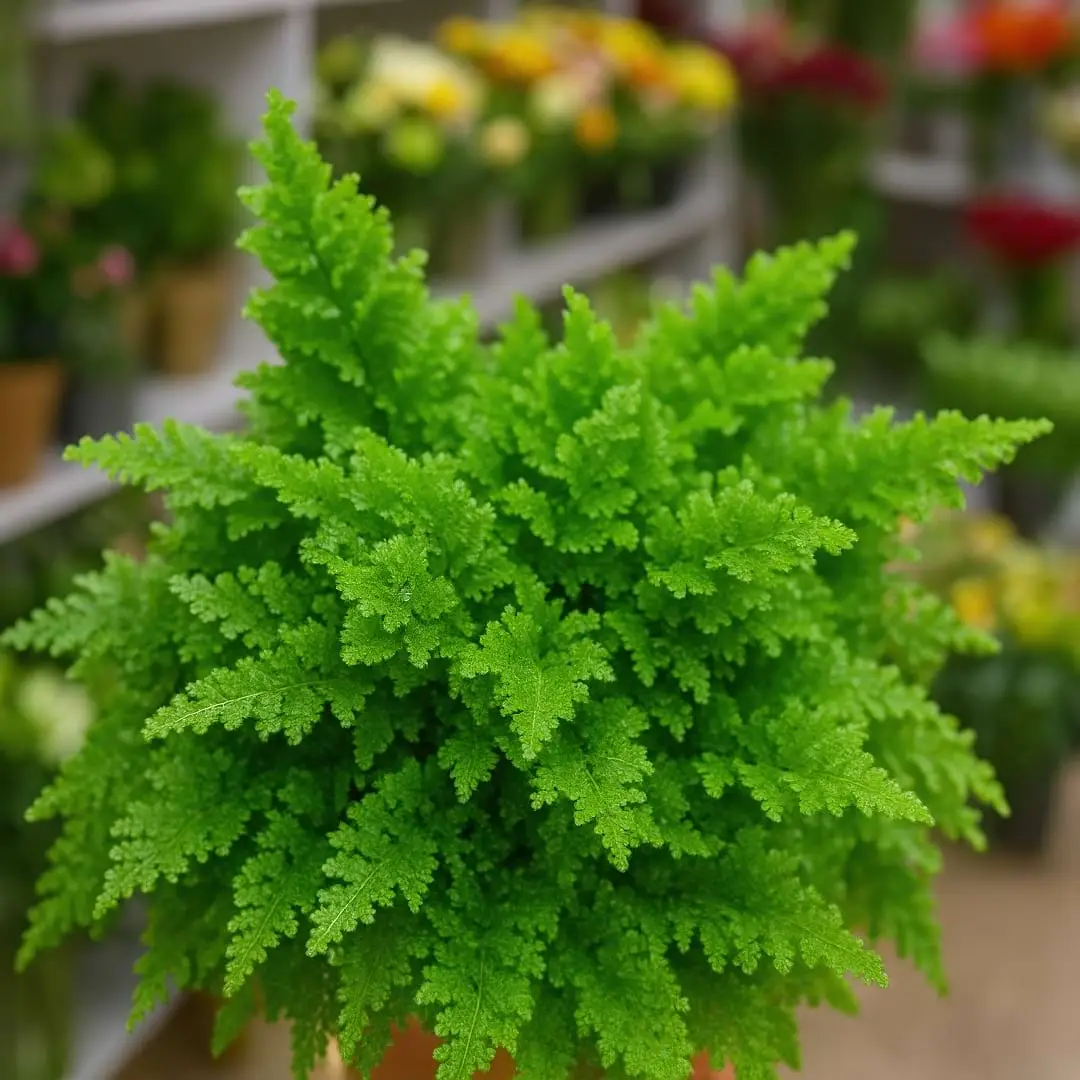
Complete Guide to Fluffy Duffy Fern Care and Growth
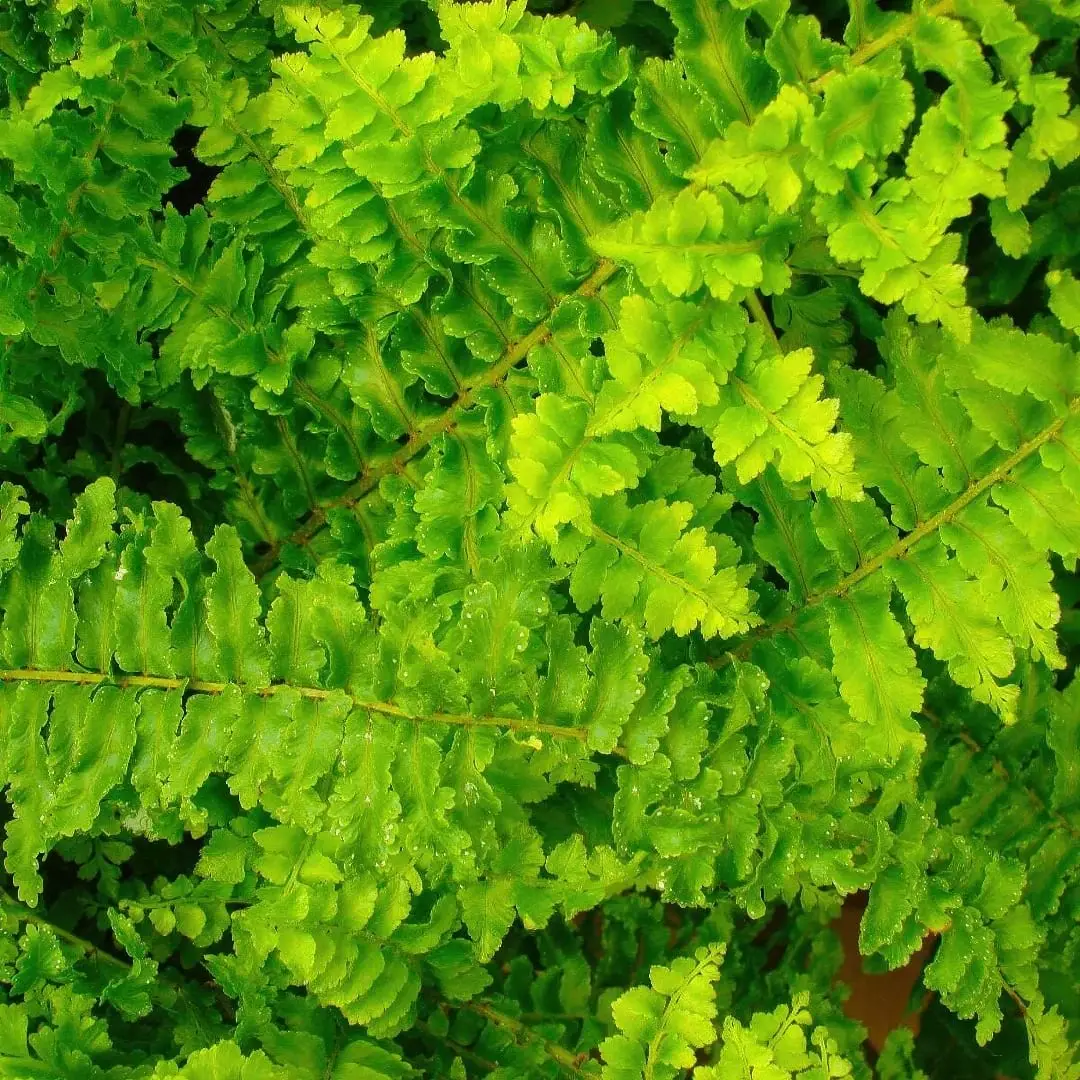
Complete Guide To Fluffy Ruffles Fern Care and Growth
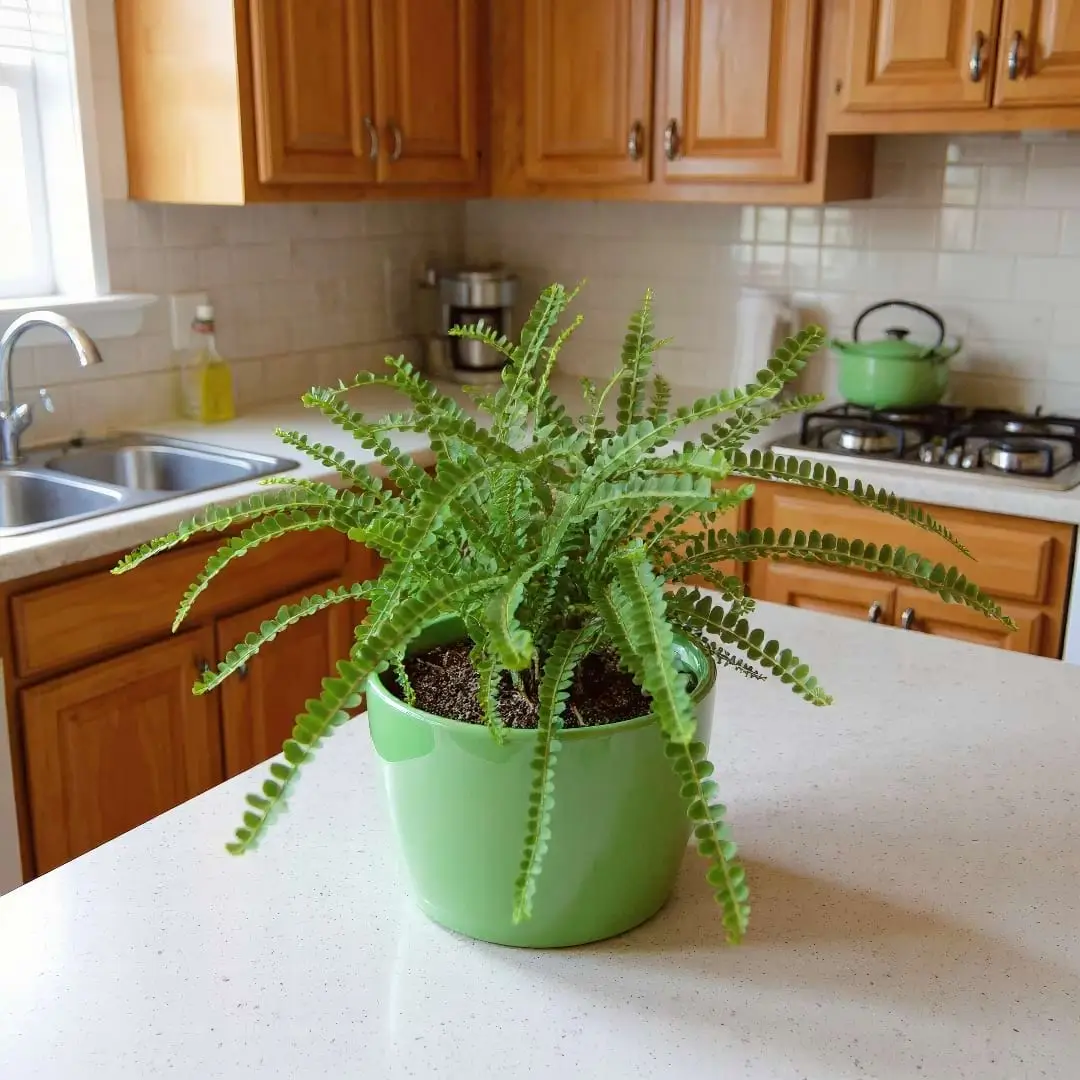
Complete Guide To Lemon Button Fern Care and Growth
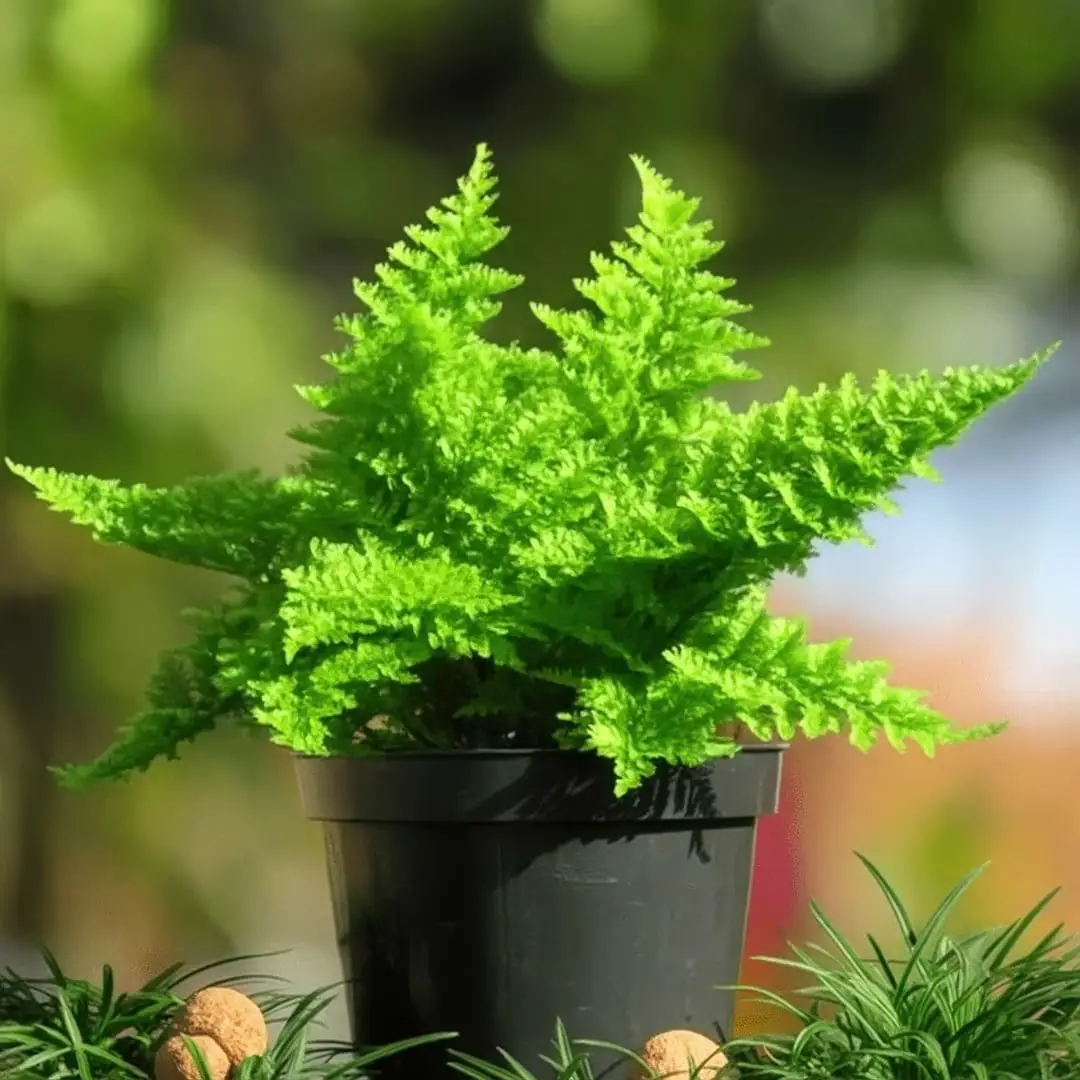
Complete Guide To Marisa Fern Care and Growth
Complete Guide to Ariane Boston Fern Care and Growth
Complete Guide to Asian Sword Fern Care and Growth
Complete Guide to Pitcher Plant Care (Nepenthes)

Complete Guide To Macho Fern Care and Growth
42 Boston Fern Varieties, Species, and Types (With Pictures)
Complete Guide To Kimberley Queen Fern Care and Growth

Houseplant101 Forum
Questions & Comments
Ask a question, share your plant experience, or help other plant owners.
Comments are temporarily unavailable.
Open the Houseplant101 ForumNo comments yet
Be the first to ask a question or share your experience about this page.
Log in or create an account
Comments use your Houseplant101 Forum account, but you can stay on this page.
Create a new account