
Tradescantia Fluminensis
Tradescantia fluminensis
Small-Leaf Spiderwort, Inch Plant, River Spiderwort, Wandering Jew, White-Flowered Tradescantia


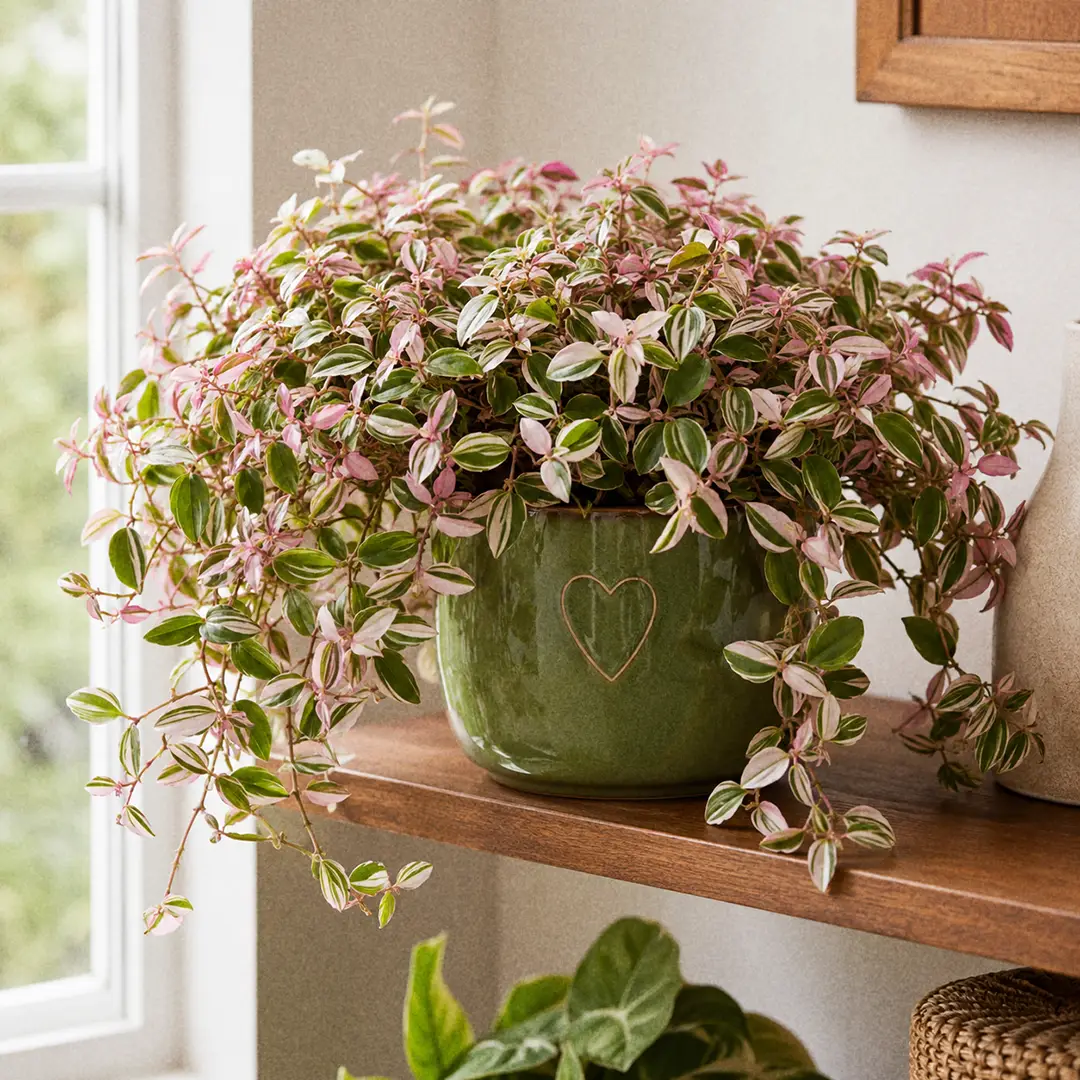
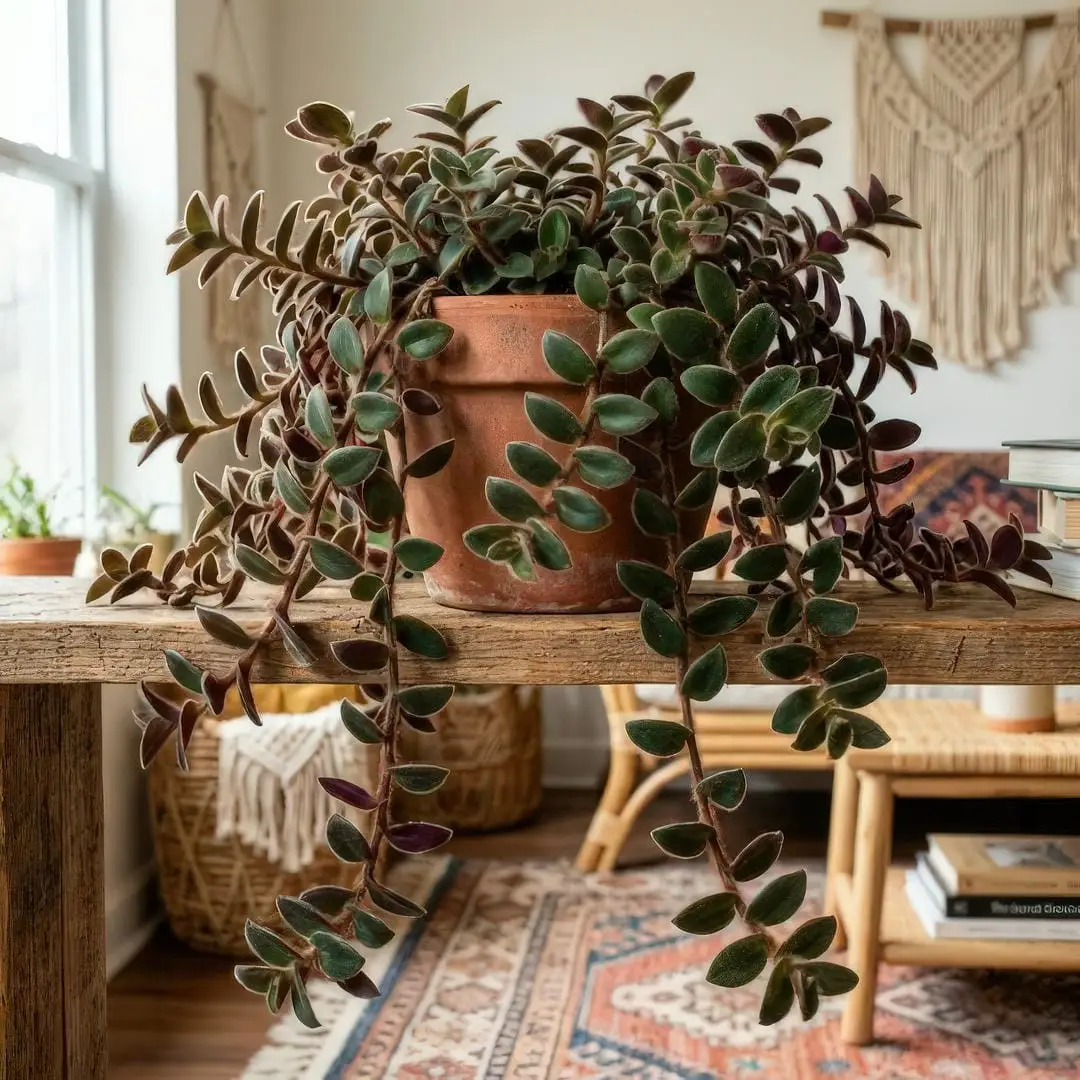
Tradescantia Fluminensis is a fast, forgiving trailing houseplant best known for its small glossy leaves and the cream, pink, and green stripes of the popular Tricolor form. This complete guide shows you how to keep the variegation bright, stop the vines going leggy, and turn quick cuttings into a full, lush pot.
📝 Tradescantia Fluminensis Care Notes
🌿 Care Instructions
⚠️ Common Pests
📊 Growth Information
🪴 In This Guide 🪴

☀️ Tradescantia Fluminensis Light Requirements (Indoor Lighting Guide)
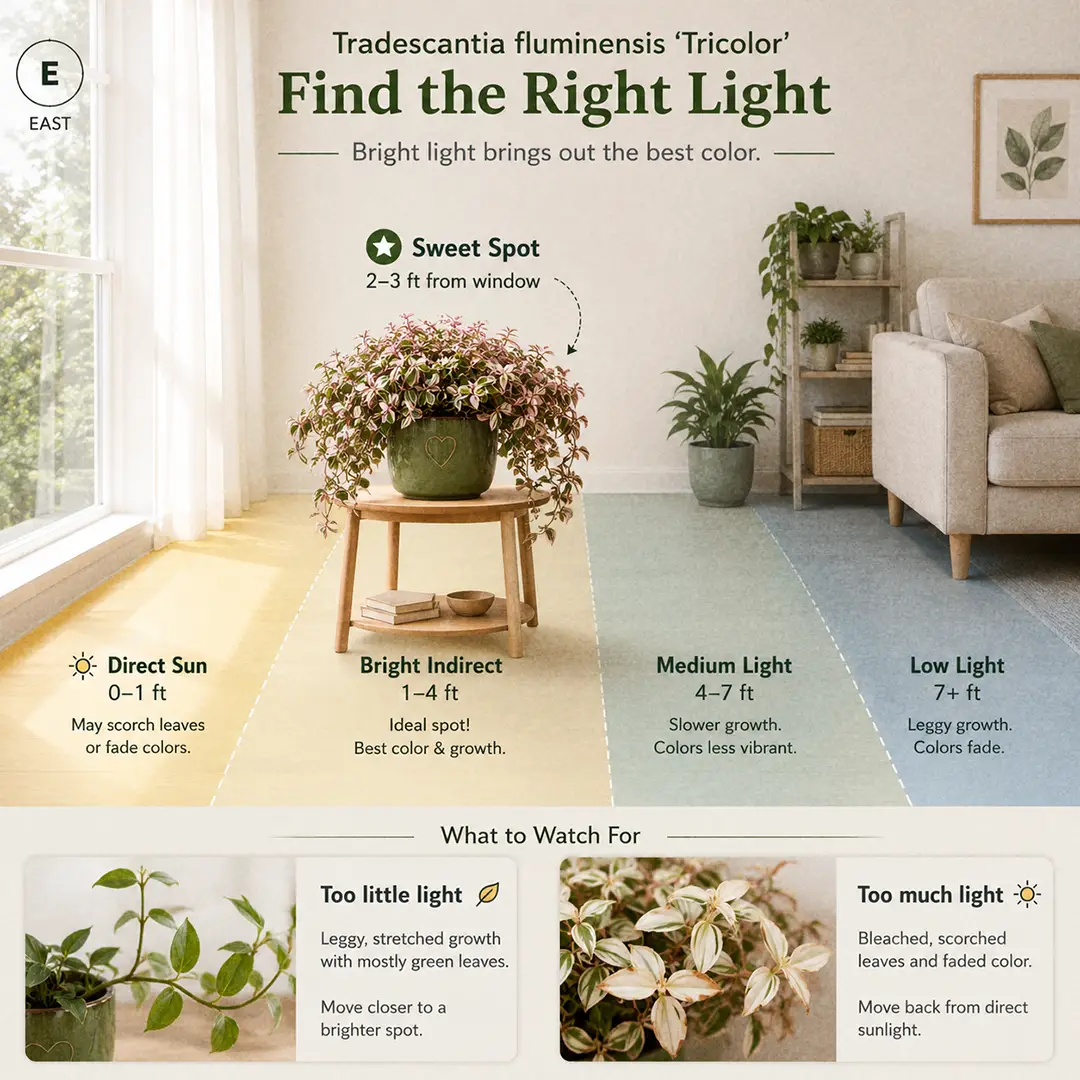
The Sweet Spot
Tradescantia Fluminensis grows best in bright, indirect light. An east window is close to perfect, and a west or south window works well too as long as harsh midday sun is softened by a sheer curtain. The plant wants lots of brightness without hours of hot glass cooking the leaves.
Light does more than keep this plant alive. It controls how it looks. In a bright spot the stems stay short and packed with leaves, and on the Tricolor form the pink and cream stripes come in strong. In a dim corner the plant survives but stretches, and the variegation washes toward plain green. If you are unsure how bright your room really is, our indoor light guide explains what "bright indirect" looks like in a normal home.
A simple test: put it where you could read a book during the day without switching on a lamp. If the pot is hanging, make sure light reaches the top of the pot, not just the dangling ends, because that crown decides whether the plant stays full or goes bald.
Too Little Light
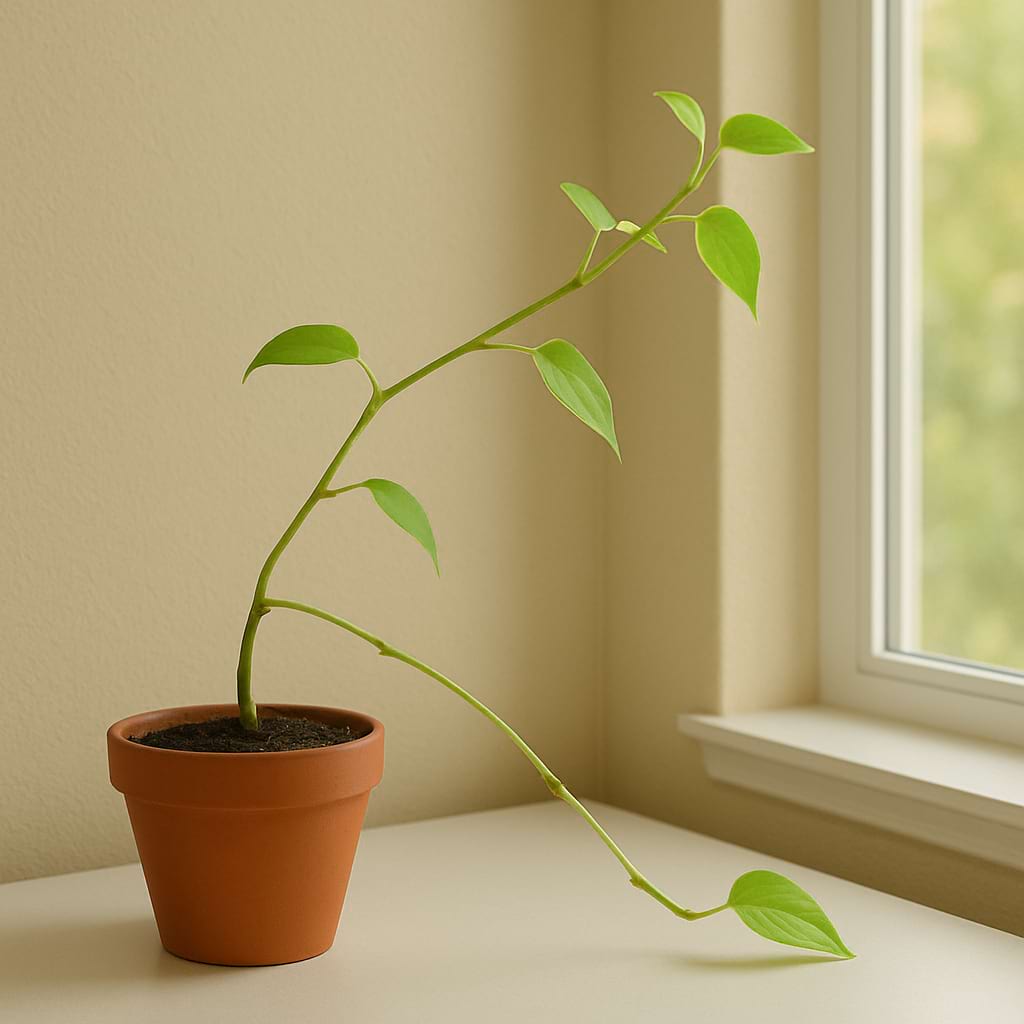
This is the most common problem, and it shows up fast. The vines stretch toward the window, the new leaves come in smaller, and the spacing between them gets long and gangly. That is textbook leggy growth.
The variegated forms suffer first. Starved of light, a Tricolor plant quietly drops the pink and cream and reverts to solid green leaves, which photosynthesize better in the gloom. Once whole stems go plain green they rarely turn striped again, so move the plant brighter before it gets that far. Homes with weak natural light can grow it under grow lights, kept about 8 to 14 inches above the crown and run 10 to 12 hours a day.
Too Much Light
The species takes more light than many trailers, but raw afternoon sun through hot glass is still too much. Signs you have overdone it are bleached, washed-out patches, dry crispy edges, and on the Tricolor the pale stripes scorching first because they have no protective pigment.
A little gentle morning sun is actually helpful and brings out the best color. If you want to move a plant from a shady shelf into a sunnier window, do it over a week or two, since tender indoor growth can still burn from a sudden jump. The same gradual approach applies before any summer move outdoors.
💧 Tradescantia Fluminensis Watering Guide (How to Water Properly)
Watering Frequency
Tradescantia Fluminensis likes more water than a succulent but far less than a fern. Let the top inch of soil dry out, then water thoroughly and let the excess drain away. In spring and summer that often lands around every 5 to 8 days, slowing to every 10 to 14 days or longer in winter. Pot size, light, and warmth matter far more than any fixed schedule.
The stems are juicy and slightly succulent, so a short dry spell does no harm. What the plant hates is staying wet and airless around the roots for days. If the mix is still damp an inch down, wait. Compared with Swedish Ivy it tolerates a touch more dryness between drinks, and a cheap moisture meter helps if you tend to misjudge.
How to Water
Top watering is perfectly fine. Pour slowly until water runs from the drainage holes, wait ten minutes, then empty the saucer so the roots are not left standing in a puddle. Bottom watering works well too, especially when the crown is dense and you want to keep water off the stems. If your plant lives in a hanging basket, take it down now and then and water it properly at the sink rather than giving it little sips in place, which leaves dry pockets in the root ball.
Signs of Trouble
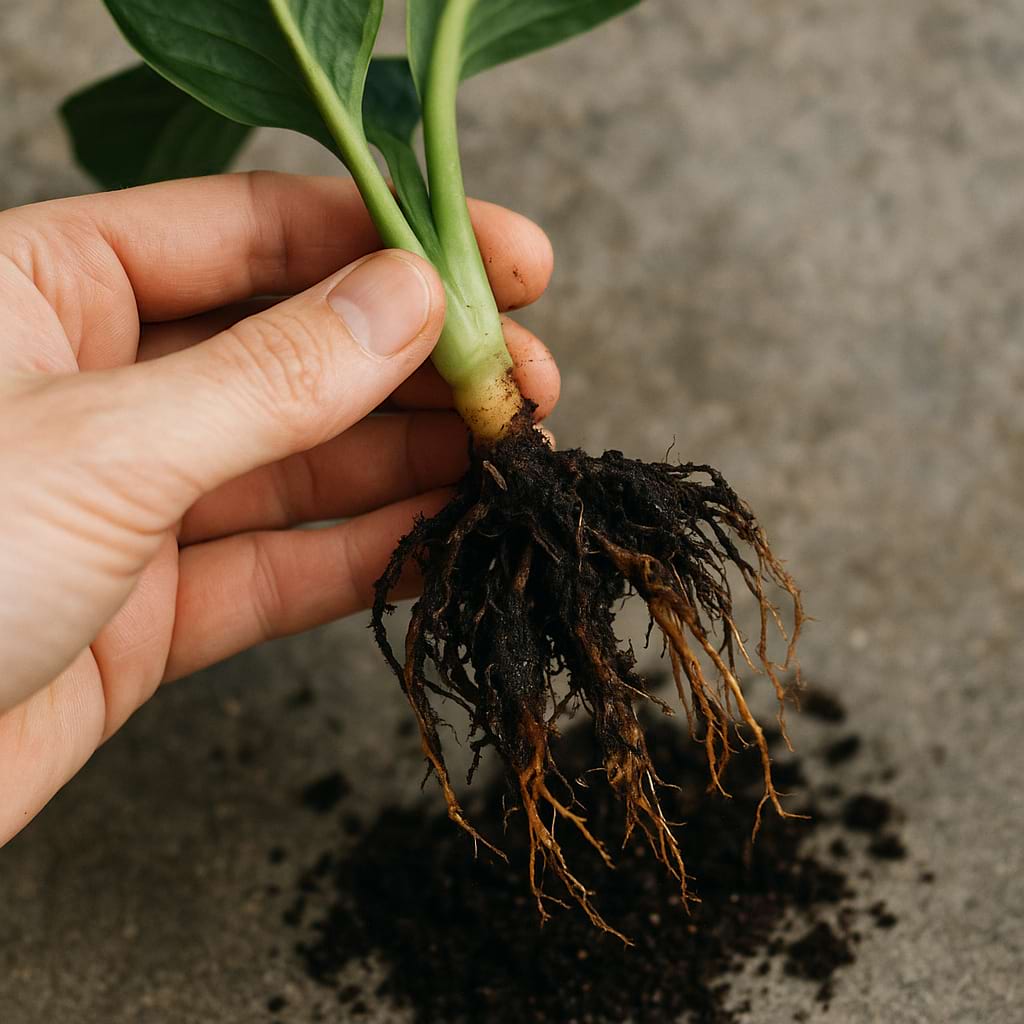
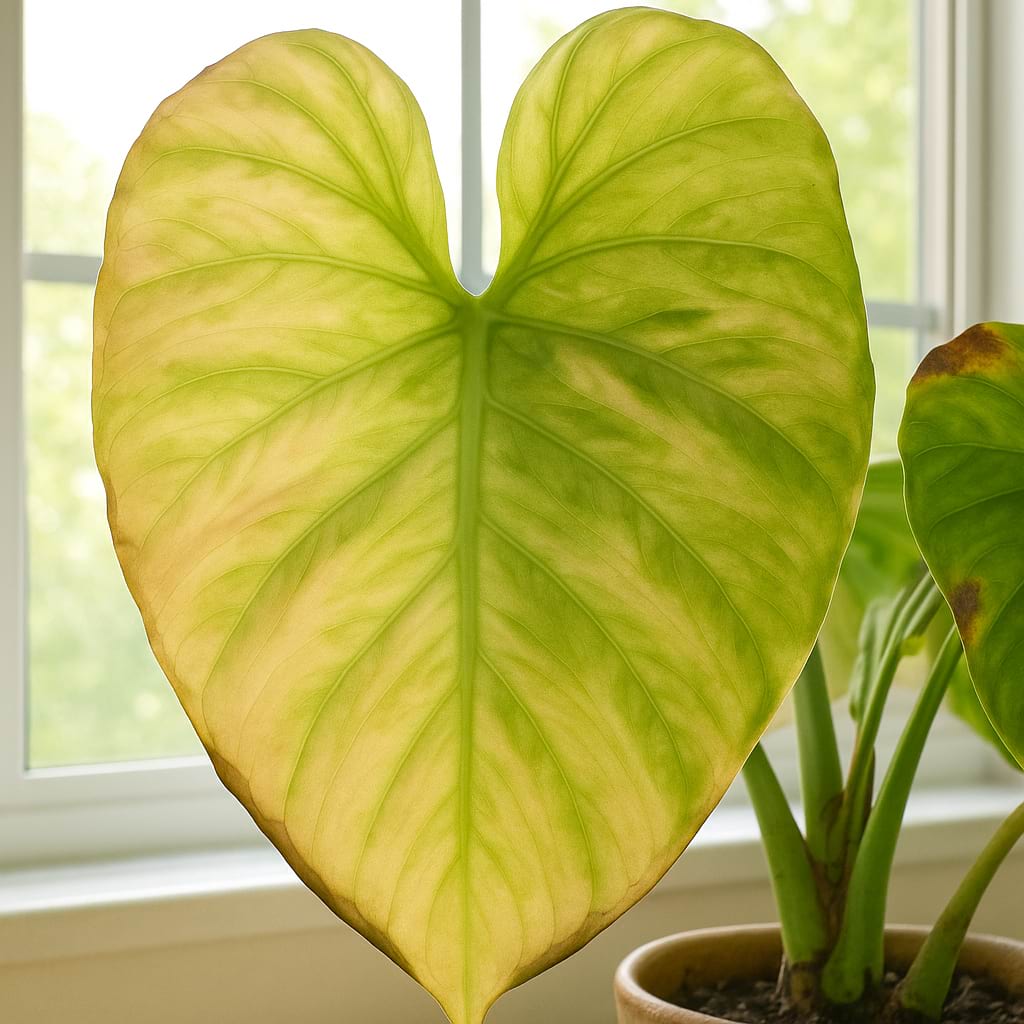
Overwatering is the bigger danger with this plant, and it announces itself clearly. Watch for yellowing leaves low on the plant, soft or translucent stem bases, mix that stays soggy for days, and a sour smell from the pot. Left unchecked that slides into root rot, at which point you have to cut back to healthy tissue and re-root the best tips.
Underwatering is gentler and easier to fix. The leaves curl in and feel thin, the pot goes light, and the tips may crisp after repeated neglect. A thorough soak and a steadier routine bring it right back. When in doubt, wait, because a slightly dry plant recovers in days while a soggy one can collapse.
🪴 Best Soil for Tradescantia Fluminensis (Potting Mix and Drainage)
What the Soil Needs
This plant wants a mix that holds a little moisture but still breathes between waterings. A dense, peat-heavy bagged soil stays wet far too long and invites rot, while a pure gritty cactus blend dries out before the roots get a proper drink. The target is an airy indoor mix that drains freely yet does not go bone dry in an afternoon. Good drainage is the single most important thing here, since the juicy stems and shallow roots rot quickly in swampy soil but forgive almost everything else.
DIY Soil Mix
A reliable blend looks like this:
- 2 parts quality indoor potting mix
- 1 part perlite or pumice
- 1 part orchid bark or coco chips
That combination gives the roots moisture, oxygen, and structure all at once. The bark keeps the mix open so water moves through instead of pooling, and the perlite stops it compacting into a heavy block over time.
Pre-Made Options
If you would rather not mix your own, start with a standard houseplant potting soil and stir in a couple of generous handfuls of extra perlite. That one tweak turns most bagged soils into something this plant is happy in.
Whatever you use, the pot must have drainage holes. A nursery pot tucked inside a decorative cachepot is ideal, since you can lift it out and check that nothing is sitting in trapped runoff. If you ever notice water pooling on the surface or a stale smell despite decent light, the mix is exhausted and a refresh fixes more than people expect. Our full soil guide breaks down the drainage logic.
🍼 Fertilizing Tradescantia Fluminensis
When and How Often
Because it grows so fast, Tradescantia Fluminensis appreciates regular feeding more than slower houseplants do. Feed once a month from spring through late summer, taper off in early fall, and stop completely through winter. A plant pushing new shoots uses the food; one sitting dim and dormant cannot.
Always feed onto moist soil, never bone-dry roots. Water first if the mix is dry, then feed. That one habit prevents root burn and stops salts building up around the crown.
What to Use
A balanced liquid fertilizer at half strength is all this plant needs, and a gentle foliage formula works just as well if that is what you already keep. The exact N-P-K numbers matter far less than using a mild product consistently and at a diluted rate. Light always comes before food, though, so if a plant is struggling in a dark corner, fertilizer will not rescue it. Our fertilizing guide explains why feeding an underlit plant usually backfires.
Over-Fertilizing Signs
The classic mistake is feeding too heavily because the plant grows quickly. Too much fertilizer produces soft floppy stems, brown tips from salt buildup, lots of weak green growth with washed-out variegation, and a white crust on the soil surface. If you spot those signs, flush the pot with plain water two or three times, skip the next feeding, and trim the damaged tips. This plant clears up quickly once the root zone is clean again.
🌡️ Tradescantia Fluminensis Temperature Range
Ideal Range
Tradescantia Fluminensis is happiest between 60 and 80°F (16 and 27°C), which lines up neatly with normal indoor life and is a big reason it is so easy to recommend. In a warm, bright room it grows and roots fast and bounces back quickly after a hard prune.
It tolerates cooler nights, but once the temperature drops toward 50°F (10°C) growth stalls and the plant becomes much more vulnerable to overwatering. Indoors, sudden swings cause more trouble than a steady room that simply runs a little cool.
Drafts and Heat Sources
Keep the plant away from cold window glass in winter, drafts from doors, the direct blast of an air conditioner, and the hot dry air rising off radiators. Cold stress shows up as limp, darkened growth or a round of leaf drop after a chilly night, while heat stress looks more like dry edges and a pot that needs water far more often than expected.
In warm weather it loves a sheltered porch with bright shade and moving air, and outdoor light often gives it sturdier growth and richer color than it gets inside. Just bring it back in before nights turn cold. One caution: in frost-free climates Tradescantia spreads aggressively and is considered invasive in places like Florida, New Zealand, and parts of Australia, so keep it in pots and never toss trimmings into the garden, where every node will root.
💦 Tradescantia Fluminensis Humidity Requirements
Ideal Humidity
Part of this plant's charm is that it does not demand greenhouse air. Ordinary household humidity is usually enough, though it looks its best around 40 to 60 percent, where new leaves unfurl cleanly and fresh cuttings root with less fuss. That makes it a natural fit for bright kitchens, sunrooms, and bathrooms with a window. It enjoys a little extra moisture in the air without throwing the tantrum a Calathea would when the room dips dry.
Easy Humidity Boosters
If your home runs very dry, especially during a heated winter, you may see crispy brown tips, slower growth, and a higher chance of spider mites. A few simple moves help more than fussing ever will:
- group it with other plants so they share moisture
- move it away from heat vents and radiators
- run a small humidifier nearby in a very dry room
- root cuttings in a slightly more humid spot for faster success
I am not a fan of constant misting here. It only gives a brief bump and can leave the dense crown wet enough to invite fungal spotting. Steady room conditions beat daily spraying every time.
🌸 Tradescantia Fluminensis Flowers (How to Get Blooms)
What the Flowers Look Like
Tradescantia Fluminensis produces small, three-petaled pure white flowers, which is the easiest way to tell it apart from the pink-and-purple blooms of its cousin Wandering Dude. The species name and the old botanical name albiflora both point straight at those white blooms. They are sweet up close, but no one grows this plant for the flowers. The foliage is always the main event.
How to Trigger Bloom
Indoor flowering is light and occasional, and it tends to happen on mature, well-lit vines that have been left to grow rather than chopped constantly. If you want to nudge it along, give the plant bright light without harsh scorch, steady moderate watering, regular feeding through the growing season, and enough time for some stems to mature. Outdoors in warm weather, established plants bloom much more freely.
If It Won't Bloom
Honestly, do not worry if yours never flowers. A dense pot with short internodes and bright variegation is a far better sign of good care than a scattering of tiny blooms. If you are shaping the plant hard for fullness, it simply keeps resetting into foliage mode, and that is the trade most growers happily accept. Snip off spent flowers if you like a tidy look, but it makes no real difference to the plant's health.
🏷️ Tradescantia Fluminensis Types and Varieties
The Plain Green Species
The true species has small, glossy, oval green leaves, sometimes flushed purple underneath, on fast trailing stems. It is the toughest and quickest of the bunch, and the easiest to revive if it gets leggy. You will often see it listed simply as Tradescantia fluminensis, inch plant, or small-leaf spiderwort.
'Tricolor' (Lilac)
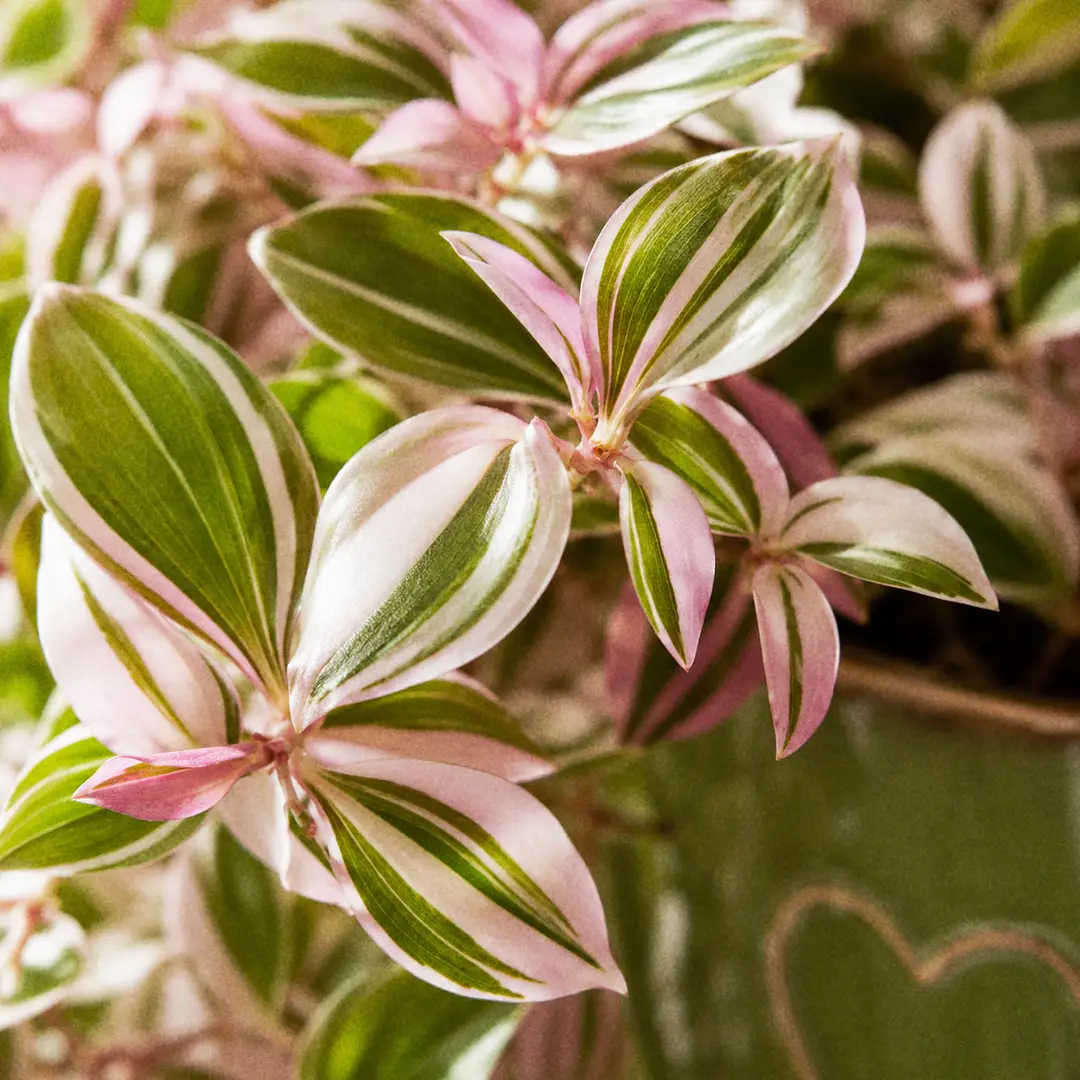
This is the form most people actually buy and the reason this plant is so popular. 'Tricolor' streaks the green leaves with cream, white, and soft pink, sometimes with a pink blush across the whole leaf in strong light. It is gorgeous, but the variegation needs bright light to hold, and pale stripes scorch faster than green ones, so it asks for a slightly more careful spot than the plain species. Expect a touch less vigor too, since extra color almost always means a little less raw growth.
'Variegata' and Other Forms
You may also find a green-and-cream 'Variegata' with bolder white banding and less pink than Tricolor, plus regional names that come and go with the seller. All of them share the same easy care. The only rule that changes with variegation is light: the more cream and white in the leaf, the brighter the spot it needs to keep that color and avoid reverting to plain green.
How It Compares to Its Cousins
Tradescantia Fluminensis gets mixed up with several relatives, so here is the quick map:
- Wandering Dude (Tradescantia zebrina): bigger leaves with metallic silver bands and purple undersides, plus pink flowers instead of white.
- Nanouk (Tradescantia albiflora 'Nanouk'): a chunkier, thick-stemmed cultivar in the same albiflora group, with bubblegum-pink and green stripes.
- Purple Heart (Tradescantia pallida): large solid-purple leaves and a more upright, sprawling habit.
- Boat Lily (Tradescantia spathacea): same genus but a compact upright rosette with purple-backed leaves, not a trailer at all.
- Turtle Vine (Callisia repens): much smaller round leaves and tighter creeping growth, often confused with it on a shelf.
If your plant has small glossy leaves, cream-and-pink stripes, and opens white flowers, you are firmly in the fluminensis lane.
🪴 Potting and Repotting Tradescantia Fluminensis
When to Repot
Repot every one to two years, or sooner if the soil has broken down and the plant keeps yellowing from the center. Crowded roots are not always the trigger. Often the real reason is that the crown has thinned and the old mix no longer holds the plant up. Telltale signs include roots poking through the drainage holes, water rushing straight through, and tired woody stems in spent soil. Spring is the best time, since the plant rebounds quickly.
Choosing a Pot
Go up only one to two inches in width at a time. Oversizing is a classic mistake, because a huge pot holds wet mix the roots cannot drink fast enough, and that slow swamp causes rot. Shallow, wide planters and hanging baskets suit this plant far better than deep narrow pots, since it creeps and spreads rather than diving down. Pick a container from your plant pots collection with real drainage and you are most of the way there.
Step-by-Step Repotting
Repotting is the best moment to rebuild fullness rather than just shift the root ball over:
- Trim back the longest bare vines and save the healthy tips.
- Settle the main root ball into fresh airy mix in the new pot.
- Tuck several of those saved cuttings around the rim and into any gaps at the crown.
- Keep the mix evenly moist for the first couple of weeks while the cuttings root in.
That last step is the trick. One mature center plus a ring of young cuttings gives you the dense, lush nursery-pot look that people are usually chasing. Our repotting guide covers the basics if this is your first time.
✂️ Pruning Tradescantia Fluminensis
When to Prune
This is not a trailer you can ignore for a year and expect to stay full. The stems grow fast, the oldest sections thin out, and the prettiest growth is always near the tips. Light, regular pruning through spring and summer keeps the crown packed instead of leaving all the leaves stranded at the far ends. The good news is this plant loves being cut and branches after every trim.
How to Prune
Always cut just above a node, the little joint where leaves attach and new roots and branches form. That tells the plant exactly where to push fresh growth. For routine shaping, pinch the tips every few weeks during the growing season. If the plant has gone badly leggy, take it back hard in one session, since healthy buds will break from the nodes below your cuts. A spring hard prune is especially effective because the new season's light fuels dense, well-colored regrowth.
Pinching for Bushiness
Every tip you nip encourages two or more new shoots to take its place, and over a season that turns a few thin strands into a full mound. Pair regular pinching with rooting the trimmings back into the same pot, and you can keep a Tradescantia Fluminensis looking young and dense almost indefinitely. A decisive haircut often produces a better pot than months of timid snipping.
🌱 How to Propagate Tradescantia Fluminensis
Best Method
If you have never propagated a houseplant before, start with this one. Tradescantia Fluminensis roots from its stem nodes so readily it almost feels like cheating, and you need no rooting hormone or special gear. Water rooting is the most satisfying way to watch it happen, while direct soil rooting is the fastest path to a fuller pot. Pick whichever suits your patience. Our broad propagation guide covers the theory, but this plant is one of the easiest examples of why nodes matter.
Step-by-Step
For water propagation:
- Take 4 to 6 inch cuttings, each with at least two or three nodes.
- Strip the lowest leaves so no foliage sits underwater.
- Stand the cuttings in a clear jar with one or two nodes submerged.
- Keep the jar in bright indirect light and refresh the water every few days.
Roots usually appear within a week or two, and once they reach an inch or two you can pot them up. Our water propagation guide walks through the transfer. To skip the jar, push the lower nodes straight into lightly moist mix, keep it barely damp for a week or two, and give them warmth and bright light. Because the nodes root so eagerly, you can even lay a long cutting flat across the soil and let several root at once, which is how baskets thicken so fast. The soil propagation guide is worth a bookmark.
Tips for Success
Take cuttings from the freshest, best-colored growth, and on a Tricolor choose pieces with strong variegation, since fully green stems only ever root into more green plants. Warmth, bright light, and a little extra humidity around the cuttings speed everything up. My favorite trick is not making ten tiny separate plants but tucking the cuttings straight back into the parent pot. It is the houseplant version of patching a thin lawn, and it turns a leggy pot from a failure into free material.
🐛 Tradescantia Fluminensis Pests and Treatment
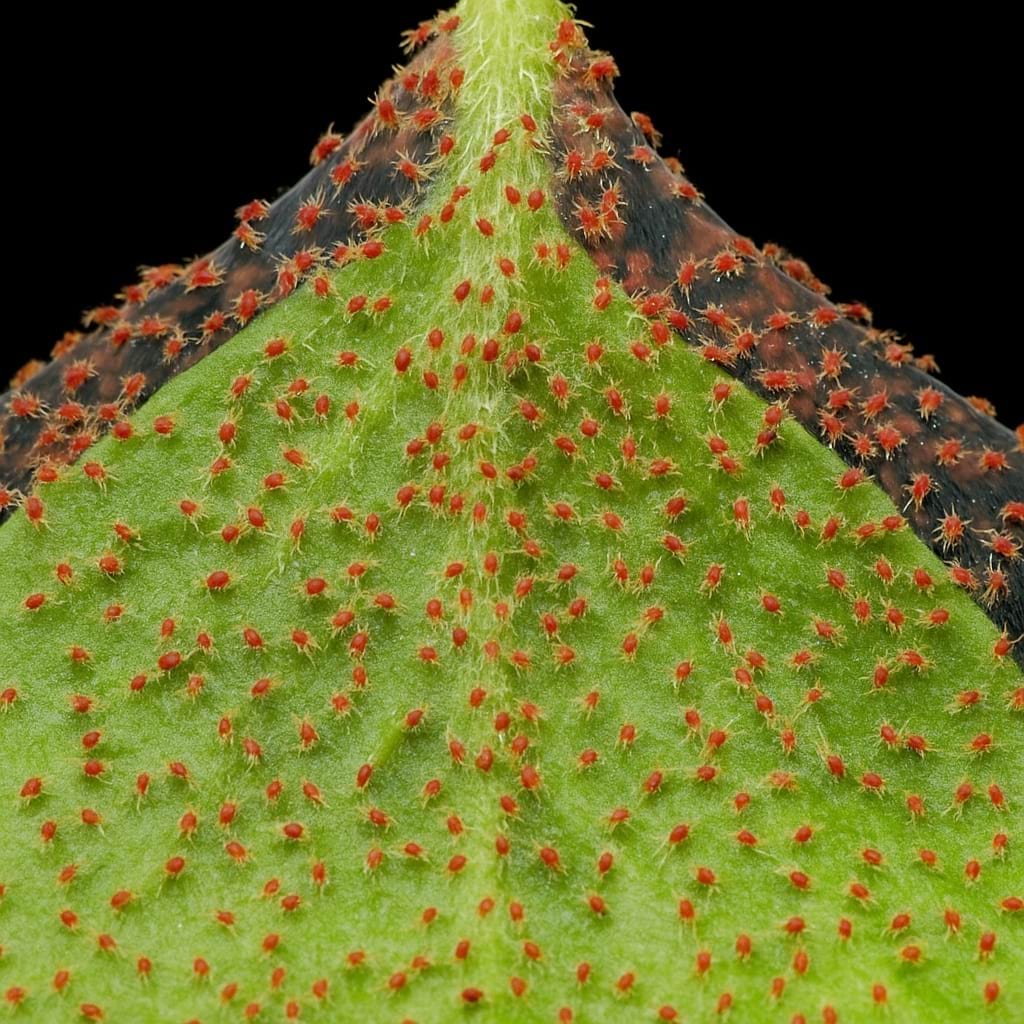
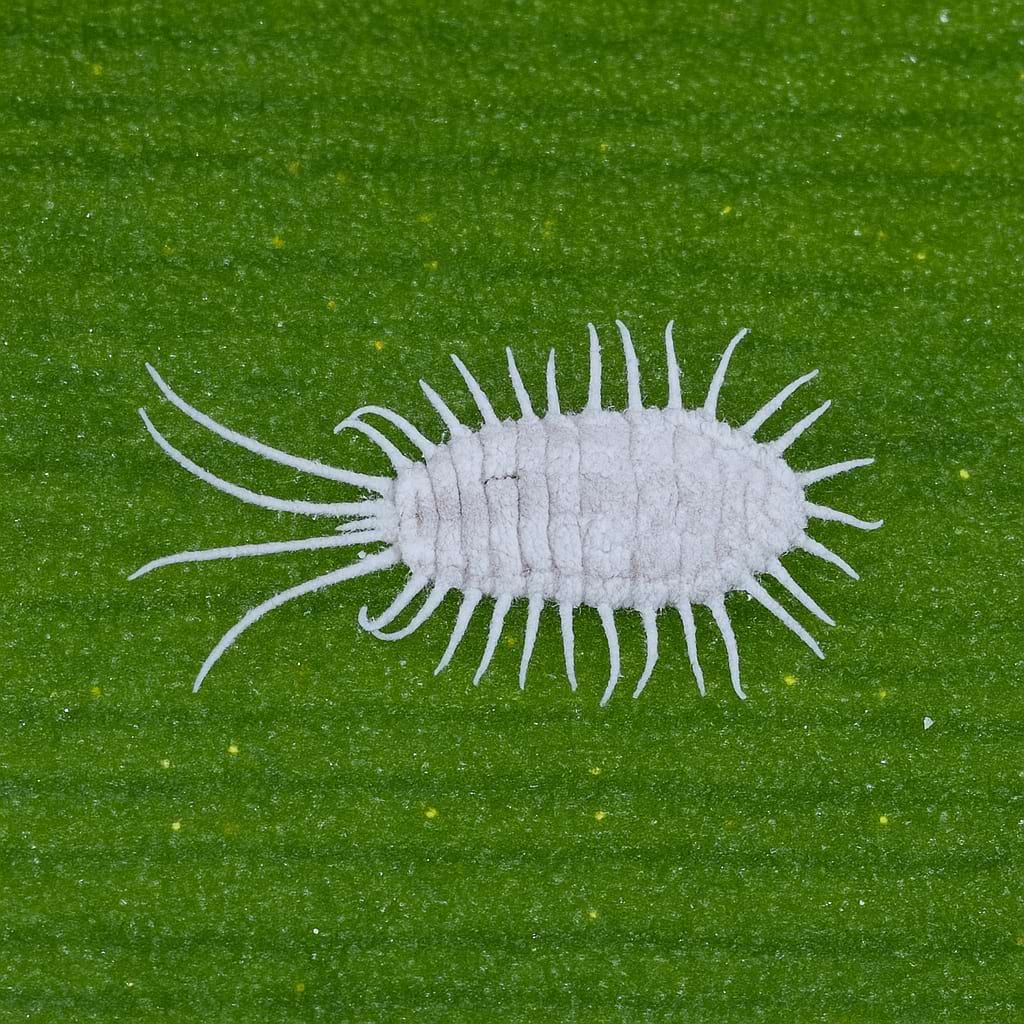
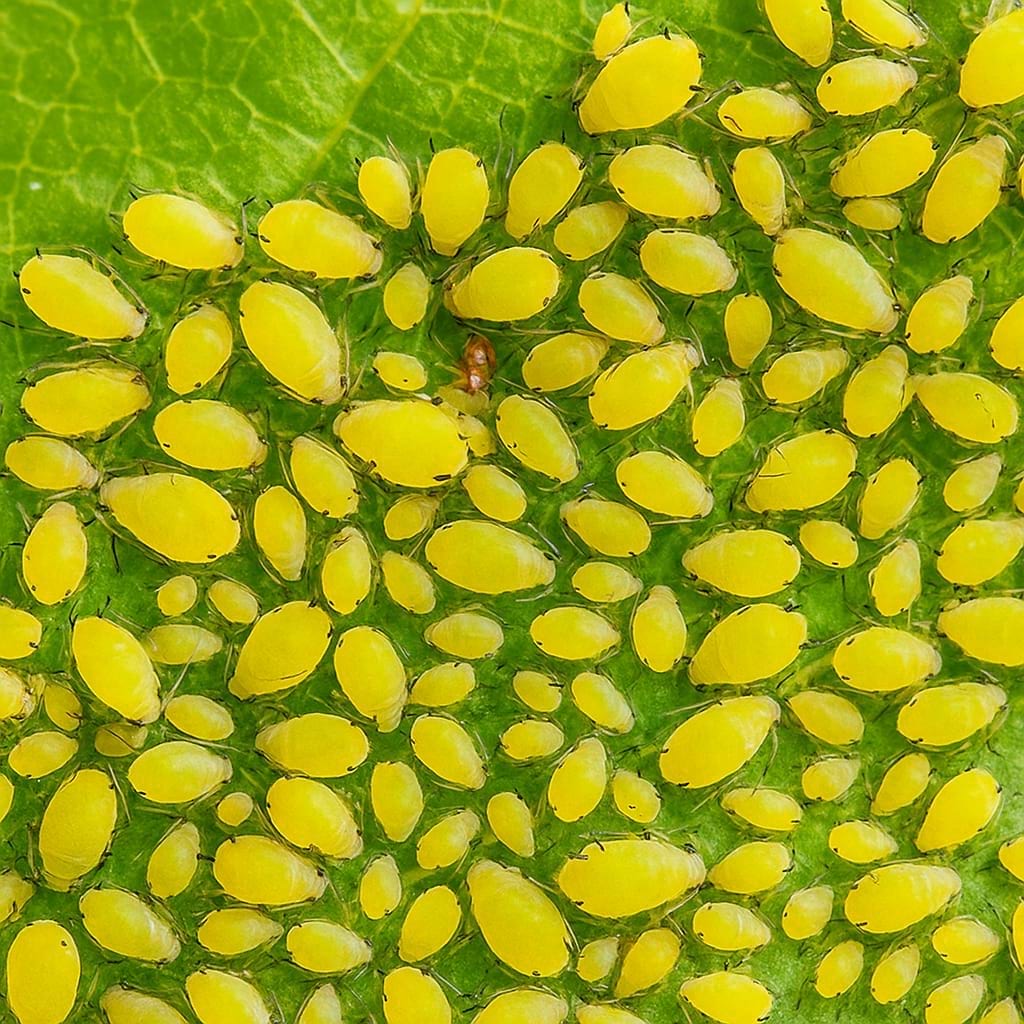
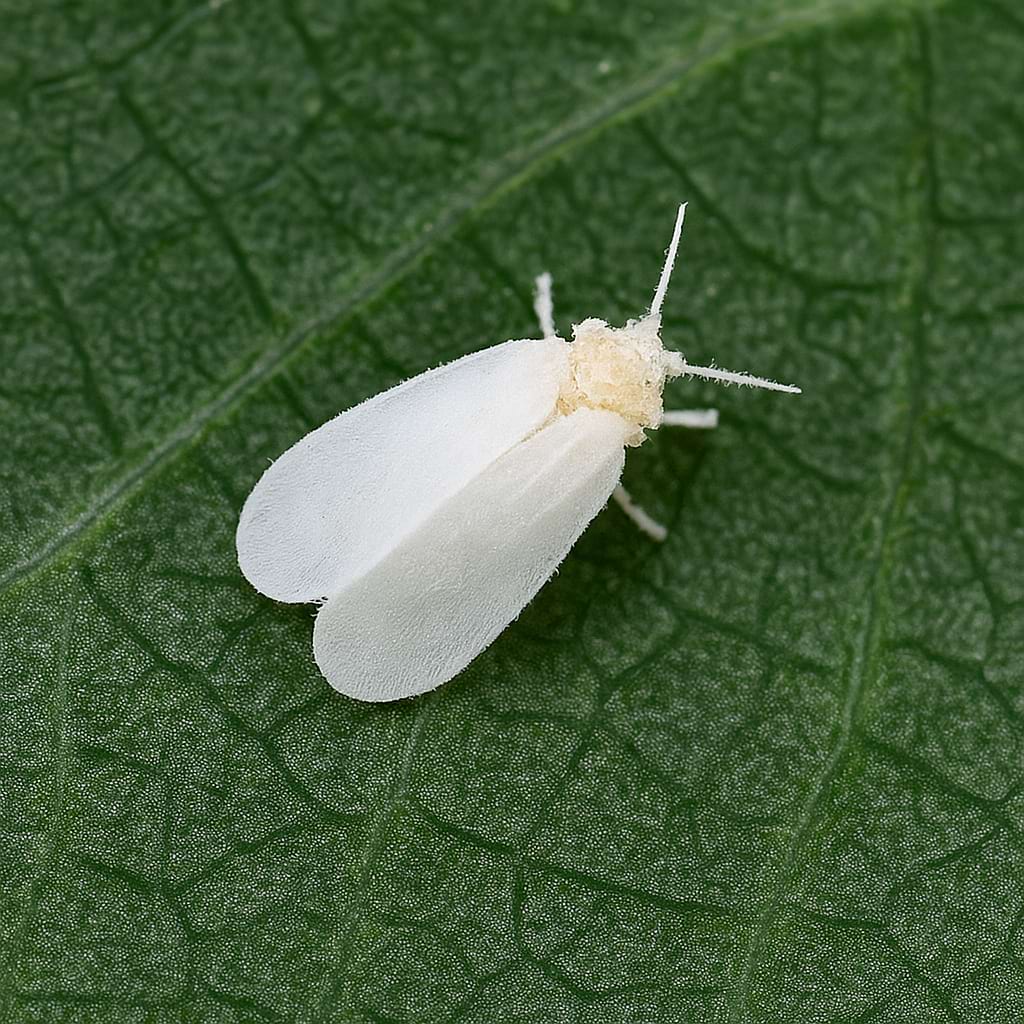
Tradescantia Fluminensis is not unusually pest-prone, but soft, fast growth can attract the usual indoor troublemakers when the plant is stressed or the air is very dry. The four to watch for are spider mites, mealybugs, aphids, and whiteflies, and a dense trailing pot can hide them longer than an upright plant would.
Check the nodes, the undersides of the leaves, and the crowded center of the crown. Fine webbing and speckled, dull leaves point to spider mites, almost always in dry heated rooms. Cottony white tufts in the leaf joints are mealybugs. Sticky residue and small clusters on the fresh tips suggest aphids, and tiny white insects that flutter up when you disturb the plant are whiteflies.
The treatment is the same across all of them. Isolate the plant, rinse it thoroughly, and repeat a gentle treatment like insecticidal soap until the new growth comes in clean. Because this plant grows so fast, you also have an option most plants do not: cut away the worst sections and re-root clean cuttings instead of fighting to save every vine. Good light, steady moisture, and airflow prevent most outbreaks to begin with.
🩺 Common Tradescantia Fluminensis Problems
Most trouble with this plant traces back to one of two things: not enough light or too much water. The pills above link to detailed fixes, but here is how the common issues actually present.
Leggy, Pale, or Reverting Growth
This is the classic low-light complaint. The vines stretch, the new leaves shrink, and on a Tricolor the stripes fade as whole stems revert to plain green, leaving a basket that only looks good at the very ends. The fix is direct: move the plant brighter, prune the stretched growth back to nodes, and root the best cuttings back in. If you leave it in the same dim spot and only keep trimming, the regrowth comes back just as leggy and just as faded, so change the light first, then shape it.
Yellow Leaves, Mushy Stems, and Rot
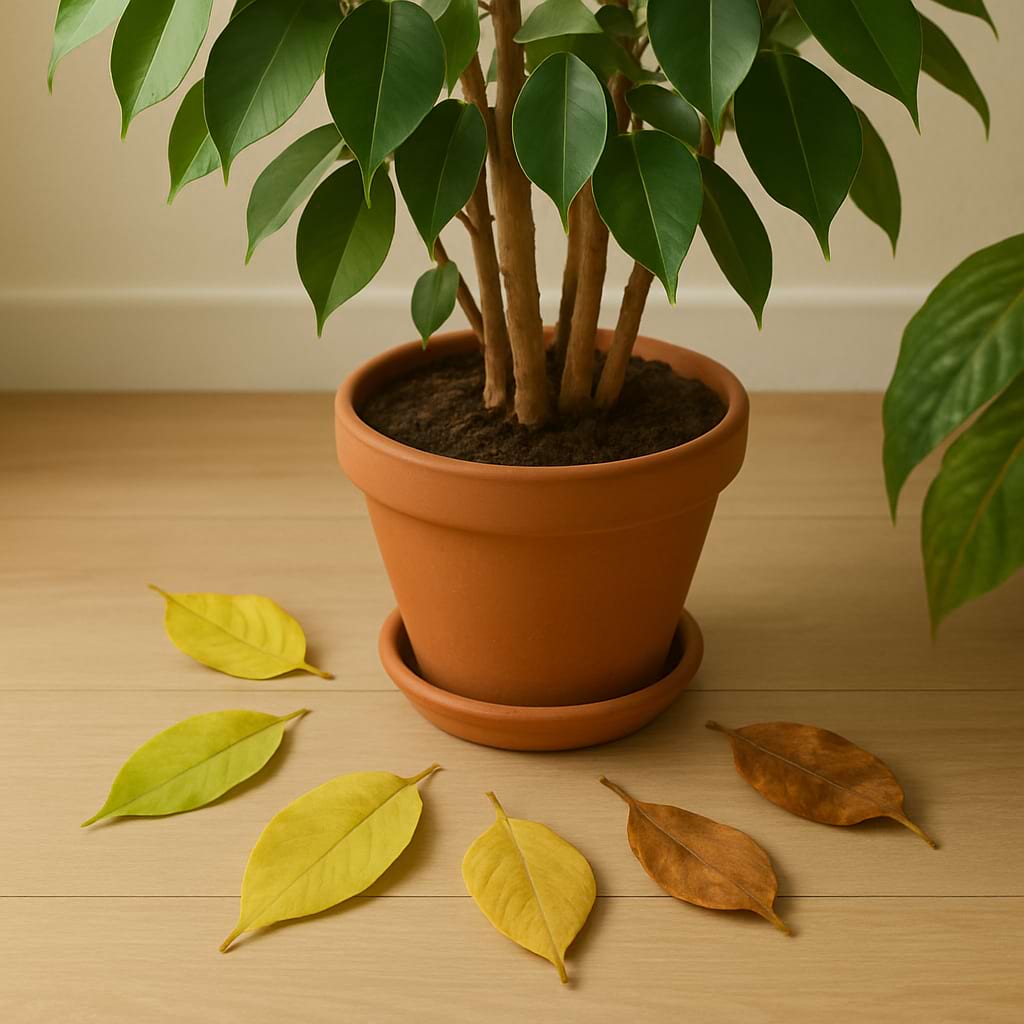
Yellowing that starts low on the plant, especially alongside soft stem bases and a sour-smelling pot, almost always comes back to overwatering or exhausted mix. This is where yellowing leaves tip over into root rot. Move fast: stop watering, inspect the roots, cut away anything mushy, save the healthy tips for propagation, and repot into fresh airy mix. Do not try to fertilizer your way out of it, since rot is an oxygen problem at the roots, not a nutrient shortage.
Crispy Tips and Leaf Drop
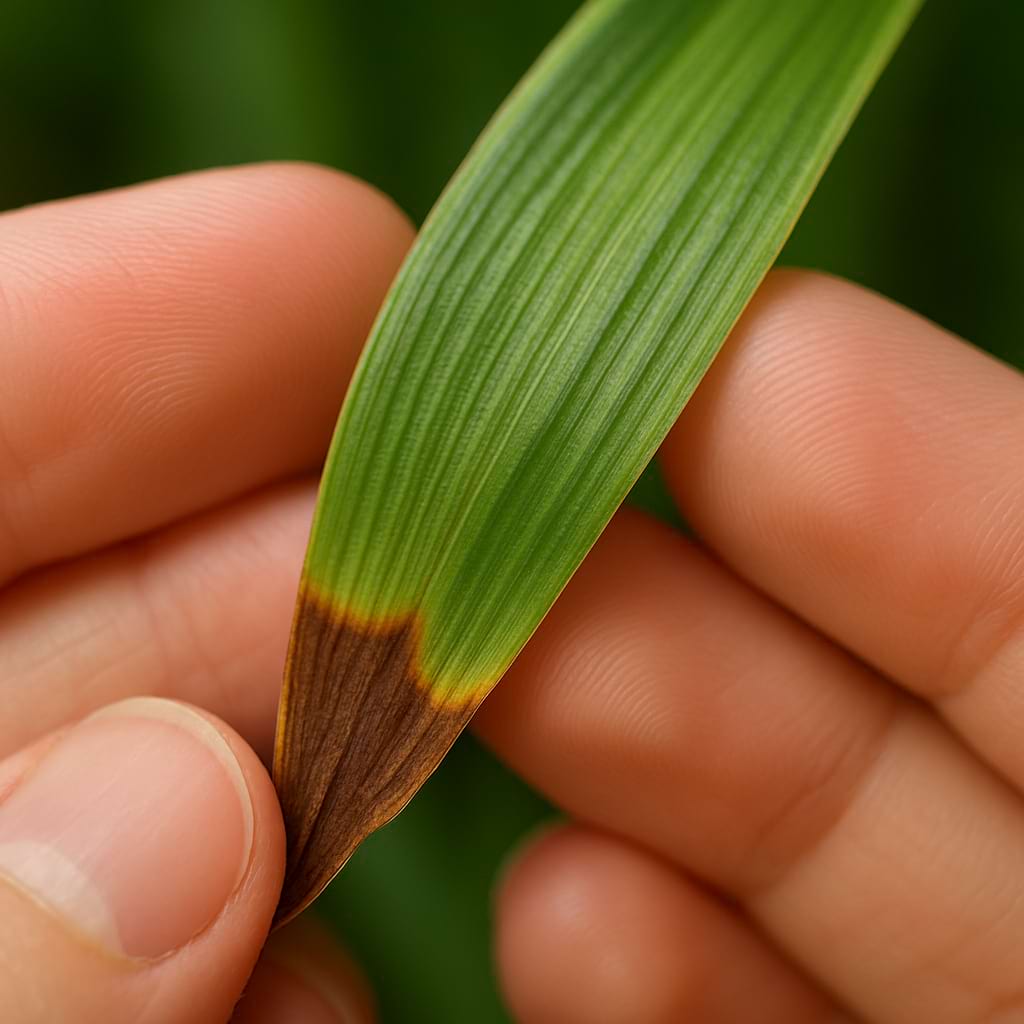
When the plant develops dry brown crispy edges or random leaf drop without obvious rot, look at the wider environment. The usual culprits are chronically dry air, erratic watering, spider mites in a heated room, or simply old stems that have run their course. This is why I treat Tradescantia Fluminensis as a plant you routinely refresh rather than preserve forever. Bright light, regular trimming, and periodic re-rooting head off most mystery decline before it gets dramatic.

🖼️ Tradescantia Fluminensis Display and Styling Ideas
Solo Setups
This plant looks best where the trailing habit is visible from the side, not peered at from above. A hanging basket in an east window, a bright bookshelf where the vines can spill at eye level, or a wall bracket all show it off far better than parking it low on the floor. Give it room to drape rather than bunching on a crowded sill, and the soft pastel foliage reads as casual and lush.
Grouped Arrangements
The cream-and-pink Tricolor pairs beautifully with deep green foliage and warm materials. I like it spilling beside a structured upright plant or next to Philodendron Brasil and String of Hearts, where the trailing shapes play off one another. Keep the container simple and let the leaves carry the detail. Matte ceramics, terracotta, and warm wood all suit it, and a calm background makes the stripes pop far more than a busy patterned wall would.
Where Not to Put It
Two placement cautions. First, keep it out of deep shade, or the variegation fades and the plant goes leggy. Second, because the sap can irritate mouths and skin and is mildly toxic to pets, display it where curious cats, dogs, and small children are unlikely to chew it. High shelves and hanging planters solve both problems at once. One practical tip: dropped cuttings can root if they land in another pot, so keep a tray nearby when you trim to catch the strays.
🌟 Tradescantia Fluminensis Pro Care Tips
- Put it closer to the window than you think. Brightness keeps the stripes crisp and the growth compact.
- Light the crown, not just the dangling vines, so the top of the pot stays full.
- Pinch often instead of waiting for one big rescue prune, and push the trimmings straight back into the pot for instant fullness.
- Choose wide, shallow pots over deep oversized ones to match the spreading habit.
- On a Tricolor, snip out any fully green stems before they take over and crowd out the variegated growth.
- Keep it out of reach of pets and kids, since the sap is a mild irritant.
- When the base goes sparse and woody, do not nurse it forever. Take fresh cuttings and rebuild the pot from scratch.
❓ Frequently Asked Questions
Is Tradescantia Fluminensis toxic to cats and dogs?
It is considered mildly toxic. The sap can irritate the mouth and stomach if chewed, and contact with it is a known cause of allergic skin dermatitis in dogs. A small nibble is usually more irritating than dangerous, but keep the plant out of reach and wash your hands after pruning to be safe.
Why is my Tradescantia Fluminensis losing its pink and cream stripes?
That is almost always low light. When a Tricolor plant does not get enough brightness, it drops the pale variegation and reverts to plain green leaves that photosynthesize better in the gloom. Move it to a brighter spot, prune out any fully green stems above a node, and the new growth in better light will come back striped.
How often should I water Tradescantia Fluminensis?
Water when the top inch of soil is dry. In a bright, warm room that often means every 5 to 8 days in spring and summer, stretching to every 10 to 14 days or more in winter. Always judge by the feel of the soil rather than the calendar, since light and pot size change the timing a lot.
What is the difference between Tradescantia Fluminensis and Tradescantia zebrina?
The easiest tell is the flowers: fluminensis opens small white blooms, while zebrina (the Wandering Dude) opens pink ones. Fluminensis also has smaller, glossier leaves, and its showy form is the cream-and-pink Tricolor, whereas zebrina is known for metallic silver bands and deep purple undersides.
Can Tradescantia Fluminensis grow in water forever?
Cuttings root happily in water and can live there for a while, but long-term growth is much better in soil or a semi-hydro setup with nutrients. Cuttings left in plain water too long tend to put out weak, pale growth and need more babysitting than a potted plant.
Why is my Tradescantia Fluminensis leggy and bare at the top?
The crown thins when the top of the pot sits in shade, when the stems are never pinched, or when old vines are left in tired soil too long. Rotate the pot for even light, pinch the tips regularly, and root a few fresh cuttings back into the same pot to rebuild fullness from the center out.
Does Tradescantia Fluminensis need high humidity?
No. It does fine in average household air, which is part of why it is so easy. It does look its best around 40 to 60 percent humidity, where new leaves unfurl cleanly and cuttings root faster, but it will not sulk in a normal room the way a fussier tropical plant would.
Is Tradescantia Fluminensis the same as an inch plant?
Inch plant is a loose common name shared across several Tradescantia species, including this one, so yes and no. The name comes from the short distance between nodes, the same nodes that let it root so easily. Since both fluminensis and zebrina get sold under that nickname, check the flowers and leaf pattern to be sure which one you have.
ℹ️ Tradescantia Fluminensis Info
Care and Maintenance
🪴 Soil Type and pH: Airy indoor potting mix with perlite and a little orchid bark
💧 Humidity and Misting: Average home humidity is fine, but 40-60% keeps the foliage looking its best.
✂️ Pruning: Pinch and trim the stems often to keep the crown full and stop the vines going bare.
🧼 Cleaning: Rinse or wipe the leaves gently; avoid getting sap on sensitive skin.
🌱 Repotting: Every 1-2 years, or sooner if the mix breaks down and the crown thins.
🔄 Repotting Frequency: Every 1-2 years
❄️ Seasonal Changes in Care: Grows fast in spring and summer, prune hard in spring, and water less in winter when light drops.
Growing Characteristics
💥 Growth Speed: Fast
🔄 Life Cycle: Perennial
💥 Bloom Time: Warm months outdoors; sporadic small white flowers indoors
🌡️ Hardiness Zones: 9-12 outdoors
🗺️ Native Area: Southeastern Brazil and northern Argentina
🚘 Hibernation: No true dormancy, but growth slows noticeably in winter
Propagation and Health
📍 Suitable Locations: Hanging baskets, shelf edges, bright bathrooms, summer patio pots
🪴 Propagation Methods: Extremely easy from stem cuttings rooted in water or straight into soil.
🐛 Common Pests: Spider Mites, Mealybugs, Aphids, Whiteflies
🦠 Possible Diseases: Root rot, stem rot, and occasional fungal leaf spotting when kept too wet
Plant Details
🌿 Plant Type: Trailing herbaceous perennial
🍃 Foliage Type: Evergreen
🎨 Color of Leaves: Green, cream, white, and pink, with green or purple undersides
🌸 Flower Color: White
🌼 Blooming: Small three-petaled white flowers, secondary to the foliage
🍽️ Edibility: Not edible; the sap can irritate the mouth and skin
📏 Mature Size: 6-8 inches at the crown
Additional Info
🌻 General Benefits: Fast growth, effortless propagation, soft pastel variegation, and quick cover in baskets
💊 Medical Properties: No established ornamental-use medical value
🧿 Feng Shui: Trailing growth is linked with gentle, flowing movement and renewal
⭐ Zodiac Sign Compatibility: Gemini
🌈 Symbolism or Folklore: Resilience, adaptability, fresh starts
📝 Interesting Facts: The species name fluminensis means "of the river" and points to Rio de Janeiro, where the plant grows wild. Unlike the pink-flowered Tradescantia zebrina, this species opens small pure-white blooms, which is why it is sometimes sold as the white-flowered Wandering Dude.
Buying and Usage
🛒 What to Look for When Buying: Pick a dense plant with several shoots at the crown, crisp stripes on the Tricolor form, and firm stems. Skip any pot with mushy bases, lots of bare sections, or webbing tucked into the nodes.
🪴 Other Uses: Works as a fast summer spiller in outdoor containers and as quick filler in mixed houseplant pots.
Decoration and Styling
🖼️ Display Ideas: Best shown where the trailing stems hang at eye level from shelves, wall planters, or hanging pots.
🧵 Styling Tips: The cream-and-pink Tricolor reads strongest against warm wood, terracotta, and deep green neighbors. Let it spill beside an upright plant so the trail stands out.
🪴 See also 🪴
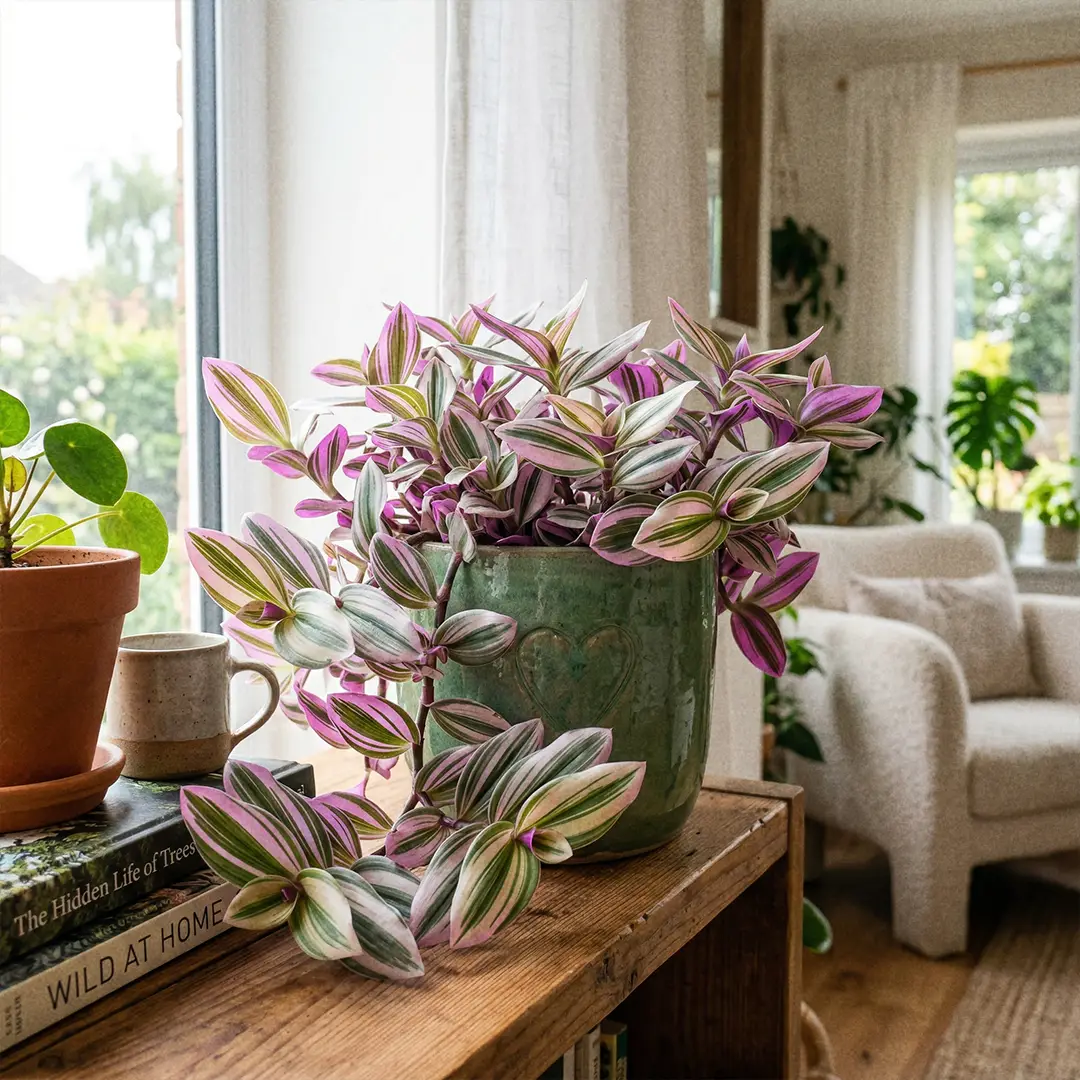
Complete Guide to Nanouk Care and Growth
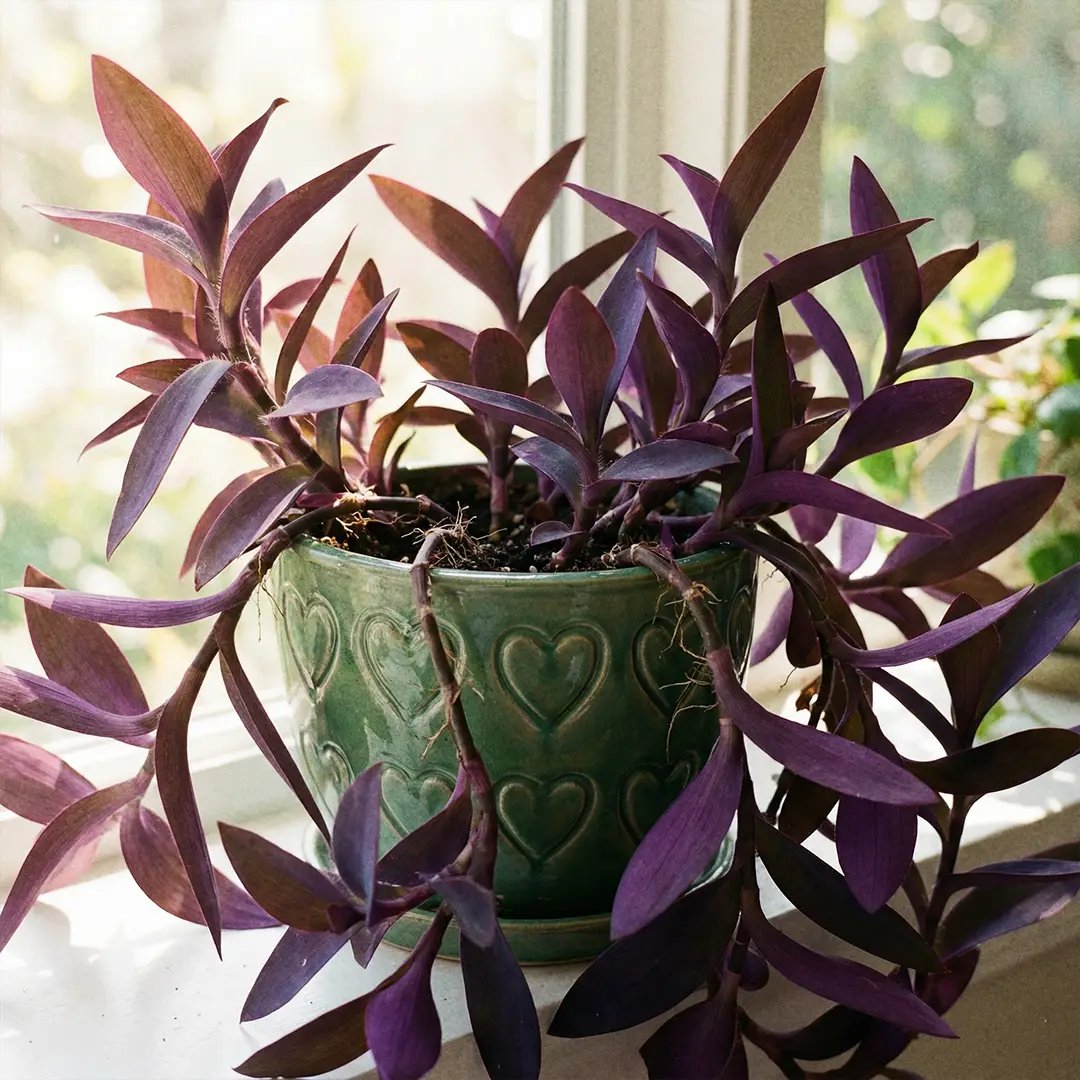
Complete Guide to Purple Heart Care and Growth
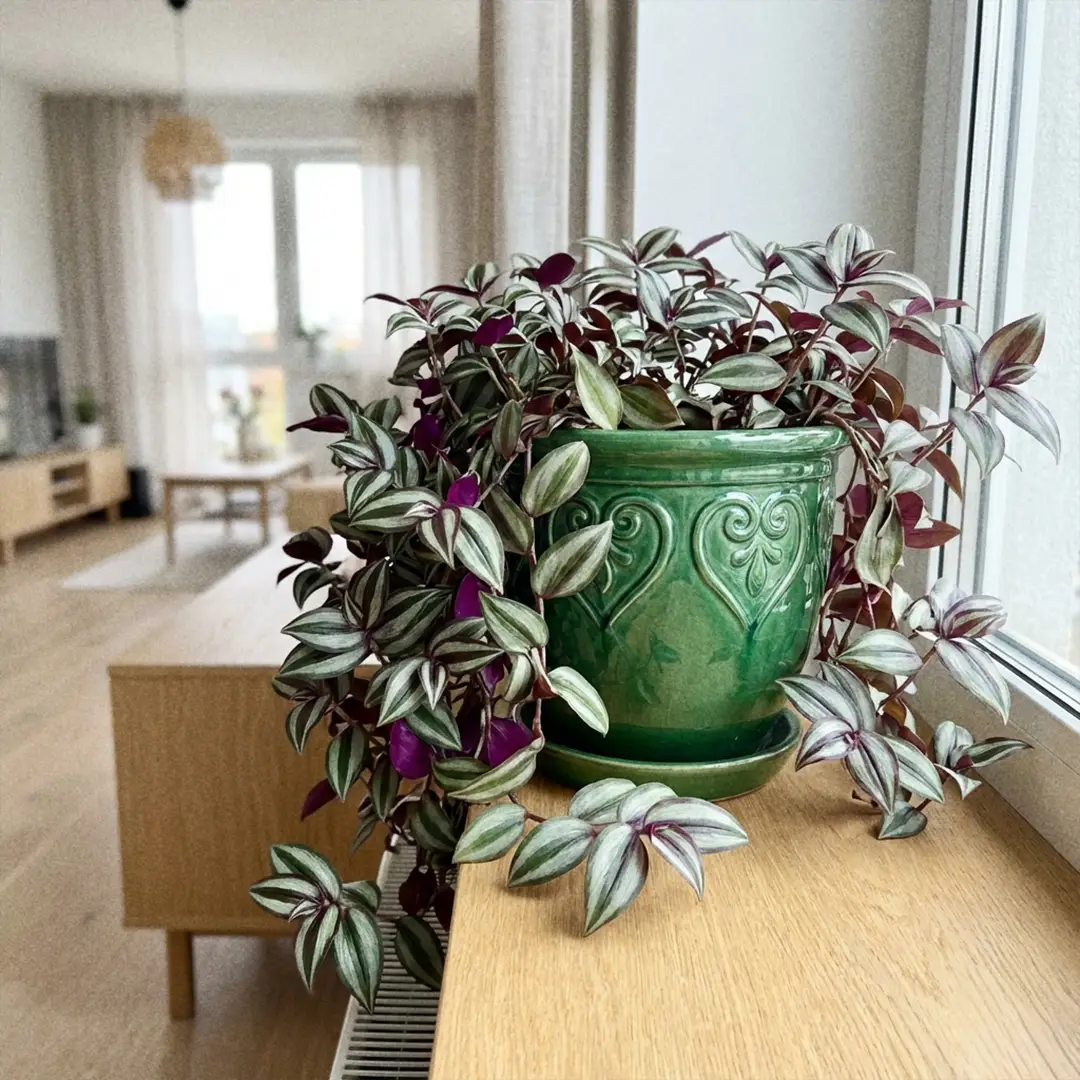
Complete Guide to Wandering Dude Care and Growth
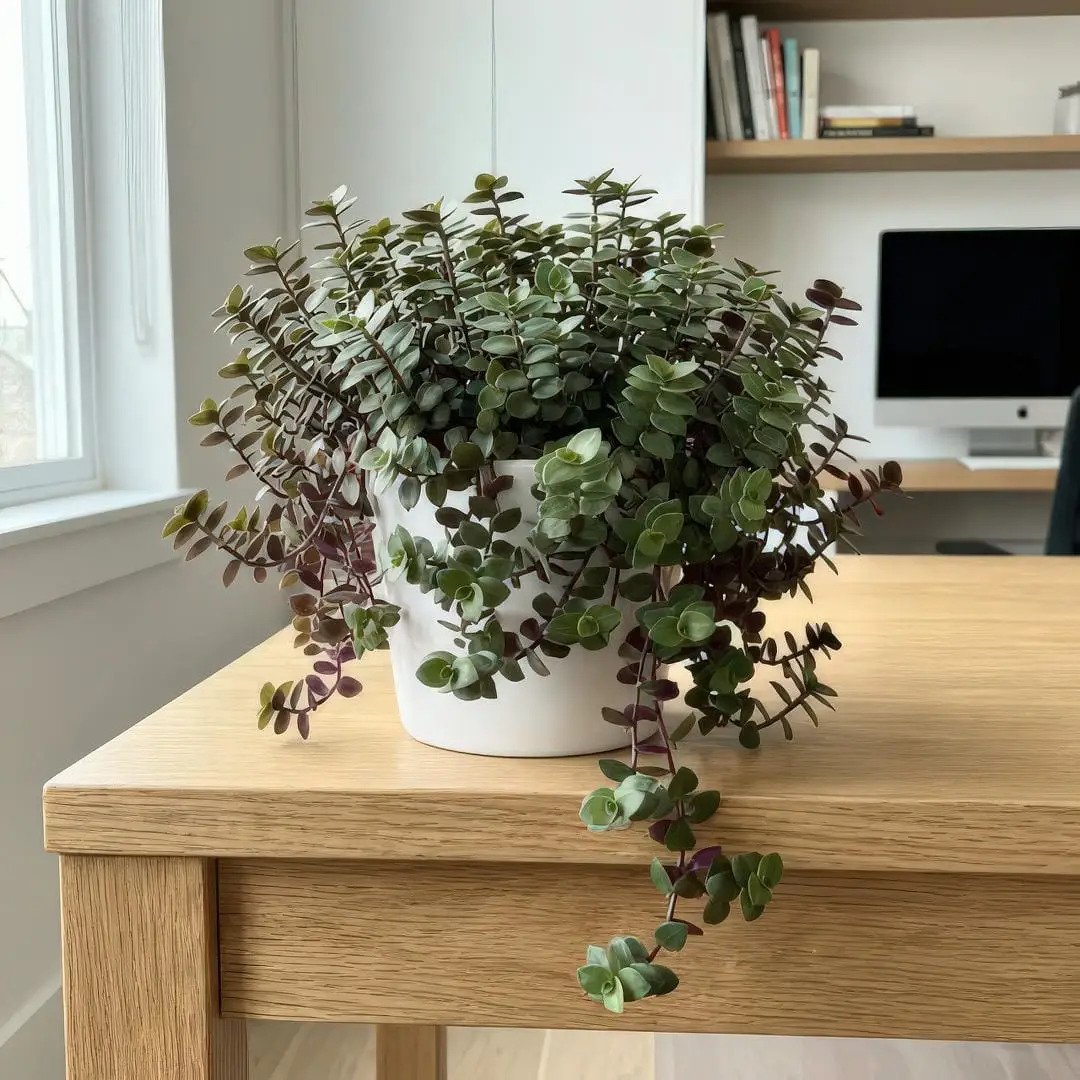
Complete Guide To Turtle Vine Care and Growth

Houseplant101 Forum
Questions & Comments
Ask a question, share your plant experience, or help other plant owners.
Comments are temporarily unavailable.
Open the Houseplant101 ForumNo comments yet
Be the first to ask a question or share your experience about this page.
Log in or create an account
Comments use your Houseplant101 Forum account, but you can stay on this page.
Create a new account