
🪴 In This Guide 🪴
🌿 Understanding Epsom Salt and Plant Nutrition
Epsom salt is a naturally occurring mineral compound composed of magnesium, sulfur, and oxygen (chemical formula MgSO₄). It resembles coarse table salt but has a bitter taste. For many years, gardeners have used it to supply magnesium and sulfur to plants.
- Magnesium's Role: Magnesium is crucial for plant health. It's a central component of chlorophyll molecules, meaning plants need magnesium to produce chlorophyll and carry out photosynthesis. Without enough magnesium, leaves cannot maintain their rich green color.
- Sulfur's Role: Sulfur, while also important (used in proteins and enzymes), is usually abundant in most soils or organic matter.
- Epsom Salt as a Supplement: Magnesium is often the main reason gardeners use Epsom salt. It contains around 10% magnesium by weight, plus about 13% sulfur, allowing it to act as a gentle supplement for plants showing signs of magnesium deficiency.
Garden experts note that applying Epsom salt can “provide essential nutrients to your plants, promoting their growth and overall health.” In practical terms, this often translates to:
- Restoring a lush green color to yellowing foliage.
- Improving plant vigor.
Many fern owners have discovered that a diluted Epsom salt solution perks up fading ferns. For instance, if a fern’s fronds are turning yellow due to a lack of magnesium, an Epsom salt soak or watering can help green them up by supplying that missing nutrient. Magnesium also helps plants utilize other nutrients better, aiding in the uptake of nitrogen and phosphorus and activating enzymes involved in growth.
In short, Epsom salt is not a cure-all, but it can be a useful supplement in the right circumstances to support plant health.
🌱 Staghorn Fern Nutrient Needs at a Glance
To understand if staghorn ferns “like” Epsom salt, it helps to know how these plants get nutrients in nature.
- Natural Habitat: Staghorn ferns are epiphytes, meaning they grow on other trees or surfaces. They absorb moisture and nutrients from rain, air, and decaying organic matter that accumulates around their specialized shield fronds. This organic matter can sometimes include things like decomposing banana peels or even residual nutrients from tea bags if we consider a broader ecosystem.
- Modest Requirements: They are not planted in rich soil and rely on very dilute, occasional nutrient sources in the wild. Consequently, staghorns have fairly modest nutrient requirements compared to heavy-feeding houseplants. They usually get by with minimal fertilizer in cultivation – perhaps a balanced feed a few times during the growing season. Too much fertilization can actually harm them.
- Fertilizing Guidelines: A general care recommendation is to fertilize staghorn ferns only every 4–6 weeks with a diluted, balanced fertilizer during spring and summer. Over-fertilizing can lead to salt buildup and leaf burn. Always remember these ferns evolved to capture nutrients from leaf litter and rainwater. You can learn more about their overall needs in our Complete Guide To Staghorn Fern Care and Growth.
Given this background, it’s clear that staghorn ferns do not routinely need extra magnesium unless something is missing.
- When Magnesium is Sufficient: If your fern is growing in a proper bark/moss medium or mounted with organic matter and you feed it lightly now and then, it likely gets enough magnesium from the environment or from trace minerals in fertilizers. There isn’t strong research or consensus saying that staghorn ferns uniquely benefit from Epsom salt as a standard practice.
- When Not to Use: If your fern is thriving (with firm, green fronds), adding Epsom salt probably won’t make it happier – it might do nothing or potentially cause an imbalance. As one gardening source puts it, “If your ferns are planted in rich and healthy soil, it is not necessary to water them with Epsom salt.” Ferns, staghorns included, are relatively delicate and can be easily burned by too much fertilizer or salts.
Recognizing Magnesium Deficiency:
Problems can arise in cultivation that Epsom salt might help fix. Magnesium deficiency in staghorn ferns can occur if the plant is not getting a balanced diet.
- Symptom: One key clue is yellowing fronds, especially if older, lower fronds turn yellow first while new growth remains pale green (interveinal chlorosis). Staghorn ferns suffering a nutrient shortfall may show yellow leaves as a cry for help.
- Other Causes of Yellowing: However, note that yellow fronds can also result from other issues such as overwatering, root rot, or lack of nitrogen. For example, overwatering can cause yellow, wilting fronds, and a nitrogen deficiency causes overall pale growth or yellowing starting with the oldest fronds. Some even experiment with adding things like crushed eggshells for calcium or using diluted coffee grounds which can affect acidity and nutrient availability.
If you’ve ruled out watering problems and general fertilizer issues, and suspect a magnesium deficit, this is when the staghorn fern might indeed “like” some Epsom salt.
✨ Potential Benefits of Epsom Salt for Staghorn Ferns
When used in the right scenario, Epsom salt can provide a few key benefits to staghorn ferns:
Greener, Healthier Foliage
The most direct benefit is correcting magnesium deficiency, thereby restoring rich green color to chlorotic (yellowing) fronds. Magnesium is integral to chlorophyll, so supplying it can literally green up the plant. Garden experts note that ferns often turn yellow when they lack magnesium, and since Epsom salt is ~10% magnesium, it acts like a quick vitamin shot for the fronds. Many hobbyists report visibly greener, more vibrant foliage after giving their ferns an Epsom salt treatment in cases of yellowing. "It greens up ferns quickly," one gardener observed. Even a small magnesium boost can make a noticeable difference in leaf color if deficiency was the culprit.
Improved Growth and New Fronds
By aiding chlorophyll production and enzyme function, magnesium can spur healthier growth. Some growers find that adding a bit of Epsom salt encourages more robust frond development and even new fronds. The added magnesium may encourage the fern to push out fresh growth once its nutritional need is met. Stronger chlorophyll production means the plant can photosynthesize more effectively, translating to more energy for growth. Additionally, magnesium helps with nutrient absorption, so an Epsom salt supplement could improve how well the fern takes up other nutrients (like nitrogen or iron). If your staghorn was stalled due to a hidden magnesium lack, Epsom salt might jump-start its vigor.
Stronger Resistance to Stress and Pests
A well-nourished plant tends to be more resilient. While Epsom salt is not a pesticide, there are claims it can help with pest resistance indirectly. Some garden experts suggest that their fern care routines including Epsom salt seem to deter certain pests. The idea is that a healthier fern with adequate magnesium will have stronger cell walls and metabolic function, making it less appealing to pests and better able to tolerate stress. In broader gardening literature, magnesium supplementation is said to help plants develop stronger roots and resist pests and environmental stress. So while you shouldn’t expect Epsom salt to fix an active pest infestation, a magnesium-fed fern might be slightly tougher.
Supplementing Sulfur (Minor Benefit)
Epsom salt also contains sulfur, an element used in small amounts by plants for proteins and vitamins. Most ferns get enough sulfur from organic matter or water, but if not, Epsom salt supplies a bit. Sulfur also helps give a slight acidic boost to the medium, which ferns typically appreciate. However, this is a secondary perk; magnesium is the main star.
It’s worth emphasizing that these benefits only apply if your staghorn fern actually needs the extra magnesium. If the plant is already getting what it requires, adding Epsom salt won’t magically make it even greener or faster-growing. Think of Epsom salt as a targeted supplement for a specific deficiency, not a general tonic. One houseplant expert concluded that “while Epsom salt can be beneficial for some plants under certain circumstances, it’s not a necessary or particularly recommended treatment for staghorn ferns” in general. Use it with intention.
💧 How to Apply Epsom Salt to Staghorn Ferns: A Step-by-Step Guide
If you’ve determined that your staghorn fern could use a magnesium boost (e.g., unexplained yellowing hints at magnesium deficiency), then correct application is crucial.
Here’s a step-by-step guide:
Choose the Right Product:
- Use plain, unscented Epsom salt (magnesium sulfate). This is often sold in pharmacies or garden centers.
- Avoid: Epsom salts with added perfumes, dyes, or oils intended for baths, as these additives can harm plants.
Dilute Thoroughly:
- Always dissolve Epsom salt in water before applying. Never sprinkle raw crystals on the plant or its mounting medium, as undissolved salt can cause burns.
- Mixing Ratio: A safe starting dosage is about 1 tablespoon of Epsom salt per gallon of lukewarm water. Stir until the crystals are completely dissolved. Some sources suggest up to 2 tablespoons per gallon, but it's wise to start with a weaker solution for sensitive staghorn ferns.
Choose Your Application Method:
Bottom-Watering or Soaking (Recommended for Mounted/Basket Ferns):
- Fill a tub, basin, or bucket with your prepared Epsom salt solution.
- Submerge the staghorn fern’s root ball or mounting medium in the solution for about 10–20 minutes. For mounted ferns, place the plaque or moss bundle shield frond side up.
- Allow the fern to absorb the solution from below.
- After soaking, let all excess water drain off completely. Do not let roots sit in the solution long-term.
Top-Watering (Suitable for Potted Ferns or Quick Application):
- Using a watering can, slowly pour the diluted Epsom salt solution over the fern’s growing medium (moss or bark around its roots).
- Ensure the medium is thoroughly wetted and the solution reaches the roots. For mounted ferns, pour slowly to maximize absorption.
- Avoid dousing the fronds excessively with a concentrated solution.
Misting (Foliar Feeding – Use with Extreme Caution):
- Plants can absorb magnesium through leaves, but this is risky for ferns as it can scorch delicate fronds if too concentrated or if salt crystals remain.
- If attempting, use a very dilute mix (e.g., 1 teaspoon per gallon) and a fine mist.
- Apply in early morning or evening, out of direct sun. Ensure salt is fully dissolved.
- Generally, root application (soaking/watering) is safer and more effective for staghorns.
Consider Pre-Watering:
- If the fern's medium is very dry, moisten it with plain water first. Then, apply the Epsom salt solution. This prevents shocking dry roots and helps with even distribution.
Determine Frequency:
- Less is more. Start with a single application.
- Observe your fern over the next few weeks. If magnesium deficiency was the issue, you might see improvement in color or new growth within a month.
- For a fern with clear deficiency symptoms, you might repeat the treatment once or twice, a few weeks apart.
- Avoid routine use (e.g., every watering). A monthly application during the growing season is generally the maximum recommended if a deficiency is suspected or known. Some hobbyists use it as an occasional "spa day" treatment.
Monitor and Adjust:
- Observe your fern’s response. If it perks up, great!
- If there's no change, the problem might be elsewhere.
- If you see negative signs (e.g., brown tips), flush the medium with plain water and discontinue Epsom salt use.
By following these methods, you can safely administer an Epsom salt treatment when your staghorn fern indicates a need.
⚠️ Risks and Precautions of Using Epsom Salt on Ferns
Before using Epsom salt, it’s crucial to acknowledge potential risks:
Over-Fertilization and Salt Burn
Epsom salt is a salt. Overuse can lead to a buildup of magnesium or sulfates, causing "fertilizer burn."
- Symptoms: Brown, crispy frond edges or dark, burn-like spots.
- Impact: Adding unneeded magnesium can inhibit uptake of other nutrients (like calcium) and cause leaf scorch.
- Rule: Always err on the side of a weaker solution or less frequent application.
No Benefit (If Not Needed)
If your fern isn’t magnesium-deficient, Epsom salt offers no positive effect and just introduces extra salts.
- Consequence: Unneeded magnesium can antagonize other nutrients (e.g., too much Mg can lock out potassium or calcium).
- Action: Use Epsom salt only with reasonable cause (visible symptoms or known deficiency). Don't use it blindly if yellowing is due to other issues like overwatering or nitrogen deficiency.
Soil Imbalances and Runoff
Excess salts can accumulate in the growing medium, altering pH or osmotic balance, making water absorption harder.
- Sign: A white crust of salts on the medium surface indicates a need to flush with plain water.
- Environmental Note: Epsom salt is highly soluble; excess leaches out. While not as harmful as some salts, excessive runoff isn't ideal. Avoid chemical overdosing.
Leaf Contact and Scorch
Epsom salt crystals or strong solutions should not sit on fronds.
- Prevention: If solution splashes on leaves, rinse gently with clean water. Ensure salt is fully dissolved before application to avoid crystals on fronds.
- Residue: A whitish film after misting is dried magnesium sulfate; rinse it off.
Using the Wrong Product
Ensure you use plain, agricultural or USP-grade Epsom salt (magnesium sulfate).
- Avoid: Table salt (sodium chloride), rock salt, or bath salts with oils/fragrances, as these will harm plants. Check the label.
Relying on Epsom Salt Alone
Epsom salt is not a complete fertilizer; it only supplies magnesium and sulfur.
- It lacks: Nitrogen (N), Phosphorus (P), Potassium (K), and other essential micronutrients.
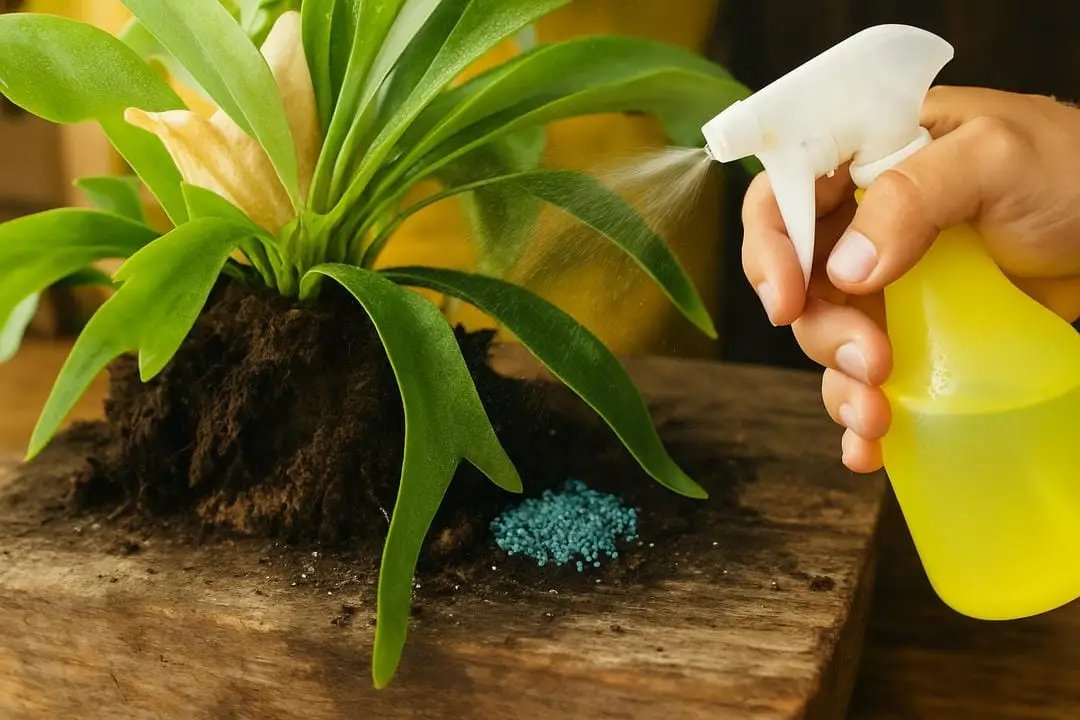
- Requirement: Staghorn ferns need a balanced fertilizer for overall health. See our guide on Fertilizer and Nutrient Requirements for Staghorn Ferns.
- Imbalance Risk: Using Epsom salt when not needed could worsen other deficiencies (e.g., too much magnesium can antagonize calcium uptake).
When in Doubt, Test or Ask
If unsure, consider testing your growing medium or consult a local cooperative extension service or horticulture expert. Describe symptoms for an accurate diagnosis. Professional input can prevent misdiagnosing.
In summary, use Epsom salt sparingly and intentionally. Proper application is generally safe, but misuse can lead to problems.
⚖️ Epsom Salt vs. Traditional Fertilizers for Staghorn Ferns
It’s important to distinguish Epsom salt from complete fertilizers.
Regular Fertilizers
- Composition: Balanced liquid or slow-release fertilizers (e.g., 10-10-10, 20-20-20, or organic equivalents) supply primary macronutrients: Nitrogen (N) for leaf growth, Phosphorus (P) for roots/reproduction, and Potassium (K) for overall health. Many also include trace minerals, sometimes including magnesium.
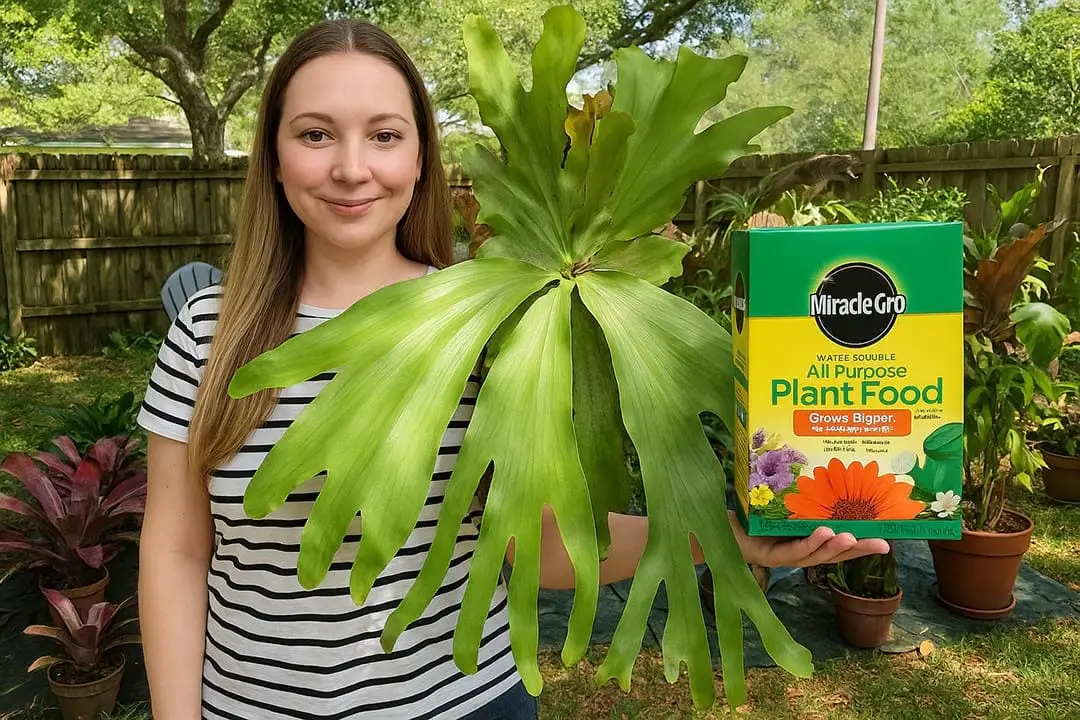
- When to Use: For broad nutrient needs and overall growth. If fronds are uniformly light green or growth has stalled, a balanced fertilizer is usually the first step. For specific brand considerations, you might wonder Is Miracle-Gro Good for Staghorn Ferns?.
- Frequency: Typically, feed staghorn ferns monthly at half-strength during spring and summer.
Epsom Salt (Magnesium Supplement)
- Composition: Provides only magnesium (Mg) and sulfur (S).
- When to Use: To address a specific magnesium deficiency (e.g., older fronds yellowing between veins while you're providing adequate N-P-K).
- Limitations: Cannot be the sole nutrient source long-term.
When to Choose Which
- General "Off-Color" or Poor Growth: Start with a balanced fertilizer or organic nutrient source.
- Specific Magnesium Deficiency Symptoms (Despite Fertilizing): Epsom salt is the targeted tool.
- Complementary Use: They can be used in conjunction, but not at the exact same time. Some growers alternate: fertilize one month, use Epsom salt the next (if needed), especially if their water or fertilizer lacks magnesium. If doing this, be mindful of total salt buildup.
Organic Alternatives for Magnesium
If you prefer organic methods:
- Kelp/Seaweed Extracts: Contain a broad spectrum of trace minerals, including small amounts of magnesium.
- Organic Epiphyte Fertilizers: Many (like seaweed sprays or worm tea) inherently contain some magnesium.
A staghorn fern mounted on wood might also absorb minerals from decaying wood or moss.
Think of traditional fertilizer as the main course and Epsom salt as a specific supplement. A fern will struggle on Epsom salt alone.
💡 Real-Life Experiences and Expert Tips
Gardeners' experiences offer valuable insights:
Positive Anecdotes
Many plant owners report that an Epsom salt bath or watering noticeably perked up their ferns, especially older or previously struggling ones. One grower mentioned using Epsom salt (approx. 2 tablespoons per 2.5 gallons) on various plants, including staghorn ferns, to keep foliage lush. These stories suggest ferns can respond well if magnesium was lacking.
Expert Endorsements (with Caution)
Gardening expert Carmen Johnston advocates for a solution of 1 tablespoon Epsom salt in a watering can of warm water for green ferns (like Boston, Kimberly Queen). Her tips: ensure full dissolution and use plain magnesium sulfate. However, she also notes some plants (succulents, orchids) don't like extra Epsom salt. While staghorns are epiphytes like orchids, their larger foliage mass may handle careful Epsom salt application better. This underscores that while experts use it, caution for specific plant types is advised.
Community Wisdom: Moderation is Key
Seasoned gardeners and experts emphasize that adding nutrients, even seemingly safe ones, can be harmful if the plant isn't deficient.
- Start Small: You can always add more later, but undoing damage from over-application is difficult.
- Holistic Care: Consistent overall care (light, humidity, basic feeding) is more impactful than any single supplement. Epsom salt is not a substitute for proper Staghorn Fern Care.
Observe and Adjust
The best tip is to monitor your fern’s reaction:
- Positive Response: If new fronds are more vibrant and yellowing stops, you've likely addressed a need. Use sparingly in your routine if this is the case.
- No Change: The issue might be elsewhere, or the dose was insufficient.
- Negative Response (e.g., browning tips): Flush with plain water and discontinue. It may have been too much.
Each fern's environment (media, water type, fertilizer use) influences its reaction.
🏁 Bottom Line: Do Staghorn Ferns Like Epsom Salt?
Staghorn ferns do not inherently “love” Epsom salt indiscriminately. However, they will respond positively to the magnesium in Epsom salt if they are genuinely deficient in it.
- When Beneficial: If a staghorn fern shows yellow, lackluster fronds due to magnesium deficiency, a properly diluted Epsom salt treatment can revitalize its foliage and support growth.
- When Not Beneficial (or Harmful): If your fern is already healthy and well-fed, it likely has no strong need for Epsom salt. Over-application or unnecessary use can potentially harm the plant by causing salt buildup or nutrient imbalances.
Use Epsom salt thoughtfully: as a gentle supplement to complement your regular fertilizing regimen and overall care. By combining good general care-appropriate light, humidity, and balanced fertilization-with the targeted use of Epsom salt only when needed, you’ll help ensure your staghorn fern remains a stunning, green showpiece.
Always remember that in plant care, balance is key. A little magnesium can go a long way, but the foundation of a thriving staghorn fern is attentive care and a holistic approach to its nutrient needs. Happy fern growing!
❓ Frequently Asked Questions
When should I give my Staghorn Fern Epsom salt?
Only consider Epsom salt if your staghorn fern shows signs of magnesium deficiency, such as yellowing on older fronds while veins remain greener, and you've ruled out other issues like over/underwatering or general lack of fertilizer. It's not for routine use.
How much Epsom salt should I use for my Staghorn Fern?
A safe dilution is 1 tablespoon of plain Epsom salt per gallon of lukewarm water. Always dissolve it completely. Start with this weaker solution; you can try a slightly stronger mix (up to 2 tbsp/gallon) if a clear deficiency persists, but caution is advised.
Can Epsom salt burn my Staghorn Fern?
Yes, if used improperly. Undissolved crystals, overly concentrated solutions, or too frequent applications can cause salt burn on fronds (brown, crispy edges) or root damage. Always dilute well and use sparingly.
Is Epsom salt a complete fertilizer for Staghorn Ferns?
No, Epsom salt only provides magnesium and sulfur. It lacks essential primary nutrients like nitrogen, phosphorus, and potassium, which staghorn ferns need for overall health and growth. Use a balanced fertilizer for regular feeding.
How often can I use Epsom salt on my Staghorn Fern?
Infrequently. If treating a deficiency, one application might be enough. You could repeat it after a few weeks if needed. Some growers use it once a month during the growing season as an occasional supplement if their conditions warrant it, but it should not be part of every watering.
🪴 See also 🪴
Complete Guide To Staghorn Fern Care and Growth
Staghorn Fern Propagation: A Step-by-Step Guide (Pups & Spores)
How to Mount a Staghorn Fern: A Modern Step-by-Step Guide
Complete Guide to Pitcher Plant Care (Nepenthes)
18 Staghorn Fern Varieties, Species, and Types (With Pictures)
Is Sugar Water Good for Staghorn Ferns?
Do Staghorns like tea bags?
Eggshells and Staghorn Ferns: Separating Fact From Fiction
How to Use Coffee Grounds For Your Staghorn Fern

Are Staghorn Ferns Invasive? Understanding Their Ecological Impact

Banana Peels for Staghorn Ferns: A Surprising Nutrient Boost?
Do Staghorn Ferns Clean the Air? The Truth About Platycerium & Air Purification
How to Make Staghorn Ferns Grow Faster: Expert Tips & Tricks
Staghorn Fern Watering: The Ultimate Guide to Hydration

Staghorn Fern Light Requirements: A Comprehensive Gardener's Guide
Is Miracle-Gro Good for Staghorn Ferns? A Gardener's Guide
Fertilizer and Nutrient Requirements for Staghorn Fern
A Comprehensive Guide to Cleaning Staghorn Ferns

Houseplant101 Forum
Questions & Comments
Ask a question, share your plant experience, or help other plant owners.
Comments are temporarily unavailable.
Open the Houseplant101 ForumNo comments yet
Be the first to ask a question or share your experience about this page.
Log in or create an account
Comments use your Houseplant101 Forum account, but you can stay on this page.
Create a new account