
🪴 In This Guide 🪴
💚 Are Coffee Grounds Good for Staghorn Ferns?
Yes, in moderation, coffee grounds can be good for staghorn ferns. Used coffee grounds provide nitrogen, acting as a gentle, slow-release organic fertilizer that supports leaf growth. However, apply sparingly behind the fern's mount or in moss, as too much can alter pH or cause rot. Proper application is key.
Staghorn ferns (genus Platycerium) are unique epiphytic plants celebrated for their distinctive antler-like fronds. These tropical beauties absorb nutrients not from soil, but from the air, rainwater, and decaying organic matter caught in their basal fronds. Many houseplant enthusiasts seek natural, sustainable ways to feed their staghorns, and used coffee grounds are a popular organic fertilizer option.
But how exactly do you use coffee grounds on a staghorn fern, and is it truly beneficial? This comprehensive how-to guide will walk you through the benefits, step-by-step application, scientific background, and expert tips for using coffee grounds to help your staghorn fern thrive.
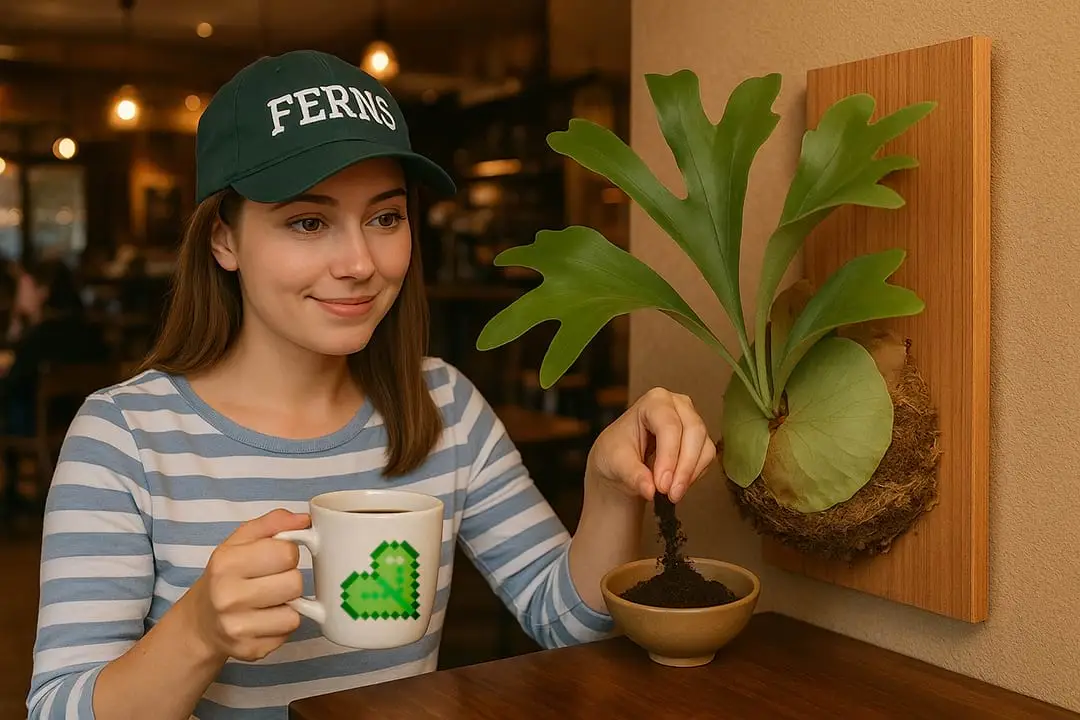
⚖️ Benefits & Potential Drawbacks of Coffee Grounds
Before diving into the “how,” it’s helpful to understand why coffee grounds can be helpful for plants, as well as potential downsides.
Benefits of Using Coffee Grounds (Nutrients & Effects)
Here are the main scientific and horticultural insights on how coffee grounds affect staghorn ferns:
- Natural Nutrient Boost: Spent coffee grounds contain essential plant nutrients – roughly 2% nitrogen by weight, with smaller amounts of phosphorus and potassium. This steady nitrogen supply can encourage healthy, green frond growth on staghorn ferns. (In the wild, staghorns absorb nitrogen from decomposing leaves and debris caught in their fronds, so a bit of coffee mimics that natural nutrient source.) Coffee grounds also provide minor micronutrients like magnesium, copper, and calcium that commercial fertilizers may lack.
- Organic Matter & Slow Release: As coffee grounds decompose, they add organic matter to the fern’s growing medium. This improves moisture retention and gradually releases nutrients over time. Staghorn ferns mounted on boards or trees often rely on accumulated leaf litter for sustenance; a thin layer of coffee grounds can similarly break down and feed the fern slowly, without the risk of “burn” that strong chemical fertilizers can cause.
- Mild Acidity: Staghorn ferns prefer a slightly acidic environment. Used coffee grounds have a mildly acidic to neutral pH (around 6.2–6.8), which can help maintain a favorable pH in the moss or medium around your fern. In small quantities, grounds can counteract overly alkaline water or materials. (Importantly, after brewing, coffee grounds are not highly acidic – they’re close to neutral – so they won’t drastically lower the pH, especially if composted. This gentle acidity is just enough to benefit acid-loving plants without major soil shifts.)
- Eco-Friendly Fertilizer: Using coffee grounds is a sustainable way to fertilize. Instead of tossing out used grounds, you’re recycling a kitchen waste into a useful plant feed. It’s cost-effective and environmentally friendly – a win-win for you and your fern. Many gardeners like the idea of an organic fertilizer for staghorn ferns that comes free from their morning coffee pot!
Potential Drawbacks and Risks
Not all aspects of coffee grounds are beneficial. It’s equally important to understand potential drawbacks:
- Over-Fertilization Risk: Overdoing it with coffee grounds can lead to nutrient imbalances or “burned” roots on sensitive plants. Staghorn ferns have relatively light nutrient needs, so an excessive amount of grounds may overwhelm the fern with nitrogen or other compounds. Always err on the side of a small dose – remember, these ferns are used to lean conditions and can be harmed by too much of a good thing.
- Excess Moisture & Rot: Coffee grounds can hold water and compact if applied too thickly, creating a dense, soggy layer. A big clump of wet grounds pressed against your staghorn’s base could invite root rot or fungal issues. The fern’s basal fronds need airflow; smothering them with wet coffee muck is a recipe for decay. Keep any application very light and well-aerated.
- pH Imbalance: While a little acidity is fine, adding large volumes of coffee grounds could make the local environment too acidic for the fern – especially if the grounds are not composted. An epiphytic plant like staghorn isn’t adapted to significant pH swings. If you dump fresh, unbrewed coffee or thick layers of grounds on it, you risk creating an unfavorable, overly acidic condition around the roots.
- Caffeine & Microbial Effects: Coffee grounds contain residual caffeine and other compounds. In excess, these can inhibit plant growth and soil life. Studies note that uncomposted coffee grounds can tie up nitrogen as they decompose and even suppress some plant growth due to caffeine. Additionally, some experts warn that coffee’s natural antimicrobial properties might harm the beneficial microbes and fungi that epiphytic ferns rely on. Composting the grounds first (or at least leaching them by soaking) helps mitigate this concern by breaking down caffeine and allowing microbes to process the material.
- Mold or Pest Attraction: If coffee grounds stay constantly damp, they can develop mold. One report on using coffee for epiphytes (like ferns and orchids) found that wet grounds led to mold growth on the surface and even attracted fungus gnats/mosquitoes. A light sprinkling that dries out between waterings is less likely to mold than a thick paste. Also, always use used coffee grounds; fresh unused coffee could contain sugars or milk (if from your cup) that definitely encourage mold or pests.
Bottom Line on Benefits vs. Risks
Coffee grounds can be a nutritious, slow-release fertilizer for staghorn ferns when used properly. They contribute nitrogen and organic matter much like the natural debris these ferns evolved to use. However, they must be applied sparingly and monitored, as an epiphytic fern is sensitive to overfeeding and waterlogged conditions. Next, we’ll cover exactly how to apply coffee grounds to get the benefits while avoiding the pitfalls.
✍️ How to Apply Coffee Grounds to Staghorn Ferns (Step-by-Step)
Ready to give your staghorn a coffee boost? Follow these steps to apply coffee grounds safely and effectively:
Collect Used Coffee Grounds.
Start with used coffee grounds from your coffee maker or French press – never use fresh, unbrewed coffee grounds on your fern. Spent grounds have had most of their oils and acidity removed during brewing, making them gentler for plants. Fresh grounds are highly acidic and concentrated, which can shock or burn your staghorn fern.
So after brewing your coffee, save the damp grounds. You can collect a few days’ worth in a container; just avoid letting them get moldy. (If you’re not a coffee drinker, you can often get free used grounds from local cafés – many baristas are happy to give them away for gardeners.)Pre-Process the Grounds (Compost or Leach, Optional).
If possible, compost the coffee grounds along with other yard or kitchen waste before using them on your staghorn. Composting for even a couple of weeks will allow soil microbes to break down caffeine and mellow out the acidity. The result is a richer, plant-friendly compost you can tuck behind your fern.
No compost bin? You can alternatively “leach” the grounds by soaking them in water for a day or two, then draining. One experienced grower recommends letting coffee grounds sit wet for 3 days to “bleed out” excess acidity. Even a quick rinse with water can wash away some caffeinated residue. This pre-processing step isn’t absolutely required, but it does make the grounds safer for an epiphyte. Think of it as the difference between adding fresh green manure versus aged manure to a plant – a little aging or rinsing goes a long way to prevent burns or shock.Add a Thin Layer Around the Fern.
Take a small amount of the prepared coffee grounds (about a teaspoon or a small pinch for a younger plant, or a tablespoon for a very large fern) and sprinkle it lightly around the base of the staghorn fern. If your fern is mounted, gently pull back or lift the brown, papery basal fronds and tuck the grounds into the sphagnum moss or organic matter behind them.
Spread the grounds out – do not leave them in one thick heap or puck. You want a thin, even layer that will gradually decompose. Make sure the grounds are not in direct contact with the fern’s tender white roots or any new buds/shoots. Avoid smearing grounds on the green fronds as well. Essentially, you are mulching lightly with coffee grounds, simulating the dusting of leaf litter these ferns get in nature.
If your staghorn is potted (some people do grow pups in pots or baskets), you can lightly work the grounds into the top of the potting mix or set them under the plant’s shield fronds in the pot. Just take care that there’s airflow and the grounds aren’t sealing off the surface completely.(Optional) Mix with Other Organic Materials.
For an even more balanced feeding, you can combine coffee grounds with other gentle fertilizers. A popular method is to add banana peels or pieces and crushed eggshells along with the coffee. Each of these kitchen scraps provides different nutrients – “banana peels offer potassium, eggshells offer calcium, and grounds offer nitrogen,” as one gardening expert noted. By combining them, you give a more complete nutrient profile.
For example, you might tuck a small strip of banana peel (rich in potassium) behind the fern, then sprinkle a teaspoon of coffee grounds (for nitrogen) on top of it. The banana and coffee will break down together, feeding the fern over time. The eggshells (rich in calcium) decompose more slowly, but you can crush them finely and mix into the moss to eventually supply calcium.
Tip: Don’t overstuff the mounting area – a little organic matter goes a long way. If there’s already a banana peel from last month still decomposing back there, hold off on adding more until the old material breaks down, to avoid smothering the fern.Water to Release Nutrients.
After placing the coffee grounds (and other amendments if used), give your staghorn fern a light watering. If it’s mounted, you might dunk the whole mount in a tub of water for a minute or two, or gently hose it down, which will wet the coffee grounds. Moisture starts the leaching process, allowing nutrients to seep from the grounds into the moss where the roots can absorb them. It also helps the grounds settle in place.
After watering, let the fern drain well; it shouldn’t sit sopping wet. The coffee nutrients will slowly diffuse each time the fern is watered.
Note: If you normally mist your staghorn, be aware that a bunch of loose coffee grounds might get blown off by a strong spray. In that case, you can sandwich the grounds under a layer of moss or leaf litter to help keep them in place. Alternatively, some growers wrap coffee grounds (or other feeds) in a piece of porous cloth or a used tea bag, creating a little “tea bag” of fertilizer that they tuck behind the fern. This keeps the grounds contained while still allowing nutrients to leach out.Monitor Your Fern’s Response.
Over the next days and weeks, observe how your staghorn fern reacts to the coffee ground treatment. In the best case, you might notice a flush of new growth or more robust, deeper green foliage after a few weeks, indicating the fern is happily using the extra nitrogen.
However, stay vigilant for any signs of stress: yellowing or browning patches on the fronds, black or mushy spots at the base, or an unpleasant sour smell (which could indicate rot). Also check the medium for mold – a superficial white fuzz on the coffee grounds can be wiped off, but if a thick fungus is taking over, you used too much.
If you see any worrisome symptoms, remove whatever coffee grounds remain (gently lift them out and discard) and flush the area thoroughly with water to dilute any residues. Staghorn ferns are forgiving, and a one-time over-application of coffee won’t usually kill the plant – but it’s important to catch problems early. In general, when using any new fertilizer, “keen observation” is your best tool. Every plant is a bit different, so let your fern’s appearance be your guide. If it looks happier, great – if not, scale back or discontinue the coffee routine.Repeat Sparingly (Monthly or Less).
Resist the urge to apply coffee grounds too often. A good rule of thumb is to feed with coffee grounds about once a month during the active growing season (spring and summer), and less or not at all in fall/winter when the fern’s growth slows. Some houseplant growers suggest a small application every 2–4 weeks at most.
Remember that staghorn ferns are slow-growing and efficient at reusing nutrients – they don’t need frequent feeding. In fact, mature staghorn ferns often thrive with just one or two fertilizer applications per year. So when in doubt, feed less often. Over-fertilizing (even with gentle organics) can do more harm than under-fertilizing these ferns.
If you are also using other fertilizers, account for those – for instance, you might alternate coffee grounds one month and a balanced fertilizer the next, rather than doubling up. Always give some time between applications so your fern isn’t getting bombarded.
Expert tip: One soil scientist noted that many gardeners are “too enthusiastic” with coffee grounds – she’s even seen a raised bed ruined by dumping on inches of coffee grounds. The takeaway? Use coffee grounds sparingly and they’ll do good; pile them on, and you’ll regret it. When it comes to feeding staghorn ferns, less is more!
✅ Coffee Ground Do’s and Don’ts for Staghorn Ferns
To recap the application method, keep these quick do’s and don’ts in mind:
✅ Do:
- Do use only used coffee grounds, not fresh. Brewed grounds are much less acidic and potent. Fresh grounds or undiluted coffee can be too harsh for your fern.
- Do compost or rinse the grounds before use when possible. Pre-composting helps neutralize acidity and break down caffeine. Even a quick soak can leach out some excess compounds. Your fern will get a gentler, more effective fertilizer this way.
- Do apply in moderation. A thin sprinkling or small spoonful is plenty. Remember, you’re mimicking a light layer of leaf litter, not burying the plant in coffee! When in doubt, use less. You can always add a bit more next time if needed.
- Do mix the grounds with other organic matter for a balanced feeding. Adding a bit of banana peel, dead leaves, or some chopped moss along with coffee grounds can create a more complete nutrient mix and buffer the effects of the coffee. Variety in diet is good for plants too.
- Do continue regular care and occasional fertilization. Coffee grounds are a supplement, not a complete feeding program. Keep up your normal staghorn fern care – proper watering, sufficient humidity, and periodic feeding with a balanced fertilizer or other organics. The coffee grounds are just one part of the regimen.
🚫 Don’t:
- Don’t put wet coffee grounds in direct contact with the fern’s growing parts. Keep them off the fronds and away from the delicate roots or buds. Tuck grounds around the plant in the medium, not on the plant itself, to prevent burns or rot.
- Don’t apply a thick, dense layer of grounds. This can compact and form a crust that repels water and air, smothering the fern. Always spread grounds thinly so air and water can still reach the roots. If you can pinch the layer between two fingers, it’s too much – spread it out or remove some.
- Don’t over-fertilize with coffee or anything else. Avoid adding coffee grounds every week or in large quantities; too much can lead to browned foliage and damage the fern. When using coffee, skip other fertilizers at that time to avoid nutrient overload.
- Don’t use unbrewed coffee or strong coffee liquid on your staghorn. Straight coffee has high caffeine and acid content – no espresso shots for your fern! If you want to experiment with coffee as a liquid feed, make sure it’s very diluted (e.g. a quarter cup of brewed coffee in a gallon of water) and only do it rarely. In general, watering with plain water is best; save the coffee for the compost pile if you have extra.
- Don’t rely on coffee grounds as the sole source of nutrients. As noted, they don’t provide a full spectrum of what your plant needs. Use them alongside other feeding methods (like balanced fertilizer or organic feeds) rather than exclusively.
- Don’t ignore warning signs. If your fern shows signs of distress after a coffee treatment (wilting, discoloration, mold, etc.), don’t continue adding more. Remove the grounds and give the plant a break. Staghorns can be sensitive, so let your fern’s health guide your usage.
By following these guidelines, you’ll minimize any risks and set your staghorn fern up to enjoy the modest boost that coffee grounds can provide.
🔄 Coffee vs. Other Fertilizer Options for Staghorn Ferns
How do coffee grounds stack up against other fertilizers for staghorn ferns? It’s often useful to rotate or combine different feeding methods to give a well-rounded nutrition profile. Here’s a comparison:
Banana Peels
Arguably the most famous staghorn fern snack, banana peels are often tucked behind the fern’s basal fronds. They are rich in potassium (K) and also add a little phosphorus, which supports blooming and overall vigor. However, banana peels contain very little nitrogen, an area where coffee grounds excel. That’s why some growers use banana and coffee in tandem – the banana supplies K, the coffee supplies N.
Banana peels break down over a few weeks, releasing nutrients slowly and also feeding the fern’s medium with organic matter.
Downside: Fresh banana peels can attract fruit flies or get moldy, so use small pieces or allow the peel to dry out a bit before adding.
Verdict: Great source of K for staghorns; best combined with a nitrogen source like coffee grounds or another fertilizer for a balanced diet.
Eggshells
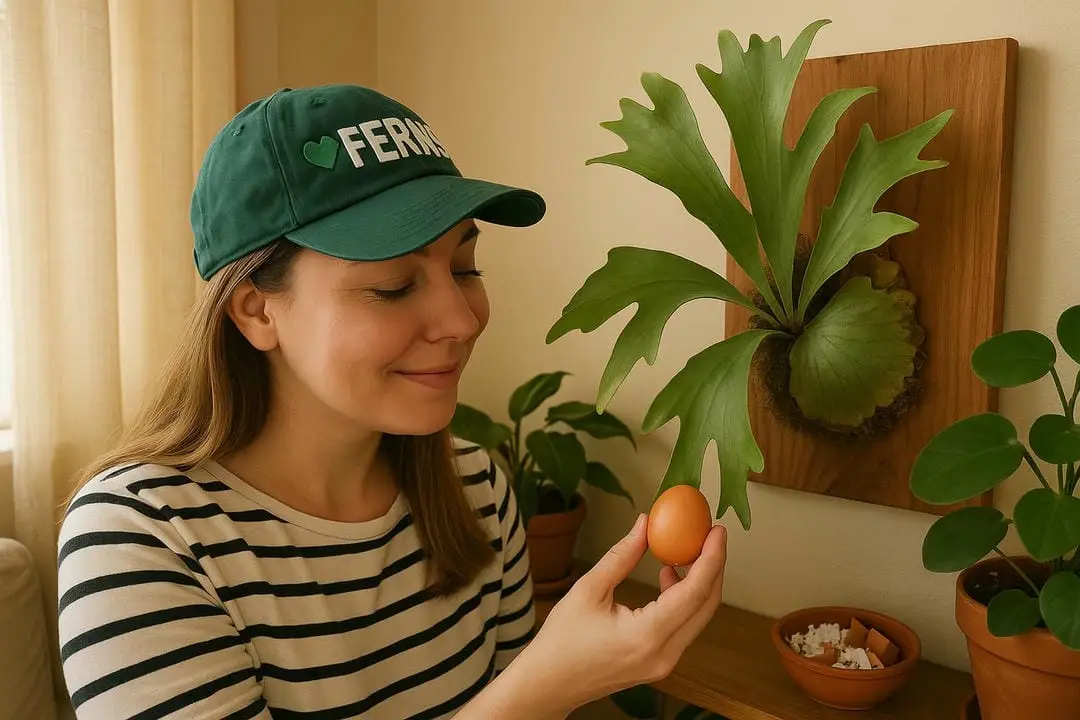
Crushed eggshells provide calcium, an essential secondary nutrient that helps build strong cell walls in plants. Staghorn ferns don’t have a high calcium demand, but a little can help if your water is very soft or the fern shows signs of calcium deficiency (e.g. weakened structure).
Eggshells decompose slowly; crush them into powder for faster release. They also help moderate acidity, since calcium carbonate in shells can gently raise pH as it breaks down. Some growers add a sprinkle of eggshell when using coffee grounds to “balance the acidity.” As noted above, eggshells + banana + coffee create a trio that covers calcium, potassium, and nitrogen – a more complete nutrient profile.
Verdict: Useful as a slow-release calcium supplement; best as one component of an organic mix. Not a standalone fertilizer, but worth adding in small quantities.
Tea Leaves or Tea Bags
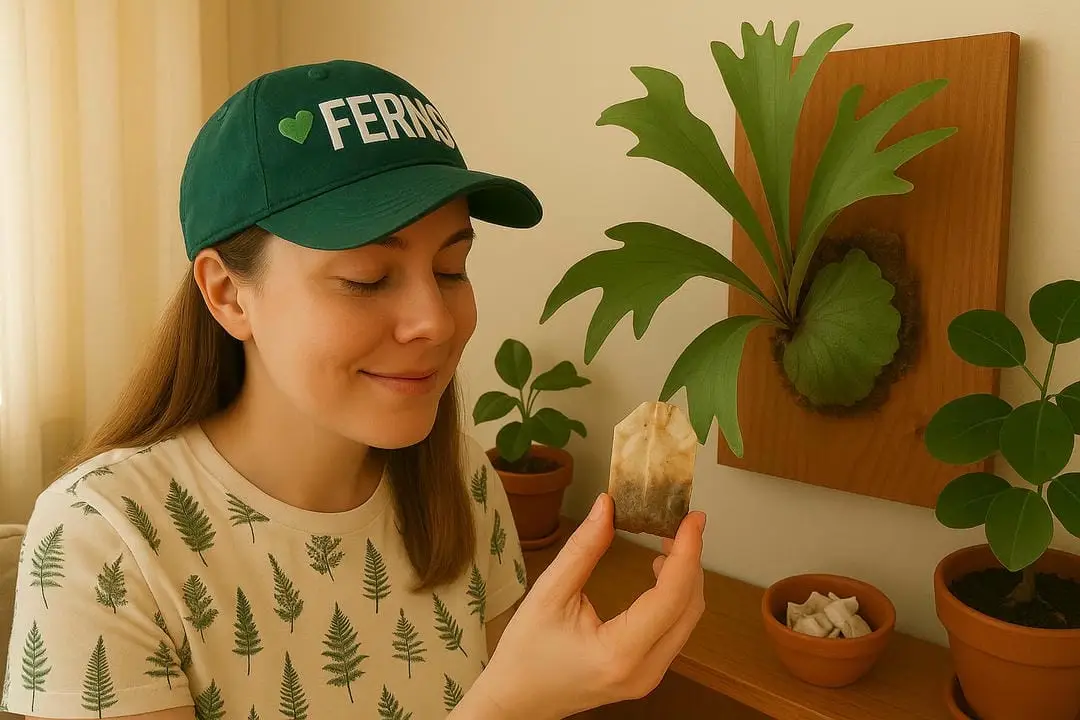
Much like coffee grounds, used tea leaves or tea bags (from brewed tea) can be applied as a mild acidifying fertilizer. Tea leaves contain tannins and small amounts of NPK. Gardeners sometimes place spent tea bags (with the staples removed) behind staghorn ferns. They will decompose and enrich the mounting media, similar to a slow-release compost pack.
One composting expert lists tea bags alongside coffee grounds and banana skins as excellent slow-release fertilizers for staghorns. If you’re a tea drinker, you can save your tea leaves for this purpose. Just be sure the tea bag material is biodegradable (paper or cloth, not nylon mesh) or empty the leaves out.
Verdict: Comparable to coffee grounds in use – a gentle, organic addition. Not a significant nutrient powerhouse, but contributes acidity and organic matter. Safe to use in conjunction with coffee grounds (they’re quite similar in function).
Balanced Liquid Fertilizer (Synthetic)
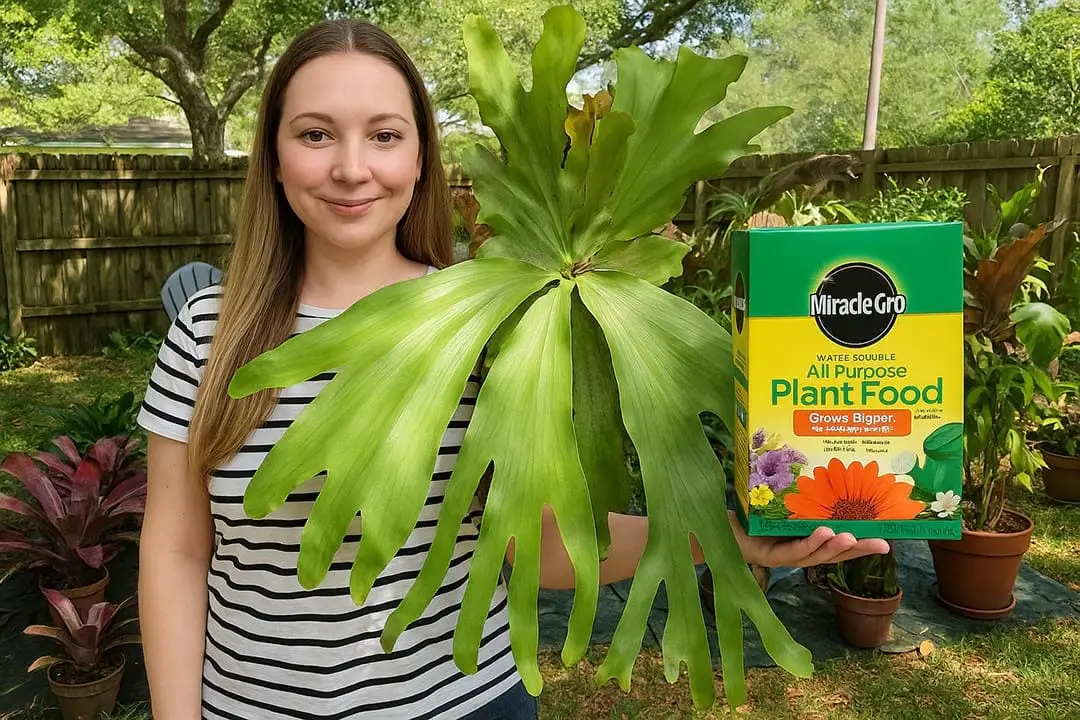
Many staghorn fern owners use a balanced N-P-K fertilizer (like a 10-10-10 or 20-20-20 houseplant food, sometimes specific products like Miracle-Gro) diluted in water. This provides a quick and complete nutrient dose.
University of Florida experts suggest using a balanced 1:1:1 ratio fertilizer monthly for young staghorns in warm seasons, and only once or twice a year for large, mature ferns. The advantage of liquid fertilizer is that it’s readily available to the plant; you might see a faster growth response.
Downside: Synthetic fertilizers carry a higher burn risk if overused. Staghorn ferns’ roots can be sensitive to salt buildup from chemical fertilizers. It’s crucial to dilute to half or quarter strength and not to overapply. Also, because staghorns aren’t in soil, any excess fertilizer just runs off – which can waste nutrients or even harm the environment.
Verdict: Effective for providing complete nutrition, especially nitrogen, which banana peels lack. Use carefully: a dilute feed once a month (or even every other month) in spring/summer is sufficient in most cases. Consider alternating with organic methods like coffee/banana to reduce reliance on chemicals. Always flush the mount with plain water occasionally to prevent salt buildup.
Fish Emulsion and Seaweed (Organic Liquids)
If you prefer an organic but readily available feed, fish emulsion or kelp (seaweed) extracts are time-tested choices. Fish emulsion is high in nitrogen and micronutrients, and staghorns respond well to it. A typical regimen is feeding diluted fish emulsion every 2–3 weeks during the growing season. Seaweed or kelp extract is rich in potassium and trace minerals; it can be used similarly, often in conjunction with fish fertilizer.
These natural liquids are gentler than synthetic fertilizers but still should be diluted (follow product directions, usually a tablespoon per gallon of water). They also have the advantage of containing growth hormones and vitamins from natural sources, which may boost plant immunity and vigor.
Downside: Odor – fish emulsion can be smelly, though the scent dissipates after drying. Some new products are deodorized.
Verdict: Excellent holistic tonics for staghorn ferns. They provide balanced nutrients and support soil life. Use a light hand (monthly or less) to avoid overfeeding. They can be used in rotation with coffee ground applications – for example, coffee one month, fish emulsion the next – to cover all nutrient bases.
Compost and Leaf Litter
Don’t forget, nature’s way of feeding staghorns is simply fallen organic debris. You can simulate this by occasionally packing a little leaf litter or homemade compost behind the fern’s basal fronds. Well-decomposed compost contains a balanced mix of nutrients and beneficial microbes. Dried leaves (from oaks, etc.) provide a slow trickle of nutrients as they break down – oak leaves in particular are noted as a natural fertilizer for staghorns.
If you have access to clean, pesticide-free leaves, you can crumble a handful and place them in the fern’s moss pocket. Over time, they become the rich humus that these epiphytes love. Coffee grounds themselves can be part of a compost mix – rather than applying directly, you might compost the grounds with other materials (fruit scraps, leaves, etc.) and then use that compost on the fern for a more balanced input.
Verdict: Highly recommended as part of regular staghorn care. Even if you use coffee or bananas, include some plain compost or leaf matter occasionally to ensure a broad spectrum of nutrients and a healthy microbial environment. Just avoid piling so much that it stays soggy; small amounts refreshed periodically work best.
Epsom Salt (Magnesium Sulfate)
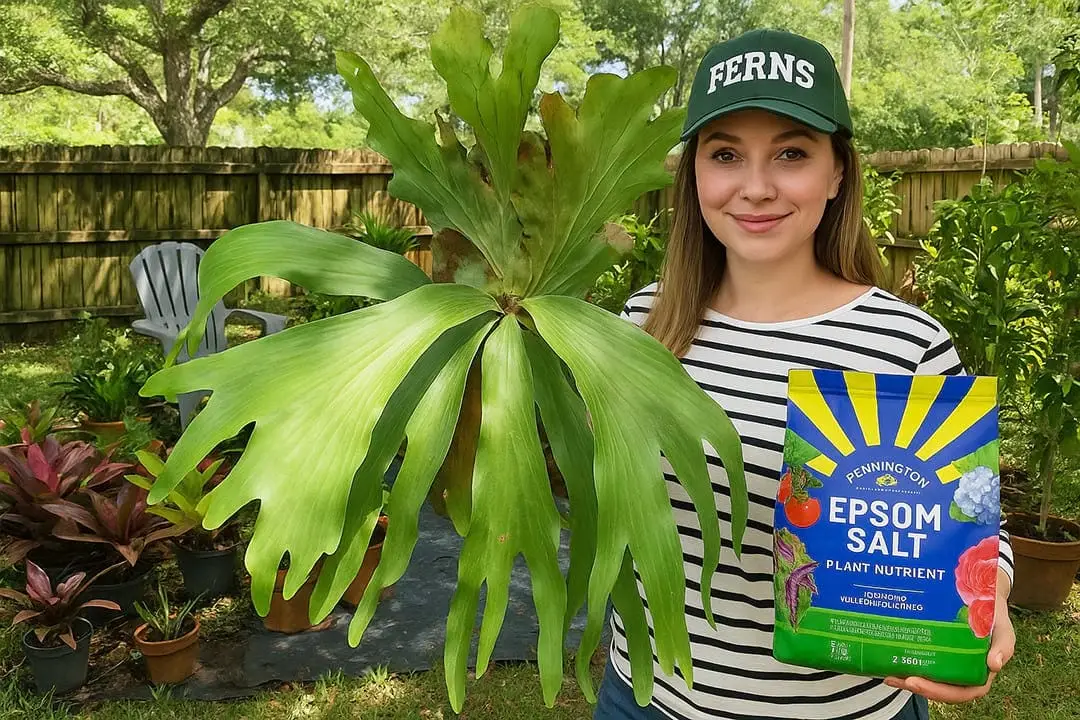
Some fern enthusiasts give their staghorns a dose of Epsom salt a couple of times a year. Epsom salt supplies magnesium and sulfur – magnesium is a central component of chlorophyll, so it can deepen the green color of fronds and improve vigor. If a staghorn’s older fronds start yellowing between veins, it could be a magnesium deficiency. A pinch of Epsom salt dissolved in water (or sprinkled and watered in) may help. It’s noted that Epsom salt contains "minerals perfect for fern growth."
Use very sparingly (e.g., 1 teaspoon in a gallon of water) and infrequently. It’s not a primary fertilizer, but rather a supplement for specific needs.
Verdict: Optional, as most of the time a staghorn will get enough magnesium from a balanced fertilizer or the water supply. But it can be beneficial if used properly. If you are regularly adding coffee grounds (which have a little magnesium and also acidify slightly), you likely won’t need Epsom salt separately unless a deficiency is observed.
As you can see, coffee grounds are just one of many options to feed a staghorn fern. They particularly shine in providing nitrogen and mimicking the natural slow-release feed of an epiphyte’s environment. However, they lack some nutrients (like significant potassium or calcium), so it’s wise to use them alongside other organic feeds like banana or a balanced fertilizer. Many growers successfully use a combination: perhaps a banana peel this month, a bit of coffee grounds next month, and a diluted fish emulsion the following – all while observing how the fern responds. The key is balance and variety, ensuring your fern gets all it needs over time without overwhelming it with any one thing.
💡 Expert Tips
To wrap up, here are some expert insights and common questions about using coffee grounds (and other organic feeds) on staghorn ferns:
“Banana peels offer potassium, egg shells offer calcium, and grounds offer nitrogen, and all of these are vital to staghorn growth.” – Advice from a Florida nursery specialist experienced with epiphytic ferns.
Many seasoned growers swear by the combination of coffee grounds with other kitchen scraps to fertilize staghorns. As the quote above highlights, each component contributes different nutrients that staghorns need. In fact, another long-time staghorn owner insists on this trio, saying “Add banana peels, egg shells & used coffee grounds [and] you’ll be blessed with lots of new growth.”
It’s wise to emulate nature by giving a mix of organic materials – just like a staghorn in the wild might catch a dead insect (nitrogen), some bird droppings (nitrogen and phosphorus), a fallen leaf (organic matter), and overripe fruit (potassium) in its fronds. Over time, these break down to feed the fern gently.
That said, always tailor advice to your specific plant. What works for one person’s staghorn might not work for another’s due to differences in environment, fern species, or amounts used. Always start small and find the right balance for your situation. Below are answers to a few frequently asked questions on this topic:
🏁 Conclusion & Key Takeaways
Using coffee grounds for staghorn ferns can be a rewarding way to fertilize organically, as long as you do it carefully. Here’s a quick summary of the most important points to remember:
- Coffee grounds can act as a gentle fertilizer for staghorn ferns by supplying nitrogen and organic matter, similar to the natural debris these ferns feed on. It’s an eco-friendly method to reuse waste as plant food.
- Always use used coffee grounds, not fresh, and consider composting or rinsing them first. This reduces acidity and caffeine, making the grounds safer for your fern.
- Apply sparingly – just a thin layer behind the fern’s basal fronds or mixed into its moss. A teaspoon or two is usually enough. Too much can lead to rot or nutrient burn, since staghorns have low nutrient needs.
- Don’t overdo the frequency. Add coffee grounds infrequently (about once a month at most, or a few times a year) and always watch your plant’s reaction. If the fern looks healthy and happy, you’re on the right track. If not, scale back or stop.
- Combine coffee grounds with other fertilizers for best results. Balance the nutrients by also using things like banana peels (for potassium), compost, or occasional diluted liquid fertilizer. Coffee grounds are a supplement, not a one-stop solution, so a varied diet will keep your staghorn fern healthiest.
- Keep the environment fern-friendly: ensure good airflow, proper watering, and the right light/humidity as part of your general staghorn fern care. Coffee grounds won’t make up for poor conditions. In fact, they’ll work best when your fern is already in a suitable environment and routine. Think of coffee grounds as a boost to an already sound care regimen.
By following this guide, you can confidently experiment with coffee grounds as a natural fertilizer for your staghorn fern. Many plant parents find it not only improves their fern’s growth but also gives a satisfying way to recycle coffee waste. Just remember – moderation, observation, and a holistic approach to Staghorn Fern plant care are the secrets to success. Happy gardening, and may your staghorn fern reward you with vigorous, antler-sized fronds!
❓ Frequently Asked Questions
Should I use fresh coffee grounds or only used ones for my Staghorn Fern?
Always use used (brewed) coffee grounds. Fresh grounds are too acidic and caffeinated, which can harm your fern. Brewing makes them milder and safer for plants.
How often can I put coffee grounds on my Staghorn Fern?
Infrequently – about once a month at most during the growing season, or even less. Staghorn ferns are light feeders. Observe your plant and adjust; less is often more.
Can I water my Staghorn Fern with leftover coffee or coffee water?
It's generally not recommended. Liquid coffee is more acidic and concentrated than used grounds. If you try, dilute it heavily (e.g., a tiny bit in a gallon of water) and use very rarely. Plain water is safest for regular watering.
How do I apply coffee grounds to a mounted Staghorn Fern without making a mess?
Gently tuck a small amount of grounds into the pocket behind the fern's basal (shield) fronds and the mounting surface. You can also mix grounds with moss and pack it in, or cover them with a bit of moss to hold them in place.
Do coffee grounds benefit other types of ferns or houseplants?
Yes, many acid-loving plants and those that appreciate organic matter can benefit, but always in moderation. Results vary by species. Composting grounds first is a universally safer approach for most plants. Avoid using on plants that prefer alkaline conditions.
What are signs my Staghorn Fern likes or dislikes coffee grounds?
Positive signs include new, healthy frond growth and vibrant green color. Negative signs include yellowing/browning fronds, black spots, mushy base, bad smell, or visible mold on the grounds. If you see issues, remove grounds and flush with water.
🪴 See also 🪴

Complete Guide To Staghorn Fern Care and Growth
Staghorn Fern Propagation: A Step-by-Step Guide (Pups & Spores)
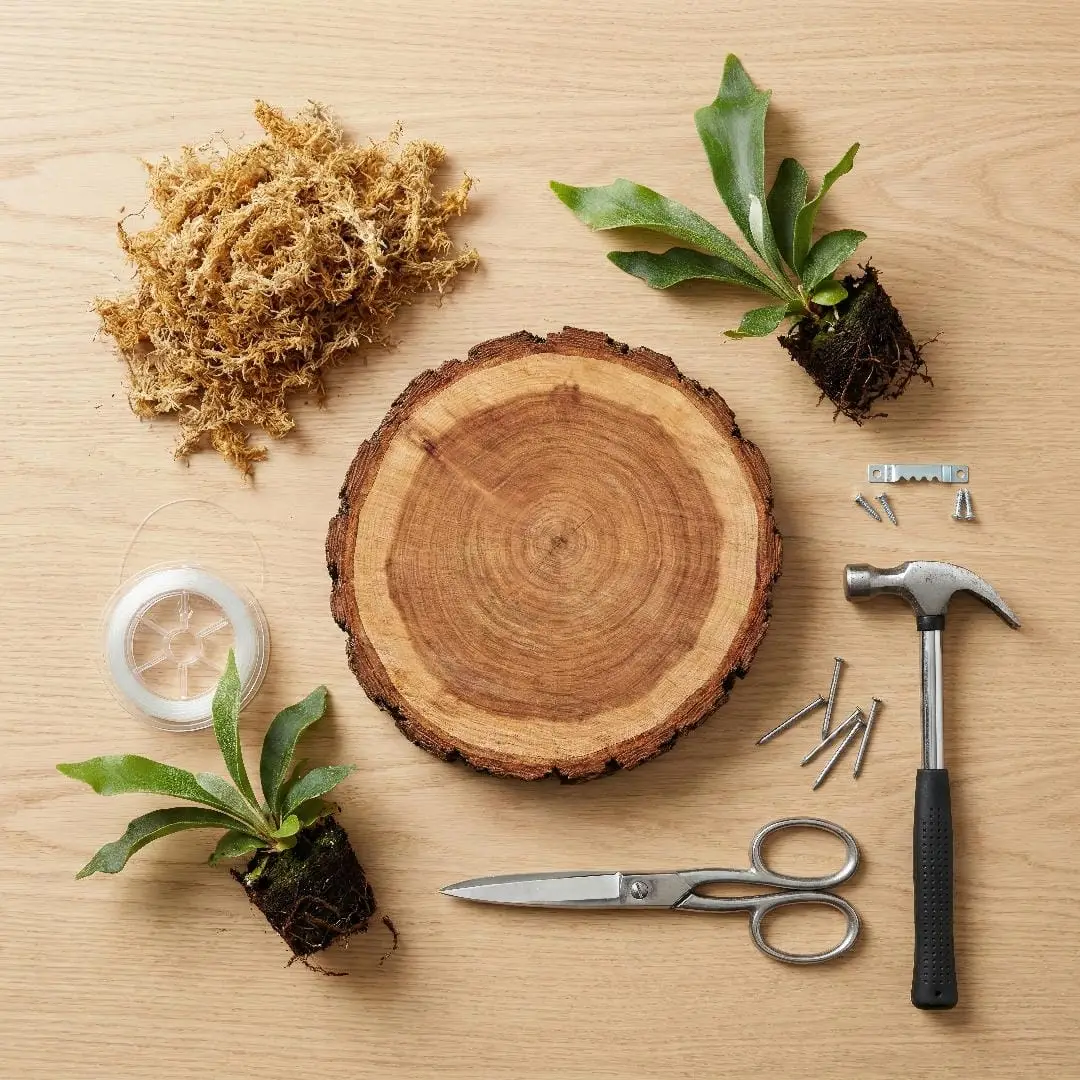
How to Mount a Staghorn Fern: A Modern Step-by-Step Guide

Complete Guide to Pitcher Plant Care (Nepenthes)
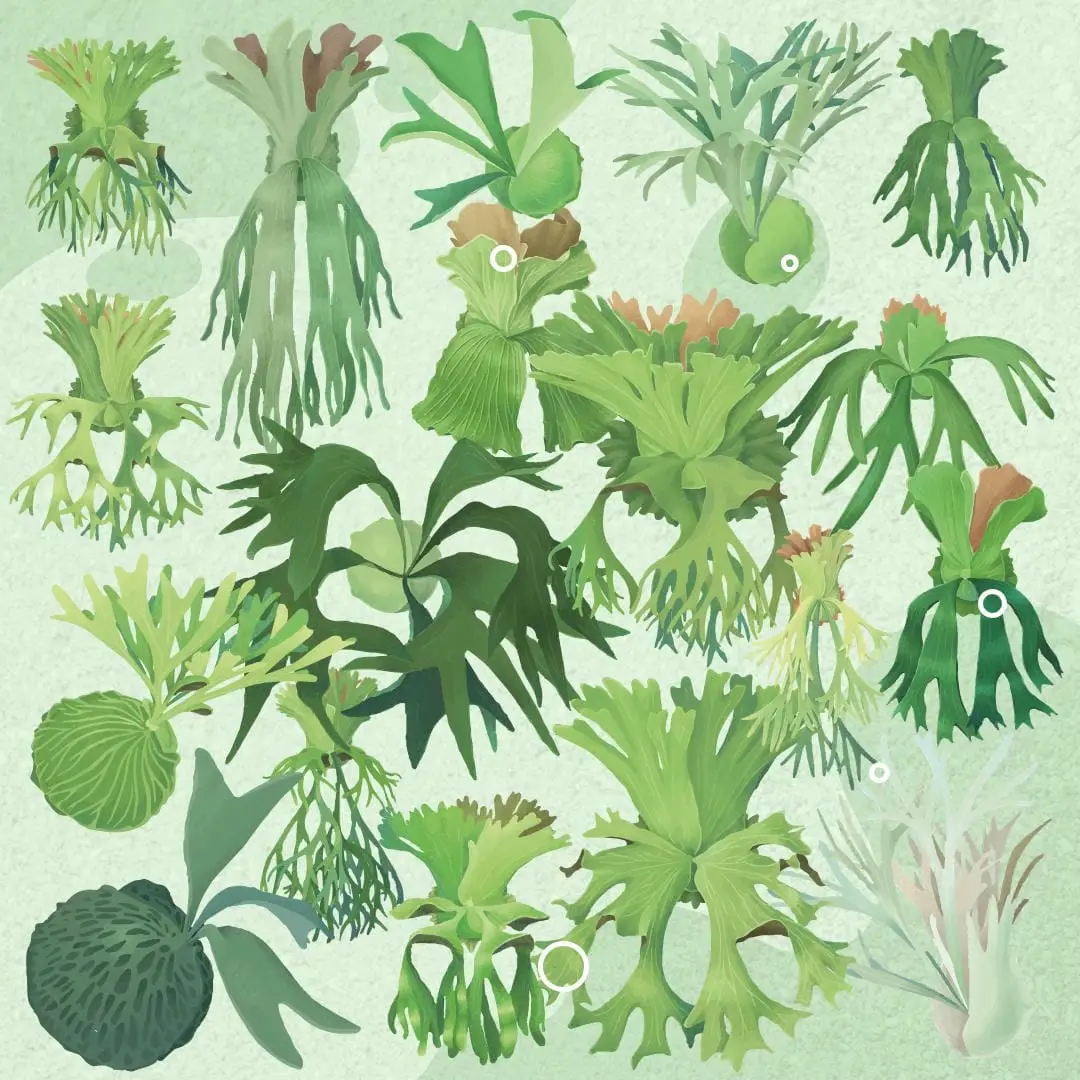
18 Staghorn Fern Varieties, Species, and Types (With Pictures)

Is Sugar Water Good for Staghorn Ferns?
Do Staghorns like tea bags?
Eggshells and Staghorn Ferns: Separating Fact From Fiction

Are Staghorn Ferns Invasive? Understanding Their Ecological Impact

Banana Peels for Staghorn Ferns: A Surprising Nutrient Boost?

Do Staghorn Ferns Clean the Air? The Truth About Platycerium & Air Purification

How to Make Staghorn Ferns Grow Faster: Expert Tips & Tricks

Staghorn Fern Watering: The Ultimate Guide to Hydration

Staghorn Fern Light Requirements: A Comprehensive Gardener's Guide
Do Staghorn Ferns Like Epsom Salt? A Gardener's Guide
Is Miracle-Gro Good for Staghorn Ferns? A Gardener's Guide
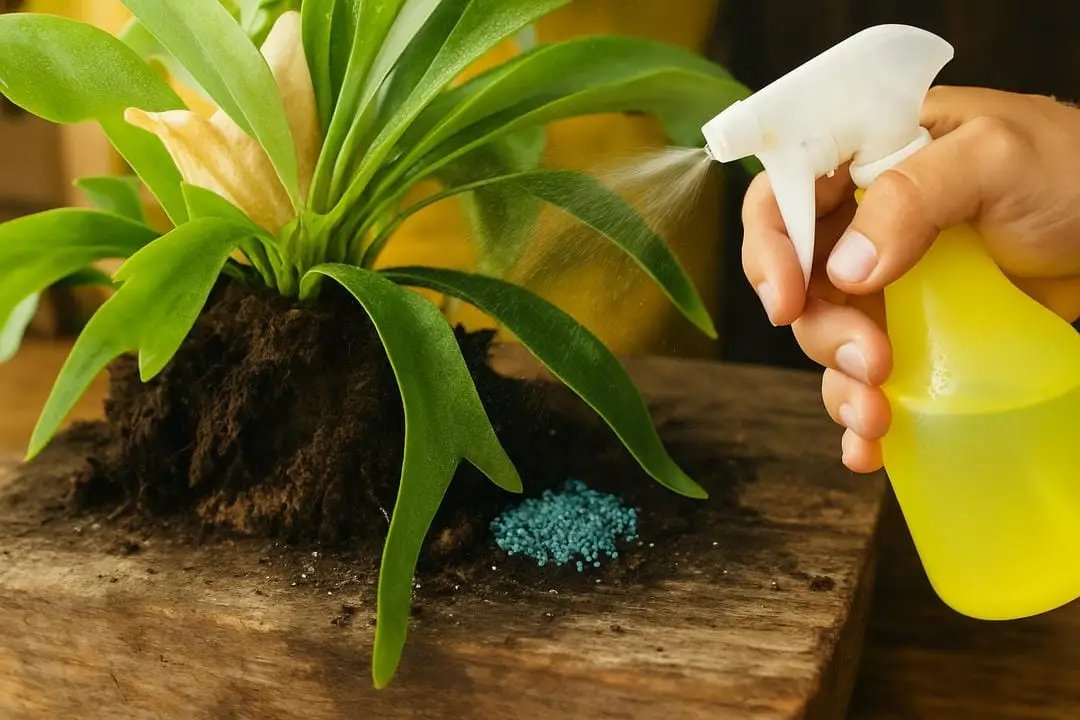
Fertilizer and Nutrient Requirements for Staghorn Fern
A Comprehensive Guide to Cleaning Staghorn Ferns

Houseplant101 Forum
Questions & Comments
Ask a question, share your plant experience, or help other plant owners.
Comments are temporarily unavailable.
Open the Houseplant101 ForumNo comments yet
Be the first to ask a question or share your experience about this page.
Log in or create an account
Comments use your Houseplant101 Forum account, but you can stay on this page.
Create a new account