
Areca Palm
Dypsis lutescens
Butterfly Palm, Golden Cane Palm, Yellow Palm, Chrysalidocarpus lutescens, Areca lutescens


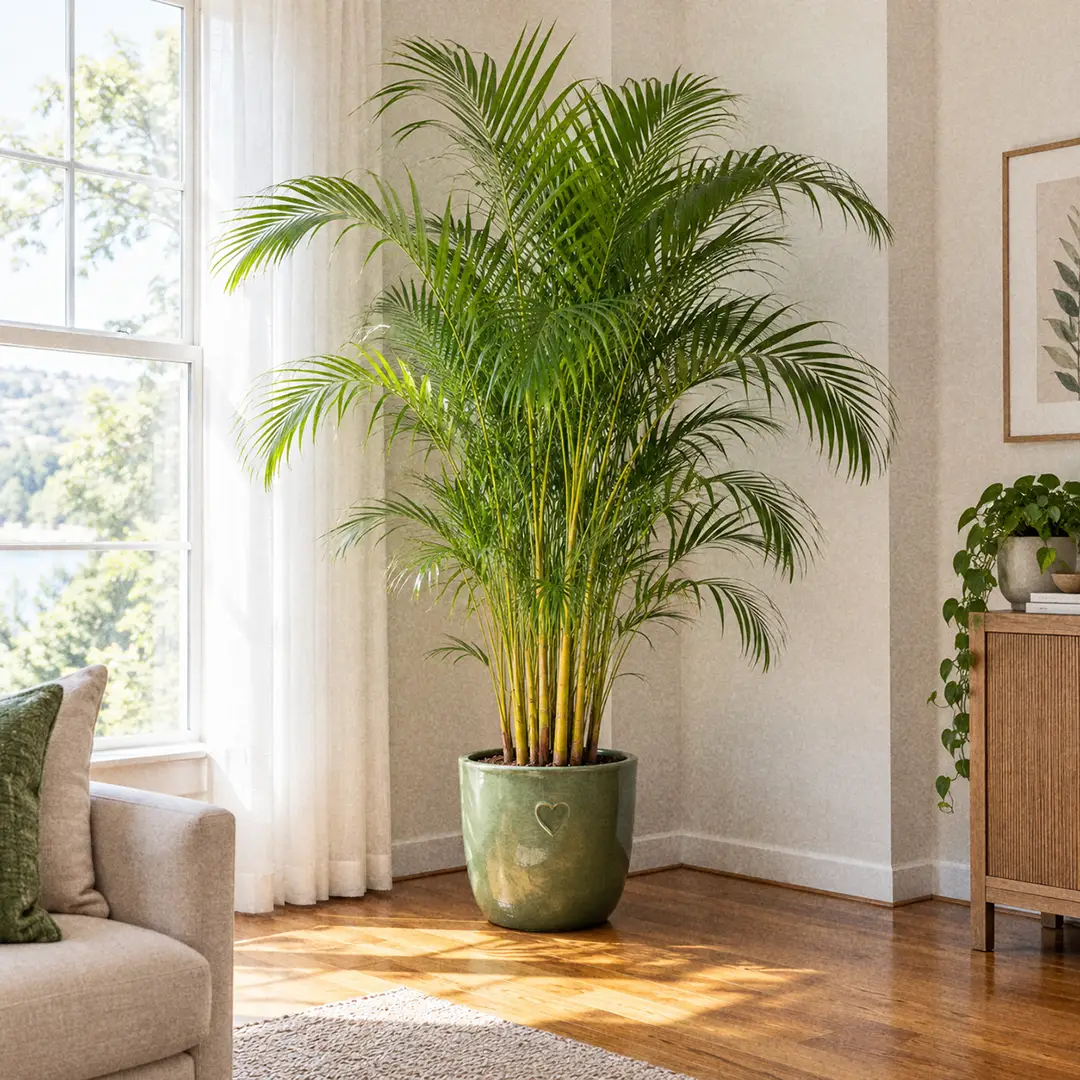
Areca Palm is the big, feathery, pet-safe palm that turns a bare corner into a room, and the one everybody gives brown tips in the first six months. Learn how to water, light, and feed Dypsis lutescens so the fronds stay green to the ends.
📝 Areca Palm Care Notes
🌿 Care Instructions
⚠️ Common Pests
📊 Growth Information
🪴 In This Guide 🪴

☀️ Areca Palm Light Requirements (Bright Indirect Light)
The Sweet Spot
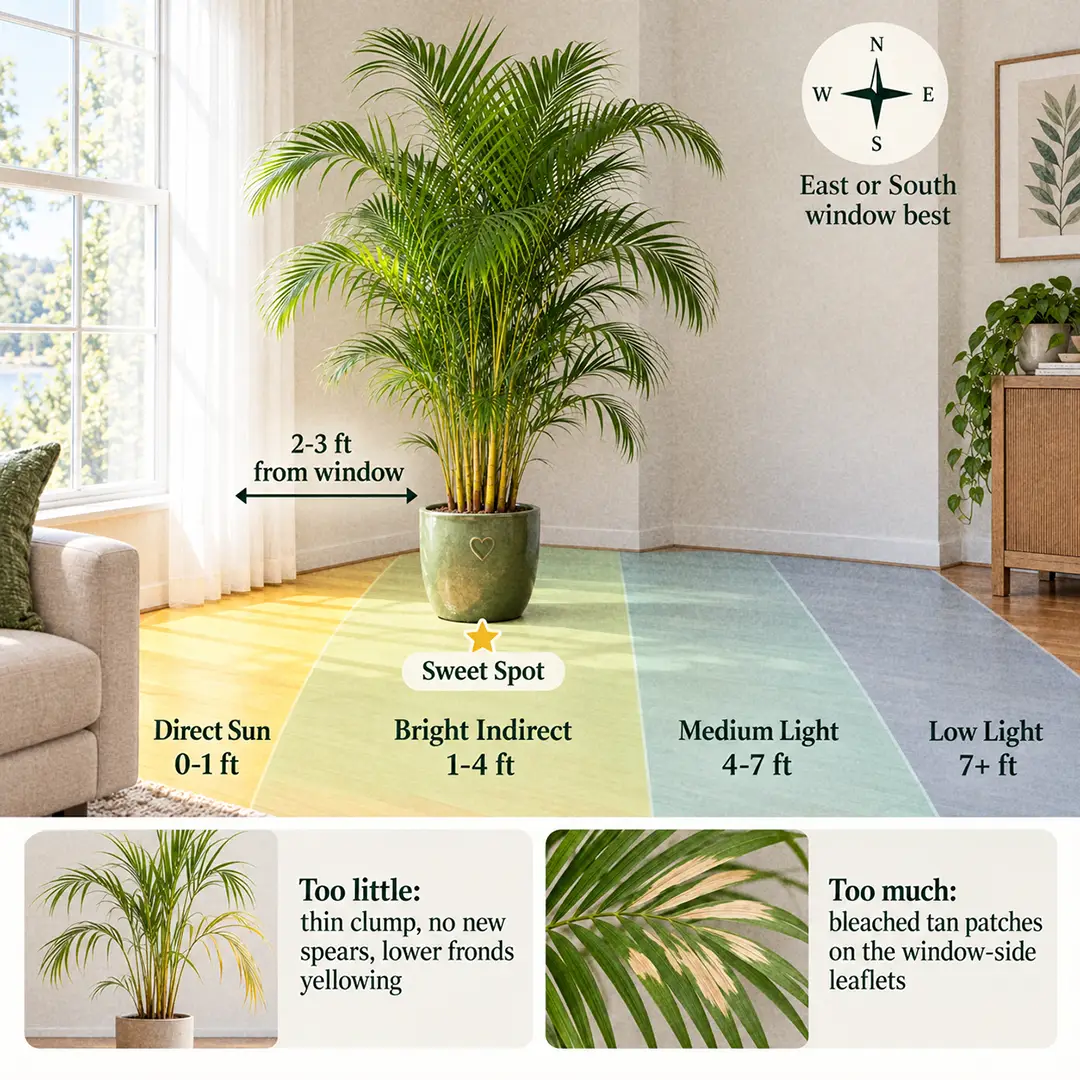
Areca Palm wants bright indirect light, lots of it. Think a spot two to four feet back from a big east or south-facing window, or right up against a window with a sheer curtain between the glass and the fronds. A west window works as well, just expect to pull the plant back a foot or two in high summer.
This is the part people get wrong when they buy one. Arecas are sold next to the low-light palms in every garden center, so they get treated like a Parlor Palm and stuck in a dim corner. They are not a low-light plant. In the wild they grow in open riverside clearings in Madagascar, which means bright, filtered, all-day light. Our Indoor Lighting Guide is useful if you are still learning to read a room by eye.
Too Little Light
A shaded Areca does not die dramatically. It just stops. New spears come up slowly, then not at all, the older fronds yellow and drop one by one, and the clump thins from the inside out until you have a few bare canes and a sad tuft on top. Once a cane gives up it does not refill, so this is slow damage you cannot undo.
The other tell is spacing. Leaflets stretch further apart and the fronds get floppy instead of springy, which is leggy growth in palm form. Through a dark winter a grow light on a timer keeps the new spears coming.
Too Much Light
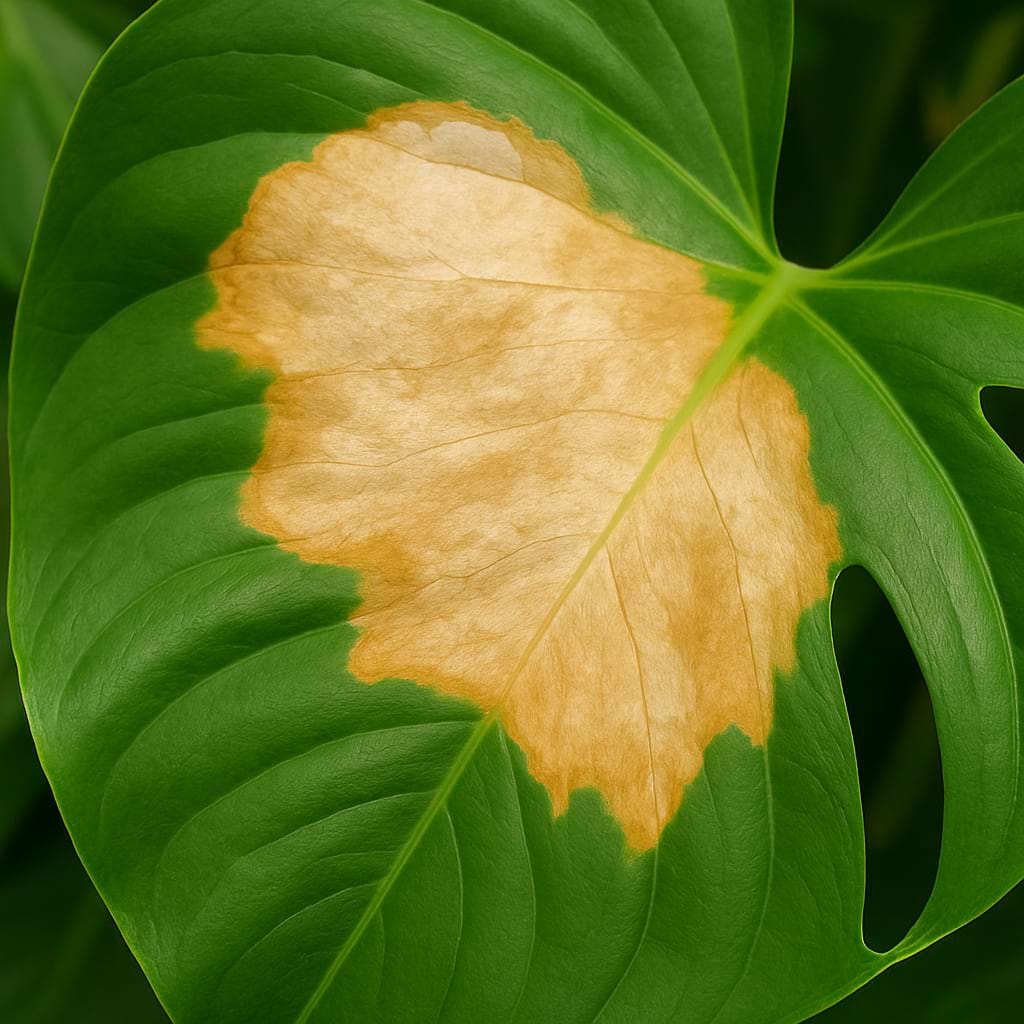
Direct midday sun through glass scorches Areca fronds fast. You get bleached yellow-tan patches on the leaflets facing the window, then dry papery dead zones, which is leaf scorch. Morning sun is fine and even good. It is the 1pm to 4pm sun in summer that does the damage.
An overall pale yellow-green cast across the whole plant, rather than patches, usually means too much light overall rather than a burn. Move it back two feet and the new growth comes in properly green.
💧 Areca Palm Watering Guide (How to Water Properly)
Watering Frequency
Areca Palm likes its soil evenly moist but never soggy. Water when the top inch has dried out and the next inch down still feels barely damp. In a bright room in summer that tends to be every 5 to 8 days for a 10-inch pot, stretching to every 10 to 14 days in winter when growth slows.
Big palms in big pots are easy to misjudge, because the surface dries days before the middle does. Push a finger in properly or use a moisture meter if the pot is too heavy to lift for a weight check. More Arecas are drowned than dried out, and soggy soil in a cool room is the fast road to root rot.
Use Filtered Water
This is the single most useful thing in this guide. Areca Palm is sensitive to the fluoride and chlorine in tap water, and it stores those salts in the leaflet tips, where they kill the tissue and leave dry brown ends. It looks exactly like low humidity damage, which is why people run a humidifier for months and wonder why nothing improves.
Use filtered water, distilled water, or collected rainwater. If neither is practical, let tap water stand uncovered overnight, which helps with chlorine though not with fluoride. Flush the pot thoroughly every couple of months, running water through until it pours freely out the bottom, to wash accumulated salts and fertilizer out of the mix.
Signs of Trouble
Brown, crisp tips on otherwise green fronds point at water quality, dry air, or fertilizer salts, and almost never at underwatering. A fully yellow frond low on the plant is usually normal aging, one or two at a time. Several at once, with heavy wet soil, is overwatering.
Drooping fronds across the whole crown with dry soil is simple thirst, and a deep soak fixes it within a day. The same droop with wet soil means the roots have stopped working, so check for a sour smell and dark mushy roots. Our watering guide covers the general technique.
🪴 Best Soil for Areca Palm (Mix and Drainage)
What the Soil Needs
Areca Palm wants a mix that holds moisture without turning into mud: loose, slightly acidic, and fast to drain. It has thick fleshy roots that fill a pot densely and they suffocate quickly in heavy compacted soil. Good drainage matters more than anything fancy.
DIY Soil Mix
An easy recipe that works:
- 2 parts peat-based or coco-coir potting mix
- 1 part perlite or pumice
- 1 part fine orchid bark or coarse sand
The bark keeps air pockets open as the peat breaks down, which is what usually kills drainage in year two. A handful of worm castings mixed in gives a gentle nutrient base.
Pre-Made Options
Any bagged palm, cactus and citrus mix is a solid shortcut, and most are already lightened with sand and bark. Ordinary all-purpose potting soil works too if you stir in a third by volume of perlite. See our potting soil guide for what to look for on the bag, and skip anything heavy, black, and water-retentive.
🍼 Fertilizing Areca Palm (Feeding Schedule)
When and How Often
Feed monthly from spring through late summer and stop completely in autumn and winter. Arecas are hungry by houseplant standards because they are building large fronds fast, but they are also salt-sensitive, so dilute to half the label strength and feed a slightly moist pot rather than a bone-dry one.
What to Use
Choose a fertilizer made for palms, or any balanced liquid feed that includes potassium and magnesium alongside the nitrogen. Potassium deficiency is the classic Areca problem and the commonest reason an otherwise well-kept palm looks unwell, so a cheap nitrogen-only feed will not cut it. Our fertilizer guide runs through the options.
Over-Fertilizing Signs
Too much feed shows up as brown tips and a white crust on the soil surface. That crust is salt, and it is the same nutrient problem story in reverse. Flush the pot with several pot-volumes of plain water, then skip two feedings. See our fertilizing guide for more detail.
🌡️ Areca Palm Temperature Range
Ideal Range
Areca Palm is comfortable in exactly the range most homes sit in, 65-80°F (18-27°C). Below 55°F growth stalls and the roots stop taking up water properly, and anything near freezing causes permanent blackened tissue. Outdoors it is only reliably hardy in zones 10 and 11.
Drafts and Heat Sources
Two places to avoid. A cold draft from a door or a single-glazed window in winter will spot and yellow the nearest fronds. A radiator, heat vent, or wood stove blowing dry hot air at the crown will crisp every tip facing it within weeks.
Arecas enjoy a summer outside on a shaded porch, which is often the best growth they put on all year. Move them out gradually into full shade first, keep them out of direct sun, and bring them back in before nights drop below 55°F. Check carefully for hitchhiking pests before the plant comes back inside.
💦 Areca Palm Humidity Requirements
Ideal Humidity
Aim for 50% or higher. Arecas tolerate average household humidity of around 40% and simply look less good for it, with tips that brown faster than they should. Winter heating is the hard season, when indoor air can fall to 20%.
Easy Humidity Boosters
Grouping plants together raises local humidity more than misting does, and a small humidifier near the pot is the genuinely effective fix. A pebble tray helps a little. Misting the fronds does almost nothing for humidity and can encourage leaf spot if water sits in the crown overnight, so there are better uses of your time. Our humidity guide has the full picture.
🌸 Areca Palm Flowers (Does It Bloom Indoors?)
What the Flowers Look Like
Outdoors in a tropical climate, a mature Areca Palm sends out branching sprays of small yellow flowers from below the crown in summer, followed by small yellow-orange fruits that ripen toward black. The flower sprays are more interesting than pretty, a loose golden broom of tiny blooms hanging out from between the canes.
Will It Bloom Indoors?
Almost certainly not, and that is normal. Flowering needs a genuinely mature palm with years of strong light behind it, and indoor conditions rarely get a clump there. Treat this as a foliage plant and judge it on frond count, not flowers.
If yours does flower, nothing special is required. Some growers cut the sprays off to push energy back into leaves, which is reasonable on an indoor plant with limited light to work with.
Don't Expect Seeds
The fruits contain viable seed, but indoor flowers are rarely pollinated and unripe seed will not germinate. Anyone growing Arecas from seed is buying fresh commercial seed, not harvesting their own. The failure to bloom article is worth a read if you want the general mechanics, though with this plant it is genuinely not a fault to fix.
🏷️ Areca Palm Types and Varieties
One Species, Many Names
There are no real cultivars of Areca Palm. What you find instead is a pile of names for the same plant: Butterfly Palm, Golden Cane Palm, and Yellow Palm are all Dypsis lutescens. Older labels say Chrysalidocarpus lutescens or Areca lutescens, and recent botanical work has been pushing the Chrysalidocarpus name back into use, so new nursery tags may carry either. It is not an Areca at all, and it has nothing to do with the betel nut palm that genus is named for.
What the Canes Tell You
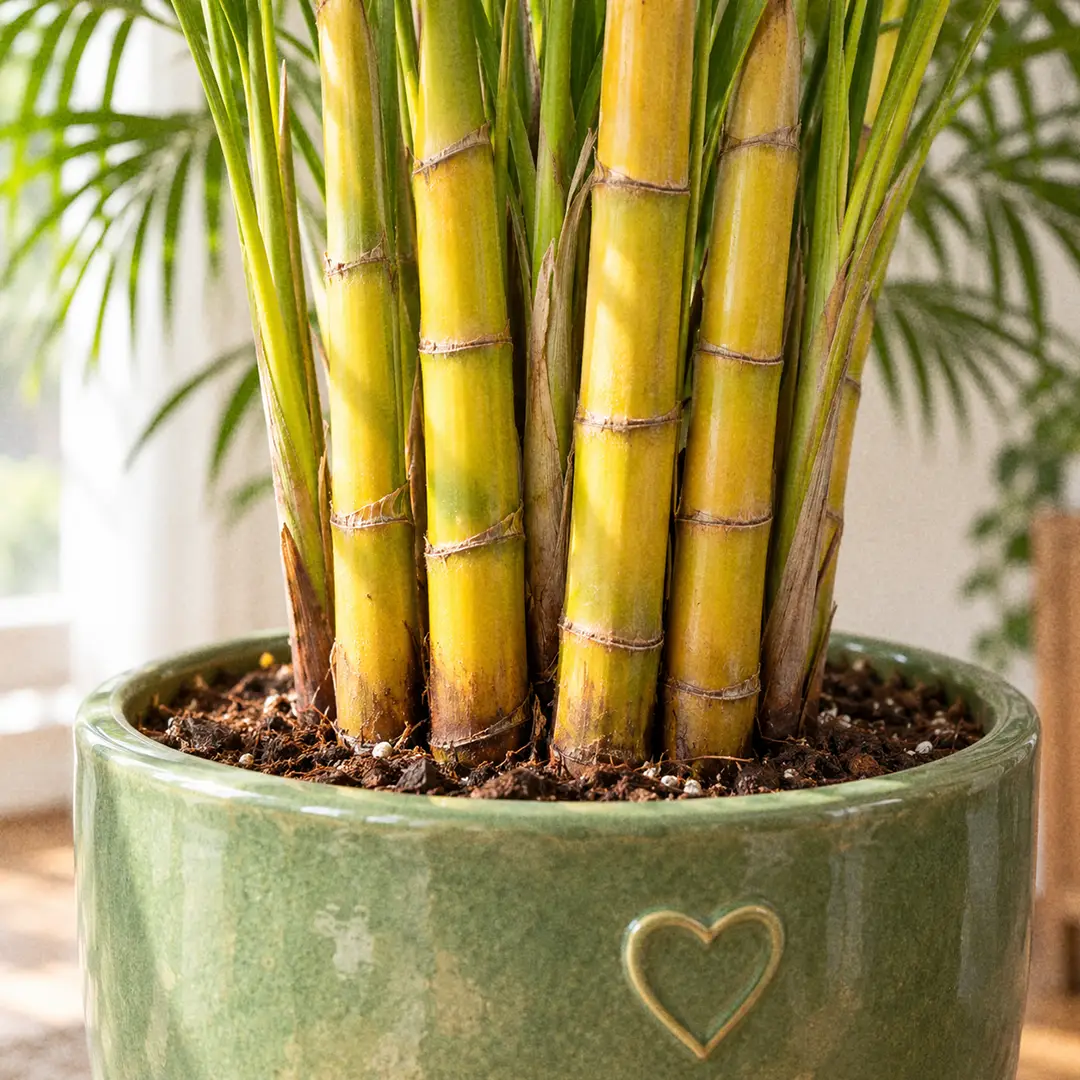
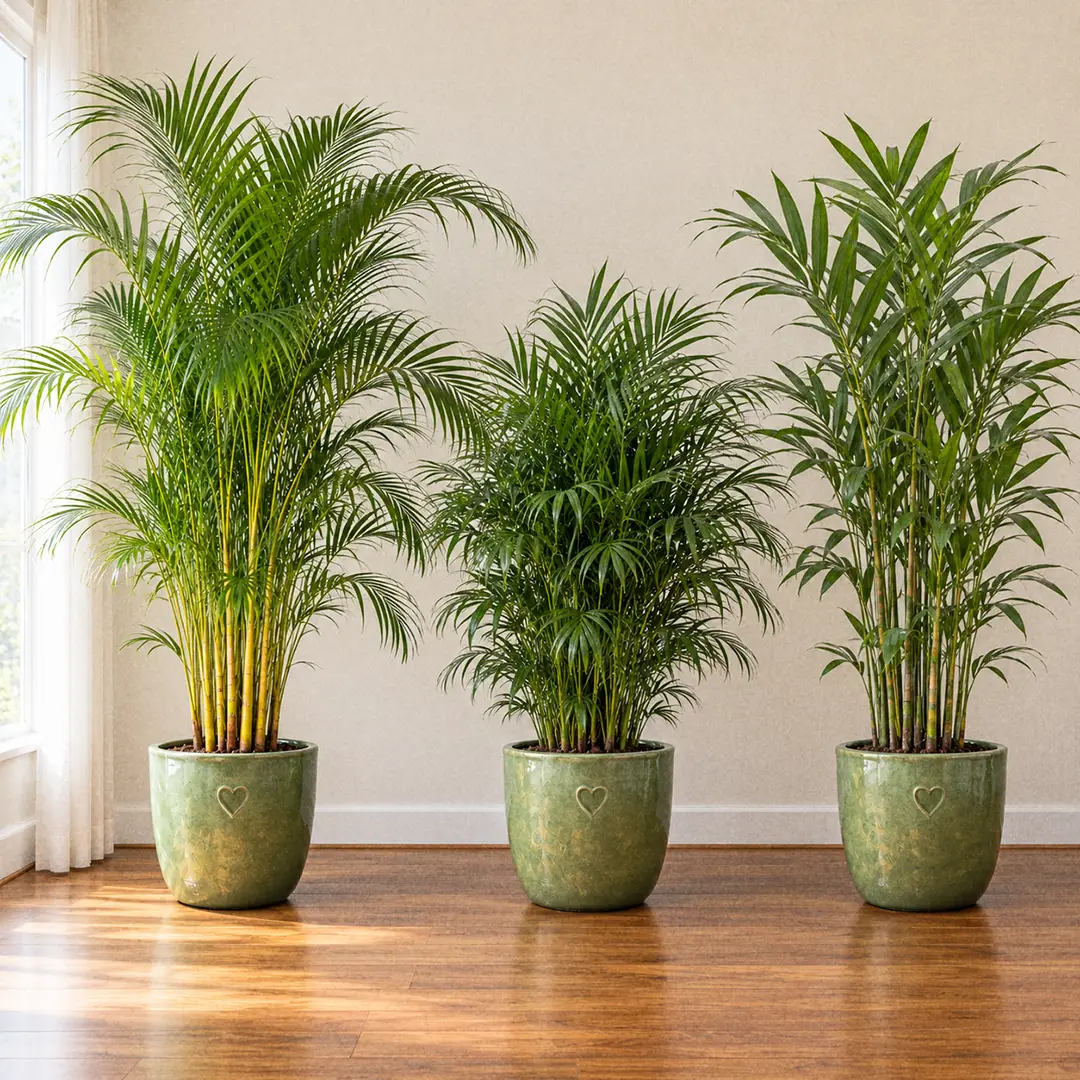
The identifying feature is the cane: smooth, bamboo-like, and distinctly golden-yellow toward the base, with many canes clumping out of the soil together. That yellow cane is where Golden Cane Palm comes from, and it is the quickest way to separate an Areca from its lookalikes on a shop bench.
Areca vs Cat Palm vs Bamboo Palm
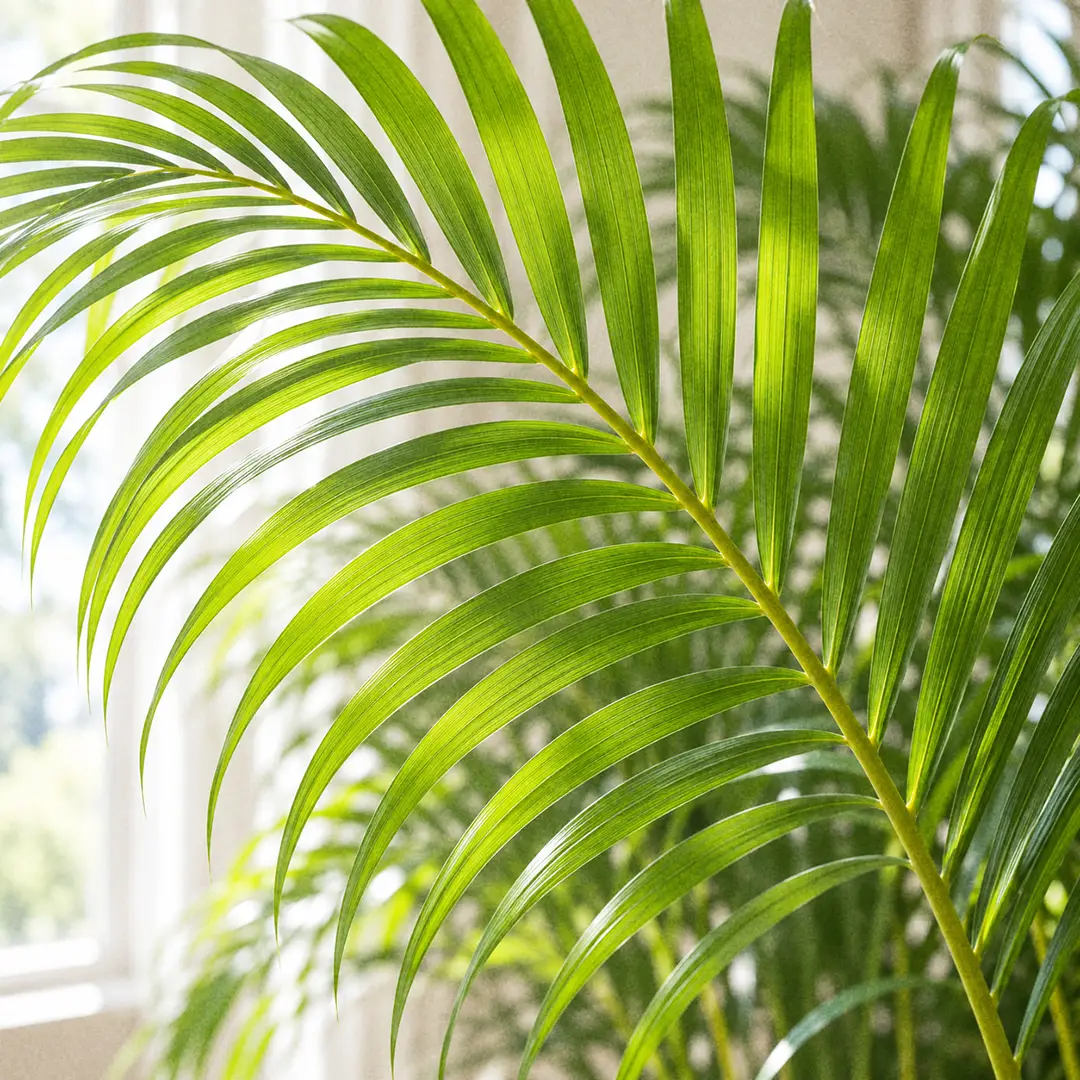
These three are constantly mislabeled, so here is the short version. Cat Palm is bushier, darker green, and has no real canes, growing in a dense mound straight from the base. Bamboo Palm has slimmer green canes, broader leaflets, and handles lower light far better. Areca sits between them, taller and more arching, with the yellow canes and the narrowest, most feathery leaflets of the three. Kentia Palm is the single-trunked, darker, slower, more expensive alternative that tolerates shade.
🪴 Potting and Repotting Areca Palm
When to Repot
Every two to three years in spring, and less often than you would think. Areca Palm actually prefers to be slightly crowded, and a clump packed tight in its pot holds itself upright better than one swimming in fresh soil. Repot when roots circle the surface, push out of the drainage holes, or start lifting the whole root ball above the rim.
Choosing a Pot
Pot up one size only, going from a 10-inch to a 12-inch rather than straight to a 16. Too much spare soil stays wet and rots roots. Drainage holes are non-negotiable. A heavier pot, terracotta or thick glazed ceramic, is worth it for a 6-foot plant, because a tall Areca in a light plastic pot tips over the first time a cat leans on it. See our plant pot guide for sizing.
Step-by-Step Repotting
- Water lightly a day ahead so the root ball holds together.
- Tip the plant out sideways rather than pulling on the canes, which snap.
- Leave the root ball mostly intact. Tease out only the worst circling roots and do not try to separate the clump unless you are deliberately dividing it.
- Set it at the same depth as before. Burying the cane bases invites rot.
- Backfill with fresh mix, firm gently, and water through.
Expect a few weeks of sulking and maybe a yellowing frond or two. Our repotting guide covers the general method.
✂️ Pruning Areca Palm
What You Can and Cannot Cut
The most important rule with any palm: never cut the top off a cane. Palms grow from a single point at the tip of each cane, so cutting it removes all future growth from that cane permanently. There is no bushy regrowth to gain and no recovery. This is the single worst thing people do to Arecas.
When and How to Prune
Remove a frond only when it has gone fully brown or almost fully brown, cutting the stem close to the cane with clean shears. A yellowing frond is still feeding the plant, so let it finish. If a whole cane dies off and goes brown, cut it at soil level and the remaining canes carry on fine.
What About Brown Tips?
You can trim brown tips cosmetically, and most people do. Follow the natural taper of the leaflet with sharp scissors rather than cutting straight across, and leave a sliver of brown rather than cutting into green tissue, which just browns again. This is purely cosmetic, so fix the water quality if you want it to stop.
🌱 How to Propagate Areca Palm
Best Method: Division
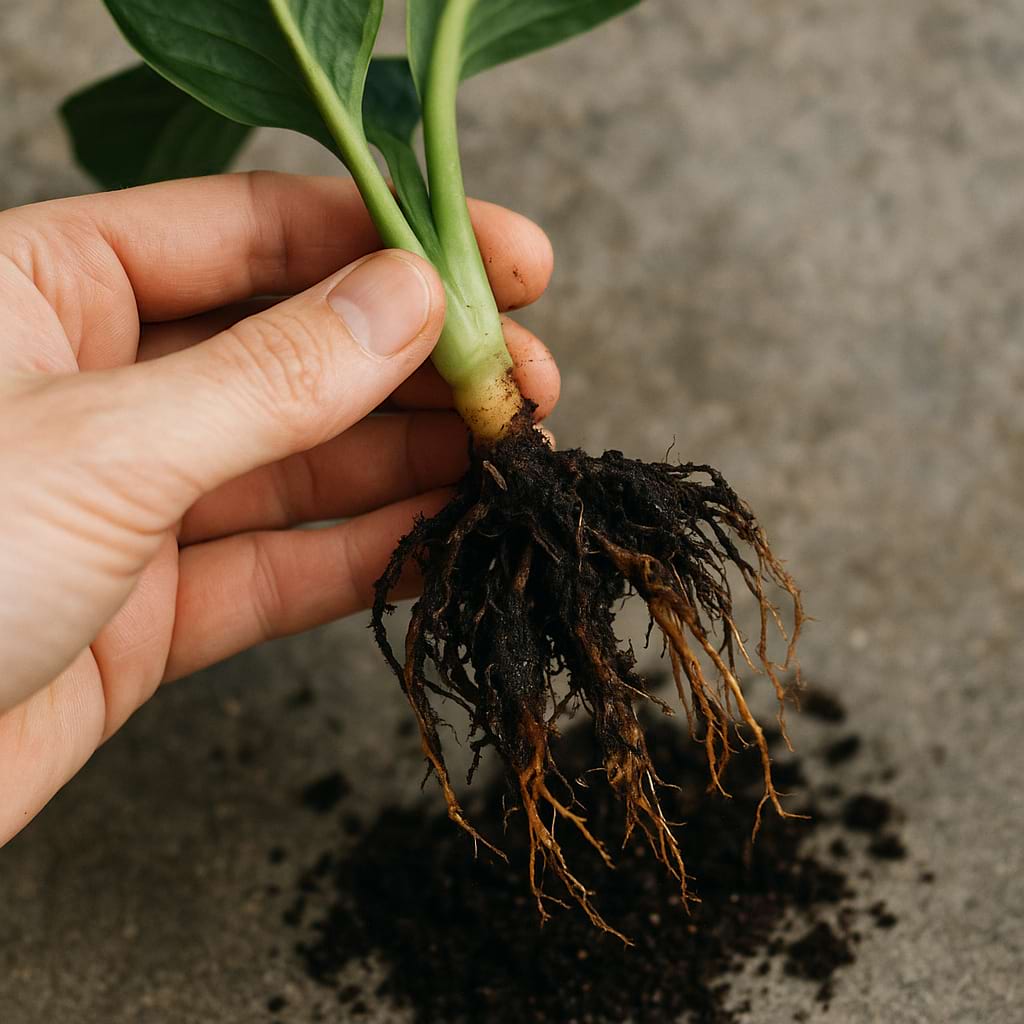
Division is the only practical route at home. Areca Palm is a genuinely clumping palm that throws basal suckers with roots of their own, and a separated sucker grows on as a new plant. Seed works but needs fresh commercial seed, warmth, and patience measured in months.
One honest caveat: many nursery Arecas are not a single suckering clump at all. Growers plant several seedlings in one pot for instant fullness, so what looks like one big palm may be three or four separate plants with tangled roots. Both pull apart the same way, and you will find out which you have when you tip it out.
Step-by-Step Division
- Divide in spring or early summer, when growth is active. Water the plant a day before.
- Tip the plant out and wash or tease soil away from the base so you can see where each cane's roots go.
- Choose a sucker with at least three or four of its own roots and two or three healthy fronds. A cane without its own roots will not survive on its own.
- Separate it by hand, untangling roots patiently. Use a clean knife only if a connection genuinely will not give.
- Pot into fresh palm mix in a snug container, water through, and keep it warm, bright, and out of direct sun.
Tips for Success
Keep the new division warm, 75-82°F if you can manage it, and humid for the first four to six weeks. A loose clear bag over the top holds moisture while roots re-establish, vented daily. Do not fertilize for two months and expect one frond to yellow off as the plant rebalances. Our plant division guide covers the general approach.
🐛 Areca Palm Pests and Treatment
Spider Mites Are the Main Threat
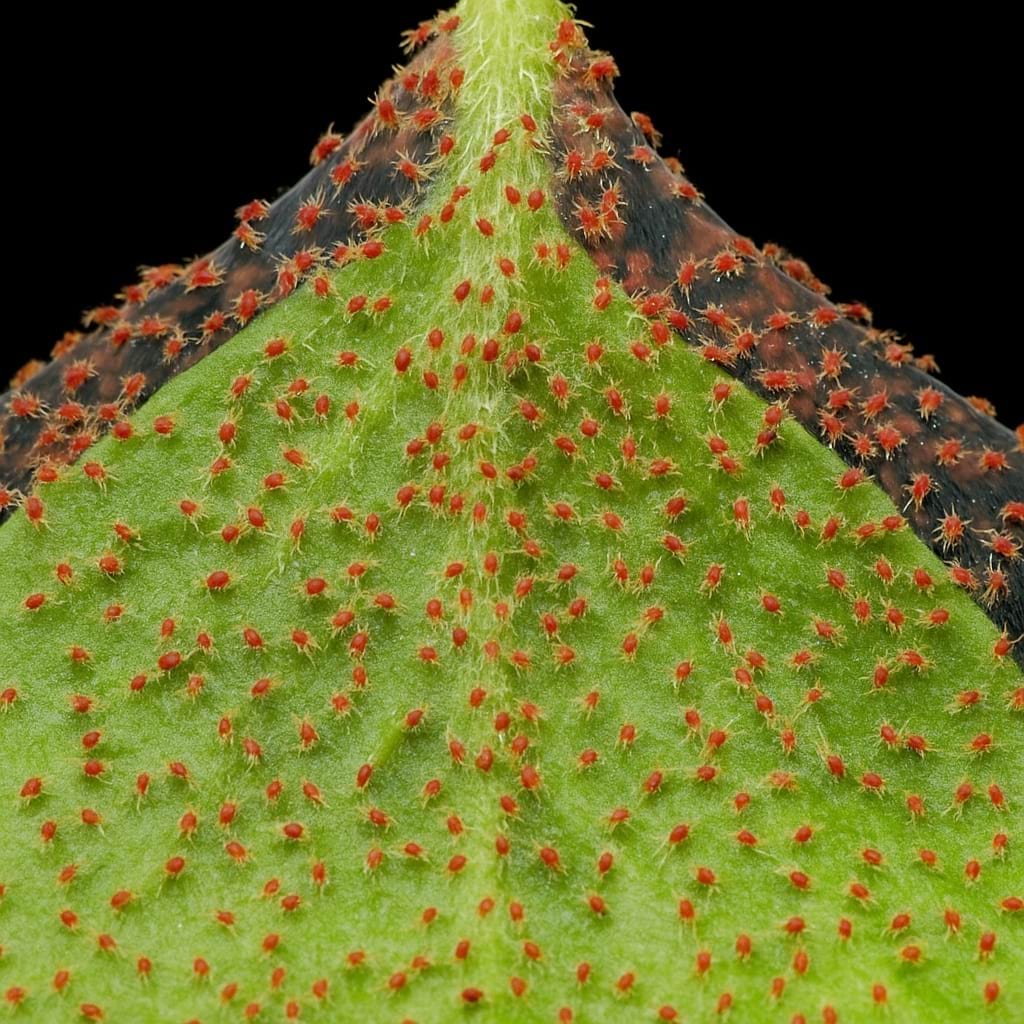
Spider mites are the number one Areca pest, and dry indoor air in winter is what invites them. Look for fine webbing where leaflets meet the stem, a dusty stippled look on the leaf surface, and an overall dull grey-green cast. Rinse the whole plant in the shower, treat with insecticidal soap or neem every five days for three rounds, and raise the humidity. Mites on a plant this leafy need persistence.
The Rest of the Lineup
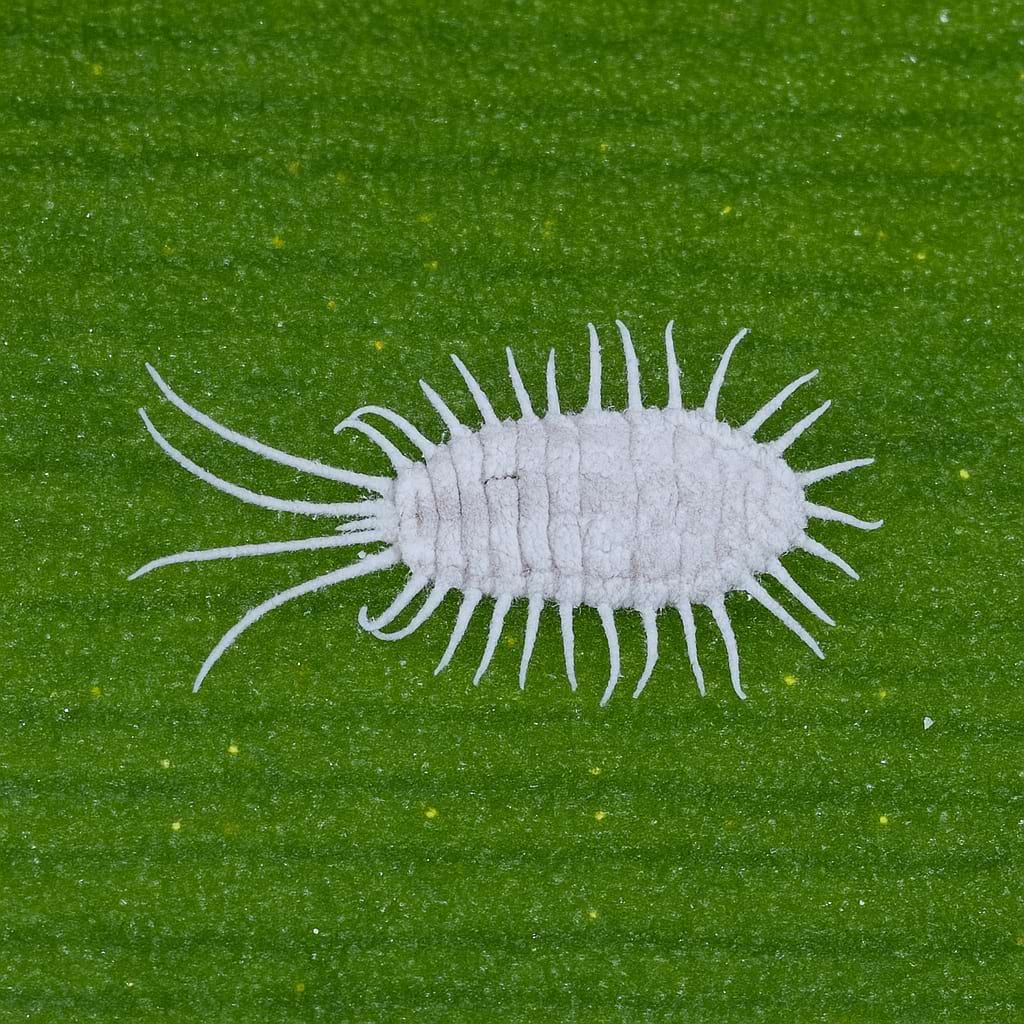
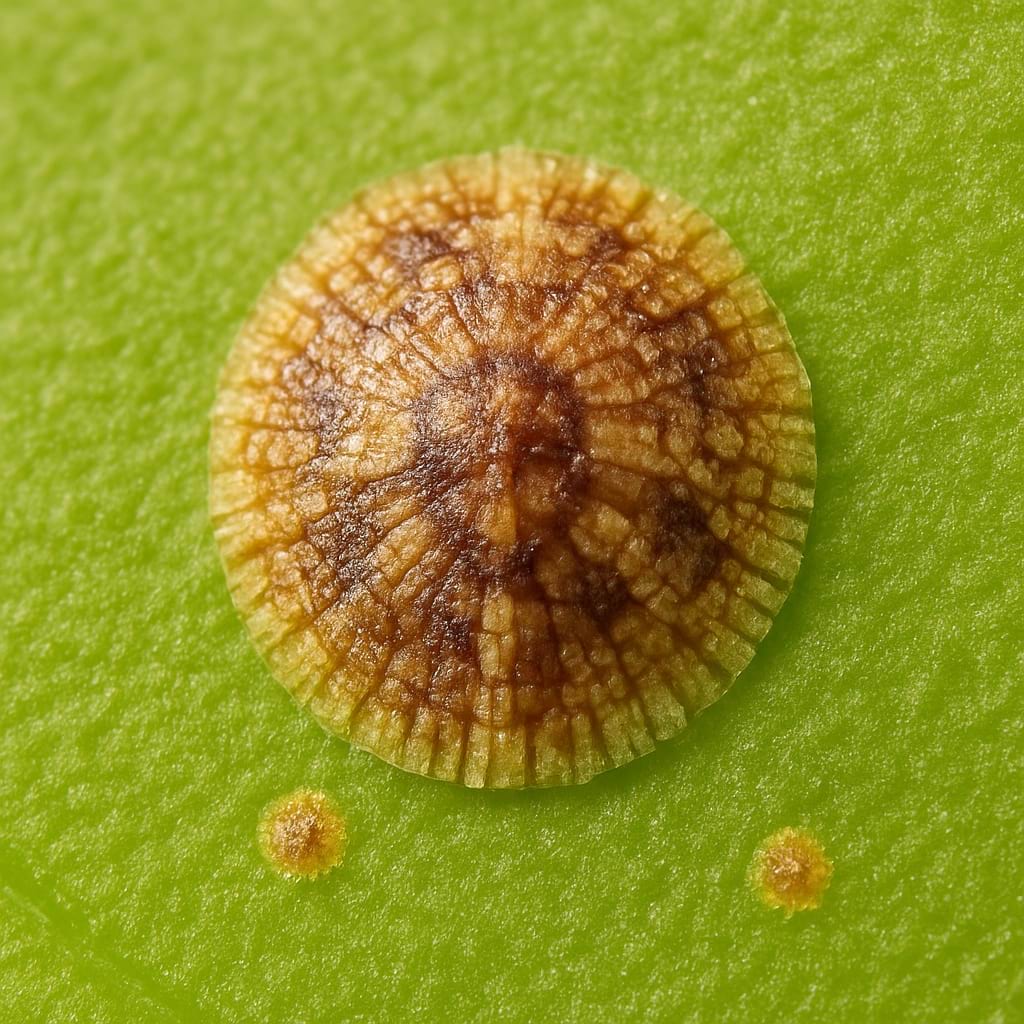
Mealybugs hide as white cottony clusters in the leaf crevices and cane joints, best dealt with by dabbing alcohol on a cotton bud then treating with soap. Scale insects show as small brown limpet-like bumps along the leaf ribs and need scraping off plus a neem follow-up.
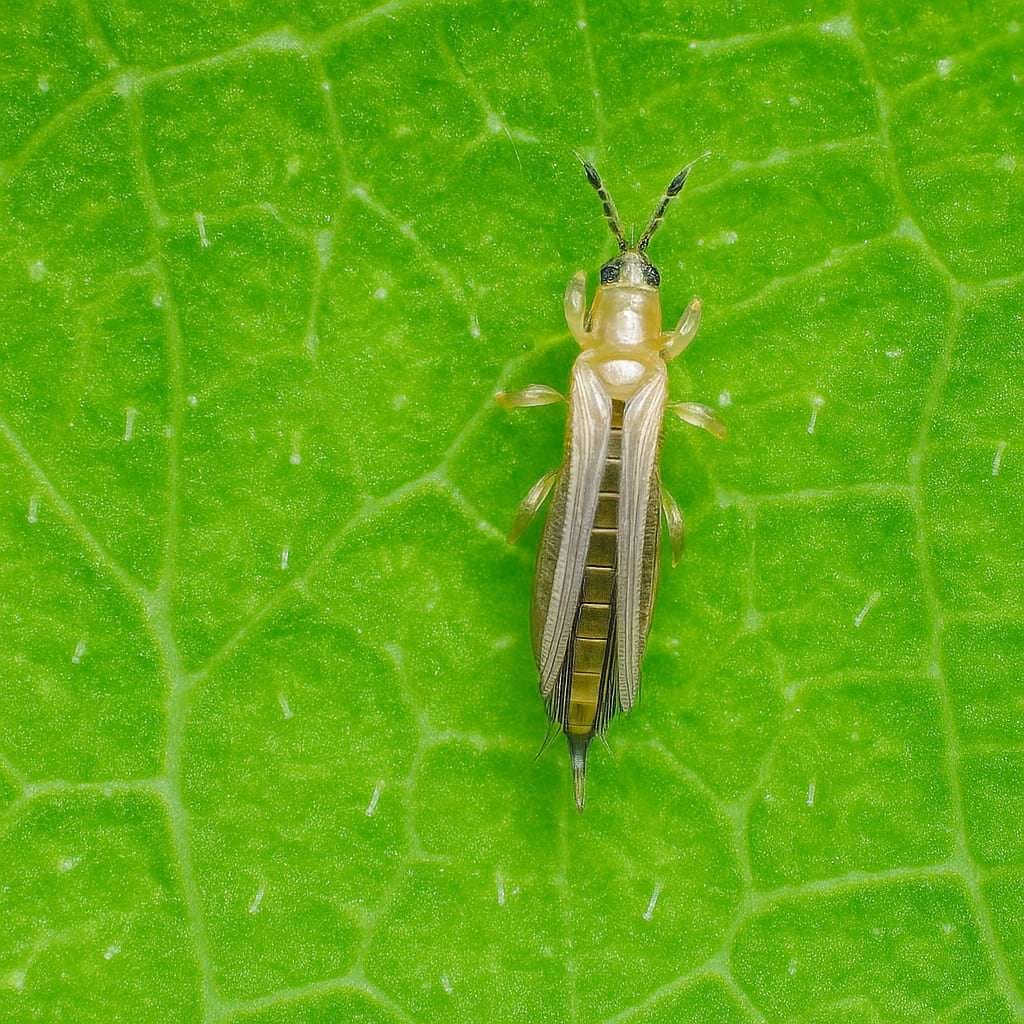
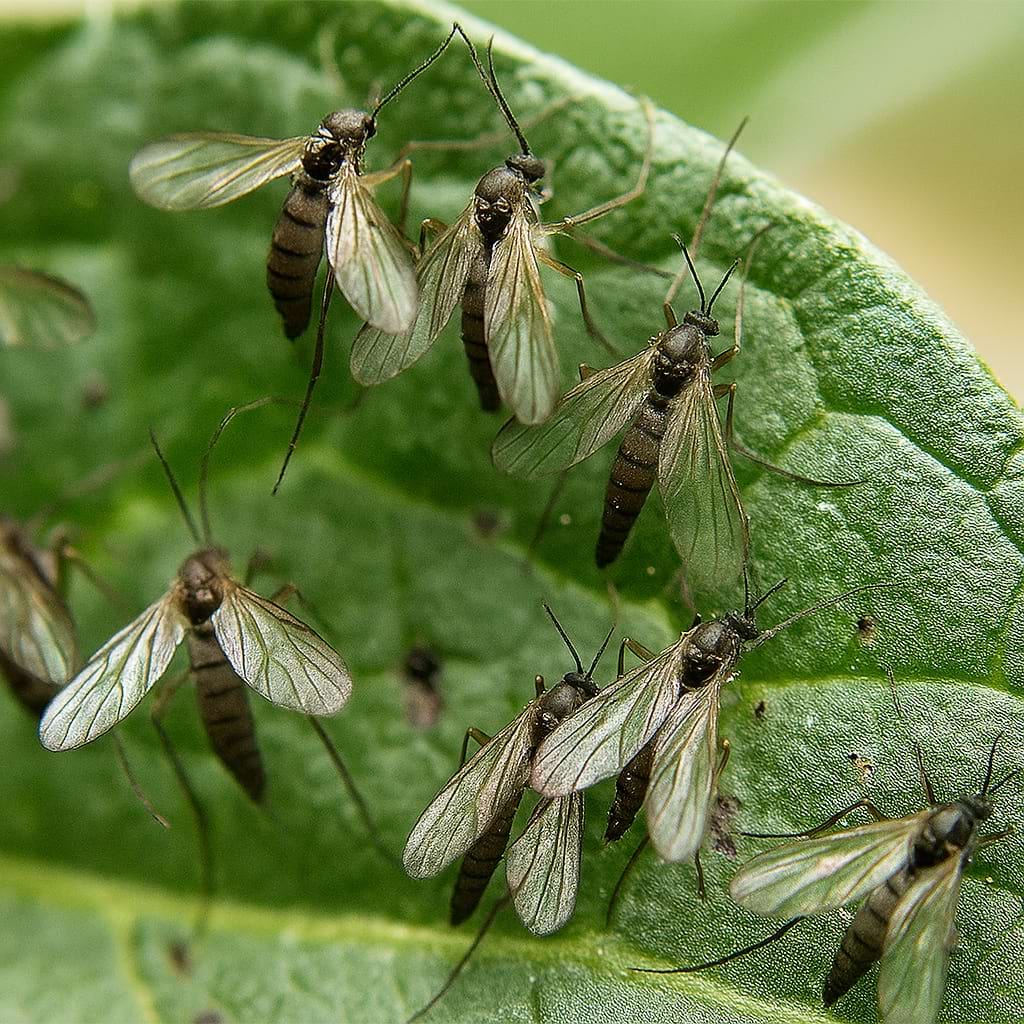
Thrips leave silvery scarring and black specks on new fronds. Fungus gnats are harmless to the plant but signal soil that stays wet too long, so they are a watering message more than a pest problem. With all of these, check the undersides of leaflets weekly, because a full Areca crown hides a lot.
🩺 Common Areca Palm Problems
Brown Crispy Tips
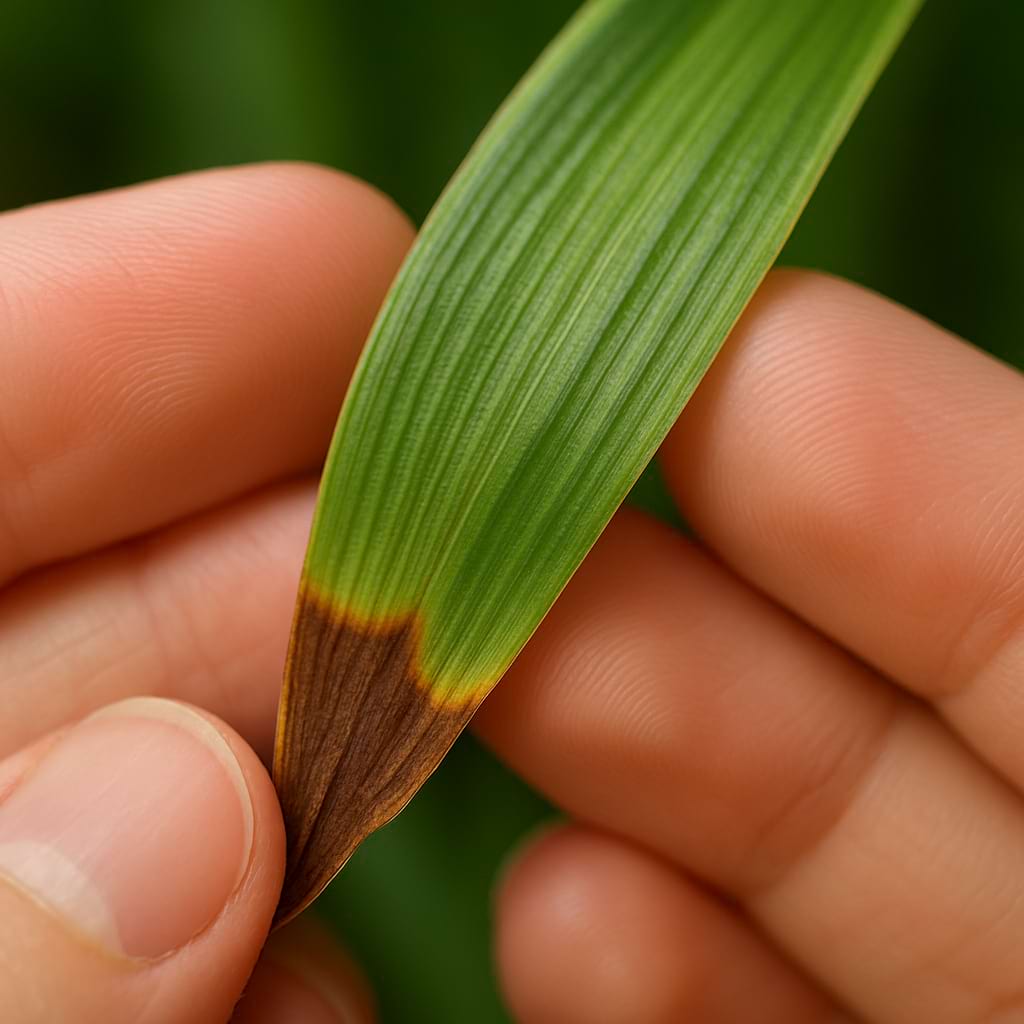
The defining Areca complaint. Brown crispy edges come from fluoride and chloride in tap water far more often than from dry air, with fertilizer salt buildup a close third. Switch to filtered or rainwater, flush the pot, and dial back feeding. The damaged tips stay brown, but new fronds come in clean.
Yellowing Fronds
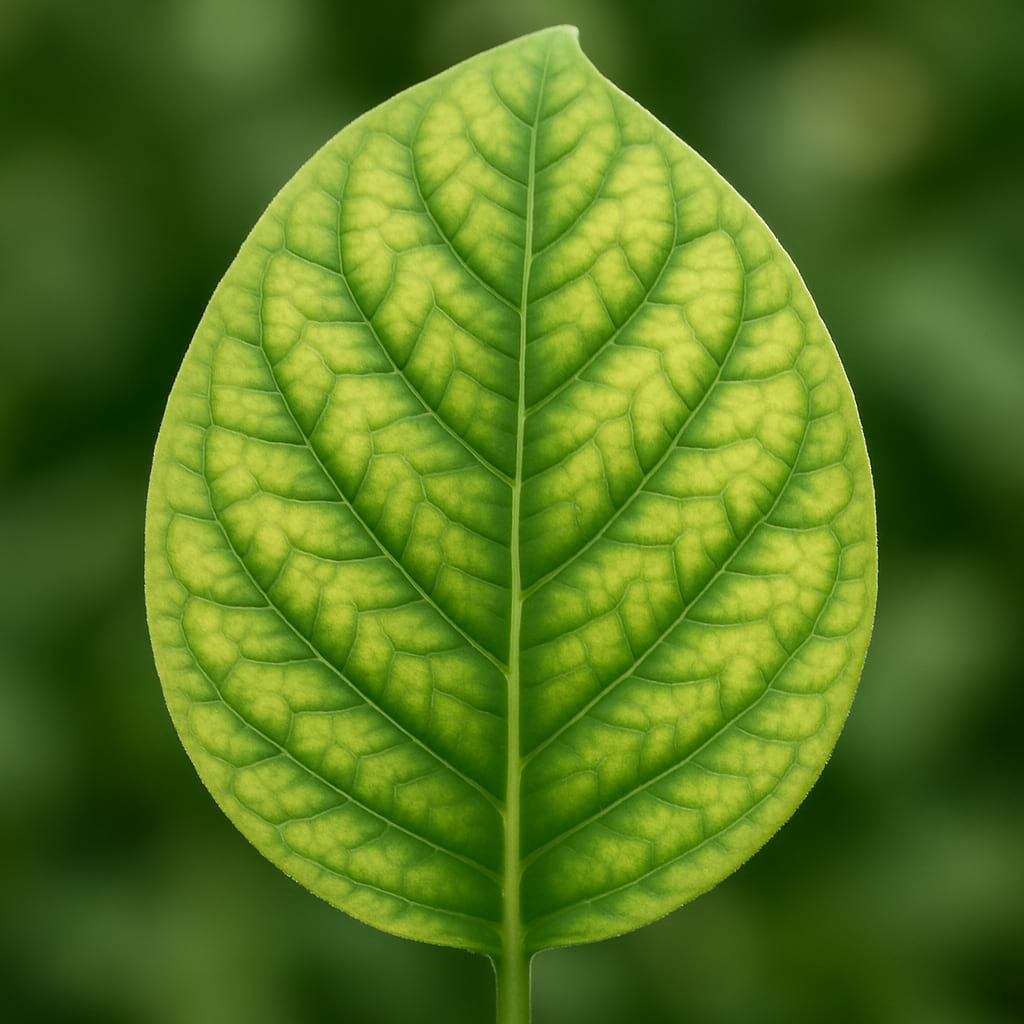
One old frond yellowing low on the plant is normal. Yellowing leaves across several fronds at once usually means overwatering, and the cure is a longer dry interval, not fertilizer. Translucent yellow-orange spotting on the oldest fronds is different: that is potassium deficiency, a known Areca weakness, and it needs a palm fertilizer with potassium and magnesium.
Wet Soil Problems
Constantly soggy soil causes root rot, which shows as drooping fronds despite wet soil, plus a sour smell. Unpot, cut away black mushy roots, and replant in fresh fast-draining mix. Cold wet soil also brings fungal leaf spot, visible as dark spots with yellow halos. Improve airflow, keep water off the fronds, and remove the worst leaves.
Bleached Patches
Tan or bleached patches on the window side of the plant are sun scorch, not disease. Pull the plant back from the glass or add a sheer curtain.

🖼️ Areca Palm Display and Styling Ideas
Floor Corners and Room Dividers
Areca Palm is a furniture-scale plant, so treat it like furniture. A tall clump in a bright corner fills dead space better than anything you could buy, and a pair flanking a doorway or either end of a sofa reads deliberate and expensive. Because the fronds arch outward rather than upward, it also works as a soft room divider between a dining area and a living area.
Give It Elbow Room
Leave two to three feet of clearance on each side. Fronds pressed against a wall bend permanently and the hidden side thins out, so rotate the pot a quarter turn every couple of weeks to keep the clump even. Keep it out of walkways too, because brushing past the same fronds daily shreds the leaflet tips.
Pairing and Pots
A plain pot in a neutral tone keeps the focus on the fronds, and a wide low planter suits the clumping habit better than a tall narrow one. Underplant nothing, the surface roots want the space. For contrast beside it, something upright and architectural like a Snake Plant plays well against all that softness.
🌟 Areca Palm Pro Care Tips
- Filtered water from day one. Do not wait for brown tips to appear, because the damaged tissue never turns green again.
- Flush the pot every couple of months. Run water through until it pours out the bottom, to carry salts out of the mix.
- Buy the fullest clump you can afford. Arecas do not fill in much indoors, so the density you bring home is roughly what you keep.
- Rotate a quarter turn every fortnight. Even light keeps the clump symmetrical instead of one-sided.
- Shower it monthly. Dust off, mites discouraged, and it beats wiping a hundred leaflets by hand.
- Feed with potassium in the mix. A palm-specific fertilizer prevents the orange frond spotting that plain nitrogen feeds cause.
- Never top a cane. Cut the tip and that cane is finished for good.
- Summer outside in full shade produces the best growth of the year. Acclimatize slowly and check for pests on the way back in.
❓ Frequently Asked Questions
Why does my Areca Palm have brown tips?
Nine times out of ten it is tap water. Areca Palms are sensitive to fluoride and chlorine, which build up in the leaflet tips and kill the tissue. Switch to filtered, distilled, or rainwater and flush the pot thoroughly. Dry air and excess fertilizer are the other two causes.
Is Areca Palm safe for cats and dogs?
Yes. The ASPCA lists Areca Palm as non-toxic to cats, dogs, and horses, which makes it one of the best genuinely large pet-safe houseplants. A cat that eats a lot of any plant fiber may still be sick from the roughage, so discourage chewing anyway.
How much light does an Areca Palm need?
More than most people give it. Bright indirect light all day, ideally two to four feet from an east or south window, or close to the glass behind a sheer curtain. It is not a low-light palm, and in a dim corner it slowly thins out and stops producing new fronds.
How big does an Areca Palm get indoors?
Usually six to eight feet tall and three to five feet wide, reaching that over several years at six to ten inches of growth a year. Outdoors in the tropics it goes well past 20 feet, but pot culture and indoor light keep it comfortably room-sized.
Can I cut the top off my Areca Palm to keep it short?
No. Each cane grows from a single point at its tip, so cutting the top kills that cane permanently and it will not branch or resprout. If the plant is too tall, remove whole tall canes at soil level and let the shorter ones take over, or find it a better spot.
Why are my Areca Palm fronds turning yellow?
One old frond at the bottom yellowing is normal aging. Several at once with heavy wet soil means overwatering. Translucent yellow-orange spots on the oldest fronds specifically means potassium deficiency, which a palm fertilizer containing potassium and magnesium will correct over a season.
How often should I water an Areca Palm?
When the top inch of soil has dried, which in a bright room in summer is roughly every 5 to 8 days and in winter every 10 to 14. Check by finger rather than by calendar, because pot size, light, and heating change the interval a lot.
Does an Areca Palm really purify the air?
It moves a lot of water vapor into a room, which genuinely helps dry winter air, and it was one of the plants in the old NASA clean-air study. In a real home the air-cleaning effect is small. Buy it because it looks good and is pet-safe, not as an air filter.
Why is my Areca Palm drooping?
Check the soil first. Dry soil plus droop is thirst, and a full soak fixes it in a day. Wet soil plus droop means the roots are failing from rot and you need to unpot, trim the dead roots, and repot in fresh draining mix. Sudden droop after a move is usually just cold-draft shock.
Can I grow an Areca Palm from a cutting?
No. Palms do not root from cuttings at all, because there is no node to regrow from. Propagate by separating a rooted basal sucker in spring, or start fresh commercial seed if you have the patience. A cut frond or a cut length of cane will simply rot.
ℹ️ Areca Palm Info
Care and Maintenance
🪴 Soil Type and pH: Loose peat-based potting mix with perlite and bark
💧 Humidity and Misting: Likes 50% or more and shows dry air first as crisp brown frond tips.
✂️ Pruning: Remove only fully brown fronds at the cane base, and never cut the top off a cane.
🧼 Cleaning: Wipe the leaflets with a damp cloth or rinse the whole crown in the shower every few weeks. Dust is what invites spider mites.
🌱 Repotting: Repot every 2-3 years in spring, potting up one size only and keeping the crowded clump intact.
🔄 Repotting Frequency: Every 2-3 years
❄️ Seasonal Changes in Care: Steady water and monthly feeding from spring through summer, then less water and no fertilizer from late autumn until the light returns.
Growing Characteristics
💥 Growth Speed: Slow to moderate (6-10 inches a year)
🔄 Life Cycle: Evergreen perennial clumping palm
💥 Bloom Time: Summer on mature outdoor plants; indoor plants almost never flower
🌡️ Hardiness Zones: 10-11
🗺️ Native Area: Eastern Madagascar, along riverbanks and in open hydric forest
🚘 Hibernation: No true dormancy, but growth slows or stops in low winter light. Water less and stop feeding.
Propagation and Health
📍 Suitable Locations: Bright living room corners, east and south-facing rooms, wide hallways, offices, shaded patios in summer
🪴 Propagation Methods: Separate a rooted basal sucker in spring, or split a nursery clump that holds several seedlings.
🐛 Common Pests: Spider Mites, Mealybugs, Scale Insects, Thrips, Fungus Gnats
🦠 Possible Diseases: Root rot, leaf spot and fungal leaf blight in cold wet soil, potassium deficiency
Plant Details
🌿 Plant Type: Clumping feather palm
🍃 Foliage Type: Evergreen arching pinnate fronds with narrow leaflets
🎨 Color of Leaves: Bright to mid green with golden-yellow leaf stems
🌸 Flower Color: Small yellow flowers in branching sprays
🌼 Blooming: Rarely indoors; freely outdoors in tropical climates
🍽️ Edibility: Not an edible plant. It is unrelated to the betel nut palm.
📏 Mature Size: 6-8 feet indoors
Additional Info
🌻 General Benefits: Pet-safe, non-toxic, adds real height and softness to a room, releases a lot of moisture into dry indoor air, and filled clumps read as instant furniture
💊 Medical Properties: No documented medicinal uses.
🧿 Feng Shui: A classic wealth and prosperity plant. The upward arching fronds are used to soften sharp corners and to screen a doorway without blocking it.
⭐ Zodiac Sign Compatibility: Sagittarius
🌈 Symbolism or Folklore: Abundance, hospitality, tropical calm, victory
📝 Interesting Facts: The name Areca Palm is a leftover mistake. It is not an Areca at all, and was shuffled from Areca to Chrysalidocarpus to Dypsis, with recent botanical work moving it back toward Chrysalidocarpus again. Meanwhile the species is endangered in the wild in eastern Madagascar while being one of the most mass-produced palms on the planet.
Buying and Usage
🛒 What to Look for When Buying: Pick a dense clump with many canes, green leaflets right to the tips, and a few unopened spears in the center. Skip plants with grey-brown leaf spotting, webbing where leaflets meet the stem, or a soil surface that smells sour.
🪴 Other Uses: Floor specimen, room divider, privacy screen on a shaded balcony, hotel and office planting, summer patio container palm.
Decoration and Styling
🖼️ Display Ideas: Bright floor corners, beside a sofa, flanking a doorway in pairs, softening a TV wall, screening a bedroom window
🧵 Styling Tips: Give it room. The fronds arch out 2-3 feet on each side, so a pot shoved against a wall gets one flat side and bent leaflets.
🪴 See also 🪴
Complete Guide to Lady Palm Care and Growth
Complete Guide to Metallic Palm Care and Growth
Complete Guide to Kentia Palm Care and Growth
Complete Guide To Chinese Fan Palm Care and Growth


Houseplant101 Forum
Questions & Comments
Ask a question, share your plant experience, or help other plant owners.
Comments are temporarily unavailable.
Open the Houseplant101 ForumNo comments yet
Be the first to ask a question or share your experience about this page.
Log in or create an account
Comments use your Houseplant101 Forum account, but you can stay on this page.
Create a new account