
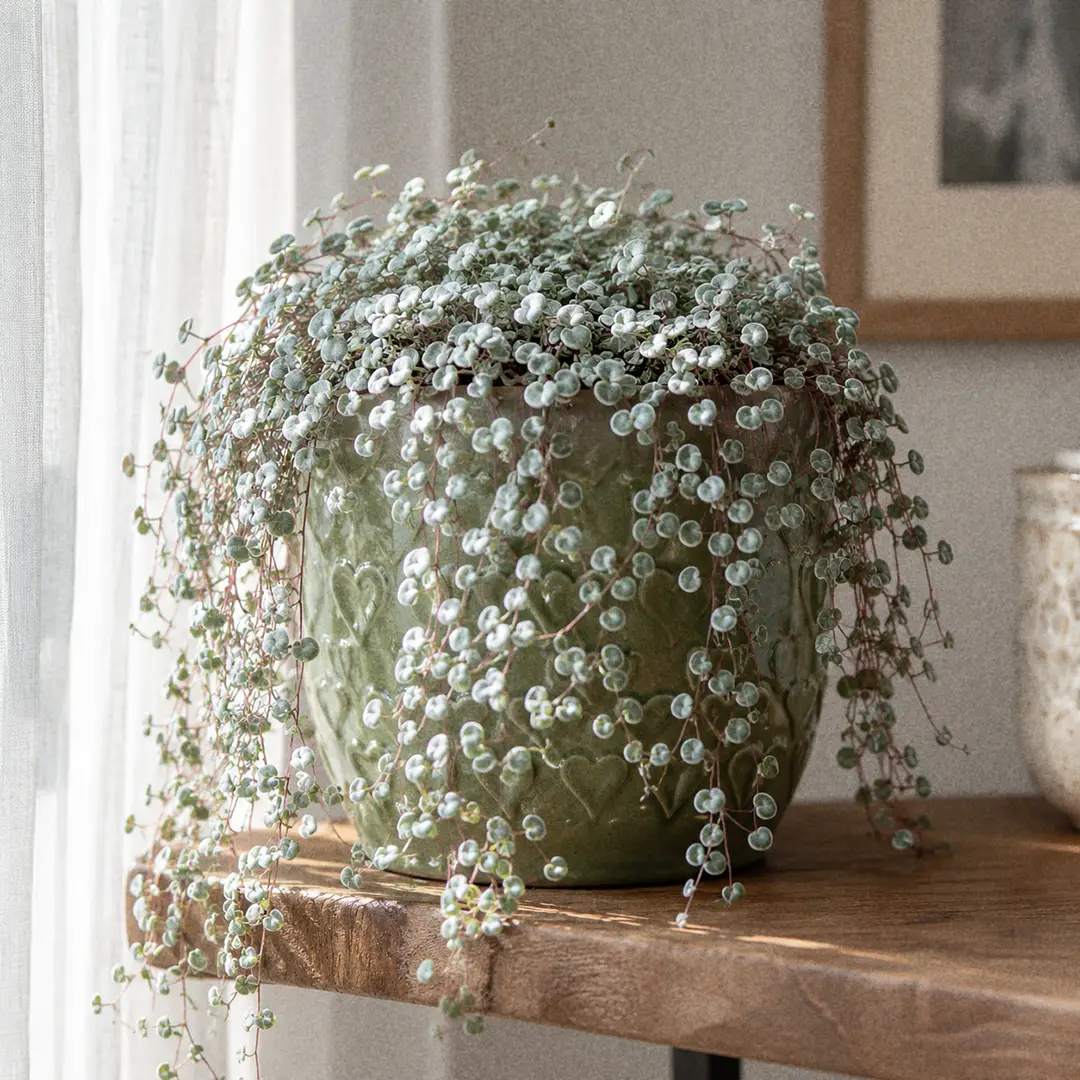
Silver Sparkle Pilea
Pilea glauca
Pilea libanensis, Pilea glaucophylla, Red-Stemmed Pilea, Silver Sprinkles, Grey Baby Tears, Aquamarine Pilea


Silver Sparkle Pilea is a delicate trailing houseplant with tiny silver-dusted blue-grey leaves on wiry pink stems. This guide covers everything you need to keep its shimmer bright and its cascade full indoors.
📝 Silver Sparkle Pilea Care Notes
🌿 Care Instructions
⚠️ Common Pests
📊 Growth Information
🪴 In This Guide 🪴

☀️ Silver Sparkle Pilea Light Requirements (Indoor Lighting Guide)
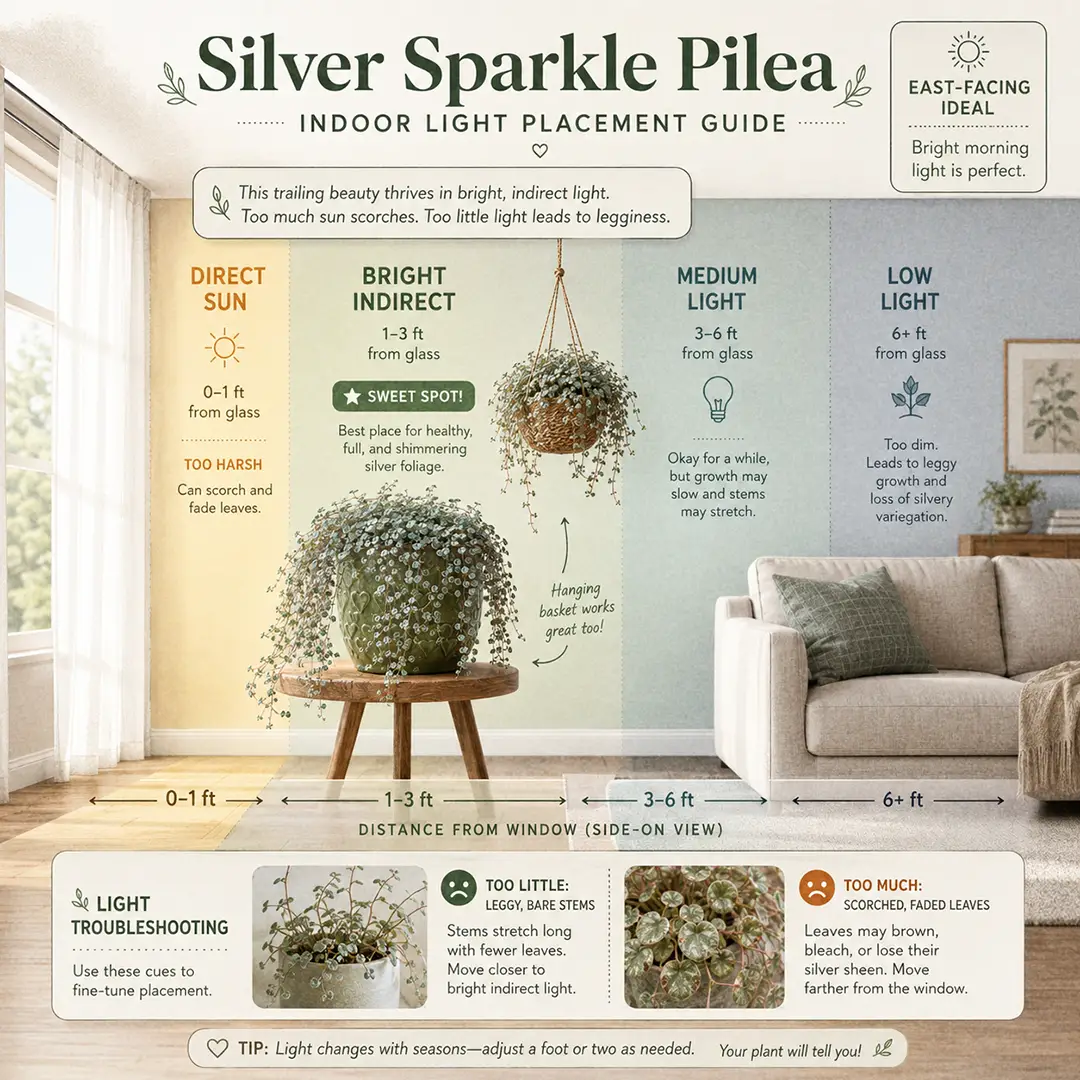
Silver Sparkle Pilea grows best in bright, indirect light. A spot a couple of feet back from an east-facing window is close to perfect: gentle morning sun, then bright diffused light the rest of the day. North windows work in summer but run dim in winter. West and south windows are fine as long as the harsh midday rays do not land directly on the foliage, so a sheer curtain helps in those rooms.
The Sweet Spot
The silver dusting shows up best in good light. In a bright spot the leaves stay plump and tightly spaced, the stems hold their pink-red color, and the plant keeps its frosted shimmer. A good rule of thumb: pick a spot bright enough to read a book in during the day without a lamp.
This plant also takes well to grow lights. A small full-spectrum LED running 12 hours a day, 8 to 12 inches above the trail, keeps it dense through a dark winter. Since the plant trails downward, aim the light so it reaches the lower stems too, or the bottom of the cascade thins out.
Too Little Light
In low light the stems stretch and the gaps between leaves widen, so the trail looks sparse and stringy. The silver tone fades toward a flatter green, and growth slows to a crawl. If you see this, move the plant brighter and pinch back the leggy stems to push fresh growth from lower down.
Too Much Light
Direct afternoon sun is the main risk. The tiny leaves scorch quickly, showing bleached patches or crisp brown edges, and the plant can dry out within hours on a hot windowsill. Pull it back from the glass or filter the light with a curtain. If a faded trail has been sitting in strong sun, trim the worst of it and let new growth come in under gentler light.
💧 Silver Sparkle Pilea Watering Guide (How Often and How Much)
Silver Sparkle Pilea likes its soil evenly moist, never bone dry and never soggy. The roots are fine and shallow, which cuts both ways: the plant drinks quickly and shows thirst fast, but it also rots fast if the pot stays wet. It wants a steady, light hand, not a deep soak followed by a long drought.
Watering Frequency
Water when the top half-inch of soil feels dry, usually every 4 to 7 days in summer and every 7 to 10 days in winter. Pot size, light, and warmth all shift that number, so check the soil rather than the calendar, twice a week in the growing season since small pots dry fast. The tiny leaves store very little water, so this Pilea shrivels sooner than thicker-leaved plants when it runs dry, and a badly droughted trail may not fully recover. Catching it early matters here.
How to Water
Water at the soil line until it runs from the drainage holes, then let the pot drain completely. Avoid pouring over the trailing stems, which traps water in the dense foliage and invites rot. For pots that are hard to wet evenly, a 15-minute bottom watering soak works well. Empty any saucer within an hour, since standing water keeps the bottom roots saturated, the quickest route to root rot.
Signs of Trouble
A thirsty plant looks limp and slightly shriveled, with soil dry well below the surface. An overwatered one tells a different story: yellowing, mushy leaves, blackened stem bases, a sour smell, and drooping that does not recover after you water. When drooping confuses you, feel the soil. Dry means water. Wet and drooping means stop, check drainage, and inspect the roots. The watering guide breaks these signals down further.
🪴 Best Soil for Silver Sparkle Pilea (Potting Mix and Drainage)
The right soil is half the battle. Those fine roots need air pockets as much as moisture, so the mix has to drain freely while still holding some dampness between waterings. A dense, water-logging soil is the most common reason a healthy-looking Silver Sparkle Pilea suddenly collapses.
What the Soil Needs
Aim for a light, airy mix that holds some dampness but never turns to mud. It should feel fluffy, not heavy or sticky, and let excess water run straight through. Plain bagged potting soil on its own is usually too dense and stays wet too long for this plant's delicate roots.
DIY Soil Mix
A reliable recipe is two parts coco coir or peat to one part perlite, plus an optional handful of fine bark or pumice to keep the structure open. Coco coir is the more sustainable choice and resists the compaction peat develops over time. Do not skimp on the perlite: it keeps air around the roots and buys you a margin against overwatering.
If you only have standard potting mix, cut it generously with perlite, roughly one part perlite to two parts soil, before potting. The soil care guide covers how to match a mix to your watering habits if you want to fine-tune it.
Pot and Drainage
Always use a pot with a drainage hole. A shallow pot or hanging planter suits the spreading root system better than a deep one, which holds a column of wet soil the roots never reach. Plastic and glazed pots hold moisture longer, helpful for a plant that hates drying out, but only if your mix drains well. In a humid room or terrarium, lean toward terra cotta or a faster mix to offset the slower drying.
🍼 Fertilizing Silver Sparkle Pilea (Feeding Schedule and Tips)
Silver Sparkle Pilea grows fast in the warm months and appreciates regular, gentle feeding to keep the trail dense. The key word is gentle: the fine roots burn easily, so a weak feed applied often beats a strong dose now and then.
When and How Often
Feed every 3 to 4 weeks from spring through early fall with a balanced liquid fertilizer (10-10-10 or 20-20-20) diluted to a quarter or half the label strength. Always apply it to moist soil, never to a dry, thirsty plant, since fertilizing dry roots concentrates salts and scorches them. Stop feeding from late fall through winter, when growth slows and unused fertilizer just builds up as salt.
What to Use
A simple, balanced liquid houseplant fertilizer is all this plant needs, and liquid feeds give you the control to skip a dose if the plant looks stressed. If you prefer organic, diluted fish emulsion or a worm-casting tea works well and is hard to overdo. Slow-release granules are fine too, but use half the recommended amount given how sensitive the roots are. The fertilizing guide has a fuller rundown.
Over-Fertilizing Signs
Crispy brown leaf tips, a white crust on the soil, and weak, stretched new growth point to too much fertilizer or salt buildup. If you see them, flush the pot: run water through the soil several times, hold off feeding for a month, and resume at a weaker dilution. With a plant this small and fine-rooted, under-feeding is far safer than over-feeding.
🌡️ Silver Sparkle Pilea Temperature Range (Ideal Conditions)
Silver Sparkle Pilea is a true tropical and likes the same comfortable room temperatures most people do. It grows best between 65°F and 80°F (18°C to 27°C) and has no dormancy period, just a natural slowdown when light drops in winter.
Ideal Range
Steady warmth is what this plant wants, and most comfortable rooms suit it fine. It can summer outdoors in a shaded, sheltered spot once nights stay above 55°F (13°C), where the extra humidity and air movement often produce its lushest growth. Bring it back inside before the first cold nights of fall.
Drafts and Heat Sources
The things that stress this plant are sudden swings and dry blasts of air. Keep it away from cold drafts off windows and doors in winter, and away from heating vents, radiators, and air-conditioning streams year-round. Temperatures below about 50°F (10°C) cause cold damage, showing as darkened, water-soaked leaves. A heating vent is just as harmful in the other direction: the warm, bone-dry air pulls moisture from the tiny leaves faster than the roots can replace it, and the trail crisps from the tips inward.
💦 Silver Sparkle Pilea Humidity Requirements
Humidity is the make-or-break factor for this plant. Those tiny, thin leaves have very little surface to hold water, so they dry out fast in arid air. Silver Sparkle Pilea looks and grows best at 50% humidity or higher, and it thrives in the 60%-plus range of a terrarium or a steamy bathroom. Typical winter indoor air, often 20% to 40% with the heating running, is its hardest season.
Ideal Humidity
In the right humidity the leaves stay plump and the silver dusting looks crisp and even. This is one of the best terrarium and bottle-garden plants you can grow, since the enclosed, humid air suits it so well. If your home runs dry, plan to either raise the moisture around it or keep it somewhere naturally humid.
Easy Humidity Boosters
Grouping the plant with other moisture-lovers is the simplest fix: as each plant transpires, the cluster creates a more humid pocket of air. A small humidifier nearby is more reliable still, especially in winter. The bathroom, if it has a window, is an underrated home for this Pilea thanks to the regular post-shower humidity. Light misting is okay since the tiny leaves dry quickly, but a humidifier or a humid spot does far more good than a spray bottle or a pebble tray. See the humidity care guide for a comparison of methods.
Signs of Low Humidity
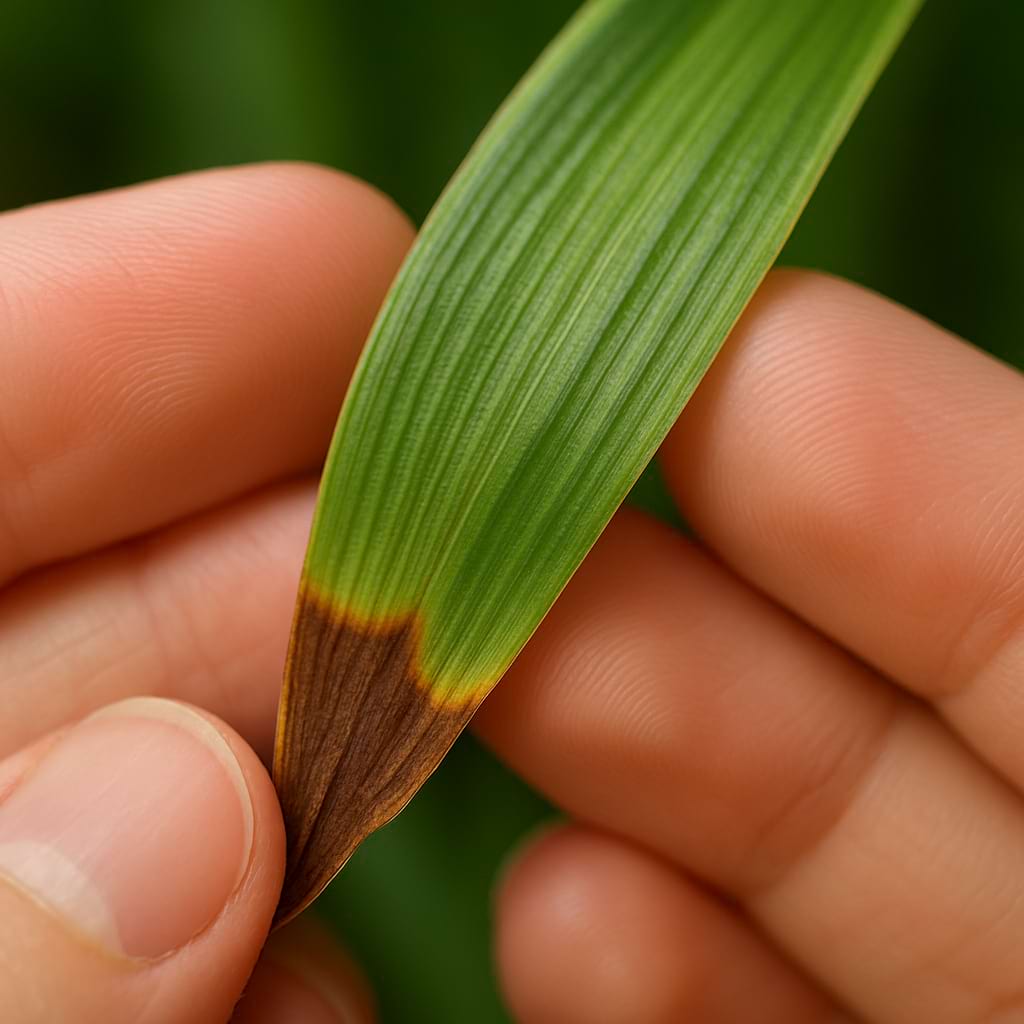
The first sign is shriveling: leaves that go from plump to thin and papery, often starting at the tips. Crispy brown edges and a dull, faded silver tone follow. If these show up in winter just as the heating kicks on, dry air is almost certainly the cause. Raise the humidity and trim the worst-affected stems while the plant recovers.
🌸 Silver Sparkle Pilea Flowers (What to Expect Indoors)
Silver Sparkle Pilea is grown for its foliage, not its flowers, and most growers never give the blooms a second thought. It can flower indoors, but the display is so subtle it is easy to miss entirely.
What the Flowers Look Like
On mature plants, tiny clusters of pale pink to creamy-white flowers appear along the stems, usually in spring or summer. The florets are only a millimeter or two across and blend almost completely into the foliage. There is no scent and no real visual impact, just small wind-pollinated flowers built for function rather than show.
If It Won't Bloom
A Silver Sparkle Pilea that never flowers is not doing anything wrong. Flowering needs a mature plant in steady bright light over a full season, and even then it is hit or miss indoors. If you do get blooms and would rather the plant put its energy into foliage, just pinch the clusters off. The leaves are the whole point here.
🏷️ Silver Sparkle Pilea Types and Related Pilea Varieties
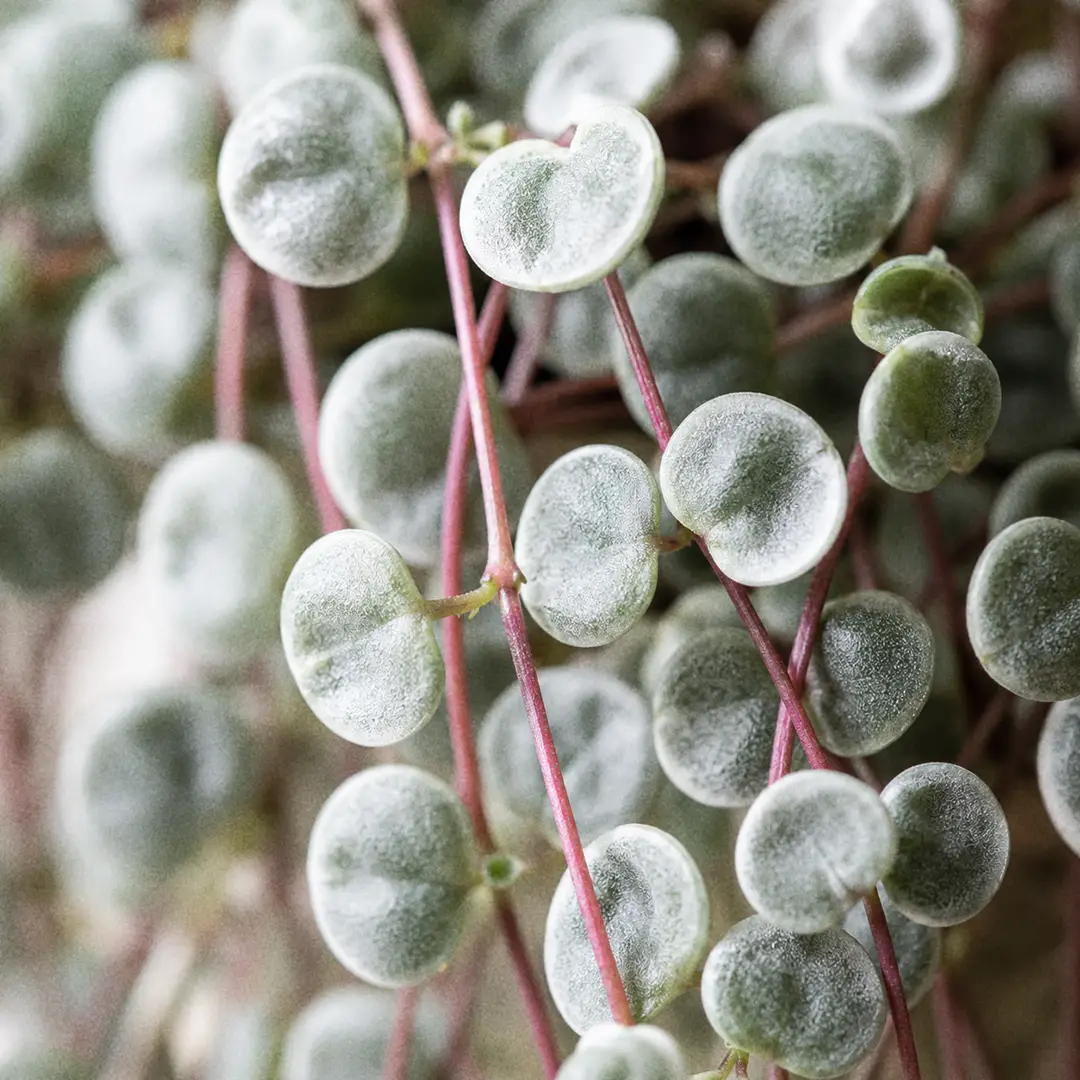
Silver Sparkle Pilea is sold under a tangle of names, which causes no end of confusion at the nursery. The plant is most often labeled Pilea glauca, but you will also see it as Pilea libanensis, Pilea glaucophylla, "Red-Stemmed Pilea," "Silver Sprinkles," "Grey Baby Tears," and "Aquamarine Pilea." For care purposes they are all the same delicate, silver-leaved trailer, so do not let the label spin you in circles.
The Name Confusion Explained
The species name libanensis trips people up, since it sounds like a reference to Lebanon. In fact the plant was first described from the Sierra del Libano mountains in Cuba, and its native range runs through the Caribbean and parts of Central and South America. Botanists have shuffled it between names over the years, which is why one plant carries so many tags. Whatever the pot says, the giveaway is the same: pinhead-sized round leaves with a frosted silver bloom on wiry pink stems.
How It Compares to Other Pileas
The Pilea genus is huge and its members look nothing alike. A few relatives worth knowing:
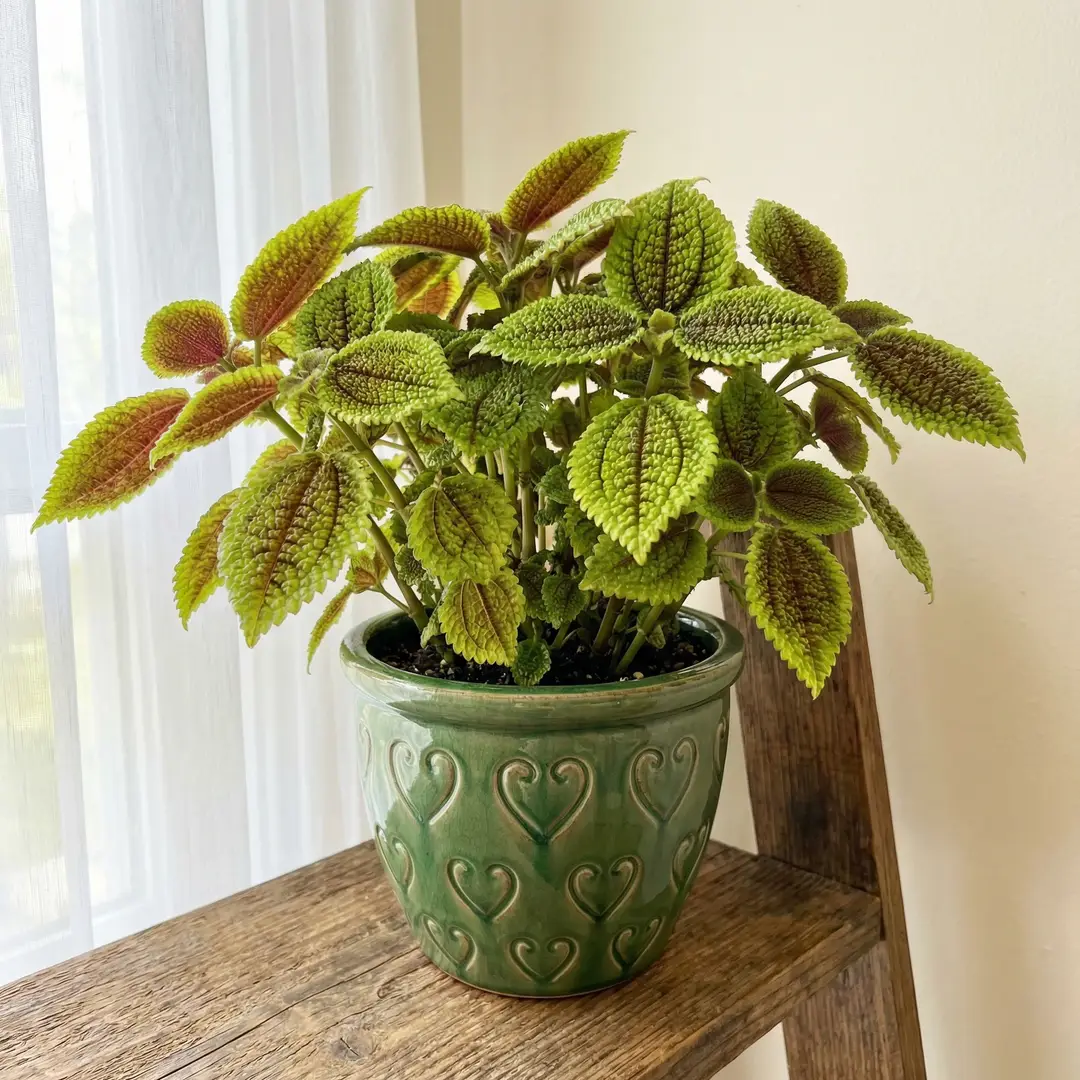
- Moon Valley Pilea (Pilea mollis): An upright, compact Pilea with deeply ridged, crater-textured chartreuse-and-bronze leaves. The opposite of Silver Sparkle in habit and color, but the same easy, humidity-loving temperament.
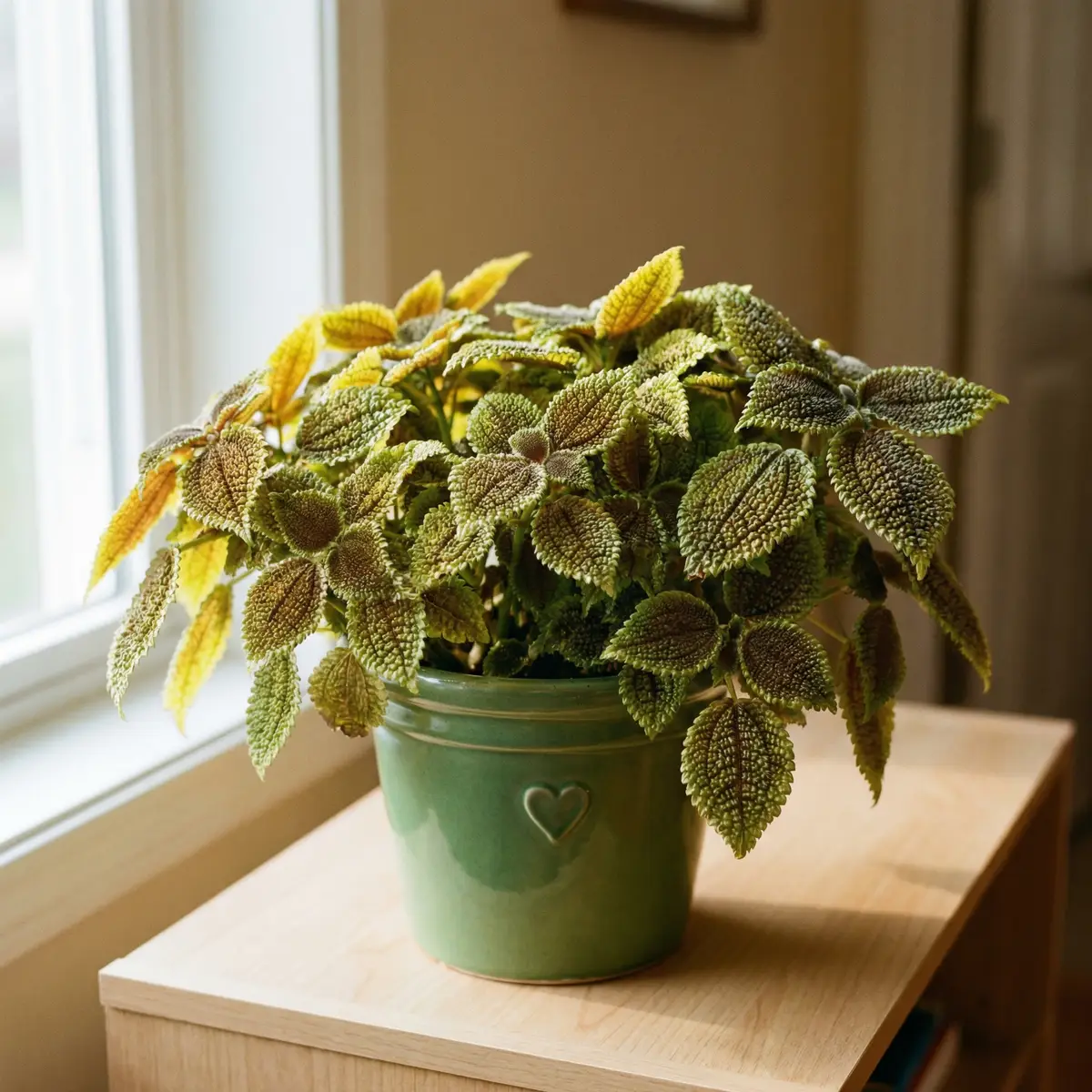
- Friendship Plant (Pilea involucrata): Low and spreading, with quilted bronze-green leaves and reddish undersides. Like Silver Sparkle, it roots so easily that people pass cuttings around to friends, which is how it earned its name.
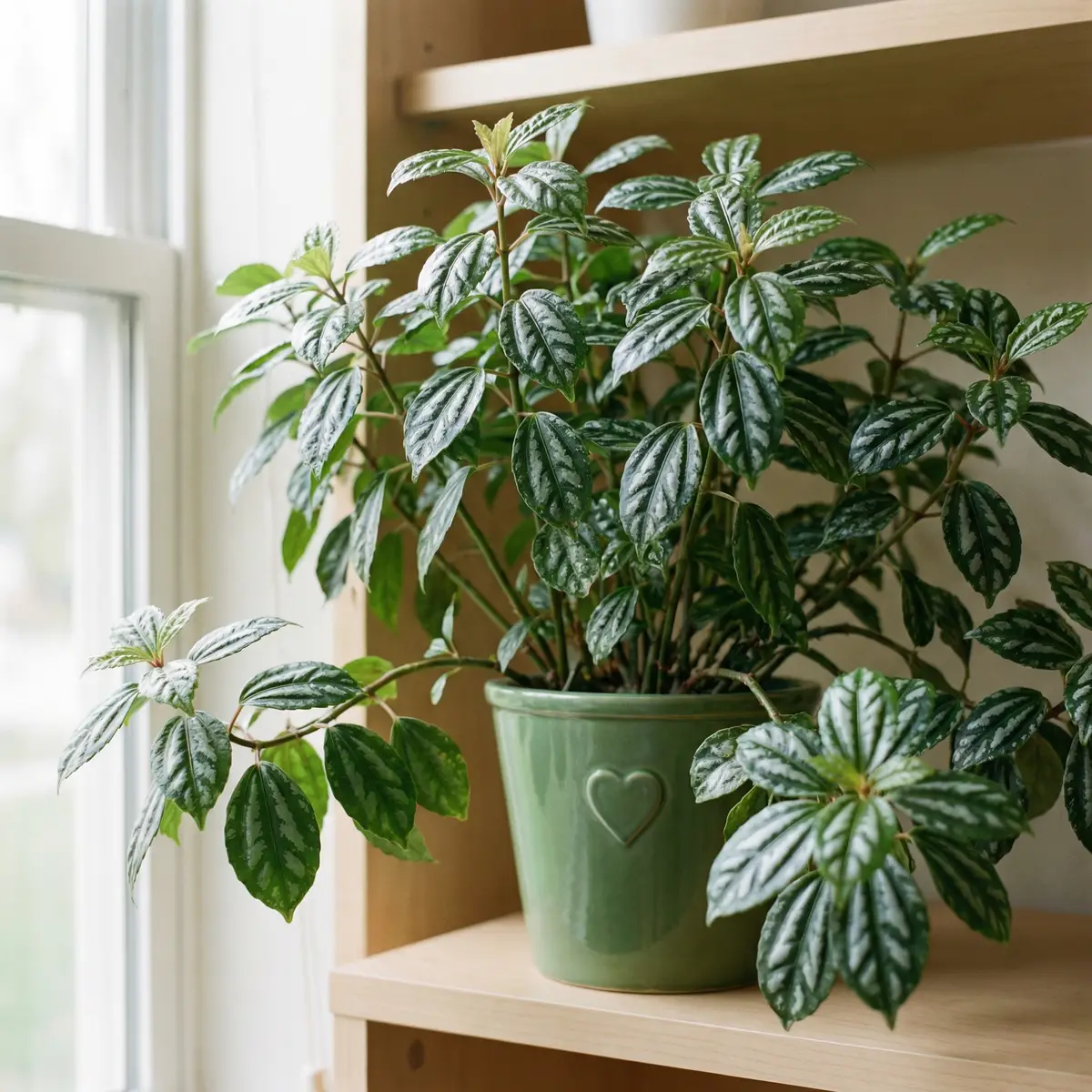
- Aluminum Plant (Pilea cadierei): Larger oval leaves splashed with bold silver patches. It scratches a similar silver itch but in a much bigger, upright form.
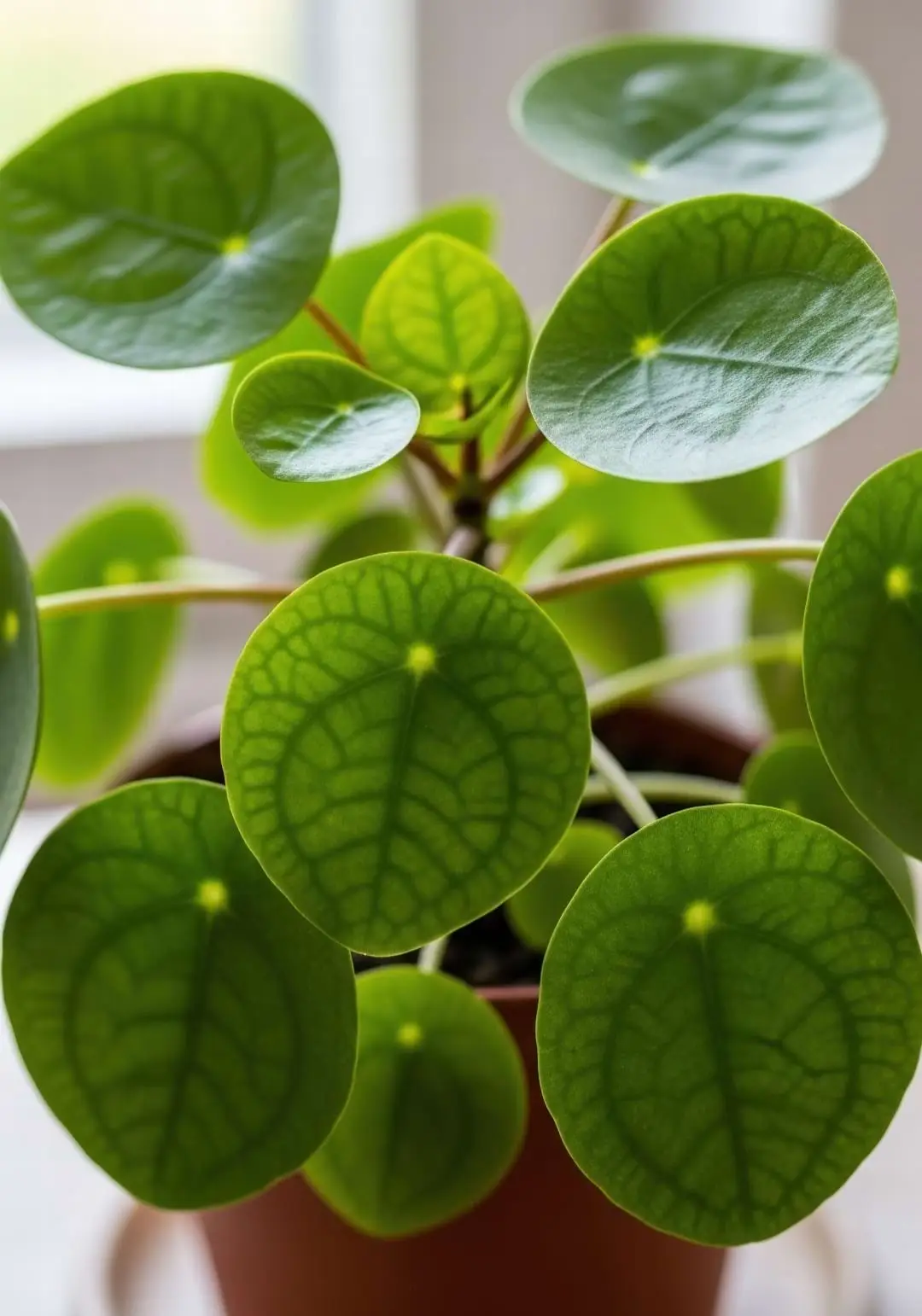
- Chinese Money Plant (Pilea peperomioides): The famous one, with round coin-shaped leaves on tall petioles. Completely different look, same easygoing genus.
Lookalikes to Watch For
Because of its "Baby Tears" nickname, Silver Sparkle Pilea gets mixed up with true Baby Tears (Soleirolia soleirolii), which has similar tiny leaves but a fresh green color and no silver dusting. When you see the metallic silver sheen and the pink stems together, you have the real Silver Sparkle Pilea.
🪴 Potting and Repotting Silver Sparkle Pilea
Silver Sparkle Pilea has a shallow, spreading root system and does not need a big pot or frequent repotting. It actually trails better when slightly snug, putting its energy into stems rather than roots.
When to Repot
Plan on repotting every 1 to 2 years, or when you notice the trail thinning out, roots creeping from the drainage holes, or the soil drying so fast you cannot keep up. A plant that has stalled despite good light and water is often simply rootbound. Spring, just as growth picks up, is the best time.
Choosing a Pot
Go up only one size, an inch or two wider, and favor a shallow pot or hanging planter over a deep one. The roots spread sideways, not down, so a wide, low container avoids the reservoir of soggy soil a deep pot holds at the bottom. A drainage hole is non-negotiable.
Step-by-Step Repotting
Water the plant a day ahead so the root ball holds together. Slide it gently from its pot, since the fine roots tear easily, and tease away only the loosest old soil rather than bare-rooting it. Set it in fresh, airy mix at the same depth as before, fill in around the roots, and firm lightly. Water it in and keep it out of direct sun for a week while it settles. The repotting guide walks through the process in more detail.
✂️ Pruning Silver Sparkle Pilea (Keeping It Full)
A little routine trimming keeps Silver Sparkle Pilea looking like a lush curtain rather than a handful of bare strings. The good news is that pruning and propagation are the same job here, since every piece you cut off will root.
When to Prune
Trim any time the plant is actively growing, spring through early fall, whenever a stem runs long, goes bare, or strays out of shape. Avoid hard pruning in deep winter when recovery is slow, though light tidying is fine year-round.
How to Prune
Use clean, sharp scissors and snip just above a point where leaves attach. Cutting a stem back encourages it to branch from below the cut, which keeps the trail dense rather than stringy. Remove any shriveled or yellowed stems at the base. If the center has gone bald while the tips keep growing, cut the long stems back hard and lay the trimmings on the soil to root in place and refill the gaps.
Pinching for Fullness
For the bushiest plant, pinch the growing tips regularly during the season instead of waiting for one big cleanup. Frequent small pinches trigger more branching than occasional drastic cuts, and the tiny tips you remove can be tucked straight back into the pot to thicken it up.
🌱 How to Propagate Silver Sparkle Pilea
Silver Sparkle Pilea is almost embarrassingly easy to propagate, which is a big part of its charm. The stems root from nearly any node, often where they simply touch damp soil, so you can multiply a plant or refill a thinning pot with almost no effort.
Best Method
Soil is the most reliable and simplest route. Because the stems root on contact with moisture, you can usually skip water-rooting and go straight to soil. Water propagation still works, though, and lets you watch the roots form.
Step-by-Step
Take a few healthy stem cuttings 2 to 3 inches long, each with several leaves. For soil, press the lower portion of each cutting onto the surface of moist, airy mix, burying a node or two. Keep the soil damp and the humidity high, covering the pot loosely with a clear bag if your home is dry. Roots usually form within 2 to 3 weeks. For water, set the cut ends in a jar with no leaves submerged, change the water every few days, and pot up once the roots reach an inch or so. The water propagation guide covers that route in full.
Tips for Success
Propagate during the warm growing season for the fastest rooting. Use several cuttings per pot rather than one, since a cluster fills out into a full trail far quicker than a lone stem. Keep cuttings warm, humid, and out of direct sun, and resist overwatering: the medium should stay damp, not wet, or the tender stems rot before they root.
🐛 Silver Sparkle Pilea Pests and Treatment
Silver Sparkle Pilea is not especially pest-prone, but the dense, fine foliage can hide early trouble, so a regular close look pays off. Inspect the stems and the undersides of the trail every week or two, particularly in winter when dry air invites problems.
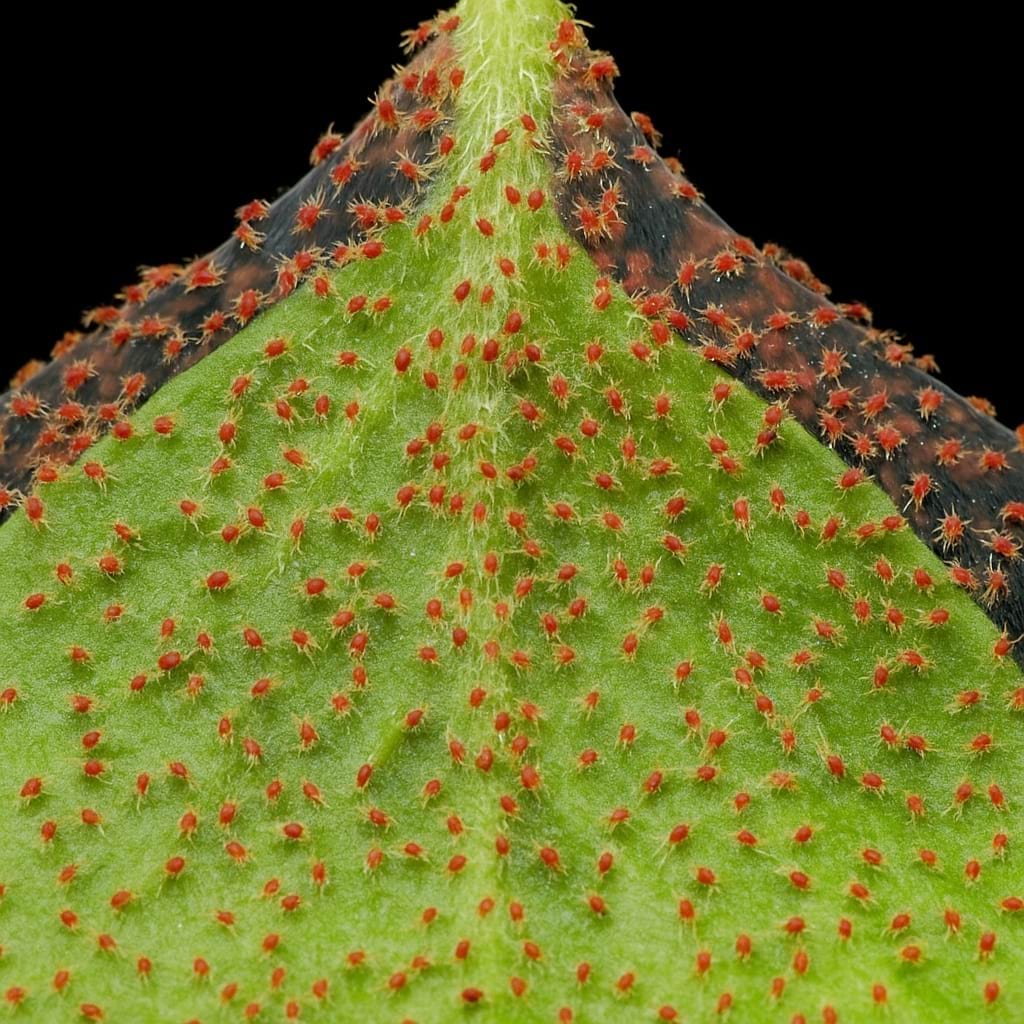
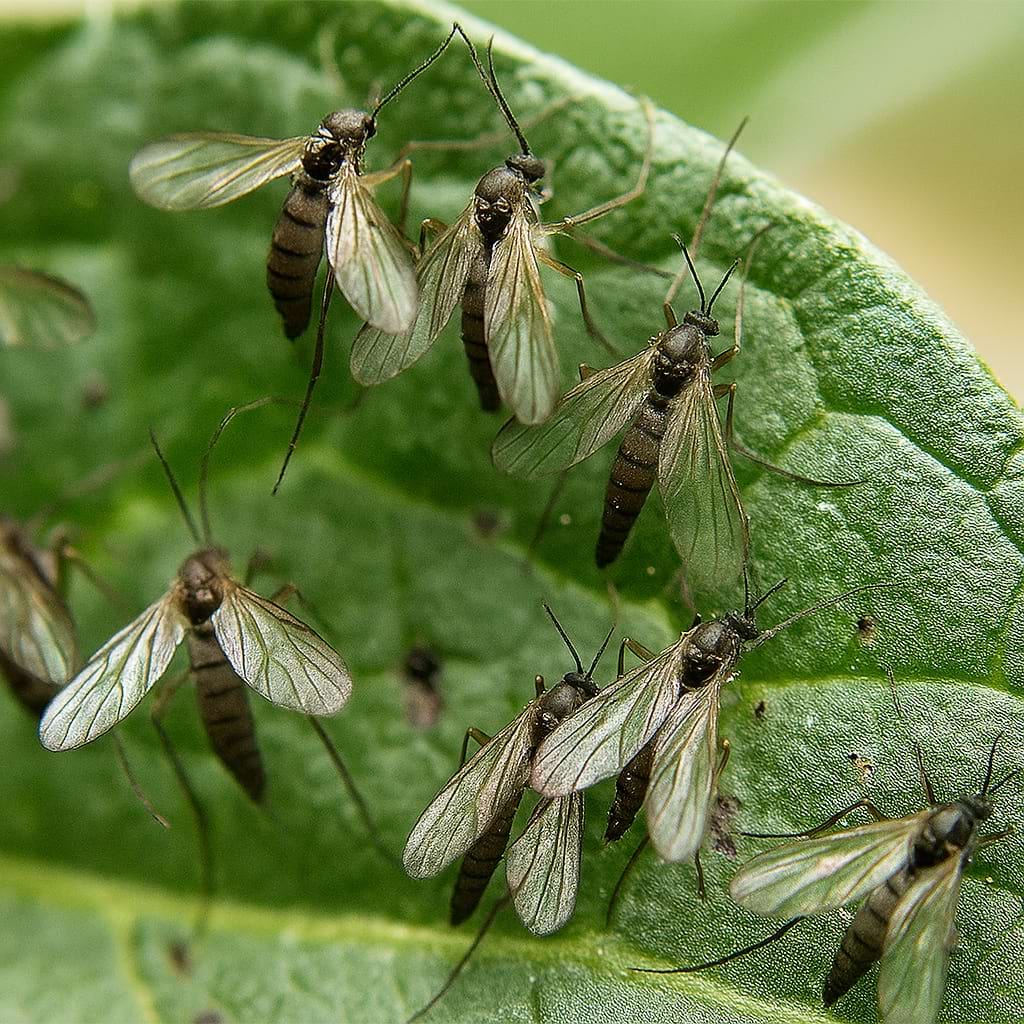
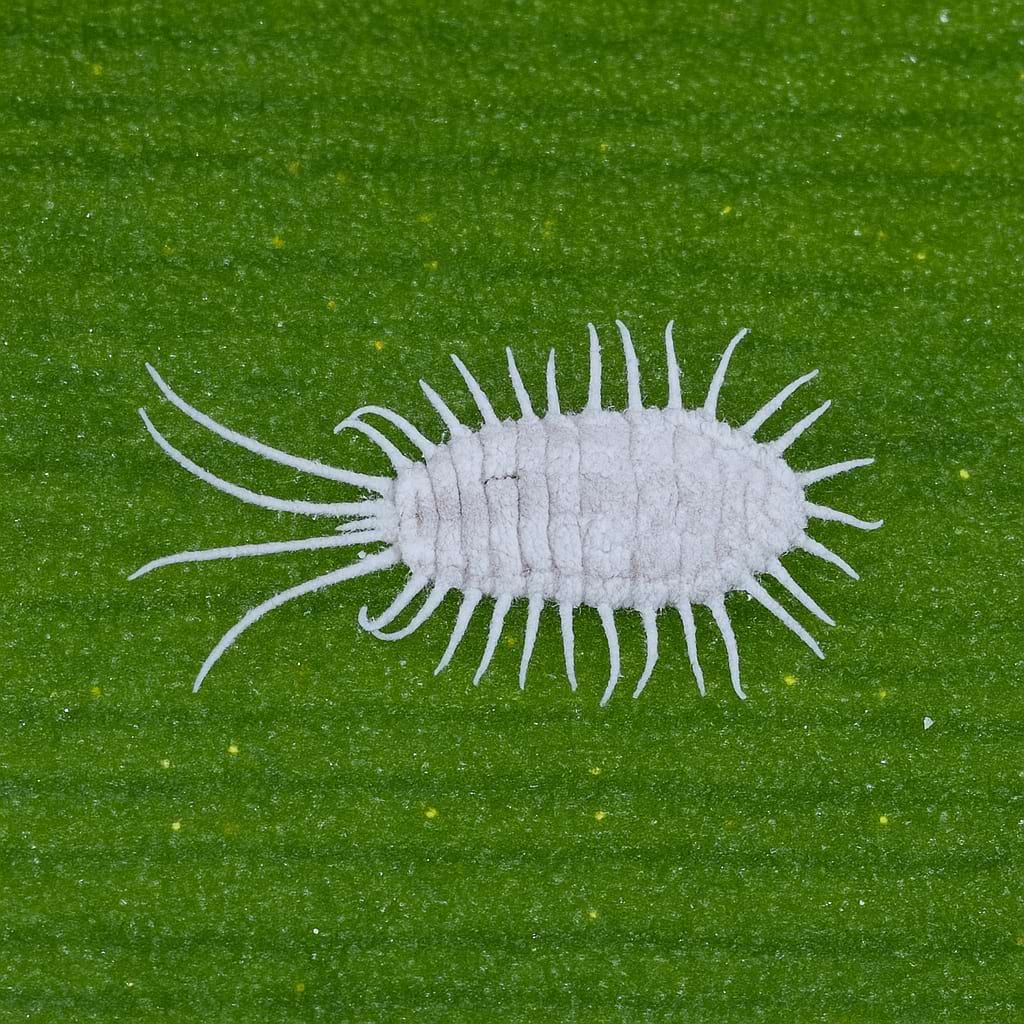
The most likely visitor is spider mites, which thrive in dry, heated winter air. Watch for a dusty, faded look on the leaves and fine webbing between the stems. Rinse the plant to knock them off, then treat with neem oil or insecticidal soap weekly for three to four weeks. Mealybugs appear as small white cottony tufts in stem joints; dab them with a rubbing-alcohol swab and follow with insecticidal soap. Fungus gnats are a soil pest tied to overwatering, so since this plant likes steady moisture they can show up. Let the very top of the soil dry between waterings and set out yellow sticky traps.
🩺 Common Silver Sparkle Pilea Problems
Most trouble with this plant traces back to water, humidity, or light, and the fixes are usually simple once you read the signs.
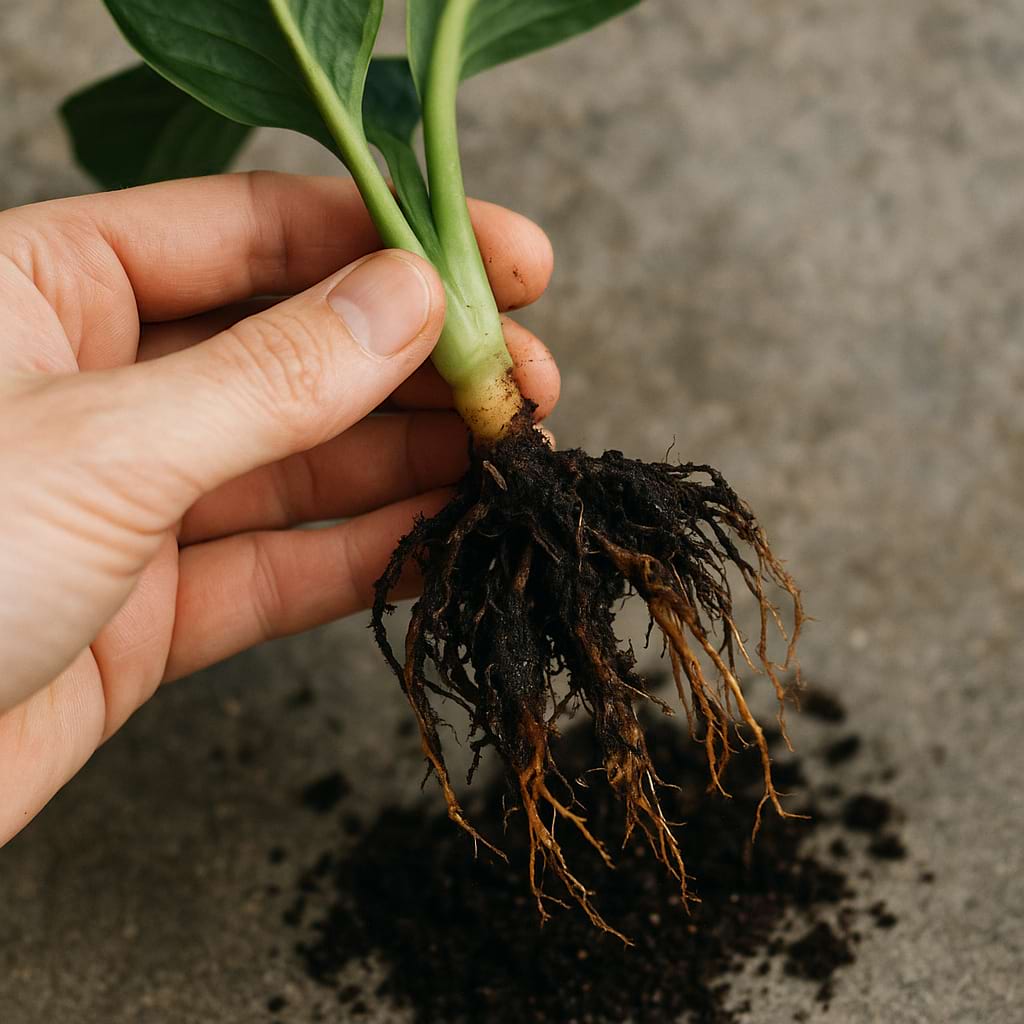
Root rot is the most serious issue and comes from soil that stays too wet. The signs are yellowing, mushy leaves, blackened stem bases, and drooping that does not recover after watering. Unpot the plant, cut away any black or slimy roots, and repot into fresh, airy mix; if much of the trail is mush, salvage the healthiest stems as cuttings. Yellowing leaves usually mean overwatering, though a droughted plant can yellow and shrivel too, so check the soil to tell which.
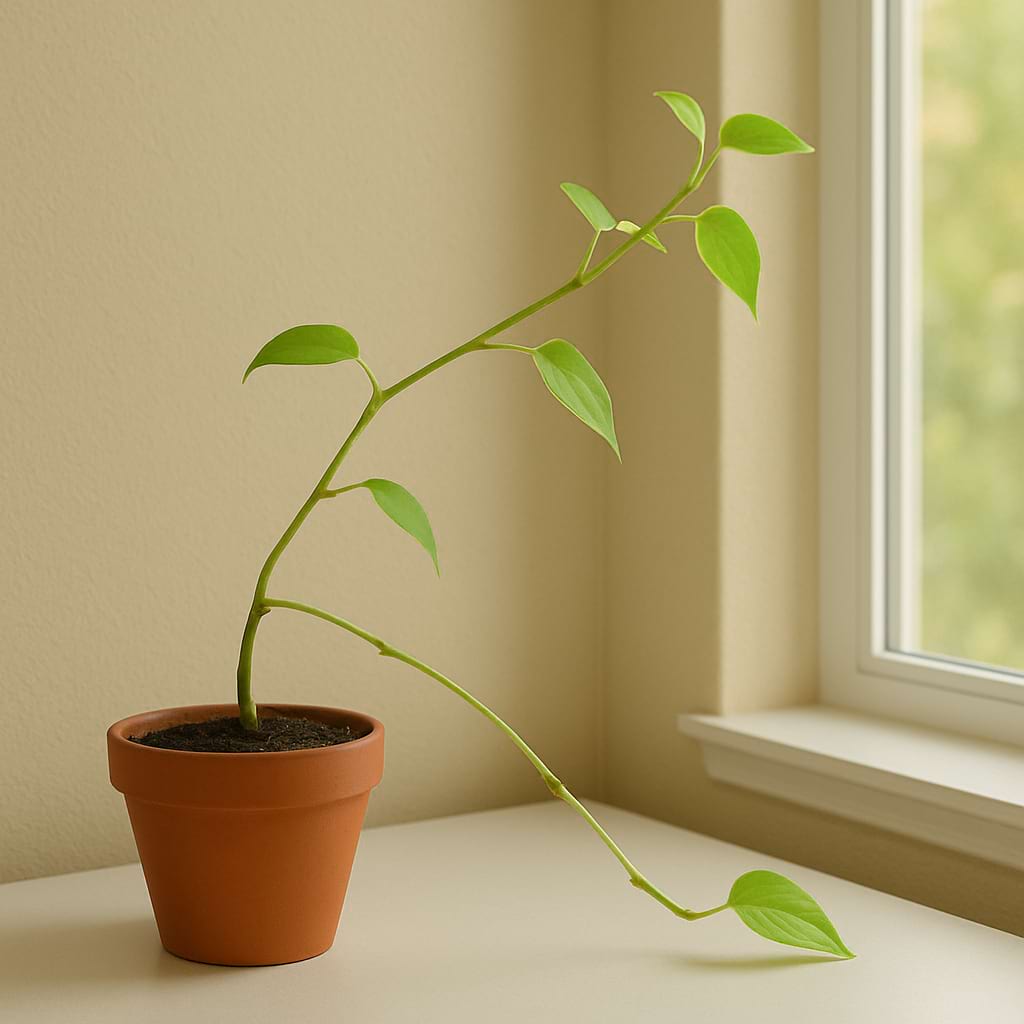
Brown, crispy edges and shriveled tips point to low humidity or a plant that dried out too far. Raise the humidity, check that you are not letting the soil go fully dry, and trim the damaged stems. Leggy growth with long bare stems is a light problem: move the plant brighter and cut the stretched stems back. A trail that goes bald in the center while the tips keep growing is partly natural aging and partly low light, and the cure is the same hard trim plus better light.

🖼️ Silver Sparkle Pilea Display and Styling Ideas
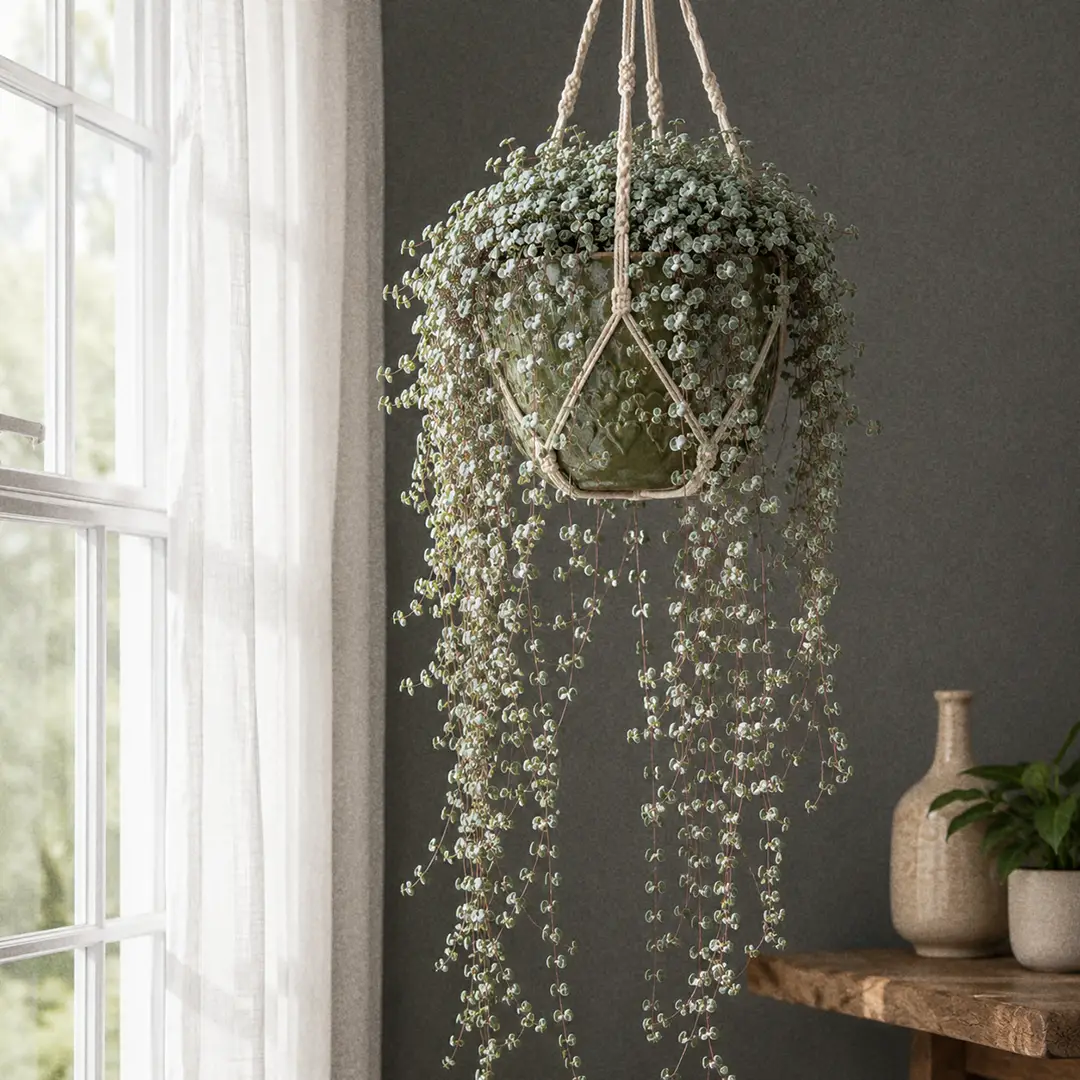
The trailing habit is the whole reason to grow this plant, so display it where the cascade can fall freely. Its fine silver foliage is a soft, cool foil to bolder, darker-leaved plants, working both solo and as a mixer.
Solo Setups
In a hanging basket or on a high shelf, Silver Sparkle Pilea forms a delicate silver curtain that softens any hard edge. The shimmer reads best against a dark or solid backdrop, so a matte charcoal, deep green, or plain white pot lets the foliage do the talking. A macrame hanger near a bright window puts the trail at eye level where the frosted texture shows.
Grouped Arrangements
This is a star terrarium and fairy-garden plant. Its small size, love of humidity, and creeping habit make it ideal as a foreground carpet or a soft spiller over hardscape, alongside mosses, small ferns, and Nerve Plant. In a mixed pot, let it trail over the rim while taller plants hold the center. It also pairs beautifully with the deeper tones of Moon Valley Pilea or a bronze Friendship Plant, the cool silver playing off the warm texture of its cousins.
Where Not to Put It
Skip dim corners, dry windowsills above a radiator, and any spot in a strong draft. This plant trails toward the floor, so it is wasted on a low table where the cascade has nowhere to go. Give it height and humidity and it transforms; tuck it in a dark, dry nook and it thins out within weeks.
🌟 Silver Sparkle Pilea Pro Care Tips
Never let it fully dry out. The tiny leaves hold almost no water reserve, so a single hard drought can crisp a trail beyond recovery. Check the soil twice a week in summer and water at the top half-inch dry.
Humidity is the real secret. More than any other factor, steady humidity above 50% keeps this plant lush. A small humidifier or a terrarium does more than any amount of fussing over water.
Pinch as you go. Frequent small tip-pinches during the growing season build a dense, full trail far better than one big annual cleanup.
Replant your trimmings. Every cutting roots, so lay pruned stems right back on the soil surface to refill a thinning pot for free.
Feed weak and often. Quarter to half-strength fertilizer every few weeks beats a strong dose. The fine roots scorch easily.
Keep it off the heat vent. Warm, dry forced-air is this plant's worst enemy in winter. A few feet of distance from any vent or radiator saves the foliage.
❓ Frequently Asked Questions
Is Silver Sparkle Pilea toxic to cats and dogs?
No. Silver Sparkle Pilea (Pilea glauca) is non-toxic to cats, dogs, and humans, like its Pilea relatives, which makes it a safe choice for pet-friendly homes. The trailing stems can tempt a curious pet to bat at them, but a nibble will not harm them.
How often should I water Silver Sparkle Pilea?
Water when the top half-inch of soil feels dry, usually every 4 to 7 days in summer and every 7 to 10 days in winter. The fine roots like steady moisture but rot if left soggy, so check the soil rather than watering on a fixed schedule.
Why is my Silver Sparkle Pilea shriveling?
Shriveled, papery leaves are almost always low humidity or a plant that dried out too far. Check the soil: if it is dry, water thoroughly and raise the humidity with a humidifier or by grouping plants together. If the soil is wet, the cause is more likely root rot.
Is Silver Sparkle Pilea the same as Pilea libanensis?
Yes. Pilea glauca, Pilea libanensis, and Pilea glaucophylla are all names used for the same plant, along with nicknames like Silver Sprinkles and Grey Baby Tears. The name libanensis comes from the Sierra del Libano in Cuba, not Lebanon, despite how it sounds.
Can Silver Sparkle Pilea grow in a terrarium?
Yes, it is one of the best terrarium plants you can choose. Its small size, fast creeping growth, and love of humidity make it ideal as a foreground carpet or a soft spiller, though it grows fast enough that you may need to trim it to keep it in bounds.
Why is my Silver Sparkle Pilea getting leggy and bare in the middle?
Leggy, sparse growth with a bald center is usually too little light, sometimes combined with natural aging of older stems. Move the plant brighter and cut the long stems back hard. Lay the trimmings on the soil to root in place and refill the gap.
Should I mist Silver Sparkle Pilea?
Misting is fine since the tiny leaves dry quickly, unlike its textured cousins that trap water. That said, misting gives only a brief humidity bump. A humidifier, a humid bathroom, or a terrarium does far more good for keeping the foliage plump.
How big does Silver Sparkle Pilea get?
It stays low, only 2 to 4 inches tall, but the stems trail 12 to 24 inches or more over time. It grows quickly in good conditions, so a small starter plant can fill a hanging basket in a single season with regular trimming to keep it dense.
ℹ️ Silver Sparkle Pilea Info
Care and Maintenance
🪴 Soil Type and pH: Light coco coir or peat mix with generous perlite
💧 Humidity and Misting: Loves 50% or higher humidity. Dry air shrivels the tiny leaves quickly.
✂️ Pruning: Trim back straggly stems any time to keep the trail dense. Every snipped tip is a ready-made cutting.
🧼 Cleaning: Rarely needs cleaning. A gentle rinse under lukewarm water removes dust without damaging the tiny leaves. Skip leaf-shine products entirely.
🌱 Repotting: Every 1-2 years, or when the trail thins and roots fill the pot.
🔄 Repotting Frequency: Every 1-2 years
❄️ Seasonal Changes in Care: Ease off watering in fall and winter. Keep away from cold glass and heating vents that dry the air.
Growing Characteristics
💥 Growth Speed: Fast
🔄 Life Cycle: Perennial
💥 Bloom Time: Rarely indoors; tiny pale flowers in spring or summer on mature plants
🌡️ Hardiness Zones: 10-12
🗺️ Native Area: Caribbean and Central and South America
🚘 Hibernation: No true dormancy; growth slows in winter
Propagation and Health
📍 Suitable Locations: Hanging baskets, terrariums, high shelves, bathroom windows, desktops
🪴 Propagation Methods: Roots almost effortlessly from stem cuttings laid on moist soil or set in water in spring or summer.
🐛 Common Pests: Spider Mites, Fungus Gnats, Mealybugs
🦠 Possible Diseases: Root rot from overwatering; stem rot in stagnant, overly wet conditions
Plant Details
🌿 Plant Type: Tropical Trailing Perennial
🍃 Foliage Type: Evergreen
🎨 Color of Leaves: Blue-grey to silver-green with a metallic dusted sheen
🌸 Flower Color: Pale pink to creamy white
🌼 Blooming: Rare indoors; tiny, insignificant flowers
🍽️ Edibility: Not edible
📏 Mature Size: 2-4 inches (trails 12-24 inches)
Additional Info
🌻 General Benefits: Non-toxic to pets and children, fast-growing, ideal for small spaces, hanging baskets, and terrariums, propagates with almost no effort.
💊 Medical Properties: None known
🧿 Feng Shui: The cool silver-blue tone of Silver Sparkle Pilea is linked to calm and fresh, flowing energy. Its trailing form softens hard shelf edges and suits the east or southeast areas of a room.
⭐ Zodiac Sign Compatibility: Gemini
🌈 Symbolism or Folklore: Lightness, fresh starts, easy friendship
📝 Interesting Facts: The tiny leaves carry a fine, waxy silver bloom that gives the plant its shimmer and the look of being dusted with frost. The species was originally described from the Sierra del Libano mountains in Cuba, which is where the common alternate name Pilea libanensis comes from, not Lebanon as many people assume.
Buying and Usage
🛒 What to Look for When Buying: Choose a plant with dense, trailing stems and firm, plump silver-blue leaves. The stems should show their characteristic pink-red color. Avoid plants with bare, leggy stems, shriveled leaves (a sign of drought or low humidity), or a sour-smelling, waterlogged pot.
🪴 Other Uses: A favorite filler and trailing accent in terrariums, fairy gardens, and mixed hanging arrangements. Softens the edge of any pot it shares.
Decoration and Styling
🖼️ Display Ideas: Hanging baskets, high shelves, terrarium foreground, cascading over the rim of a mixed planter, grouped with ferns and nerve plants.
🧵 Styling Tips: The fine silver foliage reads best against dark or solid backgrounds. A matte charcoal, deep green, or plain white pot lets the shimmer carry the display without clutter.
🪴 See also 🪴
Complete Guide to Artillery Fern Care and Growth
Complete Guide to Moon Valley Pilea Care and Growth
Complete Guide to Friendship Plant Care and Growth
Complete Guide to Chinese Money Plant Care and Growth

Houseplant101 Forum
Questions & Comments
Ask a question, share your plant experience, or help other plant owners.
Comments are temporarily unavailable.
Open the Houseplant101 ForumNo comments yet
Be the first to ask a question or share your experience about this page.
Log in or create an account
Comments use your Houseplant101 Forum account, but you can stay on this page.
Create a new account