
Prickly Pear
Opuntia ficus-indica
Indian Fig, Barbary Fig, Mission Cactus, Nopal, Tuna Cactus, Spineless Cactus


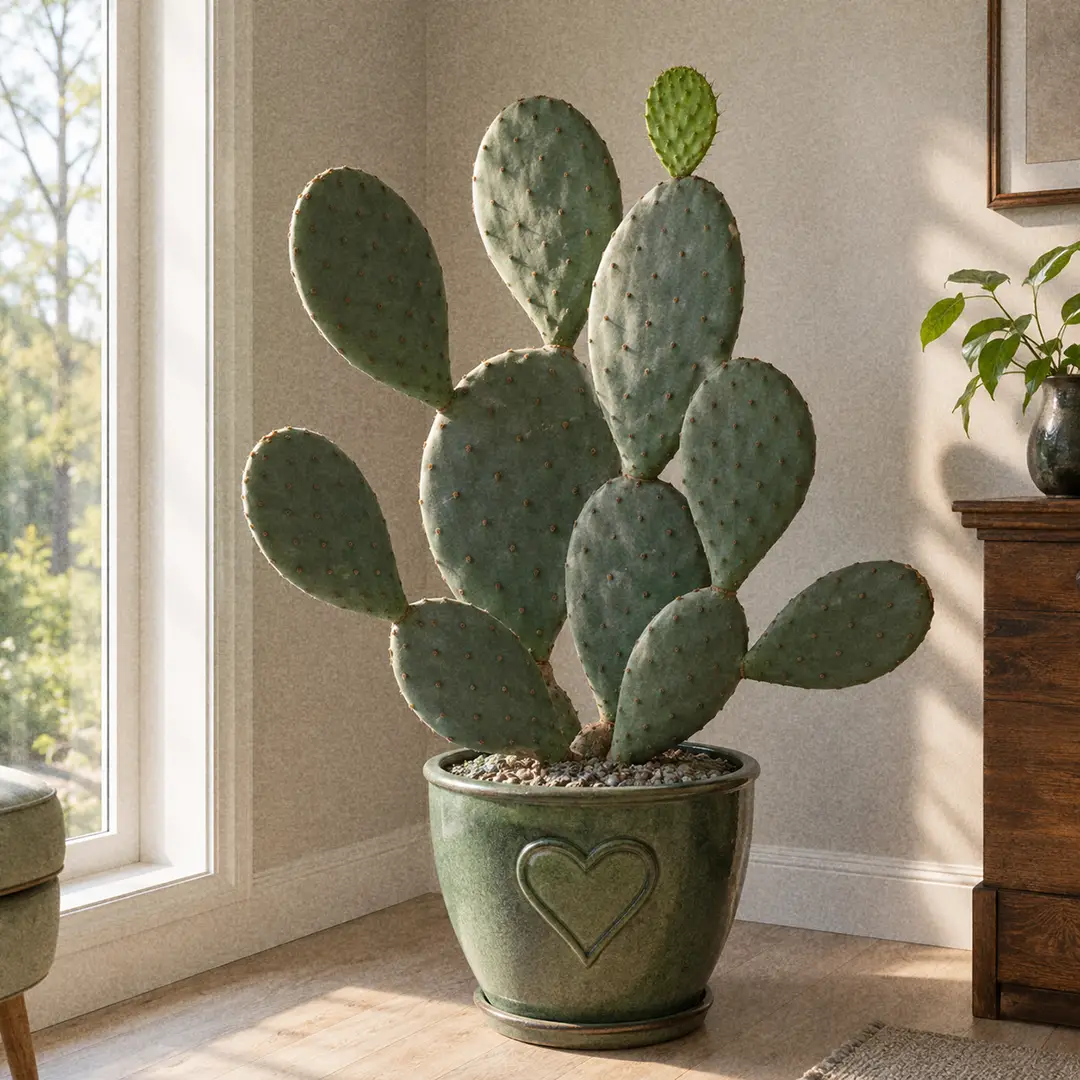
The Prickly Pear (Opuntia ficus-indica) is the big blue-green paddle cactus behind supermarket nopales and magenta tuna fruit. It is the easiest edible cactus to keep in a pot, grows fast for a cactus, roots from a single pad, and will fruit indoors if you give it sun and a cold, dry winter.
📝 Prickly Pear Care Notes
🌿 Care Instructions
⚠️ Common Pests
📊 Growth Information
🪴 In This Guide 🪴

☀️ Prickly Pear Light Requirements (Full Direct Sun)
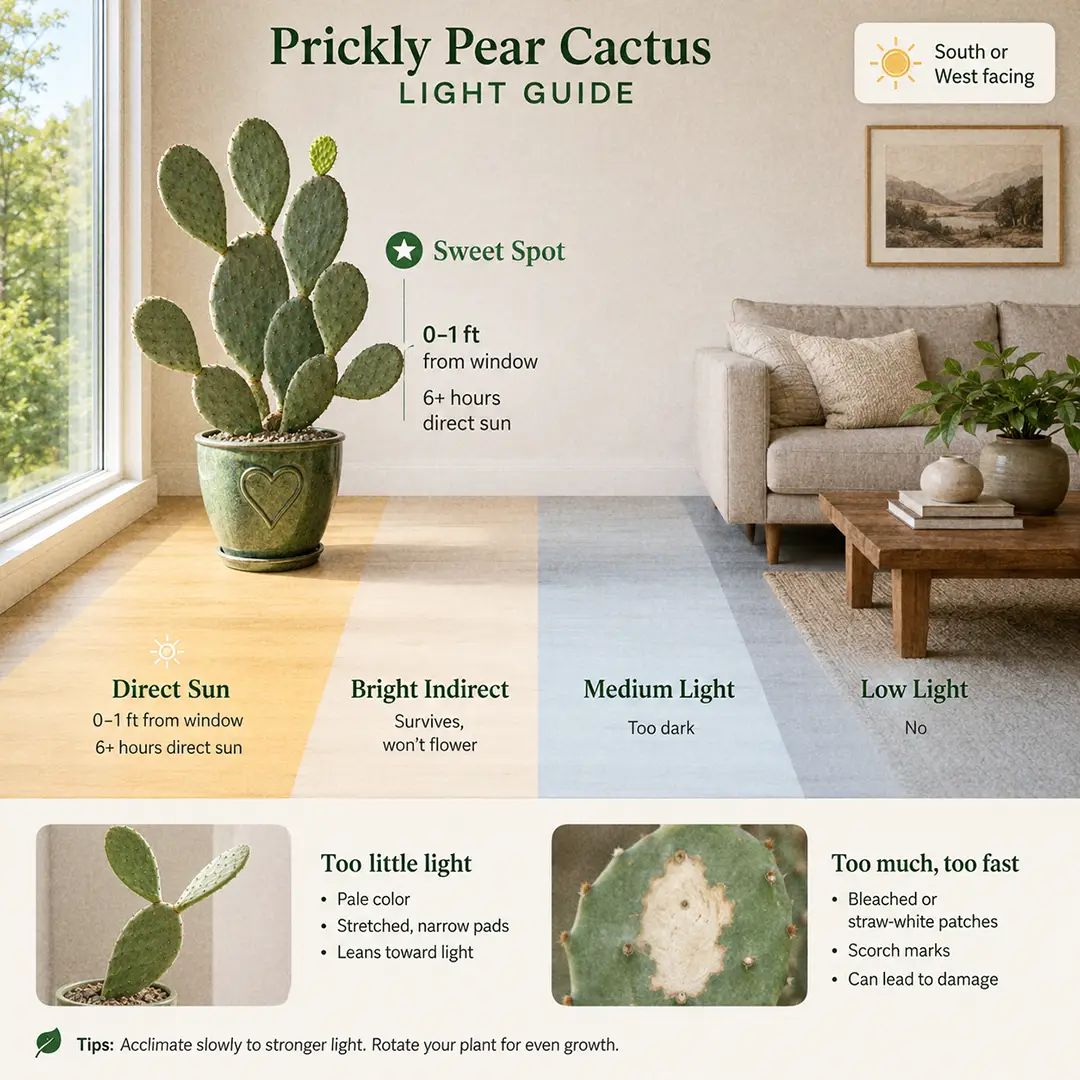
Light decides whether you get a compact, fruiting plant or a pale leaning one. This is a full-sun desert species that wants the brightest glass you own. There is no low-light version of this plant.
The Sweet Spot
Put it directly against a south-facing window, or a west-facing one in a hot climate. It wants six or more hours of unfiltered direct sun: no curtain, no sheer, right at the glass. An east window keeps a plant alive but rarely produces flowers. If your brightest window faces north, this is not the cactus for you unless you run a grow light for 12 hours a day.
Summer Outdoors
A summer outside is the best thing you can do for a potted Prickly Pear, and it usually tips a stubborn plant into flowering. Move it out once nights stay above 55°F (13°C), then acclimate over two weeks: four days in bright shade, then an hour of morning sun, building from there.
Too Little Light
New pads come in small, thin, and pale, sometimes narrow enough to look like tongues rather than paddles, and the plant leans hard toward the window. Stretched growth never firms up again, so move the plant before you decide to prune. See light requirements for the general principles.
Too Much Light
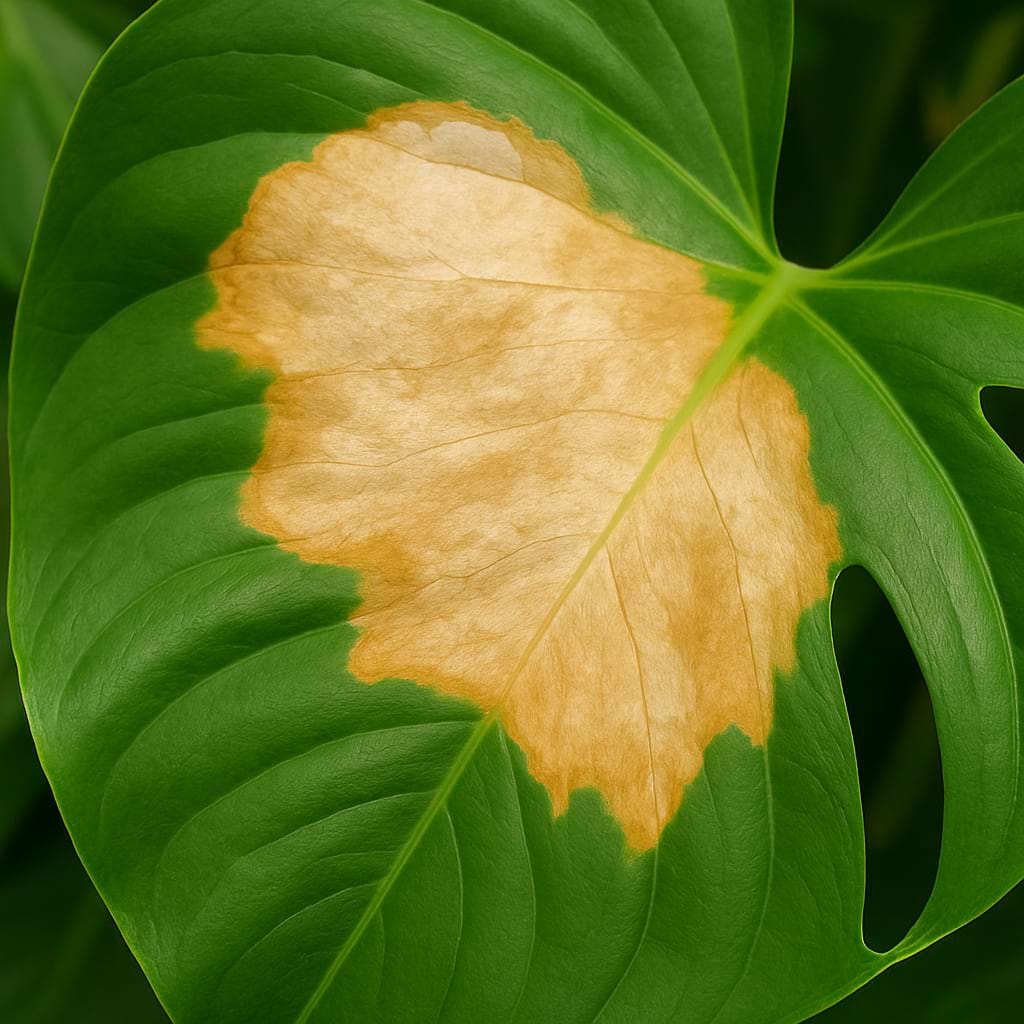
Sunburn shows as bleached white or straw-colored patches on the pad face turned toward the glass, turning papery brown over a week or two. This nearly always comes from a fast move rather than too much light in general. The damage is permanent on that pad, so the fix is slower acclimation next time, not a darker spot.
💧 Prickly Pear Watering Guide (Deep Soak, Long Drought)
Almost every dead Prickly Pear died wet. The plant stores months of water in its pads, so your goal is a deep soak followed by a genuine drought.
Watering Frequency
From mid-spring to early autumn, water only when the mix is dry from top to bottom. In a 6-inch terracotta pot in a sunny window, that lands roughly every two to three weeks, though a plastic pot in a cool room can stretch to six. Do not follow a calendar. Push a wooden skewer down to the drainage hole and read it: any dampness or clinging soil means wait.
Winter Watering
From late autumn to early spring, cut back hard. A plant resting in a cool bright room at 45 to 55°F (7 to 13°C) can sit completely dry for two or three months. A plant in a heated living room needs a small drink every five or six weeks, just enough to stop the pads going leathery. Cold plus wet is what kills this plant, so when in doubt, wait another fortnight. Our watering guide covers the general rules.
How to Water
Water the soil, not the plant. Pour room-temperature water around the base until it runs from the drainage holes, let it drain for ten minutes, then empty the saucer. Water pooling in the joints between pads invites soft rot and black spotting. Bottom watering works if your mix is gritty enough to wick, but lift the pot out after twenty minutes.
Signs of Trouble
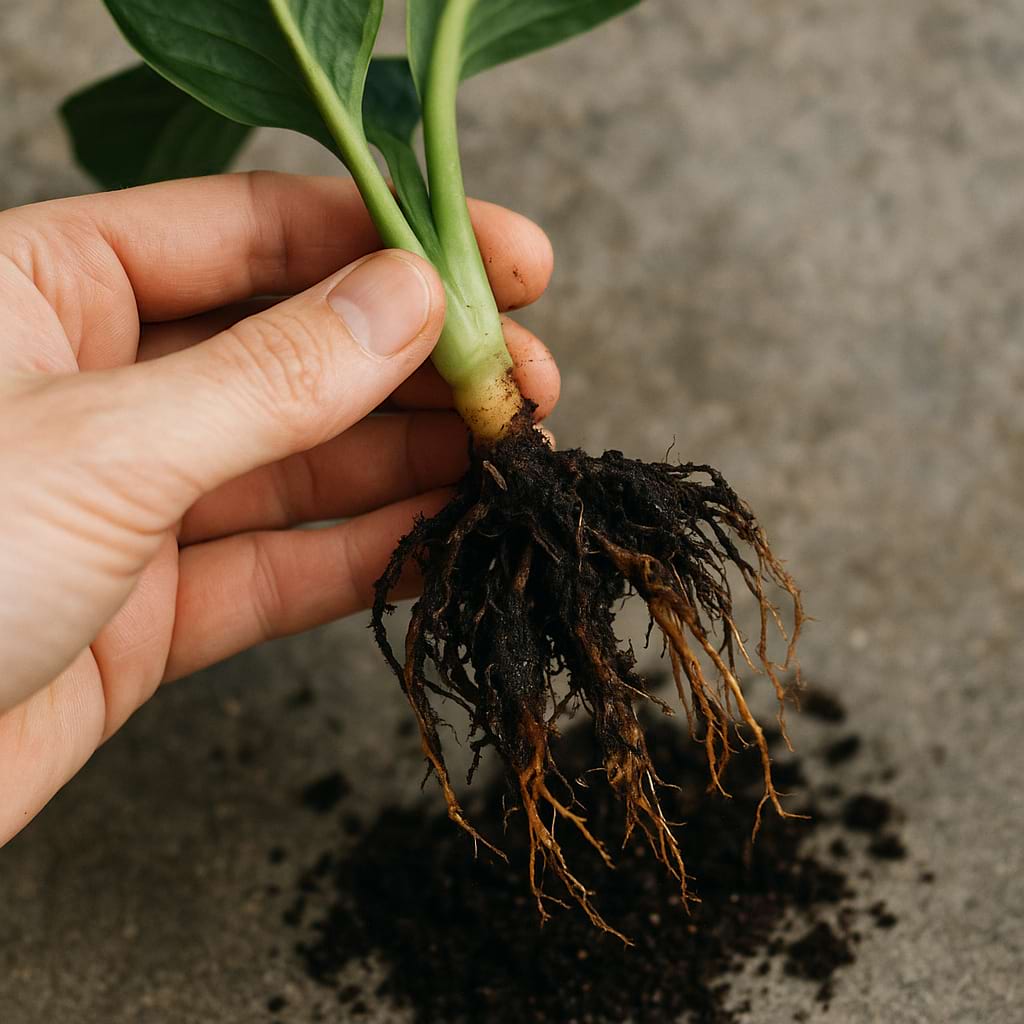
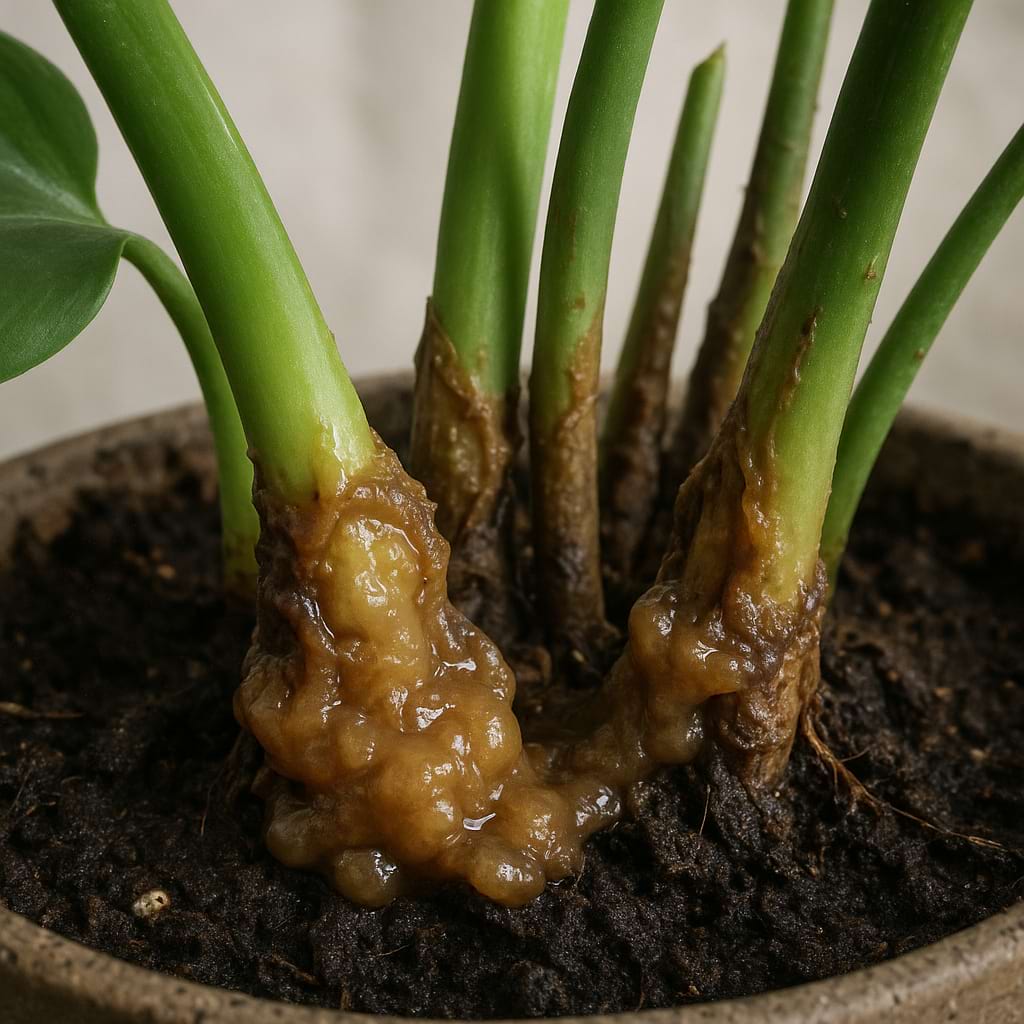
Thirst looks like flattening: pads lose their plumpness, wrinkle, and sometimes flush purple. One deep soak fixes it within days. Overwatering is far worse. Pads yellow from the base upward, the lowest pad turns soft and translucent, and the soil smells sour. By then the roots are gone, so cut a healthy upper pad, callus it, and start over.
🪴 Best Soil for Prickly Pear (Gritty, Fast, Lean)
Soil matters more than watering technique, because the right mix forgives a heavy hand and the wrong one punishes a careful one.
What the Soil Needs
Three things: it drains within seconds, it dries out completely between waterings, and it stays open enough that air reaches the roots. Standard potting compost does none of these and will rot this plant however disciplined you are. Prickly Pear also wants lean soil, since rich peaty mixes produce soft, floppy growth that rots easily and rarely flowers.
DIY Soil Mix
- 2 parts cactus and succulent mix
- 2 parts coarse pumice or perlite
- 1 part coarse horticultural sand (not builder's sand, which packs down)
A handful of crushed oyster shell nudges the pH slightly alkaline, which this species likes. Squeeze a damp handful to test: it should fall apart the moment you open your fingers. Our soil guide explains why the grit fraction matters.
Pre-Made Options
A dedicated cactus mix from a specialist grower works straight from the bag. Mass-market "cactus soil" is usually mostly peat with a token amount of sand, so cut it with an equal volume of pumice before use.
Pot Choice
Terracotta, and heavier than you think you need. Unglazed clay pulls moisture out through the walls and shortens the drying window. Weight matters too, because a mature Prickly Pear is top-heavy and a light plastic pot will tip.
🍼 Fertilizing Prickly Pear (Sparingly, and Never in Winter)
This is a plant from thin, rocky ground. Overfeeding causes more problems than underfeeding ever will.
When and How Often
Feed only during active growth, from mid-spring through late summer. Two or three feedings across the season is plenty. Skip fertilizer entirely from autumn through early spring, and wait two months after repotting, since fresh mix already carries what the plant needs.
What to Use
A low-nitrogen cactus fertilizer, something in the range of 2-7-7 or 5-10-10, diluted to half the label strength. Nitrogen drives soft pad growth that flops and rots, while phosphorus and potassium support flowers and firm tissue. Water with plain water first, then feed damp soil so you do not scorch dry roots. See fertilizing houseplants for the basics.
Feeding for Fruit
If you want tunas rather than pads, use a high-potassium feed (tomato fertilizer at quarter strength) once in late spring as buds form, then stop. A spring nitrogen feed is the most common reason a mature, well-lit plant makes pads and no flowers.
Over-Fertilizing Signs
A white crust on the soil or pot rim means salt build-up. Flush with several pot-volumes of plain water, then skip the next two feedings. Unusually soft, pale, oversized pads are the other tell.
🌡️ Prickly Pear Temperature Range
This plant runs on seasonal contrast. Hot and bright in summer, cold and dry in winter. Skip the winter half and you get a healthy plant that never flowers.
Summer Range
Anywhere from 70 to 100°F (21 to 38°C) suits it, and it handles more in dry, moving air. Sun and heat together, with dry roots, is precisely the condition it evolved for.
Winter Rest Range
Aim for 40 to 55°F (4 to 13°C) for six to ten weeks. An unheated spare room, a cool porch, or a garage with a window all work. The plant needs bright light through this rest, so a dark cupboard is not a substitute. Plants kept at room temperature all winter survive fine but grow leggier and rarely bloom.
Cold Hardiness
Opuntia ficus-indica is hardier than most people expect, taking brief dips to around 20°F (-7°C) when bone dry, and it grows outdoors year-round in zones 8b to 11. Wet cold is the danger, not cold itself. A dry plant at 25°F shrugs; a wet plant at 35°F rots.
Drafts and Heat Sources
Cold draughts do not bother it. A radiator directly below does, since dry rising heat plus a bright window desiccates the lower pads. Leave a hand's width of clearance.
💦 Prickly Pear Humidity Requirements
Ordinary dry household air is ideal, so there is nothing to buy and nothing to manage.
Ideal Humidity
Somewhere between 30 and 40 percent, which is what most centrally heated homes sit at anyway. No misting, no pebble trays, no humidifier. The dry air that makes a fern miserable keeps this plant firm and disease-free.
When Humidity Bites
The one risky combination is high humidity with cool, still air, usually in late autumn before the heating comes on. That is when bacterial pad spot and joint rot appear. A small fan a few hours a day solves it. Keep the plant out of bathrooms and away from tropical plants that get misted.
🌸 Prickly Pear Flowers and Fruit (Tunas)
Yes, a potted Prickly Pear really can flower and fruit indoors. It takes patience and a properly cold winter, but this is not the long shot it is with some cacti.
What the Flowers Look Like
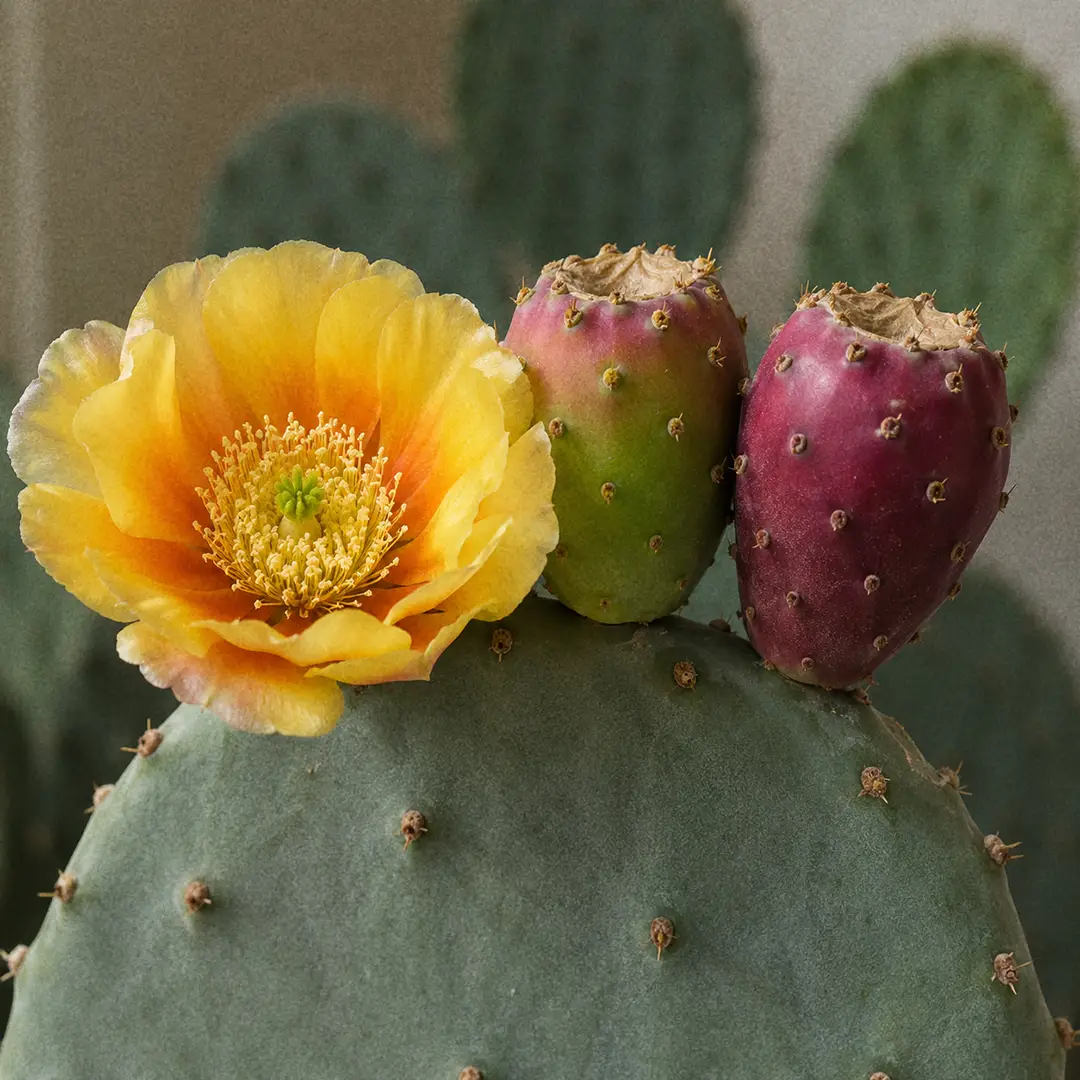
Buds appear along the upper rim of the topmost pads in late spring, looking at first like small green pads themselves. Each opens into a broad, waxy, bowl-shaped bloom two to four inches across, lemon yellow through apricot to deep orange, with a dense boss of stamens that twitch when touched. Flowers last two or three days, and a mature plant opens them in waves for weeks.
The Fruit (Tunas)
Pollinated flowers leave behind a barrel-shaped fruit that ripens over two to three months, turning from green to deep magenta, orange, or yellow. Ripe tunas pull away with a gentle twist. The flesh is sweet and mild, full of hard edible seeds, somewhere between watermelon and bubblegum. Indoors you will need to hand-pollinate with a small brush, since there are no bees at the window.
How to Trigger Bloom
Three conditions have to line up. The plant must be mature, meaning five or more years old and carrying at least eight to ten pads. It needs very strong direct sun from spring onward, ideally a summer outdoors. And it must have had a cool, dry rest at 40 to 55°F (4 to 13°C) for six to ten weeks. Miss the winter rest and the other two will not save you.
If It Won't Bloom
Almost always a warm winter. A plant kept at 68°F from November to March has no reason to set buds. Move it somewhere cold and bright next winter, hold the fertilizer until buds show, and give it a summer outside. Persistent failure to bloom in a plant doing everything else well is usually about age, so give it another season.
🏷️ Prickly Pear Types and Varieties
"Prickly Pear" is a loose name covering much of the Opuntia genus. Opuntia ficus-indica is the domesticated one behind commercial nopales and tuna fruit, but a few relatives turn up in the trade and are worth telling apart.
Opuntia ficus-indica (The Classic)
Large blue-green oval pads up to 18 inches long with a soft waxy bloom, an upright branching habit that turns tree-like with age, and yellow to orange flowers followed by big edible fruit. Domesticated forms carry few or no long spines, which is why they are farmed.
"Spineless" Cultivars
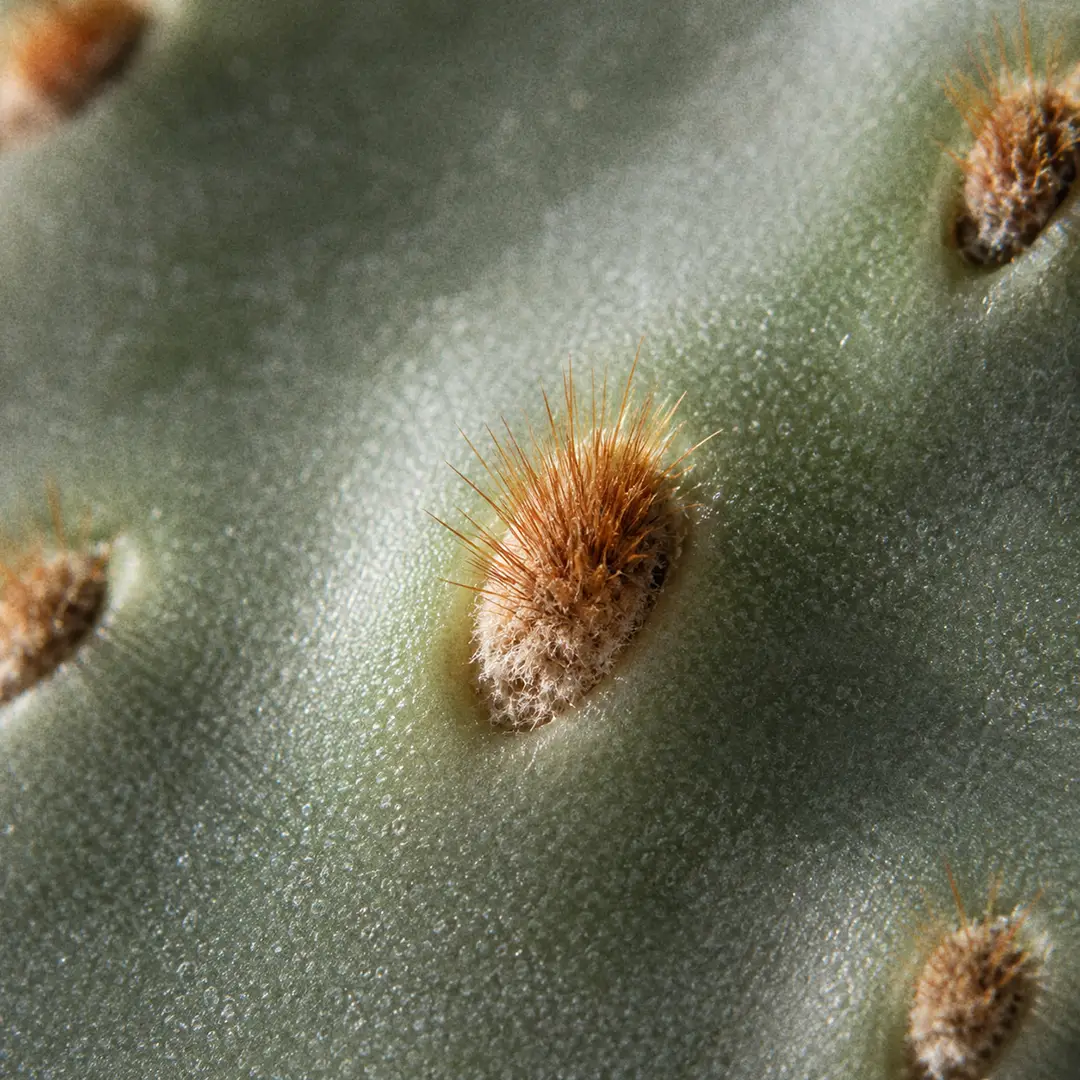
Selections like 'Burbank Spineless' and most nursery stock are bred free of the long, obvious spines. This is where people get hurt. Losing the spines does not mean losing the glochids: every areole still holds a tuft of hair-fine barbed bristles that detach at a touch and are far harder to remove than a spine. Treat a spineless pad with the same caution as a spiny one.
Opuntia engelmannii and Opuntia humifusa
O. engelmannii is the sprawling wild Texas prickly pear, armed with long white spines and rounder pads. O. humifusa, the Eastern prickly pear, is a low creeping species hardy to zone 4 that shrivels flat in winter and plumps up in spring. Both take the same care, but neither gives you a kitchen crop.
Not the Bunny Ear
The plant most often confused with this one is the Bunny Ear Cactus (Opuntia microdasys), its small ornamental cousin. If the pads are palm-sized, matched in neat pairs, and covered in tidy polka dots of golden glochids, you have a Bunny Ear. If they are dinner-plate-sized and blue-green, you have a Prickly Pear.
Other Opuntia Relatives
The Christmas Cholla swaps flat pads for pencil-thin jointed stems and scarlet winter berries, and the Eve's Needle Cactus grows upright with three-inch white spines and, strangely for a cactus, real green leaves. If the edible fruit is the draw, the Peruvian Apple Cactus is a columnar alternative with sweet pink fruit.
🪴 Potting and Repotting Prickly Pear
Repotting is infrequent, but it is the job where people get glochids in their hands. Plan the handling first.
When to Repot
Every two to three years, or sooner if the plant is top-heavy enough to tip its pot. Early spring, as growth resumes, is the right window. Never repot going into winter.
Choosing a Pot
Heavy terracotta, one size up, with generous drainage. A wide pot beats a deep one, since the root system is shallow and spreading. If the plant is tall enough to be unstable, a layer of large stones in the base adds ballast without holding water. Our pot guide compares materials.
Step-by-Step Repotting
- Let the soil dry out completely for a week first. Dry rootballs slide out cleanly.
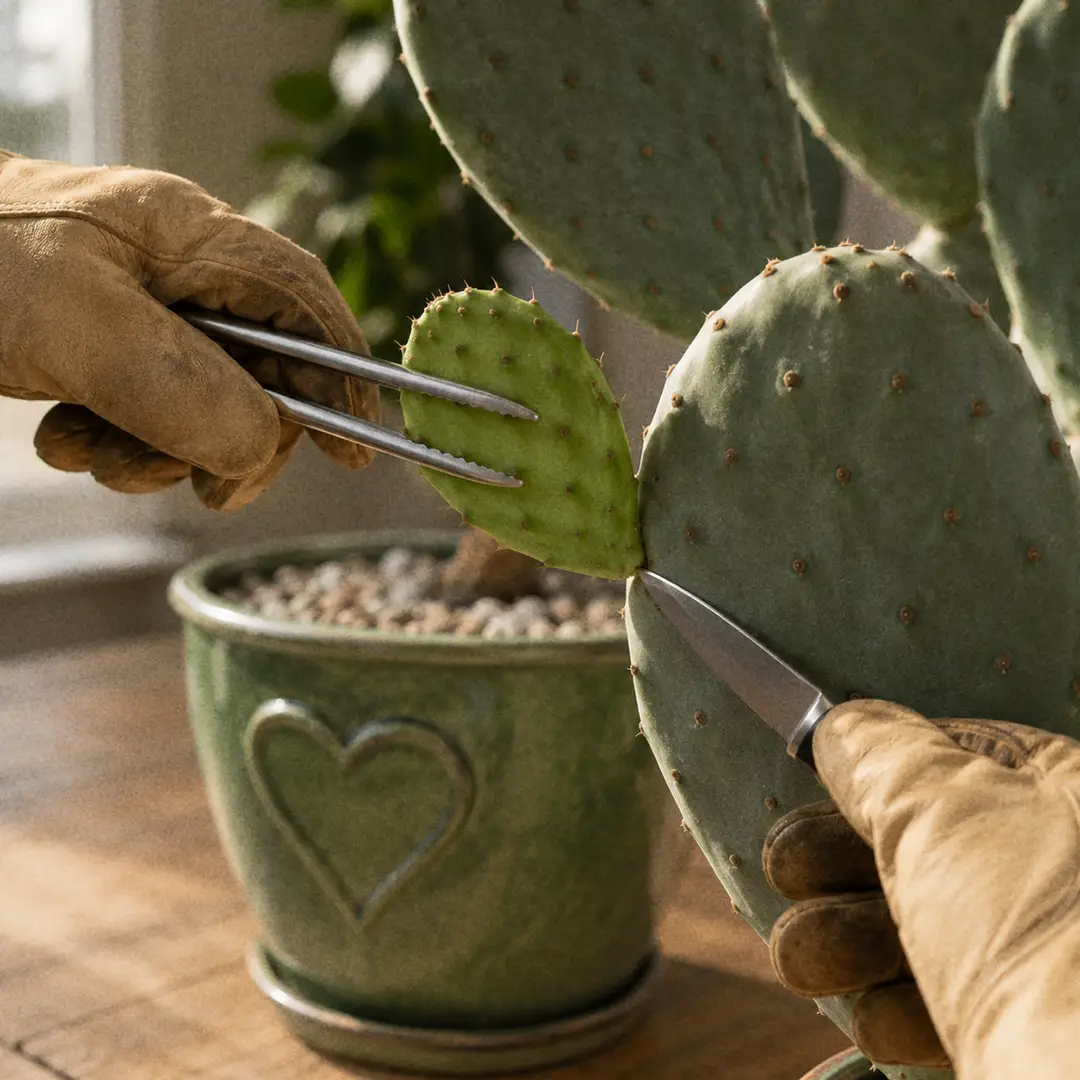
- Fold newspaper into a thick band and wrap it twice around the pads you plan to grip, or use long kitchen tongs. Garden gloves are not enough; glochids go straight through fabric.
- Tip the pot on its side and slide the rootball out rather than pulling the plant upward.
- Crumble away the old mix and trim blackened roots with sterile scissors.
- Settle the plant into fresh gritty mix at its old depth, firming with a chopstick.
- Do not water for a full week so cut roots can callus over.
Bin the newspaper afterwards, or wash the towel on its own. Loose glochids in a laundry load will find you later. Our repotting guide covers general timing.
✂️ Pruning Prickly Pear
Pruning does double duty here: it keeps a potted plant from outgrowing the room, and it is how you harvest.
When to Prune
Late spring through summer, while the plant is growing and cuts callus quickly. Prune to reduce height, to remove a pad growing at an awkward angle, or to take off anything scarred or damaged. A healthy plant needs no routine pruning.
How to Prune
Always cut at the joint where one pad meets another, never across the middle of a pad. A cut through the pad body leaves a wound that heals badly and often rots. Use a sterile sharp knife, hold the pad with tongs or folded newspaper, and let the cut dry in open air. Do not seal it or water overhead for a week. Every healthy pad you remove is a free new plant, so keep them.
Harvesting Nopales
Young pads are the ones you eat. Take them in late spring when they are bright green, still slightly soft, and roughly palm-sized; older pads turn fibrous. Cut at the joint with a knife, holding the pad with tongs. To prepare, scrape the whole surface firmly with the back of a knife under running water to strip out every areole, then trim the rim. Never take more than a third of the plant's pads in a season.
🌱 How to Propagate Prickly Pear
If you have ever wanted a propagation win, this is it. Pad cuttings root at a rate that borders on comical, and a single pad becomes a decent plant within two seasons.
Best Method
Pad cuttings, taken in late spring or early summer. Seed works but is slow and pointless when cuttings are this reliable. Choose a firm, mature pad at least six inches long from the outside of the plant, not a soft young one or a woody basal one.
Step-by-Step Pad Propagation
- Wearing thick gloves and using tongs, twist or cut the pad away cleanly at its joint.
- Set it somewhere dry, shaded, and airy to callus for one to two weeks. The cut should be dry, firm, and slightly corky before it touches soil. Most failures happen here.
- Stand the pad upright with the calloused end an inch deep in dry gritty mix, flat-face to the sides just as it grew. Prop it with two stones if it will not stay up.
- Do not water. Give it bright light but no scorching sun for the first fortnight.
- After two to three weeks, water lightly once and let the mix dry out completely again.
- By six to eight weeks the pad should resist a gentle wiggle, and a new pad usually pushes from the top edge soon after.
Tips for Success
Propagate in warmth and lengthening days; a pad taken in October will sulk until spring. Use lean gritty mix rather than seed compost, and resist both tugging at the pad and watering early. A rotted cutting is nearly always one planted wet or planted before it callused. Our succulent propagation guide covers the general method.
🐛 Prickly Pear Pests and Treatment
Pests are uncommon on a well-lit, dry-grown plant, but the felted areoles give anything that arrives a good hiding place.
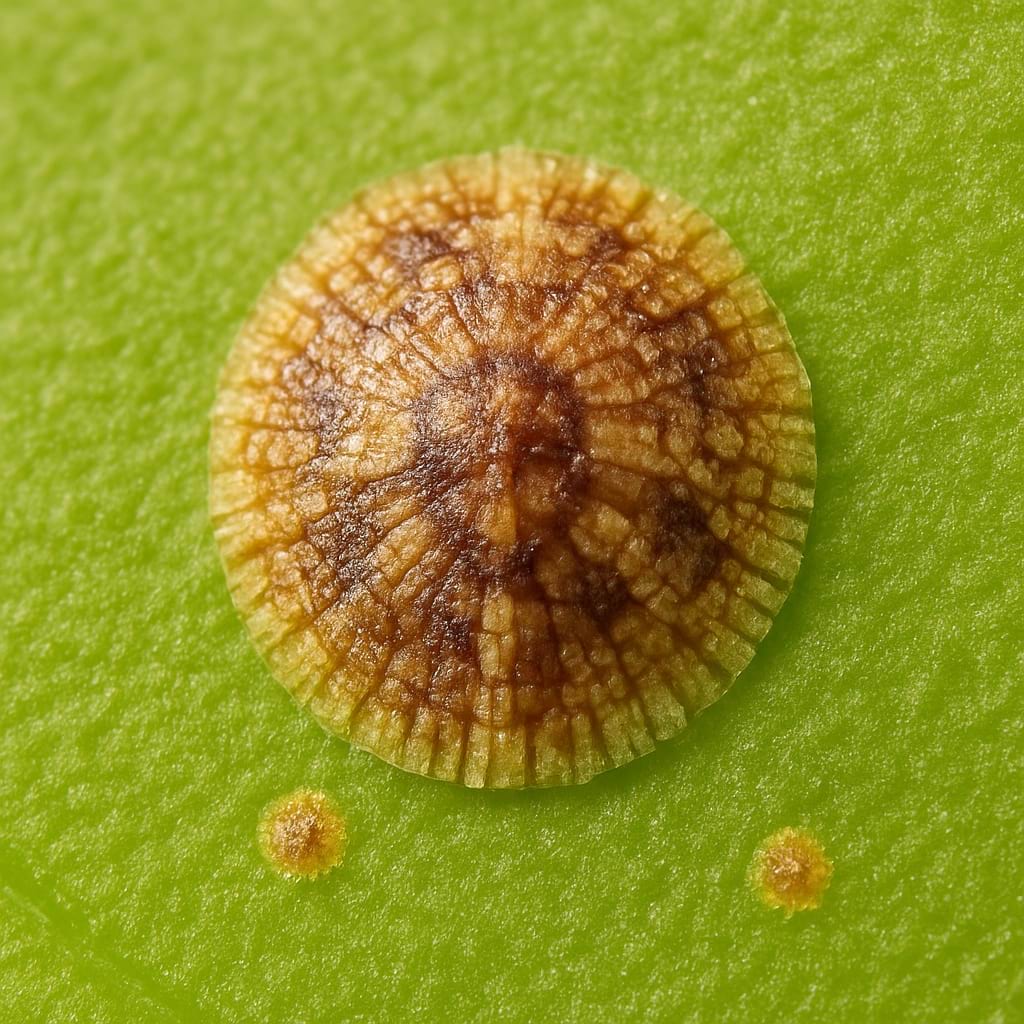
- Cochineal scale: The signature Opuntia pest. White cottony blobs on the pads that crush to a vivid blood-red smear, which is carmine dye. Blast the colonies off with a jet of water outdoors, then follow with horticultural oil.
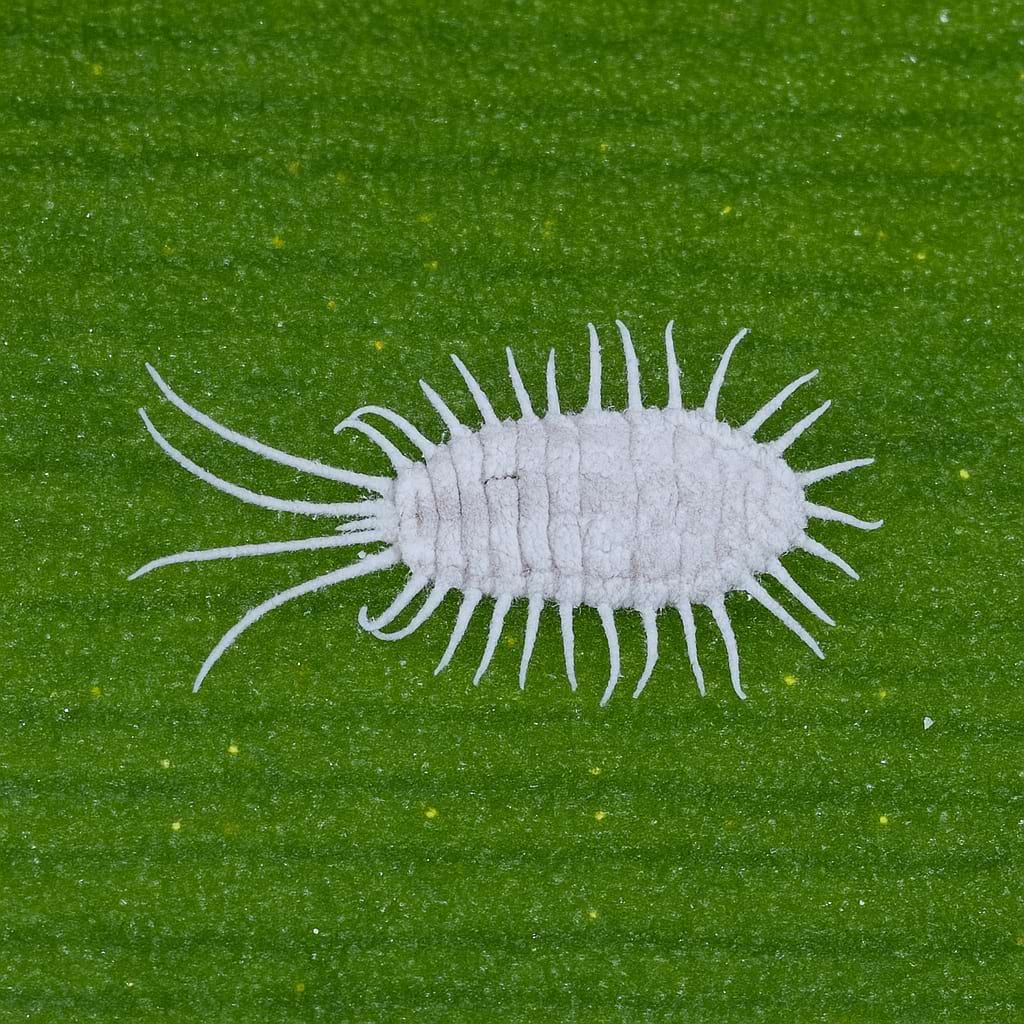
- Mealybugs: Cotton-like specks tucked into the joints between pads. Dab with isopropyl alcohol on a cotton bud every five to seven days for three weeks.
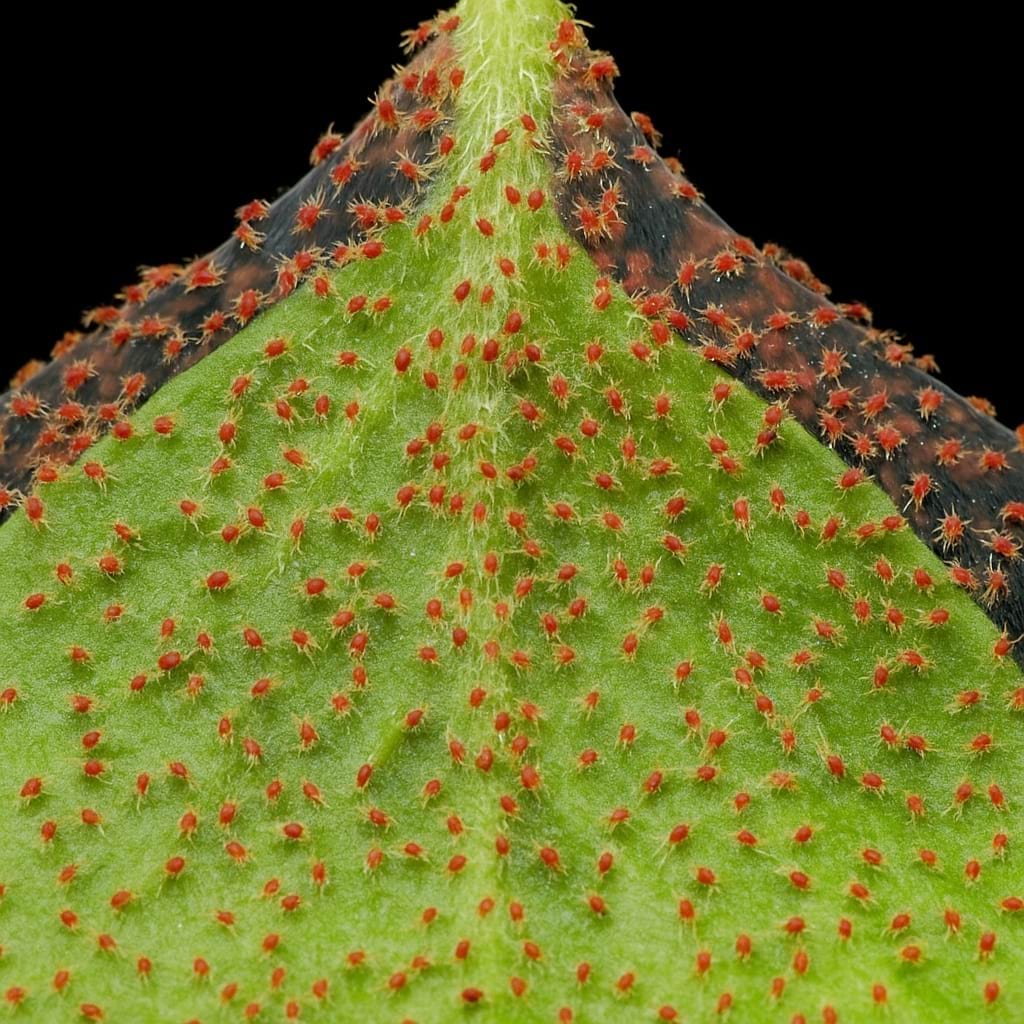
- Spider mites: Fine webbing and faint stippling in hot, still, dry air. Rinse outdoors and improve airflow; use mild horticultural soap if they persist.
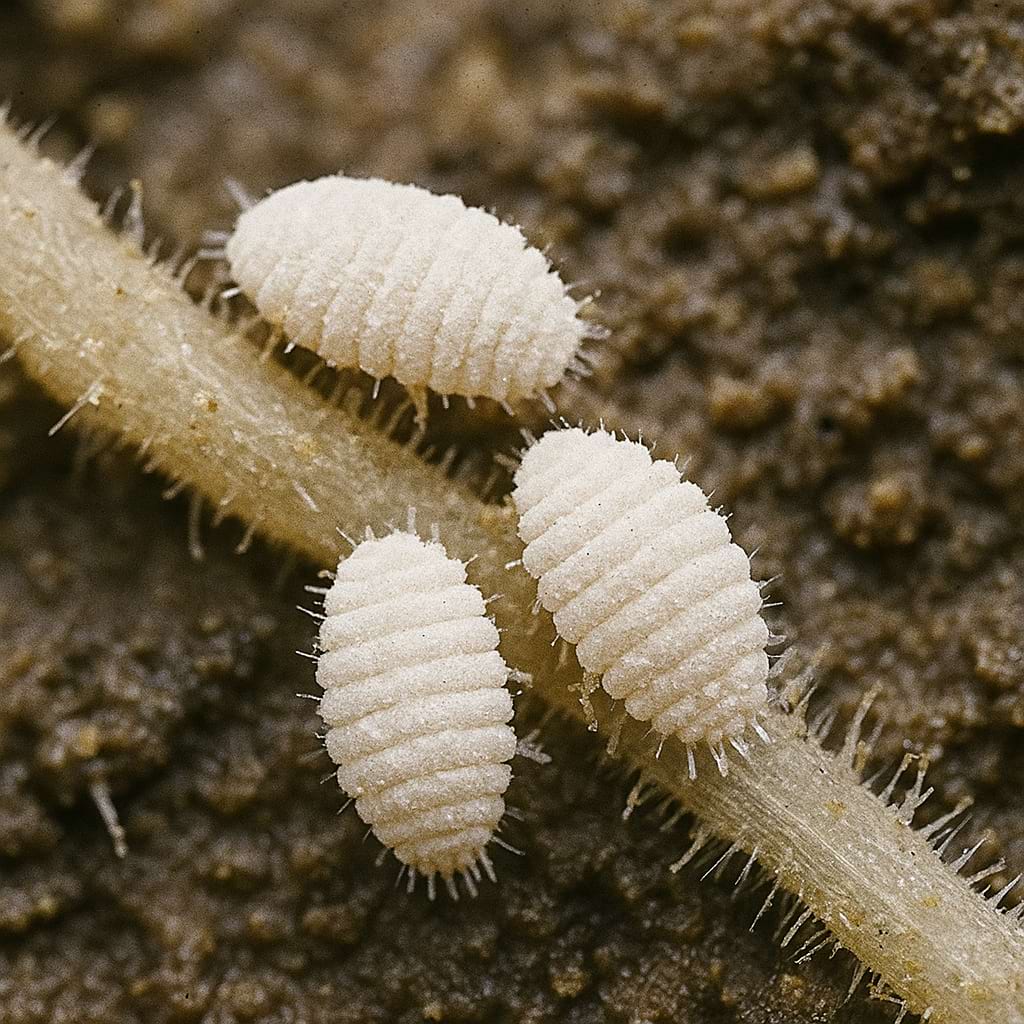
- Root mealybugs: White powdery deposits on the rootball, invisible until you unpot. Wash the roots, repot into fresh dry mix, no water for two weeks.
Throw away whatever you treat the plant with. Sponges and cloths pick up glochids and hand them to you later.
🩺 Common Prickly Pear Problems
Nearly every problem here comes back to water, light, or handling.
- Root rot and mushy pads: The main killer. Soft translucent tissue at the base, sour smell, yellowing from the bottom up. Cut back to firm green tissue, callus, and restart.
- Yellowing pads: Even yellowing from the base means overwatering. Uniform pale yellow-green means exhausted mix after years without repotting.
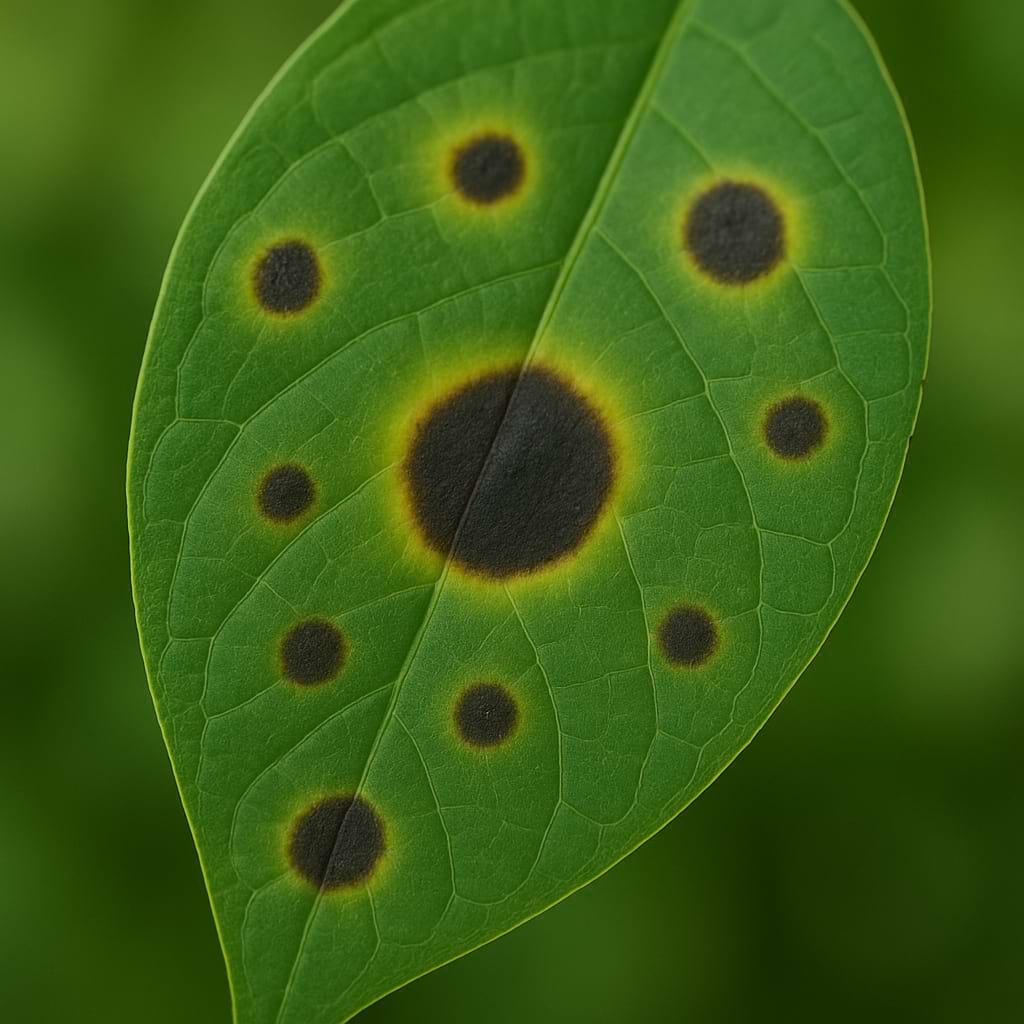
- Brown or black spots: Bacterial pad spot, from water sitting in the joints plus cool damp air. Water at the soil only and improve airflow.
- Sunburn: Bleached patches on the sun-facing side after a sudden move outdoors. Permanent on that pad.
- Leggy stretched growth: Narrow, pale new pads and a badly leaning plant. Not enough light, and stretched pads never recover.
- Stunted growth: No new pads for a full season means too little light, a rootbound pot, or both.
- Wrinkled, floppy pads: Thirst, if the soil is bone dry. If the soil is damp and pads are limp, this is rot.

🖼️ Prickly Pear Display and Styling Ideas
A mature Prickly Pear is architecture. Flat overlapping paddles at different angles throw wonderful shadows, and the plant reads as sculpture in a way few houseplants manage.
Solo Setups
A single specimen in a heavy unglazed terracotta pot, mulched with pale grey grit beside a south-facing window, is the whole design. Give it a couple of feet of clear wall behind so the silhouette stands out. Backlit at sunset, the shadows it throws are half the appeal.
Grouped Arrangements
Group by contrasting shape rather than theme. The flat paddles play well against the round Golden Barrel Cactus, the shaggy column of an Old Man Cactus, or the rosettes of an Aloe Vera. Keep the pots matched and leave space between plants so each shape stays legible.
Where Not to Put It
Not in a hallway, not beside a sofa, not anywhere a sleeve will brush it. This plant needs clearance. Skip bathrooms and dim corners, and keep it off floor level in homes with cats, dogs, or small children.
🌟 Prickly Pear Pro Care Tips
☀️ Give it your best window and then some. South-facing, right at the glass, no curtain. Light is the whole game with this plant.
🧤 Never trust a "spineless" pad. Tongs or folded newspaper every single time, including for quick jobs.
🩹 If glochids get in your skin, do not pick or rub. Press duct tape over the area and peel in the direction the bristles point. Our guide on cactus needles in skin covers the rest.
🥶 The cold winter rest is not optional if you want fruit. Six to ten weeks at 40 to 55°F, bright, and nearly dry.
🌞 Summer it outdoors. Two weeks of gradual acclimation, then all the sun there is. Fastest route to a flowering plant.
🪴 Use a pot heavy enough to survive a knock. A toppling Prickly Pear scatters glochids across the whole room.
🚫 Never mist it. Wet pads and joints cause the black spotting that dry-grown plants never get.
🔪 Cut at joints, never across a pad. Joint cuts callus in days; pad cuts often rot.
❓ Frequently Asked Questions
Can I actually eat my houseplant Prickly Pear?
Yes. Opuntia ficus-indica is the species farmed commercially for nopales and tuna fruit, so a healthy potted plant is genuinely edible. Only harvest from a plant you have never sprayed with pesticide, and scrape every areole off thoroughly before cooking.
Is the Prickly Pear toxic to cats and dogs?
It is not chemically toxic and is not listed as poisonous. The hazard is mechanical: glochids embed in paws, noses, and mouths, and they are painful and hard to remove. Keep the plant off the floor and out of reach in a pet household.
How do I get glochids out of my skin?
Do not pick at them, which pushes them deeper. Apply duct tape and peel in the direction the bristles point, or spread a thin layer of white school glue, let it dry fully, and peel it off. Repeat two or three times, then get stragglers with tweezers under bright light.
How big will it get indoors?
In a pot, expect three to six feet tall and three to five feet wide over many years, and you can hold it smaller by pruning pads at the joint. In the ground in a warm climate the same plant becomes a tree of 10 to 18 feet.
How fast does it grow?
Fast, by cactus standards. A well-lit plant produces several new pads each summer, and a rooted cutting can reach two feet in about three years. Growth stops completely from autumn to spring, which is normal.
Why are my pads turning purple?
Stress pigment, not disease. Cold, drought, or intense sun all trigger it, most often in late winter. If the plant is otherwise firm, leave it alone. The color fades once warmth and water return.
What is the difference between Prickly Pear and Bunny Ear Cactus?
Size and armament. The Bunny Ear Cactus (Opuntia microdasys) is a small ornamental under three feet with palm-sized paired pads and polka dots of glochids but no real spines. Prickly Pear is the large agricultural species with pads up to 18 inches and edible fruit.
Can I grow one from a supermarket pad or fruit?
A supermarket nopal pad sometimes roots, though many are trimmed, refrigerated, or too young to succeed. Seed from a ripe tuna germinates readily but takes years to reach any size. A pad cutting from a living plant beats both.
ℹ️ Prickly Pear Info
Care and Maintenance
🪴 Soil Type and pH: Sandy, gritty, sharply draining cactus mix with pumice or coarse sand; neutral to slightly alkaline pH.
💧 Humidity and Misting: Perfectly happy in dry household air around 30 to 40 percent; dislikes damp, still conditions.
✂️ Pruning: Remove pads at the joint to control height, correct a lopsided plant, or harvest young pads for the kitchen.
🧼 Cleaning: Brush dust from pads with a soft dry brush, working downward; never wipe with a damp cloth, because glochids transfer straight into the fabric and then into your hands.
🌱 Repotting: Pot up one size when the plant becomes top-heavy or roots circle the base, usually every two to three years in spring.
🔄 Repotting Frequency: Every 2-3 years
❄️ Seasonal Changes in Care: Strong growth from spring to early autumn, then a cool, bright, nearly dry winter rest that sets up flowers and fruit.
Growing Characteristics
💥 Growth Speed: Moderate to Fast (quick by cactus standards)
🔄 Life Cycle: Perennial
💥 Bloom Time: Late spring into early summer, with fruit ripening from late summer through autumn
🌡️ Hardiness Zones: 8b-11 outdoors; grown in pots and overwintered indoors elsewhere
🗺️ Native Area: Central Mexico, now naturalized across the Mediterranean, North Africa, Australia and South Africa
🚘 Hibernation: Cool, dry winter rest of six to ten weeks
Propagation and Health
📍 Suitable Locations: South-facing and west-facing windows, sunrooms, conservatories, bright balconies, summer patios
🪴 Propagation Methods: Detach a mature pad at the joint, callus it for one to two weeks, then stand it upright in dry gritty mix.
🐛 Common Pests: Mealybugs, Scale Insects, Spider Mites, Root Mealybugs
🦠 Possible Diseases: Root rot, soft rot, bacterial pad spot, cochineal scale infestation
Plant Details
🌿 Plant Type: Large branching pad-forming cactus in the Opuntia genus (Cactaceae)
🍃 Foliage Type: Succulent modified stems shaped as flat oval pads (cladodes)
🎨 Color of Leaves: Blue-green to grey-green pads, often with a soft waxy bloom, flushing purple in cold or drought
🌸 Flower Color: Lemon yellow through apricot and deep orange, occasionally red on some selections
🌼 Blooming: Yes, on mature plants given full sun and a genuine cool dry winter rest
🍽️ Edibility: Fully edible. Young pads are eaten as nopales, and the ripe fruit (tuna) is eaten fresh or juiced, once glochids are removed
📏 Mature Size: 3-6 feet in a pot indoors; 10-18 feet in the ground in warm climates
Additional Info
🌻 General Benefits: Edible crop, drought tolerant, fast to propagate, sculptural architectural form, tolerates neglect
💊 Medical Properties: Long traditional use in Mexican folk medicine for blood sugar and digestion; pad mucilage is used on skin much like aloe. Studied but not a substitute for medical treatment.
🧿 Feng Shui: Grounding, protective, abundance-linked energy. The spined areoles make it a doorway or balcony plant in traditional placement rather than a bedroom plant.
⭐ Zodiac Sign Compatibility: Taurus
🌈 Symbolism or Folklore: Endurance, abundance, nourishment from hard ground, self-protection
📝 Interesting Facts: This is the cactus on the Mexican flag and coat of arms, and it has been farmed in Mexico for thousands of years for both its pads and its fruit. For centuries it was also grown as livestock: the cochineal insect feeds on the pads, and the crushed insects produce carmine, the brilliant red dye that colored European royal cloth and still tints some foods and cosmetics today. The plant's toughness has a dark side. Introduced to Australia in the 1800s, it escaped and covered roughly 60 million acres of farmland before being beaten back by an imported moth, Cactoblastis cactorum, in one of the most successful biological control programs ever run.
Buying and Usage
🛒 What to Look for When Buying: Look for firm, plump, evenly blue-green pads with no scarring at the joints and at least one young pad on top, which shows the plant is actively growing. Check the base for soft brown patches and the areoles for white cottony specks. A two-pad cutting is often a better buy than a large plant, since it establishes quickly and travels home without damage.
🪴 Other Uses: Kitchen crop for nopales and tuna fruit, natural fencing in warm climates, fodder in drought regions, cochineal dye production, drought-tolerant landscaping
Decoration and Styling
🖼️ Display Ideas: Solo as a floor specimen in a heavy terracotta pot, a sunroom corner with gravel mulch and a large stone, a patio grouping with other desert plants through summer
🧵 Styling Tips: Let the pad silhouette carry the design. Use a plain, heavy, earthy pot in terracotta or unglazed stoneware, mulch with pale grit rather than bark or moss, and give it enough clear space that the flat pads read as a shape rather than a tangle.
🪴 See also 🪴

Houseplant101 Forum
Questions & Comments
Ask a question, share your plant experience, or help other plant owners.
Comments are temporarily unavailable.
Open the Houseplant101 ForumNo comments yet
Be the first to ask a question or share your experience about this page.
Log in or create an account
Comments use your Houseplant101 Forum account, but you can stay on this page.
Create a new account