
Persian Shield
Strobilanthes dyerianus
Royal Purple Plant, Bermuda Conehead, Strobilanthes dyeriana


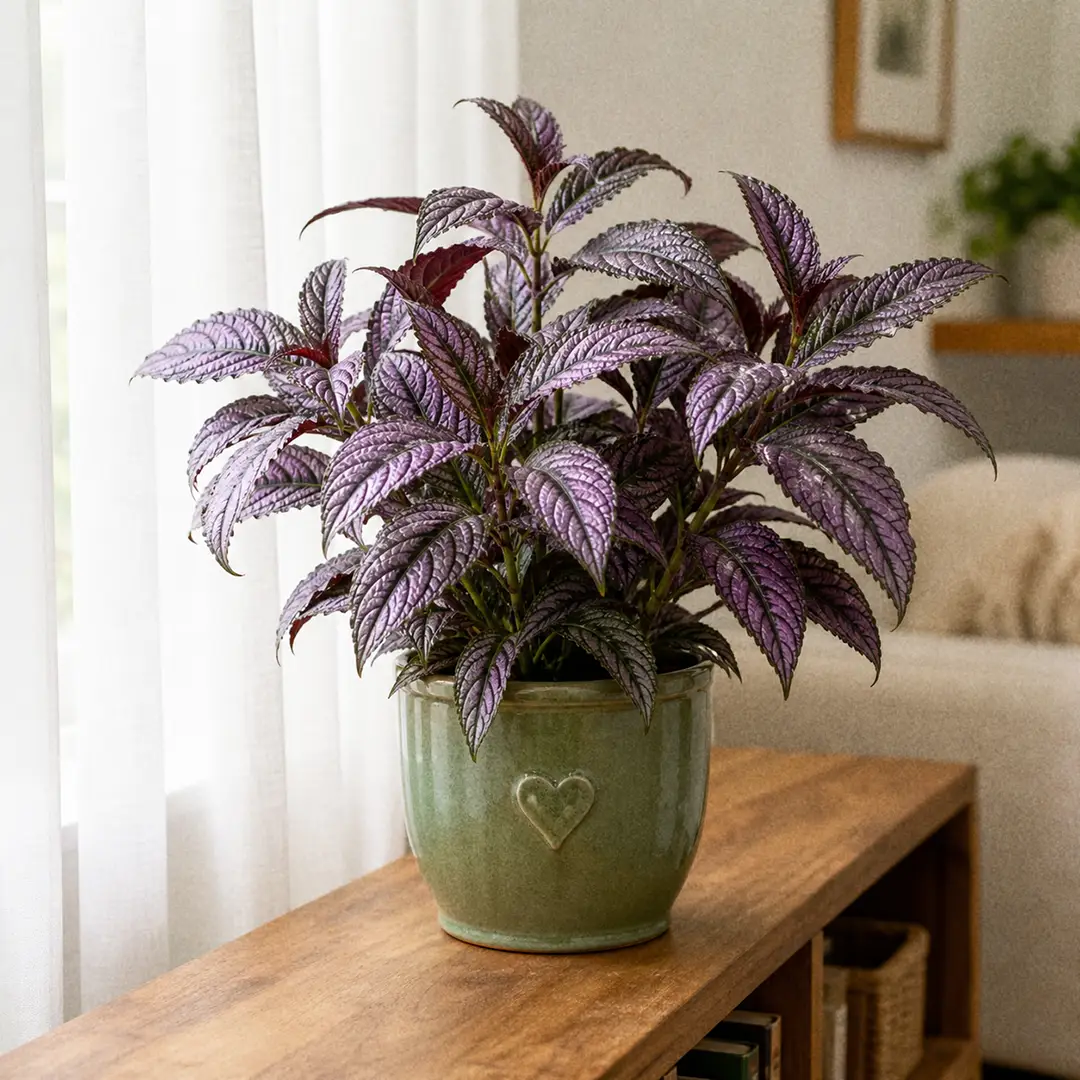
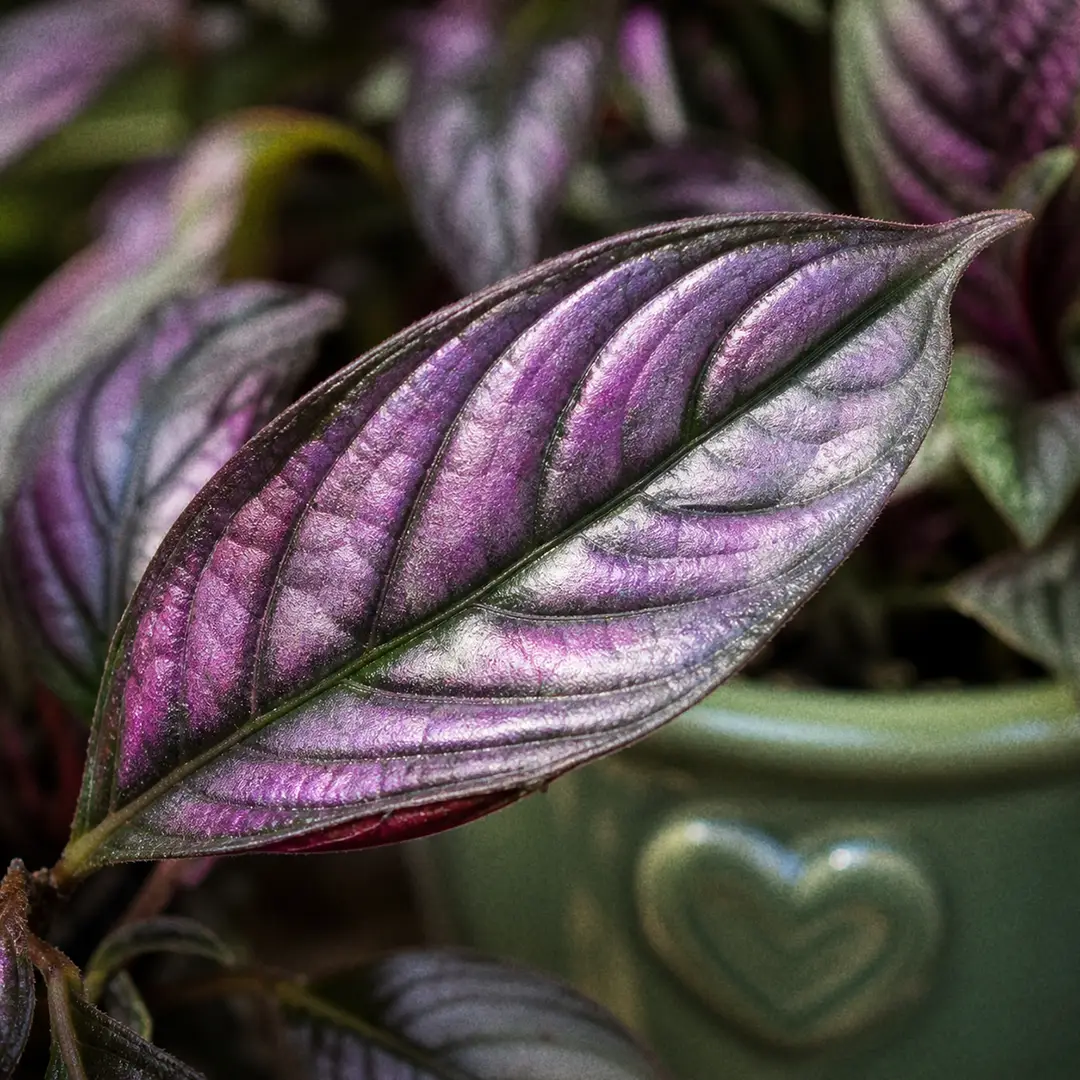
Persian Shield (Strobilanthes dyerianus) is a Burmese tropical with leaves that shimmer like polished amethyst, silver iridescence layered over deep purple with dark green veins. With bright filtered light, steady moisture, and regular pinching, this plant turns any sunny corner into a jewel-toned showpiece.
📝 Persian Shield Care Notes
🌿 Care Instructions
⚠️ Common Pests
📊 Growth Information
🪴 In This Guide 🪴

☀️ Persian Shield Light Requirements (How Much Light It Really Needs)
Best Light
Persian Shield needs bright filtered light to keep its metallic shimmer. The iridescence comes from refractive cells in the upper leaf surface, and that layer is built in response to bright but indirect light. Too little, and the plant pours its energy into chlorophyll, leaving you dull flat purple. Too much harsh sun, and that same layer bleaches.
The sweet spot is bright indirect light all day with one to two hours of gentle morning or late afternoon sun. East-facing is close to perfect. South or west works if set two to three feet back or behind a sheer curtain. A north window can work in summer but is usually too dim in winter.
If you have grown a Polka Dot Plant or Nerve Plant, the same spot works for Persian Shield. They share the same preference, which is why they look so good grouped together.
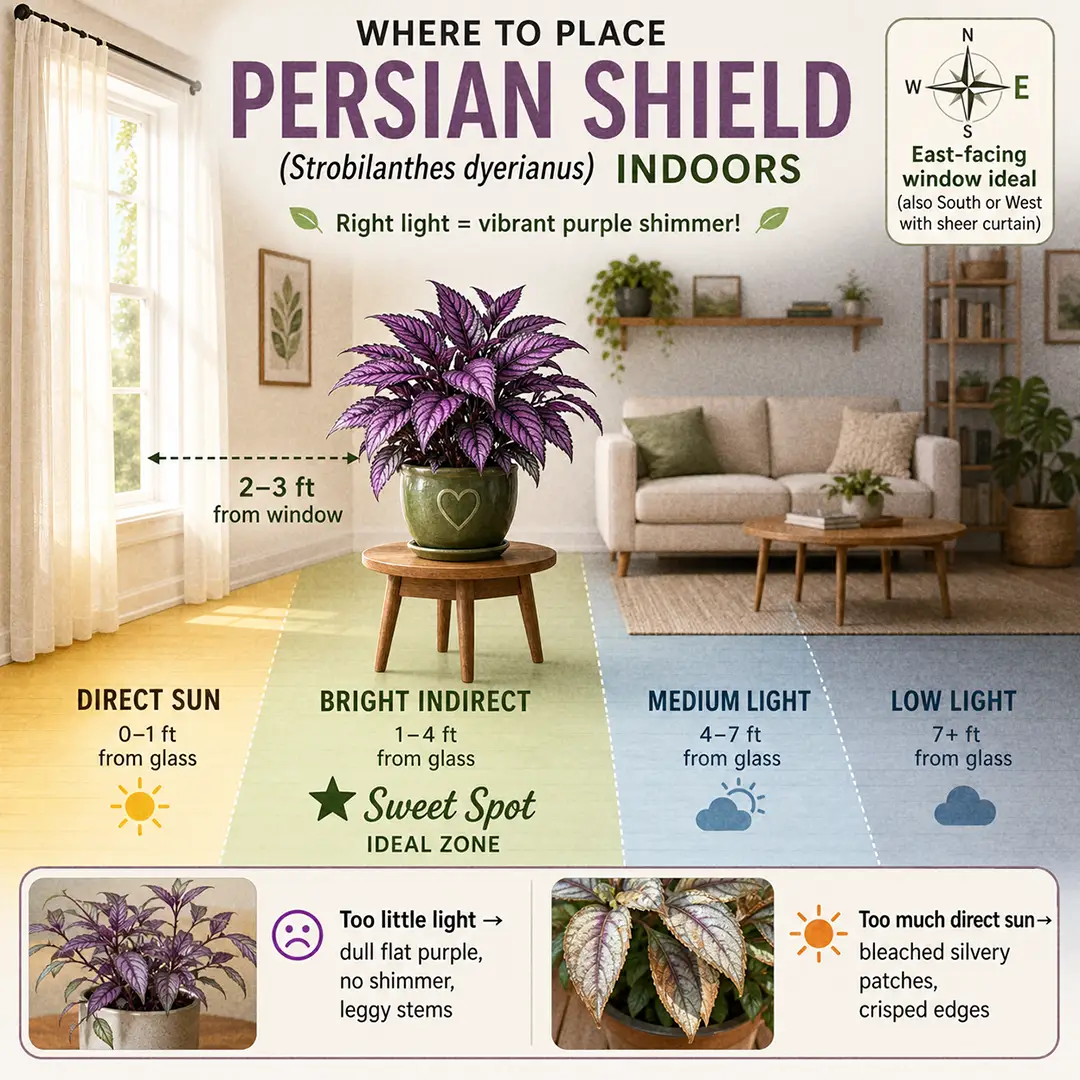
Hold your hand a foot above the plant at the brightest time of day. Soft diffused shadow means right. Hard-edged shadow means too bright. No shadow means survival zone.
Signs of Incorrect Light
Too little: pale new leaves with flat dull purple, stretched internodes, leaning stems, dropping lower leaves. The fix is more light, not water or fertilizer.
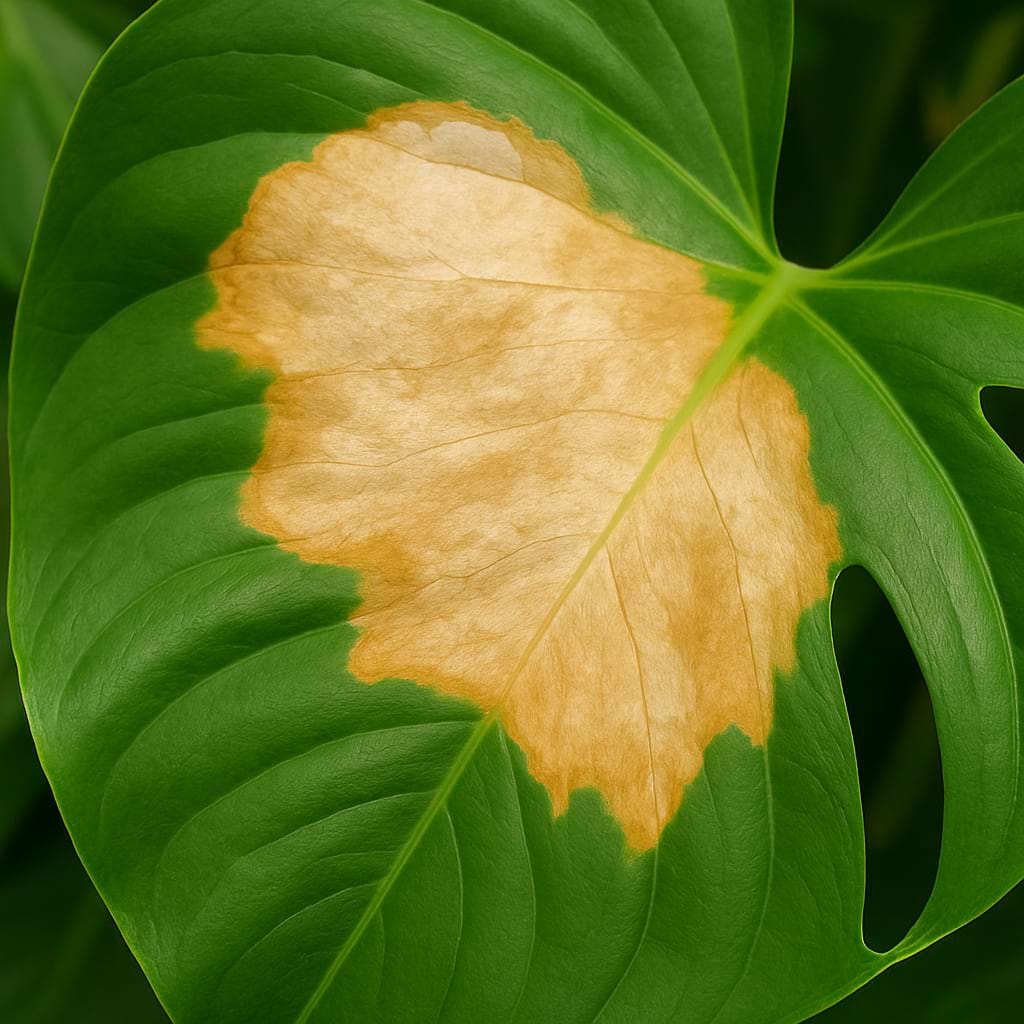
Too much direct sun: bleached white or papery patches on the silver areas, curled edges, midday wilting on moist soil. Move back from the window or shift to east-facing.
💧 Persian Shield Watering Guide (When and How to Water)
How Often
Persian Shield likes its soil evenly moist but not soggy. Water when the top inch is just barely dry but the deeper soil is still damp. In spring and summer that lands every 4 to 6 days; in winter, every 7 to 10 days.
The leaves have little water reserve, so a thirsty plant wilts dramatically and quickly. A thorough watering perks it back up within an hour or two. The bad news: repeated dry-outs stress the roots and trigger leaf drop. A simple watering routine that hits the same day each week is the single biggest improvement most people can make.
How to Water
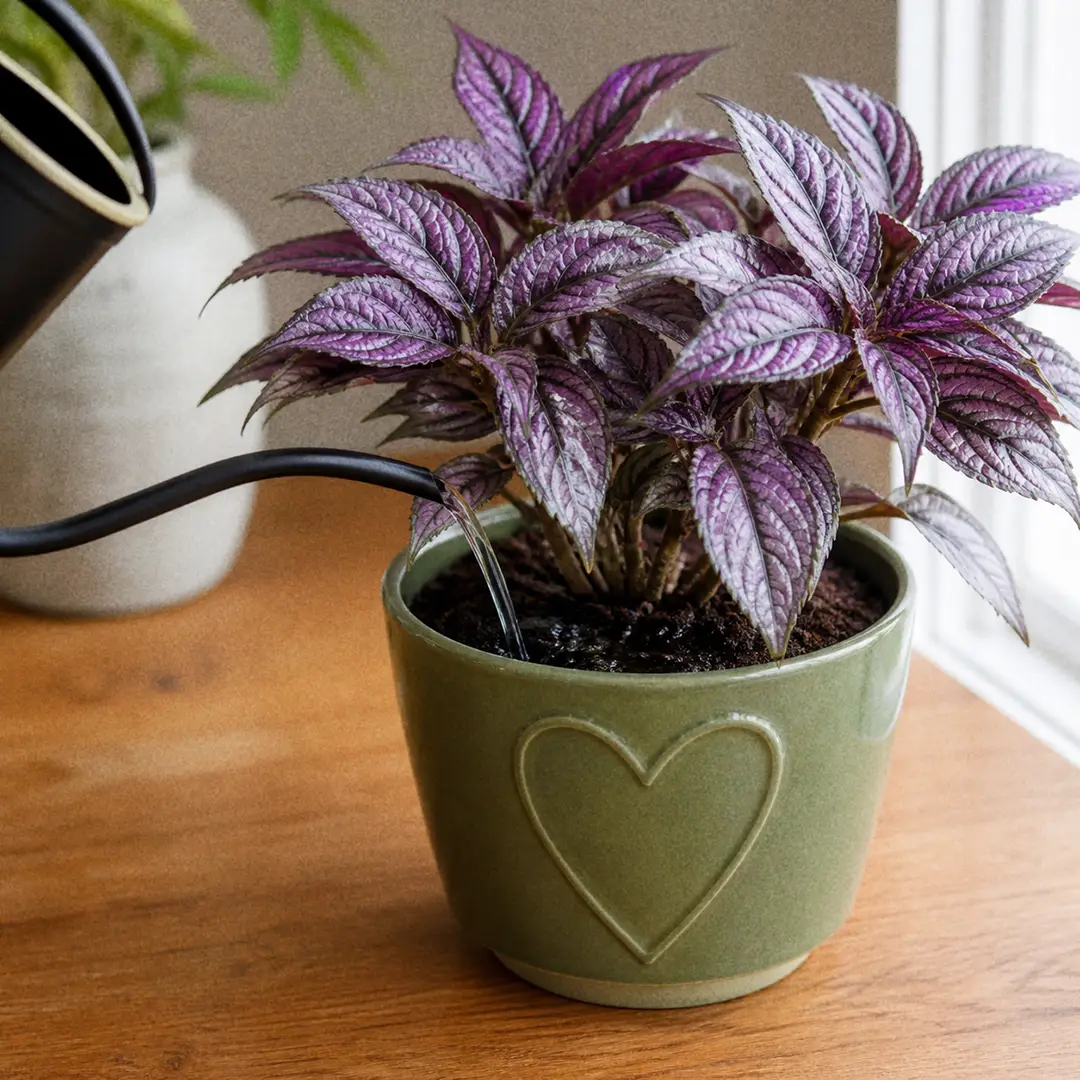
Top watering is fine: water thoroughly until it runs from the drainage hole, then dump the saucer. Persian Shield cannot sit in water; fine roots die within 24 to 48 hours of submersion.
Bottom watering works even better in summer. Set the pot in a tray of room-temperature water for 15 to 20 minutes, then drain. No splashing on the leaves means fewer fungal spots.
Use room-temperature water. Cold tap can shock the roots and cause sudden leaf drop. Heavily chlorinated or hard water? Let it sit overnight or use filtered.
Watering Mistakes
Underwatered: dramatic wilting across the whole plant, soil pulled back from the pot edges, leaves dull and slightly translucent. Recovery is fast after a deep soak.
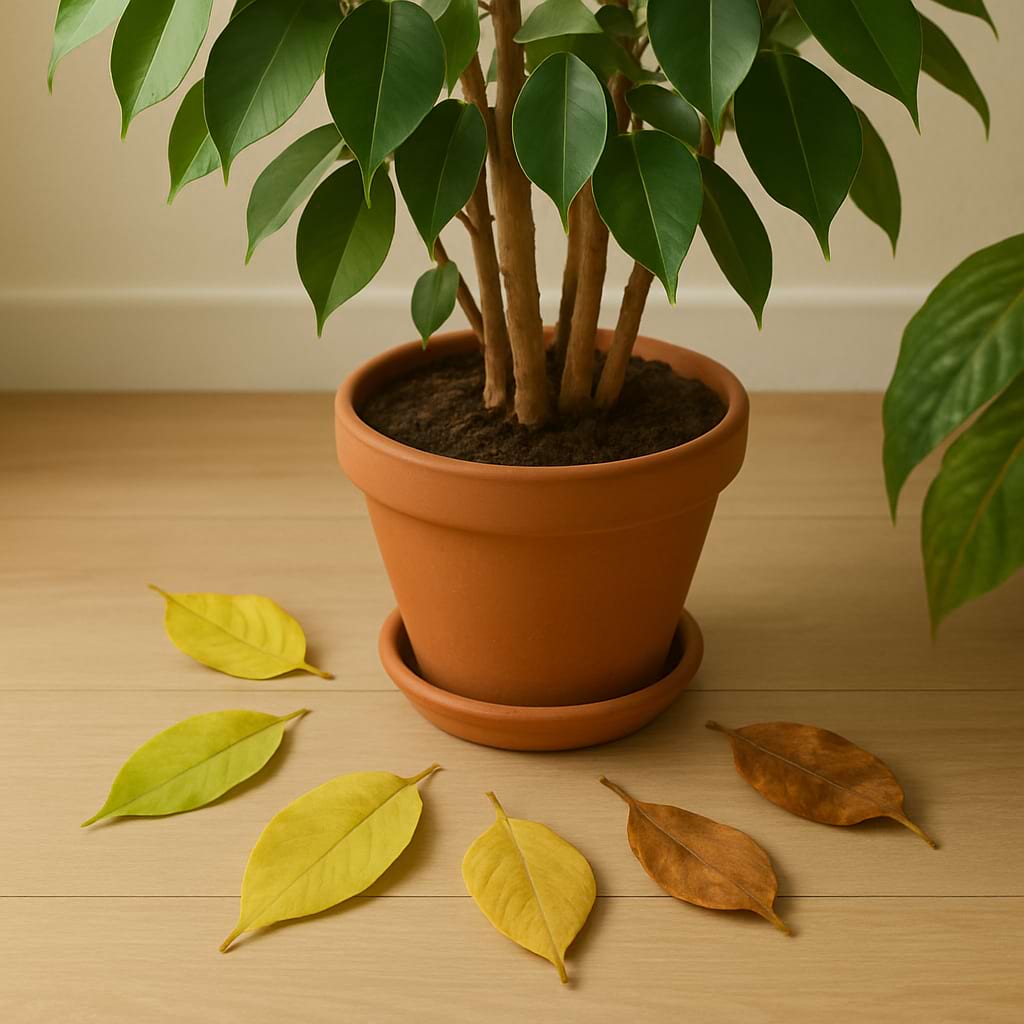
Overwatered: yellow translucent lower leaves, mushy stems darkening at the base, sour soil. This is the start of root rot. If you see soft stems, take cuttings from healthy upper growth immediately as backup.
🪴 Best Soil for Persian Shield (Mix and pH)
What the Soil Needs
Persian Shield wants drainage plus consistent moisture retention.
DIY Soil Mix
A simple homemade mix:
- 2 parts good peat or coco-coir based potting mix
- 1 part perlite (25-30% by volume)
- A small handful of compost or worm castings
Avoid heavy garden soil (compacts) and pure cactus mix (drains too fast). pH 6.0 to 7.0, which is the default for most bagged indoor mixes.
Self-Watering Tweaks
In a self-watering pot, push perlite closer to 40% since the reservoir adds moisture. A thin top-dress of fine bark or coconut coir mulch slows surface evaporation and looks better than bare soil.
🍼 Fertilizing Persian Shield (Schedule and Type)
When and How Often
Persian Shield grows fast and feeds accordingly. In spring through early autumn, feed every 2 to 3 weeks with a balanced liquid fertilizer at half strength (10-10-10 or 20-20-20). Fish emulsion or seaweed feed also works.
In winter, cut back to once a month at quarter strength, or skip entirely if the plant is in a low-light spot. Feeding a slow plant builds up salts and burns roots. See the fertilizing guide for label-reading basics.
Over-Fertilizing Signs
Good feeding shows up as large, well-veined, saturated new leaves. Overfeeding shows up as crispy brown tips and white salt crust. Flush the soil with plain water and skip the next two feedings.
Skip Slow-Release Granules
Skip slow-release granules indoors. They release based on temperature, not the plant's demand, so a warm living room keeps them feeding when growth has slowed.
🌡️ Persian Shield Temperature Range
Ideal Range
Persian Shield is fully tropical: 65 to 80°F (18 to 27°C). Happiest above 70°F, which matches most heated homes year-round.
Cold Damage
Below 55°F (13°C), cold damage shows up as black mushy patches, sometimes overnight on a leaf pressed against a cold window pane. Keep the plant a foot off freezing glass in winter. Watch AC vents in summer.
Summer Outdoors
Above 90°F (32°C) the plant may stress-wilt midday even on damp soil. It usually recovers in the cool evening. Outdoors in zones 9 to 11, Persian Shield grows into a 3 to 4 foot shrub. In cooler zones, summer outside and bring back inside before nights drop below 55°F.
💦 Persian Shield Humidity Requirements
Ideal Humidity
Persian Shield likes 50 to 60% humidity, a touch higher than the typical heated home (30 to 45%). It tolerates lower, but leaves stay smaller, iridescence dulls, edges crisp, and the plant becomes a spider mite target.
Easy Boosters
- Group with other tropical plants for a shared microclimate.
- Pebble tray with water below the pebble line.
- A small humidifier in winter.
- Keep clear of heater and AC vents.
Misting fades within minutes and on cool low-airflow leaves can encourage fungal spots. A small humidifier beats a spray bottle. The humidity guide covers more.
The Bathroom Trick
A bright bathroom is one of the best Persian Shield locations. Daily shower steam plus a good window equals the most saturated iridescence you have ever seen.
🌸 Persian Shield Flowers (Why You Should Pinch Them Off)
What the Flowers Look Like
Persian Shield does flower, but it is not common indoors and not the reason anyone grows this plant. The bloom is a cone-shaped spike of tubular pale violet flowers (the genus name Strobilanthes comes from Greek for cone). The flowers are fine up close but cannot compete with the foliage.
Why Flowering Is Bad News
Once Persian Shield flowers, the plant shifts into reproductive mode. Foliage thins, lower leaves drop, iridescence fades, stems get woody. Flowering essentially announces the end of the plant's most vivid phase.
How to Pinch Them Off
Pinch flower spikes off as soon as you see them forming at the stem tips in late autumn. Use clean fingernails or sharp scissors and remove the spike with a bit of stem just below it. Make this a weekly check from October through January. If you want to see the flowers for curiosity, do it on a backup cutting.
🏷️ Persian Shield Types and Varieties
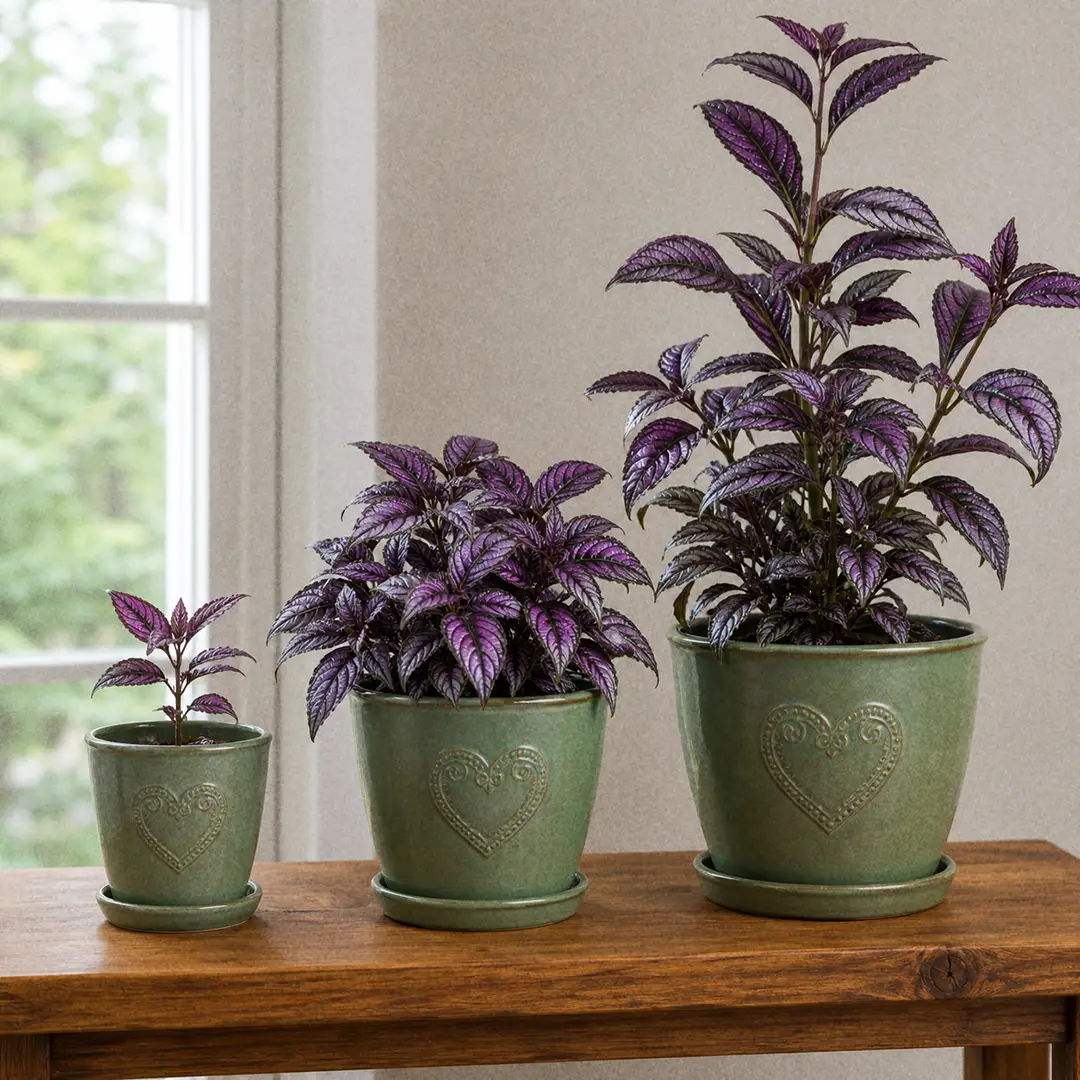
Strobilanthes dyerianus is a single species in cultivation, with no widely circulated named cultivars (unlike Coleus or Bloodleaf). What you find at shops is the straight species. Different growers produce plants with different iridescence intensity, but those are cultural rather than genetic differences.
Strobilanthes dyerianus (the Standard)
Iridescent silver-purple leaves with dark green veins, deep burgundy undersides, upright bushy habit. 18 to 36 inches indoors. Everything in this guide is about this plant.
Seedling vs. Cutting-Grown
Most commercial Persian Shield is grown from cuttings of select parents. Seed-grown plants often have weaker shimmer. Pick the most iridescent in the batch.
Strobilanthes anisophyllus (Goldfussia)
A close cousin sometimes mislabeled. Narrower lance-shaped leaves in solid plum-purple without iridescence. Flowers more readily.
Strobilanthes alternata 'Marina' (Wallis Persian Shield)
A trailing relative with iridescent green-and-silver leaves rather than purple. Beautiful in hanging baskets.
Persian Shield is also sold as "Royal Purple Plant" and "Bermuda Conehead". Same plant.
🪴 Potting and Repotting Persian Shield
Pot Type and Size
Persian Shield prefers a snug pot. Oversized containers hold more soil than the roots can drain, which becomes a root rot trap. Start a young plant in a 4 to 6 inch pot, then go up only one to two inches at a time.
Drainage holes are non-negotiable. Terracotta is excellent because it wicks moisture and dries the root zone evenly, though you will water more often. A wider, shallower pot works better than a deep narrow one; Persian Shield has a shallow fibrous root system.
When to Repot
Repot every spring, or whenever you see:
- Roots circling the bottom or escaping the drainage holes
- Water running straight through without absorbing
- Plant becoming top-heavy
- Growth slowing despite good light and feeding
See the repotting guide for full steps.
How to Repot
Water the day before. Tip the plant out, shake off loose soil, and inspect the root ball. Tease apart circling roots; score the ball lightly if tightly bound. Snip off soft dark roots. Set in fresh soil at the same depth, water thoroughly, and keep out of direct sun for a few days.
Repotting is a great moment to take backup cuttings. I always set aside two or three tip prunings to root on the windowsill.
✂️ Pruning Persian Shield (Pinching for Bushy Growth)
Pinching is the single most important Persian Shield habit. A regularly pinched plant stays full and well-colored. An unpinched one turns into a tall leggy stem with bare lower stems within months.
Why Pinch
Removing the growing tip forces the plant to send out two new stems from the leaf nodes below. One stem becomes two, then four, then eight. Pinched plants also produce smaller, more saturated leaves.
How to Pinch
Use clean fingernails or sharp scissors. Snap the top inch to two inches off each stem, just above a healthy pair of leaves, so new branching starts there. Pinch any developing flower spikes the same way.
Do this every 2 to 3 weeks during the growing season. Start once a young plant has 3 to 4 sets of true leaves.
Hard Pruning a Tired Plant
If yours has gone seriously leggy, do not be afraid to cut it back hard. In early spring, prune down to about 4 to 6 inches, leaving at least two leaf nodes on each stem. New growth emerges within 2 to 3 weeks and the plant comes back denser.
Save Your Cuttings
A well-cared-for Persian Shield hands you 5 to 10 free cuttings each season from routine pinching. Drop them in a jar of water and within weeks you have new plants to gift, swap, or use as backup.
🌱 How to Propagate Persian Shield
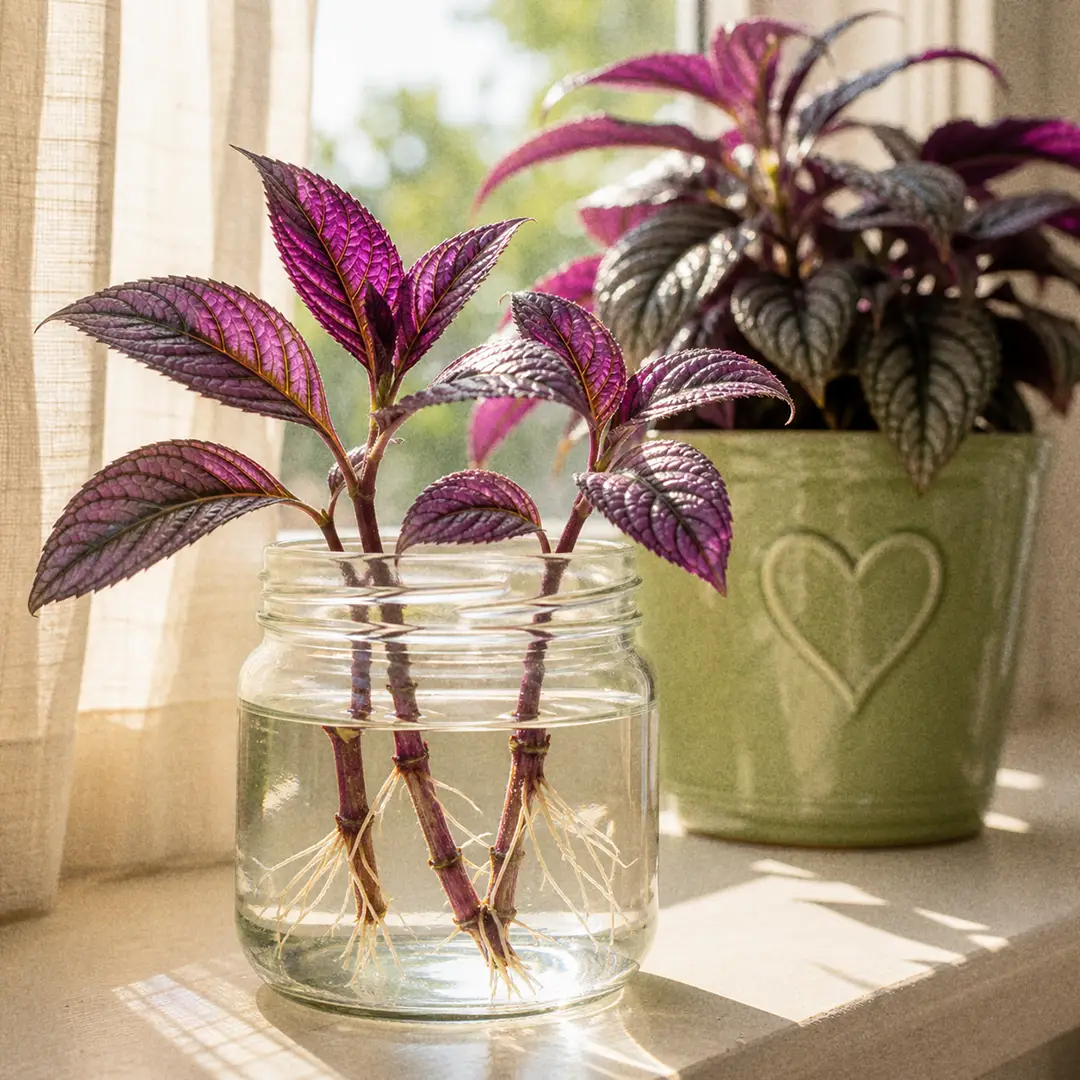
Cuttings root in water within 2 to 3 weeks. If you are new to propagation, this is a great plant to learn on.
There is also a practical reason to keep propagating. Older plants lose vigor and iridescence after about two years even with great care. Keep a rotation of new cuttings going and you essentially keep the same plant alive indefinitely through its descendants. Most experienced growers replace the parent every 1 to 2 years.
Water Propagation (Easiest)
- Take a 4 to 6 inch cutting from a healthy stem, ideally a tip you just pinched. Cut just below a leaf node.
- Strip the lower 1 to 2 sets of leaves, leaving 2 to 3 sets on top.
- Place in a jar of room-temperature water with bare nodes submerged.
- Set in bright indirect light. Avoid direct sun.
- Change water every 3 to 4 days.
- White roots appear in 10 to 14 days. When they reach 1 to 2 inches, pot in moist mix.
Soil Propagation
Take the cutting the same way, dip the cut end in rooting hormone (optional), and push 1 to 2 inches deep into moist potting mix. Cover loosely with a clear bag for humidity, vent daily. Roots establish in 3 to 4 weeks. The advantage: the cutting never has to transition from water roots to soil roots.
When to Propagate
Spring through early autumn is ideal. Winter propagation works but is slower and weaker until spring light returns.
🐛 Persian Shield Pests and Treatment
Persian Shield's sap-rich leaves invite a few common pests. Catching them early matters. Check leaf undersides and stem tips weekly.
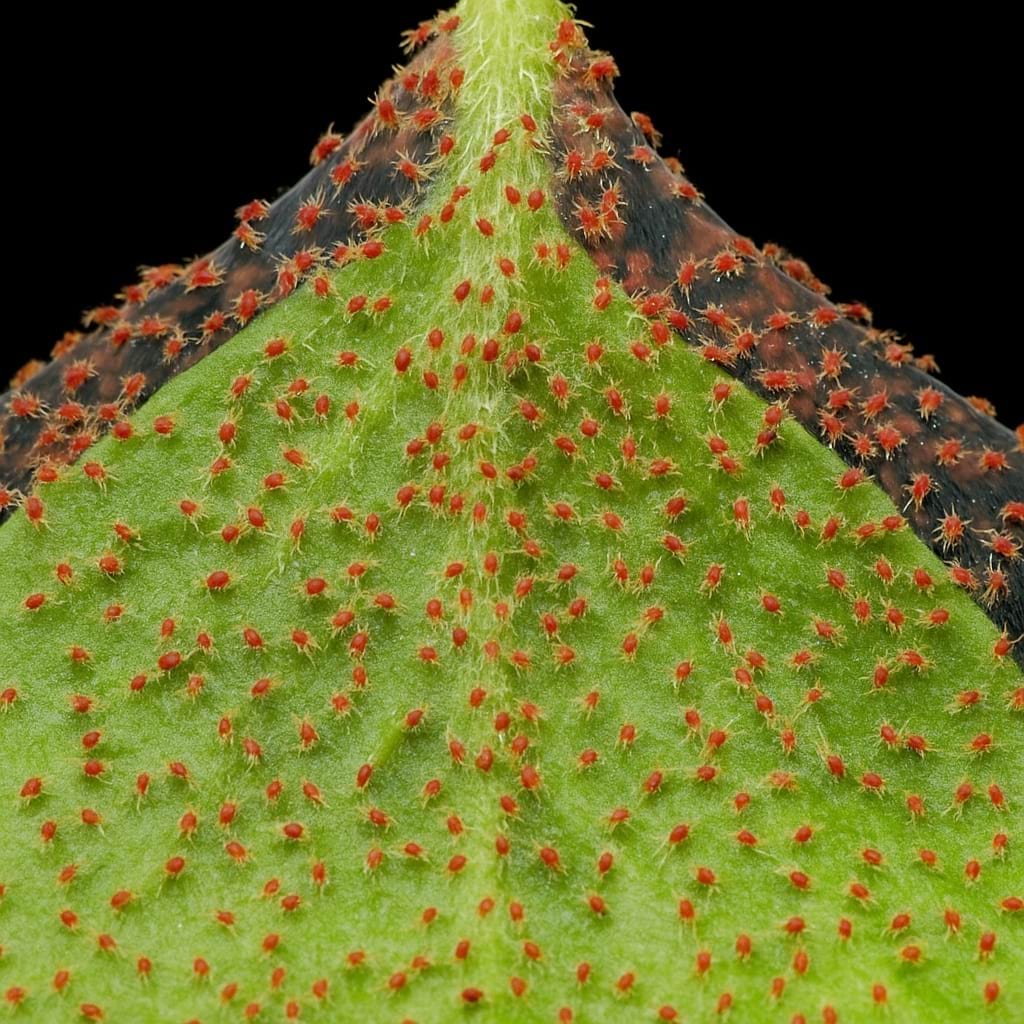
Spider mites are the most common, especially in dry winter rooms. Look for fine webbing in leaf joints and tiny yellow stipples. The dull washed-out look on a fading plant is sometimes mites, not light. Wipe with diluted insecticidal soap or a 1:1 water and isopropyl alcohol mix. Repeat weekly for three weeks. Higher humidity also helps.
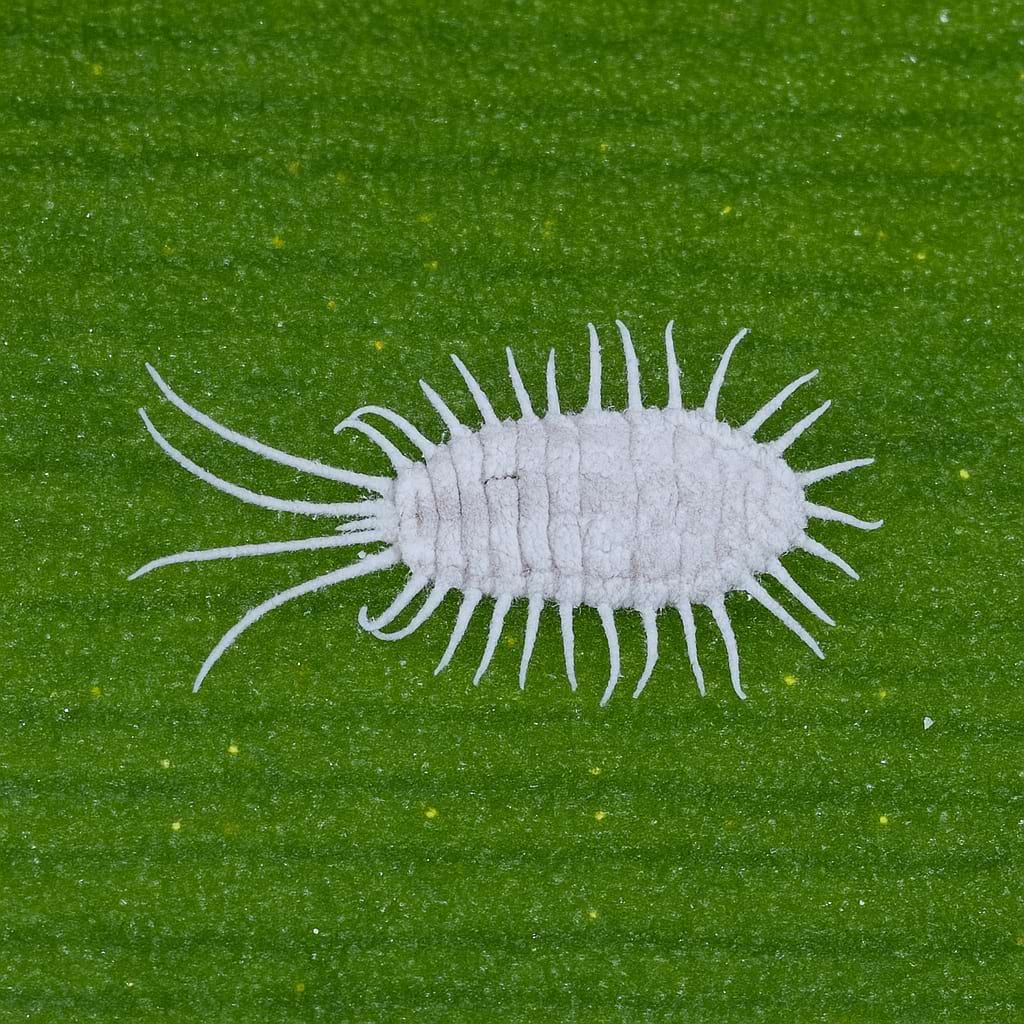
Mealybugs look like cotton puffs in leaf nodes. Dab each with a swab of 70% isopropyl alcohol. Inspect every node carefully: one missed becomes a colony again in a week.
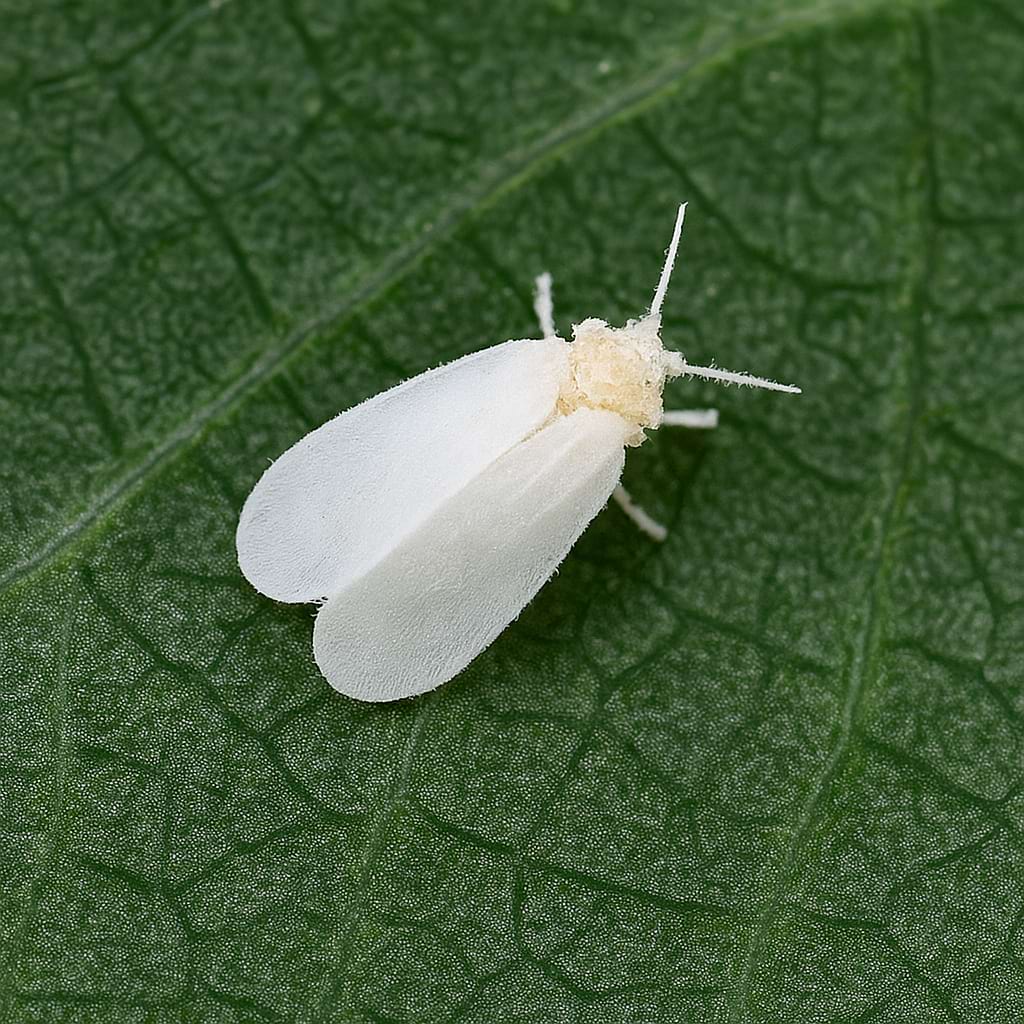
Whiteflies are tiny moth-like insects that flutter up in clouds. Yellow sticky traps catch adults; insecticidal soap or neem oil handles eggs and nymphs. More common on plants summered outdoors.
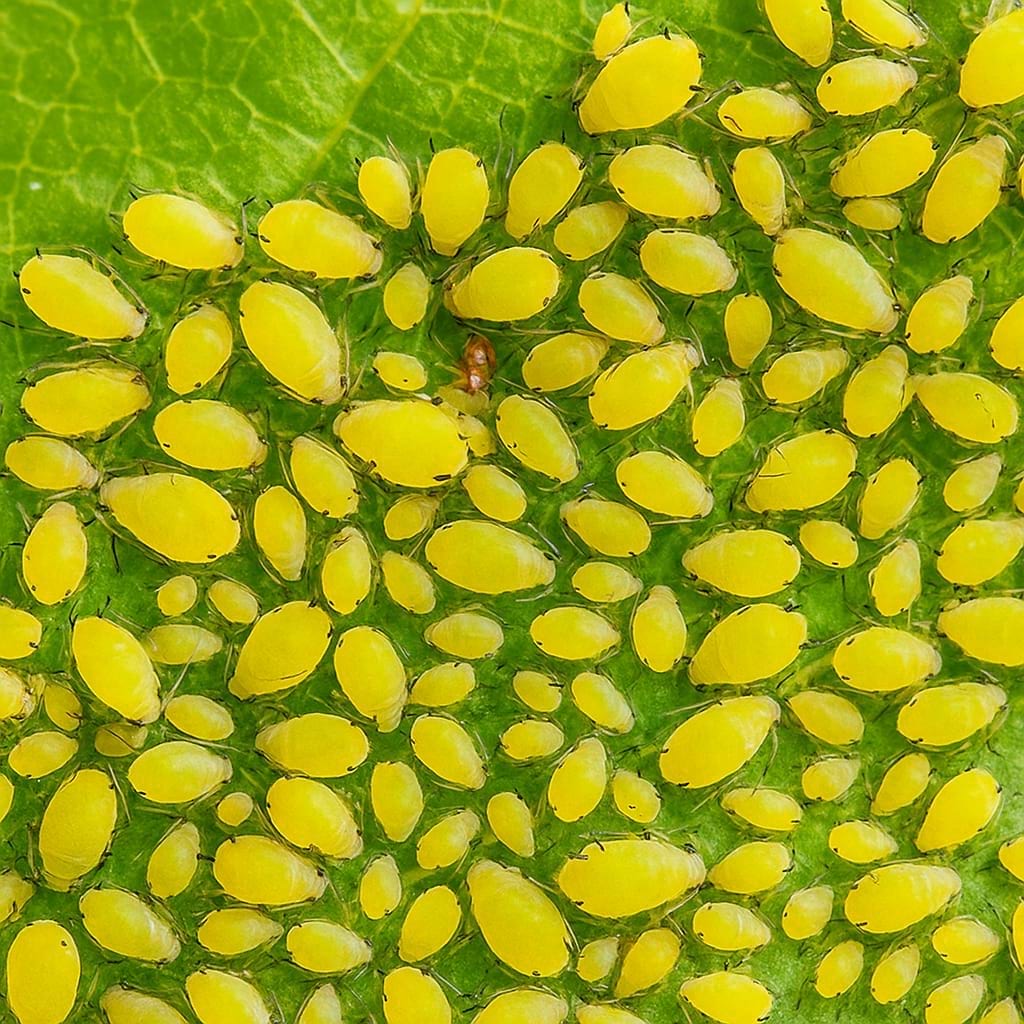
Aphids cluster on new growth and flower spikes. Rinse with a strong shower of water, follow up with insecticidal soap.
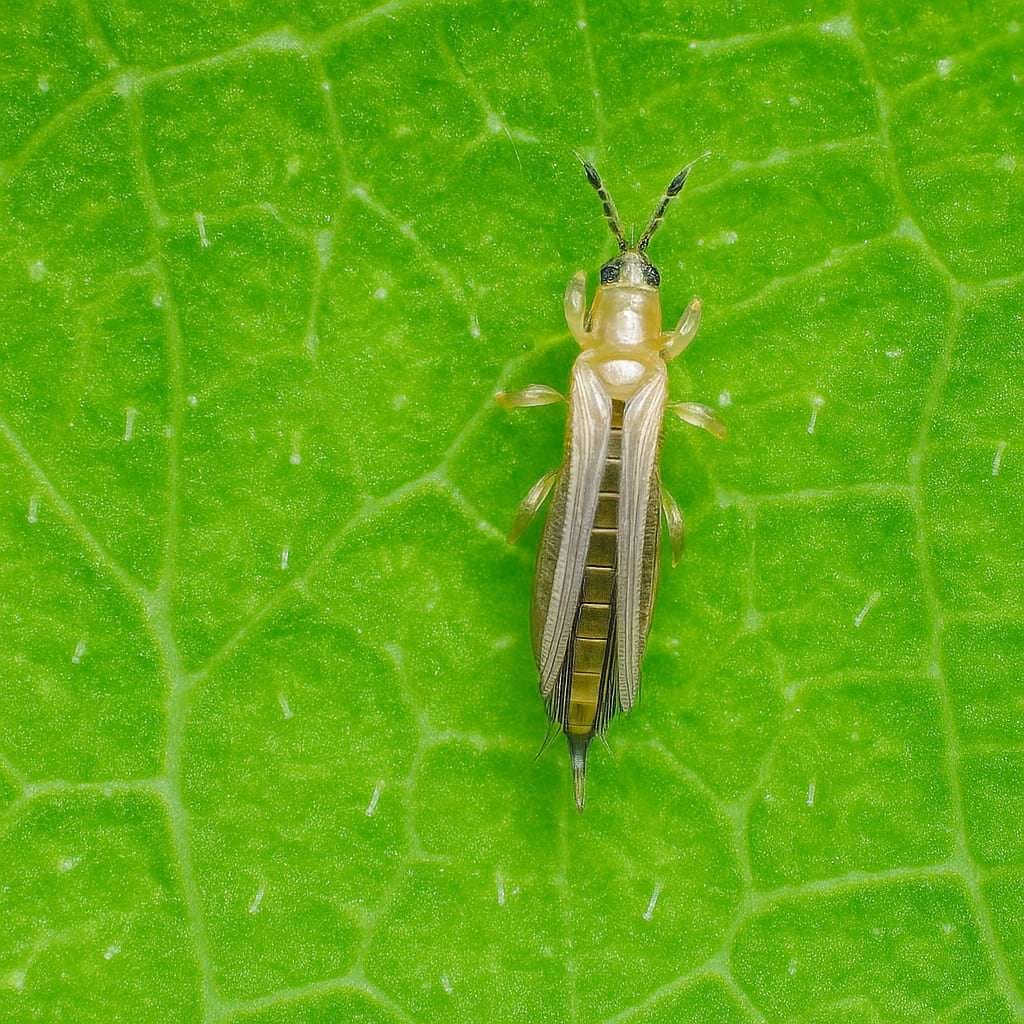
Thrips cause silvery streaks and distorted new growth. Sticky traps plus neem oil treatment, usually multiple rounds.
For any infestation, isolate the affected plant. Pests jump between plants quickly.
🩺 Common Persian Shield Problems
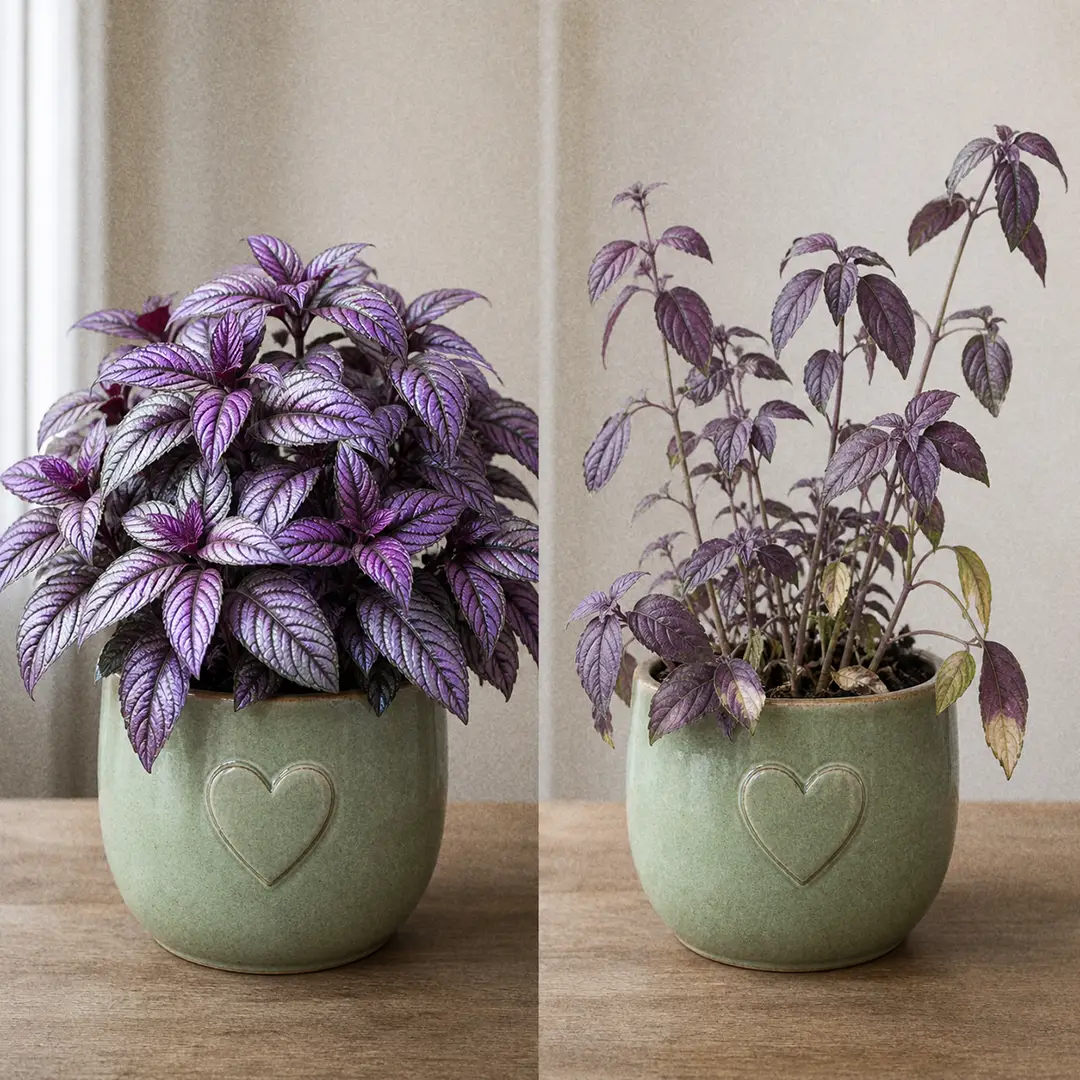
Most Persian Shield trouble is environmental and fixable with one small adjustment.
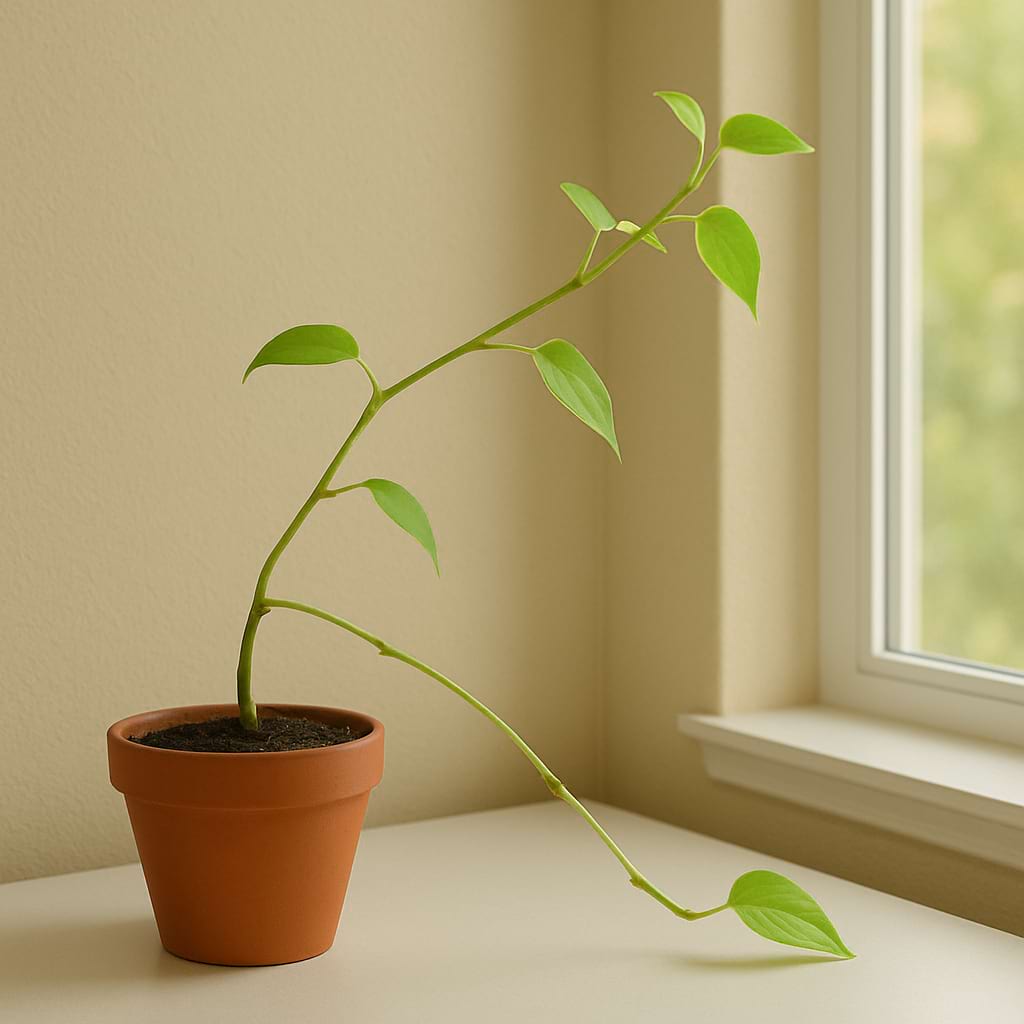
Leggy growth is the number one complaint. Too little light, no pinching, or both. Move to a brighter spot and pinch. Even a severely leggy plant can be reset by hard cutback to healthy nodes.
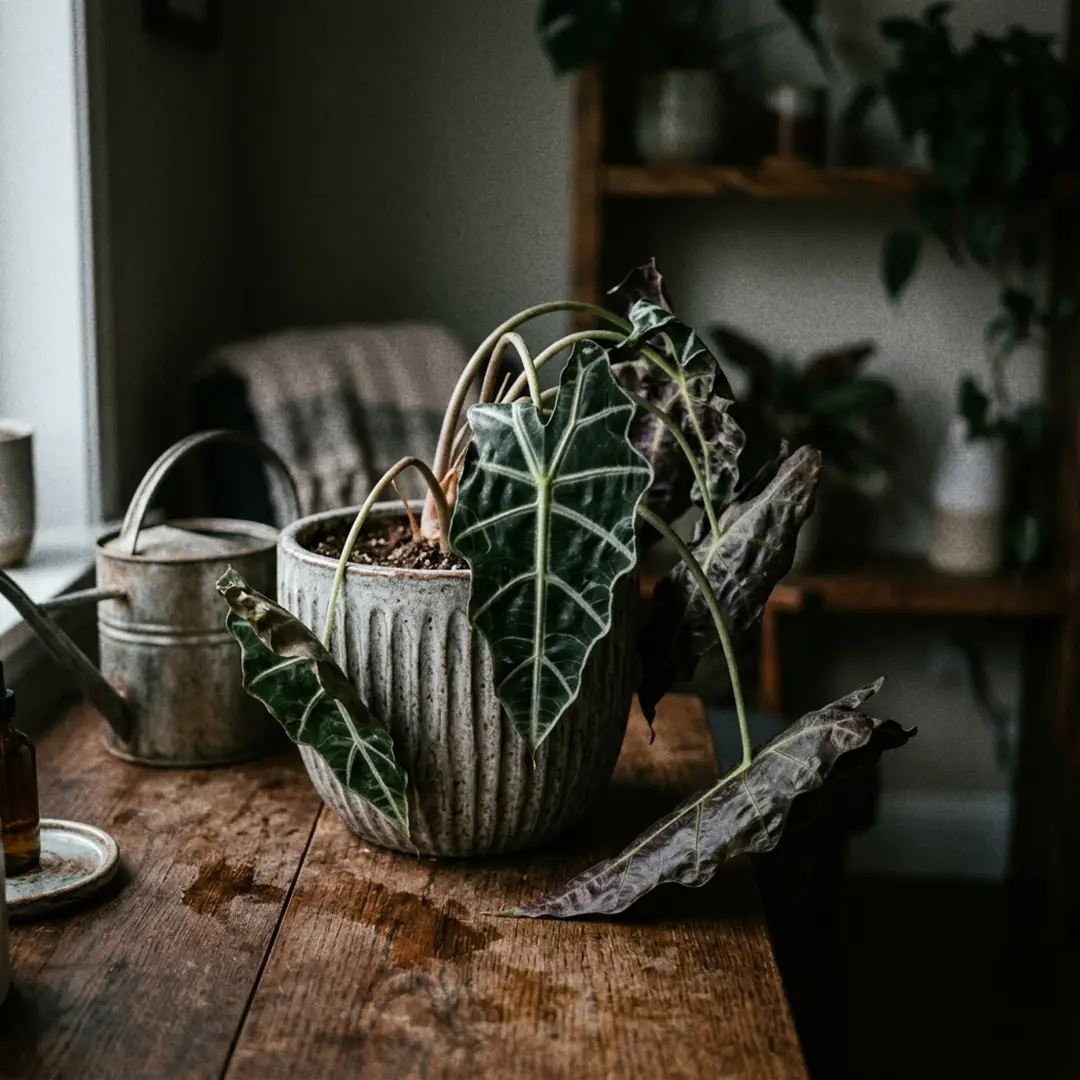
Wilting that recovers after watering is underwatering. Wilting that does not recover, or wilting on a wet pot, means damaged roots and probably early root rot.
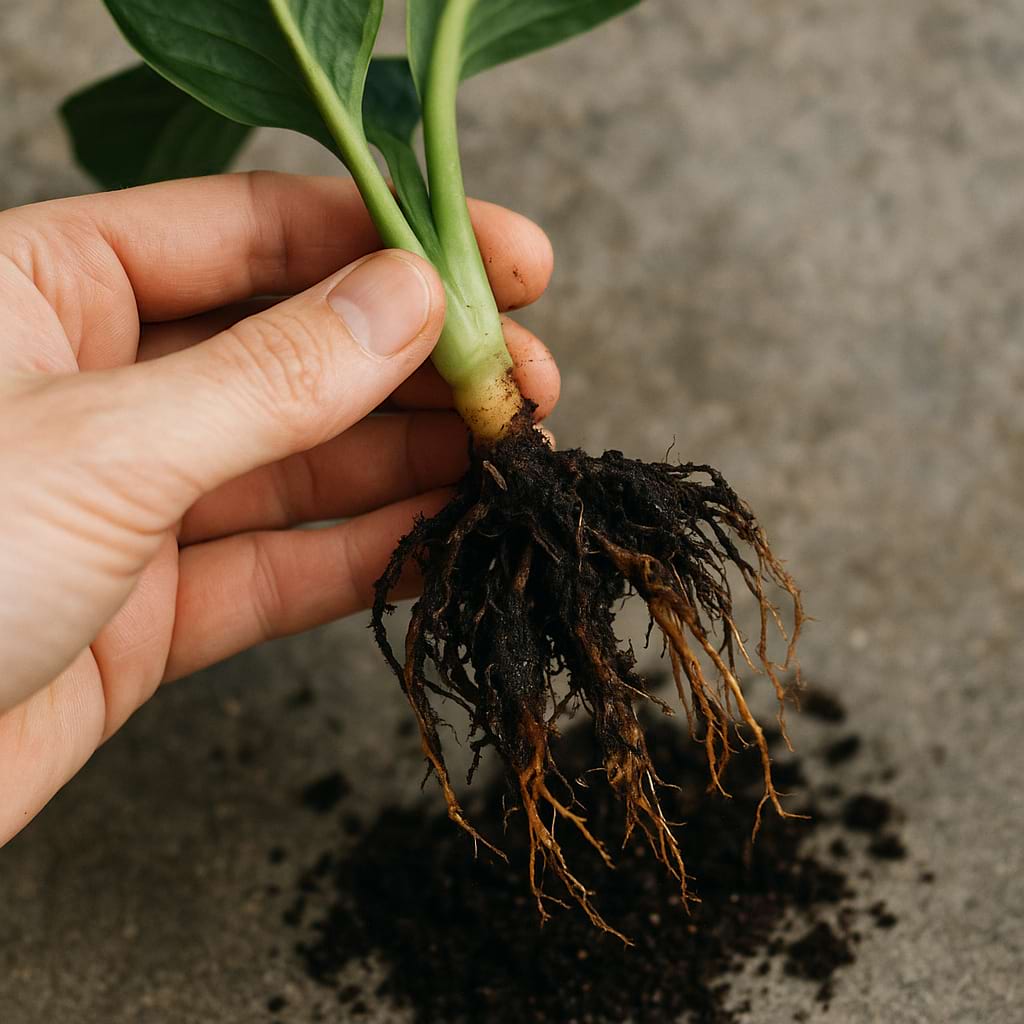
Root rot shows up as soft mushy stems, often blackened at the base, with yellowing leaves. Unpot, trim away soft black roots, repot in fresh dry soil. If rot reaches the main stem, take cuttings from healthy upper growth and start over. Persian Shield roots so eagerly that this is usually a successful rescue.
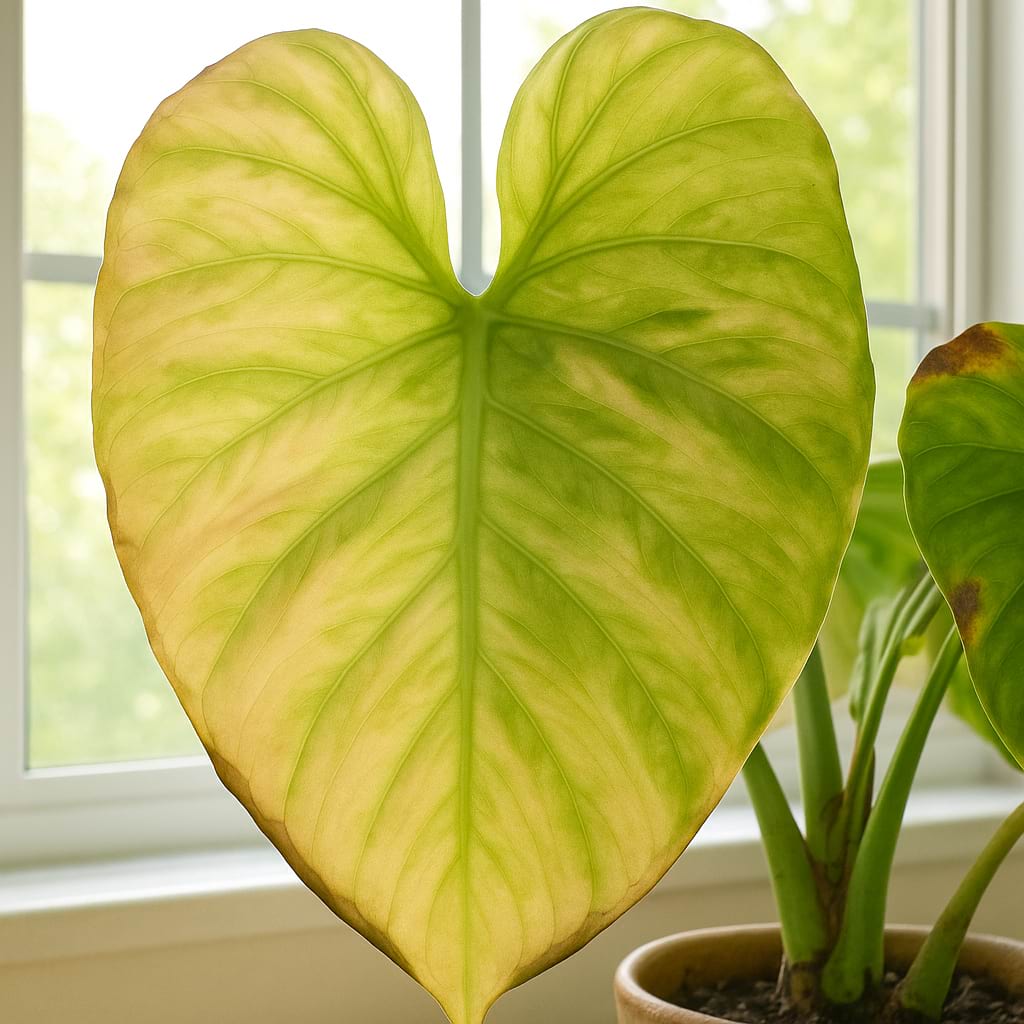
Pale faded leaves with lost iridescence mean too little light. Move closer to a window or add a grow light. Existing leaves rarely regain their shimmer (the metallic effect is set when the leaf forms); new growth will come in iridescent.
Leaf drop can come from temperature swings, cold drafts, severe underwatering, or moving the plant from bright to dim. Some lower leaf drop in winter is normal.
Sunburn appears as bleached papery patches from harsh direct sun. Move back from the window or add a sheer curtain.
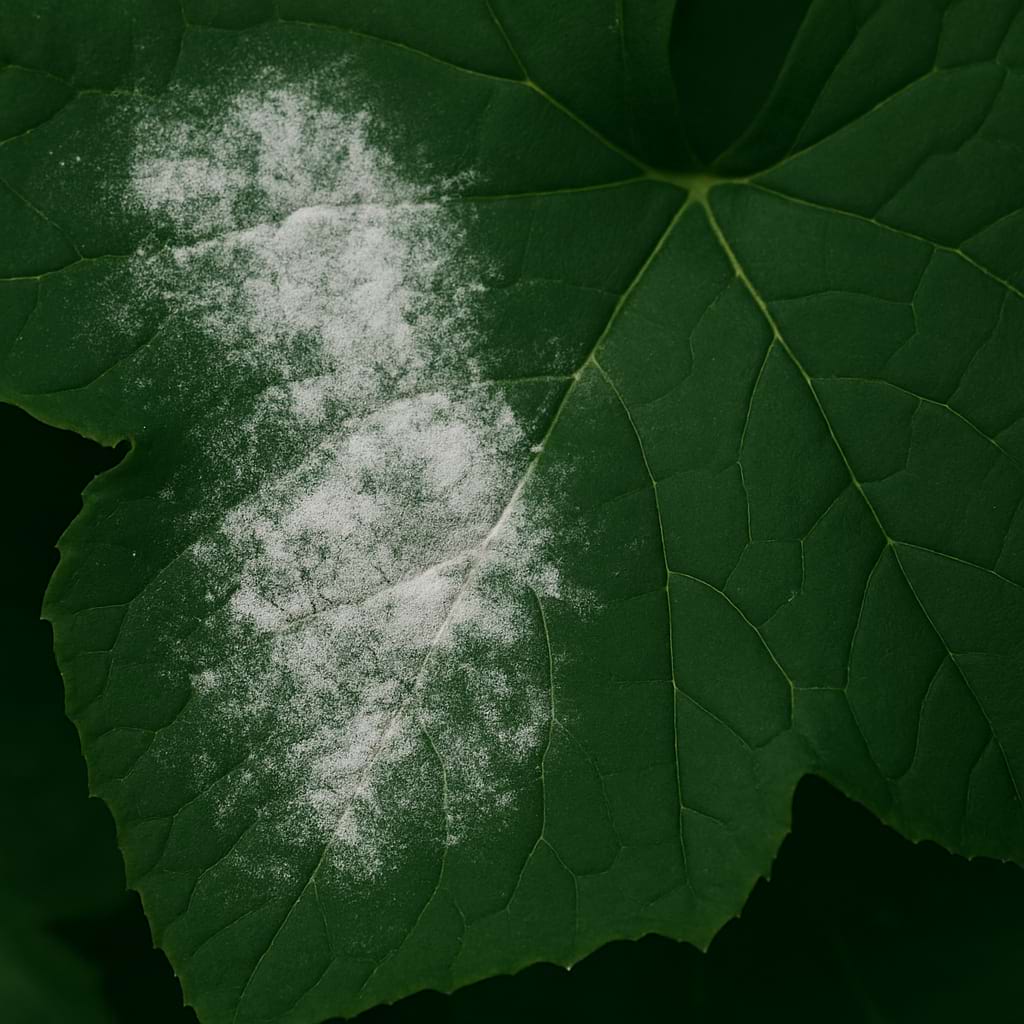
Powdery mildew shows up in cool humid low-airflow conditions. Improve airflow with a small fan, water in the morning so leaves dry by evening, treat with a 1-tablespoon-per-quart milk-and-water spray.
Leaf spot (small dark or yellow-bordered spots) usually comes from water sitting on leaves overnight or soil splash. Switch to bottom watering and trim spotted leaves.
🖼️ Persian Shield Display and Styling Ideas
As a Statement Plant
A mature Persian Shield in a 6 to 8 inch pot is striking on its own. Pick a neutral pot in cream, terracotta, matte black, or sage green. The leaves do all the visual work.
Jewel-Tone Groupings
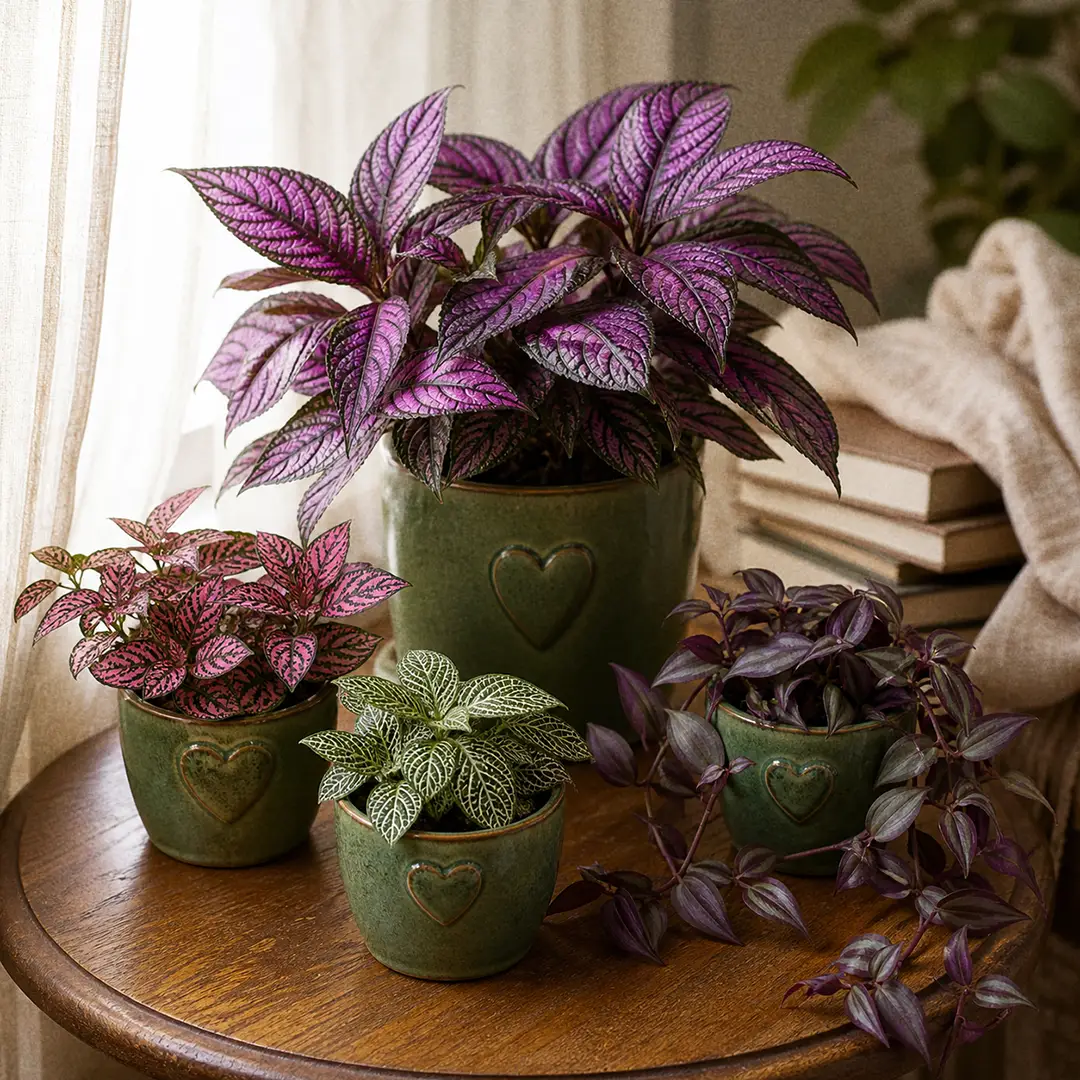
Group with other purple, silver, or chartreuse foliage:
- Persian Shield next to a Purple Passion for deep velvet plus shimmer.
- Persian Shield with chartreuse Coleus for warm-cool contrast.
- A trio of Persian Shield, Polka Dot Plant, and Nerve Plant.
- Persian Shield with Bloodleaf for metallic purple and stained-glass red.
Use matching pots so the foliage stays the focus.
Mixed Arrangements
An Aphelandra Squarrosa (Zebra Plant) is in the same Acanthaceae family and pairs surprisingly well: yellow-and-green stripes against metallic purple.
In a Bright Bathroom
High humidity plus bright morning light pushes Persian Shield to its peak. A pair of plants on a wide windowsill turns a bathroom corner into a botanical scene.
Cuttings as Decor
Propagation jars are display pieces in themselves. A cluster of clear bottles with rooting cuttings on a sunny kitchen windowsill is genuinely beautiful, and you get free new plants out of it.
Outdoor Summer Vacation
If you have a shaded or partly shaded patio, Persian Shield loves a summer outside. Natural humidity, filtered light, and warmth push the iridescence to its peak. Pair with a Polka Dot Begonia or Strawberry Begonia for a beautiful summer container.
🌟 Persian Shield Pro Care Tips
- Pinch on a schedule. A 60-second pass every 2 to 3 weeks prevents most problems.
- Always have backup cuttings rooting. A parent in its second or third year is past prime no matter what. Cuttings are genetically identical.
- Filtered light is the answer. Bright indirect with a touch of morning sun.
- Water in the morning. Wet leaves overnight invite fungal issues.
- Rotate weekly. Persian Shield leans hard toward its light source.
- Take cuttings before winter. A jar started in early autumn becomes your robust spring plants.
- Skip leaf shine sprays. They dull the metallic sheen. A soft damp cloth lifts dust.
- Check undersides weekly. Persian Shield is a spider mite magnet in winter.
❓ Frequently Asked Questions
Is Persian Shield toxic to cats and dogs?
Persian Shield is generally listed as non-toxic by the ASPCA. Any plant chewed in quantity can cause mild GI upset, so keep it out of reach of enthusiastic chewers anyway.
Can Persian Shield be grown indoors year-round?
Yes. Indoors it can live for several years, though older plants lose vigor after about two years. Keep taking cuttings; a young plant from a fresh cutting is always the most vivid version of itself.
Why is my Persian Shield losing its purple color?
Two main causes. First, not enough light: move closer to a window. Second, the plant is older and naturally fading; propagate a fresh cutting. If both check out, look for spider mites.
How fast does Persian Shield grow?
Fast in spring and summer. A small 4-inch plant fills a 6-inch pot in 2 to 3 months. Outdoors it can hit 3 to 4 feet in a single season. Indoors expect 18 to 36 inches at maturity.
Should I let my Persian Shield flower?
For most growers, no. Flowering signals a shift to reproduction, after which foliage thins and iridescence fades. Pinch flower spikes as soon as you see them.
Can I move my Persian Shield outdoors in summer?
Yes, and it will love you for it. Acclimate gradually over a week, starting in deep shade. Avoid full afternoon sun. Bring back inside before nights drop below 55°F. Inspect for pests before moving back in.
How do I keep my Persian Shield bushy?
Pinch growing tips every 2 to 3 weeks, in bright indirect light. Each pinch causes the stem to branch in two.
Why is my Persian Shield wilting on moist soil?
Two possibilities. Too much direct sun causing stress wilt: move back from the window. Or damaged roots from previous overwatering. Check stem bases for softness and soil for sour smell. If root rot, trim rotten roots and repot. Take cuttings as backup before rescuing.
Do I need to mist my Persian Shield?
Not really. Misting raises humidity for minutes at most and can encourage fungal leaf spot. A small humidifier or grouped plants work much better.
What is the difference between Persian Shield and Goldfussia?
Both are Strobilanthes but different species. Persian Shield (S. dyerianus) has wide oval leaves with iridescent silver shimmer. Goldfussia (S. anisophyllus) has narrow lance-shaped leaves in solid plum without shimmer.
ℹ️ Persian Shield Info
Care and Maintenance
🪴 Soil Type and pH: Rich, peat or coco-coir based potting mix amended with 25-30% perlite for drainage and a handful of compost or worm castings.
💧 Humidity and Misting: Prefers 50-60% humidity; iridescence fades and edges crisp in dry indoor air.
✂️ Pruning: Pinch growing tips every 2-3 weeks to keep the plant compact and the iridescence strong.
🧼 Cleaning: Wipe leaves gently with a soft damp cloth to lift dust without disturbing the metallic sheen; avoid leaf shine sprays.
🌱 Repotting: Every spring, or when roots circle the pot; a snug pot keeps the plant compact and stops it from sulking.
🔄 Repotting Frequency: Every 12 months
❄️ Seasonal Changes in Care: Spring and summer are the show-off months. Push bright indirect light, pinch every couple of weeks, and feed steadily. In autumn, ease back on fertilizer and watering as growth slows. Winter is the hardest season for Persian Shield indoors. Keep it close to your brightest window, away from cold drafts, and accept that some leaves will drop. Take cuttings in early autumn so you have fresh young plants ready for spring.
Growing Characteristics
💥 Growth Speed: Fast
🔄 Life Cycle: Tender tropical perennial
💥 Bloom Time: Late autumn into winter; small tubular pale violet flowers in cone-like spikes. Indoor flowering is uncommon and usually signals the plant is past its most vivid phase, so most growers pinch off any developing spikes.
🌡️ Hardiness Zones: 9-11 (outdoors)
🗺️ Native Area: Myanmar (Burma), tropical Southeast Asia
🚘 Hibernation: No, but growth slows noticeably in winter and lower leaves often drop
Propagation and Health
📍 Suitable Locations: Bright east-facing windowsills, sunrooms, plant shelves with morning light, bathrooms with good light, shaded summer patios.
🪴 Propagation Methods: Very easy from stem cuttings rooted in water within 2-3 weeks.
🐛 Common Pests: Spider Mites, Mealybugs, Whiteflies, Aphids, Thrips
🦠 Possible Diseases: Root rot, leaf spot, botrytis, powdery mildew.
Plant Details
🌿 Plant Type: Herbaceous Perennial Shrub
🍃 Foliage Type: Evergreen indoors
🎨 Color of Leaves: Iridescent silver-purple to lavender on the upper surface with dark green veins and midrib; deep burgundy-purple undersides.
🌸 Flower Color: Pale violet to lilac
🌼 Blooming: Late autumn to winter; usually pinched off indoors
🍽️ Edibility: Not edible
📏 Mature Size: 18-36 inches indoors (2-4 feet outdoors)
Additional Info
🌻 General Benefits: Year-round metallic foliage, fast growth, easy propagation from cuttings, pet-safe status, and a manageable mature size that fits on shelves and side tables.
💊 Medical Properties: No widely recognized medicinal use. Treat as ornamental only.
🧿 Feng Shui: The cool purple and silver tones bring calm, contemplative energy. A good plant for a bedroom, reading nook, or meditation space where you want a quieter, more reflective atmosphere.
⭐ Zodiac Sign Compatibility: Pisces
🌈 Symbolism or Folklore: Royalty, mystery, and quiet creativity.
📝 Interesting Facts: Persian Shield was introduced to European horticulture from Myanmar in the 1890s and was a Victorian conservatory favorite. The genus name Strobilanthes comes from the Greek "strobilos" meaning cone, a reference to the cone-shaped flower spikes. Despite its common name, the plant has no connection to Persia; the name likely comes from the shield-like shape of the leaves and the regal purple coloration.
Buying and Usage
🛒 What to Look for When Buying: Look for compact, bushy plants with strongly iridescent leaves and tight spacing between leaf pairs. Avoid leggy stems with long bare gaps, dull purple coloring (a sign of low light at the nursery), and any plant with flower spikes already forming. Check the leaf undersides and stem joints for spider mites and mealybugs before bringing one home.
🪴 Other Uses: A staple of tropical bedding schemes, mixed container gardens, and shade border plantings in warm climates. Indoors, often used as a colorful accent in mixed planters and as a forgiving propagation plant for beginners.
Decoration and Styling
🖼️ Display Ideas: Pair Persian Shield with chartreuse or silver foliage plants for a jewel-toned color palette. Looks beautiful as a centerpiece on a side table near a bright window, tucked into a tiered plant stand, or grouped with other purple-toned plants like Purple Passion and Wandering Dude.
🧵 Styling Tips: Neutral pots in cream, terracotta, matte black, or sage green let the iridescence do the talking. Avoid bright purple or patterned pots that compete with the foliage. The metallic sheen pops beautifully against warm wood, pale linen, or a soft white wall.

Houseplant101 Forum
Questions & Comments
Ask a question, share your plant experience, or help other plant owners.
Comments are temporarily unavailable.
Open the Houseplant101 ForumNo comments yet
Be the first to ask a question or share your experience about this page.
Log in or create an account
Comments use your Houseplant101 Forum account, but you can stay on this page.
Create a new account