
🪴 In This Guide 🪴

A Note From Our Plant Expert
Anastasia here. Foxtail fern plant propagation comes down to one fact: this is an asparagus relative that stores everything in fat tubers under the soil, so you multiply it by splitting those tubers or by sowing seed from its red berries. Snipping off a plume and waiting for roots never works, and it is the attempt I see most often. Division is quick and nearly foolproof once you know how hard to cut. Seed is slow but fun if your plant fruits.
🧬 How Foxtail Fern Grows (and Why It Matters for Propagation)
No Spores, No Rooting Nodes
The foxtail fern (Asparagus densiflorus 'Myersii') is not a fern at all. It sits in the asparagus family, along with the asparagus fern and the ming fern, and our guide to plants sold as ferns that are not ferns explains the split. There are no spores on the undersides of anything. The fluffy "needles" are flattened stems, and the plumes do not have the kind of nodes that a pothos or philodendron uses to throw out new roots.
What the Tubers Do
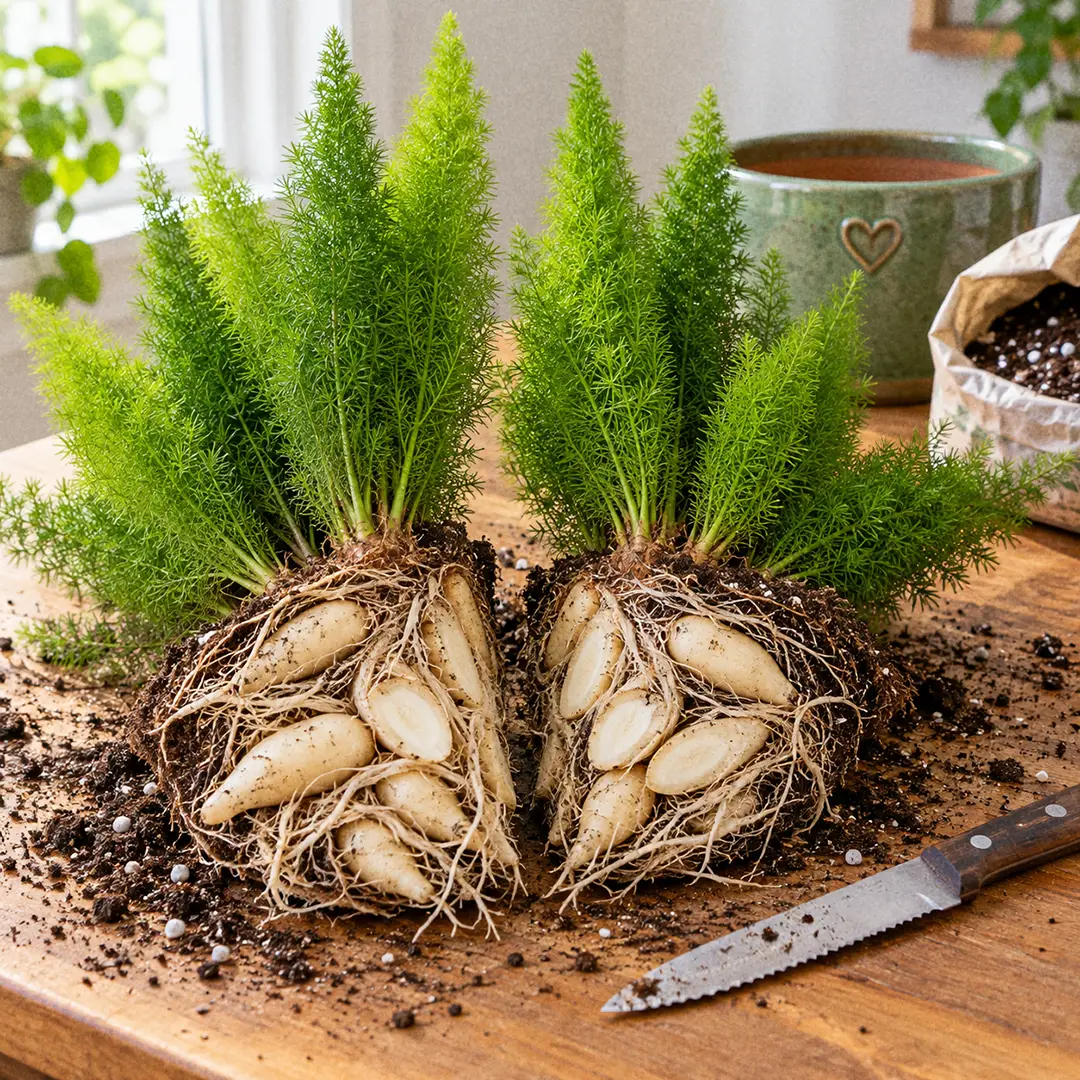
Tip the plant out of its pot and you will find what keeps it going: thick white roots with swollen, potato-like tubers strung along them. They hold water and food, which is why a foxtail shrugs off a missed watering. Every new plume starts as a spear from the crown, where those roots meet the stems. A piece of plant with tubers and a crown can grow on its own. A plume without them cannot.
Which Method to Pick
For almost everyone, division is the answer. You get two to four full-sized plants in an afternoon, and they look normal again within a couple of months. Seed makes sense if your plant has set ripe berries or you want a lot of plants cheaply, but expect a year or more before a seedling looks like a real foxtail. If you want the general principles behind both, our plant propagation guide covers them.
✂️ How to Divide a Foxtail Fern, Step by Step
When to Divide
Divide in spring, as the first new spears push up from the crown. Early summer is fine too. The plant is growing hard then and recovers fast. Avoid late fall and winter, when growth slows and cut roots sit in cold, damp soil for weeks. The easiest rule: divide when the plant needs repotting anyway, every 2-3 years, so it goes through the upheaval once instead of twice.
Water the plant a day before. Moist roots slide out more easily and handle the cutting better than dry, brittle ones.
Getting a Pot-Bound Plant Out of Its Pot
This is often the hardest part. A foxtail that has sat in the same pot for years fills it with tubers until the root ball is as solid as a brick. Some plants push hard enough to split or bulge a plastic nursery pot.
Lay the pot on its side and run a long, thin knife or an old bread knife around the inside wall to break the seal. Squeeze and roll a plastic pot to loosen it, then pull gently at the base of the stems, not the plumes. If it still will not budge, cut the plastic pot away with scissors. Do not do that with a ceramic pot you like. Tap and slide instead, and be patient.
Cutting Through the Tuber Mass
You will not tease a mature foxtail apart with your fingers. Look down at the crown and find where the clumps of stems naturally separate. Then cut straight down through the root ball with a clean serrated knife, a pruning saw, or a sharp spade for big outdoor clumps. Wipe the blade with rubbing alcohol first. It feels brutal. A few tubers will get sliced in half, and the plant has plenty to spare.
Aim for each division to have a solid cluster of tubers plus at least three or four healthy plumes. Smaller pieces with one or two stems do survive, but they sit thin and scraggly for a long time. Trim off any tubers that are mushy, hollow or dark inside, and pull away dead roots. Our plant division guide shows the same technique on other clumping plants.
Potting Up the Divisions
Choose a pot only an inch or two wider than each division, with drainage holes. Foxtails like being a little snug, and a huge pot holds water the tubers do not need. Use the same mix as the main foxtail fern guide: 2 parts potting soil, 1 part perlite or coarse sand and, optionally, 1 part compost.
Set the crown at the same depth it grew before, no deeper. Fill around the tubers, firm gently to remove air pockets, and water once until it drains. Then leave it alone.
🩹 Aftercare for New Foxtail Fern Divisions
Watering After Division
This is where most divisions are lost. The tubers are full of water already, and the cut roots cannot drink much yet. After the first watering, wait until the top 1-2 inches of soil are dry before watering again, exactly as with an established plant. In a cool room that can mean ten days or more. Soggy soil around freshly cut tubers is how root rot starts.
Light and Temperature
Give divisions bright, indirect light for the first few weeks, a little softer than their usual spot. Skip direct afternoon sun until new spears appear. Keep them warm, ideally 65-75°F (18-24°C), and away from cold drafts. Divisions that live outdoors should go in a shaded spot for a couple of weeks before moving back into partial sun.
The Normal Transplant Sulk
Expect a sulk. For two to four weeks the division may look tired, and a few plumes, usually the oldest ones, may yellow and drop their needles. Cut those off at the soil line. It does not mean the division is dying. The tubers are feeding new root growth first. Fresh green spears poking up from the crown are the sign it has settled, usually within four to eight weeks in spring.
Hold off on fertilizer for 4-6 weeks after dividing. Fresh mix has enough nutrients, and feeding stressed roots can burn them.
🌾 How to Grow Foxtail Fern from Seed
Collecting Ripe Berries
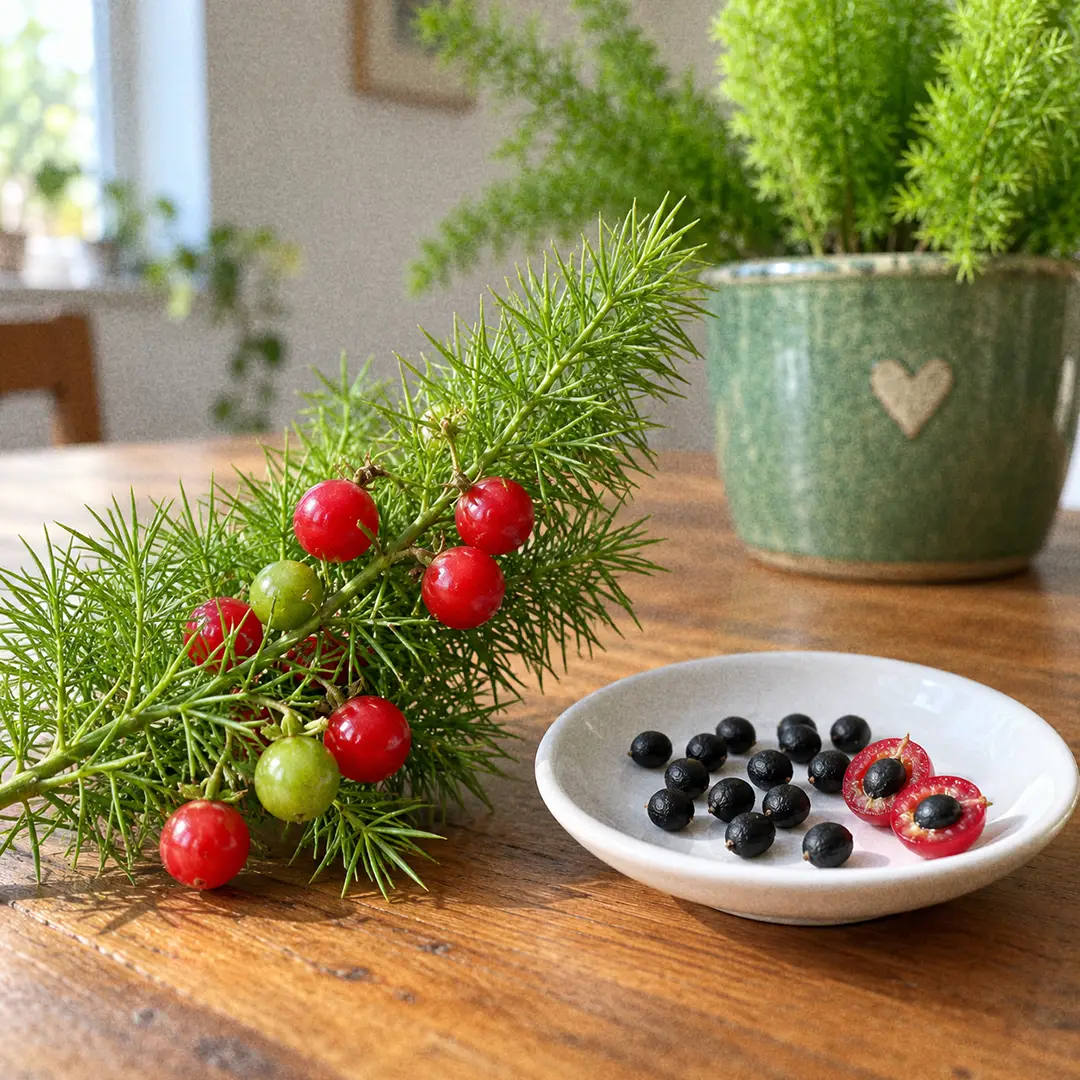
Mature foxtails produce tiny white flowers in summer. If they get pollinated, small round berries follow, green at first and ripening to bright red over the fall and winter. This happens far more often outdoors than indoors. Many indoor plants never set fruit at all.
Only harvest berries that are fully red and slightly soft. Green berries carry immature seed that will not germinate. Each berry holds one to a few hard, black seeds.
Cleaning and Soaking the Seeds
Wearing gloves, squash the berries in a bowl of water and rub the pulp off. The seeds sink and the pulp floats, so pour off the mush and rinse a couple of times. Pulp left on the seed invites mold.
Soak the cleaned seeds in room-temperature water for 24 hours before sowing. Some growers also rub them lightly with fine sandpaper first to scuff the hard coat. Fresh seed from this season germinates far better than seed that has sat in a drawer for a year.
Sowing and Germination
Fill a small tray or pots with moist seed-starting mix. Press the seeds in and cover them with a thin layer of mix, no more than about 1/4 inch (6 mm). Cover the tray with a clear lid or plastic bag and keep it somewhere warm, around 70-80°F (21-27°C). A heat mat helps a lot in a cool house.
Most seeds come up in three to six weeks, but germination is uneven. Some sprout early, some a month later, and a few never do. Cooler soil can stretch it to two or three months. Keep the mix moist but not wet, and air the tray for a few minutes every day or two.
Raising the Seedlings
Seedlings look like a single thin, green thread, a miniature asparagus spear. They grow slowly for the first few months while they build tubers below ground. Once the lid is off, give them bright, indirect light. When a seedling has a few stems and is 3-4 inches tall, move it into its own small pot of regular mix. Expect about a year, sometimes more, before it forms the dense, upright tails the plant is named for.
🚫 Why Foxtail Fern Stem Cuttings Don't Work
What Happens to a Cut Plume
People snip a healthy tail, stand it in a glass of water, and wait. It stays green for a week or two, sometimes longer, living off the water in its stem. Then it yellows from the tip down and drops its needles. No roots ever appear, because the plume has no node that can grow them. All new growth on a foxtail comes from the crown and tubers below the soil. Water propagation and rooting hormone do not change this.
What to Do With Trimmings Instead
Cut plumes last well in a vase, so treat them as foliage for flower arrangements rather than future plants. If what you really want is more of your plant, divide it. And if a pot keeps getting leggy, a hard cut back in early spring makes the crown send up fresh spears.
🧤 Safety When Propagating Foxtail Fern
Gloves for Spines and Sap
Look closely at a foxtail stem and you will see tiny, sharp spines where the needles join. They are small, but hauling a big root ball around scratches forearms fast. The sap can irritate skin too, from mild redness to a rash in sensitive people. Wear gardening gloves and long sleeves for division, and wash your hands and tools afterwards.
Keep Berries Away From Pets
Foxtail fern is toxic to cats and dogs. The berries are the main concern and can cause vomiting and diarrhea if eaten. Clean seeds where pets cannot reach, and put the pulp and any dropped berries in a closed bin, not the compost pile or an open trash can. Keep seed trays up high while they germinate.
🛠️ Troubleshooting Foxtail Fern Propagation
Divisions Turning Yellow or Brown
A few yellowing plumes in the first month is normal sulking. Whole divisions going yellow, or brown and crispy, point to something else. Crispy brown plumes usually mean too much sun for a plant with a reduced root system, so move it back from the window. A division with only one or two stems and very few tubers may simply not have enough reserves. Give it time and steady conditions before writing it off.
Rot From Overwatering a New Division
Soft, brown or smelly tubers, and plumes collapsing at the base while the soil is still damp, mean rot. Unpot the division, cut away every mushy tuber and root back to firm, white tissue, let the cut surfaces dry for a few hours, and repot in fresh, dry-ish mix. Water sparingly from then on. Oversized pots and saucers full of water are the usual causes.
Seeds That Never Come Up
If nothing has sprouted after two months, the usual reasons are unripe berries, old seed, or soil that is too cold. Seed that stayed wet and cold can rot. Seed that dried out after sprouting dies before it ever breaks the surface. Keep the tray warm and evenly moist, and start with fresh seed from fully red berries next time. Sow more than you need, because germination rates on home-collected seed are often modest.
The process for ming fern propagation is nearly identical if you grow both, and the complete foxtail fern care guide covers what comes after.
❓ Frequently Asked Questions
Can you propagate a foxtail fern from a cutting?
No. A cut plume has no nodes that can grow roots, so it will sit in water or soil for a few weeks and then yellow and die. New foxtail plants only come from division of the tuberous root ball or from seed.
When is the best time to divide a foxtail fern?
Spring, just as new spears start pushing up, is the best time. Early summer also works. Dividing when you would repot anyway (every 2-3 years) means the plant only goes through one disturbance.
How many pieces can I get from one foxtail fern?
A pot-bound plant in a 10-12 inch pot usually splits into two to four good divisions. Each piece needs its own cluster of tubers and at least three or four healthy plumes. Smaller pieces survive, but they take much longer to look full.
How long do foxtail fern seeds take to germinate?
Usually three to six weeks at 70-80°F (21-27°C), and germination is uneven, so seedlings can keep appearing for another month or more. Cool soil or old seed can stretch that to two or three months, or stop it completely.
Why is my foxtail fern turning yellow after dividing it?
A few yellow plumes in the first two to four weeks is normal transplant stress, because the cut roots cannot supply all the foliage yet. If the whole division yellows and the base feels soft, check for rot from overwatering.
Is it safe to handle foxtail fern berries and sap?
Wear gloves. The sap can irritate skin and the stems carry small spines. The red berries are toxic to cats and dogs and can cause vomiting and diarrhea if eaten, so clean seeds away from pets and throw the pulp in a closed bin.
Do foxtail fern divisions need rooting hormone?
No. Each division already has a working root system and a store of water and food in its tubers. Rooting hormone does nothing useful here. Clean cuts, fresh soil and careful watering matter far more.
🪴 See also 🪴
Complete Guide To Asparagus Fern Care and Growth

Houseplant101 Forum
Questions & Comments
Ask a question, share your plant experience, or help other plant owners.
Comments are temporarily unavailable.
Open the Houseplant101 ForumNo comments yet
Be the first to ask a question or share your experience about this page.
Log in or create an account
Comments use your Houseplant101 Forum account, but you can stay on this page.
Create a new account