
Cyclamen
Cyclamen persicum
Florist's Cyclamen, Persian Cyclamen, Persian Violet, Sowbread


Cyclamen care comes down to one thing: keep florist's cyclamen cool. Learn how to water Cyclamen persicum from below, keep it flowering all winter, read yellow leaves correctly, and wake the tuber up again after its summer rest.
📝 Cyclamen Care Notes
🌿 Care Instructions
⚠️ Common Pests
📊 Growth Information
🪴 In This Guide 🪴

☀️ Cyclamen Light Requirements (Bright, Cool, No Hot Sun)
The Sweet Spot
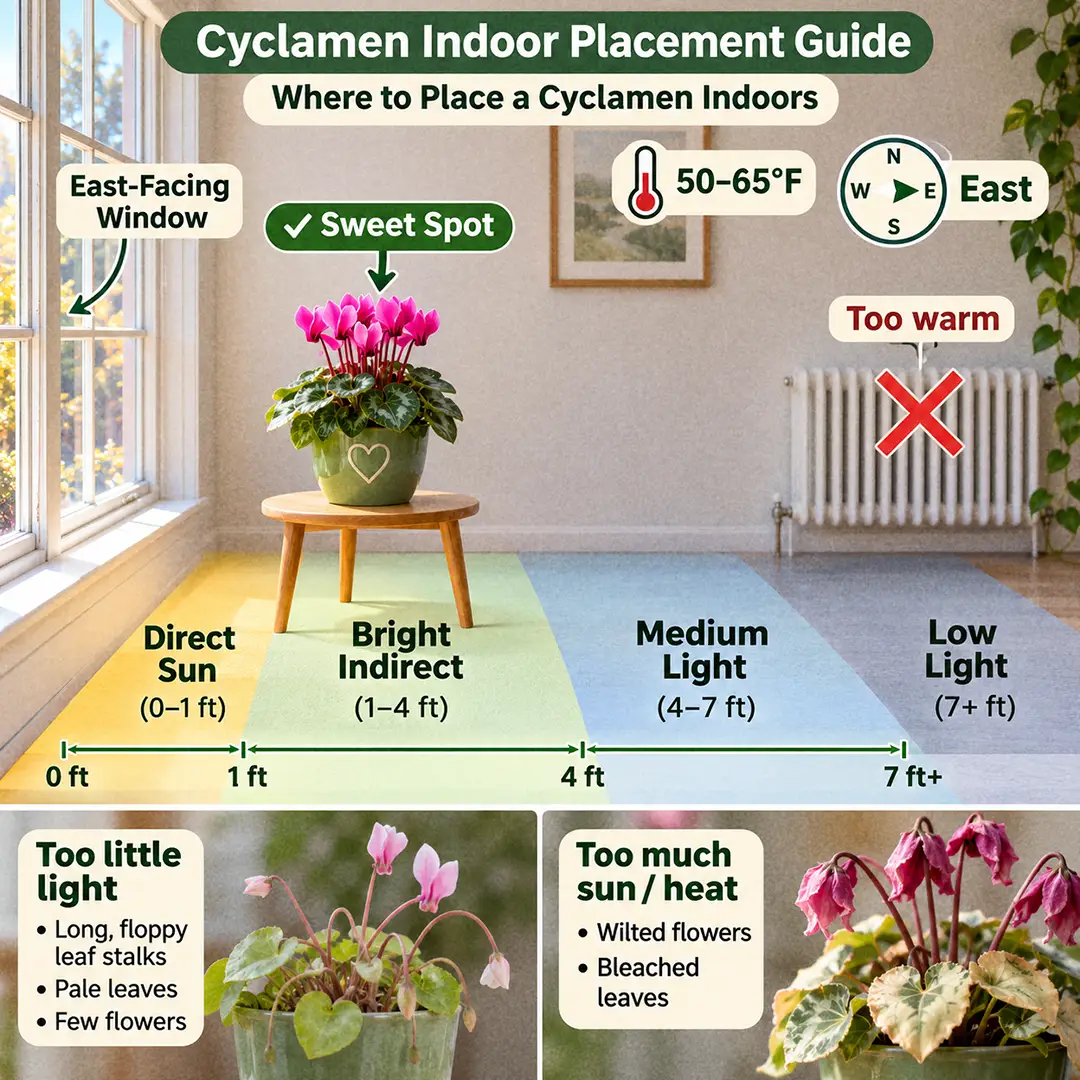
Cyclamen wants bright, indirect light for most of the day. An east-facing window is close to ideal: a little gentle morning sun, then soft bright light for the rest of the day. A north window works in a sunny climate, and in a dark northern winter a south window is fine, because the low winter sun is weak and the glass keeps the spot cool.
The catch is that light and heat come together. A sunny sill that warms up every afternoon shortens the flowering season, so "bright and cool" beats "bright and warm" every time. Our indoor lighting guide helps you judge a spot by eye.
Too Little Light
In a dim room the leaf stalks stretch long and floppy, the leaves pale, and new buds stall under the foliage. The flowers you bought with keep opening for a while, then the show stops early. If your only cool room is dark, a grow light on a timer gives you both.
Too Much Light
Hot direct sun through glass, especially from a south or west window in spring, bleaches the leaves and wilts the flowers within a day. The plant is rarely scorched outright; it is overheated. Pull it a few feet back or behind a sheer curtain.
💧 Cyclamen Watering Guide (Water From Below)
Watering Frequency
Check the pot every couple of days while the plant is in flower. When the surface feels dry to the touch, water thoroughly, then let it come close to dry again. In a cool room that is often every 5-7 days; in a warmer room it can be every 2-3 days, which is one more sign the room is too warm.
Lift the pot as a check. A cyclamen in a peat-based mix gets noticeably light when dry. Soft, limp leaves and stems also mean it needs water, and a good drink usually perks it up within hours.
How to Water Cyclamen
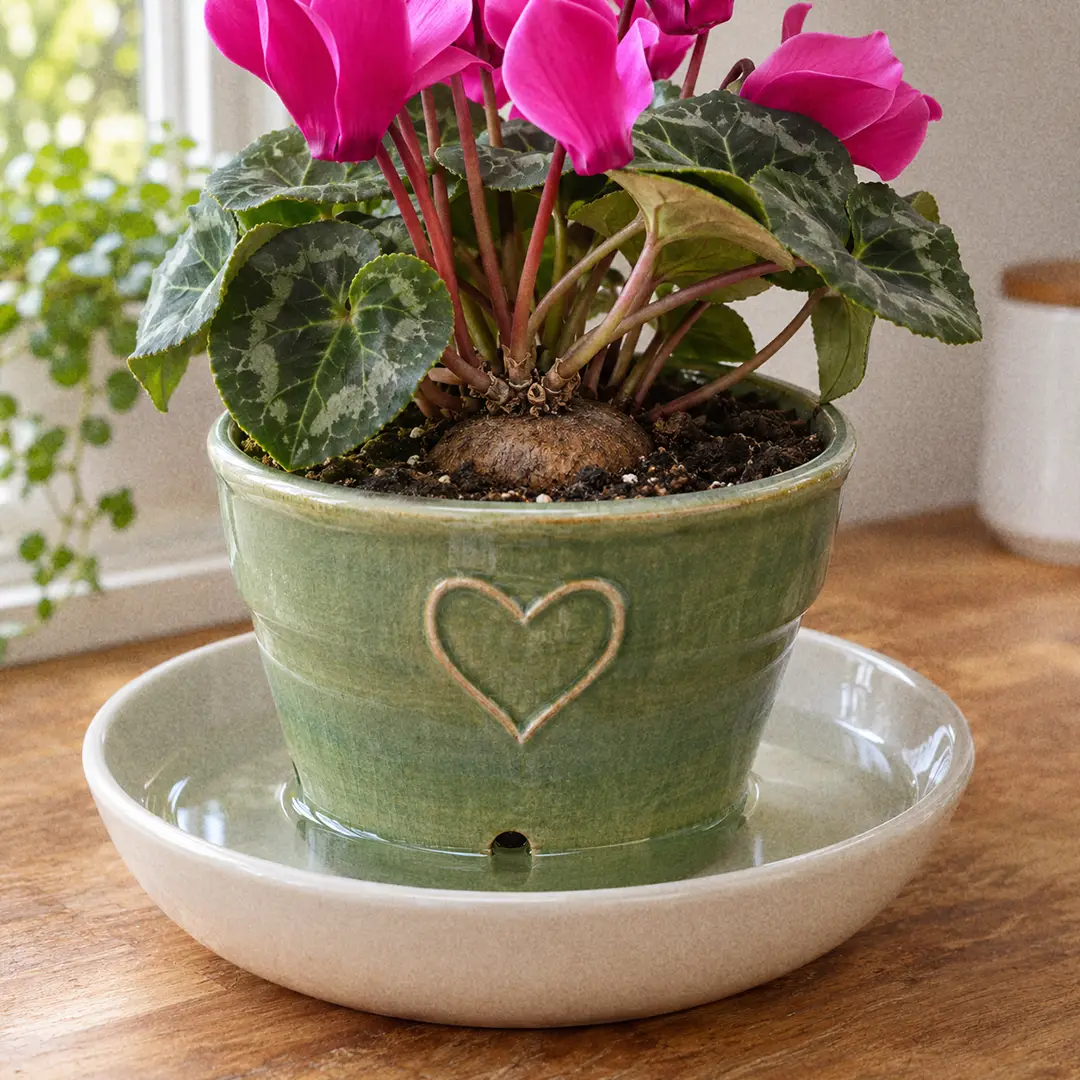
The tuber sits half out of the soil, with all the leaf and flower stems rising from its top. Water poured onto that crown sits in the crevices and rots it. That is why every reliable source says the same thing: water from below.
Stand the pot in a bowl of room-temperature water for 10-20 minutes, until the surface of the mix looks damp. Then lift it out and let it drain completely. Never leave it parked in a full saucer or a foil gift sleeve full of water. Our bottom watering guide walks through the method. If you must water from the top, tilt the leaves aside and pour slowly around the edge of the pot, away from the tuber.
Signs of Trouble
Yellow leaves can mean too much or too little water, so check the soil before reacting. Soggy mix plus a soft, mushy tuber is root rot or crown rot. A bone-dry pot with the whole plant flopped over the rim is thirst, which is fixable if you soak it quickly. And from late spring, steady yellowing on a well-watered plant is usually the start of dormancy, not a watering mistake.
🪴 Best Soil for Cyclamen (Light and Free-Draining)
What the Soil Needs
Cyclamen tubers rot in heavy, airless soil, so the mix has to drain fast while still holding enough moisture for a plant that hates drying out completely in bloom. A standard indoor potting mix is close, but most benefit from extra grit or perlite.
DIY Cyclamen Soil Mix
A simple blend that works:
- 2 parts good houseplant potting mix (peat-free or peat-based)
- 1 part perlite or fine pumice
- A handful of fine composted bark or leaf mold for structure
Skip garden soil, which packs down in a pot and stays wet around the tuber. See our soil guide if you want to tweak the recipe.
Pre-Made Options
A bagged potting soil for houseplants with perlite added at about one part to three is fine. Avoid moisture-retaining mixes with water-holding crystals, and skip pure cactus mix, which dries too fast for a plant in full flower.
🍼 Fertilizing Cyclamen (Feed Lightly in Bloom)
When and How Often
Feed every 2 weeks from the time new leaves appear in late summer until flowering winds down in spring. Stop as soon as leaves start yellowing into dormancy, and give nothing at all while the tuber rests.
What to Use
Use a diluted liquid fertilizer for flowering plants, one that is not high in nitrogen. Half the label strength is plenty. Always apply it to damp soil, ideally mixed into the bowl you bottom water from. Our fertilizing guide and fertilizer roundup cover the options.
Over-Fertilizing Signs
Too much nitrogen gives you a big mound of soft leaves with few flowers, and soft growth is more prone to gray mold. A white crust on the soil or brown leaf edges points to salt build-up. Flush the pot with plain water and feed less often.
🌡️ Cyclamen Temperature Range
Ideal Range
This is the section that decides whether your cyclamen lives or dies. Florist's cyclamen is a cool-season plant: it grows and flowers from autumn to spring in its Mediterranean home and shuts down when summer heat arrives. Indoors, aim for days around 60-65°F (15-18°C) and nights around 50-55°F (10-13°C). Extension and botanical garden sources all land in that band, and the cooler end makes each flower last longer.
Newer hybrids handle a slightly wider range, but a plant held in the low 70s°F (around 22°C) or above day and night will bloom for a much shorter time and drift into dormancy early.
Drafts and Heat Sources
The fastest way to kill a cyclamen is to put it on top of a radiator, beside a heating vent, near a fireplace, or on the TV. Hot, dry air wilts the whole plant in a day or two. A cold room is fine, but keep it above about 40°F (4°C) and away from frost; the plant is tender and freezing kills the tuber.
Finding a Cool Spot
Good places include a spare bedroom with the heat turned down, a bright hallway, an enclosed porch that stays frost-free, or a sill where the glass keeps the air cool. Moving the plant somewhere cooler at night, even just away from the heated part of the room, adds weeks of flowers.
💦 Cyclamen Humidity Requirements
Ideal Humidity
Cyclamen does best at 50% humidity or higher, which most heated homes fall well short of in winter. Dry air shortens flower life and is exactly what spider mites and cyclamen mites like.
Easy Humidity Boosters
Set the pot on a tray of wet pebbles, keeping the base above the waterline, or run a small humidifier nearby. Grouping it with other plants helps too. Do not mist: water sitting on the flowers and in the crown is how gray mold starts. Our post on boosting humidity in winter has more ideas.
🌸 Cyclamen Flowers (Months of Winter Color)
What the Flowers Look Like
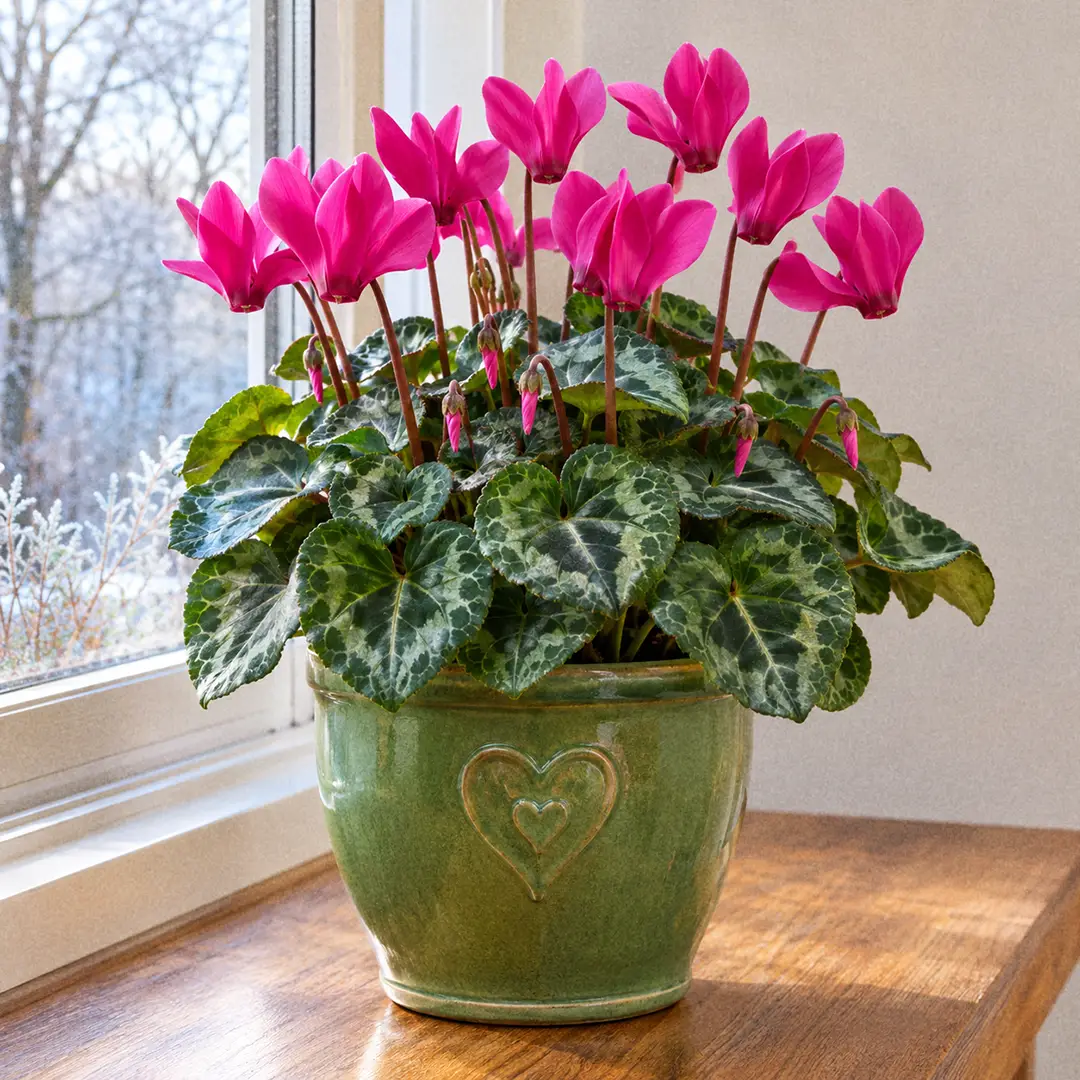
Each flower hangs on its own stem with five petals swept straight back and up, so it looks like a little shuttlecock or a bird about to take off. Colors run from white through pink, salmon, lavender, and magenta to deep red, with picotee edges, stripes, ruffles, and doubles on some cultivars. Buds form under the leaves and push up in a steady stream, so a well-kept plant keeps opening new flowers for months.
Keeping the Blooms Coming
Cool temperatures matter most. After that, bright light, even moisture, and removing every faded flower promptly (see Deadheading) keep the plant pushing out new buds instead of setting seed. A plant bought in November with plenty of buds can flower into March or April in a cool room.
If It Stops Flowering
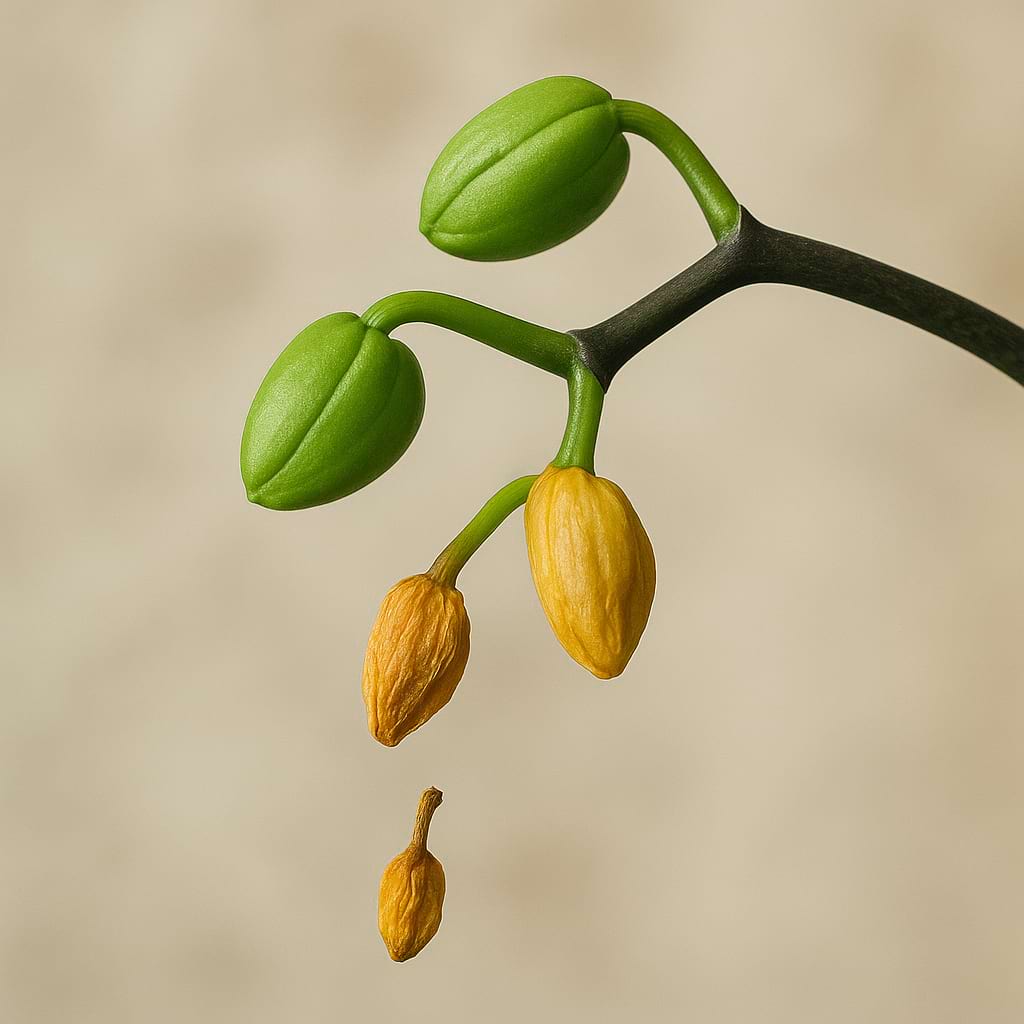
Buds that wither before they open are bud blast, usually from heat, a dry pot, or a sudden move. A plant that flowered well and then stopped in a warm room is often heading into dormancy early. A restarted tuber that makes leaves in autumn but no buds usually needs a cooler, brighter spot; it is a case of failure to bloom, not a dead plant.
😴 Cyclamen Dormancy (Summer Rest or Seasonal Plant)
What Dormancy Looks Like
In late spring, flowering slows and the leaves start yellowing from the outside in, a few at a time, until the plant is bare. People see this and throw the plant away. If the tuber is still firm, it is just resting through the summer, as it would in the wild. If it is soft or mushy, that is rot, and the plant is finished.
Option 1: Treat It as a Seasonal Plant
Plenty of people enjoy a cyclamen for one winter and compost it when it fades, the same way they treat cut flowers that last four months. Even extension services admit reblooming is fiddly. There is no shame in this, especially if you have no cool, bright spot to restart it.
Option 2: Rest the Tuber and Restart It
- As leaves yellow, water less and stop feeding.
- When the foliage has died back, twist off the dead leaves and stop watering.
- Keep the pot dry, shaded, and cool for the summer, ideally around 50-60°F. A cool basement or a shady, sheltered spot outdoors (out of the rain) works. Some growers lift the tuber and store it in dry vermiculite.
- After 6-8 weeks or more, usually in late summer, check for small new leaves pushing from the top. Repot if needed, water lightly, and move it back into bright light in a cool room.
- Increase watering as leaves fill in, and resume feeding. Buds usually follow in autumn or winter.
Keeping It Green Through Summer
In a cool house, some plants never go fully dormant. They lose a few leaves, look tired, and stop flowering for a while, then carry on. If yours does this, keep watering lightly and let it be; there is no need to force a rest.
🏷️ Cyclamen Types and Varieties
Standard Florist's Cyclamen
These are the large-flowered Cyclamen persicum hybrids sold in winter, with big flowers on tall stems and leaves often heavily marbled in silver. They make the biggest show but are the least tolerant of a warm room.
Mini Cyclamen
Minis are the same species bred small, with smaller leaves and smaller flowers on short stems. You will see them sold in large numbers in autumn, often in small pots for windowsills and outdoor containers. Series such as Metis and Verano are widely sold as minis. Care is identical, but a small pot dries out fast, so check minis more often.
Ruffled, Picotee, and Double Forms
Within both sizes you will find fringed and ruffled petals, picotee types with a white edge around a colored petal, flamed or striped flowers, and doubles. They are all grown the same way, so choose by looks.
Florist's Cyclamen vs Hardy Garden Cyclamen
This is the mix-up that costs people plants. Hardy cyclamen are different species meant for the garden, not the living room. Cyclamen hederifolium flowers in early autumn, often before its ivy-shaped, marbled leaves appear. Cyclamen coum flowers from midwinter into early spring above round, often silver-patterned leaves. Both are usually rated for roughly USDA zones 5-9, though coum's rating varies by source. They want to live outdoors in part shade, planted shallowly in humus-rich soil, and they sulk in a heated house.
Florist's cyclamen is the opposite: frost-tender, roughly zone 9-11 outdoors, and grown as a houseplant everywhere colder. If a plant label just says "cyclamen", the season and the price usually tell you: a big-flowered pot in a florist's sleeve is C. persicum.
🪴 Potting and Repotting Cyclamen
When to Repot
Repot only when needed, every year or two, and only at the end of dormancy, when the first new leaves appear in late summer. Never repot a plant in full flower; disturbing the roots then often ends the season.
Choosing a Pot
Use a pot only a little wider than the tuber, with a drainage hole. Cyclamen flowers best slightly snug, and a big pot holds wet soil the roots never reach. Plastic keeps moisture steadier for a plant in bloom; terracotta suits heavy-handed waterers. Our plant pots guide compares the options.
Step-by-Step Repotting the Tuber
- Ease the tuber out and shake off the old mix.
- Check it: firm is good, soft or hollow is rot. Trim any dead roots.
- Half-fill the new pot with fresh, slightly damp mix.
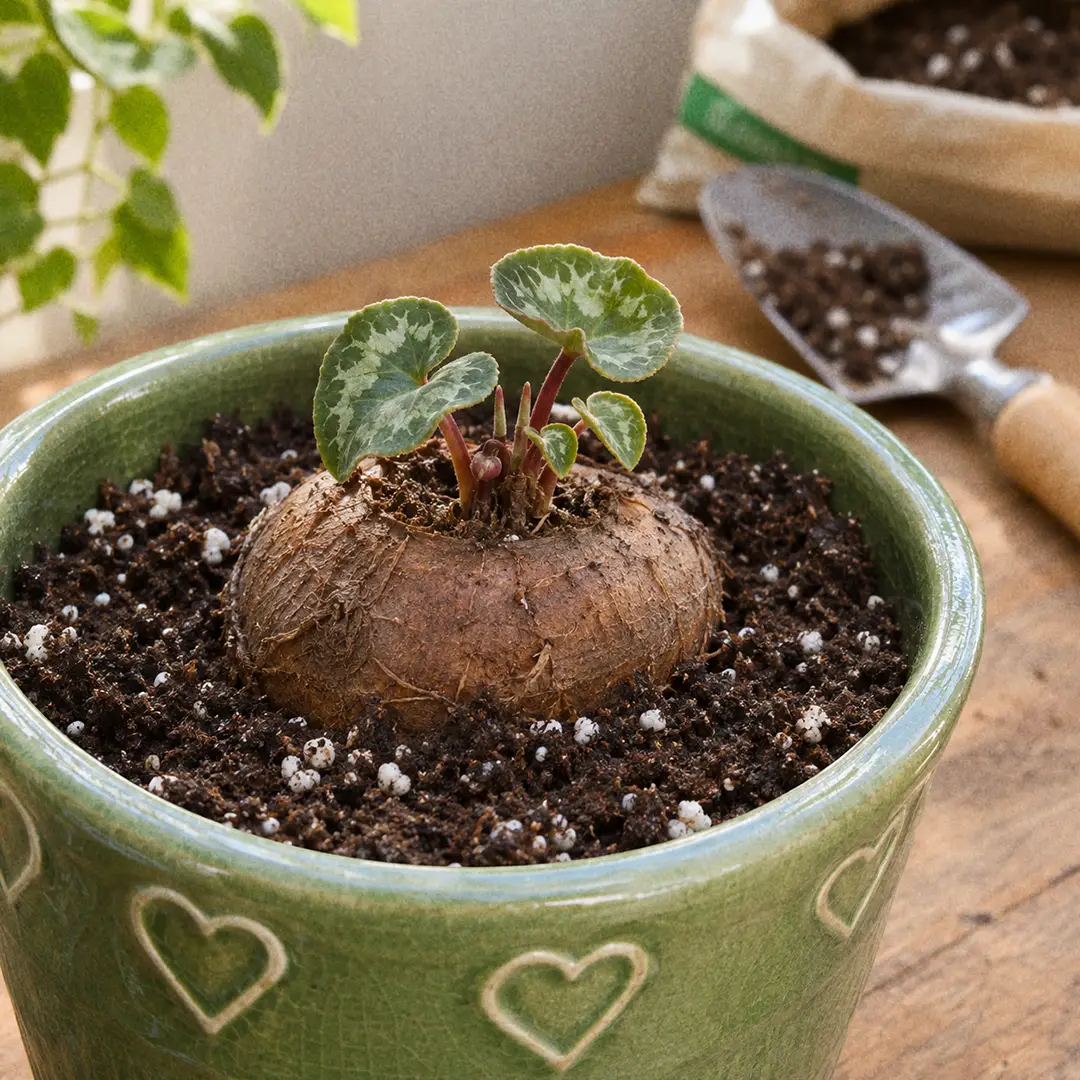
- Set the tuber on top with the rounded, rooted side down and the slightly flattened or dished top, where the old stems grew, facing up.
- Fill around it so the top half of the tuber stays above the soil. Burying it is the classic repotting mistake.
- Water lightly from below and keep it barely moist until new leaves fill in.
✂️ Deadheading Cyclamen (Twist, Do Not Cut)
Why Deadheading Matters
Every faded flower left on the plant either rots into the crown or starts forming a seed pod, which takes energy away from new buds. Removing spent flowers promptly keeps both gray mold and bloom slowdown at bay.
How to Deadhead
Follow the faded flower's stem all the way down to the tuber. Grip it near the base, give it a twist, and pull it away in one sharp tug. It should come away cleanly from the tuber. Do not snip the flower off and leave the stem, and do not cut halfway down; the leftover stub rots and invites fungal disease into the crown.
Removing Yellow Leaves
Treat yellowing leaves the same way, twisting the whole stem off at the base. A few yellow leaves at a time are normal turnover. Many at once in late spring means dormancy is starting.
🌱 How to Propagate Cyclamen
Seed Is the Only Practical Method
Florist's cyclamen does not grow from leaf or stem cuttings, and its single tuber does not make offsets or divide well. New plants come from seed, which is how growers produce them. Most store plants are hybrids, so seed you collect will not come true to the parent.
Step-by-Step From Seed
- Sow fresh seed on moist seed-starting mix and cover it lightly.
- Cover the pot and keep it dark and cool, around 60-68°F (15-20°C). Germination slows or stops above about 72°F.
- Expect sprouts in roughly 4-8 weeks, sometimes much longer.
- Move seedlings into bright indirect light as soon as they emerge and keep them evenly moist.
Tips for Success
Each seedling forms a tiny tuber first and leaves after. Patience is part of the method: even under greenhouse conditions, growers need many months to bring a plant to flower, and at home it usually takes longer. Keep seedlings cool and in leaf over their first summer rather than letting them go dormant. Our propagation guide covers seed-raising basics.
🐛 Cyclamen Pests and Treatment
Common Pests
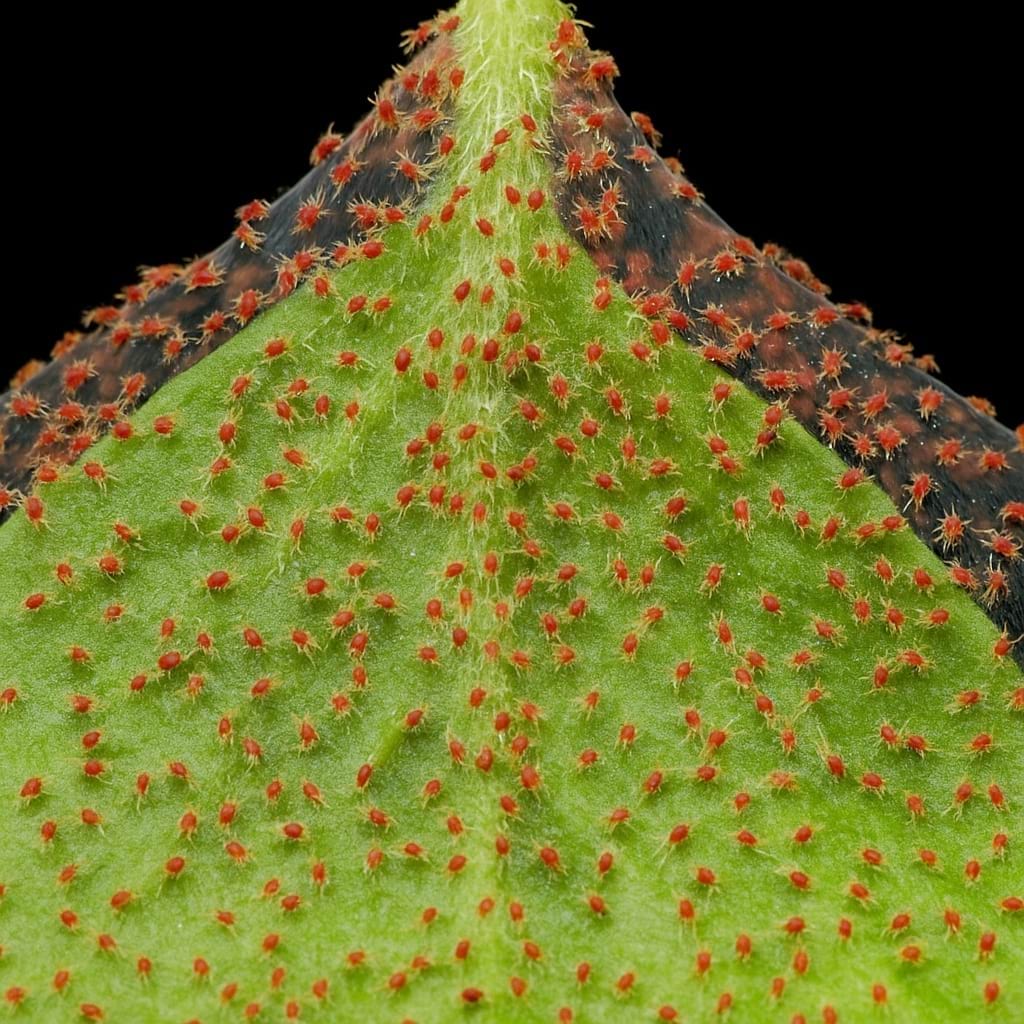
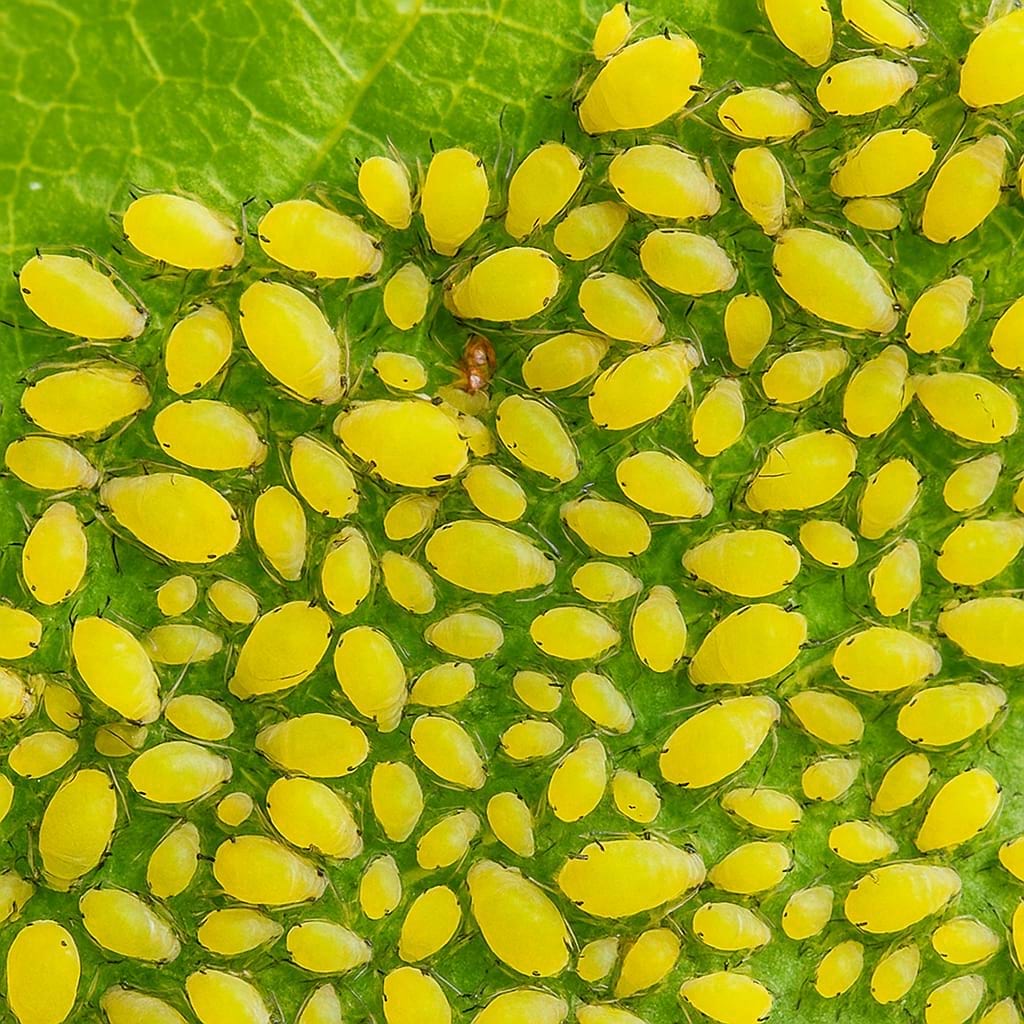
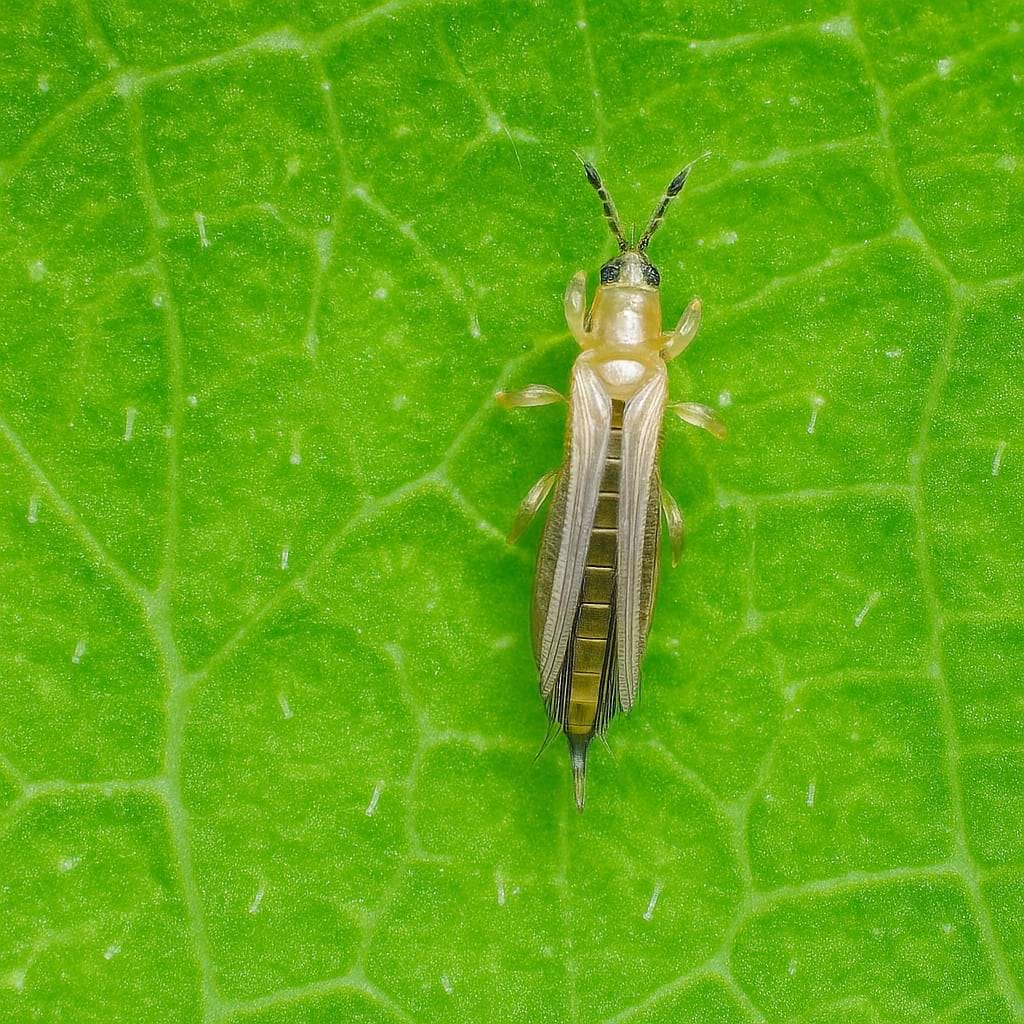
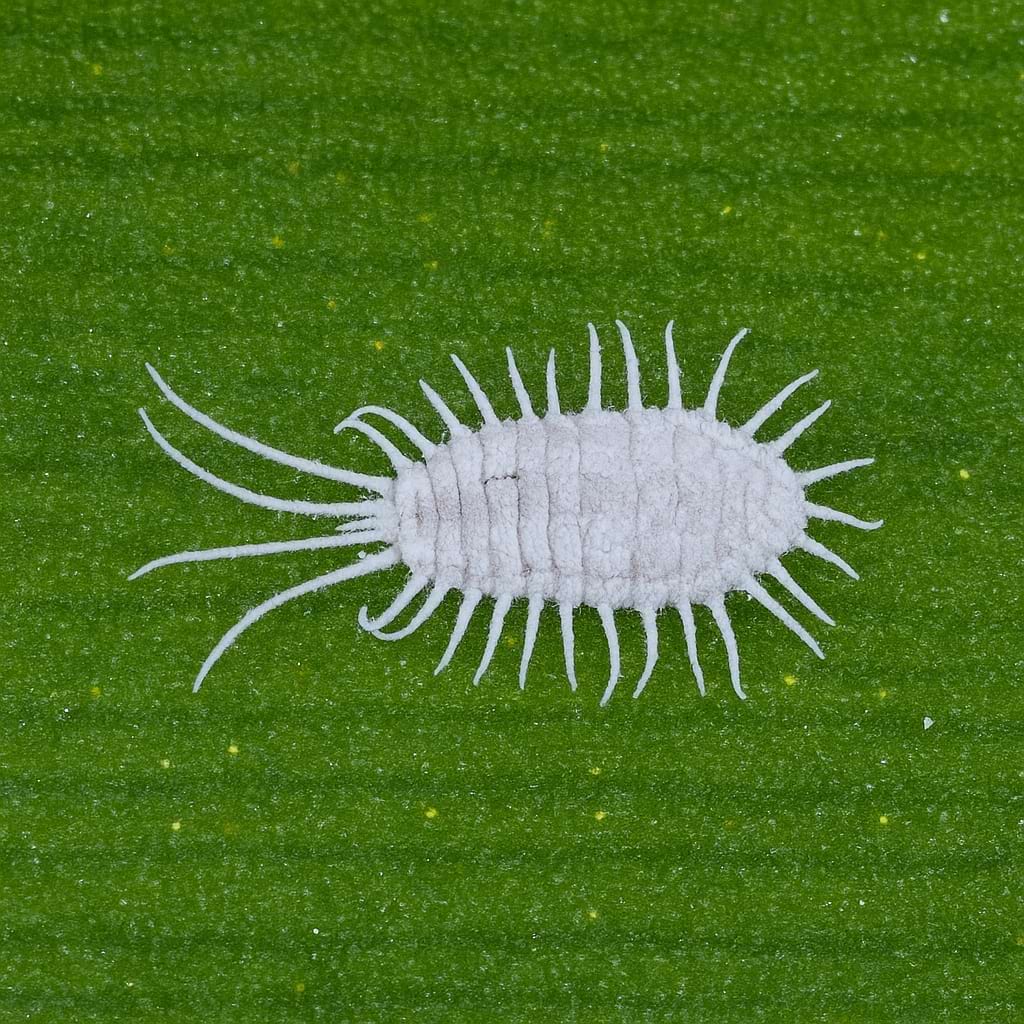
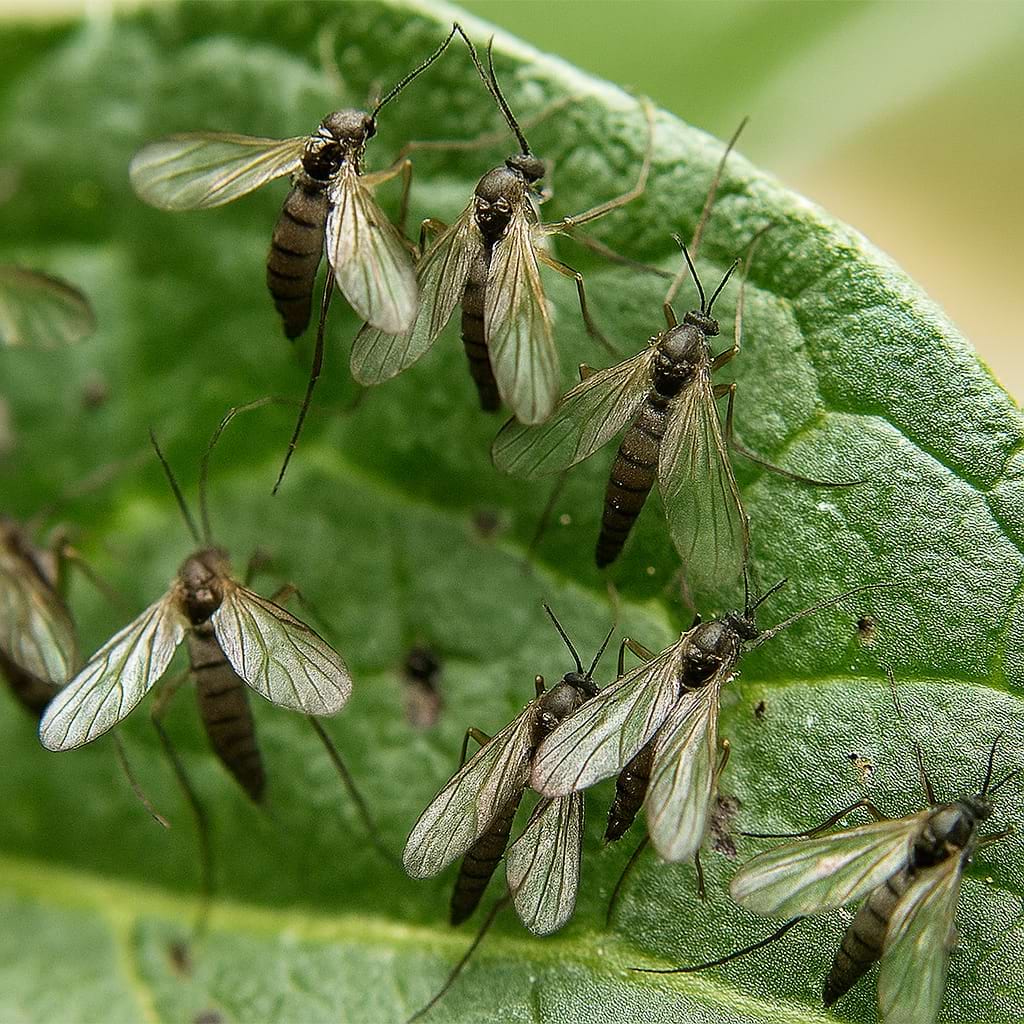
Spider mites are the most common pest in warm, dry rooms, leaving speckled, dull leaves and fine webbing under the foliage. Aphids cluster on flower buds and new leaves, and thrips streak and spot the petals. Mealybugs hide where stems meet the tuber, and fungus gnats mean the mix is staying too wet.
Cyclamen Mites and Vine Weevils
Cyclamen mites are too small to see. The sign is new growth in the center that is stunted, curled, brittle, or streaked, and flowers that open distorted. They are very hard to control, and extension services advise discarding infested plants before the mites spread to other flowering houseplants. Vine weevil grubs, which eat the tuber, show up as a plant wilting in damp soil; check by tipping it out.
Treatment and Prevention
Isolate any affected plant. Rinse off aphids and spider mites, then use insecticidal soap, sprayed on the leaves and kept off the open flowers and crown as much as possible. Dab mealybugs with rubbing alcohol on a cotton swab. Cool nights and decent humidity prevent most mite trouble. Read pest prevention in winter for a monthly check routine.
🩺 Common Cyclamen Problems
Yellow Leaves
Yellowing leaves on a cyclamen have four usual causes: a room that is too warm, overwatering, a dry pot, or the start of dormancy. In winter, heat and watering are the suspects, so feel the soil and check the thermostat. In late spring, yellowing spreading across the whole plant is natural die-back.
Sudden Collapse
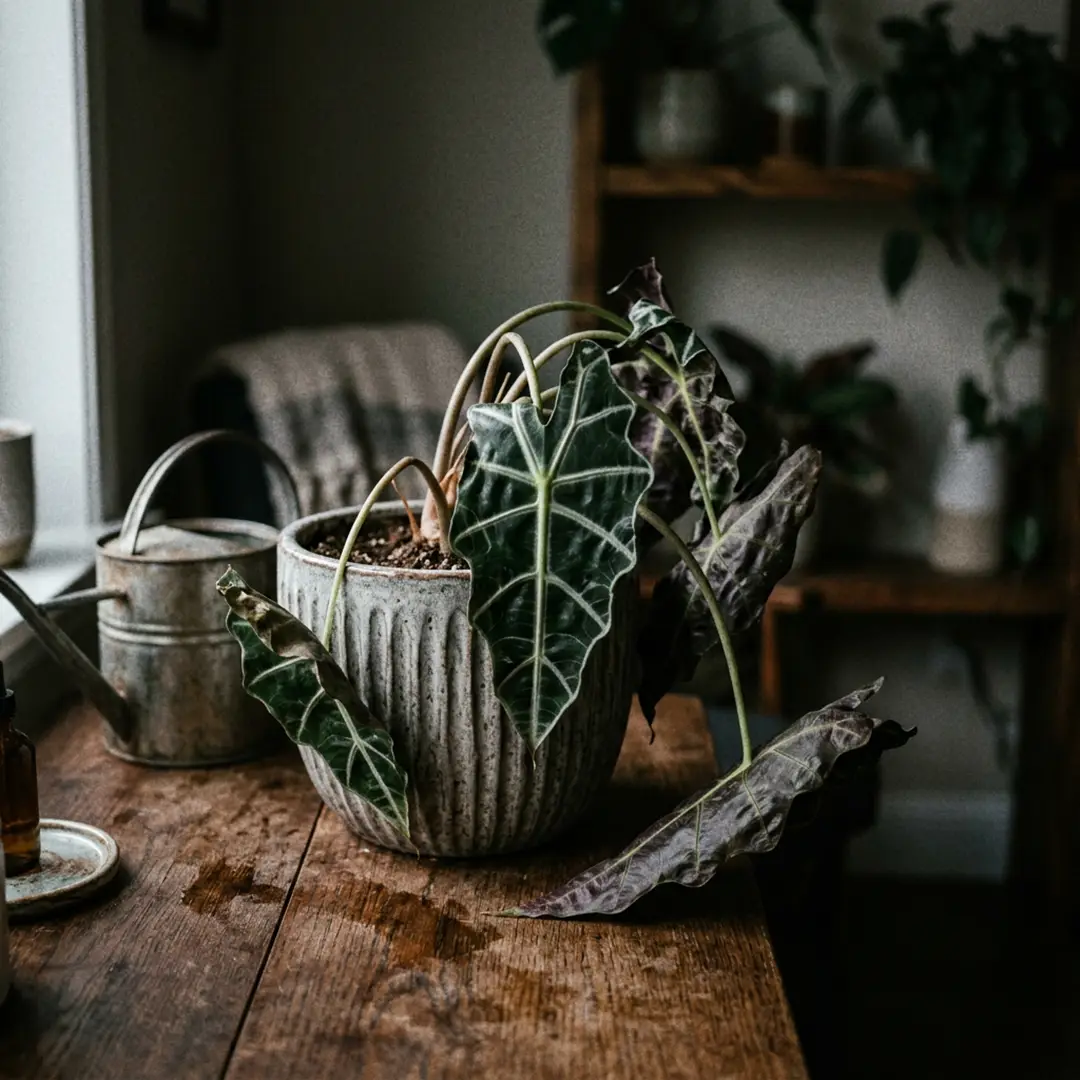
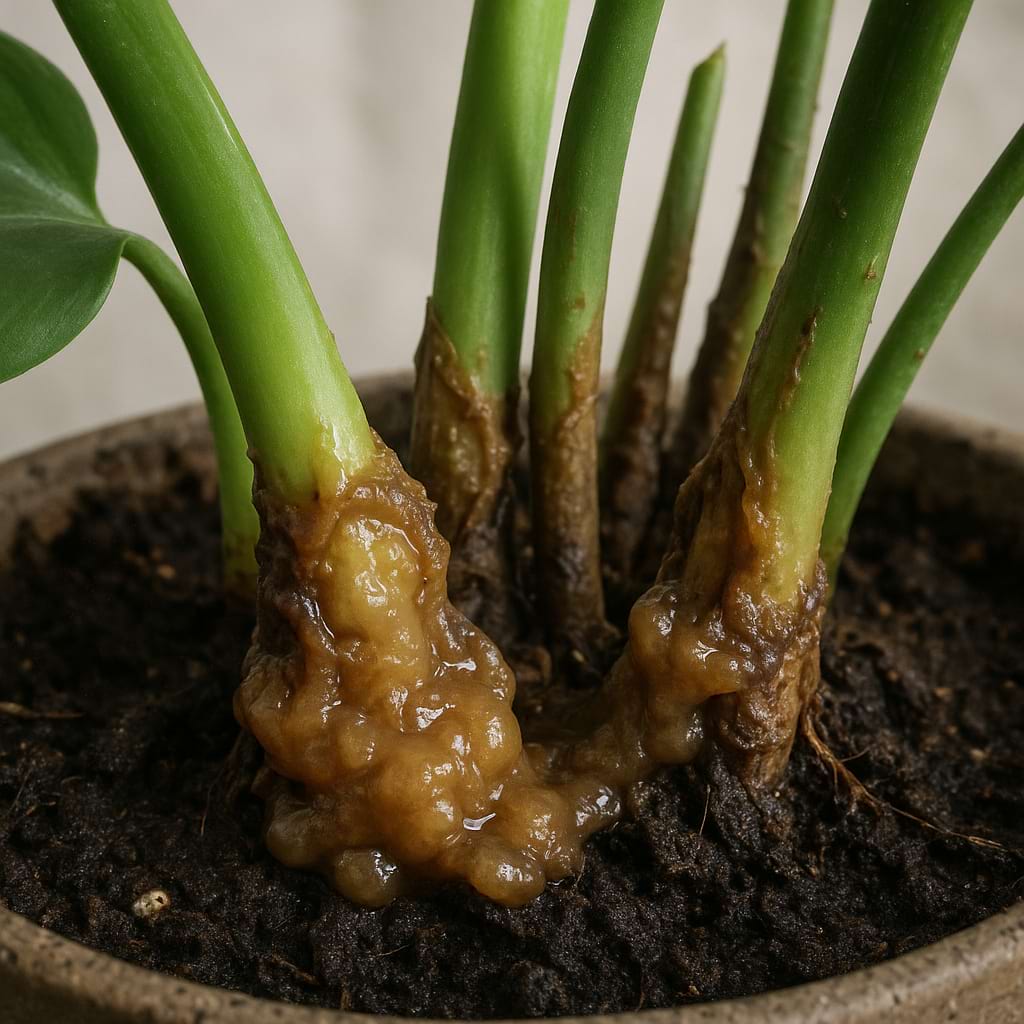
When the whole plant flops over the pot rim in a day, check the soil first. Dry means thirst; soak it from below and it often stands up again within a few hours. If the soil is wet and the plant still wilts, press the tuber. A soft, sunken, or smelly tuber is crown rot or mushy stems from water in the crown, and there is no saving it. A plant beside a heater can collapse with damp soil too; move it somewhere cool first.
Gray Mold (Botrytis)
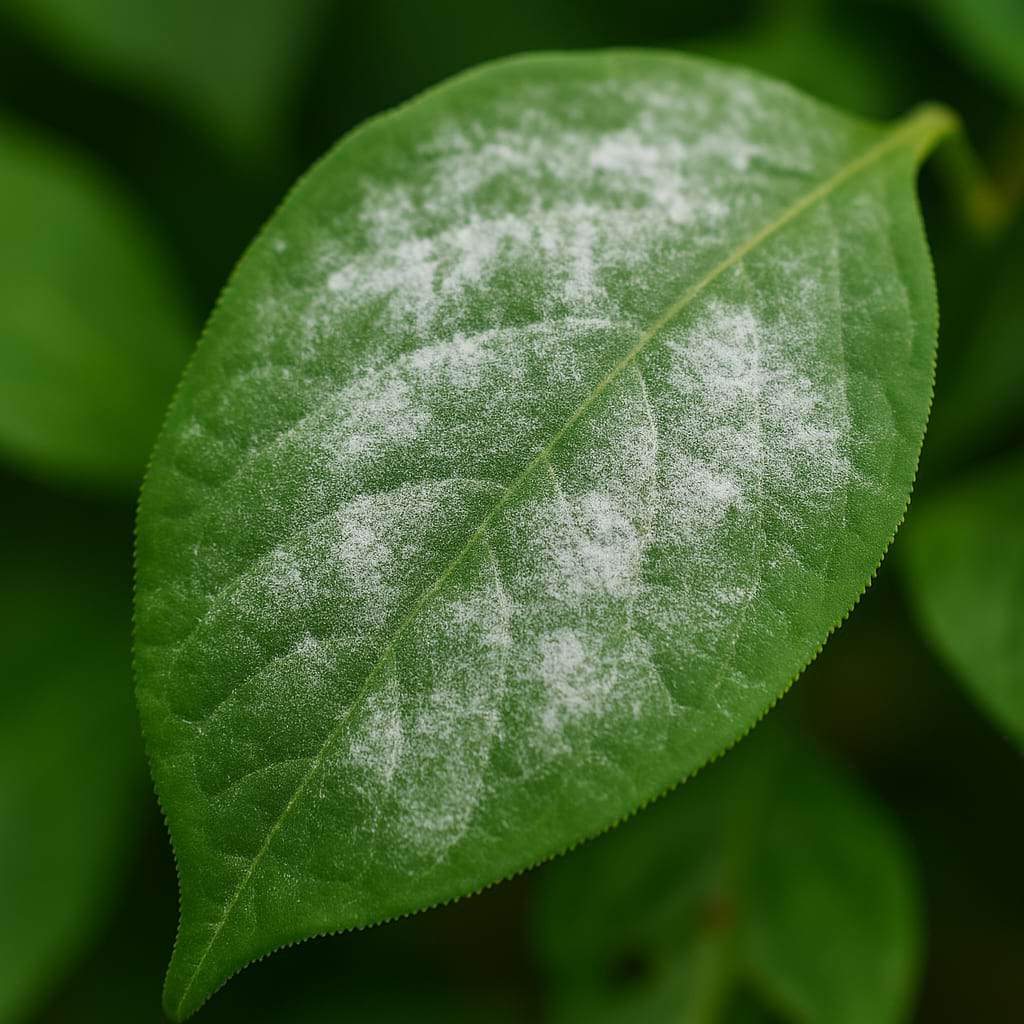
Gray mold is the main disease of cyclamen. Look for gray-brown fuzz at the base of stems, on dead leaves, or on flowers, plus small water-soaked spots on petals and stalks collapsing from the bottom. It spreads in cool, damp, still air, especially when old flowers and leaves are left to rot. Remove every affected part, stop misting, improve airflow, and water only from below.


🖼️ Cyclamen Display and Styling Ideas
Solo Setups
A single cyclamen on a cool east windowsill or a bright hallway table is the classic setup. White or pale pink flowers glow against a dark pot, and the marbled leaves deserve eye level. If the plant came in a decorative sleeve or cachepot, lift it out after watering so it never sits in trapped water.
Grouped Arrangements
Minis look best massed: three or five in a long tray on a bright kitchen sill, all one color or a mix. Pair cyclamen with other cool-room winter bloomers such as an Azalea or a Christmas Cactus, which tolerate the same cool, bright conditions. Avoid pairing it with tropical plants that want 70°F or more.
Where Not to Put It
Skip the mantelpiece over a working fireplace, the top of the radiator, anywhere near a heating vent, and the warmest, sunniest south window. And keep it well out of reach of cats and dogs, since the tuber is toxic.
🌟 Cyclamen Pro Care Tips
Temperature Tips
- ❄️ Cool is the whole game. 60-65°F by day and 50-55°F at night keeps flowers going for months.
- 🌙 Use the cold room at night. A move to a cooler room overnight adds weeks of bloom.
Watering Tips
- 💧 Water the pot, never the tuber. Bottom water for 10-20 minutes, then drain fully.
- 🎁 Ditch the foil sleeve. Gift wrapping traps water around the tuber and rots it.
Bloom and Rest Tips
- 🌸 Buy buds, not flowers. A plant with lots of buds under the leaves lasts far longer.
- ✂️ Twist and pull, do not cut. Remove spent flowers and yellow leaves at the base.
- 😴 Yellowing in May is normal. Rest the firm tuber dry and cool, and look for new leaves in late summer.
❓ Frequently Asked Questions
Is cyclamen toxic to cats and dogs?
Yes. The ASPCA lists cyclamen (Cyclamen spp.) as toxic to dogs, cats, and horses because of terpenoid saponins. Chewing the plant can cause drooling, vomiting, and diarrhea, and the tuber is the part to worry about most: the ASPCA notes heart rhythm problems, seizures, and even death after large amounts of tuber are eaten. Keep it out of reach and call your vet or a pet poison line if your pet eats any.
Why are my cyclamen leaves turning yellow?
In winter, the usual causes are a room that is too warm, overwatering, or letting the pot dry out completely. In late spring, gradual yellowing of the whole plant is the start of normal summer dormancy. Check the tuber: firm means the plant is fine.
Why is my cyclamen drooping?
Most often it is thirsty, and a 15-minute soak from below perks it up within hours. If the soil is already wet, the cause is heat or rot, so move it somewhere cool and press the tuber to check for softness.
How do I water a cyclamen?
From below. Stand the pot in room-temperature water for 10-20 minutes, then drain it fully, and water again when the surface feels dry. Never pour water onto the tuber or into the center of the plant.
Is my cyclamen dead or dormant?
If it flowered all winter and the leaves are yellowing in late spring, it is almost certainly going dormant. Press the tuber gently. Firm means resting; soft, mushy, or hollow means rot, and the plant is gone.
Can I keep my cyclamen after it flowers?
Yes. Let it die back, keep the tuber dry and cool over summer, and restart it in late summer with fresh mix and light watering (see dormancy). It takes some patience, so many people treat it as a seasonal plant instead, and that is fine too.
How long do cyclamen flowers last?
In a cool room around 50-65°F, a plant with plenty of buds can keep flowering for two to four months, often from late autumn into spring. In a warm room the same plant may last only a few weeks.
Can cyclamen go outside?
Florist's cyclamen can sit outdoors in mild weather and in shade, but it is frost-tender and must come in before a freeze. For year-round garden planting in cold climates, choose hardy species like Cyclamen hederifolium or Cyclamen coum instead.
Do I cut off dead cyclamen flowers?
Do not cut them. Follow the stem to the base, twist, and pull it away from the tuber in one go. A cut stub left behind tends to rot and invite gray mold.
ℹ️ Cyclamen Info
Care and Maintenance
🪴 Soil Type and pH: Light, peat-free or peat-based houseplant mix with added perlite
💧 Humidity and Misting: Likes 50% or more; use a pebble tray or humidifier and keep water off the flowers.
✂️ Pruning: Twist and pull spent flowers and yellow leaves off at the base, stem and all.
🧼 Cleaning: Pull off dead flowers and leaves as they appear. Do not wipe or mist the foliage, since damp debris invites gray mold.
🌱 Repotting: Only when needed, at the end of the summer rest, with the top half of the tuber left above the soil.
🔄 Repotting Frequency: Every 1-2 years, after dormancy
❄️ Seasonal Changes in Care: Flowers from autumn through spring in a cool room, then goes dormant in late spring. Keep the tuber dry and cool over summer and restart it in late summer.
Growing Characteristics
💥 Growth Speed: Moderate
🔄 Life Cycle: Tuberous perennial with a summer dormancy
💥 Bloom Time: Autumn to spring
🌡️ Hardiness Zones: Roughly 9-11 (frost-tender)
🗺️ Native Area: Eastern Mediterranean and North Africa, including Turkey, Cyprus, Greece, Lebanon, Syria, Israel and Palestine, Algeria, and Tunisia
🚘 Hibernation: Summer dormancy of about 6-8 weeks or longer; leaves yellow and the tuber rests dry
Propagation and Health
📍 Suitable Locations: Cool, bright windowsills, unheated spare rooms, enclosed porches that stay frost-free
🪴 Propagation Methods: Grown from seed only; the tuber does not divide and stems do not root.
🐛 Common Pests: Spider Mites, Aphids, Thrips, Mealybugs, Fungus Gnats
🦠 Possible Diseases: Gray mold (botrytis), crown and tuber rot, root rot
Plant Details
🌿 Plant Type: Tuberous flowering perennial
🍃 Foliage Type: Seasonal; leaves die back in summer dormancy
🎨 Color of Leaves: Heart-shaped leaves, dark green with silver marbling
🌸 Flower Color: White, pink, salmon, lavender, magenta, red, and bicolors, some with ruffled or picotee edges
🌼 Blooming: Yes, for months through autumn, winter, and spring in cool rooms
🍽️ Edibility: Not edible. The tuber is toxic.
📏 Mature Size: 6-12 inches
Additional Info
🌻 General Benefits: Months of winter flowers when little else blooms, marbled foliage, compact size for a windowsill
💊 Medical Properties: No safe home medicinal use. Toxic if eaten.
🧿 Feng Shui: Upswept flowers are read as rising, uplifting energy, a cheerful choice for a cool entryway or bright kitchen sill in the darker months.
⭐ Zodiac Sign Compatibility: Capricorn
🌈 Symbolism or Folklore: Deep affection, sincerity, and resilience through winter
📝 Interesting Facts: The petals sweep backward and up, so each flower looks like a small bird or butterfly in flight above the leaves. The old common name sowbread comes from pigs digging up and eating the wild tubers.
Buying and Usage
🛒 What to Look for When Buying: Choose a plant with plenty of tight buds tucked under the leaves, not just open flowers. Lift a leaf and check that the tuber and crown are firm and free of gray fuzz, and skip any plant sitting in a soggy sleeve.
🪴 Other Uses: Winter gift plant, cool-room table centerpiece, seasonal porch color in mild climates
Decoration and Styling
🖼️ Display Ideas: A single plant on a cool east sill, a row of minis on a bright kitchen windowsill, a grouped tray of mixed colors in a cool hallway
🧵 Styling Tips: Pale flowers glow against a dark pot, and the marbled leaves look best at eye level where you can see the pattern.

Houseplant101 Forum
Questions & Comments
Ask a question, share your plant experience, or help other plant owners.
Comments are temporarily unavailable.
Open the Houseplant101 ForumNo comments yet
Be the first to ask a question or share your experience about this page.
Log in or create an account
Comments use your Houseplant101 Forum account, but you can stay on this page.
Create a new account