
Silver Monstera
Monstera siltepecana
Siltepecana, Silver Monstera Vine


Discover how to grow the stunning Monstera siltepecana. Learn the science behind its shimmering silver leaves, how to unlock its mature fenestrated form, and why this hemiepiphyte needs a moss pole to thrive.
📝 Silver Monstera Care Notes
🌿 Care Instructions
⚠️ Common Pests
📊 Growth Information
🪴 In This Guide 🪴

☀️ Monstera Siltepecana Light Requirements (Indoor Lighting Guide)

Finding the sweet spot for light is the secret to keeping that signature silver sheen on your Monstera siltepecana. Unlike its darker green cousins like the Monstera deliciosa which can tolerate slightly lower light, the Siltepecana needs good light to maintain its variegated look and energetic growth rate.
Best Light for Monstera Siltepecana
Bright, indirect light is the gold standard for this species. In its natural habitat in Mexico and Central America, it starts life on the forest floor but quickly scrambles up trees towards the canopy, seeking out pockets of sunlight.
- East-Facing Windows: These are often perfect. The gentle morning sun energizes the plant without scorching the foliage. It provides high-intensity light for a few hours followed by bright ambient light for rest of the day.
- West or South-Facing Windows: These can work well, but you must be careful. If the window gets intense, direct afternoon sun, pull the plant back a few feet or use a sheer curtain. Direct sun can bleach the beautiful silver patterning and scorch the leaves.
- Grow Lights: If you don't have ideal windows, Monstera siltepecana thrives under grow lights.
- Intensity: Aim for about 200-400 FC (Foot Candles) for 12 hours a day.
- Spectrum: Full-spectrum LED lights that mimic daylight (around 6000K) bring out the best growth and color rendering.
When the light is just right, you'll see faster growth (shorter internodes) and the silver variegation will be crisp and distinct. If you are trying to mature the plant (get it to fenestrate), higher light levels are crucial to power that drastic biological transformation.
Signs of Incorrect Lighting
Plants are great communicators if you know what to look for. Here is what your Siltepecana might be telling you:
Too Little Light (Low Light):
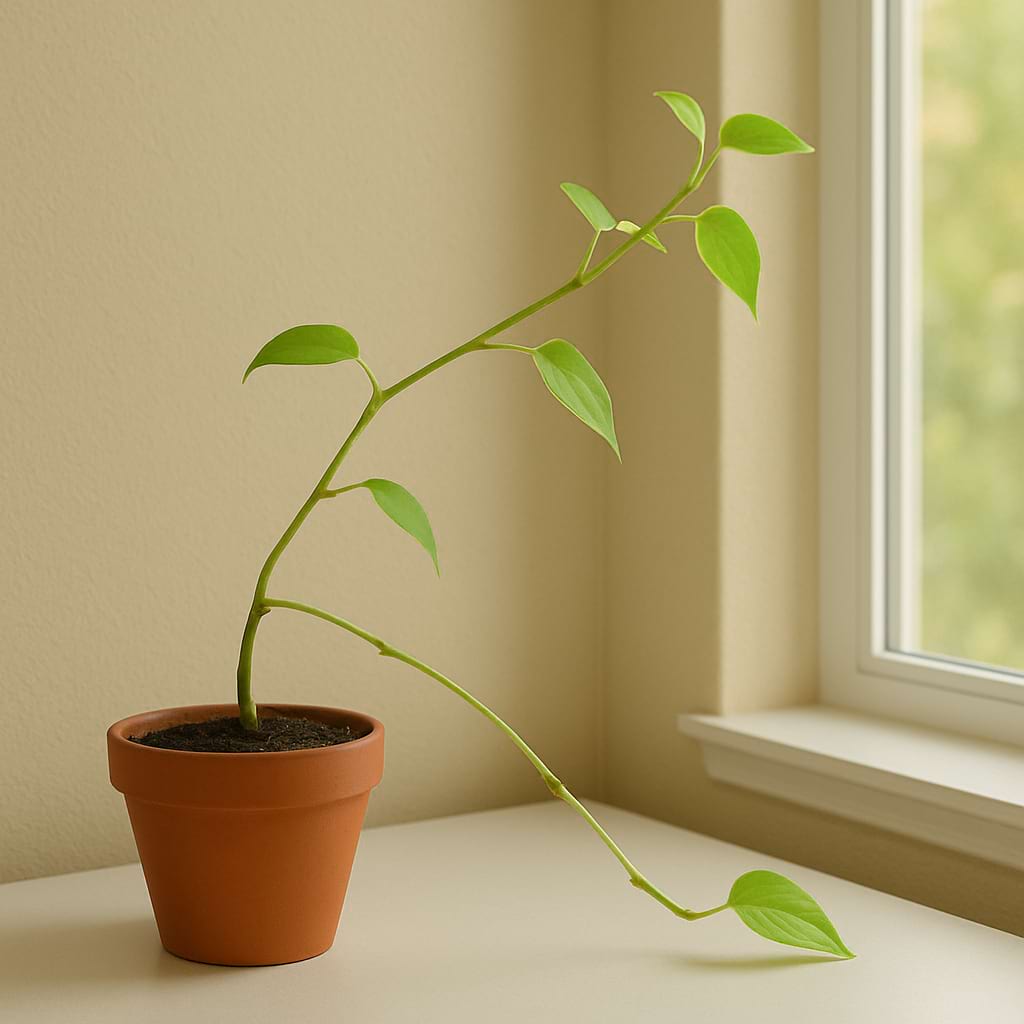
- Etiolation: The plant will become "leggy." The distance between leaves (internodes) will stretch out as the plant desperately reaches for a light source.
- Loss of Silver: The plant produces more chlorophyll to compensate for low energy, causing the iconic silver color to fade into a duller green.
- Stalled Growth: New leaves may be smaller than previous ones.
Too Much Light (Direct Sun):
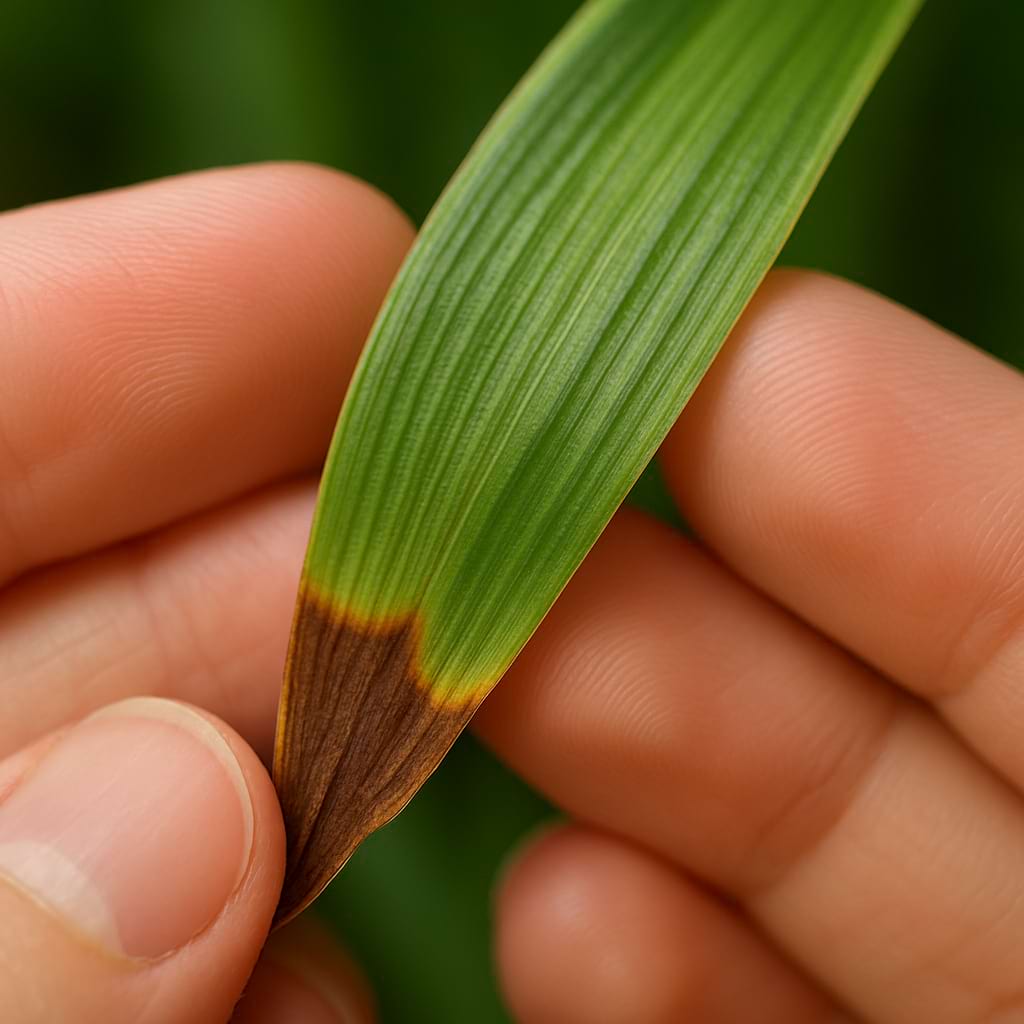
- Sunburn: Direct, purity scorching sunlight will cause brown, crispy patches on the leaves. These often look like bleached spots that turn necrotic.
- Washed Out Color: Even before burning, you might see the leaves looking pale or yellow, losing their vibrant contrast.

💧 Monstera Siltepecana Watering Guide (How to Water)
Watering Monstera siltepecana is all about balance. It is an epiphyte (or hemiepiphyte), meaning in nature it's used to growing on trees where its roots can dry out quickly after a rain. It does not like "wet feet" and is susceptible to root rot if suffocation occurs.
The Golden Rule: Dry Top Inch
Allow the top 1-2 inches of soil to dry out completely between waterings. I treat my Siltepecana very similarly to a Pothos or Philodendron. It is somewhat forgiving, but it will suffer if kept constantly soggy.
Testing Soil Moisture
Don't rely on a calendar schedule (e.g., "every Monday"). Conditions change! Use these methods instead:
- The Finger Test: The most reliable tool you have. Stick your finger into the soil up to the second knuckle. If it feels damp, wait. If it's dry and crumbly, it's time to water.
- The Chopstick Method: Stick a raw wooden chopstick into the pot. Leave it for a minute and pull it out. If it's dark and damp, hold off on watering. If it's dry and clean, water.
- The Weight Test: Lift the pot after watering to feel how heavy it is. Lift it again when dry. You'll quickly learn to judge if it needs water just by hefting it.
How to Water Properly
- The Soaking Method: When you do water, water thoroughly. Pour water until it flows freely from the drainage holes. This ensures the entire root ball is hydrated and flushes out any built-up salts from fertilizers.
- Drainage is Key: Never let the pot sit in standing water. If you use a decorative cache pot, make sure to empty it after watering.
- Water Quality: While not as sensitive as Calathea, siltepecana appreciates filtered or distilled water if your tap water is very hard, but generally, regular tap water is fine if you let the chlorine off-gas overnight.
Seasonal Adjustments:
- Summer: The plant is actively growing and transpirating. You might need to water once a week or even more frequently in hot, dry conditions.
- Winter: Growth slows down. The soil will take longer to dry out. Always check the soil before watering; you might only need to water every 10-14 days.
🪴 Best Soil for Monstera Siltepecana (Potting Mix & Drainage)
Because this plant is a climber that loves aeration around its roots, a standard dense potting soil is a death sentence (or at least a slow decline). You need to replicate the chunky, airy debris of a forest floor.
The Ideal Aroid Mix Recipe
Making your own soil is a rite of passage for plant parents and guarantees the best results. Here is my go-to "Jungle Mix":
- 40% Quality Potting Soil (Base): Provides the structure and base nutrients.
- 30% Orchid Bark (Fir Bark): This is the most important additive. It creates large air pockets, preventing the soil from compacting.
- 20% Perlite or Pumice: Increases drainage and aeration. Pumice is often preferred as it doesn't float to the top like perlite.
- 10% Worm Castings: A fantastic, gentle organic fertilizer that provides micronutrients.
- Optional: A handful of horticultural charcoal. This helps filter impurities and keeps the soil "sweet" (prevents bacterial buildup).
Why this works:
The orchid bark and perlite create large air pockets (macropores). Monstera roots need oxygen just as much as they need water. This "chunky" mix allows water to run right through, wetting the roots without suffocating them. If you squeeze a handful of moist soil, it should fall apart when you open your hand, not stick together like a mud ball.
If you don't want to mix your own, look for a pre-bagged "Aroid Mix" or "Jungle Mix" at specialty plant shops. Avoid "moisture control" potting soils, as they retain far too much water for this species.
🍼 Fertilizing Monstera Siltepecana
While not an incredibly heavy feeder, the Monstera siltepecana benefits greatly from regular nutrition, especially if you are trying to encourage it to climb and mature. A starving plant will not have the energy to build those large, complex adult leaves.
- When to Feed: Fertilize during the active growing season (Spring through early Fall). Pause feeding during the winter months when the plant is semi-dormant.
- What to Use:
- Liquid Fertilizer: A balanced liquid houseplant fertilizer (e.g., 10-10-10 or 20-20-20) is easiest. Dilute to half strength and apply monthly.
- Fish Emulsion: Great organic option, though it can be smelly.
- Slow Release: Granules (like Osmocote) mixed into the soil in spring provide a steady drip of nutrients.
- Dilution: Always dilute chemical fertilizers to half the recommended strength. It's better to under-fertilize than to burn the roots with a chemical overdose.
Pro Tip: If your plant is on a moss pole, water the pole with the fertilizer water. The aerial roots digging into the moss are active absorbers and will drink it up greedily! This is actually one of the fastest ways to size up your leaves.
🌡️ Monstera Siltepecana Temperature Range
This is a tropical plant, through and through. It loves warmth and is not frost-tolerant.
- Ideal Range: 65°F to 80°F (18°C - 27°C). This aligns perfectly with typical indoor home temperatures.
- Minimum: Try not to let it drop below 60°F (15°C). Cold drafts from windows in winter can cause leaves to yellow or drop.
- Stability: Avoid placing it near HVAC vents, radiators, or drafty doors. Sudden fluctuations in temperature can stress the plant.
If you are comfortable in a t-shirt in your room, your Monstera siltepecana is likely comfortable too.
💦 Monstera Siltepecana Humidity Needs
As a jungle native, Monstera siltepecana appreciates humidity, but the juvenile form is surprisingly adaptable to average household levels.
- Juvenile Plants: Will tolerate 40-50% humidity (average home) without much fuss, though they might grow a bit slower and have slightly crispier tips.
- Mature/Climbing Plants: If you are aiming for fenestrations (holes in leaves), humidity becomes critical. Aim for 60% or higher. High humidity encourages aerial roots to hydrate and attach to the support pole, which is the biological trigger for the plant to mature.
How to Boost Humidity:
- Humidifier: The most effective method. A warm or cool mist humidifier nearby works wonders.
- Grouping: Group plants together. As they transpire, they release moisture, creating a micro-climate of humidity around each other.
- Pebble Tray: Place the pot on a tray of water and pebbles (ensure the pot isn't touching the water). This provides a minor local boost.
- Misting: Largely ineffective for humidity, but can help keep dust off leaves. Be careful not to let water sit on leaves in poor airflow, as this invites fungal issues.
🌸 How to Make Monstera Siltepecana Bloom
We grow this plant for its foliage, which is fortunate because blooms are incredibly rare indoors.
In the wild, mature Monstera siltepecana produces a spathe and spadix, typical of the Aroid family (looking somewhat like a Peace Lily flower or a Spathiphyllum). The spathe is usually cream or greenish, enclosing a spadix covered in tiny flowers. However, this only happens on fully mature plants high up in the canopy that receive optimal light and humidity. It is extremely unlikely to happen in a living room, even with a moss pole.
If you do see a flower, celebrate your green thumb! But don't stress if it never happens. The real "bloom" of this plant is the transformation of its leaves.
⚖️ Monstera Siltepecana Comparison
It's easy to confuse M. siltepecana with other silver vining plants. Here is how to tell them apart.
Monstera Siltepecana vs. Monstera Peru
- Leaf Texture: This is the biggest giveaway. Monstera Peru (also called Monstera karstenianum) has incredibly crinkled, bubbly leaves with a rigid, almost plastic-like texture. Siltepecana leaves are smoother and thinner.
- Silvering: Siltepecana has a distinct silver shimmer overlay. Peru is usually just differing shades of glossy green, with less of a metallic silver sheen.
- Fenestration: Siltepecana will develop holes (fenestrations) when it matures. Monstera Peru generally does not; its mature leaves get larger but usually stay solid.
Monstera Siltepecana vs. Monstera Dubia
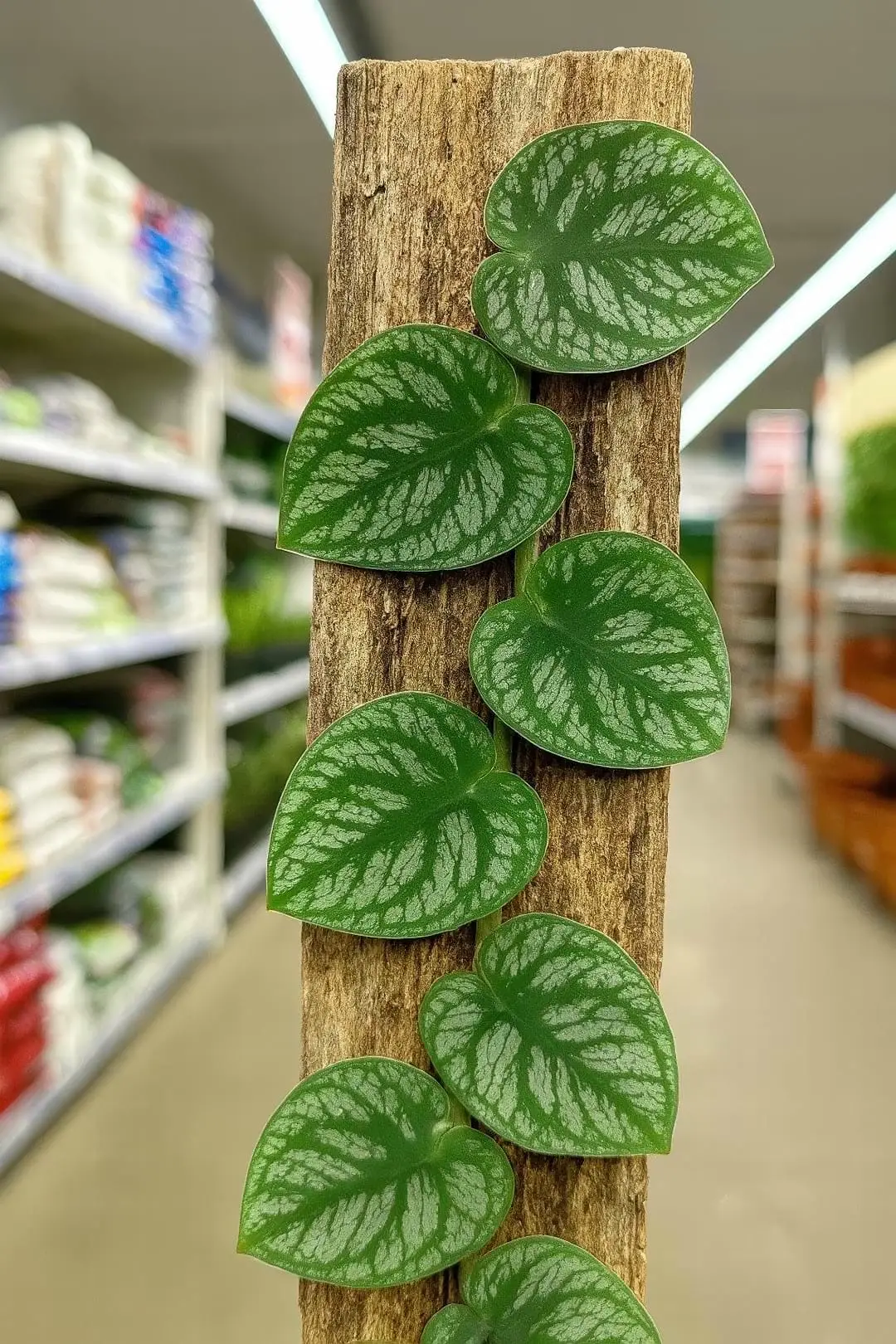
- Growth Habit: Monstera dubia is a true shingle plant. In its juvenile stage, its leaves lie perfectly flat against the mounting board, overlapping like roof shingles. Siltepecana is a looser climber; its leaves stick out on petioles and flutter in the breeze, never hugging the board flatly.
- Leaf Shape: Dubia leaves are more rounded/heart-shaped initially, while Siltepecana is distinctly lance-shaped (long and pointy).
Monstera Siltepecana vs. Scindapsus (Satin Pothos)
- Stem: Scindapsus stems are usually thicker and the plant is slower growing.
- Genetics: They are different genera.
- Silver Pattern: Scindapsus pictus usually has distinct silver dots or splashes. Siltepecana has more of a cloudy, overall silver wash with dark green veins.
- Leaf Tips: Siltepecana often has a very sharp, pointed drip tip compared to the slightly more curved tip of a Scindapsus.
👉 Check out our Complete Monstera Species List to see how Siltepecana compares to all 70+ other species.
🏷️ Monstera Siltepecana Types and Varieties
Unlike Monstera deliciosa which has splashed onto the scene with 'Albo', Thai Constellation, and 'Aurea' variegations, Monstera siltepecana is surprisingly stable.
Standard Form
This is the classic, silver-grey leaf with dark green veins that you will find 99% of the time. It is a stunning plant in its own right. The intensity of the silver can vary based on light conditions.
Monstera Siltepecana 'El Salvador'
There is a form often referred to as 'El Salvador' in the collector community. It is noted for having:
- Larger juvenile leaves.
- More solid, intense silver coverage (sometimes covering almost the entire leaf).
- A tendency to mature and fenestrate faster than the standard form.
The distinction is sometimes debated - some botanists argue it's just a regional variation or a result of growing conditions - but 'El Salvador' specimens generally command a higher price and are prized for that intense silver sheet.
Variegated Forms?
There are currently no widely available chemical variegations (like white or yellow sectors) for this species. The natural silver blistering is structural variegation (air pockets under the leaf skin), which is diferent from the pigment-lack variegation of an 'Albo'.
🪴 Potting and Repotting Monstera Siltepecana

Young Siltepecana grow quite fast and may need repotting every year. Older, larger plants can go 2 years between repots.
Signs it needs repotting:
- Roots are circling the bottom of the pot or growing out of drainage holes.
- The soil dries out incredibly fast (within 1-2 days).
- Growth has stalled despite feeding and good light.
Step-by-Step Repotting:
- Size Up: Choose a pot that is only 1-2 inches larger in diameter than the current one. Going too big increases the volume of wet soil without roots to drink it, increasing rot risk.
- Prepare Mix: Have your chunky aroid mix ready.
- Extract: Gently remove the plant, teasing the roots to loosen the old soil ball.
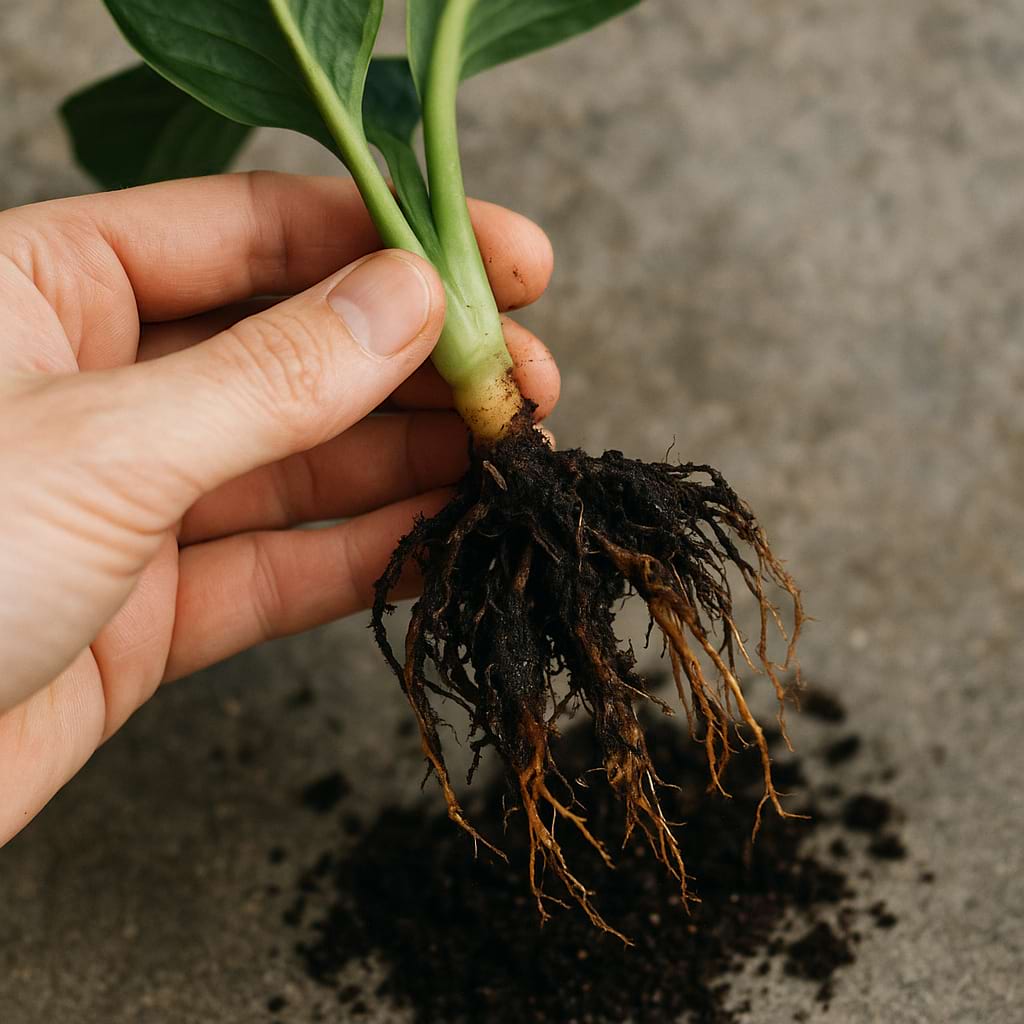
- Inspect: Check for any black or mushy roots (rot) and trim them off with sterilized scissors.
- Placement: Place a layer of soil at the bottom. If you are adding a moss pole (highly recommended!), place the pole in the empty pot first, then arrange the plant around it. This ensures the pole is stable and you don't damage roots by stabbing it in later.
- Fill: Fill the sides with soil, tapping the pot gently to settle it. Do not pack it down hard.
- Water: Water thoroughly to settle the soil.
✂️ Pruning Monstera Siltepecana
Pruning is generally done for two reasons: propagation or size control.
- Leggy Growth: If your plant has bare stems from low light, don't be afraid to chop them back. Cut just above a node (the bump where a leaf grows). New growth will push out from that node, often creating multiple vines and a fuller plant.
- Maintenance: Remove yellow or damaged leaves to redirect the plant's energy to healthy growth.
- The "Chop and Prop": To make a fuller pot, cut off long trailing vines, propagate them (see below), and plant them back into the same pot. This is how you get those lush, overflowing nursery baskets.
- Reversion: If the leaves are losing silver and you want to maintain the juvenile look, you can trim the vines back. However, usually, we want them to mature!
🌱 How to Propagate Monstera Siltepecana
Propagating Monstera siltepecana is very straightforward and has a high success rate. It's an excellent plant for beginners to practice propagation.
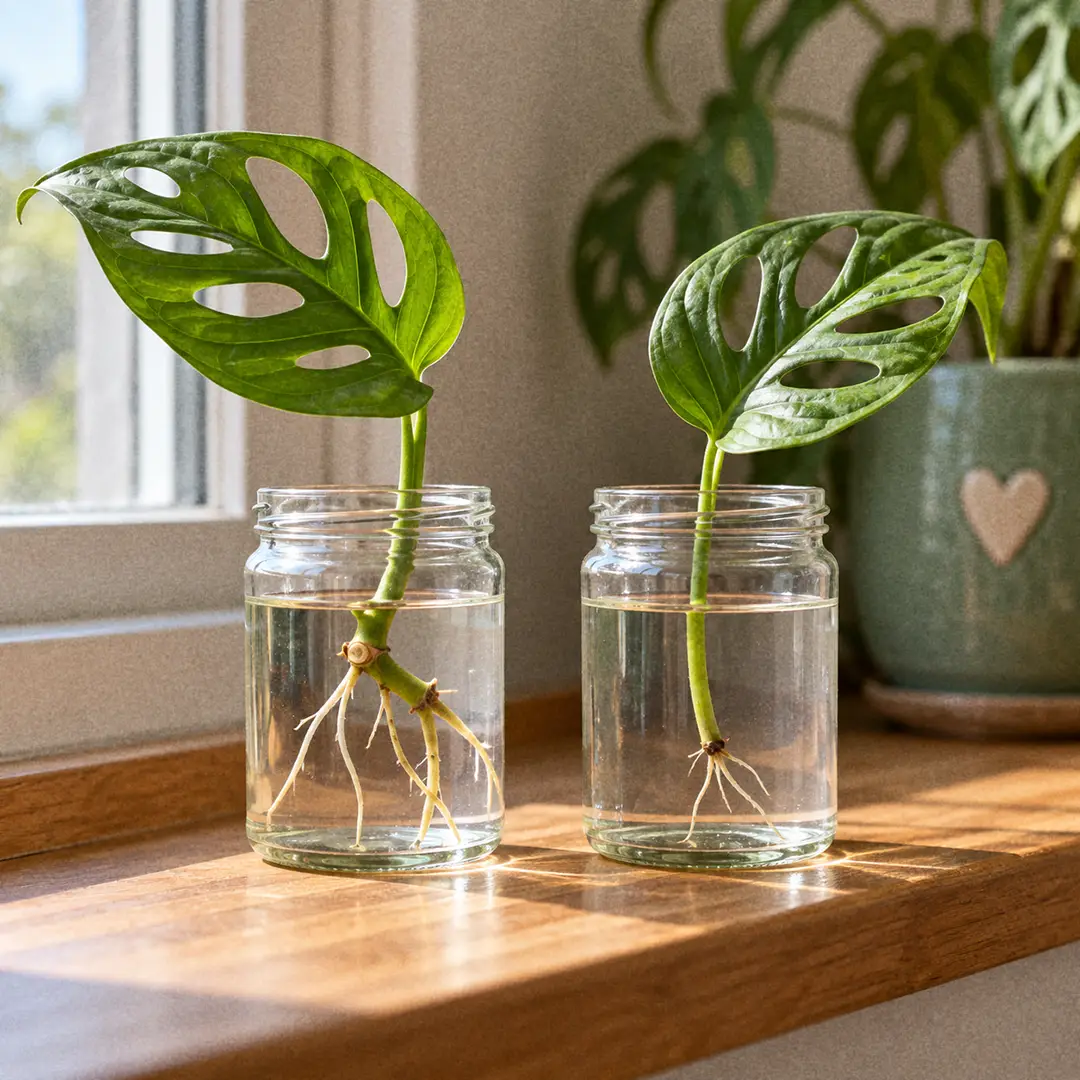
Method 1: Stem Cuttings in Water
This is the classic method and is very fun to watch.
- Cut: Snip a vine, ensuring each cutting has at least one node and one leaf. You can take a long vine and cut it into single-node segments.
- Roots: If you see little aerial roots nubbins, that's a bonus! That's where the soil roots will grow from.
- Submerge: Place the cutting in a glass of water, ensuring the node is submerged but the leaf is not. Wet leaves rot.
- Wait: Change the water weekly. In 2-4 weeks, you'll see white fuzzy roots emerging.
- Pot: Once roots are 1-2 inches long and have secondary branching roots, transfer to soil. Keep the soil slightly moist for the first week to help them acclimate.
Method 2: Moss Box (The \
This is my preferred method for "wet stick" (leafless) cuttings or large batches.
- Cut: Take multiple single-node cuttings (node + leaf).
- Moss: Fill a clear plastic storage bin or tupperware with damp sphagnum moss. Squeeze the moss out so it's damp like a wrung-out sponge, not dripping.
- Place: Lay the cuttings on top of the moss, gently pressing the nodes into the damp surface.
- Humidity: Closure the lid to create a greenhouse effect. This locks in 100% humidity.
- Grow: Place in bright light (but no direct sun, which will cook them). The high humidity will trigger rapid rooting and new shoot growth.
- Transfer: Once you see new leaves and solid roots into the moss, you can pot them up.
Method 3: Air Layering
If you want a rooted plant before you cut:
- Wrap damp moss around a node on the living vine.
- Secure it with plastic wrap or cling film.
- Wait a few weeks until you see roots filling the moss packet.
- Cut the vine below the moss and pot it up immediately. This is the lowest-risk method.
🐛 Monstera Siltepecana Pests and Treatment
Like most houseplants, the Siltepecana is not immune to pests, though it is reasonably resilient.
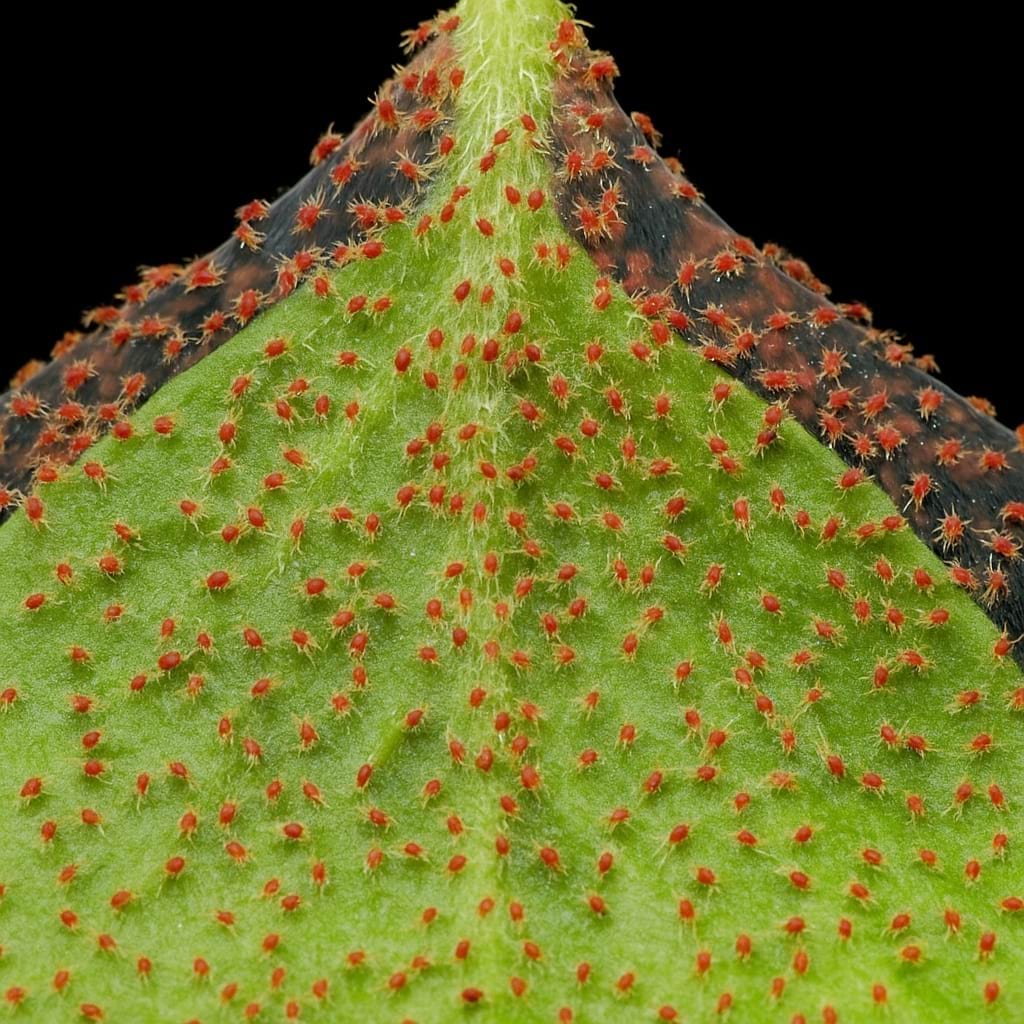
- Spider Mites: These are the most common enemy for this plant. They love dry air.
- Signs: Fine webbing on the undersides of leaves, or a stippled, dusty, yellow-dotted look to the foliage.
- Treatment: Take the plant to the shower and blast the leaves (underside too!) with lukewarm water to physically knock them off. Then, treat with Neem oil or an insecticidal soap. Repeat every 3-5 days. Increase humidity to discourage their return.
- Mealybugs:
- Signs: White, cottony fluff clumping in the nooks of the stems and nodes.
- Treatment: Dab individual bugs with a Q-tip dipped in rubbing alcohol. For larger infestations, use systemic granules (imidacloprid) in the soil or spray with insecticidal soap.
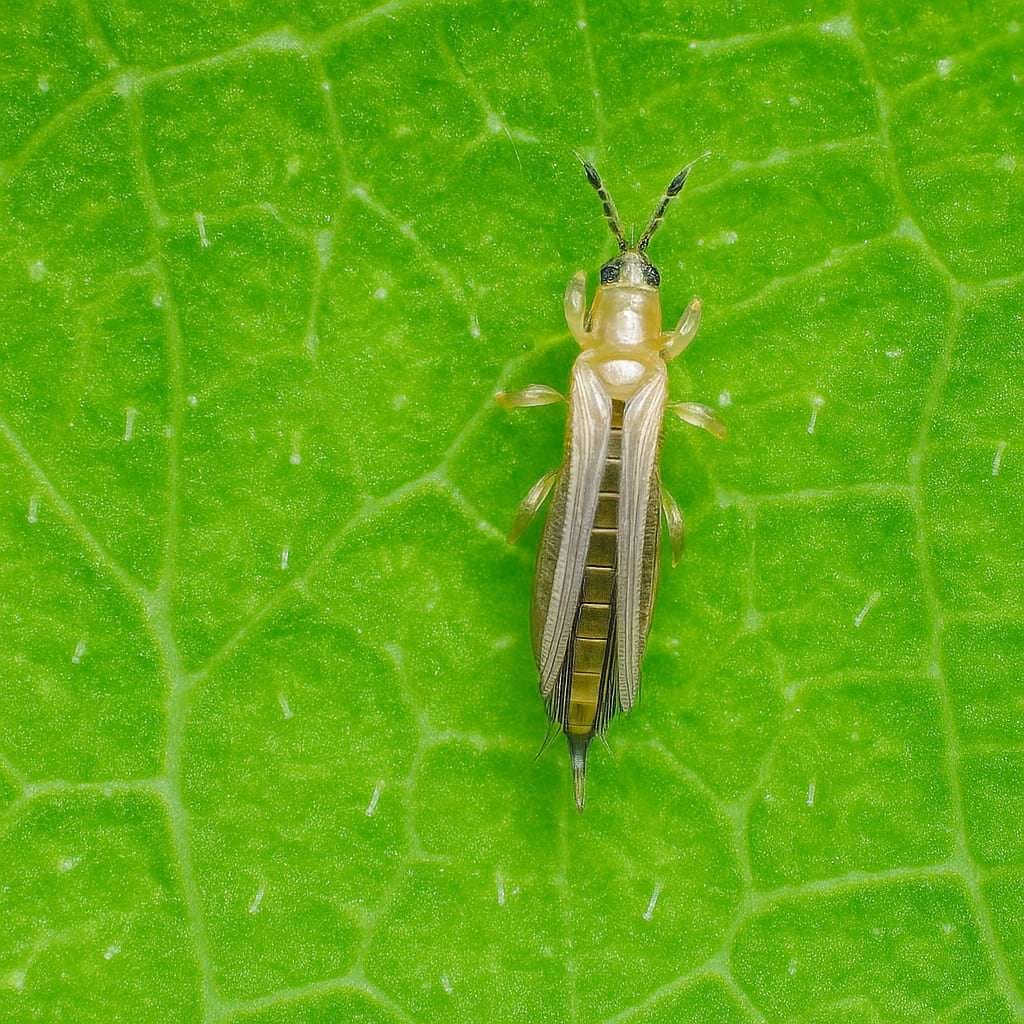
- Thrips:
- Signs: Tiny, slender black or yellow insects. They cause silver/bronze scratching on leaves and black poop dots.
- Treatment: These are tough. Isolate the plant immediately. Use a systemic insecticide (like Bonide) and spray regularly with Captain Jack’s Dead Bug Brew (Spinosad). Thrips lay eggs inside the leaf tissue, so you must keep treating for weeks to catch the hatching larvae.

⚠️ Is Monstera Siltepecana Toxic?
Yes, Monstera siltepecana, like strictly all Aroids, contains calcium oxalate crystals.
- For Pets: It is toxic to cats and dogs. If chewed or ingested, the microscopic needle-like crystals shoot into the soft tissues of the mouth and throat. This causes immediate pain, drooling, pawing at the mouth, and vomiting. Usually, animals stop after one bite due to the pain, but large ingestions can be serious.
- For Humans: It is also toxic to severe humans. While not usually lethal, eating the leaves will cause severe mouth irritation and swelling.
- Sap: The sap can sometimes cause skin irritation in sensitive individuals, so washing hands after pruning is a good habit.
Keep this plant out of reach of curious pets and small children. Hanging baskets are a great way to enjoy it safely!
🩺 Monstera Siltepecana Problems and Diseases

Yellow Leaves:
- Overwatering: Usually the #1 culprit. Check the soil. Is it soggy? Start letting it dry out more.
- Old Age: If only the oldest, bottom leaf turns yellow and drops, that's natural recycling.
- Nutrient Deficiency: If new leaves are pale yellow, it might be time to fertilize.
Curling Leaves:
- Thirst: The plant is protecting itself from water loss. Check the soil; it's likely bone dry.
- Heat Stress: Is it near a heater?
- Root Rot: Paradoxically, if roots are rotted, they can't drink, so the plant looks thirsty. Check the roots!
Brown Crispy Tips:
- Low Humidity: The air is too dry.
- Inconsistent Watering: You let it dry out too much for too long.
- Tap Water: Sensitive build-up of fluoride or chlorine (less common with Monstera, but possible).
No Fenestrations (No Holes):
- Juvenile State: This is normal for a hanging or trailing plant. To get holes, the plant MUST climb. It needs a moss pole and time to mature. The leaves will only fenestrate once they get larger and the plant feels secure climbing upwards. You cannot "fertilize" it into fenestrating; it is a structural change.

🖼️ Monstera Siltepecana Display Ideas

You have two main choices for styling this plant, and they create totally different looks:
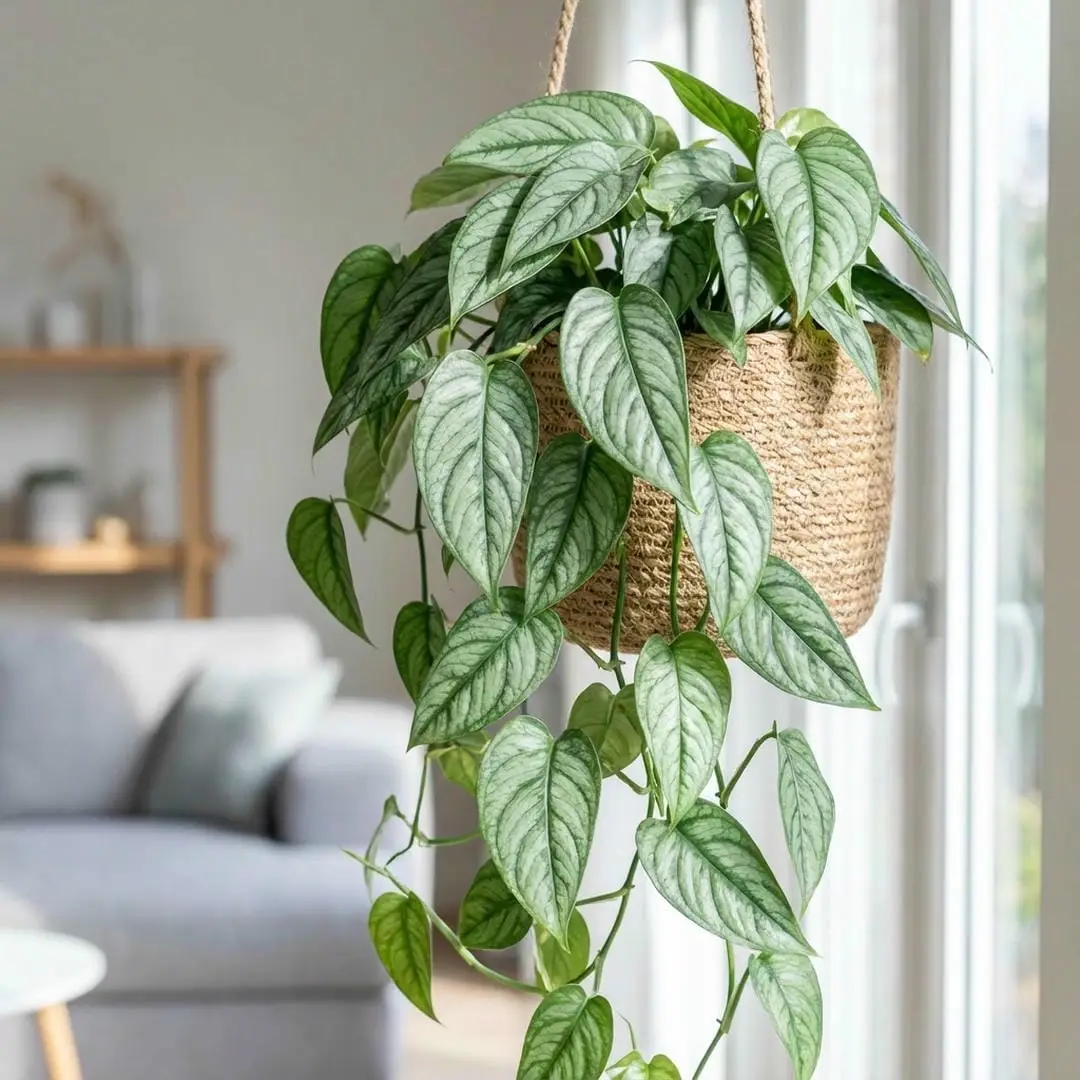
- The Trailing Beauty: Place it in a hanging basket or on a high shelf. The vines will cascade down, creating a curtain of shimmering silver leaves. The leaves will stay small (lance-shaped) and hole-less. This is a softer, more decorative look perfect for boho vibes.
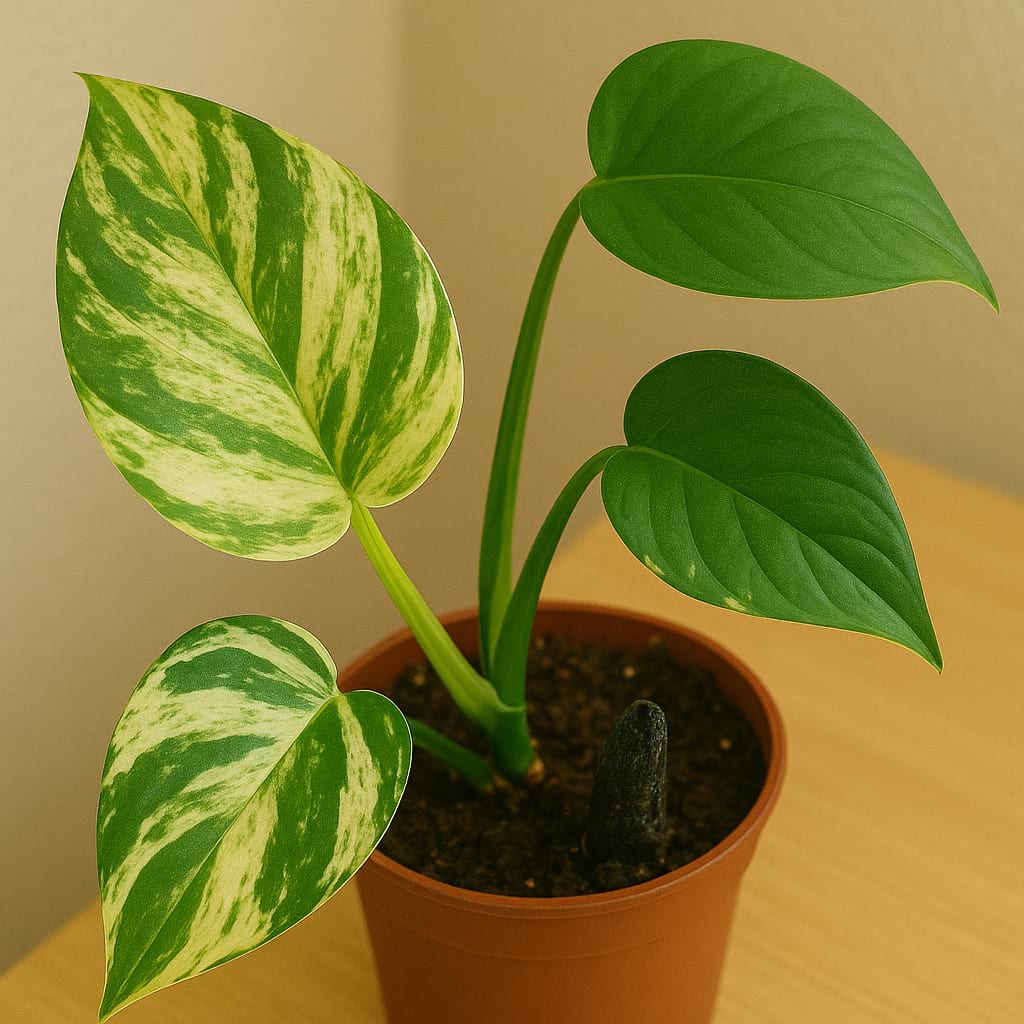
- The Climbing Beast: Give it a moss pole or fir plank. As it attaches and climbs, the leaves will double or triple in size, lose their silver, become deep green, and develop dramatic fenestrations. This creates a vertical statement piece that looks like a slice of the jungle.
🔬 The Science of Heteroblasty: Why It Changes Shape
Monstera siltepecana exhibits a biological phenomenon called heteroblasty, which means having different leaf forms at different stages of life.
- Juvenile Stage (The Scrambler):
- Form: Small, lance-shaped leaves, pressed flat (shingling) against the ground or tree trunk.
- Color: Silvery-grey markings.
- Purpose: The silver variegation is thought to be a form of camouflage to hide from herbivores, or possibly to reflect excess light while it scrambles across the forest floor avoiding deep shade. The flat shape minimizes wind resistance and protects the roots.
- Mature Stage (The Climber):
- Form: Large, broad leaves with fenestrations (holes).
- Color: Deep, solid green.
- Purpose: Once it climbs high into the canopy, it needs to capture maximum sunlight. The deep green chlorophyll is efficient for photosynthesis. The fenestrations allow wind to pass through (reducing damage during storms) and allow flecks of light to pass through to the lower leaves, ensuring the whole plant gets energy.
This dramatic shift is triggered by the plant's aerial roots sensing a vertical surface and sufficient humidity. It signals the plant: "We found a tree! Time to grow big!"
🌟 Monstera Siltepecana Care Tips (Pro Advice)
- Don't Rush Maturity: Enjoy the juvenile silver stage. It's unique! Once it matures, you lose that silver sheen for green fenestrations. You can verify this by looking at mature photos - they look like a different plant.
- Rotate It: If you aren't using a pole, rotate the pot every watering (quarter turn) to ensure even growth on all sides.
- Pole Moisture: If using a moss pole, keeping the pole moist is more important than watering the pot if you want aerial roots to attach.
- Cleaning: The textured leaves can trap dust. Wipe them gently with a microfiber cloth or give the plant a shower once a month to keep photosynthesis efficient.
- Grouping: It loves hanging out with Philodendron micans or Scindapsus pictus. They share similar care needs and the mix of leaf textures looks stunning.
- Propagation Backup: Always keep a small propagation going. If you accidentally rot the main plant, you have a backup ready to go.
- Choose the Right Pole: A sphagnum moss pole is superior to coco coir for this plant. The roots can physically grow into the moss, whereas coco coir is too dense/dry for good attachment.
- Fertilize Weakly, Weekly: During summer, using a very dilute fertilizer every time you water (“weakly, weekly”) provides a steady stream of nutrients for consistent growth.
- Watch the Cold: Seriously, check your window drafts in January. This is often the silent killer of tropicals in winter.
- Leaf Shine: Avoid commercial leaf shine products. They can clog the stomata. Natural water or a tiny drop of neem oil in water is plenty.
The Monstera siltepecana offers the best of both worlds: the easy care and durability of a Pothos, with the exotic, collecting appeal of a rare Aroid. Whether you let it trail or climb, it’s a silver gem that deserves a spot in your collection.
❓ Frequently Asked Questions
Why does my Monstera siltepecana not have holes?
The Monstera siltepecana only develops fenestrations (holes) in its mature form. To achieve this indoors, the plant MUST climb a vertical support like a moss pole. Without a support to climb, it remains in its juvenile, lance-shaped, hole-less form indefinitely.
Is Monstera siltepecana rare?
It used to be considered quite rare but has become more available in recent years. However, finding a large, mature specimen with fenestrated leaves is still very uncommon in general nurseries.
Does Monstera siltepecana grow fast?
Yes, once established, it is a vigorous grower. In optimal conditions with a climbing support, it can grow several feet in a single season.
Why is my Monstera siltepecana losing its silver color?
Loss of silver variegation can happen for two reasons: low light (the plant turns greener to absorb more light) or maturity (fully mature, fenestrated leaves naturally lose the silver and become solid green).
Can I grow it in a hanging basket?
Absolutely! It makes a beautiful trailing plant. Just be aware that it will stay in its juvenile form - leaves will remain small, lance-shaped, and silver, without developing holes.
Is Monstera siltepecana distinct from Monstera dubia?
Yes, very! While both have silver markings, M. dubia is a 'shingle plant' where leaves lie flat against a board. M. siltepecana has lance-shaped leaves that hang or climb loosely, never shingling flat.
ℹ️ Silver Monstera Info
Care and Maintenance
🪴 Soil Type and pH: Aroid Mix
💧 Humidity and Misting: Thrives in high humidity (above 60%) but adapts to average levels.
✂️ Pruning: Prune to manage size or encourage bushier growth.
🧼 Cleaning: Wipe leaves gently
🌱 Repotting: Every 1-2 years
🔄 Repotting Frequency: When rootbound
❄️ Seasonal Changes in Care: Reduce water in winter
Growing Characteristics
💥 Growth Speed: Fast climber
🔄 Life Cycle: Evergreen
💥 Bloom Time: Rare indoors
🌡️ Hardiness Zones: 10-12
🗺️ Native Area: Mexico, Central America
🚘 Hibernation: No true dormancy
Propagation and Health
📍 Suitable Locations: Living rooms, warm patios
🪴 Propagation Methods: Easily propagated via stem cuttings in water or moss.
🐛 Common Pests: Spider Mites, Mealybugs, Thrips
🦠 Possible Diseases: Root rot, fungal leaf spots
Plant Details
🌿 Plant Type: Epiphyte/Hemiepiphyte
🍃 Foliage Type: Evergreen
🎨 Color of Leaves: Silver/Green
🌸 Flower Color: Cream/Green spathe
🌼 Blooming: Rare
🍽️ Edibility: Toxic
📏 Mature Size: 6-8 feet indoors (climbed)
Additional Info
🌻 General Benefits: Air purifying
💊 Medical Properties: None known
🧿 Feng Shui: Upward growth energy
⭐ Zodiac Sign Compatibility: Virgo
🌈 Symbolism or Folklore: Growth and transformation
📝 Interesting Facts: Leaves change shape (fenestrate) drastically when mature.
Buying and Usage
🛒 What to Look for When Buying: Look for silver sheen and no yellowing.
🪴 Other Uses: Ornamental climber
Decoration and Styling
🖼️ Display Ideas: Climbing a moss pole
🧵 Styling Tips: Let it trail or climb
🪴 See also 🪴
How to Propagate Monstera Adansonii: Nodes, Water, Moss and Soil
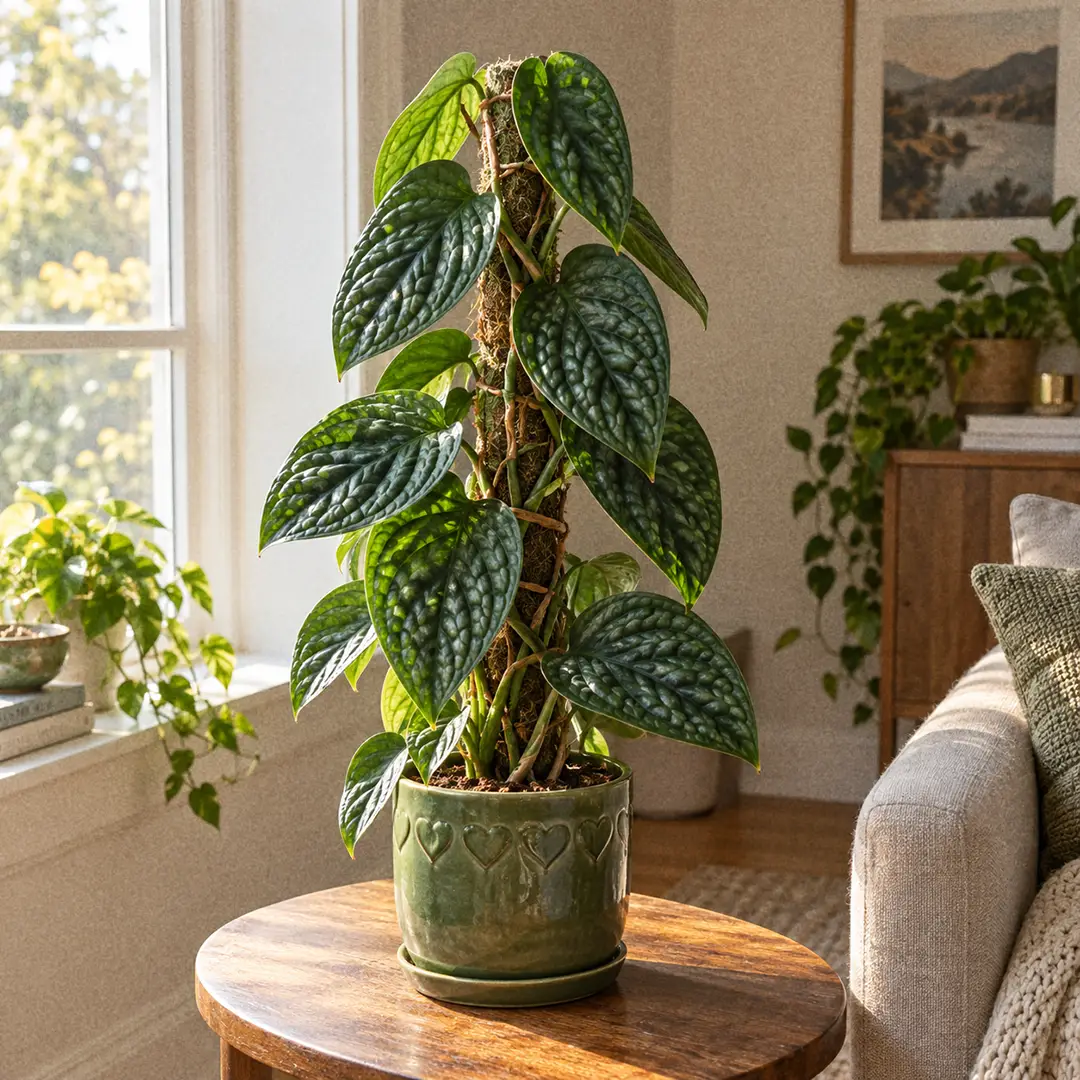
Complete Guide to Monstera Peru Care and Growth
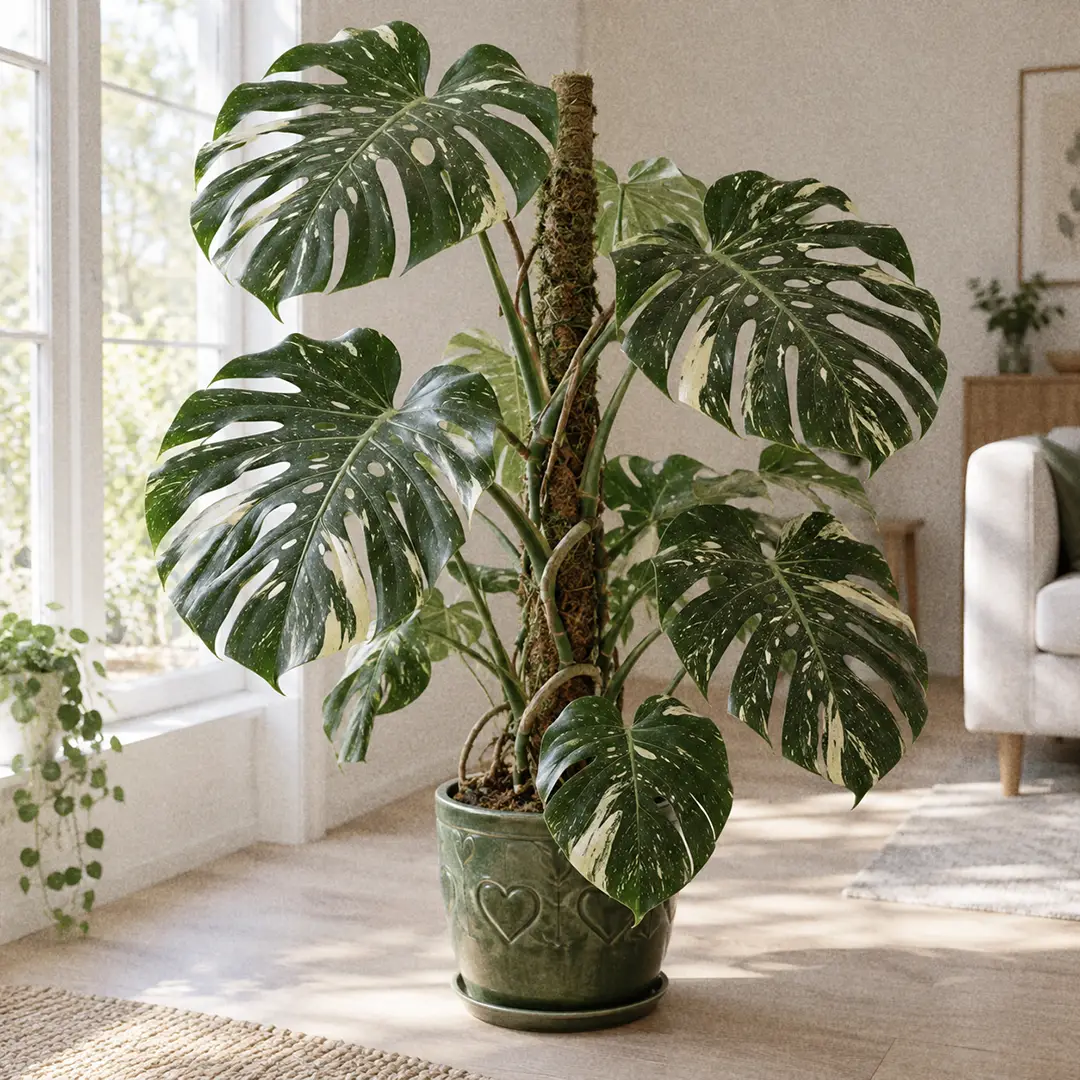
Complete Guide to Monstera Thai Constellation Care and Growth
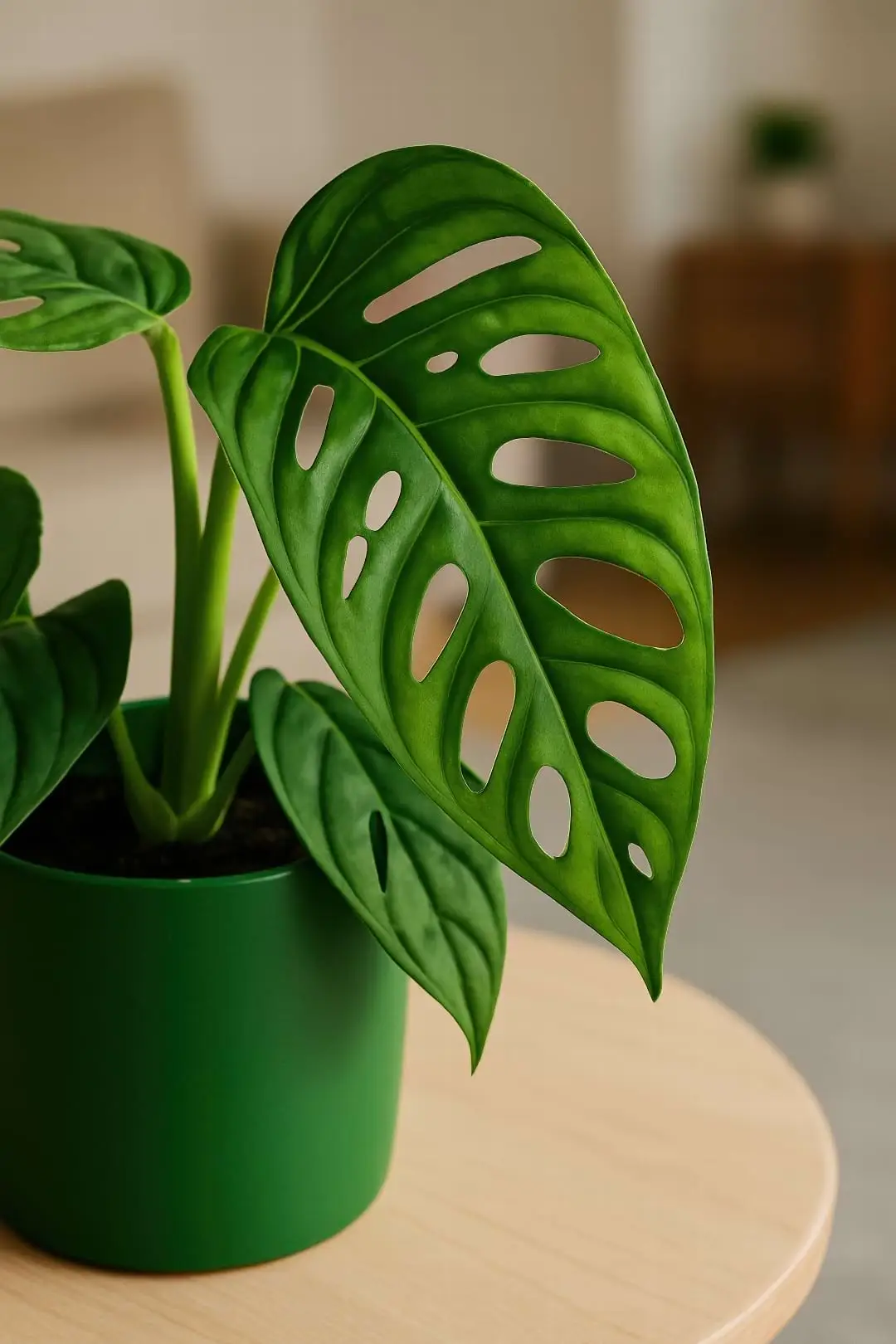
Complete Guide to Monstera Adansonii Care and Growth
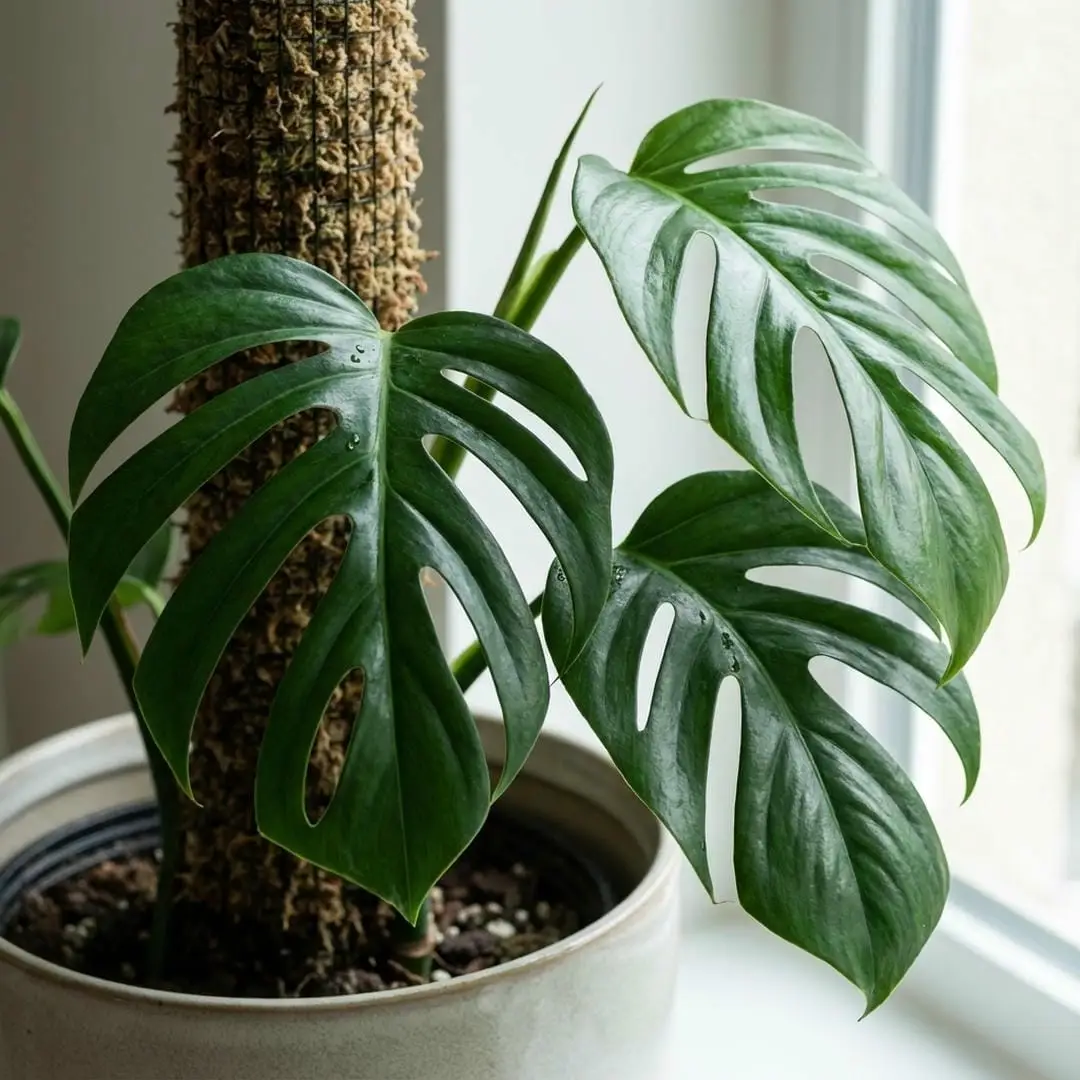
Complete Guide to Monstera Burle Marx Flame Care (The Bone Plant)
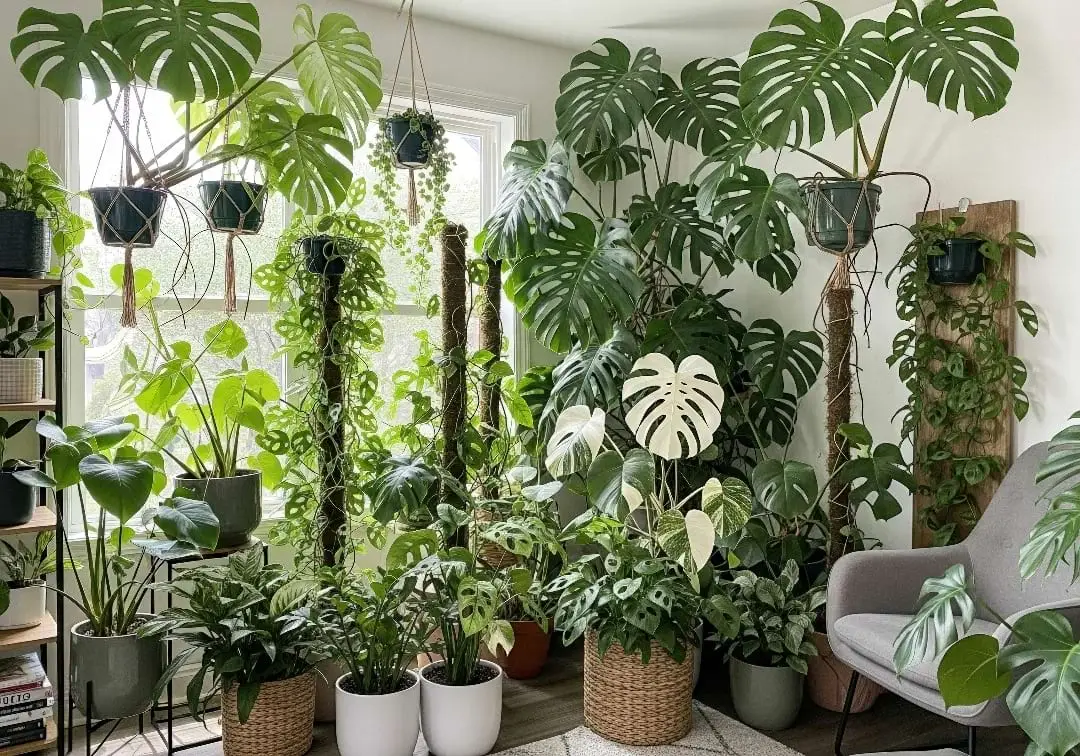
The A-Z List of Monstera Species: A Complete Botanical Guide
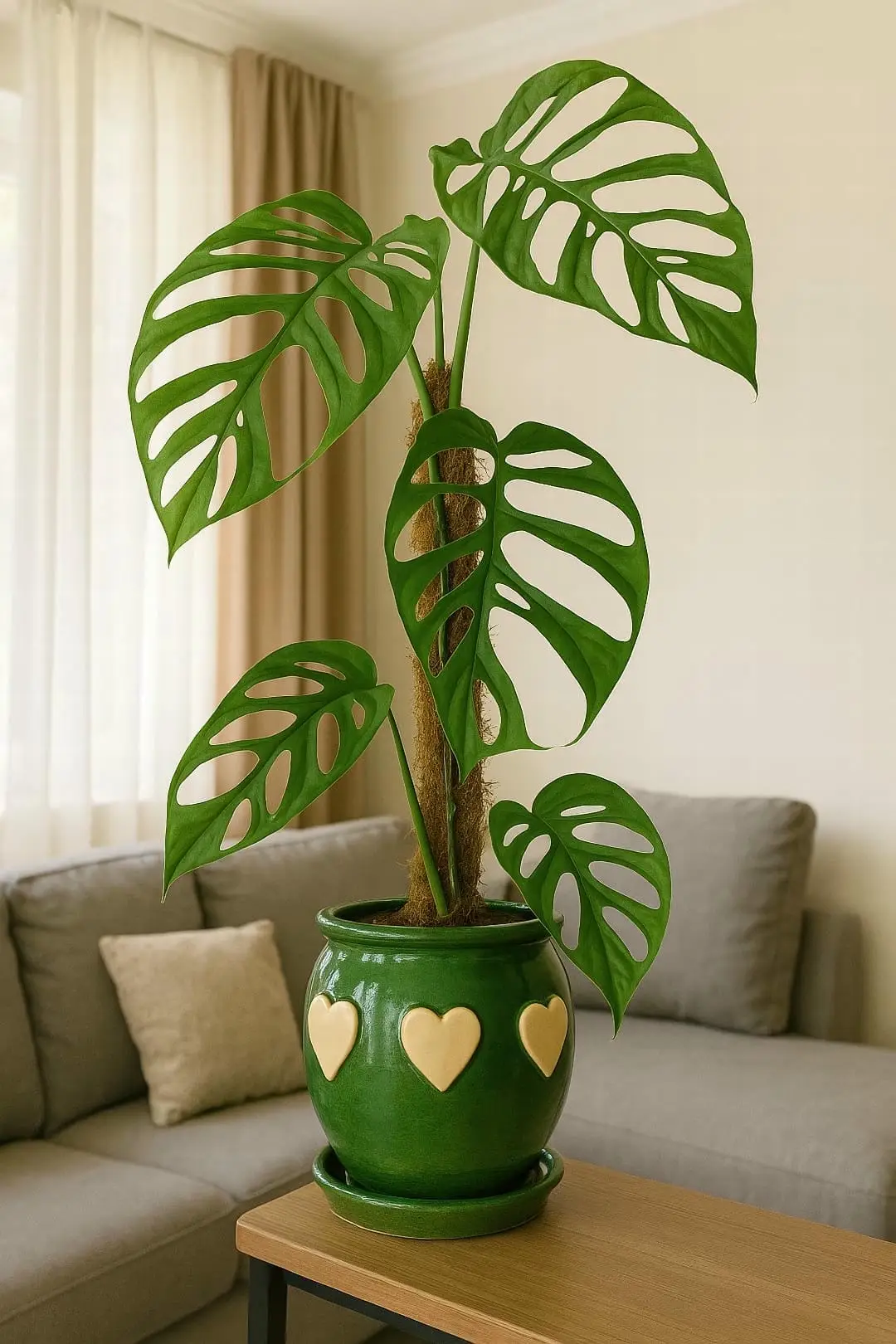
Complete Guide to Monstera Obliqua Care and Growth
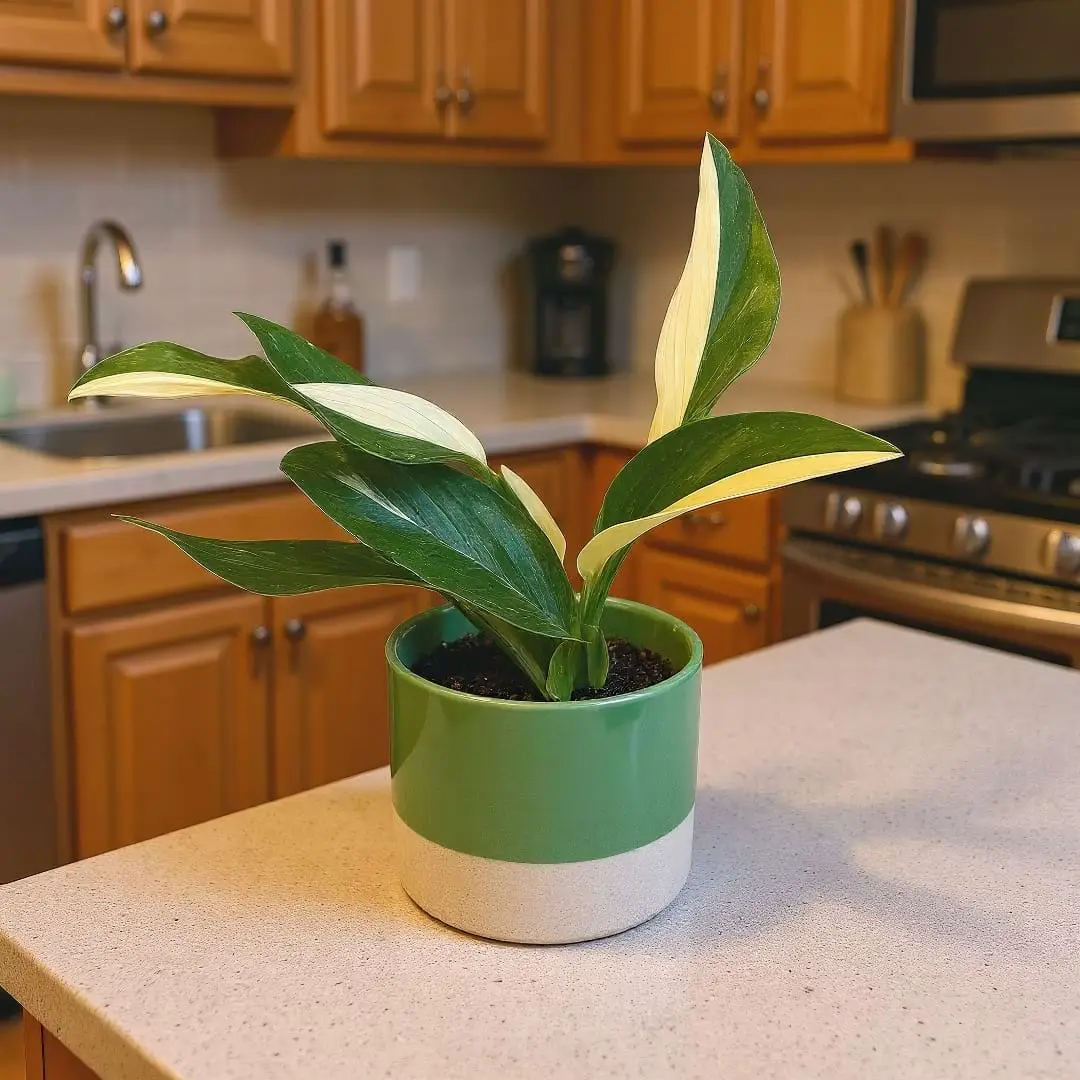
Complete Guide to Monstera Standleyana Care and Growth
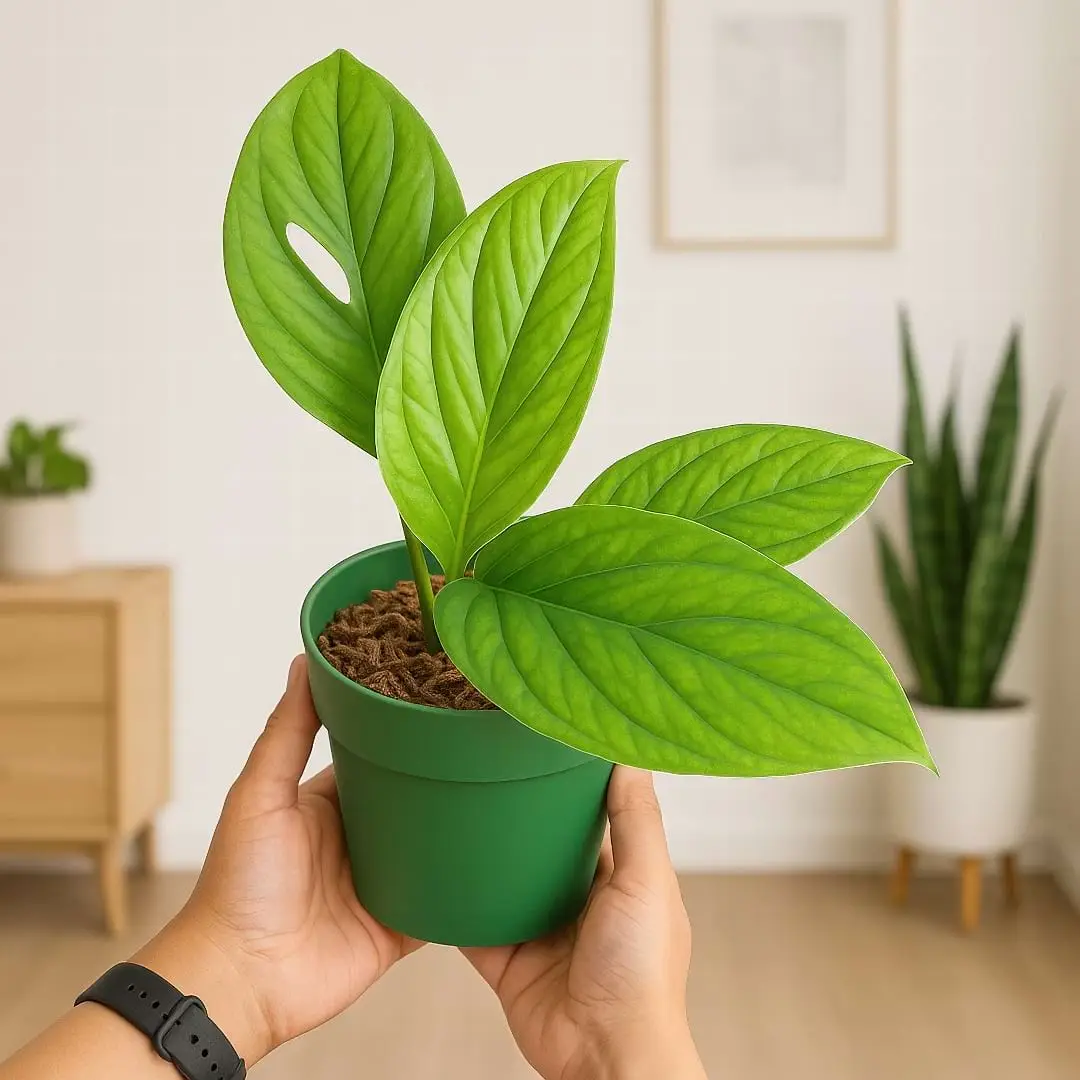
Complete Guide to Monstera Pinnatipartita Care and Growth
Complete Guide to Monstera Dubia Care and Growth

Houseplant101 Forum
Questions & Comments
Ask a question, share your plant experience, or help other plant owners.
Comments are temporarily unavailable.
Open the Houseplant101 ForumNo comments yet
Be the first to ask a question or share your experience about this page.
Log in or create an account
Comments use your Houseplant101 Forum account, but you can stay on this page.
Create a new account