
Anthurium Magnificum Hybrid
Anthurium magnificum x (hybrid)
Velvet Cardboard Anthurium, Laceleaf, Anthurium Crystallinum Hybrid


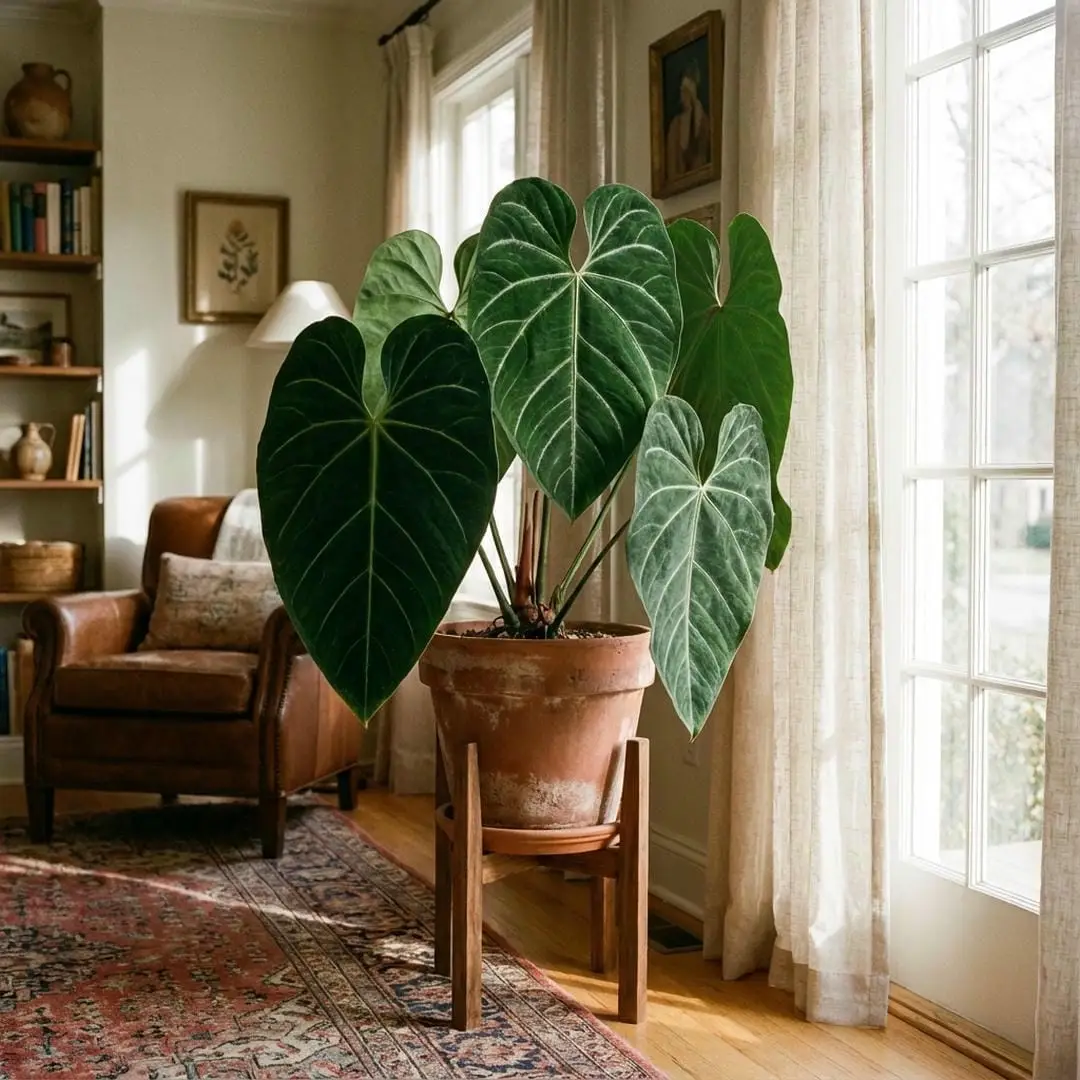
The Anthurium Magnificum Hybrid is a masterpiece of the aroid world, featuring massive, velvety, heart-shaped leaves with sparkling silver veins that look like they were painted by hand.
📝 Anthurium Magnificum Hybrid Care Notes
🌿 Care Instructions
⚠️ Common Pests
📊 Growth Information
🪴 In This Guide 🪴

📺 Anthurium Magnificum Hybrid Video Guide

☀️ Light Requirements (The Balance)

Bright, Filtered Light is King
Despite being a "low light" efficient plant in the wild, indoors is a different story. If you want those massive, dinner-plate-sized leaves, you need to provide Bright Indirect Light.
- The Sweet Spot: Within 2-4 feet of an East-facing window (morning sun) or a West-facing window (with a sheer curtain).
- Too Little Light: The plant will survive, but the new leaves will come in small, the stems will get long and floppy (etiolated), and the growth rate will crawl to a halt.
- Too Much Sun: This is crucial. Direct midday sun will burn velvet leaves. Because the leaves are dark (absorbing heat) and the cells focus light, they scorch easily. Think of it like a magnifying glass burning a hole in paper.
Grow Lights
Velvet Anthuriums respond beautifully to grow lights. If you don't have good windows, a full-spectrum LED light is a game changer.
- Target: Aim for about 200-400 Foot Candles (FC) or roughly 2000-4000 Lux.
- Schedule: 12-14 hours a day.
- Benefit: Controlled light prevents the "winter blues" and keeps the plant growing year-round.
💧 Watering: Thirsty but Airy
The 'Damp Sponge' Rule
Here is the paradox: Anthurium magnificum loves water, but it hates wet feet.
- When to Water: Water when the top 1-2 inches of the soil feels dry. Do not let the pot dry out completely (like a cactus), or the roots will desiccate and die.
- The Goal: Maintain a state of "consistent moisture." Think of a wrung-out sponge.
- The Danger: If the soil stays soggy or swampy for more than a few days, root rot is almost guaranteed. This is why your Soil Mix (see next section) is actually more important than your watering schedule.
Water Quality Matters
Velvet leaf anthuriums are divas about water quality.
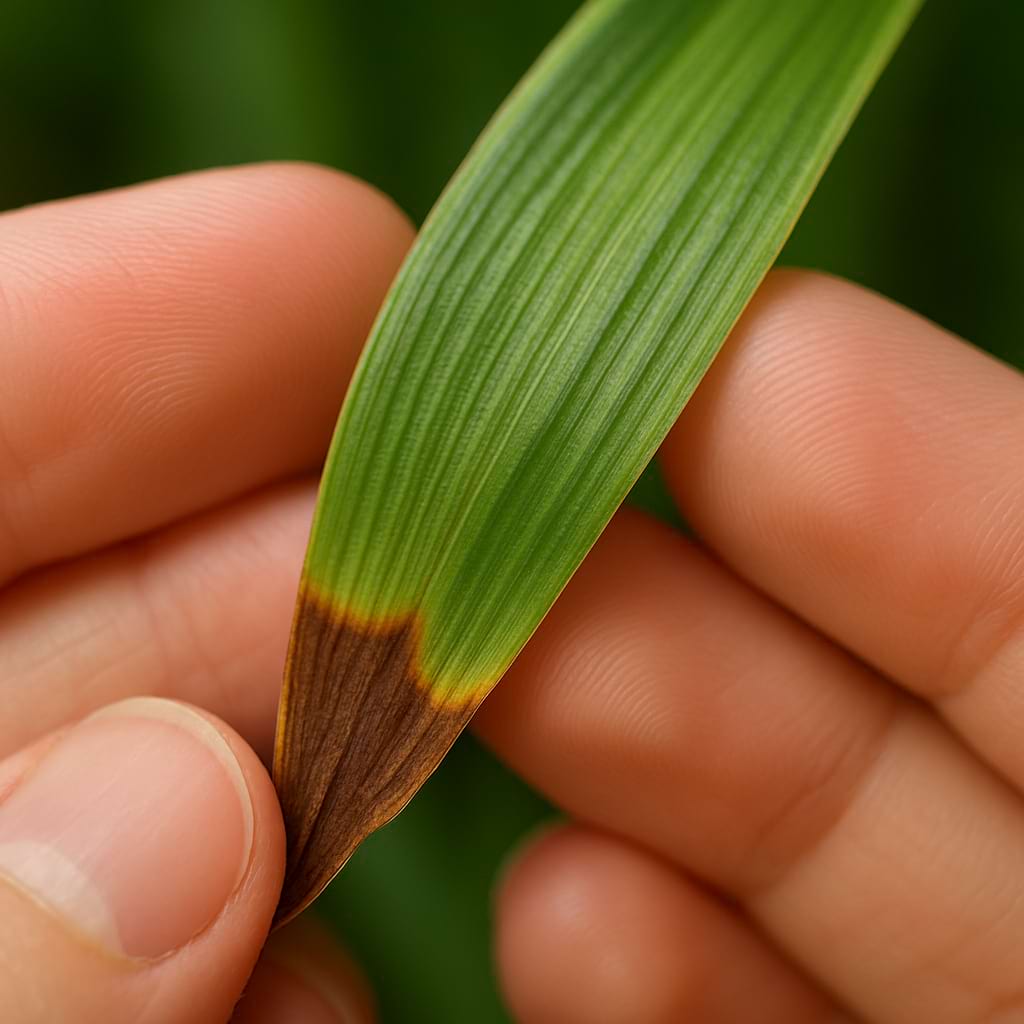
- Tap Water: Often contains chlorine, chloramine, and minerals. Over time, these build up in the leaf tips, causing ugly brown, crispy edges.
- The Fix: Use rainwater, distilled water, or water from a zero-water filter. If you must use tap water, let it sit out for 24 hours (though this doesn't remove chloramine) and use a water conditioner.
🌱 The Magic Soil Mix (Aroid Mix)
Do NOT Use Standard Soil
If you pot this plant in dense, black "All Purpose Potting Soil," it will likely die within 6 months. That soil is too heavy and lacks oxygen.
The roots of Anthurium magnificum are thick and fleshy (like noodles). They need to breathe.
The DIY Aroid Mix Recipe
You literally cannot make the soil "too chunky" for this plant. Here is the golden recipe used by collectors:
- 30% Orchard Bark (Large chunks): Provides air pockets.
- 30% Coco Coir (or high quality peat): Holds the moisture.
- 20% Perlite (Jumbo size is best): Drainage.
- 10% Charcoal: Filters impurities and sweetens the mix.
- 10% Worm Castings: Gentle, slow-release nutrient.
Visual Check: When you water this mix, the water should pour through the bottom almost instantly. It shouldn't pool on top.
💦 Humidity: The Dealbreaker

Why 40% Isn't Enough
In the average home, humidity is 30-40%. For a Magnificum, this is the desert.
- Ideal: 70-80%
- Acceptable: 60%
- Struggle Zone: <50%
When humidity drops, the leaves lose water faster than the roots can drink it. The result?
- Crispy Tips: The edges turn brown and crunchy.
- Small Leaves: New leaves harden off before they can fully expand.
- Tears: New leaves get stuck emerging from the sheath and rip.
How to Fix It
- Best: A dedicated warm-mist or cool-mist humidifier.
- Good: A glass greenhouse cabinet (IKEA cabinet hack) or a grow tent.
- Okay: Grouping plants together to create a microclimate.
- Useless: Misting. Spraying water on velvet leaves is actually bad (invites fungus) and evaporates in 5 minutes. Don't do it.
🧪 Fertilizing Routine
The 'Weakly Weekly' Method
Because Anthuriums grow continuously in the right conditions, they prefer a steady trickle of food rather than a massive feast.
- Routine: Use a balanced liquid fertilizer (like Liquid Dirt or Dyna-Gro Foliage-Pro) diluted to 1/4 strength. Use this every time you water.
- Why?: This mimics nature, where nutrients are constantly washing over the roots from decaying matter in small amounts.
- Avoid: Slow-release pellets can sometimes burn sensitive roots if they touch them directly.
🌡️ Temperature Requirements
Warmth is Key
This is a tropical plant, through and through. It has zero tolerance for frost.
- Ideal Range: 65°F to 85°F (18°C - 29°C).
- Minimum: Do not let it drop below 60°F (15°C). Cold temps combined with wet soil are a death sentence.
Drafts and Airflow
While Magnificum loves airflow (it prevents fungus), it hates cold drafts.
- Summer: Keep it away from the direct blast of an Air Conditioner unit.
- Winter: Move it away from single-pane windows where cold air seeps in.
- The Symptoms: If the leaves start drooping despite wet soil, check the temperature. Cold shock looks a lot like thirst.
🪴 Repotting Guide (Step-by-Step)
When to Repot
Zebra Plants and their Magnificum cousins do not enjoy frequent disturbances. You should only repot when:
- Roots are circling: You see roots coming out of the bottom drainage holes.
- Soil degradation: The bark in your mix has broken down into mush (usually after 2 years).
- Stability: The plant is top-heavy and tipping over.
The Process
- Prep: Water the plant 24 hours before repotting. This makes the roots pliable and less likely to snap.
- Removal: Squeeze the pot gently to loosen the root ball. Turn it sideways and slide the plant out. Do not pull by the stem. Use gravity.
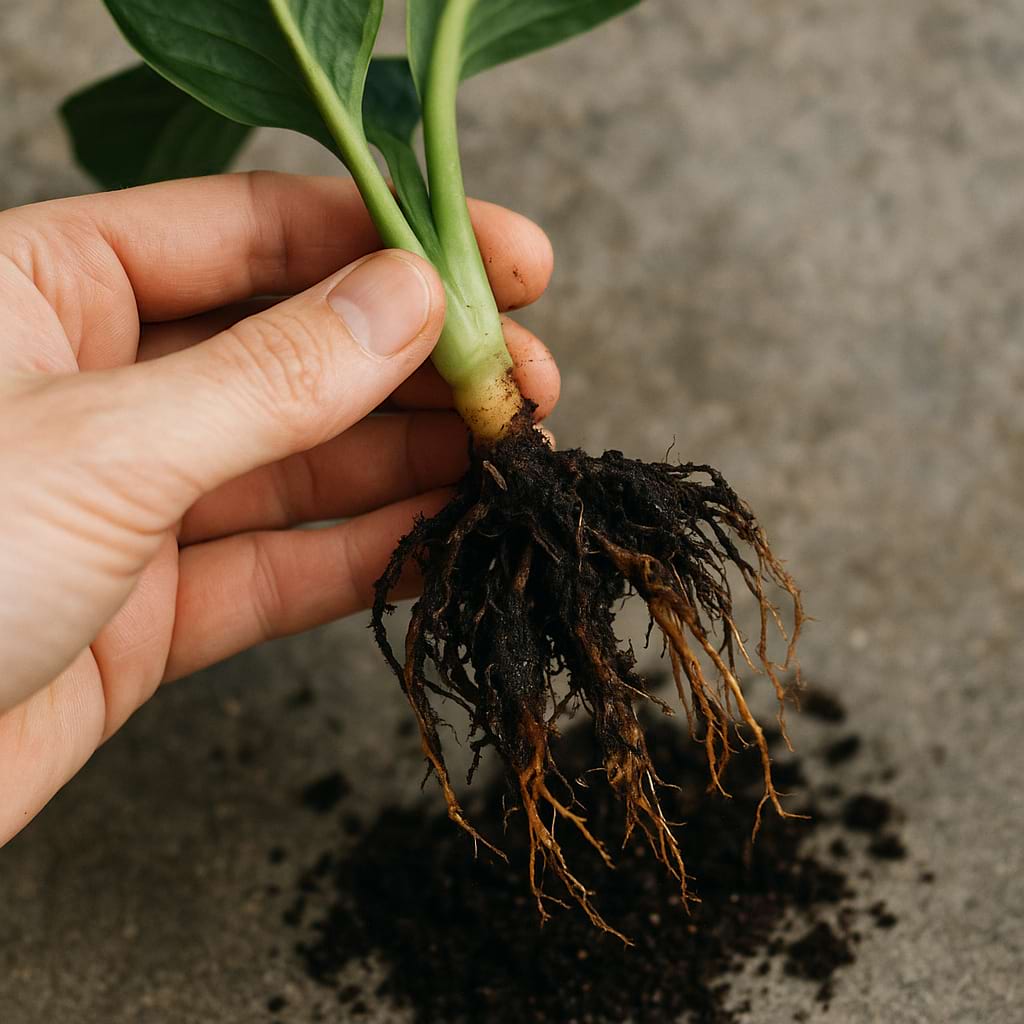
- Inspect: This is your chance for a health check. Healthy roots should be firm and white/tan/fuzzy. If you see black, mushy, or smelly roots, cut them off with sterilized scissors.
- The New Pot: Choose a pot only 1-2 inches wider than the old one. If you go too big, only the soil stays wet too long (the "overpotting" trap).
- Placement: Hold the plant so the base of the stem is at the same level it was before. Fill in the sides with your ample Aroid Mix.
- Settle: Tap the pot on the table to settle the soil. Do not press down hard with your hands (we want air pockets!).
- Water: Water thoroughly until it flows from the bottom.
🌸 Flowers and Pollination
The Inflorescence
Many people cut the flowers off Anthurium magnificum to "save energy" for the leaves. While this logic has some merit, the flower spike (inflorescence) is fascinating in its own right.
- Structure: It consists of a Spathe (the leafy hood, usually green or reddish) and a Spadix (the long spike).
- Scent: Unlike peace lilies, Magnificum flowers often have a faint, distinct scent when the stigmas are receptive - sometimes described as "minty" or "medicinal."
Berries and Seeds
If your plant is pollinated (which usually requires two flowering anthuriums and a manual transfer of pollen), it will produce spectacular clusters of berries.
- The Berries: They hang off the spadix like jewels, usually turning bright orange or red when ripe.
- Germination: Inside each berry are seeds that can be planted immediately in damp moss. Growing anthuriums from seed is a rewarding, albeit slow, journey.
🌿 Varieties and Comparisons

Magnificum vs. Crystallinum
These two are constantly confused. They look 90% identical. Here is the trick to tell them apart:
- The Petiole (Leaf Stem): Look at the stem holding the leaf.
- Magnificum: The petiole is square or 4-winged (quadrangular). You can feel the sharp edges.
- Crystallinum: The petiole is perfectly round.
- Veins: Crystallinum often has brighter, more silvery veins, while Magnificum has a deeper green velvet.
If you want a third anthurium that looks nothing like either of these, King Anthurium drops long pleated leaves straight down instead of holding flat velvet ones up, and it takes the same chunky bark mix and high humidity. If you want the velvet look in a tougher package, Anthurium Clarinervium has thick, stiff heart-shaped leaves that cope with drier room air than either.
Neither should be confused with Philodendron Gloriosum, which sells alongside them and wears a similar dark velvet leaf with white veins. The giveaway is the stem: Gloriosum has no upright trunk at all, just a thick rhizome creeping flat across the top of the soil.
The Hybrids (Best of Both Worlds)
Most plants sold as "Magnificum" today are actually hybrids (like the Costa Farms 'OR1'). This is a good thing!
- Hybrid Vigor: They grow faster and are more tolerant of lower humidity than the pure species.
- Forgetii Crosses: Often crossed with A. forgetii (which has no sinus/top lobes), resulting in a rounder, teardrop leaf shape.
Anthurium Magnificum Price Guide
Due to tissue culture, prices have dropped significantly.
- Seedlings/Starters: $20 - $40.
- Mature Plants: $80 - $150 (depending on leaf size).
- Rare Hybrids: Can range from $100 to $500+.
Note: Always check the seller's reviews, especially for winter shipping.
🌱 Propagation: Making More Magic

Stem Division
Unlike Pothos, you can't just snip a leaf. You need the Stem (the chunky main trunk).
- Wait: Wait until your plant has a stem that is a few inches long with visible aerial roots.
- Moss It: Pack damp sphagnum moss around the base of the stem (Air Layering) for a few weeks to encourage roots.
- Cut: Use a sterile knife to slice the stem, ensuring the top cut has leaves and roots.
- Pot: Pot the new top cut into moss or perlite/moss mix. Keep it 100% humid (in a bag or box) for 3-4 weeks until established.
The 'Chonk' Method
If you have a leafless piece of stem (a "chonk") with a node:
- Lay it sideways in a clear box of damp perlite or moss.
- Close the lid to keep humidity high.
- Put it under a grow light.
- Be patient. It can take months for a growth point to activate.
🐛 Pests
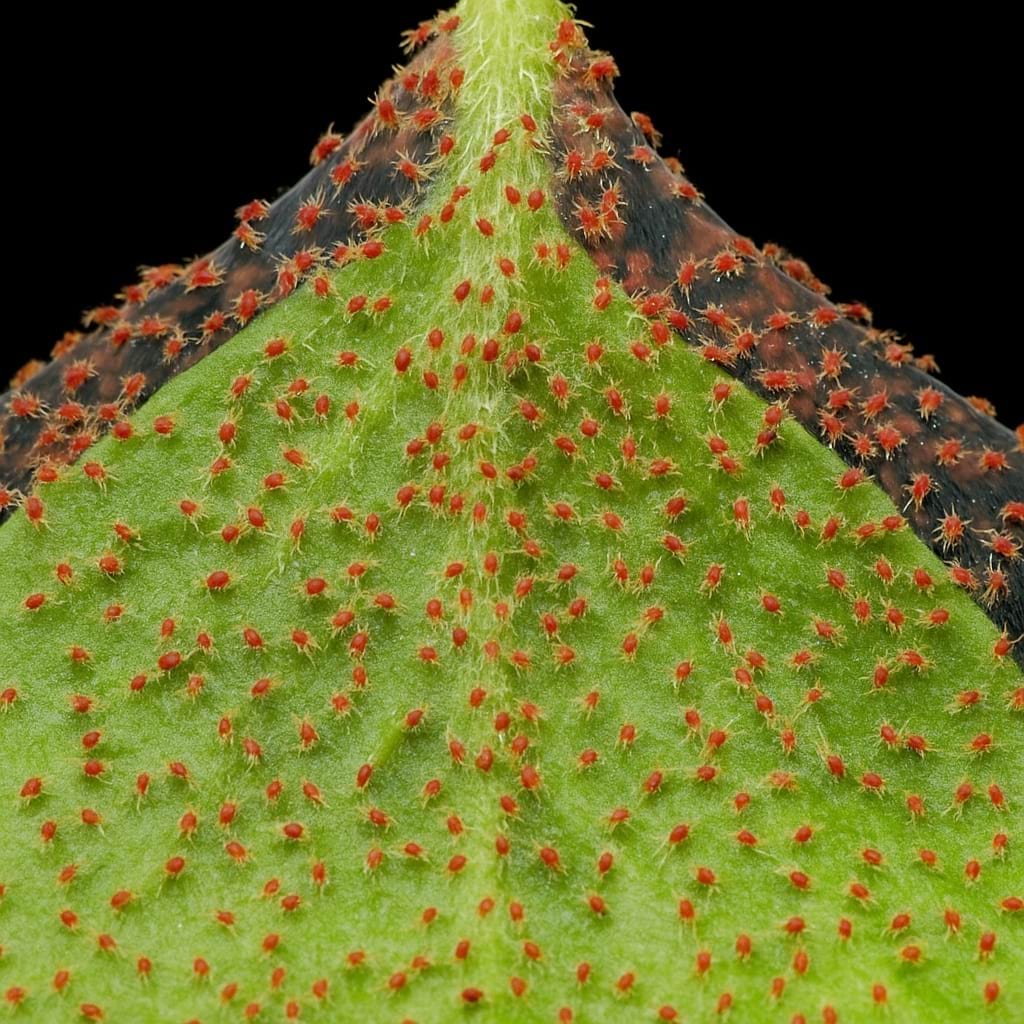
Spider Mites (The Enemy #1)
Spider mites LOVE the textured landscape of velvet leaves. They hide in the caching veins.
- Signs: Tiny yellow stippling (dots) on the leaves. Very fine webbing near the sinus (where the leaf creates the heart shape).
- Action: Weekly preventative wipe-downs are essential. If you have them, use a mixture of water, drop of dish soap, and neem oil. Be gentle wiping the velvet. predatory mites are also a great biological control.
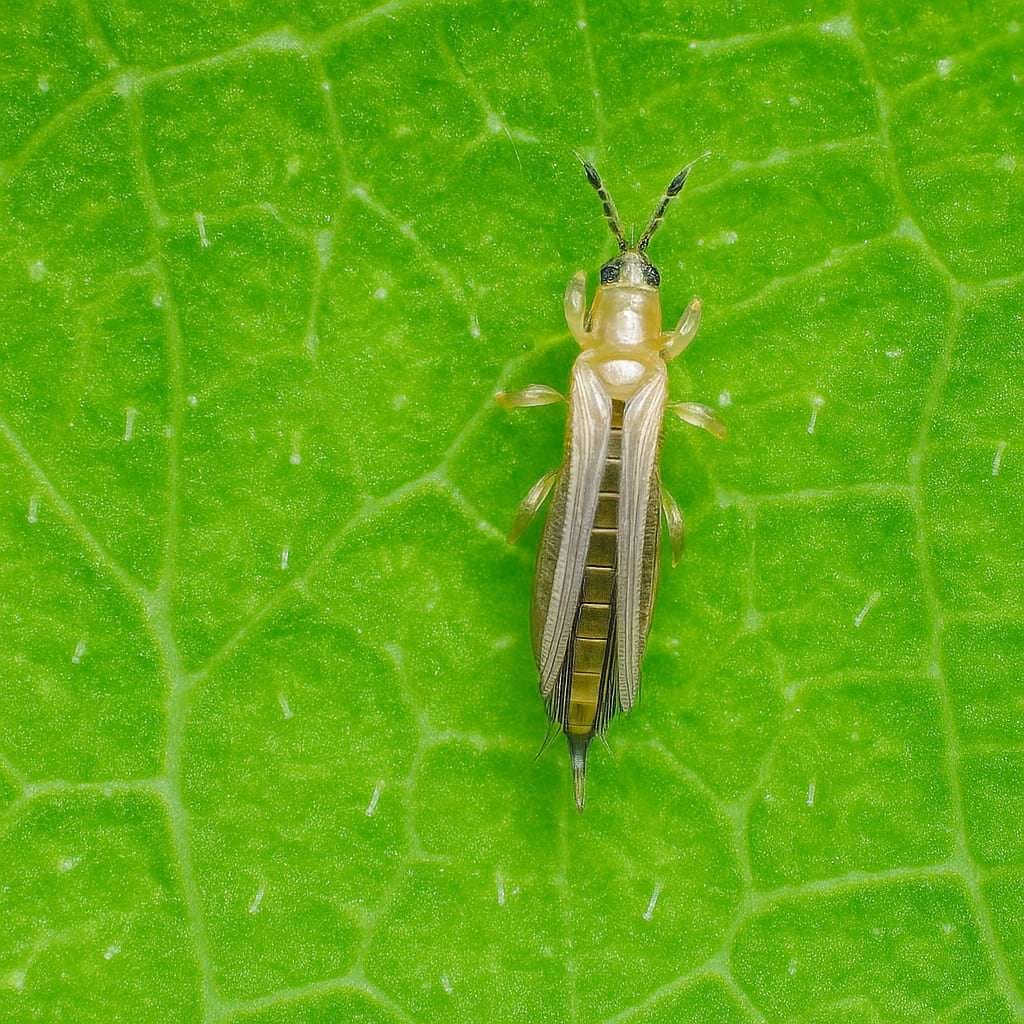
Thrips
The worst nightmare.
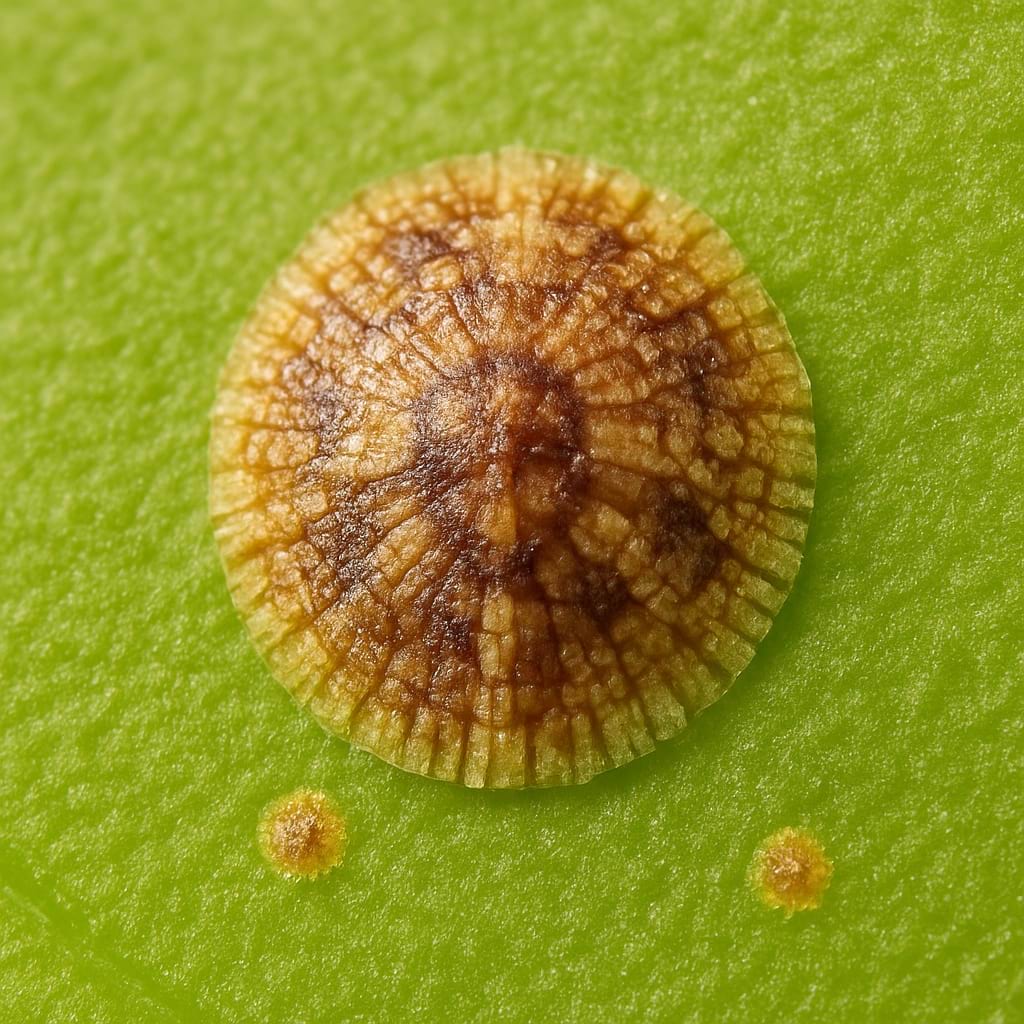
- Signs: Rusty or silvery patches on the leaves. Tiny black poop dots. Larvae look like tiny yellow rice grains.
- Action: Systemic granules (Bonide) added to the soil are the most effective way to protect Anthuriums if you aren't using biological controls.
🩺 Troubleshooting Guide
New Leaves Dying / blasting
Problem: A baby leaf starts to emerge but turns black and dries up.
Cause: Usually underwatering or low humidity. The plant aborted the new growth to save resources.
Fix: Increase watering consistency.

Yellow Spots with Brown Halos
Problem: Roundish grunge spots on the leaves.
Cause: Fungal infection (often from water sitting on leaves).
Fix: Improving airflow is key. Stop misting. If severe, apply a copper fungicide. For a deep dive on treating fungal issues, read our full Troubleshooting Guide.
Yellowing Lower Leaves
Problem: The oldest leaf turns yellow slowly.
Cause: Natural aging (senescence). The plant is reclaiming nutrients from the old leaf to build a new one.
Fix: Wait until it's crispy, then snip it. If it happens rapidly to many leaves, check for root rot. You can see more examples of this in our latest blog post about leaf senescence.

🖼️ Display Ideas
- The Pedestal: Generally, Magnificum leaves hang downwards and face out. Placing the pot on a slightly elevated plant stand allows the leaves to drape beautifully without hitting the floor.
- Backlight It: Placing the plant where light shines through the leaves (but not direct sun) reveals the incredible vein structure.
- Clear Pots: Many collectors use clear orchid pots. Why? It lets you check root health without digging up the plant. Seeing the fat, green/white roots is super satisfying and prevents overwatering.
🌟 Final Pro Tips
- Acclimation: When you first bring this plant home, it might lose a leaf or two. It is stressing from the change. Be patient. Give it high humidity and leave it alone.
- Don't Touch Too Much: The oils from our fingers can actually clog the velvet pores and ruin the texture over time. Admire with your eyes (mostly)!
- Stake It: Even though it's self-heading, the stem gets heavy. A simple bamboo stake early on will keep it looking upright and regal.
📖 The Science Behind Anthurium Magnificum Velvet Leaves
Anthurium Magnificum Origins in the Andes
The Anthurium magnificum (and its many hybrids) hails from the tropical rainforests of Colombia and the Andes mountain range. In the wild, it grows as a terrestrial or hemiepiphytic plant. This means it often starts on the ground but can climb short distances or sit in the nook of a tree.
Why does this matter for you? Because it means the plant is used to growing in loose, decaying leaf litter - not dense dirt. Its roots are designed to be exposed to air. When we shove them into heavy potting soil, we suffocate them. Understanding its "jungle floor" origin is the key to mastering its care.
Why are Anthurium Magnificum Leaves Velvet?
That stunning velvet texture isn't just for show. It is a brilliant evolutionary adaptation.
- Light Trapping: The "velvet" is actually made up of convex epidermal cells that act like tiny lenses. In the dark understory of the rainforest, these cells capture stray photons of light and focus them into the leaf's photosynthetic tissue. This allows the plant to maximize low-light conditions found on the forest floor.
- Solar Panels: This allows the plant to be incredibly efficient in lower light.
- The Risk: This texture also means the leaves hold onto water differently. Unlike glossy leaves where water beads off, velvet leaves can trap moisture, making them prone to fungal infections if they stay wet too long.

❓ Frequently Asked Questions
Why is my Anthurium Magnificum growing so slowly?
These are not rapid growers like Pothos. However, if it has stalled completely, check three things: Temperature (is it too cold?), Light (does it need more energy?), and Root health (are they rotting?). Usually, a boost in humidity and warmth helps kickstart things.
Why are the new leaves coming in red?
That is completely normal and beautiful! New growth on Anthurium magnificum hybrids often emerges as a stunning coppery-red or bronze color. It harden off to deep green as the leaf matures and expands.
Can I use tap water?
It is risky. Velvet anthuriums are sensitive to minerals and chemicals like chloramine. If you want pristine leaves without brown edges, use distilled water, rain water, or at least filtered water.
Do I need a moss pole?
Strictly speaking, no. Anthurium magnificum is a self-heading or short-creeping plant, not a climber like a Monstera adansonii. However, it does produce aerial roots, so propping it up with a stake or a short moss totem can help it stay upright as it gets heavy.
Is it safe for pets?
No. Like all aroids (Monstera, Philodendron), the Anthurium magnificum contains calcium oxalate crystals. If chewed, it causes a sensation like swallowing glass shards. It causes swelling, drooling, and pain. Keep it out of reach of puppies and cats.
Can I put it outside in summer?
Yes, if you live in a humid area (like Florida), it will thrive outdoors in full shade. However, you must inspect it carefully for pests (thrips/mites) before bringing it back inside. One hitchhiker can ruin your collection.
ℹ️ Anthurium Magnificum Hybrid Info
Care and Maintenance
🪴 Soil Type and pH: Chunky, airy, well-draining aroid mix
💧 Humidity and Misting: Crucial factor: 60% minimum.
✂️ Pruning: Remove yellowing leaves; keep pests away.
🧼 Cleaning: Gently dust velvet leaves with a soft brush.
🌱 Repotting: When roots encircle the pot (1-2 years).
🔄 Repotting Frequency: Every 1-2 years
❄️ Seasonal Changes in Care: Avoid cold drafts (<60°F) in winter.
Growing Characteristics
💥 Growth Speed: Moderate
🔄 Life Cycle: Perennial
💥 Bloom Time: Intermittent (Spathe and Spadix)
🌡️ Hardiness Zones: 10-12 (USDA)
🗺️ Native Area: Colombia (Species origin)
🚘 Hibernation: Slows down in winter, no true dormancy.
Propagation and Health
📍 Suitable Locations: East windows, bright bathrooms, grow tents.
🪴 Propagation Methods: Stem division or moss propagation.
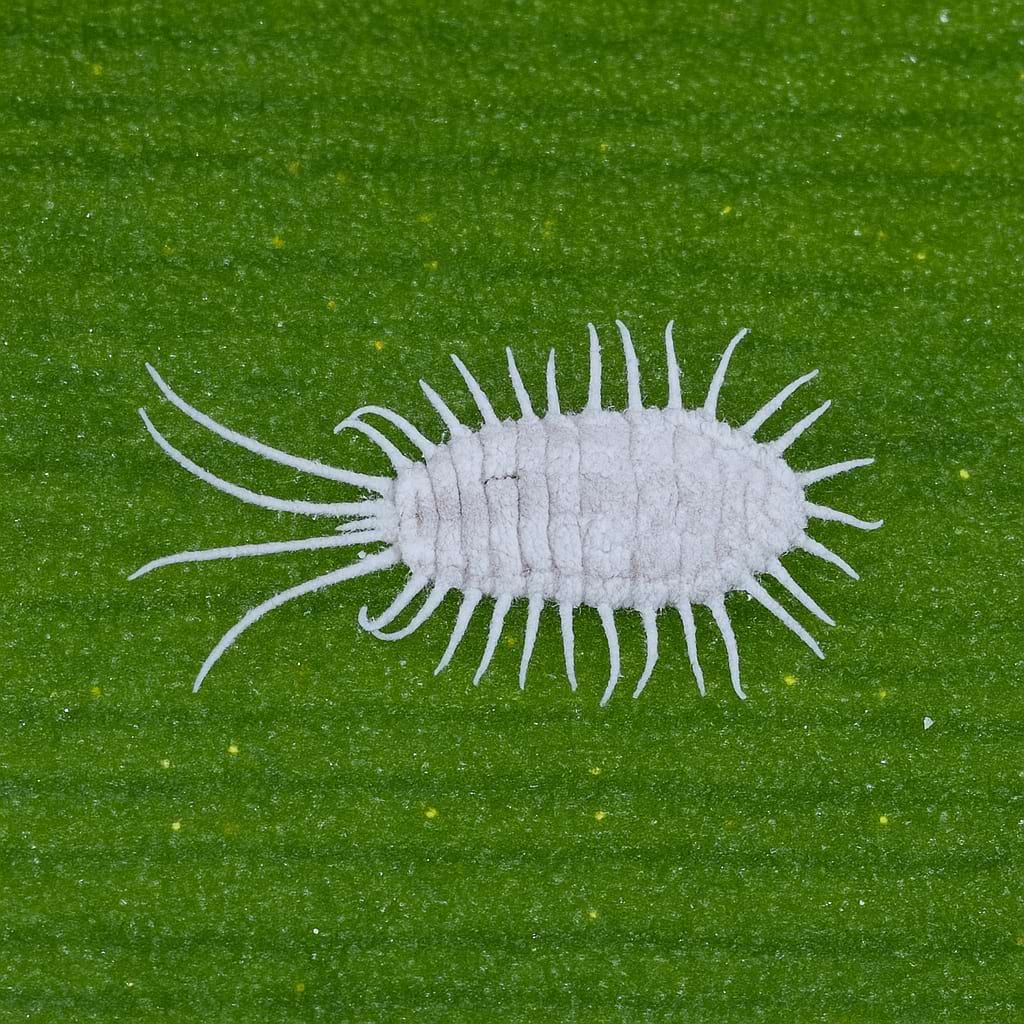
🐛 Common Pests: Spider Mites, Thrips, Mealybugs, Scale Insects
🦠 Possible Diseases: Root rot (if dense soil), varying fungal spots.
Plant Details
🌿 Plant Type: Epiphytic / Hemiepiphytic Aroid
🍃 Foliage Type: Evergreen Velvet
🎨 Color of Leaves: Deep Green (emerges Copper/Red) with Silver veins
🌸 Flower Color: Green/Red Spathe (Insignificant)
🌼 Blooming: Yes, but grown for foliage.
🍽️ Edibility: Toxic (Calcium Oxalate Crystals)
📏 Mature Size: 2-3 feet
Additional Info
🌻 General Benefits: Visual stunner, mild air purification.
💊 Medical Properties: None.
🧿 Feng Shui: Wood energy; abundance and luxury.
⭐ Zodiac Sign Compatibility: Leo (Regal, dramatic, demands attention).
🌈 Symbolism or Folklore: Hospitality and Happiness.
📝 Interesting Facts: The 'velvet' texture is actually cells that trap light to maximize photosynthesis in low-light jungle floors.
Buying and Usage
🛒 What to Look for When Buying: Look for undamaged leaves; check undersides carefully for mites.
🪴 Other Uses: Collector's specimen.
Decoration and Styling
🖼️ Display Ideas: Statement plant on a pedestal or in a clear pot.
🧵 Styling Tips: Use a simple pot to let the complex veins shine.
🪴 See also 🪴
Philodendron Brasil Care Guide: How to Grow the Variegated Heartleaf
Complete Guide to Philodendron Florida Ghost Care
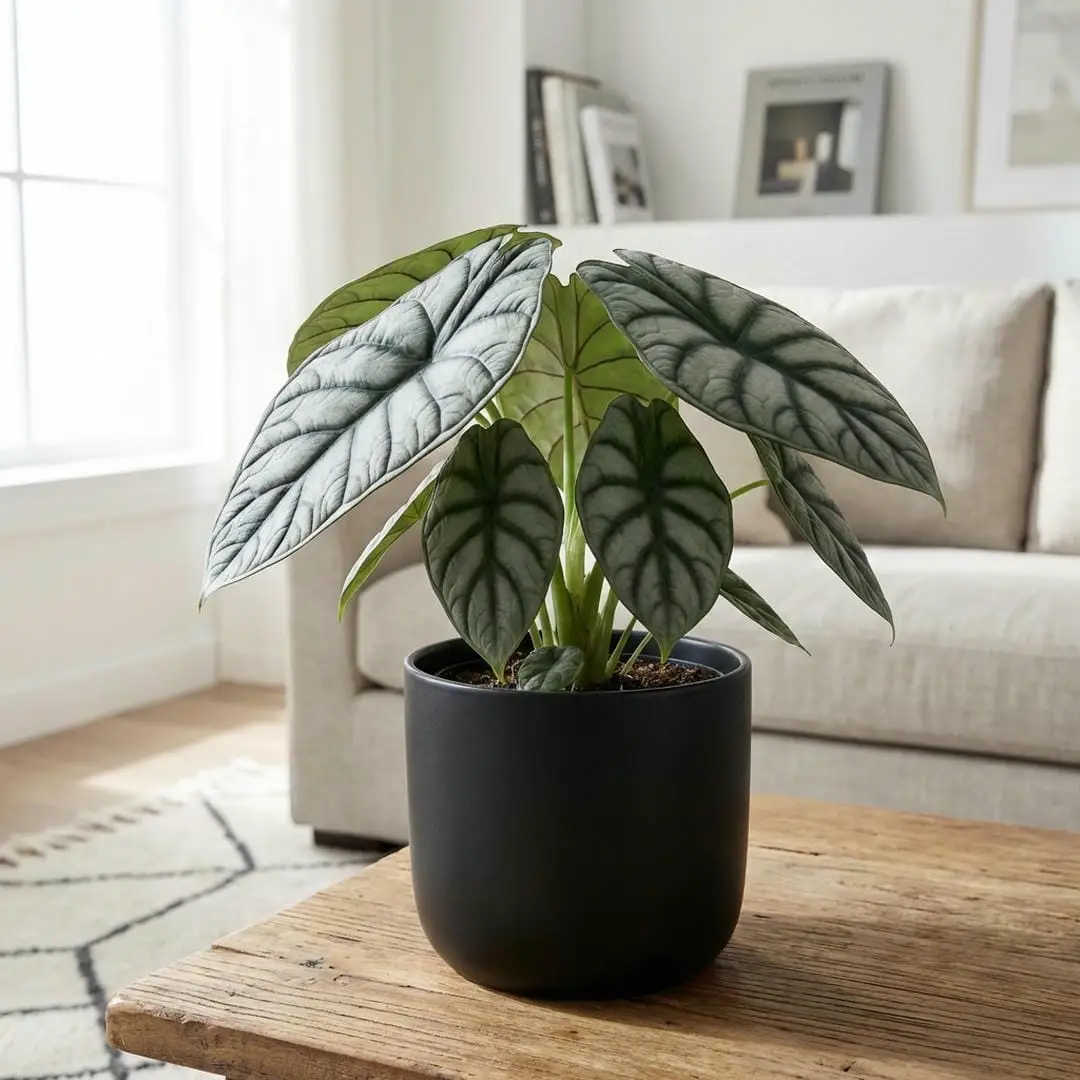

Houseplant101 Forum
Questions & Comments
Ask a question, share your plant experience, or help other plant owners.
Comments are temporarily unavailable.
Open the Houseplant101 ForumNo comments yet
Be the first to ask a question or share your experience about this page.
Log in or create an account
Comments use your Houseplant101 Forum account, but you can stay on this page.
Create a new account