

Wandering Dude
Tradescantia zebrina
Inch Plant, Silver Inch Plant, Wandering Jew


Wandering Dude is a fast-growing trailing houseplant with metallic silver striping, purple undersides, and stems that root almost anywhere they touch soil. This complete guide shows you how to grow fuller, brighter vines indoors, avoid legginess, and turn quick cuttings into a lush pot.
📝 Wandering Dude Care Notes
🌿 Care Instructions
⚠️ Common Pests
📊 Growth Information
🪴 In This Guide 🪴

☀️ Wandering Dude Light Requirements (Tradescantia zebrina Indoor Lighting Guide)
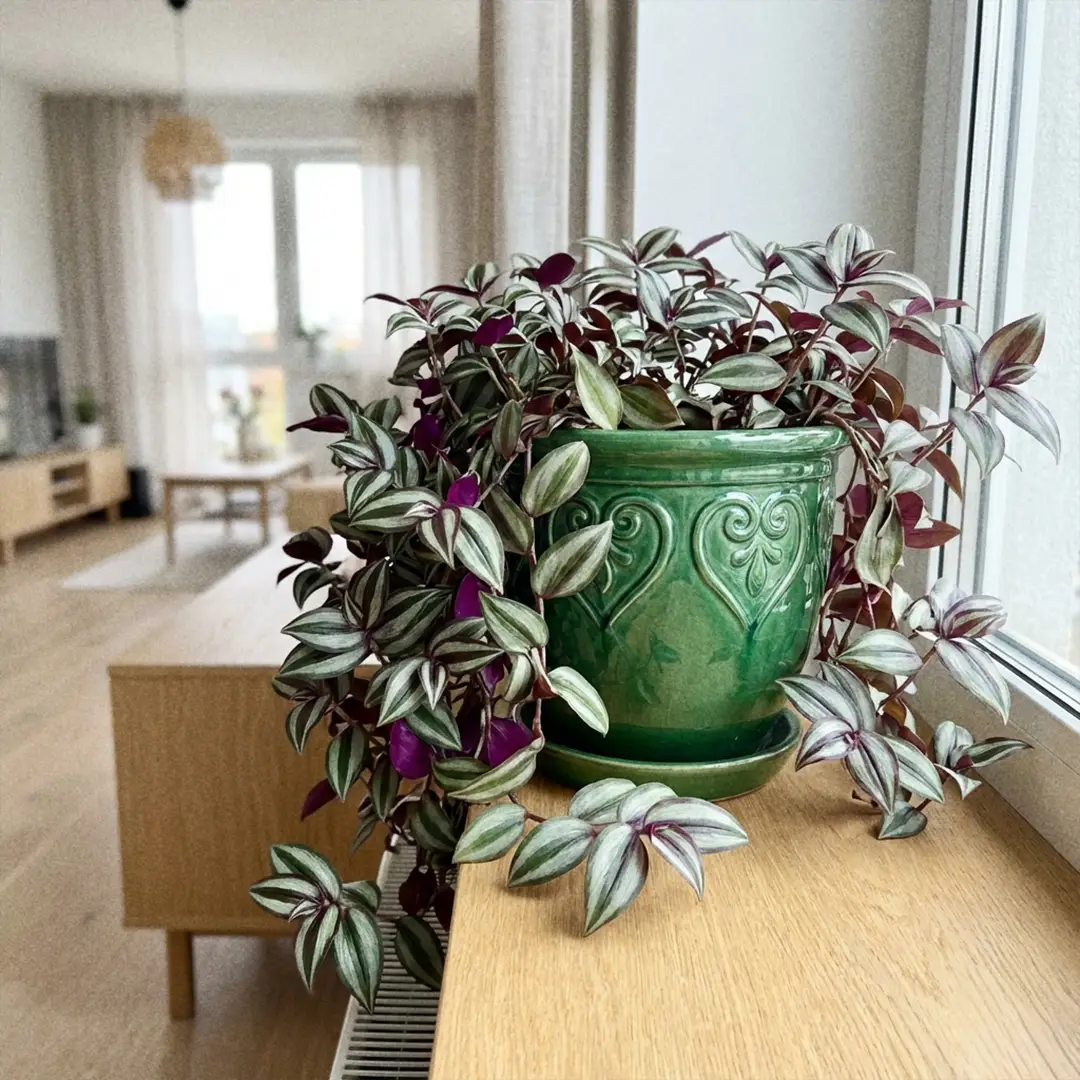
Best Light for Wandering Dude
Wandering Dude grows best in bright, indirect light with a little filtered sun. Think east window, bright west window with some diffusion, or a south window pulled back behind a sheer curtain. The goal is high brightness without hours of punishing midday heat trapped against the glass.
This is one of those plants where light directly affects appearance, not just survival. In strong light, the silver striping looks crisper, the purple undersides deepen, and the spaces between leaves stay short. In dimmer rooms, the vines stretch, the color fades, and the pot starts looking thin at the top. If you need help reading a room, our indoor light guide breaks down what “bright indirect” actually looks like in real homes.
A good rule is to place the plant where you could comfortably read during the day without turning on a lamp. If the pot is hanging, make sure the top of the pot gets light too. That crown area is what determines whether the plant stays full or goes bald.
Can Wandering Dude Handle Direct Sun?
A bit of direct morning sun is usually helpful. Gentle east-facing sun often brings out the best color. Harsh afternoon sun through hot glass is different. That can bleach the silver bands, crisp the leaf edges, or leave the foliage looking washed out instead of jewel-toned.
If you are moving a plant from a darker shelf to a brighter window, do it gradually over a week or two. Tradescantia zebrina adapts fast, but sudden jumps in light can still shock tender indoor growth. The same rule applies before putting it outdoors for summer. Start in bright shade, then let it see a little more sun only if the leaves hold their color well.
Homes with limited natural light can still grow Wandering Dude under grow lights. Keep the light close enough to prevent stretch, usually 8-14 inches above the crown, and run it for 10-12 hours a day.
Signs of Incorrect Lighting for Wandering Dude
- Too little light: long gaps between leaves, thinner vines, smaller leaves, and a washed-out look. This is classic leggy growth.
- Not enough brightness over time: the silver bands dull down and the purple backs lose intensity. That usually shows up as pale, faded leaves.
- Too much hard sun: bleached patches, dry brown edges, and occasional sunburn on leaves facing the glass.
- Light from only one side: full vines near the window, bare stems on the shaded side. Rotate the pot every week or two unless it is fixed in a hanger.
If you are deciding between “a little more sun” and “a slightly darker spot,” choose the brighter option and monitor it. Wandering Dude usually complains more about insufficient light than excess light indoors.

💧 Wandering Dude Watering Guide (How to Water Properly)
How Often to Water Wandering Dude
Wandering Dude likes more moisture than a cactus but less than a fern. Let the top inch of soil dry, then water thoroughly and let the excess drain away. That usually lands somewhere between every 5-8 days in active growth and closer to every 10-14 days in winter, but your pot size, light, and room temperature matter more than any schedule.
The stems are juicy and somewhat succulent, so the plant can handle a short dry spell. What it does not like is staying wet and airless around the roots. If the mix is still damp below the surface, wait. If it is dry on top and barely moist lower down, you can usually water. A moisture meter helps if you tend to guess wrong in both directions.
Compared with Swedish Ivy, Wandering Dude can tolerate slightly drier soil between drinks. Compared with Turtle Vine, it is similarly forgiving, but it shows overwatering faster with yellow lower leaves and soft stem bases.
Best Watering Method for Wandering Dude
Top watering is perfectly fine. Water slowly until liquid runs from the drainage holes, wait 10-15 minutes, and empty the saucer or outer cachepot. That deep soak encourages roots to grow through the pot instead of hovering near the surface.
Bottom watering also works well, especially if the crown is very dense and you want to avoid splashing the stems. Set the pot in shallow water for 15-20 minutes, then lift it out and let it drain fully. The method matters less than the end result: evenly moist roots, no stagnant water, no constantly soggy mix.
If your plant lives in a hanging basket, take it down once in a while and water it in the sink or tub rather than giving it small sips in place. Tiny top-ups leave dry pockets in the root ball and encourage weak, shallow rooting. Our full watering guide covers that common mistake in more detail.
Signs of Overwatering vs Underwatering in Wandering Dude
Overwatering signs:
- Yellow leaves near the base
- Mushy or translucent stems
- Wet mix that stays damp for many days
- A sour smell from the pot
- Sudden collapse at the crown, often from root rot or mushy stems
Underwatering signs:
- Leaves that curl inward and feel thinner than usual
- Dry, lightweight pot
- Crisp tips or edges after repeated neglect
- Slower growth and more leaf drop from older stems
Underwatering is easier to correct. Give the plant a thorough soak, trim any fully crispy growth, and resume a steadier routine. Rot is the more serious problem, because you usually need to prune back to healthy tissue and restart some stems.
Seasonal Watering Changes for Wandering Dude
In spring and summer, growth is quick and the plant drinks more. This is also when you are most likely to be pruning, propagating, and feeding, so it makes sense that the mix dries faster.
In fall and winter, slow the rhythm down. Short days mean slower growth, and slower growth means wetter soil for longer. The mistake many people make is keeping the summer watering schedule while the plant is receiving half the light. That is how a once-full basket suddenly turns yellow at the base in January.
If the plant is under strong grow lights or in a warm sunroom, winter care may not change much. Let the soil tell you which season your plant is actually experiencing.
🪴 Best Soil for Wandering Dude (Potting Mix & Drainage)
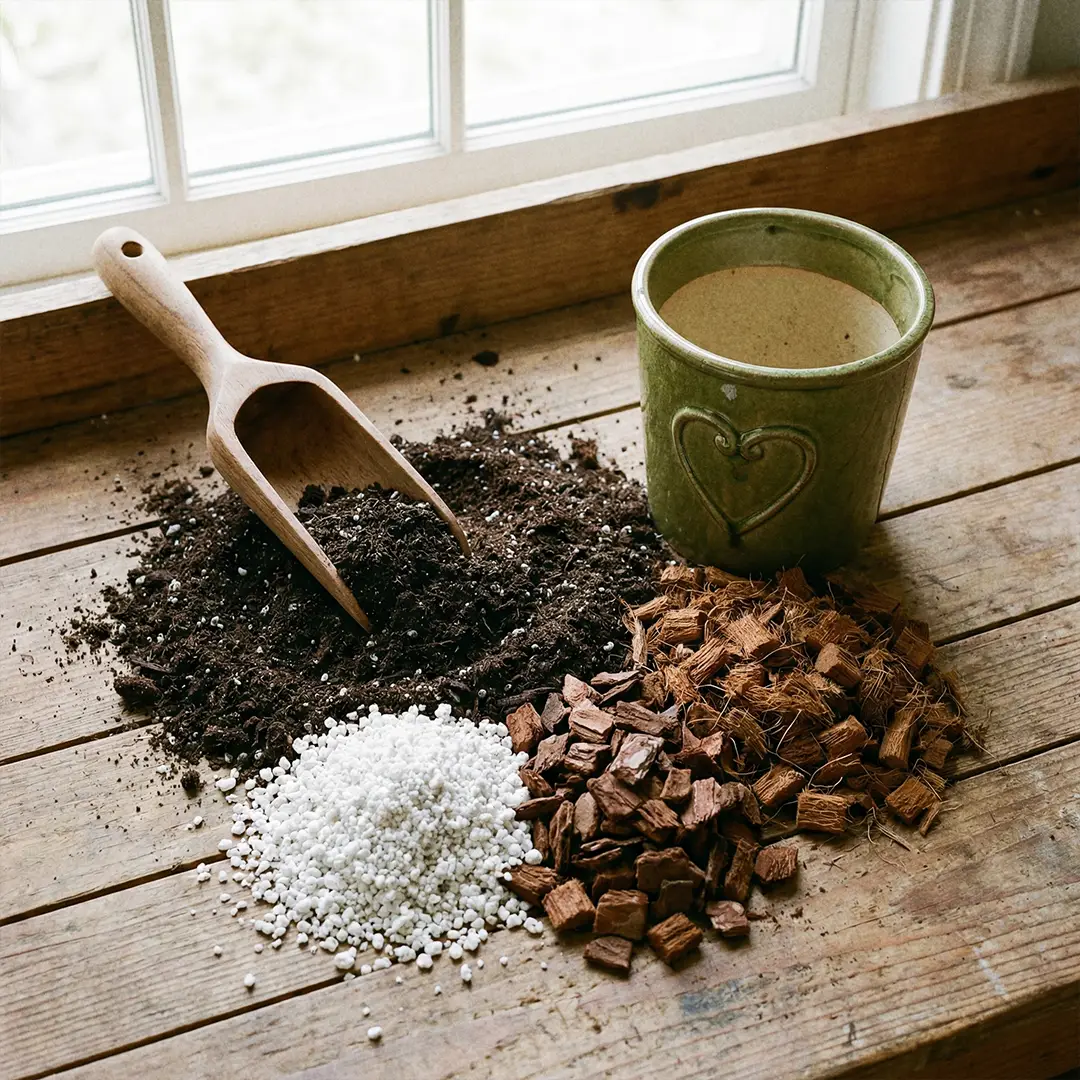
Best Potting Mix for Wandering Dude
Wandering Dude wants a mix that holds some moisture but still breathes. A dense, peat-heavy bagged soil stays wet too long. A gritty cactus mix dries a little too fast unless your home is very humid. The sweet spot is an airy indoor mix.
A dependable recipe looks like this:
- 2 parts quality indoor potting mix
- 1 part perlite or pumice
- 1 part orchid bark or coco chips
That blend gives the roots moisture, oxygen, and structure all at once. If you prefer ready-made supplies, combine a standard houseplant mix with extra perlite and a little bark from a potting soil setup you already use for other tropical trailers.
Pots and Drainage for Wandering Dude
Drainage holes are not optional here. The plant roots fast, grows fast, and declines fast in stale wet soil. A nursery pot inside a decorative cachepot is fine. A sealed container with no drainage is not.
Terracotta dries faster and helps if you tend to overwater. Plastic holds moisture longer and works well in bright windows where the plant grows quickly. Neither is automatically better. Match the pot material to your habits and climate.
Wide pots and hanging baskets suit the plant better than deep, narrow pots. Wandering Dude naturally creeps, branches, and roots along the surface. A broader pot lets you tuck fresh cuttings back into the rim, which is the easiest way to build a dense crown.
When Soil Is the Real Problem
Sometimes the plant is not “thirsty” or “unhappy,” it is simply sitting in exhausted mix. Old soil compacts, repels water on top, and stays swampy in the middle. That is why a plant can look droopy even when you feel like you are watering correctly.
Replace the mix if you notice any of these:
- Water pooling on the surface before slowly sinking in
- Soil shrinking away from the pot wall
- A crust of fertilizer salts on top
- Chronic yellowing despite decent light
- A pot that dries on top but smells stale underneath
If your Wandering Dude has bare stems and tired growth, a soil refresh plus a haircut usually fixes more than people expect. For a deeper breakdown of ingredients and drainage logic, see our soil guide.
🍼 Fertilizing Wandering Dude
Best Fertilizer for Wandering Dude
Wandering Dude is a fast grower, so it appreciates regular feeding more than slower houseplants do. A balanced liquid fertilizer at half strength works well, and so does a gentle foliage formula if that is what you already keep on hand. The exact N-P-K numbers matter less than using a mild product consistently.
If your plant is heavily pruned and constantly producing new shoots, it will respond well to feeding. If it is in low light and barely growing, fertilizer will not solve that. Light comes first, then food. Our fertilizing guide explains why feeding a struggling low-light plant often backfires.
Feeding Schedule for Wandering Dude
Use this as a practical baseline:
- Spring to late summer: feed once a month
- Early fall: taper down if growth slows
- Late fall and winter: usually stop feeding
Always fertilize moist soil, not bone-dry roots. Water first if needed, then feed. That simple step prevents root burn and keeps the salts from concentrating too hard around the crown.
If you use a slow-release fertilizer, apply lightly in spring and let the plant tell you if it needs more. Fast growth with good color means you are in the right zone. Weak, soft, stretched growth means the plant is either underlit or overfed.
Fertilizer Mistakes That Weaken Wandering Dude
The most common mistake is overdoing it because the plant grows quickly. Too much fertilizer can lead to:
- Soft, floppy stems
- Brown tips from salt buildup
- Lots of green growth with weaker striping
- White crust on the soil surface
- Root stress that looks like random wilting
If you suspect fertilizer burn, flush the pot with plain water a few times, skip the next feeding cycle, and trim back damaged tips. Wandering Dude recovers quickly once the root zone is clean again.
🌡️ Wandering Dude Temperature Range
Ideal Indoor Temperature for Wandering Dude
Wandering Dude is happiest between 65 and 80°F (18 and 27°C). That range lines up nicely with normal indoor life, which is one reason this plant is so easy to recommend. In warm bright conditions it grows fast, roots fast, and bounces back fast after pruning.
It can tolerate slightly cooler nights, but once temperatures drop toward 55°F (13°C), growth slows and the plant becomes more vulnerable to overwatering. Indoors, the bigger issue is usually sudden temperature swings rather than a steady room that is a little cool.
Cold and Heat Stress in Wandering Dude
Keep the plant away from:
- icy window glass in winter
- cold drafts from doors
- strong blasts from air conditioners
- hot air from radiators and heating vents
Cold stress often shows up as limp, darkened growth or rapid leaf drop after a chilly night. Heat stress looks different. Leaves can dry at the edges, colors can wash out, and the pot may need water far more often than expected.
Because the stems are thin and juicy, they respond fast to environmental stress. That is useful, because you notice problems early, but it also means a bad placement can undo your nice full basket quickly.
Summer Outdoor Time for Wandering Dude
In warm weather, Wandering Dude loves a sheltered patio or porch with bright shade and moving air. Outdoor summer light often gives the plant stronger color and sturdier growth than it gets inside.
The key is protection. Do not place a soft indoor-grown plant straight into all-day sun. Do not leave it outdoors once nights turn cool. And if you live in a frost-free climate where Tradescantia can spread outdoors, keep it contained in pots and never dump trimmings into the yard. The stems root far too easily for casual disposal.
💦 Wandering Dude Humidity Needs
Ideal Humidity for Wandering Dude
One reason people love this plant is that it does not demand greenhouse humidity. Average home conditions are usually enough. That said, Wandering Dude looks best around 40 to 60 percent humidity, where new leaves unfurl cleanly and fresh cuttings root with less stress.
This makes it a strong candidate for bright kitchens, sunrooms, and bathrooms with windows. If you are already reading up on humidity for houseplants, Wandering Dude sits in the comfortable middle. It appreciates moisture in the air, but it will not punish you the way a Calathea does.
What Dry Air Does to Wandering Dude
Very dry air, especially during heated winters, can cause:
- crisp brown tips or edges
- slower, smaller new leaves
- more frequent leaf drop
- higher risk of spider mites
If the plant looks fine except for rough tips in winter, the problem may be humidity more than watering. That is especially true if the pot is near a heater or if the air in your home drops below 30 percent for weeks at a time.
Humidity Boosters That Actually Help
You do not need to turn this into a science project. Start with simple upgrades:
- group it with other plants
- move it away from heat vents
- use a small humidifier nearby if the room is very dry
- root cuttings in slightly more humid spots for faster success
I am less enthusiastic about constant misting. It gives only a brief humidity bump and can leave foliage wet if overdone. For a plant that already roots and grows easily, steady room conditions are more useful than daily spraying.
If you want a full tropical corner, our roundup of plants that love humidity can help you choose companions that enjoy similar air.
🌸 How to Make Wandering Dude Bloom
What Wandering Dude Flowers Look Like
Wandering Dude can produce tiny three-petaled flowers in shades of pink-purple, lavender, or violet. They are charming up close, but they are not the reason most people grow the plant. The striped foliage is always the main show.
Indoors, flowering is usually light and intermittent. Outdoors in warm weather, mature plants can bloom more freely across the growing season. Do not worry if yours never flowers. A lush basket with short colorful internodes is a better sign of good care than a few blooms.
How to Encourage Wandering Dude to Flower
If you do want blooms, focus on the basics:
- bright light without hard scorch
- regular but not excessive feeding
- moderate, steady watering
- enough maturity on the vines
Plants that are constantly chopped into tiny pieces for shaping may flower less simply because they keep being reset into foliage mode. Let a few healthy vines mature while still keeping the crown tidy.
Should You Remove Wandering Dude Flowers?
You can leave them or snip them off. Removing spent blooms keeps the plant tidier, but it does not dramatically change health one way or the other.
If I am growing the plant mainly for dense trailing foliage, I usually prioritize pruning and branching over chasing flowers. That is what gives the most attractive indoor result.
🏷️ Wandering Dude Types and Similar Tradescantia

Standard Tradescantia zebrina
The standard form of Wandering Dude has green leaves with bold silver striping and purple undersides. This is the version most people picture when they hear Tradescantia zebrina. It is quick, forgiving, and the easiest to recover if it gets leggy.
If you are shopping online, this is often simply listed as Tradescantia zebrina, inch plant, or silver inch plant. Look for strong striping, short internodes, and several shoots coming from the crown.
Tradescantia zebrina 'Quadricolor'
Quadricolor adds pink and cream tones to the usual silver, green, and purple palette. It can be gorgeous, especially in bright filtered light, but variegated forms usually need more careful light management. Too little light and the extra color fades. Too much harsh sun and the pale sections burn first.
Expect slightly slower growth than the plain green-and-silver form. That is normal. Extra color almost always comes with a little less vigor.
Tradescantia zebrina 'Burgundy'
Burgundy leans deeper into wine-red and purple tones. It can look almost velvety from a distance, especially when the light hits the leaf undersides.
This form is useful if you want a darker accent in a mixed planting. Just remember that dark color does not mean it prefers darkness. It still needs bright light to stay compact and saturated.
Wandering Dude vs Similar Plants
Wandering Dude gets mixed up with a few other trailing plants:
- Turtle Vine: much smaller rounder leaves, tighter stacking growth, and a softer creeping look.
- Teddy Bear Vine: fuzzy brown foliage, completely different texture, slower and drier care.
- Purple Heart (Tradescantia pallida): larger solid-purple leaves and a more sprawling, less striped habit.
- Zebra Plant (Aphelandra squarrosa): a totally different houseplant with upright glossy leaves, not a trailer at all.
If your plant has silver bands above and purple beneath, you are in the Wandering Dude lane.
🪴 Potting and Repotting Wandering Dude
When to Repot Wandering Dude
Repot Wandering Dude every 1-2 years, or sooner if the soil has broken down and the plant keeps drying oddly or yellowing from the center. Root crowding alone is not always the trigger. Often the bigger reason to repot is that the crown has thinned and the pot no longer supports lush growth.
Common signs it is time:
- roots circling tightly or coming out of drainage holes
- water rushing through without soaking evenly
- persistent decline after feeding and pruning
- tired, woody stems in exhausted mix
Spring is the best time to do it because the plant rebounds quickly and fresh cuttings root fast.
Best Pot Shape and Size for Wandering Dude
Choose a pot only 1-2 inches wider than the current root ball. Oversizing is a classic mistake. A huge pot holds too much wet mix, and the roots cannot use it quickly enough.
Shallow, wide planters and hanging baskets work beautifully because the plant wants to spread and trail rather than dive deep. Pair that shape with a container from your plant pots setup that has real drainage, and you are already ahead.
How to Repot Wandering Dude Without Ending Up With a Bare Pot
This is where people can level up the look of the plant. Do not just move the root ball into a new pot and call it done. Repotting is the best moment to rebuild fullness.
- Trim back the longest bare vines.
- Refresh the mix in the new pot.
- Replant the main root ball slightly off-center only if it improves the cascade.
- Tuck several fresh cuttings around the rim.
- Keep the pot evenly moist for the first couple of weeks while those cuttings root.
That last step matters. One mature center plus a ring of young cuttings creates the dense “nursery pot” look people are usually trying to maintain.
Can Wandering Dude Live Outdoors in a Container?
Yes, and it often looks fantastic outdoors in summer. Use it as a trailing spiller in mixed pots or as a solo basket in bright shade. Bring it back inside well before cold nights arrive.
In frost-free regions, be disciplined about containment. Tradescantia stems root wherever they rest, which is wonderful in a pot and less wonderful when escaped into the landscape. Keep trimmings bagged or composted responsibly.
✂️ Pruning Wandering Dude
Why Pruning Matters More Than With Most Trailing Plants
Wandering Dude is not one of those trailers you ignore for a year and then expect to still look perfect. The stems grow fast, the oldest sections thin out, and the most attractive part of the plant is the fresh growth. Regular pruning is what keeps the top full instead of leaving all the leaves at the far ends of long strings.
The good news is that this plant loves being cut. In fact, pruning is how you get the best shape. Each trim encourages branching, and every cutting is future planting material.
Where to Cut Wandering Dude
Always cut just above a node, the point where leaves attach and roots can form. That tells the plant exactly where to branch. Long bare sections can be shortened aggressively. Healthy growth will break from the nearest nodes below the cut.
If you are only maintaining shape, pinch the tips every few weeks during spring and summer. If the plant is severely leggy, take it back much harder in one session, save the best cuttings, and re-root them. For the parent plant, hard pruning in spring is especially effective because the new season’s light supports dense regrowth.
Hard Reset vs Routine Pinching for Wandering Dude
Use routine pinching when:
- the plant is mostly full
- you just want more branching
- the ends are getting slightly too long
Use a hard reset when:
- the crown is bald
- the midsections are leafless
- the color is poor from months of low light
- the soil is tired and you plan to repot anyway
Do not be afraid of the reset. Tradescantia zebrina is one of the rare plants that often looks better after a decisive haircut than after months of timid trimming.
🌱 How to Propagate Wandering Dude
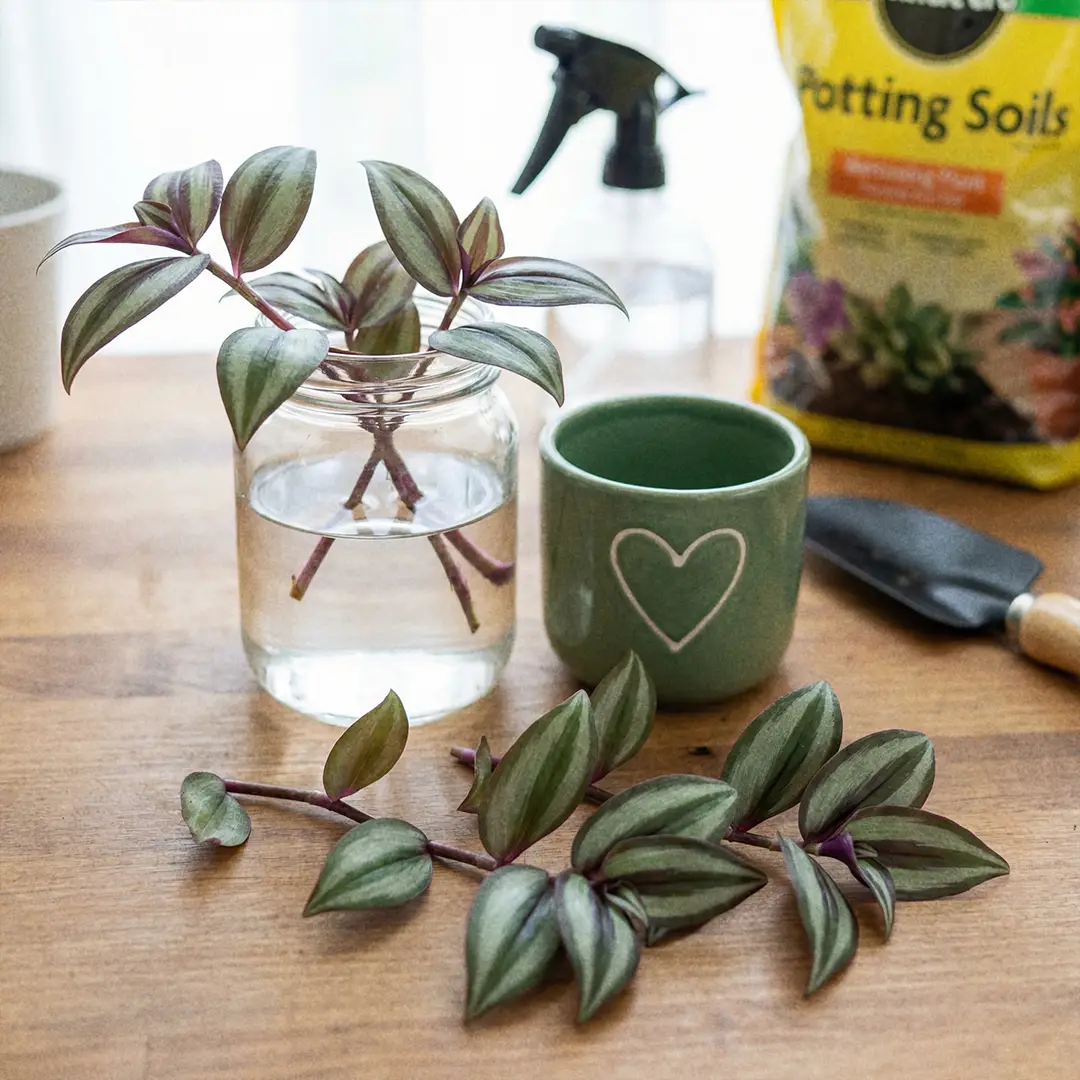
Why Wandering Dude Is One of the Easiest Plants to Propagate
If you have never propagated a houseplant before, start here. Wandering Dude roots from stem nodes so readily that it almost feels unfair. Every healthy cutting has the potential to become a new plant, and you do not need fancy gear or rooting hormone to succeed.
That makes this plant especially useful when you are fixing legginess. Instead of mourning the long bare vines you prune off, turn them into replacements. Our broad propagation guide covers the theory, but Tradescantia is one of the easiest real-world examples of why nodes matter.
Water Propagation for Wandering Dude
Water propagation is fast and very satisfying with this plant.
- Take 4-6 inch cuttings with at least 2-3 nodes.
- Remove the lowest leaves so no foliage sits under water.
- Place the cuttings in a clear jar with one or two nodes submerged.
- Keep the jar in bright indirect light.
- Refresh the water every few days.
You will often see roots start within a week or two. Once the roots are around 1-2 inches long, you can plant them into soil. Our dedicated water propagation guide walks through the transfer process if you want a full step-by-step visual.
Soil Propagation for Wandering Dude
Direct soil propagation is even simpler if you do not care about watching roots form.
- Snip healthy cuttings below a node.
- Remove the bottom leaves.
- Insert the lower nodes into lightly moist potting mix.
- Keep the mix slightly moist, not soaked, for the next 1-2 weeks.
- Give the cuttings bright light and warm conditions.
Because the nodes root so easily, you can often pin a long cutting right across the soil surface and let several nodes root at once. That is one reason the plant thickens quickly in baskets. If you like this no-fuss approach, our soil propagation guide is worth bookmarking.
How to Use Cuttings to Make the Same Pot Fuller
This is my favorite propagation use for Wandering Dude. Instead of making ten separate little plants, root the cuttings back into the same container.
Tuck fresh cuttings around the rim, near empty spots at the crown, and anywhere a long stem needs backup. Keep the pot a little more evenly moist than usual while they establish. In a few weeks, the plant looks fuller, more layered, and much younger.
It is the houseplant equivalent of patching a sparse lawn. Once you learn this trick, a leggy pot stops feeling like a failure and starts looking like free material.
🐛 Wandering Dude Pests
Wandering Dude is not unusually pest-prone, but fast soft growth can attract the usual indoor troublemakers if the plant is stressed or the air is very dry. The most common pests are spider mites, mealybugs, aphids, and whiteflies.


How to Spot Wandering Dude Pests Early
Check the nodes, the undersides of the leaves, and the crowded center of the pot. Those are the areas pests like best.
- Fine webbing and speckled leaves suggest spider mites
- Cottony white clusters point to mealybugs
- Sticky residue and clusters on fresh tips can mean aphids
- Little white insects fluttering when disturbed are usually whiteflies
Fast inspection matters, because a full trailing pot can hide an infestation longer than an upright plant can.
How to Prevent and Treat Pests on Wandering Dude
Keep the plant in good light, avoid drought stress, and give it air circulation. Those basic care habits make pest outbreaks much less likely. If you do find pests, isolate the plant, rinse it thoroughly, and repeat a gentle treatment like insecticidal soap or horticultural spray until new growth is clean.
Pruning helps here too. Because the plant grows so fast, you can often remove the worst affected sections and replace them with clean cuttings instead of trying to save every single vine.
🩺 Wandering Dude Problems and Diseases


Leggy, Faded, or Small Wandering Dude Leaves
This is the classic low-light problem. The plant stretches to find brightness, the leaves shrink, and the silver striping loses impact. Over time, the upper parts stay sparse and the basket only looks good at the ends of the vines.
The fix is direct and usually fast:
- move the plant to brighter light
- prune back stretched growth
- rotate the pot so the crown gets even exposure
- root the best cuttings back into the pot
If you leave a leggy plant in the same dim spot and only keep trimming it, the new growth will still come back leggy. Change the light first, then shape it.
Yellow Leaves, Mushy Stems, or Rot in Wandering Dude
Yellowing that starts low on the plant, especially with soft stem bases, almost always comes back to overwatering or stale mix. This is where yellowing leaves cross into root rot.
Move quickly if you see it:
- stop watering
- inspect the crown and roots
- cut away mushy sections
- save healthy tips for propagation
- repot into fresh airy mix if needed
Do not try to “balance it out” with fertilizer. Rot is a root-zone oxygen problem, not a nutrient problem.
Crispy Tips, Leaf Drop, and Spotty Wandering Dude Growth
When Wandering Dude develops crispy edges, random leaf drop, or a pot that looks patchy rather than obviously rotten, consider the whole environment.
Possible causes include:
- chronically dry air leading to brown crispy edges
- irregular watering, where the plant swings between too wet and too dry
- spider mites in dry heated rooms
- old stems that simply need pruning and renewal
- wet foliage plus crowding, which can invite fungal spotting
This is why I treat Wandering Dude as a plant you routinely refresh. Good light, regular trimming, and periodic re-rooting solve most “mystery decline” cases before they become dramatic.
🖼️ Wandering Dude Display Ideas

Best Places to Display Wandering Dude
Wandering Dude looks best where the trailing habit is visible from the side, not just from above. Hanging baskets, shelf edges, wall brackets, and plant stands all work better than parking it low on the floor.
My favorite placements are:
- an east window hanging basket
- a bright bookshelf where the vines can spill at eye level
- a bathroom window with strong light and moderate humidity
- the edge of a mixed plant shelf beside upright shapes
Because the plant grows fast, give it room to move. It looks casual and lush when the vines can drape naturally rather than bunching on a crowded sill.
Pairing Wandering Dude With Other Plants and Decor
The silver striping and purple undersides pair beautifully with deep green foliage and warm materials. I like it beside Philodendron Brasil, String of Hearts, or a structured upright plant that lets the striped leaves do the flowing work.
Use simple containers and let the foliage provide the detail. Matte ceramics, terracotta, and stained wood all suit it well. If you want the colors to read strongly, avoid placing it against very busy patterns. A calmer background makes the silver bands pop.
Safe Placement for Wandering Dude in Homes With Pets and Kids
Because the sap can irritate mouths and skin, display the plant where curious pets and small kids are less likely to chew or grab it. High shelves and hanging planters are the simplest solution.
Also think about cleanup. Pruning produces a lot of cuttings, and even dropped pieces can root if they land in another pot. Keep a bowl or tray nearby when trimming so you can intentionally save the best pieces and discard the rest.
👍 Wandering Dude Pro Tips
Fast Rules for Fuller Wandering Dude
- Put the plant closer to the window than you think.
- Let the crown get light, not just the hanging vines.
- Pinch often instead of waiting for a giant rescue prune.
- Replant cuttings into the same pot for instant fullness.
- Use wide pots, not deep oversized ones.
- Keep it out of reach of pets because the sap is irritating.
The One Habit That Changes Everything
If I could give you only one habit for this plant, it would be this: every time you trim it, stick a few healthy tips back into the soil. That one routine prevents bald crowns, gives you a fuller basket year-round, and turns pruning into a benefit instead of a chore.When to Start Over With Wandering Dude
Sometimes the fastest route to a beautiful plant is not nursing old woody vines forever. If the base is sparse, the soil is tired, and the best growth is only at the ends, take cuttings from the freshest tips and rebuild the pot. With Tradescantia zebrina, that is not giving up. That is good technique.❓ Frequently Asked Questions
Is Wandering Dude toxic to cats and dogs?
Yes, it is considered mildly toxic. Tradescantia sap can irritate the mouth, stomach, and skin of pets, so keep the plant out of reach and wash your hands after pruning. A small nibble is usually more irritating than dangerous, but repeated chewing can cause real discomfort.Why is my Wandering Dude leggy and losing its stripes?
That almost always points to low light. Move it closer to a bright window or give it filtered sun, then prune the stretched stems back above a node. New growth in better light will come in shorter, fuller, and with stronger silver and purple coloring.How often should I water Wandering Dude?
Water when the top inch of soil is dry. In a bright, warm room that may mean every 5-8 days in spring and summer, while winter may stretch to every 10-14 days or longer. Always judge by the mix, not the calendar.Can Wandering Dude grow in water forever?
Cuttings root happily in water, but long-term growth is better in soil or a semi-hydro setup with nutrients. Water-rooted cuttings left in plain water too long often get weak, pale growth and need more maintenance.Does Wandering Dude like humidity?
It tolerates average household air better than many tropical plants, but it looks best around 40-60% humidity. Moderate humidity keeps new leaves from drying at the tips and helps fresh cuttings root faster.Is Wandering Dude the same as Purple Heart?
No. Purple Heart is Tradescantia pallida, a different species with larger solid-purple leaves and a more upright-sprawling habit. Wandering Dude is Tradescantia zebrina, known for silver striping and purple undersides.Why does my Wandering Dude keep getting bare at the top?
The crown thins when the top of the pot sits in shade, when stems are never pinched, or when old vines are left in exhausted soil for too long. Rotate the pot, trim often, and replant a few fresh cuttings back into the same pot to rebuild fullness.ℹ️ Wandering Dude Info
Care and Maintenance
🪴 Soil Type and pH: Airy indoor potting mix with perlite and orchid bark
💧 Humidity and Misting: Average indoor humidity is fine, though 40-60% keeps foliage looking best.
✂️ Pruning: Pinch and trim stems often to keep the top full and prevent bare, leggy vines.
🧼 Cleaning: Rinse or wipe leaves gently; avoid getting sap on sensitive skin.
🌱 Repotting: Every 1-2 years, or sooner if the mix compacts and the crown thins out.
🔄 Repotting Frequency: Every 1-2 years
❄️ Seasonal Changes in Care: Grow actively in spring and summer, prune hard in spring, and water a little less in winter.
Growing Characteristics
💥 Growth Speed: Fast
🔄 Life Cycle: Perennial
💥 Bloom Time: Spring through fall outdoors; sporadic indoors
🌡️ Hardiness Zones: 9-11 outdoors
🗺️ Native Area: Mexico to Colombia
🚘 Hibernation: No true dormancy, but growth slows in winter
Propagation and Health
📍 Suitable Locations: Hanging baskets, shelf edges, bright bathrooms, summer patio containers
🪴 Propagation Methods: Exceptionally easy from stem cuttings in water or directly in soil.
🐛 Common Pests: spider-mites, mealybugs, aphids, and whiteflies
🦠 Possible Diseases: Root rot, stem rot, and occasional fungal spotting when kept too wet
Plant Details
🌿 Plant Type: Trailing herbaceous perennial
🍃 Foliage Type: Evergreen
🎨 Color of Leaves: Green, silver, white, and purple
🌸 Flower Color: Pink-purple to lavender
🌼 Blooming: Possible but secondary to the foliage display
🍽️ Edibility: Not edible; sap can irritate mouths and skin
📏 Mature Size: 6-9 inches at the crown
Additional Info
🌻 General Benefits: Fast growth, easy propagation, vivid striped foliage, and quick coverage in baskets
💊 Medical Properties: No established ornamental-use medical value
🧿 Feng Shui: Trailing growth is associated with movement and soft, flowing energy
⭐ Zodiac Sign Compatibility: Gemini
🌈 Symbolism or Folklore: Resilience, motion, adaptability
📝 Interesting Facts: The name inch plant comes from the short distance between nodes, and those same nodes are what make Wandering Dude root so easily. In bright light the silver bands can look almost metallic, while the undersides of the leaves glow deep purple.
Buying and Usage
🛒 What to Look for When Buying: Choose a dense plant with multiple branches at the crown, vivid striping, and firm stems. Skip any pot with mushy bases, many bare sections, or visible webbing at the nodes.
🪴 Other Uses: Useful as a summer spiller in outdoor containers and as fast cover in mixed houseplant arrangements.
Decoration and Styling
🖼️ Display Ideas: Best displayed where the striped leaves can hang at eye level from shelves, wall planters, or hanging pots.
🧵 Styling Tips: The silver and purple tones look strongest next to terracotta, warm wood, and saturated green ceramics. Let it spill beside upright plants so the trailing habit reads clearly.
🪴 See also 🪴

Complete Guide to Purple Heart Care and Growth

Complete Guide To Turtle Vine Care and Growth

