

Purple Heart
Tradescantia pallida
Purple Queen, Spiderwort, Purple Spiderwort, Wandering Jew Purple


Purple Heart is a fast-growing trailing and sprawling plant with striking solid-purple leaves and small pink flowers that appear freely through spring and summer. This complete guide covers light, water, soil, and propagation, plus the one trick that keeps the color vivid instead of fading to green.
📝 Purple Heart Care Notes
🌿 Care Instructions
⚠️ Common Pests
📊 Growth Information
🪴 In This Guide 🪴

☀️ Purple Heart Light Requirements (Indoor Lighting Guide)
Best Light for Purple Heart
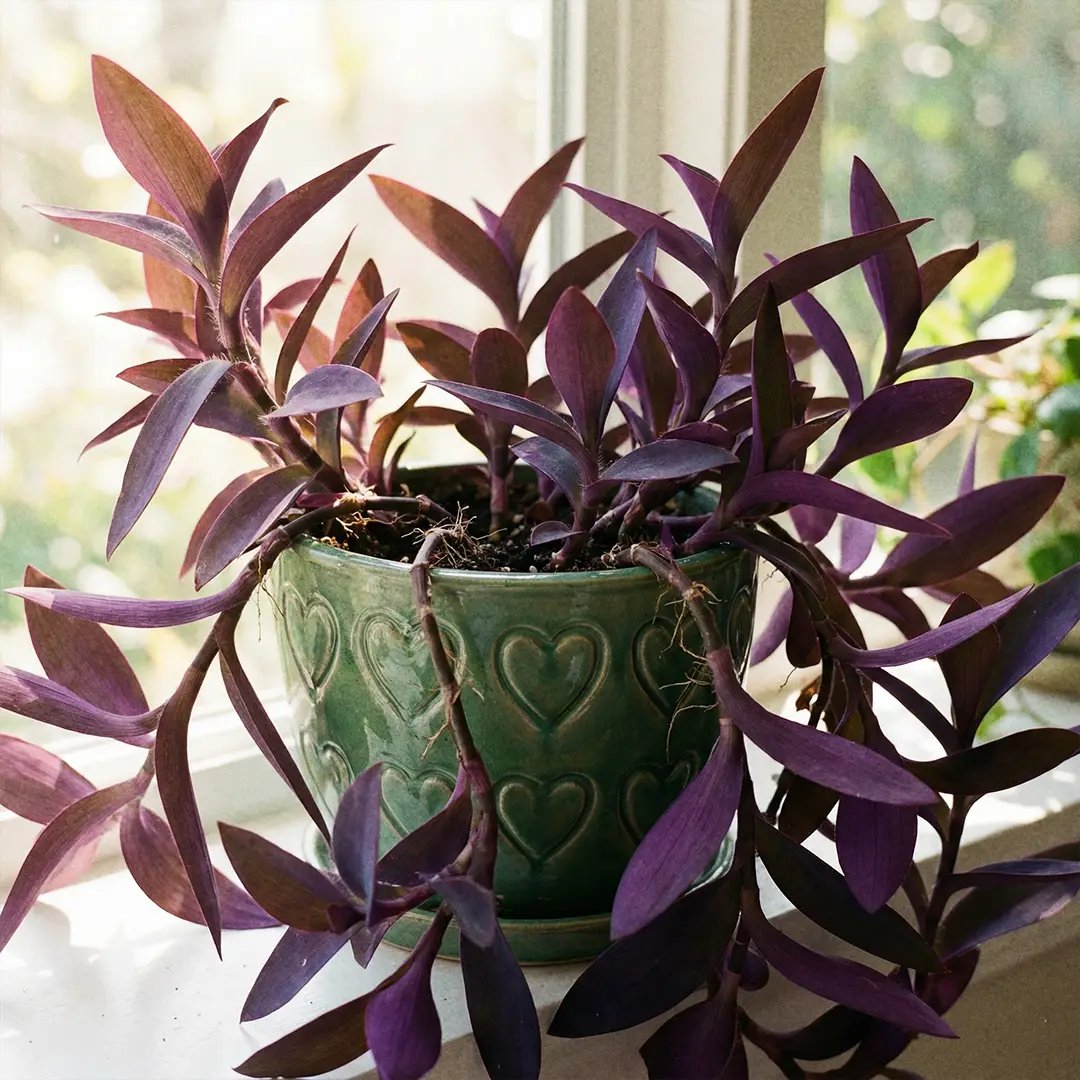
Purple Heart wants bright light, and it can handle more direct sun than most houseplants you will keep indoors. An east-facing window with a couple of hours of morning sun is ideal. A south-facing window works beautifully too, especially if the plant sits a foot or two back from the glass. West-facing windows are fine if you protect the plant from the hottest part of late afternoon sun in summer.
The relationship between light and leaf color here is more direct than with most plants. In strong light, the leaves come out a rich, saturated plum-purple from tip to base. In medium indirect light, the same plant reads as a somewhat ordinary purple-green. In low light, it starts looking plain greenish with only a hint of purple, usually just on the undersides.
If you are not sure whether a spot is bright enough, our indoor light guide explains what bright indirect actually means in practical, room-by-room terms. For Purple Heart, lean toward overestimating how much light it needs rather than underestimating.
Grow lights work well for this plant in light-limited homes. Position them 8-12 inches from the crown and run them 12-14 hours a day. Supplemental light in winter is one of the best ways to hold the color through the shorter days.
Can Purple Heart Handle Direct Sun Indoors?
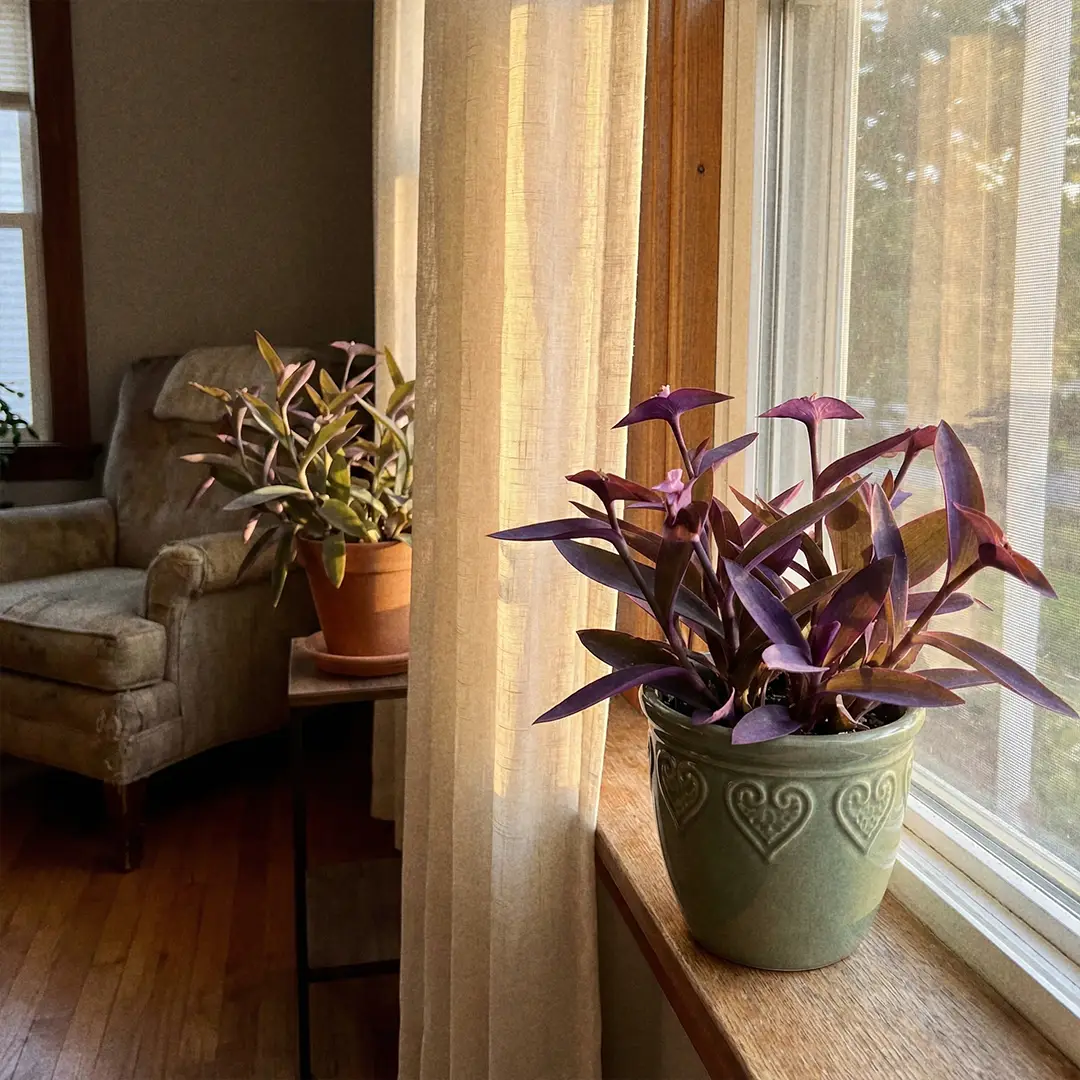
Yes, within reason. Gentle morning sun is actively beneficial and deepens the pigment. Filtered afternoon sun through a sheer curtain is also fine. The thing to avoid is sustained harsh midday sun through south-facing glass in midsummer, which can bleach patches on the leaves or dry the edges too quickly.
Plants that have been grown indoors in moderate light need a gradual transition if you want to move them to a sunnier spot. Give it a week or two to adjust before putting it in the brightest window in your home.
Signs of Incorrect Lighting for Purple Heart
- Too little light: Leaves fade from purple to a dull green or brownish tone. Stems stretch with longer gaps between leaves. This is the most common problem with this plant indoors.
- Good light but not enough sustained brightness: Undersides of leaves stay purple but the tops look dull or grayish rather than rich purple.
- Too much harsh direct sun: Dry, pale or brown patches appear where the leaf surface has been scorched.
- Best spots: East window, south window 1-2 feet back, west window in afternoon.
💧 Purple Heart Watering Guide (How to Water Properly)
How Often to Water Purple Heart
Purple Heart is more drought-tolerant than most trailing houseplants. Its stems are somewhat fleshy and store a little moisture, which means the plant can handle a short dry spell without wilting or dropping leaves dramatically. In practical terms, let the top inch of soil dry before watering, then give it a thorough soak and let the excess drain completely.
In a warm, bright room during spring and summer, that works out to roughly every 6-10 days. In winter, when growth slows and the plant drinks less, it can easily stretch to every 12-16 days. Use the soil as your guide and resist any fixed calendar schedule.
For general watering principles, our watering guide covers how to read a plant’s needs across different pot materials and room conditions.
How to Water Purple Heart
Top watering is straightforward. Water slowly until water runs from the drainage holes, then wait for the saucer to empty before putting the pot back in place. Letting water sit in a saucer for hours keeps the root zone wet longer than it needs to be.
Bottom watering is also a good option, especially when the crown is dense and you want to avoid splashing the leaves and stems with water. Set the pot in a shallow basin for 15-20 minutes and let the mix absorb moisture from below. Lift it out and drain fully when the top of the soil feels just damp.
Drainage holes are not negotiable here. Purple Heart in a closed pot or one without drainage will almost inevitably develop root rot. The plant forgives dryness much more gracefully than it forgives staying wet.
Signs of Overwatering vs Underwatering in Purple Heart
Overwatering signs:
- Yellow leaves, particularly starting from the base
- Soft, darkened, or mushy stems near the soil line
- A heavy, wet pot that stays damp for many days
- Soil that smells sour or stale
Underwatering signs:
- Leaves that feel slightly limp or thinner than normal
- Stems that look a touch less turgid overall
- A very lightweight pot with bone-dry soil
- Occasional leaf drop from older stems
Underwatering is easy to fix. Give the plant a good deep soak and it recovers quickly. Overwatering is the more serious risk and can slide into root rot before you notice anything on the surface.
🪴 Best Soil for Purple Heart (Potting Mix & Drainage)

What Kind of Soil Does Purple Heart Need?
Purple Heart wants a mix that drains well but is not as gritty as a cactus blend. A light, airy houseplant mix with added perlite is the sweet spot. Think somewhere between the moisture-retentive tropical mix you use for pothos and the fast-draining blends you use for succulents.
A simple recipe that works well:
- 2 parts quality indoor potting mix
- 1 part perlite
- Optional: a small handful of orchid bark if your home runs humid
That blend gives the roots oxygen and lets water move through quickly. Dense, peat-heavy bagged soils hold far too much moisture and leave the stem bases wet longer than this plant wants. Our full soil guide explains the ingredient options in more detail if you want to mix your own.
Pots and Drainage for Purple Heart
Any pot with drainage holes works. Terracotta is a good choice if you tend to overwater, because the porous walls help the mix dry out faster and more evenly. Plastic retains moisture longer, which works if you have a tendency to underwater or if the plant is in a very bright spot and drying out quickly.
Hanging baskets and shallow wide planters suit the plant’s natural trailing and sprawling habit. Deep, narrow pots encourage wet conditions lower in the pot that the roots may never fully use. Keep the pot size reasonable too. Go only 1-2 inches wider than the current root ball when repotting. A pot that is too large holds excess wet mix and slows the drying cycle.
🍼 Fertilizing Purple Heart
Does Purple Heart Need Fertilizer?
It grows quickly and benefits from feeding during the active season. A balanced liquid fertilizer at half strength, applied once a month from spring through late summer, is enough. Pushing harder than that tends to produce soft, stretched growth rather than compact, vivid stems.
Apply fertilizer to already-moist soil. Pouring it onto dry roots can cause chemical burn and damage some of the finer feeder roots. Our fertilizing guide covers common fertilizer mistakes if you are newer to the routine.
Seasonal Fertilizing Schedule for Purple Heart
- Spring to late summer: feed once a month with half-strength balanced fertilizer
- Early fall: taper off as growth slows
- Winter: stop feeding; the plant is barely growing and cannot use the extra nutrients
One thing worth noting: if your Purple Heart is in a dimly lit spot, fertilizer will not fix the problem. Light drives color and growth. Give it the right light first, then feed it.
🌡️ Purple Heart Temperature Range
Ideal Indoor Temperature for Purple Heart
Purple Heart is comfortable between 60 and 85°F (15-29°C). Average household temperatures are almost always fine. What it genuinely dislikes is cold drafts, icy window glass in deep winter, and sudden swings between warm days and cold nights near a poorly insulated window.
Once temperatures drop below 50°F (10°C), growth basically stops and the plant becomes vulnerable to overwatering. The stems lose some of their vigor in cold conditions and rot sets in faster.
Cold Tolerance and Outdoor Use
This plant is hardier than most people expect. In USDA zones 7-11, it grows outdoors year-round, often treated as a ground cover or border plant. In zones 7 and 8, it may die back to the ground in a hard frost but reliably regrows from the roots the following spring.
Indoors, the main risk is cold drafts from windows and air conditioning vents in summer. Keep the plant at least 6-8 inches away from glass in cold weather and out of the direct path of AC air.
If you give it a summer on a sheltered porch or patio, bring it back inside before nights consistently dip below 50°F. The outdoor stint usually gives you much better color and sturdier growth than a summer spent entirely indoors.
💦 Purple Heart Humidity Needs
Does Purple Heart Need High Humidity?
Not really. Purple Heart handles average household humidity (30-50%) well without any intervention. It is considerably less demanding on humidity than its Commelinaceae relatives like certain Calatheas, and it certainly does not need misting or a pebble tray to thrive.
That said, very dry indoor air in winter can cause crispy edges on new leaves and makes conditions more favorable for spider mites. If your home drops below 30% humidity for extended periods, a humidifier nearby helps the whole collection, not just this plant. Our humidity guide covers practical ways to manage indoor air if you want to go deeper on it.
Humidity and Purple Heart in Bathrooms
A bright bathroom is actually a good spot for Purple Heart. Elevated humidity after showers causes no harm, and the extra moisture in the air can help if your home is dry during winter. The only requirement that does not change is the light. The bathroom needs a real window with good brightness for the color to hold. A dim bathroom will produce a green, washed-out plant regardless of any other conditions.🌸 Purple Heart Flowers (How and When It Blooms)
What Purple Heart Flowers Look Like
Purple Heart produces small, three-petaled flowers in shades of pink and magenta. They appear in clusters at the tips of mature stems, usually from spring through fall. Each individual flower lasts only a day, but the plant produces them continuously over weeks, which makes for a surprisingly sustained show.
Compared to most houseplants, Purple Heart blooms quite willingly. You do not need to stress the plant or give it a cool dark period to trigger it. Consistent bright light and a healthy routine are usually enough. Blooms are most abundant on stems that have had a chance to mature without constant pruning.
Encouraging More Flowers on Purple Heart
The basic strategy is simple: give it bright light, feed it monthly during spring and summer, and leave some of the stems to mature instead of constantly cutting them back. A stem pinched down to a few nodes every week never gets a chance to flower.
A practical compromise is to pinch the crown actively for fullness but let a few longer stems run. Those will be your flowering stems. Once a stem finishes blooming, you can snip it off above a node and start a fresh cutting.
Should You Remove Spent Purple Heart Flowers?
Yes, snipping off spent blooms is a good habit. The flowers only last a day, and once they wither, the dead material just sits there. Removing it keeps the plant looking tidy and may encourage the stem to produce new flower buds a bit faster. It is a light task rather than a demanding one.🏷️ Purple Heart Varieties and Similar Tradescantia
Standard Tradescantia pallida
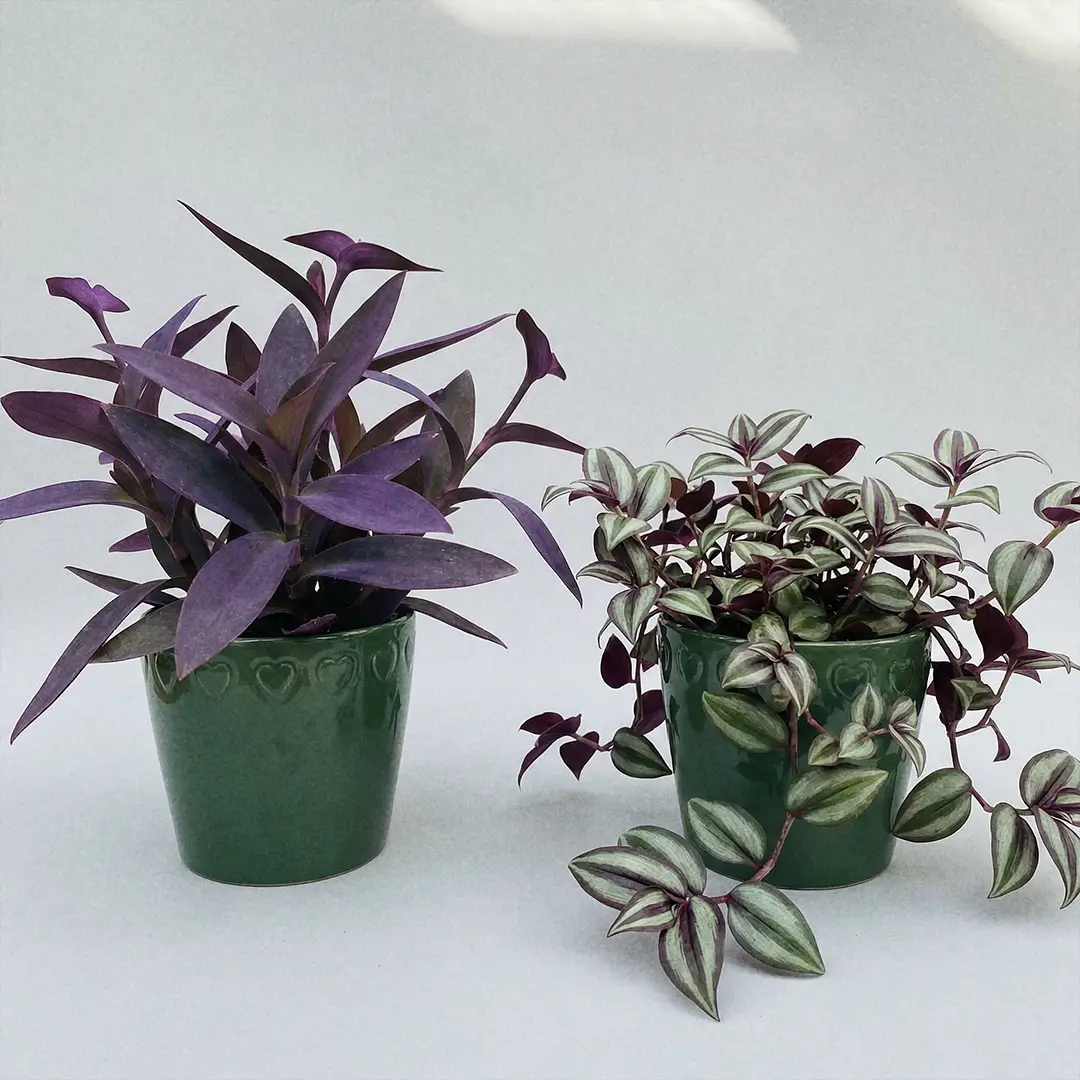
The most common form is simply the straight species. Solid purple on every surface, stem, leaf top, and underside alike. In strong light, it is a deep plum-burgundy shade. In moderate light, it shifts toward a red-violet. Leaf size is notably larger than Wandering Dude. The habit is more sprawling and upright than purely pendulous.
This is what you will find at most garden centers, usually labeled as Purple Heart, Purple Queen, or occasionally just Tradescantia pallida.
Tradescantia pallida 'Pale Puma'
A slightly more compact variety with a similar color profile. The leaves can show a touch more variation in purple depth depending on light conditions. Care is identical to the standard form.Purple Heart vs Wandering Dude and Other Tradescantia
People mix these up fairly often, especially when buying online. Here is how they actually differ:
- Wandering Dude (T. zebrina): Smaller leaves with bold silver stripes on top and purple undersides. More pendulous trailing habit. Faster-growing indoors. The plants are clearly different once you see them side by side.
- Turtle Vine (Callisia repens): Much smaller rounded leaves, tighter stacking, a creeping rather than trailing look. Not a Tradescantia at all.
- Teddy Bear Vine (Cyanotis kewensis): Fuzzy brown foliage, velvety texture, slower and drier care. Also not a true Tradescantia.
- Swedish Ivy (Plectranthus australis): Green, scallop-edged leaves on a trailing stem. Different genus, similar basket habit.
Purple Heart is the boldest of the group in terms of color impact. If someone walking into the room needs to notice the plant, this is the one.
🪴 Potting and Repotting Purple Heart
When to Repot Purple Heart
Repot every 1-2 years, or sooner if the soil has broken down, water runs straight through without soaking in, or the crown has thinned out despite good care. Tight roots are less often the trigger with fast-growing trailers. The bigger reason to repot is usually exhausted soil that no longer supports good growth.
Spring is the best time to repot because the plant rebounds quickly and fresh cuttings you tuck in at the same time will root fast in the new mix.
How to Repot Purple Heart
Purple Heart is far less fragile than, say, Burro’s Tail. The leaves do not drop at a touch. You can handle it with reasonable confidence.
- Water the plant the day before to hydrate the root ball and make removal easier.
- Choose a new pot only 1-2 inches wider than the old one. Going larger creates excess wet soil the roots cannot use quickly.
- Fill the bottom of the new pot with fresh mix. Slide the root ball out and lower it into the new container.
- Fill around the sides, press lightly, and water thoroughly.
- Tuck 4-6 fresh cuttings around the crown or rim. This is the step most people skip, and it is what separates a thin new pot from a dense, full one within a few weeks.
For a detailed walkthrough of the repotting process, our repotting guide covers everything from root inspection to post-repot watering.
✂️ Pruning Purple Heart
Why You Should Prune Purple Heart Regularly
Purple Heart does what all fast trailers do: it invests growth in the stem tips. Left entirely unpruned, the crown gets thin while the ends get long. The plant is still alive but it looks ragged from above, which is often the angle you see it from on a shelf or hanging basket.
Pruning solves this directly. Cut just above a node and the stem branches from that point, giving you two or more shoots where one was before. Over a few months of regular pinching, a sparse plant becomes a layered, dense one.
How to Prune Purple Heart
Use clean scissors or pruning shears. Cut just above a visible node, the slight swelling or bump where a leaf attaches. The plant will branch from there.
For routine maintenance, pinch the growing tips every 2-3 weeks during spring and summer. For a more dramatic reset when the plant is very leggy or bare at the top, cut stems back by a third to half in one session at the start of the growing season. New growth breaks quickly in spring light.
Save every cutting. Every piece with a node or two is a propagation-ready cutting.
Seasonal Pruning Tips for Purple Heart
The best prune of the year is in early spring. Do it before the plant fully kicks into active growth so the first flush of new shoots comes in short, branched, and saturated in color. Late winter or early spring hard cuts produce the most dramatic improvement in fullness by summer.
Minor pinching throughout spring and summer maintains what that reset created. In fall, slow down. Cutting back hard before the plant slows for winter means fewer resources to support fresh regrowth.
🌱 How to Propagate Purple Heart

Why Purple Heart Is One of the Easiest Plants to Propagate
The stems root at their nodes, and those nodes root fast. In warm conditions with decent light, a Purple Heart cutting in water can show roots in just 7-10 days. Even direct soil propagation has a very high success rate because the thick stems hold enough moisture to support themselves through the rooting process without any special humidity treatment.
This is one of the plants I always recommend when someone wants to practice propagation before trying harder species.
Water Propagation for Purple Heart
- Take cuttings 4-6 inches long, each with at least 2-3 nodes.
- Remove the leaves from the bottom 2 inches so no foliage sits under water.
- Place the cuttings in a clear glass or vase with the lowest nodes submerged.
- Set the jar in bright indirect light, not full shade.
- Refresh the water every few days to keep it clear.
- Once roots are 1-2 inches long, plant into a light, well-draining mix.
Our water propagation guide covers the transition from water to soil in detail, which is worth reading if you want to minimize transplant shock.
Soil Propagation for Purple Heart (Even Simpler)
Direct soil propagation bypasses the water-to-soil transition entirely, which is one less step to manage.
- Snip cuttings below a node.
- Remove the lowest leaves.
- Insert the bare stem section 1-2 inches deep into lightly moist potting mix.
- Keep the mix just barely moist for the first 10-14 days. Not wet.
- Give the cuttings bright indirect light and warmth.
Roots typically form within 2-3 weeks. A gentle tug that meets resistance means rooting is happening. Our soil propagation guide is useful if you want to see the technique for different stem types.
The Best Trick: Root Cuttings Back Into the Same Pot
Every time you prune Purple Heart, you have material to work with. The most useful thing you can do with it is tuck fresh cuttings back into the same pot, around the crown and any thinning spots on the rim. Water them in with the rest of the plant and keep conditions stable.
Within 3-4 weeks, those cuttings become established new stems that fill out the pot. That one habit is the main reason some people always have an impressively full plant while others always have a thin one with long bare vines hanging down.
🐛 Purple Heart Pests and Treatment
Purple Heart is not especially pest-prone. The chunky stems and fast growth mean the plant can often outpace minor infestations, but a stressed or drought-weakened plant is more vulnerable to the usual indoor cast of characters.


How to Spot and Treat Pests on Purple Heart
- Spider mites: The most common issue, especially in dry, heated winter air. Look for fine webbing between stems and a dull, finely stippled look on the leaf surfaces. A good shower to rinse the plant followed by neem oil or insecticidal soap usually handles it.
- Mealybugs: White cottony clusters in the stem joints and junctions. Dab individual clusters with a cotton swab dipped in rubbing alcohol. For a heavier infestation, spray with diluted insecticidal soap.
- Aphids: More common when the plant goes outdoors in summer. Small soft-bodied insects clustered on young growth tips. A strong jet of water knocks most of them off. Follow up with insecticidal soap if they return.
The best defense is good care. A plant in bright light with correct watering is far less likely to suffer a serious pest problem than one sitting in a dim corner, overwatered and stressed. Fast-growing plants can also often grow past minor damage if caught early.
🩺 Purple Heart Problems and Diseases


Leaves Fading or Turning Green
This is by far the most common problem, and it is almost always a light issue. Purple Heart’s anthocyanin pigments are produced in response to light intensity. In low or medium light, the plant has less reason to produce them and the leaves gradually shift toward a green or brownish-grey tone.
The fix is straightforward: move the plant to a brighter window. Within a few weeks, new growth will come in purple and older leaves may deepen too. If the stems are also leggy at the point of fading, prune them back so the fresh growth in better light sets the new baseline. This is what pale, faded leaves typically looks like on a light-demanding plant.
Leggy Stems and Bare Crown
Leggy growth in Purple Heart has two causes. Low light stretches the internodes, and infrequent pruning lets all the fullness migrate to the ends of long vines. Often it is both at once.
Fix both together. Move to brighter light first, then prune the stretched stems back above a node. Tuck fresh cuttings into the pot around the crown. In a month of better light with regular pinching, the plant usually looks dramatically different.
Yellow Leaves and Soggy Stems
Yellowing leaves that start from the base, combined with soft, dark stem bases, signal overwatering or poorly draining soil. This is how root rot begins in Purple Heart.
Act quickly:
- Stop watering immediately.
- Remove the plant from its pot and inspect the roots. Healthy roots are white or pale cream. Rotten roots are brown, mushy, and may smell.
- Trim away rotten material with clean scissors.
- Let the root ball dry slightly before repotting into fresh, well-draining mix.
- Take healthy stem cuttings from any salvageable growth and root them separately as insurance.
Brown Crispy Edges
Brown crispy edges usually point to one of three things: very dry air in winter, irregular watering that keeps swinging between wet and dry, or a plant sitting too close to hot or cold air vents. Check the humidity, tighten up the watering rhythm, and move the plant if the edges are near a draft.🖼️ Purple Heart Display Ideas

Best Places to Display Purple Heart
Purple Heart is a color accent plant. The whole point is to put it somewhere visible where that deep purple creates contrast. Here are the placements that actually work:
- Hanging basket near a south or east-facing window: The go-to for maximum color and growth. The stems trail and the crown stays bright.
- High shelf edge near a window: The vines drape naturally and stay at eye level. Easy to maintain and very visual.
- Sunny bathroom windowsill: Works well if the window is genuinely bright. The humidity is a bonus.
- Mixed patio container in summer: Use it as the color accent or spiller in a mixed pot alongside green and silver foliage. The purple reads strongly against almost everything else.
The one thing to avoid is putting this plant somewhere architectural but dim, like a dark corner bookshelf or a landing with no natural light. It will survive for a while but fade within weeks.
Pairing Purple Heart With Other Plants and Decor
The deep purple works best with contrast. Try it alongside vivid green plants like Golden Pothos, white or cream-variegated plants like Pothos Marble Queen, or silver-leaved trailers for a tricolor arrangement. String of Hearts makes a particularly nice pairing in a hanging display.
Terracotta, warm wood, and light-colored walls are the best backdrops. The purple reads less strongly against dark backgrounds or busy patterns. Keep the surroundings simple and let the plant carry the color.
Growing Purple Heart Outdoors
In warmer climates (zones 7-11), Purple Heart earns its keep as a landscape plant. It makes an excellent ground cover under trees or on slopes, where its fast-spreading stems fill space quickly. It also works as a seasonal patio container plant in cooler areas, brought indoors before first frost.
Outdoors, the color tends to be even more vivid than indoors because the light levels are higher. A container on a bright porch will often produce deeper purple than the same plant in your sunniest indoor window.
If you live in a frost-free area and plant it in the ground, keep in mind that it can spread aggressively. It is not considered invasive everywhere, but it moves fast and should be used in spots where spread is not a problem.
👍 Purple Heart Care Tips (Pro Advice)
✅ Light equals color. There is no substitute. The only way to keep this plant deeply purple is to give it the most light you can without direct harsh afternoon sun. If the color fades, check the light before anything else.
✅ Prune with purpose. Every cut is a branch point. Regular pinching during spring and summer is what keeps the crown full instead of turning into a few long bare ropes.
✅ Tuck cuttings back in. Every time you trim, root a few cuttings straight back into the pot. That single habit is how you maintain a lush, layered look year-round.
✅ Water firmly, then wait. Give a thorough soak, drain fully, then let the top inch dry before coming back. The fleshy stems hold enough moisture to survive a short dry spell, but staying wet is a real problem.
✅ Go outdoors in summer. Even a sheltered porch or balcony with indirect bright light will give the plant stronger color and sturdier growth than a summer spent entirely indoors.
✅ Spring is reset season. If the plant got leggy and faded over winter, do a hard prune in early spring and move it to better light. The new growth will come in properly purple and short-interned.
✅ Keep away from pets. The sap irritates mouths and skin. Hanging baskets and high shelves solve this without sacrificing the display.
✅ Watch for mites in winter. Spider mites love dry heated air. Check the undersides of leaves monthly in winter and hit any early infestation with a splash rinse before it spreads.
❓ Frequently Asked Questions
Is Purple Heart toxic to cats and dogs?
Yes, it is mildly toxic. Tradescantia pallida sap can irritate the mouth, digestive tract, and skin of pets if chewed. A casual nibble usually causes more irritation than real danger, but repeated contact is worth avoiding. Keep it in hanging baskets or on high shelves, and wash your hands after handling the plant or pruning it.Why is my Purple Heart turning green?
Low light is almost always the cause. Purple Heart produces its vivid anthocyanin pigments in response to bright light. Move the plant to a sunnier spot, ideally near an east or south-facing window, and the purple should deepen again over a few weeks. If stretched, prune first so the new growth in better light comes in fully saturated.How often should I water Purple Heart?
Water when the top inch of soil is dry. In a bright room during spring and summer, that often works out to every 6-10 days. In winter, it can easily stretch to every 10-14 days or longer. Purple Heart stores some moisture in its stems, so it forgives missing a watering. What it does not forgive is staying wet.Does Purple Heart like direct sun?
More than most houseplants, yes. A couple of hours of gentle morning or late afternoon direct sun actually helps it produce the deepest purple color. Harsh midday sun through glass in summer can still scorch the leaves, but generally this plant tolerates more sun than many trailers. East and south-facing windows are ideal spots indoors.Is Purple Heart the same as Wandering Dude?
They are related but distinct. Both are Tradescantia, but Purple Heart (T. pallida) has large solid-purple leaves and a more upright-sprawling habit. Wandering Dude (T. zebrina) has smaller striped leaves with silver banding above and purple undersides. The care overlaps heavily, but Purple Heart tolerates more sun and a bit more drought.How do I make Purple Heart bushier?
Pinch and trim stem tips regularly, cutting just above a node. Each cut encourages the stem to branch from that point. Tuck fresh cuttings back into the pot around the crown to fill bare spots. The combination of regular pinching and re-rooting cuttings into the same container gives you the dense, layered look most people are after.Can Purple Heart grow outdoors?
Yes, very well. In USDA zones 7-11 it can be grown outdoors year-round as a ground cover or border plant. In cooler climates, treat it as a seasonal container plant and bring it in before frost. Outdoor plants often grow faster and display stronger color than indoor-only ones.ℹ️ Purple Heart Info
Care and Maintenance
🪴 Soil Type and pH: Light houseplant mix with perlite
💧 Humidity and Misting: Tolerates average household humidity well. No special treatment needed.
✂️ Pruning: Pinch and trim stems regularly to keep the crown full and prevent stretching. Cut just above a node.
🧼 Cleaning: Wipe leaves gently with a damp cloth; sap can irritate sensitive skin so wear gloves if needed.
🌱 Repotting: Every 1-2 years, or when the mix breaks down and the crown starts looking thin.
🔄 Repotting Frequency: Every 1-2 years
❄️ Seasonal Changes in Care: Feed and prune actively in spring and summer. Reduce watering and stop fertilizing in winter.
Growing Characteristics
💥 Growth Speed: Fast
🔄 Life Cycle: Perennial
💥 Bloom Time: Spring through fall; small three-petaled flowers appear freely on mature stems
🌡️ Hardiness Zones: 7-11 outdoors
🗺️ Native Area: Northeastern Mexico
🚘 Hibernation: No true dormancy, but growth slows significantly in winter
Propagation and Health
📍 Suitable Locations: Hanging baskets, shelf edges, patio containers, sunny windowsills, and as ground cover outdoors in mild climates
🪴 Propagation Methods: Exceptionally easy from stem cuttings in water or directly in moist soil.
🐛 Common Pests: spider-mites, mealybugs, and aphids
🦠 Possible Diseases: Root rot from overwatering. Otherwise quite disease-resistant.
Plant Details
🌿 Plant Type: Trailing and sprawling herbaceous perennial
🍃 Foliage Type: Evergreen
🎨 Color of Leaves: Deep Solid Purple
🌸 Flower Color: Pink, Magenta
🌼 Blooming: Freely in good light, spring through fall
🍽️ Edibility: Not edible. Sap can irritate skin and mouths.
📏 Mature Size: 6-12 inches at the crown
Additional Info
🌻 General Benefits: Vivid color year-round, very easy to propagate, drought-tolerant, produces flowers without much fuss
💊 Medical Properties: None established for ornamental use.
🧿 Feng Shui: Purple is associated with prosperity and spiritual awareness in feng shui. A sprawling purple plant near a window is considered an invitation for creative energy.
⭐ Zodiac Sign Compatibility: Scorpio
🌈 Symbolism or Folklore: Resilience, royalty, and quiet confidence
📝 Interesting Facts: Purple Heart owes its color to a group of pigments called anthocyanins. In bright light, the plant produces more of them as a sort of natural sunscreen, which is why well-lit specimens are much more intensely purple than ones sitting in shade. Move it to lower light and it slowly greens up. Move it back and the purple returns.
Buying and Usage
🛒 What to Look for When Buying: Look for a plant with deep, saturated purple on every leaf, short internodes, and several shoots at the crown. A green-tinged or washed-out purple usually means it has been sitting in low light at the nursery. Give it two to three weeks in a bright spot and the color should deepen.
🪴 Other Uses: Widely used as a ground cover, border plant, and spiller in outdoor containers in warmer climates. Extremely popular in landscape design for its bold color contrast against green plants.
Decoration and Styling
🖼️ Display Ideas: Hanging baskets near sunny windows, cascading from shelf edges, in mixed containers as the color accent, or trailing beside a window frame.
🧵 Styling Tips: The deep purple reads beautifully against terracotta, light-colored walls, and natural wood. Pair it with green or silver foliage plants for maximum contrast. It looks particularly striking next to Pothos, Spider Plant, or String of Hearts.
🪴 See also 🪴

Complete Guide to Wandering Dude Care and Growth

Complete Guide To Turtle Vine Care and Growth

