

Peperomia Hope
Peperomia tetraphylla 'Hope'
Hope Peperomia, Four-Leaf Peperomia


Peperomia Hope is a trailing hybrid peperomia with round fleshy leaves that spill beautifully from shelves and hanging baskets. It is one of the most forgiving plants in the genus, and this guide covers everything you need to keep it lush, full, and trailing strongly indoors.
📝 Peperomia Hope Care Notes
🌿 Care Instructions
⚠️ Common Pests
📊 Growth Information
🪴 In This Guide 🪴

☀️ Peperomia Hope Light Requirements (Indoor Lighting Guide)
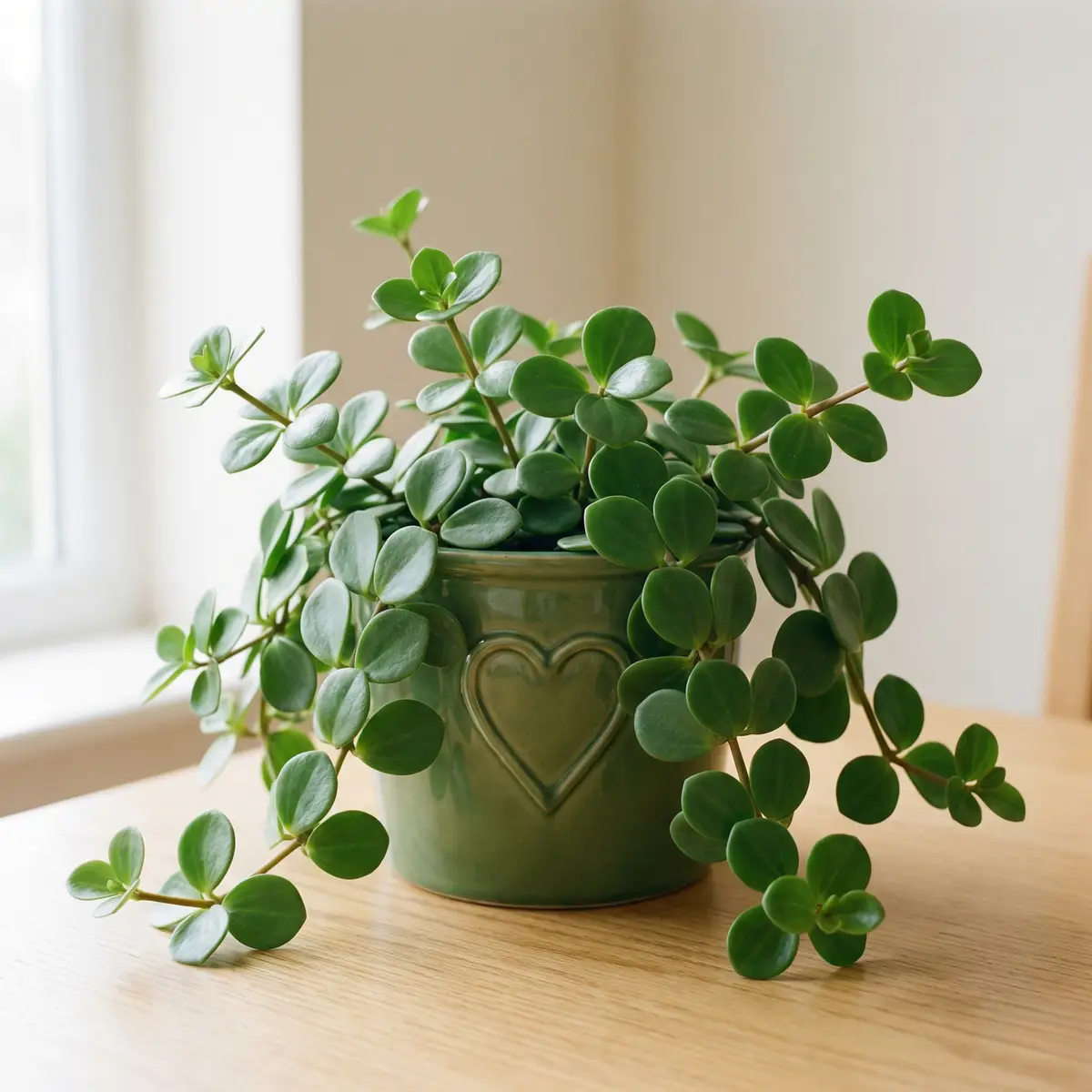
Best Light for Peperomia Hope
Bright indirect light is the ideal setting for Peperomia Hope. Near an east or north-facing window is a great starting point. That kind of gentle, consistent brightness keeps the leaves plump, the stems short between nodes, and the trailing habit full rather than stretched.
A south or west window can work if you move the plant a few feet back from the glass or filter the light with a sheer curtain. The leaves will not enjoy hot direct sun for more than a short stretch in the early morning.
This plant does adapt to medium indirect light better than many other trailing plants. It will survive on a shaded shelf, but the stems will grow longer between leaves and the overall look becomes wispy rather than lush. For good trailing form, bright indirect light is the goal.
If you are working with a darker room, consider supplementing with a grow light. Our indoor lighting guide explains how to judge your space and what a grow light can and cannot fix.
Signs of Incorrect Lighting for Peperomia Hope
Too little light shows up clearly on Peperomia Hope:
- Stems grow long between leaves, giving a stretched or leggy look.
- New leaves come in noticeably smaller than established ones.
- The plant leans hard toward the light source.
- Growth slows even during the warmer months.
Too much direct sun causes different symptoms:
- Leaves look pale, faded, or develop tan or crispy patches.
- The fleshy surface feels softer and less firm than usual.
- Edges crisp up quickly even when watering is consistent.
If you are unsure whether your spot is adequate, place your hand between the light source and the plant. A clear but not harsh shadow usually means the light is about right for this plant.
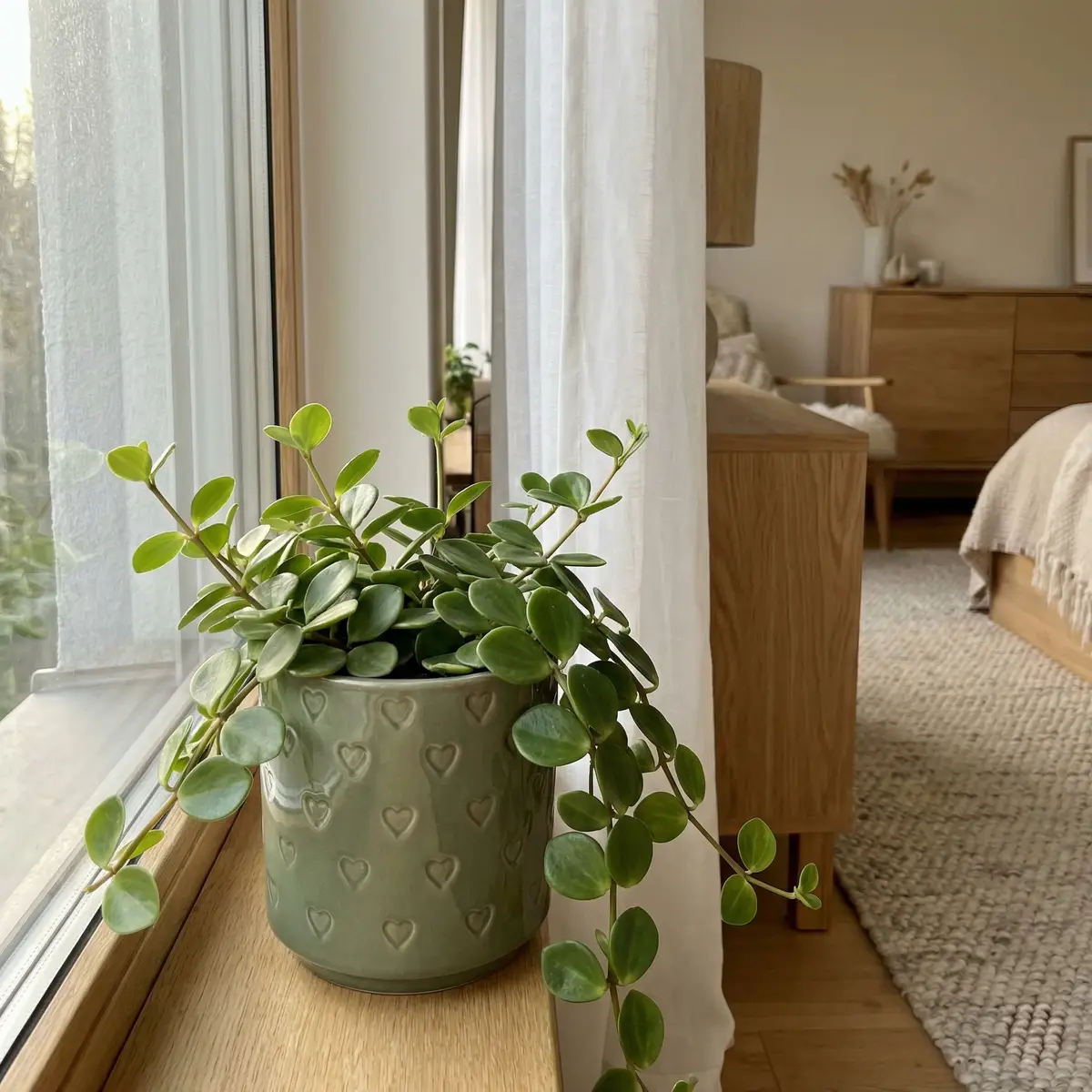
💧 Peperomia Hope Watering Guide (How to Water Properly)
How Often to Water Peperomia Hope
Let the top inch of soil dry out before you water again. That is the central rule for this plant, and it is more reliable than any fixed schedule.
In most homes during spring and summer, this works out to roughly every 10 to 14 days. In winter, when growth slows and the soil stays moist longer, you may only need to water every 2 to 3 weeks.
When you do water, water thoroughly. Pour water evenly across the surface, let it drain completely from the bottom, and empty any saucers after 30 minutes. Peperomia Hope should not sit in standing water. The fleshy leaves store enough moisture to carry the plant through a brief dry period, so erring toward less water is always safer than more.
A moisture meter is especially useful here if you tend to overestimate dryness by feel alone.
Bottom Watering for Peperomia Hope
Peperomia Hope responds very well to bottom watering. Set the pot in a shallow tray of water for 15 to 20 minutes, then lift it out and allow it to drain.
This method distributes moisture evenly through the root zone without ever leaving the surface soggy. It also encourages roots to grow downward. Our bottom watering guide covers the full method and explains when it is especially helpful.
Signs of Watering Problems in Peperomia Hope
Overwatering is the most common issue with this plant:
- Yellowing leaves starting from the lower stems.
- Mushy stems at the base or along a trailing stem.
- Soil that never seems to dry out.
- Root rot that becomes visible only when you unpot the plant.
Underwatering is less common but does happen:
- Leaves look slightly deflated or less plump than normal.
- Wilting or drooping stems that perk up quickly after watering.
- Soil pulling away from the edges of the pot.
When in doubt, wait another day and check again. This plant is much more likely to die from too much water than too little.
Seasonal Watering for Peperomia Hope
- Spring: growth resumes and water use increases. Check the soil more frequently.
- Summer: brighter light and warmer temperatures speed up drying. Still follow the top-inch rule.
- Fall: slow your pace as the days shorten and growth slows.
- Winter: water sparingly. A cold wet root ball is the fastest way to trigger root rot.
Our watering guide has more detail on adjusting your rhythm across seasons.
🪴 Best Soil for Peperomia Hope (Potting Mix and Drainage)
What Mix Peperomia Hope Needs
Peperomia Hope wants a light, well-draining mix that holds a little moisture without staying waterlogged. A good starting blend is two parts standard indoor potting mix to one part perlite. That extra perlite keeps air pockets in the mix and prevents the dense, compact feel that traps moisture around the roots.
Because this plant has shallow roots, you do not need a deep or heavy medium. The roots stay close to the surface and dry out much faster when the mix has good structure.
Some growers add a small amount of orchid bark or coarse sand to increase drainage further. Both work well. What you want to avoid is any mix that clumps together, feels heavy when wet, or takes more than a week to dry in normal indoor conditions.
Our soil guide explains the difference between mixes and why peperomia roots struggle in dense media.
Pot Choice for Peperomia Hope
Shallow pots work particularly well for this plant because the roots do not run deep. A wide, shallow container gives roots room to spread without surrounding them with excess wet mix they cannot access.
Terra cotta pots are worth considering here. The porous walls allow moisture to escape from the sides as well as the bottom, which keeps the root zone from sitting damp for too long.
Whatever pot you choose, drainage holes are non-negotiable. No drainage means no control over moisture, and with a plant this sensitive to overwatering, you need that control.
For a comparison of container options and materials, our plant pots guide is a practical reference.
When to Refresh the Mix
Potting mix breaks down over time. It compresses, holds water longer, and loses the air pockets that roots depend on. If you notice the soil staying wet for much longer than it used to, or if fungus gnats have become persistent, the mix may have broken down rather than your watering habits changed.
Refreshing the mix at repotting time, or doing a mid-cycle top-up with a layer of fresh airy mix, can reset the root environment quickly.
🍼 Fertilizing Peperomia Hope
How and When to Feed Peperomia Hope
Feed Peperomia Hope once a month during spring and summer with a balanced liquid fertilizer diluted to half the recommended strength. This plant does not need heavy feeding. A gentle, regular dose during the growing season is more effective than occasional large applications.
Half strength matters. Peperomia roots are fine and relatively sensitive. Full-strength fertilizer applied frequently can cause fertilizer burn and salt buildup on the soil surface.
Always water the plant before fertilizing. Feeding a dry or stressed root ball can burn the roots. Our fertilizing guide covers how to build a simple seasonal schedule if you want a clear framework.
When to Stop Feeding
Stop fertilizing in fall and do not feed through winter unless the plant is actively growing under a grow light in a warm bright spot. Winter feeding on a slow-growing plant just causes salt accumulation with no benefit.
If you see a white crusty layer forming on the soil surface, that is salt buildup from fertilizer or mineral-heavy water. Flush the pot with plain water until it runs freely from the bottom, then let it dry before resuming a lighter feeding schedule.
🌡️ Peperomia Hope Temperature and Environment
Ideal Temperature for Peperomia Hope
Peperomia Hope grows best between 65 and 80 degrees Fahrenheit, or 18 to 27 degrees Celsius. That range covers most well-heated or well-cooled homes, which is one reason this plant adapts so easily to indoor life.
The minimum temperature to avoid is around 50 degrees Fahrenheit (10 degrees Celsius). Below that, growth stops entirely and the roots become vulnerable, especially if the soil is damp. Cold and wet together are the most damaging combination for this plant.
What to Watch Out For
- Cold drafts from windows, exterior doors, or air conditioning vents can stress the plant quickly. Keep it at least 12 inches from any direct cold source in winter.
- Heating vents can dry the air immediately around the plant. If the plant sits near a floor vent, the soil will dry unevenly and the edges of leaves may crisp.
- Sudden temperature drops at night are more damaging than slightly cool stable temperatures. Consistency matters more than the exact number.
If your home drops below 60 degrees Fahrenheit regularly in winter, move the plant to a warmer interior spot and adjust watering to match the slower conditions.
💦 Peperomia Hope Humidity Needs
What Humidity Level Peperomia Hope Prefers
Peperomia Hope is one of the least demanding plants when it comes to humidity. Average household humidity of 40 to 60 percent is perfectly fine. The fleshy semi-succulent leaves help the plant manage dry air much better than thin-leaved tropical species.
You do not need to mist this plant. Misting can actually cause more problems than it solves if water collects along stems or in tight leaf clusters, creating conditions for fungal rot.
If your home drops below 35 percent humidity in winter because of central heating, a simple humidifier placed nearby can help, but it is rarely urgent for this species.
Improving Humidity Without a Humidifier
Grouping Peperomia Hope with other plants naturally raises the local humidity slightly as each plant transpires. That gentle lift is usually enough.
Placing a shallow tray of water near the plant also helps, as long as the pot itself is not sitting in the water.
For more on the topic, our humidity guide explains how to balance moisture needs without overdoing it for plants that do not want wet conditions.
Signs of Humidity Stress
Genuine humidity stress is less common with Peperomia Hope than with many other tropicals. When it does occur, the signs are:
- Leaf edges become brown and crispy without any watering or salt issue present.
- Leaves feel slightly papery rather than firm and fleshy.
If crispy edges appear alongside firm, plump leaves and correct watering, low humidity is a reasonable suspect. If the leaves also feel soft or the stems are limp, watering is more likely the issue.
🌸 Does Peperomia Hope Bloom Indoors?
What the Flowers Look Like
Peperomia Hope occasionally produces slender, upright flower spikes that look like thin rat tails. They are pale cream to white in color and have no fragrance. Most growers describe them as subtle to the point of being easy to miss.
The flowers typically appear in spring or summer when the plant is mature, well-lit, and in good health. They are not the reason most people keep this plant.
Should You Remove the Flower Spikes?
There is no harm in leaving the spikes on the plant. Removing them does not encourage more leaf growth or hurt the plant, but it also does not help. If you find the look untidy, snip them at the base with clean scissors.
Some growers leave one or two spikes and remove the rest. That is a perfectly reasonable approach.
Consistent bright indirect light, stable warmth, and regular spring and summer feeding create the best conditions for blooming when you want to encourage it.
🏷️ Peperomia Hope and Related Trailing Peperomias
What Makes Peperomia Hope Unique
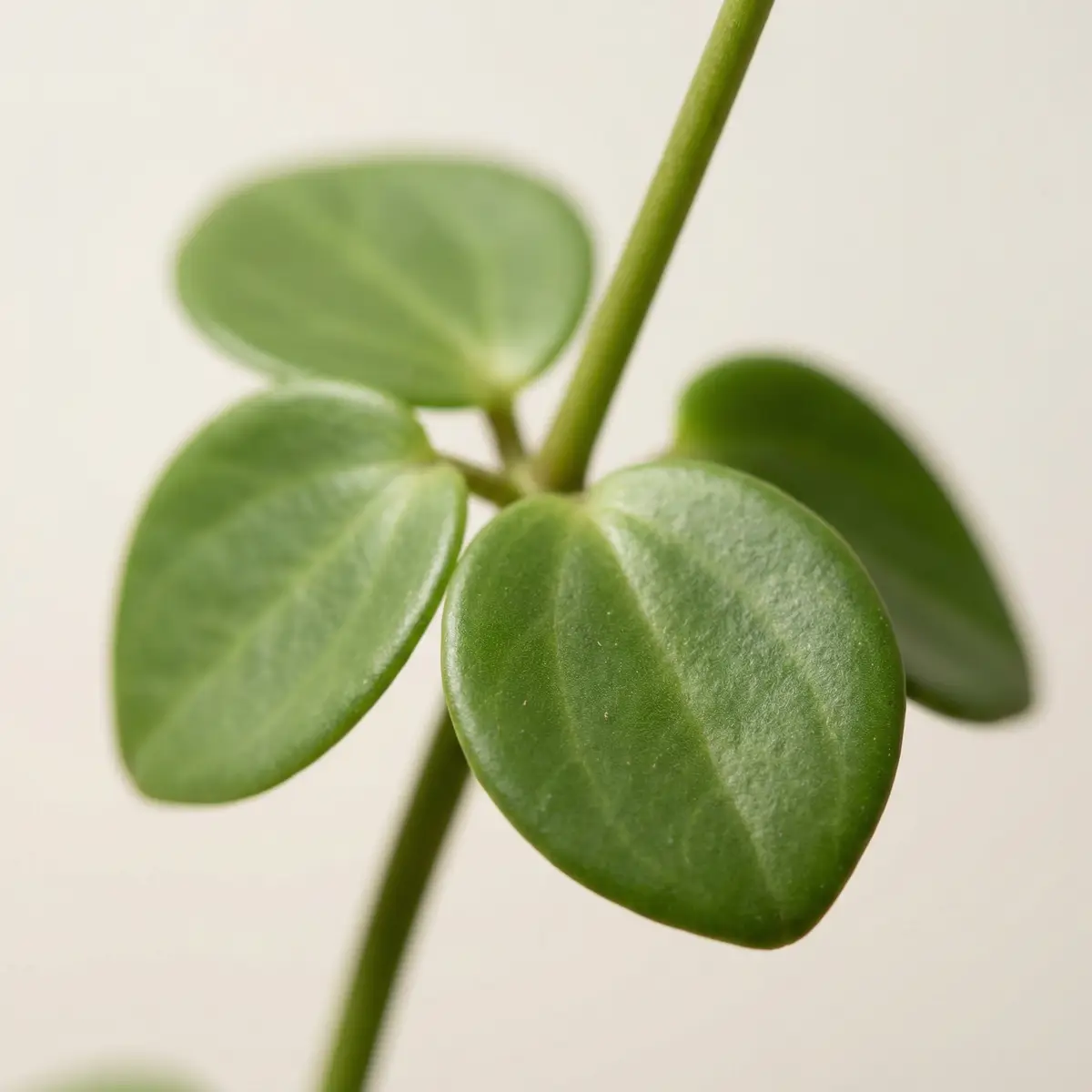
Peperomia Hope is a hybrid between Peperomia deppeana and Peperomia quadrifolia. The result is a trailing plant with round, slightly cupped fleshy leaves that typically cluster three or four to a node. That dense leaf arrangement is what gives the stems such a full, lush look as they trail downward.
Most plants sold under this name are consistent in appearance, with glossy mid-green leaves and a compact trailing growth habit. You may occasionally see plants with a slightly olive or grayish tone depending on the growing conditions, but the overall look is recognizable.
Peperomia Hope vs String of Turtles
These two plants are sometimes compared because both trail and both belong to the Piperaceae family. The main difference is in the leaf shape and marking.
String of Turtles has smaller, more delicate leaves with a turtle-shell patterning in silver and dark green. It is a slower grower and slightly more demanding with humidity.
Peperomia Hope has larger, plain glossy green leaves and grows more vigorously. If you want trailing habit without the fussy care, Hope is the easier choice.
Other Related Peperomias Worth Knowing
If you enjoy Peperomia Hope, several of its relatives are worth exploring. Peperomia Orba shares the compact, easy-going character in a more upright form. Raindrop Peperomia has that smooth teardrop leaf shape and a strong architectural presence.
For texture contrast, Peperomia Emerald Ripple and Peperomia Silver Ripple offer deeply corrugated leaves that look nothing like Hope’s smooth roundness but share the same forgiving character.
For a collection that covers the full range of the genus, adding Watermelon Peperomia for its patterned foliage and Peperomia Napoli Nights for its dark leaves creates a visually varied group that all grow under similar care conditions.
🪴 Potting and Repotting Peperomia Hope
When to Repot Peperomia Hope
Peperomia Hope does not need frequent repotting. Every one to two years is usually enough, and some plants are happy going longer if the mix is still draining well and the roots are not visibly escaping the pot.
Unlike plants that struggle when root-bound, Peperomia Hope actually performs slightly better with a snug root zone. A pot that is too large holds excess soil that stays wet long after the roots have absorbed what they need. That extra moisture is a consistent source of root rot.
Repot when:
- Roots are circling the bottom of the pot or growing through the drainage hole.
- The potting mix stays wet for more than two weeks after watering.
- Growth has slowed significantly even in good light and with consistent feeding.
- The soil has visibly compacted and looks dense.
How to Repot Peperomia Hope
Choose a pot no more than one size larger than the current container, and keep it shallow if possible. Prepare your potting mix before you start.
Water the plant lightly the day before repotting to reduce shock. Tip the pot gently and work the root ball free. Shake off the old mix from the roots and inspect for any soft, dark, or mushy roots, removing them with clean scissors.
Set the plant at the same depth in the new container, fill in with fresh mix, and press it lightly around the roots. Water it in, let it drain fully, and return it to its usual spot. Skip fertilizer for three to four weeks to let the roots settle.
Our repotting guide walks through the full process with detail on timing and technique.
✂️ Pruning Peperomia Hope
Why Pruning Matters for Trailing Peperomia Hope
Left to grow without any intervention, Peperomia Hope can become leggy. Individual stems get long, the gaps between leaf clusters widen, and the plant starts to look sparse rather than lush.
Regular trimming keeps the plant full. When you cut a stem back to a node, the plant typically responds by branching from that point. More branches mean more trailing stems and a denser overall shape.
How to Prune Peperomia Hope
Use clean, sharp scissors or a blade. Cut the stem just above a node, which is the point where leaves emerge. That node is where branching occurs after the cut.
How much to trim depends on the plant. For a lightly leggy plant, cutting back the longest stems by one-third is usually enough. For a plant that has become very stretched, you can cut further back as long as you leave some healthy leaves on each stem.
The sections you remove are excellent propagation material. None of it needs to be wasted.
Signs That Pruning Is Overdue
- Leggy growth with long bare stretches between leaves.
- The hanging stems are very long but thin and not filling out.
- The center of the pot looks empty while the tips are where all the growth is.
Address the light conditions first. Pruning helps, but if the plant is still in inadequate light, the new growth will stretch just as fast. Better light plus a good trim is the most effective combination.
🌱 How to Propagate Peperomia Hope
Why Stem Cuttings Are the Best Method
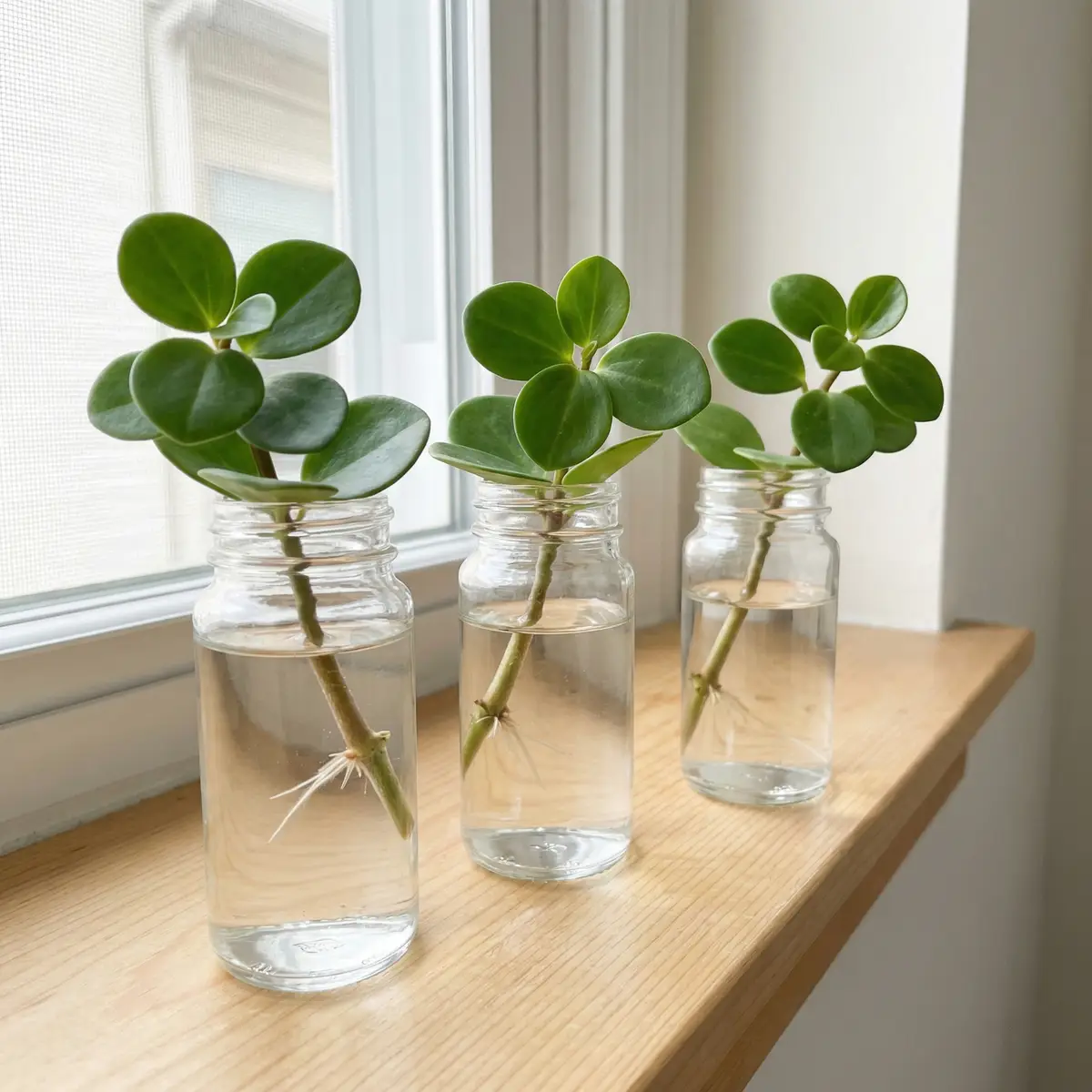
Peperomia Hope is one of the easiest peperomias to propagate. Stem cuttings root quickly in water or soil, often within two to four weeks. Unlike some peperomias where leaf cuttings are standard practice, stem cuttings are faster and more reliable with this species.
You do not need rooting powder or any special setup. A warm spot, bright indirect light, and clean water or moist potting mix are all the plant needs.
How to Propagate Peperomia Hope in Water
- Take a stem cutting three to five inches long with at least two leaf nodes.
- Remove the lower leaves so no foliage is submerged.
- Place the cutting in a clean glass or jar with room-temperature water, with only the bare stem submerged.
- Set the jar in bright indirect light.
- Refresh the water every three to four days to prevent stagnation.
- Pot the cutting once roots are an inch or longer and new growth appears.
Our water propagation guide covers the full method with tips on water temperature and jar size.
How to Propagate Peperomia Hope in Soil
- Let the cut end of the stem dry for one to two hours before planting.
- Insert the cut end into moist potting mix with perlite, burying at least one node.
- Keep the mix lightly moist but never soggy.
- Provide warmth and bright indirect light.
- New growth at the tip or base of the cutting signals successful rooting.
Some growers loosely cover the cutting with a clear plastic bag or dome to hold humidity while roots establish. If you do this, remove the cover for an hour each day to allow airflow.
Our soil propagation guide explains the full process, including how to tell when cuttings are truly rooted versus just still alive.
When to Propagate
Spring and early summer are the best times because the plant is actively growing and cuttings root faster in warmer temperatures. That said, Peperomia Hope will root at almost any time of year in a warm indoor space. If you are pruning in autumn, there is no reason to throw the cuttings away.🐛 Peperomia Hope Pests and Treatment
Common Pests on Peperomia Hope
Peperomia Hope is not particularly pest-prone when it is healthy, but stressed plants in poor conditions can attract spider mites, mealybugs, fungus gnats, and scale insects.
Spider mites appear when the air is very dry and the plant is stressed. Look for fine webbing on the undersides of leaves or a stippled, dull appearance on the leaf surface.
Mealybugs cluster in leaf axils and along stem joints where leaves attach. They leave a white cottony residue and will spread to nearby plants quickly if not caught early.
Fungus gnats are usually a sign that the soil is staying too wet. The gnats themselves do limited damage to mature plants, but their larvae feed on fine roots and can weaken a plant over time.
Scale insects appear as small brown or tan bumps along stems. They are slow-moving and easy to overlook until a heavy infestation has taken hold.
How to Treat Pests on Peperomia Hope
Isolate the affected plant immediately to prevent spread.
For mealybugs and scale: wipe the affected areas with a cotton swab dipped in rubbing alcohol. Follow with insecticidal soap spray applied to all leaf surfaces, including undersides. Repeat every five to seven days for at least three rounds.
For spider mites: increase humidity slightly, rinse the stems under lukewarm water, and apply insecticidal soap or neem oil spray. Spider mites reproduce quickly, so consistency with treatment matters.
For fungus gnats: allow the soil to dry more thoroughly between waterings. Sticky traps on the soil surface catch adults. Beneficial nematodes or a hydrogen peroxide soil drench can address the larvae directly.


🩺 Peperomia Hope Problems and Diseases
Root Rot and Mushy Stems
Root rot is the most serious and most common problem with Peperomia Hope. It develops when the roots sit in wet soil for too long, which cuts off oxygen and allows fungal pathogens to take hold.
Early signs include yellowing of lower leaves and a general loss of firmness in the plant. Unpotting the plant will reveal dark, soft, or foul-smelling roots instead of firm white or tan ones.
Mushy stems near the base of the plant indicate that rot has moved up from the roots. If you catch this early, cut the healthy stem sections above the damage and propagate them. Discard the affected soil and pot.
Prevention is straightforward: well-draining mix, a pot with drainage holes, and a consistent dry-down between waterings.
Yellowing Leaves
Yellowing leaves have several possible causes:
- Overwatering is the most common cause. The lower leaves yellow first, and the soil feels consistently damp.
- Underwatering occasionally causes yellowing too, usually alongside limp or deflated leaf texture.
- Low light causes a general pallor and slow decline.
- Natural shedding of the oldest leaves at the base is normal and not a concern when the rest of the plant looks healthy.
Diagnose by checking the soil and examining the pattern of yellowing before making changes.
Leggy Growth and Brown Crispy Edges
Leggy growth is almost always a light problem. Move the plant to a brighter location and trim back the stretched stems. The cuttings will root readily.
Brown crispy edges can result from low humidity, inconsistent watering, salt buildup in the soil, or exposure to a heat or air conditioning vent. Work through each possibility in order. Flush the soil if salt buildup is suspected, adjust the watering rhythm, and move the plant away from any vents.
Wilting or drooping that does not resolve after normal watering usually points to root damage. Unpot the plant and inspect the roots before assuming the problem is dryness.


🖼️ Peperomia Hope Display Ideas and Styling
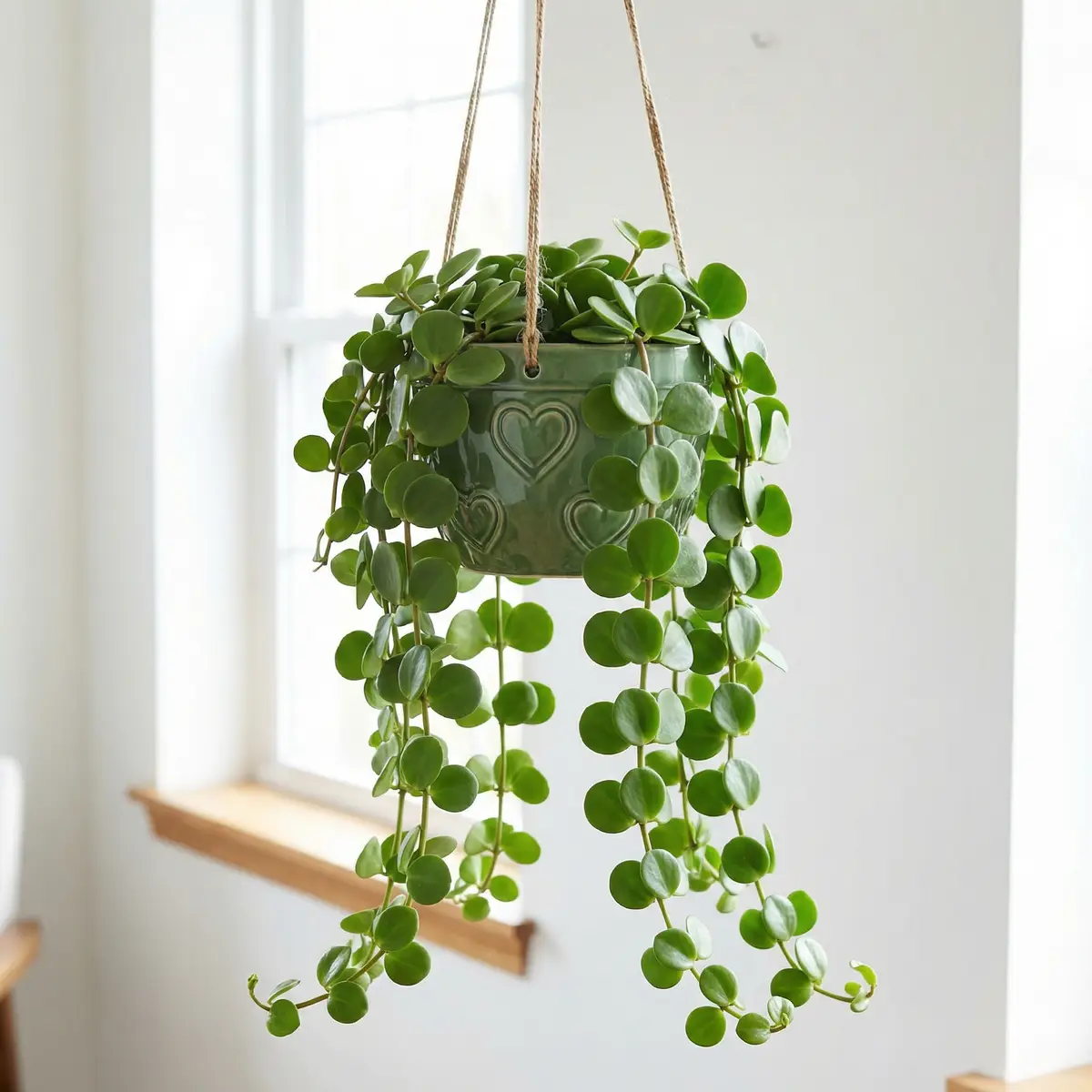
Where Peperomia Hope Looks Best
The trailing habit is the whole point of Peperomia Hope, so give it a position where the stems can actually hang. High shelves, hanging planters, and plant stands with enough clearance for the stems to cascade freely all work beautifully.
Avoid pushing it into a crowded shelf where the stems have nowhere to go. The plant will still grow, but the trailing effect is lost and the stems start to tangle or fold.
A bright shelf near an east or north window is ideal. The plant gets consistent indirect light, the trailing stems are visible, and the round leaves catch the soft light in a way that makes the whole plant look more sculptural.
Hanging Baskets for Peperomia Hope
Hanging baskets are where Peperomia Hope really earns its reputation. Within a season or two, the stems fill out and cascade in every direction, creating a full, rounded shape that looks impressive with very little maintenance.
Choose a hanging basket with drainage, and make sure you have a way to water it in place or take it down easily. Peperomia Hope in a hanging basket can get quite heavy when it is mature and freshly watered.
Best Companion Plants for Peperomia Hope
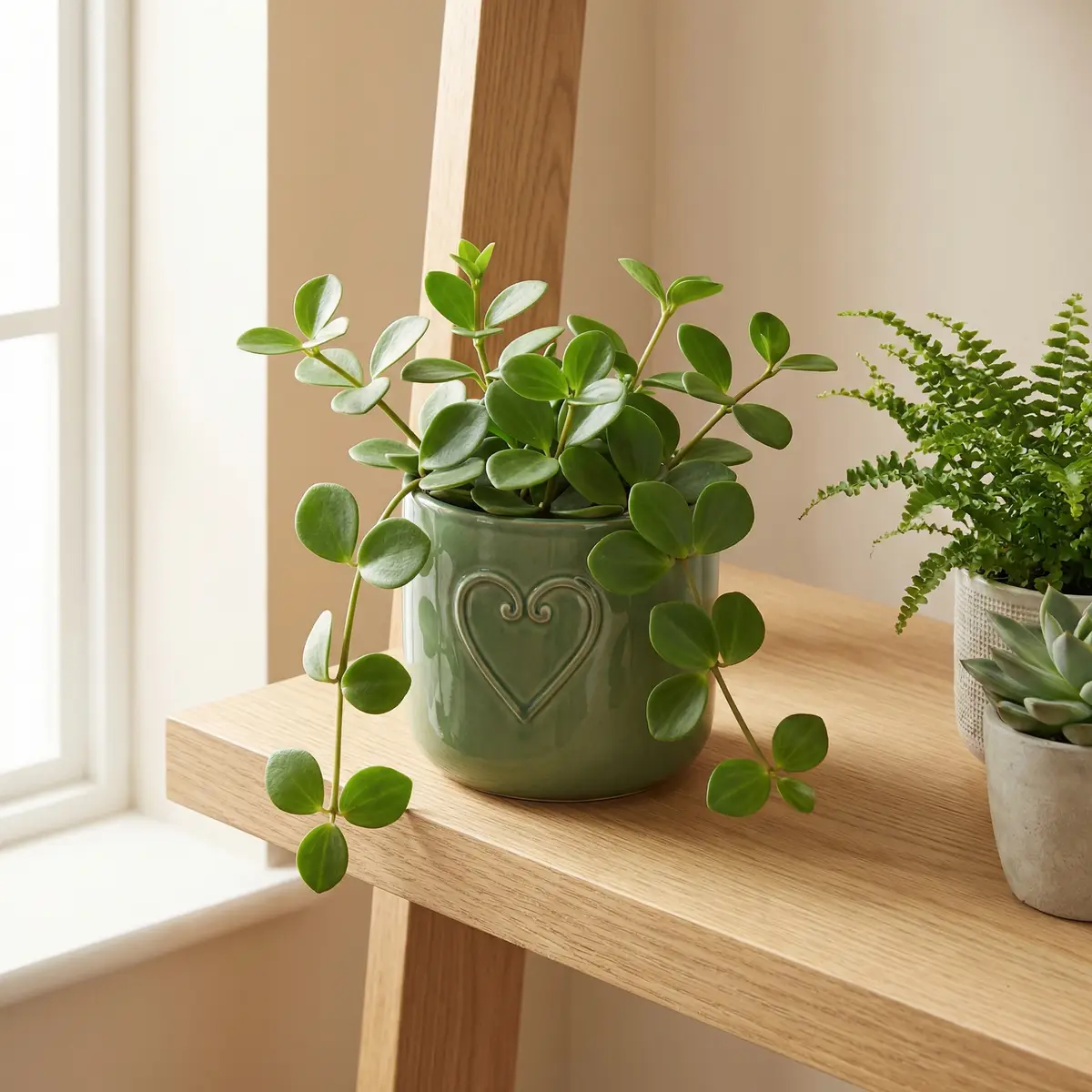
Peperomia Hope pairs naturally with other members of its family. Watermelon Peperomia adds strong patterned foliage contrast. Baby Rubber Plant brings an upright form with glossy leaves that complement Hope’s trailing habit nicely.
For a full trailing and textured shelf, combine Peperomia Hope with String of Turtles and Peperomia Green Bean. Each one trails differently and the leaf shapes vary enough to keep the group interesting.
If you want to stay within the peperomia family entirely, Peperomia Rosso and Peperomia Red Ripple add dark and textured contrast that makes the clean green of Peperomia Hope stand out even more.
🌟 Peperomia Hope Care Tips (Pro Advice)
✅ Let the top inch of soil dry before every watering. Do not rush the next water just because a few days have passed.
✅ Bright indirect light keeps the internodes short and the trailing stems full. The more light, the better the shape.
✅ Use a shallow pot. Excess soil below the root zone stays wet and causes root rot before you notice anything wrong above the soil line.
✅ Trim leggy stems back to a node. The plant will branch from that point and the pruned sections can be rooted immediately.
✅ Take stem cuttings in spring to multiply the plant while it is growing actively.
✅ Group with other peperomias to create a visually cohesive collection with nearly identical care requirements.
✅ Flush the soil every few months with plain water to clear any mineral or fertilizer buildup.
✅ Check the undersides of leaves occasionally for early pest signs, especially if the plant has been near other new plants.
✅ Do not feed in winter. A plant that is barely growing does not need fertilizer, and unused nutrients accumulate as salt.
✅ Judge the health of the plant by the newest leaves. Old leaves naturally age and fall. New leaves that emerge firm and plump mean everything is working.
❓ Frequently Asked Questions
Is Peperomia Hope toxic to cats or dogs?
No. Peperomia Hope is considered non-toxic to cats, dogs, and humans, making it a great choice for pet-friendly households.Why are my Peperomia Hope leaves turning yellow?
Yellow leaves on Peperomia Hope are most often caused by overwatering. Let the top inch of soil dry out before watering again, and make sure the pot drains freely every time.How do I propagate Peperomia Hope?
Stem cuttings are the easiest and most reliable method. Take a cutting with at least two nodes, let the cut end dry for a few hours, then root it in water or moist potting mix. Roots usually appear within two to four weeks.How often should I water Peperomia Hope?
In most indoor conditions during spring and summer, every 10 to 14 days is typical. In winter, extend that to every 2 to 3 weeks. Always check the top inch of soil rather than following a fixed schedule.Why are the stems of my Peperomia Hope becoming leggy?
Leggy growth usually means the plant is not getting enough light. Move it to brighter indirect light and trim the longest stems back to a healthy node. The cut stems root easily, so use them to propagate new plants.Can Peperomia Hope grow in low light?
It tolerates medium indirect light and is more adaptable than most trailing plants, but low light will cause slower, leggier growth and smaller leaves. For the best trailing form and leaf size, bright indirect light is ideal.ℹ️ Peperomia Hope Info
Care and Maintenance
🪴 Soil Type and pH: Potting soil with perlite; well-draining and loose
💧 Humidity and Misting: Average household humidity works well. Aim for 40 to 60 percent when possible.
✂️ Pruning: Trim leggy stems back to a node to encourage branching and a fuller trailing shape.
🧼 Cleaning: Wipe leaves gently with a soft damp cloth to remove dust
🌱 Repotting: Every 1-2 years; prefers being slightly root-bound in a shallow pot
🔄 Repotting Frequency: Every 1-2 years
❄️ Seasonal Changes in Care: Reduce watering in winter, stop fertilizing, and keep away from cold drafts
Growing Characteristics
💥 Growth Speed: Moderate
🔄 Life Cycle: Perennial
💥 Bloom Time: Spring and summer (rare indoors)
🌡️ Hardiness Zones: 10-12
🗺️ Native Area: Hybrid; parent species from South and Central America
🚘 Hibernation: No true dormancy, but growth slows noticeably in winter
Propagation and Health
📍 Suitable Locations: Hanging baskets, high shelves, trailing over plant stands, bright windowsills
🪴 Propagation Methods: Stem cuttings root quickly in water or soil. This is one of the easiest peperomias to propagate.
🐛 Common Pests: spider-mites, mealybugs, fungus-gnats, and scale-insects
🦠 Possible Diseases: Root rot from overwatering; occasional fungal issues in poor airflow
Plant Details
🌿 Plant Type: Trailing tropical perennial
🍃 Foliage Type: Evergreen
🎨 Color of Leaves: Glossy mid-green; slightly succulent
🌸 Flower Color: Cream and white spikes
🌼 Blooming: Produces slender rat-tail flower spikes occasionally; the trailing foliage is the main attraction
🍽️ Edibility: Not edible
📏 Mature Size: 6-8 inches (trailing stems 12-18 inches)
Additional Info
🌻 General Benefits: Pet safe, trailing habit, easy care, and compact size make this a great shelf or basket plant
💊 Medical Properties: None known
🧿 Feng Shui: Cascading greenery is associated with easy, flowing energy and softness
⭐ Zodiac Sign Compatibility: Taurus
🌈 Symbolism or Folklore: Resilience, quiet growth, and gentle abundance
📝 Interesting Facts: Peperomia Hope is a hybrid of Peperomia deppeana and Peperomia quadrifolia. The four rounded leaves per node give the plant its common name of Four-Leaf Peperomia. Despite its semi-succulent nature, it roots effortlessly from stem cuttings in plain water.
Buying and Usage
🛒 What to Look for When Buying: Look for a plant with firm, plump leaves and several trailing stems. Avoid plants with yellowing lower leaves or mushy stems at the base.
🪴 Other Uses: Excellent for hanging planters, high shelf arrangements, and pet-friendly households
Decoration and Styling
🖼️ Display Ideas: Trail from a hanging basket, let stems cascade over a shelf edge, or use in a mixed planter with upright peperomias for contrast
🧵 Styling Tips: Peperomia Hope pairs naturally with other trailing plants and compact foliage. Try it alongside String of Turtles, Watermelon Peperomia, or Peperomia Orba for a soft, layered peperomia display.
🪴 See also 🪴

Complete Guide to Parallel Peperomia Care and Growth

Complete Guide to Beetle Peperomia Care and Growth

Complete Guide to Watermelon Peperomia Care and Growth

Complete Guide to Raindrop Peperomia Care and Growth

Complete Guide to Baby Rubber Plant Care and Growth

Complete Guide to String of Turtles Care (Peperomia prostrata)

Complete Guide To Peperomia Orba Care and Growth

Complete Guide To Peperomia Green Bean Care and Growth

Complete Guide To Peperomia Rosso Care and Growth

Complete Guide To Red Ripple Peperomia Care and Growth

Complete Guide to Peperomia Napoli Nights Care and Growth

Complete Guide To Silver Ripple Peperomia Care and Growth

