

Parallel Peperomia
Peperomia puteolata
Stilt Peperomia, Parallel Pilea (misnomer)


Parallel Peperomia (Peperomia puteolata) is a compact trailing tropical with narrow dark green leaves marked by bold silver-white parallel stripes and carried on reddish-pink stems. This guide covers everything you need to keep those stripes vivid, the stems bushy, and the plant thriving indoors year-round.
📝 Parallel Peperomia Care Notes
🌿 Care Instructions
⚠️ Common Pests
📊 Growth Information
🪴 In This Guide 🪴

☀️ Parallel Peperomia Light Requirements (Indoor Lighting Guide)
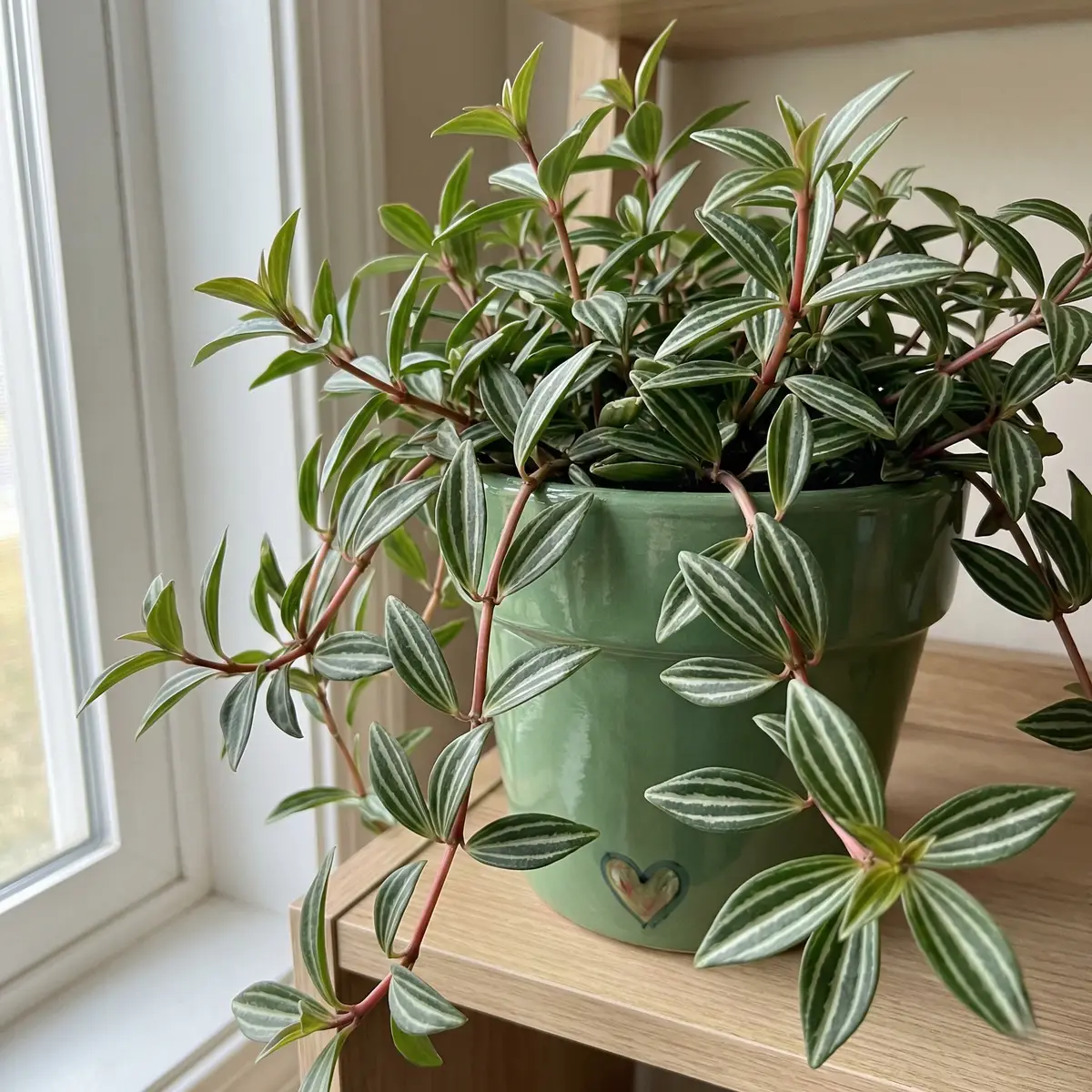
Best Light for Parallel Peperomia
Bright indirect light is what keeps those stripes looking their best. A spot within two to four feet of an east or north-facing window is usually ideal. South or west exposure works too as long as direct harsh sun does not hit the leaves, especially during afternoon hours.
The plant can adapt to medium indirect light, which makes it useful for spots that are not right next to a window. That said, in lower light the new leaves will come in smaller and the stripes will be noticeably duller. If you want the vivid silver and dark green contrast the plant is known for, give it real brightness.
If natural light is limited, grow lights work well for Parallel Peperomia. Set the light on a 14-hour cycle about 8–12 inches above the plant and you will see results similar to a bright windowsill.
For a deeper breakdown of how to judge and improve light levels in any room, the Indoor Lighting Guide is a good starting point.
Signs of Incorrect Lighting for Parallel Peperomia
Too little light:
- Stems become long and bare with wide gaps between leaves (leggy growth)
- Silver stripes fade or appear washed out on new growth
- Leaves are noticeably smaller than usual
- The plant leans strongly toward its light source
Too much direct sun:
- Leaf surfaces look bleached, pale, or papery
- Brown dry patches appear on sun-exposed leaves
- The glossy waxy sheen on the leaves disappears
Both problems are easy to fix by adjusting position. Move gradually when increasing brightness, giving the plant a week to acclimate before committing to a brighter spot.
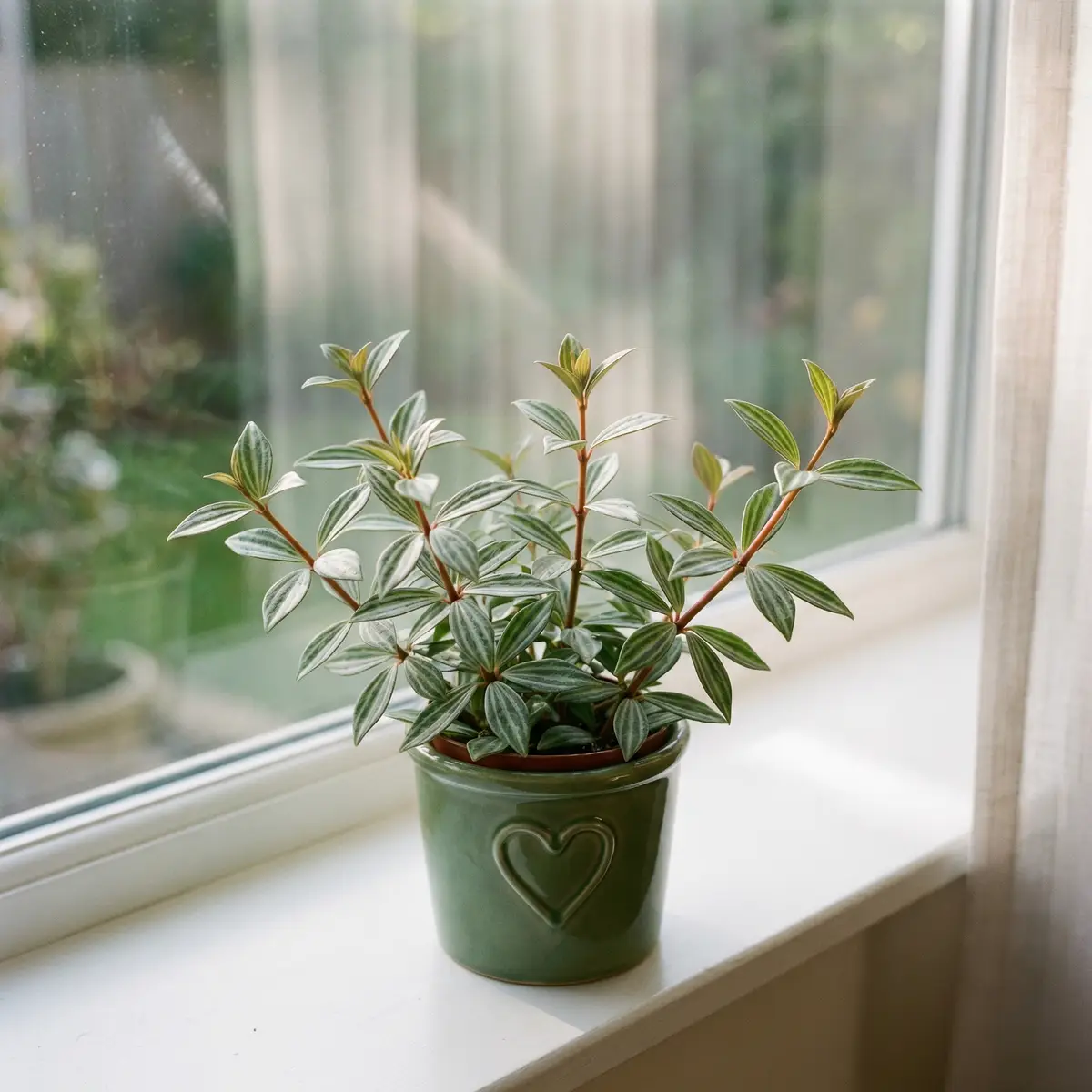
💧 Parallel Peperomia Watering Guide (How to Water)
How Often to Water Parallel Peperomia
The rule is simple: let the top 1–2 inches of soil dry out between waterings. Check with your finger. If the top layer still feels damp, wait another day or two. Once that zone is dry, water thoroughly until it drains freely from the bottom, then empty the saucer.
In a typical home environment during spring and summer, that usually means watering every 7–10 days. In winter, with slower growth and lower light, you might go 14 days or longer between waterings. There is no universal schedule. The soil moisture is the real signal.
A moisture meter can be helpful if you are still building a feel for when peperomias need water. Read it at mid-depth in the pot. Water when it reads around 3–4 out of 10.
Seasonal Watering Adjustments
Spring and summer: Moderate and consistent watering. The plant is actively growing and using water at a reasonable pace. Stick to the top-inch-dry rule and feed monthly.
Fall: Begin tapering off. Water slightly less frequently as growth naturally slows and the days get shorter.
Winter: Water sparingly. The semi-succulent stems store some moisture, and cold drafts combined with wet soil is the fastest way to trigger root rot. Let 2 inches of soil dry out before watering in winter.
Signs of Overwatering vs. Underwatering
Overwatered Parallel Peperomia:
- Leaves turn yellow, particularly lower leaves
- Stems feel soft or mushy at the base
- Soil stays wet for more than two weeks without drying
- Leaves may drop even while still green
Underwatered Parallel Peperomia:
- Leaves feel slightly limp or wrinkled
- Stems look deflated rather than plump
- Soil is completely bone dry and pulling away from pot edges
- Leaf edges may develop a crispy brown border
The semi-succulent nature of Parallel Peperomia means it recovers from underwatering much more readily than from overwatering. When in doubt, wait a day before watering.
Bottom watering works well for this plant and helps avoid the overwatering pattern that catches many people off guard. Set the pot in a tray of water for 20–30 minutes, let the soil absorb from below, then drain completely.
🪴 Best Soil for Parallel Peperomia (Potting Mix & Drainage)
Parallel Peperomia needs a well-draining mix that holds a little moisture without staying soggy. A simple formula that works consistently: two parts standard potting mix to one part perlite. That ratio gives you the structure the roots need without creating dense, waterlogged conditions.
If you prefer a ready-made option, a good cactus or succulent mix blended 50/50 with a standard potting mix also works. The goal is a mix that drains freely within 20–30 minutes of a thorough watering.
Avoid heavy mixes that contain a lot of moisture-retaining components like coco coir without added drainage material. Parallel Peperomia roots are not especially deep, and they are sensitive to sitting in wet conditions for extended periods.
Slightly acidic to neutral pH (6.0–7.0) is ideal, though the plant is not fussy about this in practice.
If you want to go deeper on soil components and mix ratios, the Soil Guide breaks it all down. For pot selection, a container with drainage holes is non-negotiable, and shallow wide pots suit the shallow root system particularly well. Our plant pots guide covers how to choose the right container size and material.
🍼 Fertilizing Parallel Peperomia
Parallel Peperomia is not a heavy feeder. Monthly fertilizing during the active growing season (spring through summer) is plenty. Use a balanced liquid fertilizer, such as a 10-10-10 or 20-20-20, diluted to half the recommended strength. Full-strength fertilizer on a small peperomia can cause salt buildup and leaf burn on the tips and edges.
Skip fertilizing entirely from October through February. The plant is growing slowly in winter, and adding fertilizer when it is not actively using nutrients can cause more harm than good.
If you notice the leaves looking pale or growth stalling in spring despite decent light, that can sometimes mean the soil has been depleted and the plant would benefit from an earlier start to fertilizing. The Fertilizing Guide has good detail on how to read those signals.
Every spring, a flush of plain water through the pot is a good practice to clear any accumulated fertilizer salts from the soil.
🌡️ Parallel Peperomia Temperature Range
Parallel Peperomia is comfortable in the same temperature range most people keep their homes: 65–80°F (18–27°C). It is a South American tropical and does not appreciate cold.
Keep the plant away from windows that get cold drafts in winter, and away from air conditioning vents that blow cold air directly onto the leaves. Temperatures below 50°F (10°C) will stress the plant, and anything approaching freezing can cause permanent damage to the semi-succulent stems.
The plant is not frost-hardy. In USDA zones 10–12 it can grow outdoors year-round. Anywhere cooler, it is strictly an indoor plant.
One detail worth noting: temperature swings matter as much as sustained cold. A plant sitting next to a window that drops from 70°F to 45°F overnight in January is at risk, even if the daytime temperature is comfortable. Move container plants away from the glass a few inches in cold months.
💦 Parallel Peperomia Humidity Needs
Parallel Peperomia prefers humidity of 50% or above, which places it in the moderate-to-high humidity camp. Average household humidity in the 40–50% range is workable, but if you see consistently brown and crispy leaf edges, low humidity is the most common cause.
A few practical options for increasing humidity:
- Group the plant with other houseplants. Plants collectively raise the humidity around them.
- Place the pot on a pebble tray with water. Keep the water level below the pot base so the roots are not sitting in it.
- Run a humidifier nearby, especially in winter when heating systems dry the air considerably.
Misting is sometimes suggested for peperomias, but it is not particularly effective and wet leaves left overnight can invite fungal issues. A humidifier or pebble tray is a better long-term solution.
More on managing humidity for houseplants is covered in the Humidity Guide.
🌸 Does Parallel Peperomia Bloom Indoors?
Blooming indoors is rare and the flowers are not the main event. When Parallel Peperomia does bloom, it produces slender rat-tail spikes, cream to pale green in color, that extend above the foliage in spring. They are mildly interesting but not what most people are growing this plant for.
If the plant does flower, you can leave the spikes on or remove them. Removing them redirects the plant’s energy back to foliage, which is generally the smarter move with peperomias.
Mature plants in stable conditions with good light and consistent care are most likely to bloom. A plant that has been well-fed through the growing season and then kept slightly drier and cooler in winter sometimes produces flower spikes in early spring.
🏷️ Parallel Peperomia Types and Look-Alikes
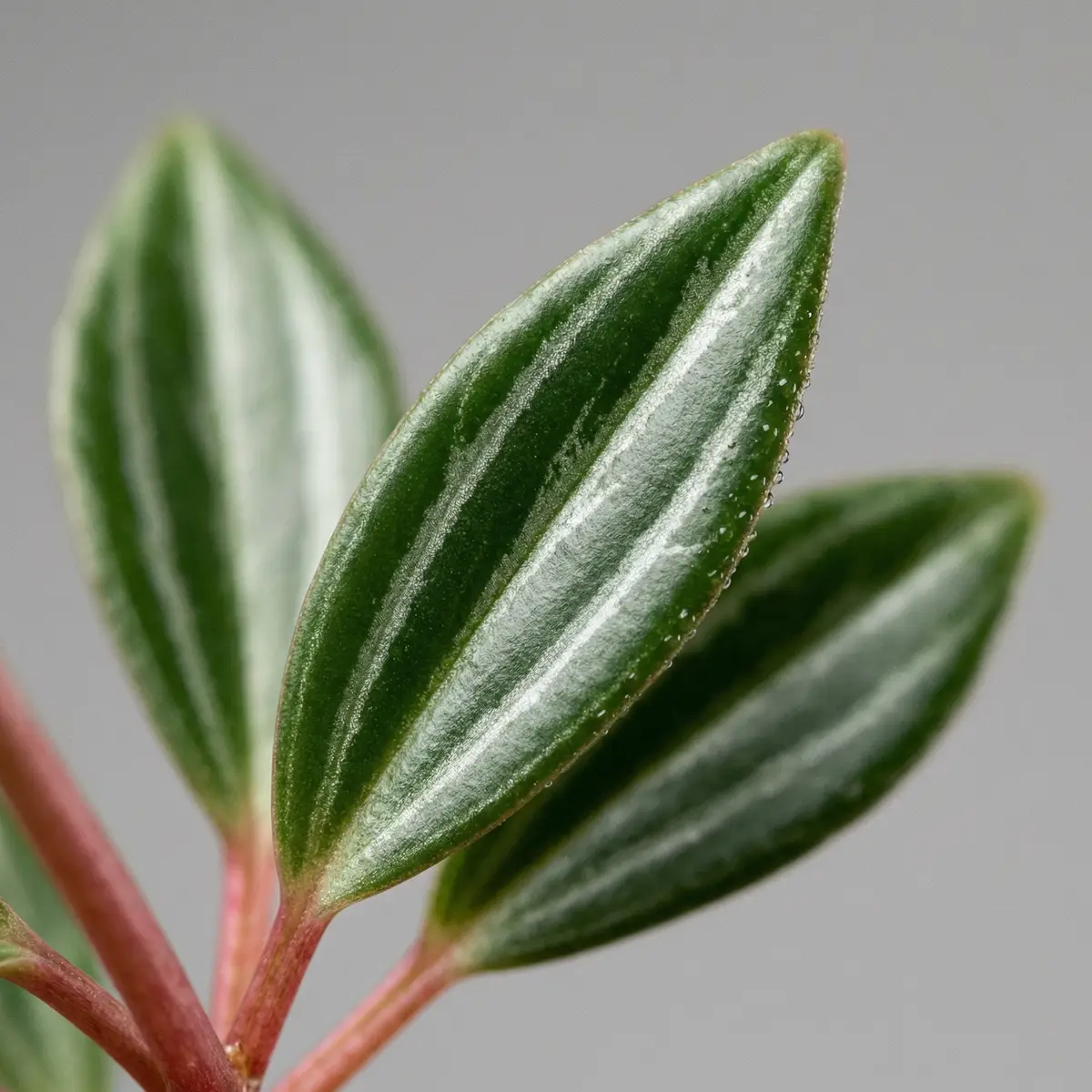
Parallel Peperomia is one of the more distinctive species in the genus, but it is easy to confuse with a few others until you know what to look for.
Parallel Peperomia vs. Watermelon Peperomia (Watermelon Peperomia): Watermelon Peperomia has rounded leaves with broad silver bands that curve across the leaf width, mimicking a watermelon rind. Parallel Peperomia has narrow elongated leaves with fine stripes running lengthwise. The growth habit is also different: Watermelon Peperomia forms a low rosette, while Parallel Peperomia trails on distinctly reddish stems.
Parallel Peperomia vs. String of Turtles (String of Turtles): Both trail on thin stems and have distinctly patterned small leaves. String of Turtles has round, almost succulent leaves with a turtle-shell mosaic pattern. Parallel Peperomia has narrow elongated leaves with parallel stripe markings.
Parallel Peperomia vs. Peperomia Napoli Nights (Peperomia Napoli Nights): Napoli Nights has broader silver leaves with a metallic all-over sheen rather than discrete parallel stripe lines. The two plants have a similar color palette but a very different leaf shape and texture.
Parallel Peperomia vs. Peperomia Silver Ripple (Peperomia Silver Ripple): Silver Ripple is a ripple-textured plant with corrugated, deeply grooved leaves. Parallel Peperomia has smooth, slightly waxy leaves. They are both silver-marked but the texture distinguishes them immediately.
There are no well-known named cultivars of Peperomia puteolata in common circulation. What you find in shops is typically just the species.
🪴 Potting and Repotting Parallel Peperomia
Parallel Peperomia has a shallow, relatively compact root system. This means you do not need a deep pot. A wide, shallow pot suits it much better than a tall one.
Repot every one to two years, or when you see roots coming through the drainage holes or circling visibly at the top of the soil. Go up only one pot size at a time. Moving into a pot that is too large leads to excess soil that stays wet too long, which increases root rot risk.
The best time to repot is spring, when the plant is entering its active growth phase. Use fresh potting mix when repotting (the same well-draining mix as before), and water sparingly for the first week to let any disturbed roots settle without sitting in wet soil.
Terracotta pots are a good choice for this plant because they wick moisture away from the soil and dry out faster than plastic or glazed ceramic. If you are using a decorative planter without drainage, always use a nursery pot with holes inside it as a liner.
Our Repotting Guide walks through the process in detail, including how to handle root-bound plants and when to hold off on repotting.
✂️ Pruning Parallel Peperomia
Pruning is one of the more rewarding parts of keeping Parallel Peperomia. The plant responds very quickly to stem tip pinching, sending out new branching shoots that fill the plant out within a few weeks.
How to prune:
- Use clean, sharp scissors or pruning shears.
- Pinch or snip just above a leaf node (the point where a leaf meets the stem).
- You can take off the top 2–4 inches of any stem that looks long, bare, or spindly.
- The cut stem will push out two or more new shoots from the nodes just below the cut.
Do not be shy about pruning. The plant handles it well and looks much better for it. If you have a Parallel Peperomia that has grown leggy over time, a hard cutback in early spring can rejuvenate the whole plant within a single growing season.
Save the cuttings. They propagate easily and you can replant them in the same pot to increase density.
🌱 How to Propagate Parallel Peperomia
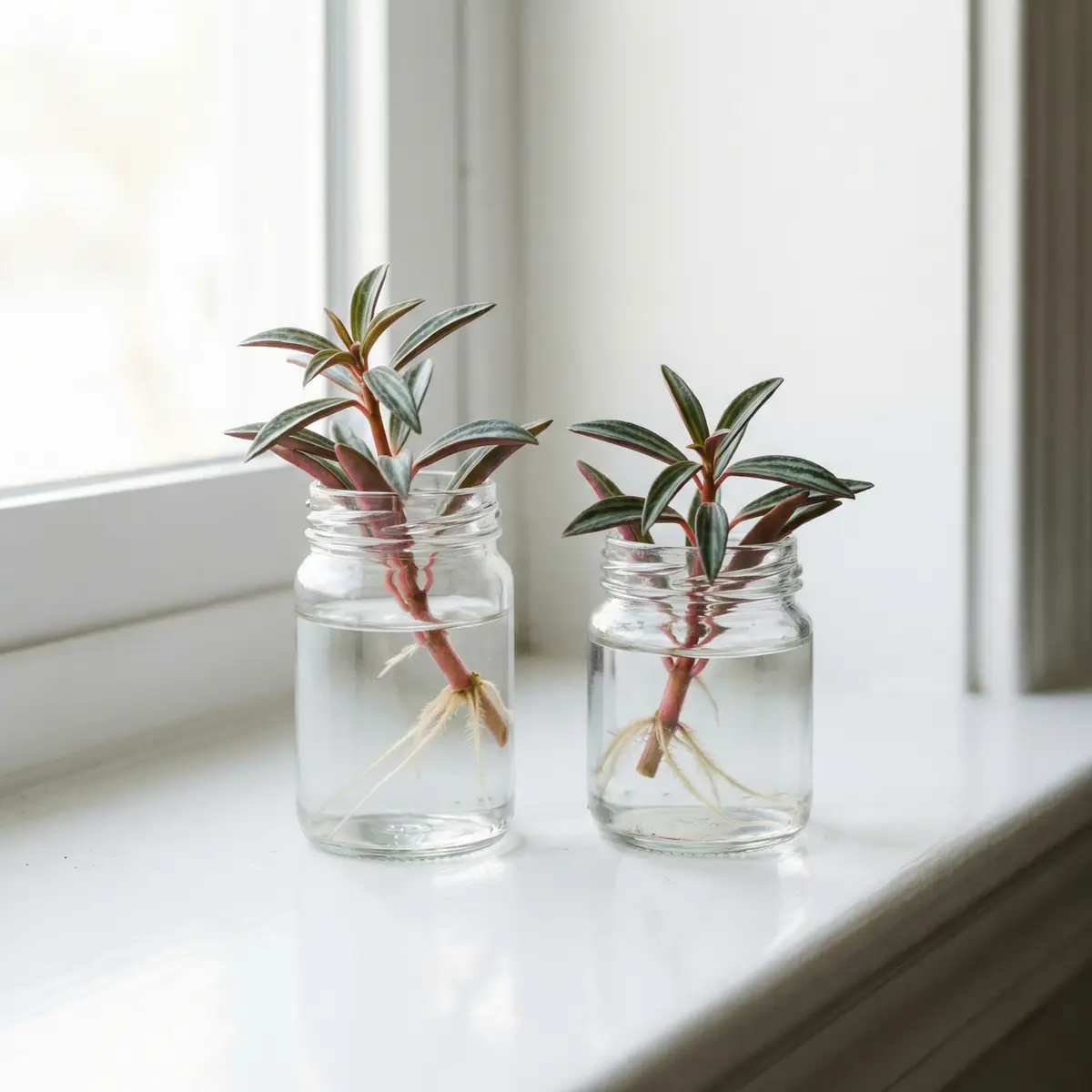
Parallel Peperomia is one of the easiest plants in the genus to propagate. Stem cuttings root readily in both water and soil with minimal effort.
Propagation by Stem Cutting in Soil
- Take a cutting 3–5 inches long with at least two or three leaf nodes.
- Remove the bottom leaves to expose one or two bare nodes.
- Allow the cut end to callous for 30–60 minutes before planting.
- Push the bare nodes into a small pot of moist, well-draining propagation mix or regular potting mix with perlite.
- Keep the soil lightly moist (not wet) and place in bright indirect light.
- Roots typically develop within 3–4 weeks. You can confirm rooting by giving the cutting a very gentle tug. Resistance means roots.
Covering the pot loosely with a clear plastic bag or placing it in a propagation box can speed things up by increasing ambient humidity around the cutting.
For a full walkthrough, see the Soil Propagation Guide.
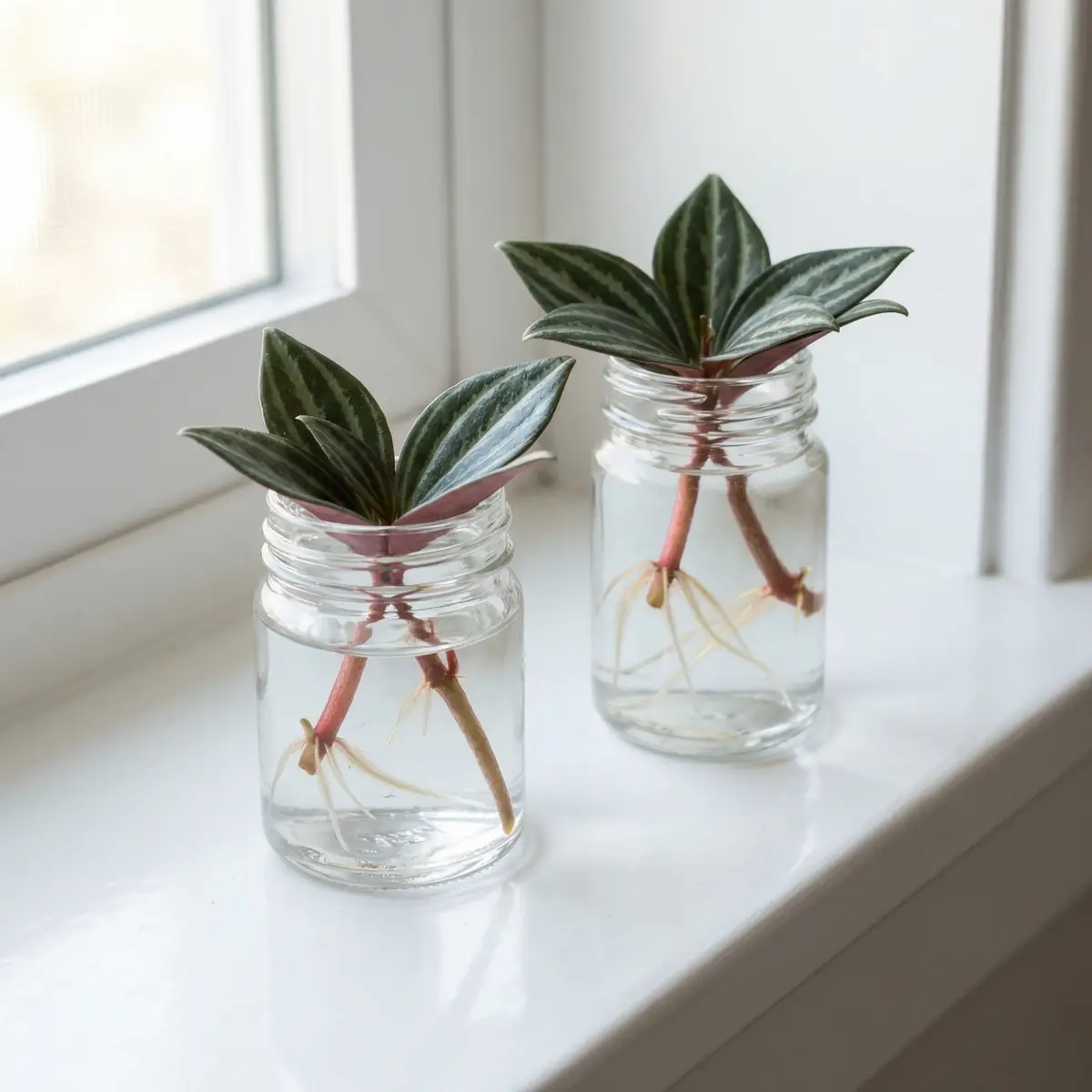
Propagation by Stem Cutting in Water
Water propagation is even simpler and lets you watch the roots develop.
- Take a stem cutting 3–5 inches long, same as above.
- Remove leaves from the bottom 1–2 inches so no foliage is submerged.
- Place the cutting in a small glass or jar with clean water.
- Position in bright indirect light. Change the water every 5–7 days to keep it fresh.
- White roots will appear within 2–4 weeks.
- Once roots are 1–2 inches long, transplant into soil.
Water-rooted cuttings need a brief adjustment period when moved to soil. Keep the soil consistently moist (slightly more than usual) for the first week or two to help the roots transition.
See the Water Propagation Guide for tips on timing, container selection, and the transition to soil.
🐛 Parallel Peperomia Pests and Treatment
Parallel Peperomia is not a pest magnet, but like any houseplant it can encounter the usual suspects, especially when humidity is low or the plant is stressed.
Spider mites are the most common problem, appearing as fine webbing between leaves and on stem joints. The narrow leaves and dense trailing growth give mites good cover. Catch them early by inspecting the undersides of leaves regularly. Treat with neem oil spray or insecticidal soap, covering all leaf surfaces. Repeat every 5–7 days for three cycles.
Mealybugs appear as white cottony clusters, usually in leaf axils or where stems branch. Remove visible clusters with a cotton swab dipped in 70% rubbing alcohol, then follow up with a neem oil treatment. Mealybugs spread quickly so isolate any affected plant right away.
Fungus gnats are a soil issue rather than a plant pest directly, but their larvae damage roots. They appear when the soil stays consistently moist. Let the soil dry more thoroughly between waterings, top-dress with a thin layer of coarse sand or perlite, and use sticky traps to monitor adult populations.
Scale insects look like small brown bumps along stems. Scrape off what you can manually, then treat with horticultural oil or neem. Scale is slower-moving than spider mites but stubborn, so repeated treatment is usually needed.


🩺 Parallel Peperomia Problems and Diseases
Root Rot
Root rot is the single most common serious problem with Parallel Peperomia. It happens when the soil stays wet for too long, either from overwatering, poor drainage, or a pot without drainage holes.
Signs: yellowing leaves starting at the base, soft mushy stems near the soil line, a sour smell from the soil.
Fix: remove the plant from its pot, cut away any black or mushy roots with clean scissors, let the healthy roots air dry briefly, and repot into fresh dry mix. Water very sparingly for the next two weeks.
Yellowing Leaves
Yellow leaves most often point to overwatering or cold stress. If the lower leaves are going yellow while the upper leaves look fine, check soil moisture first. If yellowing is widespread, check for cold drafts or very low light.
Occasional older leaves yellowing at the base of the plant is natural and not a cause for concern.
Leggy Growth
Long bare stems with leaves bunched at the tips are a classic sign of insufficient light. The plant stretches toward whatever light it can find.
Move to a brighter spot and cut the leggy stems back to a node. The combination of better light and pruning will produce a much fuller plant within a season.
Brown Crispy Leaf Edges
Crispy brown edges usually mean low humidity, excess fertilizer salts in the soil, or underwatering. Check humidity levels first. If the air is below 40%, consider a humidifier or pebble tray. If humidity is fine, flush the soil with plain water to clear any fertilizer buildup.Wilting and Drooping
Parallel Peperomia wilts when it is very dry, but also when it is severely overwatered and root function is compromised. Check the soil: bone dry means water immediately; soggy means stop watering and check the roots.
Sudden wilt in a plant with good soil moisture usually points to root rot.
Pale or Faded Leaves
Stripes losing contrast or overall leaf color going pale typically means the plant needs more light. New growth in low light will always be paler and less distinctly marked. Move to a brighter position and the difference in new leaves will be noticeable within a few weeks.


🖼️ Parallel Peperomia Display Ideas
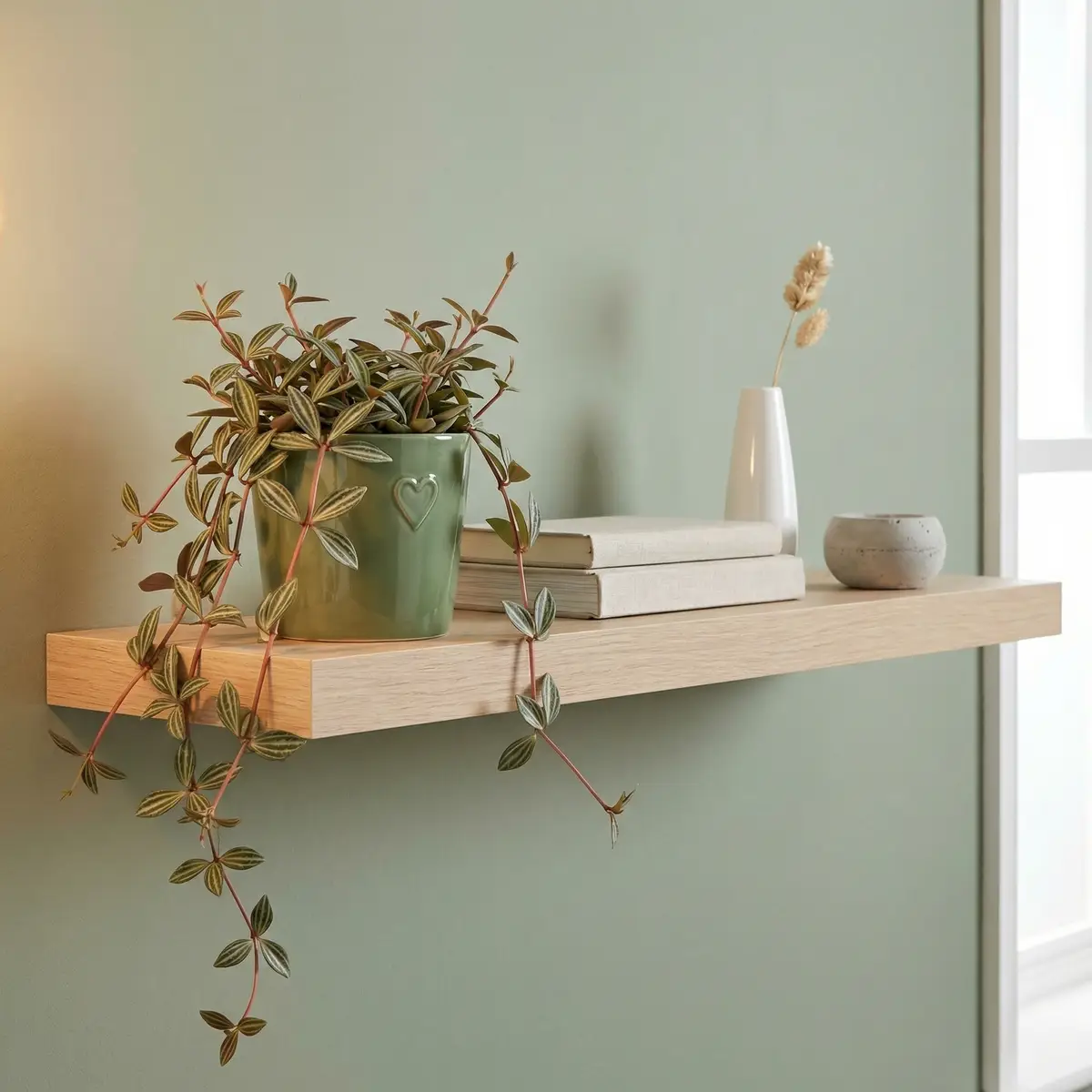
The trailing habit and bold leaf pattern make Parallel Peperomia one of the more versatile display plants in the easy-care category.
Shelf trailing: Position the plant near the edge of a bookshelf or floating wall shelf and let the stems cascade down. The reddish-pink stems and striped leaves create a lot of visual interest without taking up much surface space.
Hanging baskets: Parallel Peperomia looks excellent in a hanging planter. As the stems grow, they fill the basket and drape over the sides. This also solves the light problem, since hanging positions near windows often get better light than floor-level spots.
Grouped peperomia display: Pair with Watermelon Peperomia, Raindrop Peperomia, Peperomia Orba, and Peperomia Rosso for a themed peperomia collection. The contrasting leaf shapes and textures make the group more interesting than any single plant alone.
Desk and windowsill: In a small pot, Parallel Peperomia works well on a desk or windowsill where its compact upright early growth and eventual trailing spread can be appreciated up close.
Mixed trailing display: Combine with String of Turtles or Chinese Money Plant for a layered, mixed-texture arrangement.
🌟 Parallel Peperomia Care Tips (Pro Advice)
Pinch early and often. The difference between a full, trailing mound and a sparse leggy plant often comes down to how consistently you pinch the growing tips. Start pinching when the plant is young and do it every few weeks during the growing season.
Use the pot weight method. Lift the pot after watering. Lift it when dry. After a few cycles you will learn the weight difference intuitively. This is often more reliable than checking with a finger, especially in dense foliage where reaching the soil is awkward.
Propagate into the same pot. Any time you take pruning cuttings, root them and replant them in the original container. This keeps the plant looking full and dense, especially as it matures and the lower portions of older stems shed leaves.
Give it a quarter turn regularly. Rotating the pot a quarter turn every two weeks keeps the plant growing evenly instead of leaning heavily to one side.
Watch for pests when humidity spikes. Sudden humidity changes, like bringing outdoor plants inside in fall, can introduce spider mites that spread quickly to your Parallel Peperomia. A quick inspection of new arrivals before placing them near existing plants prevents most infestations.
Keep it away from heater vents. Hot dry air from vents causes leaf edge browning faster than almost any other indoor condition. Even a few feet of distance makes a real difference.
For more detail on any of these topics, the Plant Care Hub is a good starting point.
❓ Frequently Asked Questions
Is Parallel Peperomia toxic to cats and dogs?
No. Parallel Peperomia (Peperomia puteolata) is considered non-toxic to cats, dogs, and people. It is one of the genuinely pet-safe trailing houseplants you can display without worry.Why are the stripes fading on my Parallel Peperomia?
Fading stripes almost always mean the plant is not getting enough light. Move it to a brighter spot with consistent indirect light and the new growth should come in with stronger, sharper markings.How do I make my Parallel Peperomia bushier?
Pinch the stem tips regularly, especially on any stems that look long and bare. Each pinch encourages two or more new shoots to form below the cut, which quickly fills the plant in. You can also propagate the cuttings and add them back to the pot.Can Parallel Peperomia grow in low light?
It tolerates medium indirect light reasonably well, which is better than many plants. That said, if the light drops too low the stripes lose their contrast, the stems stretch, and growth slows significantly. Bright indirect light is always the better choice.How fast does Parallel Peperomia grow?
Growth is moderate. During spring and summer with good light and monthly feeding you will see regular new leaves and stems extending noticeably. In winter the plant slows down, which is normal.Why are the leaves on my Parallel Peperomia dropping or yellowing?
Yellowing leaves followed by drop usually points to overwatering or cold drafts. Check that the top 1–2 inches of soil have dried before the next watering, confirm the pot drains well, and keep the plant away from cold windows or air conditioning vents.ℹ️ Parallel Peperomia Info
Care and Maintenance
🪴 Soil Type and pH: Well-draining mix; standard potting mix plus perlite (2:1)
💧 Humidity and Misting: Prefers 50% or higher. Average household humidity is usually fine, but crispy edges can appear in very dry air.
✂️ Pruning: Pinch stem tips regularly to encourage branching. Remove leggy or bare stems to keep the plant full.
🧼 Cleaning: Wipe dust from leaves gently with a soft damp cloth to keep stripes looking sharp
🌱 Repotting: Every 1–2 years into a shallow pot one size up
🔄 Repotting Frequency: Every 1–2 years
❄️ Seasonal Changes in Care: Reduce watering in winter. Keep away from cold windows. No fertilizer in fall or winter.
Growing Characteristics
💥 Growth Speed: Moderate
🔄 Life Cycle: Perennial
💥 Bloom Time: Spring (rare indoors)
🌡️ Hardiness Zones: 10–12
🗺️ Native Area: South America (Peru, Bolivia)
🚘 Hibernation: No true dormancy, but slower winter growth
Propagation and Health
📍 Suitable Locations: Shelves, hanging baskets, windowsills, desks, plant stands
🪴 Propagation Methods: Stem cuttings root very easily in water or moist soil. One of the simplest peperomias to propagate.
🐛 Common Pests: spider-mites, mealybugs, fungus-gnats, and scale-insects
🦠 Possible Diseases: Root rot is the main risk; fungal issues from consistently wet soil
Plant Details
🌿 Plant Type: Semi-trailing tropical perennial
🍃 Foliage Type: Evergreen
🎨 Color of Leaves: Dark green with silver-white parallel stripes; reddish-pink stems
🌸 Flower Color: Cream/white
🌼 Blooming: Rarely blooms indoors; produces small cream or green rat-tail spikes on mature plants
🍽️ Edibility: Not edible
📏 Mature Size: 8–12 inches; trailing stems can reach 24+ inches
Additional Info
🌻 General Benefits: Compact, trailing form; distinctive striped foliage; fully pet-safe; easy to propagate
💊 Medical Properties: None known
🧿 Feng Shui: Trailing growth with striped leaves is associated with calm movement and flow
⭐ Zodiac Sign Compatibility: Gemini, Virgo
🌈 Symbolism or Folklore: Balance, order, quiet growth
📝 Interesting Facts: The parallel silver stripes that run the full length of each narrow leaf give this plant its common name. The reddish-pink stems are semi-succulent, storing a small amount of water, which helps the plant handle short dry periods without wilting immediately.
Buying and Usage
🛒 What to Look for When Buying: Choose plants with firm, brightly striped leaves and reddish stems that are not soft or mushy. Avoid leggy, widely-spaced specimens unless you plan to prune them back.
🪴 Other Uses: Hanging baskets, shelf draping, terrariums with airflow, mixed tropical arrangements
Decoration and Styling
🖼️ Display Ideas: Trail from a shelf edge, fill a hanging basket, group with other peperomias, or use in a mixed trailing display
🧵 Styling Tips: Parallel Peperomia pairs well with Watermelon Peperomia, String of Turtles, and Baby Rubber Plant for a layered peperomia display.
🪴 See also 🪴

Complete Guide to Peperomia Hope Care and Growth

Complete Guide to Beetle Peperomia Care and Growth

Complete Guide to Watermelon Peperomia Care and Growth

Complete Guide to Raindrop Peperomia Care and Growth

Complete Guide to Baby Rubber Plant Care and Growth

Complete Guide to String of Turtles Care (Peperomia prostrata)

Complete Guide To Peperomia Orba Care and Growth

Complete Guide To Peperomia Green Bean Care and Growth

Complete Guide To Peperomia Rosso Care and Growth

Complete Guide To Red Ripple Peperomia Care and Growth

Complete Guide to Peperomia Napoli Nights Care and Growth

Complete Guide To Silver Ripple Peperomia Care and Growth

