

Hoya Pubicalyx
Hoya pubicalyx
Wax Plant, Silver Pink Vine, Porcelain Flower


Hoya pubicalyx is one of the fastest-growing and most rewarding hoyas you can keep. Its silver-splashed leaves and deep burgundy-to-black flower clusters make it a standout in any collection, and it blooms far more readily than most of its relatives.
📝 Hoya Pubicalyx Care Notes
🌿 Care Instructions
⚠️ Common Pests
📊 Growth Information
🪴 In This Guide 🪴

☀️ Hoya Pubicalyx Light Requirements
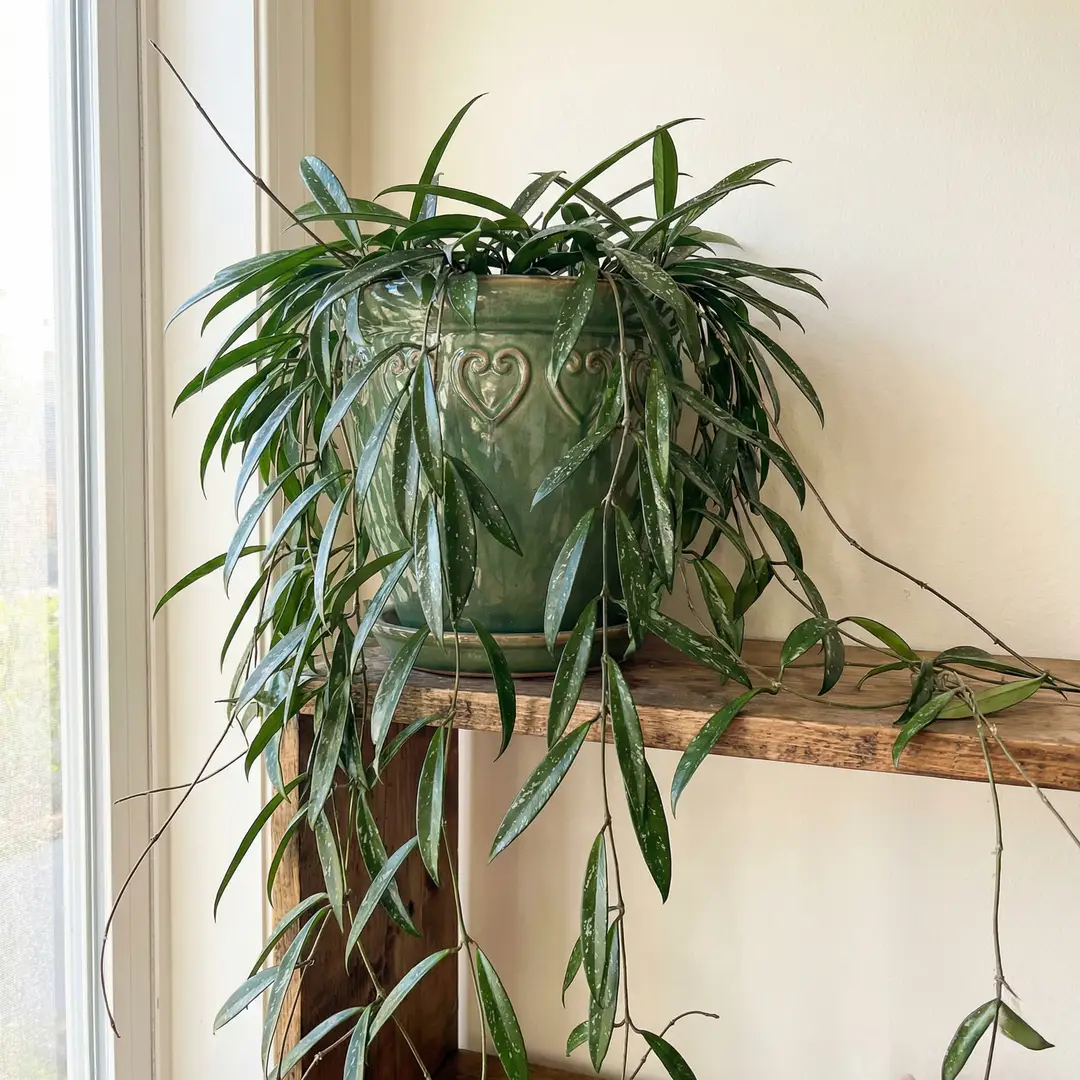
Best Indoor Light for Hoya Pubicalyx
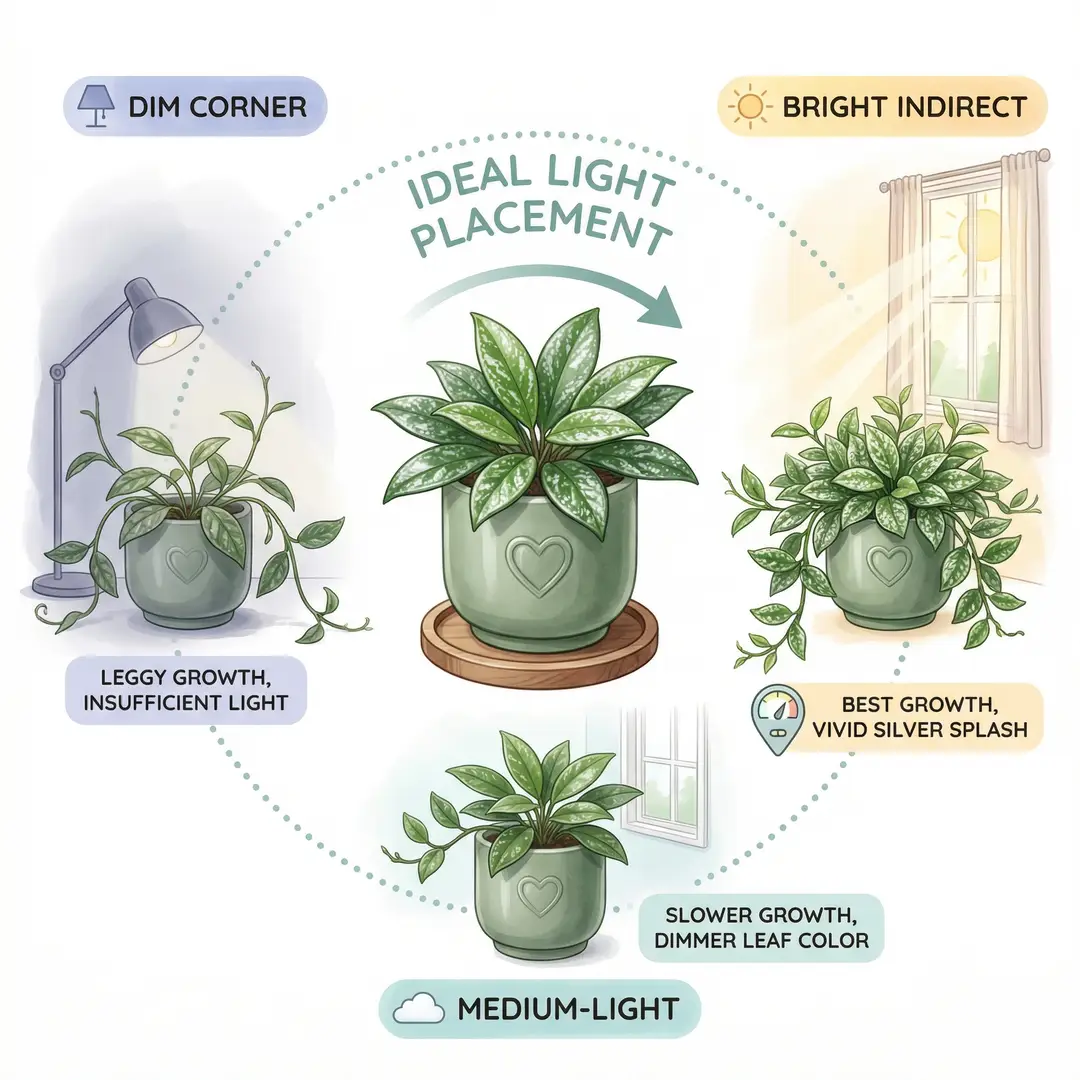
Hoya pubicalyx is a bright-light plant. It grows best in bright indirect light with 1-3 hours of gentle direct sun per day. An east or west-facing window is ideal. South-facing windows work well too if the plant is a foot or two back from the glass or filtered with a sheer curtain to soften the most intense midday rays.
Unlike low-light tolerant hoyas, Hoya pubicalyx becomes clearly unhappy in dim conditions. In insufficient light, growth slows dramatically, leaves lose their silver splash brightness, and blooming stops entirely. The good news is that once you give this plant enough light, the response is quick and obvious. Vines start extending, splash patterns intensify, and flower buds appear.
Light is the single most important factor in getting this plant to bloom. A mature, established plant in good light will produce multiple rounds of flowers per year. The same plant in a dim corner may not bloom at all. If blooming is your goal, light is where to focus first. Our Indoor Lighting Guide covers how to accurately assess light levels in your home.
Grow Lights for Hoya Pubicalyx
If your space lacks a suitable bright window, a grow light can give Hoya pubicalyx everything it needs. Position a full-spectrum LED panel 8-12 inches above the plant and run it for 14-16 hours per day. This compensates well for the absence of natural light and can trigger blooming in plants that otherwise would not flower indoors.
A grow light also helps through winter when natural light levels drop. Even in a bright window, shorter winter days can reduce light intensity enough to slow growth noticeably. Supplementing with a grow light from October through March keeps the plant active and sets it up well for spring blooming.
💧 How to Water Hoya Pubicalyx
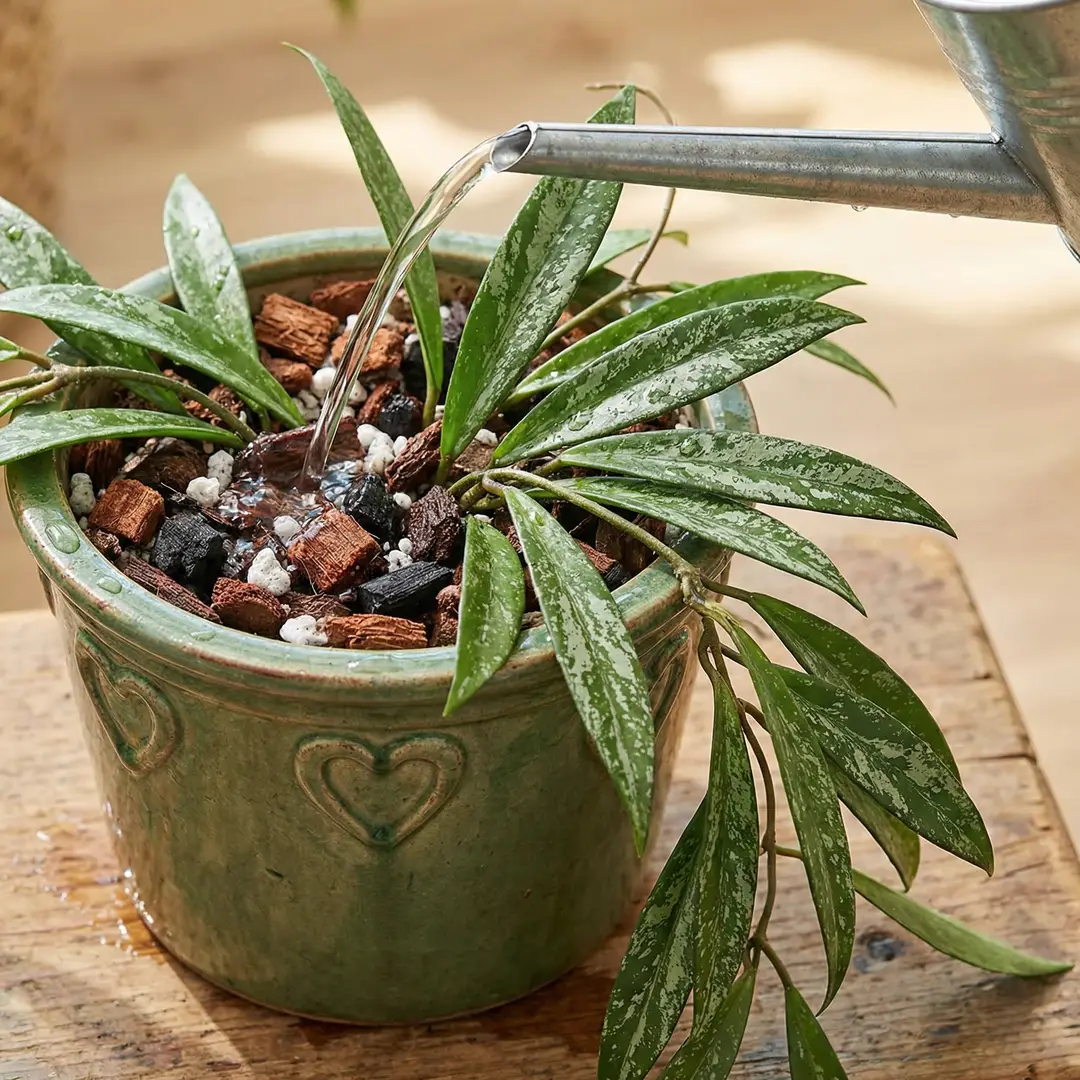
Watering Schedule and Method
Water Hoya pubicalyx only when the soil is completely dry. The semi-succulent leaves store water and the plant handles drought far better than it handles wet roots. Let the top 2 inches of soil dry thoroughly, then water deeply until it drains from the bottom of the pot.
In spring and summer, this usually works out to every 7-14 days depending on pot size, soil mix, temperature, and light level. In fall and winter, stretch this to every 3-4 weeks. The plant slows down significantly in cooler months and uses very little water.
To judge timing, press a finger 2 inches into the soil. If there is any moisture, wait. You can also read the leaves: when fully hydrated, they are firm. As water reserves deplete, they lose a little of that firmness and feel very slightly flexible when squeezed gently. That subtle shift is an early signal to water, well before any visible wrinkling. Our Watering Guide goes deeper on these methods.
Always use a pot with drainage holes. Never let the plant sit in a tray of water after watering. A moisture meter takes the guesswork out entirely and is useful for any collection with multiple hoyas.
Overwatering vs. Underwatering
- Overwatering signs: Yellowing lower leaves, soft or mushy stems near the soil, a pot that stays wet for more than 10 days. Root rot develops quickly in constantly wet conditions. If caught early, repot into fresh dry mix immediately and hold off watering for 2 weeks.
- Underwatering signs: Leaves lose firmness, growth slows or stops, and the plant may wilt or droop noticeably. Give a deep soak and the plant recovers within a day. Underwatering is easier to fix than overwatering for this plant.
- Seasonal shift: The most common mistake is forgetting to reduce watering in autumn. As light levels drop and temperatures cool, the plant’s water needs fall significantly. Continuing to water on a summer schedule through winter is a reliable path to root rot.
- After repotting: Hold off watering for 3-5 days after a repot to allow any disturbed root ends to callus. Then resume cautiously, keeping the soil just lightly moist for the first 2 weeks before returning to normal.
Bottom Watering
Bottom watering works well for Hoya pubicalyx and is especially useful in humid environments where top watering can leave moisture sitting on leaves and stems. Place the pot in a basin of water for 15-20 minutes, allow the soil to absorb moisture from below, then drain fully before returning to its spot. This delivers a thorough soak without wetting the foliage.🪴 Best Soil for Hoya Pubicalyx
Hoya pubicalyx grows as an epiphyte in the wild, clinging to tree bark in the Philippine rainforest. Its roots need excellent drainage and airflow around them. Standard potting mix alone is too dense and stays wet too long.
The best mix combines:
- Orchid bark or coco chips (40%) to create air pockets and rapid drainage
- Perlite or pumice (30%) for structure and to prevent compaction
- Potting mix (30%) for a base of moisture retention and nutrients
You can substitute a pre-made orchid mix with extra perlite mixed through. The finished blend should drain quickly and dry within 7-10 days after watering. If the soil stays wet longer than that, it is too dense.
Terra cotta pots are excellent for this plant because the porous walls release moisture through evaporation, helping the soil dry faster between waterings. If you use a glazed or plastic pot, lean toward the drier end of your watering window to compensate. See our Soil Guide for more on epiphytic mixes.
Refreshing old mix: Over time, even a good epiphytic mix breaks down. Orchid bark decomposes, perlite settles, and the mix becomes progressively denser. After 2-3 years, the same mix that once drained in seconds may start retaining moisture for much longer. If you notice your well-established plant suddenly taking longer to dry out despite no change in watering habits, it is usually a sign the mix needs refreshing at the next repot. Remove the old mix thoroughly from the roots and replace with a fresh blend.
🌱 Fertilizing Hoya Pubicalyx
Feeding Schedule
Hoya pubicalyx is a faster grower than most hoyas and benefits from regular feeding during the active season. Feed monthly from March through September with a balanced water-soluble fertilizer diluted to half strength. A 20-20-20 formula is a reliable choice for general growth.
Once your plant is established and you want to push for blooms, switch to a high-phosphorus formula (bloom-booster) in spring. Phosphorus supports flower production and can trigger the development of flower spurs on plants that are mature enough to bloom.
In fall and winter, stop fertilizing entirely. The plant’s metabolism slows, and fertilizer salts accumulate in the soil without being taken up, which stresses the roots over time.
Signs of Nutrient Issues
Too much fertilizer: Salt buildup appears as white crusty deposits on the soil surface or pot rim. In more serious cases, leaf tips turn brown and crispy. Flush the soil thoroughly with plain water and reduce your feeding frequency or dilution rate.
Too little fertilizer: Slow growth with small leaves that lack the dark, rich color of a well-fed plant. The silver splash may also appear less vivid than it should. Resume monthly feeding in spring if you have been skipping fertilization.
Fertilizer and Blooming
There is a useful two-phase approach for Hoya pubicalyx if blooming is your goal. In the first year with a new plant or cutting, use a balanced fertilizer focused on building a healthy root system and strong foliage. Once the plant is established with several mature vines, shift to a bloom-booster formula (high phosphorus, such as 5-50-17 or similar) applied monthly from March through June. This signals the plant to invest energy in flower development rather than vegetative growth.
Combining the bloom-booster with bright light, a cool winter rest, and a slightly pot-bound root system gives the best overall odds of flowers. No single factor works in isolation.
🌡️ Hoya Pubicalyx Temperature Requirements
Ideal Temperature Range
Hoya pubicalyx grows comfortably in the same range as most homes: 60-85°F (15-29°C). It is tolerant of average indoor conditions across the seasons and does not need any special temperature management during the active growing period.
Temperatures below 50°F (10°C) cause damage, and frost kills the plant. If you move it outdoors in summer, bring it back well before the first cool nights. Avoid cold drafts from windows or air conditioning vents blowing directly on the plant, as cold air streams can cause cold shock and leaf drop even when the ambient temperature is fine.
Seasonal Care Calendar
Syncing your care routine to the seasons keeps this fast grower healthy and maximizes blooming.
Spring (March to May): Resume regular watering as days lengthen and the plant wakes from its winter rest. Reintroduce monthly fertilizing with a balanced formula. New vine growth typically starts appearing quickly once warmth and light return. This is the best time to repot or take propagation cuttings.
Summer (June to August): The most active growing period. Water more frequently as the soil dries faster in warmth. Continue feeding monthly. If you move the plant outdoors, choose a sheltered spot with bright filtered light and bring it back before nights drop below 55°F.
Fall (September to November): Begin tapering off fertilizer and reducing watering frequency. This gradual slowdown prepares the plant for its winter rest and is the period when flower bud formation for next spring can begin on mature plants.
Winter (December to February): Water sparingly, only when the soil is completely dry. Do not fertilize. A cool, bright window is ideal. This rest period is actively beneficial: the slight temperature drop and reduced water stress are exactly what trigger spring blooming.
💦 Hoya Pubicalyx Humidity Needs
Hoya pubicalyx adapts well to average household humidity of 40-60%. The semi-succulent leaves handle dry air far better than most tropical vining plants, which makes it a low-maintenance choice for centrally heated homes in winter.
In very dry environments (below 30% humidity), the leaf edges may show slight crispness over time, but this rarely causes significant damage. A pebble tray filled with water placed under the pot provides a gentle ambient humidity boost without wetting the roots.
Do not mist this plant. Water droplets sitting on the leaves and in stem joints can encourage fungal issues and rot. A small room humidifier placed nearby is a more effective and less risky option if you want to maintain higher humidity around your collection.
Higher humidity (60-70%) can support more vigorous growth and may also help with blooming on mature plants, particularly if combined with the cool winter rest period.
Grouping for Humidity
One practical way to maintain slightly higher ambient humidity is to group Hoya pubicalyx with other plants. Plants collectively release moisture through transpiration, and a grouping of several hoyas and tropical plants creates a small microclimate with modestly elevated humidity compared to a single isolated plant.
This is also convenient from a care standpoint: hoyas grouped together on a shelf or in a window bay can be checked and watered at the same time, making it easier to keep up with regular inspection for pests. Just maintain enough spacing between plants for good airflow, which reduces the risk of mealybugs moving between plants.
🌸 Hoya Pubicalyx Flowers and How to Get Them
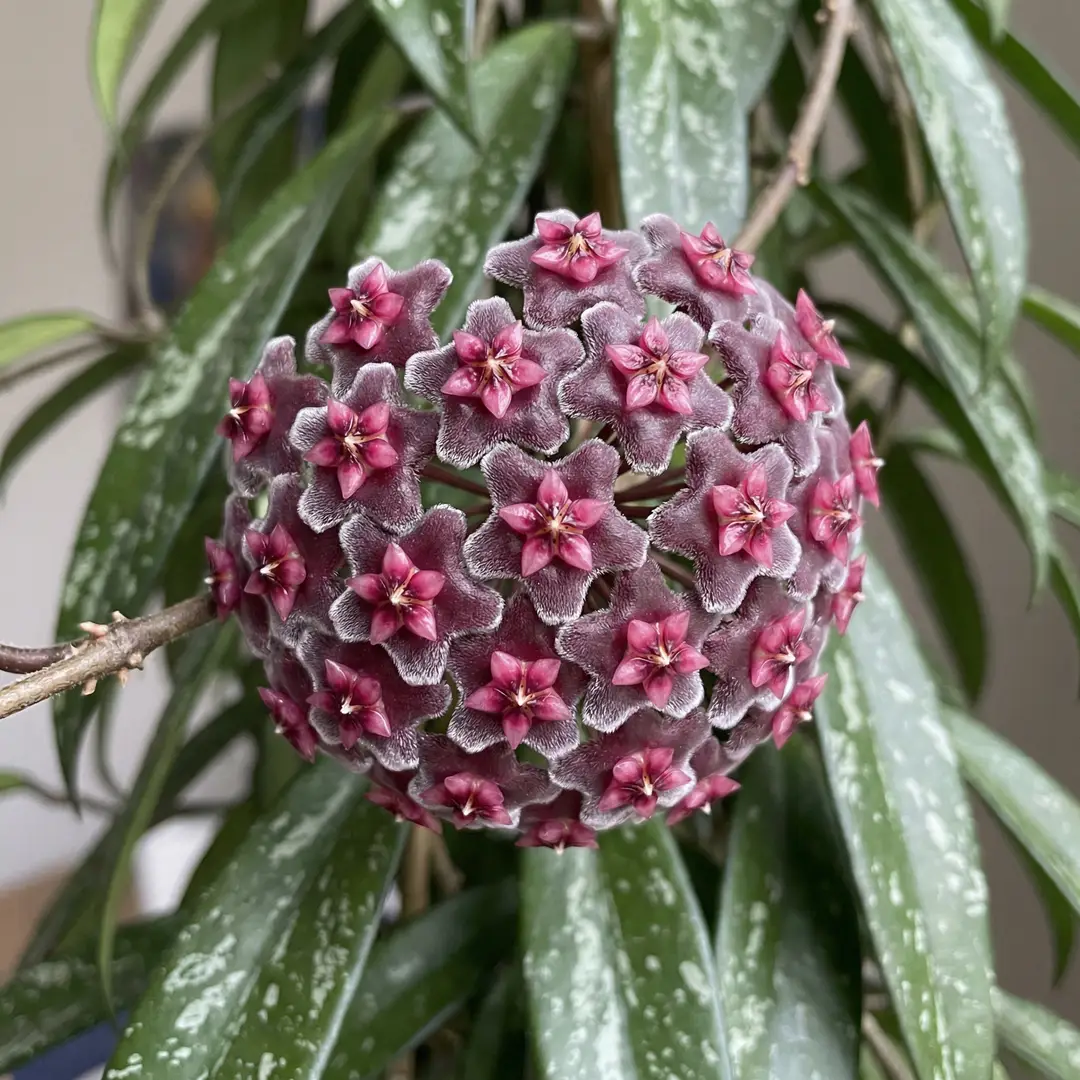
What the Flowers Look Like
Hoya pubicalyx flowers are small, waxy, and star-shaped, arranged in tight rounded clusters called umbels. Depending on the cultivar, the flowers range from deep rose-pink through burgundy to an almost-black dark red. The ‘Black Dragon’ cultivar produces some of the darkest flowers you will find on any hoya, with umbels that look like tiny clusters of deep velvet stars. The centers carry a small, lighter-colored corona that contrasts with the dark petals.
The flowers are fragrant, especially in the evening and at night. The scent is sweet and slightly spicy, similar to vanilla or chocolate, and it can fill a room on warm evenings when multiple umbels are open at once.
Like all hoyas, the flowers emerge from peduncles (flower spurs) on the stems. These spurs re-bloom from the same spot each season and should never be removed. Even when a spur looks bare and spent after blooming, it will carry flowers again next season.
How to Trigger Blooming
Hoya pubicalyx blooms more readily than most hoyas, but it still needs the right conditions. The four key factors are:
- Bright light. This is non-negotiable. The plant needs bright indirect light with some direct sun to generate the energy for flowers. In dim light it will not bloom regardless of other conditions.
- Maturity. Most plants need 1-2 years of established growth before attempting to flower. A newly rooted cutting will not bloom.
- Cool winter rest. Temperatures around 60°F at night through fall and winter, combined with reduced watering and no fertilizer, are the most reliable trigger for spring flower bud formation.
- Being slightly pot-bound. Like all hoyas, Hoya pubicalyx blooms more readily when the roots fill the pot. A plant in an oversized container tends to focus on root growth rather than flowering.
Once buds form on the peduncles, resist the urge to move the plant. Hoyas are notorious for dropping buds when repositioned or put under sudden environmental stress. If a bud drop happens, see our failure to bloom guide for more on preventing it.
It helps to mark the position of the pot with a small piece of tape on the shelf so you can return it to exactly the same orientation after watering. Even rotating the plant slightly during bud development can be enough to trigger drop on sensitive plants.
One more thing worth knowing: the peduncles (flower spurs) of Hoya pubicalyx lengthen noticeably as they develop. A spur that looked stub-like in winter may extend several centimeters before buds appear. Do not mistake this elongation for new stem growth and accidentally damage it.
🌿 Hoya Pubicalyx Cultivars and Related Hoyas
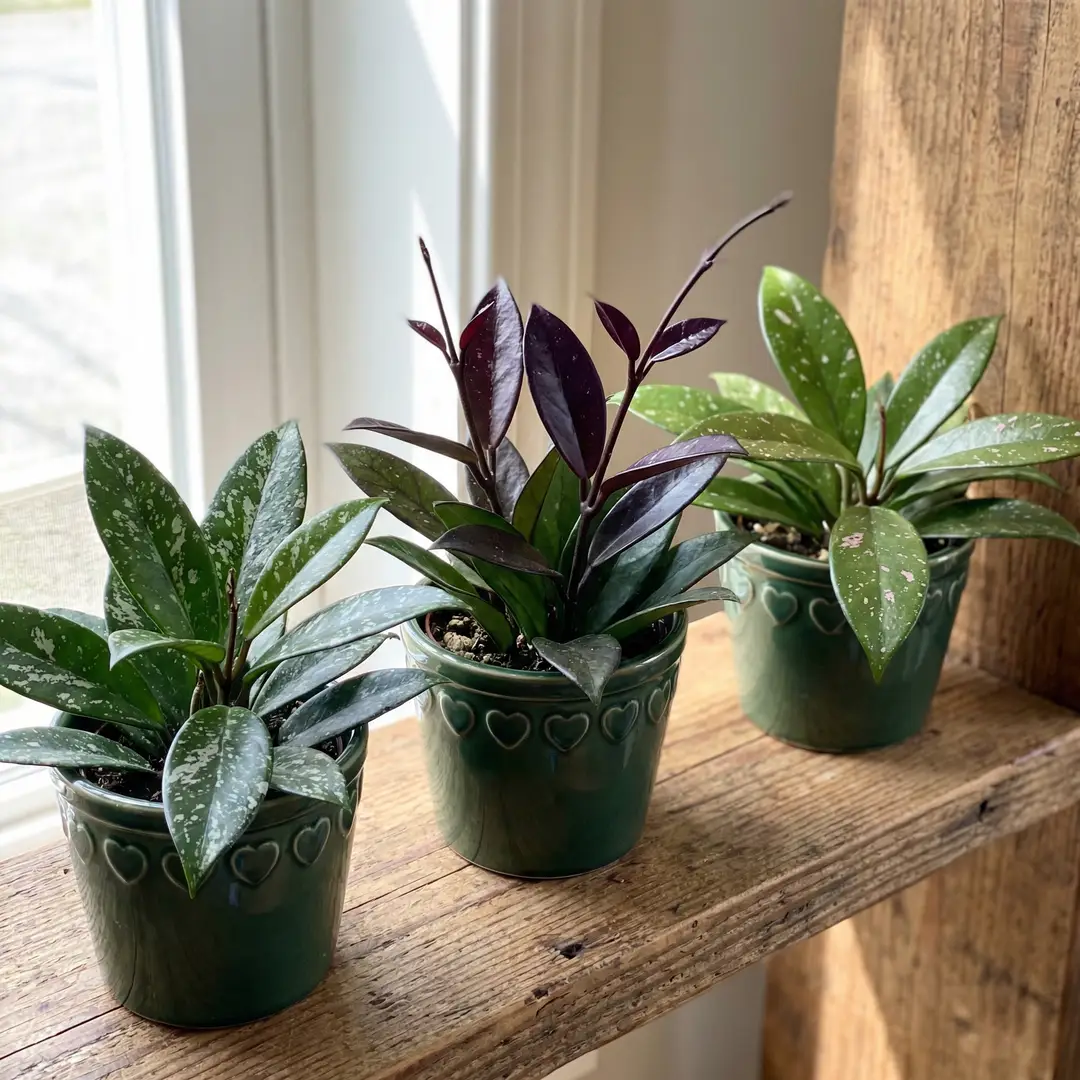
Popular Hoya Pubicalyx Cultivars
The cultivar selection for Hoya pubicalyx is extensive. Here are the ones most commonly available and most worth knowing about:
‘Black Dragon’: The most sought-after cultivar. Produces deep burgundy-to-black flowers with a purple sheen. The leaves tend to be heavily splashed with silver. One of the most dramatic-looking hoyas in cultivation when in full bloom.
‘Pink Silver’: A popular form with bright pink flowers and medium silver splash on the leaves. More commonly available than ‘Black Dragon’ and a good starting point if you are new to Hoya pubicalyx.
‘Red Buttons’: Features compact, deep red flower clusters. The leaves are usually less heavily splashed than in ‘Black Dragon’. A fast grower even by pubicalyx standards.
‘Chimera’: A rare and striking form with leaves that show a mix of green, silver, and occasionally cream tones. Less vigorous than other cultivars because of the reduced chlorophyll in the variegated patches.
Silver splash forms (unlabeled): Many plants sold simply as “Hoya pubicalyx” come in a wide range of splash intensities, from nearly plain green leaves to near-fully silver ones. These are not named cultivars but represent the natural variability of the species.
Related Hoyas to Consider
- Hoya Australis (Hoya australis): Native to Australia, with large rounded glossy leaves and intensely fragrant white-and-red flowers. One of the most reliably blooming hoyas, and slightly more cold-tolerant than most relatives.
- Hoya Carnosa (Hoya carnosa): The classic hoya with oval, silver-speckled leaves. Slower-growing than pubicalyx with pale pink-and-white flowers. An heirloom plant that can live for decades and is widely available.
- Sweetheart Hoya (Hoya kerrii): Heart-shaped leaves on a very slow-growing vine. The single-leaf cuttings commonly sold will never grow into full plants without a stem node.
- Hoya Callistophylla: Elongated, heavily veined leaves with bold parallel venation. Slower-growing than pubicalyx but with some of the most striking foliage in the genus.
- Hoya Wayetii: Narrow, lance-shaped leaves with dark red to purple margins that deepen in bright light. Fellow Philippine native with the same compact, trailing growth habit and similar care needs.
- Hoya Obovata: Large, rounded leaves with silver flecks and a bold scale that contrasts with pubicalyx’s narrow profile. The ‘Splash’ cultivar with heavy silver coverage is particularly striking.
- Hoya Crimson Queen (Hoya carnosa ‘Tricolor’): The most popular variegated carnosa, with cream and pink outer leaf margins around a green center. Slower-growing than pubicalyx but striking on the same shelf for its tricolor coloring.
🪴 Potting and Repotting Hoya Pubicalyx
When to Repot
Hoya pubicalyx grows faster than most hoyas, which means it fills a pot more quickly and generally needs repotting every 2-3 years rather than every 4-5. Repot when roots emerge consistently from the drainage holes or when the plant dries out within a day or two of watering.
When you repot, go up only one pot size (1-2 inches in diameter). An oversized container holds too much soil moisture and increases root rot risk. The plant also blooms more readily when it is slightly pot-bound, so there is no advantage to giving it more root space than it needs.
Spring is the best time to repot. The plant is entering active growth, and any root disturbance from repotting is recovered from quickly.
After repotting, hold off watering for 3-5 days to allow any broken or disturbed root ends to callus. Then resume your normal watering routine. The plant may show some temporary leaf softness or slight wilting in the first week, which is normal stress from root disturbance.
Pot Material for Hoya Pubicalyx
The choice of pot material affects how quickly the soil dries between waterings, which matters for a plant that needs to dry out fully.
Terra cotta: The best option for most hoya growers. Porous walls allow moisture to evaporate through the sides, speeding up drying time and reducing overwatering risk significantly. The only downside is that terra cotta is heavier and the soil dries faster, so in summer you may need to water slightly more frequently.
Plastic and glazed ceramic: Retain moisture much longer than terra cotta. Fine if you tend to underwater rather than overwater, but require more careful watering discipline. Lean toward the longer end of your watering interval.
Hanging basket liners: Many hanging basket liners (coco fiber, open wire baskets) offer very fast drainage and air to the roots. These work exceptionally well for Hoya pubicalyx in a hanging display, especially in humid environments.
Training and Support
As a vigorous viner, Hoya pubicalyx benefits from some kind of support structure. A bamboo hoop, wire trellis, moss pole, or macrame hanger all work well. For a macrame hanger, let the vines hang freely and they will trail long and lush. For a trellis, thread newer stems through the support structure while they are still pliable. Older stems become woody and harder to reposition without risk of snapping.
If you want to encourage the plant to fill out rather than just grow long, pinch the growing tips of actively extending vines. This redirects energy into side shoots and makes the plant bushier over time.
🧹 Cleaning and Maintaining Hoya Pubicalyx Leaves
The elongated leaves of Hoya pubicalyx accumulate dust and benefit from regular wiping. Beyond aesthetics, clean leaves absorb more light efficiently and are easier to inspect for pests.
Wipe each leaf gently with a soft, damp cloth, supporting the leaf from below with your other hand. Work both the top surface and the underside, which is where spider mites, scale insects, and early mealybug colonies tend to appear first. The semi-succulent leaves are firm enough to handle gentle cleaning without damage.
Avoid leaf shine sprays or oily products. These can clog stomata and interfere with gas exchange. The natural finish of the leaves is already attractive without any product. A clean damp cloth is sufficient and better for the plant.
For plants with many long vines, a gentle rinse in a shower works well and covers the whole plant at once. It also knocks off any light pest populations before they establish. Allow the plant to drain completely before returning it to its hanging spot, and avoid rinsing in cold water, which can shock the roots and leaves.
✂️ Pruning Hoya Pubicalyx
Hoya pubicalyx is a vigorous grower that benefits from occasional pruning to keep it shaped and to encourage branching. Trimming a stem just above a node pushes the plant to produce 1-2 new side shoots from that point, creating a fuller, more multi-stemmed display over time.
Prune in spring or early summer when the plant has the energy to recover and respond quickly. Avoid heavy pruning in fall or winter when growth has slowed.
The critical rule for all hoyas: never remove flower spurs (peduncles). These are the short, knobby-looking stubs that develop on mature stems and carry the flower clusters. After blooming, the spur looks bare and dry, but it will produce another set of flowers from the same spot next season. Removing it resets years of spur development.
Use any pruned stem cuttings for propagation. With a vigorous grower like this, you will accumulate a useful stock of cuttings quickly.
🌱 How to Propagate Hoya Pubicalyx
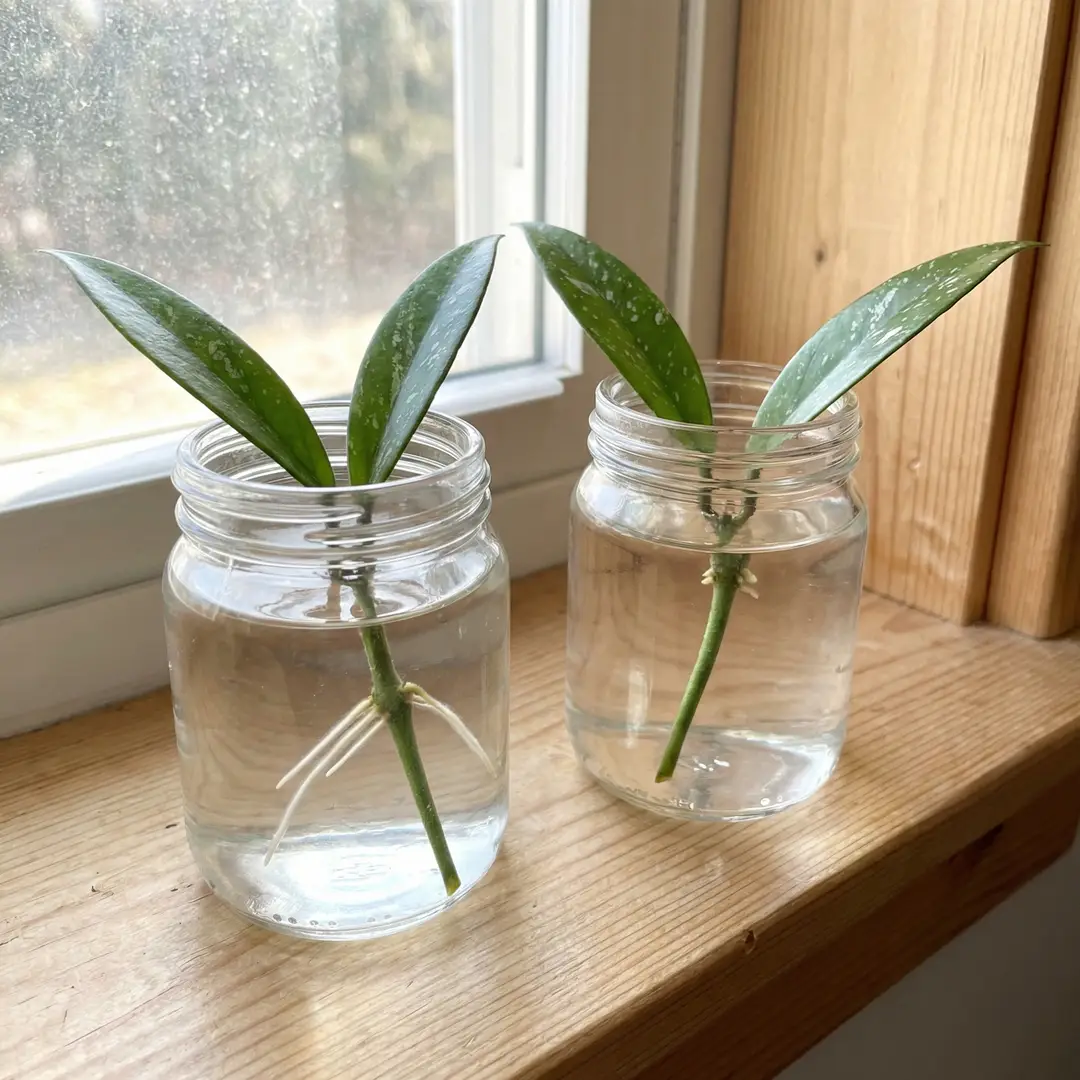
Water Propagation
Hoya pubicalyx roots readily from stem cuttings and is one of the easier hoyas to propagate. Take a cutting with 1-3 nodes and at least one leaf. Remove any leaves that would sit below the waterline, then place the cutting in a glass or jar of clean water with the nodes submerged.
Keep the cutting in bright indirect light at room temperature (above 65°F). Change the water every 5-7 days to keep it fresh. Roots appear within 3-6 weeks, sometimes faster in warm conditions. When roots are 1-2 inches long, transfer the cutting to the epiphytic mix described in the Soil section.
The transition from water to soil is the most delicate step. Water roots are structurally different from soil roots, and the cutting needs time to adapt. Keep the soil just barely moist (more moist than you normally would for an established hoya) for the first 2-3 weeks after potting, then gradually shift toward the usual dry-between-waterings schedule. Full details are in our Water Propagation Guide.
Timing cuttings for best results: Take cuttings in spring or early summer when the plant is actively growing. Roots form significantly faster in warm conditions above 70°F. Cuttings taken in late autumn root slowly and are more prone to rotting before roots establish. If your home is cool, placing the jar near a warm (not hot) surface like the top of a heat mat can provide the extra warmth roots need.
Soil and Moss Propagation
For direct soil propagation, prepare a small pot of moist perlite or a 1:1 mix of perlite and potting mix. Let the cut end of the cutting air-dry for 30-60 minutes until a callus begins to form, then insert the node end into the mix so the node is just below the surface.
Keep the mix lightly moist and cover the pot loosely with a clear plastic bag or humidity dome to maintain moisture around the cutting. Open it daily for airflow to prevent fungal growth. Roots develop in 4-8 weeks.
Sphagnum moss is an excellent propagation medium for this plant. It stays moist without becoming waterlogged and gives roots ideal conditions for development. When using moss, keep it damp but not dripping, and transition the cutting to regular epiphytic mix once roots are established and the cutting resists gentle tugging. See our Soil Propagation Guide for the full process.
Labeling your cuttings: Hoya pubicalyx cuttings from different cultivars look nearly identical before they bloom. If you are propagating multiple cultivars at the same time, label your jars or pots from the start. Trying to identify an unlabeled rooted cutting months later is difficult, and the only reliable way to distinguish cultivars is to see the flowers.
🐛 Hoya Pubicalyx Pests


Hoya pubicalyx is generally pest-resistant, but like all hoyas it is susceptible to a few common houseplant pests. Regular inspection is the best prevention.
Mealybugs are the most common issue. They hide in stem joints, along the undersides of leaves, and in any crevice they can find. The fast growth of this plant means there are always new joints and stem angles forming, which creates regular opportunities for mealybugs to establish. Look for white, cottony clusters. Treat with a cotton swab dipped in 70% rubbing alcohol applied directly to each visible cluster, or spray the whole plant with diluted neem oil. Repeat weekly for 3-4 weeks.
Scale insects appear as small, hard brown bumps on stems or the underside of leaves. They are slow-moving and can be scraped off manually before treating with neem oil or insecticidal soap.
Spider mites appear in hot, dry conditions and show up as fine webbing and tiny yellow dots on the leaf surface. Increase humidity slightly and treat with neem oil. A thorough shower to rinse the plant before applying treatment removes the webbing and physical mite population.
Aphids cluster on new soft growth in spring and summer. A strong stream of water knocks them off, or treat with insecticidal soap.
Check the plant during every watering session. Catching infestations early makes treatment straightforward. Isolate any affected plant immediately to prevent spread to other hoyas in your collection.
⚠️ Common Hoya Pubicalyx Problems


Yellow Leaves
Yellowing leaves on Hoya pubicalyx most often indicate overwatering or root rot. If the lower leaves are yellowing and the soil has been consistently wet, let the soil dry fully and inspect the roots at the next repotting. Roots affected by root rot are brown, mushy, and have an unpleasant smell. Trim off any damaged roots and repot into fresh dry mix.
Occasional yellow leaves on older lower stems that are no longer receiving adequate light are normal and not a cause for concern. This is the plant’s natural process of shedding leaves it can no longer support efficiently.
If you have recently repotted, a few yellow leaves in the days following are normal repotting stress and usually resolve on their own once roots re-establish in the new mix.
Leggy Growth or Leaf Drop
Leggy growth with long internodes between leaves is almost always caused by insufficient light. This is particularly noticeable in Hoya pubicalyx because its fast growth rate amplifies the problem quickly. Move the plant to a brighter spot or add a grow light. New growth in better light will be more compact and the silver splash will appear more vivid.
Leaf drop in larger amounts usually signals environmental stress: sudden temperature change, cold drafts, overwatering, or repotting shock. Identify and address the stressor and the plant will stabilize. Minor leaf drop on older lower stems is normal.
If the plant is producing long vines but the lower portions of existing stems are becoming bare, that is a combination of normal lower-leaf drop and the plant prioritizing new growth. Pinching the growing tips of the longest vines redirects energy into the existing stems and encourages the plant to branch and fill in.
Pale or Faded Leaves
If the leaves are losing their dark green color and turning pale or yellow-green without yellowing in the classic overwatering pattern, insufficient light is the most likely cause. The silver splash pattern also becomes less vivid in low light. Move the plant closer to a bright window. In some cases, very intense direct sun can cause a different kind of fading: bleached, washed-out patches rather than an even pale tone. If this is the pattern, move the plant slightly back from the glass or filter with a sheer curtain.🏡 Displaying Hoya Pubicalyx
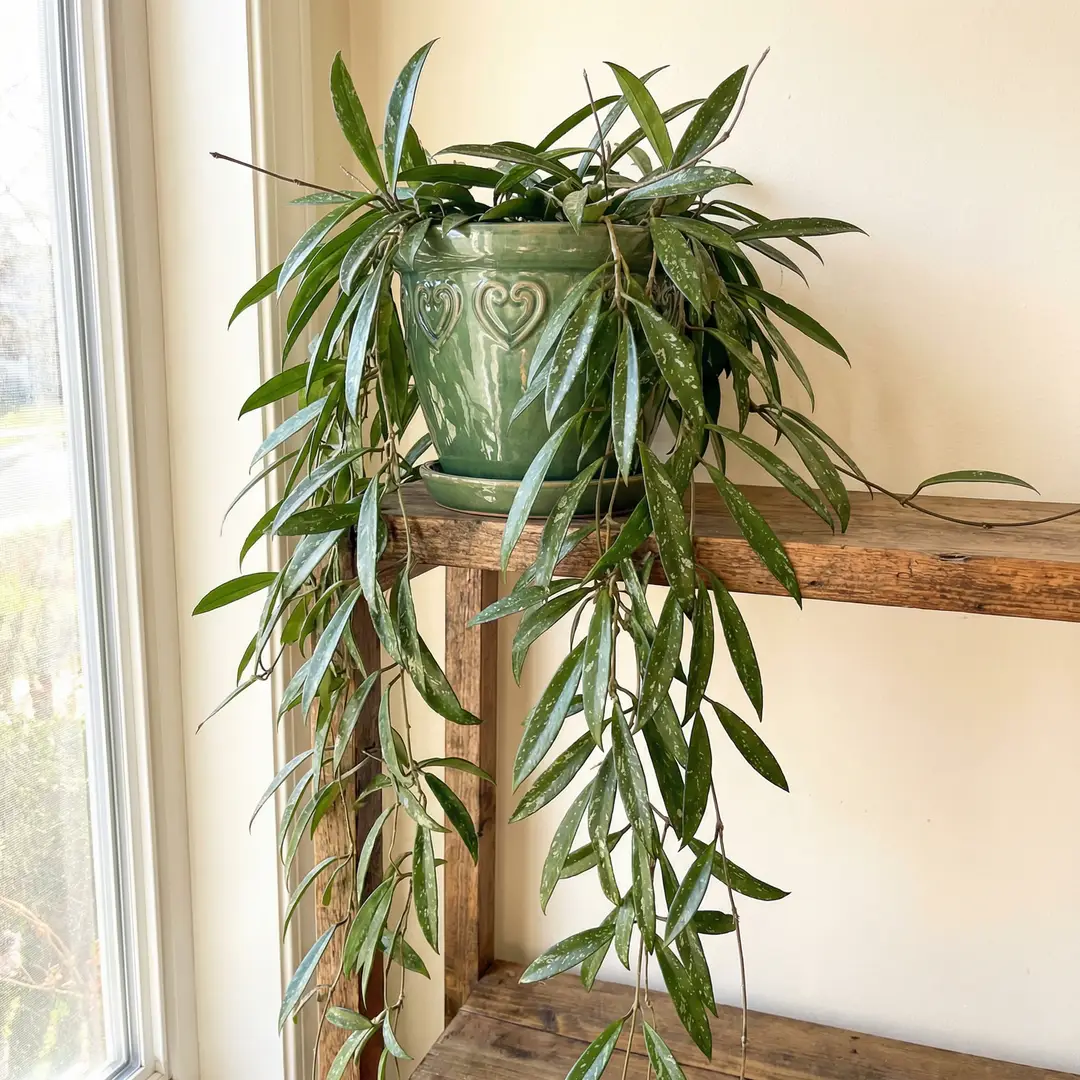
Best Display Spots
The vigorous, trailing vines of Hoya pubicalyx look best when given room to move. A few display approaches that work particularly well:
Hanging basket or macrame hanger: This is the natural setting for Hoya pubicalyx. Hung near a bright window, the long vines cascade down in tiers and the silver splash pattern catches the light beautifully. The fragrant flowers at eye level in a hanging display are an especially nice effect.
Tall trellis or wall bracket: If you prefer an upright display, a tall bamboo or wire trellis gives the vines something to climb. The plant will fill it quickly and can create a dramatic green wall panel over time. Train new stems through the trellis structure while they are young and flexible.
Shelf trailing: Let the vines trail from the edge of a high shelf over a bookcase or plant stand. The combination of fast growth and long vines means the display changes noticeably from month to month.
Companion Plants for Hoya Pubicalyx
Hoya pubicalyx groups naturally with other hoyas that share its care profile. Good companions include:
- Hoya Carnosa: The classic wax plant. Oval, silver-speckled leaves that contrast well with the narrower elongated leaves of pubicalyx. Both bloom with fragrant flower clusters, making a grouped display even more rewarding over time.
- Sweetheart Hoya: Large, heart-shaped leaves provide dramatic shape contrast to the narrower pubicalyx foliage.
- Hoya Callistophylla: Bold, high-contrast venation on elongated leaves. The two plants look striking together on a shelf because of how differently their foliage is patterned.
When grouping hoyas, allow spacing between plants for airflow. Good airflow reduces the risk of mealybug spread between plants, which matters in any collection with multiple hoyas close together.
Fragrance in the Display Space
The flowers of Hoya pubicalyx are fragrant, and on warm evenings with multiple umbels open the scent can carry through a room. This makes placement near a seating area or bedroom particularly rewarding during bloom periods.
The fragrance is strongest in the evening and at night, which is worth knowing if you are sensitive to strong scents. A plant in full bloom in a small enclosed room can be quite intense. In a larger living space, the fragrance is pleasant and not overwhelming. Factor this into your display decisions: a plant on a high shelf in a spacious room gives you the best of both, visible blooms and a subtle, ambient scent.
💡 Quick Hoya Pubicalyx Care Tips
- This is one of the fastest-growing and most reliable bloomers in the genus. Give it bright light and it will reward you.
- Water only when the soil is completely dry. Overwatering is the main way people lose this plant.
- Never cut flower spurs. Those bare stubs will bloom again from the same spot each season.
- The silver splash pattern is highly variable. Two plants of the same cultivar can look quite different, which is part of the appeal.
- For blooming: bright light, slight pot-bound roots, a cool dry winter rest, and a high-phosphorus fertilizer in early spring.
- Once buds form on a peduncle, stop moving the plant. Bud drop from repositioning is the most avoidable frustration with this species.
- Pinch growing tips in spring to encourage branching and a fuller plant rather than a few very long vines.
- Take propagation cuttings in spring when the plant is actively growing. Roots form faster and the transition to soil is smoother in warm conditions.
- Check stem joints and leaf undersides for mealybugs every time you water. Fast growth means frequent new joints where pests can establish.
- The silver splash pattern is one of the most variable traits in the hoya world. Do not be surprised if your plant looks different from photos of the same cultivar online.
- Hoya pubicalyx can live for decades with minimal intervention. Once it finds a spot it likes, the main job is to not interfere too much.
- Treat this as a long-term plant. After 3-5 years of establishment, a well-grown Hoya pubicalyx in a bright spot is genuinely spectacular.
- Label propagation cuttings from different cultivars immediately. They look identical before blooming.
❓ Frequently Asked Questions
Why is my Hoya Pubicalyx not blooming?
The three most common reasons are insufficient light, a plant that is too young, and no winter rest period. Hoya pubicalyx needs bright indirect light with some direct sun to produce flowers. If it is in a dim spot, move it closer to a window. The plant also generally needs to be established for at least 1-2 years before blooming. A slightly cool and dry winter rest (around 60°F, reduced watering, no fertilizer) is often what triggers spring flower bud development.Is Hoya Pubicalyx toxic to cats and dogs?
No. Hoya pubicalyx is non-toxic to cats, dogs, and humans. It is a safe and pet-friendly option for households with animals.How fast does Hoya Pubicalyx grow?
Faster than most hoyas. In good light and warmth during spring and summer, it can put out several inches of new vine per week. It is significantly faster than Hoya carnosa or Sweetheart Hoya, which makes it a satisfying choice if you want a hoya that actively grows and fills a space.What is the difference between Hoya Pubicalyx and Hoya Carnosa?
Both are common vining hoyas, but they look and grow differently. Hoya pubicalyx has narrower, more elongated leaves with a variable silver splash pattern, and it grows noticeably faster. Its flowers tend to be darker, often deep burgundy to nearly black depending on the cultivar, compared to Hoya carnosa’s pink-and-white clusters. Hoya carnosa leaves are oval and usually more uniformly dark green with silver spots.Why are the leaves on my Hoya Pubicalyx turning yellow?
Yellow leaves most often signal overwatering or root rot. Check the soil: if it has been wet for an extended period, let it dry completely and inspect the roots at the next repotting. Less commonly, yellow leaves on old lower stems are a natural response to insufficient light on that part of the plant. Improving light stops further yellowing.Can I put my Hoya Pubicalyx outside in summer?
Yes, in warm climates (above 60°F at night consistently) Hoya pubicalyx thrives outdoors in a sheltered spot with bright indirect or dappled light. Avoid direct afternoon sun outdoors, which is more intense than indoors and can scorch the leaves. Bring it back inside well before nighttime temperatures drop below 55°F.Should I cut off the bare flower spurs after blooming?
No. Never remove flower spurs (peduncles), even when they look bare and finished after blooming. Hoyas re-bloom from the same spur each year. Removing it means waiting years for the plant to develop a new one.ℹ️ Hoya Pubicalyx Info
Care and Maintenance
🪴 Soil Type and pH: Chunky Epiphytic Mix
💧 Humidity and Misting: Flexible. Average household humidity (40-60%) is fine. Higher humidity can support blooming on mature plants.
✂️ Pruning: Trim to shape and encourage branching. Never remove flower spurs: they re-bloom year after year from the same spot.
🧼 Cleaning: Wipe leaves gently with a damp cloth. Check stem joints and leaf undersides for mealybugs during each cleaning.
🌱 Repotting: Every 2-3 years, or when roots fill the pot and emerge from drainage holes. Prefers being slightly pot-bound.
🔄 Repotting Frequency: Every 2-3 years
❄️ Seasonal Changes in Care: Reduce watering and stop fertilizing in fall and winter. A slightly cool winter rest around 60°F encourages flower production the following spring.
Growing Characteristics
💥 Growth Speed: Fast (for a hoya)
🔄 Life Cycle: Perennial Epiphyte
💥 Bloom Time: Spring through summer; can bloom multiple times per year on established plants
🌡️ Hardiness Zones: 10-12
🗺️ Native Area: Philippines
🚘 Hibernation: Semi-dormant in winter
Propagation and Health
📍 Suitable Locations: Hanging baskets, trellises, macrame hangers, high shelves, indoor trellis walls
🪴 Propagation Methods: Stem cuttings with one or more nodes in water, perlite, or sphagnum moss. Roots in 3-6 weeks.
🐛 Common Pests: mealybugs, spider-mites, scale-insects, and aphids
🦠 Possible Diseases: Root rot is the primary risk.
Plant Details
🌿 Plant Type: Vine / Epiphyte
🍃 Foliage Type: Evergreen
🎨 Color of Leaves: Dark green with variable silver, white, or pale green speckling (splash pattern)
🌸 Flower Color: Dark burgundy, red-black, or pink depending on cultivar; small red or maroon centers
🌼 Blooming: Yes, reliably on established plants with adequate light
🍽️ Edibility: Not edible.
📏 Mature Size: Up to 10-15 feet as a vine indoors with support
Additional Info
🌻 General Benefits: Non-toxic to pets and people. Fast-growing, prolific bloomer compared to most hoyas, and the variable silver splash patterns make each plant visually unique.
💊 Medical Properties: None known.
🧿 Feng Shui: Vining plants with upward growth are associated with expansion and vitality. The dark, dramatic flowers are linked to the Water element and depth of feeling.
⭐ Zodiac Sign Compatibility: Scorpio
🌈 Symbolism or Folklore: Growth, abundance, mystery
📝 Interesting Facts: Hoya pubicalyx is native to the Philippines, where it grows in tropical forests as an epiphyte on tree bark and branches. It is one of the most genetically variable hoyas in cultivation. The silver splash pattern on the leaves ranges from almost invisible to so dense the leaves look nearly white. Two plants from the same batch of seeds can look completely different. The cultivar ‘Black Dragon’ produces some of the darkest flowers of any hoya, with deep red-black umbels that look almost artificial.
Buying and Usage
🛒 What to Look for When Buying: Buy based on overall plant health and vigor rather than the exact splash pattern, since patterns vary significantly between individual plants even of the same cultivar. Look for multiple stems, firm leaves, and no signs of mealybugs in stem joints. If you want a specific cultivar like ‘Black Dragon’ or ‘Pink Silver’, buy from a specialty hoya seller rather than a general plant shop.
🪴 Other Uses: Excellent as a privacy screen on a trellis or wire frame in a bright room. The long vines work well trained along a wall bracket or around a window frame.
Decoration and Styling
🖼️ Display Ideas: Hanging basket near a bright window, trained up a tall trellis, cascading from a high shelf, or wrapped around a hoop or bamboo frame.
🧵 Styling Tips: The dark foliage and splash pattern look striking against light walls and natural materials like rattan and timber. The dark burgundy flowers pair beautifully with terracotta and earth tones. Group with lighter-colored hoyas to highlight the contrast.
🪴 See also 🪴

Complete Guide to Hoya Wayetii Care and Growth

Complete Guide to Hoya Crimson Queen Care and Growth

Complete Guide to Hoya Obovata Care and Growth

Complete Guide to Hoya Linearis Care and Growth

Complete Guide to Hoya Crimson Princess Care and Growth

