

Hoya Crimson Princess
Hoya carnosa 'Rubra'
Krimson Princess, Hoya Rubra, Variegated Wax Plant


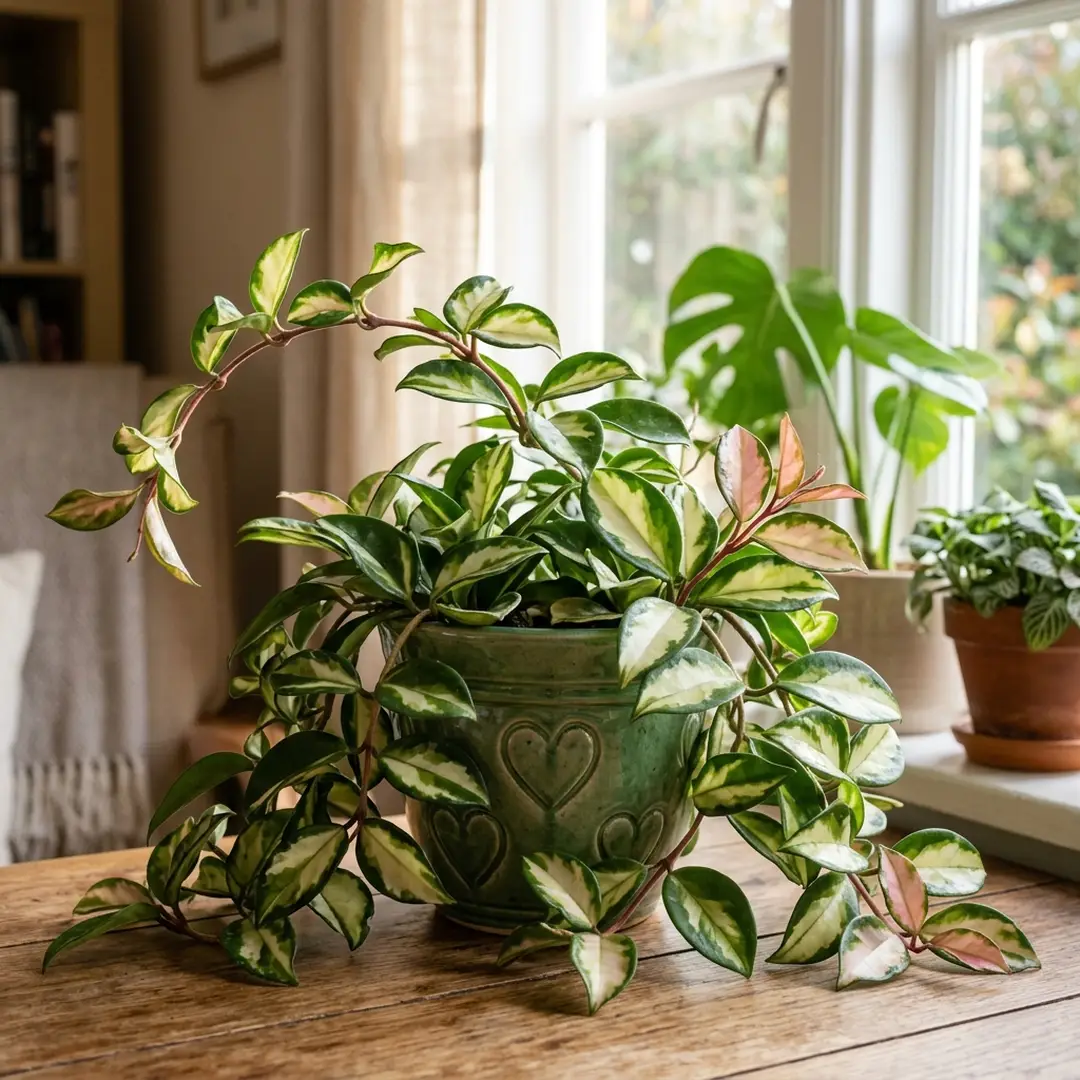
Hoya Crimson Princess is a variegated cultivar of Hoya carnosa with cream and pink centers inside a rim of deep green margins. The green outer edges give it a slight growth edge over its Crimson Queen sibling, while the glowing center variegation makes it just as striking.
📝 Hoya Crimson Princess Care Notes
🌿 Care Instructions
⚠️ Common Pests
📊 Growth Information
🪴 In This Guide 🪴

☀️ Hoya Crimson Princess Light Requirements
Bright Light to Keep the Center Pale
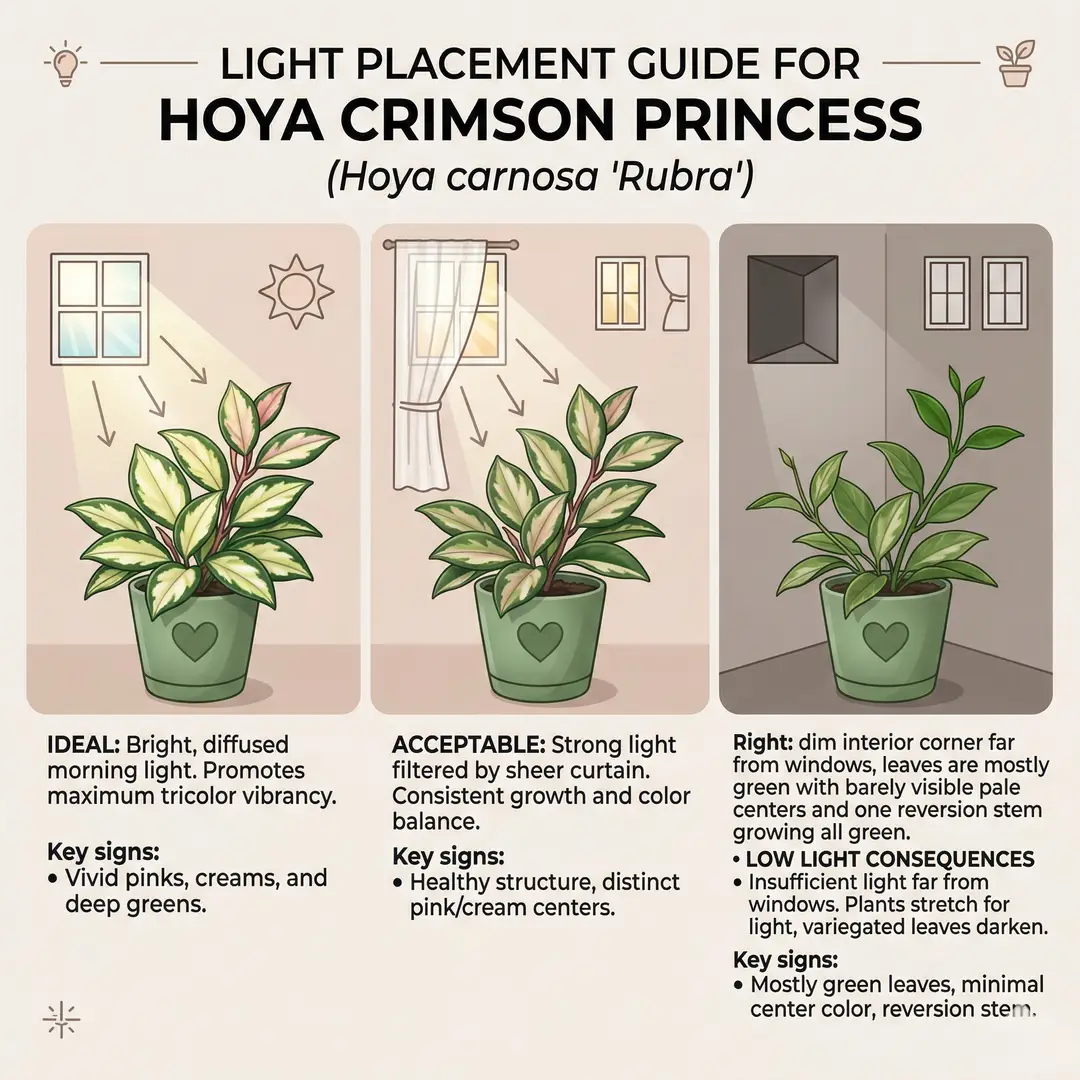
The center variegation of Hoya Crimson Princess behaves exactly like variegation anywhere else: without enough light, the plant gradually replaces pale tissue with green to compensate for the lower energy production. Bright indirect light is not just ideal, it is the minimum you should be aiming for if you want the variegation to stay vivid.
The green outer margins do give Crimson Princess a modest buffer compared to Hoya Crimson Queen. The plant can extract useful energy from the green perimeter of each leaf even when the pale center is contributing little. But that does not mean it tolerates dim conditions well. A north-facing windowsill will still cause reversion over time.
Best placement options:
- East-facing window: Ideal. Cool morning sun for a few hours, then bright indirect light the rest of the day. The pale center will be vivid, growth will be steady, and blooming becomes realistic.
- West or south-facing window: Excellent energy. Use a sheer curtain or keep the plant a couple of feet back from direct glass to avoid bleaching the pale center in harsh afternoon sun.
- North-facing window: Too dim for sustained variegation. The plant may survive and even grow, but the centers will gradually fill in with green over time.
- Grow lights: Work well for Hoyas. Aim for 12-14 hours at medium intensity with a full-spectrum LED bulb 10-12 inches above the foliage.
For a full breakdown of how to read light levels in different rooms, see the Indoor Plant Light Guide.
Reversion and What to Do About It
Reversion is when new growth loses its variegated center and comes in mostly or fully green. It is a common concern with all variegated Hoyas and is not a disease or a permanent condition. It is the plant adapting to insufficient light by producing more photosynthetically efficient tissue.
If reversion leaves start appearing, the fix is simple: move the plant to a brighter spot. New growth after the move should return to the variegated pattern within two or three leaf cycles.
You can prune off fully reverted stems if you want to keep the plant looking its best. This is purely cosmetic. Reverted stems are not harmful to the plant and actually improve its overall energy production. If you want to propagate a cutting with good variegation, pick stems where the center contrast is clearest.
Unlike Crimson Queen, where fully white or pink margins can sunburn easily, the pale center of Crimson Princess is less exposed at the leaf edge. Direct afternoon sun is still not ideal, but the risk of immediate sun damage is slightly lower.
💧 Hoya Crimson Princess Watering Guide
Dry Out Completely Between Waterings
Hoya Crimson Princess is an epiphyte with semi-succulent leaves, meaning it stores water in its foliage and is genuinely tolerant of dry spells. The roots, designed to cling to tree bark in the wild, want to dry out fully between waterings. Wet, dense soil is a reliable path to root rot.
The watering rule is the same as for all Hoya carnosa cultivars: water deeply when the soil is completely dry, then leave it alone until it is dry again.
- In summer with strong light, this might mean watering every 10-14 days.
- In winter or lower light, it can stretch to 4-6 weeks.
- Lift the pot. A light pot means dry soil. A heavy pot means wait.
Bottom watering is an excellent method for Hoyas. Place the pot in a tray of water for 20-30 minutes, let the chunky mix absorb from below, then drain fully. It keeps the top layer of bark from sitting permanently moist and encourages roots to grow deeper into the pot. See the Watering Guide for more on how to adjust frequency by season and environment.
The Taco Test
If you are not sure whether it is time to water, the Taco Test gives you a clear answer without guessing. Find a mature, fully developed leaf and gently try to fold it lengthwise like a taco shell.
- Firm, springs back: The leaf is full of stored water. Do not water.
- Pliable, wrinkled, bends easily: The plant has used its reserves. Time to water.
This check works regardless of season, pot size, or how recently you last watered.
Water Quality
Most Hoya Crimson Princess plants handle standard tap water without issue. If your tap water is very cold or heavily mineralized, you may occasionally see minor tip spotting on leaves over time. Room-temperature water is ideal. Letting tap water sit overnight before use is a simple precaution if your local water is heavily chlorinated, though it is rarely necessary for a healthy plant.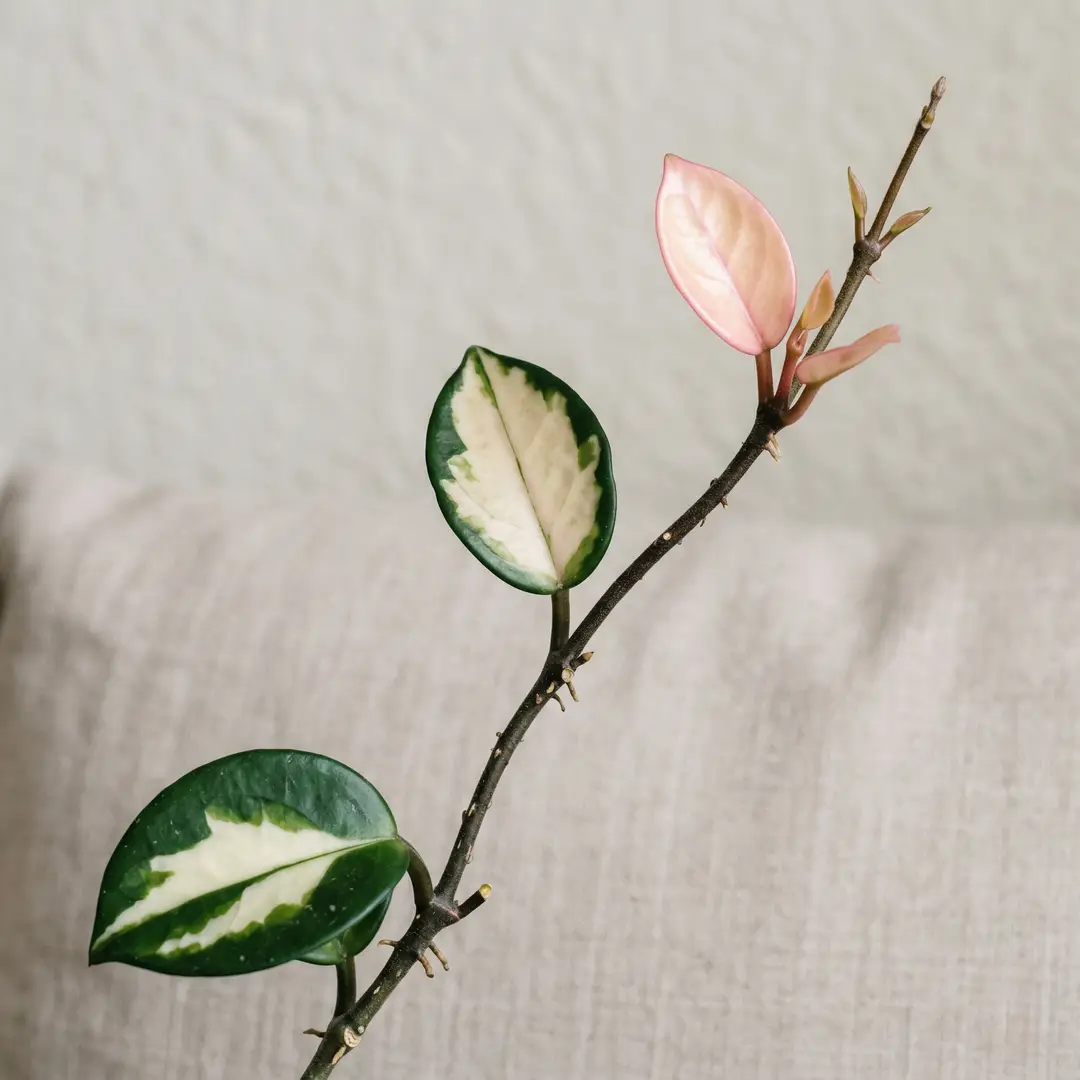
🪴 Best Soil for Hoya Crimson Princess
Chunky and Airy Over Dense Potting Mix
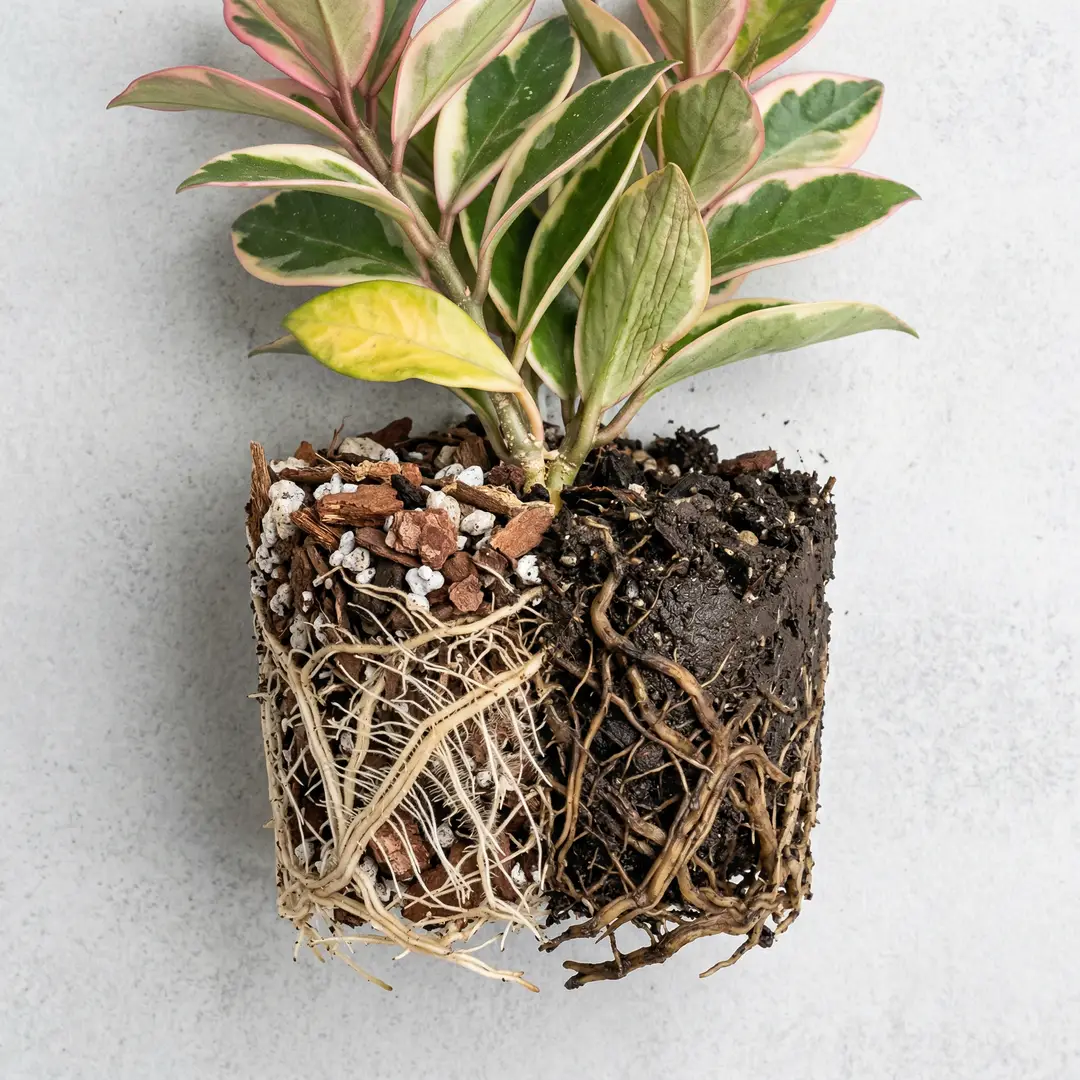
Standard all-purpose potting soil is too dense for this plant. It retains water against the roots far longer than an epiphyte wants, and root rot follows. The ideal mix has air gaps, drains quickly, and stays loose and crumbly over time.
The standard Hoya epiphytic mix:
- 1 part orchid bark (fine or medium grade): creates drainage channels and mimics the tree-bark surfaces these plants grow on naturally.
- 1 part perlite or pumice: prevents compaction and accelerates drainage.
- 1 part potting soil: adds organic matter for nutrients and modest moisture retention.
A pre-made orchid or cactus mix with a generous handful of extra perlite added is a workable shortcut. The goal is a mix that drains within seconds of watering and never smells musty or compacted. For the full breakdown on component choices, see the Houseplant Soil Guide.
Pot Material and Drainage
Terra cotta is the best material for Hoya Crimson Princess. Its porosity lets the soil breathe and wicks excess moisture away from the roots, making it harder to overwater. Plastic pots retain moisture longer, which is workable if you check soil moisture before every watering, but adds more risk if you water on a schedule.
Every pot must have drainage holes. A beautiful planter with no drainage will slowly drown the roots even with the best watering habits. Use a nursery pot inside the decorative planter and drain any standing water 30 minutes after watering.
🍼 Fertilizing Hoya Crimson Princess
Light Feeding, Timed for the Season
Hoya Crimson Princess is a light feeder on foliage nutrition. Monthly feeding during the growing season is plenty.
- Spring and summer: Use a balanced formula (10-10-10 or similar) diluted to half strength, once a month.
- Approaching bloom season: Switch to a bloom booster with a higher middle number, such as 5-10-5. Higher phosphorus supports both root development and flower production.
- Fall and winter: Stop fertilizing entirely. The plant is semi-dormant, roots are less active, and fertilizer salts build up in soil that is not being processed efficiently.
Always water the plant before applying liquid fertilizer. Dry soil concentrates fertilizer salts against the roots and can burn them, causing tip damage on the leaf margins. For fertilizer types and timing, the Fertilizing Guide covers the options in detail.
Reading Nutrient Signals
Hoya Crimson Princess gives reasonably clear visual feedback when something is nutritionally off.
- Washed-out green margins: In a plant that has been in the same soil for two or more years without feeding, faded margins can signal nitrogen depletion. A couple of balanced feedings over the growing season usually restore the color.
- Yellow leaves with green veins: More often an overwatering signal than a nutrient deficiency. Rule out soil moisture issues before adding fertilizer.
- Brown tips on the pale center zone: Usually fertilizer salt buildup. Flush the soil thoroughly and reduce application frequency. Half strength is enough. More is not better with Hoyas.
🌡️ Hoya Crimson Princess Temperature Range
Warm Year-Round with a Cool Winter Rest
Hoya Crimson Princess is a tropical epiphyte and thrives in the same indoor temperatures most people keep their homes: 65-80°F (18-27°C) year-round. Below 50°F (10°C) growth stops entirely, and anything approaching freezing will damage the foliage and roots.
One useful cold-season trick: a gradual drop in nighttime temperatures to around 60°F (15°C) from late fall through early spring can trigger flower bud formation for the following spring. If you live somewhere with naturally cooler evenings in winter, you may find the plant blooms reliably without any deliberate intervention.
Keep the plant away from cold drafts from windows and from air conditioning vents in summer. Cold blasts of air from AC can dry out the pale leaf centers rapidly and cause translucent or browning patches on the cream tissue.
Protecting the Plant Through Seasonal Shifts
The transition periods, early spring and late fall, are when temperature swings are most unpredictable indoors. A plant sitting close to single-pane glass may experience nighttime temperatures 10-15°F colder than the room if the glass is poorly insulated. Moving the plant 6-12 inches away from the glass is usually sufficient protection.
In summer with air conditioning running, the area near vents can drop below the comfort zone quickly. A simple thermometer placed near the plant for a day or two will tell you exactly what temperature range the plant is actually experiencing, rather than what the thermostat says.
💦 Hoya Crimson Princess Humidity Needs
Tolerant but Better With More
The waxy, semi-succulent leaves of Hoya Crimson Princess protect it from drying out in low humidity much better than thinner-leaved tropicals. Most homes at 40-50% relative humidity are fine for steady growth.
That said, you will see noticeably faster growth, larger leaves, and better bloom production at 60% humidity or above. In dry winter conditions with forced-air heating, ambient humidity can drop to 30-35%, and the pale leaf centers may develop brown tips over time.
Practical approaches:
- Humidifier: The most reliable option. A small humidifier near your plant collection maintains consistent humidity far more effectively than any other method.
- Pebble tray: Fill a shallow tray with pebbles and water, and set the pot on the pebbles above the waterline. It contributes a small amount of local humidity.
- Group your Hoyas together: Plants transpire moisture through their leaves. A cluster of Hoyas on the same shelf creates a slightly more humid microclimate than a single isolated plant.
Misting is not recommended. It provides about ten minutes of elevated humidity before evaporating, and repeated misting on the dense foliage of a mature Hoya vine can encourage fungal leaf spotting in low-airflow conditions. See the Humidity Guide for broader strategies.
One naturally high-humidity placement that works well for Crimson Princess: a bright bathroom. The humidity from daily showers keeps the ambient level elevated, the pale leaf centers look particularly luminous against light-colored tile, and as long as the room has a window providing decent indirect light, the plant will do very well there.
🌸 How to Get Hoya Crimson Princess to Bloom
The Peduncle Rule
Hoya Crimson Princess produces the same waxy, fragrant flower clusters as all Hoya carnosa cultivars: tight umbels of small star-shaped blooms, typically pink or white with red centers, with a sweet scent strongest at night. The fragrance is often described as honey, vanilla, or light chocolate.
The single most important rule: never cut the flower spurs. Peduncles are the small, bare, woody nubs that protrude from the vine between leaves. The plant blooms from the same peduncle year after year. Every peduncle preserved is a recurring bloom site. Prune one accidentally and the plant must grow a replacement, which can take two or more growing seasons.
Once bud clusters begin forming on a peduncle, do not move the plant. Hoyas orient their buds toward their light source, and rotating the pot at this stage causes bud blast, where the buds drop before opening.
Conditions for Reliable Blooming
Getting flowers requires the right combination of conditions held consistently over time:
- Maturity: Plants under two years old rarely bloom. This is normal.
- Bright light: The biggest single factor. A plant in a dim spot will not bloom. A plant in front of an east or south window has a real chance.
- Root-bound pot: Hoyas bloom more readily when the roots are snug. A plant in an oversized pot spends its energy on root expansion before considering flowers.
- Cool winter rest: A gradual nighttime drop to around 60°F from fall through early spring typically triggers bud formation for spring.
- Consistent moisture during budding: While the plant handles drought, severe dry spells during bud development cause bud blast. Once buds are visible, maintain slightly more consistent soil moisture.
Hoya Australis blooms more readily than most carnosa cultivars and is a good reference point for what a freely blooming Hoya looks like. Crimson Princess is in the same general territory as Crimson Queen: it blooms reliably once mature and given the right conditions, but it is not as quick to flower as some other species.
🏷️ Hoya Crimson Princess vs Crimson Queen and Related Cultivars
Princess vs Queen: The Core Difference
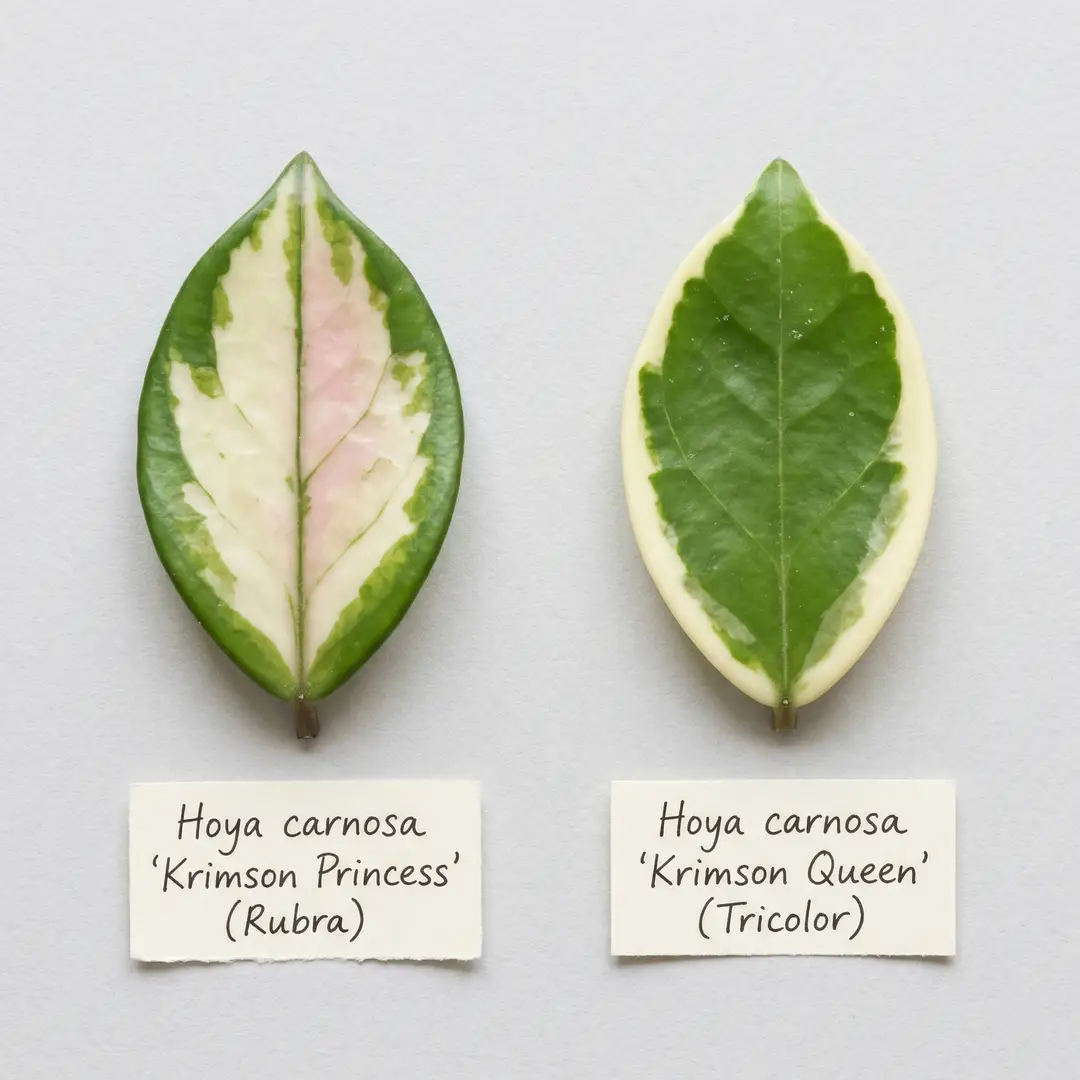
These two cultivars are the most commonly confused plants in the Hoya carnosa family. The care is identical. The only practical differences are visual and a small growth-rate advantage for Princess.
Hoya carnosa ‘Krimson Princess’ / Rubra (this plant):
- Variegation is in the center of the leaf.
- The outer margins are deep green. The center is cream, white, or pink.
- Memory trick: the Princess wears her gown in the middle.
Hoya Crimson Queen (Hoya carnosa ‘Tricolor’):
- Variegation is on the outer edges (margins) of the leaf.
- The leaf center is green. The margins are cream, white, or pink.
- Memory trick: the Queen wears her crown on the outside.
Why is Princess slightly faster? The green outer margins run around the entire perimeter of the leaf, which is where the primary photosynthetic cells are densest. Crimson Queen’s white or pink margins lack chlorophyll in the same zone. Under identical conditions, Princess typically produces new growth a bit more readily. The difference is noticeable but not dramatic.
Other Hoya carnosa Cultivars Worth Knowing
- Hoya carnosa (straight species): The all-green original. More vigorous than either variegated cultivar, blooms more readily, and tolerates lower light. A great starting point or companion plant if you are new to Hoyas.
- Hoya carnosa ‘Compacta’ (Hindu Rope): Leaves tightly curled and twisted along the stem. Extremely slow, prone to mealybugs, and stunning in a hanging basket.
- Hoya carnosa ‘Chelsea’: Slightly heart-shaped, cupped leaves with a semi-succulent, inflated texture.
- Hoya carnosa ‘Krinkle 8’: Leaves with 8 distinct dimples across the surface, giving a corrugated appearance.
Other Hoya Species to Grow Alongside
- Hoya Pubicalyx: Faster growing with silver-splashed leaves and richly colored dark flowers. A great choice for growers who want quicker results from a Hoya.
- Hoya Obovata: Round, chunky leaves with silver flecks. The ‘Splash’ form is highly collectible.
- Hoya Wayetii: Narrow leaves with dark red or purple margins. Compact and easy to fit on a small shelf.
- Hoya Linearis: Needle-like, soft, fuzzy leaves that cascade in pendant strings. Completely different in texture from all carnosa cultivars.
- Sweetheart Hoya: Heart-shaped leaves and instant recognition. The most popular gift Hoya.
🪴 Potting and Repotting Hoya Crimson Princess
Small Pot, Reliable Blooms
Hoya Crimson Princess has a modest root system relative to the foliage it can produce, and it blooms most reliably when slightly root-bound. An oversized pot keeps too much wet soil around the roots and delays both root establishment and flower production.
Repot only when the situation genuinely calls for it:
- Roots are visibly circling out of the drainage holes and compressing the root ball.
- The potting mix has broken down and no longer drains properly, typically after 3-4 years.
- The plant is not taking up water even when dry, suggesting roots are too compacted for normal absorption.
When repotting, go up only one pot size. Use fresh chunky epiphytic mix, water lightly, and hold off on fertilizing for 4-6 weeks. For detailed steps and timing, see the Repotting Guide.
Best Time to Repot
Spring is ideal. The plant is entering its active growth phase, roots establish quickly into new mix, and there is a full growing season ahead for recovery. Repotting in fall or winter slows recovery significantly and can leave roots sitting in cool, damp soil for months before growth resumes.
Emergency repotting for root rot can happen any time of year. Remove all visibly damaged roots, let the root ball air out briefly, repot into fresh dry mix, and keep the plant warm with moderate light until it stabilizes.
✂️ Pruning Hoya Crimson Princess
When and How to Trim
Routine pruning for health is not needed. You prune a Crimson Princess when the vines outgrow the space, when you want a bushier shape, or when harvesting cuttings.
- Best time: Early spring, before the growing season starts.
- Where to cut: Just above a node, the small swollen bump where leaves attach. Every node below the cut can eventually push out a new branch.
- Reverted green stems: You can prune fully green reverted vines if you want to keep the variegated look consistent. Leaving them is not harmful; green stems actually support the plant’s overall energy balance.
- The latex: All Hoya carnosa cultivars bleed a sticky milky sap when cut. Dab the cut end with a paper towel right away. The sap can irritate skin and stains fabric if left to dry.
- Critical: Never cut a peduncle. The small bare woody nubs along the vine look like dead stubs, but they are recurring bloom sites. Identify them before you start cutting.
🌱 How to Propagate Hoya Crimson Princess
Stem Cuttings: Straightforward and Reliable
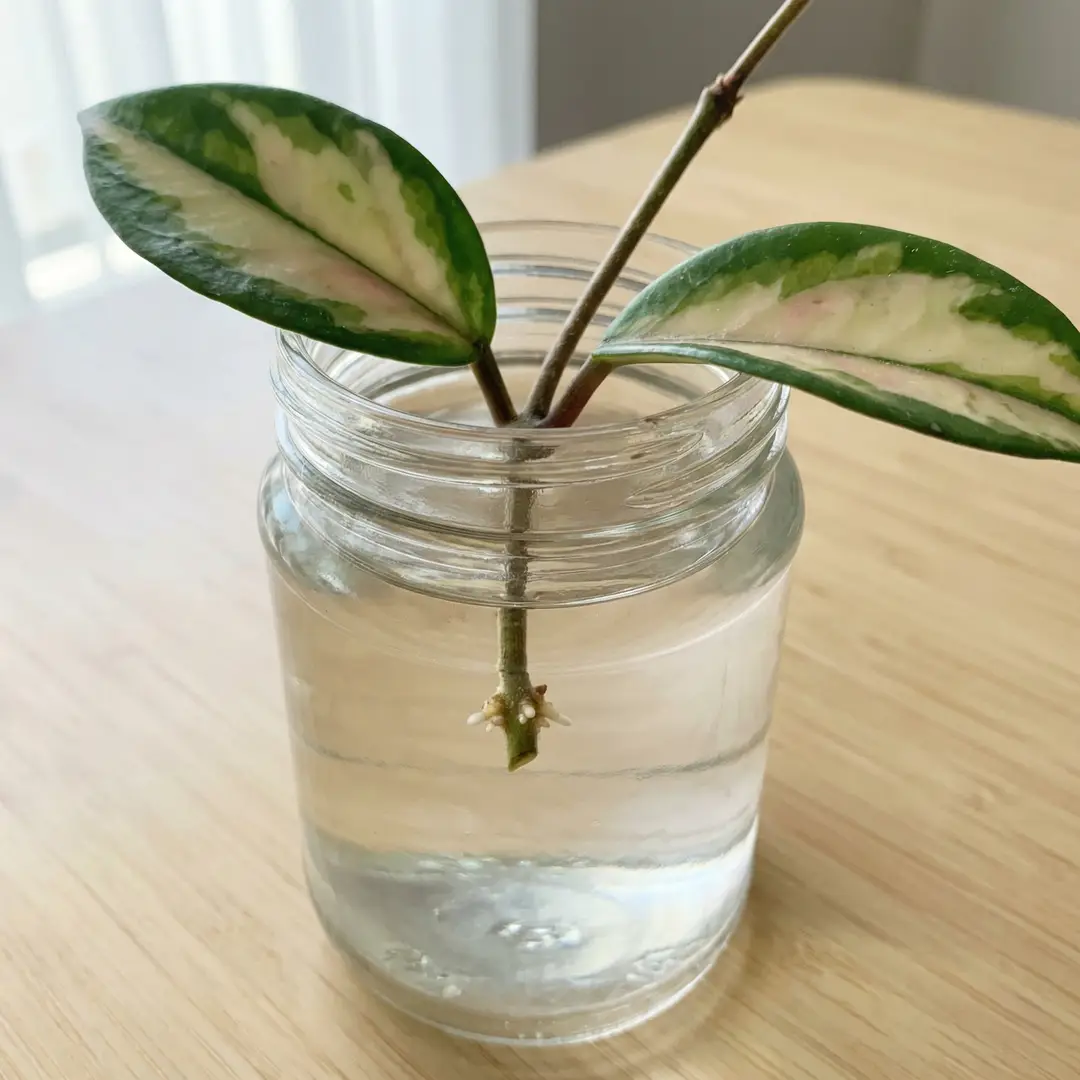
Hoya Crimson Princess propagates from stem cuttings using the same method as the straight species. Compared to Hoya Crimson Queen, the green-margined cuttings of Princess typically root a bit faster because the outer green tissue has more chlorophyll to power the rooting process.
How to take a cutting:
- Select a healthy stem with at least 2-3 nodes. A node is the small bump where a leaf attaches.
- Cut cleanly just below the lowest node with clean scissors.
- Remove the leaf from the bottom node. Roots emerge from here.
- Allow the cut end to callous for 30-60 minutes before placing it in your rooting medium.
Rooting options:
- Water: Submerge the bottom node in a jar of water. Change the water weekly. Roots appear in 3-5 weeks. Once secondary root threads form, pot it up. See the Water Propagation Guide for detailed steps.
- Sphagnum moss: Wrap the bottom node in damp (not dripping) sphagnum moss. Keep it warm and in bright indirect light. Roots form in 3-4 weeks and are often easier to transplant than water roots.
- Perlite: Bury the cutting in perlite with water in the bottom third of the cup. Aeration is better than water alone, with similar timing.
- Direct soil: Root straight into the chunky epiphytic mix. Takes 4-6 weeks but the roots are already adapted to soil conditions. Cover with a clear bag or dome to maintain humidity. See the Soil Propagation Guide for guidance on this approach.
Selecting Cuttings for Good Variegation
All cuttings from Hoya carnosa ‘Rubra’ carry the variegated genetics. You are not selecting a trait, just selecting for vigor. Choose stems where the green margins are clearly visible and the pale center contrast is strong. Avoid fully green reverted stems if you want the propagated plants to look like the parent.After Rooting: Transitioning to Soil
Cuttings rooted in water need a gentle adjustment period once moved to soil. Water roots and soil roots have different structures, and a cutting that goes directly from a jar into dry potting mix will often wilt temporarily while it adapts.
To ease the transition:
- Keep the mix slightly moist for the first 2-3 weeks after potting, more than you would normally keep a mature plant. Then gradually extend the dry periods.
- Start in a small container. A large pot keeps too much soil wet around a small root system.
- Hold off on direct sun and fertilizer until you see new leaves emerging. New leaves confirm the root system is active and ready.
🐛 Hoya Crimson Princess Pests and Treatment
Mealybugs: The Main Concern
Mealybugs are the most common pest on all Hoya carnosa cultivars. They settle into the sheltered crevices where leaves meet stems and can go undetected for weeks under thick waxy foliage.
- Signs: White cottony fluff at leaf axils, sticky honeydew residue on leaves or surrounding surfaces, ants clustering around the plant.
- Treatment: Dip a cotton swab in 70% isopropyl alcohol and touch each visible bug. The alcohol dissolves their protective wax coating on contact. For larger infestations, spray the whole plant with a mixture of water, dish soap, and 30% isopropyl. Repeat every 5-7 days for 3-4 weeks to catch newly hatched eggs.
- Prevention: Inspect the leaf axils specifically at every watering, not just the leaf surfaces.
Spider Mites, Aphids, and Scale
Spider mites arrive in dry conditions. Look for faint yellow stippling across the leaf surfaces and fine webbing on undersides. They dislike humidity: a thorough shower, raised ambient humidity, and a neem oil or miticide treatment is the standard response.
Aphids occasionally cluster on tender new growth and flower buds. A strong blast of water removes them. Scale insects look like hard brown bumps along the stems and can be scraped off manually, then treated with neem or horticultural oil.


🩺 Hoya Crimson Princess Problems and Diseases
Common Issues and Their Causes
Browning on the pale center: Usually sunburn or very low humidity. The cream and pink center tissue has less protective pigment than green tissue and burns more easily under harsh direct sun. Move the plant back from afternoon sun and check humidity. See the Browning Variegation guide for more detail on variegation-specific browning causes.
Leaves reverting to solid green: Not enough light. Move the plant to a brighter position and new growth should return to the variegated pattern within a few leaf cycles.
Wrinkled or pliable leaves: Dehydration. Water thoroughly. If the soil is already wet and leaves are still wrinkling, this signals root rot: roots that can no longer move water to the leaves. Unpot and inspect immediately.
Yellow leaves: Most often overwatering or the natural shedding of old base leaves. If multiple leaves are yellowing simultaneously, check soil moisture and root condition.
Bud blast (buds falling before opening): Happens when the plant is moved during budding, dries out severely, or experiences a sudden temperature or humidity drop. Keep the plant still and conditions stable once buds are visible.
Long bare stems (tendrils): The plant is searching for support. Do not prune them. Attach them to a hoop or trellis and they will fill in with leaves once anchored.
Root Rot: Prevention and Recovery
Root rot is the most serious problem this plant faces. It starts with overly wet soil and usually advances silently until external symptoms appear.
Healthy roots are firm and white to light tan. Rotted roots are brown, black, or mushy and may have a faint unpleasant odor. If you suspect rot, unpot the plant and inspect directly. Cut away all affected roots with clean scissors, allow the root ball to air out for an hour or two, then repot in fresh dry chunky mix. Hold off watering for 5-7 days to encourage remaining healthy roots to reach for moisture rather than sitting in wet soil.
Prevention comes down to the basics: airy mix, drainage holes, and only watering when the soil is completely dry.


🖼️ Hoya Crimson Princess Display Ideas
Using the Luminous Center to Your Advantage
The defining characteristic of Hoya Crimson Princess is the glowing pale center of each leaf. Your display strategy should take advantage of directional light that illuminates those centers.
- East windowsill: Morning sun at a low angle streams through the pale centers and makes each leaf look lit from within. This is the best position for this plant aesthetically and horticulturally.
- Hanging basket or macrame hanger: The cascading vines show both the leaf surfaces and the slight depth of each leaf. The pale centers catch ambient light and stand out against the dark green margins.
- Bamboo hoop: Training the vines around a hoop layers the tricolor leaves in a circular frame. The alternating pale centers and green edges build up into a genuinely striking pattern as the plant fills in.
- High shelf with downlighting: If you have a shelf with a directed light source above it, the pale centers will pick up the light dramatically.
For pot choices, white or pale grey ceramic lets the green margins and cream centers speak for themselves without visual competition. Matte black or dark glazed pots create a strong contrast that makes both the pale centers and the green edges pop.
Crimson Princess and Hoya Crimson Queen displayed side by side make an immediately effective pairing. The visual contrast between center-variegated and edge-variegated leaves on the same shelf demonstrates exactly why collectors tend to acquire both.
👍 Hoya Crimson Princess Care Tips (Pro Advice)
- Never cut a peduncle. That woody nub on the vine is a recurring bloom site. Leave every single one.
- More light means more vivid centers. Dim conditions produce green reversion leaves. A bright east window is the reliable path to consistent variegation.
- The green margins are your buffer. Unlike Crimson Queen, the green outer edges provide real photosynthetic activity even when the center is heavily pale. This plant handles slightly tougher light conditions a bit better, but it still needs bright indirect light.
- Do not repot unless the roots demand it. A snug pot is a blooming Hoya. Repotting before it is necessary delays flowers by a full season or more.
- Monthly pest checks at the leaf axils. Mealybugs nest where the leaf meets the stem. Check there specifically at every watering, not just on the leaf surfaces.
- Water the plant before fertilizing. Liquid fertilizer on dry soil concentrates salts against the roots. Always wet the soil first.
- Spring is the best time for everything. Repotting, cutting back, and starting cuttings all go best in spring when root activity is highest.
- Watch for bud blast triggers. Once buds are forming, hold the plant’s position, maintain stable temperature, and keep moisture slightly more consistent than usual.
- Pair it with Crimson Queen. Side by side, these two cultivars demonstrate the exact opposite of center versus edge variegation. The pairing is both educational and visually effective.
- This is a decade plant. Hoya Crimson Princess does not change dramatically week to week. Under good conditions it will be alive and better-looking in ten years. Give it the patience it deserves.
- Shower it monthly. Take it to the shower and rinse the foliage with tepid water. This cleans dust from the leaf surfaces and washes off early pest activity before it gets established. Let the foliage dry before nightfall to avoid fungal issues.
❓ Frequently Asked Questions
Is Hoya Crimson Princess the same as Krimson Princess?
Yes. Krimson Princess is the original cultivar spelling, while Crimson Princess is the common modern usage. Both names refer to Hoya carnosa ‘Rubra’, identifiable by its deep green outer margins and cream or pink center variegation.How do I tell Crimson Princess from Crimson Queen?
Crimson Princess has the variegation in the center of the leaf: green edges, cream or pink middle. Crimson Queen is the reverse: cream or pink edges, green center. A quick way to remember it is that the Princess wears her gown in the middle, while the Queen wears her crown on the outside.Why is my Hoya Crimson Princess reverting to green?
Reversion means the plant is not getting enough light. The pale center portions produce less energy than green tissue, so under low light the plant compensates by producing more uniformly green leaves. Move it to a brighter spot and new growth should return to the variegated pattern within a few leaf cycles.Is Hoya Crimson Princess toxic to cats or dogs?
No. Hoya carnosa and all its cultivars, including Crimson Princess, are non-toxic to cats and dogs. It is a safe choice for homes with pets.Why does my Hoya Crimson Princess not bloom?
The most common reasons are insufficient light, a pot that is too large, or youth: plants under two years rarely bloom. Make sure the plant is in bright indirect light, slightly pot-bound, and has experienced a modest drop in nighttime temperature over winter. Never cut the bare nubs (peduncles) on the vines, as these are the bloom sites that re-flower each year.Does Hoya Crimson Princess grow faster than Crimson Queen?
Slightly, yes. The deep green outer margins of Crimson Princess contain more chlorophyll than the cream margins of Crimson Queen, so the plant can generate slightly more energy per leaf. In practice the difference is modest, but under the same conditions Crimson Princess typically pushes new growth a bit more readily.ℹ️ Hoya Crimson Princess Info
Care and Maintenance
🪴 Soil Type and pH: Chunky Epiphytic Mix (orchid bark, perlite, potting soil)
💧 Humidity and Misting: Tolerates average household humidity of 40-60%. Higher humidity of 60%+ encourages faster growth and more reliable budding.
✂️ Pruning: Trim only for size or to harvest cuttings. Never remove flower spurs (peduncles), which re-bloom from the same spot each season.
🧼 Cleaning: Wipe leaves gently with a damp cloth. Inspect leaf axils and stem joints for mealybugs at every cleaning.
🌱 Repotting: Every 3-5 years, or when roots crowd out of drainage holes. Prefers being slightly pot-bound to encourage blooming.
🔄 Repotting Frequency: Every 3-5 years
❄️ Seasonal Changes in Care: Reduce watering in winter and stop fertilizing. A cooler night temperature around 60°F from fall through early spring can trigger spring bloom production.
Growing Characteristics
💥 Growth Speed: Slow to moderate (slightly faster than Hoya Crimson Queen)
🔄 Life Cycle: Perennial Epiphyte
💥 Bloom Time: Spring through summer (fragrant star-shaped umbel clusters)
🌡️ Hardiness Zones: 10-12
🗺️ Native Area: East Asia and Australia (cultivar of the wild-collected species)
🚘 Hibernation: Semi-dormant in winter
Propagation and Health
📍 Suitable Locations: Hanging baskets, bamboo hoops, trellises, high shelves, macrame hangers
🪴 Propagation Methods: Stem cuttings with at least one node, rooted in water, perlite, or sphagnum moss. Roots somewhat faster than Crimson Queen because the green margins supply more chlorophyll.
🐛 Common Pests: mealybugs, aphids, spider-mites, and scale-insects
🦠 Possible Diseases: Root rot is the primary risk.
Plant Details
🌿 Plant Type: Vine / Epiphyte
🍃 Foliage Type: Evergreen, semi-succulent
🎨 Color of Leaves: Tricolor: deep green outer margins, cream to white center, new growth often flushed pink at the center
🌸 Flower Color: Pink or white with red centers
🌼 Blooming: Yes, fragrant star-shaped clusters (umbels). Same as H. carnosa.
🍽️ Edibility: Nectar is sweet and edible. Plant is non-toxic.
📏 Mature Size: Vines up to 8-15 feet indoors with support
Additional Info
🌻 General Benefits: Pet safe, long-lived, striking center variegation, fragrant seasonal blooms.
💊 Medical Properties: None.
🧿 Feng Shui: East sector (Family/Health). Pink and green tones associated with warmth and vitality.
⭐ Zodiac Sign Compatibility: Taurus (patient, steady, long-lived, deeply rooted).
🌈 Symbolism or Folklore: Warmth, vitality, and endurance.
📝 Interesting Facts: The name ‘Rubra’ is Latin for red, referring to the pink-red tones that appear in the center variegation, especially on new growth and in high light. Unlike Crimson Queen, the green outer margins mean the plant can photosynthesize efficiently around the entire leaf perimeter even when the pale center is large.
Buying and Usage
🛒 What to Look for When Buying: Look for a plant with multiple stems and a clear visible contrast between the green margins and the pale center on each leaf. Avoid plants where leaves appear uniformly pale or mostly green, as these may be reverted or poorly lit.
🪴 Other Uses: Privacy screen on a bright trellis. Excellent in a bright bathroom with naturally high humidity.
Decoration and Styling
🖼️ Display Ideas: Train onto a bamboo hoop or let cascade from a macrame hanger. The glowing pale center of each leaf creates a luminous effect in directional light.
🧵 Styling Tips: The green-rimmed leaves look clean against white or light grey ceramics. Pairs well with Hoya Crimson Queen on the same shelf for an instant compare-and-contrast display.
📚 References ▼
- 📘 Hoya: The Complete Guide (Gardening Indoors Series)
- 📘 Royal Horticultural Society: Hoya carnosa cultivar notes
🪴 See also 🪴

Complete Guide to Hoya Wayetii Care and Growth

Complete Guide to Hoya Crimson Queen Care and Growth

Complete Guide to Hoya Obovata Care and Growth

Complete Guide to Hoya Pubicalyx Care and Growth

Complete Guide to Hoya Linearis Care and Growth

