

Hoya Australis
Hoya australis
Wax Plant, Honey Plant, Porcelain Flower, Waxvine


Hoya australis is one of the easiest hoyas to get blooming, and its fragrant white-and-red flower clusters are some of the most intensely scented in the genus. Native to Australia, it is more cold-tolerant than most hoyas and a dependable choice for beginners.
📝 Hoya Australis Care Notes
🌿 Care Instructions
⚠️ Common Pests
📊 Growth Information
🪴 In This Guide 🪴

☀️ Hoya Australis Light Requirements
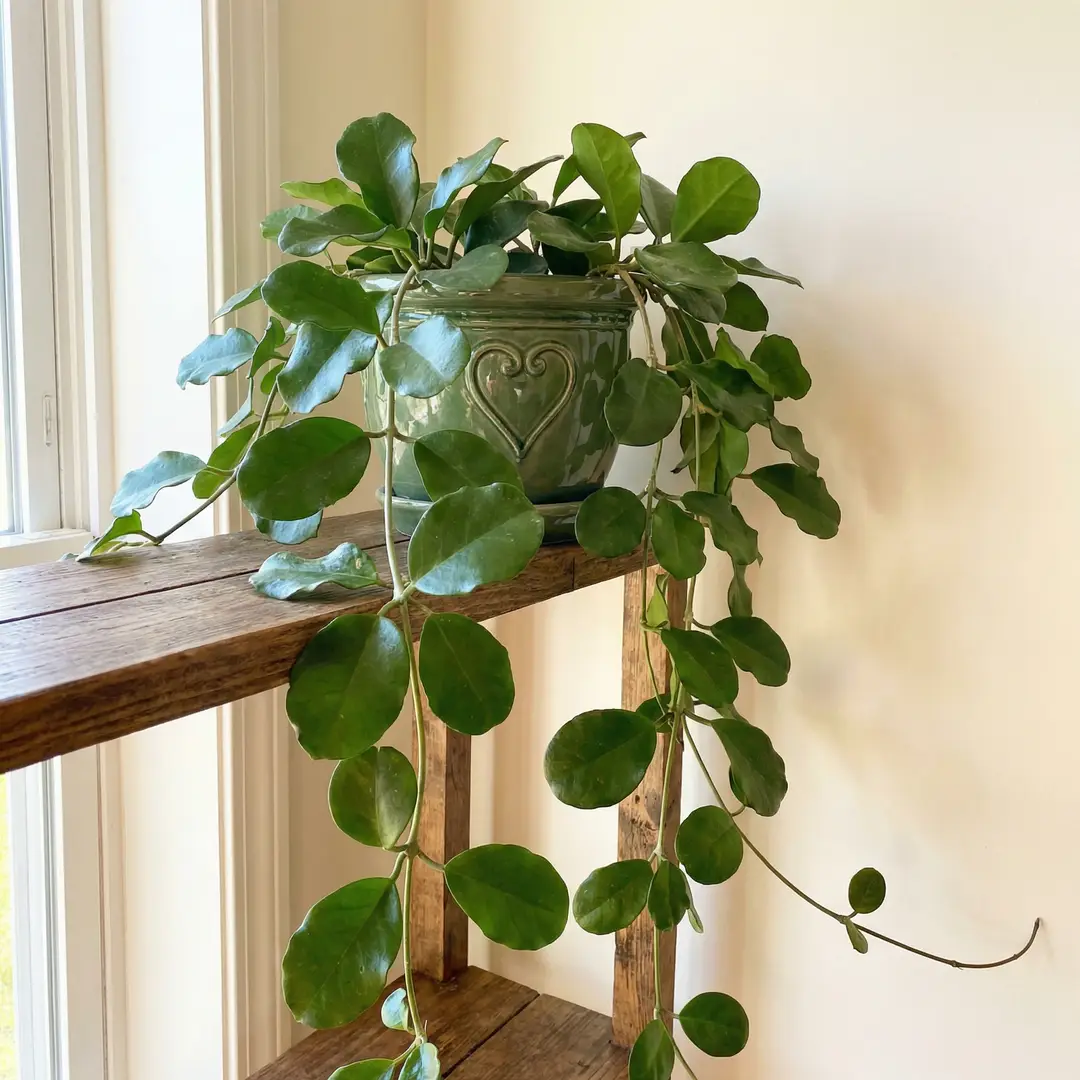
Best Indoor Light for Hoya Australis
Hoya australis grows best in bright indirect light with some direct sun each day. An east or west-facing window is ideal. South-facing windows also work well if the plant sits back a foot or two from the glass or has some sheer filtering to soften the intensity of midday light.
The large, glossy leaves are more tolerant of some direct sun than many tropical houseplants, but intense afternoon sun through glass can cause bleached patches on the leaves. Morning sun is gentler and consistently safe. The plant also handles brighter light better once it has been gradually acclimated over a couple of weeks.
Light is the most important factor in blooming. Hoya australis is known as one of the easier hoyas to get to flower, but that reputation comes from plants in good light. In dim conditions, it will still grow, but blooming becomes unreliable. Our Indoor Lighting Guide covers how to evaluate the actual light intensity in different parts of your home.
Outdoor Light in Summer
In warm climates (USDA zones 9-11), Hoya australis can grow outdoors year-round. In cooler zones, many growers move the plant to a sheltered outdoor spot in summer: a covered patio, pergola, or spot with bright dappled light under a tree canopy. Outdoor light levels in summer are dramatically higher than indoors even in shade, and this boost often triggers strong growth and reliable blooming.
If you move the plant outdoors, acclimate it gradually over 1-2 weeks. Start with bright shade and increase light exposure slowly. Bring it back inside when nighttime temperatures drop below 55°F consistently.
Grow Lights
A grow light is a reliable substitute for a bright window if your space is limited. A full-spectrum LED positioned 8-12 inches above the plant for 14-16 hours daily gives Hoya australis what it needs for both growth and blooming. In winter, supplementing a bright window with a grow light maintains the light intensity that can otherwise drop significantly as days shorten.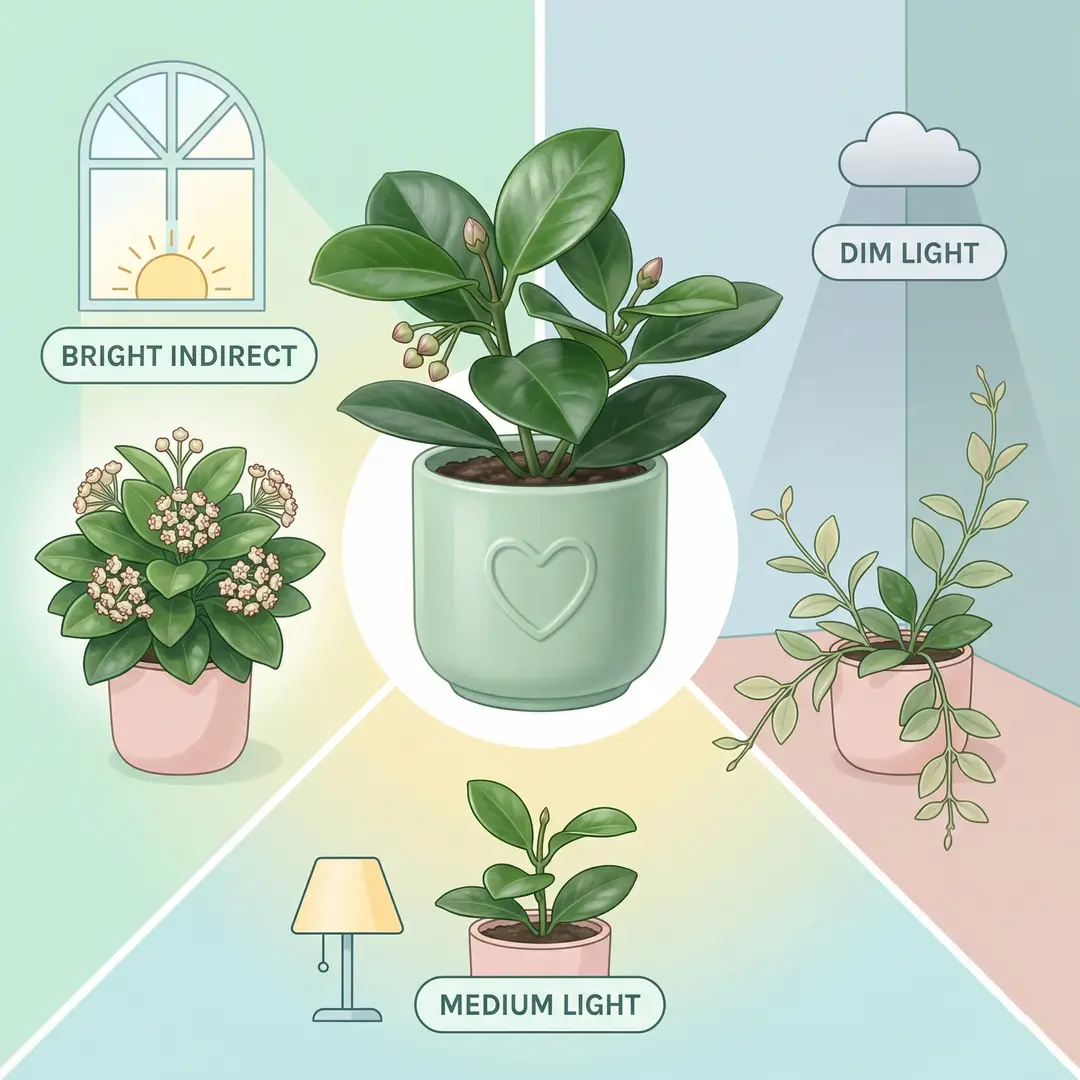
💧 How to Water Hoya Australis
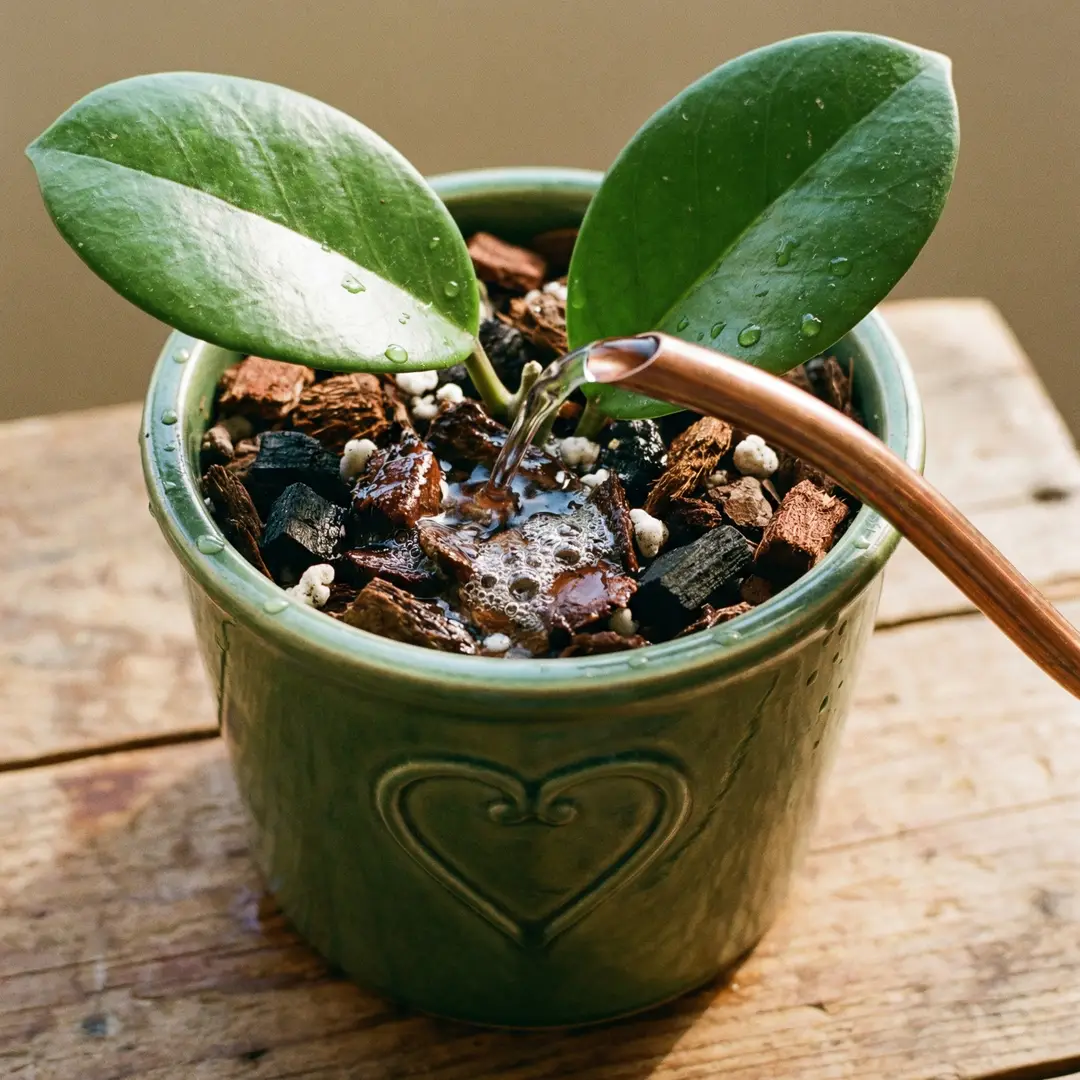
Watering Schedule and Method
Like all hoyas, Hoya australis should be watered only when the soil is completely dry. The semi-succulent leaves store water and the plant handles short periods of drought well. The risk is almost always on the wet side, not the dry side.
In spring and summer, watering every 7-14 days is typical, depending on pot size, soil mix, temperature, and light. In fall and winter, reduce to every 3-4 weeks or longer. The plant slows down significantly in cooler months and uses very little water.
To check timing, press a finger 2 inches into the soil. Any moisture at all means wait. You can also squeeze a leaf gently: fully hydrated leaves are firm and rigid; leaves that are slightly soft or pliable are telling you water is needed. Give a thorough soak when you water, until it flows freely from the drainage holes, and then allow it to drain completely. Our Watering Guide covers these tactile methods in full detail.
A moisture meter takes the guesswork out entirely and is especially useful through winter when the difference between “barely moist” and “completely dry” is hard to judge by feel alone.
Common Watering Mistakes
Watering on a fixed schedule: Hoya australis dries out at different rates depending on the season, temperature, pot size, and how much light it gets. A fixed every-seven-days schedule works in summer but overwatered the plant in autumn when conditions slow. Always check the soil rather than following the calendar.
Not reducing in autumn: This is the most common overwatering mistake. As days shorten and temperatures cool, the plant’s water consumption drops sharply. Many growers continue their summer schedule into October and November, which leads to soggy soil, root rot, and yellow leaves.
Watering little and often: Small, frequent sips never fully saturate the root zone and can lead to dry pockets in the center of the pot. Water deeply and infrequently instead.
Bottom Watering
Bottom watering works well for Hoya australis, particularly in more humid environments where moisture on the foliage can linger. Place the pot in a basin of water for 15-20 minutes, allow the soil to absorb from below, then drain fully. This technique ensures the root zone is fully saturated without wetting the leaves or stem joints.🪴 Best Soil for Hoya Australis
Hoya australis is an epiphyte that grows naturally on tree bark and rock faces in Australian coastal forests. Its roots need excellent drainage, airflow, and a light, open structure. Standard potting mix alone stays too wet and too dense for this plant.
The ideal mix combines:
- Orchid bark or coco chips (40%) for large air pockets and fast drainage
- Perlite or pumice (30%) to prevent compaction and keep the structure open
- Potting mix (30%) to provide a base of nutrients and moderate moisture retention
Pre-made orchid potting mix with extra perlite mixed through is a convenient alternative that works well. The finished blend should drain within seconds of watering and be fully dry within 7-10 days.
If the mix stays wet for longer than 10 days, it is too dense. Add more perlite and orchid bark to increase drainage. Our Soil Guide covers how to build and adjust epiphytic mixes.
Terra cotta pots are the best choice for most hoya growers because the porous walls allow moisture to evaporate through the sides, speeding up the drying cycle between waterings. Plastic pots retain moisture much longer and require more careful watering discipline.
Refreshing old mix: Even a good epiphytic mix breaks down over 2-3 years. Bark decomposes, perlite settles, and the blend becomes progressively more water-retentive. If a long-established plant starts drying out more slowly than it used to, refreshing the mix at the next repot usually resolves it.
🌱 Fertilizing Hoya Australis
Feeding Schedule
Feed Hoya australis once a month from March through September with a balanced water-soluble fertilizer diluted to half strength. A balanced 20-20-20 or similar formula supports healthy leaf and stem growth during the active season.
To encourage blooming on an established plant, switch to a high-phosphorus formula (bloom-booster) in early spring, around March or April, when the plant is coming out of its winter rest. Phosphorus supports flower development and can trigger bud formation on mature plants that are otherwise in good condition.
Stop fertilizing entirely from October through February. The plant is resting and cannot use the nutrients, which accumulate as salts in the soil and can damage roots over time.
Signs of Fertilizer Imbalance
Over-fertilizing: White crusty deposits on the soil surface or pot edges are a sign of fertilizer salt buildup. Leaf tips may also show brown or crispy edges. Flush the soil with a large volume of plain water to dissolve and drain the salts, and reduce the concentration or frequency of feeding.
Under-fertilizing: Slow growth with smaller-than-expected leaves and muted leaf color. Occasional yellowing that cannot be attributed to overwatering. Resume monthly feeding at the start of the growing season and the plant typically responds within a few weeks.
🌡️ Hoya Australis Temperature and Cold Tolerance
Ideal Temperature Range
Hoya australis is comfortable in the range of 55-85°F (13-29°C). It is notably more cold-tolerant than many hoyas, reflecting its origins in coastal and subtropical regions of eastern Australia where temperatures are more variable than in the purely tropical climates of Southeast Asia.
It can tolerate brief dips to around 40-45°F without permanent damage, making it suitable for cool rooms, enclosed verandas, and mild outdoor conditions that would stress more tropical hoyas. Consistent temperatures below 50°F slow growth significantly, and frost will still damage or kill the plant.
The Winter Rest and Blooming
The cool tolerance of Hoya australis is directly tied to its blooming behavior. In its native range in eastern Australia, the plant experiences a distinct seasonal pattern: warm, humid summers that drive active growth, followed by cooler, drier winters that trigger flower bud formation for the following spring. Replicating this seasonal rhythm is the most effective thing you can do to improve bloom reliability.
Replicating this at home is straightforward. From October through February, allow the temperature to drop slightly (a spot near a window that cools at night is ideal), reduce watering to once every 3-4 weeks, and stop fertilizing entirely. This rest period is probably the single biggest factor in reliable bloom production. Many growers who find the plant refuses to bloom are simply not providing a distinct enough winter rest. Even a difference of just a few degrees cooler at night compared to summer temperatures can be enough to trigger spring bud formation.
Seasonal Care Calendar
Spring (March to May): Resume regular watering and monthly fertilizing as growth accelerates. This is the best time to repot or take propagation cuttings. Watch for flower buds beginning to form on established plants.
Summer (June to August): Peak growing period. Water more frequently as the soil dries faster in warmth. Feed monthly. If moving outdoors, provide bright dappled shade and bring back inside before nights cool. This is when the plant puts on the most growth and when active vines can extend noticeably each week.
Fall (September to November): Gradually reduce watering frequency and stop fertilizing. Allow the plant to slow down naturally as light and temperature decrease. Flower bud formation can begin during this period on mature plants in good light.
Winter (December to February): Water sparingly, only when completely dry. No fertilizer. A cool, bright window is ideal. This rest period is the setup for spring blooms. The combination of reduced water, cooler nights, and no fertilizer signals the plant to invest in bud development rather than vegetative growth.
💦 Hoya Australis Humidity Needs
Hoya australis adapts well to average household humidity of 40-60%. Like other hoyas with semi-succulent leaves, it handles dry air better than most tropical vining plants and does not require misting or a humidifier to thrive.
In very dry winter conditions (below 30%), leaf edges may show slight crispness, but this is cosmetic. A pebble tray filled with water placed beneath the pot provides a gentle humidity boost without wetting the roots. A small room humidifier is a better option than misting if you want to raise ambient humidity more substantially.
Higher humidity of 60-70% can support more vigorous growth and may also contribute to more generous blooming on mature plants. In the plant’s native coastal Australian habitat, humidity is consistently moderate to high, particularly in summer.
Humidity and Plant Grouping
One of the simplest ways to maintain slightly elevated humidity around Hoya australis is to group it with other plants. Transpiration from a cluster of plants creates a small microclimate with modestly higher ambient humidity than a single isolated plant. This is also practical from a care standpoint: a group of hoyas can be inspected and watered together, making the routine faster and more consistent.
Allow enough spacing between plants for airflow when grouping. Dense packing with no airflow creates conditions that favor fungal issues and makes it easier for mealybugs to spread from one plant to another.
🌸 Hoya Australis Flowers and Fragrance
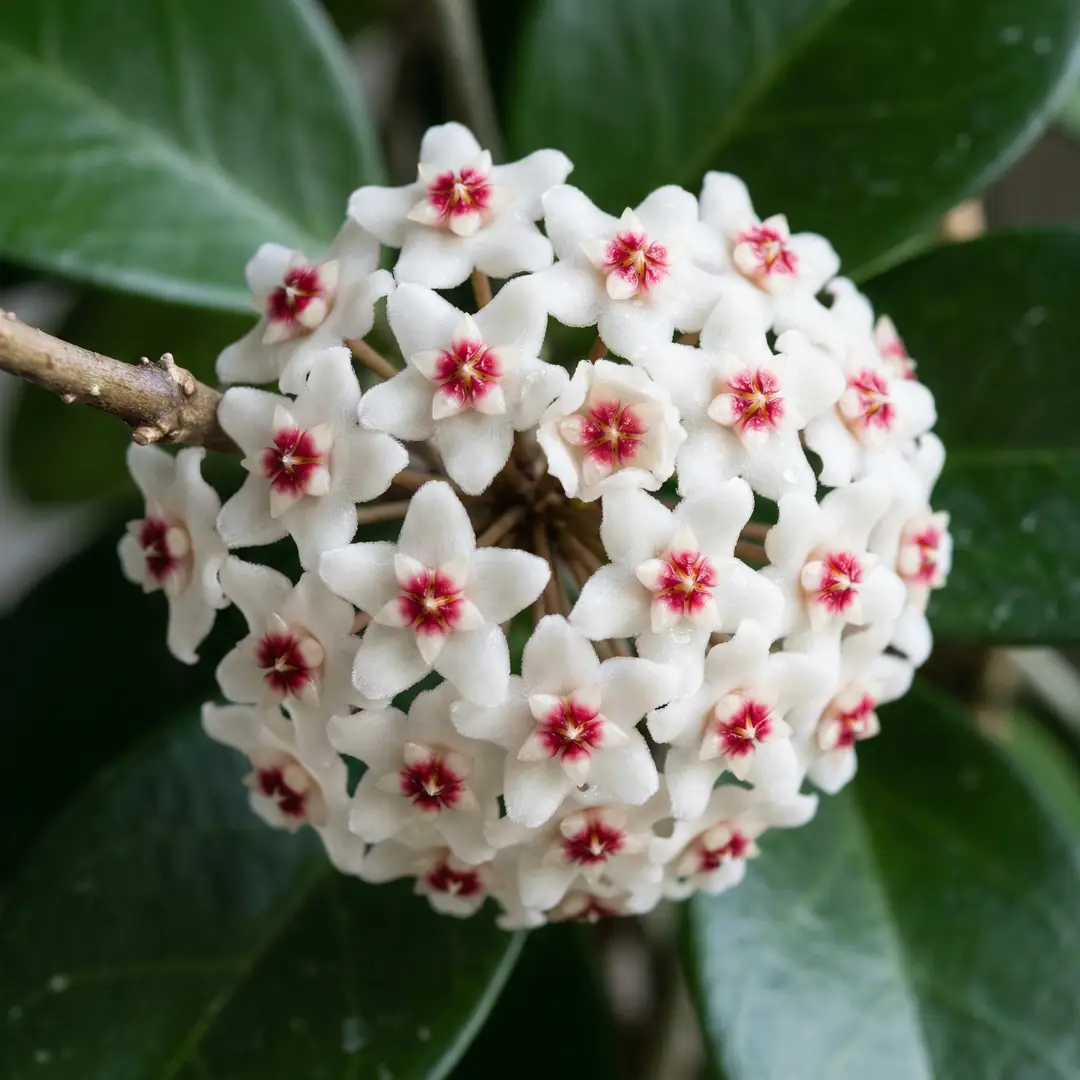
What the Flowers Look Like
Hoya australis flowers are small, waxy, and star-shaped, arranged in rounded umbrella-like clusters called umbels. Each individual flower has pure white petals with a vivid red or pink-red center crown, creating a clean, high-contrast look that photographs beautifully. The umbels are typically dense with 20-40 individual flowers per cluster.
The fragrance is exceptional. Sweet, honey-like, and intensely perfumed, particularly in the evening and at night. It is often described as one of the strongest fragrances of any commonly kept hoya, stronger than Hoya Carnosa and noticeably different from the spicy-sweet scent of Hoya Pubicalyx. When several umbels are open at once, the scent carries through an entire room. Factor this into your display planning: near a seating area is wonderful; in a small bedroom might be overwhelming.
Like all hoyas, the flowers emerge from peduncles (flower spurs) that re-bloom from the same spot each season. Do not remove the spurs after blooming; they will carry another set of flowers the following year.
Getting Hoya Australis to Bloom
Hoya australis has a well-earned reputation as one of the more reliable hoya bloomers, but it still needs the right conditions. The key factors are:
- A genuine winter rest. Cooler temperatures (55-60°F at night), reduced watering, and no fertilizer from October through February. This is the most commonly skipped step and the most important one.
- Bright light. Bright indirect light with some direct sun. Without adequate light, the plant will not build the energy reserves needed for flower production.
- Maturity and pot-bound roots. Most plants need to be established for at least 1-2 years. Being slightly pot-bound encourages blooming. Resist repotting into a larger container unless the roots are truly cramped.
- Consistency. Once buds form, avoid moving the plant. Hoya australis, like other hoyas, can drop buds in response to repositioning or sudden environmental changes. Mark the position of the pot to return it to the same orientation after watering. Even a quarter-turn can be enough to trigger bud drop on a sensitive plant mid-cycle.
If bud drop happens despite stable conditions, check for sudden temperature shifts (cold drafts or heat from a nearby vent) and make sure the plant is not bone dry. Stress from any source during bud development can cause drop. See our failure to bloom guide if the problem repeats across seasons.
🌿 Hoya Australis Subspecies, Cultivars, and Related Hoyas
Recognized Subspecies of Hoya Australis
Hoya australis is a widespread species with several recognized subspecies, each from a different part of its native range:
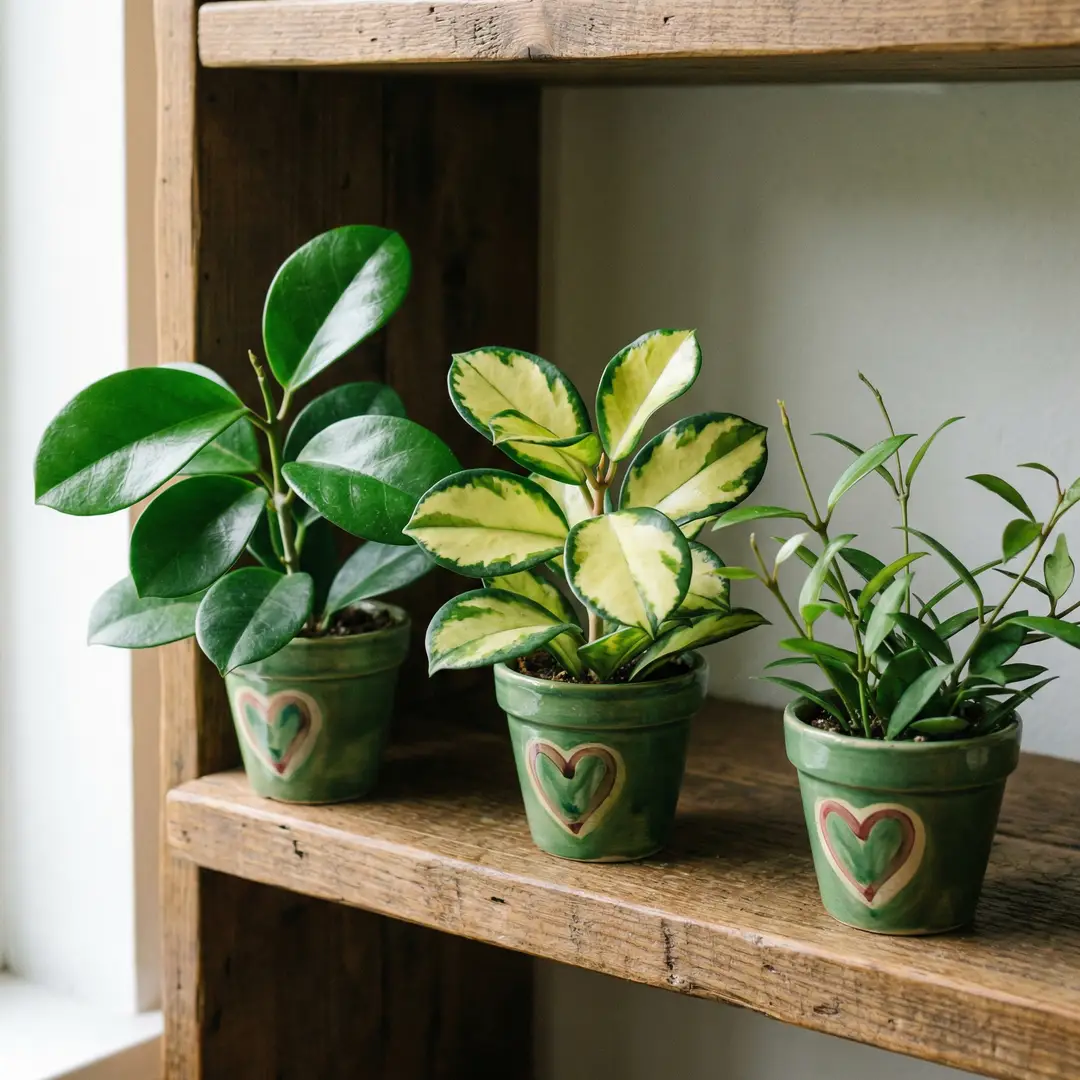
ssp. australis: The most common form in cultivation. Large, rounded, glossy green leaves with a distinctive wavy edge in some specimens. Found in coastal Queensland and New South Wales.
ssp. sanae: Smaller, thinner leaves than the typical form. Found in northern Queensland. Less common in cultivation but occasionally available from specialty hoya sellers.
ssp. rupicola: Native to rocky, exposed environments in Queensland. The leaves tend to be slightly thicker and more succulent. Tolerates drier conditions than other subspecies.
ssp. tenuipes: A rainforest form with thinner, more flexible leaves. Found in moist forest habitats. Slightly more humidity-sensitive than other subspecies.
ssp. oramicola: A coastal form from Western Australia. Relatively rare in cultivation.
Most plants sold as “Hoya australis” in shops and markets are ssp. australis. The subspecies share the same general care requirements but vary in leaf size, texture, and natural habitat preferences.
The 'Lisa' Cultivar
Hoya australis ‘Lisa’ is a popular variegated cultivar with striking cream-yellow and green patterned leaves. The variegation can appear as a cream center with green margins, or as splashed and mottled patterns across the leaf surface. Each leaf is slightly different, making the plant visually dynamic.
‘Lisa’ grows somewhat slower than the standard green form because the non-green areas of the leaves contain less chlorophyll for photosynthesis. It needs brighter light than the standard form to compensate for this reduced efficiency. Care is otherwise identical, but it is slightly more sensitive to overwatering and needs more careful watering discipline.
Related Hoyas to Consider
- Hoya Carnosa: The classic wax plant with oval, silver-speckled leaves. Slower-growing and less reliably blooming than australis, but extremely long-lived and widely available. A true heirloom plant.
- Hoya Pubicalyx: Faster-growing than australis with narrow, silver-splashed leaves and dark burgundy-to-black flowers. More variable in appearance across cultivars.
- Sweetheart Hoya: Heart-shaped leaves on a very slow-growing vine. A popular gift plant, though the single-leaf cuttings commonly sold will not grow into full plants without a stem node.
- Hoya Wayetii: Narrow, lance-shaped leaves with dark red to purple margins that intensify with brighter light. A visually distinctive Philippine hoya with the same easy care profile.
- Hoya Obovata: Large, rounded, silver-flecked leaves that share the same rounded leaf shape as australis but with striking silver markings. The ‘Splash’ form is one of the most sought-after hoyas available.
- Hoya Linearis: Soft, needle-like pendant cascades from the Himalayan foothills. One of the most unusual-looking hoyas in cultivation, with lemon-scented white flowers and notable cold tolerance.
🪴 Potting and Repotting Hoya Australis
When and How to Repot
Hoya australis prefers to be slightly pot-bound. It blooms more freely when the roots fill the container, and it handles staying in the same pot for extended periods better than most tropical houseplants. Repot only when roots are emerging consistently from drainage holes or when the plant dries out within a day or two of watering.
Move up only one pot size (1-2 inches in diameter) when you do repot. An oversized container holds excess moisture in the unused outer soil, raising root rot risk. Spring is the best time to repot, as the plant is entering its active growth phase.
Use the chunky epiphytic mix described in the Soil section and make sure the new container has drainage holes. Terra cotta is preferred for its moisture-wicking properties.
Pot Material and Drainage
Pot material affects how quickly the soil dries between waterings, which has a real impact on root health for a plant that needs dry-out periods.
Terra cotta: The best choice for most hoya growers. Porous walls allow moisture to escape through the sides, speeding up the drying cycle. Particularly useful in rooms with lower light or in winter when the plant is using less water.
Plastic and glazed ceramic: Retain moisture significantly longer than terra cotta. Suitable for growers in dry climates or for plants in very bright, warm spots that dry out quickly. Require more disciplined watering to avoid keeping the roots too wet.
Hanging basket coco fiber liners: Open wire baskets with coco fiber or moss liners provide excellent drainage and airflow to the roots. A strong choice for a displayed hanging basket that dries out evenly and quickly.
Training Vines
As an active grower, Hoya australis benefits from a support structure. A tall bamboo hoop, wire trellis, or moss pole allows the vines to climb and creates a more structured display. For a hanging basket, the vines trail naturally and require no training beyond keeping them from tangling.
To encourage a bushier, multi-stemmed plant rather than a few very long vines, pinch the growing tips of the longest vines in spring. This redirects the plant’s energy into side shoots and produces a fuller shape over time.
🧹 Cleaning Hoya Australis Leaves
The large, glossy leaves of Hoya australis are one of its most distinctive features, and they are also excellent dust collectors. Regular cleaning keeps the plant looking its best and improves light absorption.
Wipe each leaf gently with a soft damp cloth, supporting the leaf from below. Work both the top surface and the underside, where pests like mealybugs and scale insects tend to settle first. The firm, succulent-like leaves handle gentle handling easily.
Avoid leaf shine sprays, coconut oil, or any oil-based polish. These products clog the leaf’s stomata and can interfere with gas exchange over time. The natural high-gloss finish of Hoya australis leaves is already attractive and does not need enhancement.
For a large plant with many vines, a gentle shower works efficiently. Rinse the whole plant with lukewarm water, let it drain fully, and allow it to dry in a warm spot before returning it to its usual position. A shower also helps knock off light pest populations before they can establish.
✂️ Pruning Hoya Australis
Hoya australis grows at a moderate to fast pace and benefits from occasional pruning to maintain shape and encourage branching. Trim just above a node in spring or early summer when the plant has the energy to respond quickly. Each pruned stem tip should produce 1-2 side shoots, gradually filling out the plant.
The one absolute rule: never remove flower spurs. These are the short, woody-looking stubs on the mature stems where flower clusters develop. After the flowers fade, the spur looks bare and dried out, but it will produce another set of blooms from the same spot next season. Removing it means waiting years for a new one to develop.
Use any healthy stem cuttings from pruning for propagation. With a plant this willing to root, regular pruning turns into a reliable supply of new plants to share.
Avoid pruning in fall or winter when growth has slowed. Cuts made during dormancy heal slowly and can leave the plant more vulnerable to fungal issues through the cold months. Spring and early summer are the right windows for any significant shaping work.
🌱 How to Propagate Hoya Australis
Stem Cuttings in Water
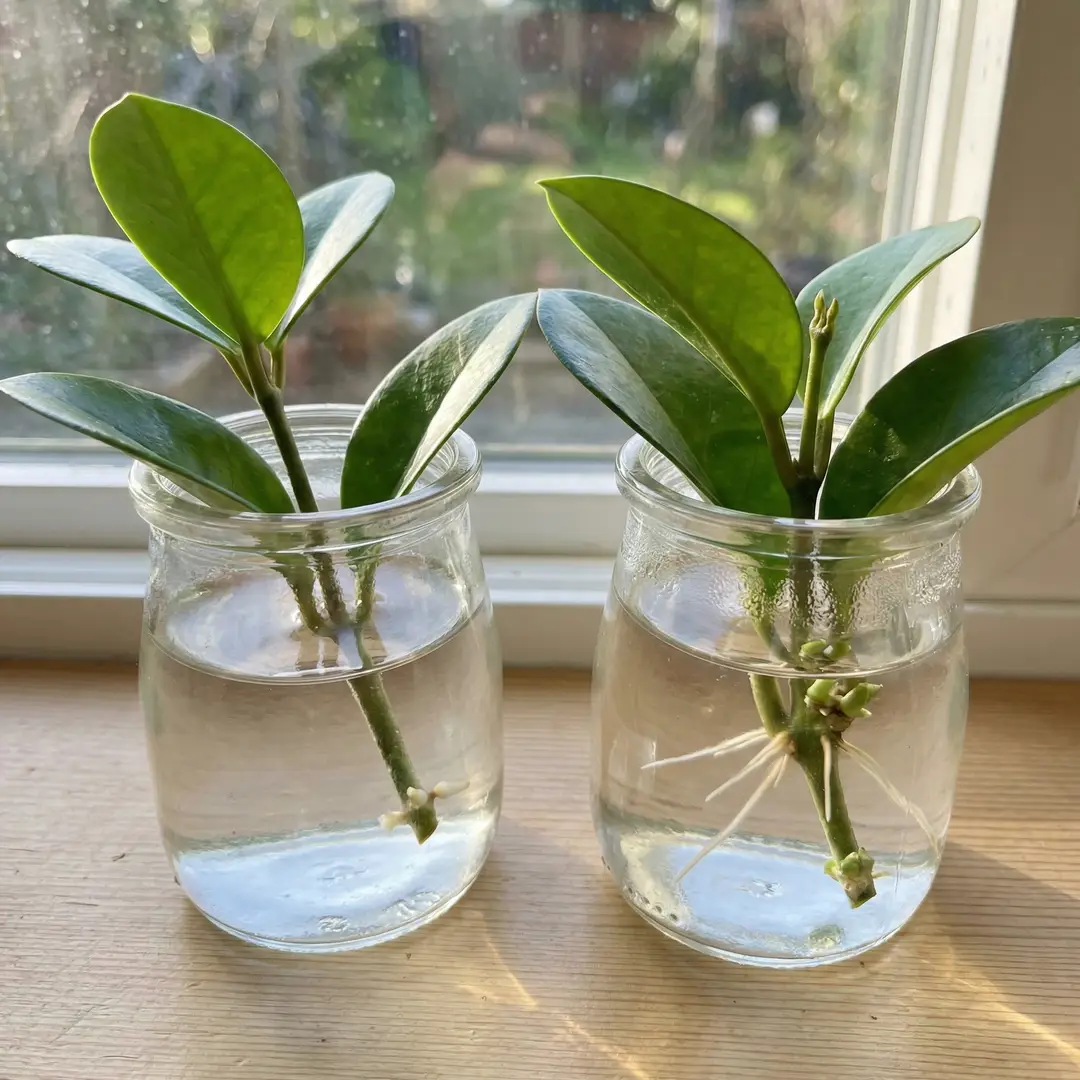
Hoya australis roots readily from stem cuttings. Take a cutting with 1-3 nodes and one or two leaves. Remove any leaves that would sit below the waterline, then place the bare stem section in a glass of clean water.
Keep in bright indirect light at room temperature (above 65°F). Change the water every 5-7 days. Roots typically appear within 3-5 weeks, sometimes faster in warm conditions. When roots are 1-2 inches long, transfer the cutting to the chunky epiphytic mix.
The transition from water to soil is the most delicate stage. Keep the soil lightly moist (slightly more moist than you would for an established plant) for the first 2-3 weeks after potting to help the cutting adapt. Then gradually shift to the usual dry-between-waterings schedule. Full details are in our Water Propagation Guide.
Soil and Moss Propagation
For direct propagation without a water stage, use moist perlite or sphagnum moss. Let the cut end air-dry for 30-60 minutes, then insert the node end just below the surface. Cover the pot loosely with a clear plastic bag or humidity dome to retain moisture, opening daily for airflow.
Roots form within 4-8 weeks in warm conditions. The cutting is ready to move to regular epiphytic mix when it resists a gentle tug. Sphagnum moss is particularly effective for hoya propagation because it stays evenly moist without becoming waterlogged. See our Soil Propagation Guide for the full process.
Take cuttings in spring or early summer for the fastest, most reliable results. Cuttings taken in winter root slowly and are more prone to rot before roots establish.
Labeling: If you are propagating both the standard green form and the ‘Lisa’ variegated cultivar, label the cuttings clearly before you put them in water or moss. Before the variegation is fully developed in a young cutting, both forms can look similar. A small label avoids mixing them up.
🐛 Hoya Australis Pests


Hoya australis is generally pest-resistant, but the same pests that affect all hoyas can find their way onto this plant, particularly in mixed collections.
Mealybugs are the most common issue. They cluster in stem joints and along the undersides of the large, glossy leaves, appearing as small white cottony masses. The smooth leaf surface makes them easier to spot than on rougher-leaved plants. Treat with a cotton swab dipped in 70% rubbing alcohol applied directly to each visible cluster, or spray with diluted neem oil. Repeat weekly for 3-4 weeks to clear the full population including eggs and new hatchlings.
Scale insects attach to stems and leaf undersides as hard, brown, immobile bumps. Scrape them off manually with a soft toothbrush or fingernail, then treat with neem oil or insecticidal soap to reach any remaining insects.
Spider mites appear in hot, dry conditions as fine webbing and tiny pale dots on the leaf surface. A shower to rinse the plant, followed by neem oil or insecticidal soap treatment, resolves most cases. Slightly increasing ambient humidity discourages them from returning.
Aphids cluster on new soft growth in spring and summer. Knock them off with a stream of water or treat with insecticidal soap.
Inspect the plant thoroughly every time you water. The large leaves of Hoya australis are easy to check quickly, and catching an infestation early makes treatment straightforward. Isolate any affected plant immediately to prevent spread to other hoyas.
Prevention habit: The best pest control for this plant is a consistent weekly visual check during watering. Most mealybug infestations that reach serious levels started as a small cluster at one or two stem joints that was overlooked for several weeks. A 30-second check of stem joints and leaf undersides during each watering session is enough to catch problems before they require intensive treatment.
If you are bringing in a new plant to a collection that already includes Hoya australis, quarantine the new plant in a separate room for 2-4 weeks before placing it near existing plants. Pests from new acquisitions are the most common source of infestations in established collections.
⚠️ Common Hoya Australis Problems


Yellow Leaves
Yellowing leaves on Hoya australis are most commonly caused by overwatering or root rot. If the soil has been wet for an extended period and lower leaves are yellowing, let the soil dry completely and check the roots at the next repotting. Healthy roots are firm and white or pale tan; roots damaged by rot are brown, mushy, and smell unpleasant. Remove any damaged roots and repot into fresh dry mix.
Occasional yellow leaves on older lower stems are normal and not a cause for alarm: the plant naturally sheds leaves it can no longer efficiently support in lower-light areas of the stem.
If you have recently changed the soil mix or pot, some yellowing in the first two weeks is normal repotting stress and usually self-resolves as the roots re-establish. If yellowing continues after three weeks, investigate the soil moisture level and root condition more carefully.
Leggy Growth and Leaf Drop
Leggy growth with large gaps between leaves is almost always a light problem. Move the plant to a brighter spot or supplement with a grow light. The large leaves of Hoya australis make leggy growth particularly noticeable because the gaps between widely spaced leaves look more prominent than on smaller-leaved hoyas.
Leaf drop in significant amounts usually points to a stressor: cold drafts, sudden temperature change, overwatering, or repotting shock. Identify and remove the stressor and the plant will stabilize. Bare, leafless tendril-like extensions from the stem are normal exploratory growth, not a problem: the plant is reaching for a support to climb.
Wilting or Soft Leaves
Wilting or drooping is usually a watering issue in one direction or the other. Firm leaves that have gone limp suggest the plant needs water: give a thorough soak and they should recover within 24 hours. If the leaves remain soft or the plant wilts even after watering and the soil is wet, root rot is the more likely cause. Unpot, inspect the roots, and repot into fresh dry mix if rot is found.🏡 Displaying Hoya Australis
Best Display Spots
Hoya australis is a versatile display plant that works well in several settings:
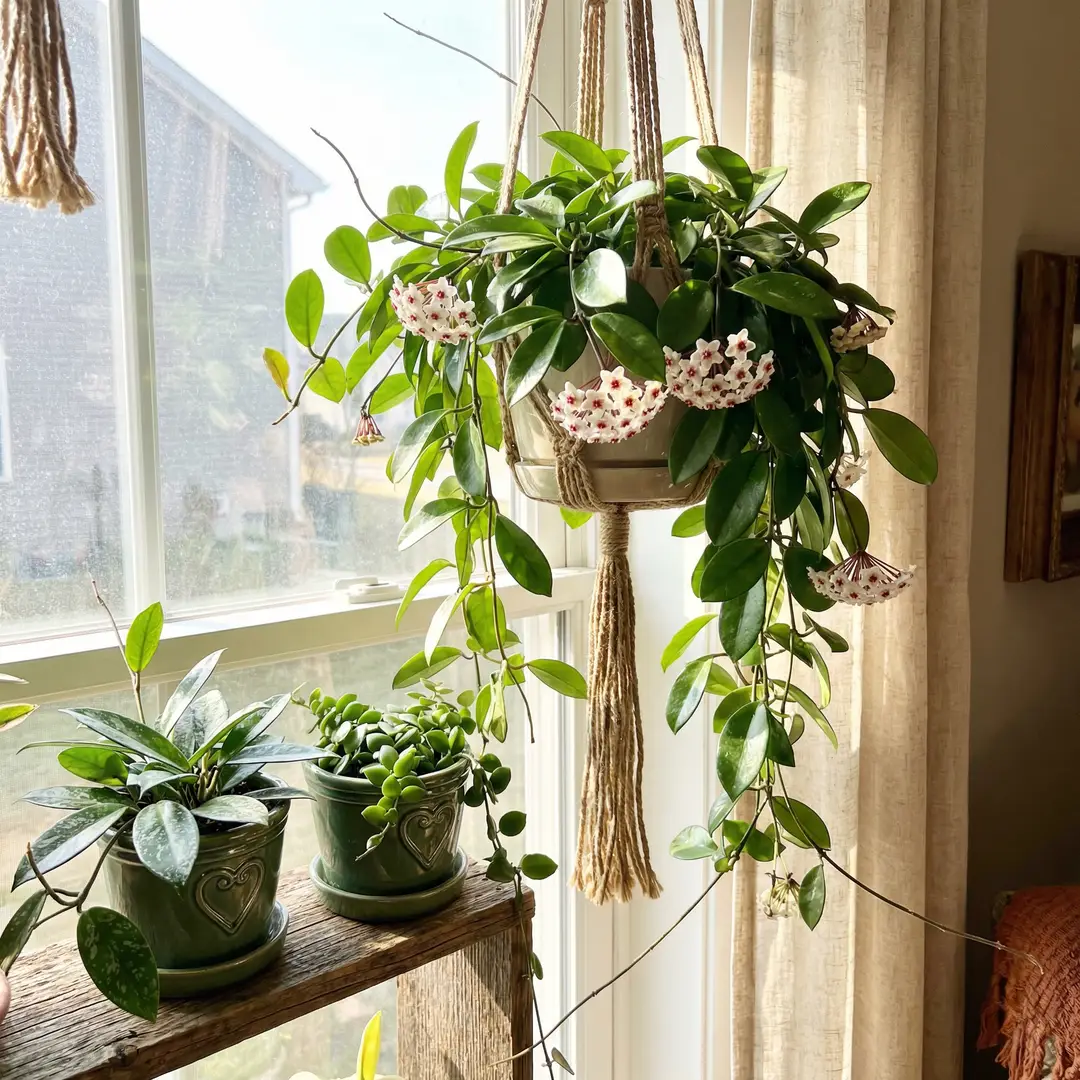
Hanging basket or macrame hanger: The most natural setting for this plant. Long vines with large, glossy leaves cascade beautifully. Position near a bright window where the fragrant flowers can be appreciated when in bloom. The evening and nighttime fragrance makes a hanging display near a seating area especially pleasant.
Tall trellis: For a more structured look, a tall bamboo or wire trellis allows the vines to climb. The plant fills a vertical trellis quickly and creates a lush green wall effect. This also keeps long vines tidy in a busy space.
Outdoor pergola or covered patio: In USDA zones 9-11, Hoya australis is an excellent outdoor climber. It grows vigorously outdoors and can cover a pergola or fence quickly, providing both shade and fragrant flowers in summer.
Shelf trailing: Long vines draped over the edge of a high bookcase or plant shelf look lush and require no training or support structure.
Companion Plants for Hoya Australis
Hoya australis groups naturally with other hoyas and epiphytic plants that share its care requirements:
- Hoya Pubicalyx: The narrow, silver-splashed leaves and dark flowers provide strong visual contrast to the larger, plain green glossy leaves and white flowers of australis. Together they show off how different two plants from the same genus can look.
- Hoya Carnosa: The classic wax plant. Smaller, oval leaves with silver speckling. All three hoyas grouped together create a display that flowers at different points through spring and summer, extending the overall bloom season.
- Dischidia: A close epiphytic relative with small rounded leaves and a compact trailing habit. Provides textural variety alongside the larger leaves of australis.
💡 Quick Hoya Australis Care Tips
- The winter rest is the key to reliable blooming. Cooler temperatures, reduced watering, and no fertilizer from October through February set the plant up for spring flowers.
- Water only when the soil is completely dry. Overwatering is the main way this plant is lost.
- Never cut flower spurs. Those bare stubs will carry another set of flowers next year from the same spot.
- The fragrance is exceptional when multiple umbels are open at once. Factor this into your display planning: small rooms can be quite overwhelming.
- Once buds are forming on a peduncle, do not move the plant. Mark its position so you can return it to the same orientation after watering.
- ‘Lisa’ is a beautiful variegated form but grows slower and needs more light. A good second plant once you have the standard form established.
- For outdoor growing in zone 9-11, this plant is a fast, rewarding climber for pergolas and fences in partial shade.
- Check stem joints and leaf undersides for mealybugs every time you water. Large leaves make inspection fast, so take a few seconds and do it consistently.
- Pinch growing tips in spring to encourage branching and a fuller plant.
- The ‘Lisa’ cultivar is slower and needs more light. Worth growing once you have an established standard-form plant as a comparison.
- If you live somewhere with mild winters, try growing this plant on a sheltered outdoor pergola in summer. The growth and bloom rate outdoors is dramatically faster than indoors.
- Hoya australis is a long-term investment. A well-established plant in a bright spot, allowed to mature for 3-5 years, is a genuinely remarkable display.
- Propagation cuttings from this plant root readily. Keep labeling consistent if you propagate both the standard form and the ‘Lisa’ cultivar at the same time.
- In a mixed hoya collection, Hoya australis is often the first to flower each spring and the one that blooms the most reliably year after year.
❓ Frequently Asked Questions
Why is my Hoya Australis not blooming?
The most common reasons are insufficient light and no winter rest. Hoya australis needs bright indirect light with some direct sun to build the energy for flowers. It also responds strongly to a cooler, drier winter rest period: temperatures around 55-60°F at night, reduced watering, and no fertilizer from October through February. Without that rest period, many plants fail to set buds even in otherwise good conditions.Is Hoya Australis toxic to cats and dogs?
No. Hoya australis is non-toxic to cats, dogs, and humans. It is a safe and pet-friendly choice for households with animals.What does Hoya Australis smell like?
The flowers have a strong, sweet, honey-like fragrance that intensifies in the evening and at night. It is one of the most fragrant hoyas in common cultivation. The scent can fill an entire room when multiple umbels are open. Some people find it similar to vanilla or jasmine; others describe it as purely honey-sweet.How is Hoya Australis different from Hoya Carnosa?
Both are vining epiphytes with similar care needs, but Hoya australis has larger, rounder, shinier leaves and produces white flowers with red centers rather than Hoya carnosa’s pale pink-and-white clusters. Hoya australis generally grows faster and blooms more reliably, especially for beginners. Hoya carnosa is slower but extremely long-lived and more commonly available as an heirloom plant.Can Hoya Australis grow outside?
Yes, in USDA zones 9-11. It is more cold-tolerant than most hoyas and can handle brief dips to around 40°F without permanent damage, though it prefers to stay above 50°F consistently. In warm climates it makes an excellent climbing vine for covered patios, pergolas, or fences in partial shade.Why are the leaves on my Hoya Australis turning yellow?
Yellow leaves are most often a sign of overwatering or root rot. Check the soil: if it has been consistently wet, let it dry out fully and inspect the roots. Brown, mushy roots indicate rot. Less commonly, yellowing in the lower leaves is caused by low light. Move the plant to a brighter spot and stop fertilizing until the plant stabilizes.How long before Hoya Australis blooms?
Most plants bloom within 1-2 years of establishment from a nodal cutting when given adequate light and a proper winter rest. Hoya australis is one of the faster-blooming hoyas, and some growers see flowers in the first growing season after rooting. It is significantly more willing to bloom than Hoya carnosa or Sweetheart Hoya under the same conditions.ℹ️ Hoya Australis Info
Care and Maintenance
🪴 Soil Type and pH: Chunky Epiphytic Mix
💧 Humidity and Misting: Flexible. Average household humidity of 40-60% is fine. Does not need misting.
✂️ Pruning: Trim to shape and to encourage branching. Never remove flower spurs, which re-bloom from the same spot each year.
🧼 Cleaning: Wipe glossy leaves gently with a damp cloth. Check undersides and stem joints for mealybugs at each cleaning.
🌱 Repotting: Every 2-3 years or when roots emerge from drainage holes. Prefers being slightly pot-bound.
🔄 Repotting Frequency: Every 2-3 years
❄️ Seasonal Changes in Care: Taper off watering and stop fertilizing in fall and winter. A slightly cool winter rest encourages spring bloom production.
Growing Characteristics
💥 Growth Speed: Moderate to fast
🔄 Life Cycle: Perennial Epiphyte
💥 Bloom Time: Spring through summer; particularly reliable with a cool winter rest
🌡️ Hardiness Zones: 9-11 (more cold-tolerant than many hoyas)
🗺️ Native Area: Australia (eastern Queensland and New South Wales), Papua New Guinea, Pacific islands
🚘 Hibernation: Semi-dormant in winter
Propagation and Health
📍 Suitable Locations: Hanging baskets, trellises, high shelves, macrame hangers, outdoor pergolas in warm climates
🪴 Propagation Methods: Stem cuttings with at least one node, rooted in water, perlite, or sphagnum moss.
🐛 Common Pests: mealybugs, spider-mites, scale-insects, and aphids
🦠 Possible Diseases: Root rot is the primary risk.
Plant Details
🌿 Plant Type: Vine / Epiphyte
🍃 Foliage Type: Evergreen
🎨 Color of Leaves: Dark glossy green; cream and green in the ‘Lisa’ variegated cultivar
🌸 Flower Color: White petals with red-pink centers
🌼 Blooming: Yes, reliably on established plants in good light; one of the most free-blooming hoyas
🍽️ Edibility: Not edible.
📏 Mature Size: Up to 6-15 feet as a vine indoors with support
Additional Info
🌻 General Benefits: Non-toxic to pets and people. One of the most reliable-blooming hoyas, with exceptionally fragrant white flowers. More cold-tolerant than most relatives, making it suitable for cooler rooms and mild outdoor spots.
💊 Medical Properties: None known.
🧿 Feng Shui: White flowers are associated with purity and clarity in feng shui. A blooming Hoya australis near the front of the home is said to attract positive, clean energy.
⭐ Zodiac Sign Compatibility: Virgo
🌈 Symbolism or Folklore: Purity, clarity, enduring love
📝 Interesting Facts: Hoya australis is one of the few hoyas that is native to Australia, which explains its common name. It grows natively in coastal rainforests, rocky outcrops, and monsoon forests across eastern Queensland and New South Wales, where it climbs trees and rock faces as an epiphyte. The fragrance of the flowers is notably stronger than most other hoyas, particularly in the evening, and has been described as honey-like and intensely sweet.
Buying and Usage
🛒 What to Look for When Buying: Hoya australis is widely available and typically affordable. Look for a plant with multiple stems and firm, glossy leaves. The ‘Lisa’ variegated cultivar is more expensive and slightly slower-growing but highly decorative. Avoid plants with yellowing leaves or soft stems, which suggest overwatering.
🪴 Other Uses: Can be grown outdoors as a climbing vine on pergolas and fences in USDA zones 9-11. Works well as a naturalistic groundcover or trellis plant in subtropical gardens.
Decoration and Styling
🖼️ Display Ideas: Hanging basket near a bright window, trained on a tall trellis or bamboo hoop, draped over a high shelf or bookcase, or outdoors on a sheltered pergola in mild climates.
🧵 Styling Tips: The large, glossy green leaves look striking against white walls and natural materials. The pure white flowers with red centers create a clean, classic palette that suits minimalist and Japandi-style interiors. Group with other vining hoyas for a lush, layered shelf display.
🪴 See also 🪴

Complete Guide to Hoya Wayetii Care and Growth

Complete Guide to Hoya Crimson Queen Care and Growth

Complete Guide to Hoya Obovata Care and Growth

Complete Guide to Hoya Pubicalyx Care and Growth

Complete Guide to Hoya Linearis Care and Growth

