

Friendship Plant
Pilea involucrata
Moon Valley Pilea, Panamiga, Pan-American Friendship Plant


Friendship Plant (Pilea involucrata) is a low-growing tropical foliage plant prized for its deeply crinkled, crater-textured leaves and its centuries-old tradition of sharing cuttings between friends. This guide covers light, water, humidity, propagation, and everything you need to grow this gem indoors.
📝 Friendship Plant Care Notes
🌿 Care Instructions
⚠️ Common Pests
📊 Growth Information
🪴 In This Guide 🪴

☀️ Light Requirements for Friendship Plant
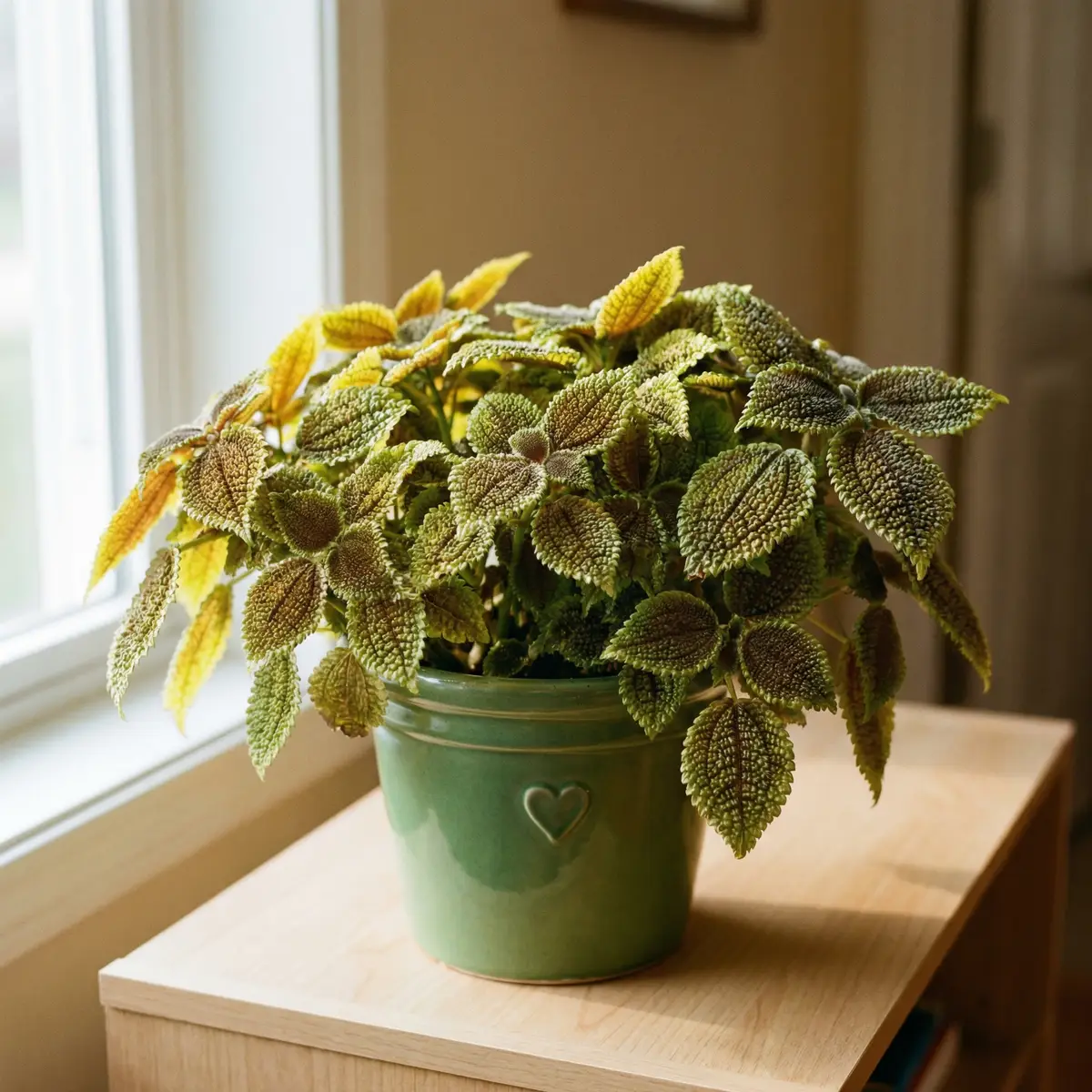
Ideal Light for Friendship Plant
Pilea involucrata does best in bright to medium indirect light. Good light is what keeps the Moon Valley cultivar looking its best: the bronze-green color deepens, the yellow highlights glow, and the deeply textured surface shows its full character. In lower light, the plant survives but the color becomes muted and growth gets stretched.
An east-facing windowsill is ideal, giving the plant gentle morning sun without harsh afternoon heat. A north-facing window with good brightness also works well. West or south windows can work too, as long as a sheer curtain or some distance from the glass filters the intensity.
Unlike succulents, this plant is not a sun lover. Direct midday or afternoon sun will scorch the textured leaves quickly, often causing bleached patches or crispy brown edges that cannot be reversed.
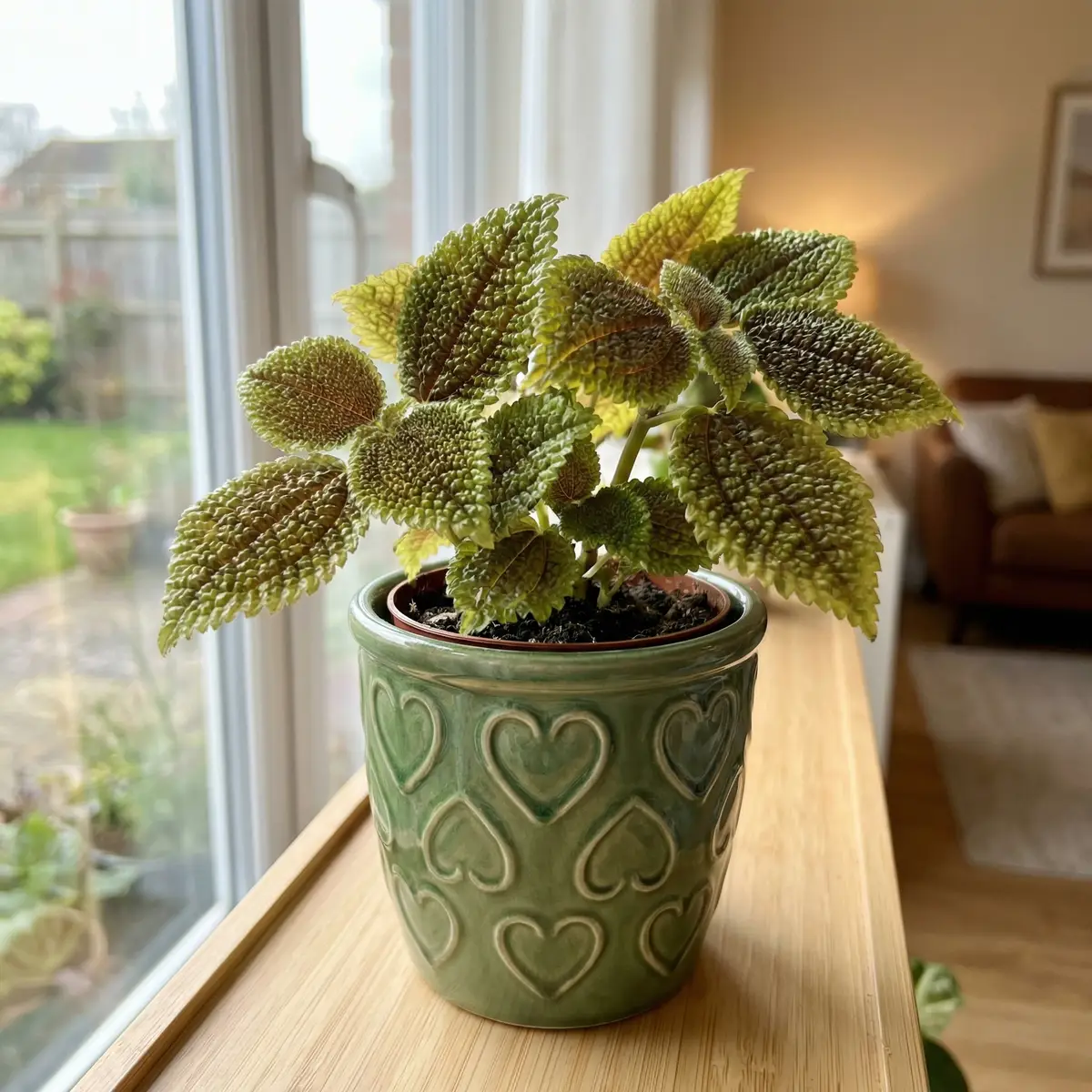
Best and Worst Light Conditions
Best Light Conditions:
- East-facing window with gentle morning light, no harsh afternoon exposure.
- Bright spot 2–4 feet from a south or west window, screened with a sheer curtain.
- Under a good-quality grow light if natural light is limited.
Avoid:
- Direct sun through unfiltered glass, which will scorch and bleach the leaves.
- Very dim corners where growth becomes leggy and the leaf color fades to plain green.
Artificial Light
Friendship Plant adapts well to grow lights, which makes it an excellent choice for a shelf setup or a plant corner without strong natural light. A full-spectrum LED positioned 6–12 inches above the plant for 12–14 hours a day provides enough energy for steady, compact growth. This also makes it suitable for terrariums with built-in lighting.
For more on choosing a grow light, see our grow lights guide.
💧 Watering Needs for Friendship Plant
How Often to Water
Friendship Plant likes consistently moist soil. It is more moisture-loving than many compact foliage plants and should not be left to dry out completely between waterings. The top inch of soil should dry slightly before you water again, but the root zone should never go bone dry for extended periods.
This is different from how you would care for a succulent-type peperomia. Those tolerate dry stretches. Pilea involucrata is a true tropical plant that wants a steady supply of moisture without ever sitting in waterlogged soil.
- Spring and Summer: Check the soil every few days. Water thoroughly when the top inch feels dry to the touch, typically every 5–7 days depending on pot size, pot material, and humidity levels.
- Fall and Winter: Growth slows and water needs drop. Water less frequently, allowing the top inch to dry before watering, roughly every 7–10 days.
How to Water
Water from above until it drains freely from the drainage holes. Empty the saucer after 30 minutes so the plant is never sitting in standing water. Use room-temperature water to avoid shocking the roots.
Bottom watering also works well for this plant and helps ensure the root zone gets thoroughly hydrated without wetting the textured leaf surfaces, which can sometimes trap moisture and invite fungal issues.
For more guidance, see our watering guide.
Signs of Improper Watering
- Overwatering: Yellowing lower leaves, soft or mushy stems, and a soggy, sour-smelling soil are warning signs. Root rot can develop quickly if drainage is poor.
- Underwatering: Leaves become limp and droopy, and the textured surface may look less plump than usual. Prolonged dry spells cause brown, crispy leaf edges.
🌱 Soil Requirements for Friendship Plant
What Soil Does Friendship Plant Need?
Friendship Plant needs a rich, well-draining potting mix that retains some moisture without becoming waterlogged. This is a different soil requirement from strictly dry-loving plants. The roots should stay in a consistently lightly moist environment rather than swinging between drenched and completely parched.
The ideal soil is:
- Moderately moisture-retentive, able to hold water without compacting.
- Well-draining, so excess water moves through rather than sitting around the roots.
- Rich in organic matter to support the plant’s moderate to fast growth rate.
DIY Soil Mix for Friendship Plant
A straightforward mix that works very well:
- 2 parts quality all-purpose potting soil, for structure, nutrition, and moisture retention.
- 1 part perlite, for drainage and preventing compaction.
This combination holds enough water to keep the roots happy between waterings while allowing excess moisture to escape. Avoid using pure cactus mix, which drains too fast for this plant. For a deeper dive into soil types, visit our potting soil guide.
Pot Choice
Choose a pot with drainage holes. Shallow pots work well because Friendship Plant has a shallow, spreading root system. Terracotta can work, but because this plant needs more consistent moisture than typical succulents, glazed ceramic or plastic pots help retain moisture slightly longer and may suit it better in dry climates. Browse plant pots for options.🌿 Fertilizing Friendship Plant
Feeding Schedule
Friendship Plant is a moderate feeder with a reasonably active growth rate. Regular fertilizing during the growing season keeps the foliage rich, colorful, and dense.
- Spring and Summer (Growing Season): Apply a balanced liquid houseplant fertilizer (such as 10-10-10 NPK) diluted to half strength once a month. Apply to moist soil, never dry, to protect the roots from fertilizer burn.
- Fall and Winter (Dormant Season): Stop fertilizing completely. The plant’s growth slows considerably and excess nutrients can build up in the soil, causing salt damage.
Signs of Nutrient Issues
- Pale or faded leaf color: If the rich bronze-green of a well-fed Moon Valley starts to look dull or washed out during the growing season, a dose of balanced fertilizer often helps restore the depth.
- Slow growth with small leaves: This can indicate the plant has depleted the available nutrients in its potting mix, especially in an older pot that has not been refreshed for over a year.
For more information, visit our fertilizing guide.
🌡️ Temperature Requirements for Friendship Plant
Ideal Temperature Range
Pilea involucrata is a tropical plant that prefers stable warmth year-round.
- Ideal Range: 65–80°F (18–27°C). This matches typical indoor home temperatures, which makes it a comfortable houseplant for most homes.
- Minimum Temperature: Do not allow the plant to sit in temperatures below 55°F (13°C) for extended periods. Even brief cold snaps can cause wilting and leaf damage.
Temperature Stress and Drafts
Cold drafts are one of the fastest ways to damage a Friendship Plant. Even if average room temperature is fine, positioning the plant near a drafty window, exterior door, or air conditioning vent can cause sudden stress visible as wilting, yellowing, and leaf drop.
Avoid placing this plant:
- Near exterior windows that leak cold air in winter.
- Directly in the path of an air conditioning or heating vent.
- On cold windowsills where the glass becomes very cold at night.
Heat stress from direct sun or a nearby radiator will also scorch the soft, crinkled leaves quickly.
💦 Humidity Needs for Friendship Plant
Why Humidity Matters for This Plant
Humidity is the most important environmental variable for Friendship Plant. If you remember only one thing from this guide, let it be this: Pilea involucrata needs 60% relative humidity or higher to truly thrive. At lower levels, the soft leaf edges crisp up and turn brown, and the overall plant looks stressed rather than lush.
Average household humidity typically sits between 30–50%, which is below what this plant prefers. Heated winter air can drop even lower, sometimes to 20–30%, which is genuinely damaging over time. This is not a plant that tolerates dry air gracefully.
How to Increase Humidity
Several practical approaches work well, and combining two or more provides the most consistent results:
- Terrarium or plant cabinet: The most reliable option. Friendship Plant is an ideal terrarium plant. The enclosed environment naturally holds humidity at 70–90%, and the plant’s compact, spreading growth habit suits a foreground or ground-cover position beautifully. See our terrarium care section below for more.
- Humidifier: A small ultrasonic humidifier placed near the plant and running a few hours a day makes a significant difference. Aim to maintain 60% relative humidity in the area where the plant lives. A moisture meter with a humidity sensor can help you confirm actual levels.
- Grouping plants together: Clustering several houseplants creates a shared microclimate with slightly elevated humidity as the plants transpire. This works best with other humidity-loving plants like ferns, calatheas, or other Pilea species.
- Pebble tray: Place the pot on a wide tray filled with pebbles and water, making sure the pot bottom sits above the waterline, not in it. As the water evaporates, it raises local humidity around the plant. This is a modest boost and works best as a supplement rather than a sole solution.
- Bathroom or kitchen placement: These rooms naturally run at higher humidity due to showers, cooking, and running water. As long as the plant gets adequate indirect light, a bathroom shelf is a fantastic location for a Friendship Plant.
Use a humidity gauge to monitor conditions. If you see brown, crispy edges forming on otherwise healthy leaves, humidity is the first thing to check and adjust.
🌸 Does Friendship Plant Bloom?
What the Flowers Look Like
Yes, Pilea involucrata does produce flowers, though they are modest compared to the drama of the foliage. Blooms appear in spring and summer as small, compact clusters of tiny pinkish-red or salmon-colored flowers held on short stems above the leaves.
The flowers are not large or showy, but they are genuinely attractive in a low-key way: a warm flush of color that complements the bronze-green leaves nicely. They typically last a few weeks before fading.
Should You Expect Blooms Indoors?
Indoor blooming is not guaranteed, but a healthy, well-established plant in good conditions will often produce flowers during the warmer months. Consistent bright indirect light, stable warmth, and regular fertilizing during the growing season improve the chances.
Once the flower clusters fade, you can trim them off at the base to redirect the plant’s energy into foliage and new growth. This is particularly useful if you are trying to keep the plant compact and dense.
📃 Types and Varieties of Pilea involucrata
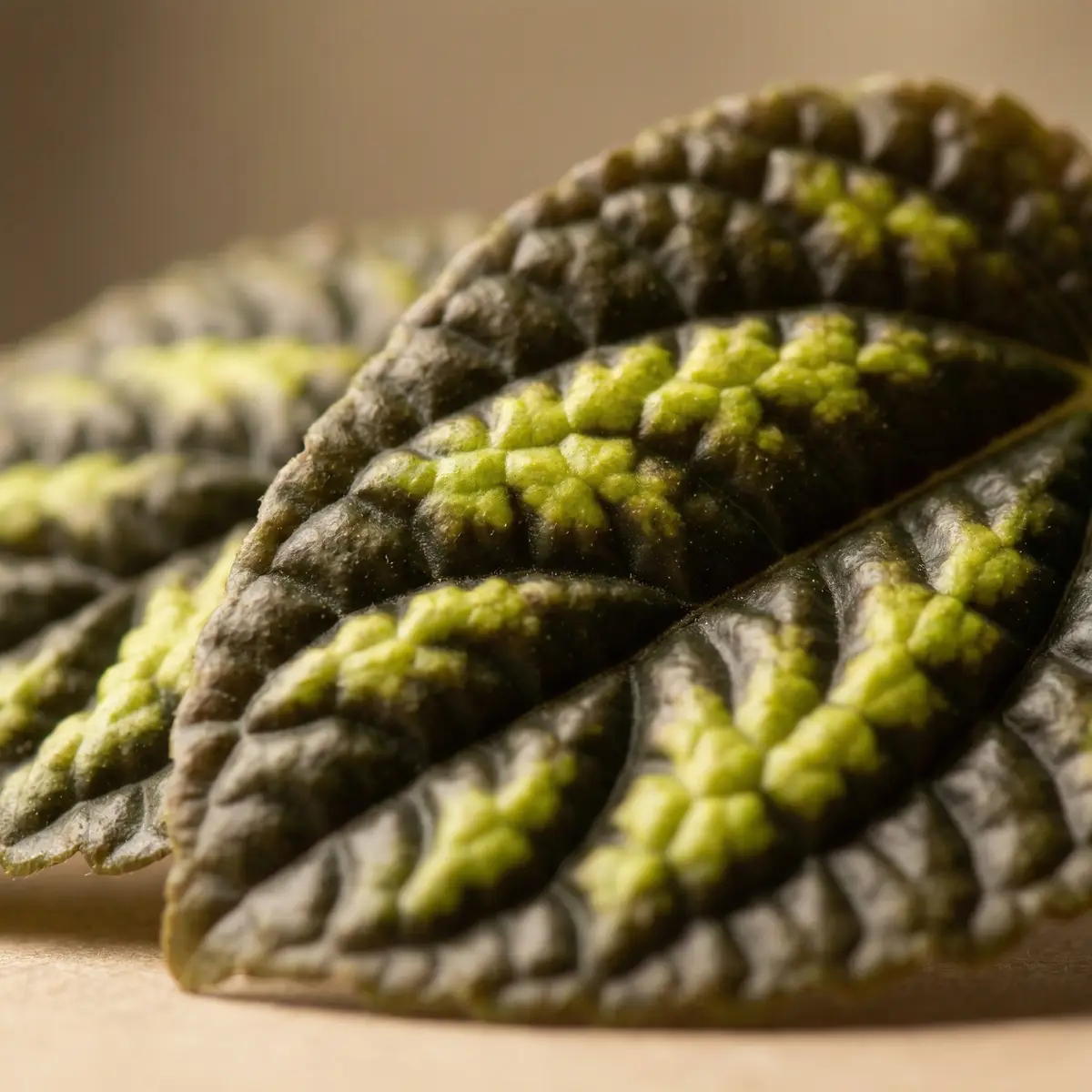
Moon Valley: The Most Popular Cultivar
When most people talk about Friendship Plant, they mean the ‘Moon Valley’ cultivar. This is by far the most widely sold form and the one that earns all the admiration. Its leaves have an extraordinarily deep, crater-pitted texture that resembles the surface of the moon under low-angle light, hence the name. The coloring is equally distinctive: deep bronze-green on the raised ridges with bright chartreuse-yellow filling the valleys and depressions between them.
‘Moon Valley’ is compact and spreading, growing 6–12 inches tall, and it looks stunning in terrariums, shallow dish planters, or hanging baskets where you can view it from slightly above.
Plain Pilea involucrata
Not all Pilea involucrata sold under the Friendship Plant or Panamiga name carries the Moon Valley texture. Some cultivars are simpler: smaller leaves, less dramatic ridging, and a more straightforward green coloring. These are equally easy to care for and share the same growing requirements, but they lack the visual drama that makes ‘Moon Valley’ so eye-catching.How Does It Compare to Other Pilea Species?
The Pilea genus is enormous, with hundreds of species, and the members look radically different from each other. A few comparisons worth knowing:
- Chinese Money Plant (Pilea peperomioides): The most famous Pilea, recognizable by its completely round, coin-shaped leaves on long petioles. Upright and sculptural rather than spreading. Shares the same family but looks nothing like Friendship Plant.
- Aluminum Plant (Pilea cadierei): Another widely grown Pilea with dark green leaves marked by distinctive silver patches that look painted on. Similar growing requirements to P. involucrata, though it typically grows a bit taller.
- Norfolk Friendship Plant (Pilea nummulariifolia): Smaller, with round, textured pale green leaves. Also called Creeping Charlie in some regions and very suited to terrariums.
The takeaway is that buying a “Pilea” is not a guarantee you know what you are getting. The genus contains both upright statement plants and low, spreading ground-covers with totally different textures and habits. Pilea involucrata sits firmly in the textured, spreading camp.
🪴 Potting and Repotting Friendship Plant
When to Repot
Friendship Plant prefers a slightly snug pot rather than a large, roomy one. Excess soil volume holds moisture too long and creates conditions that favor root rot. Plan to repot every 1–2 years, or when you see clear signs the plant has outgrown its container.
- Signs it is time to repot:
- Roots growing from the drainage holes.
- The plant drying out very quickly after watering, indicating the root mass has taken over the pot.
- Visibly crowded or circling roots when you check the base.
- The plant has become leggy and seems to have stalled despite good conditions.
Spring is the best time to repot, just as growth is picking up. For detailed steps, see our repotting guide.
How to Repot
- Choose a new pot: Select a shallow pot 1–2 inches wider in diameter than the current one. Friendship Plant’s root system is shallow and spreading, so a wide, low pot suits it better than a deep one. Make sure there are drainage holes.
- Prepare the mix: Use a fresh batch of well-draining, moisture-retentive potting mix (2 parts potting soil, 1 part perlite).
- Remove the plant: Gently tip the plant out of its old pot. If it is stuck, tap the sides or slide a clean knife around the inner edge.
- Inspect the roots: Trim away any dark, mushy roots with clean scissors. Healthy roots should be pale tan or white and firm.
- Pot up: Add a layer of fresh mix to the new pot, set the plant at the same depth it was growing before, and fill in around the root ball. Firm lightly.
- Water: Water thoroughly and allow excess to drain. Place the plant back in its usual spot and avoid direct sun for the first week while it settles.
✂️ Pruning Friendship Plant
Why Regular Pruning Matters
Pruning is one of the most important maintenance tasks for Pilea involucrata. Left unpruned, this plant gets leggy quickly, with long bare stems and foliage only at the tips. Regular pinching keeps it dense, bushy, and visually appealing.
The good news is that pruning is simple and the plant responds well and fast. Every pinch triggers multiple new growing points, making the plant fuller with each session.
How and When to Prune
- Tip pinching (most important): Pinch or snip off the top 1–2 inches of each stem every few weeks during the growing season. Use clean fingertips or sharp scissors. This directs the plant’s energy into side branches rather than continued upward extension.
- Remove dead or damaged leaves: Pull or snip any yellowing, browned, or damaged leaves at the base of their stem to keep the plant clean and reduce disease risk.
- Trim spent flowers: Once the small flower clusters fade, cut them off at the base to redirect energy to new leaf growth.
- Hard rejuvenation: If a plant has gotten very leggy despite pinching, you can cut stems back by half or more in early spring. The plant will push fresh new growth from the base. Use the cut stems as propagation material.
Saving the Cuttings
Do not throw away your pruning trimmings. Every 3–4 inch stem cutting you remove is a potential new plant. Pop them into water or moist soil and you will have rooted cuttings ready to share within a couple of weeks. This is the natural rhythm of keeping Friendship Plant and exactly how it has been grown and shared for generations.🌿 How to Propagate Friendship Plant
The Story Behind the Name
The name Friendship Plant is not a marketing label. It describes something real about this plant’s nature and history. Across Central and South America, Pilea involucrata was shared between neighbors and friends as a living gift: a stem cutting snipped from one person’s plant, wrapped loosely, and handed to someone else to root and grow. The plant traveled from household to household this way, not because it was rare, but because it was generous. It roots easily, grows quickly, and thrives in the conditions most homes already provide. Giving a cutting was a small, warm gesture, and the name captured that spirit.
Today the tradition lives on. If you have a thriving Friendship Plant, you should be passing cuttings along. It is practically in the plant’s job description.
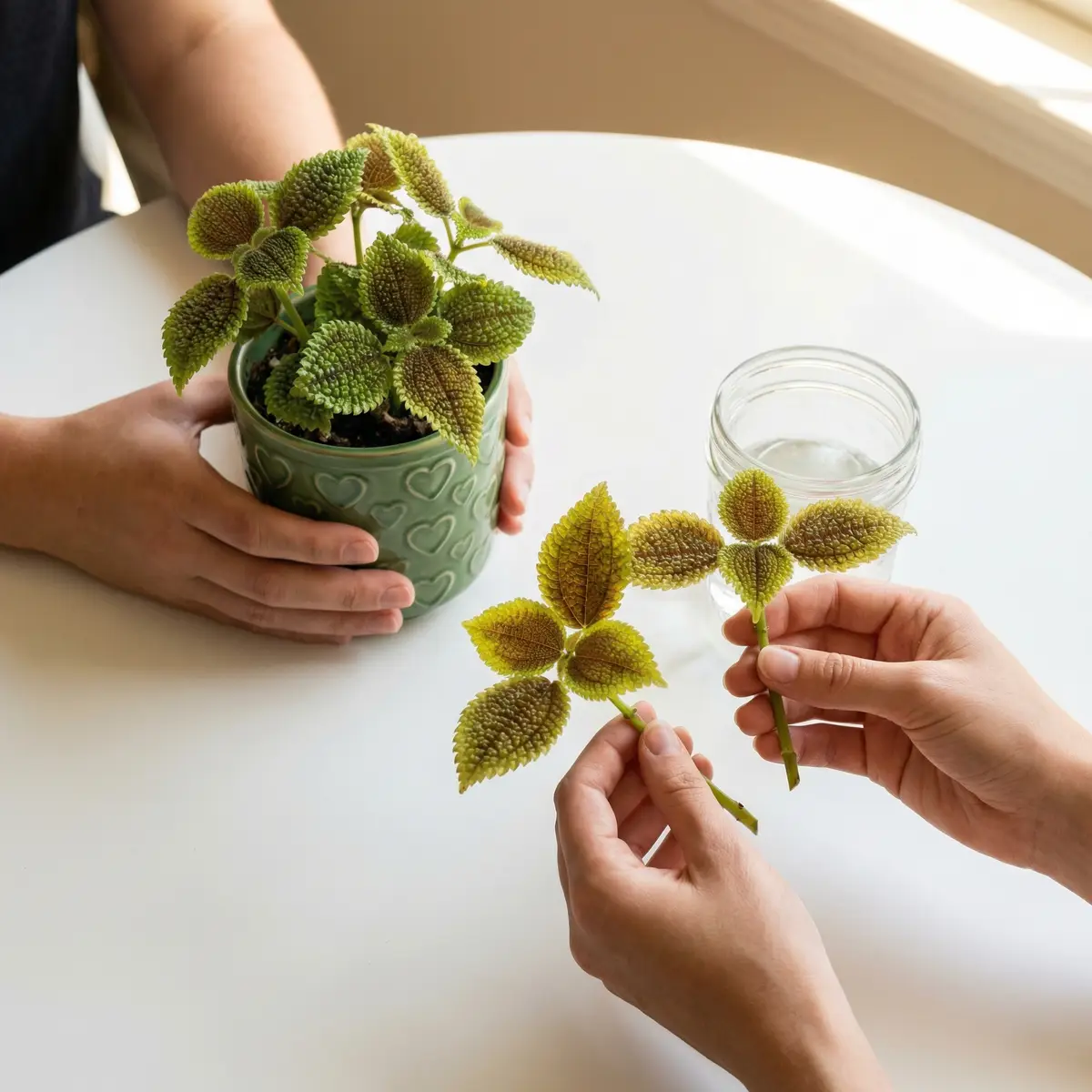
Propagation by Stem Cuttings in Water
This is the easiest and most satisfying method:
- Take the cutting: Select a healthy stem with at least 2–3 leaf nodes. Cut cleanly with sharp scissors or a blade just below a node. The cutting should be 3–4 inches long.
- Remove lower leaves: Strip any leaves from the bottom inch or two of the stem so the nodes are exposed but no leaves are submerged.
- Place in water: Set the cutting in a small glass or jar of room-temperature water. The nodes should be submerged; the remaining leaves should be above the waterline.
- Wait for roots: Place the glass in a warm, bright spot out of direct sun. Roots typically emerge within 7–14 days, sometimes faster in warm, humid conditions.
- Pot up: Once roots are 1–2 inches long, transfer the cutting to a small pot with moist potting mix. Water lightly and keep the soil evenly moist for the first two weeks while the cutting transitions.
For more on this method, see our water propagation guide.
Propagation by Stem Cuttings in Soil
You can also root cuttings directly in soil, which avoids the transition step:
- Prepare a small pot with moist potting mix.
- Take a cutting as described above and allow the cut end to air dry for 30–60 minutes.
- Dip the cut end lightly in rooting hormone powder if desired (not required, but speeds things up slightly).
- Push the cutting 1–2 inches into the moist soil and firm gently.
- Cover loosely with a clear plastic bag or a cut plastic bottle to maintain humidity around the cutting.
- Place in a warm, bright spot. Check moisture every few days. Roots typically form within 2–3 weeks.
See our soil propagation guide for full details.
Best Time to Propagate
Spring and early summer are the ideal times, when the plant is growing actively. Cuttings rooted in spring become established plants by late summer. That said, with warmth and humidity this plant can root successfully year-round, just a little more slowly in winter.🐛 Friendship Plant Pests and Treatment
Pests That May Affect Friendship Plant
Friendship Plant is reasonably pest-resistant when healthy, but stress from low humidity, poor light, or overwatering can open the door to infestations. The dense, textured leaves and low spreading habit create sheltered spots where pests can hide, so inspect regularly and thoroughly.
- Spider Mites - These thrive in warm, dry conditions, exactly the opposite of what this plant prefers. If your Friendship Plant is living in low humidity, spider mites become a real risk. Look for fine webbing at stem junctions and a dusty, stippled appearance on the leaves. Increase humidity and treat with insecticidal soap or neem oil.
- Mealybugs - White, cottony clusters tucked into leaf axils and along stems. They are persistent. Remove visible colonies with an alcohol-dampened cotton swab, then follow up with insecticidal soap spray.
- Fungus Gnats - The larvae live in moist soil and damage fine roots. More likely to appear if the soil stays too wet. Allow the top inch to dry between waterings and use yellow sticky traps to catch adult gnats.
- Aphids - Soft-bodied insects that cluster on new growth and undersides of leaves. They excrete sticky honeydew that can lead to sooty mold. A strong rinse of water or a spray of insecticidal soap handles most infestations.
- Whiteflies - Tiny moth-like insects that fly up in a cloud when the plant is disturbed. They feed on sap and leave yellowing and sticky residue behind. Yellow sticky traps and insecticidal soap are effective.
Isolate any infested plant immediately to prevent spread to neighboring plants.


🩺 Friendship Plant Problems and Diseases
Troubleshooting Friendship Plant Issues
Most problems with Pilea involucrata trace back to two culprits: humidity that is too low or watering that is off. Here is how to read the symptoms:
- Brown Crispy Edges - The most common issue. Almost always caused by humidity below 50%. The leaf edges dry out and turn brown, starting at the tips. Increase humidity to 60%+ immediately. This is the plant’s clearest signal that the air is too dry.
- Root Rot - Caused by consistently soggy soil, usually from overwatering or poor drainage. Signs include yellowing leaves, mushy stems, and a sour smell from the soil. Remove affected roots, repot in fresh mix, and correct watering.
- Yellowing Leaves - Lower leaf yellowing is most commonly overwatering. Overall yellowing with pale coloring can also be a sign of insufficient light or nitrogen deficiency in older soil. Check soil moisture and light conditions first.
- Leggy Growth - Long stems with sparse leaves indicate insufficient light or a lack of regular pinching. Move the plant to a brighter location and begin pinching stem tips consistently. The plant will fill out again quickly.
- Pale or Faded Leaves - The bronze-green color of Moon Valley fades when light is too low. The yellow highlight valleys can also lose their vibrancy. Move the plant to a brighter spot with more consistent indirect light.
- Wilting and Drooping - If soil is dry, the plant is thirsty. If soil is wet and the plant is wilting, root rot is likely the cause. Check the roots.
- Fungal or Bacterial Disease - The textured leaf surface can trap water, especially if you water from above with poor air circulation. Water at the soil level, improve airflow, and avoid overcrowding.


🖼️ Display Ideas for Friendship Plant
Terrarium Planting
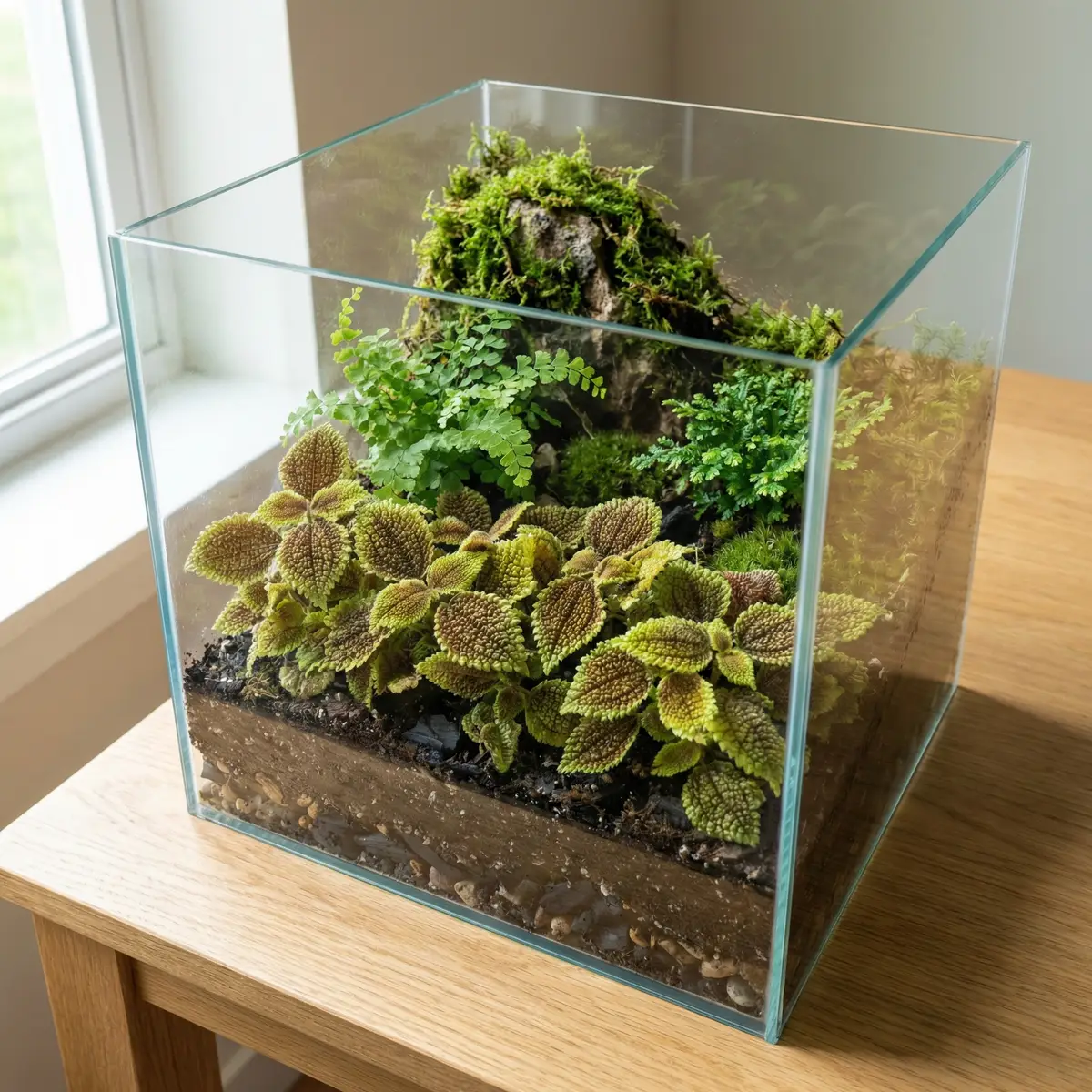
This is where Friendship Plant truly shines. Its compact height, spreading habit, and love of humidity make it a natural terrarium plant. Use it as a foreground or ground-cover layer in an open or semi-open terrarium, pairing it with other humidity-loving plants like mosses, small ferns, or compact calatheas. The Moon Valley texture becomes even more dramatic when viewed through glass, with the chartreuse valleys glowing against the dark bronze ridges.
Avoid fully sealed terrariums with no air movement, as the combination of high moisture and no airflow can encourage fungal problems on the textured leaves.
Bathroom and Kitchen Displays
Any spot in your home that gets consistent humidity and reasonable indirect light is a good candidate. Bathrooms with windows are ideal. The naturally higher humidity from daily showers keeps this plant comfortable without any additional effort. A bright kitchen window shelf works similarly, with steam from cooking adding to the humidity.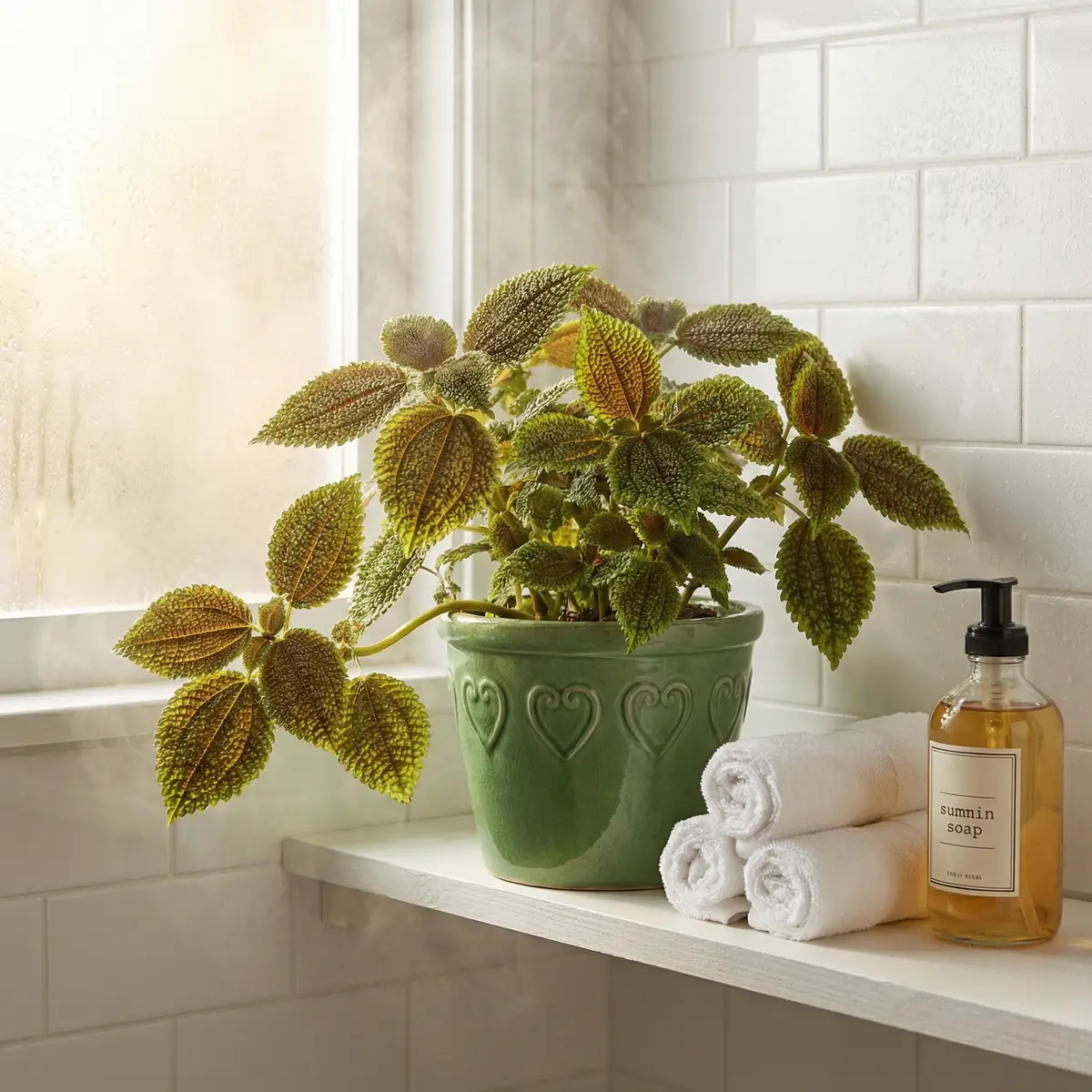
Grouped Plant Clusters
When grouped with other humidity-loving plants on a wide tray or plant shelf, Friendship Plant contributes both to the visual appeal and to the shared microclimate. Its low spreading form works well as a front-of-group anchor, with taller plants behind it. This arrangement is practical and beautiful, especially with a pebble humidity tray beneath the whole grouping.Hanging Baskets
As the plant matures and stems begin to trail, it becomes an attractive hanging basket subject. Position a trailing Friendship Plant basket in a bright bathroom or a humid covered porch where the trailing bronze-green leaves can cascade naturally. The texture reads beautifully from below.Companion Plants
Friendship Plant works well alongside other humidity-loving, compact foliage plants:
- Watermelon Peperomia for contrasting patterned leaves.
- Emerald Ripple Peperomia for complementary textured foliage in a different color palette.
- String of Turtles for a trailing companion with its own striking leaf pattern.
- Chinese Money Plant for a fellow Pilea genus member with a very different architectural form.
🌟 PRO Tips for a Thriving Friendship Plant
✅ Treat humidity as a non-negotiable. This plant will tolerate imperfect light or slightly inconsistent watering far better than it tolerates dry air. If you can only do one thing to improve your Friendship Plant’s environment, boost the humidity to 60%+.
💧 Check moisture with your finger, not a schedule. The top inch of soil should dry slightly before you water again, but this can range from 4 days to 10 days depending on your home conditions. Use a moisture meter to take the guesswork out.
✂️ Pinch early and often. Do not wait until the plant is leggy to start pinching tips. Start pinching as soon as new growth appears, every 2–3 weeks during the growing season. A regularly pinched Friendship Plant stays dense and lush for years.
🌿 Propagate and share. This plant was meant to be passed on. Keep a jar of cuttings on your windowsill and give them away. Not only does this spread the joy, it also means you always have fresh, compact plants coming up to replace any that become too leggy.
🌱 Refresh old plants. After 2–3 years, even a well-maintained Friendship Plant can look tired and woody at the base. Take fresh cuttings from the tips, root them, and start a new generation. The plant renews itself easily this way.
🌡️ Keep it away from cold drafts. Even a single night of exposure to cold air near a drafty window can cause sudden wilting and leaf damage. During winter, double-check that the spot your plant is sitting in stays consistently warm, especially at night.
🪴 Go wide, not deep. Choose a wide, shallow pot rather than a tall, deep one. The root system spreads horizontally and does not need a deep pot. A shallow pot dries out more evenly and suits the plant’s growth habit.
❓ Frequently Asked Questions
Is Friendship Plant toxic to cats or dogs?
No. Pilea involucrata is non-toxic to cats, dogs, and other pets. It is a safe choice for households with animals and an excellent terrarium plant if you share your home with curious pets.Why is it called the Friendship Plant?
The name comes from a long tradition of gardeners sharing stem cuttings with friends and neighbors. Because Pilea involucrata roots so easily and quickly, passing along a cutting was a natural and generous way to spread the plant from home to home, and the name stuck.Why does my Friendship Plant have crispy brown edges?
Brown, crispy leaf edges are almost always caused by low humidity. Pilea involucrata needs 60% or higher humidity to stay in good shape. If your air is dry, move the plant to a bathroom, place it in a terrarium, or run a humidifier nearby. Inconsistent watering and cold drafts can also contribute.How do I propagate Friendship Plant?
Take a stem cutting 3–4 inches long with at least two nodes. You can root it in a glass of water (roots appear within 1–2 weeks) or press it directly into moist potting mix. Keep it warm and humid while rooting. The process is so easy and fast it is one of the most rewarding cuttings you can share.How do I keep Friendship Plant from getting leggy?
Pinch the growing tips regularly, at least every few weeks during the growing season. Legginess is almost always caused by insufficient light. Moving the plant closer to a bright indirect light source and pinching consistently will keep it full and compact.Can Friendship Plant grow in a terrarium?
Yes, and it genuinely thrives there. The naturally high humidity inside a terrarium suits this plant perfectly, and its low, spreading growth habit makes it an ideal foreground or ground-cover plant in larger terrariums. Avoid completely sealed terrariums with no air circulation, as excess moisture with no airflow can encourage fungal problems.ℹ️ Friendship Plant Info
Care and Maintenance
🪴 Soil Type and pH: Rich, well-draining; retains moderate moisture without becoming soggy
💧 Humidity and Misting: Loves 60%+ humidity. Excellent terrarium candidate. Use a humidifier, pebble tray, or group with other plants.
✂️ Pruning: Pinch stem tips regularly to prevent legginess and maintain a compact, bushy shape.
🧼 Cleaning: Gently blow dust from the textured leaf valleys with a soft bulb or cloth. Avoid harsh rubbing.
🌱 Repotting: Every 1–2 years into a slightly larger shallow pot. Prefers snug conditions.
🔄 Repotting Frequency: Every 1–2 years
❄️ Seasonal Changes in Care: Reduce watering slightly in winter. No fertilizer in fall or winter.
Growing Characteristics
💥 Growth Speed: Moderate to Fast
🔄 Life Cycle: Perennial
💥 Bloom Time: Spring/Summer
🌡️ Hardiness Zones: 11–12
🗺️ Native Area: Central and South America (Panama, Costa Rica, Colombia, Peru)
🚘 Hibernation: No
Propagation and Health
📍 Suitable Locations: Terrariums, bathrooms, kitchens, hanging baskets, mixed planters
🪴 Propagation Methods: Stem cuttings root very easily in water or moist soil. Named ‘Friendship Plant’ because cuttings were shared between friends.
🐛 Common Pests: spider-mites, mealybugs, fungus-gnats, aphids, and whiteflies
🦠 Possible Diseases: Root rot, fungal leaf disease
Plant Details
🌿 Plant Type: Herbaceous Perennial
🍃 Foliage Type: Evergreen
🎨 Color of Leaves: Deep bronze-green with chartreuse-yellow highlights (Moon Valley); plain green in other cultivars
🌸 Flower Color: Pinkish-red/salmon
🌼 Blooming: Spring and summer; small pinkish-red flower clusters
🍽️ Edibility: Not edible
📏 Mature Size: 6–12 inches
Additional Info
🌻 General Benefits: Non-toxic to pets, easy propagation, terrarium-friendly, unique textured foliage
💊 Medical Properties: None known
🧿 Feng Shui: Symbolizes friendship, sharing, and generous energy
⭐ Zodiac Sign Compatibility: Gemini
🌈 Symbolism or Folklore: Friendship, generosity, connection
📝 Interesting Facts: The name ‘Friendship Plant’ comes from the tradition of sharing stem cuttings between friends. It roots so easily that it became a symbol of hospitality and goodwill across Central and South America.
Buying and Usage
🛒 What to Look for When Buying: Choose plants with dense, textured foliage and no signs of legginess. The Moon Valley cultivar should show deep bronze-green color with visible yellow valleys.
🪴 Other Uses: Terrariums, hanging baskets, ground cover in humid spaces
Decoration and Styling
🖼️ Display Ideas: Terrariums, bathroom shelves, grouped plant clusters, hanging baskets in humid rooms.
🧵 Styling Tips: Pair with other humidity-loving plants in a bathroom or glass terrarium to meet its 60%+ humidity needs while creating a lush, tropical look.
🪴 See also 🪴

Complete Guide to Aluminum Plant Care and Growth

