

Artillery Fern
Pilea microphylla
Gunpowder Plant, Artillery Plant, Rockweed


Artillery Fern is not a fern at all, but a compact, fern-textured Pilea that shoots pollen like a tiny cannon when touched. This guide covers everything you need to grow it indoors or as a groundcover, from light and water to propagation and display.
📝 Artillery Fern Care Notes
🌿 Care Instructions
⚠️ Common Pests
📊 Growth Information
🪴 In This Guide 🪴

☀️ Artillery Fern Light Requirements (Indoor Lighting Guide)
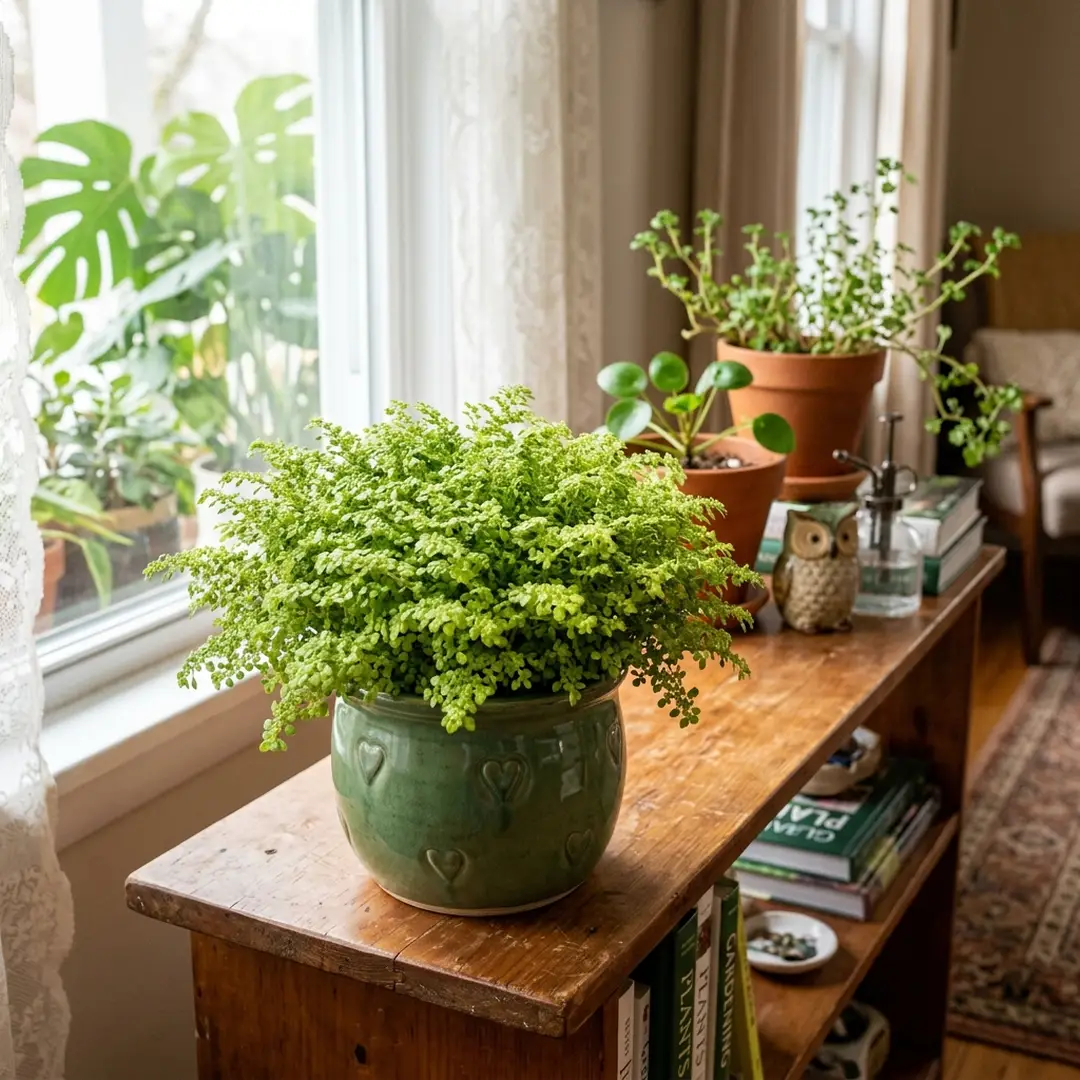
Artillery Fern is more flexible with light than many indoor plants. It grows well in bright indirect light, and it can handle a bit of direct sun early in the morning without damage, which makes it one of the easier plants to place in a typical home. An east or north-facing window works well. A few feet back from a south or west window is fine, as long as harsh midday sun does not fall directly on the foliage.
The plant tolerates lower light better than most Pileas, but it gets leggy in dim conditions, with longer internodes and a less dense, more open structure. For hanging baskets or trailing displays where you want a full, cascading effect, keeping the plant in good light is especially important.
One thing to watch for: Artillery Fern in too-low light tends to lose the dense, overlapping leaf arrangement that creates its fern-like appearance. The leaves grow at longer intervals along the stem and the overall effect becomes more sparse and open. This is reversible by moving the plant to a brighter spot, but the existing stretched growth will not compact back on its own. Trim the leggy stems after moving to better light and the new growth will be dense.
Grow Lights for Artillery Fern
Artillery Fern responds well to grow lights, which makes it a good candidate for rooms without natural windows or for winter supplementation in darker climates. A full-spectrum LED grow light set to 12-14 hours per day provides enough light to keep the plant compact and actively growing even in December and January. Position the light 6-12 inches above the foliage for reasonable light intensity without burning the small leaves.
If you use a grow light year-round, Artillery Fern often maintains faster growth and denser foliage than it would on seasonal natural light alone. The plant does not have a true dormancy requirement and will grow continuously under consistent artificial lighting.
Outdoor Light for Artillery Fern
Outdoors in summer, Artillery Fern thrives in filtered shade or morning sun with afternoon shade. Direct afternoon sun in hot climates can bleach and scorch the small leaves. Under a tree with dappled light is an ideal outdoor position. In tropical and subtropical climates, it is used as a dense groundcover in shaded garden beds.Signs of Incorrect Lighting
Long, sparse internodes and a generally open structure indicate insufficient light. Move the plant closer to a window and trim back the leggy growth. Faded or bleached patches on the leaf surface point to too much direct sun. In either case, the plant responds quickly to a position change.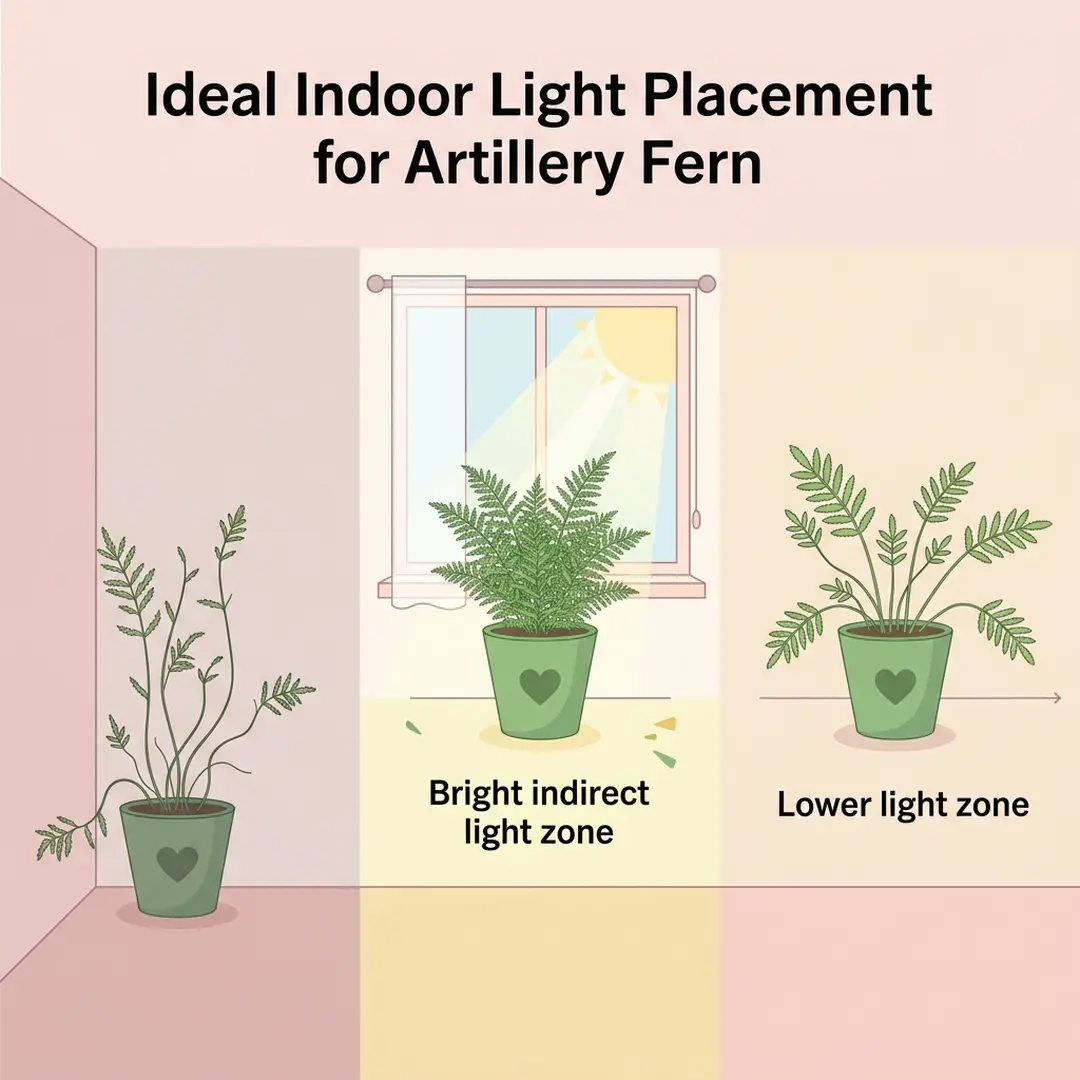
Seasonal Light Adjustments
In summer, the days are long and light levels are at their highest. If the plant is near a south or west window, the increased intensity can sometimes cause slight bleaching on the tips of the outermost stems. A slight pullback from the glass or a sheer curtain is all that is needed.
In winter, move Artillery Fern closer to its light source to compensate for the shorter days and lower sun angle. A plant that was fine at 3 feet from the window in June may need to be at 1-2 feet in December to receive the same light intensity. If you notice the plant getting leggy in winter, this is usually the cause.
💧 Artillery Fern Watering Guide (How to Water Correctly)
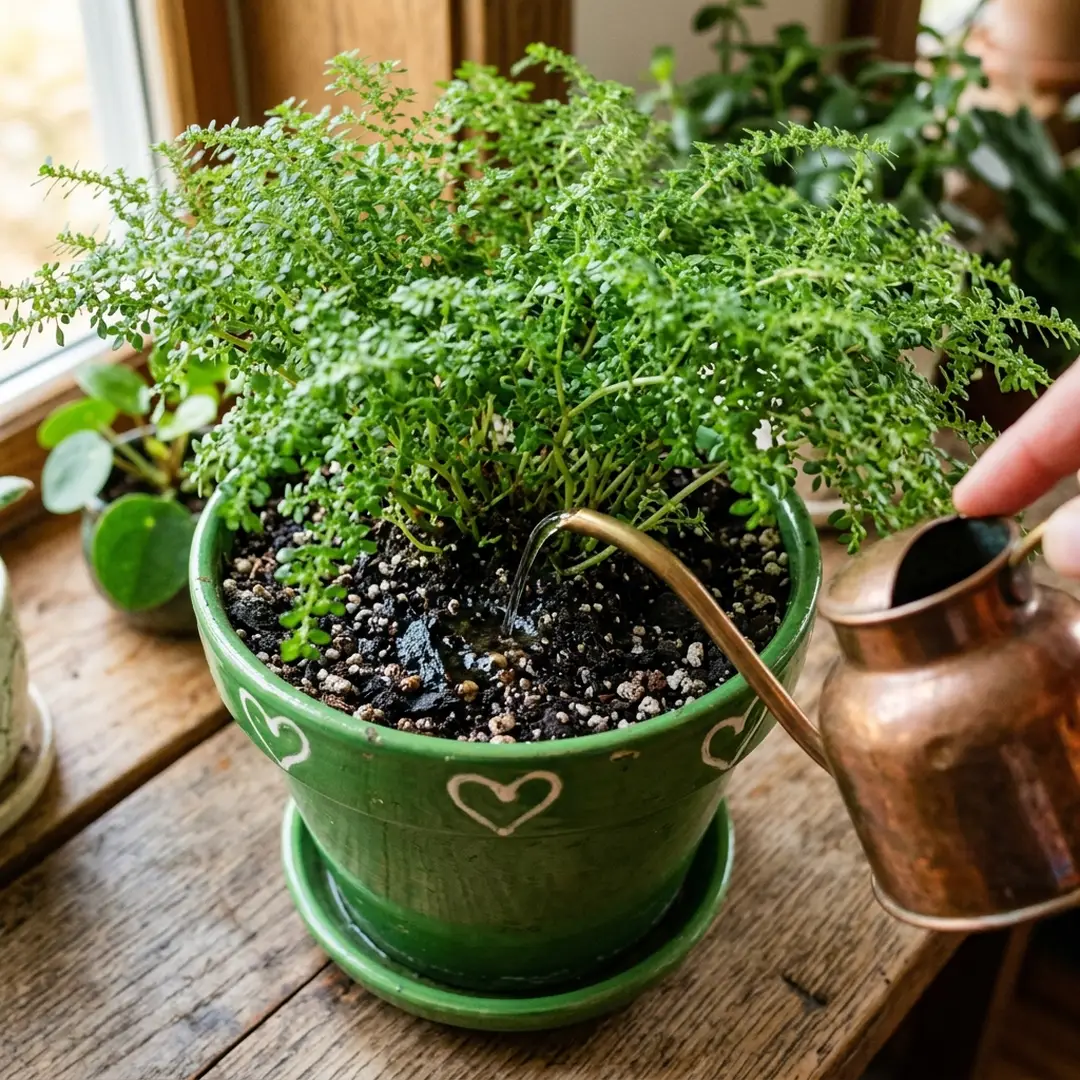
Artillery Fern prefers consistent, even moisture during the growing season. Keep the soil lightly moist, not saturated: let the top half-inch dry out before watering again, but do not let it dry completely through the pot. The plant wilts quickly when dry and recovers just as quickly, which makes it a useful visual indicator, but repeated dehydration stresses the roots over time.
In practice, watering every 5-7 days in summer and every 10-14 days in winter covers most situations. Always check the soil before watering. A heavier pot, terra cotta that feels cool to the touch, or a finger pressed into the top inch of soil are all better guides than a fixed schedule.
Watering in Hanging Baskets
Artillery Fern is popular in hanging baskets, and baskets deserve special attention when it comes to watering. They dry out much faster than pots on a surface, often needing water every 2-4 days in summer. The small volume of soil in a hanging basket also means it can go from moist to bone dry quickly during hot weather. Check hanging plants more frequently and water thoroughly when needed, allowing excess to drain fully.
Lining baskets with coco fiber or burlap helps retain moisture slightly longer and slows evaporation from the sides. If your hanging basket dries out faster than you can keep up with, consider switching to a plastic liner inside the basket to slow moisture loss, accepting that you will need to manage drainage more carefully.
Signs Your Artillery Fern Needs Water
The most obvious sign is wilting: the stems and leaves lose their firmness and droop noticeably. Because Artillery Fern’s stems are small and the foliage is dense, the overall plant looks slightly deflated rather than dramatically collapsed. This is recoverable if caught early. Water thoroughly and the plant typically perks up within an hour or two.
A more subtle sign is when the soil pulls away slightly from the edges of the pot: a visible gap between the dry soil ball and the pot wall means the soil has shrunk from water loss and the root zone is quite dry.
Water Quality
Artillery Fern is not particularly sensitive to water quality, but if your tap water is heavily chlorinated, letting it sit overnight before use allows most of the chlorine to dissipate. Room-temperature water is better than cold water straight from the tap, especially in cooler rooms. In areas with very hard water, occasional watering with distilled or rainwater helps flush accumulated calcium deposits from the soil surface.🪴 Best Soil for Artillery Fern (Potting Mix and Drainage)
Artillery Fern grows in a range of soils as long as drainage is reasonable. A standard peat-based or coco coir potting mix with 20-30% perlite added is a reliable choice. The perlite keeps the mix from compacting and ensures water moves through quickly rather than pooling around the roots.
Pure garden soil is not suitable for containers: it compacts, drains poorly, and can introduce pests. Commercial potting mixes are fine as a base, but many brands are dense enough that adding perlite is worth the effort.
For more detail on soil components, the soil care guide breaks down the ingredients of most common mixes and explains what each one contributes.
Refreshing Soil Between Full Repottings
Because Artillery Fern is a fast grower, its soil can exhaust its nutrient reserves and begin to compact within a single growing season, especially in smaller pots. If you do not want to do a full repot, removing the top 1-2 inches of old soil and replacing it with fresh mix once a year makes a noticeable difference. This removes accumulated fertilizer salts and mineral deposits from tap water while refreshing the organic content near the root zone.
The soil surface of Artillery Fern can also develop a white or pale crusty deposit over time from repeated fertilizer applications. This is salt buildup and can slow water penetration. A thorough soil flush (running water through the pot several times in succession) clears it, or you can scrape away and replace the top layer as described above.
Avoiding Common Soil Mistakes
The two most common soil mistakes with Artillery Fern are using pure garden soil (which compacts and drains too slowly in a container) and using a rich, moisture-retentive potting mix without perlite amendment (which stays too wet for the root system). Both lead to root rot over time.
A second common mistake is reusing old, exhausted potting mix when repotting. Old mix loses its structure, compacts, and often harbors fungus gnat larvae. When repotting Artillery Fern, use fresh mix rather than returning the plant to the same depleted soil.
A third issue is choosing a pot that is much too large when repotting. Artillery Fern fills pots quickly, and it is tempting to give it plenty of room in advance. But excess soil volume retains moisture longer than the roots can use, which keeps the lower soil wet and anaerobic even when the top feels dry. Go up just one pot size at a time.
Soil for Hanging Baskets and Terrariums
For hanging baskets, use a slightly lighter mix than you would for a pot, as drainage matters even more in a basket without a saucer. A 50/50 coco coir and perlite mix works well.
For terrariums, Artillery Fern is one of the better small plants to use as a textural groundcover or filler. Use a terrarium-specific substrate (typically a drainage layer, separation mesh, and coco coir or sphagnum on top) to prevent waterlogging in a closed environment.
🍼 Fertilizing Artillery Fern (Feeding Schedule and Tips)
Artillery Fern is a fast grower and benefits from regular feeding during the active season. Use a balanced liquid fertilizer diluted to half the recommended strength and apply monthly from spring through late summer. Full-strength doses can burn the fine root system, so erring toward diluted is sensible.
Stop feeding in fall and winter. The growth rate slows considerably and unused fertilizer salts accumulate in the soil, which can eventually damage the roots. If the soil develops a white crusty deposit on the surface, that is salt buildup from fertilizer. Flush it by watering thoroughly several times in a row, or replace the top inch of soil.
For timing and fertilizer types, the fertilizing guide is a useful reference.
Fertilizer Type and Application Tips
Any balanced, water-soluble fertilizer works well for Artillery Fern. Ratios like 10-10-10, 20-20-20, or close variations are fine. Granular slow-release fertilizers can also be used at the start of the growing season as a top-dress, which provides a slow background feed over several months. If you use slow-release pellets, reduce or eliminate liquid feeding to avoid overfeeding.
One sign that Artillery Fern is running low on nutrients is a general loss of vibrant green color, with leaves looking slightly pale or washed out despite adequate light. New growth may also come in noticeably smaller than the established leaves. Regular monthly feeding during the growing season prevents both issues.
Avoid fertilizing a plant that is under stress from root rot, a recent repotting, or pest damage. Wait until the plant has recovered and resumed normal growth before resuming a feeding schedule.
🌡️ Artillery Fern Temperature Range (Ideal Conditions)
Artillery Fern is a tropical plant that grows best between 60°F and 85°F (15°C to 29°C). It has slightly more temperature tolerance than some other tropical houseplants, which contributes to its ease of care, but it will not survive frost or extended cold below 50°F (10°C).
Keep it away from cold window glass in winter, particularly in climates with cold nights. The leaves closest to a single-pane window can experience temperatures significantly lower than the room air, leading to cold damage that shows as dark, water-soaked patches on the leaves. The dense, branching structure of Artillery Fern means that interior stems may be fine while outer stems closest to the glass show damage.
In summer, the plant can move outdoors to a shaded or partially shaded patio, as long as outdoor temperatures are comfortably warm. Bring it back inside in early fall, before nighttime temperatures begin dropping toward 55°F (13°C).
Transition Between Indoors and Outdoors
When moving Artillery Fern outdoors for summer, do not go from a low-light indoor position directly to a bright outdoor location. Give the plant a week or two in a shaded outdoor spot before moving it to a brighter location. The small leaves can show bleaching and tip burn if they receive significantly more light than they were used to indoors. The reverse transition in fall is easier: move the plant to a bright indoor position and it typically adjusts without noticeable stress.
In tropical and subtropical gardens (USDA zones 10-12), Artillery Fern can be grown year-round as a groundcover or hanging plant. In these climates, be aware that it can self-seed and spread beyond the intended area. It has naturalized as a weed in some tropical regions, so monitor its spread in warm-climate gardens.
💦 Artillery Fern Humidity Needs (Requirements and Tips)
Artillery Fern tolerates average indoor humidity better than many tropical plants. It prefers 50% or above, which is the same general range as most other Pileas, but it does not suffer as quickly as humidity-sensitive plants like orchids or calatheas when the air gets dry. You can keep Artillery Fern in a standard living room with average humidity and it will grow fine, though not as vigorously as it would in a more humid setting.
That said, in homes with forced-air heating in winter, humidity can drop to 20-30%, which is low enough to cause brown, crispy leaf tips over time. Grouping Artillery Fern with other houseplants, using a small humidifier, or placing it in a naturally more humid room like a bathroom with adequate light all help. See the humidity care guide for a comparison of these approaches.
In terrariums, Artillery Fern is in its element since the enclosed environment maintains consistently high humidity without any extra effort. This is worth keeping in mind if you find the plant struggling in a dry room: rather than fighting the humidity problem with ongoing management, simply moving the plant into a glass container often solves it permanently.
Humidity and the Pollen Mechanism
One interesting detail: the pollen-shooting behavior is partly triggered by humidity and temperature shifts. The stamens tend to fire more readily on warm days when the air has a slight increase in humidity, conditions that in nature would signal rain or increased wind. You may notice more frequent spontaneous pollen releases on warm, slightly humid days. A gentle touch is usually enough to trigger the mechanism deliberately at any time when flowers are mature.🌸 Artillery Fern Blooming (The Pollen Cannon Explained)
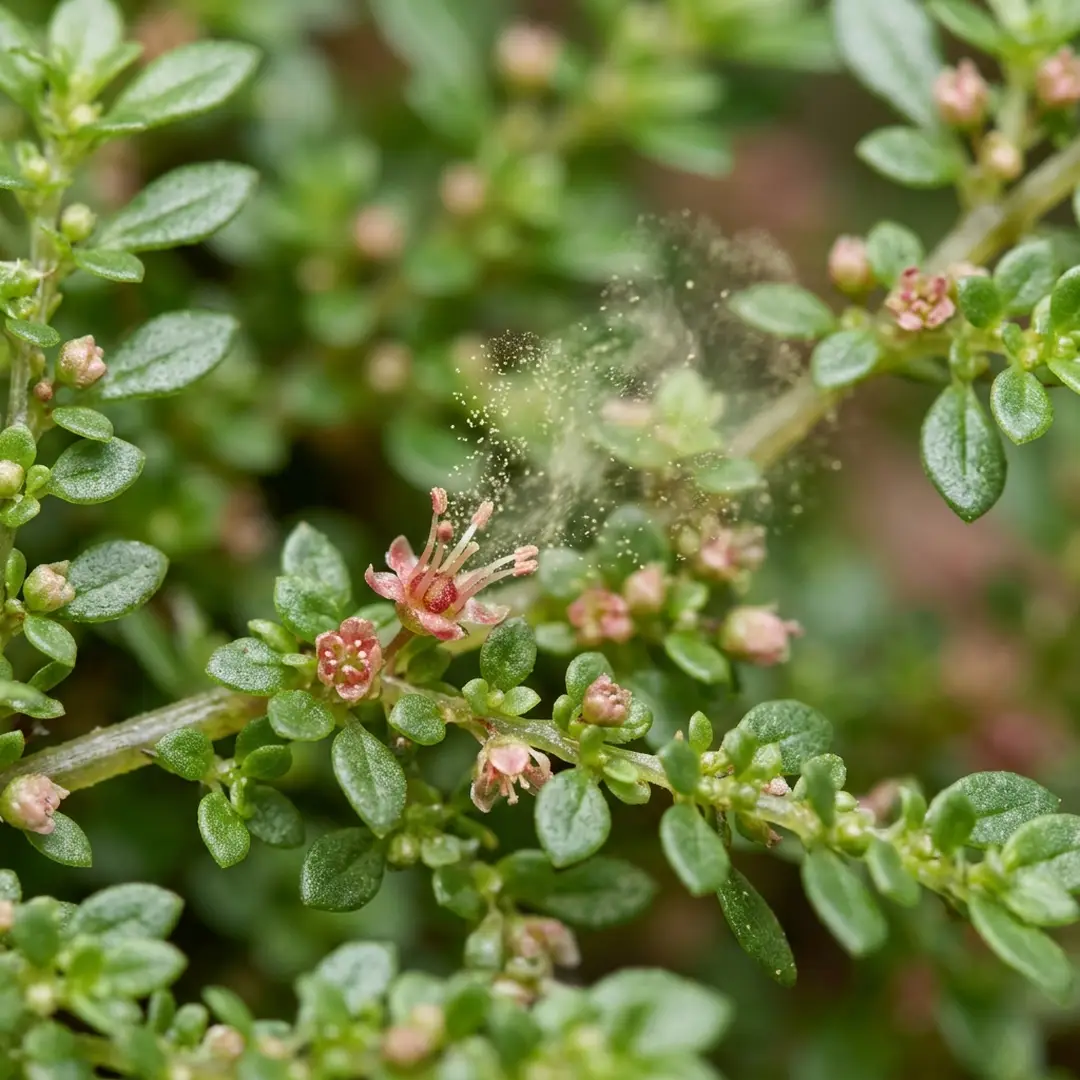
The flowers of Artillery Fern are tiny, barely a millimeter across, and in themselves are unremarkable: small pink or reddish clusters tucked among the foliage. What makes the plant famous is what happens when those flowers mature. The stamens are held under tension inside the flower bud, and when triggered by touch, heat, or even a slight breeze, they spring open explosively, firing a visible cloud of pollen into the air. The effect happens in a fraction of a second and can be triggered from multiple flowers across the plant in rapid succession.
This is an adaptation for pollen dispersal: by releasing pollen in a forceful burst, the plant increases the chance that pollen reaches another plant even in still air conditions in a dense forest understory. It is the same mechanism seen in other Urticaceae family members, including some true nettles.
Indoors, blooming tends to happen intermittently throughout the year when the plant is in good health and receiving adequate light. You may notice small flower clusters developing in the leaf axils. When you see them, a gentle tap on the stem is often enough to trigger a pollen release. The pollen is harmless and the effect is entirely reversible.
How to Encourage Blooming
Artillery Fern does not need much encouragement to bloom; under normal care it flowers on and off throughout the growing season. A few conditions make it more likely:
- Adequate light: Plants in good bright indirect light produce flowers more consistently than those in dim conditions. If your plant has not bloomed in a long time, check whether it has been moved to a lower-light position.
- Consistent feeding: Monthly fertilizer during spring and summer supports the reproductive cycle as well as vegetative growth.
- Slightly rootbound conditions: Like many plants, Artillery Fern sometimes blooms more readily when its roots are a little crowded. If the plant is in fresh soil in a large pot, it may focus on root and stem development before flowering.
- Warmth: Consistent temperatures above 65°F (18°C) keep the blooming cycle active. Cooler rooms slow flowering but do not eliminate it entirely.
There is no reliable way to force a specific blooming event: you mostly create conditions where blooming is likely and then wait for the plant to do it on its own.
After Flowering: What to Expect
Artillery Fern blooms so frequently and the flowers are so small that most growers do not need to think much about post-bloom care. The flowering stems do not usually die back after blooming the way some monocarpic plants do. The plant simply continues growing and producing new flower clusters over time.
If you want to reduce self-seeding (relevant mainly in outdoor or very humid terrarium settings), removing spent flower clusters before seed set is a practical precaution. Indoors, seed dispersal is rarely a concern since the seeds need warm, moist conditions to germinate successfully.
🏷️ Artillery Fern Types and Related Pilea Varieties
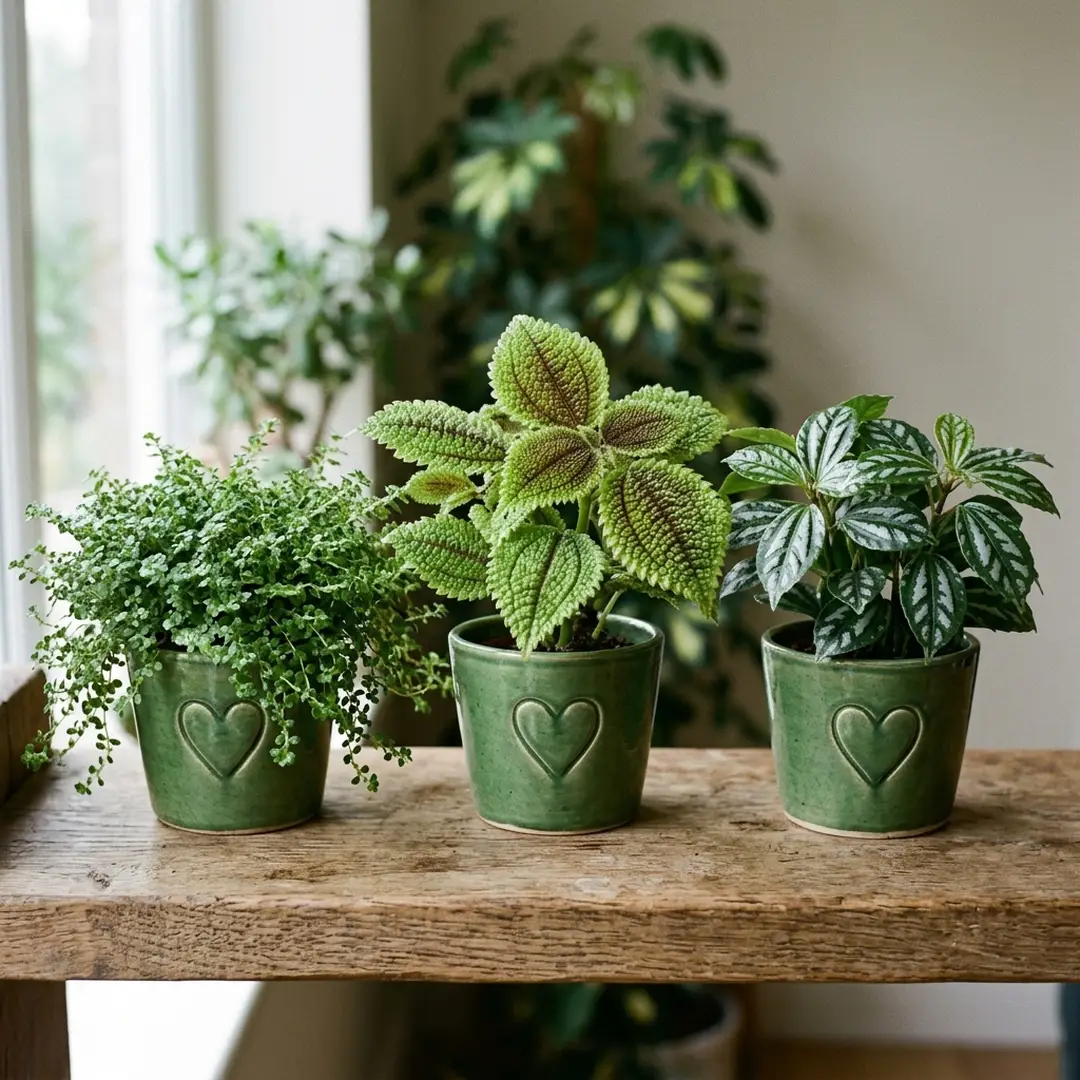
Pilea microphylla itself has a couple of recognized forms, primarily differing in leaf size and variegation, though most of what is sold in nurseries is the standard green-leafed form. The variegated form (Pilea microphylla ‘Variegata’) has cream or yellow markings on the leaves and is occasionally available from specialist growers. The species also goes by the name Artillery Plant, Gunpowder Plant, and in some older literature, Rockweed. In tropical garden contexts it is sometimes called Jointed Charlock, though this name is far less common in houseplant circles.
One detail worth knowing before you buy: Artillery Fern is sometimes labeled as a true fern in nurseries, particularly in mixed tropical displays or at big-box garden centers. It is not. Check the label for Pilea microphylla if you want to be certain. True ferns reproduce via spores, have fronds that unfurl from fiddleheads, and are typically more sensitive about humidity and watering. Artillery Fern is much easier across the board.
Origin and Natural Habitat
Pilea microphylla originates from tropical regions of Mexico, Central America, South America, and the Caribbean. It grows naturally in warm, humid environments at low to mid elevations, often in disturbed areas, rocky outcroppings, walls, and the edges of forest paths where there is good light but some protection from direct midday sun. Its semi-succulent leaf texture and tolerance for irregular watering reflect these origins in environments where rainfall is seasonal and soil conditions can be quite variable.
The species has naturalized far beyond its original range, including Florida, Hawaii, parts of Africa, Southeast Asia, and many Pacific islands, partly through deliberate introduction as an ornamental and partly through its prolific self-seeding habit. In some regions it is considered a minor weed of disturbed habitats and cracks in masonry. In Florida it can be found growing in sidewalk cracks, on old stone walls, and at the base of trees in humid coastal areas. This weedy resilience in the wild is actually a helpful indicator of how tolerant the plant is as a houseplant: it is genuinely adapted to variable conditions and does not require coddling to survive.
The genus Pilea contains several other popular houseplants worth knowing:
Moon Valley Pilea (Pilea mollis): The most texturally similar Pilea in terms of visual complexity, though the leaves are much larger with a deeply puckered, crater-like surface. Moon Valley Pilea and Artillery Fern share nearly identical care requirements.
Friendship Plant (Pilea involucrata): Compact, deeply textured leaves in bronze-green and reddish-purple. Overlaps in care requirements with Artillery Fern and is often sold alongside it in the same nursery sections.
Aluminum Plant (Pilea cadierei): Smooth, oval leaves with silver patches. More upright and structural in form than Artillery Fern.
Chinese Money Plant (Pilea peperomioides): Disc-shaped, coin-like leaves on long petioles. Very different in form but the same genus and similar care.
The Pilea family is worth exploring. The variation in leaf size, shape, texture, and habit across the genus is broader than in almost any other commonly kept houseplant group.
How to Tell Artillery Fern Apart From True Ferns
If you are unsure whether what you have is Artillery Fern or an actual fern, here are the differences:
Artillery Fern has small, oval, fleshy, semi-succulent leaves arranged symmetrically on opposite sides of branching stems. The stems are smooth and slightly succulent. It produces tiny flowers (and visible pollen clouds) and grows from roots, not rhizomes.
True ferns produce fronds that unfurl from coiled fiddleheads. They reproduce via spores (visible as brown or rusty spots or lines on the underside of mature fronds) and have no true flowers. Most ferns are also more sensitive to drought and direct sun than Artillery Fern.
If the plant you have has fiddleheads, spore cases on the leaf undersides, and fronds rather than stems with individual leaves, it is a true fern. If it has the tiny, succulent-textured leaves and visible flowers that pop when you touch them, it is Artillery Fern.
🪴 Potting and Repotting Artillery Fern
Artillery Fern is a fast grower and may need repotting more often than slower plants, roughly every 1-2 years or when roots begin emerging from the drainage holes. Because the plant grows in every direction and fills pots quickly, it can become rootbound faster than you might expect. When roots start circling the base of the root ball or the plant wilts more quickly after watering despite good soil, it is time to move up a pot size.
Choose a new pot 1-2 inches wider than the current one. Going too large adds excess soil volume that retains moisture longer than the roots can use, increasing root rot risk. Hanging baskets can be refreshed by removing the plant, shaking off the old soil, dividing the root ball if it has grown very large, and repotting into fresh mix.
Spring is the best time, though Artillery Fern repots reasonably well at any time of year during warm months. The repotting guide walks through the step-by-step process clearly.
Division
Artillery Fern can also be divided during repotting. If the plant has filled its pot with a dense mass of stems and roots, pull or cut the root ball into two or three sections, each with several stems attached, and pot them individually. This is an effective way to produce multiple plants and reinvigorate a congested root system at the same time. Use the plant division guide for more detail on this method.Pot Selection for Artillery Fern
The pot material matters more for fast-growing, frequently watered plants like Artillery Fern than it does for slower growers. Terra cotta’s porous walls help excess moisture evaporate from the sides, reducing root rot risk and providing a useful buffer against overwatering in humid environments. Glazed ceramic and plastic pots retain moisture longer, which can be an advantage in hot, dry rooms where the plant dries out quickly.
For hanging baskets specifically, look for a liner that minimizes moisture loss while still allowing drainage. Coco fiber liners strike a reasonable balance: they allow air movement and some evaporation from the sides but dry out at a more manageable rate than open wire baskets.
Whatever pot type you use, drainage holes are non-negotiable for Artillery Fern. The roots cannot tolerate standing water and a sealed container almost guarantees root rot over time.
✂️ Pruning Artillery Fern (Keeping It Full and Tidy)
Artillery Fern grows fast enough that pruning is a regular part of its care. Without occasional trimming, the stems extend and become sparse, losing the dense fern-like appearance that makes the plant attractive. Use clean, sharp scissors to cut back long or leggy stems to just above a leaf node. The plant responds quickly by branching below the cut, producing a fuller, more compact shape.
For hanging baskets, a trim every 4-6 weeks during active growth keeps the cascading form full rather than wispy. Cut back to a consistent length to create an even, mounded silhouette in the basket.
The plant can be cut back quite hard if it has become very leggy. As long as there are a few healthy leaves left on the stems, it will regenerate. Use the cut stems for propagation.
Pruning Technique and Timing
Tip pruning, removing just the top pair of leaves and the stem directly beneath them, is the standard technique for encouraging bushiness. Each tip you remove produces two new branches below the cut, and those two branches can be tip-pruned in turn on the next round. Done consistently from early spring onward, this geometric branching produces a noticeably fuller plant by midsummer.
Harder cutbacks are appropriate when the plant has gotten away from you and is mostly bare stems with growth only at the tips. Cut the stems back to 2-3 inches from the soil, leaving at least one set of leaves per stem. Water normally and place the plant in bright indirect light. New growth emerges from the remaining nodes within 1-2 weeks.
Spring through early summer is the best time for harder pruning, when the plant is entering active growth and has the most energy for regeneration. Pruning in late fall or winter is possible but recovery is slower.
🌱 How to Propagate Artillery Fern from Cuttings
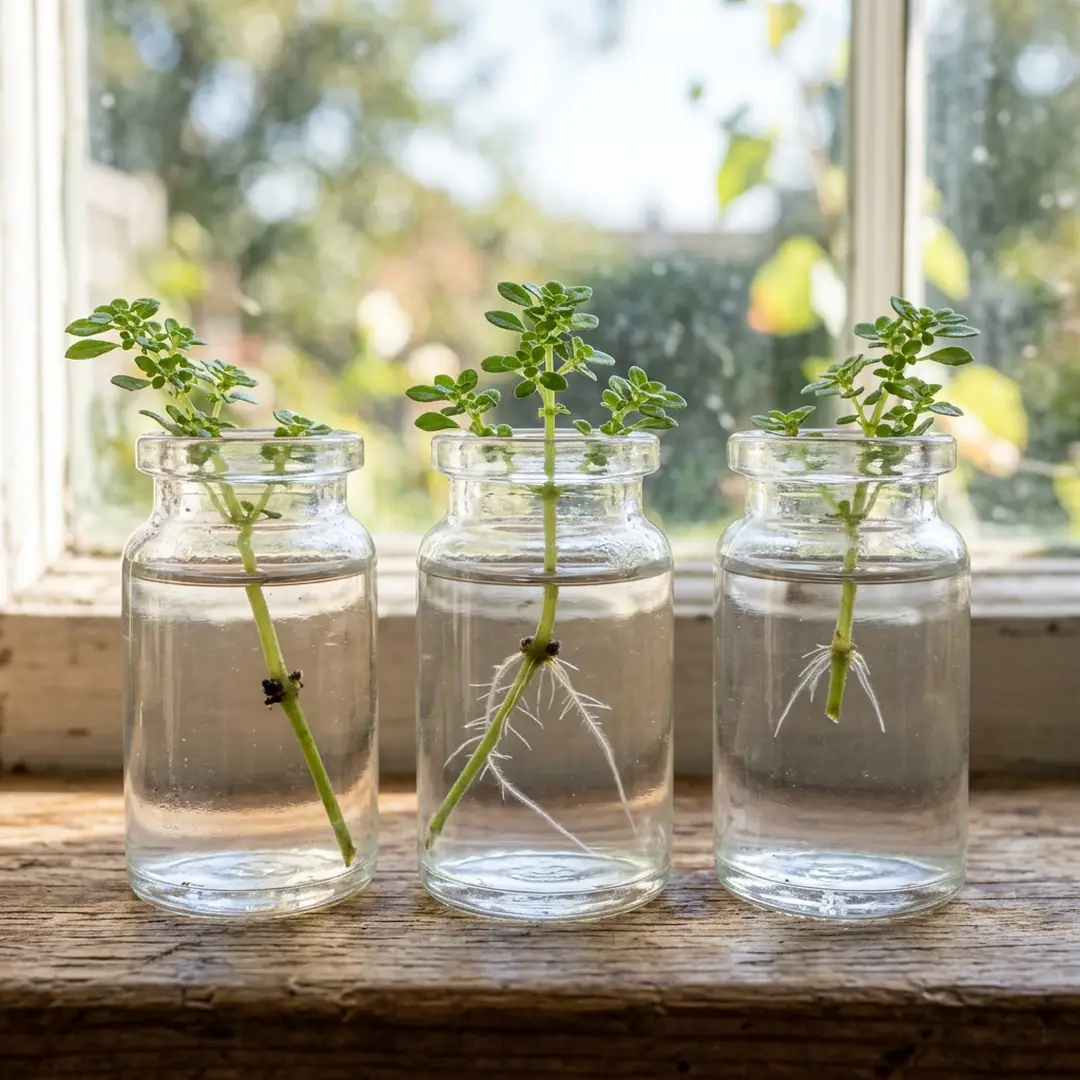
Artillery Fern is one of the easiest houseplants to propagate. It roots so readily that many growers propagate it as a matter of course when trimming, rather than treating it as a special procedure. The cuttings root faster than almost any other common tropical houseplant, which makes Artillery Fern a good choice for beginners learning propagation for the first time.
Taking a Good Cutting
Select a healthy stem tip 3-4 inches long with several pairs of tiny leaves. Cut cleanly just below a leaf node with sharp scissors. Strip the lower 1-2 inches of leaves, leaving a few pairs at the top. Because the leaves are so small, removing them from the lower stem is easy and fast. The exposed nodes along the stripped section will produce roots.
Artillery Fern stems are soft and succulent in texture. Work carefully to avoid crushing the stem when removing lower leaves, as damaged tissue rots more easily in water or wet propagation mix.
Water Propagation
Place the prepared cutting in a small jar of room-temperature water with the cut end submerged and the leaves above the waterline. Set it in bright indirect light and change the water every 2-3 days to keep it oxygenated. Roots typically appear within 7-14 days, which is faster than most houseplants. Once roots are about an inch long, pot the cutting into moist potting mix. Water well after potting and keep the mix consistently moist for the first week.
See the water propagation guide for a step-by-step walkthrough.
Soil Propagation
Artillery Fern cuttings also root directly in moist potting mix or perlite. Prepare the cutting as above, insert it into moistened mix, and cover loosely with a clear plastic bag to retain humidity. No rooting hormone is usually needed: the plant roots readily on its own. Check for resistance when tugging gently on the stem after 2-3 weeks. Once rooted, remove the cover and resume normal care.
Direct soil propagation is especially useful when you are taking many cuttings at once, such as after a heavy pruning session. Fill a single tray or shallow pot with moist perlite and insert multiple cuttings at once. The rooting environment is identical for all of them and the setup takes just a few minutes.
See the soil propagation guide for more on direct propagation in mix.
Self-Seeding
In warm, humid outdoor environments, Artillery Fern self-seeds prolifically, which is part of why it has naturalized in so many tropical regions worldwide. The seeds are tiny and light, and the pollen-shooting flowers aid in their dispersal. Indoors this is less common, but in a terrarium with high humidity and warm temperatures, you may occasionally find tiny seedlings appearing near the parent plant. These can be left to grow or transplanted carefully while they are still very small.
In tropical garden settings, the self-seeding habit is worth monitoring. Artillery Fern can establish itself in adjacent beds and cracks in pavement if conditions are right. In areas where invasive potential is a concern, deadheading the flowers before seed set is a sensible precaution.
🐛 Artillery Fern Pests and How to Treat Them
Artillery Fern is generally resistant to pests when grown in good conditions. The main risk periods are late winter when indoor heating dries the air (prime spider mite conditions) and when plants are first brought in after a summer outdoors (check thoroughly before the plant joins your indoor collection, as outdoor exposure introduces a wider range of insects).
The dense, fine foliage makes early detection difficult since infestations can establish in the inner stems before they become visible on the outer canopy. Get into the habit of parting the foliage and looking at the interior stems and stem joints every couple of weeks, especially from late fall through early spring.
Spider mites are the most common problem, typically occurring in dry winter conditions when indoor heating drops humidity. They colonize the undersides of the tiny leaves and in stem joints. Because the individual leaves are so small, you may not see stippling as clearly as on large-leaved plants. Instead, look for a fine dusty haze on the foliage, a faint bronzing, or webbing in the tightest stem joints. Treat by rinsing the plant under a shower or sink faucet to physically dislodge mites, then applying neem oil or insecticidal soap to all surfaces. Repeat weekly for 3-4 weeks. Increasing local humidity is one of the most effective long-term preventive measures.
Mealybugs show as small white cottony masses in the stem crotches and at the base of leaf clusters. In Artillery Fern the dense growth can conceal even moderate infestations until they become large. Dab individual colonies with a cotton swab dipped in rubbing alcohol, then spray the whole plant with insecticidal soap. Follow up weekly for several weeks.
Fungus gnats in the soil indicate the mix is staying too wet between waterings. Allow the top inch or two to dry out more consistently and the larvae, which live in moist soil, decline quickly. Yellow sticky traps catch the adult gnats flying above the soil.


🩺 Artillery Fern Problems and How to Fix Them
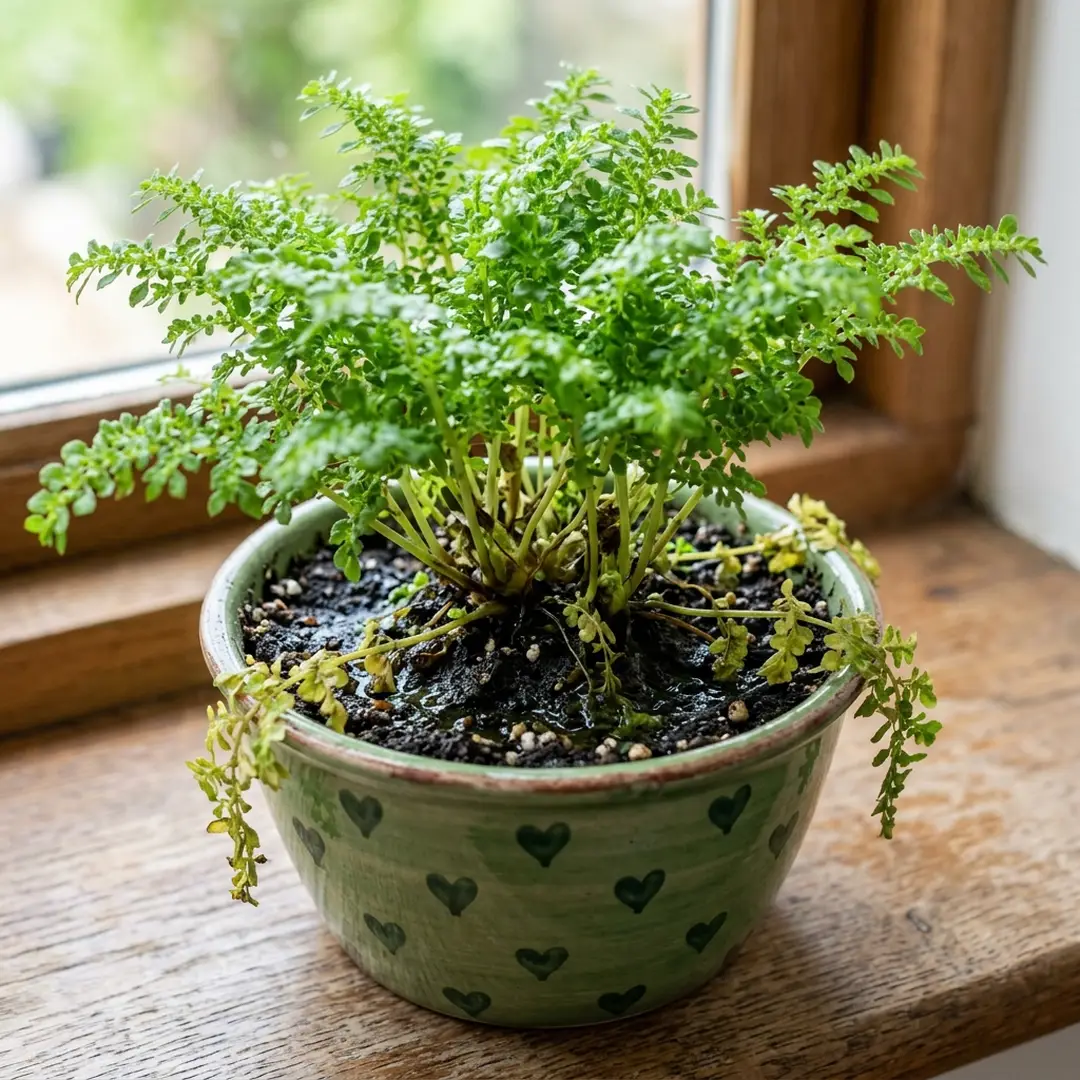
Root rot is the main serious problem with Artillery Fern, caused by consistently wet soil or a pot without adequate drainage. Symptoms include yellowing lower leaves, soft or dark lower stems, and a general collapse of the plant despite watering. If caught early, remove the plant from its pot, cut away rotted roots with clean scissors, let the root ball air-dry for a few hours, and repot into fresh, dry mix. If more than half the roots are damaged, take healthy stem cuttings from the upper growth and discard the rotted base. Artillery Fern roots fast enough from cuttings that this is rarely a setback.
Leggy, sparse growth is a light problem. Move the plant to a brighter spot and cut back the stretched stems to encourage denser regrowth. New growth after cutting back will be compact if the light is adequate.
Yellow leaves combined with moist soil usually mean overwatering rather than underwatering. Brown, crispy leaf tips point to low humidity or, less commonly, fertilizer salt burn from buildup in the soil. If you suspect salt buildup, flush the soil thoroughly by running water through it several times, or repot into fresh mix.
Sudden leaf drop, where the plant drops a large number of leaves quickly, is usually a shock response to a sudden change in conditions: temperature drop, relocation to much lower light, or very dry air combined with heat. Stabilize the conditions and reduce watering while the plant settles.
One thing to keep in mind: Artillery Fern is naturally a fast grower and can outpace a pot fairly quickly. What looks like poor health sometimes turns out to be a rootbound plant that simply needs repotting and fresh soil. If watering and light seem correct but the plant looks stressed, check the roots before troubleshooting further.


🖼️ Artillery Fern Display Ideas (Styling and Placement)
The fine, fern-like texture of Artillery Fern gives it unusual versatility for a compact tropical plant. It reads as delicate and soft from a distance, which makes it a good contrast plant next to bold-leaved specimens.
Hanging baskets: Artillery Fern is one of the better small plants for a hanging basket. It grows quickly, cascades attractively as stems extend over the edges, and the billowing, fine-textured foliage fills the basket with a lush, full effect. Use a lined basket with good drainage and check moisture often since baskets dry out quickly. A 6-8 inch basket gives enough soil volume to avoid constant watering while still showing off the trailing habit well.
Terrariums: The small leaf size, tolerance for high humidity, and compact growth make Artillery Fern an excellent terrarium plant. Use it as a mid-level filler, a groundcover layer, or a trailing element in open-top glass containers. Its pollen-shooting behavior is especially fun to observe in an enclosure where you can get close and watch individual flowers fire. It pairs particularly well with mosses, nerve plants (Fittonia), and small Peperomia species in tropical terrariums.
Mixed tropical containers: Artillery Fern fills in around the base of larger, bolder plants like Dumb Cane or Chinese Evergreen in mixed planters. Its fine texture creates a sharp contrast with large, broad leaves and adds a layered, garden-like effect to a container. It grows fast enough that it fills in quickly, but regular trimming keeps it from overtaking smaller companions in the same pot.
Fairy gardens: The plant’s fern-like appearance makes it a natural choice for miniature garden scenes. Its scale and texture mimic real ferns convincingly at the small sizes used in fairy garden compositions.
Pairing Artillery Fern with Pilea Relatives
Artillery Fern looks particularly interesting when grouped with its Pilea relatives, since the genus contains such varied leaf forms. Pairing Artillery Fern with Moon Valley Pilea creates a striking textural contrast: the fine, almost mossy density of Artillery Fern against the bold, deeply ridged craters of Moon Valley. Place them at the same height or in a terrarium together and the difference in scale and surface texture is immediately apparent.
Adding Aluminum Plant as a third companion brings a smooth, silver-patterned leaf into the mix, creating a three-way textural display from plants that share similar care requirements and can be maintained in the same conditions.
Outdoor Groundcover Use
In USDA zones 10-12, Artillery Fern is a versatile outdoor groundcover. It spreads quickly under trees, along shaded pathways, and in the gaps between larger shrubs, filling in areas where lawn grasses struggle in deep shade. The fine texture creates a soft, carpet-like effect at a distance, and the low growth height (usually under 8-10 inches) keeps it tidy without constant maintenance.
For outdoor planting, full shade to partial sun with afternoon protection gives the best results. Water regularly until established, then it becomes reasonably drought-tolerant once the roots have spread. Because it self-seeds, introduce it with some planning about where you want it to spread and use edging barriers if you want to contain it to a specific area.
🌟 Artillery Fern Care Tips (Pro Advice)
Trigger the pollen on purpose. A gentle tap on a stem with mature flowers produces a visible puff of pollen. It is completely harmless and genuinely entertaining, especially for children. It also gives you a quick way to assess whether the plant is in good reproductive health.
Use it as a learning tool. If you teach children about plants or science, Artillery Fern is one of the few houseplants with a mechanical plant behavior that is visible and repeatable on demand. The stamen mechanism is related to the same catapult tension principle seen in other ballistic seed and pollen dispersers. Worth knowing if you ever want to explain the “why” behind the trick.
Hanging baskets need more water. If you grow Artillery Fern in a basket, check it daily in summer. The small soil volume dries out fast, and a crispy, dried-out Artillery Fern in a basket is a common and preventable sight.
Trim before it gets leggy, not after. Artillery Fern looks best when the stems are trimmed regularly before they extend too far. Monthly light pruning keeps the dense, fern-like appearance much more effectively than periodic heavy cuts.
Use the trimmings. Every trimming session produces propagation material. Drop the cut stems into a glass of water and you will have rooted cuttings within two weeks. Use them to fill out the same pot, start new hanging baskets, or share with other gardeners.
Terrariums are the easy path. If you find that your home air is too dry for Artillery Fern and your bathroom shelf is already full, a terrarium is the easiest humidity solution. The plant thrives in glass enclosures without any additional humidity management.
Check the inner stems for pests. The dense foliage hides early pest infestations. Part the outer stems and look at the inside of the plant periodically. Finding pests early makes treatment far simpler.
Group it with bold-leaved plants. Artillery Fern’s fine texture contrasts beautifully with large, smooth, tropical leaves. It makes the bold plants bolder and looks more interesting itself in the contrast. Try it with a larger Aluminum Plant or alongside Moon Valley Pilea.
Repot before the plant stalls. Artillery Fern slows noticeably when rootbound. If the plant is watered correctly but seems to have stalled, check whether it needs a larger pot before troubleshooting anything else.
Feed during active growth only. The plant grows fast enough in spring and summer that monthly feeding makes a visible difference. Skipping fertilizer entirely through winter avoids salt buildup and weak growth.
Start fresh every 2-3 years outdoors. In subtropical gardens, Artillery Fern can become invasive over time due to prolific self-seeding. Monitor it and pull seedlings before they spread beyond the intended area.
Rinse, don’t mist. If the plant gets dusty (the tiny leaves do collect dust in rooms with poor circulation), a gentle rinse under a faucet is more effective than misting. Misting individual leaves barely moves dust, while a proper rinse cleans the whole plant in under a minute. Let it drain fully before setting it back in its spot.
Pair it with larger bold-leaved plants. Artillery Fern’s fine texture is best appreciated next to a plant with large, smooth leaves. The contrast is immediate and makes both plants look better. Chinese Evergreen, Dumb Cane, or even a larger Philodendron variety all work well as companion plants in a shared arrangement or on the same shelf.
Watch the weight of hanging baskets. A well-watered Artillery Fern in a large hanging basket is heavier than it looks. Make sure the hook and wall anchor can handle the weight, especially in summer when the basket soil is at its wettest. A basket that drops is a mess and potentially damages both the plant and the floor beneath it.
Quarantine plants from outdoors. If you bring Artillery Fern in from an outdoor summer position, inspect it carefully before it joins your indoor plant collection. Rinse the whole plant, check the inner stems and soil surface, and keep it apart from other plants for a week. Outdoor plants pick up pests that spread quickly indoors.
Try it in a self-watering pot. Artillery Fern’s preference for consistent moisture makes it a good candidate for self-watering containers. The reservoir keeps the soil evenly moist without daily attention, which is especially useful for hanging baskets that are inconvenient to water frequently. Use a potting mix with good aeration (add extra perlite) to prevent the perpetual moisture from becoming waterlogged.
Add it to a humidity tray group. Artillery Fern is a natural complement to a humidity-tray arrangement with other tropicals. Its fast, spreading growth fills in the gaps between larger plants and creates a dense, layered effect at soil level that enhances the humidity microclimate for the whole group.
Give it a try in a bathroom. Artillery Fern is one of the few houseplants that actually thrives in bathroom conditions where many others just survive. The combination of regular humidity spikes from showers, consistent warmth, and relatively low but reliable light suits it well. If you have a bathroom window, this plant belongs there.
❓ Frequently Asked Questions
Is Artillery Fern actually a fern?
No. Despite the common name, Artillery Fern is not a fern at all. It is Pilea microphylla, a flowering plant in the nettle family (Urticaceae). The fern-like appearance of its tiny, densely packed leaves is purely coincidental.Why is it called Artillery Fern?
The name comes from the plant’s unusual pollen-dispersal mechanism. When the tiny flowers mature, a light touch causes the stamens to spring open and fire a visible cloud of pollen into the air. The explosive action resembles a tiny cannon firing, hence the artillery reference.Is Artillery Fern toxic to cats and dogs?
No. Artillery Fern (Pilea microphylla) is non-toxic to cats, dogs, and humans. It is a pet-safe houseplant.How fast does Artillery Fern grow?
Artillery Fern is a fast grower during the warm months. Under good conditions (bright indirect light, consistent moisture, warm temperatures) it can fill a 6-inch pot in a single season.Can I grow Artillery Fern outdoors?
Yes, in frost-free climates (USDA zones 10-12). It is used as a groundcover under trees in tropical and subtropical gardens. In cooler climates it is grown as an annual outdoors in summer, then brought in before the first frost.How do I propagate Artillery Fern?
Take a stem cutting 3-4 inches long, remove the lower leaves, and place it in water or moist potting mix. Roots form within 1-3 weeks. The plant also self-seeds readily in warm, humid outdoor conditions.Why is my Artillery Fern turning yellow?
Yellow leaves most often point to overwatering or poor drainage. Check the soil and drainage holes first. Less commonly, yellowing can indicate low light or a lack of nutrients in an old mix.Can Artillery Fern grow in low light?
It tolerates lower light better than most Pileas, but it gets leggy in dim conditions, with widely spaced leaves and a sparse appearance. For the full, dense fern-like look, bright indirect light is needed. In very low light, the plant grows slowly and eventually weakens. If your only available spot is dim, consider a small grow light to supplement.Is Artillery Fern invasive?
It can be in frost-free tropical and subtropical climates (USDA zones 10-12), where it self-seeds prolifically and can spread beyond the intended planting area. In cooler climates it is grown as an annual outdoors or as a houseplant and does not pose an invasive risk. Indoors in temperate climates, it does not self-seed problematically.How do I keep Artillery Fern from getting leggy?
Regular tip pruning is the key. Remove the top pair of leaves and the stem just below them every few weeks during active growth. Each pruned tip produces two new branches, gradually creating a denser, more compact plant. Adequate light is equally important: even with frequent pruning, a plant in insufficient light will continue to stretch.Can I use Artillery Fern as a groundcover outdoors?
Yes, in USDA hardiness zones 10-12 (frost-free climates). Artillery Fern spreads quickly and works well under trees and in shaded garden beds where lawn grass struggles. In cooler climates it can be grown outdoors as a summer annual, then brought in before the first frost. Note that it self-seeds prolifically in warm outdoor conditions, so plant it where you can manage its spread.Why won't my Artillery Fern fire pollen?
The pollen-release mechanism only works on mature flowers. If you touch the plant and nothing happens, the flowers may be too young, past their peak, or the plant may not be in flower at all at that moment. Check the leaf axils for small pinkish flower clusters. When flowers are present and mature, even a gentle tap should trigger the release. Good light and regular feeding encourages more frequent blooming.Does Artillery Fern need fertilizer?
Yes, during the growing season (spring through late summer). Use a balanced liquid fertilizer diluted to half strength, applied monthly. Stop feeding in fall and winter when growth slows. Skipping fertilizer entirely is not harmful short-term but leads to paler foliage and slower growth over the course of a season.ℹ️ Artillery Fern Info
Care and Maintenance
🪴 Soil Type and pH: Well-draining peat or coco coir mix with perlite
💧 Humidity and Misting: Prefers moderate to high humidity above 50%. Tolerates average indoor humidity better than many tropicals.
✂️ Pruning: Trim back leggy stems at any time to maintain a full, compact shape. The plant regenerates quickly.
🧼 Cleaning: Rinse occasionally under a gentle stream of water to keep the tiny leaves dust-free.
🌱 Repotting: Every 1-2 years, or when roots fill the pot.
🔄 Repotting Frequency: Every 1-2 years
❄️ Seasonal Changes in Care: Reduce watering slightly in fall and winter. Avoid cold drafts. Bring outdoors plants inside before temperatures drop below 50°F.
Growing Characteristics
💥 Growth Speed: Fast
🔄 Life Cycle: Perennial in USDA zones 10-12; annual elsewhere
💥 Bloom Time: Intermittently year-round; tiny inconspicuous flowers
🌡️ Hardiness Zones: 10-12
🗺️ Native Area: Tropical Americas; naturalized in many tropical regions worldwide
🚘 Hibernation: No true dormancy; growth slows in cooler months
Propagation and Health
📍 Suitable Locations: Hanging baskets, terrariums, groundcover in shaded tropical gardens, mixed container plantings, fairy gardens
🪴 Propagation Methods: Very easy from stem cuttings in water or moist soil. Can also self-seed in warm, humid conditions.
🐛 Common Pests: spider-mites, fungus-gnats, and mealybugs
🦠 Possible Diseases: Root rot from overwatering; powdery mildew in stagnant low-light conditions
Plant Details
🌿 Plant Type: Tropical Perennial
🍃 Foliage Type: Evergreen
🎨 Color of Leaves: Bright medium green; semi-succulent
🌸 Flower Color: Tiny pink to reddish; barely visible
🌼 Blooming: Frequent but inconspicuous; notable for explosive pollen release
🍽️ Edibility: Not edible
📏 Mature Size: 6-12 inches
Additional Info
🌻 General Benefits: Non-toxic to pets and children, fast-growing, excellent for terrariums and groundcover, unusual pollen-shooting behavior, very easy to propagate.
💊 Medical Properties: None known
🧿 Feng Shui: The dense, lush growth of Artillery Fern represents abundance and prosperity. Its trailing form suits shelves and elevated positions where energy can flow downward.
⭐ Zodiac Sign Compatibility: Gemini
🌈 Symbolism or Folklore: Liveliness, surprise, adaptability
📝 Interesting Facts: The common name ‘Artillery Fern’ comes from the plant’s remarkable pollen dispersal mechanism. When the tiny flowers are mature, even the slightest touch or vibration triggers the stamens to spring open and release a visible cloud of pollen into the air. This explosive action can be triggered repeatedly across the plant and is visible to the naked eye, making it a favorite for demonstrating plant biology to children.
Buying and Usage
🛒 What to Look for When Buying: Look for a full, dense plant with bright green, healthy stems. Artillery Fern should look bushy, not sparse. Avoid plants with yellowing stems at the base or any signs of root rot. The plant is inexpensive and widely available, so pass on anything that looks stressed.
🪴 Other Uses: Commonly used as a fast-spreading groundcover under trees in tropical and subtropical gardens. Also popular in terrariums and fairy gardens for its fine, fern-like texture.
Decoration and Styling
🖼️ Display Ideas: Hanging baskets, the edges of mixed tropical planters, terrariums, fairy gardens, and shaded patio containers.
🧵 Styling Tips: The fine texture of Artillery Fern pairs beautifully with bold-leaved tropicals. Try it at the base of a larger plant like a Dumb Cane or Chinese Evergreen to fill the lower planter space. In a hanging basket, let it spill over the edges for a soft, cascading effect.
📚 References ▼
- 📘 Huxley, A. (1992). New RHS Dictionary of Gardening. Macmillan.
- 📘 USDA Plants Database. Pilea microphylla (L.) Liebm.
🪴 See also 🪴

Complete Guide to Moon Valley Pilea Care and Growth

Complete Guide to Friendship Plant Care and Growth

Complete Guide to Aluminum Plant Care and Growth

