

Aluminum Plant
Pilea cadierei
Aluminum Pilea, Watermelon Pilea (common misnomer)


The Aluminum Plant (Pilea cadierei) is a fast-growing tropical foliage plant with striking dark green leaves decorated by four raised silvery-aluminum patches that catch light like brushed metal. This guide covers everything you need to keep it full, bright, and bushy, because without regular pinching, it will get leggy on you.
📝 Aluminum Plant Care Notes
🌿 Care Instructions
⚠️ Common Pests
📊 Growth Information
🪴 In This Guide 🪴

☀️ Light Requirements for Aluminum Plant
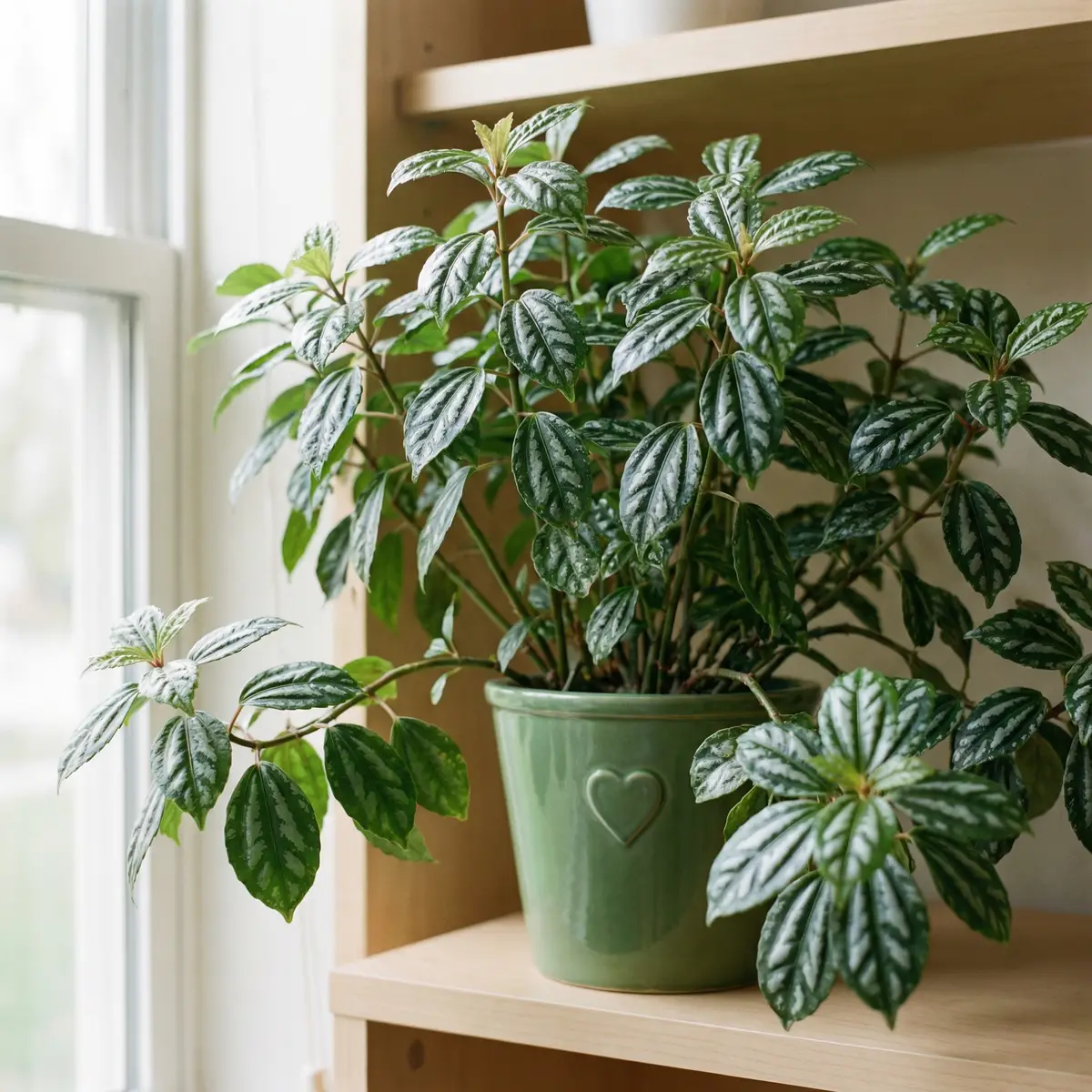
Ideal Light for Aluminum Plant
Bright indirect light is the target. Aluminum Plant grows fast and looks its best when it has a steady source of bright, filtered light throughout the day. An east-facing window is ideal, giving the plant soft morning sun without the intensity that can bleach the silver markings. A spot a few feet back from a west or south window also works well, especially if there is a sheer curtain to soften the light.
The silver patches are what make this plant special, and they genuinely depend on good light to stay vivid. In low light, the patches fade, the stems stretch, and the plant loses the compact shape that makes it appealing. In harsh direct afternoon sun, the silver can bleach out and the leaves can develop pale, scorched patches.
The sweet spot is a bright room where the plant receives consistent light but never direct, hot rays on the leaf surface.
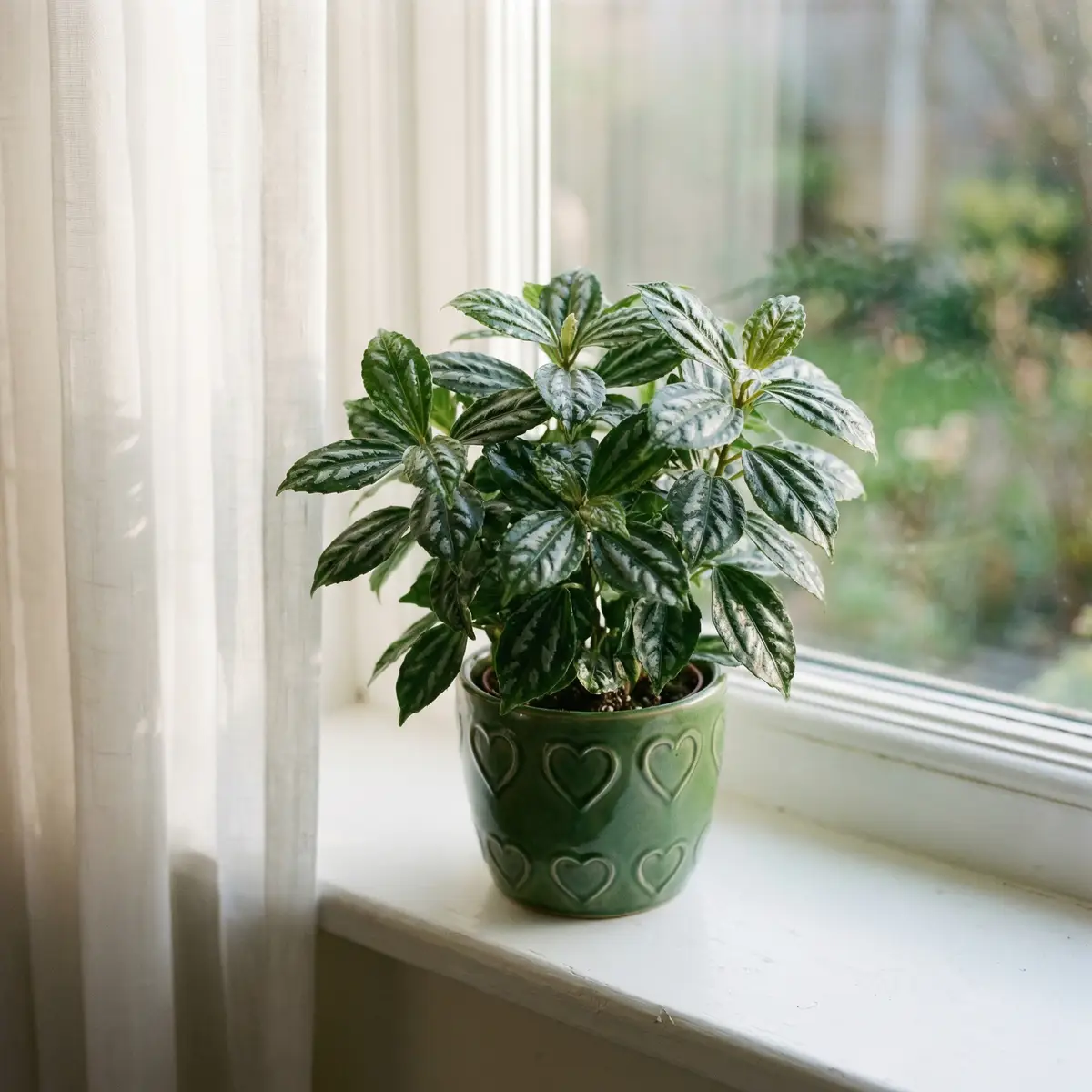
Best and Worst Light Conditions
Best Light Conditions:
- East-facing windowsill with gentle morning light.
- A bright room with diffused natural light throughout the day.
- A few feet from a south or west window with a sheer curtain filtering the intensity.
Avoid:
- Dark corners or shelves far from windows, the silver markings will fade, growth becomes sparse, and legginess sets in fast.
- Harsh direct afternoon sun through south or west-facing glass, this bleaches the metallic patches and can scorch the leaves.
- Positions directly above heat sources, which combine dry air with temperature stress.
If you are unsure how bright your space actually is, check out our Indoor Lighting Guide for practical ways to measure and improve light levels.
Can Aluminum Plant Grow Under Artificial Light?
Yes, and it adapts well to grow lights. If your home lacks good natural light, a full-spectrum LED grow light placed 6-12 inches above the plant for 12-14 hours per day gives it everything it needs. This is especially useful in winter when natural light drops. See our Grow Lights Guide for setup recommendations.💧 Watering Aluminum Plant
How Often to Water
Aluminum Plant likes to stay consistently moist during the growing season, but it should never sit in soggy soil. The standard approach is to let the top inch of soil dry out, then water thoroughly until it drains from the drainage holes. In spring and summer, this usually means watering every 5-7 days. In fall and winter, when growth slows, extend that interval to roughly every 10-14 days.
It is not as drought-tolerant as succulents or some of the semi-succulent peperomias, so do not let it dry out completely. Crispy leaf edges and wilting are signs of underwatering. At the same time, the roots will rot if the soil stays wet too long, so drainage is essential.
How to Water
Water thoroughly at the soil level until water flows freely from the drainage holes, then empty the saucer. Avoid letting the pot stand in water. Bottom watering works well for Aluminum Plant, set the pot in a tray of water for 20-30 minutes, let the soil absorb moisture from below, then remove and allow to drain.
Try not to splash water on the leaves repeatedly, as sitting moisture on foliage can encourage fungal spots over time.
Seasonal Watering Adjustments
- Spring and Summer (active growth): Water when the top inch of soil is dry, roughly every 5-7 days depending on pot size, light, and temperature.
- Fall and Winter: Reduce frequency significantly. The plant slows down and needs less water. Every 10-14 days is a reasonable starting point, but always check the soil first.
Signs of Watering Problems
- Overwatering: Yellowing lower leaves, soft stems at the base, soggy soil that stays wet for more than a week. If the roots smell unpleasant, root rot may have set in.
- Underwatering: Drooping, wilting stems, crispy brown leaf edges, and very dry soil pulling away from the pot sides.
For more detail, check out our full Watering Guide.
🌱 Soil for Aluminum Plant
What Kind of Soil Does Aluminum Plant Need?
Aluminum Plant wants a soil that drains well but holds some moisture, not bone dry between waterings, and definitely not waterlogged. A rich, well-draining potting mix is the right balance. The goal is soil that stays loose, airy, and never compacted, so the roots can breathe and water can move through freely.DIY Soil Mix
A simple and effective mix:
- 2 parts standard indoor potting soil (good organic content for moisture retention and nutrients)
- 1 part perlite (improves drainage and prevents compaction)
This combination holds enough moisture to keep the plant satisfied between waterings while draining quickly enough to prevent root rot. You can add a small amount of coco coir if your potting mix runs particularly dry.
For more on building the right foundation, see our Potting Soil Guide.
Pre-Made Options
A quality all-purpose indoor potting mix amended with extra perlite is the easiest route. Avoid mixes formulated for cacti or succulents, Aluminum Plant wants more moisture retention than those provide. Also avoid dense, peat-heavy mixes that compact over time and stay waterlogged.🌿 Fertilizing Aluminum Plant
When and How to Fertilize
Aluminum Plant is a fast grower and benefits from regular feeding during the active growing season. Feed once a month from spring through summer with a balanced liquid fertilizer (such as a 10-10-10 or 20-20-20 formulation) diluted to half the recommended strength. Apply to moist soil, never to dry soil, which can burn the roots.
Stop fertilizing entirely in fall and winter. Growth slows during these months and excess fertilizer will accumulate as salt in the soil without being used, which can damage the roots over time.
Signs of Fertilizer Problems
- Too little fertilizer: Slow growth, small pale new leaves, stems that stretch without producing lush foliage.
- Too much fertilizer: White crusty salt deposits on the soil surface or pot rim, brown leaf tips, stunted or distorted new growth.
If you see salt buildup, flush the soil thoroughly with water two or three times to wash out the accumulated minerals.
For a full overview, visit our Fertilizing Guide.
🌡️ Temperature Requirements for Aluminum Plant
Ideal Temperature Range
Aluminum Plant is a tropical plant native to Vietnam and China, so it thrives in warm, stable indoor conditions. The ideal temperature range is 60-80°F (15-27°C), which covers most comfortable living spaces without any special effort.
It does not appreciate the cold. Temperatures below 50°F (10°C) can cause leaf drop, discoloration, and general decline. Even brief exposure to cold drafts from windows, air conditioning vents, or exterior doors can stress the plant noticeably. In winter, keep it away from cold windowsills, especially at night when glass temperatures drop.
Temperature Stress Signs
- Sudden leaf drop after being near a cold draft or relocated in winter.
- Yellowing or bronzing of lower leaves when exposed to cooler temperatures for extended periods.
- Stunted growth or wilting without obvious watering issues, which can point to root stress from cold soil.
Seasonal Temperature Considerations
Summer is generally stress-free for Aluminum Plant indoors as long as it is not placed directly in an air-conditioned stream. Central AC can create surprisingly cold pockets near vents, and the chilled air tends to be very dry on top of that, which compounds the brown-leaf-edge problem.
In winter, the main risk is the gap between a window and the rest of the room. On a cold night, the glass surface can be significantly colder than the ambient air. The few inches closest to the glass can drop below 50°F (10°C) while the rest of the room stays comfortable. Moving the plant back 12-18 inches from the glass when cold weather sets in is usually enough to prevent cold stress.
💦 Humidity Needs for Aluminum Plant
Preferred Humidity Levels
Aluminum Plant prefers humidity at 50% or above, which is higher than many homes naturally provide, especially in winter when heating systems dry the air. At typical household humidity levels of 30-40%, the plant will survive but may develop brown crispy edges on the leaves over time.
Bathrooms and kitchens often provide naturally higher humidity, making them good spots for this plant as long as light levels are adequate.
How to Increase Humidity
A few practical approaches:
- Mist the leaves with room temperature water a few times a week. This gives a temporary boost and is better than nothing, though it does not raise ambient humidity significantly.
- Pebble tray: Fill a shallow tray with pebbles, add water to just below the top of the pebbles, and set the pot on top. As the water evaporates, it adds moisture around the plant. Make sure the pot base does not touch the water.
- Humidifier: A small room humidifier nearby is the most reliable solution for consistently dry environments. See our Humidifiers Guide for options.
- Grouping plants: Clustering humidity-loving plants together creates a modest microclimate effect as they all transpire.
Signs of Low Humidity on Aluminum Plant
The clearest sign of insufficient humidity is browning at the leaf edges, often starting at the tips and working inward. The brown areas are dry and crispy rather than soft or yellowed. You may also notice the texture of the metallic patches becoming less pronounced as the leaf surface dries out slightly between the raised areas.
If you see consistent brown edges despite correct watering, humidity is almost certainly the cause rather than thirst. Raising the ambient humidity around the plant for a week or two usually stops the browning and, over time, new growth comes in with clean, full-width healthy leaves.
A simple hygrometer (a small humidity sensor) placed near your plants takes the guesswork out of this completely. They are inexpensive and tell you exactly where your conditions stand.
For more details on maintaining the right environment, see our Humidity Guide.
🌸 Does Aluminum Plant Bloom?
What the Flowers Look Like
Aluminum Plant does bloom, but the flowers are not what anyone grows it for. The blooms are small, inconspicuous clusters of pinkish-white flowers that appear in spring and summer on mature plants. They are tiny, non-fragrant, and easily overlooked against the much more visually interesting foliage.
Most growers remove the flower spikes as they appear, redirecting the plant’s energy toward producing lush, metallic-marked leaves instead. If you prefer, you can leave them, they cause no harm, but they add little decorative value.
Encouraging Blooms
If you want flowers, consistent bright indirect light and regular feeding during spring and summer are the main drivers. A mature, well-established plant in a good spot will eventually bloom without special effort. That said, most growers actively work against blooming on this plant by pinching regularly, which keeps the foliage dense and the plant’s energy focused where it looks best.📃 Pilea cadierei and Related Species
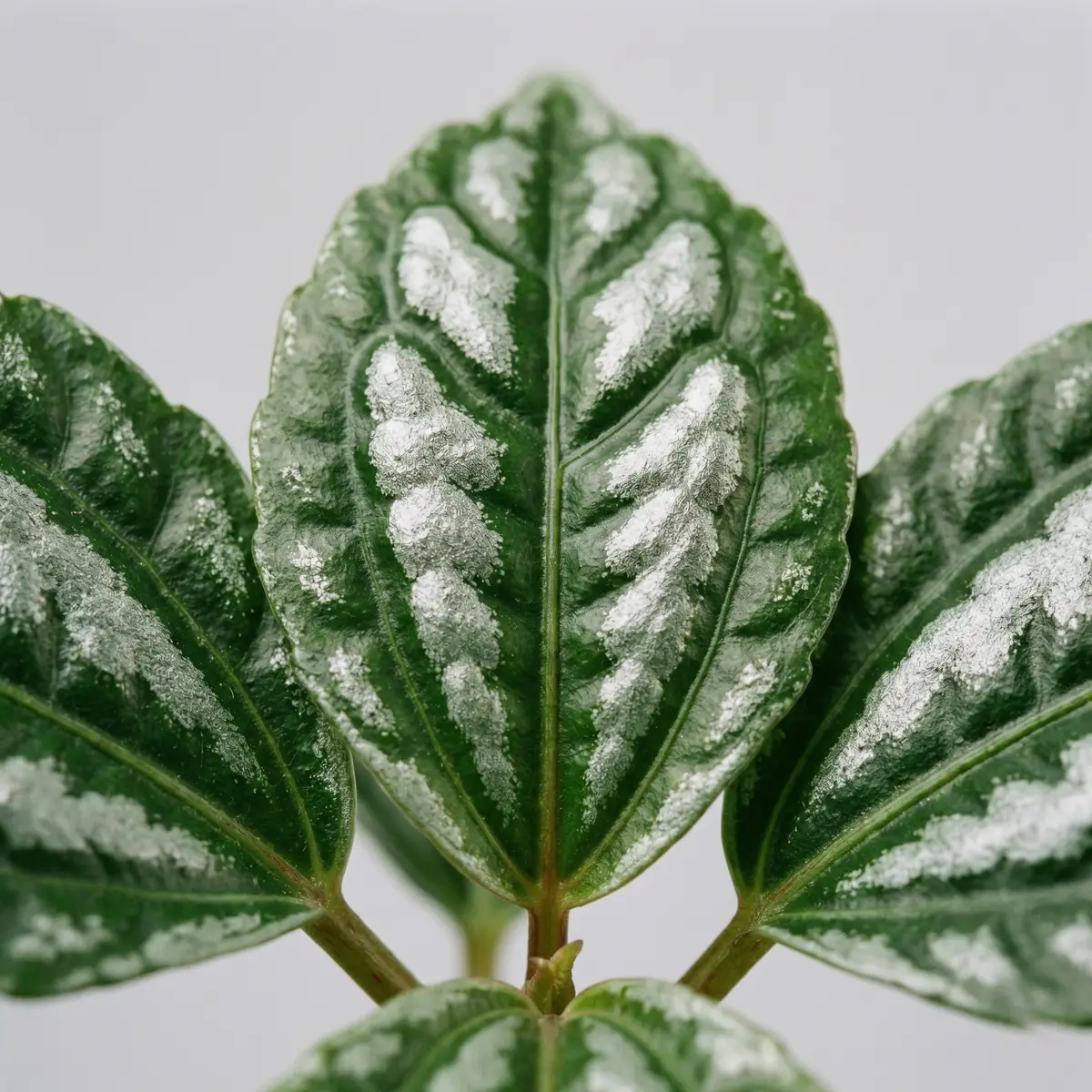
Aluminum Plant Varieties and Common Confusion
Pilea cadierei is the species most people mean when they say Aluminum Plant. There is a compact cultivar, Pilea cadierei ‘Minima’, which stays smaller (around 6-8 inches) and is a popular choice for terrariums and small spaces. Care requirements are identical, it simply does not grow as large.
Beyond that single cultivar, Aluminum Plant is often confused with other Pilea species and a completely unrelated plant. Here is how to tell them apart:
Chinese Money Plant (Pilea peperomioides): Same genus, very different look. Chinese Money Plant has perfectly round, coin-shaped leaves on long individual stalks, an airy upright structure, and no silver markings. Both are easy to grow, but Chinese Money Plant is naturally tidier and does not require constant pinching.
Friendship Plant (Pilea involucrata): Another Pilea relative, sometimes called the Panamiga. It has deeply textured, oval leaves in bronze-green or reddish tones, but no metallic silver patches. The quilted leaf surface is similar to Aluminum Plant but the color and pattern are completely different.
Pilea ‘Nummulariifolia’ (Creeping Charlie Pilea): A trailing, creeping variety with small rounded bright green leaves. Entirely different growth habit, it sprawls rather than growing upright. Sometimes used as a ground cover in terrariums.
Watermelon Peperomia (Peperomia argyreia): This is not a Pilea at all, but it is frequently confused with Aluminum Plant because of the shared “Watermelon Pilea” nickname that circulates online and at plant shops. Watermelon Peperomia has rounded rosette leaves with silver stripes radiating from the center, like a watermelon rind. Aluminum Plant has oval, quilted leaves with four distinct raised silver patches between the veins. They are unrelated genera with different care needs.
🪴 Potting and Repotting Aluminum Plant
When to Repot
Aluminum Plant is a fast grower and will need repotting more often than slower plants. A good rule of thumb is every one to two years in spring, before the growing season kicks in. Signs it is time to move up:
- Roots growing through the drainage holes or circling visibly on the soil surface.
- The plant drying out much faster than usual after watering.
- Noticeably slower growth despite consistent care.
- The pot looks obviously too small relative to the plant’s mass above soil.
That said, Aluminum Plant actually prefers being slightly snug rather than swimming in an oversized pot. A pot that is too large holds excess moisture and increases the risk of root rot.
How to Repot
- Choose the right pot size: Go up only 1-2 inches in diameter from the current pot. Make sure it has drainage holes.
- Prepare the mix: Use fresh well-draining potting mix with perlite as described in the Soil section.
- Remove carefully: Turn the pot sideways and ease the root ball out. The roots should be white or cream-colored; discard any that are brown and mushy.
- Pot up: Add a layer of fresh mix to the new pot, position the plant at the same depth it was before, and fill in around the roots.
- Water and settle: Water thoroughly to settle the soil around the roots and eliminate air pockets. Allow it to drain completely.
- Recovery: Place the plant back in its usual spot. It may show slight stress for a week or two as it adjusts.
For a step-by-step walkthrough of the full process, see our Repotting Guide.
Best Pot Materials
Terracotta pots are an excellent choice for Aluminum Plant because the porous walls allow moisture to evaporate from the sides, reducing the risk of waterlogged roots. Glazed ceramic and plastic pots retain moisture longer, which is fine as long as you adjust your watering frequency to account for slower soil drying. Always prioritize a pot with good drainage holes over any aesthetic choice.
For a full comparison of pot types, visit our Plant Pots Guide.
✂️ Pruning Aluminum Plant
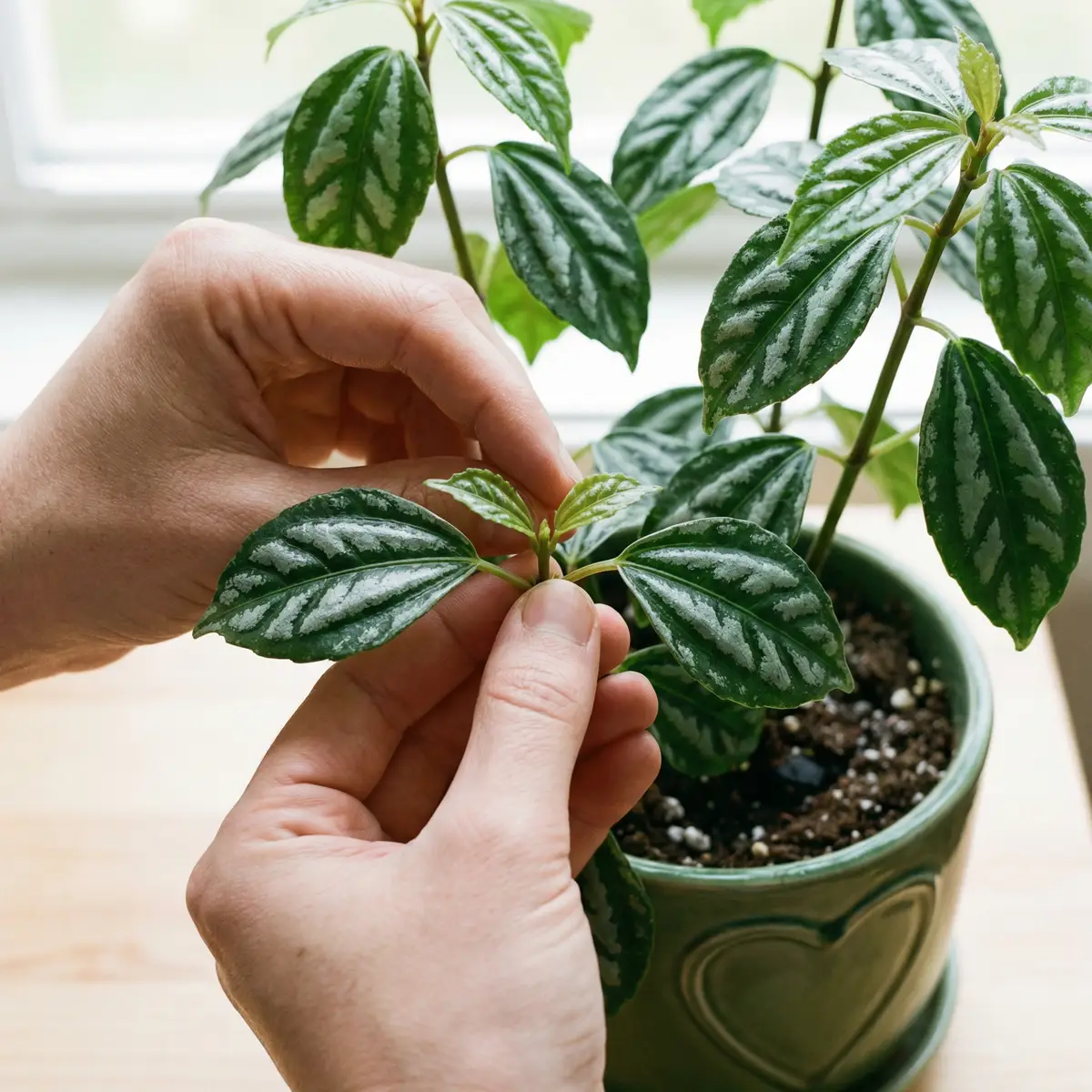
Why Aluminum Plant Needs Regular Pruning
Pruning is more important for Aluminum Plant than it is for most houseplants. Left alone, this plant will stretch upward, spacing its leaves further apart until it looks sparse and rangy. Regular pinching is what keeps it looking full, compact, and presentable throughout the growing season.
Start pinching as soon as the plant is established. Every time you remove a growing tip, the stem below branches into two, which over several rounds of pinching produces a much bushier plant. This is the single most effective maintenance habit for Aluminum Plant.
How to Pinch and Prune
- Pinching tips: Use your fingers or clean scissors to remove the top 1-2 inches of each actively growing stem. Do this every 3-4 weeks during the growing season. It takes only a few minutes and makes a visible difference within weeks.
- Removing dead or damaged leaves: Pull or cut any yellowed, brown, or damaged leaves at their base throughout the year. This keeps the plant tidy and removes potential entry points for disease.
- Hard cutbacks: If the plant has already become very leggy, do not be afraid to cut it back hard, reduce the stems by half or more. Aluminum Plant re-sprouts readily and will push new growth from the cut points within a couple of weeks in the growing season.
When to Prune
Spring and summer are the best times for significant pruning, when the plant has enough energy to bounce back quickly. Light pinching can be done year-round whenever you see stems starting to stretch. In winter, hold back on hard pruning and stick to removing dead material.When to Start Fresh Instead
After two to three years, even a well-maintained Aluminum Plant tends to develop a woody base and uneven growth that no amount of pinching will fully fix. At that point, the best move is to take several stem cuttings from the healthiest growth, propagate them, and start a brand new plant. The parent plant can be composted or dramatically cut back to see if it re-sprouts with fresh vigor.🌱 How to Propagate Aluminum Plant
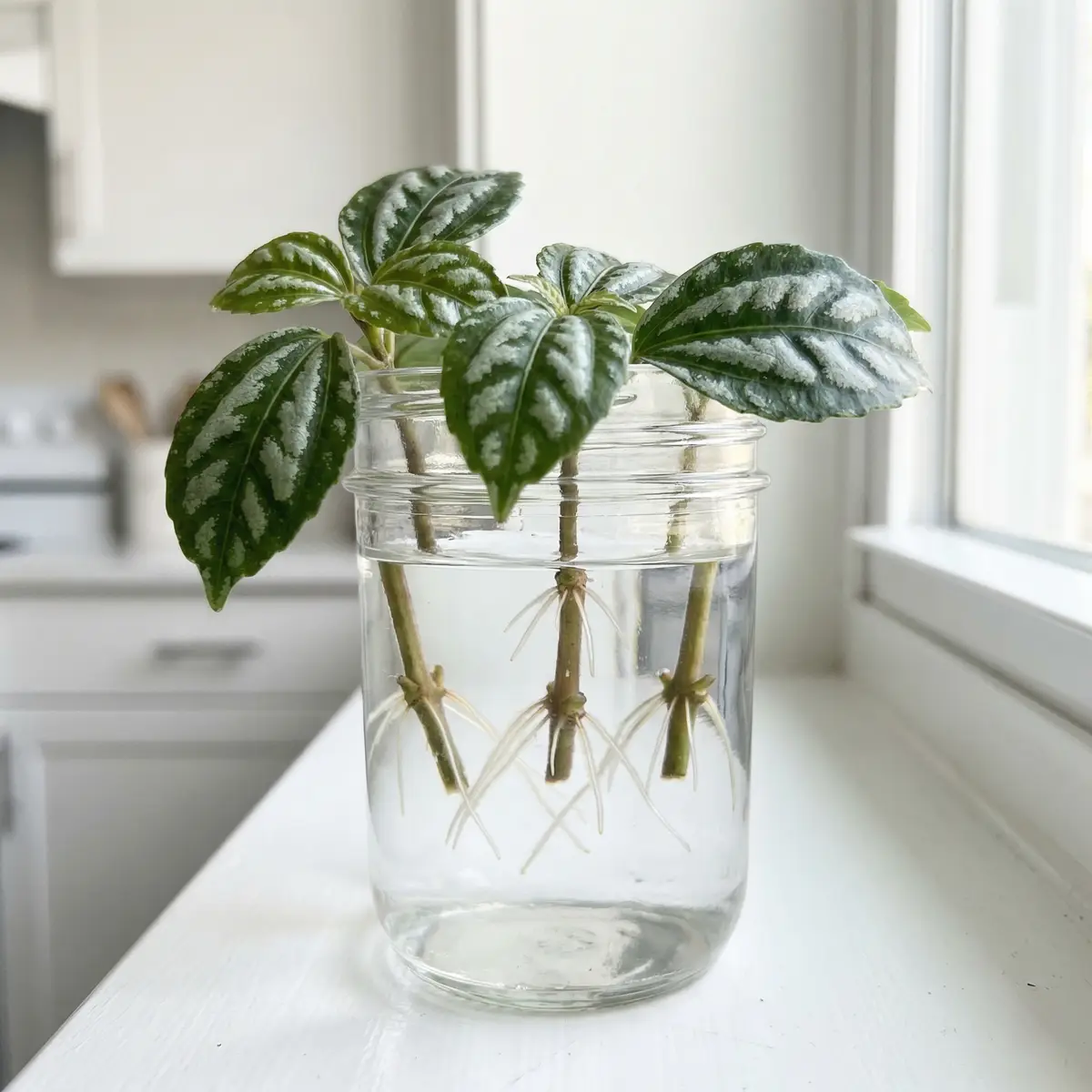
Why Propagation Is Part of the Routine
Aluminum Plant is one of the easiest houseplants to propagate, and given that it gets leggy after a couple of years, propagation is not just a fun extra, it is genuinely the recommended way to keep a collection of fresh, full plants going. Taking cuttings in late spring or early summer and rooting them gives you a completely new plant ready to grow through the rest of the season.Stem Cuttings in Water
This is the simplest and most reliable method:
- Take a cutting: Select a healthy stem with at least two sets of leaves. Cut it 3-4 inches from the tip using clean scissors or a knife, just below a leaf node.
- Prepare the cutting: Remove the lower leaves, leaving only the top two or three pairs.
- Place in water: Put the cutting in a jar or glass with enough water to submerge the bare stem below the lowest remaining leaves. Keep the leaves above the waterline.
- Wait for roots: Place the jar in a bright, warm spot out of direct sun. Roots typically appear within 7-14 days. Change the water every few days to keep it fresh.
- Pot up: Once roots are 1-2 inches long, transfer the cutting to a small pot with moist potting mix. Keep the soil lightly moist for the first two to three weeks while it adjusts.
For a full guide, see our Water Propagation Guide.
Stem Cuttings in Soil
You can also root cuttings directly in soil without the intermediate water stage:
- Take and prepare the cutting exactly as described above.
- Optional: dip the cut end lightly in rooting hormone powder to speed things up.
- Insert the bare stem section into a small pot of moist, well-draining propagating mix. Firm the soil gently around it.
- Cover loosely with a clear plastic bag or humidity dome to maintain moisture around the cutting.
- Place in bright indirect light. Remove the cover briefly each day for airflow.
- Roots usually form within 2-4 weeks. You will know it has rooted when the cutting starts producing new leaf growth.
See our Soil Propagation Guide for more detail.
🐛 Common Pests on Aluminum Plant
Pests That Affect Aluminum Plant
Aluminum Plant is not particularly pest-prone, but like any houseplant it can attract common visitors, especially when stressed by low humidity, overwatering, or poor air circulation.
- Spider Mites, These thrive in hot, dry conditions. Look for fine webbing between stems and a stippled, dull appearance on the leaves. Raise humidity and mist the plant regularly as prevention. Treat with insecticidal soap or neem oil.
- Mealybugs, White cottony clusters in leaf axils and on stem joints. Wipe off manually with a cotton swab dipped in rubbing alcohol, then treat with neem oil or insecticidal soap weekly until clear.
- Fungus Gnats, The small flies themselves are mostly a nuisance, but their larvae live in the soil and can damage roots. The cause is almost always consistently overwatered or waterlogged soil. Letting the top inch dry out between waterings is the most effective long-term control.
- Aphids, Soft-bodied insects that cluster on new growth and undersides of leaves, secreting sticky honeydew. Spray off with a strong stream of water, then treat with insecticidal soap.
Inspect the plant regularly, including the undersides of leaves and along stems. Catching pests early makes treatment much simpler.


🩺 Common Problems with Aluminum Plant
Troubleshooting Aluminum Plant Issues
Most problems with Aluminum Plant are correctable once you identify the cause. Here are the most common ones:
- Root Rot, The most serious issue, caused by overwatering or poorly draining soil. Signs include a musty smell from the soil, yellowing lower leaves, and soft, dark stems at the base. Remove affected roots, treat with a diluted hydrogen peroxide solution, and repot into fresh dry mix.
- Yellowing Leaves, Lower leaves yellowing is often early overwatering. Upper leaves yellowing can signal underwatering, low light, or nutrient deficiency. Assess all three before adjusting.
- Leggy Growth, Stems stretching with wide gaps between leaves. Almost always a combination of insufficient light and lack of pinching. Move to brighter indirect light and start pinching immediately.
- Brown Crispy Edges, Usually low humidity, but can also mean underwatering, drafts, or fertilizer salt buildup. Check humidity levels first, then assess the watering routine.
- Wilting and Drooping, Can mean the soil is too dry or, counterintuitively, that root rot from overwatering has damaged the roots so they can no longer take up water. Check the soil moisture level before responding.
- Pale or Faded Leaves, Including fading of the silver patches. This points directly to insufficient light. Move the plant to a brighter spot.
- Leaf Drop, Usually a response to cold drafts, sudden temperature changes, or severe underwatering. Check the plant’s location and watering history.


🖼️ Display Ideas for Aluminum Plant
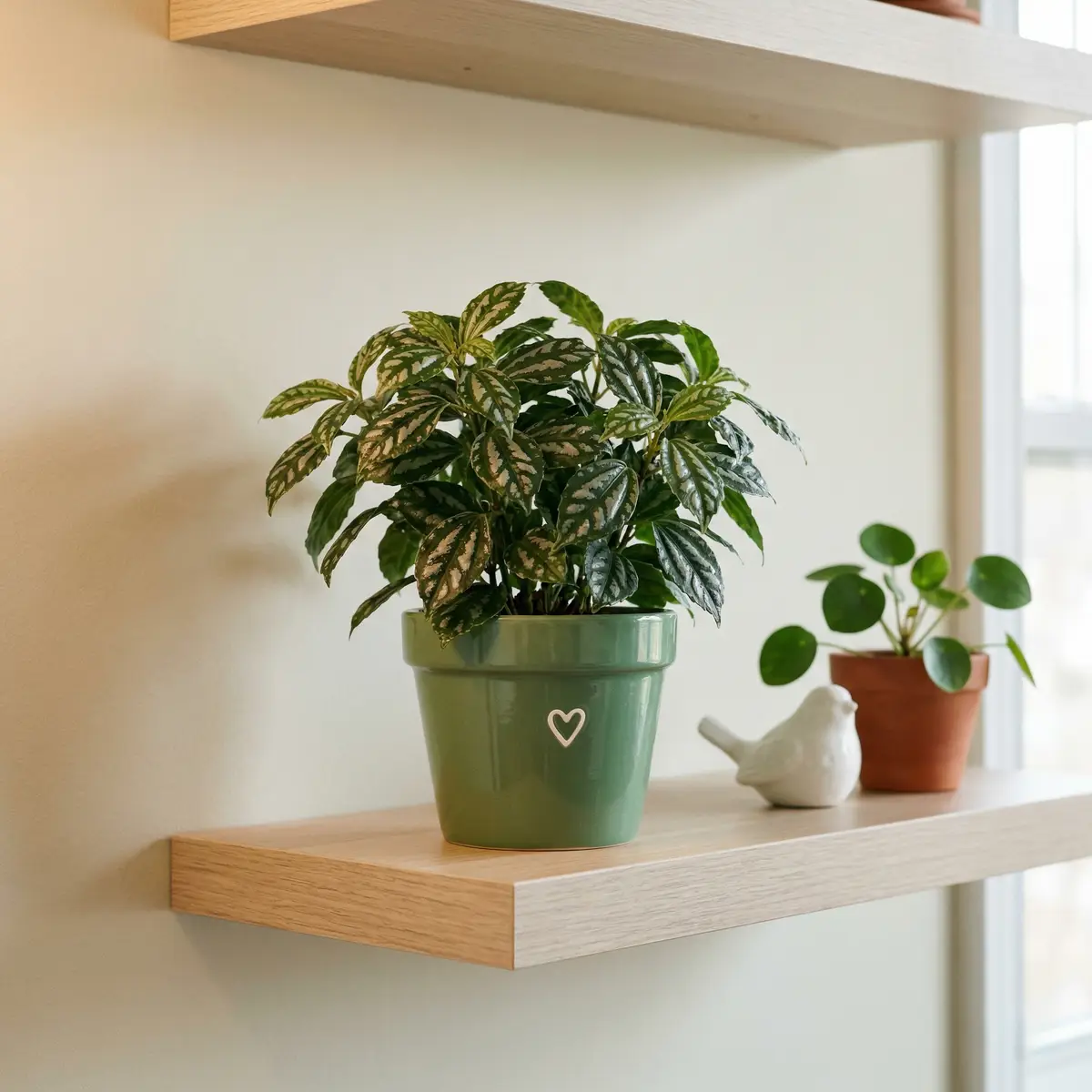
How to Style Aluminum Plant Indoors
The metallic silver-on-dark-green foliage of Aluminum Plant gives it a built-in visual punch that works in a lot of settings. Its compact size, typically 12-18 inches tall and wide, makes it flexible without dominating a space.
- Bathroom shelf: High humidity bathrooms suit this plant perfectly, and the glossy metallic leaves catch the light beautifully in that setting. An east-facing bathroom window is an ideal location.
- Bright desk or workspace: The compact bushy shape and interesting texture make it an excellent desk plant that adds personality without creating visual clutter.
- Grouped tropical display: Pair it with other metallic or textured foliage plants, Silver Ripple Peperomia, Watermelon Peperomia, or Baby Rubber Plant, for a cohesive display where the different textures and silver tones complement each other.
- Windowsill specimen: An east-facing windowsill where it gets consistent morning light keeps the silver patches vivid and the growth compact. Rotate the pot a quarter turn weekly for even development.
- Terrarium: The compact cultivar (‘Minima’) in particular does beautifully in large terrariums where the higher humidity is a natural bonus. Give it a spot with good light and adequate airflow.
🌟 PRO Tips for a Thriving Aluminum Plant
✅ Pinch consistently, not occasionally. Every 3-4 weeks during the growing season, pinch back the growing tips. This single habit is the difference between a full, bushy plant and a leggy mess. Set a reminder if you need to.
💧 Check before you water. Aluminum Plant sits between the “keep moist” and “let it dry” camps, it wants the top inch of soil dry but not bone dry further down. Stick your finger in the soil every few days rather than following a calendar.
🌡️ Keep it away from cold glass in winter. The leaves closest to a cold window pane in winter can experience temperatures well below what the thermometer in the room reads. Even 50°F (10°C) causes stress and leaf drop. Move the pot back from the glass once temperatures drop outside.
🌿 Propagate proactively. Do not wait until your plant is completely leggy to take cuttings. Take a few stem cuttings in spring every year and keep a young plant coming up behind the older one. When the parent looks tired, the fresh plant is already established.
💦 Boost humidity in winter. Heating systems dry indoor air significantly. A pebble tray or small humidifier near the plant during winter prevents the crispy leaf edges that otherwise develop by spring.
🧼 Wipe the leaves. The quilted, textured leaves collect dust in the crevices. A gentle wipe with a soft damp cloth once a month keeps the silver patches gleaming and lets the plant photosynthesize efficiently. Avoid leaf shine products on this plant, the metallic effect is natural and does not need enhancement.
🪴 Go slightly snug on pot size. When repotting, move up only one pot size at a time. An oversized pot holds too much excess moisture and tends to keep the soil wet for too long after watering, which is the most common cause of root rot on this plant.
📅 Set a pinching reminder. The single biggest maintenance mistake with Aluminum Plant is pinching once or twice and then forgetting about it. Set a phone reminder for every 3-4 weeks during the growing season. When the reminder fires, spend two minutes pinching every growing tip. The difference over a season is dramatic.
❓ Frequently Asked Questions
Is Aluminum Plant toxic to cats or dogs?
No. Pilea cadierei is considered non-toxic to cats, dogs, and people, making it a genuinely pet-safe choice for households with animals.Why is my Aluminum Plant getting leggy?
Legginess is the most common complaint with this plant, and it almost always comes down to two things: not enough light, and not enough pinching. Move it to a brighter spot with good indirect light and start pinching the growing tips every few weeks to encourage side branching. After 2-3 years, even a well-cared-for plant gets leggy, take cuttings and start fresh.Why are the silver patches on my Aluminum Plant fading?
Fading metallic markings usually mean the plant is not getting enough light. The silver patches need good bright indirect light to stay vivid. Move the plant closer to a window, but keep it out of harsh direct sun, which bleaches the markings in the opposite direction.How do I propagate Aluminum Plant?
Take a stem cutting 3-4 inches long with at least two sets of leaves. Remove the lower leaves, then place the cutting in a jar of water or directly into moist potting mix. Roots appear within 1-2 weeks in water, and the plant establishes quickly. It is one of the easiest houseplants to propagate, which makes it ideal for refreshing the plant every couple of years.How often should I water Aluminum Plant?
Water when the top inch of soil feels dry. During the growing season this often means watering every 5-7 days, depending on your home’s temperature and light levels. In winter, cut back to every 10-14 days. Always check the soil before watering rather than following a fixed schedule.What is the difference between Aluminum Plant and Chinese Money Plant?
They are both members of the Pilea genus, but they look quite different. Aluminum Plant (Pilea cadierei) has oval, quilted dark green leaves with four raised silver patches and a bushy upright habit. Chinese Money Plant (Pilea peperomioides) has perfectly round, coin-shaped leaves on long stems and a more open, airy structure. Care requirements are similar, but Chinese Money Plant is tidier by nature while Aluminum Plant needs regular pinching to stay full.ℹ️ Aluminum Plant Info
Care and Maintenance
🪴 Soil Type and pH: Well-draining, rich potting mix with perlite
💧 Humidity and Misting: Prefers 50% or higher. Benefits from misting, a pebble tray, or a humidifier in dry rooms.
✂️ Pruning: Pinch growing tips regularly to prevent legginess. This plant needs it more than most.
🧼 Cleaning: Wipe leaves gently with a damp cloth to keep them dust-free and vibrant.
🌱 Repotting: Annually or every 2 years. Fast grower. Prefers being slightly snug.
🔄 Repotting Frequency: Every 1-2 years
❄️ Seasonal Changes in Care: Reduce watering in winter; stop fertilizing; protect from cold drafts.
Growing Characteristics
💥 Growth Speed: Fast
🔄 Life Cycle: Perennial
💥 Bloom Time: Spring and Summer
🌡️ Hardiness Zones: 10-12
🗺️ Native Area: Vietnam, China
🚘 Hibernation: No
Propagation and Health
📍 Suitable Locations: Shelves, desks, tabletops, bathroom windowsills, plant stands
🪴 Propagation Methods: Stem cuttings root very easily in water or soil. One of the easiest houseplants to propagate.
🐛 Common Pests: spider-mites, mealybugs, fungus-gnats, and aphids
🦠 Possible Diseases: Root rot
Plant Details
🌿 Plant Type: Tropical herbaceous perennial
🍃 Foliage Type: Evergreen
🎨 Color of Leaves: Dark green with silvery-aluminum metallic patches
🌸 Flower Color: Pinkish-white (insignificant)
🌼 Blooming: Small, inconspicuous pinkish-white flowers; grown for foliage, not blooms
🍽️ Edibility: Not edible
📏 Mature Size: 12-18 inches
Additional Info
🌻 General Benefits: Fast-growing, easy to propagate, pet-safe, eye-catching metallic foliage
💊 Medical Properties: None known
🧿 Feng Shui: The metallic silver patches are associated with clarity and reflective energy
⭐ Zodiac Sign Compatibility: Aquarius
🌈 Symbolism or Folklore: Brightness, resilience, easy generosity
📝 Interesting Facts: The distinctive silver patches between the leaf veins are not variegation, they are raised, blistered areas of the leaf tissue that scatter light to produce the metallic sheen. Vietnam and China are the native range, which explains the plant’s love of warmth and humidity.
Buying and Usage
🛒 What to Look for When Buying: Look for a compact, bushy plant with vibrant silver markings. Avoid leggy specimens unless you plan to cut them back immediately.
🪴 Other Uses: Excellent for terrariums due to its love of humidity; also suitable for dish gardens.
Decoration and Styling
🖼️ Display Ideas: On a bright bathroom shelf, in a group of tropical foliage plants, or as a textural accent beside darker-leafed plants.
🧵 Styling Tips: Pairs well with Chinese Money Plant, Silver Ripple Peperomia, and Watermelon Peperomia for a cohesive metallic-foliage display.
🪴 See also 🪴

Complete Guide to Friendship Plant Care and Growth

